AFP

Paris to scale back monument lighting as energy bills bite

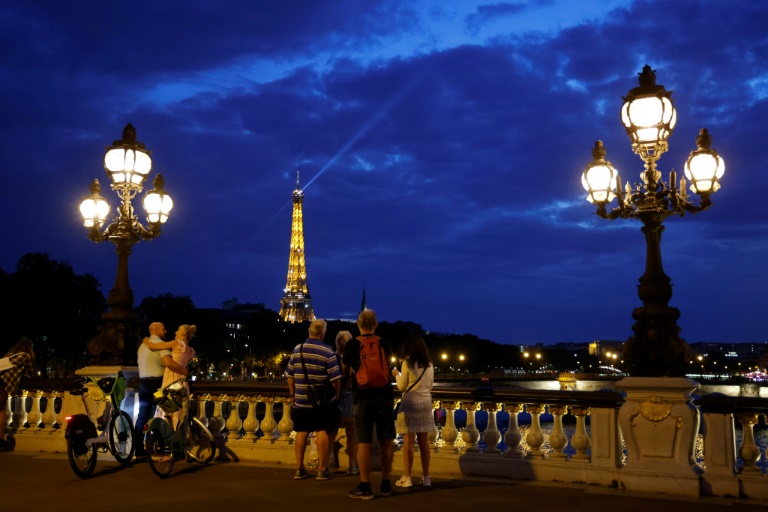
Paris will start switching off the ornamental lights that grace city monuments hours earlier than usual, plunging the Eiffel Tower and other landmarks in the dark to cope with surging electricity costs, officials said Tuesday.

Most monuments operated by the city will now go unlit from 10:00 pm, (2000 GMT), a potential disappointment for the tens of millions of tourists to the romantic City of Lights.

The Eiffel Tower, usually bathed in a warm glow until 1:00 am, and which comes ablaze with dazzling white lights every hour, will now go dark after the last visitor leaves, at 11:45 pm.

But streets lights will remain on for security, as will the illuminations of the city’s ornate bridges over the Seine river, Mayor Anne Hidalgo said at a press conference.

The “energy sobriety” plan aims to cut energy use by 10 percent, said Hidalgo, which could help soften the blow of rising costs by some 10 million euros ($10.2 million).

Hidalgo, a Socialist who played up her efforts to green Paris during a failed presidential run earlier this year, said she would also push the government to do the same for national monuments in the city, such as the Pantheon or the Arc de Triomphe.

In August, President Emmanuel Macron warned that high energy prices caused by the war in Ukraine could signal “the end of abundance,” widely interpreted as preparing public opinion for a difficult winter ahead.

Stocks climb, dollar down before US inflation data

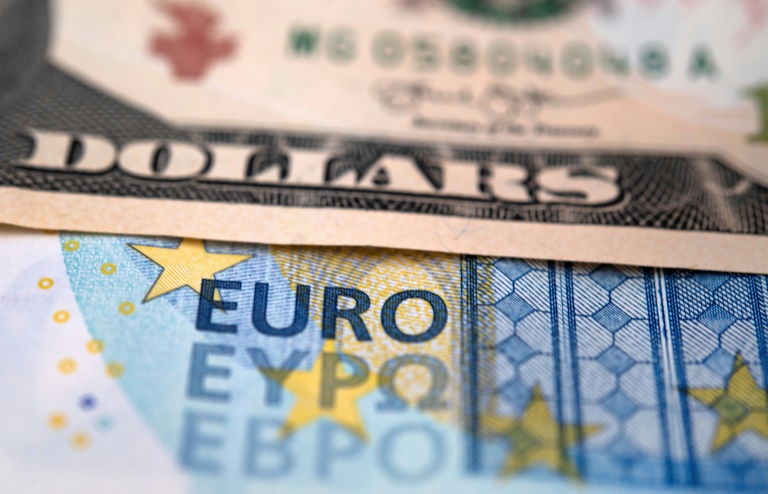
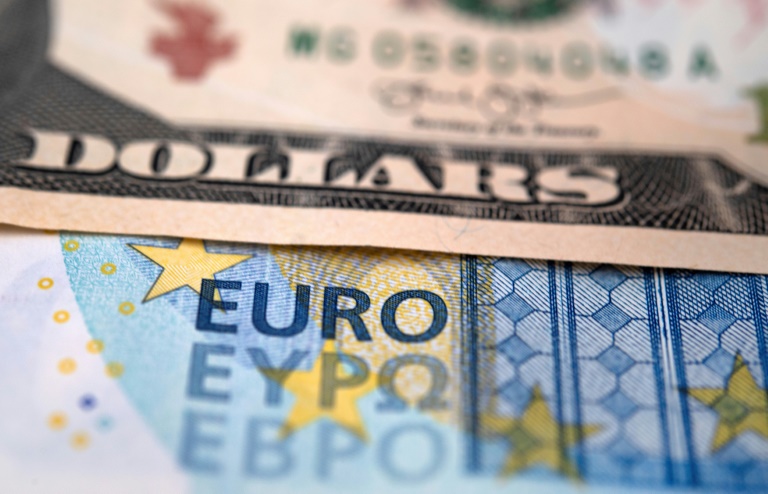
Stock markets rose slightly and the dollar extended recent losses Tuesday with all eyes on the latest US inflation print.

While traders expect Tuesday’s data to show the pace of price rises cooling in the world’s biggest economy, they still expect the Federal Reserve to continue hiking US interest rates by sizeable amounts in the coming months.

The dollar, which has reached multi-year highs against the yen and pound in recent weeks, is reversing direction after investors priced in more aggressive tightening of American borrowing costs.

“The last few days have seen a notable improvement in market sentiment,” noted Craig Erlam, senior market analyst at Oanda trading group. 

“It’s not always easy to pinpoint what’s driving such a turnaround but the fact that it’s happening in the days leading up to the US inflation report is certainly interesting.”

Erlam said a drop in the inflation rate could “trigger a broader risk rebound in the markets. 

“It may not be enough to tip the Fed balance in favour of a more modest 50 basis point rate hike next week but it may slow the pace of tightening thereafter.”

Analysts’ consensus is for inflation to slow to eight percent, driven mostly by falling gasoline prices. US inflation hit a 40-year high in June, touching 9.1 percent.

Markets are largely pricing in another 75-basis-point interest rate hike by the Fed at its next gathering.

This after the US central bank has already made consecutive hikes of that amount, while Fed boss Jerome Powell has indicated the increases would continue until inflation is tamed.

The European Central Bank last week raised its key interest rate by 75 basis points, a record-amount for the eurozone.

Inflation has soared around the globe this year owing to sky-high energy and food bills.

This has been caused to a large extent by supply constraints after economies reopened from pandemic lockdowns and in the wake of Russia’s invasion of Ukraine.

– Key figures at around 1100 GMT –

London – FTSE 100: UP 0.4 percent at 7,499.19 points

Frankfurt – DAX: UP 0.7 percent at 13,492.77

Paris – CAC 40: UP 0.6 percent at 6,371.48   

EURO STOXX 50: UP 0.7 percent at 3,671.60 

Tokyo – Nikkei 225: UP 0.3 percent at 28,614.63 (close)

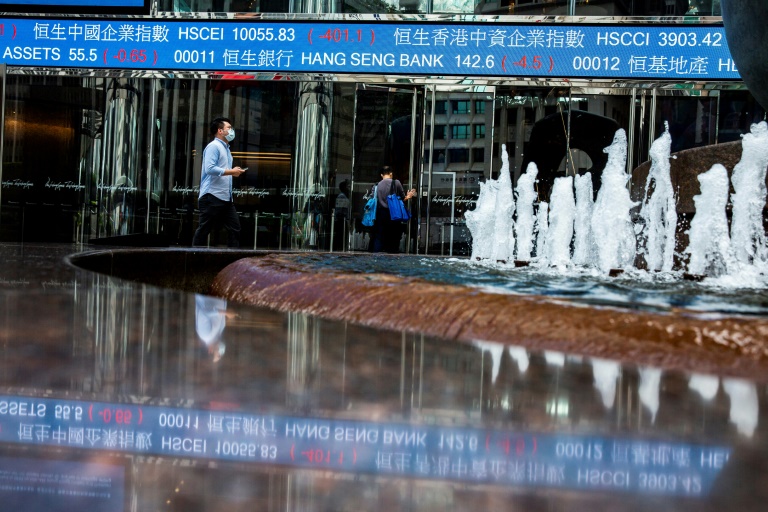
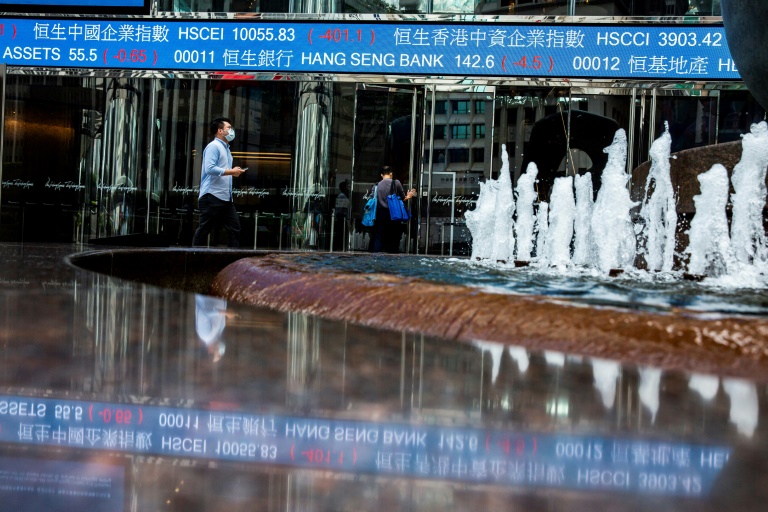
Hong Kong – Hang Seng Index: DOWN 0.2 percent at 19,326.86 (close)

Shanghai – Composite: UP 0.1 percent at 3,263.80 (close)

New York – Dow: UP 0.7 percent at 32,381.34 (close)

Euro/dollar: UP at $1.0178 from $1.0120

Pound/dollar: UP at $1.1729 from $1.1680 

Euro/pound: UP at 86.77 pence from 86.64 pence 

Dollar/yen: DOWN at 142.11 yen from 142.82 yen  

Brent North Sea crude: UP 1.2 percent at $95.17 per barrel

West Texas Intermediate: UP 1.2 percent at $88.83 per barrel

Stocks climb, dollar down before US inflation data

Stock markets rose slightly and the dollar extended recent losses Tuesday with all eyes on the latest US inflation print.

While traders expect Tuesday’s data to show the pace of price rises cooling in the world’s biggest economy, they still expect the Federal Reserve to continue hiking US interest rates by sizeable amounts in the coming months.

The dollar, which has reached multi-year highs against the yen and pound in recent weeks, is reversing direction after investors priced in more aggressive tightening of American borrowing costs.

“The last few days have seen a notable improvement in market sentiment,” noted Craig Erlam, senior market analyst at Oanda trading group. 

“It’s not always easy to pinpoint what’s driving such a turnaround but the fact that it’s happening in the days leading up to the US inflation report is certainly interesting.”

Erlam said a drop in the inflation rate could “trigger a broader risk rebound in the markets. 

“It may not be enough to tip the Fed balance in favour of a more modest 50 basis point rate hike next week but it may slow the pace of tightening thereafter.”

Analysts’ consensus is for inflation to slow to eight percent, driven mostly by falling gasoline prices. US inflation hit a 40-year high in June, touching 9.1 percent.

Markets are largely pricing in another 75-basis-point interest rate hike by the Fed at its next gathering.

This after the US central bank has already made consecutive hikes of that amount, while Fed boss Jerome Powell has indicated the increases would continue until inflation is tamed.

The European Central Bank last week raised its key interest rate by 75 basis points, a record-amount for the eurozone.

Inflation has soared around the globe this year owing to sky-high energy and food bills.

This has been caused to a large extent by supply constraints after economies reopened from pandemic lockdowns and in the wake of Russia’s invasion of Ukraine.

– Key figures at around 1100 GMT –

London – FTSE 100: UP 0.4 percent at 7,499.19 points

Frankfurt – DAX: UP 0.7 percent at 13,492.77

Paris – CAC 40: UP 0.6 percent at 6,371.48   

EURO STOXX 50: UP 0.7 percent at 3,671.60 

Tokyo – Nikkei 225: UP 0.3 percent at 28,614.63 (close)

Hong Kong – Hang Seng Index: DOWN 0.2 percent at 19,326.86 (close)

Shanghai – Composite: UP 0.1 percent at 3,263.80 (close)

New York – Dow: UP 0.7 percent at 32,381.34 (close)

Euro/dollar: UP at $1.0178 from $1.0120

Pound/dollar: UP at $1.1729 from $1.1680 

Euro/pound: UP at 86.77 pence from 86.64 pence 

Dollar/yen: DOWN at 142.11 yen from 142.82 yen  

Brent North Sea crude: UP 1.2 percent at $95.17 per barrel

West Texas Intermediate: UP 1.2 percent at $88.83 per barrel

Cheetahs to arrive in India for Modi's birthday

Eight cheetahs will be sent to India where they will be personally welcomed by Prime Minister Narendra Modi on his birthday, officials said Tuesday, in an ambitious project to reintroduce the speedy big cats to the country.

India in the past was home to Asiatic cheetahs but the species was declared extinct domestically by 1952. A prince is believed to have killed the last three specimens.

However, New Delhi has since 2020 been working to reintroduce the animals after the Supreme Court announced that African cheetahs, a different subspecies, could be settled in a “carefully chosen location” on an experimental basis.

The five males and three females will arrive from Namibia on Saturday and will initially be kept in a quarantine enclosure at the Kuno National Park in the central state of Madhya Pradesh.

India is also planning to ship in more cheetahs from South Africa at a later date.

“The prime minister himself will be releasing the animals into the quarantine enclosures,” an environment ministry official told AFP.

The cats will then be moved to larger spaces and once they acclimatise will be released into open forest in the park.

Local media reports said the cheetahs will touch down in the western city of Jaipur after a 10-hour journey and will then travel by helicopter to the Kuno park.

Environment Minister Bhupender Yadav said the project was part of global efforts to conserve the animal.

Modi’s presence for the launch “will give enthusiasm and energy to all of us”, he added. 

– Leopard conflict –

The Kuno park was selected as a home because of its abundant prey and grasslands.

But critics have warned that the cheetahs may struggle to adapt to the habitat and may clash with the significant number of leopards already present.

Adrian Tordiffe, a veterinary wildlife professor at the University of Pretoria who is involved in the project, said South Africa had pressed India to use additional parks to help separate the two species.

“I don’t think it’s going to be a big problem for the adults… they are very familiar with coexisting with other predators,” Tordiffe told AFP.

“But we might have a situation where we have a problem with cubs’ survival.”

Cheetahs became extinct in India primarily because of habitat loss and hunting for their distinctive spotted pelts. 

An Indian prince, the Maharaja Ramanuj Pratap Singh Deo, is widely believed to have killed the last three recorded cheetahs in India in the late 1940s.

The incoming animals have been prepped for the journey with health check-ups, vaccinations and radio collaring, the Indian Express newspaper reported.

Considered vulnerable under the IUCN Red List of Threatened Species, there are fewer than 7,000 cheetahs left around the world — primarily in the African savannas.

Asian stocks rally ahead of key US inflation data

Asian stocks largely continued a global rally on Tuesday, ahead of the release of key US consumer price data that is expected to show slightly slowing inflation in the world’s largest economy.

Stocks rose in Japan, Australia, Singapore and Taiwan, with South Korea and Shanghai also gaining after reopening following a public holiday. European stocks were steady at the open.

Hong Kong shares edged lower at the close, erasing modest gains made earlier in the day.

US consumer price index (CPI) data will be released on Tuesday, with analysts expecting inflation to slow to eight percent, driven mostly by falling gasoline prices. US inflation hit a 40-year high in June, touching 9.1 percent.

Easing inflation, however, is unlikely to slow the pace of the US Federal Reserve’s tightening of monetary policy, with another 75-basis-point interest rate hike expected at its meeting next week.

The Fed has already instituted two consecutive rate hikes of that amount, and in recent days bank chief Jerome Powell has indicated the increases will continue until inflation is tamed.

While the overall US inflation number is expected to slow, prices for food and housing are projected to have increased, raising the strain on household budgets.

“Risks remain skewed to the upside, due to an uncertain outlook for key inputs, including agricultural and energy commodities, as well as the pass-through of wage gains in a tight labour market,” according to Barclays US analysts Pooja Sriram and Jonathan Hill.

Last week, the European Central Bank also adopted a policy of monetary tightening, raising its key rate by a historic 75 basis points, with analysts expecting a similar-sized increase at the next policy meeting in October.

– ‘Locked in’ –

In Tokyo, stocks closed higher on Tuesday, with investors ending the session by tempering some of the gains with caution at the Nikkei’s rise over recent days.

Brokerage Okasan Online Securities said investors were looking “to square their positions” ahead of the US CPI data being released.

Seoul led the day’s gains in Asia, rising by 2.7 percent on Tuesday.

US stocks on Monday had ended bullish: the broad-based S&P 500 advanced 1.1 percent, continuing the upswing last week that snapped a three-week losing streak.

“Wall Street is locked into Tuesday’s inflation report that will likely show pricing pressure relief but will not change the Fed from maintaining an aggressive stance of tightening monetary policy,” said Edward Moya, senior market analyst at OANDA.

“Even if inflation falls below the 8 percent level, the Fed should still deliver a 75-basis-point rate hike at the September 21st policy decision.”

The euro stabilised to $1.0143 against the dollar on Tuesday, after a surge a day earlier that saw it gain 1.4 percent against the US currency and 1.6 percent against the yen, before paring those increases in later trading.

Oil prices climbed higher as Tuesday progressed — after an initial fall in the Asian morning — as a weaker dollar offset some of the concerns around demand destruction.

Other key data expected later this week includes US retail sales and industrial production on Thursday; China home and retail sales as well as industrial production on Friday; and Euro area CPI, also on Friday.

– Key figures at around 0815 GMT –

Tokyo – Nikkei 225: UP 0.3 percent at 28,614.63 (close)

Hong Kong – Hang Seng Index: DOWN 0.2 percent at 19,326.86 (close)

Shanghai – Composite: UP 0.1 percent at 3,263.80 (close)

New York – Dow: UP 0.7 percent at 32,381.34 (close)

London – FTSE 100: UP 0.1 percent at 7,480.97 points

Frankfurt – DAX: UP 0.3 percent at 13,437.53 points   

Paris – CAC 40: UP 0.6 percent at 6,369.77 points   

EURO STOXX 50: UP 0.5 percent at 3,664.98 points 

Euro/dollar: UP at $1.0143 from $1.0120  

Pound/dollar: UP at $1.1717 from $1.1680 

Euro/pound: DOWN at 86.57 pence from 86.64 pence 

Dollar/yen: DOWN at 142.28 yen from 142.82 yen  

Brent North Sea crude: UP 1 percent at $94.98 per barrel

West Texas Intermediate: UP 1.1 percent at $88.73 per barrel

Asian stocks rally ahead of key US inflation data

Asian stocks largely continued a global rally on Tuesday, ahead of the release of key US consumer price data that is expected to show slightly slowing inflation in the world’s largest economy.

Stocks rose in Japan, Australia, Singapore and Taiwan, with South Korea and Shanghai also gaining after reopening following a public holiday. European stocks were steady at the open.

Hong Kong shares edged lower at the close, erasing modest gains made earlier in the day.

US consumer price index (CPI) data will be released on Tuesday, with analysts expecting inflation to slow to eight percent, driven mostly by falling gasoline prices. US inflation hit a 40-year high in June, touching 9.1 percent.

Easing inflation, however, is unlikely to slow the pace of the US Federal Reserve’s tightening of monetary policy, with another 75-basis-point interest rate hike expected at its meeting next week.

The Fed has already instituted two consecutive rate hikes of that amount, and in recent days bank chief Jerome Powell has indicated the increases will continue until inflation is tamed.

While the overall US inflation number is expected to slow, prices for food and housing are projected to have increased, raising the strain on household budgets.

“Risks remain skewed to the upside, due to an uncertain outlook for key inputs, including agricultural and energy commodities, as well as the pass-through of wage gains in a tight labour market,” according to Barclays US analysts Pooja Sriram and Jonathan Hill.

Last week, the European Central Bank also adopted a policy of monetary tightening, raising its key rate by a historic 75 basis points, with analysts expecting a similar-sized increase at the next policy meeting in October.

– ‘Locked in’ –

In Tokyo, stocks closed higher on Tuesday, with investors ending the session by tempering some of the gains with caution at the Nikkei’s rise over recent days.

Brokerage Okasan Online Securities said investors were looking “to square their positions” ahead of the US CPI data being released.

Seoul led the day’s gains in Asia, rising by 2.7 percent on Tuesday.

US stocks on Monday had ended bullish: the broad-based S&P 500 advanced 1.1 percent, continuing the upswing last week that snapped a three-week losing streak.

“Wall Street is locked into Tuesday’s inflation report that will likely show pricing pressure relief but will not change the Fed from maintaining an aggressive stance of tightening monetary policy,” said Edward Moya, senior market analyst at OANDA.

“Even if inflation falls below the 8 percent level, the Fed should still deliver a 75-basis-point rate hike at the September 21st policy decision.”

The euro stabilised to $1.0143 against the dollar on Tuesday, after a surge a day earlier that saw it gain 1.4 percent against the US currency and 1.6 percent against the yen, before paring those increases in later trading.

Oil prices climbed higher as Tuesday progressed — after an initial fall in the Asian morning — as a weaker dollar offset some of the concerns around demand destruction.

Other key data expected later this week includes US retail sales and industrial production on Thursday; China home and retail sales as well as industrial production on Friday; and Euro area CPI, also on Friday.

– Key figures at around 0815 GMT –

Tokyo – Nikkei 225: UP 0.3 percent at 28,614.63 (close)

Hong Kong – Hang Seng Index: DOWN 0.2 percent at 19,326.86 (close)

Shanghai – Composite: UP 0.1 percent at 3,263.80 (close)

New York – Dow: UP 0.7 percent at 32,381.34 (close)

London – FTSE 100: UP 0.1 percent at 7,480.97 points

Frankfurt – DAX: UP 0.3 percent at 13,437.53 points   

Paris – CAC 40: UP 0.6 percent at 6,369.77 points   

EURO STOXX 50: UP 0.5 percent at 3,664.98 points 

Euro/dollar: UP at $1.0143 from $1.0120  

Pound/dollar: UP at $1.1717 from $1.1680 

Euro/pound: DOWN at 86.57 pence from 86.64 pence 

Dollar/yen: DOWN at 142.28 yen from 142.82 yen  

Brent North Sea crude: UP 1 percent at $94.98 per barrel

West Texas Intermediate: UP 1.1 percent at $88.73 per barrel

The 'majestic' Singapore orchid named in honour of Queen Elizabeth

Elizabeth is majestic, hardy and “very fashionable”, said a top Singapore flower curator — referring not to the late monarch, but to an orchid named after the queen when she visited the former British colony.

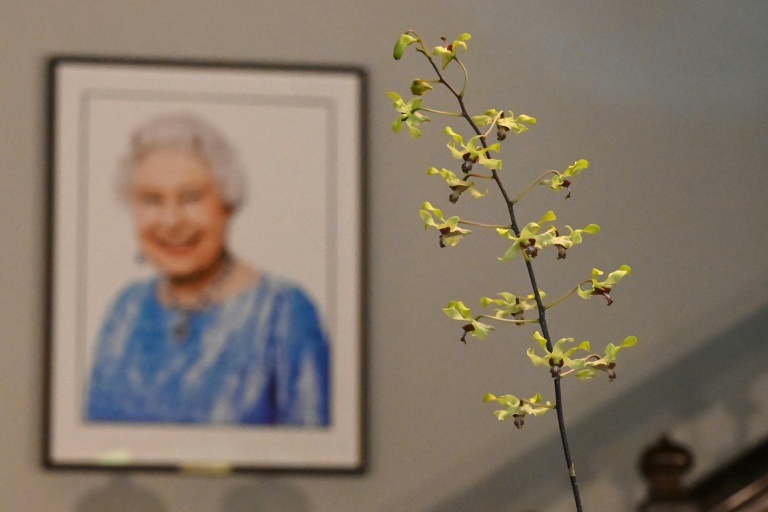
After Queen Elizabeth II’s death last week, the city-state’s Botanic Gardens loaned a towering sprig of Dendrobium Elizabeth to the British high commissioner’s residence, to be displayed alongside pictures of the monarch.

The orchid hybrid, with twisted Dresden-yellow petals and a uranium-green lip, was named in honour of the queen when she visited Singapore in 1972, said Whang Lay Keng, curator at Singapore’s National Orchid Garden.

“Dendrobium Elizabeth is a majestic, robust and resilient plant,” she told AFP.

“It’s kind of like how Queen Elizabeth carried herself.”

Flowering just twice a year, the Dendrobium Elizabeth was bred from orchids originating from Singapore and Papua New Guinea, and carries just about 40 blooms per plant. 

Orchid-mad Singapore boasts the delicate, colourful blooms as their national flower, and the city-state often christens new hybrids after visiting dignitaries as part of its diplomatic charm offensive. 

The tradition took root in 1957 during British colonial rule — which spanned more than 140 years — when an orchid variety was named after the wife of London’s high commissioner to Singapore at the time. 

Queen Elizabeth first made a state visit to Singapore in 1972, followed by two more trips in 1989 and 2006.

“During the 1970s, the colour yellow-green was very popular, so naturally we wanted to select something that was fashionable and very interesting,” Whang said, adding that “yellow is a colour of royalty”.

But the tropical lowland orchid also has very distinct Southeast Asian traits.

It is a “sun-loving plant that thrives in a moist and humid climate, where sunlight and warmth are important for its growth”, the orchid curator said. 

Among the more than 200 orchid hybrids named after visiting leaders and celebrities — displayed in the VIP section of the city’s sprawling Botanic Gardens — there is also the Dendrobium Memoria Princess Diana. The pastel-white bloom was so dubbed after the death of the princess of Wales.

Hong Kong September heat record broken twice

Hong Kong has broken two heat records for September in a little over a week, the city’s weather observatory said Tuesday, as the crowded financial hub swelters through one of its hottest summers.

The Hong Kong Observatory said a temperature of 35.4 degrees Celsius (95.7 Fahrenheit) was recorded on Tuesday afternoon, “once again breaking the record for highest temperature in September” since the city started keeping records in 1884.

The previous high of 35.3C was set just last Monday, toppling a record that had stood since 1963.

“Due to dry air from mainland (China), we expect the weather to be sunny and hot from this week to early next week,” the observatory added.

Southern China last month recorded its longest continuous period of high temperatures since records began more than 60 years ago, sparking power cuts and droughts that have hit the agricultural and manufacturing sectors.

Experts have said the intensity, scope and duration of the heatwave could make it one of the most severe recorded in global history, with temperatures routinely hitting up to 40C in many provinces last month.

Those temperatures in mainland China have since come down.

Intensely humid Hong Kong has experienced less searing heat than the mainland but has still sizzled through an intense summer.

July was the city’s hottest month on record while the average temperature from June to August was 29.2C, making it the fourth hottest summer so far.

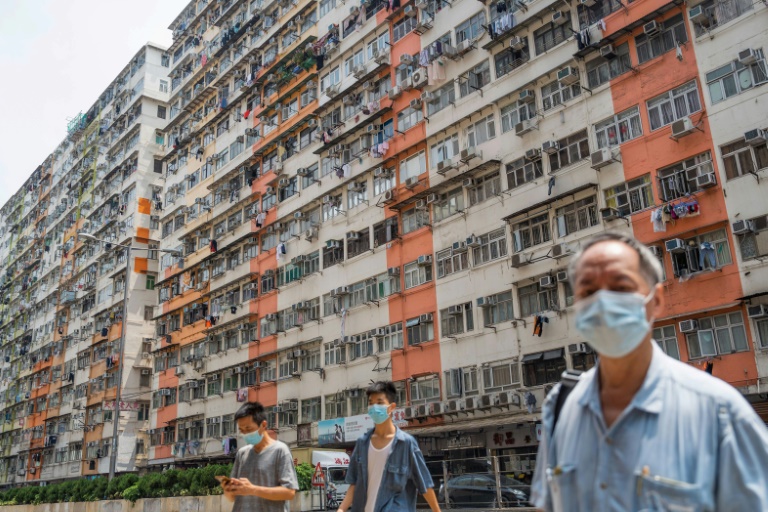
The high temperatures have been especially punishing for the 220,000 poorest residents who live in cramped rooftop huts or tiny subdivided apartments and “cage homes” that often have limited or no air conditioning.

In Nigeria, finding value in waste recycling

Mounds of waste scattered along roads and vast landfills are a Nigerian eyesore.

In Africa’s biggest economy and most populous country, collecting, sorting and recycling trash is despairingly rare.

But there is also good news. Some entrepreneurs are working hard to tackle the rubbish mountain, despite the many challenges.

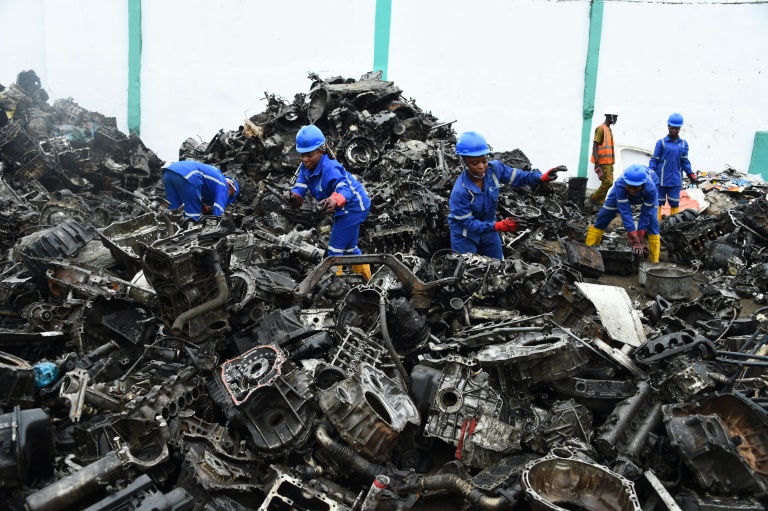
Romco Metals started recycling aluminium at its factory outside Lagos in 2015, drawn by global demand for the light, strong, flexible metal.

Buoyed by good results, it built a second facility outside Ghana’s capital Accra and now plans to open at least three new plants across Africa and triple production by 2025.

Aluminium is the world’s second most-used metal after steel and used widely in construction, medicine and car-making.

“Electric vehicles require more durable lighter material such as aluminium, and that’s where our materials end up,” said the company’s youthful founder, 32-year-old Raymond Onovwigun.

– Job creation –

A British-registered company, Romco melts down and recycles around 1,500 tonnes of discarded aluminium per month, out of a capacity of 3,000 tonnes.

It says it has created 450 direct jobs — 5,000 in total, in this labour-intensive sector — and plans to double that number within a year.

“Before… there was no work,” community leader Bankole Gbenga known as Chief Abore told AFP during a recent visit to the Lagos facility. 

Chief Abore says more than a hundred young people from his community alone now work for Romco in some capacity.

“Some are doing carpentry, some are welders… some of the youth are doing security,” said the 40-year-old.

Among those who have most benefited from Romco’s business are material suppliers like Mohammed Ashiru Madugu, who delivers several truckloads of metal scrap each week.

Madugu has a warehouse in northwestern Katsina, where suppliers from across the state and even neighbouring states bring him discarded metal.

He loads the goods onto trucks and sends them -– with escorts because of frequent ambushes by criminal gangs on the road –- all the way to Lagos, more than a thousand kilometres (600 miles) away.

For one truck, he can get paid up to 26 million naira (about $60,000 dollars) although the price fluctuates.

– Vast problem –

Only a tiny fraction of waste is recycled in Nigeria, a country of some 210 million consumers.

Plastic, metal and glass that in advanced economies are routinely picked up and processed are mostly tossed out.

Each year, Nigeria disgorges 200,000 tonnes of plastic into the Atlantic, the UN Industrial Development Organisation reported last year.

In Lagos alone, a city of more than 20 million people, less than 10 percent total recyclables are currently collected, Ibrahim Adejuwon Odumboni, managing director of the Lagos State Management Agency told AFP.

By comparison, in the UK, more than 41 percent of waste picked up by local authorities was recycled last year, according to British statistics.

For Odumboni, recycling initiatives are to be commended but more should be done by the companies making aluminium beverage cans and other products.

“We need the manufacturers to invest in the collection system. In many parts of the world, a portion of what producers sell is going into the recovery of products. We currently don’t have that in Nigeria,” he said.

If companies selling aluminium products “are not held responsible (for collecting waste) then it doesn’t make any sense — we’re just going round and round in circle.”

He blames poor legislation but says an improved law on Extended Producer Responsibility (EPR) is currently being discussed in the state house of assembly.

EPR is an environmental policy in place in many countries that gives producers incentives to take responsibility for their products after they are used.

Another challenge for recyclers is carbon emissions from the energy they use to crush, shred or melt old materials.

Romco, for instance, uses compressed natural gas to turn the aluminium into ingots.

“(It) is still a fossil fuel but the best, most efficient fossil fuel. It doesn’t contain lead or sulphur,” said Onovwigun.

The company says, however, that it wants to be independent of fossil fuels and is “exploring the potential of using solar, green hydrogen, and biofuels.”

Luxury brands drop Chinese star held for hiring sex workers

Global brands including Prada and Remy Martin have cut ties with Chinese superstar Li Yifeng, after the actor was detained for soliciting sex workers.

Li becomes the latest in a line of artists to find themselves in legal trouble recently, as the government cracks down on China’s entertainment industry, stepping up efforts to rein in what it calls “chaotic fan culture” and celebrity excess.

State media said Li, 35, had recently been detained and charged by police in Beijing for “soliciting prostitution on multiple occasions”, and had allegedly confessed.

Global and local brands including luxury fashion house Prada, watchmaker Panerai and French cognac maker Remy Martin issued statements on Sunday saying they had dropped Li as their brand ambassador following the scandal.

The actor, who played revolutionary leader Mao Zedong in a 2021 biopic to mark the centenary of the Chinese Communist Party, is hugely popular, with more than 60 million followers on China’s Twitter-like platform Weibo.

Only last month, he was on the catwalk in Beijing showcasing Prada’s fall 2022 collection.

A spate of scandals in recent months have taken down China’s biggest entertainers including singer Kris Wu, who was arrested on suspicion of rape last August.

Actress Zheng Shuang was hit with a $46 million tax evasion fine last year.

In September last year, officials ordered broadcasters to shun performers with “incorrect political positions”, and to cultivate a patriotic atmosphere.

“We solemnly call on the vast number of TV art workers to regard morality and art as their life’s homework,” the China Television Artists Association said in a statement on Monday.

“No matter what achievements you have made… if you don’t keep yourself clean… the so-called fame will disappear, and the so-called future will be ruined,” it warned.

Close Bitnami banner
Bitnami