AFP

US begins clinical trial to test monkeypox vaccine

US health authorities announced Thursday they would carry out a clinical trial to test different dosing strategies of the Jynneos monkeypox vaccine, amid uncertainty over its effectiveness.

The trial will enroll 200 adults aged 18-50 across the country, and is sponsored by the National Institute of Allergy and Infectious Diseases.

The Jynneos vaccine, manufactured by Denmark-based Bavarian Nordic, has been approved by the United States for the prevention of smallpox and monkeypox in people aged 18 and older. 

But while the highest-risk group, men who have sex with men, are encouraged to get the vaccine, there is no clear picture of how well it works in real world settings.

The new trial isn’t designed to produce an efficacy estimate, but rather measure the immune response of different dosing levels and administration methods.

“NIAID’s trial of JYNNEOS will provide important information on the immunogenicity, safety, and tolerability of alternative dosing approaches that would expand the current supply of vaccine,” said NIAID director Anthony Fauci in a statement.

Among the participants, one group will be injected subcutaneously — that is, under the skin. The vaccine is based on attenuated virus that is modified so it can’t replicate, and is given in two doses 28 days apart.

A second group will receive their shots intradermally, meaning between the layers of the skin. This strategy is meant to expand the availability of vaccines because it uses one-fifth of the standard dose.

A third group will also receive their shots intradermally, but at half the dosing level of the second group.

Scientists will test the peak immune responses and compare the side effects across the groups.

President Joe Biden’s administration has bet heavily on the Jynneos vaccine to stem the spread of monkeypox, which has affected more than 20,000 people in the United States since May.

But the question of how well the shot prevents infection versus minimizing disease would require further study to answer.

The current global outbreak is primarily affecting gay and bisexual men.

Historically, the virus has been spread via direct contact with lesions, body fluids and respiratory droplets, and sometimes through indirect contamination via surfaces such as shared bedding. 

But in this outbreak, there is preliminary evidence that sexual transmission may also play a role.

The virus causes painful skin lesions and flu-like symptoms. 

Most people fully recover, but the disease can cause serious complications, including bacterial infections, brain inflammation and death.

US begins clinical trial to test monkeypox vaccine

US health authorities announced Thursday they would carry out a clinical trial to test different dosing strategies of the Jynneos monkeypox vaccine, amid uncertainty over its effectiveness.

The trial will enroll 200 adults aged 18-50 across the country, and is sponsored by the National Institute of Allergy and Infectious Diseases.

The Jynneos vaccine, manufactured by Denmark-based Bavarian Nordic, has been approved by the United States for the prevention of smallpox and monkeypox in people aged 18 and older. 

But while the highest-risk group, men who have sex with men, are encouraged to get the vaccine, there is no clear picture of how well it works in real world settings.

The new trial isn’t designed to produce an efficacy estimate, but rather measure the immune response of different dosing levels and administration methods.

“NIAID’s trial of JYNNEOS will provide important information on the immunogenicity, safety, and tolerability of alternative dosing approaches that would expand the current supply of vaccine,” said NIAID director Anthony Fauci in a statement.

Among the participants, one group will be injected subcutaneously — that is, under the skin. The vaccine is based on attenuated virus that is modified so it can’t replicate, and is given in two doses 28 days apart.

A second group will receive their shots intradermally, meaning between the layers of the skin. This strategy is meant to expand the availability of vaccines because it uses one-fifth of the standard dose.

A third group will also receive their shots intradermally, but at half the dosing level of the second group.

Scientists will test the peak immune responses and compare the side effects across the groups.

President Joe Biden’s administration has bet heavily on the Jynneos vaccine to stem the spread of monkeypox, which has affected more than 20,000 people in the United States since May.

But the question of how well the shot prevents infection versus minimizing disease would require further study to answer.

The current global outbreak is primarily affecting gay and bisexual men.

Historically, the virus has been spread via direct contact with lesions, body fluids and respiratory droplets, and sometimes through indirect contamination via surfaces such as shared bedding. 

But in this outbreak, there is preliminary evidence that sexual transmission may also play a role.

The virus causes painful skin lesions and flu-like symptoms. 

Most people fully recover, but the disease can cause serious complications, including bacterial infections, brain inflammation and death.

ECB unleashes historic rate hike to battle record inflation

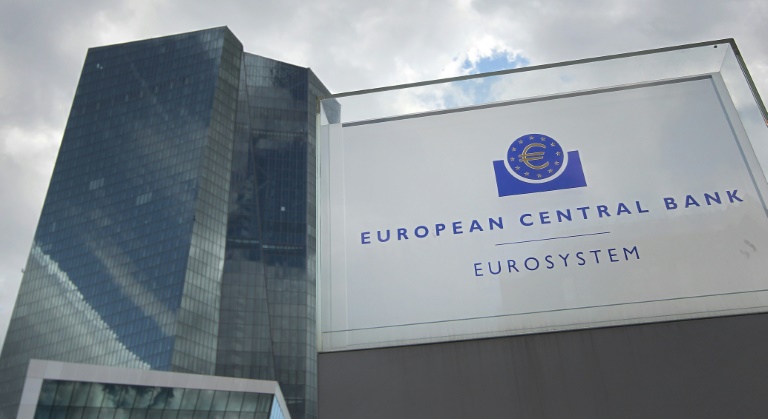
The European Central Bank announced the largest rate hike in its history Thursday, as runaway energy prices drove eurozone inflation to new heights. 

Policymakers resolved to raise the ECB’s key rates by 75 basis points, a leap matched only by a technical move made in 1999 shortly after the central bank’s founding. 

The “major step” quickened the ECB’s move away from a “highly accommodative level of policy rates” to one that would bring inflation back to its two-percent target, it said in a statement.

Eurozone inflation hit a record 9.1 percent in August, as steep increases in the price of energy in the wake of the Russian invasion of Ukraine heaped pressure on households and businesses.

Consumer prices were likely to continue to rise at a very quick pace “for an extended period”, the ECB predicted, with its latest forecasts expecting inflation to average 8.1 percent for 2022.

“Given the level of inflation and the uncertainties about its evolution, for the ECB, there is less risk in doing more than in doing less,” said Franck Dixmier, head of fixed income at Allianz Global Investors.

The ECB already exceeded expectations at its July meeting with a 50-basis-point increase in interest rates, its first hike in more than a decade.

Thursday’s drastic increase was not the end of the ECB’s work, however, with the central bank saying it “expects to raise interest rates further” in its next meetings.

– ‘Determination’ –

Ahead of the meeting, ECB board member Isabel Schnabel called on her colleagues to show “determination” to tame price rises.

Speaking at the annual Jackson Hole central banking symposium at the end of August, Schnabel urged the central bank to respond “more forcefully to the current bout of inflation, even at the risk of lower growth and higher unemployment”.

The ECB is playing catch-up with central banks in the United States and Britain, which started raising rates harder and faster in response to inflation.

The 75-basis-point increase matches the largest step taken by the Federal Reserve in its current hiking cycle.

Meanwhile, a weak euro, which fell below $0.99 for the first time in 20 years this week, has bolstered the case for bigger interest rate hikes.

The gathering Thursday also marked the beginning of a new “meeting-by-meeting” approach by the ECB. In July, policymakers scrapped so-called forward guidance, which had limited the ECB’s room for manoeuvre, giving them a free hand for more aggressive hikes.

– Recession rising –

In an updated set of economic forecasts, the ECB said it expected inflation to fall back to 5.5 percent in 2023 and 2.3 percent in 2024.

The central bank also slashed its forecast for economic growth in 2023 to 0.9 percent, from its previous prediction of 2.1 percent.

Recent gloomy economic data meant the eurozone was “expected to stagnate later in the year and in the first quarter of 2023”, the ECB said.

“Very high energy prices are reducing the purchasing power of people’s incomes and, although supply bottlenecks are easing, they are still constraining economic activity,” said the bank. 

The war in Ukraine was also still weighing on the confidence of businesses and consumers, it added.

With energy prices still soaring unabated and winter approaching, EU economic affairs commissioner Paolo Gentiloni warned Wednesday that the threat of a recession in Europe was “rising”.

“We may well be heading into one the most challenging winters in generations,” he added.

Blinken boosts aid on Ukraine visit as US sees battlefield wins

Secretary of State Antony Blinken paid a surprise visit to Kyiv Thursday as the United States unveiled more than $2.6 billion in new military aid, saying the assistance was visibly paying off on the battlefield.

The latest package includes $675 million to be shipped shortly in arms, ammunition and supplies, $1 billion in longer-term loans and grants for Ukraine to buy more US equipment and an equivalent amount for purchases by neighbouring countries seen as threatened by Russia.

Blinken, paying his second visit to Kyiv since Russia invaded in February, met Foreign Minister Dmytro Kuleba and started his trip by touring a hospital for children who have suffered in the war.

In a room with toy trucks and alien figurines, Blinken arrived with a basket of stuffed animals.

“I brought some friends,” Blinken told the children.

“The spirit of your children sends a very strong message around the world,” he said. 

Blinken also knelt down to pat Patron, a fabled Jack Russell terrier that has helped Ukraine’s military find more than 200 mines laid by Russian forces.

– Allies pledge support –

As Blinken was heading secretly to Kyiv, US Defense Secretary Lloyd Austin gathered with allies at the Ramstein air base in Germany to discuss support for Kyiv.

“Now, we’re seeing the demonstrable success of our common efforts on the battlefield,” Austin said, stressing that allies are in it “for the long haul”.

US President Joe Biden will separately hold a call Thursday with allies to “underscore our continued support for Ukraine”, a White House official said, speaking anonymously.

The official did not specify when the call would take place nor what countries would participate.

Austin’s meeting came hours after Ukrainian President Volodymyr Zelensky said his forces had recaptured several settlements in the northeastern Kharkiv region from the Russians.

Ukraine’s army said Thursday over 20 settlements in Kharkiv had been taken.

Kyiv has repeatedly urged its allies for more heavy weapons as it pursues its pushback. Prime Minister Denys Shmygal reiterated the request when he visited Germany on Sunday. 

Germany and the Netherlands said at Ramstein that they would start training and equipping Ukrainian soldiers on demining.

German Defence Minister Christine Lambrecht said her country will also be sending material for power generation and winter equipment, with both sides bracing for fighting in the bitter cold.

Among the issues raised at Ramstein are the restocking of arms, as “there is a significant consumption of munitions” in the war, said top US General Mark Milley.

Having already exhausted all its Russian-made armaments, Ukraine is now entirely dependent on Western military support.

Russia, under heavy sanctions, is meanwhile turning to North Korea for huge quantities of rocket and artillery shells, said Washington.

– ‘More effective’ –

The United States has been Ukraine’s biggest armaments supplier. 

Its latest package would include 105mm howitzers, precision-guided GMLRS rockets and artillery ammunition. 

This brings the US military aid to Ukraine since February 24 to $15.2 billion worth of various weapons, including anti-tank Javelin missiles and shells compatible with NATO’s artillery systems.

Among the most efficient weapons sent lately by Washington are the HIMAR multiple rocket launch systems, paired with GMLRS rockets that can reach targets up to 80 kilometres (50 miles) away.

But Kyiv is seeking ATACMS — precision-guided, medium range tactical missile that can be launched by the HIMAR systems and which are capable of striking at 300 kilometres.

The United States has so far refused, as it fears the missiles could land in Russian territory, sparking an even bigger conflict.

“Right now, the policy of the United States government is that we’re not sending ATACMS,” Milley said. 

“The range of the HIMARS is sufficient to meet the needs of the Ukrainians as they are currently fighting,” he added. 

In the territories occupied by Russian forces, the United Nations said there were “credible accusations” that Ukrainian children were being forcibly taken to Russia.

Some Ukrainians judged as close to the Ukraine government or military have also been tortured and forcibly removed and sent to Russian penal colonies and other detention centres, Ilze Brands Kehris, the assistant UN secretary general for human rights, told the Security Council on Wednesday.

But Russian UN Ambassador Vasily Nebenzya called the allegations unfounded and said what was labelled “filtration” was simply registering Ukrainians willingly fleeing the war to Russia.

Downpours and mudslides hamper China earthquake rescue mission

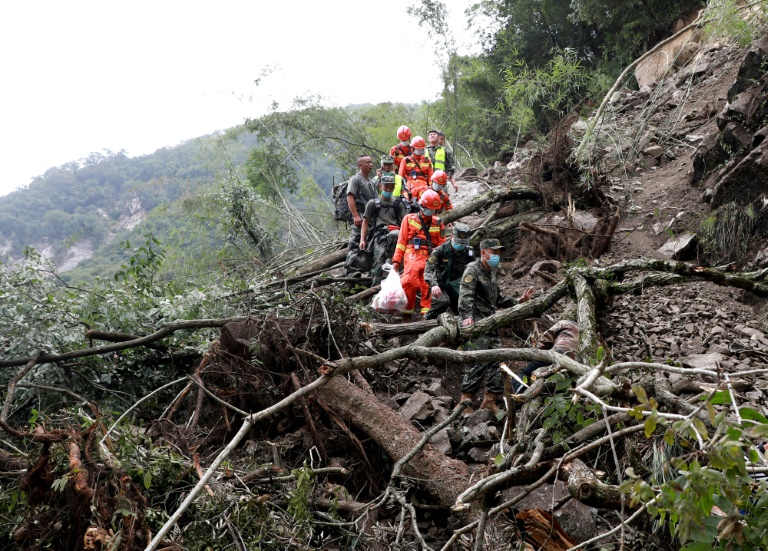
Rain, flash floods and mudslides threatened the search for dozens of people still missing on Thursday, days after a strong earthquake rocked mountainous southwest China, killing at least 86.

The 6.6-magnitude quake hit about 43 kilometres (26 miles) southeast of the city of Kangding in Sichuan province at a depth of 10 kilometres on Monday, according to the US Geological Survey, forcing thousands to be resettled into temporary camps.

State-run newspaper People’s Daily said that 50 people died in Ganzi prefecture near the epicentre, while 36 deaths were reported in neighbouring Ya’an city. 

Around 270 others were injured while the number of missing remained at 35, state broadcaster CCTV reported without giving more details about the conditions of those unaccounted for.

A yellow alert issued by the national weather service — warning of a “risk of geological disaster” — was in force until Thursday night, and moderate rain was forecast to continue to Friday with heavy showers in some areas.

“Since the post-earthquake geological conditions are inherently fragile, and the impact of additional rainfall may lead to landslides and mudslides, the local area needs to beware of secondary disasters,” China’s meteorological administration said.

The People’s Liberation Army, paramilitary police and fire rescue services dispatched more than 10,000 workers who continued search operations and landslide clean-up efforts in the remote countryside.

– Mountain torrents –

Rescuers braved flash floods and landslides caused by aftershocks to relocate villagers from destroyed homes, often having to haul them through mountainous terrain on ropes and stretchers.

CCTV images showed soldiers in military fatigues and orange life jackets using a zip-line to ferry people across river rapids.

“We also waded through the water to get to Xingfu village. The mountain torrents contain rocks… the stones you can’t see in the water pose the greatest threat to us,” a rescue team member named Tan Ke told CCTV.

“We quickly used ropes to build a human ladder… when we first started wading, the water reached our knees and thighs. By the time we got to a safe place, the flash flood had reached waist level.” 

Over 22,000 people have so far been moved into 124 temporary sites across Ganzi and Ya’an, People’s Daily reported. 

The paper said over 21,000 students and staff at a school in Shimian county, where Ya’an is located, were safely evacuated within one minute of the quake. 

Nearly 1,800 schools in the area had reopened by Wednesday, it added. 

Workers raced to fix hundreds of kilometres of power and optical cables, with communications in affected areas “basically restored” as of Thursday, the China Youth Daily reported. 

Local authorities have received over 100 million yuan ($14 million) in disaster relief donations so far, the report said, and the Sichuan government issued an emergency notice requiring local authorities to dish out hardship allowances for affected people.

The quake also rocked buildings in the provincial capital of Chengdu — where millions are confined to their homes under a strict Covid-19 lockdown — and in the nearby megacity of Chongqing, residents told AFP.

Japan says ready for 'necessary response' as yen dives

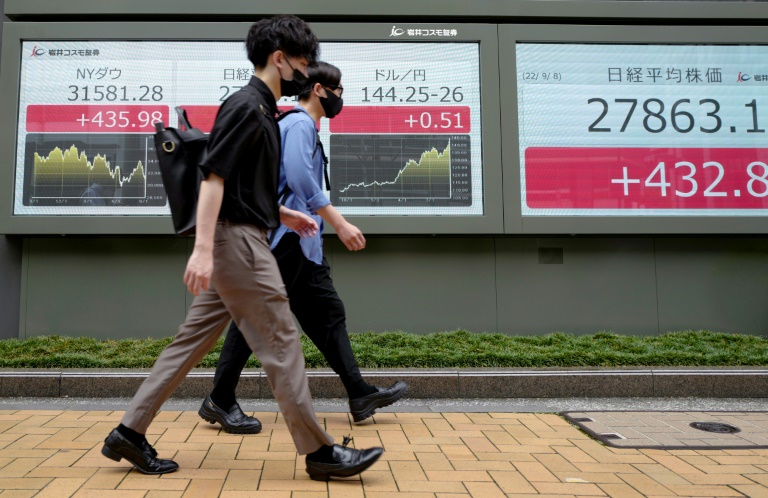
Japan is ready to take action if the yen’s plummeting value remains volatile, officials repeated on Thursday, after the currency hit 24-year lows.

The yen has tumbled from around 115 per dollar in March to lower than 140 last week, as the Bank of Japan (BoJ) sticks with its monetary easing policies in contrast to rate hikes from other central banks including the US Federal Reserve.

It has continued to drop fast, nearly touching 145 per dollar overnight in New York, as investors flooded into the US currency hoping for better returns and as a safe-haven hedge.

Japan has not announced any specific measures to bolster the yen, such as instructing the central bank to buy it against other currencies.

But on Thursday, officials from the BoJ, the finance ministry and the government’s fiscal services agency held a meeting while the yen hovered close to 144 per dollar.

“If (the yen) continues to fluctuate like this, the government is ready to take the necessary response in financial markets,” Masato Kanda, Vice-Minister of Finance for International Affairs, told reporters after the meeting.

“Various measures” are on the table, he said without giving details. His comments closely echoed remarks made Wednesday by Japan’s finance minister, who said rapid shifts in foreign exchange rates were “not desirable”.

Ray Attrill, head of FX strategy at National Australia Bank, said the rhetoric would have little effect.

“The market’s not buying what the Japanese officials are selling in terms of their public concerns about the moves in the yen. They’ve basically been singing from exactly the same hymn sheet,” he told AFP.

A weaker yen can help Japanese companies to sell products overseas, but “at these levels, the disadvantages of a weak yen are starting to outweigh the benefits,” with households and businesses facing higher import prices, Attrill said.

Inflation more broadly has risen to seven-year highs in Japan, partly due to the impact of the war in Ukraine on energy prices, but it is still less severe than in many major economies.

Prime Minister Fumio Kishida announced Thursday that the government will use 3.5 trillion yen ($24 billion) of reserve funds to address the domestic impact of inflation, and will deliver cash relief packages to low-income households.

Japan says ready for 'necessary response' as yen dives

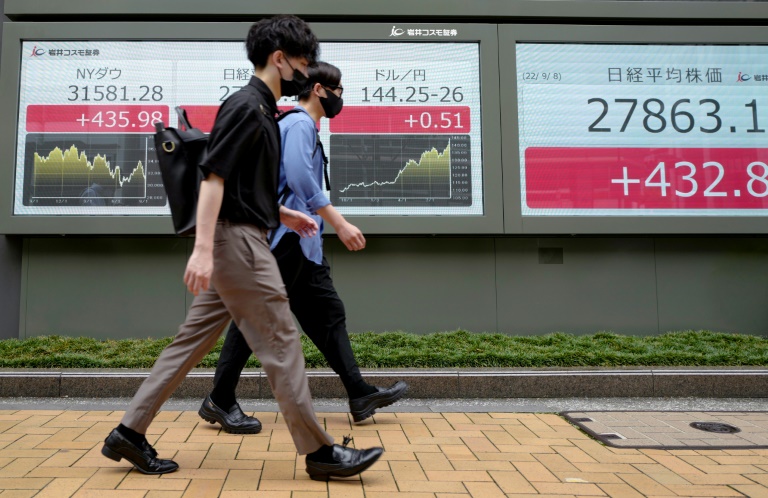
Japan is ready to take action if the yen’s plummeting value remains volatile, officials repeated on Thursday, after the currency hit 24-year lows.

The yen has tumbled from around 115 per dollar in March to lower than 140 last week, as the Bank of Japan (BoJ) sticks with its monetary easing policies in contrast to rate hikes from other central banks including the US Federal Reserve.

It has continued to drop fast, nearly touching 145 per dollar overnight in New York, as investors flooded into the US currency hoping for better returns and as a safe-haven hedge.

Japan has not announced any specific measures to bolster the yen, such as instructing the central bank to buy it against other currencies.

But on Thursday, officials from the BoJ, the finance ministry and the government’s fiscal services agency held a meeting while the yen hovered close to 144 per dollar.

“If (the yen) continues to fluctuate like this, the government is ready to take the necessary response in financial markets,” Masato Kanda, Vice-Minister of Finance for International Affairs, told reporters after the meeting.

“Various measures” are on the table, he said without giving details. His comments closely echoed remarks made Wednesday by Japan’s finance minister, who said rapid shifts in foreign exchange rates were “not desirable”.

Ray Attrill, head of FX strategy at National Australia Bank, said the rhetoric would have little effect.

“The market’s not buying what the Japanese officials are selling in terms of their public concerns about the moves in the yen. They’ve basically been singing from exactly the same hymn sheet,” he told AFP.

A weaker yen can help Japanese companies to sell products overseas, but “at these levels, the disadvantages of a weak yen are starting to outweigh the benefits,” with households and businesses facing higher import prices, Attrill said.

Inflation more broadly has risen to seven-year highs in Japan, partly due to the impact of the war in Ukraine on energy prices, but it is still less severe than in many major economies.

Prime Minister Fumio Kishida announced Thursday that the government will use 3.5 trillion yen ($24 billion) of reserve funds to address the domestic impact of inflation, and will deliver cash relief packages to low-income households.

Egypt vows to champion climate finance for Africa at COP27

When Egypt hosts a global climate summit in November, it will seek to represent Africa which shares little of the blame for global warming but suffers many of its worst impacts, its environment minister says.

Yasmine Fouad told AFP in an interview Wednesday that Egypt will also remind rich countries of the industrialised world of their unfulfilled aid pledges, at the COP27 summit in the Red Sea resort of Sharm el-Sheikh.

Part of Egypt’s role as host is to “represent the African continent and its needs clearly and explicitly: We were not the cause of these emissions, but it is us –- our people and our natural resources –- that are affected,” Fouad said.

She was speaking on the sidelines of an international conference in Cairo aimed at highlighting “Africa’s needs and ambitions” in fighting and adjusting to climate change.

African countries are among the most exposed to the impacts of climate change, especially worsening droughts and floods, but responsible for only around three percent of global CO2 emissions, former UN chief Ban Ki-moon said this week.

He was speaking at an Africa-focused summit in the Dutch city of Rotterdam, where African leaders lashed out at industrialised nations for failing to show up.

– Targets in danger –

Egypt’s environment minister said that “at this point, a stance must be taken on the international community level to say that everyone must fulfil their obligations, as set out in the Paris Agreement”. 

In 2015, 196 UN members meeting in Paris set the goal of keeping warming below two degrees Celsius (3.6 degrees Fahrenheit) over pre-industrial levels, and preferably 1.5 Celsius, but surging carbon emissions have since endangered the targets.

The Paris Agreement also stipulated that developed countries “shall provide financial resources to assist developing country parties” in curbing their emissions and strengthening resilience.

Already in 2015, a promise made at the Copenhagen climate summit in 2009 — to spend $100 billion a year by 2020 on helping vulnerable nations adapt to climate change — was receding in the rear-view mirror.

The 2020 goal came and went with pledges unmet, and regional meetings in preparation for COP27, such as this week’s in Egypt and the Netherlands as well as another last week in Gabon, signal that funding could become a key flashpoint in Sharm el-Sheikh.

– Water, food and energy –

Fouad said environmental concerns had until recent years been regarded “as an obstacle to investment” and a “luxury” that Egypt could not afford.

Drumming up support for environmental efforts was an uphill battle, until the tide turned and the world became increasingly aware that climate change is a matter of “human survival on planet earth”, she said.

The key to securing financing for efforts to combat climate change, she said, was to zero in on “basic human needs on earth: food, water, energy”.

In focusing on “bankable” projects that can turn a profit, Fouad said Egypt hopes to “use new and renewable energy to provide food and water, such as through desalination”.

Such projects could support developing countries with their basic development needs and with addressing climate change, she said, arguing that the two goals are in fact “one and the same”.

UK's Truss freezes energy bills in first big policy shift

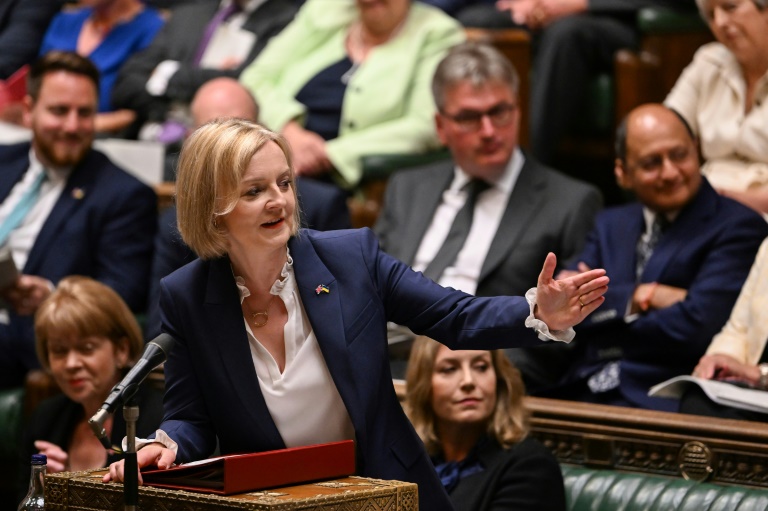
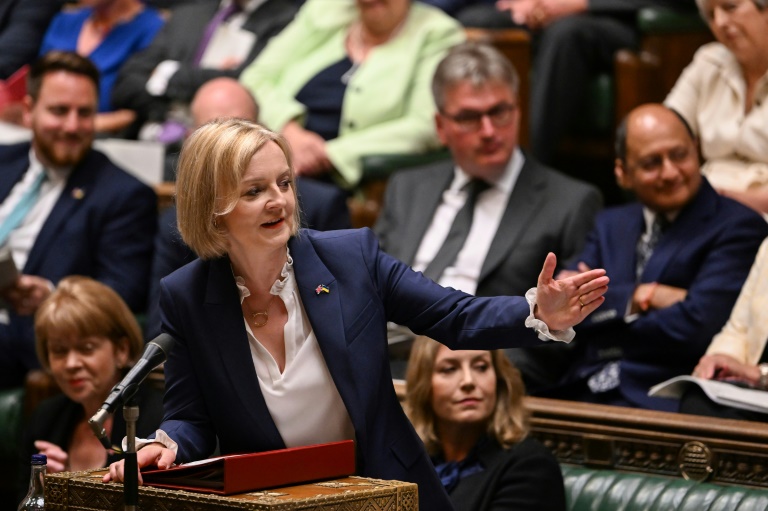
New British Prime Minister Liz Truss on Thursday said domestic fuel bills would be frozen for two years, marking her first week in office with a costly plan to tackle a politically perilous cost-of-living crisis.

The government said it would also review progress towards its legally enshrined target to achieve net-zero carbon emissions by 2050, to ensure the needs of consumers and businesses are taken into account, while stressing it remained committed to the goal.

Households are facing an 80-percent hike in gas and electricity bills next month due to the rise in the cost of wholesale energy made worse by a squeeze on supplies after Russia’s invasion of Ukraine.

Businesses whose bills are not capped have warned they could go to the wall because of even bigger rises, at the same time as inflation is at 40-year highs of 10.1 percent and predicted to go higher.

The government expects the state-backed scheme to cost tens of billions of pounds (dollars), but Truss and new finance minister Kwasi Kwarteng insisted it would have “substantial benefits” to the economy.

It would curb inflation by four to five percentage points, they said in a statement.

They also announced an end to a ban on fracking — a controversial method to drill for fossil fuels — and more drilling licences for North Sea oil and gas.

Truss said “decades of short-term thinking on energy” and failing to secure supplies had left Britain, which is heavily reliant on gas for its energy needs, vulnerable to price shocks.

“Extraordinary challenges call for extraordinary measures, ensuring that the United Kingdom is never in this situation again,” she said.

Kwarteng said the freeze means worried households and businesses “can now breathe a massive sigh of relief”.

– No windfall tax –

Tackling the cost-of-living crisis, which has led to widespread strike action over pay, threatens to define Truss’s premiership, just two days after she formally took over from Boris Johnson.

Truss said energy bills for an average British household would be capped at £2,500 ($2,872) a year — £1,000 less than October’s planned level.

Non-domestic energy users, including businesses, charities, and public sector organisations such as schools and hospitals, will see a six-month freeze.

Analysts predict the plan, which will likely be in place at the next general election expected in 2024, could top well over £100 billion, surpassing Britain’s Covid-era furlough jobs scheme.

Truss confirmed that the government will pay energy suppliers the difference in price but did not put an exact figure on how much it could cost the public purse, pending a mini-budget this month by Kwarteng.

Truss, a former Shell employee, has rejected opposition calls to impose windfall taxes on energy giants whose profits have surged on the back of higher wholesale prices. 

In her campaign to succeed Johnson, she had also ruled out direct handouts to consumers, but the new scheme reverses course on that.

She said the new price cap was calculated by temporarily removing green levies worth some £150 a year from household bills.

Paying for the freeze by increased borrowing has stoked concern on the financial markets about the prospect of worsening public finances already damaged by emergency Covid spending.

On bond markets, the UK’s 10-year borrowing rate topped three percent on Tuesday for the first time since 2014, and the pound has slumped to its lowest dollar level since 1985.

– Fracking –

The end to the fracking moratorium comes despite Truss’s Conservative party having pledged in 2019 to keep it in place, after onshore drilling for shale gas had caused seismic tremors in northern England.

She said that lifting the ban “could get gas flowing in as soon as six months”.

But experts have cast doubt about the effect on bills, given the time taken to start production and the amount of gas it could yield.

Kwarteng himself wrote in March that it could take up to a decade to get enough gas from fracking. At the same time, there is concern about the environmental damage of restarting the process.

Like Johnson, Truss committed to diversifying Britain’s energy sources to renewables and nuclear.

But she said the net-zero review, scheduled to conclude by the end of the year, would “ensure delivering the target is not placing undue burdens on businesses or consumers”.

The new support package offered nothing about insulating UK buildings better, to reduce high rates of energy leakage, and the government also ruled out any campaign to encourage the public to save energy.

ved-rfj-jit-phz/lth

UK's Truss freezes energy bills in first big policy shift

New British Prime Minister Liz Truss on Thursday said domestic fuel bills would be frozen for two years, marking her first week in office with a costly plan to tackle a politically perilous cost-of-living crisis.

The government said it would also review progress towards its legally enshrined target to achieve net-zero carbon emissions by 2050, to ensure the needs of consumers and businesses are taken into account, while stressing it remained committed to the goal.

Households are facing an 80-percent hike in gas and electricity bills next month due to the rise in the cost of wholesale energy made worse by a squeeze on supplies after Russia’s invasion of Ukraine.

Businesses whose bills are not capped have warned they could go to the wall because of even bigger rises, at the same time as inflation is at 40-year highs of 10.1 percent and predicted to go higher.

The government expects the state-backed scheme to cost tens of billions of pounds (dollars), but Truss and new finance minister Kwasi Kwarteng insisted it would have “substantial benefits” to the economy.

It would curb inflation by four to five percentage points, they said in a statement.

They also announced an end to a ban on fracking — a controversial method to drill for fossil fuels — and more drilling licences for North Sea oil and gas.

Truss said “decades of short-term thinking on energy” and failing to secure supplies had left Britain, which is heavily reliant on gas for its energy needs, vulnerable to price shocks.

“Extraordinary challenges call for extraordinary measures, ensuring that the United Kingdom is never in this situation again,” she said.

Kwarteng said the freeze means worried households and businesses “can now breathe a massive sigh of relief”.

– No windfall tax –

Tackling the cost-of-living crisis, which has led to widespread strike action over pay, threatens to define Truss’s premiership, just two days after she formally took over from Boris Johnson.

Truss said energy bills for an average British household would be capped at £2,500 ($2,872) a year — £1,000 less than October’s planned level.

Non-domestic energy users, including businesses, charities, and public sector organisations such as schools and hospitals, will see a six-month freeze.

Analysts predict the plan, which will likely be in place at the next general election expected in 2024, could top well over £100 billion, surpassing Britain’s Covid-era furlough jobs scheme.

Truss confirmed that the government will pay energy suppliers the difference in price but did not put an exact figure on how much it could cost the public purse, pending a mini-budget this month by Kwarteng.

Truss, a former Shell employee, has rejected opposition calls to impose windfall taxes on energy giants whose profits have surged on the back of higher wholesale prices. 

In her campaign to succeed Johnson, she had also ruled out direct handouts to consumers, but the new scheme reverses course on that.

She said the new price cap was calculated by temporarily removing green levies worth some £150 a year from household bills.

Paying for the freeze by increased borrowing has stoked concern on the financial markets about the prospect of worsening public finances already damaged by emergency Covid spending.

On bond markets, the UK’s 10-year borrowing rate topped three percent on Tuesday for the first time since 2014, and the pound has slumped to its lowest dollar level since 1985.

– Fracking –

The end to the fracking moratorium comes despite Truss’s Conservative party having pledged in 2019 to keep it in place, after onshore drilling for shale gas had caused seismic tremors in northern England.

She said that lifting the ban “could get gas flowing in as soon as six months”.

But experts have cast doubt about the effect on bills, given the time taken to start production and the amount of gas it could yield.

Kwarteng himself wrote in March that it could take up to a decade to get enough gas from fracking. At the same time, there is concern about the environmental damage of restarting the process.

Like Johnson, Truss committed to diversifying Britain’s energy sources to renewables and nuclear.

But she said the net-zero review, scheduled to conclude by the end of the year, would “ensure delivering the target is not placing undue burdens on businesses or consumers”.

The new support package offered nothing about insulating UK buildings better, to reduce high rates of energy leakage, and the government also ruled out any campaign to encourage the public to save energy.

ved-rfj-jit-phz/lth

Close Bitnami banner
Bitnami