AFP

Dollar rallies, stocks sink as traders prepare for big rate hikes

The dollar surged Wednesday against other major currencies and equities sank after a forecast-beating US economic report gave new life to talk of a third straight blockbuster interest rate hike next month.

The services sector data showed the world’s top economy remained resilient in the face of surging prices and borrowing costs, highlighting the job the Federal Reserve has in taming inflation while trying to prevent a recession — a goal many observers doubt can be achieved.

The reading added to the gloom blanketing trading floors as investors face a range of headwinds including a worsening energy crisis in Europe, Russia’s war in Ukraine and Chinese economic woes caused by Covid-19 lockdowns.

“Overall, the (services) survey paints a picture of solid activity in the services sector of the US economy supported by wages growth suggesting the Fed still has more work to do in order to cool the economy,” said National Australia Bank’s Rodrigo Catril.

All three main indexes on Wall Street finished in the red Tuesday as they reopened after a long weekend, with expectations growing that the Fed will announce a third successive 75 basis-point rate hike later this month.

Several top Fed officials — including head Jerome Powell — have lined up in recent weeks to say their main focus is bringing inflation down from four-decade highs, even if that means tipping the economy into recession.

The prospect of more big rate hikes has sent the dollar soaring this year, and on Wednesday it hit a new 24-year high of 144.38 yen before easing back slightly.

The yen’s losses continued to mount despite comments from government officials hinting at possible intervention to provide support, though there was no sign the Bank of Japan would shift from its ultra-loose monetary policies aimed at kickstarting the economy.

The euro remained lodged below parity with the dollar and at a 20-year low, even as the European Central Bank prepares to ramp up rates, having done so in July for the first time in eight years.

And the greenback was also pushing towards a 37-year peak against sterling, which saw a brief rally Tuesday on reports new UK Prime Minister Liz Truss was planning a £130 billion ($150 billion) package to freeze energy bills.

– China export weakness –

The losses in New York were tracked by Asia, where Hong Kong, Tokyo, Sydney, Seoul, Singapore, Taipei, Wellington, Mumbai, Jakarta and Manila all fell, though Shanghai and Bangkok edged up.

London, Paris and Frankfurt joined the sell-off in early business.

“The September swoon is in play as a resilient economy paves the way for more Fed tightening,” said OANDA’s Edward Moya. 

“Stocks are going to struggle because too much of the (US) economy is doing well. The dovish pivot and the end of interest rate hikes with the December (Fed meeting) is not how this will play out.”

In a sign of the weakness in the global economy and the impact China’s zero-Covid policies are having, Beijing released data showing the country’s exports grew far sharper in August than in July.

The figures, which were also well off forecasts, “merely serve to underscore how weak domestic demand still is, and how far away that end of year GDP target of 5.5 percent is”, said CMC Markets’ Michael Hewson.

“The target may well have been downgraded to an aspiration only last month, but it’s further away than ever after today’s data and we could be lucky to see half that number at this rate.”

China’s lockdown and the stronger dollar and expectations that leading economies will tip into recession continue to push oil prices lower, with both main contracts down more than one percent Wednesday.

Bets on a plunge in demand have seen the commodity tank about 20 percent in recent months, putting them below the levels seen just before Russia invaded Ukraine and sent prices skyrocketing.

And while concerns remain about supplies, OANDA’s Moya added: “The short-term crude demand outlook appears to be poised for another wave of China Covid-related lockdowns.

“Despite some better-than-expected US services data, global growth isn’t looking good at all and that is trouble for crude prices.”

– Key figures at around 0810 GMT –

Tokyo – Nikkei 225: DOWN 0.7 percent at 27,430.30 (close)

Hong Kong – Hang Seng Index: DOWN 0.8 percent at 19,044.30 (close)

Shanghai – Composite: UP 0.1 percent at 3,246.29 (close)

London – FTSE 100: DOWN 0.9 percent at 7,236.86

Euro/dollar: UP at $0.9910 from $0.9905 on Tuesday

Pound/dollar: DOWN at $1.1497 from $1.1519

Dollar/yen: UP at 144.10 yen from 142.80 yen

Euro/pound: UP at 86.14 pence from 85.97 pence

West Texas Intermediate: DOWN 1.6 percent at $85.53 per barrel

Brent North Sea crude: DOWN 1.4 percent at $91.56 per barrel

New York – Dow: DOWN 0.6 percent at 31145.30 (close)
Dollar rallies, stocks sink as traders prepare for big rate hikes

The dollar surged Wednesday against other major currencies and equities sank after a forecast-beating US economic report gave new life to talk of a third straight blockbuster interest rate hike next month.

The services sector data showed the world’s top economy remained resilient in the face of surging prices and borrowing costs, highlighting the job the Federal Reserve has in taming inflation while trying to prevent a recession — a goal many observers doubt can be achieved.

The reading added to the gloom blanketing trading floors as investors face a range of headwinds including a worsening energy crisis in Europe, Russia’s war in Ukraine and Chinese economic woes caused by Covid-19 lockdowns.

“Overall, the (services) survey paints a picture of solid activity in the services sector of the US economy supported by wages growth suggesting the Fed still has more work to do in order to cool the economy,” said National Australia Bank’s Rodrigo Catril.

All three main indexes on Wall Street finished in the red Tuesday as they reopened after a long weekend, with expectations growing that the Fed will announce a third successive 75 basis-point rate hike later this month.

Several top Fed officials — including head Jerome Powell — have lined up in recent weeks to say their main focus is bringing inflation down from four-decade highs, even if that means tipping the economy into recession.

The prospect of more big rate hikes has sent the dollar soaring this year, and on Wednesday it hit a new 24-year high of 144.38 yen before easing back slightly.

The yen’s losses continued to mount despite comments from government officials hinting at possible intervention to provide support, though there was no sign the Bank of Japan would shift from its ultra-loose monetary policies aimed at kickstarting the economy.

The euro remained lodged below parity with the dollar and at a 20-year low, even as the European Central Bank prepares to ramp up rates, having done so in July for the first time in eight years.

And the greenback was also pushing towards a 37-year peak against sterling, which saw a brief rally Tuesday on reports new UK Prime Minister Liz Truss was planning a £130 billion ($150 billion) package to freeze energy bills.

– China export weakness –

The losses in New York were tracked by Asia, where Hong Kong, Tokyo, Sydney, Seoul, Singapore, Taipei, Wellington, Mumbai, Jakarta and Manila all fell, though Shanghai and Bangkok edged up.

London, Paris and Frankfurt joined the sell-off in early business.

“The September swoon is in play as a resilient economy paves the way for more Fed tightening,” said OANDA’s Edward Moya. 

“Stocks are going to struggle because too much of the (US) economy is doing well. The dovish pivot and the end of interest rate hikes with the December (Fed meeting) is not how this will play out.”

In a sign of the weakness in the global economy and the impact China’s zero-Covid policies are having, Beijing released data showing the country’s exports grew far sharper in August than in July.

The figures, which were also well off forecasts, “merely serve to underscore how weak domestic demand still is, and how far away that end of year GDP target of 5.5 percent is”, said CMC Markets’ Michael Hewson.

“The target may well have been downgraded to an aspiration only last month, but it’s further away than ever after today’s data and we could be lucky to see half that number at this rate.”

China’s lockdown and the stronger dollar and expectations that leading economies will tip into recession continue to push oil prices lower, with both main contracts down more than one percent Wednesday.

Bets on a plunge in demand have seen the commodity tank about 20 percent in recent months, putting them below the levels seen just before Russia invaded Ukraine and sent prices skyrocketing.

And while concerns remain about supplies, OANDA’s Moya added: “The short-term crude demand outlook appears to be poised for another wave of China Covid-related lockdowns.

“Despite some better-than-expected US services data, global growth isn’t looking good at all and that is trouble for crude prices.”

– Key figures at around 0810 GMT –

Tokyo – Nikkei 225: DOWN 0.7 percent at 27,430.30 (close)

Hong Kong – Hang Seng Index: DOWN 0.8 percent at 19,044.30 (close)

Shanghai – Composite: UP 0.1 percent at 3,246.29 (close)

London – FTSE 100: DOWN 0.9 percent at 7,236.86

Euro/dollar: UP at $0.9910 from $0.9905 on Tuesday

Pound/dollar: DOWN at $1.1497 from $1.1519

Dollar/yen: UP at 144.10 yen from 142.80 yen

Euro/pound: UP at 86.14 pence from 85.97 pence

West Texas Intermediate: DOWN 1.6 percent at $85.53 per barrel

Brent North Sea crude: DOWN 1.4 percent at $91.56 per barrel

New York – Dow: DOWN 0.6 percent at 31145.30 (close)
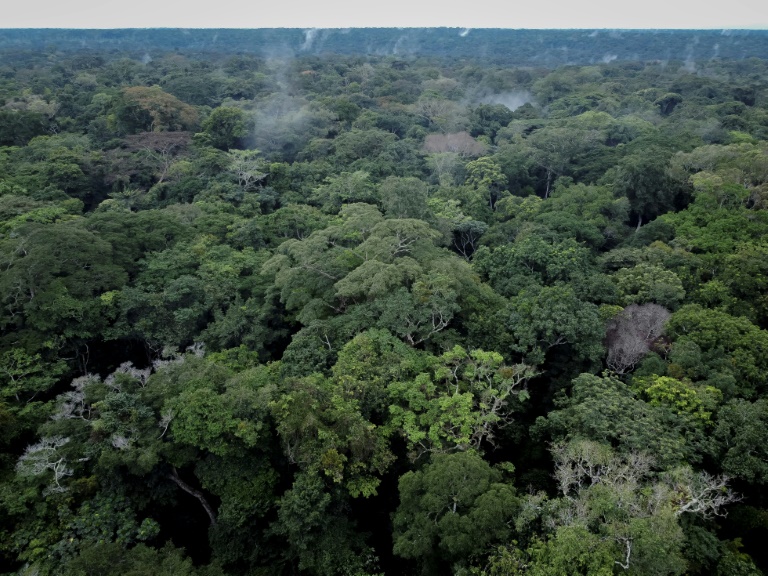
Scientists fight to protect DR Congo rainforest as threats increase

A tower bristling with sensors juts above the canopy in northern Democratic Republic of Congo, measuring carbon dioxide emitted from the world’s second-largest tropical rainforest. 

Spanning several countries in central Africa, the Congo Basin rainforest covers an immense area and is home to a dizzying array of species. 

But there are growing concerns for the future of the forest, deemed critical for sequestering CO2, as loggers and farmers push ever deeper inside.

Scientists at the Yangambi Biosphere Reserve in the DRC’s Tshopo province are studying the rainforest’s role in climate change — a subject that received scant attention until recently.

Standing 55 metres tall, the CO2-measuring flux tower came online in 2020 in the lush reserve of 250,000 hectares (620,000 acres).

Yangambi was renowned for tropical agronomy research during the Belgian colonial era. 

This week, it also hosted scientists as part of meetings in the DRC dubbed pre-COP 27, ahead of the COP27 climate summit in Egypt in November.

Thomas Sibret, who runs the CongoFlux CO2 measuring project, said that flux towers are common worldwide.

But until one was set up in Yangambi, there had been none in Congo, which had “limited our understanding of this ecosystem”, he said.

Around 30 billion tonnes of carbon are stored across the Congo Basin, researchers estimated in a study in Nature in 2016. The figure is roughly equivalent to three years’ of global emissions.

Sibret said more time is required to draw definitive conclusions from the data gathered by DRC’s flux tower, but one thing is certain: The rainforest sequesters more greenhouse gases than it emits.

– ‘No more trees’ –

Paolo Cerutti, the head of the Center for International Forestry Research’s operations in Congo, said this was good news.

In Latin America, “we’re starting to see evidence that the Amazon (rainforest) is becoming more of an emitter,” he said.

“We’re betting a lot on the Congo Basin, especially the DRC, which has 160 million hectares of forest still capable of absorbing carbon.”

But Cerutti warned that slash-and-burn agriculture poses a particular threat to the future of the rainforest, pointing out that half a million hectares of forest were lost last year.

Slash-and-burn agriculture sees villagers cultivate lands until they become depleted, then clear forests to create new lands, and repeat the cycle. 

With the DRC’s population of about 100 million people set to expand, many worry the forest is in dire threat. 

Jean-Pierre Botomoito, the head of the Yanonge area about 40 kilometres (24 miles) from Yangambi, said that he once thought the forest was inexhaustible.

But “here, there are no trees,” he said.

Villagers in his once-forested region now have to travel long distances along narrow muddy paths to find tree-dwelling caterpillars — a local delicacy. 

Charcoal used for cooking in the absence of electricity and gas is similarly hard to obtain.

There are efforts to help farmers in the remote and impoverished region to make a living while sustaining the environment.

A largely EU-financed project, for example, trains farmers to rotate cassava and groundnut crops between fast-growing acacia trees. 

Farmers can harvest the acacia trees to make charcoal after six years.

Experts also encourage the use of more efficient kilns to produce more charcoal and teach loggers how to select which trees to fell.

– Vandalism –

Jean Amis, the head of a local farmers’ organisation, was enthusiastic about the project.

“We didn’t necessarily have the right practices” before, he said.

Others are too.

Helene Fatouma, the president of a women’s association, says fishponds on the edge of the forest now yield 1,450 kilos of fish in six months, as opposed to 30 previously.

But not all residents of the surrounding area support the various schemes.

Some people believe that the flux tower is stealing oxygen, for example, or that it is a prelude to land appropriation.

Researchers often find dendrometers — devices that measure tree dimensions — vandalised, and some traditional chiefs think the forest will grow back by itself without outside interference. 

The Indonesia-based Center for International Forestry Research says that resistance to the schemes can be overcome through raising awareness. 

Dieu Merci Assumani, the director of the DRC’s National Institute for Agricultural Research, agreed.

But he said there needs to be more financing for locals, who have seen little benefit from promised funds to protect the rainforest.

Assumani pointed as an example to the $500-million deal to protect the Congo Basin rainforest, signed by President Felix Tshisekedi and then British prime minister Boris Johnson in Glasgow last year.

“Commitments are all very well, but they need to be disbursed,” he said. 

China export growth slows sharply in August: official data

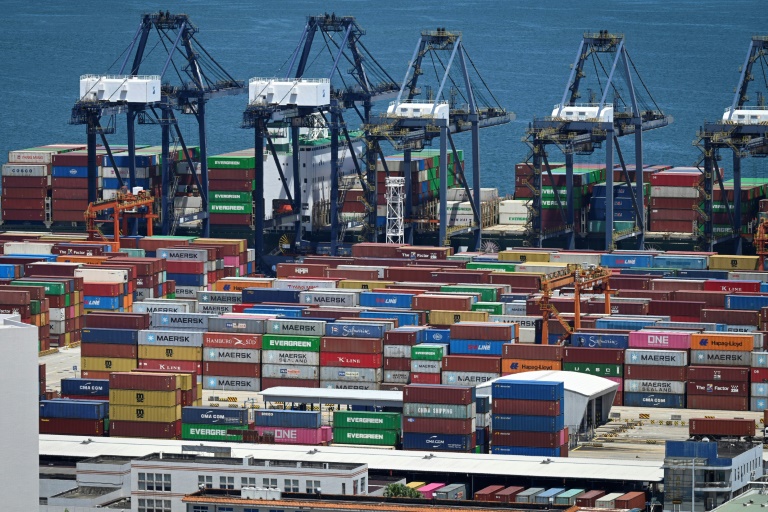
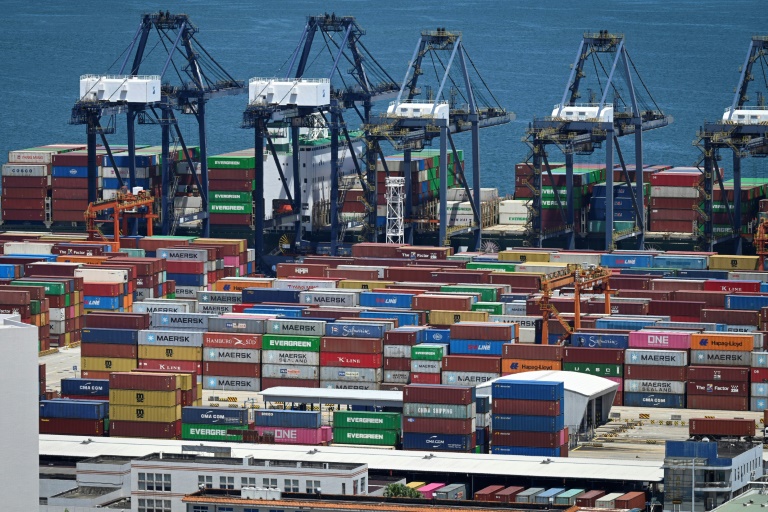
China’s export growth slowed significantly in August, customs authorities said Wednesday, as economic uncertainty is exacerbated by strict Covid-19 lockdowns across the country.

The weakness in trade comes as global demand for Chinese products weakens with energy prices soaring and the United States facing the threat of recession.

At the same time the domestic property sector — which accounts for about a quarter of the world’s number-two economy — continues to struggle with firms staggering under vast amounts of debt.

Overseas shipments increased 7.1 percent on-year, against 18 percent growth in July, China’s General Administration of Customs said, while imports were up only 0.3 percent, compared with a 2.3 percent.

Analysts surveyed by Bloomberg forecast export growth of 13 percent and a 1.1 percent increase in imports.

Sporadic Covid-19 lockdowns around China have dampened consumer enthusiasm and business confidence, while searing temperatures across large parts of the country this summer prompted power rationing for factories.

China’s factory activity shrank for the second month in a row in August, but officials are showing few signs of relaxing strict pandemic curbs, with southwestern megacity Chengdu locking down its 21 million inhabitants last week.

And while officials have announced a range of measures aimed at bolstering the economy, commentators warned that there will not likely be any concerted recovery until the tough Covid measures are removed for good.

“As rising energy prices and monetary policy tightening hit US and Western European households, demand for Chinese manufacturing exports is cooling,” Rajiv Biswas, APAC Chief Economist at S&P Global Market Intelligence told AFP.

Biswas said he expected these factors to continue dampening Chinese exports for the rest of the year, while the country faces “continued weak domestic demand due to the ongoing impact of pandemic-related restrictive measures on consumer spending as well as the residential construction slowdown”.

“Single-digit export growth is more likely for the rest of the year,” Zhang Zhiwei, chief economist at Pinpoint Asset Management, told Bloomberg News.

Chinese leaders had originally set a full-year GDP growth target of around 5.5 percent, but with economic expansion of just 0.4 percent in the second quarter, analysts believe it is unlikely to hit that goal.

Michael Hewson of CMC markets said the latest figures “merely serve to underscore how weak domestic demand still is, and how far away that end of year GDP target of 5.5 percent is”.

“The target may well have been downgraded to an aspiration only last month, but it’s further away than ever after today’s data and we could be lucky to see half that number at this rate.”

Nomura analysts on Tuesday lowered their 2022 growth forecast for China to 2.7 percent from an earlier estimate of 2.8 percent, with nearly every province in the country fighting Covid outbreaks in recent days.

“The picture is not pretty, as China continues to battle the broadest wave of Covid infections thus far,” analysts wrote in a note.

At the same time, China’s property market, a major driver of growth, is struggling with a debt crisis and disruptions to construction.

China’s central bank last month cut the five-year Loan Prime Rate — a benchmark for mortgages — in an effort to boost the flagging sector.

China export growth slows sharply in August: official data

China’s export growth slowed significantly in August, customs authorities said Wednesday, as economic uncertainty is exacerbated by strict Covid-19 lockdowns across the country.

The weakness in trade comes as global demand for Chinese products weakens with energy prices soaring and the United States facing the threat of recession.

At the same time the domestic property sector — which accounts for about a quarter of the world’s number-two economy — continues to struggle with firms staggering under vast amounts of debt.

Overseas shipments increased 7.1 percent on-year, against 18 percent growth in July, China’s General Administration of Customs said, while imports were up only 0.3 percent, compared with a 2.3 percent.

Analysts surveyed by Bloomberg forecast export growth of 13 percent and a 1.1 percent increase in imports.

Sporadic Covid-19 lockdowns around China have dampened consumer enthusiasm and business confidence, while searing temperatures across large parts of the country this summer prompted power rationing for factories.

China’s factory activity shrank for the second month in a row in August, but officials are showing few signs of relaxing strict pandemic curbs, with southwestern megacity Chengdu locking down its 21 million inhabitants last week.

And while officials have announced a range of measures aimed at bolstering the economy, commentators warned that there will not likely be any concerted recovery until the tough Covid measures are removed for good.

“As rising energy prices and monetary policy tightening hit US and Western European households, demand for Chinese manufacturing exports is cooling,” Rajiv Biswas, APAC Chief Economist at S&P Global Market Intelligence told AFP.

Biswas said he expected these factors to continue dampening Chinese exports for the rest of the year, while the country faces “continued weak domestic demand due to the ongoing impact of pandemic-related restrictive measures on consumer spending as well as the residential construction slowdown”.

“Single-digit export growth is more likely for the rest of the year,” Zhang Zhiwei, chief economist at Pinpoint Asset Management, told Bloomberg News.

Chinese leaders had originally set a full-year GDP growth target of around 5.5 percent, but with economic expansion of just 0.4 percent in the second quarter, analysts believe it is unlikely to hit that goal.

Michael Hewson of CMC markets said the latest figures “merely serve to underscore how weak domestic demand still is, and how far away that end of year GDP target of 5.5 percent is”.

“The target may well have been downgraded to an aspiration only last month, but it’s further away than ever after today’s data and we could be lucky to see half that number at this rate.”

Nomura analysts on Tuesday lowered their 2022 growth forecast for China to 2.7 percent from an earlier estimate of 2.8 percent, with nearly every province in the country fighting Covid outbreaks in recent days.

“The picture is not pretty, as China continues to battle the broadest wave of Covid infections thus far,” analysts wrote in a note.

At the same time, China’s property market, a major driver of growth, is struggling with a debt crisis and disruptions to construction.

China’s central bank last month cut the five-year Loan Prime Rate — a benchmark for mortgages — in an effort to boost the flagging sector.

El Salvador marks 1st year of Bitcoin use as confidence wanes

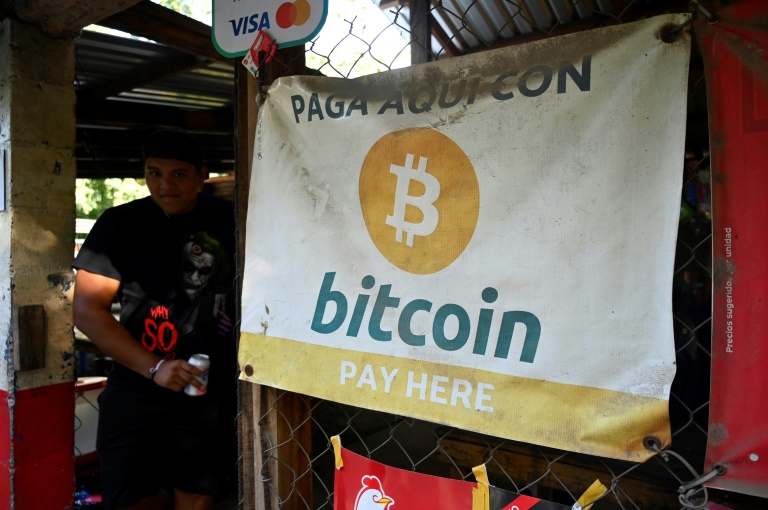
A year ago, El Salvador began accepting Bitcoin as legal tender following a controversial and much criticized decision by President Nayib Bukele.

All seemed rosy for the first few months as citizens enthusiastically embraced the new opportunity, but Bitcoin’s value has plummeted since and some experts say the move has been a failure.

Maria Aguirre, 52, a shopkeeper in the El Zonte seaside resort that has been a major center for Bitcoin use, says things were going well last year as Bitcoin’s value rose from $52,660 at opening on September 7, 2021, to briefly over $68,000 a couple of months later.

“But over the last five months it’s been only falling,” said Aguirre, who continues to accept Bitcoin transactions.

Bitcoin has dipped under $20,000 for most of this September.

In El Zonte, around 60 kilometers southwest of capital San Salvador, Bitcoin was already being used before Bukele’s move, which was designed to encourage a population where only 35 percent of people owned an account at a financial institution in 2021, according to the World Bank.

El Salvador became the first country to accept Bitcoin as legal tender, alongside the US dollar that has been the official currency for two decades.

The government even created the Chivo electronic wallet and granted each user the equivalent of $30.

By January, the application had been downloaded four million times, according to Bukele — an impressive amount in a country of 6.6 million, although with a diaspora of three million living mostly in the United States.

Bukele’s idea was to ensure that remittances, which make up 28 percent of El Salvador’s GDP, be sent by Chivo meaning less money lost in commission to exchange agencies.

However, former central bank president Carlos Acevedo says the body’s records show that “less than two percent of remittances are arriving through digital wallets, which means that this hasn’t been a benefit either.”

University student Carmen Majia, 22, said she used Bitcoin in the beginning “but given how things are going, now I don’t trust it and I uninstalled the application.”

– Volatility –

When Bukele’s plan was launched, Aguirre had already been using Bitcoin for eight months in the Pacific seaside resort that is popular with surfers.

After Bitcoin shot up in value between September and November 2021, Bukele announced a plan to build Bitcoin City — a tax haven for cryptocurrencies and blockchain technology on the Gulf of Fonseca that would be powered by geothermal energy from the Conchagua volcano.

To build it, Bukele was going to issue $1 billion in Bitcoin bonds but those plans were delayed by the volatile cryptocurrency market that saw some less robust currencies crash and Bitcoin take a huge hit.

According to the credit rating company Moody’s, Bukele’s plan has cost El Salvador $375 million.

Taking advantage of the drop in value, Bukele bought 80 Bitcoins at $19,000 each in July, taking El Salvador’s total holdings to 2,381 units of the cryptocurrency, all bought over the last year.

In June he told compatriots to “stop looking at the graph” insisting that Bitcoin is a secure investment that will bounce back up.

“Patience is the key,” he said.

– Little enthusiasm –

But Acevedo insists that the use of Bitcoin “really has not worked” and that “so far it has really been a failed bet.”

But not a total failure “because it could recover and get out of this crypto winter.”

Acevedo says Bitcoin has not produced Bukele’s stated aim of “financial inclusion” and its fall in value has “psychologically influenced people who do not view it with enthusiasm.”

The adoption of Bitcoin has also complicated El Salvador’s attempts to secure a $1.3 billion loan from the International Monetary Fund, which had urged against the move.

Faced with a warning that the country could default over its public debt that has surpassed 80 percent of GDP, Bukele announced in June a plan to buy back bonds due to expire in 2023 and 2025.

He insists the country has the cash to do so.

That reduced the country’s risk from 35 percent to 25 percent but Acevedo says El Salvador will not be able to return to the debt markets until that figure comes down to “at least five percent.”

In El Zonte, Cheetara Hasbún, a hotel employee, still thinks Bitcoin is a “good payment” method and just “needs more time, as was given to the dollar.”

East Timor says China could help fund major pipeline project

East Timor leader Jose Ramos-Horta on Wednesday said China could help fund a vast fossil fuel project seen as crucial to the nation’s economic future, dismissing Western concerns over Beijing’s growing influence.

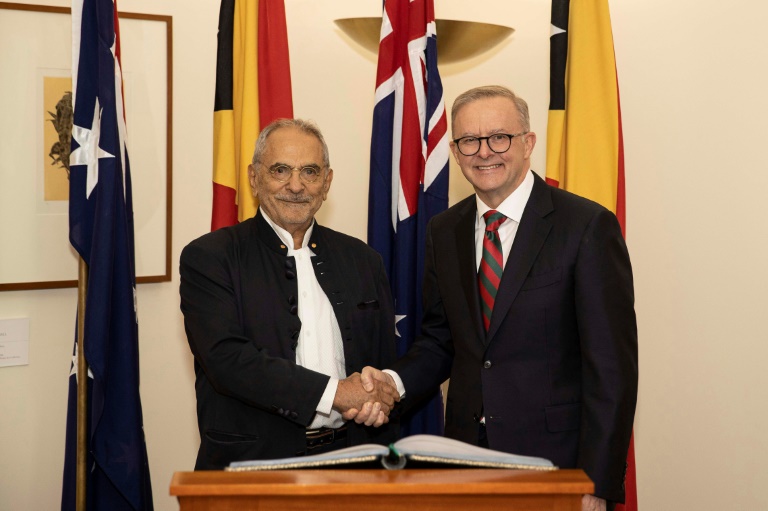
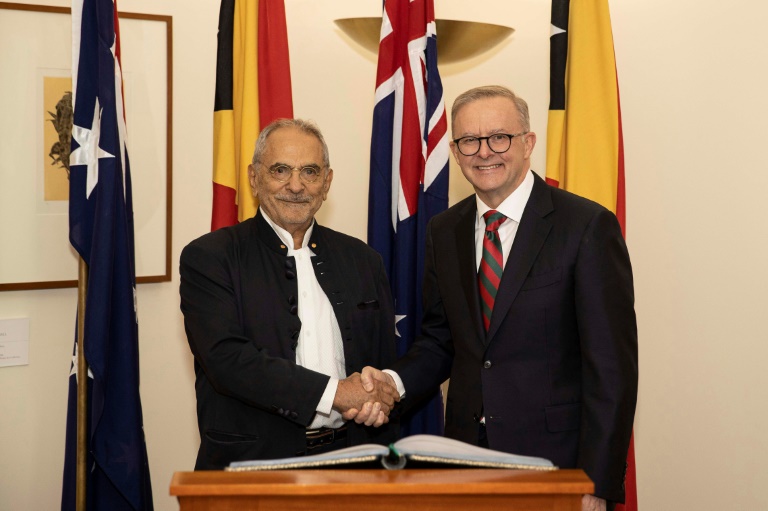
Speaking to reporters after a meeting with Australian Prime Minister Anthony Albanese in Canberra, the president and Nobel peace laureate said “of course, China” could be involved in the Greater Sunrise project, which aims to tap trillions of cubic feet of natural gas.

The project, located in waters between East Timor and Australia, has long been touted as a joint venture between the two countries.

But exploration has been stalled for years due to disputes over maritime boundaries and whether the gas should be refined in Australia or East Timor.

Ramos Horta is pushing hard to gain foreign financing and to have LNG facilities built in his country, seeing it as a potential economic game-changer.

He told reporters that a number of Asia-Pacific countries could be involved in the project — including Japan and South Korea — but also mooted Beijing’s involvement, aware it was likely to raise hackles in Canberra.

“Of course China (could be involved). It’s a pipeline, we are not talking about maritime security. It’s just a pipeline. China would just be an investor,” he said.

But policymakers in Canberra are likely to baulk at Chinese involvement in critical infrastructure so close to Australia’s borders.

Australia is already concerned about China’s rapidly expanding regional influence, including in East Timor, which gained independence in 2002 and sits just a few hundred kilometres (miles) off Australia’s northern coast.

China built the country’s parliament, Ramos-Horta’s presidential palace and the foreign ministry.

Revenues from existing fossil fuel projects are soon expected to run dry, and the country’s sovereign wealth fund is rapidly dwindling, leading some to warn of an impending “fiscal cliff.”

Australia’s top diplomat, Penny Wong, recently warned Dili that it faces some “pretty serious economic challenges” and warned against the risks of so-called “debt trap” diplomacy, a term widely used in reference to Chinese investment strategy in countries like Sri Lanka.

“Our debt, our loans, they are in the spirit of wanting East Timor to be more resilient”, she said on a visit to the island nation’s capital. 

“We know that economic resilience can be affected, can be constrained, by unsustainable debt burdens or by lenders who have different objectives.”

East Timor says China could help fund major pipeline project

East Timor leader Jose Ramos-Horta on Wednesday said China could help fund a vast fossil fuel project seen as crucial to the nation’s economic future, dismissing Western concerns over Beijing’s growing influence.

Speaking to reporters after a meeting with Australian Prime Minister Anthony Albanese in Canberra, the president and Nobel peace laureate said “of course, China” could be involved in the Greater Sunrise project, which aims to tap trillions of cubic feet of natural gas.

The project, located in waters between East Timor and Australia, has long been touted as a joint venture between the two countries.

But exploration has been stalled for years due to disputes over maritime boundaries and whether the gas should be refined in Australia or East Timor.

Ramos Horta is pushing hard to gain foreign financing and to have LNG facilities built in his country, seeing it as a potential economic game-changer.

He told reporters that a number of Asia-Pacific countries could be involved in the project — including Japan and South Korea — but also mooted Beijing’s involvement, aware it was likely to raise hackles in Canberra.

“Of course China (could be involved). It’s a pipeline, we are not talking about maritime security. It’s just a pipeline. China would just be an investor,” he said.

But policymakers in Canberra are likely to baulk at Chinese involvement in critical infrastructure so close to Australia’s borders.

Australia is already concerned about China’s rapidly expanding regional influence, including in East Timor, which gained independence in 2002 and sits just a few hundred kilometres (miles) off Australia’s northern coast.

China built the country’s parliament, Ramos-Horta’s presidential palace and the foreign ministry.

Revenues from existing fossil fuel projects are soon expected to run dry, and the country’s sovereign wealth fund is rapidly dwindling, leading some to warn of an impending “fiscal cliff.”

Australia’s top diplomat, Penny Wong, recently warned Dili that it faces some “pretty serious economic challenges” and warned against the risks of so-called “debt trap” diplomacy, a term widely used in reference to Chinese investment strategy in countries like Sri Lanka.

“Our debt, our loans, they are in the spirit of wanting East Timor to be more resilient”, she said on a visit to the island nation’s capital. 

“We know that economic resilience can be affected, can be constrained, by unsustainable debt burdens or by lenders who have different objectives.”

China earthquake death toll rises to 74

The death toll from a strong earthquake that struck southwest China has risen to 74, state media reported Wednesday, as thousands were evacuated into temporary shelters and heavy rains threatened to cause more landslides.

The magnitude 6.6 quake hit about 43 kilometres (26 miles) southeast of the city of Kangding in Sichuan province at a depth of 10 kilometres on Monday, according to the US Geological Survey.

The state-run People’s Daily said that 34 people died in Sichuan’s Ya’an city, while 40 deaths were reported in neighbouring Ganzi prefecture.

More than 21,000 people have been evacuated from areas prone to landslides or building collapse, state broadcaster CCTV said.

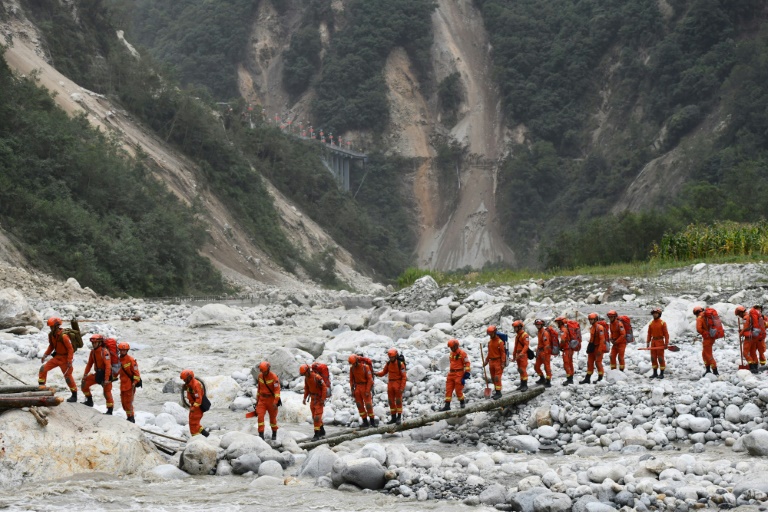
Rescuers are still scouring remote villages in the country’s mountainous southwest in a race to find survivors of the earthquake, with dozens of people believed stranded or missing.

“My head was stuck between the two columns, and my legs were sandwiched between the tables,” one woman who was trapped for nearly five hours under a collapsed hotel in the town of Moxi, one of the worst-affected areas, told state-run Red Star News.

“I could only lie in one position, resigned to my fate. I don’t know who saved me,” she added, saying she had worried for her children and whether their school building had collapsed.

“I could only think about whether the children were crying for their mother.”

Dramatic footage aired by state broadcaster CCTV showed kindergarten teachers waking up napping children and rushing them out when the quake hit.

The quake also rocked buildings in the provincial capital of Chengdu — where millions are confined to their homes under a strict Covid-19 lockdown — and in the nearby megacity of Chongqing, residents told AFP.

At least 13 aftershocks of magnitude 3.0 and above had been detected as of 7 am local time (2300 GMT) on Tuesday, the China Earthquake Networks Center said.

The provincial grid operator yesterday said power had been restored to over 22,000 households and that 12 emergency shelters in Ya’an were connected to a temporary power supply after the quake knocked out electricity across swathes of countryside. 

Beijing’s cabinet on Monday said it had dispatched a special team to lead the efforts, with CCTV reporting more than 6,500 people had been sent as part of the emergency rescue response. 

But the China Meteorological Administration warned that quake-stricken areas would experience “significant rainfall” until Thursday and that landslides could hamper rescue work.

Heatwaves and wildfires to worsen air pollution: UN

More frequent and intense heatwaves and wildfires driven by climate change are expected to worsen the quality of the air we breathe, harming human health and ecosystems, the UN warned Wednesday.

A new report from the UN’s World Meteorological Organization (WMO) cautioned that the interaction between pollution and climate change would impact hundreds of millions of people over the coming century, and urged action to rein in the harm.

The WMO’s annual Air Quality and Climate Bulletin examined the impacts of large wildfires across Siberia and western North America in 2021, finding that they produced widespread increases in health hazards, with concentrations in eastern Siberia reaching “levels not observed before”.

Tiny particles with a diameter of less than 2.5 micrometres (PM2.5) are considered particularly harmful since they can penetrate deep into the lungs or cardiovascular system.

“As the globe warms, wildfires and associated air pollution are expected to increase, even under a low emissions scenario,” WMO chief Petteri Taalas said in a statement.

“In addition to human health impacts, this will also affect ecosystems as air pollutants settle from the atmosphere to Earth’s surface.”

– ‘Foretaste of the future’ –

At the global scale, there has been a reduction over the past two decades in the total burned area, as a result of decreasing numbers of fires in savannas and grasslands.

But WMO said that some regions like western North America, the Amazon and Australia were seeing far more fires.

Even beyond wildfires, a hotter climate can drive up pollution and worsen air quality.

Taalas pointed out that severe heatwaves in Europe and China this year, coupled with stable high atmospheric conditions, sunlight and low wind speeds, had been “conducive to high pollution levels,” warning that “this is a foretaste of the future.”

“We expect a further increase in the frequency, intensity and duration of heatwaves, which could lead to even worse air quality,” he said.

This phenomenon is known as the “climate penalty”, which refers to how climate change amplifies ground-level ozone production, which negatively impacts air quality. 

In the stratosphere, ozone provides important protection from cancer-causing ultraviolet rays, but closer to the ground it is very hazardous for human health.

If emission levels remain high, this climate penalty is expected to account for “a fifth of all surface ozone concentration increase,” WMO scientific officer Lorenzo Labrador told reporters.

He warned that most of that increase will happen over Asia, “and there you have about one quarter of the entire world population.”

The WMO called for action, stressing that “a worldwide carbon neutrality emissions scenario would limit the future occurrence of extreme ozone air pollution episodes.”

The report points out that air quality and climate are interconnected, since chemicals that worsen air quality are normally co-emitted with greenhouse gases.

“Changes in one inevitably cause changes in the other,” it said.

Close Bitnami banner
Bitnami