AFP

G7 to implement Russian oil price cap 'urgently'

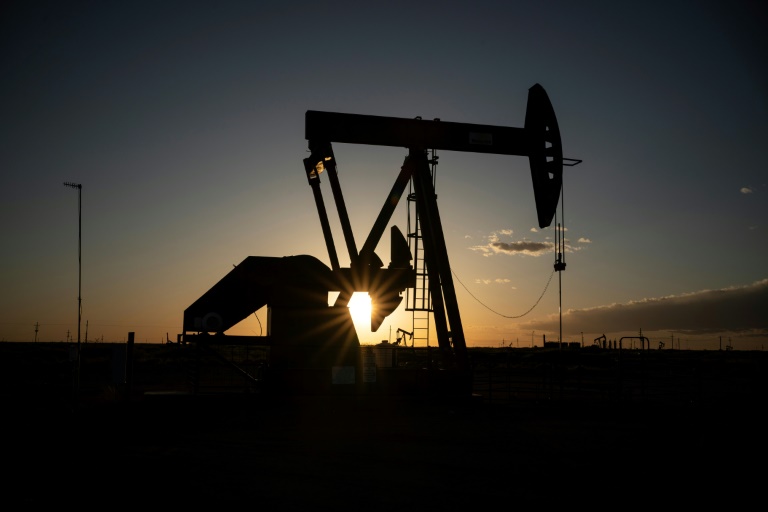
G7 industrialised powers vowed Friday to “urgently” move towards implementing a price cap on Russian oil imports in a bid to cut a major source of funding for Moscow’s war in Ukraine.

The G7 said it was working towards a “broad coalition” of support for the measure but officials in France urged caution, saying a “final” decision could only be taken once all 27 members of the European Union had given their assent.

Households on the continent have borne the brunt of rising energy prices, with governments under pressure to alleviate the pain of the resulting high inflation.

“Russia is benefitting economically from the uncertainty on energy markets caused by the war and is making big profits from the export of oil and we want to counter that decisively,” German Finance Minister Christian Lindner said in a press conference after the move was announced.

The aim of the price cap on oil exports was to “stop an important source of financing for the war of aggression and contain the rise in global energy prices”, he added.

Ahead of Friday’s decision, Kremlin spokesman Dmitry Peskov sounded a clear warning.

The adoption of a price cap “will lead to a significant destabilisation of the oil markets,” he said.

Moscow would “simply not supply oil and petroleum products to companies or states that impose restrictions,” Russia’s Deputy Prime Minister Alexander Novak had warned on Thursday, according to Russian news agencies.

“Interference in the market mechanisms of such an important industry … will only destabilise the oil industry, the oil market. And for this, European and American consumers will be the first to pay,” he said.

– ‘Powerful tool’ –

At a summit in June, the G7 leaders agreed to work towards implementing the ceiling on crude sales.

In their statement, finance ministers from the G7 said they would “urgently work on the finalisation and implementation” of the long-considered measure, without specifying the cap level.

The price cap was “one of the most powerful tools we have to fight inflation and protect workers and businesses in the United States”, US Secretary of the Treasury Janet Yellen said in a statement Friday. 

However, the French finance ministry said technical work on the price cap was still “in progress”.

“It is clear that no final decision can be taken until we have consulted and obtained unanimous support from all 27 member states of the European Union,” it said.

“We support all measures that reduce the income that Russia derives from the sale of oil,” French Finance Minister Bruno Le Maire added.

EU Commissioner Paolo Gentiloni said the bloc aims to find a deal by December 5 for crude oil and February 5 for petroleum products.

– ‘Broad coalition’ –

The G7 also voiced ambition to extend the measure beyond the bloc, saying it was seeking to form a “broad coalition” of support for the oil price cap to “maximise” the effectiveness of the measure.

The ministers urged “all countries that still seek to import Russian oil and petroleum products to commit to doing so only at prices at or below the price cap”.

The push to get as many countries as possible to go along with the cap is expected to be a key topic for discussion by leaders at the G20 summit in Bali on November 15 and 16.

The initial cap would be set “at a level based on a range of technical inputs” the G7 ministers said, adding that its effectiveness would be “closely monitored”.

Analysts warned, however, that the cap may yet fuel another rise in prices.

The cap would introduce new risks for the oil market by “potentially disrupting Russian energy supplies”, Capital Economics analyst Liam Perch said in June. “This could push global energy prices up further.”

“The cap may also be effective at reducing the Russian government’s tax revenues,” he said, speculating that a cap just below $80 (80 euros) per barrel could “push Russia’s budget into a deficit”. 

burs-sea/hmn/lth

G7 to implement Russian oil price cap 'urgently'

G7 industrialised powers vowed Friday to “urgently” move towards implementing a price cap on Russian oil imports in a bid to cut a major source of funding for Moscow’s war in Ukraine.

The G7 said it was working towards a “broad coalition” of support for the measure but officials in France urged caution, saying a “final” decision could only be taken once all 27 members of the European Union had given their assent.

Households on the continent have borne the brunt of rising energy prices, with governments under pressure to alleviate the pain of the resulting high inflation.

“Russia is benefitting economically from the uncertainty on energy markets caused by the war and is making big profits from the export of oil and we want to counter that decisively,” German Finance Minister Christian Lindner said in a press conference after the move was announced.

The aim of the price cap on oil exports was to “stop an important source of financing for the war of aggression and contain the rise in global energy prices”, he added.

Ahead of Friday’s decision, Kremlin spokesman Dmitry Peskov sounded a clear warning.

The adoption of a price cap “will lead to a significant destabilisation of the oil markets,” he said.

Moscow would “simply not supply oil and petroleum products to companies or states that impose restrictions,” Russia’s Deputy Prime Minister Alexander Novak had warned on Thursday, according to Russian news agencies.

“Interference in the market mechanisms of such an important industry … will only destabilise the oil industry, the oil market. And for this, European and American consumers will be the first to pay,” he said.

– ‘Powerful tool’ –

At a summit in June, the G7 leaders agreed to work towards implementing the ceiling on crude sales.

In their statement, finance ministers from the G7 said they would “urgently work on the finalisation and implementation” of the long-considered measure, without specifying the cap level.

The price cap was “one of the most powerful tools we have to fight inflation and protect workers and businesses in the United States”, US Secretary of the Treasury Janet Yellen said in a statement Friday. 

However, the French finance ministry said technical work on the price cap was still “in progress”.

“It is clear that no final decision can be taken until we have consulted and obtained unanimous support from all 27 member states of the European Union,” it said.

“We support all measures that reduce the income that Russia derives from the sale of oil,” French Finance Minister Bruno Le Maire added.

EU Commissioner Paolo Gentiloni said the bloc aims to find a deal by December 5 for crude oil and February 5 for petroleum products.

– ‘Broad coalition’ –

The G7 also voiced ambition to extend the measure beyond the bloc, saying it was seeking to form a “broad coalition” of support for the oil price cap to “maximise” the effectiveness of the measure.

The ministers urged “all countries that still seek to import Russian oil and petroleum products to commit to doing so only at prices at or below the price cap”.

The push to get as many countries as possible to go along with the cap is expected to be a key topic for discussion by leaders at the G20 summit in Bali on November 15 and 16.

The initial cap would be set “at a level based on a range of technical inputs” the G7 ministers said, adding that its effectiveness would be “closely monitored”.

Analysts warned, however, that the cap may yet fuel another rise in prices.

The cap would introduce new risks for the oil market by “potentially disrupting Russian energy supplies”, Capital Economics analyst Liam Perch said in June. “This could push global energy prices up further.”

“The cap may also be effective at reducing the Russian government’s tax revenues,” he said, speculating that a cap just below $80 (80 euros) per barrel could “push Russia’s budget into a deficit”. 

burs-sea/hmn/lth
Russia's Gazprom expected to resume pipeline supplies

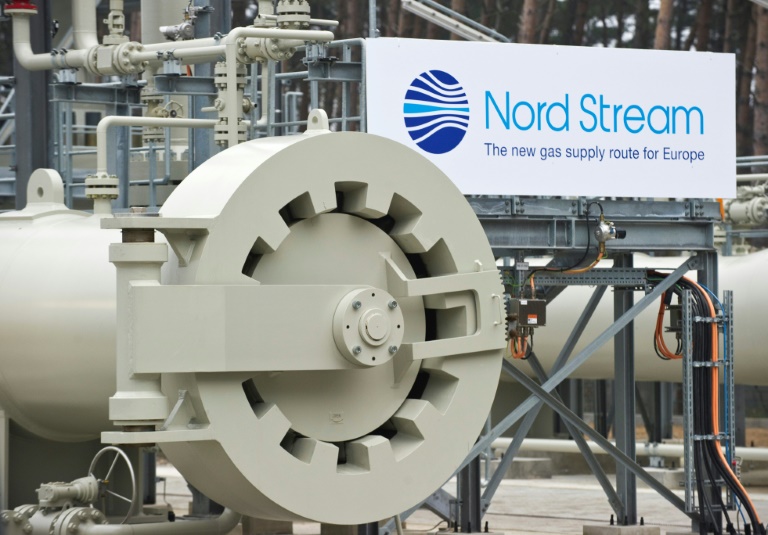
Russia’s Gazprom looked set to resume gas supplies to Europe via Nord Stream 1 this weekend, data from the pipeline operator showed Friday, after a halt that fuelled an energy crisis.

The resumption Saturday of deliveries after the three-day stoppage — which Gazprom said was needed for repairs — would bring some short-term relief.

But it will do little to ease fears about further supply disruptions as winter approaches.

Delivery orders, published on the Nord Stream website, indicated that supplies should resume at 2:00 am Saturday (0000 GMT) at 20 percent of their usual capacity — the same level as before the latest maintenance works. 

The stoppage began on Wednesday, and reduced gas deliveries via the key pipeline that runs from Russia to northern Germany to zero. 

Gazprom had said the work on a compressor unit was necessary but Germany’s Federal Network Agency said the decision was “technically incomprehensible”.

Details of the expected volumes can still change and need to be confirmed by actual deliveries.

A German economy ministry spokeswoman said while the pipeline operator had confirmed some initial orders, “we must nevertheless advise caution, and observe the situation closely”.

Europe is facing soaring energy prices after Russia slashed gas deliveries to the region amid soaring tensions following its February invasion of Ukraine. 

Germany, which is particularly dependent on Russian gas, has accused Moscow of using energy as a “weapon”.

As winter approaches, European consumers are bracing for huge power bills, with some countries like France warning that rationing is a possibility.

The Russian energy giant had already carried out 10 days of long-scheduled maintenance works in July. While it restored gas flows following the works, it drastically reduced supplies just days later, claiming a technical issue on a turbine.

The Kremlin warned Friday that Nord Stream may face future technical difficulties after the ongoing maintenance work, blaming sanctions for a shortage of spare parts.

“There are no technical reserves, only one turbine is working,” Kremlin spokesman Dmitry Peskov told reporters.

“So the reliability of the operation, of the whole system, is at risk,” he said, adding that it was “not through the fault” of Gazprom.

G20 talks end with pledge to accelerate energy transition

G20 energy talks in Bali ended Friday with the world’s leading economies pledging to accelerate the transition to cleaner energy, but there was no binding agreement as officials struggle to overcome discord over Russia’s invasion of Ukraine.

The price of energy has skyrocketed since Moscow launched its military offensive, with many Western countries scrambling to find alternative sources in an attempt to cut ties with Russia.

Energy upheavals have put pressure on global efforts to address climate change.

Host Indonesia put forward a plan at the talks outlining principles to speed up a “fair” transition to greener energy and it was endorsed by the G20 nations.

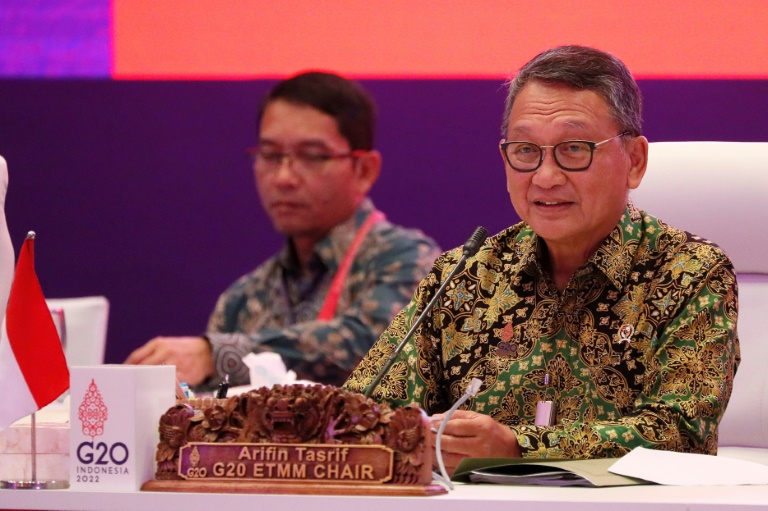
The non-binding “Bali Compact”, which lists principles for achieving net zero emissions, was agreed by all members, Indonesian energy minister Arifin Tasrif said. 

Details were not released but the minister said the plan seeks to strengthen national energy planning and implementation to improve energy security, efficiency and boost investment and financing.

“G20 energy ministers sent a strong signal to the market that policymakers are taking action to strengthen the investment-enabling environment,” Tasrif told an online press conference Friday.

But the officials failed to reach a consensus on a joint communique due to “differences among countries” at the one-day meeting, Tasrif said without elaborating.

Several nations, including Britain and France, denounced the invasion of Ukraine and said it had destabilised energy supply. 

The presence of Russia at the forum meant a consensus could not be reached for a communique, a source close to the meeting told AFP.

The “current energy crisis shows the urgency to accelerate the energy transition”, the source added.

Representatives from the United States, Saudi Arabia, Australia, Germany, India, South Africa and the European Union were also present, according to a list seen by AFP. 

The energy talks follow G20 environment discussions in Bali on Wednesday that also ended without a joint communique, reflecting divisions among member countries over how to tackle climate change.

Britain’s climate minister Alok Sharma said governments should “revisit and strengthen” their commitments to achieving net zero emissions.

“There must not be any backsliding on commitments,” he tweeted on Wednesday. 

This week’s talks are a prelude to a November leaders’ summit that Indonesian President Joko Widodo has said Russian counterpart Vladimir Putin will attend despite Moscow’s isolation.

European equities stage rebound before US data

Europe’s stock markets rose Friday before key US jobs data, after diving the previous day on fears of an inflation-induced recession.

Frankfurt won 1.5 percent, London gained 0.7 percent and Paris added 0.6 percent after a subdued Asian session.

All three markets tanked Thursday as record-high eurozone inflation fuelled fears that the European Central Bank will ramp up interest rates again next week, even as the region faces rocketing winter energy prices over Russia’s war on Ukraine.

Elsewhere on Friday, oil prices rallied Friday on fading expectations for an Iran nuclear deal anytime soon, but remain under pressure from issues including the strong dollar, China’s renewed Covid lockdowns, and worries about a demand-sapping recession.

– Data ‘commands attention’ –

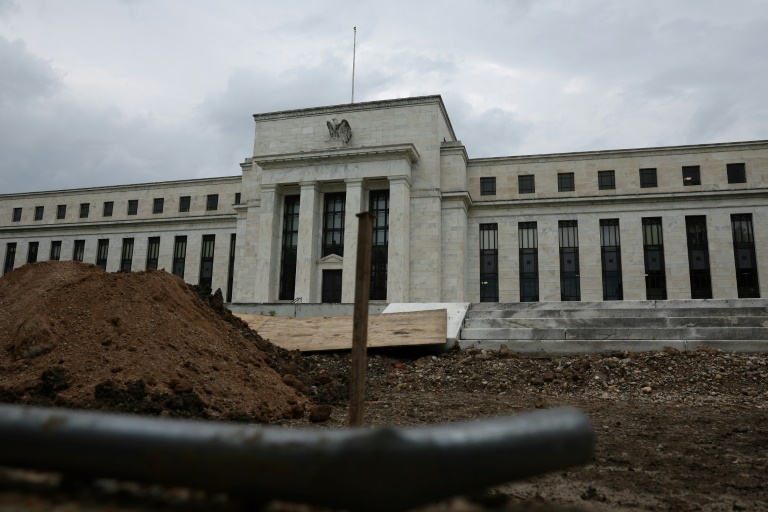
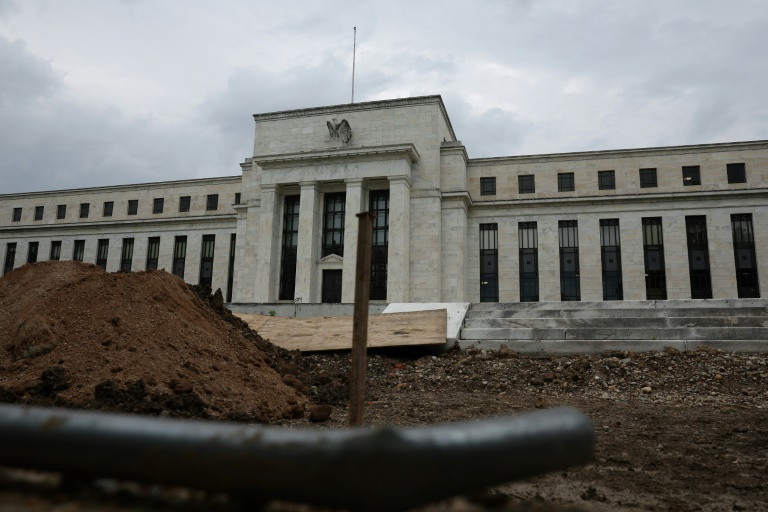
All eyes are now on a key US non-farm payrolls (NFP) report slated for publication later Friday, for clues on the Federal Reserve’s interest rate outlook.

“This economic reading commands the most attention,” noted AvaTrade analyst Naeem Aslam.

“As always, the Fed will watch this data very closely and it is highly likely to influence their monetary policy decision.”

With US rates expected to keep rising, the dollar has rallied to highs not seen for decades including against the pound and euro.

Bets are now increasing on a third successive 75-basis-point increase at the Fed’s September meeting. 

The dollar eased Friday but held above 140 yen — one day after breaching the key level for the first time since 1998.

“Profit-taking was the name of the game as euro/dollar climbed back above parity, although dollar/yen continued to press ahead,” noted City Index analyst Fawad Razaqzada.

Recent healthy readings on US factory activity, unemployment claims and private jobs creation indicated the world’s top economy remained strong despite rising interest rates and four-decade-high inflation.

Wall Street ended Thursday with a late rally, with the Dow and S&P 500 snapping a four-day retreat, though the Nasdaq extended its losing streak.

– Key figures at around 1100 GMT –

London – FTSE 100: UP 0.7 percent at 7,200.60 points

Frankfurt – DAX: UP 1.5 percent at 12,820.41

Paris – CAC 40: UP 0.6 percent at 6,071.24

EURO STOXX 50: UP 0.8 percent at 3,484.42

Tokyo – Nikkei 225: FLAT at 27,650.84 (close)

Hong Kong – Hang Seng Index: DOWN 0.7 percent at 19,452.09 (close)

Shanghai – Composite: UP 0.1 percent at 3,186.48 (close)

New York – Dow: UP 0.5 percent at 31,656.42 (close)

Dollar/yen: UP at 140.32 yen from 139.44 yen on Thursday

Euro/dollar: UP at $1.0008 from $0.9946

Pound/dollar: UP at $1.1564 from $1.1545

Euro/pound: UP at 86.51 pence from 86.14 pence

West Texas Intermediate: UP 2.3 percent at $88.62 per barrel

Brent North Sea crude: UP 2.1 percent at $94.27

burs-rfj/rl

European equities stage rebound before US data

Europe’s stock markets rose Friday before key US jobs data, after diving the previous day on fears of an inflation-induced recession.

Frankfurt won 1.5 percent, London gained 0.7 percent and Paris added 0.6 percent after a subdued Asian session.

All three markets tanked Thursday as record-high eurozone inflation fuelled fears that the European Central Bank will ramp up interest rates again next week, even as the region faces rocketing winter energy prices over Russia’s war on Ukraine.

Elsewhere on Friday, oil prices rallied Friday on fading expectations for an Iran nuclear deal anytime soon, but remain under pressure from issues including the strong dollar, China’s renewed Covid lockdowns, and worries about a demand-sapping recession.

– Data ‘commands attention’ –

All eyes are now on a key US non-farm payrolls (NFP) report slated for publication later Friday, for clues on the Federal Reserve’s interest rate outlook.

“This economic reading commands the most attention,” noted AvaTrade analyst Naeem Aslam.

“As always, the Fed will watch this data very closely and it is highly likely to influence their monetary policy decision.”

With US rates expected to keep rising, the dollar has rallied to highs not seen for decades including against the pound and euro.

Bets are now increasing on a third successive 75-basis-point increase at the Fed’s September meeting. 

The dollar eased Friday but held above 140 yen — one day after breaching the key level for the first time since 1998.

“Profit-taking was the name of the game as euro/dollar climbed back above parity, although dollar/yen continued to press ahead,” noted City Index analyst Fawad Razaqzada.

Recent healthy readings on US factory activity, unemployment claims and private jobs creation indicated the world’s top economy remained strong despite rising interest rates and four-decade-high inflation.

Wall Street ended Thursday with a late rally, with the Dow and S&P 500 snapping a four-day retreat, though the Nasdaq extended its losing streak.

– Key figures at around 1100 GMT –

London – FTSE 100: UP 0.7 percent at 7,200.60 points

Frankfurt – DAX: UP 1.5 percent at 12,820.41

Paris – CAC 40: UP 0.6 percent at 6,071.24

EURO STOXX 50: UP 0.8 percent at 3,484.42

Tokyo – Nikkei 225: FLAT at 27,650.84 (close)

Hong Kong – Hang Seng Index: DOWN 0.7 percent at 19,452.09 (close)

Shanghai – Composite: UP 0.1 percent at 3,186.48 (close)

New York – Dow: UP 0.5 percent at 31,656.42 (close)

Dollar/yen: UP at 140.32 yen from 139.44 yen on Thursday

Euro/dollar: UP at $1.0008 from $0.9946

Pound/dollar: UP at $1.1564 from $1.1545

Euro/pound: UP at 86.51 pence from 86.14 pence

West Texas Intermediate: UP 2.3 percent at $88.62 per barrel

Brent North Sea crude: UP 2.1 percent at $94.27

burs-rfj/rl

Greenpeace drops boulders on UK seabed to curb bottom-trawling fishing

Greenpeace UK said Friday it had dropped 18 large boulders on the seabed in a marine conservation zone off the coast of southwest England to prevent “destructive” industrial fishing.

The environmental campaigners sailed to the western part of the Channel between the UK and France, loaded with the boulders of Portland limestone, each weighing between 500 and 1,400 kilograms (1,100 and 3,100 pounds). 

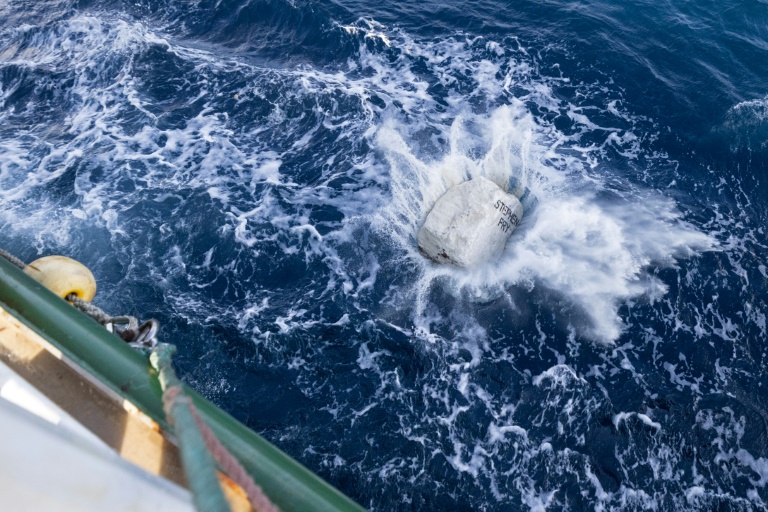
The giant rocks were dropped on Thursday from its Arctic Sunrise research vessel in an area of the South West Deeps (East) Conservation Zone, which lies some 190 kilometres (120 miles) off Land’s End, the most westerly point of mainland England.

“We are placing large limestone boulders on the seabed to create a protective underwater barrier which will put the area off limits to destructive fishing,” Anna Diski, UK oceans campaigner, told AFP on board.

The action would make it “impossible for them to drag the heavy fishing gear along the seabed, destroying the habitat and disturbing the carbon”, she added.

Artists created a giant ammonite sculpture — inspired by the fossil often found in Portland limestone — out of one of the boulders, which was also placed on the seabed.

The names of the action’s celebrity backers and supportive politicians were also inscribed on the rocks.

“Right now, there’s an industrial fishing frenzy happening in UK waters, and what’s our government doing about it?” asked Greenpeace UK’s head of oceans, Will McCallum.

“Greenpeace UK has created this underwater boulder barrier as a last resort to protect the oceans. We’d much rather the government just did their job.” 

McCallum said it was “outrageous” that bottom-trawlers are allowed to operate on the seabed in protected areas.

“They destroy huge swathes of the marine ecosystem and make a mockery of our so-called ‘protection’,” he added.

– ‘Get serious!’ –

The action comes after the latest round of UN talks to try to secure protection for marine life in international waters broke up without agreement.

Greenpeace said the 4,600-square-kilometre (1,776-square-mile) South West Deeps is “one of the most heavily fished so-called Marine Protected Areas in the UK”.

It cited figures from the Global Fishing Watch monitoring agency that said that 110 vessels — more than half of them from France — fished for 18,928 hours in area in the 18 months to July.

Of that, industrial vessels with bottom-towed fishing gear spent 3,376 hours fishing in the zone. 

Bottom-trawling is only banned in four out of the UK’s 76 offshore Marine Protected Areas, and the government is consulting over the possible bans in a further 13. 

“The problem is that the majority of the UK’s MPAs don’t have any actual protection at all,” said Jasmine Watkiss, one of those on board the Arctic Sunrise.

“The government needs to get serious about ocean protection before it’s too late.

“The next prime minister should ban industrial fishing in all of the UK’s Marine Protected Areas by tweaking commercial fishing licences,” she added.

Neil Whitney, a fisherman from East Sussex in southern England, said bottom-trawling was “like ploughing a combine harvester through a national park”. 

“They’re able to take out entire ecosystems, and if they cause a fishery to collapse, they just move on to the next one,” he added.

“Industrial fishing, like fly-shooters (vessels which tow lead-weighted ropes along the seabed) and supertrawlers (trawlers over 100 metres long), are killing our marine environment, and small-scale UK fishermen like me are losing out big time.”

He said it was “absurd” that bottom-trawling was legal in MPAs. “MPAs are supposed to be the areas where fish stocks can recover, so that we fish for generations to come.

“It’s a case of common sense.”

video-jwp/phz/lth

Greenpeace drops boulders on UK seabed to curb bottom-trawling fishing

Greenpeace UK said Friday it had dropped 18 large boulders on the seabed in a marine conservation zone off the coast of southwest England to prevent “destructive” industrial fishing.

The environmental campaigners sailed to the western part of the Channel between the UK and France, loaded with the boulders of Portland limestone, each weighing between 500 and 1,400 kilograms (1,100 and 3,100 pounds). 

The giant rocks were dropped on Thursday from its Arctic Sunrise research vessel in an area of the South West Deeps (East) Conservation Zone, which lies some 190 kilometres (120 miles) off Land’s End, the most westerly point of mainland England.

“We are placing large limestone boulders on the seabed to create a protective underwater barrier which will put the area off limits to destructive fishing,” Anna Diski, UK oceans campaigner, told AFP on board.

The action would make it “impossible for them to drag the heavy fishing gear along the seabed, destroying the habitat and disturbing the carbon”, she added.

Artists created a giant ammonite sculpture — inspired by the fossil often found in Portland limestone — out of one of the boulders, which was also placed on the seabed.

The names of the action’s celebrity backers and supportive politicians were also inscribed on the rocks.

“Right now, there’s an industrial fishing frenzy happening in UK waters, and what’s our government doing about it?” asked Greenpeace UK’s head of oceans, Will McCallum.

“Greenpeace UK has created this underwater boulder barrier as a last resort to protect the oceans. We’d much rather the government just did their job.” 

McCallum said it was “outrageous” that bottom-trawlers are allowed to operate on the seabed in protected areas.

“They destroy huge swathes of the marine ecosystem and make a mockery of our so-called ‘protection’,” he added.

– ‘Get serious!’ –

The action comes after the latest round of UN talks to try to secure protection for marine life in international waters broke up without agreement.

Greenpeace said the 4,600-square-kilometre (1,776-square-mile) South West Deeps is “one of the most heavily fished so-called Marine Protected Areas in the UK”.

It cited figures from the Global Fishing Watch monitoring agency that said that 110 vessels — more than half of them from France — fished for 18,928 hours in area in the 18 months to July.

Of that, industrial vessels with bottom-towed fishing gear spent 3,376 hours fishing in the zone. 

Bottom-trawling is only banned in four out of the UK’s 76 offshore Marine Protected Areas, and the government is consulting over the possible bans in a further 13. 

“The problem is that the majority of the UK’s MPAs don’t have any actual protection at all,” said Jasmine Watkiss, one of those on board the Arctic Sunrise.

“The government needs to get serious about ocean protection before it’s too late.

“The next prime minister should ban industrial fishing in all of the UK’s Marine Protected Areas by tweaking commercial fishing licences,” she added.

Neil Whitney, a fisherman from East Sussex in southern England, said bottom-trawling was “like ploughing a combine harvester through a national park”. 

“They’re able to take out entire ecosystems, and if they cause a fishery to collapse, they just move on to the next one,” he added.

“Industrial fishing, like fly-shooters (vessels which tow lead-weighted ropes along the seabed) and supertrawlers (trawlers over 100 metres long), are killing our marine environment, and small-scale UK fishermen like me are losing out big time.”

He said it was “absurd” that bottom-trawling was legal in MPAs. “MPAs are supposed to be the areas where fish stocks can recover, so that we fish for generations to come.

“It’s a case of common sense.”

video-jwp/phz/lth

Markets mixed as traders focus on US jobs data

Asian markets were mixed Friday and the dollar held gains as rate hike expectations grew, with traders now focusing on a key US jobs report later in the day.

Oil prices rose on fading expectations for an Iran nuclear deal anytime soon, but they remained under severe pressure from a range of issues including the strengthening dollar, Covid lockdowns in China and worries about a demand-sapping recession.

Healthy readings on US factory activity, unemployment claims and private jobs creation indicated the world’s top economy remained strong despite rising interest rates and four-decade-high inflation.

But analysts said the figures were a case of “good news in bad news” as they would give the US Federal Reserve more room to keep tightening monetary policy, with officials lining up to commit to beating inflation even if that causes a recession. 

Bets are increasing on a third successive 75-basis-point increase at its September meeting. 

OANDA’s Edward Moya warned Fed officials could even start considering rising into 2023, with inflation data later this month becoming increasingly important.

“If the economy remains resilient over the next few months, the Fed-funds futures market might believe the Fed won’t be done tightening at the end of year,” he wrote in a commentary.

“Markets might start pricing in a February rate hike as well, if pricing pressures don’t show further signs of easing with the September 13th inflation report.”

Wall Street ended with a late rally, with the Dow and S&P 500 snapping a four-day retreat, though the Nasdaq extended its losing streak.

European markets fell again after record inflation figures ramped up expectations the European Central Bank will announce a big increase in costs next Thursday.

Asia continued to struggle, though there were some positives.

Hong Kong, Sydney, Singapore, Seoul, Taipei and Bangkok fell, while Tokyo was marginally down. Shanghai, Wellington, Mumbai, Manila and Jakarta were up.

London, Paris and Frankfurt all rose Friday morning.

Michael Hewson, of CMC Markets, said: “Not only did we hear Fed chairman Jay Powell offer the unequivocal message that the Federal Reserve would continue to hike rates until the job is done, but every Fed official since then has offered the same message, along with the postscript that rates were unlikely to come down any time soon, and certainly not before 2024.

“This week’s economic data out of the US has merely served to bolster the message in respect of the Fed’s determination to raise rates and mitigate any concern their actions might have on the US economy.”


– Dollar strength –

With US rates expected to keep rising, the dollar has rallied to highs not seen for decades including against the pound and euro.

On Thursday, it broke 140 yen for the first time since 1998.

Expectations are that it could strengthen further as the Bank of Japan keeps rates ultra-low to kickstart the economy, while analysts said an intervention to prop up the yen was unlikely as the effects would be brief.

The dollar also hit a record against the Philippine peso, increasing pressure for a rate hike by the country’s central bank, which has signalled it wants to ease up on tightening.

The rising greenback was adding to downward pressure on oil, which is priced in dollars, while demand hopes were dealt a hefty blow Thursday by news that China had effectively locked down around 20 million people in Chengdu to fight a Covid outbreak.

The closure of the tech manufacturing hub follows a similar shutdown of Shanghai, which sent shockwaves through the economy, and has battered hopes for a recovery in the world’s number-two economy.

“Lockdowns/mass testing continues to impede stimulus efforts to revive the economy, with announced stimulus to date unlikely to gain much traction if the zero-Covid policy continues,” said National Australia Bank’s Tapas Strickland.

“Given Chengdu is also a production hub for high tech manufacturing,” global supply chains will likely continue to be disrupted, he added.

Crude, which has lost all the gains made in the aftermath of Russia’s February invasion of Ukraine, rose Friday after US officials said they had received a new response from Iran on reviving a nuclear deal but that it was not “constructive”.

– Key figures at around 0810 GMT –

Tokyo – Nikkei 225: FLAT at 27,650.84 (close)

Hong Kong – Hang Seng Index: DOWN 0.7 percent at 19,452.09 (close)

Shanghai – Composite: UP 0.1 percent at 3,186.48 (close)

London – FTSE 100: UP 0.5 percent at 7,182.14

Dollar/yen: UP at 140.28 yen from 140.20 yen on Thursday

Euro/dollar: UP at $0.9985 from $0.9947

Pound/dollar: UP at $1.1559 from $1.1542

Euro/pound: UP at 86.38 pence from 86.16 pence

West Texas Intermediate: UP 2.1 percent at $88.46 per barrel

Brent North Sea crude: UP 2.0 percent at $94.23 per barrel

New York – Dow: UP 0.5 percent at 31,656.42 (close)

Markets mixed as traders focus on US jobs data

Asian markets were mixed Friday and the dollar held gains as rate hike expectations grew, with traders now focusing on a key US jobs report later in the day.

Oil prices rose on fading expectations for an Iran nuclear deal anytime soon, but they remained under severe pressure from a range of issues including the strengthening dollar, Covid lockdowns in China and worries about a demand-sapping recession.

Healthy readings on US factory activity, unemployment claims and private jobs creation indicated the world’s top economy remained strong despite rising interest rates and four-decade-high inflation.

But analysts said the figures were a case of “good news in bad news” as they would give the US Federal Reserve more room to keep tightening monetary policy, with officials lining up to commit to beating inflation even if that causes a recession. 

Bets are increasing on a third successive 75-basis-point increase at its September meeting. 

OANDA’s Edward Moya warned Fed officials could even start considering rising into 2023, with inflation data later this month becoming increasingly important.

“If the economy remains resilient over the next few months, the Fed-funds futures market might believe the Fed won’t be done tightening at the end of year,” he wrote in a commentary.

“Markets might start pricing in a February rate hike as well, if pricing pressures don’t show further signs of easing with the September 13th inflation report.”

Wall Street ended with a late rally, with the Dow and S&P 500 snapping a four-day retreat, though the Nasdaq extended its losing streak.

European markets fell again after record inflation figures ramped up expectations the European Central Bank will announce a big increase in costs next Thursday.

Asia continued to struggle, though there were some positives.

Hong Kong, Sydney, Singapore, Seoul, Taipei and Bangkok fell, while Tokyo was marginally down. Shanghai, Wellington, Mumbai, Manila and Jakarta were up.

London, Paris and Frankfurt all rose Friday morning.

Michael Hewson, of CMC Markets, said: “Not only did we hear Fed chairman Jay Powell offer the unequivocal message that the Federal Reserve would continue to hike rates until the job is done, but every Fed official since then has offered the same message, along with the postscript that rates were unlikely to come down any time soon, and certainly not before 2024.

“This week’s economic data out of the US has merely served to bolster the message in respect of the Fed’s determination to raise rates and mitigate any concern their actions might have on the US economy.”


– Dollar strength –

With US rates expected to keep rising, the dollar has rallied to highs not seen for decades including against the pound and euro.

On Thursday, it broke 140 yen for the first time since 1998.

Expectations are that it could strengthen further as the Bank of Japan keeps rates ultra-low to kickstart the economy, while analysts said an intervention to prop up the yen was unlikely as the effects would be brief.

The dollar also hit a record against the Philippine peso, increasing pressure for a rate hike by the country’s central bank, which has signalled it wants to ease up on tightening.

The rising greenback was adding to downward pressure on oil, which is priced in dollars, while demand hopes were dealt a hefty blow Thursday by news that China had effectively locked down around 20 million people in Chengdu to fight a Covid outbreak.

The closure of the tech manufacturing hub follows a similar shutdown of Shanghai, which sent shockwaves through the economy, and has battered hopes for a recovery in the world’s number-two economy.

“Lockdowns/mass testing continues to impede stimulus efforts to revive the economy, with announced stimulus to date unlikely to gain much traction if the zero-Covid policy continues,” said National Australia Bank’s Tapas Strickland.

“Given Chengdu is also a production hub for high tech manufacturing,” global supply chains will likely continue to be disrupted, he added.

Crude, which has lost all the gains made in the aftermath of Russia’s February invasion of Ukraine, rose Friday after US officials said they had received a new response from Iran on reviving a nuclear deal but that it was not “constructive”.

– Key figures at around 0810 GMT –

Tokyo – Nikkei 225: FLAT at 27,650.84 (close)

Hong Kong – Hang Seng Index: DOWN 0.7 percent at 19,452.09 (close)

Shanghai – Composite: UP 0.1 percent at 3,186.48 (close)

London – FTSE 100: UP 0.5 percent at 7,182.14

Dollar/yen: UP at 140.28 yen from 140.20 yen on Thursday

Euro/dollar: UP at $0.9985 from $0.9947

Pound/dollar: UP at $1.1559 from $1.1542

Euro/pound: UP at 86.38 pence from 86.16 pence

West Texas Intermediate: UP 2.1 percent at $88.46 per barrel

Brent North Sea crude: UP 2.0 percent at $94.23 per barrel

New York – Dow: UP 0.5 percent at 31,656.42 (close)

Close Bitnami banner
Bitnami