AFP

In Wyoming, an uphill battle to curb suicide

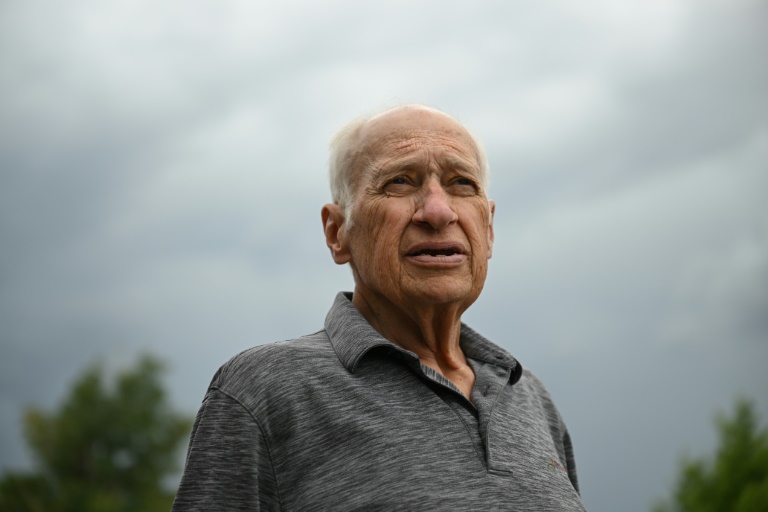
Sixteen years ago, after his son died by suicide, Lance Neiberger thought of taking his own life. 

Instead, the petroleum engineer — who lives in central Wyoming — is spearheading the difficult battle to curb the western US state’s suicide rate, the highest in the nation.

“We’ve got a problem, and we need to address it,” Neiberger warns.

He relives the painful story of his son’s death often — at schools and fairs across Wyoming — and also heads a county suicide prevention task force, all in the hope of saving lives and expanding outreach.

“I was sitting in my office when my wife called and said, ‘Get home now,” Neiberger, now in his 70s, told AFP.

“I didn’t know what was going on, but I knew it was serious. So I got in my car and I rushed home, and as I pulled up the street, there were probably like a dozen emergency vehicles,” he recalled.

“Our daughter was in the front yard — she was on her knees, screaming.”

His son Lyle, who was 17, hung himself. Neiberger says he didn’t even realize his child was suffering to that extent.

“I knew he was struggling with depression,” he says.

“He didn’t feel comfortable apparently coming to me and saying, ‘Dad, life’s really kicking my butt right now. I need some help’.”

“At the time my son needed me the most, I wasn’t there for him.”

– ‘Cowboy’ thinking –

Wyoming is the least populous state in America, but its suicide rate is twice what is seen across the rest of the country.

Cities are spread far apart and the weather can be downright inhospitable. And two-thirds of adults in Wyoming have a firearm in their home.

Experts point at all of those factors to explain the suicide epidemic plaguing the state.

And then there is the “cowboy” mentality — the idea that “you can’t be a man and cry, you don’t have problems,” according to Neiberger.

Wyoming is also largely populated by whites, a group with a higher incidence of suicide. In 2020, 70 percent of Americans who died by suicide were white men.

Neighboring Montana, Idaho and Colorado are also suffering under the weight of a surge in suicides, so much so that the Rockies region has inherited an ominous moniker — the “Suicide Belt.”

In 2018, a special suicide hotline was set up in Wyoming, to put those at risk in touch with mental health professionals familiar with the problems that are specific to the region. 

In July this year, the US government set up a new national suicide hotline, 988, replacing the old 10-digit number to facilitate calls to counselors 24 hours a day.

Unfortunately, those programs may still not be enough.

“We’ve got a lot of rural communities. And in those rural communities, we don’t have a lot of mental health care — even physical health care is lacking,” says Neiberger, who joined a suicide prevention group after considering his own death.

– ‘Rock bottom’ –

Geologist Jason Whitmire joined the same group after hitting what he called “rock bottom.”

Whitmire, who is a 30-something father of two young children, came close to killing himself twice, he says.

“I was about 45 minutes from home. I was going to go straight home and use a firearm,” he tells AFP of his first brush with death in 2013.

“But 45 minutes away, something just clicked. I started bawling, started calling people, let them know that I wasn’t safe.”

Four years later, Whitmire — who is bipolar — did attempt suicide.

After years of being on a “roller coaster,” he says it helps him to speak about his experiences.

He and Neiberger are preparing for a series of seminars in September, which is National Suicide Prevention Awareness Month.

“Sharing my story actually makes me feel really good — getting it out and hoping something can connect and click with it,” Whitmire says.

Sarah Palin loses special election bid for US Congress seat

Former Alaska governor Sarah Palin on Wednesday lost her bid to fill the state’s vacant seat in the US House of Representatives.

Palin had hoped to make her political comeback in the special election held to replace Republican congressman Don Young, who died in March after serving in the House for 49 years.

Despite winning her gubernatorial campaign in 2006 and boasting former US president Donald Trump’s endorsement for this one, Palin lost to Democrat Mary Peltola.

Peltola is the first Alaska Democrat elected to Congress since 2008, and the state’s first Indigenous national legislator.

However, Palin will be on the ballot once again in the US midterm elections, which are set for November 8.

This was Alaska’s first election using ranked- choice voting, in which voters list candidates in order of preference. If no one wins a first-place majority, the last-place candidate is eliminated and their votes redistributed to the voters’ second choices. The process repeats until one candidate earns a majority.

Palin was catapulted into the limelight when she was chosen by the late US senator John McCain of Arizona as his running mate in the 2008 presidential election.

A Christian conservative who leaned hard into her outsider status, Palin’s rise during the 2008 campaign is widely seen as paving the way for Trump to successfully take the White House eight years later.

Their norm-busting brands stood in direct opposition to previous Republican standard-bearers Mitt Romney and McCain.

In the midterm elections, all 435 House seats are up for grabs along with about one-third of the Senate’s 100 seats.

Republicans had been widely projected to take control of Congress during the midterms, so Peltola’s win is a major upset for the Democrats.

Trump has sought to reaffirm his grip over the Republican Party through selective endorsements of candidates in primary elections, the winners of which will stand in the midterms this November.

The former president’s picks, almost all of whom support his unfounded claims of rampant 2020 election fraud, have had mixed success in the Republican primaries.

'Beginning of the end': patients hail new treatment for drug-resistant TB

Volodymyr is celebrating a major milestone on Wednesday — it’s his final day of taking a new treatment hailed as a turning point in the fight against drug-resistant tuberculosis.

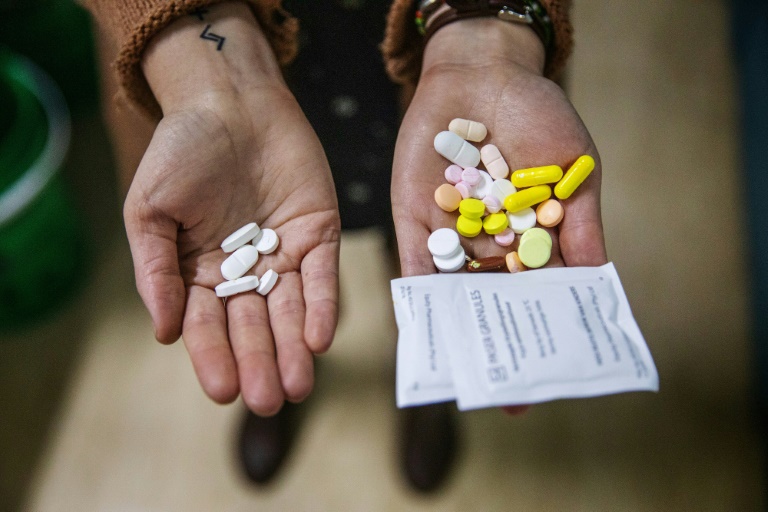
The 25-year-old doctor in Ukraine’s capital Kyiv said he had nasty neurological side effects when he was on a previous drug regimen, which takes up to two years, involves a huge number of pills and is less than 60-percent effective. 

But the new treatment course took just six months, and gave him very few side effects. “It was very easy,” he told AFP.

A scan on Wednesday showed he was clear of tuberculosis, and he plans to start work next week after eight months off sick.

“Now I can start life again,” said Volodymyr, who did not give his last name.

Tuberculosis, once called consumption, was the world’s biggest infectious killer before the arrival of Covid-19, with 1.5 million people dying from the disease each year.

Around five percent of new cases are resistant to commonly prescribed antibiotics, making them difficult to treat.

However a new drug regimen, called BPaL because it combines the antibiotics bedaquiline, pretomanid and linezolid, has been seen as a breakthrough since it was first approved by the US Food and Drug Administration in 2019.

– From 23 to five pills a day –

Research in 2020 showed that the BPaL regimen cured more than 90 percent of drug-resistant patients, however there was a high rate of side effects linked to linezolid, including nerve pain and bone marrow suppression.

But a study published in the New England Journal of Medicine on Wednesday indicated that the dosage of linezolid can be halved.

A trial involving 181 participants with drug-resistant tuberculosis was carried out in Russia, South Africa, Georgia and Moldova — all countries with high TB rates.

It found that while 1,200 milligrams of linezolid over six months had a cure rate of 93 percent, that number only dropped to 91 percent if the dosage was halved to 600 milligrams.

The number of participants with the side of peripheral neuropathy — which causes nerve pain — fell from 38 to 24 percent at the lower dosage, while the rate of bone marrow suppression dropped from 22 to two percent.

The study’s lead author, Francesca Conradie of South Africa’s University of the Witwatersrand, said she was “overwhelmed with how successful this regimen was”.

“This is the beginning of the end of drug-resistant TB,” she told AFP.

“The quicker you treat someone’s TB, the less infectious they are — it’s like Covid in many ways.”

It is also far easier for patients to take BPaL, she added, saying previous courses could involve 23 pills a day — and up to 14,000 total pills over the maximum two-year course. 

BPaL involves five pills a day — and fewer than 750 over six months.

– Could TB surpass Covid? –

Nataliia Lytvynenko, who has overseen BPaL treatments in Ukraine, said the more manageable amount of pills meant it was easier for patients to continue treatment after being displaced by the war in her country.

The World Health Organization indicated earlier this year that it would soon update its guidelines to recommend most patients with drug-resistant TB use BPaL with 600 milligrams of linezolid.

Two experts not involved in Wednesday’s study said the research and the WHO guidance were “major advances”.

The BPaL treatment “is one of the defining achievements of the tuberculosis research community in this century,” Guy Thwaites of Britain’s Oxford University and Nguyen Viet Nhung of Vietnam’s National Tuberculosis Control Programme wrote in an editorial in the New England Journal of Medicine.

The advances come amid warnings that the pandemic has stalled progress against tuberculosis.

“I very much worry that TB will — whether it’s this year or next — again become the largest single killer of any infectious disease in the world,” said Mel Spigelman, the president of the non-profit TB Alliance which funded the research.

Volodymyr meanwhile said he hoped that progress would continue so the treatment timeline gets even shorter.

“Maybe it will be two months — or even one,” he said with a smile.

Gorbachev and Reagan: a friendship that ended the Cold War

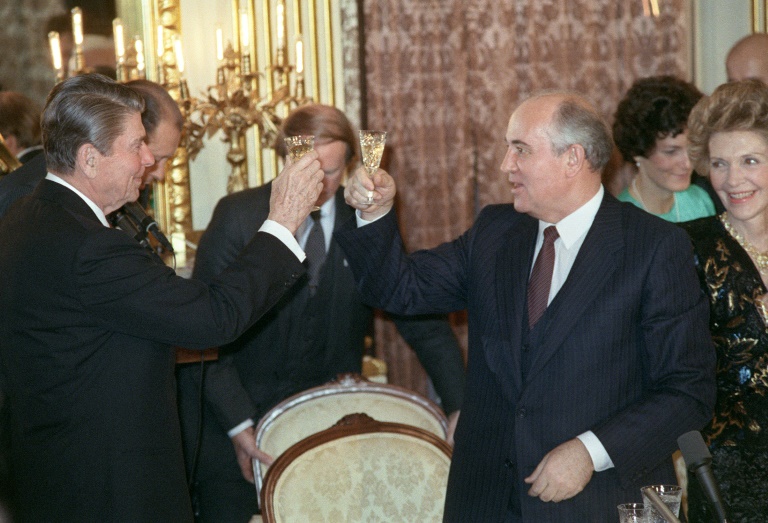
Mikhail Gorbachev stepped onto a Washington street and began shaking hands to cheers and applause in 1990 — a bit of unaccustomed political showmanship worthy of his friend Ronald Reagan.

Ana Maria Guzman was in the park on her lunch break that May when she saw the Soviet leader, who died on Tuesday at 91. 

“We knew he was in town and we saw his motorcade. Then he just got out of his limousine and began shaking hands,” she recalled. “It was very emotional. He was like a people’s person. Wow!”

It was the personal touch that Reagan, the Hollywood actor who became president and an icon of the American right, was known for.

Reagan and Gorbachev broke through decades of tensions between their countries to form one of the unlikeliest relationships of the 20th century, bonding over their shared desire to reduce nuclear tensions and ultimately bringing about a momentous shift in world politics.

– Overcoming decades of mistrust –

At the beginning, the longtime Soviet apparatchik had almost nothing in common with his US counterpart.

The two came from countries where mistrust of the other was set in cement.

But when Reagan came to office in 1981, one of his primary — and secret — goals was to ease Cold War and nuclear tensions with Moscow. 

He made overtures to three Soviet leaders — Leonid Brezhnev, Turi Andropov, and Konstantin Chernenko — but all were change-resistant and none survived long enough to establish a relationship.

When Gorbachev became Communist party general secretary in March 1985 after Chernenko’s death, the White House sensed a potential opening, said Jack Matlock, then Reagan’s top negotiator with Moscow and later ambassador to Russia.

“Early in his term, Reagan referred to the Soviet Union as an evil empire,” Matlock told AFP.

“But from the very beginning, he talked about negotiating and the possibility of establishing a peaceful relationship if the Soviet leader was willing to get along with the free world.”

“There was very little response until Gorbachev. With Gorbachev, they finally began communicating, and within two or three years, they were almost, you might say, reading off the same piece of music.”

Gorbachev was no blind idealist, said John Lenczowski, who was principal Soviet affairs adviser on Reagan’s national security council. 

The White House understood he was inheriting a weakened economy, a military that saw the Pentagon as increasingly superior and threatening, and a Communist Party rotting from the inside out.

Gorbachev needed to ease the military competition with the United States first if he was to address the other two challenges and preserve the Soviet Union.

“He came in to the general secretaryship seeing that the Soviet Union was in a state of multiple crises. He was trying to overcome those crises in order to save the Soviet system,” said Lenczowski.

Reagan, for his part, saw Kremlin paranoia about the United States as dangerous for both.

“Reagan began to think that we really needed to tone it down, and to try to manage the relationship a little bit more gently,” said Lenczowski.

He saw “that we were in a position of strength to negotiate better with Moscow, and that we should explore some of the different venues.”

– Slow start –

Reagan had an invitation to visit Washington passed on to Gorbachev at Chernenko’s funeral, but nothing much happened for months. 

Still, the White House perceived a change in tone as the two sides discussed advancing nuclear arms control negotiations.

“Basically, they were both men of peace,” said Matlock.

“Gorbachev really realized, increasingly, he had a system that needed to change. But he couldn’t really change it as long as there was a Cold War going on, and you had the arms race.” 

“And I think that Reagan understood that. And Reagan was not out to bring down the Soviet Union.”

Their big ice-breaker was a summit in Geneva in November 1985. Talks were tense, and little was agreed. But the two leaders had several one-on-one conversations, sowing the seeds of trust.

One year later, the two met in Reykjavik for more talks, again with only slight progress. 

Media called the summit a failure, but in fact, Matlock recalled, both sides found more common ground. Detente was taking root.

When Gorbachev came to Washington in December 1987, he and Reagan were able to sign the landmark treaty on limiting intermediate range nuclear forces.

“At first he thought Reagan was very conservative,” Matlock said of Gorbachev. 

“But as time went on, and as they began to agree, more and more they actually became friends.” 

Long after he was shunted aside in Russian politics, Gorbachev would return to the United States in 2004 for Reagan’s funeral.

“I think they both had similar ideals. They both hated nuclear weapons, and hoped that they could abolish them, that’s the truth,” Matlock said.

“Very few on their staffs thought that that was going to be possible, but they did.”

High energy prices threaten UK hospital services

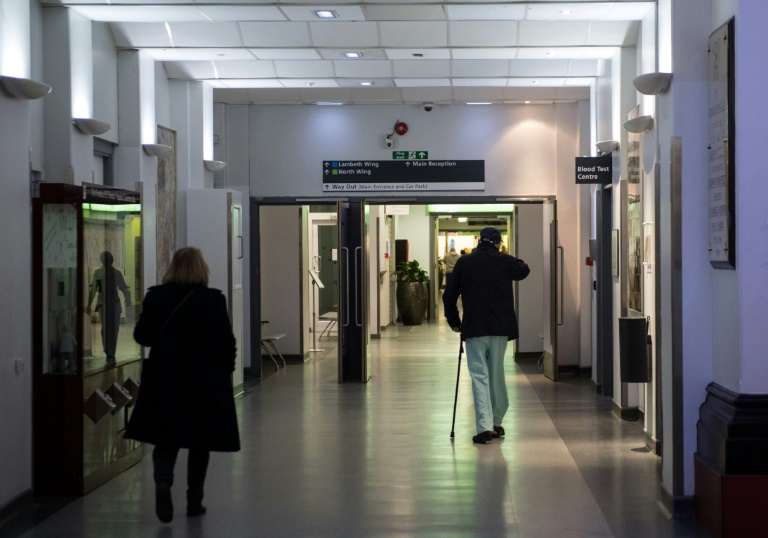
UK hospitals bosses on Thursday warned that patient care may have to be cut to offset huge increases in energy bills over the winter months.

Most hospital groups contacted by medical journal the BMJ said they expected bills to at least double, as the price hikes kicked in.

The NHS Confederation, which represents health providers in the publicly funded National Health Service, said there would be a knock-on effect.

“The gap in funding from rising inflation will either have to be made up by fewer staff being employed, longer waiting times for care or other areas of patient care being cut back,” the group’s senior acute lead, Rory Deighton, told the BMJ.

“A failure to properly compensate the NHS for inflation will only heighten pressure on our health service as we move towards a winter that we know will be particularly challenging this year.”

UK inflation is at a 40-year high of 10.1 percent with dire predictions that rates could climb to 18 percent or more next year.

Last week households were told that their gas and electricity bills would go up by 80 percent from October, with further rises set for next year.

But non-domestic customers are not covered by the energy price cap, making them more vulnerable to the surge in wholesale prices.

Businesses across the board have warned the huge increases could force many to close if the government does nothing to help.

The BMJ said bosses at Great Ormond Street Children’s Hospital in London told it that they expected an energy bill of about £650,000 ($756,000) a month in January and February next year.

At the same time last year, it was about £350,000.

Sheffield Children’s Hospital in northern England has anticipated a rise of nearly 130 percent in its total bill for 2022-23.

But Nottingham University Hospital in central England has budgeted for a 214-percent rise in gas and electricity this year, it added.

NHS England set aside £1.5 billion to cover an expected £485-million increase in energy bills. But the estimate was made in May and prices have risen again, prompting concern it may not be enough.

– ‘Breaking point’ –

The situation only adds to a growing catalogue of problems faced by the publicly funded National Health Service.

The NHS, created in 1948 to provide free healthcare and paid out of general taxation, is a cherished British institution.

But the system, which costs £190 billion a year to run and employs some 1.2 million people in England alone, has long faced significant under-funding.

The NHS Confederation’s Deighton said the UK’s new prime minister, to be installed next week, needs to act immediately to offset cost of living increases.

“The NHS needs at least £3.4 billion to make up for inflation during this year alone, and that is before we face a winter of even higher wholesale energy prices,” he added.

Deighton’s boss, chief executive Matthew Taylor, told The Guardian this week that the NHS was “in its worst state in living memory”.

Problems include chronic staff shortages, overcrowded accident and emergency departments, ambulance delays and lengthy waiting lists for treatment.

One experienced A&E doctor wrote on the UnHerd website this month that the service was “at breaking point”, with patients at risk.

Health experts say the crisis is decades in the making but has been exacerbated by squeezed budgets over the last 12 years of Conservative government, Brexit and the coronavirus pandemic.

Nurses and junior doctors are currently being balloted for strike action as part of widespread industrial action over below-inflation pay offers.

NHS health and social care workers were hailed as heroes during the pandemic but in a sign of the crisis, some hospitals have set up food banks for staff struggling with the rising cost of living.

One NHS manager told LBC radio on Tuesday he was planning to convert spare hospital space into “warm rooms” for employees unable to afford winter heating at home.

Californians told not to charge EVs as grid struggles in heat wave

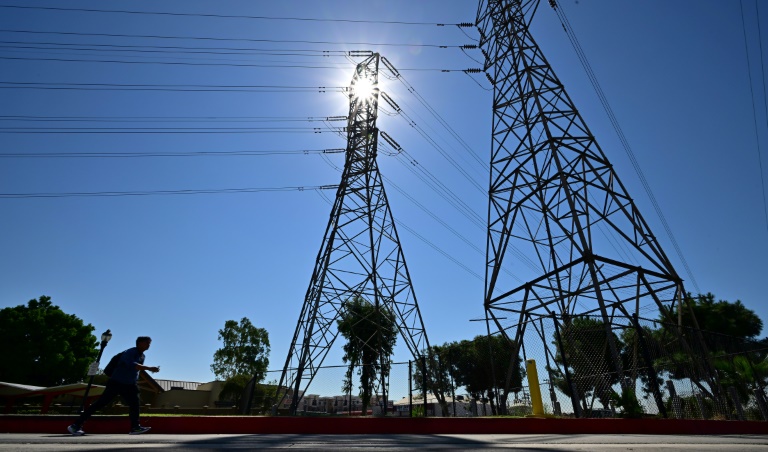
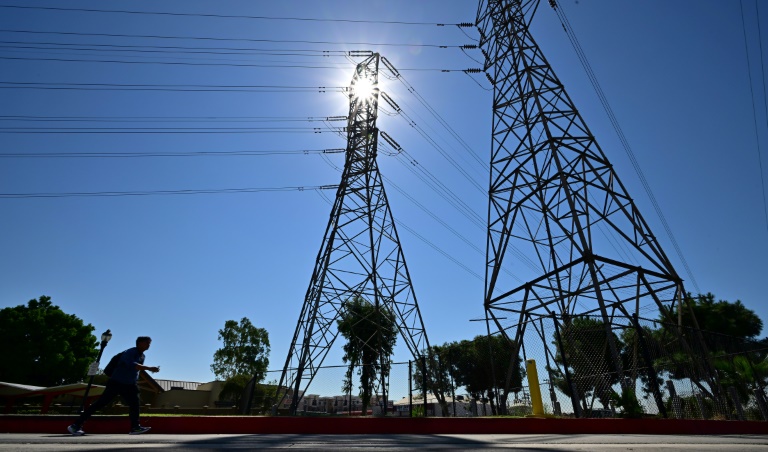
Californians were told Wednesday not to charge their electric vehicles during peak hours, just days after the state said it would stop selling gas-powered cars, as the aging electricity grid struggles with a fearsome heatwave.

Temperatures as high as 112 degrees Fahrenheit (44 degrees Celsius) were forecast in some Los Angeles suburbs as a huge heat dome bakes a swathe of the western United States.

The sweltering weather will put huge demands on the already-stretched power grid, especially when people crank up the air conditioners during the broiling hours after work and school.

“Consumers are urged to conserve power by setting thermostats to 78 degrees or higher, if health permits, avoiding use of major appliances and turning off unnecessary lights,” said the California Independent System Operator, which runs the state’s power grid.

Between 4:00 pm and 9:00 pm, “they should also avoid charging electric vehicles.”

“Reducing energy use during a Flex Alert can help stabilize the power grid during tight supply conditions and prevent further emergency measures, including rotating power outages.”

California’s power companies routinely ask households to limit their usage during the so-called “shoulder hours,” when rooftop solar panels stop producing electricity but demand remains high because of still-elevated temperatures.

The call to limit electric vehicle charging comes a week after state regulators banned the sale of new petrol- and diesel-powered vehicles from 2035.

All but a handful of SUVs, cars and light trucks will have to produce zero tailpipe emissions, with only highly efficient plug-in hybrids permitted to burn fossil fuels.

The move was hailed as a game-changer for the EV industry because of the size of California’s auto market and the potential it has to set national, and even international, standards.

– ‘Dangerously hot’ –

Wednesday’s plea to conserve power was greeted with derision on Twitter, where some said it was proof the state had not thought through its green agenda.

“Perhaps we should figure out how to fix our electric grid before we outlaw gas cars…just a thought,” tweeted @AerysGG

“So………this is what they want. Walking? Hitchin’ A Ride?? Moving to a more reasonable state??” tweeted @cinda_scheef

In response to soaring power demands, California Governor Gavin Newsom declared a state of emergency that temporarily removes pollution controls on fossil fuel power plants to allow them to generate more electricity.

He pointed to the punishing drought in the US West that has crippled hydroelectric plants, and noted the direct effect that climate change is having on day-to-day lives.

“Energy reliability becomes more and more challenging… because demand increases at the same time supply decreases,” he said.

He also called on households to do their part “to help us get through the next week or so, to turn up a little bit the thermostat at home to 78 degrees, try to pre-cool earlier in the day; try not to use too much electricity… between 4:00 pm and 9:00 pm.”

The National Weather Service has issued an “excessive heat warning” for most of California, as well as parts of Arizona and Nevada.

“Dangerously hot conditions expected… until Sunday evening,” the NWS said.

“A prolonged period of excessive heat will significantly increase the potential for heat related illnesses, particularly for those working or participating in outdoor activities.”

“Those without access to adequate or reliable cooling or hydration will be at most risk, but much of the population could be susceptible to impacts as well,” the NWS warned.

Nighttime temperatures are not expected to offer much relief, with lows struggling to get below 80 degrees Fahrenheit in many places.

It is not unusual for southern California to experience heat waves in September, but temperatures above 100 degrees Fahrenheit are considered hot even for a place almost perpetually baked by sunshine.

The heat wave comes after swathes of the southwest were lashed with torrential rains over recent weeks.

Some areas, including the notoriously dusty Death Valley, suffered flooding, and one person died after being swept away in Zion National Park in Utah.

Scientists say global warming, which is being driven chiefly by humanity’s use of fossil fuels, is making natural weather variations more extreme.

Heat waves are getting hotter and more intense, while storms are getting wetter and, in many cases, more dangerous.

Californians told not to charge EVs as grid struggles in heat wave

Californians were told Wednesday not to charge their electric vehicles during peak hours, just days after the state said it would stop selling gas-powered cars, as the aging electricity grid struggles with a fearsome heatwave.

Temperatures as high as 112 degrees Fahrenheit (44 degrees Celsius) were forecast in some Los Angeles suburbs as a huge heat dome bakes a swathe of the western United States.

The sweltering weather will put huge demands on the already-stretched power grid, especially when people crank up the air conditioners during the broiling hours after work and school.

“Consumers are urged to conserve power by setting thermostats to 78 degrees or higher, if health permits, avoiding use of major appliances and turning off unnecessary lights,” said the California Independent System Operator, which runs the state’s power grid.

Between 4:00 pm and 9:00 pm, “they should also avoid charging electric vehicles.”

“Reducing energy use during a Flex Alert can help stabilize the power grid during tight supply conditions and prevent further emergency measures, including rotating power outages.”

California’s power companies routinely ask households to limit their usage during the so-called “shoulder hours,” when rooftop solar panels stop producing electricity but demand remains high because of still-elevated temperatures.

The call to limit electric vehicle charging comes a week after state regulators banned the sale of new petrol- and diesel-powered vehicles from 2035.

All but a handful of SUVs, cars and light trucks will have to produce zero tailpipe emissions, with only highly efficient plug-in hybrids permitted to burn fossil fuels.

The move was hailed as a game-changer for the EV industry because of the size of California’s auto market and the potential it has to set national, and even international, standards.

– ‘Dangerously hot’ –

Wednesday’s plea to conserve power was greeted with derision on Twitter, where some said it was proof the state had not thought through its green agenda.

“Perhaps we should figure out how to fix our electric grid before we outlaw gas cars…just a thought,” tweeted @AerysGG

“So………this is what they want. Walking? Hitchin’ A Ride?? Moving to a more reasonable state??” tweeted @cinda_scheef

In response to soaring power demands, California Governor Gavin Newsom declared a state of emergency that temporarily removes pollution controls on fossil fuel power plants to allow them to generate more electricity.

He pointed to the punishing drought in the US West that has crippled hydroelectric plants, and noted the direct effect that climate change is having on day-to-day lives.

“Energy reliability becomes more and more challenging… because demand increases at the same time supply decreases,” he said.

He also called on households to do their part “to help us get through the next week or so, to turn up a little bit the thermostat at home to 78 degrees, try to pre-cool earlier in the day; try not to use too much electricity… between 4:00 pm and 9:00 pm.”

The National Weather Service has issued an “excessive heat warning” for most of California, as well as parts of Arizona and Nevada.

“Dangerously hot conditions expected… until Sunday evening,” the NWS said.

“A prolonged period of excessive heat will significantly increase the potential for heat related illnesses, particularly for those working or participating in outdoor activities.”

“Those without access to adequate or reliable cooling or hydration will be at most risk, but much of the population could be susceptible to impacts as well,” the NWS warned.

Nighttime temperatures are not expected to offer much relief, with lows struggling to get below 80 degrees Fahrenheit in many places.

It is not unusual for southern California to experience heat waves in September, but temperatures above 100 degrees Fahrenheit are considered hot even for a place almost perpetually baked by sunshine.

The heat wave comes after swathes of the southwest were lashed with torrential rains over recent weeks.

Some areas, including the notoriously dusty Death Valley, suffered flooding, and one person died after being swept away in Zion National Park in Utah.

Scientists say global warming, which is being driven chiefly by humanity’s use of fossil fuels, is making natural weather variations more extreme.

Heat waves are getting hotter and more intense, while storms are getting wetter and, in many cases, more dangerous.

Californians told not to charge EVs as grid struggles in heat wave

Californians were told Wednesday not to charge their electric vehicles during peak hours, just days after the state said it would stop selling gas-powered cars, as the aging electricity grid struggles with a fearsome heatwave.

Temperatures as high as 112 degrees Fahrenheit (44 degrees Celsius) were forecast in some Los Angeles suburbs as a huge heat dome bakes a swathe of the western United States.

The sweltering weather will put huge demands on the already-stretched power grid, especially when people crank up the air conditioners during the broiling hours after work and school.

“Consumers are urged to conserve power by setting thermostats to 78 degrees or higher, if health permits, avoiding use of major appliances and turning off unnecessary lights,” said the California Independent System Operator, which runs the state’s power grid.

Between 4:00 pm and 9:00 pm, “they should also avoid charging electric vehicles.”

“Reducing energy use during a Flex Alert can help stabilize the power grid during tight supply conditions and prevent further emergency measures, including rotating power outages.”

California’s power companies routinely ask households to limit their usage during the so-called “shoulder hours,” when rooftop solar panels stop producing electricity but demand remains high because of still-elevated temperatures.

The call to limit electric vehicle charging comes a week after state regulators banned the sale of new petrol- and diesel-powered vehicles from 2035.

All but a handful of SUVs, cars and light trucks will have to produce zero tailpipe emissions, with only highly efficient plug-in hybrids permitted to burn fossil fuels.

The move was hailed as a game-changer for the EV industry because of the size of California’s auto market and the potential it has to set national, and even international, standards.

– ‘Dangerously hot’ –

Wednesday’s plea to conserve power was greeted with derision on Twitter, where some said it was proof the state had not thought through its green agenda.

“Perhaps we should figure out how to fix our electric grid before we outlaw gas cars…just a thought,” tweeted @AerysGG

“So………this is what they want. Walking? Hitchin’ A Ride?? Moving to a more reasonable state??” tweeted @cinda_scheef

In response to soaring power demands, California Governor Gavin Newsom declared a state of emergency that temporarily removes pollution controls on fossil fuel power plants to allow them to generate more electricity.

He pointed to the punishing drought in the US West that has crippled hydroelectric plants, and noted the direct effect that climate change is having on day-to-day lives.

“Energy reliability becomes more and more challenging… because demand increases at the same time supply decreases,” he said.

He also called on households to do their part “to help us get through the next week or so, to turn up a little bit the thermostat at home to 78 degrees, try to pre-cool earlier in the day; try not to use too much electricity… between 4:00 pm and 9:00 pm.”

The National Weather Service has issued an “excessive heat warning” for most of California, as well as parts of Arizona and Nevada.

“Dangerously hot conditions expected… until Sunday evening,” the NWS said.

“A prolonged period of excessive heat will significantly increase the potential for heat related illnesses, particularly for those working or participating in outdoor activities.”

“Those without access to adequate or reliable cooling or hydration will be at most risk, but much of the population could be susceptible to impacts as well,” the NWS warned.

Nighttime temperatures are not expected to offer much relief, with lows struggling to get below 80 degrees Fahrenheit in many places.

It is not unusual for southern California to experience heat waves in September, but temperatures above 100 degrees Fahrenheit are considered hot even for a place almost perpetually baked by sunshine.

The heat wave comes after swathes of the southwest were lashed with torrential rains over recent weeks.

Some areas, including the notoriously dusty Death Valley, suffered flooding, and one person died after being swept away in Zion National Park in Utah.

Scientists say global warming, which is being driven chiefly by humanity’s use of fossil fuels, is making natural weather variations more extreme.

Heat waves are getting hotter and more intense, while storms are getting wetter and, in many cases, more dangerous.

Yellen 'optimistic' on deal to set price cap on Russian oil

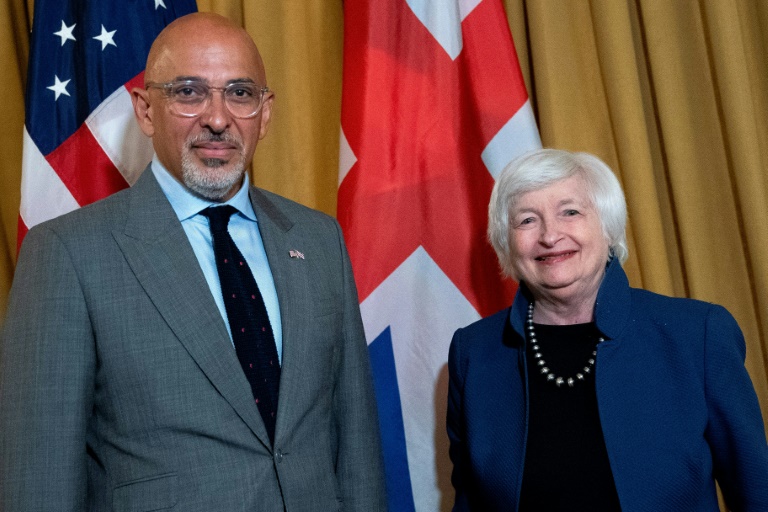
US Treasury Secretary Janet Yellen said Wednesday she was “optimistic” about the possibility of an international agreement to set a price limit on Russia’s oil exports. 

“I’m really optimistic about the substantial progress that’s been made by our teams and the entire G7 for making the price cap a reality,” Yellen said.

The US official met with her British counterpart, Chancellor of the Exchequer Nadhim Zahawi, and noted that “the United Kingdom has been a key ally in the G7’s work to put in place a price cap on Russian oil.”

The leaders of the Group of Seven advanced nations agreed in late June to work towards implementing the ceiling on crude sales, to choke off Moscow’s war chest, as well as bring down global energy prices. 

Yellen said the goal is to deny Vladimir Putin the funds to continue the war in Ukraine and to prop up the Russian economy.

A G7 official late last month explained that the maximum price would remain above the cost of the production, so it would not make economic sense for Moscow to deny oil to importing countries.

“We know that there’s a great deal of room between the price of production, and what Russia is making today,” the official told reporters, noting the goal is to “create economic incentives for Russia to continue to produce oil, but at the same time, deny them the excess revenues.”

The official acknowledged that the plan must be finalized by December 5, when a European ban will take effect on insurers and reinsurers covering Russian oil transport. 

Washington is seeking an “exemption” from the insurance ban for any oil sold below the price cap. 

The challenge is to get as many countries as possible to agree to the cap, and the issue is expected to be a key topic for discussion by leaders at the G20 summit in Bali on November 15 and 16.

Yellen 'optimistic' on deal to set price cap on Russian oil

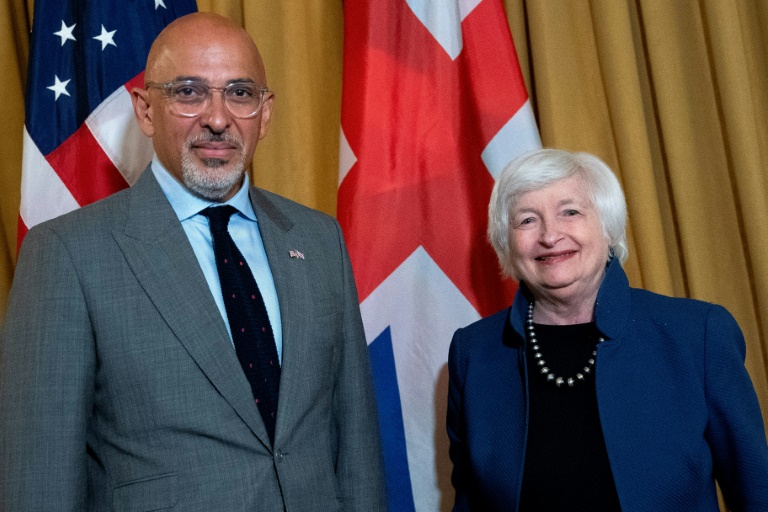
US Treasury Secretary Janet Yellen said Wednesday she was “optimistic” about the possibility of an international agreement to set a price limit on Russia’s oil exports. 

“I’m really optimistic about the substantial progress that’s been made by our teams and the entire G7 for making the price cap a reality,” Yellen said.

The US official met with her British counterpart, Chancellor of the Exchequer Nadhim Zahawi, and noted that “the United Kingdom has been a key ally in the G7’s work to put in place a price cap on Russian oil.”

The leaders of the Group of Seven advanced nations agreed in late June to work towards implementing the ceiling on crude sales, to choke off Moscow’s war chest, as well as bring down global energy prices. 

Yellen said the goal is to deny Vladimir Putin the funds to continue the war in Ukraine and to prop up the Russian economy.

A G7 official late last month explained that the maximum price would remain above the cost of the production, so it would not make economic sense for Moscow to deny oil to importing countries.

“We know that there’s a great deal of room between the price of production, and what Russia is making today,” the official told reporters, noting the goal is to “create economic incentives for Russia to continue to produce oil, but at the same time, deny them the excess revenues.”

The official acknowledged that the plan must be finalized by December 5, when a European ban will take effect on insurers and reinsurers covering Russian oil transport. 

Washington is seeking an “exemption” from the insurance ban for any oil sold below the price cap. 

The challenge is to get as many countries as possible to agree to the cap, and the issue is expected to be a key topic for discussion by leaders at the G20 summit in Bali on November 15 and 16.

Close Bitnami banner
Bitnami