AFP

Snap confirms cutting 20 percent of staff

Snapchat’s parent company confirmed Wednesday it is cutting 20 percent of staff, as the troubled messaging app attempts to dig itself out amid competition and revenue woes, as well as recent quarterly losses.

A hit with young internet users in its early days, Snapchat has remained a small player in the social networking space as competition from other apps, such as TikTok, has grown ever more intense.

“We must now face the consequences of our lower revenue growth and adapt to the market environment,” Snap CEO Evan Spiegel said in a note to employees Wednesday announcing the decision “to reduce the size of our team by approximately 20 percent.”

In July, the company reported that quarterly losses nearly tripled to $422 million amid conditions “more challenging” than expected.

Tech news website The Verge first reported the southern California-based company would be making the steep cuts to its approximately 6,400 staff.

Restructuring, Spiegel said, would focus on “three strategic priorities: community growth, revenue growth and augmented reality” with unrelated projects to “be discontinued or receive substantially reduced investment.”

Snap said it would discontinue its Snap Originals show programming, third-party app integration known as Minis, its games, and its lightweight drone offering called Pixy. 

It also said it was “winding down” its standalone geolocation app Zenly and music creation app Voisey, which it acquired through takeovers.

Like other social networks, Snap has taken a hit as advertisers have tightened their belts, as well as from new privacy changes by Apple that have bitten into firms’ sales of costly but highly-targeted ads.

“The company is facing layoffs as it works to restructure its ad business and cut costs,” said Insider Intelligence principal analyst Jasmine Enberg.

“Even so, I wouldn’t count Evan Spiegel out.”

Snap has a growing and loyal user base, and is well-positioned to capitalize on advertising and commerce in its augmented reality offerings over the long-term, the analyst reasoned.

Enberg expected Snapchat to end this year with nearly $5 billion in net ad revenue worldwide in a 43 percent increase from 2021. Insider Intelligence projected that ranks of Snapchat users would be up more than 10 percent to 493.7 million by the end of this year.

“We are encouraged by stabilizing user trends, as well as the large shopping and e-commerce advertising opportunity, healthy margins, and perspective and experience from recent upgrades to the management team,” Baird analysts said of Snap in a note to investors.

Snap announced a new chief operating officer, Jerry Hunter, who is being promoted from senior vice president of engineering. Google executive Ronan Harris will become president of the company’s Europe, Middle East and Africa division in October.

Meanwhile, Snap’s chief business officer Jeremi Gorman and Peter Naylor, the vice president of ad sales for the Americas, will be going to work for streaming  television titan Netflix in September, according to the companies.

Snap shares were up more than 10 percent in mid-day trading on the New York Stock Exchange.

Snap confirms cutting 20 percent of staff

Snapchat’s parent company confirmed Wednesday it is cutting 20 percent of staff, as the troubled messaging app attempts to dig itself out amid competition and revenue woes, as well as recent quarterly losses.

A hit with young internet users in its early days, Snapchat has remained a small player in the social networking space as competition from other apps, such as TikTok, has grown ever more intense.

“We must now face the consequences of our lower revenue growth and adapt to the market environment,” Snap CEO Evan Spiegel said in a note to employees Wednesday announcing the decision “to reduce the size of our team by approximately 20 percent.”

In July, the company reported that quarterly losses nearly tripled to $422 million amid conditions “more challenging” than expected.

Tech news website The Verge first reported the southern California-based company would be making the steep cuts to its approximately 6,400 staff.

Restructuring, Spiegel said, would focus on “three strategic priorities: community growth, revenue growth and augmented reality” with unrelated projects to “be discontinued or receive substantially reduced investment.”

Snap said it would discontinue its Snap Originals show programming, third-party app integration known as Minis, its games, and its lightweight drone offering called Pixy. 

It also said it was “winding down” its standalone geolocation app Zenly and music creation app Voisey, which it acquired through takeovers.

Like other social networks, Snap has taken a hit as advertisers have tightened their belts, as well as from new privacy changes by Apple that have bitten into firms’ sales of costly but highly-targeted ads.

“The company is facing layoffs as it works to restructure its ad business and cut costs,” said Insider Intelligence principal analyst Jasmine Enberg.

“Even so, I wouldn’t count Evan Spiegel out.”

Snap has a growing and loyal user base, and is well-positioned to capitalize on advertising and commerce in its augmented reality offerings over the long-term, the analyst reasoned.

Enberg expected Snapchat to end this year with nearly $5 billion in net ad revenue worldwide in a 43 percent increase from 2021. Insider Intelligence projected that ranks of Snapchat users would be up more than 10 percent to 493.7 million by the end of this year.

“We are encouraged by stabilizing user trends, as well as the large shopping and e-commerce advertising opportunity, healthy margins, and perspective and experience from recent upgrades to the management team,” Baird analysts said of Snap in a note to investors.

Snap announced a new chief operating officer, Jerry Hunter, who is being promoted from senior vice president of engineering. Google executive Ronan Harris will become president of the company’s Europe, Middle East and Africa division in October.

Meanwhile, Snap’s chief business officer Jeremi Gorman and Peter Naylor, the vice president of ad sales for the Americas, will be going to work for streaming  television titan Netflix in September, according to the companies.

Snap shares were up more than 10 percent in mid-day trading on the New York Stock Exchange.

In the trenches, a foreign fighter's view of Ukraine's offensive

Back home in South Carolina, “Rockstar” was doing a bit of gardening. Today he’s scrabbling around in the trenches with a handful of foreign fighters as Ukraine stages an offensive to retake Russian-held areas.

Some 15 kilometres (nine miles) from the frontline, the lanky 26-year-old is roaming the streets of a Ukrainian village looking for cigarettes.

Despite the curly mullet that earned him his “Rockstar” nickname, Gideon Rinehardt spent four years serving with the US National Guard.

And that experience is probably what made him worthy of joining what he calls the “very special forces” where he’s now serving under a Ukrainian command alongside two other Americans, a Briton, a Frenchman and a Finn.

Getting there was a funny story, he says, recalling how he showed up at a recruitment centre in the western region of Lviv to join the International Legion for the Defence of Ukraine (ILDU). 

“I’m not in great shape but I was still the best one there. So they asked me: do you want to join the normal army or do you want to be a badass?” he told AFP. 

“I’ve never been with the Special Forces, so put me with the normal people,” he told them. 

“But they still sent me here.”

– ‘Pretty intense’ –

Currently they are staying near a still-inhabited village in the southern Mykolaiv region, their barracks full of weaponry, from Czech assault rifles to anti-tank missiles. 

With his comrades out getting supplies in Mykolaiv, the nearest city, Rinehardt is killing time listening to some Def Leppard heavy metal. 

Other volunteers with the ILDU, which was created at the start of the war after an international appeal by Ukrainian President Volodymyr Zelensky, have complained about being badly equipped.

But Rinehardt says the Ukrainians are treating them “very well”.

Before joining in July, he was back in South Carolina “doing some gardening”, he says, without elaborating. 

Since then, it’s been pretty intense, he says. 

“It is a lot of moving in the trenches and into areas that we think the Russians are going to take.”

“There has been a couple of times when they shoot at us and we shoot back. I don’t know if I have killed anyone out here. I try not to think about it.”

– ‘This is trench warfare’ –

Many foreigners weren’t ready for this type of fight, he says. 

“Nothing can prepare you for this war. Some are like, ‘I went to Iraq, I went to Afghanistan’, but this is completely different.

“This is trench warfare, like in World War I, and some Russian soldiers are awfully good at it.”

Ukraine this week launched a counter-offensive to retake southern areas held by Russia, notably around Kherson city and the region of the same name. 

In a town near the frontline, the streets are buzzing with soldiers moving to and from the battlefield.

Some are waiting for a repair truck by an armoured vehicle that overheated. Others, just back from the front, are sitting in the shade under some trees.

“We really pushed them back yesterday,” smiles one soldier with a Ukrainian trident tattooed on his arm, who says his name is Victor. 

But his commanding officer, an Afghan war veteran, is more prudent, warning the battle to retake Kherson will be “long and difficult”. 

Although the foreign fighters are not taking part in the offensive itself, Rinehardt is pleased Ukraine has gone on the offensive. 

“I think we do need to take initiative. That’s the best option right now.”

He decided to join up after being “disgusted” by the atrocities he saw on cable television.

Over the next two months, he’ll have to decide whether or not he will stay longer — and that depends on whether he receives winter gear. 

Despite not speaking a word of Ukrainian, he says he’s careful to maintain good relationships with residents of the village where he is staying.

“This is a moral war, a war of public opinion. We need to behave respectfully. We’re going to leave, and they’re going to stay.”

Secret files 'likely concealed' at Trump home to block FBI probe

Top secret documents found at Donald Trump’s Florida home were “likely concealed” to obstruct an FBI probe into the former president’s potential mishandling of classified materials, the Department of Justice said in an explosive new court filing.

The filing released late Tuesday provides the most detailed account yet of the motivation for the raid on Trump’s Mar-a-Lago estate — which was triggered by a review of highly classified records that he had previously surrendered to authorities.

Before the raid, the FBI uncovered “multiple sources of evidence” showing that “classified documents” remained at Mar-a-Lago, the filing says, despite the assertion by Trump’s representatives that all sensitive materials had been handed over.

The filing made clear that prosecutors are seeking to determine whether Trump or anyone in his immediate orbit acted criminally to prevent federal agents from retrieving classified documents.

“The government also developed evidence that government records were likely concealed and removed from the Storage Room (at Trump’s estate) and that efforts were likely taken to obstruct the government’s investigation,” the filing adds.

When agents conducted their court-ordered search on August 8, they found material so sensitive that “even the FBI counterintelligence personnel and DOJ attorneys conducting the review required additional clearances before they were permitted to review certain documents,” it says.

In total, the filing says, agents recovered more than 100 documents with classification markings, in 13 boxes or containers, during the raid.

In a striking image sure to reverberate around Washington, the filing included a photograph of color-coded documents spread out over a carpet, marked “SECRET” and “TOP SECRET.”

Trump fired back Wednesday at the photo’s release in a post on his Truth Social network.

“Terrible the way the FBI, during the Raid of Mar-a-Lago, threw documents haphazardly all over the floor (perhaps pretending it was me that did it!), and then started taking pictures of them for the public to see,” he wrote. 

“Thought they wanted them kept Secret? Lucky I Declassified.”

– ‘Delayed access’ –

Trump, who is weighing another White House run in 2024, has accused the Justice Department under Democratic President Joe Biden of conducting a “witch hunt” and said the judge “should never have allowed the break-in of my home.”

Trump has taken legal action to seek the appointment of an independent party, or “special master,” to screen the seized files for materials protected by personal privilege.

The government’s filing argues that such an appointment, which would potentially block investigators’ access to the documents, is “unnecessary and would significantly harm important governmental interests, including national security interests.”

The Justice Department said it provided the detailed background on the build-up to the raid “to correct the incomplete and inaccurate narrative” set forth by Trump’s lawyers.

Its investigation began after the National Archives and Records Administration (NARA) received 15 boxes of records in January that had been improperly removed from the White House and taken to Mar-a-Lago.

According to the affidavit used to justify the raid, sensitive national defense information was among the “highly classified” records surrendered at that time, including 67 documents marked as confidential, 92 as secret and 25 as top secret.

In its filing, the Justice Department says “the former president delayed the FBI’s access to the fifteen boxes” once they had been surrendered to NARA.

The Mar-a-Lago search warrant, personally approved by Attorney General Merrick Garland, authorized the FBI to access the “45 office” — a reference to the 45th US president’s private office — and storage rooms.

The extraordinary search was partly based on suspicions of violations of the US Espionage Act related to the illegal retention of sensitive defense documents, the warrant showed.

Tuesday’s filing detailed how FBI agents in a previous operation traveled to Mar-a-Lago on June 3 and took into custody several documents turned over by a Trump custodian — who provided “sworn certification” that they represented the last of the material.

Democratic congressman Adam Schiff, who chairs the House Intelligence Committee, said the actions outlined in the brief were “reckless in the extreme” and showed “deliberate” deception.

In addition to investigations in New York into his business practices, Trump faces legal scrutiny for his efforts to overturn results of the 2020 election, and for the January 6, 2021 attack on the US Capitol by his supporters.

Trump was impeached for a historic second time by the House of Representatives after the Capitol riot — he was charged with inciting an insurrection — but was acquitted by the Senate.

UK political upheaval and stagflation fears weigh on pound

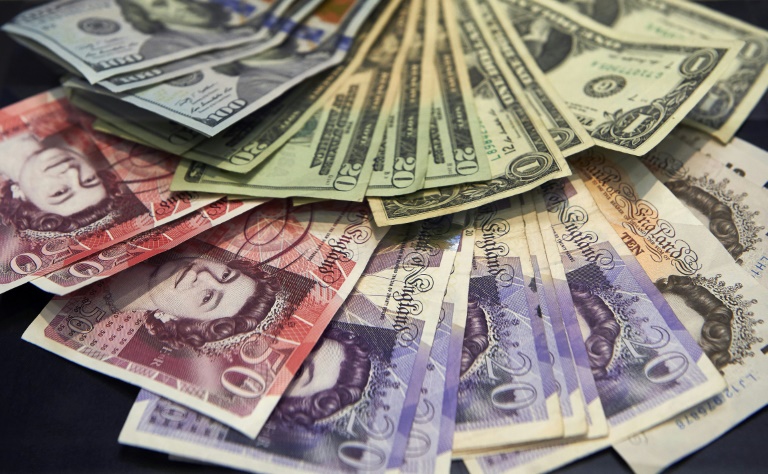
Political uncertainty and growing economic woes, including spiralling inflation and the threat of a recession, are weighing heavily on the British pound, against both the US dollar and the also struggling euro.

The British currency, which is currently trading at around $1.16 for £1, is a barometer of the UK’s attractiveness to international investors and has dropped to levels last seen in early 2020 and the shock of the Covid-19 outbreak. 

Before that, sterling has not been so cheaply traded since 1985. 

Many currencies are struggling against the greenback, which has been galvanised by the US Federal Reserve’s stated intention to continue raising its key rates.

European currencies are also suffering from the war in Ukraine and the energy crisis, currently heightened by the threat of a total interruption of Russian gas deliveries. 

But the pound is particularly badly hit, losing more than 15 percent against the dollar over the past year.

That has occurred despite the Bank of England (BoE) beginning to raise its key rates at the end of 2021 and repeatedly indicating that it intends to continue this tightening. 

Against the euro, which has been weighed down by the European Central Bank’s difficulties in tightening its monetary policy, the pound has fallen by two percent this year. 

The UK has the highest inflation in the G7, at more 10 percent year-on-year. The BoE estimates that it could rise to 13 percent in October. 

Private bank analysts are even more pessimistic: Citi estimates that the peak could reach 18.6 percent in early 2023, while Goldman Sachs suggests 14.8 percent. 

– All-time low looming? –

However, inflation could hit 22.4 percent next year if the country’s energy prices — which are set to jump 80 percent in October — continue their upward spiral as predicted.

That has prompted analysts at Capital Economics to warn sterling could plunge to an all-time low of $1.05, given the toxic cocktail of a likely recession alongside persistently high inflation — elements of dreaded so-called stagflation.

The term refers to long-running high inflation combined with weak growth and rising unemployment.

Capital Economics argues the BoE will have to stop tightening monetary policy in the coming months, but cannot afford to loosen it either amid that spectre.

Its analysts also note downside risks loom in the form of Liz Truss, the favourite to become prime minister next week, who has threatened to renege on a key element of the country’s post-Brexit deal with the European Union. 

Former finance minister Rishi Sunak, the other candidate in the race, warned this week it would be “complacent and irresponsible” to ignore the risk of markets losing confidence in Britain, as he attacked Truss’s plans to slash taxes. 

“The lack of credibility issue Sunak mentions may see the pound continue to weaken” if Truss is confirmed as the ruling Conservatives’ next leader on Monday, said Derek Halpenny, a currency analyst at MUFG.

Meanwhile, the broader consequences of leaving the EU and its single market and customs union continue to weigh on the pound, according to economists. 

It was trading at less than 80 pence against the euro and more than $1.40 on the eve of the Brexit vote. 

Since then, it has lost more than a fifth of its value against the greenback and more than 10 percent against the European single currency. 

Greenhouse gas, sea levels at record in 2021: US agency

Earth’s concentration of greenhouse gases and sea levels hit new highs in 2021, a US government report said Wednesday, showing that climate change keeps surging ahead despite renewed efforts to curb emissions.

“The data presented in this report are clear — we continue to see more compelling scientific evidence that climate change has global impacts and shows no sign of slowing,” said Rick Spinrad, administrator of the National Oceanic and Atmospheric Administration.

“With many communities hit with 1,000-year floods, exceptional drought and historic heat this year, it shows that the climate crisis is not a future threat but something we must address today,” he said in a statement.

The rise in greenhouse gas levels comes despite an easing of fossil fuel emissions the previous year as much of the global economy slowed sharply due to the Covid-19 pandemic.

The US agency said that the concentration of greenhouse gas in the atmosphere stood at 414.7 parts per million in 2021, 2.3 parts higher than in 2020.

The level is “the highest in at least the last million years based on paleoclimatic records,” the annual State of the Climate report found.

The planet’s sea levels rose for the 10th straight year, reaching a new record of 3.8 inches (97 millimeters) above the average in 1993 when satellite measurements began.

Last year was among the six warmest on record since the mid-19th century, with the last seven years all the seven hottest on record, it said.

The less headline-grabbing average temperatures were in part due to La Nina, an occasional phenomenon in the Pacific that cools waters, which took place early in the year and contributed to February being the coldest since 2014.

But water temperatures were also at records, with exceptionally high recordings documented in particular in lakes in Tibet, an environmentally crucial region as a water source for many of Asia’s major rivers.

– Rising disasters and fears –

Tropical storms, which are expected to increase as the planet warms, were sharply up in 2021, the report said. They included Typhoon Rai, which killed nearly 400 people in the Philippines in December, and Ida, which swept the Caribbean before becoming the second strongest hurricane to hit Louisiana after Katrina.

Among other extraordinary events cited in the report, the celebrated cherry trees in Kyoto, Japan, bloomed at their earliest since 1409.

Wildfires, also expected to rise due to climate change, were comparatively low following recent years although devastating blazes were witnessed both in the American West and Siberia.

The 2021 report comes days after a study said Greenland’s ice sheet is already set to melt at dangerous levels, even without any future warming, with major effects for low-lying areas around the globe that are home to hundreds of millions of people.

The planet remains far off track from an ambition set by the Paris climate accord in 2015 to aspire to limit warming to 1.5 degrees Celsius (2.7 Fahrenheit) above pre-industrial levels to avoid the worst effects of climate change.

In August, the United States under President Joe Biden pushed through the most expansive government package ever to address emissions from the world’s largest economy.

The effort will invest heavily in clean energy and comes as California moves to require all cars to be zero-emission by 2035, a decision with far-reaching consequences for the automobile industry.

Greenhouse gas, sea levels at record in 2021: US agency

Earth’s concentration of greenhouse gases and sea levels hit new highs in 2021, a US government report said Wednesday, showing that climate change keeps surging ahead despite renewed efforts to curb emissions.

“The data presented in this report are clear — we continue to see more compelling scientific evidence that climate change has global impacts and shows no sign of slowing,” said Rick Spinrad, administrator of the National Oceanic and Atmospheric Administration.

“With many communities hit with 1,000-year floods, exceptional drought and historic heat this year, it shows that the climate crisis is not a future threat but something we must address today,” he said in a statement.

The rise in greenhouse gas levels comes despite an easing of fossil fuel emissions the previous year as much of the global economy slowed sharply due to the Covid-19 pandemic.

The US agency said that the concentration of greenhouse gas in the atmosphere stood at 414.7 parts per million in 2021, 2.3 parts higher than in 2020.

The level is “the highest in at least the last million years based on paleoclimatic records,” the annual State of the Climate report found.

The planet’s sea levels rose for the 10th straight year, reaching a new record of 3.8 inches (97 millimeters) above the average in 1993 when satellite measurements began.

Last year was among the six warmest on record since the mid-19th century, with the last seven years all the seven hottest on record, it said.

The less headline-grabbing average temperatures were in part due to La Nina, an occasional phenomenon in the Pacific that cools waters, which took place early in the year and contributed to February being the coldest since 2014.

But water temperatures were also at records, with exceptionally high recordings documented in particular in lakes in Tibet, an environmentally crucial region as a water source for many of Asia’s major rivers.

– Rising disasters and fears –

Tropical storms, which are expected to increase as the planet warms, were sharply up in 2021, the report said. They included Typhoon Rai, which killed nearly 400 people in the Philippines in December, and Ida, which swept the Caribbean before becoming the second strongest hurricane to hit Louisiana after Katrina.

Among other extraordinary events cited in the report, the celebrated cherry trees in Kyoto, Japan, bloomed at their earliest since 1409.

Wildfires, also expected to rise due to climate change, were comparatively low following recent years although devastating blazes were witnessed both in the American West and Siberia.

The 2021 report comes days after a study said Greenland’s ice sheet is already set to melt at dangerous levels, even without any future warming, with major effects for low-lying areas around the globe that are home to hundreds of millions of people.

The planet remains far off track from an ambition set by the Paris climate accord in 2015 to aspire to limit warming to 1.5 degrees Celsius (2.7 Fahrenheit) above pre-industrial levels to avoid the worst effects of climate change.

In August, the United States under President Joe Biden pushed through the most expansive government package ever to address emissions from the world’s largest economy.

The effort will invest heavily in clean energy and comes as California moves to require all cars to be zero-emission by 2035, a decision with far-reaching consequences for the automobile industry.

Obamas to unveil White House portraits after Trump snub

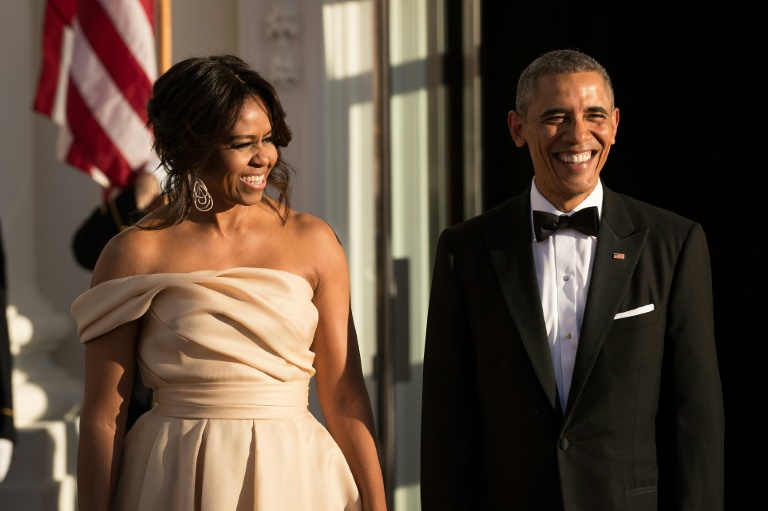
Former US president Barack Obama and first lady Michelle Obama will finally unveil their official portraits at the White House next week after being denied the honor by Donald Trump.

The September 7 ceremony, announced by the administration on Wednesday, traditionally gives presidents the chance to pay homage to their predecessors. 

But Trump, who led the United States for a single term after Obama’s eight years in office and frequently attacks his predecessor, declined to continue with the custom.

Instead President Joe Biden — who served as Obama’s vice president — and his wife Jill Biden will host the couple. 

The 44th president’s latest visit since he vacated the Oval Office in 2017 comes five months after he made a high-profile homecoming for a public event on health care spending. 

Trump, a world-renowned aficionado of the decade-spanning contretemps, demonstrated repeatedly during his tenure that he was untroubled by the mandates of tradition and protocol.

The norm-shredding Republican reportedly removed portraits of presidents Bill Clinton and George W. Bush from the White House’s Grand Foyer, considered the most prominent position in the executive mansion.

They were not restored until Biden took office last year.

European stocks drop on record eurozone inflation

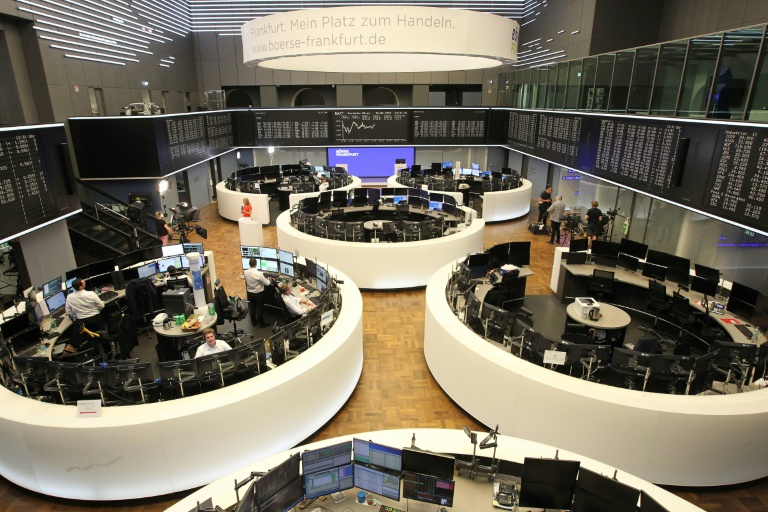
European stock markets slid Wednesday as record-high eurozone inflation fanned fears that more interest rate hikes could herald recession.

Frankfurt, London and Paris stocks all dropped as data showed eurozone inflation hit 9.1 percent in August on surging fuel prices, raising pressure on the European Central Bank to tighten its monetary policy.

Wall Street’s main stock indices were lower in late morning trading, while most Asian markets closed lower on concerns the US Federal Reserve’s rate-hiking policy would send the world’s biggest economy into recession.

Meanwhile, oil prices fell on demand jitters as China imposes further pandemic restrictions, and the possibility a deal on Iran’s nuclear programme could unlock crude exports.

“Traders aren’t just ready to back riskier assets and losing their appetite for them because there are concerns about the Fed’s hawkish monetary policy,” said Naeem Aslam, chief market analyst for Markets.com.

“The data from the EU has confirmed that inflation is moving in one direction only, and the ECB has a long way to go before it can put a leash on inflation,” he said.

The ECB is set to lift borrowing costs next week, having increased them in July for the first time in a decade to help tackle rampant inflation.

– Recession risk –

“The reality is that a more aggressive (ECB) tightening is going to be needed, and when the economy is already as fragile as it is, the situation quickly starts to look quite problematic,” OANDA analyst Craig Erlam told AFP.

“That’s not good for stocks as it’s extremely difficult for companies to prosper if the bloc is in a deep recession made worse by higher interest rates, which is now a real risk.”

Major central banks are rushing to contain runaway consumer price inflation that has largely been prompted by fallout from key energy supplier Russia’s invasion of Ukraine.

State energy giant Gazprom suspended gas deliveries to Germany on a major pipeline on Wednesday.

It was the latest in a series of supply halts that have fuelled Europe’s energy crisis and sent gas and electricity prices soaring before the peak-demand winter.

European gas prices, however, fell on Wednesday after flirting with a record high last week.

Markets have struggled since Fed chief Jerome Powell warned last Friday that the US central bank would need to tighten policy much more to tackle sky-high inflation.

“Inflation remains the key issue, with commentary from both the Fed and ECB serving to highlight the fact that controlling prices will remain the central target irrespective of economic suffering,” IG analyst Joshua Mahony told AFP.

“A drawn out period of higher costs, higher wages, and lower demand point towards further downside for equity markets,” he noted.

Traders are now awaiting the release of US job-creation figures on Friday for a better idea about the state of the economy.

– Key figures at around 1530 GMT –

New York – Dow: DOWN 0.3 percent at 31,689.95 points

EURO STOXX 50: DOWN 1.3 percent at 3,517.25

London – FTSE 100: DOWN 1.1 percent at 7,284.15 (close)

Frankfurt – DAX: DOWN 0.7 percent at 12,873.48 (close)

Paris – CAC 40: DOWN 1.4 percent at 6,125.10 (close)

Tokyo – Nikkei 225: DOWN 0.4 percent at 28,091.53 (close)

Hong Kong – Hang Seng Index: FLAT at 19,954.39 (close)

Shanghai – Composite: DOWN 0.8 percent at 3,202.14 (close)

Euro/dollar: UP at $1.0074 from $1.0015 on Tuesday

Pound/dollar: DOWN at $1.1643 from $1.1656

Euro/pound: UP at 86.45 pence from 85.92 pence

Dollar/yen: DOWN at 138.61 yen from 139.00 yen

West Texas Intermediate: DOWN 1.4 percent at $90.32 per barrel

Brent North Sea crude: DOWN 2.6 percent at $96.72 per barrel

burs-rl/

European stocks drop on record eurozone inflation

European stock markets slid Wednesday as record-high eurozone inflation fanned fears that more interest rate hikes could herald recession.

Frankfurt, London and Paris stocks all dropped as data showed eurozone inflation hit 9.1 percent in August on surging fuel prices, raising pressure on the European Central Bank to tighten its monetary policy.

Wall Street’s main stock indices were lower in late morning trading, while most Asian markets closed lower on concerns the US Federal Reserve’s rate-hiking policy would send the world’s biggest economy into recession.

Meanwhile, oil prices fell on demand jitters as China imposes further pandemic restrictions, and the possibility a deal on Iran’s nuclear programme could unlock crude exports.

“Traders aren’t just ready to back riskier assets and losing their appetite for them because there are concerns about the Fed’s hawkish monetary policy,” said Naeem Aslam, chief market analyst for Markets.com.

“The data from the EU has confirmed that inflation is moving in one direction only, and the ECB has a long way to go before it can put a leash on inflation,” he said.

The ECB is set to lift borrowing costs next week, having increased them in July for the first time in a decade to help tackle rampant inflation.

– Recession risk –

“The reality is that a more aggressive (ECB) tightening is going to be needed, and when the economy is already as fragile as it is, the situation quickly starts to look quite problematic,” OANDA analyst Craig Erlam told AFP.

“That’s not good for stocks as it’s extremely difficult for companies to prosper if the bloc is in a deep recession made worse by higher interest rates, which is now a real risk.”

Major central banks are rushing to contain runaway consumer price inflation that has largely been prompted by fallout from key energy supplier Russia’s invasion of Ukraine.

State energy giant Gazprom suspended gas deliveries to Germany on a major pipeline on Wednesday.

It was the latest in a series of supply halts that have fuelled Europe’s energy crisis and sent gas and electricity prices soaring before the peak-demand winter.

European gas prices, however, fell on Wednesday after flirting with a record high last week.

Markets have struggled since Fed chief Jerome Powell warned last Friday that the US central bank would need to tighten policy much more to tackle sky-high inflation.

“Inflation remains the key issue, with commentary from both the Fed and ECB serving to highlight the fact that controlling prices will remain the central target irrespective of economic suffering,” IG analyst Joshua Mahony told AFP.

“A drawn out period of higher costs, higher wages, and lower demand point towards further downside for equity markets,” he noted.

Traders are now awaiting the release of US job-creation figures on Friday for a better idea about the state of the economy.

– Key figures at around 1530 GMT –

New York – Dow: DOWN 0.3 percent at 31,689.95 points

EURO STOXX 50: DOWN 1.3 percent at 3,517.25

London – FTSE 100: DOWN 1.1 percent at 7,284.15 (close)

Frankfurt – DAX: DOWN 0.7 percent at 12,873.48 (close)

Paris – CAC 40: DOWN 1.4 percent at 6,125.10 (close)

Tokyo – Nikkei 225: DOWN 0.4 percent at 28,091.53 (close)

Hong Kong – Hang Seng Index: FLAT at 19,954.39 (close)

Shanghai – Composite: DOWN 0.8 percent at 3,202.14 (close)

Euro/dollar: UP at $1.0074 from $1.0015 on Tuesday

Pound/dollar: DOWN at $1.1643 from $1.1656

Euro/pound: UP at 86.45 pence from 85.92 pence

Dollar/yen: DOWN at 138.61 yen from 139.00 yen

West Texas Intermediate: DOWN 1.4 percent at $90.32 per barrel

Brent North Sea crude: DOWN 2.6 percent at $96.72 per barrel

burs-rl/

Close Bitnami banner
Bitnami