AFP

Chinese electric carmaker BYD plummets after Buffett sale

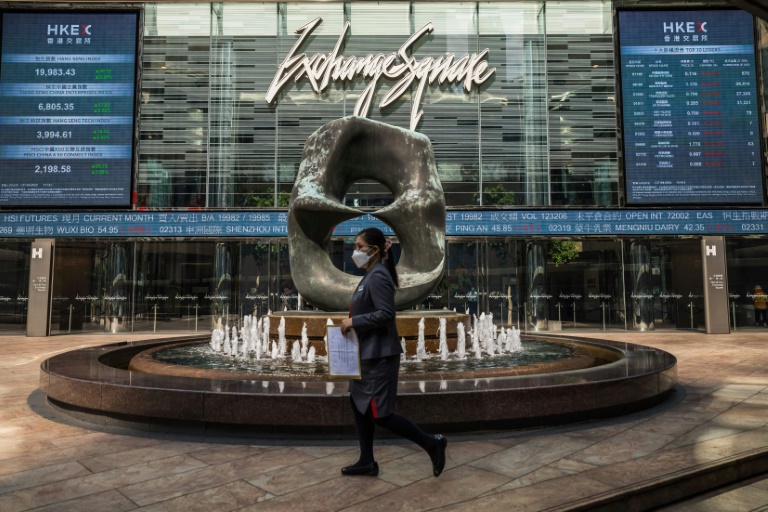
Shares in Chinese electric carmaker BYD plunged on Wednesday after its largest backer, Warren Buffett’s Berkshire Hathaway, reduced its stake amid speculation of a potential exit.

Hong Kong-listed shares of the EV manufacturer fell by as much as 13 percent, a day after a regulatory filing showed Berkshire reducing its holdings from 20.04 percent to 19.92 percent.

It ended the day 7.9 percent lower, while its Shenzhen-listed stock finished 7.4 percent down.

The sale of around 1.33 million securities was valued at approximately $47 million.

Electronic carmakers in China were left scrambling after the government response to coronavirus outbreaks this year disrupted supply chains, with plants across the country suspending production for weeks.

While the Shenzhen-based firm reported strong earnings this week, rumours have swelled that the legendary American investor behind Berkshire may be looking to offload his entire stake.

Berkshire first bought 225 million BYD shares in 2008 and has been the biggest stakeholder in the company, now China’s largest EV manufacturer and a major rival to Tesla.

Berkshire sold around 6.3 million shares in BYD between June 30 and August 24, Bloomberg News reported, citing filings from both companies.

BYD told Chinese media that there was “no need to over-interpret” the stake sale, adding that the company was operating normally and had no major moves to disclose.

On Monday, the Shenzhen-based company reported that net income had tripled to 3.6 billion yuan ($521 million) from a year earlier, overcoming supply chain disruptions caused by the pandemic and China’s economic slowdown.

BYD said in a filing that it achieved record output and sales in the first half, with revenue jumping 66 percent year-on-year to 151 billion yuan.

The carmaker added that it was leading the domestic new energy vehicle sector with 24.7 percent market share in the first six months, citing data from the China Automobile Association.

“Investors could interpret this as the beginning of Berkshire closing its position in BYD,” Bridget McCarthy, a market research analyst at hedge fund Snow Bull Capital, told Bloomberg.

“I would expect arguably one of the world’s greatest investors to take some profits after over a decade, especially on his highest-returning investment, percentage-wise.”

Some analysts have argued that BYD’s strong fundamentals, coupled with Beijing’s push to develop its domestic green energy sector, means the company still has room to grow.

“Despite the short term share price struggle, there is value to invest in the company with its solid business model in the medium to long term,” Andy Wong, fund manager at LW Asset Management Advisors in Hong Kong, said.

Last month, a stake identical to the size of Berkshire’s holdings was entered into Hong Kong’s Central Clearing and Settlement System. 

Hong Kong requires anyone who owns more than five percent of a listed company to notify the stock exchange when initiating a trade that changes the stake percentage into the next whole number.
Chinese electric carmaker BYD plummets after Buffett sale

Shares in Chinese electric carmaker BYD plunged on Wednesday after its largest backer, Warren Buffett’s Berkshire Hathaway, reduced its stake amid speculation of a potential exit.

Hong Kong-listed shares of the EV manufacturer fell by as much as 13 percent, a day after a regulatory filing showed Berkshire reducing its holdings from 20.04 percent to 19.92 percent.

It ended the day 7.9 percent lower, while its Shenzhen-listed stock finished 7.4 percent down.

The sale of around 1.33 million securities was valued at approximately $47 million.

Electronic carmakers in China were left scrambling after the government response to coronavirus outbreaks this year disrupted supply chains, with plants across the country suspending production for weeks.

While the Shenzhen-based firm reported strong earnings this week, rumours have swelled that the legendary American investor behind Berkshire may be looking to offload his entire stake.

Berkshire first bought 225 million BYD shares in 2008 and has been the biggest stakeholder in the company, now China’s largest EV manufacturer and a major rival to Tesla.

Berkshire sold around 6.3 million shares in BYD between June 30 and August 24, Bloomberg News reported, citing filings from both companies.

BYD told Chinese media that there was “no need to over-interpret” the stake sale, adding that the company was operating normally and had no major moves to disclose.

On Monday, the Shenzhen-based company reported that net income had tripled to 3.6 billion yuan ($521 million) from a year earlier, overcoming supply chain disruptions caused by the pandemic and China’s economic slowdown.

BYD said in a filing that it achieved record output and sales in the first half, with revenue jumping 66 percent year-on-year to 151 billion yuan.

The carmaker added that it was leading the domestic new energy vehicle sector with 24.7 percent market share in the first six months, citing data from the China Automobile Association.

“Investors could interpret this as the beginning of Berkshire closing its position in BYD,” Bridget McCarthy, a market research analyst at hedge fund Snow Bull Capital, told Bloomberg.

“I would expect arguably one of the world’s greatest investors to take some profits after over a decade, especially on his highest-returning investment, percentage-wise.”

Some analysts have argued that BYD’s strong fundamentals, coupled with Beijing’s push to develop its domestic green energy sector, means the company still has room to grow.

“Despite the short term share price struggle, there is value to invest in the company with its solid business model in the medium to long term,” Andy Wong, fund manager at LW Asset Management Advisors in Hong Kong, said.

Last month, a stake identical to the size of Berkshire’s holdings was entered into Hong Kong’s Central Clearing and Settlement System. 

Hong Kong requires anyone who owns more than five percent of a listed company to notify the stock exchange when initiating a trade that changes the stake percentage into the next whole number.
Asian markets mostly drop as traders eye more monetary tightening

Most Asian markets resumed their downward trend Wednesday, with traders fearing the Federal Reserve’s determination to beat inflation with higher interest rates will tip the world’s top economy into recession.

After bouncing from their June lows, global equities are once again taking a hiding from worried investors after Fed chief Jerome Powell warned last week the bank would need to tighten policy much more to succeed in its battle against prices.

Wall Street’s three main indexes fell for a third straight day Tuesday to sit at a one-month low, with healthy data on US consumer sentiment and job openings indicating the economy remained resilient despite recent rate hikes and four-decade-high inflation.

But analysts said the readings were a case of good news being bad news as they would allow the Fed to stick to its plan of lifting borrowing costs further. Expectations are growing for a third successive three-quarter-point increase next month.

Traders are now awaiting the release of US job-creation figures on Friday for a better idea about the state of the economy.

However, commentators said trying to plot a course through the next few months would be tricky owing to inflation and rate increases as well as other issues such as the Ukraine war, geopolitical tensions and China’s Covid-damaged economy.

“What’s clear is that predicting this market is not clean cut,” Angeline Newman, of UBS Global Wealth Management, told Bloomberg Television.

“We are living in a world where conflicting economic signals are making the path of monetary policy very difficult to determine.”

Shanghai dropped after a report on Chinese factory activity showed another contraction, as the sector was buffeted by lockdowns due to Beijing’s zero-Covid strategy and high temperatures that led to energy rationing.

The reading reinforced the view that the world’s number-two economy continued to struggle.

There were also losses in Tokyo, Sydney, Singapore, Wellington, Manila and Bangkok, though Seoul, Jakarta and Taipei rebounded from early losses. Hong Kong was flat.

London, Paris and Frankfurt all fell after reversing a positive start.

“Having seen such a promising start to August, last week’s speech by… Powell appears to have been the final straw for any sort of hope that we might see another positive month for equity markets,” said CMC Markets analyst Michael Hewson.

Worries about an economic slowdown and the possible hit to demand were also dragging on oil, which was on course for a third monthly drop, with both main contracts tumbling more than five percent Tuesday.

However, market watchers pointed out the commodity had plenty of upside potential as investors grapple with a range of supply issues including unrest in Libya and Iraq and expectations that Iran nuclear talks will not end any time soon.

Adding to the upward pressure was news that Russian energy giant Gazprom had shut off gas deliveries for three days from Wednesday via the Nord Stream pipeline through Germany.

– Key figures at around 0810 GMT 

Tokyo – Nikkei 225: DOWN 0.4 percent at 28,091.53 (close)

Hong Kong – Hang Seng Index: FLAT at 19,954.39 (close)

Shanghai – Composite: DOWN 0.8 percent at 3,202.14 (close)

London – FTSE 100: DOWN 0.3 percent at 7,340.96

Euro/dollar: DOWN at $1.0007 from $1.0024 on Tuesday

Pound/dollar: DOWN at $1.1644 from $1.1661

Euro/pound: DOWN at 85.92 pence from 85.95 pence

Dollar/yen: DOWN at 138.59 yen from 138.66 yen

West Texas Intermediate: DOWN 0.5 percent at $91.18 per barrel

Brent North Sea crude: DOWN 0.7 percent at $98.60 per barrel

New York – Dow: DOWN 1.0 percent at 31,790.87 (close)

Asian markets mostly drop as traders eye more monetary tightening

Most Asian markets resumed their downward trend Wednesday, with traders fearing the Federal Reserve’s determination to beat inflation with higher interest rates will tip the world’s top economy into recession.

After bouncing from their June lows, global equities are once again taking a hiding from worried investors after Fed chief Jerome Powell warned last week the bank would need to tighten policy much more to succeed in its battle against prices.

Wall Street’s three main indexes fell for a third straight day Tuesday to sit at a one-month low, with healthy data on US consumer sentiment and job openings indicating the economy remained resilient despite recent rate hikes and four-decade-high inflation.

But analysts said the readings were a case of good news being bad news as they would allow the Fed to stick to its plan of lifting borrowing costs further. Expectations are growing for a third successive three-quarter-point increase next month.

Traders are now awaiting the release of US job-creation figures on Friday for a better idea about the state of the economy.

However, commentators said trying to plot a course through the next few months would be tricky owing to inflation and rate increases as well as other issues such as the Ukraine war, geopolitical tensions and China’s Covid-damaged economy.

“What’s clear is that predicting this market is not clean cut,” Angeline Newman, of UBS Global Wealth Management, told Bloomberg Television.

“We are living in a world where conflicting economic signals are making the path of monetary policy very difficult to determine.”

Shanghai dropped after a report on Chinese factory activity showed another contraction, as the sector was buffeted by lockdowns due to Beijing’s zero-Covid strategy and high temperatures that led to energy rationing.

The reading reinforced the view that the world’s number-two economy continued to struggle.

There were also losses in Tokyo, Sydney, Singapore, Wellington, Manila and Bangkok, though Seoul, Jakarta and Taipei rebounded from early losses. Hong Kong was flat.

London, Paris and Frankfurt all fell after reversing a positive start.

“Having seen such a promising start to August, last week’s speech by… Powell appears to have been the final straw for any sort of hope that we might see another positive month for equity markets,” said CMC Markets analyst Michael Hewson.

Worries about an economic slowdown and the possible hit to demand were also dragging on oil, which was on course for a third monthly drop, with both main contracts tumbling more than five percent Tuesday.

However, market watchers pointed out the commodity had plenty of upside potential as investors grapple with a range of supply issues including unrest in Libya and Iraq and expectations that Iran nuclear talks will not end any time soon.

Adding to the upward pressure was news that Russian energy giant Gazprom had shut off gas deliveries for three days from Wednesday via the Nord Stream pipeline through Germany.

– Key figures at around 0810 GMT 

Tokyo – Nikkei 225: DOWN 0.4 percent at 28,091.53 (close)

Hong Kong – Hang Seng Index: FLAT at 19,954.39 (close)

Shanghai – Composite: DOWN 0.8 percent at 3,202.14 (close)

London – FTSE 100: DOWN 0.3 percent at 7,340.96

Euro/dollar: DOWN at $1.0007 from $1.0024 on Tuesday

Pound/dollar: DOWN at $1.1644 from $1.1661

Euro/pound: DOWN at 85.92 pence from 85.95 pence

Dollar/yen: DOWN at 138.59 yen from 138.66 yen

West Texas Intermediate: DOWN 0.5 percent at $91.18 per barrel

Brent North Sea crude: DOWN 0.7 percent at $98.60 per barrel

New York – Dow: DOWN 1.0 percent at 31,790.87 (close)

Misery mounts for millions in Pakistan's 'monsoon on steroids'

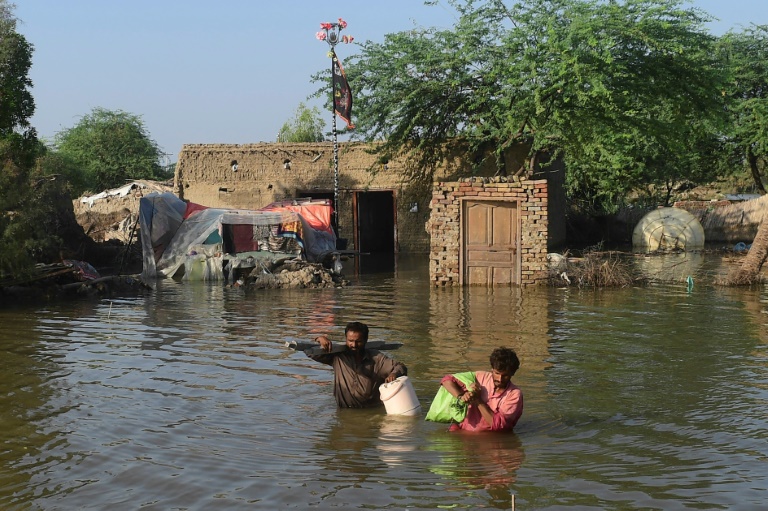
Army helicopters flew sorties over cut-off areas in Pakistan’s mountainous north Wednesday and rescue parties fanned out across waterlogged plains in the south as misery mounted for millions trapped by the worst floods in the country’s history.

Monsoon rains have submerged a third of Pakistan, claiming at least 1,160 lives since June and unleashing powerful floods that have washed away swathes of vital crops and damaged or destroyed more than a million homes.

United Nations chief Antonio Guterres called it “a monsoon on steroids” as he launched an international appeal late Tuesday for $160 million in emergency funding.

Officials say more than 33 million people are affected — one in every seven Pakistanis — and it will cost more than $10 billion to rebuild.

The focus for now, however, is reaching tens of thousands still stranded on hills and in valleys in the north, as well as remote villages in the south and west.

“We appeal to the government to help end our miseries at the soonest,” said Mohammad Safar, 38, outside his submerged home Wednesday in Shikarpur in the southeastern province of Sindh.

“The water must be drained out from here immediately so we can go back to our homes.”

There is so much water however that there is nowhere for it to drain.

Climate Change Minister Sherry Rehman described the country as “like a fully soaked sponge”, incapable of absorbing any more rain.

– ‘Burning with pain’ –

Pakistan has received twice its usual monsoon rainfall, weather authorities say, but Balochistan and Sindh provinces have seen more than four times the average of the last three decades.

Padidan, a small town in Sindh, has been drenched with an astonishing 1.75 metres (70 inches) since June.

Pakistan receives heavy — often destructive — rains during its annual monsoon season, which are crucial for agriculture and water supplies, but such intense downpours have not been seen for three decades.

Officials have blamed climate change, which is increasing the frequency and intensity of extreme weather around the world.

Earlier this year much of the nation was in the grip of a drought and heatwave, with temperatures hitting 51 degrees Celsius (124 Fahrenheit) in Sindh province.

The latest disaster could not have come at a worse time for Pakistan, where the economy is in free fall.

Pakistan Prime Minister Shehbaz Sharif promised aid donors that any funding would be responsibly spent.

“I want to give my solemn pledge and solemn commitment… every penny will be spent in a very transparent fashion. Every penny will reach the needy,” he said.

Pakistan was already desperate for international support and the floods have compounded the challenge.

Prices of basic goods — particularly onions, tomatoes and chickpeas — are soaring as vendors bemoan a lack of supplies from the flooded breadbasket provinces of Sindh and Punjab.

Makeshift relief camps have sprung up all over Pakistan — in schools, on motorways and in military bases.

Displaced people are sweltering in the summer heat with sporadic food aid and little access to water.

In Sindh, doctors treated patients who made their way to a makeshift clinic after walking barefoot through dirty floodwater, mud and streets full of debris and manure.

“My child’s foot is burning with pain. My feet too,” said Azra Bhambro, a 23-year-old woman who had come to the clinic for help.

In the northwestern town of Nowshera, a technical college was turned into a shelter for up to 2,500 flood victims.

The army said its helicopters had flown over 140 sorties in the past 24 hours, plucking people from cut-off areas in the north, and dropping off food and fresh water elsewhere.

Aid flights have arrived in recent days from China, Turkey and the United Arab Emirates, while other countries including Canada, Australia and Japan have also pledged assistance.

Documents 'likely concealed' to obstruct Trump probe: Justice Dept

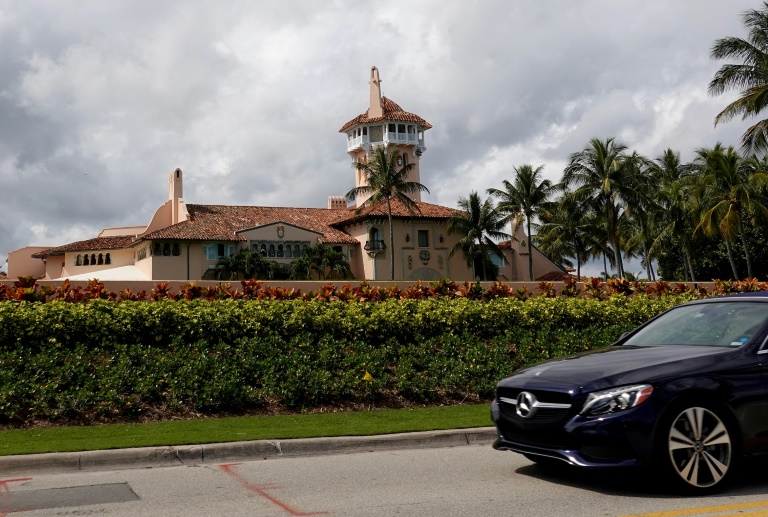
Documents at former US president Donald Trump’s Florida home were “likely concealed” to obstruct an FBI probe into his potential mishandling of classified materials, the Justice Department said in a court filing Tuesday.

The filing provides the most detailed account yet of the motivation for the FBI raid this month on Trump’s Mar-a-Lago estate, which was triggered by a review of records he previously surrendered to authorities that contained top secret information. 

Before the raid, the FBI uncovered “multiple sources of evidence” showing that “classified documents” remained at Mar-a-Lago, the filing says.

“The government also developed evidence that government records were likely concealed and removed… and that efforts were likely taken to obstruct the government’s investigation,” the filing adds.

The DOJ said it provided the detailed background on the build-up to the raid “to correct the incomplete and inaccurate narrative set forth in (Trump’s) filings.”

The filing responds to Trump’s request last week for an independent party, or “special master,” to screen files seized in the FBI raid for materials protected by personal privilege.

Naming a special master could potentially block investigators’ access to the documents, especially if he or she accepts Trump’s claims that most were privileged.

The filing argues that the court should not appoint a special master, “because those records do not belong to (Trump).”

The “appointment of a special master is unnecessary and would significantly harm important governmental interests, including national security interests,” the filing adds.

Trump, who is weighing another White House run in 2024, has accused the Justice Department under Democratic President Joe Biden of conducting a “witch hunt” and said the judge “should never have allowed the break-in of my home.”

Gazprom halts pipeline gas flow in new jitters for Europe

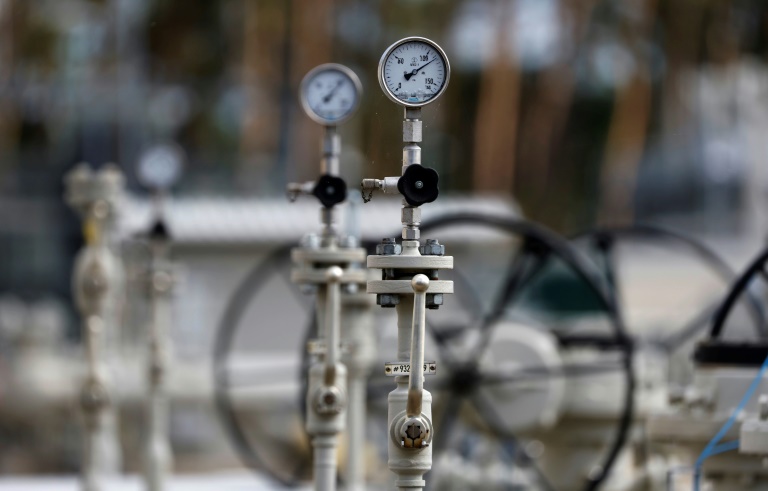
Russian energy giant Gazprom suspended gas deliveries to Germany for maintenance on a major pipeline on Wednesday, the latest in a series of supply halts that have fuelled an energy crisis in Europe.

Gazprom said supplies via Nord Stream 1 were “completely stopped” for “preventative work” at a compressor unit, shortly after the the pipeline’s operator, Entsog, announced that deliveries had stopped.

The move comes as European countries have faced soaring energy prices since Russia invaded Ukraine in late February and subsequently curbed its gas deliveries to the region.

Germany, which is heavily dependent on Russian gas, has accused Moscow of using energy as a “weapon”.

But Gazprom has said the three-day maintenance work was “necessary” and had to be be carried out after “every 1,000 hours of operation”.

Germany’s Federal Network Agency chief Klaus Mueller has called it a “technically incomprehensible” decision, warning that it was likely just a pretext by Moscow to wield energy supplies as a threat.

Experience shows that Moscow “makes a political decision after every so-called maintenance”, he said, adding that “we’ll only know at the beginning of September if Russia does that again”. 

– ‘Much better position’ –

With winter around the corner, European consumers are staring down the barrel of huge power bills. Some countries like France have warned that rationing is a possibility.

The European Union is preparing to take emergency action to reform the electricity market in order to bring galloping prices under control, with energy ministers scheduled to hold extraordinary talks next week.

Asked if gas supplies would resume after the three-day works were completed on Saturday, Russian government spokesman Dmitry Peskov said “there is a guarantee that, apart from technical problems caused by sanctions, nothing interferes with supplies”.

Western capitals “have imposed sanctions against Russia, which do not allow for normal maintenance, repair work”, he added, in what appeared to hint at a replay of an earlier round of start-stop rigmarole.

Gazprom had already carried out 10 days of long-scheduled maintenance works in July. While it restored gas flows following the works, it drastically dwindled supplies just days later, claiming a technical issue on a turbine.

The Russian company insists that a key turbine could not be sent to Russia because of sanctions on Moscow. But Germany, where the turbine was located, has said Moscow was itself in fact blocking the turbine’s delivery to Russia.

An official at Gascade, which operates the distribution network within Germany, also viewed Gazprom’s latest actions sceptically.

“In July, it was regular maintenance planned for a long time by Nord Stream 1, this time it was not planned and we don’t know what is behind this operation,” the official said on condition of anonymity.

A day ahead of the new shutdown, Chancellor Olaf Scholz said Germany was now “in a much better position” in terms of energy security, having achieved its gas storage targets far sooner than expected.

Europe as a whole was also getting a march on filling its gas storage tanks. On Sunday, storage levels were already at 79.9 percent of capacity in the EU.

– ‘Gas emergency’ –

At the same time, fears over throttled supplies have also driven companies to slash their energy usage.

Germany’s industry consumed 21.3 percent less gas in July than the average for the month from 2018 to 2021, said the Federal Network Agency.

Mueller has said such pre-emptive action “could save Germany from a gas emergency this winter”.

And Europe’s biggest economy was already racing to turn its back on Russian gas. 

At the German coastal city of Lubmin, where Nord Stream 1 comes onshore, plans are already well underway for the switch to liquefied natural gas (LNG).

The LNG, transported in by ships, will arrive at Lubmin’s industrial port and be converted back into gas and pumped into Gascade’s distribution network, which has so far been used to funnel Russian gas around the country.

“We expect to be able to inject gas into the distribution network on December 1,” said Stephan Knabe of Deutsche ReGas — the company managing the LNG project.

The company believes that up to 4.5 billion cubic metres of gas can be imported via the Lubmin LNG terminal alone, making up around eight percent of Nord Stream 1’s capacity.

Lives swept away: rescued tourists recount Pakistan flood horror

It was midnight when Yasmin and her family were ordered to urgently evacuate their room at the Honeymoon Hotel, perched above the picturesque ice-blue waters of the Swat river. 

They had swapped the sticky Lahore summer for the cooler climes of the northeastern mountains last week when they became embroiled in one of Pakistan’s worst disasters — one that has left more than 1,100 dead and a third of the country submerged by heavy flooding.

In the darkness, they fled their hotel in the remote Kalam valley.

Hours later, from the safety of higher ground, they watched it collapse and crumble into the thundering waters. 

“There was chaos, everyone was rushing to save their life,” the 53-year-old Yasmin told AFP Tuesday after she was evacuated to Mingora.

“We heard very strong bangs and then I saw the hotel we were staying in submerged in water. The sound of the water was so strong. It was like something had exploded.”

In the panic, she witnessed the despair of a mother unable to hold onto her small child.

“The child was shouting but his voice was overwhelmed by the gush of the water. His mother was trying to save him but she couldn’t,” Yasmin recalled, choking on her words. 

The boy was one of at least 21 people in the area lost to the floods, mainly due to collapsed houses. 

Accounts of last Thursday night’s horror have started to emerge after tourists were airlifted to safety by helicopter rescue missions — the only way of accessing remote valleys cut off by the flooding.

– Thousands still stranded –

All along the Swat river are the remnants of destroyed bridges, upended roads and the remains of hotels clinging to the banks.  

The water has receded but it could be days before road links are re-established with nearby towns. 

Junaid Khan, deputy commissioner for Swat, told AFP that up to 200,000 people were cut off.

More than 600 stricken tourists have made up the majority of evacuations — with women, children and the sick prioritised in an effort led by the military and supported by the provincial government’s helicopter. 

About 3,500 food aid packages have already been delivered –- some dropped from the back of a helicopter when crowds of people reaching for the aircraft made it impossible to land.

The stunning Swat Valley, known locally as the “Pakistani Switzerland”, is a popular destination for its majestic mountains, lakes and rivers. 

For days after her initial night of terror, Yasmin’s family sheltered in guest houses farther away from the swollen river until she could be rescued with her husband, who has a kidney condition, and her 12-year-old daughter. 

Her two adult sons stayed behind. 

While generally expectant of seasonal monsoon rains, tourists were surprised by the scale of the flooding that swept through the area.

“It feels like I have got a second life after arriving here,” said Yasmin from the safety of the airfield.

China's factory activity contracts for second straight month in August

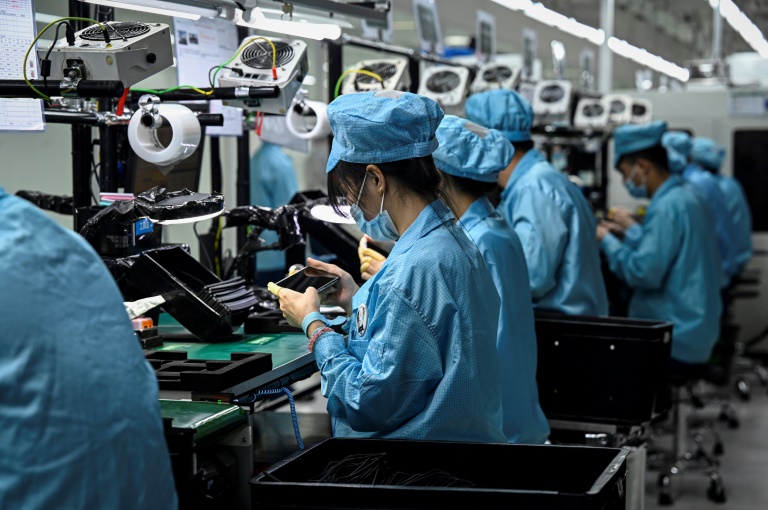
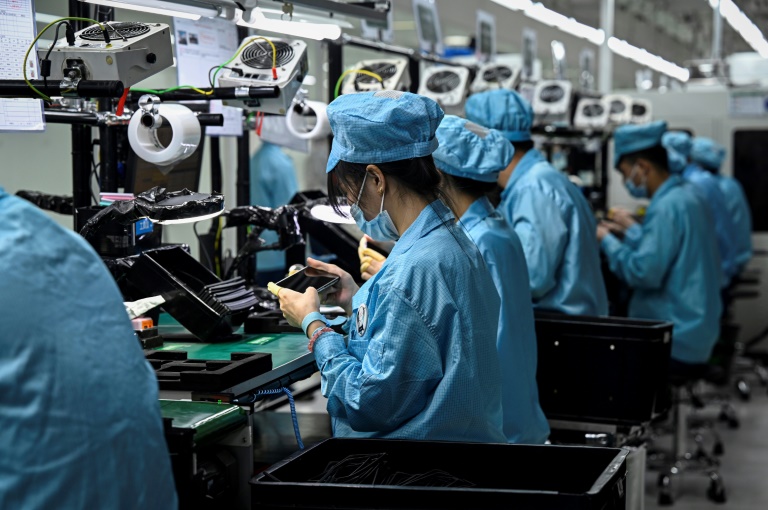
China’s factory activity shrank in August for the second month in a row, official data showed Wednesday, as the sector was hit by strict zero-Covid restrictions and extreme heat.

The Purchasing Managers’ Index (PMI), a key gauge of manufacturing in the world’s second-biggest economy, came in at 49.4, up from July’s 49.0 but still below the 50-point mark separating growth from contraction, National Bureau of Statistics (NBS) data showed.

Sporadic Covid-19 lockdowns around China have dampened consumer enthusiasm and business confidence, while searing temperatures across large parts of the country this summer prompted power rationing for factories.

The economy faced “unfavourable factors including the epidemic and high temperatures” this month, NBS senior statistician Zhao Qinghe said in a statement.

Zhao said the data showed “the recovery of manufacturing production and demand still needs to be strengthened”, though he noted an uptick in activity in agricultural product processing and food producers ahead of the mid-Autumn festival on September 10.

China’s manufacturing PMI has been in contraction territory for five out of the past six months, in the wake of a disruptive months-long lockdown in Shanghai and Covid-related restrictions elsewhere.

But officials show few signs of relaxing strict pandemic curbs, with the southern tech hub of Shenzhen sealing off the world’s largest electronics market this week despite just dozens of daily cases in the city of more than 18 million.

Chinese leaders had originally set a full-year GDP growth target of around 5.5 percent, but with economic expansion of just 0.4 percent in the second quarter, analysts believe it is unlikely to hit that goal.

Zhao noted that while larger businesses saw an expansion in activity this month, small and medium-sized enterprises reported contractions, dragging the overall PMI down.

“China’s economic weakness is increasingly becoming demand-driven,” ANZ’s Greater China chief economist Raymond Yeung, said.

“Consumption and investment sentiment among households and enterprises are weak, increasing the risk of a deflationary spiral.”

China’s non-manufacturing PMI came in at 52.6 points in August, down from 53.8 in July, NBS data showed.

Statistician Zhao said that the accommodation, food and beverage and telecommunications industries saw “sustained rapid growth” in the past month.

But ANZ’s Yeung noted that weak expansion in the service sector “bodes ill for China’s overall growth outlook”.

He said authorities were likely to continue their tough Covid approach in the leadup to a key political meeting in October — the 20th Communist Party Congress.

China's factory activity contracts for second straight month in August

China’s factory activity shrank in August for the second month in a row, official data showed Wednesday, as the sector was hit by strict zero-Covid restrictions and extreme heat.

The Purchasing Managers’ Index (PMI), a key gauge of manufacturing in the world’s second-biggest economy, came in at 49.4, up from July’s 49.0 but still below the 50-point mark separating growth from contraction, National Bureau of Statistics (NBS) data showed.

Sporadic Covid-19 lockdowns around China have dampened consumer enthusiasm and business confidence, while searing temperatures across large parts of the country this summer prompted power rationing for factories.

The economy faced “unfavourable factors including the epidemic and high temperatures” this month, NBS senior statistician Zhao Qinghe said in a statement.

Zhao said the data showed “the recovery of manufacturing production and demand still needs to be strengthened”, though he noted an uptick in activity in agricultural product processing and food producers ahead of the mid-Autumn festival on September 10.

China’s manufacturing PMI has been in contraction territory for five out of the past six months, in the wake of a disruptive months-long lockdown in Shanghai and Covid-related restrictions elsewhere.

But officials show few signs of relaxing strict pandemic curbs, with the southern tech hub of Shenzhen sealing off the world’s largest electronics market this week despite just dozens of daily cases in the city of more than 18 million.

Chinese leaders had originally set a full-year GDP growth target of around 5.5 percent, but with economic expansion of just 0.4 percent in the second quarter, analysts believe it is unlikely to hit that goal.

Zhao noted that while larger businesses saw an expansion in activity this month, small and medium-sized enterprises reported contractions, dragging the overall PMI down.

“China’s economic weakness is increasingly becoming demand-driven,” ANZ’s Greater China chief economist Raymond Yeung, said.

“Consumption and investment sentiment among households and enterprises are weak, increasing the risk of a deflationary spiral.”

China’s non-manufacturing PMI came in at 52.6 points in August, down from 53.8 in July, NBS data showed.

Statistician Zhao said that the accommodation, food and beverage and telecommunications industries saw “sustained rapid growth” in the past month.

But ANZ’s Yeung noted that weak expansion in the service sector “bodes ill for China’s overall growth outlook”.

He said authorities were likely to continue their tough Covid approach in the leadup to a key political meeting in October — the 20th Communist Party Congress.

Close Bitnami banner
Bitnami