AFP

UN session on high seas biodiversity ends without agreement

UN member states ended two weeks of negotiations Friday without a treaty to protect biodiversity in the high seas, an agreement that would have addressed growing environmental and economic challenges.

After 15 years, including four prior formal sessions, negotiators have yet to reach a legally binding text to address the multitude of issues facing international waters — a zone that encompasses almost half the planet.

“Although we did make excellent progress, we still do need a little bit more time to progress towards the finish line,” said conference chair Rena Lee.

It will now be up to the UN General Assembly to resume the fifth session at a date still to be determined.

Many had hoped the session, which began on August 15 at the United Nations headquarters in New York, would be the last and yield a final text on “the conservation and sustainable use of marine biodiversity beyond national jurisdiction,” or BBNJ for short.

“While it’s disappointing that the treaty wasn’t finalized during the past two weeks of negotiations, we remain encouraged by the progress that was made,” said Liz Karan of the NGO Pew Charitable Trusts, calling for a new session by the end of the year.

One of the most sensitive issues in the text revolved around the sharing of possible profits from the development of genetic resources in international waters, where pharmaceutical, chemical and cosmetic companies hope to find miracle drugs, products or cures.

Such costly research at sea is largely the prerogative of rich nations, but developing countries do not want to be left out of potential windfall profits drawn from marine resources that belong to no one.

-‘Missed opportunity’-

Similar issues of equity arise in other international negotiations, such as on climate change, in which developing nations that feel outsized harm from global warming have tried in vain to get wealthier countries to help pay to offset those impacts.

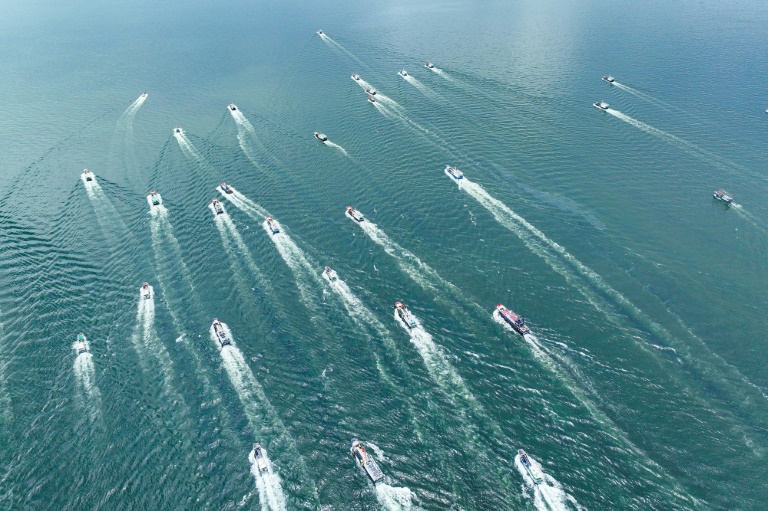
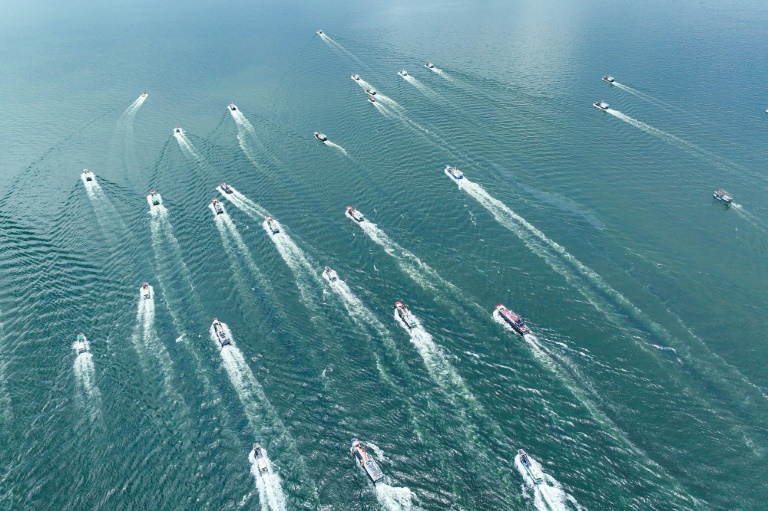
The high seas begin at the border of a nation’s exclusive economic zone (EEZ) — which by international law reaches no more than 200 nautical miles (370 kilometers) from its coast — and are under no state’s jurisdiction.

Sixty percent of the world’s oceans fall under this category.

And while healthy marine ecosystems are crucial to the future of humanity, particularly to limit global warming, only one percent of international waters are protected.

One of the key pillars of an eventual BBNJ treaty is to allow the creation of marine protected areas, which many nations hope will cover 30 percent of the Earth’s ocean by 2030.

“Without establishing protections in this vast area, we will not be able to meet our ambitious and necessary 30 by 30 goal,” US State Department official Maxine Burkett said at an earlier press conference.

But delegations still disagree on the process for creating these protected areas as well as how required environmental impact assessments will be implemented before new high seas activity begins.

“What a missed opportunity…”, tweeted Klaudija Cremers, a researcher at the IDDRI think tank, which, like multiple other NGOs, has a seat with observer status at the negotiations.

The delegate from Samoa, addressing the conference on behalf of the smaller developing island nations of the Pacific, said they were “disappointed.”

“We live very far and it is not cheap to travel all this way. This money was not spent on roads, on medicine, schools,” she added.

“The Pacific came here in good faith and will continue to do so until we conclude this conference in the very near future,” she said on the verge of tears, to applause from the room.

Laura Meller, of Greenpeace’s Protect the Oceans campaign, said: “Time has run out. Further delay means ocean destruction. We are sad and disappointed. While countries continue to talk, the oceans and all those who rely on them will suffer.”
UN session on high seas biodiversity ends without agreement

UN member states ended two weeks of negotiations Friday without a treaty to protect biodiversity in the high seas, an agreement that would have addressed growing environmental and economic challenges.

After 15 years, including four prior formal sessions, negotiators have yet to reach a legally binding text to address the multitude of issues facing international waters — a zone that encompasses almost half the planet.

“Although we did make excellent progress, we still do need a little bit more time to progress towards the finish line,” said conference chair Rena Lee.

It will now be up to the UN General Assembly to resume the fifth session at a date still to be determined.

Many had hoped the session, which began on August 15 at the United Nations headquarters in New York, would be the last and yield a final text on “the conservation and sustainable use of marine biodiversity beyond national jurisdiction,” or BBNJ for short.

“While it’s disappointing that the treaty wasn’t finalized during the past two weeks of negotiations, we remain encouraged by the progress that was made,” said Liz Karan of the NGO Pew Charitable Trusts, calling for a new session by the end of the year.

One of the most sensitive issues in the text revolved around the sharing of possible profits from the development of genetic resources in international waters, where pharmaceutical, chemical and cosmetic companies hope to find miracle drugs, products or cures.

Such costly research at sea is largely the prerogative of rich nations, but developing countries do not want to be left out of potential windfall profits drawn from marine resources that belong to no one.

-‘Missed opportunity’-

Similar issues of equity arise in other international negotiations, such as on climate change, in which developing nations that feel outsized harm from global warming have tried in vain to get wealthier countries to help pay to offset those impacts.

The high seas begin at the border of a nation’s exclusive economic zone (EEZ) — which by international law reaches no more than 200 nautical miles (370 kilometers) from its coast — and are under no state’s jurisdiction.

Sixty percent of the world’s oceans fall under this category.

And while healthy marine ecosystems are crucial to the future of humanity, particularly to limit global warming, only one percent of international waters are protected.

One of the key pillars of an eventual BBNJ treaty is to allow the creation of marine protected areas, which many nations hope will cover 30 percent of the Earth’s ocean by 2030.

“Without establishing protections in this vast area, we will not be able to meet our ambitious and necessary 30 by 30 goal,” US State Department official Maxine Burkett said at an earlier press conference.

But delegations still disagree on the process for creating these protected areas as well as how required environmental impact assessments will be implemented before new high seas activity begins.

“What a missed opportunity…”, tweeted Klaudija Cremers, a researcher at the IDDRI think tank, which, like multiple other NGOs, has a seat with observer status at the negotiations.

The delegate from Samoa, addressing the conference on behalf of the smaller developing island nations of the Pacific, said they were “disappointed.”

“We live very far and it is not cheap to travel all this way. This money was not spent on roads, on medicine, schools,” she added.

“The Pacific came here in good faith and will continue to do so until we conclude this conference in the very near future,” she said on the verge of tears, to applause from the room.

Laura Meller, of Greenpeace’s Protect the Oceans campaign, said: “Time has run out. Further delay means ocean destruction. We are sad and disappointed. While countries continue to talk, the oceans and all those who rely on them will suffer.”
UN session on high seas biodiversity ends without agreement

UN member states ended two weeks of negotiations Friday without a treaty to protect biodiversity in the high seas, an agreement that would have addressed growing environmental and economic challenges.

After 15 years, including four prior formal sessions, negotiators have yet to reach a legally binding text to address the multitude of issues facing international waters — a zone that encompasses almost half the planet.

“Although we did make excellent progress, we still do need a little bit more time to progress towards the finish line,” said conference chair Rena Lee.

It will now be up to the UN General Assembly to resume the fifth session at a date still to be determined.

Many had hoped the session, which began on August 15 at the United Nations headquarters in New York, would be the last and yield a final text on “the conservation and sustainable use of marine biodiversity beyond national jurisdiction,” or BBNJ for short.

“While it’s disappointing that the treaty wasn’t finalized during the past two weeks of negotiations, we remain encouraged by the progress that was made,” said Liz Karan with the NGO Pew Charitable Trusts, calling for a new session by the end of the year.

One of the most sensitive issues in the text revolved around the sharing of possible profits from the development of genetic resources in international waters, where pharmaceutical, chemical and cosmetic companies hope to find miracle drugs, products or cures.

Such costly research at sea is largely the prerogative of rich nations, but developing countries do not want to be left out of potential windfall profits drawn from marine resources that belong to no one.

-‘Missed opportunity’-

Similar issues of equity arise in other international negotiations, such as on climate change, in which developing nations that feel outsized harm from global warming have tried in vain to get wealthier countries to help pay to offset those impacts.

The high seas begin at the border of a nation’s exclusive economic zone (EEZ) — which by international law reaches no more than 200 nautical miles (370 kilometers) from its coast — and are under no state’s jurisdiction.

Sixty percent of the world’s oceans fall under this category.

And while healthy marine ecosystems are crucial to the future of humanity, particularly to limit global warming, only one percent of international waters are protected.

One of the key pillars of an eventual BBNJ treaty is to allow the creation of marine protected areas, which many nations hope will cover 30 percent of the Earth’s ocean by 2030.

“Without establishing protections in this vast area, we will not be able to meet our ambitious and necessary 30 by 30 goal,” US State Department official Maxine Burkett said at an earlier press conference.

But delegations still disagree on the process for creating these protected areas, as well as on how to implement a requirement for environmental impact assessments before new activity on the high seas.

“What a missed opportunity…”, tweeted Klaudija Cremers, a researcher at the IDDRI think tank, which, like multiple other NGOs, has a seat with observer status at the negotiations.

UN session on high seas biodiversity ends without agreement

UN member states ended two weeks of negotiations Friday without a treaty to protect biodiversity in the high seas, an agreement that would have addressed growing environmental and economic challenges.

After 15 years, including four prior formal sessions, negotiators have yet to reach a legally binding text to address the multitude of issues facing international waters — a zone that encompasses almost half the planet.

“Although we did make excellent progress, we still do need a little bit more time to progress towards the finish line,” said conference chair Rena Lee.

It will now be up to the UN General Assembly to resume the fifth session at a date still to be determined.

Many had hoped the session, which began on August 15 at the United Nations headquarters in New York, would be the last and yield a final text on “the conservation and sustainable use of marine biodiversity beyond national jurisdiction,” or BBNJ for short.

“While it’s disappointing that the treaty wasn’t finalized during the past two weeks of negotiations, we remain encouraged by the progress that was made,” said Liz Karan with the NGO Pew Charitable Trusts, calling for a new session by the end of the year.

One of the most sensitive issues in the text revolved around the sharing of possible profits from the development of genetic resources in international waters, where pharmaceutical, chemical and cosmetic companies hope to find miracle drugs, products or cures.

Such costly research at sea is largely the prerogative of rich nations, but developing countries do not want to be left out of potential windfall profits drawn from marine resources that belong to no one.

-‘Missed opportunity’-

Similar issues of equity arise in other international negotiations, such as on climate change, in which developing nations that feel outsized harm from global warming have tried in vain to get wealthier countries to help pay to offset those impacts.

The high seas begin at the border of a nation’s exclusive economic zone (EEZ) — which by international law reaches no more than 200 nautical miles (370 kilometers) from its coast — and are under no state’s jurisdiction.

Sixty percent of the world’s oceans fall under this category.

And while healthy marine ecosystems are crucial to the future of humanity, particularly to limit global warming, only one percent of international waters are protected.

One of the key pillars of an eventual BBNJ treaty is to allow the creation of marine protected areas, which many nations hope will cover 30 percent of the Earth’s ocean by 2030.

“Without establishing protections in this vast area, we will not be able to meet our ambitious and necessary 30 by 30 goal,” US State Department official Maxine Burkett said at an earlier press conference.

But delegations still disagree on the process for creating these protected areas, as well as on how to implement a requirement for environmental impact assessments before new activity on the high seas.

“What a missed opportunity…”, tweeted Klaudija Cremers, a researcher at the IDDRI think tank, which, like multiple other NGOs, has a seat with observer status at the negotiations.

Pipeline operator to pay $13m over California coast leak

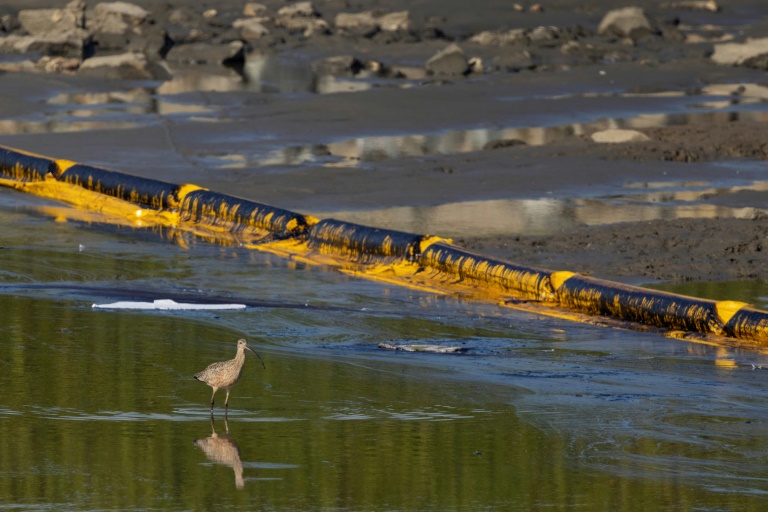
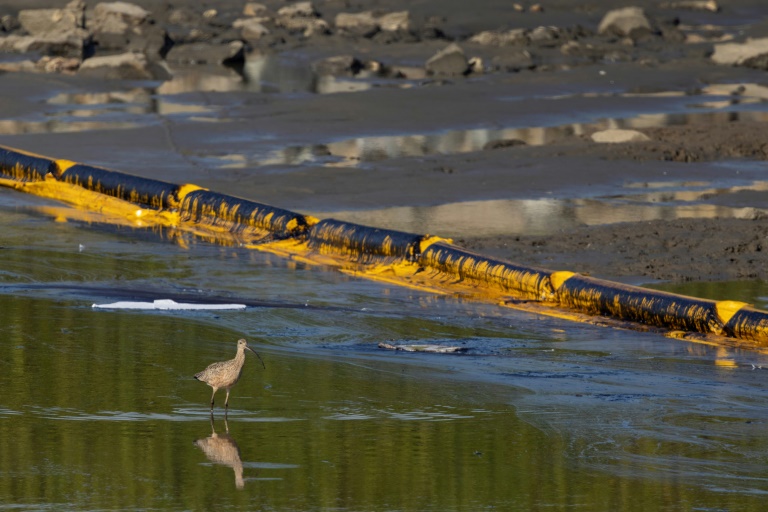
The operators of a pipeline that leaked crude oil onto California beaches has agreed to plead guilty to environmental pollution charges and pay $13 million, these companies said Friday.

Amplify Energy, a Texas company operating the pipeline off Huntington Beach, and two of its subsidiaries — Beta Operating Co. and San Pedro Bay Pipeline Co. — said they will admit to allowing oil to foul the waters off southern California in October last year.

As part of plea agreements entered in federal court, they will pay a $7.1 million fine and hand over $5.8 million to compensate federal agencies involved in cleaning up 25,000 gallons of crude oil that spewed from their pipeline.

The spill blackened 18 miles (24 kilometers) of coast south of Los Angeles between Huntington Beach and Laguna Beach, spots popular with surfers and a habitat for dolphins.

Underwater inspections revealed that a large segment of the pipeline had been displaced and showed a rupture in the pipe. 

Investigators said last year they suspected the damage could have been caused by the anchor of a ship, as the area is often packed with cargo vessels waiting to enter the busy ports of Los Angeles and Long Beach. 

Martyn Willsher, Amplify’s president and chief executive officer, said the company had worked “cooperatively” to resolve the problem as soon as it was discovered. 

“We believe this resolution, which is subject to court review and approval, reflects the commitments we made immediately following the incident to impacted parties and is in the best interest of Amplify and its stakeholders. 

“We are committed to safely operating in a way that ensures the protection of the environment and the surrounding communities.”

Amplify has also agreed to install a new leak detection system and to increase inspections along sections of the pipeline.

“This oil spill affected numerous people, businesses and organizations who use the Southern California coastal waters,” said Acting US Attorney Stephanie Christensen. 

“The companies involved are now accepting their responsibility for criminal conduct and are required to make significant improvements that will help prevent future oil spills.”

The October disaster reignited the debate over the presence of oil platforms just a few miles from the densely populated southern California shore. 

A total of 23 oil and gas platforms operate in federal waters just off the coast.

Pipeline operator to pay $13m over California coast leak

The operators of a pipeline that leaked crude oil onto California beaches has agreed to plead guilty to environmental pollution charges and pay $13 million, these companies said Friday.

Amplify Energy, a Texas company operating the pipeline off Huntington Beach, and two of its subsidiaries — Beta Operating Co. and San Pedro Bay Pipeline Co. — said they will admit to allowing oil to foul the waters off southern California in October last year.

As part of plea agreements entered in federal court, they will pay a $7.1 million fine and hand over $5.8 million to compensate federal agencies involved in cleaning up 25,000 gallons of crude oil that spewed from their pipeline.

The spill blackened 18 miles (24 kilometers) of coast south of Los Angeles between Huntington Beach and Laguna Beach, spots popular with surfers and a habitat for dolphins.

Underwater inspections revealed that a large segment of the pipeline had been displaced and showed a rupture in the pipe. 

Investigators said last year they suspected the damage could have been caused by the anchor of a ship, as the area is often packed with cargo vessels waiting to enter the busy ports of Los Angeles and Long Beach. 

Martyn Willsher, Amplify’s president and chief executive officer, said the company had worked “cooperatively” to resolve the problem as soon as it was discovered. 

“We believe this resolution, which is subject to court review and approval, reflects the commitments we made immediately following the incident to impacted parties and is in the best interest of Amplify and its stakeholders. 

“We are committed to safely operating in a way that ensures the protection of the environment and the surrounding communities.”

Amplify has also agreed to install a new leak detection system and to increase inspections along sections of the pipeline.

“This oil spill affected numerous people, businesses and organizations who use the Southern California coastal waters,” said Acting US Attorney Stephanie Christensen. 

“The companies involved are now accepting their responsibility for criminal conduct and are required to make significant improvements that will help prevent future oil spills.”

The October disaster reignited the debate over the presence of oil platforms just a few miles from the densely populated southern California shore. 

A total of 23 oil and gas platforms operate in federal waters just off the coast.

Los Angeles residents protest 'Fast and Furious' street races

A Los Angeles neighborhood featured in the “Fast and Furious” movies held protests against the filming of the franchise’s latest installment Friday, claiming the community has been blighted by a spate of illegal and dangerous street racing.

Residents voiced anger at this weekend’s planned taping of “Fast X” in Angelino Heights, a historic area near downtown Los Angeles which is home to Vin Diesel’s fictional character Dominic Toretto in the wildly popular, long-running film series.

The movies depict the underground world of street racing, helping to popularize practices such as “street takeovers” in which crowds gather — usually at night — to watch cars rev their engines and screech at high speeds around city streets.

Damian Kevitt, a local resident and founder of Streets Are For Everyone (SAFE), said the Hollywood film series “glorifies an illegal activity” and as a result Angelino Heights had become “a tourist destination for illegal street racing.”

“Friday, Saturday, Sunday nights, there’ll be three, four, five, six cars coming through here, doing burnouts, doing donuts,” said Kevitt.

“There was not street racing in this community before ‘Fast and Furious’ was filmed here,” he added.

Bella, another resident who declined to give her last name, said her children were traumatized from being constantly awoken by the sound of cars outside her home at night, and were now too scared to play outside the house.

“They’ve seen when the car spins out of control and practically hits the pedestrian that’s standing right on the corner,” she said.

Los Angeles has seen a 30 percent increase in fatalities and a 21 percent increase in serious injuries due to traffic violence over the last year, according to the Los Angeles Police Department.

Bella called for Universal Pictures to move future filming elsewhere, while SAFE has asked the city to install speed humps and implement a zero-tolerance policy on street racing.

The group has also asked Universal to add a disclaimer to the “Fast and Furious” movies discouraging street racing.

The studio did not immediately respond to an AFP request for comment. 

The first installment, “The Fast and the Furious,” was released by Universal Pictures in 2001, and the franchise has become the eighth-highest grossing film series in history, taking over $6.6 billion worldwide across ten movies.

“Fast X” is due to be released next May.

Dust to downpour: US weather whiplash shows climate change

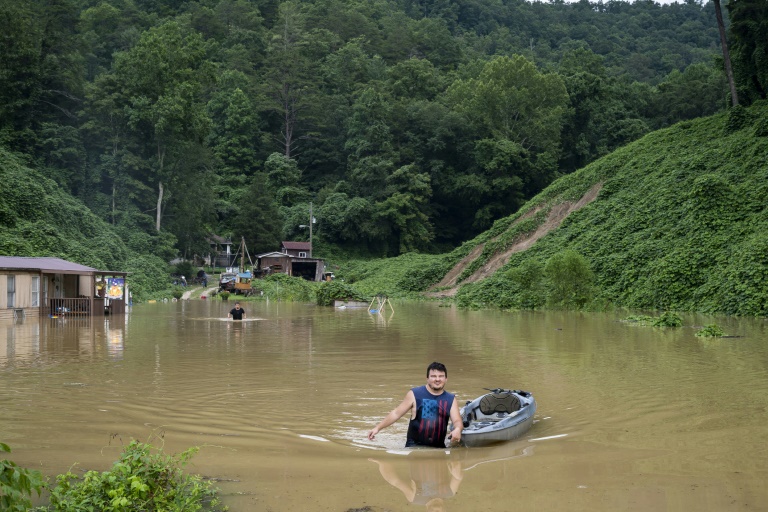
A series of “once-in-a-millennium” rainstorms have lashed the United States in recent weeks, flooding areas baked dry by long-term droughts, as human-caused climate change brings weather whiplash.

And scientists warn that global warming means once-rare events are already much more likely, upending the models they have long used to predict possible disasters — with worse to come.

At least 40 people have been killed in the last month by storms in Kentucky, Illinois, Texas and Missouri, inundating areas that in some cases had seen little to no rain for months.

Up to 12 inches (30 centimeters) fell in one of these storms — the kind of downpour that statistical models say should only happen once in a thousand years.

“This is ‘weather whiplash’,” tweeted Peter Gleick, co-founder of the Pacific Institute, a non-governmental organization that works on water issues around the world.

It is “caused by an intensification of the global hydrological cycle & how it distributes water around the planet, influenced by human-caused climate change.” 

The warnings scientists have been sounding for decades about the effects of unchecked fossil fuel use are suddenly coming into focus for millions of people.

A warming planet is not a benign place in a far-off future where it is always a bit sunnier; it’s a place of wild swings, where the wets are wetter and the dries are drier. And it’s now.

“The commonality between these and other extreme rainfall events is you need just the right set of ingredients to come together,” said David Novak, director of the Weather Prediction Center at the National Weather Service.

“You need moisture, you need instability in the atmosphere. And you need some sort of… feature to kind of ignite the storms.”

While a rainstorm in Texas or Kentucky or Illinois is not unheard of at this time of year, these events were supercharged by an oversupply of atmospheric moisture — a direct consequence of the planet being hotter.

“There’s scientific consensus absolutely on the fact that warmer air can hold more moisture,” Novak told AFP.

“There is more moisture available… for these fronts to tap, and so you can get these really intense rainfall events.”

The science is uncontroversial — if a little complicated for those not familiar with linear equations and difficult-to-pronounce chemistry.

The Clausius–Clapeyron equation shows that for every one degree celsius (1.8 F) the air warms, it can hold seven percent more moisture.

That’s what makes hot, equatorial places noticeably more humid than cooler climes, says Novak.

And it’s also what’s messing with the statistics and making the one-in-1,000-year storms — like the five that hit the US in the last month — a lot more common.

Storms like these had a 0.1 percent chance of occurring in any given year in pre-industrial conditions, meaning that on average they would happen once every 1,000 years.

But their percentage chance of happening in a warmer environment that holds more moisture rises dramatically.

In other words, the recurrence interval — the periods expected between these once relatively rare events — is shrinking.

“Something that really wasn’t very likely at all, just a little bit more moisture can make that quite a bit more likely,” said Novak.

Ukraine nuclear plant back online as inspection prepared

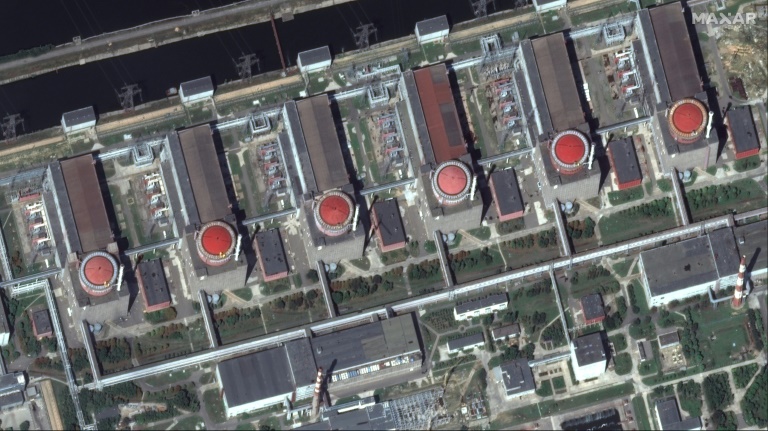
Ukraine’s Zaporizhzhia nuclear plant, occupied by Moscow’s troops, came back online Friday, the state operator said after Kyiv claimed it was cut from the national power grid by Russian shelling.

The plant — Europe’s largest nuclear facility — was severed Thursday from Ukraine’s power network for the first time in its four-decade history due to “actions of the invaders”, Energoatom said.

The operator said that as of 2:04 pm (1104 GMT) the plant “is connected to the grid and produces electricity for the needs of Ukraine” once again.

Ukrainian President Volodymyr Zelensky said his country’s nuclear experts had managed to protect the plant “from the worst case scenario which is constantly being provoked by Russian forces.”

But he added: “I want to underline that the situation remains very risky and dangerous.”

The Zaporizhzhia nuclear plant has been cause for mounting concern since Russian troops seized it in early March.

In recent weeks, Kyiv and Moscow have traded blame for rocket strikes around the facility in the southern Ukrainian city of Energodar.

Separately Friday, the EU presidency vowed to hold an emergency summit on the spiralling energy crisis caused by the war in Ukraine, which this week entered its seventh month.

The bloc has vowed to wean its 27 member states off Russian oil and gas in protest against the invasion, which has led to tough international sanctions against Moscow.

Friday saw Norway, a major natural gas producer, say it was joining the latest package of EU sanctions.

However, anxiety over supply has sent prices soaring, with Germany and France reporting Friday record electricity prices for 2023, more than 10 times higher than for this year.

Czech Prime Minister Petr Fiala said his country, which holds the EU presidency, “will convene an urgent meeting of energy ministers to discuss specific emergency measures”.

– Anxiety over plant –

Zelensky said late Thursday the power cut-off was caused by Russian shelling of the last active power line linking the plant to the network.

“Russia has put Ukrainians as well as all Europeans one step away from radiation disaster,” he said.

Energoatom said the outage was caused by ash pit fires at an adjacent thermal power plant, which damaged a line connecting the only two of the plant’s six reactors in operation.

Blaming Russian attacks for damage to the three other power lines linking the complex to the national grid, Energoatom said Friday afternoon one reactor had been reconnected “and capacity is being added”.

International Atomic Energy Agency head Rafael Mariano Grossi said Thursday he wants to visit the site within days, warning of potential disaster.

Ukraine energy minister adviser Lana Zerkal said an IAEA inspection “is planned for the next week”.

Zelensky said Friday that the team needs to get there as soon as possible “and help maintain the station under Ukrainian control on a permanent basis.”

Zerkal told Ukraine’s Radio NV late Thursday she was sceptical the mission would go ahead, despite Moscow’s formal agreement, as “they are artificially creating all the conditions so that the mission will not reach the site”.

– US warning –

Kyiv suspects Moscow intends to divert power from the Zaporizhzhia plant to the Crimean peninsula, annexed by Russian troops in 2014.

On Thursday, Washington warned against any such move.

“The electricity that it produces rightly belongs to Ukraine,” State Department spokesman Vedant Patel told reporters, saying attempts to redirect power to occupied areas were “unacceptable”.

Britain’s defence ministry said satellite imagery showed an increased presence of Russian troops at the power plant with armoured personnel carriers deployed within 60 metres (200 feet) of one reactor.

In another development Friday, French energy firm TotalEnergies said it was divesting its stake in a Russian gas field following a media report that some of its fuel was ending up in Russian fighter jets.

The company said it had signed a deal Friday with its local Russian partner Novatek to sell its 49 percent in the Termokarstovoye gas field “on economic terms enabling TotalEnergies to recover the outstanding amounts invested in the field”.

It said the divestment had been agreed in July and Russian authorities gave the approval on August 25.

A day earlier, French daily Le Monde had reported the alleged refining of natural gas condensates from Termokarstovoye into jet fuel for fighter-bombers involved in Russia’s assault on Ukraine.

TotalEnergies is the only major Western energy group to continue its operations in Russia but chief executive Patrick Pouyanne said in March Russian gas fields exploited by the company’s joint ventures were vital for supplying energy to Europe.

Stocks slump after Fed chair vows tough inflation fight

Stocks slumped on Friday after Federal Reserve boss Jerome Powell pledged to act “forcefully” against soaring inflation in a battle that will be painful for American families and businesses.

The Fed has been on an aggressive campaign to raise interest rates — and Powell made it clear at the Jackson Hole gathering of global monetary policymakers that the fight against inflation is not over.

“Restoring price stability will take some time and requires using our tools forcefully to bring demand and supply into better balance,” he told the gathering, held against the backdrop of the majestic Grand Teton mountains.

Modest signs of slowing in the world’s largest economy and easing price pressures had spurred hope in financial markets that the central bank might ease up on its aggressive interest rate hikes, and perhaps even start to reverse course next year.

But Powell doused those hopes, making it clear that Fed policy and the benchmark borrowing rate would have to remain “sufficiently restrictive” to return inflation to its two percent target.

“While higher interest rates, slower growth, and softer labor market conditions will bring down inflation, they will also bring some pain to households and businesses,” Powell said.

“But a failure to restore price stability would mean far greater pain.”

Wall Street stocks tumbled, with all three main indices ending with losses of three percent or more.

Keith Buchanan at Globalt Investments said, “This wasn’t a shocking speech by any stretch of imagination.”

He said the negative reaction was due to “the last possibility of a pivot being kind of shoved off the table.”

The dollar lost ground against the euro, but rose against the yen and pound.

Sentiment had been boosted ahead of Powell’s speech by the latest readings of the US personal consumption expenditures price index, the Fed’s preferred yardstick for inflation, which dipped 0.1 percent from in July from June, and slowed to 6.3 percent from 6.8 percent on an annual basis.

But Powell warned that one month of improvement is not enough to declare victory.

– Electricity prices shock European stocks –

European equities also saw losses deepen after Powell’s speech, but stocks there had already been struggling after signs that energy prices are likely to keep fuelling inflation.

Sentiment in London had been dented by news that UK domestic energy bills will rocket even higher this year on surging wholesale gas prices as Britain’s cost-of-living crisis worsens.

Frankfurt and Paris stocks retreated amid fears of a eurozone energy crunch in the coming peak-demand winter as Russia curbs supplies.

Europe’s benchmark Dutch TTF gas contract rose Friday 341 euros per megawatt hour, not far from the record high struck in March after key gas producer Russia invaded Ukraine.

Meanwhile, German and French electricity futures prices soared to new records that are at least 10 times above last year.

Elsewhere, Asia was buoyed by signs of progress in talks between US and Chinese regulators that could see tech titans including Alibaba and JD.com avoid a delisting in New York.

More than 200 Chinese firms have for months had the threat of a New York delisting hanging over them as they are caught in a wide-ranging row between the world’s two biggest economies.

– Key figures at around 2100 GMT –

New York – Dow: DOWN 3.0 percent at 32,283.4 points (close)

New York – S&P 500: DOWN 3.4 percent at 4,057.66 (close)

New York – Nasdaq: DOWN 3.9 percent at 12,141.71 (close)

EURO STOXX 50: DOWN 2.0 percent at 3,603.68 (close)

London – FTSE 100: DOWN 0.7 percent at 7,427.31 (close) 

Frankfurt – DAX: DOWN 2.3 percent at 12,971.47 (close)

Paris – CAC 40: DOWN 1.7 percent at 6,274.26 (close)

Tokyo – Nikkei 225: UP 0.6 percent at 28,479.01 (close)

Hong Kong – Hang Seng Index: UP 3.6 percent at 19,968.38 (close)

Shanghai – Composite: UP 1.0 percent at 3,246.25 (close)

Euro/dollar: UP at $0.9964 from $0.9974 on Thursday

Pound/dollar: DOWN at $1.1743 from $1.1832

Euro/pound: UP at 84.85 pence from 84.31 pence

Dollar/yen: UP at 137.38 yen from 136.49 yen

West Texas Intermediate: UP 0.5 percent at $93.00 per barrel

Brent North Sea crude: DOWN 0.1 percent at $98.88

burs-rl/ach/hs/dw

Close Bitnami banner
Bitnami