AFP

Musk lawyers seize on Twitter whistleblower revelations

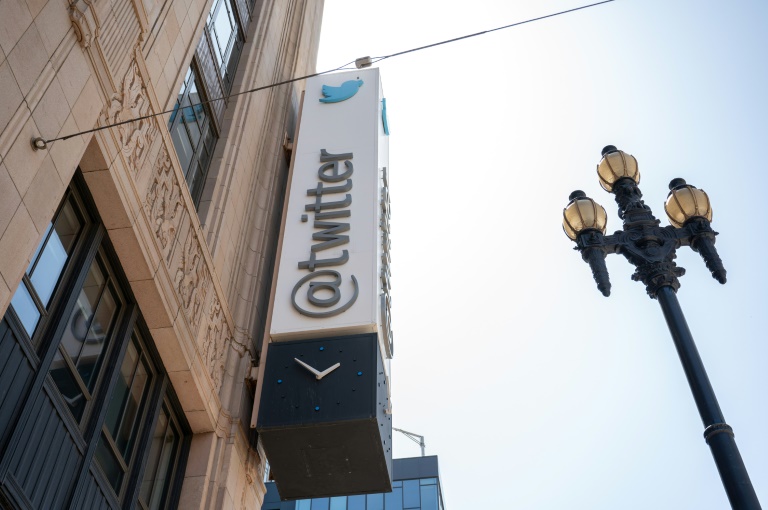
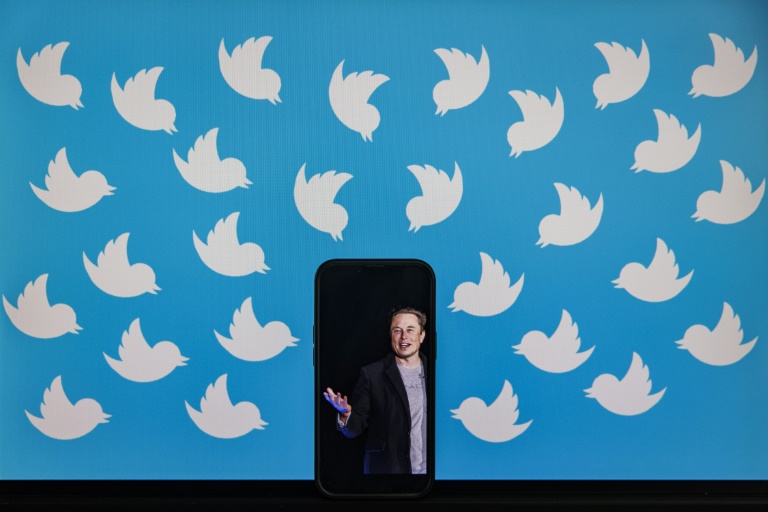
Elon Musk’s lawyers jumped Wednesday on the revelations of a Twitter whistleblower to try to force the platform to surrender vast amounts of information for their fight to cancel the billionaire’s buyout bid.

The Tesla boss’s team told a US judge the former Twitter security chief’s allegations of major security gaps and problematic practices had bolstered their case, which has struggled for momentum in court.

Musk has tried to back out of the $44 billion agreement by saying Twitter misled him on the number of false or spam accounts, prompting strong denials and a lawsuit from the social media firm.

Musk attorney Alex Spiro cited repeatedly Twitter whistleblower Peiter Zatko in a 90-minute hearing on what data the firm should be forced to handover ahead of their October trial. 

“The way Mr. Zatko puts it, management had no appetite to properly measure the prevalence of bot accounts,” Spiro told Judge Kathaleen McCormick in a court in the eastern state of Delaware.

Twitter won some early battles in the case, including a fast-track trial date, and its stock had risen as analysts have predicted the platform would prevail over the mercurial billionaire.

Yet Zatko’s whistleblower complaint to US authorities, which surfaced on Tuesday, has been seized upon by Musk’s attorneys to try to gain momentum in the case. 

– ‘They want a do-over’ –

Spiro tried to convince the judge to order Twitter to hand over billions of “data points,” including user phone numbers and locations, arguing the information is needed to prove Twitter was dishonest about spam accounts.

Twitter lawyer Bradley Wilson countered that the company deceived nobody, and that Musk wants a “do-over” regarding questions he should have asked before he made his unsolicited buyout offer early this year.

While Twitter has pointed out that Musk opted not to perform due diligence typically seen in merger deals, Spiro told the judge the billionaire trusted the firm’s filings with the Securities and Exchange Commission (SEC).

The market watchdog was one of the recipients of Zatko’s complaint, which accuses Twitter of issuing untrue statements on account numbers because “if accurate measurements ever became public, it would harm the image and valuation of the company.”

It was not immediately clear whether the complaint, and its use by Musk’s attorneys, would change the course of the case.

The judge has not yet issued a ruling on Musk’s attorneys’ data demands, and Zatko’s impact could be clearer after his planned testimony before US lawmakers on September 13.

Twitter opposes handing over certain types of data for reasons including the potential to violate user privacy protected by law, its attorney Wilson argued.

“They want a do-over; they want to recount the spam,” he said of Musk’s team.

“They want to get all of the information that the reviewers had so that they can have their experts, I presume, do a count of their own and see if they can come up with a different number.”

Even if Musk’s experts come to a different conclusion about the number of spam accounts at Twitter, that would not amount to a breach significant enough to let him break the buyout contract, Twitter attorneys argue.

Musk lawyers seize on Twitter whistleblower revelations

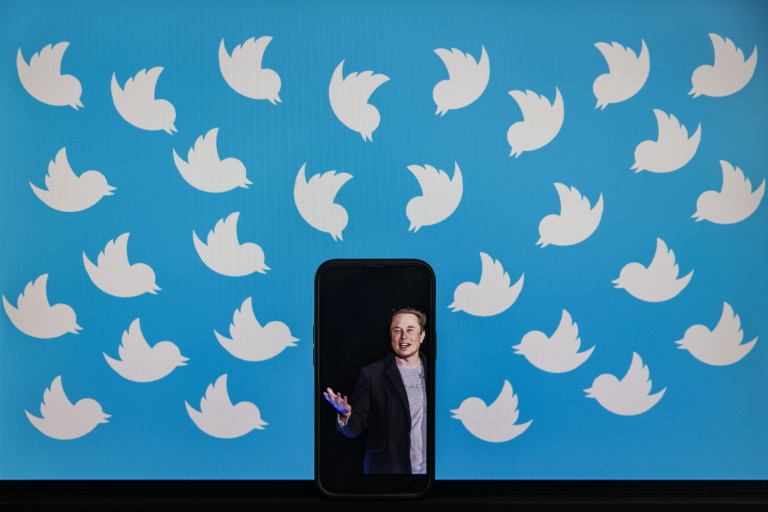
Elon Musk’s lawyers jumped Wednesday on the revelations of a Twitter whistleblower to try to force the platform to surrender vast amounts of information for their fight to cancel the billionaire’s buyout bid.

The Tesla boss’s team told a US judge the former Twitter security chief’s allegations of major security gaps and problematic practices had bolstered their case, which has struggled for momentum in court.

Musk has tried to back out of the $44 billion agreement by saying Twitter misled him on the number of false or spam accounts, prompting strong denials and a lawsuit from the social media firm.

Musk attorney Alex Spiro cited repeatedly Twitter whistleblower Peiter Zatko in a 90-minute hearing on what data the firm should be forced to handover ahead of their October trial. 

“The way Mr. Zatko puts it, management had no appetite to properly measure the prevalence of bot accounts,” Spiro told Judge Kathaleen McCormick in a court in the eastern state of Delaware.

Twitter won some early battles in the case, including a fast-track trial date, and its stock had risen as analysts have predicted the platform would prevail over the mercurial billionaire.

Yet Zatko’s whistleblower complaint to US authorities, which surfaced on Tuesday, has been seized upon by Musk’s attorneys to try to gain momentum in the case. 

– ‘They want a do-over’ –

Spiro tried to convince the judge to order Twitter to hand over billions of “data points,” including user phone numbers and locations, arguing the information is needed to prove Twitter was dishonest about spam accounts.

Twitter lawyer Bradley Wilson countered that the company deceived nobody, and that Musk wants a “do-over” regarding questions he should have asked before he made his unsolicited buyout offer early this year.

While Twitter has pointed out that Musk opted not to perform due diligence typically seen in merger deals, Spiro told the judge the billionaire trusted the firm’s filings with the Securities and Exchange Commission (SEC).

The market watchdog was one of the recipients of Zatko’s complaint, which accuses Twitter of issuing untrue statements on account numbers because “if accurate measurements ever became public, it would harm the image and valuation of the company.”

It was not immediately clear whether the complaint, and its use by Musk’s attorneys, would change the course of the case.

The judge has not yet issued a ruling on Musk’s attorneys’ data demands, and Zatko’s impact could be clearer after his planned testimony before US lawmakers on September 13.

Twitter opposes handing over certain types of data for reasons including the potential to violate user privacy protected by law, its attorney Wilson argued.

“They want a do-over; they want to recount the spam,” he said of Musk’s team.

“They want to get all of the information that the reviewers had so that they can have their experts, I presume, do a count of their own and see if they can come up with a different number.”

Even if Musk’s experts come to a different conclusion about the number of spam accounts at Twitter, that would not amount to a breach significant enough to let him break the buyout contract, Twitter attorneys argue.
Ukraine president vows fight 'until the end' on war anniversary

President Volodymyr Zelensky announced a deadly attack on a rail station Wednesday, the country’s independence day, as he pledged Ukraine would fight “until the end” on the day that marked six months of war.

Washington separately warned Moscow was preparing to hold “sham” referendums in occupied areas of Ukraine that would seek to formalise its control.

The Russian missile strike on Chaplino station, in the central Dnipropetrovsk region, killed 22 people he said. In an earlier toll he said 15 had died and 50 others had been wounded.

“Chaplino is our pain today. As of this moment, there are 22 dead, including five people who burned in a car. A youth died, he was 11 years old, a Russian rocket destroyed his house,” he said in his daily address.

Zelensky was speaking on the day the nation celebrated its 1991 independence from the Soviet Union — and on the day marking six months since Russian President Vladimir Putin ordered troops to invade.

Over the weekend, he had warned that Russia might do something “particularly cruel” on Ukraine’s independence day.

In Washington, a senior official warned that Russia could begin announcing referendums designed to formalise its control of occupied areas as soon as this week.

“Russian leadership has instructed officials to begin preparing to hold sham referenda,” White House national security coordinator John Kirby said.

“In fact, we can see a Russian announcement of the first one or ones before the end of this week.”

British Prime Minister Boris Johnson paid a surprise visit to Kyiv, hailing Ukraine’s six-month long resistance, as sirens sounded throughout the day.

Putin had failed to account for the “strong will of Ukrainians to resist”, Johnson said.

“You defend your right to live in peace, in freedom, and that’s why Ukraine will win,” he added.

Earlier the Ukrainian leader had issued his own defiant morning video address, declaring: “We don’t care what army you have, we only care about our land. We will fight for it until the end.”

Referring to Russia he vowed Ukraine “will not try to find an understanding with terrorists”.

“For us Ukraine is the whole of Ukraine,” he said. “All 25 regions, without any concession or compromise.”

– Fresh aid –

The US, meanwhile, announced $3 billion in fresh military aid.

The new funding will help Kyiv acquire more materiel for its armed forces, locked in a grinding war of attrition with Russian troops in the east and south, with neither side advancing significantly.

Johnson unveiled his own £54 million ($64 million) package of aid, including 2,000 “state-of-the-art drones” as well as anti-tank munitions.

Gatherings were banned in the capital Kyiv and Zelensky had urged citizens to be on guard against “Russian terror”.

Nevertheless he and his wife marked a minute of silence for fallen Ukrainian soldiers and laid yellow and blue floral bouquets at a memorial in central Kyiv.

Johnson’s visit was accompanied by other messages of support from Ukraine’s allies.

United Nations Secretary-General Antonio Guterres called the anniversary of the start of Russia’s war in Ukraine a “sad and tragic milestone”.

European Commission President Ursula von der Leyen said the EU has been standing with Ukraine “from the very beginning” and “will be for as long as it takes”.

Even Alexander Lukashenko, the authoritarian leader of Belarus congratulated Ukraine on its Independence Day, comments dismissed by a spokesman for the Ukrainian presidency.

Belarus offered its territory as a staging ground for Russia’s invasion.

– Muted anniversary –

In the early days and weeks of Russia’s invasion, Kyiv was under siege by Russian troops which reached the suburbs of the capital.

Moscow’s offensive quickly faltered, and its forces withdrew in late March to regroup for assaults on Ukraine’s east and south.

But in the capital, Ukrainians were sombre about the anniversary. 

“Six months, the peace of life has been broken in every family,” Nina, an 80-year-old pensioner, said on Independence Square on Tuesday.

“How much destruction, how many dead, how can we relate to it?” she asked.

The capital city’s administration shut public service centres on Wednesday and Thursday, and shopping centres said they would close for the anniversary over safety concerns. 

However in central Kyiv trailing crowds of people inspected dozens of disabled Russian tanks, trucks and armoured vehicles installed near the government quarter to showcase Ukraine’s military prowess.

Candy floss vendors sold to curious visitors who peered down tank barrels and posed for selfies, draped in the Ukrainian flag. 

Discussions continued on how to protect the Zaporizhzhia nuclear plant in southern Ukraine, occupied by Russian troops and threatened by shelling, which Moscow blames on Kyiv.

The two sides traded accusations at a Tuesday meeting of the UN Security Council on Zaporizhzhia.

Ukraine and its allies have demanded Russia pull its troops out of the plant — Europe’s largest nuclear facility — and agree to a demilitarised zone.

And on Wednesday the head of Russia’s state nuclear energy agency met the IAEA chief to follow up on the expected inspection.

Biden announces relief for university debts

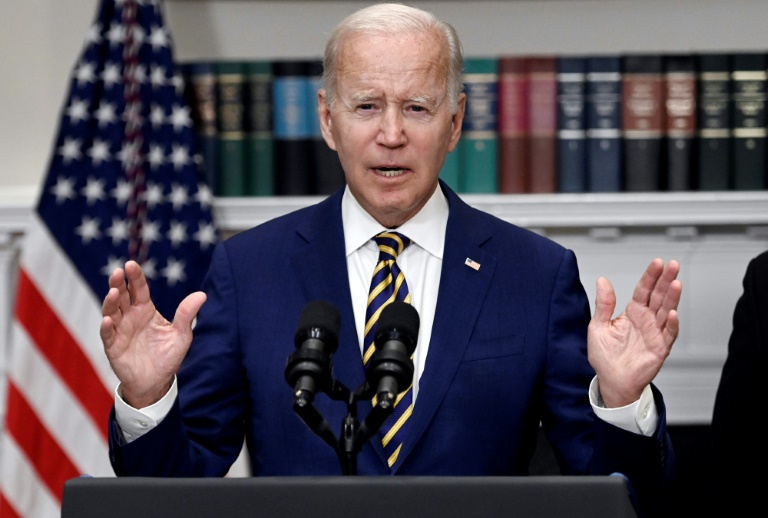
President Joe Biden on Wednesday announced that most Americans trying to pay off university loans will get $10,000 forgiven in a bid to address the decades-old headache of massive educational debt across the country.

“In keeping with my campaign promise, my administration is announcing a plan to give working and middle class families breathing room,” Biden said in a statement issued less than three months before midterm congressional elections, where the issue is seen as a vote winner for Democrats.

In a speech from the White House later, Biden called the assistance “a game changer.”

“All this means people can finally start crawling out of that mountain of debt,” he said. “When this happens, the whole economy is better off.”

The proposed debt relief falls far short of some Democrats’ goal of securing complete forgiveness, but is opposed by Republicans who argue that shaving any amount from loans is unfair to those who have already spent years saving to pay off their own debts.

There was also immediate debate over whether effectively giving millions of people a cash injection will stoke already rampant inflation.

Jason Furman, formerly the chief economic advisor in Barack Obama’s White House, tweeted that “pouring roughly half trillion dollars of gasoline on the inflationary fire that is already burning is reckless.”

Biden acknowledged he was “not going to make everybody happy” but defended the move as “economically responsible” and said studies showed there’d be no “meaningful effect on inflation.”

The White House was unable to say how much the debt cancellations would cost, explaining that the amount will depend on how many people take up the deal.

At Howard University, a historically Black college, journalism student Amarie Betancourt said, “If everything goes through, that would be absolutely amazing.”

Noting that Biden had promised student debt relief when he was running for the presidency, Betancourt, 20, said, “I think that’s why a lot of people my age and within my generation voted for him.”

– $1.6 trillion debt –

US colleges can often cost anywhere between $10,000 and $70,000 a year, leaving some graduates with crushing debt as they enter the workforce. 

According to government estimates, the average debt for US college students when they graduate is $25,000, a sum many require years or even decades to pay back.

In total, some 45 million borrowers nationwide owe a collective $1.6 trillion, according to the White House.

Government data shows that 21 percent of borrowers eligible for relief are under 25 years old, but that more than a third are 40 or older, with five percent still holding college debt in old age.

Under the relief plan, $10,000 will be cut from all loans owed by people earning a salary of less than $125,000. For students who went to university with need-based government assistance known as Pell grants, the relief will be $20,000.

In all cases, the forgiveness will apply to students or former students who apply, rather than being automatic. The program is also only valid for people whose loans were taken out prior to June 30 of this year.

Meanwhile, a moratorium on loan repayments that was instituted during the Covid-19 pandemic will be extended to the end of the year, with installments restarting on December 31 — reintroducing a revenue stream that Biden said would help offset the cost of the forgiveness program.

“It’s going to be billions of dollars a month in payments coming into the federal government,” Bharat Ramamurti, deputy director of the White House’s National Economic Council, told reporters.

– ‘Giant step forward’ –

The plan was announced after months of consideration in the White House on how to thread the needle on an issue that has bedeviled successive administrations.

Biden has been under heavy pressure for months from the senior Senate Democrat, Majority Leader Chuck Schumer, and lawmakers from the left of the party to take action.

“With the flick of a pen, President Biden has taken a giant step forward in addressing the student debt crisis by cancelling significant amounts of student debt for millions of borrowers,” Schumer said in a joint statement with leading liberal Senator Elizabeth Warren.

“The positive impacts of this move will be felt by families across the country, particularly in minority communities.”

But Republican National Committee chair Ronna McDaniel called the plan a “bailout for the wealthy.”

“As hardworking Americans struggle with soaring costs and a recession, Biden is giving a handout to the rich,” she said.

“Biden’s bailout unfairly punishes Americans who saved for college or made a different career choice, and voters see right through this short-sighted, poorly veiled vote-buy.”

Equities move higher ahead of US Fed chair speech

European and US equities mostly advanced on Wednesday as investors awaited signals on coming Federal Reserve interest rate hikes.

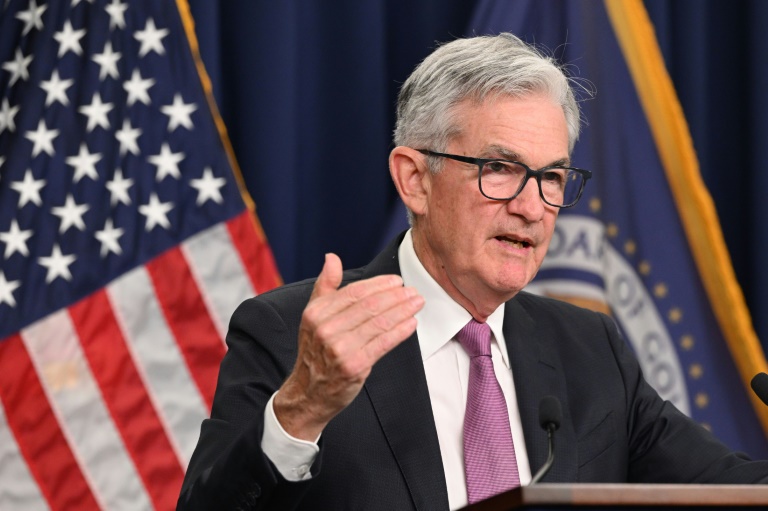
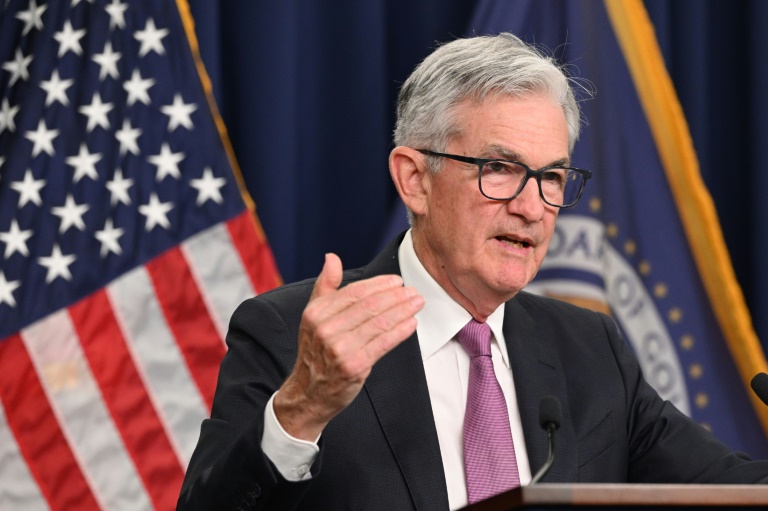
With the Jackson Hole meeting of central bankers this week, focus is on what US Federal Reserve chief Jerome Powell will say Friday about the ongoing campaign to tackle high prices.

Many fear higher borrowing costs amid its battle to rein in inflation could send the world’s biggest economy into recession.

The euro sunk close to a two-decade low against the dollar before rebounding, and the greenback struck a two-year peak against China’s yuan.

European gas prices soared to more than 300 euros per megawatt hour just as equity markets closed, as another temporary cut off of Russian deliveries via pipeline to Germany approached.

US natural gas prices also continued to rise to post-2008 highs.

“European markets have traded in a lackluster manner today as higher gas prices serve to contain any attempt to push strongly higher,” said market analyst Michael Hewson at CMC Markets UK.

– ‘A lot of tightening’ –

On Wall Street, shares ended a three-day skid, with the broad-based S&P 500 rising percent, but expectations have been building ahead of Powell’s speech.

Oanda analyst Edward Moya said the “Fed still has a lot of tightening to do.”

“Today’s rebound is small and on light volume, which means most traders are playing the waiting game until Fed Chair Powell’s Jackson Hole Symposium speech,” he said.

“Powell’s fight against inflation might send the US economy into a recession late next year, but for now he needs to stick to the hawkish script.”

Central banks face a delicate balancing act between battling inflation — with Russia’s war in Ukraine sending energy prices soaring — and avoiding recession.

Yet concerns are growing that spiking energy costs could still prompt a worldwide downturn.

Key markets in Asia slid on Wednesday.

In Europe, London shed 0.2 percent but both Frankfurt and Paris posted modest gains.

– Rollercoaster ride –

The foreign exchange market has faced a rollercoaster ride so far this week.

The euro tumbled on Tuesday to $0.9901 — a new two-decade low — but later clawed back losses as the greenback was hit by tepid US economic data.

The dollar had strengthened this week ahead of Powell’s speech, amid prospects the Fed will continue to tighten its monetary policy.

Higher interest rates boost the American currency as they make dollar-denominated debt more attractive to investors.

But the euro also has been weighed down by a gloomy outlook for the eurozone economy, amid fears of a halt to Russia’s gas deliveries.

Oil prices wobbled following recent gains on talk of an OPEC output cut, with Brent crude pushing back above $100 a barrel.

Oil prices had dropped below $100 this month on worries of a global economic slowdown and the possibility of Iran reaching a deal on its nuclear program that would end international sanctions on its crude exports and boost global supply.

– Key figures at around 2000 GMT –

New York – Dow: UP 0.2 percent at 32,969.23 points (close)

New York – S&P 500: UP 0.3 percent at 4,140.77 (close)

New York – Nasdaq: UP 0.4 percent at 12,431.53 (close)

EURO STOXX 50: UP 0.3 percent at 3,667.46

London – FTSE 100: DOWN 0.2 percent at 7,471.51 (close) 

Frankfurt – DAX: UP 0.2 percent at 13,220.06 (close) 

Paris – CAC 40: UP 0.4 percent at 6,386.76 (close)

Tokyo – Nikkei 225: DOWN 0.5 percent at 28,313.47 (close)

Hong Kong – Hang Seng Index: DOWN 1.2 percent at 19,268.74 (close)

Shanghai – Composite: DOWN 1.9 percent at 3,215.20 (close)

Euro/dollar: UP at 0.9967 from 0.9970 on Tuesday

Pound/dollar: DOWN at 1.1797 from 1.1836

Euro/pound: UP at 84.49 pence from 84.23 pence

Dollar/yen: UP at 137.06 yen from 136.36 yen

West Texas Intermediate: UP 1.2 percent at $94.89 per barrel

Brent North Sea crude: UP 1.0 percent at $101.22

Equities move higher ahead of US Fed chair speech

European and US equities mostly advanced on Wednesday as investors awaited signals on coming Federal Reserve interest rate hikes.

With the Jackson Hole meeting of central bankers this week, focus is on what US Federal Reserve chief Jerome Powell will say Friday about the ongoing campaign to tackle high prices.

Many fear higher borrowing costs amid its battle to rein in inflation could send the world’s biggest economy into recession.

The euro sunk close to a two-decade low against the dollar before rebounding, and the greenback struck a two-year peak against China’s yuan.

European gas prices soared to more than 300 euros per megawatt hour just as equity markets closed, as another temporary cut off of Russian deliveries via pipeline to Germany approached.

US natural gas prices also continued to rise to post-2008 highs.

“European markets have traded in a lackluster manner today as higher gas prices serve to contain any attempt to push strongly higher,” said market analyst Michael Hewson at CMC Markets UK.

– ‘A lot of tightening’ –

On Wall Street, shares ended a three-day skid, with the broad-based S&P 500 rising percent, but expectations have been building ahead of Powell’s speech.

Oanda analyst Edward Moya said the “Fed still has a lot of tightening to do.”

“Today’s rebound is small and on light volume, which means most traders are playing the waiting game until Fed Chair Powell’s Jackson Hole Symposium speech,” he said.

“Powell’s fight against inflation might send the US economy into a recession late next year, but for now he needs to stick to the hawkish script.”

Central banks face a delicate balancing act between battling inflation — with Russia’s war in Ukraine sending energy prices soaring — and avoiding recession.

Yet concerns are growing that spiking energy costs could still prompt a worldwide downturn.

Key markets in Asia slid on Wednesday.

In Europe, London shed 0.2 percent but both Frankfurt and Paris posted modest gains.

– Rollercoaster ride –

The foreign exchange market has faced a rollercoaster ride so far this week.

The euro tumbled on Tuesday to $0.9901 — a new two-decade low — but later clawed back losses as the greenback was hit by tepid US economic data.

The dollar had strengthened this week ahead of Powell’s speech, amid prospects the Fed will continue to tighten its monetary policy.

Higher interest rates boost the American currency as they make dollar-denominated debt more attractive to investors.

But the euro also has been weighed down by a gloomy outlook for the eurozone economy, amid fears of a halt to Russia’s gas deliveries.

Oil prices wobbled following recent gains on talk of an OPEC output cut, with Brent crude pushing back above $100 a barrel.

Oil prices had dropped below $100 this month on worries of a global economic slowdown and the possibility of Iran reaching a deal on its nuclear program that would end international sanctions on its crude exports and boost global supply.

– Key figures at around 2000 GMT –

New York – Dow: UP 0.2 percent at 32,969.23 points (close)

New York – S&P 500: UP 0.3 percent at 4,140.77 (close)

New York – Nasdaq: UP 0.4 percent at 12,431.53 (close)

EURO STOXX 50: UP 0.3 percent at 3,667.46

London – FTSE 100: DOWN 0.2 percent at 7,471.51 (close) 

Frankfurt – DAX: UP 0.2 percent at 13,220.06 (close) 

Paris – CAC 40: UP 0.4 percent at 6,386.76 (close)

Tokyo – Nikkei 225: DOWN 0.5 percent at 28,313.47 (close)

Hong Kong – Hang Seng Index: DOWN 1.2 percent at 19,268.74 (close)

Shanghai – Composite: DOWN 1.9 percent at 3,215.20 (close)

Euro/dollar: UP at 0.9967 from 0.9970 on Tuesday

Pound/dollar: DOWN at 1.1797 from 1.1836

Euro/pound: UP at 84.49 pence from 84.23 pence

Dollar/yen: UP at 137.06 yen from 136.36 yen

West Texas Intermediate: UP 1.2 percent at $94.89 per barrel

Brent North Sea crude: UP 1.0 percent at $101.22

Kobe Bryant crash photo jury to mull multi-million-dollar claim

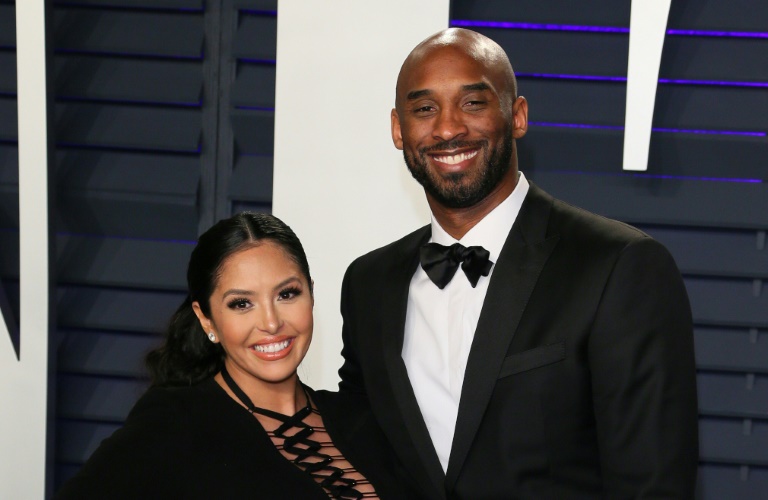
A jury in a multi-million dollar civil case brought by Kobe Bryant’s widow over graphic photos of the helicopter crash that killed the basketball star was to consider its verdict Wednesday.

Sheriff’s deputies and firefighters who rushed to the scene of the January 2020 smash snapped pictures of the carnage, including the mangled remains of the Los Angeles Lakers legend and his 13-year-old daughter.

A civil trial in Los Angeles has heard how some of these first responders showed the photographs to members of the public — including a bartender — while one deputy texted them to a friend as the pair played video games.

In its defense Los Angeles County says the pictures have never become public and officials have been diligent in efforts to scrub them from devices.

But a two-week trial has heard how Vanessa Bryant and Chris Chester, whose wife and daughter also perished in the crash, live in fear of these photographs surfacing on the internet one day.

Chester’s lawyer on Tuesday said the jury should award each of them a million dollars for every year of their expected life — a figure that would amount to $40 million for 40-year-old Bryant and $30 million for 48-year-old Chester.

Attorney Jerry Jackson called the figure “a fair and reasonable compensation. You can’t award too much money for what they went through.”

Bryant’s lawyer Craig Lavoie said he was asking for “justice and accountability” for the basketball great — a hero to the city of Los Angeles — and his widow.

“We’re here because of intentional conduct — the county violated Mrs Bryant and Mr Chester’s constitutional rights,” Lavoie said, asking the jury to hold the county liable for “the constitutional violations of its employees.”

Closing arguments concluded Wednesday, with the jury expected to retire thereafter.

Relatives of other victims were last year granted $2.5 million in compensation over the photo-taking.

An investigation into the crash found the pilot had probably become disorientated after flying the Sikorsky S-76 into fog.

Bryant is widely recognized as one of the greatest basketball players ever, a figure who became the face of his sport during a glittering two decades with the Los Angeles Lakers.

He was a five-time NBA champion in a career that began in 1996 straight out of high school and lasted until his retirement in 2016.

US regulator queried Twitter on false accounts

Twitter faced scrutiny from US market regulators over how the platform calculates the number of false or spam accounts, a topic at the heart of the firm’s legal battle with Elon Musk.

The Security and Exchange Commission’s letter sent mid-June, but made public only Wednesday, asked Twitter to disclose its methodology as well as the “underlying judgements and assumptions” involved.

That letter surfaced just a day after news broke that a former Twitter security chief had told US authorities the company misled users and regulators about “extreme, egregious” security gaps.

Twitter rejected those accusations, which could help Musk in the October trial over whether he can walk away from his $44 billion bid to buy the platform. 

When queried for comment on the letter, Twitter on Wednesday cited its SEC reply, which reiterated its statement that false or spam accounts are fewer than five percent of Twitter users who can be shown ads.

“Twitter believes that it already adequately discloses the methodology that it uses in calculating these figures,” said the firm’s June 22 reply, which noted previous filings and public comments.

While the SEC deals primarily with activities involving securities, mainly stocks and bonds, it may also be interested in listed companies’ communications to verify they present a reliable picture of a business’s activities.

The issue of fake and spam accounts is at the heart of the legal battle between Twitter and Tesla chief Musk. 

Musk has moved to back out of the deal by saying the firm misled him on the numbers of those accounts, but Twitter has sued to try to force him close the purchase.

The case is to be decided in a trial, which will begin on October 17 and is scheduled to last five days.

Peiter Zatko, former Twitter security chief-turned-whistleblower, has thrown fresh turbulence into the company’s fight with Musk. 

His complaint warned of obsolete servers, software vulnerable to computer attacks and executives seeking to hide the number of hacking attempts, both from US authorities and from the company’s board of directors.

In particular, Zatko accuses the platform and its CEO Parag Agrawal of issuing untrue statements on account numbers because “if accurate measurements ever became public, it would harm the image and valuation of the company.”

US lawmakers immediately raised concerns about the allegations in Zatko’s filing and have pledged to look into them.

US regulator queried Twitter on false accounts

Twitter faced scrutiny from US market regulators over how the platform calculates the number of false or spam accounts, a topic at the heart of the firm’s legal battle with Elon Musk.

The Security and Exchange Commission’s letter sent mid-June, but made public only Wednesday, asked Twitter to disclose its methodology as well as the “underlying judgements and assumptions” involved.

That letter surfaced just a day after news broke that a former Twitter security chief had told US authorities the company misled users and regulators about “extreme, egregious” security gaps.

Twitter rejected those accusations, which could help Musk in the October trial over whether he can walk away from his $44 billion bid to buy the platform. 

When queried for comment on the letter, Twitter on Wednesday cited its SEC reply, which reiterated its statement that false or spam accounts are fewer than five percent of Twitter users who can be shown ads.

“Twitter believes that it already adequately discloses the methodology that it uses in calculating these figures,” said the firm’s June 22 reply, which noted previous filings and public comments.

While the SEC deals primarily with activities involving securities, mainly stocks and bonds, it may also be interested in listed companies’ communications to verify they present a reliable picture of a business’s activities.

The issue of fake and spam accounts is at the heart of the legal battle between Twitter and Tesla chief Musk. 

Musk has moved to back out of the deal by saying the firm misled him on the numbers of those accounts, but Twitter has sued to try to force him close the purchase.

The case is to be decided in a trial, which will begin on October 17 and is scheduled to last five days.

Peiter Zatko, former Twitter security chief-turned-whistleblower, has thrown fresh turbulence into the company’s fight with Musk. 

His complaint warned of obsolete servers, software vulnerable to computer attacks and executives seeking to hide the number of hacking attempts, both from US authorities and from the company’s board of directors.

In particular, Zatko accuses the platform and its CEO Parag Agrawal of issuing untrue statements on account numbers because “if accurate measurements ever became public, it would harm the image and valuation of the company.”

US lawmakers immediately raised concerns about the allegations in Zatko’s filing and have pledged to look into them.

US responds to Iran on nuclear deal as momentum builds

The United States on Wednesday responded to Iran’s suggestions on reviving a 2015 nuclear deal as momentum builds to bring back the landmark agreement trashed by former president Donald Trump.

Just weeks after the deal looked dead, the European Union put forward on August 8 what it called a final text to restore the agreement, in which Iran would see sanctions relief and be able to sell its oil again in return for severe limits on its nuclear program.

Iran came back last week with a series of proposed changes, to which the United States formally responded on Wednesday, a day after Tehran accused its arch-enemy of stonewalling.

Iran, the United States and the European Union all confirmed the US response, but none immediately discussed it in depth.

“As you know, we received Iran’s comments on the EU’s proposed final text through the EU,” State Department spokesman Ned Price said.

“Our review of those comments has now concluded. We have responded to the EU today.”

In Tehran, Iranian foreign ministry spokesman Nasser Kanani said Tehran received the response “on the outstanding issues in the negotiations to lift sanctions” from the European Union late Wednesday local time.

“The process of carefully reviewing the US opinions has begun and the Islamic Republic of Iran will announce its opinion in this context to the coordinator after it completes its review,” Kanani added.

With signs that the agreement will reach the finish line, Iran’s arch-rival Israel stepped up pressure on Western nations to block it.

“On the table right now is a bad deal. It would give Iran $100 billion a year,” Israeli Prime Minister Yair Lapid told journalists Wednesday.

The money would be used by Iran-backed militant groups Hamas, Hezbollah and Islamic Jihad to “undermine stability in the Middle East and spread terror around the globe,” he added.

Lapid, however, has promised to preserve cooperation with the United States, Israel’s crucial ally, and has avoided the confrontational stance of former prime minister Benjamin Netanyahu, who openly joined then-president Barack Obama’s Republican rivals to campaign against the deal when it was reached.

Israel’s National Security Advisor Eyal Hulata was holding talks in Washington. His counterpart Jake Sullivan told him Tuesday that the United States was committed to “preserve and strengthen” Israel’s defenses and “ensure that Iran never acquires a nuclear weapon.”

– Syria strikes —

President Joe Biden took office with a goal of restoring the agreement, believing it was the best way to constrain Iran’s nuclear program and that Trump’s withdrawal had done nothing but lead Iran to accelerate its nuclear work.

But a year and a half of diplomacy trudged along slowly in Vienna, where Iran pressed hard and insisted on dealing only indirectly with US envoy Rob Malley, with EU mediators shuttling between hotels.

With the agreement bitterly opposed by Israel, US Republicans and some Iranian hardliners, both Washington and Tehran have gone into spin mode to present the other side as offering concessions.

The United States says that Iran has backed down on a key sticking point — that Biden undo Trump’s blacklisting of the powerful Islamic Revolutionary Guard Corps as a terrorist group.

Biden refused to do so and just Tuesday ordered air strikes in Syria said to target paramilitary fighters linked to the Revolutionary Guards, the clerical regime’s elite ideological unit.

The US Central Command (CENTCOM) said the strikes destroyed infrastructure including ammunition storage in a bid to avoid attacks on the small contingent of US troops in Syria, as witnessed on August 15.

CENTCOM said it purposely avoided casualties. Iran’s foreign ministry denounced the attack as “terrorist” and denied the targeted groups were linked to Tehran.

Under a reported compromise worked out by the European Union, the United States will keep the terrorist designation but limit actions against outside actors that deal with the Revolutionary Guards, who have vast influence across the Iranian economy.

EU foreign policy chief Josep Borrell, in an interview Tuesday with Spanish television, indicated that other nations in the agreement — Britain, China, France, Germany and Russia — were fine with the suggestions offered by Iran.

burs-sct/wd

Close Bitnami banner
Bitnami