AFP

UK port strike threatens to deepen supply chain and price woes

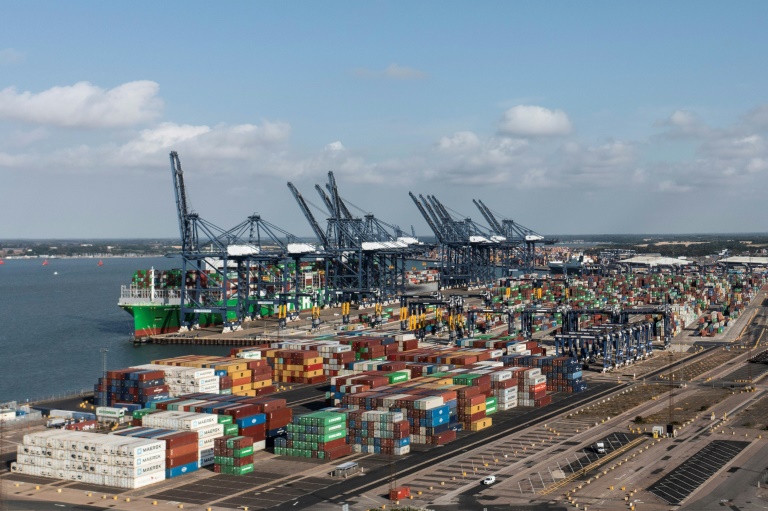
A strike over pay at Britain’s largest container port threatens to spark fresh delays and rising costs for companies and consumers alike, but logistics experts say there should be no product shortages.

Workers at Felixstowe port in southeastern England on Sunday began an eight-day strike, the first in 30 years, as decades-high inflation intensifies a cost-of-living crisis.

UK workers are striking in vast numbers as runaway inflation erodes wages at a record pace and is set to plunge the economy into recession.

“The strikes at Felixstowe are set to send some British businesses into a spin,” said Ed Winterschladen, executive vice president at Proxima, a logistics consultancy.

“The port is not just Britain’s largest, it is the largest by quite some margin as the port of entry for almost half of ocean freight into the UK,” he said, warning that delays “will have a sustained pricing impact in an already inflationary market”.

The dockers’ walkout mirrors similar action at the UK activities of US online giant Amazon and British postal operator Royal Mail. 

Those three strikes will together have a £1-billion ($1.2-billion) impact on trade and cause severe delays, according to delivery firm ParcelHero.

“The triple whammy of industrial actions at ports, postal networks and e-commerce giants means serious disruption,” said David Jinks, ParcelHero head of consumer research.

“Home deliveries will be affected, as will retailers waiting for new stock and manufacturers needing key components.

“Someone will have to foot the bill for all these increased transport costs and history tells us that it is usually the consumer.”

Felixstowe takes daily deliveries from nations such as China and Japan, with containers transporting everything from bicycles and frozen food to household appliances like fridges and washing machines.

They also carry key parts for manufacturers, so any major hold-ups could potentially worsen the nation’s post-Brexit supply-chain crunch.

– ‘Enough stock’ –

However, industry body the British International Freight Association (BIFA) insisted that it was “too early” to assess the impact of the port strike.

Some companies are far more flexible after increasing inventory levels in the face of supply-chain problems sparked by the pandemic.

However, BIFA conceded that past Felixstowe disruption has had a knock-on impact on freight transport and international supply chains.

Jonathan Owens, logistics expert at the University of Salford, gave an upbeat assessment barring any escalation in the dispute.

“The strike is a week and may not cause too much disruption as Felixstowe is not a ‘just-in-time’ delivery port. In general, everything arriving is scheduled in advance,” Owens told AFP.

“There should be enough stock in the supply chain to cope with key products.

“Should the strike progress go on beyond the current time or more disruption planned quickly after this strike period, then alternative inbound supply routes will be found.”

Many retailers have developed such contingency plans to reroute container ships or switch to other transportation, the British Retail Consortium (BRC) said.

Fresh food imports would not be affected because these tend to pass through the port of Dover, the BRC noted.

Nevertheless, the Felixstowe row presents a major headache for international freight.

Shipping giant Maersk said three of its ships have so far been diverted to other North European ports, before seeking to transfer cargo back to Britain.

“For affected export cargo from UK we have been offering our customers alternative ports and routings as far as possible,” a Maersk spokesman told AFP.

“It is hard for us to say whether any specific products will be missing in the supermarkets, etc.”

– Impasse –

Back in Felixstowe, discussions appear at an impasse between management and trade unions.

Nearly 2,000 unionised employees at the port in eastern England, including crane drivers, machine operators and stevedores, are involved in the first strike there since 1989.

Dockers want a 10-percent pay rise with inflation currently running at a 40-year high of 10.1 percent. 

The Port of Felixstowe described as “fair” its offer of salary increases of an average eight percent.

“The port regrets the impact this action will have on UK supply chains,” it added.

Heatwave triggers 'false autumn' in UK

Searing summer temperatures in the UK have not just parched the earth and dried up rivers, lakes and reservoirs but are also seeing trees shed their leaves early.

Instead of green, many gardens, parks and woods are now a sea of orange, yellow, red and brown, with thick carpets of leaves on the ground.

The early leaf fall — dubbed a “false autumn” — is a sign of stress, as trees shed their leaves to try to retain moisture.

But experts say while older trees with deep roots can withstand the drier conditions, younger, less established ones could be at risk.

“The trees are enacting the hormones they use in autumn to just retract and ensure their survival,” said Rosie Walker, of the Woodland Trust conservation charity.

“They’ll keep going like this for a few years but it is going to start impacting our trees if we’re not very careful,” she told BBC radio.

Temperatures soared above 40 degrees Celsius (104 degrees Fahrenheit) for the first time in Britain in July, with the month the driest on record in many parts of southern and eastern England.

Climate change has been blamed for the searing heatwave, which has led to drought being declared and a ban on the use of hosepipes to save water in some areas.

The Woodland Trust said fallen leaves are most likely to come from birch, silver birch and rowan trees.

“We saw the first turn in silver birch on August 12, which is incredibly early,” said Walker, adding that other species were also shedding their leaves.

– Wildlife –

Leigh Hunt, principal horticultural adviser at the Royal Horticultural Society, said a similar situation was observed during prolonged dry spells in 2006-7 and just before the coronavirus pandemic.

“It really is pretty severe this year,” he told Times Radio on Wednesday. “But what I am noticing is that these events seem to be happening more frequently. 

“The idea that it’s going to be hotter, drier summers and more erratic rain very much fits in with that idea of climate change.”

The Woodland Trust meanwhile said it had recorded its earliest ever appearance of ripe wild blackberries — normally an autumn fruit — on June 28.

The premature ripening of berries and nuts could hit small mammals and birds who store energy in September and October for the cold winter months.

Animals such as dormice consume high-fat foods such as hazelnuts and other hedgerow fruits in autumn but could struggle if they are gone by August.

“Nature’s timing is everything for our wildlife,” said Steve Hussey, from the Devon Wildlife Trust in southwest England. 

“The climate crisis is bringing with it seasonal weather patterns which our wildlife is just not adapted to.

“Our long, hot summer and the ‘false autumn’ will have a knock-on for many species right into the real autumn months and beyond.”

Markets mark time ahead to US Fed chair speech

European and US equities moved sideways on Wednesday as investors awaited signals on the next US interest rate hikes.

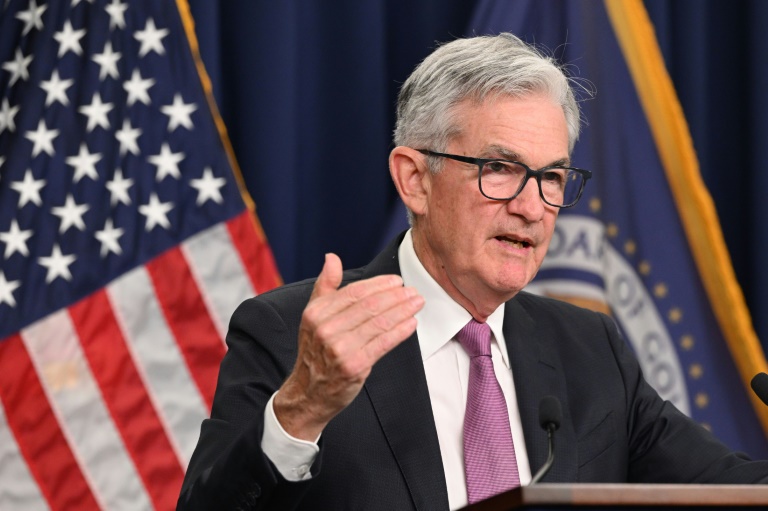
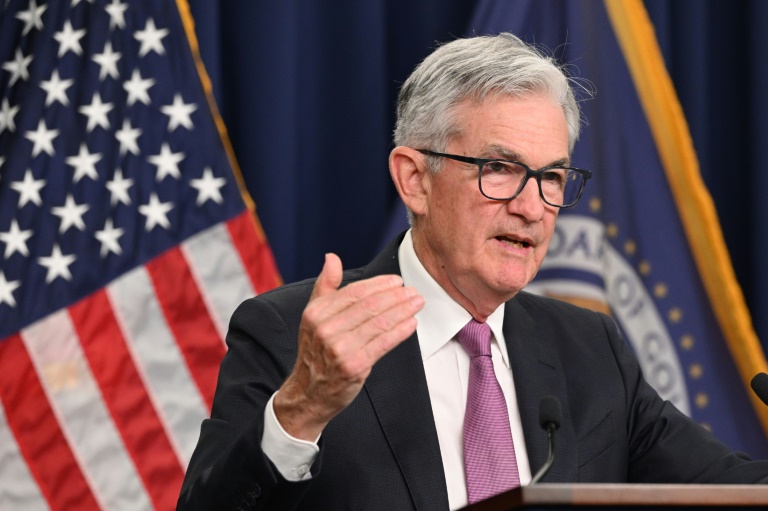
With the Jackson Hole meeting of central bankers this week, focus is on what US Federal Reserve chief Jerome Powell will say Friday about plans to tackle high prices — with many fearing higher borrowing costs could send the world’s biggest economy into recession in its battle to rein in inflation.

The euro held close to a two-decade low against the dollar, and the greenback struck a two-year peak against China’s yuan.

European gas prices rose close to record intraday prices.

– Losing momentum –

“Markets seem to have lost their momentum,” noted AJ Bell investment director Russ Mould.

“Investors have become nervous once again, with all eyes on Powell and what he says this coming Friday.” 

Analyst Patrick O’Hare at Briefing.com said a mountain of expectations were building ahead of Powell’s speech.

“Those expectations range from fear of a resolutely hawkish speech to hope of a tempered rate-hike outlook,” he said.

Central banks face a delicate balancing act between battling inflation, with Russia’s war in Ukraine sending energy prices soaring, and avoiding recession.

Yet concerns are growing that spiking energy costs could still prompt a worldwide downturn.

“Investor anxiety is growing that a combination of central banks raising rates and higher energy prices will tip the global economy into a long recession,” said CMC Markets analyst Michael Hewson.

Key markets in Asia slid on Wednesday.

In Europe, London shed 0.5 percent but Frankfurt and Paris were broadly steady.

Wall Street opened narrowly mixed, with the Dow dipping 0.1 percent.

– Rollercoaster ride –

The foreign exchange market has faced a rollercoaster ride so far this week.

The euro tumbled on Tuesday to $0.9901 — a new two-decade low — but later clawed back losses as the greenback was hit by poor US economic data.

The dollar had strengthened this week ahead Powell’s speech, as markets speculate that the Fed will continue to tighten its monetary policy.

Higher interest rates boost the American currency as they make dollar-denominated debt more attractive to investors.

But the euro also has been weighed down by a gloomy outlook for the eurozone economy amid fears of a halt to Russia’s gas deliveries.

Oil was steady following talk of an OPEC output cut, with Brent crude hovering just above $100 per barrel.

“While this may simply be a case of Saudi Arabia talking up the price, for now, the prospect of the group taking such action effectively removes two of the biggest downside risks for prices,” said OANDA analyst Craig Erlam.

Oil prices fell back under $100 per barrel this month on worries of a global economic slowdown and the possibility of Iran reaching a deal on its nuclear programme that would end international sanctions on its crude exports.

– Key figures at around 1330 GMT –

London – FTSE 100: DOWN 0.5 percent at 7,454.51 points

Frankfurt – DAX: DOWN 0.1 percent at 13,179.98 

Paris – CAC 40: UP less than 0.1 percent at 6,364.87

EURO STOXX 50: UP less than 0.1 percent at 3,654.51

New York – Dow: DOWN 0.1 percent at 32,867.49

Tokyo – Nikkei 225: DOWN 0.5 percent at 28,313.47 (close)

Hong Kong – Hang Seng Index: DOWN 1.2 percent at 19,268.74 (close)

Shanghai – Composite: DOWN 1.9 percent at 3,215.20 (close)

Euro/dollar: DOWN at 0.9925 from 0.9970 on Tuesday

Pound/dollar: DOWN at 1.1763 from 1.1836

Euro/pound: UP at 84.38 pence from 84.23 pence

Dollar/yen: UP at 137.04 yen from 136.36 yen

West Texas Intermediate: UP less than 0.1 percent at $93.80 per barrel

Brent North Sea crude: UP less than 0.1 percent at $100.26

Markets mark time ahead to US Fed chair speech

European and US equities moved sideways on Wednesday as investors awaited signals on the next US interest rate hikes.

With the Jackson Hole meeting of central bankers this week, focus is on what US Federal Reserve chief Jerome Powell will say Friday about plans to tackle high prices — with many fearing higher borrowing costs could send the world’s biggest economy into recession in its battle to rein in inflation.

The euro held close to a two-decade low against the dollar, and the greenback struck a two-year peak against China’s yuan.

European gas prices rose close to record intraday prices.

– Losing momentum –

“Markets seem to have lost their momentum,” noted AJ Bell investment director Russ Mould.

“Investors have become nervous once again, with all eyes on Powell and what he says this coming Friday.” 

Analyst Patrick O’Hare at Briefing.com said a mountain of expectations were building ahead of Powell’s speech.

“Those expectations range from fear of a resolutely hawkish speech to hope of a tempered rate-hike outlook,” he said.

Central banks face a delicate balancing act between battling inflation, with Russia’s war in Ukraine sending energy prices soaring, and avoiding recession.

Yet concerns are growing that spiking energy costs could still prompt a worldwide downturn.

“Investor anxiety is growing that a combination of central banks raising rates and higher energy prices will tip the global economy into a long recession,” said CMC Markets analyst Michael Hewson.

Key markets in Asia slid on Wednesday.

In Europe, London shed 0.5 percent but Frankfurt and Paris were broadly steady.

Wall Street opened narrowly mixed, with the Dow dipping 0.1 percent.

– Rollercoaster ride –

The foreign exchange market has faced a rollercoaster ride so far this week.

The euro tumbled on Tuesday to $0.9901 — a new two-decade low — but later clawed back losses as the greenback was hit by poor US economic data.

The dollar had strengthened this week ahead Powell’s speech, as markets speculate that the Fed will continue to tighten its monetary policy.

Higher interest rates boost the American currency as they make dollar-denominated debt more attractive to investors.

But the euro also has been weighed down by a gloomy outlook for the eurozone economy amid fears of a halt to Russia’s gas deliveries.

Oil was steady following talk of an OPEC output cut, with Brent crude hovering just above $100 per barrel.

“While this may simply be a case of Saudi Arabia talking up the price, for now, the prospect of the group taking such action effectively removes two of the biggest downside risks for prices,” said OANDA analyst Craig Erlam.

Oil prices fell back under $100 per barrel this month on worries of a global economic slowdown and the possibility of Iran reaching a deal on its nuclear programme that would end international sanctions on its crude exports.

– Key figures at around 1330 GMT –

London – FTSE 100: DOWN 0.5 percent at 7,454.51 points

Frankfurt – DAX: DOWN 0.1 percent at 13,179.98 

Paris – CAC 40: UP less than 0.1 percent at 6,364.87

EURO STOXX 50: UP less than 0.1 percent at 3,654.51

New York – Dow: DOWN 0.1 percent at 32,867.49

Tokyo – Nikkei 225: DOWN 0.5 percent at 28,313.47 (close)

Hong Kong – Hang Seng Index: DOWN 1.2 percent at 19,268.74 (close)

Shanghai – Composite: DOWN 1.9 percent at 3,215.20 (close)

Euro/dollar: DOWN at 0.9925 from 0.9970 on Tuesday

Pound/dollar: DOWN at 1.1763 from 1.1836

Euro/pound: UP at 84.38 pence from 84.23 pence

Dollar/yen: UP at 137.04 yen from 136.36 yen

West Texas Intermediate: UP less than 0.1 percent at $93.80 per barrel

Brent North Sea crude: UP less than 0.1 percent at $100.26

Whistle blows in Germany for world's first hydrogen train fleet

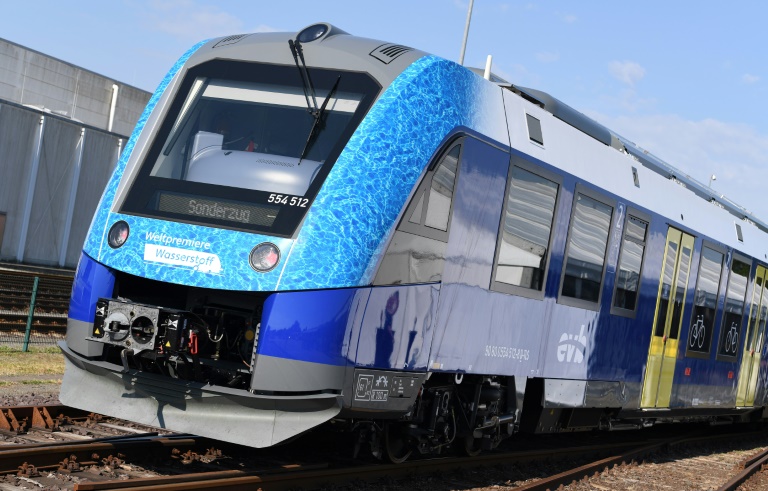
Germany on Wednesday inaugurated a railway line powered entirely by hydrogen, a “world premiere” and a major step forward for green train transport despite nagging supply challenges.

A fleet of 14 trains provided by French industrial giant Alstom to the German state Lower Saxony has replaced diesel locomotives on the 100 kilometres (60 miles) of track connecting the cities of Cuxhaven, Bremerhaven, Bremervoerde and Buxtehude near Hamburg.

“We are very proud to put this technology into operation together with our strong partners as a world premiere,” Alstom CEO Henri Poupart-Lafarge said in a statement.

Hydrogen trains have become a promising way to decarbonise the rail sector and replace climate-warming diesel, which still powers 20 percent of journeys in Germany.

Billed as a “zero emission” mode of transport, the trains mix hydrogen on board with oxygen present in the ambient air, thanks to a fuel cell installed in the roof. This produces the electricity needed to pull the train.

Regional rail operator LNVG said the fleet, which cost 93 million euros (dollars), would prevent 4,400 tonnes of CO2 being released into the atmosphere each year.

– Run for its money –

Designed in the southern French town of Tarbes and assembled in Salzgitter in central Germany, Alstom’s trains — called Coradia iLint — are trailblazers in the sector.

The project created jobs for up to 80 employees in the two countries, according to Alstom. 

Commercial trials have been carried out since 2018 on the line with two hydrogen trains but now the entire fleet is adopting the groundbreaking technology.

The French group has inked four contracts for several dozen trains between Germany, France and Italy, with no sign of demand waning. 

In Germany alone “between 2,500 and 3,000 diesel trains could be replaced by hydrogen models”, Stefan Schrank, project manager at Alstom, told AFP.

“By 2035, around 15 to 20 percent of the regional European market could run on hydrogen,” according to Alexandre Charpentier, a rail expert at consultancy Roland Berger.

Hydrogen trains are particularly attractive on short regional lines where the cost of a transition to electric outstrips the profitability of the route. 

Currently, around one out of two regional trains in Europe runs on diesel.

But Alstom’s competitors are ready to give it a run for its money. German behemoth Siemens unveiled a prototype hydrogen train with national rail company Deutsche Bahn in May, with a view to a roll-out in 2024.

But, despite the attractive prospects, “there are real barriers” to a big expansion with hydrogen, Charpentier said.

For starters, trains are not the only means of transport hungry for the fuel.

The entire sector, whether it be road vehicles or aircraft, not to mention heavy industry such as steel and chemicals, is eyeing hydrogen to slash CO2 emissions.

– Colossal investment –

Although Germany announced in 2020 an ambitious seven-billion-euro plan to become a leader in hydrogen technologies within a decade, the infrastructure is still lacking in Europe’s top economy.

It is a problem seen across the continent, where colossal investment would be needed for a real shift to hydrogen.

“For this reason, we do not foresee a 100-percent replacement of diesel trains with hydrogen,” Charpentier said.

Furthermore, hydrogen is not necessarily carbon-free: only “green hydrogen”, produced using renewable energy, is considered sustainable by experts. 

Other, more common manufacturing methods exist, but they emit greenhouse gases because they are made from fossil fuels. 

The Lower Saxony line will in the beginning have to use a hydrogen by-product of certain industries such as the chemical sector.

The French research institute IFP specialising in energy issues says that hydrogen is currently “95 percent derived from the transformation of fossil fuels, almost half of which come from natural gas”. 

Europe’s enduring reliance on gas from Russia amid massive tensions over the Kremlin’s invasion of Ukraine poses major challenges for the development of hydrogen in rail transport.

“Political leaders will have to decide which sector to prioritise when determining what the production of hydrogen will or won’t go to,” Charpentier said. 

Germany will also have to import massively to meet its needs. 

Partnerships have recently been signed with India and Morocco, and Chancellor Olaf Scholz sealed a green hydrogen deal with Canada on a visit this week, laying a path for a transatlantic supply chain.

Whistle blows in Germany for world's first hydrogen train fleet

Germany on Wednesday inaugurated a railway line powered entirely by hydrogen, a “world premiere” and a major step forward for green train transport despite nagging supply challenges.

A fleet of 14 trains provided by French industrial giant Alstom to the German state Lower Saxony has replaced diesel locomotives on the 100 kilometres (60 miles) of track connecting the cities of Cuxhaven, Bremerhaven, Bremervoerde and Buxtehude near Hamburg.

“We are very proud to put this technology into operation together with our strong partners as a world premiere,” Alstom CEO Henri Poupart-Lafarge said in a statement.

Hydrogen trains have become a promising way to decarbonise the rail sector and replace climate-warming diesel, which still powers 20 percent of journeys in Germany.

Billed as a “zero emission” mode of transport, the trains mix hydrogen on board with oxygen present in the ambient air, thanks to a fuel cell installed in the roof. This produces the electricity needed to pull the train.

Regional rail operator LNVG said the fleet, which cost 93 million euros (dollars), would prevent 4,400 tonnes of CO2 being released into the atmosphere each year.

– Run for its money –

Designed in the southern French town of Tarbes and assembled in Salzgitter in central Germany, Alstom’s trains — called Coradia iLint — are trailblazers in the sector.

The project created jobs for up to 80 employees in the two countries, according to Alstom. 

Commercial trials have been carried out since 2018 on the line with two hydrogen trains but now the entire fleet is adopting the groundbreaking technology.

The French group has inked four contracts for several dozen trains between Germany, France and Italy, with no sign of demand waning. 

In Germany alone “between 2,500 and 3,000 diesel trains could be replaced by hydrogen models”, Stefan Schrank, project manager at Alstom, told AFP.

“By 2035, around 15 to 20 percent of the regional European market could run on hydrogen,” according to Alexandre Charpentier, a rail expert at consultancy Roland Berger.

Hydrogen trains are particularly attractive on short regional lines where the cost of a transition to electric outstrips the profitability of the route. 

Currently, around one out of two regional trains in Europe runs on diesel.

But Alstom’s competitors are ready to give it a run for its money. German behemoth Siemens unveiled a prototype hydrogen train with national rail company Deutsche Bahn in May, with a view to a roll-out in 2024.

But, despite the attractive prospects, “there are real barriers” to a big expansion with hydrogen, Charpentier said.

For starters, trains are not the only means of transport hungry for the fuel.

The entire sector, whether it be road vehicles or aircraft, not to mention heavy industry such as steel and chemicals, is eyeing hydrogen to slash CO2 emissions.

– Colossal investment –

Although Germany announced in 2020 an ambitious seven-billion-euro plan to become a leader in hydrogen technologies within a decade, the infrastructure is still lacking in Europe’s top economy.

It is a problem seen across the continent, where colossal investment would be needed for a real shift to hydrogen.

“For this reason, we do not foresee a 100-percent replacement of diesel trains with hydrogen,” Charpentier said.

Furthermore, hydrogen is not necessarily carbon-free: only “green hydrogen”, produced using renewable energy, is considered sustainable by experts. 

Other, more common manufacturing methods exist, but they emit greenhouse gases because they are made from fossil fuels. 

The Lower Saxony line will in the beginning have to use a hydrogen by-product of certain industries such as the chemical sector.

The French research institute IFP specialising in energy issues says that hydrogen is currently “95 percent derived from the transformation of fossil fuels, almost half of which come from natural gas”. 

Europe’s enduring reliance on gas from Russia amid massive tensions over the Kremlin’s invasion of Ukraine poses major challenges for the development of hydrogen in rail transport.

“Political leaders will have to decide which sector to prioritise when determining what the production of hydrogen will or won’t go to,” Charpentier said. 

Germany will also have to import massively to meet its needs. 

Partnerships have recently been signed with India and Morocco, and Chancellor Olaf Scholz sealed a green hydrogen deal with Canada on a visit this week, laying a path for a transatlantic supply chain.

China warns of 'severe threat' to harvest from worst heatwave on record

China’s autumn harvest is under “severe threat” from high temperatures and drought, authorities have warned, promising Wednesday fresh steps to protect crops in the face of the country’s hottest summer on record.

The world’s second-largest economy has been hit by record heat, flash floods and droughts this summer — phenomena that scientists say are becoming more frequent and intense due to climate change.

Southern China has recorded its longest continuous period of high temperatures since records began more than 60 years ago, the agriculture ministry said.

Four government departments urged the conservation of “every unit of water” to protect crops.

“The rapid development of drought superimposed with high temperatures and heat damage has caused a severe threat to autumn crop production,” a statement said Tuesday.

China produces more than 95 percent of the rice, wheat and maize it consumes, but a reduced harvest could mean increased demand for imports in the world’s most populous country — putting further pressure on global supplies already strained by the conflict in Ukraine.

State media reported Wednesday evening that the government had pledged 10 billion yuan ($1.45 billion) to help ensure good rice harvests this autumn.

A meeting of Beijing’s State Council, presided over by Premier Li Keqiang, had agreed the government should “do an even better job in fighting and reducing drought”, broadcaster CCTV said.

Officials also called for “a combination of measures to increase water sources to fight drought, first ensure drinking water for the people, ensure water for agricultural irrigation, and guide farmers to fight drought and protect autumn grain”, it added.

Temperatures as high as 45 degrees Celsius (113 Fahrenheit) have led multiple Chinese provinces to impose power cuts, as cities struggle to cope with a surge in demand for electricity partly driven by people cranking up the air conditioning.

The heat broke records in Sichuan, where a temperature of 43.9 degrees Celsius (111 Fahrenheit) was recorded Wednesday afternoon, the province’s Meteorological Service Centre said in a statement.

The megacities of Shanghai and Chongqing have turned off outdoor decorative lighting, while authorities in Sichuan have imposed industrial power cuts after water levels dropped at key hydroelectric plants.

The searing heat is also drying up the critical Yangtze River, with water flow on its main trunk about 50 percent lower than the average over the last five years, state media outlet China News Service reported last week.

– ‘Worst heatwave ever’ –

In Chongqing, where more than 1,500 people were evacuated from areas hit by multiple wildfires, locals were struggling.

“I feel too hot to sleep every night, and I’m awakened by the heat every morning,” Xu Jinxin, a 20-year-old student, told AFP.

“Because of the electricity shortage, we don’t leave the air conditioner on all day but rather turn it off once it’s cooled down a bit.”

The national meteorological service renewed warnings for drought and high temperatures on Tuesday, calling on 11 provincial governments to activate emergency responses.

Authorities have turned to cloud seeding — a method to induce rainfall — in parts of the country. 

CCTV published footage this month showing meteorological workers shooting catalyst rockets into the sky and firefighters transporting water to farmers in need.

It also broadcast images Wednesday of water trucks supplying people in villages in Sichuan and around Chongqing in a bid to counter shortages.

“The people with water supply difficulties in rural areas of Chongqing are mainly concentrated in mountain towns and relatively remote areas,” CCTV said.

“This is the worst heatwave ever recorded,” climate and energy expert Liu Junyan of Greenpeace East Asia told AFP.

“Climate science shows extreme heat is becoming exponentially worse,” she said.

“So it’s more likely that next year will have record-breaking heat.”

The extreme weather is raising public awareness of climate change in China, with state media “now coming around to covering climate impacts” with unprecedented urgency, Liu said.

Government climate expert Zhou Bing warned over the weekend of mass displacement caused by climate change, describing extreme weather as nature’s “revenge” on humanity.

China has experienced three other episodes of intense heat so far this century — in 2003, 2013 and 2017.

The gap between heatwaves is “significantly shortening”, according to Zhou.

For those living through the sweltering summer, “life goes on with some endurance”, said Xu, the Chongqing student.

China warns of 'severe threat' to harvest from worst heatwave on record

China’s autumn harvest is under “severe threat” from high temperatures and drought, authorities have warned, promising Wednesday fresh steps to protect crops in the face of the country’s hottest summer on record.

The world’s second-largest economy has been hit by record heat, flash floods and droughts this summer — phenomena that scientists say are becoming more frequent and intense due to climate change.

Southern China has recorded its longest continuous period of high temperatures since records began more than 60 years ago, the agriculture ministry said.

Four government departments urged the conservation of “every unit of water” to protect crops.

“The rapid development of drought superimposed with high temperatures and heat damage has caused a severe threat to autumn crop production,” a statement said Tuesday.

China produces more than 95 percent of the rice, wheat and maize it consumes, but a reduced harvest could mean increased demand for imports in the world’s most populous country — putting further pressure on global supplies already strained by the conflict in Ukraine.

State media reported Wednesday evening that the government had pledged 10 billion yuan ($1.45 billion) to help ensure good rice harvests this autumn.

A meeting of Beijing’s State Council, presided over by Premier Li Keqiang, had agreed the government should “do an even better job in fighting and reducing drought”, broadcaster CCTV said.

Officials also called for “a combination of measures to increase water sources to fight drought, first ensure drinking water for the people, ensure water for agricultural irrigation, and guide farmers to fight drought and protect autumn grain”, it added.

Temperatures as high as 45 degrees Celsius (113 Fahrenheit) have led multiple Chinese provinces to impose power cuts, as cities struggle to cope with a surge in demand for electricity partly driven by people cranking up the air conditioning.

The heat broke records in Sichuan, where a temperature of 43.9 degrees Celsius (111 Fahrenheit) was recorded Wednesday afternoon, the province’s Meteorological Service Centre said in a statement.

The megacities of Shanghai and Chongqing have turned off outdoor decorative lighting, while authorities in Sichuan have imposed industrial power cuts after water levels dropped at key hydroelectric plants.

The searing heat is also drying up the critical Yangtze River, with water flow on its main trunk about 50 percent lower than the average over the last five years, state media outlet China News Service reported last week.

– ‘Worst heatwave ever’ –

In Chongqing, where more than 1,500 people were evacuated from areas hit by multiple wildfires, locals were struggling.

“I feel too hot to sleep every night, and I’m awakened by the heat every morning,” Xu Jinxin, a 20-year-old student, told AFP.

“Because of the electricity shortage, we don’t leave the air conditioner on all day but rather turn it off once it’s cooled down a bit.”

The national meteorological service renewed warnings for drought and high temperatures on Tuesday, calling on 11 provincial governments to activate emergency responses.

Authorities have turned to cloud seeding — a method to induce rainfall — in parts of the country. 

CCTV published footage this month showing meteorological workers shooting catalyst rockets into the sky and firefighters transporting water to farmers in need.

It also broadcast images Wednesday of water trucks supplying people in villages in Sichuan and around Chongqing in a bid to counter shortages.

“The people with water supply difficulties in rural areas of Chongqing are mainly concentrated in mountain towns and relatively remote areas,” CCTV said.

“This is the worst heatwave ever recorded,” climate and energy expert Liu Junyan of Greenpeace East Asia told AFP.

“Climate science shows extreme heat is becoming exponentially worse,” she said.

“So it’s more likely that next year will have record-breaking heat.”

The extreme weather is raising public awareness of climate change in China, with state media “now coming around to covering climate impacts” with unprecedented urgency, Liu said.

Government climate expert Zhou Bing warned over the weekend of mass displacement caused by climate change, describing extreme weather as nature’s “revenge” on humanity.

China has experienced three other episodes of intense heat so far this century — in 2003, 2013 and 2017.

The gap between heatwaves is “significantly shortening”, according to Zhou.

For those living through the sweltering summer, “life goes on with some endurance”, said Xu, the Chongqing student.

US warns of sanctions against Turkey over Russia ties

Turkey’s business community confronted growing US pressure on Wednesday to break off its growing ties with Russia or face potentially crippling sanctions linked to the Kremlin’s invasion of Ukraine.

Washington is becoming increasingly alarmed that the Russian government and businesses are using Turkey to evade Western financial and trade restrictions imposed in response to the six-month-old war.

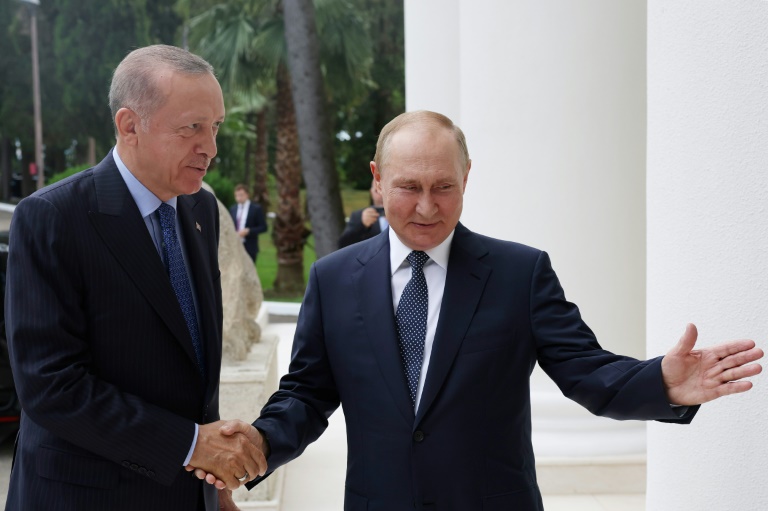
Turkish President Recep Tayyip Erdogan and Russian counterpart Vladimir Putin agreed to step up economic cooperation at a summit in the Black Sea resort of Sochi earlier this month.

Official data show the value of Turkish exports to Russia between May and July growing by nearly 50 percent from last year’s figure.

Turkey’s imports of Russian oil are ballooning and the two sides have agreed to transition to ruble payments for the natural gas exported by the Kremlin-tied giant Gazprom.

US Deputy Secretary of the Treasury Wally Adeyemo paid a rare visit to Ankara and Istanbul in June to express Washington’s worries that Russian oligarchs and big businesses were using Turkish entities to evade Western sanctions.

NATO member Turkey — on good terms with both Moscow and Kyiv — has tried to stay neutral in the conflict and refused to join the international sanctions regime.

– ‘Risk of US sanctions’ –

Adeyemo followed that up with a letter to Turkey’s TUSIAD business association and the American Chamber of Commerce in Turkey warning that companies and banks were in danger of being sanctioned themselves.

TUSIAD said in a statement late Tuesday that it had passed on the letter to Turkey’s foreign ministry as well as finance and trade officials.

The letter’s contents were first reported by The Wall Street Journal this week.

“Any individuals or entities providing material support to US-designated persons are themselves at risk of US sanctions,” Adeyemo wrote.

“Turkish banks cannot expect to establish corresponding relationships with sanctioned Russian banks and retain their corresponding relationships with major global banks as well as access to the US dollar and other major currencies.”

The economic cooperation agreement sealed by Erdogan and Putin includes a deal for more Turkish banks to start processing Russia’s Mir payments system.

Broader cooperation with Russia could help support Turkey’s ailing economy in the run-up to next year’s general election.

Adeyemo raised US concerns again in a phone call to Turkey’s Deputy Finance Minister Yunus Elitas last Friday.

“Underlining that it has deep economic and political relations with Ukraine and Russia, Elitas said that Turkey’s position (on joining) the sanctions has not changed,” Turkey’s finance ministry said in a statement about the call.

The finance ministry added that “it will not allow any institution or individual” to use Turkey to evade the sanctions regime.

Erdogan has previously argued that Ankara cannot join Western sanctions on Moscow because of Turkey’s heavy dependence on Russian oil and natural gas imports.

Some analysts believe that TUSIAD and the American Chamber of Commerce in Turkey — largely made up of big business with a global reach — are unlikely to violate the regime because they place more value on open access to US financial markets.

Timothy Ash of BlueBay Asset Management in London told AFP “smaller, domestically focused” companies were more likely to strike deals with sanctioned Russian entities that opened the way to two-way trade.

“It worries me though that the message from the top in Turkey seems to be that it’s fine to do more business with Russia, and it’s important to try and exploit opportunities to counterbalance costs from sanctions, even prosper from them.”

Steep drop in military aircraft keep US goods orders flat in June

Orders for big-ticket US-manufactured goods were flat in July after four straight monthly increases due to a plunge in the volatile military aircraft category, according to government data released Wednesday.

New orders for durable goods held steady at $273.5 billion, after the nearly 50 percent drop in demand for defense aircraft and parts — a segment that surged more than 80 percent in June, the Commerce Department reported.

The result was far worse than economists had projected, but excluding the defense sector, orders rose 1.2 percent, the data showed.

Economists say businesses are likely to pull back on investments, fearing Americans will become more cautious about spending amid the highest inflation in 40 years, even though families are buoyed by a stockpile of savings.

Despite high prices and rising interest rates, there were nonetheless signs of continued demand, although some categories hinted at a slowdown, including appliances, which fell, and autos, where orders increased but by much less than in recent months, as did computers and electronics.

Ian Shepherdson of Pantheon Macroeconomics said the data show orders are “holding up” despite business surveys pointing to weaker investment plans.

And while auto orders undershot, “they are trending strongly higher as chip supply improves,” he said in an analysis.

“People report to surveys that they are miserable and anxious about the state of the economy, but they keep spending anyway because the huge pile of pandemic savings allows them to cushion the hit to their real incomes from high inflation.”

The drop in military aircraft orders was offset by the 14.5 percent jump in non-defense planes, the report said.

Close Bitnami banner
Bitnami