AFP

Malaysia's Najib Razak: from PM to prison

The son of one of Malaysia’s founding fathers, Najib Razak was groomed for the prime minister’s post from a young age.

But after running the country for nine years he now faces more than a decade in jail for corruption in a spectacular fall over his links to the misuse of billions in public money.

Malaysia’s highest court on Tuesday upheld Najib’s 12-year jail sentence over the theft of cash from state fund 1MDB, slamming shut the door on any further political ambitions the former leader may have held.

Since his shock election defeat in May 2018, Najib has faced a tightening noose as successive governments ramped up investigations into the allegations of graft that have hung over him and wife Rosmah Mansor.

Later that year Najib was found guilty of abuse of power, money laundering and criminal breach of trust over the 1MDB scandal.

The convictions relate to his role in diverting 42 million ringgit (about $10 million) from SRC International, a unit of 1MDB, into his personal bank accounts. 

Najib’s downfall is a far cry from 2009 when he first took office offering hope for many in Malaysia longing for an end to the repressive tactics deployed by a once-invincible coalition that ruled for six decades.

He initially espoused liberal political views and replaced security laws widely criticised as stifling dissent. 

But the British-educated Najib was seen by many Malaysians as an aloof elitist with little understanding of common people. 

That perception was accentuated by frequent tone-deaf gaffes as well as policies unpopular with the poor, such as a sales tax introduced in 2015 that is now set to be scrapped.

His wife Rosmah was also a constant lightning rod for critics due to her imperious manner and elaborately coiffed hair, which she once complained cost her 1,200 ringgit ($270) to style. Malaysia’s minimum monthly wage at the time was 900 ringgit.

– ‘Cash is king’ –

Then-prime minister Mahathir Mohamad has said Najib told him in 2015 that “cash is king” in maintaining political support in Malaysia, a phrase that opponents turned against Najib as a sign of his hubris and corruption.

Money and power appeared to act as a firewall protecting Najib through a scandal involving Malaysia’s 2002 purchase of French submarines while he was defence minister, a deal brokered by a close associate.

Allegations later emerged of huge kickbacks to Malaysian officials to secure the deal, and the murky episode was punctuated by the murder of a Mongolian woman involved in the negotiations.

Altantuya Shaariibuu was shot dead and her body blown up near Kuala Lumpur using military-grade explosives.

Two officers in a special unit that guarded Malaysian ministers were convicted of the killing, but suspicion that Najib and Rosmah were involved hovered for years, with Najib at one point forced to deny he had an affair with the 28-year-old Altantuya.

– Final straw –

The final straw was 1MDB, a fund Najib launched in 2009 to promote economic development.

Soon after he won a second term in 2013, 1MDB slid into a massive debt hole and allegations surfaced that money was missing.

Public disgust with reports that emerged around 2015 detailing the plunder of the sovereign wealth fund snowballed into a Mahathir-led electoral tsunami that left Najib in the crosshairs of police.

US authorities say Najib’s entourage used hundreds of millions in diverted 1MDB funds to purchase high-end real estate in Los Angeles, New York and London. 

Other spending on the public purse included a Monet painting for $35 million, a $5.5 million work by Van Gogh, a $35 million Bombardier jet and financing for the 2013 Hollywood film “The Wolf of Wall Street”, which was produced by Najib’s stepson Riza Aziz.

A 2015 investigative report by the New York Times also alleged that millions of dollars were used to purchase jewellery for Rosmah.

In a speech in December 2017, then-US attorney general Jeff Sessions said of the scandal: “This is kleptocracy at its worst.”

Najib steadfastly denied wrongdoing while persecuting his accusers and shutting down media outlets that reported on the affair.

In the end, the 69-year-old cut a dejected figure in court as the final verdict was read Tuesday.

“We were told he has been taken to Kajang Prison, south of the capital Kuala Lumpur,” Nur Sharmila Shaheen, his daughter-in-law, told AFP.


Ex-security chief accuses Twitter of hiding major flaws

Twitter misled users and federal regulators about glaring weaknesses in its ability to protect personal data, the platform’s former security chief claimed in whistleblower testimony likely to impact the company’s bitter legal battle over Elon Musk’s takeover bid.

In a complaint filed with the US Securities and Exchange Commission and published in part Tuesday by The Washington Post and CNN, Peiter Zatko also accused Twitter of significantly underestimating the number of automated bots on the platform — a key element in Musk’s argument for withdrawing his $44 billion buyout deal.

CNN quotes the disclosure by Zatko as accusing Twitter of “negligence, willful ignorance, and threats to national security and democracy.”

Zatko, who Twitter says it fired earlier this year for poor performance, warns of obsolete servers, software vulnerable to computer attacks and executives seeking to hide the number of hacking attempts, both to US authorities and to the company’s board of directors.

The hacker-turned-executive, who goes by the nickname “Mudge,” also claims that Twitter prioritizes growing its user base over fighting spam and bots, according to the reports.

In particular, according to The Washington Post, he accuses the platform’s boss Parag Agrawal of “lying” in a tweet in May.

In the tweet, Agrawal says Twitter is “strongly incentivized to detect and remove as much spam as we possibly can.”

Twitter has dismissed the allegations.

A company spokesperson told AFP Tuesday that Zatko was fired in January this year for “ineffective leadership and poor performance.”

“What we’ve seen so far is a false narrative about Twitter and our privacy and data security practices that is riddled with inconsistencies and inaccuracies and lacks important context,” the spokesperson said in a statement.

The “opportunistic timing” of the allegations appears “designed to capture attention and inflict harm on Twitter, its customers and its shareholders,” the statement continued.

“Security and privacy have long been company-wide priorities at Twitter and will continue to be.”

– Subpoena by Musk –

The issue of fake accounts is at the heart of the legal battle between Twitter and Tesla chief Musk. 

The billionaire has repeatedly accused the company of minimizing the number of fake accounts and spam on its platform. 

Musk is relying on the argument to justify abandoning his plan to buy Twitter for $44 billion and avoid paying severance.

CNN said Zatko had not been in contact with Musk, and that he had begun the whistleblower process before there was any sign of the billionaire’s involvement in Twitter.

“We have already issued a subpoena for Mr. Zatko, and we found his exit and that of other key employees curious in light of what we have been finding,” Musk’s lawyer Alex Spiro told AFP on Tuesday.

The Washington Post and CNN both reported that the US Senate Intelligence Committee wants to meet with Zatko to discuss his accusations.

Zatko was hired in late 2020 by the founder and former boss of Twitter, Jack Dorsey, after a massive hack which saw the accounts of major users including Joe Biden, Barack Obama, reality star Kim Kardashian and Musk himself compromised.

Ex-security chief accuses Twitter of hiding major flaws

Twitter misled users and federal regulators about glaring weaknesses in its ability to protect personal data, the platform’s former security chief claimed in whistleblower testimony likely to impact the company’s bitter legal battle over Elon Musk’s takeover bid.

In a complaint filed with the US Securities and Exchange Commission and published in part Tuesday by The Washington Post and CNN, Peiter Zatko also accused Twitter of significantly underestimating the number of automated bots on the platform — a key element in Musk’s argument for withdrawing his $44 billion buyout deal.

CNN quotes the disclosure by Zatko as accusing Twitter of “negligence, willful ignorance, and threats to national security and democracy.”

Zatko, who Twitter says it fired earlier this year for poor performance, warns of obsolete servers, software vulnerable to computer attacks and executives seeking to hide the number of hacking attempts, both to US authorities and to the company’s board of directors.

The hacker-turned-executive, who goes by the nickname “Mudge,” also claims that Twitter prioritizes growing its user base over fighting spam and bots, according to the reports.

In particular, according to The Washington Post, he accuses the platform’s boss Parag Agrawal of “lying” in a tweet in May.

In the tweet, Agrawal says Twitter is “strongly incentivized to detect and remove as much spam as we possibly can.”

Twitter has dismissed the allegations.

A company spokesperson told AFP Tuesday that Zatko was fired in January this year for “ineffective leadership and poor performance.”

“What we’ve seen so far is a false narrative about Twitter and our privacy and data security practices that is riddled with inconsistencies and inaccuracies and lacks important context,” the spokesperson said in a statement.

The “opportunistic timing” of the allegations appears “designed to capture attention and inflict harm on Twitter, its customers and its shareholders,” the statement continued.

“Security and privacy have long been company-wide priorities at Twitter and will continue to be.”

– Subpoena by Musk –

The issue of fake accounts is at the heart of the legal battle between Twitter and Tesla chief Musk. 

The billionaire has repeatedly accused the company of minimizing the number of fake accounts and spam on its platform. 

Musk is relying on the argument to justify abandoning his plan to buy Twitter for $44 billion and avoid paying severance.

CNN said Zatko had not been in contact with Musk, and that he had begun the whistleblower process before there was any sign of the billionaire’s involvement in Twitter.

“We have already issued a subpoena for Mr. Zatko, and we found his exit and that of other key employees curious in light of what we have been finding,” Musk’s lawyer Alex Spiro told AFP on Tuesday.

The Washington Post and CNN both reported that the US Senate Intelligence Committee wants to meet with Zatko to discuss his accusations.

Zatko was hired in late 2020 by the founder and former boss of Twitter, Jack Dorsey, after a massive hack which saw the accounts of major users including Joe Biden, Barack Obama, reality star Kim Kardashian and Musk himself compromised.

Euro strikes fresh 20-year low as eurozone economy shrinks again

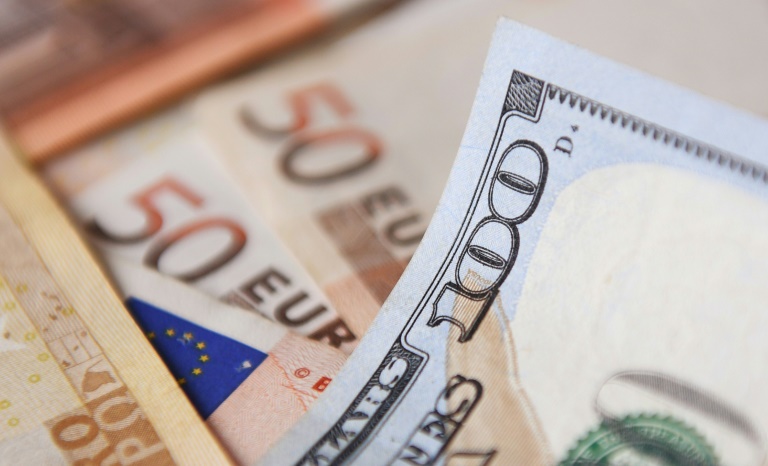
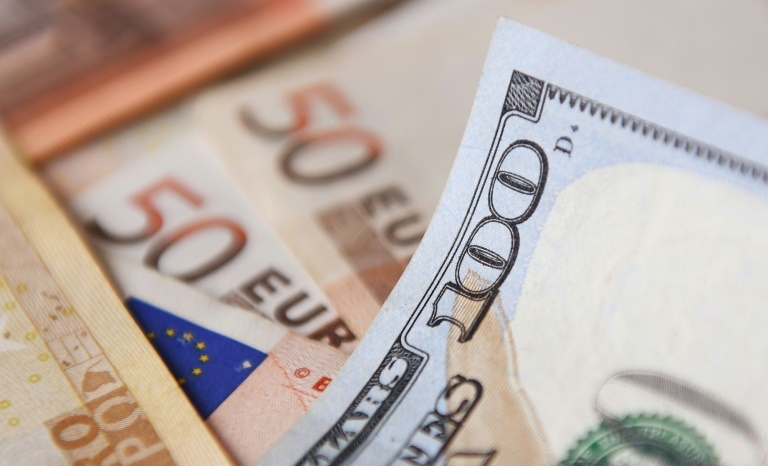
The euro dived Tuesday to a new two-decade dollar low and equities wavered, as data highlighted the shrinking eurozone economy and the worsening energy crunch.

The single currency, hit also by the US Federal Reserve’s rate-hiking plans before this week’s hotly-awaited comments from Chair Jerome Powell, tumbled to $0.9901.

The shared unit had already plunged below parity Monday on recession fears to plumb the lowest levels since 2002, when it came into physical circulation.

In the latest blow, S&P Global’s closely-watched monthly composite purchasing managers’ index (PMI), which measures corporate confidence, languished in August below the key 50-point level.

That stoked long-running worries of a protracted economic downturn.

– ‘Overarching threat’ –

“Eurozone PMIs … confirm concerns of an impending recession in Europe on the back of high inflation and energy crunch, as they signal declining activity for two months in a row,” warned Citi analyst Luis Costa.

He added: “The energy crunch remains an overarching threat to economic stability in Europe.”

Equities in the region wavered amid stubborn worries that the US Federal Reserve will carry on ramping up interest rates to fight inflation.

Rising US interest rates also push the dollar higher against other currencies.

On Tuesday, natural gas prices remain elevated on fears over a temporary halt to Russia’s gas deliveries to Europe.

The Dutch TTF Gas Futures contract stood at 274.50 euros per megawatt hour, although this was down slightly from Monday.

Gas had spiked to record peaks in March after key producer Russia launched its invasion of neighbouring Ukraine.

That has sparked surging domestic energy bills, fuelling decades-high inflation that has prompted tighter monetary policy around the world.

– ‘More effective than Kalashnikovs’ –

“As it has become painfully obvious, natural gas is a much more effective weapon in the hands of Russian politicians than the Kalashnikov in the hands of their soldiers,” noted PVM analyst Tamas Varga.

This has hit the single currency hard because the bloc relies heavily on imported Russian gas, indicated Societe Generale analyst Kit Juckes. 

Fears increased after Russia’s Gazprom said Friday that the Nord Stream pipeline would be closed for maintenance at the end of the month, cutting Europe’s crucial gas deliveries.

“The euro’s problem is … the threat from continued squeezing of gas supplies and the cost of replacing Russian gas,” Juckes said.

Asian markets fell again Tuesday as traders grew increasingly jittery over rising US rates.

Wall Street fell deep into the red on Monday with the S&P 500 and Nasdaq both off more than two percent.

With the Jackson Hole symposium of central bankers and finance chiefs taking place this week, the focus is on what Fed chief Jerome Powell says about its plans to tackle prices, with many fearing officials could send the economy into recession.

Oil prices — which have fallen for weeks as recession worries hit demand expectations — rebounded after Saudi Arabia suggested OPEC and other major producers could cut output citing “volatility” in crude markets.

– Key figures at around 1100 GMT –

London – FTSE 100: DOWN 0.3 percent at 7,510.01 points

Frankfurt – DAX: UP 0.1 percent at 13,243.90 

Paris – CAC 40: FLAT at 6,376.74

EURO STOXX 50: UP 0.1 percent at 3,660.73

Tokyo – Nikkei 225: DOWN 1.2 percent at 28,452.75 (close)

Hong Kong – Hang Seng Index: DOWN 0.8 percent at 19,503.25 (close)

Shanghai – Composite: DOWN 0.1 percent at 3,276.22 (close)

New York – Dow: DOWN 1.9 percent at 33,063.61 (close)

Euro/dollar: DOWN at $0.9930 from $0.9943 Monday

Pound/dollar: DOWN at $1.1764 from $1.1767

Euro/pound: DOWN at 84.39 pence from 84.98 pence

Dollar/yen: DOWN at 137.42 yen from 137.48 yen

West Texas Intermediate: UP 1.8 percent at $91.98 per barrel

Brent North Sea crude: UP 1.5 percent at $97.88

burs-rfj/lth

Euro strikes fresh 20-year low as eurozone economy shrinks again

The euro dived Tuesday to a new two-decade dollar low and equities wavered, as data highlighted the shrinking eurozone economy and the worsening energy crunch.

The single currency, hit also by the US Federal Reserve’s rate-hiking plans before this week’s hotly-awaited comments from Chair Jerome Powell, tumbled to $0.9901.

The shared unit had already plunged below parity Monday on recession fears to plumb the lowest levels since 2002, when it came into physical circulation.

In the latest blow, S&P Global’s closely-watched monthly composite purchasing managers’ index (PMI), which measures corporate confidence, languished in August below the key 50-point level.

That stoked long-running worries of a protracted economic downturn.

– ‘Overarching threat’ –

“Eurozone PMIs … confirm concerns of an impending recession in Europe on the back of high inflation and energy crunch, as they signal declining activity for two months in a row,” warned Citi analyst Luis Costa.

He added: “The energy crunch remains an overarching threat to economic stability in Europe.”

Equities in the region wavered amid stubborn worries that the US Federal Reserve will carry on ramping up interest rates to fight inflation.

Rising US interest rates also push the dollar higher against other currencies.

On Tuesday, natural gas prices remain elevated on fears over a temporary halt to Russia’s gas deliveries to Europe.

The Dutch TTF Gas Futures contract stood at 274.50 euros per megawatt hour, although this was down slightly from Monday.

Gas had spiked to record peaks in March after key producer Russia launched its invasion of neighbouring Ukraine.

That has sparked surging domestic energy bills, fuelling decades-high inflation that has prompted tighter monetary policy around the world.

– ‘More effective than Kalashnikovs’ –

“As it has become painfully obvious, natural gas is a much more effective weapon in the hands of Russian politicians than the Kalashnikov in the hands of their soldiers,” noted PVM analyst Tamas Varga.

This has hit the single currency hard because the bloc relies heavily on imported Russian gas, indicated Societe Generale analyst Kit Juckes. 

Fears increased after Russia’s Gazprom said Friday that the Nord Stream pipeline would be closed for maintenance at the end of the month, cutting Europe’s crucial gas deliveries.

“The euro’s problem is … the threat from continued squeezing of gas supplies and the cost of replacing Russian gas,” Juckes said.

Asian markets fell again Tuesday as traders grew increasingly jittery over rising US rates.

Wall Street fell deep into the red on Monday with the S&P 500 and Nasdaq both off more than two percent.

With the Jackson Hole symposium of central bankers and finance chiefs taking place this week, the focus is on what Fed chief Jerome Powell says about its plans to tackle prices, with many fearing officials could send the economy into recession.

Oil prices — which have fallen for weeks as recession worries hit demand expectations — rebounded after Saudi Arabia suggested OPEC and other major producers could cut output citing “volatility” in crude markets.

– Key figures at around 1100 GMT –

London – FTSE 100: DOWN 0.3 percent at 7,510.01 points

Frankfurt – DAX: UP 0.1 percent at 13,243.90 

Paris – CAC 40: FLAT at 6,376.74

EURO STOXX 50: UP 0.1 percent at 3,660.73

Tokyo – Nikkei 225: DOWN 1.2 percent at 28,452.75 (close)

Hong Kong – Hang Seng Index: DOWN 0.8 percent at 19,503.25 (close)

Shanghai – Composite: DOWN 0.1 percent at 3,276.22 (close)

New York – Dow: DOWN 1.9 percent at 33,063.61 (close)

Euro/dollar: DOWN at $0.9930 from $0.9943 Monday

Pound/dollar: DOWN at $1.1764 from $1.1767

Euro/pound: DOWN at 84.39 pence from 84.98 pence

Dollar/yen: DOWN at 137.42 yen from 137.48 yen

West Texas Intermediate: UP 1.8 percent at $91.98 per barrel

Brent North Sea crude: UP 1.5 percent at $97.88

burs-rfj/lth

Najib sent to jail after Malaysia top court upholds sentence in 1MDB scandal

Malaysia’s highest court Tuesday upheld former prime minister Najib Razak’s 12-year jail sentence for corruption in the 1MDB financial scandal, a decision analysts said could slam the door to a political comeback.

Najib’s daughter-in-law Nur Sharmila Shaheen said the family was told he was sent to Kajang Prison, located south of the capital Kuala Lumpur.

“My father-in-law asked us to take care of the family. He remained strong and calm,” she said.

Federal Court chief justice Maimun Tuan Mat, speaking on behalf of a five-judge panel, said the tribunal found Najib’s “complaints as contained in the petition of appeal devoid of any merit”.

“On the totality of the evidence, we find the conviction of the appellant on all seven charges safe. We also find that the sentence imposed is not manifestly excessive,” she added.

The appeals are “unanimously dismissed and the conviction and sentence are affirmed”, Maimun said.

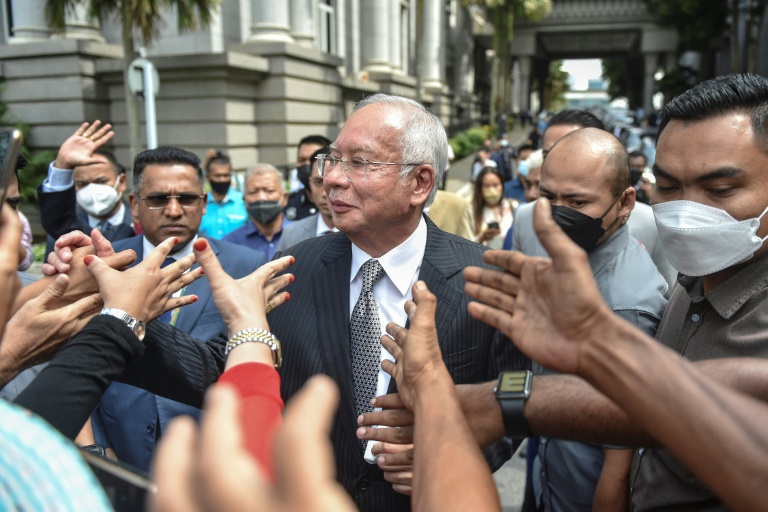
The 69-year-old former prime minister looked somber and dejected, seated by his wife Rosmah and two children as the verdict was read.

Journalists who were in an adjacent room watching the proceedings through video link saw Najib surrounded by family members, friends and party mates before the connection was cut off.

Outside the court, teary-eyed family members and supporters hugged each other.

Earlier in the day when Najib arrived in court, around 300 supporters mobbed his car chanting “bossku” — “my boss” in Malay — a rallying cry among his defenders.

Just before the verdict was read, Najib, who had said he received an unfair trial, made an impassioned plea asking for a two-month adjournment so he can adequately prepare for a defence.

During a break in the proceedings, he spoke to supporters, telling them “if I am guilty, please forgive me”.

– Barred from elections –

Najib is the UK-educated son of one of Malaysia’s founding fathers who had been groomed for the prime minister’s post from a young age.

The final ruling on the jail sentence also came four years after his long-ruling party’s shock election defeat in 2018, during which allegations he and his friends embezzled billions of dollars from state fund 1MDB were key campaign issues.

A lower court in July 2020 found Najib guilty of abuse of power, money laundering and criminal breach of trust over the transfer of 42 million ringgit ($10 million) from SRC International, a former unit of state fund 1MDB, to his personal bank account.

An appellate court in December denied his appeal, prompting him to go to the Federal Court for a final recourse.

Some analysts said the decision will likely derail any plans by Najib for a political comeback.

“Under Malaysian law, Najib cannot stand for this election and the next election (if found guilty),” James Chin, a professor of Asian studies at the University of Tasmania, told AFP before the verdict was announced.

“Obviously, his political career is gone.” 

There has been speculation that polls may be held this year, though elections are not due until September 2023.

But Oh Ei Sun, principal adviser for think-tank Pacific Research Center of Malaysia, said one way out for Najib is to get the king’s pardon.

“He could still apply for clemency (from the king),” he told AFP. “And if pardoned, as many expect, he could easily mount a comeback as his feudalistically minded supporters are numerous in number.”

Oh said, however, that the current Prime Minister Ismail Sabri Yaakob — who belongs to the same United Malays National Organisation party — must recommend a pardon.

Najib and his ruling party were voted out in 2018 following allegations of their involvement in a multibillion-dollar financial scandal at 1MDB.

He and his associates were accused of stealing billions of dollars from the country’s investment vehicle and spending it on everything from high-end real estate to pricey art.

Storm forces Philippine schools to shut day after reopening

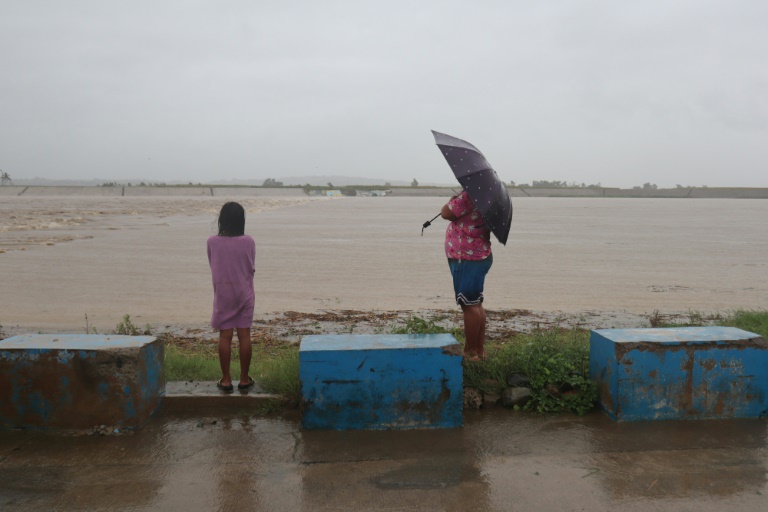
Schools were ordered shut across the northern Philippines Tuesday — a day after many resumed in-person learning for the first time since Covid-19 hit — as torrential rain and strong winds pounded the main island of the archipelago.

Severe tropical storm Ma-on struck the northeast coast of Luzon around mid-morning, raking the largely agricultural region with gusts of up to 185 kilometres (115 miles) an hour, the state weather service said.

Two people were injured by falling trees in the mountainous province of Cagayan where intense rain caused the main river and its tributaries to swell overnight, provincial disaster official Ruelie Rasping said.

“We’re currently being hit by strong winds and heavy rain. The Cagayan river is rising,” Rasping told AFP.

The provincial capital Tuguegarao was drenched with 98 millimetres (3.9 inches) of “torrential” rain over a three-hour period after the storm made landfall, an official at the state weather bureau told AFP.

Ma-on was expected to sweep in a northwest direction across the country and head out over the South China Sea late Tuesday or early Wednesday.

Some low-lying areas of the capital Manila were left in knee-deep floodwater, as the storm intensified the southwest monsoon.

President Ferdinand Marcos Jr suspended classes and work in government offices in the national capital region and surrounding provinces until Wednesday, his spokeswoman said.

It followed similar orders issued by provinces in Ma-on’s path.

The Philippines, ranked among the most vulnerable nations to the impacts of climate change, is hit by an average of 20 storms every year.

Ma-on was the first significant one since April when tropical storm Megi unleashed landslides and flooding that killed more than 200 people mostly on the central island of Leyte.

Ma-on struck a day after the Philippines reopened classrooms for face-to-face lessons, more than two years after the pandemic hit.

Indonesia raises rates for first time since 2018

Indonesia’s central bank hiked its key interest rate Tuesday for the first time in nearly four years to combat rising inflation stoked by the Covid-19 pandemic and war in Ukraine. 

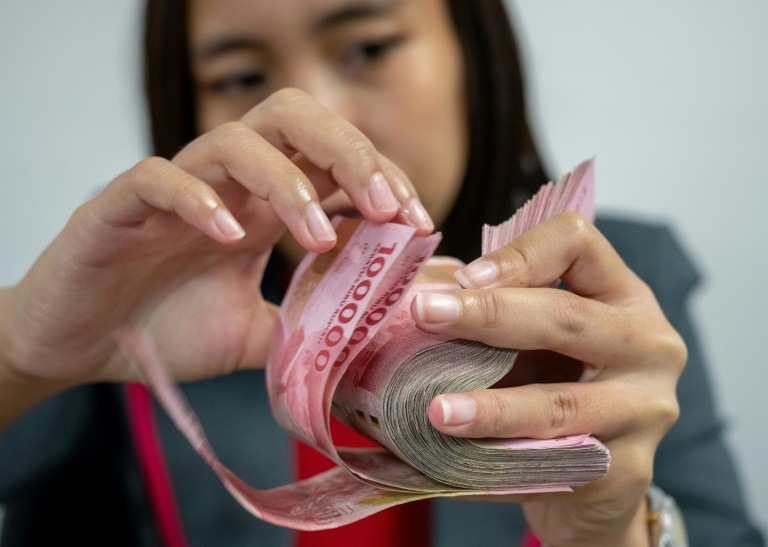
Bank Indonesia raised the policy rate to 3.75 from 3.5 percent, a move that went against the majority of analysts’ predictions.

Its two other main rates were also raised by 25 basis points.

Rates were hiked for the first time since 2018 to defend against accelerating inflation, Bank Indonesia governor Perry Warjiyo said, with Russia’s invasion driving up global energy and food prices and pushing millions into poverty around the world.

“The decision to raise the rates was taken as a pre-emptive and forward-looking step to mitigate risks from the hikes in core inflation and expectations of inflation because of the increase in non-subsidised fuel prices and volatile food inflation,” Warjiyo told reporters in an online press briefing.

The move came as Jakarta considers raising subsidised fuel prices, a policy that was expected to further stoke inflation already at a seven-year high of 4.94 percent in July and sitting above the central bank’s target range of between 2 and 4 percent.

With rising energy and food commodity prices, Warjiyo said the central bank expected inflation would go above its target range in 2022 and 2023.

President Joko Widodo came to power in 2014 on a pledge to boost annual growth to seven percent, but the commodities-driven economy has remained stuck in the 5.0 percent range and has fallen below that after the onset of the coronavirus pandemic in early 2020.

Looking ahead, the outlook for monetary policy is likely more tightening due to the continuing uncertainty in world markets, economists said.

“The hawkish commentary from the (Bank Indonesia) press conference increases the risk that the bank will tighten policy further this year,” said Gareth Leather, Asia economist from Capital Economics.

After 'doomsday' floods, Sudanese fear worse to come

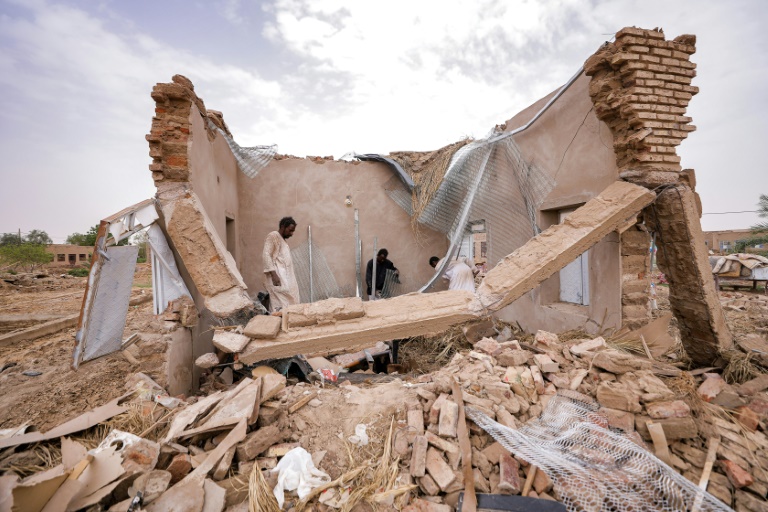
In the Sudanese village of Makaylab, Mohamed Tigani picked through the pile of rubble that was once his mud-brick home, after torrential rains sparked heavy floods that swept it away.

“It was like doomsday,” said Tigani, 53, from Makaylab in Sudan’s River Nile state, some 400 kilometres (250 miles) north of the capital Khartoum.

“We have not seen rains and floods like that in this area for years,” he said, scouring for anything to help build a shelter for his pregnant wife and child.

In Sudan, heavy rains usually fall between May and October, and the country faces severe flooding every year, wrecking property, infrastructure and crops.

This year, floods have killed at least 79 people and left thousands homeless, according to official figures.

On Sunday, Sudan declared a state of emergency due to floods in six states, including River Nile.

The crisis comes as Sudan reels from deepening political unrest and a spiralling economic crisis exacerbated by last year’s military coup led by army chief Abdel Fattah al-Burhan.

Almost a quarter of Sudan’s population — 11.7 million people — need food aid.

The United Nations Office for the Coordination of Humanitarian Affairs (OCHA), citing government figures, estimates over 146,000 people have been affected by flooding this year, with 31,500 homes damaged or destroyed.

But the UN warns that with more than a month of rain still expected, flooding could affect up to 460,000 people this year — far higher than the average 388,600 people affected between 2017 and 2021.

“Compared to the same period of 2021, the number of affected people and localities this year has doubled,” OCHA said Monday. 

The flooding is not just along the Nile River, with the war-ravaged western region of Darfur the hardest hit, where over 90,000 people are affected.

– ‘Only just starting’ –

Since the start of the devastating rainy season, thousands of Sudanese families have been left homeless, sheltering under tattered sacking.

“Everything is totally destroyed,” said Haidar Abdelrahman, sitting in the ruins of his home at Makaylab.

OCHA warns that “swollen rivers and pools of standing water increase the risk of water-borne disease such as cholera, acute watery diarrhoea, and malaria”.

Abdelrahman said he fears the floodwaters have also forced scorpions and snakes to move. “People are scared,” he said. 

“People are in serious need of basic aid against insects and mosquitoes,” said Seifeddine Soliman, 62, from Makaylab.

But health ministry official Yasser Hashem said the situation is “so far under control” with “spraying campaigns to prevent mosquitoes”.

Out of around 3,000 residents in Makaylab, they had been receiving about six or seven cases daily, mainly diarrhoea, he said.

Upstream, on the White Nile, neighbouring South Sudan has seen record rainfalls and overflowing rivers in recent years, forcing hundreds of thousands of people from their homes, with the UN saying the “extraordinary flooding” was linked to the effects of climate change.

The floods on the Nile in Sudan also come despite Ethiopia’s controversial construction upstream across the Blue Nile of a 145-metre (475-foot) tall hydroelectric dam.

Some experts, such as the US-based research and campaign group International Rivers, have warned that changing weather patterns due to climate change could result in irregular episodes of flooding and drought in the Nile drainage basin, the world’s longest river.

In Makaylab, many fear the devastating floods are only the beginning.

“The rainy season is just starting,” said Abdelrahman. “And there is no place for people to go.”

US 'deeply concerned' about violence on Syria-Turkey border

Washington is “deeply concerned” about a recent flare-up of violence along Syria’s northern border with Turkey, a State Department spokesman said Monday.

“The United States is deeply concerned about recent attacks along Syria’s northern border and urges all parties to maintain ceasefire lines,” said spokesman Ned Price, days after increased bombardments in the area reportedly killed at least 21 civilians — including children.

“We deplore the civilian casualties in Al-Bab, Hasakah, and elsewhere,” said Price, adding that the United States remained committed “to ensure the enduring defeat of ISIS and a political resolution to the Syrian conflict.”

The recent bloodshed came against a backdrop of increased tensions pitting the Kurdish-led Syrian Democratic Forces (SDF) against Turkish troops and their Syrian proxies.

On Friday, Kurdish authorities said that a pre-dawn strike by a Turkish drone hit “a training centre for young girls” in the Shmouka area near Hasakeh in the northeast, killing four children and wounding 11.

The Britain-based Syrian Observatory for Human Rights, a war monitor with a broad network of sources on the ground, confirmed the toll.

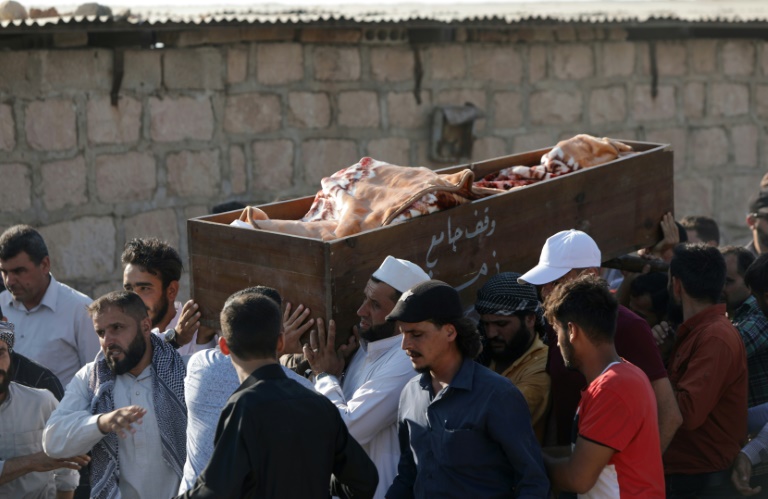
In Al-Bab, a town under the control of Syrian factions loyal to Ankara, “artillery fire on a market by pro-regime forces killed 17 civilians — including six children — and wounded another 35,” the Observatory said.

An AFP correspondent said the strike on the town near the Syria-Turkey border had ripped through a market, describing it as a jumble of body parts, strewn vegetables and mangled handcarts.

Close Bitnami banner
Bitnami