AFP

Taiwan condemns 'evil neighbour' China over war drills

Taiwan blasted its “evil neighbour” on Friday after China encircled the island with a series of huge military drills that were condemned by the United States and other Western allies.

During military exercises on Thursday and Friday, China fired ballistic missiles and deployed fighter jets and warships around Taiwan.

The People’s Liberation Army declared multiple no-go danger zones around Taiwan, straddling major shipping lanes in the world and at some points coming within 20 kilometres (12 miles) of the island’s shores.

Beijing has said the exercises will continue until midday Sunday, and Taipei reported that Chinese fighter jets and ships crossed the “median line” that runs down the Taiwan Strait on Friday morning.

“As of 11 am, multiple batches of Chinese warplanes and warships conducted exercises around the Taiwan Strait and crossed the median line of the strait,” Taipei’s defence ministry said in a statement. 

The median line is an unofficial but once largely adhered-to border that runs down the middle of the Taiwan Strait, which separates Taiwan and China.

Chinese incursions have become more common since Beijing declared in 2020 that the unofficial border no longer existed.

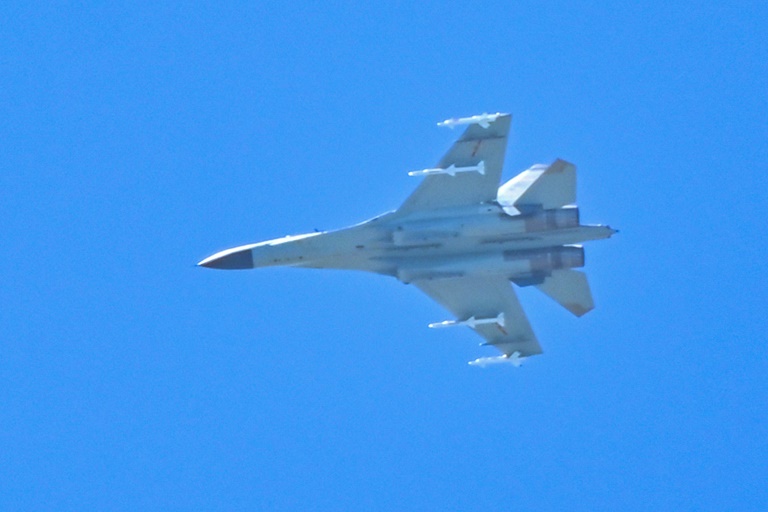
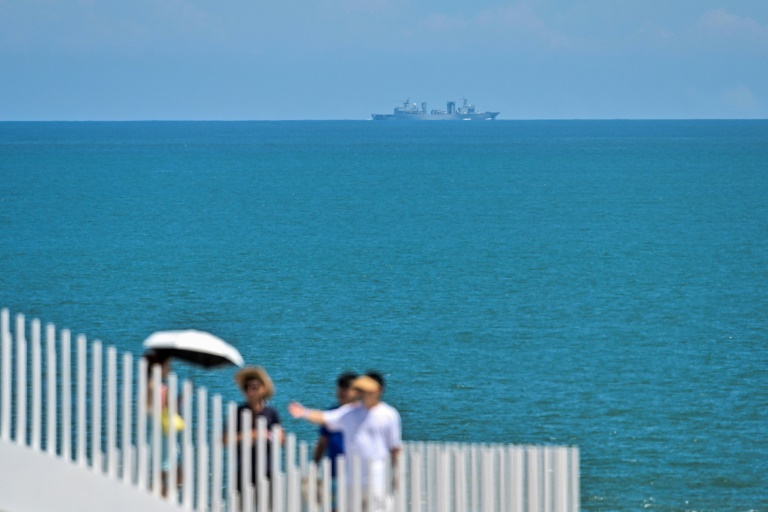
AFP journalists on the Chinese island of Pingtan saw a fighter jet flying overhead, prompting tourists to snap photos as it flew along the coast.

A Chinese military vessel was also visible sailing through the Taiwan Strait, they added.

Beijing has insisted its war games are a “necessary” response to US House Speaker Nancy Pelosi’s visit to Taiwan, but Washington countered that China’s leaders had “chosen to overreact”.

Taiwan’s premier Su Tseng-chang, meanwhile, called for allies to push for de-escalation.

(We) didn’t expect that the evil neighbour next door would show off its power at our door and arbitrarily jeopardise the busiest waterways in the world with its military exercises,” he told reporters.

Pelosi has defended her trip to the self-ruled, democratic island, saying Friday that Washington would “not allow” China to isolate Taiwan.

“We have said from the start that our representation here is not about changing the status quo here in Asia, changing the status quo in Taiwan,” she told reporters in Tokyo on the final leg of an Asia tour.

Later on Friday China hit back, announcing sanctions against Pelosi and her immediate family, without providing details on the punitive measures.

Beijing has in recent years sanctioned a number of US officials for what it views as acting against its core interests, and speaking out on human rights issues in Hong Kong and the northwestern region of Xinjiang.

– Missiles over Taiwan –

China’s drills involved a “conventional missile firepower assault” in waters to the east of Taiwan, the Chinese military said. 

The state-run Xinhua news agency said the Chinese military “flew more than 100 warplanes including fighters and bombers” during the exercises, as well as “over 10 destroyers and frigates”.

State broadcaster CCTV reported that Chinese missiles had flown directly over Taiwan.

Japan also claimed that of the nine missiles it had detected, four were “believed to have flown over Taiwan’s main island”.

Taipei’s military said it would not confirm missile flight paths, in a bid to protect its intelligence capabilities and not allow China “to intimidate us”.

– ‘Significant escalation’ –

China’s ruling Communist Party views Taiwan as part of its territory and has vowed to one day take it, by force if necessary.

But the scale and intensity of the drills have triggered outrage in the United States and other democracies.

“These provocative actions are a significant escalation,” Blinken said after talks with Southeast Asian foreign ministers in Phnom Penh.

“The fact is, the speaker’s visit was peaceful. There is no justification for this extreme, disproportionate and escalatory military response,” he added.

Japan lodged a formal diplomatic complaint against Beijing, with five of China’s missiles believed to have landed in its exclusive economic zone.

And Australia — which has a troubled relationship with China, its largest trading partner — condemned the drills as “disproportionate and destabilising”.

“Australia is deeply concerned about the launch of ballistic missiles by China into waters around Taiwan’s coastline,” foreign minister Penny Wong said.

The manoeuvres are taking place along some of the world’s busiest shipping routes, used to disseminate the global supply of vital semiconductors and electronic equipment produced in East Asia.

“The shutting down of these transport routes — even temporarily — has consequences not only for Taiwan, but also trade flows tied to Japan and South Korea,” Nick Marro, the Economist Intelligence Unit’s lead analyst for global trade, wrote in a note.

Taiwan said the drills would disrupt 18 international routes passing through its flight information region while several airlines told AFP they would divert flights.

But markets in Taipei appeared to shrug off the tensions, with the Taiwan Taiex Shipping and Transportation Index, which tracks major shipping and airline stocks, up 3.7 percent Friday.

And analysts broadly agree that despite all its aggressive posturing, Beijing does not want an active military conflict against the United States and its allies over Taiwan — just yet.

“The last thing Xi wants is an accidental war ignited,” Titus Chen, an associate professor of political science at the National Sun Yat-Sen University in Taiwan, told AFP.

Strategic ambiguity? The US, Taiwan and China — a guide

US House Speaker Nancy Pelosi’s visit to Taiwan has provoked Beijing’s ire — and brought into focus Washington’s deliberately ambiguous foreign policy stance toward the democratic, self-ruled island.

Pelosi’s pledge Friday that the United States will “not allow” China to isolate Taiwan comes just months after President Joe Biden repeatedly said US forces would defend the island militarily if China attempted to take control of it.

Biden’s team have nsisted that Washington’s decades-old approach remained unchanged. 

Here is a recap of that foreign policy stance and why relations between the United States, China and Taiwan are so delicate:

– Bitter history – 

The deep rift between Beijing and Taiwan dates back to China’s civil war, which erupted in 1927 and pitted forces aligned with the Communist Party of China against the Nationalist Kuomintang (KMT) army. 

Eventually defeated by Mao Zedong’s communists, KMT chief Chiang Kai-shek fled to Taiwan, which was still under his control. 

From there, Chiang continued to claim the entirety of China — just as the mainland claimed Taiwan as part of its territory to be re-taken one day, by force if necessary.  

For years, both sides still formally claimed to represent all of China, and Taiwan’s official name remains the Republic of China, while the mainland is the People’s Republic of China

Since the late 1990s, Taiwan has transformed from an autocracy into a vibrant democracy and a distinct Taiwanese identity has emerged. 

The current ruling party, led by President Tsai Ing-wen, has pledged to defend Taiwan’s sovereignty.

– Strategic ambiguity –

Washington cut formal diplomatic relations with Taiwan in 1979, switching recognition to Beijing as the sole representative of China, with the mainland becoming a major trading partner.

But at the same time, the United States maintained a decisive, if at times delicate, role in supporting Taiwan.

Under a law passed by Congress, the United States is required to sell Taiwan military supplies to ensure its self-defence against Beijing’s vastly larger armed forces.

But it has maintained “strategic ambiguity” on whether it would actually intervene militarily, a policy designed both to ward off a Chinese invasion and discourage Taiwan from ever formally declaring independence.

There is now growing bipartisan discussion in Washington over whether a switch to “strategic clarity” is preferable given Beijing’s increasingly bellicose approach to cross-strait relations. 

Beijing has become much more assertive towards Taiwan under President Xi Jinping and the last two years in particular have seen a surge in incursions into Taiwan’s air defence identification zone by Chinese military aircraft.

And Russia’s war on Ukraine has heightened fears that China might one day follow through on threats to annex its smaller neighbour. 

On Friday, China encircled the island with a series of huge military drills, prompting rebuke from Taipei, the United States and other democracies. 

Yet analysts broadly agree that despite all its aggressive posturing, Beijing does not want an active military conflict against the United States and its allies over Taiwan — just yet.

-‘One China’ policy –

US policy on Taiwan has always hinged on diplomatic nuance. 

In what is termed the “One China policy”, Washington recognises Beijing, but only acknowledges the Chinese position that Taiwan is part of China. 

It leaves it to the two sides to work out a solution, while opposing any use of force to change the status quo. 

In practice, Taiwan enjoys many of the trappings of a full diplomatic relations with the United States. 

While there is no US embassy in Taipei, Washington runs a centre called the American Institute in Taiwan. 

In the United States, the island’s diplomats enjoy the status of other nations’ personnel. 

Only 13 nations, all in the developing world, and the Vatican still recognise Taiwan.  

Beijing has tried hard to stop any international recognition of the island. 

It baulks at any use of the word Taiwan, such as when Lithuania allowed Taipei to open a de facto embassy under its own name last year, lest it might lend the island a sense of legitimacy on the global stage. 

The United States and a growing number of countries have pushed for Taiwan to be included in UN bodies, such as the World Health Organization. 

Asian markets up after oil drop, eyes on Taiwan and US jobs

Asian equities mostly rose Friday as a drop in oil prices to pre-Ukraine war levels stirred hopes of a slowdown in inflation and central bank interest rate hikes, while focus turns to key US jobs data later in the day.

However, while markets have enjoyed a broadly positive week, optimism remains at a premium as traders fret over issues including the conflict in Eastern Europe, China’s military drills around Taiwan and a possible global recession.

Crude edged up but expectations that economies will contract — dampening demand — have sent the commodity tumbling more than 10 percent this week, with US data indicating Americans were driving less now than in summer 2020 at the height of the pandemic.

And while analysts are beating the drum of recession, traders are taking heart from the possibility of a reprieve from central bank monetary tightening.

“The recent fall in oil prices, which are now trading below the levels immediately before Russia’s invasion of Ukraine, has contributed to the market’s perception that inflation is likely to peak soon, taking pressure off the Fed to raise rates as aggressively,” said National Australia Bank’s Rodrigo Catril. 

Traders will now be closely watching the release of a crucial US jobs report on Friday for a fresh snapshot of the world’s top economy.

The Federal Reserve has said its rate decision will be guided by data, with signs of economic weakness seen as likely to mean any increases will be light.

Officials have said the economy remains healthy despite four-decade high inflation and a sharp lift in borrowing costs, while several have suggested they are open to more big increases to get on top of prices.

And SPI Asset Management’s Stephen Innes said: “Though some high-frequency data suggest employment and inflation have softened in some parts of the economy, markets may wonder if they are soft enough to change the course for the Fed.”

In a sign of the long road ahead, the Bank of England hiked rates by the most since it was made independent in 1997, and warned inflation will likely go higher than 13 percent while Britain will suffer an extended recession.

India on Friday lifted costs for the third time in four months to the highest level since summer 2019.

Wall Street provided a soft lead after recent gains, but Asia was largely higher.

Hong Kong, Tokyo, Shanghai, Sydney, Seoul, Jakarta, Mumbai and Singapore rose, though Bangkok, Wellington and Manila dipped.

London dipped, Paris was flat and Frankfurt edged up.

Taipei surged more than two percent on easing concerns over a conflict with Beijing, even as China conducts its largest-ever military exercises around Taiwan in response to US House Speaker Nancy Pelosi’s visit this week.

China launched a series of exercises in multiple zones Thursday, straddling some of the busiest shipping lanes in the world.

While Taipei did not say where the missiles landed or whether they flew over the island, Japan said that of the nine missiles it had detected, four were “believed to have flown over Taiwan’s main island”.

Geir Lode, of Federated Hermes, said: “For a world facing a whole raft of major challenges, there sure is a lot of optimism across equities right now.

“Inflation is challenging corporate earnings and weighing on consumer sentiment. Global recession appears probable as growth becomes ever more scarce. Geopolitical tensions and the growth in populism accelerate the trend towards localisation (and increase the risk of even darker futures). Climate change looms over us all.

“And yet equities this week have continued July’s strong rally.”

– Key figures at around 0810 GMT –

Tokyo – Nikkei 225: UP 0.9 percent at 28,175.87 (close)

Hong Kong – Hang Seng Index: UP 0.1 percent at 20,201.94 (close)

Shanghai – Composite: UP 1.2 percent at 3,227.03 (close)

London – FTSE 100: DOWN 0.1 percent at 7,439.88

Euro/dollar: DOWN at $1.0227 from $1.0248 Thursday

Pound/dollar: DOWN at $1.2148 from $1.2166

Euro/pound: DOWN at 84.18 pence from 84.21 pence

Dollar/yen: UP at 133.30 yen from 132.95 yen

West Texas Intermediate: UP 0.6 percent at $89.05 per barrel

Brent North Sea crude: UP 0.6 percent at $94.71 per barrel

New York – Dow: DOWN 0.3 percent at 32,726.82 (close)

Asian markets up after oil drop, eyes on Taiwan and US jobs

Asian equities mostly rose Friday as a drop in oil prices to pre-Ukraine war levels stirred hopes of a slowdown in inflation and central bank interest rate hikes, while focus turns to key US jobs data later in the day.

However, while markets have enjoyed a broadly positive week, optimism remains at a premium as traders fret over issues including the conflict in Eastern Europe, China’s military drills around Taiwan and a possible global recession.

Crude edged up but expectations that economies will contract — dampening demand — have sent the commodity tumbling more than 10 percent this week, with US data indicating Americans were driving less now than in summer 2020 at the height of the pandemic.

And while analysts are beating the drum of recession, traders are taking heart from the possibility of a reprieve from central bank monetary tightening.

“The recent fall in oil prices, which are now trading below the levels immediately before Russia’s invasion of Ukraine, has contributed to the market’s perception that inflation is likely to peak soon, taking pressure off the Fed to raise rates as aggressively,” said National Australia Bank’s Rodrigo Catril. 

Traders will now be closely watching the release of a crucial US jobs report on Friday for a fresh snapshot of the world’s top economy.

The Federal Reserve has said its rate decision will be guided by data, with signs of economic weakness seen as likely to mean any increases will be light.

Officials have said the economy remains healthy despite four-decade high inflation and a sharp lift in borrowing costs, while several have suggested they are open to more big increases to get on top of prices.

And SPI Asset Management’s Stephen Innes said: “Though some high-frequency data suggest employment and inflation have softened in some parts of the economy, markets may wonder if they are soft enough to change the course for the Fed.”

In a sign of the long road ahead, the Bank of England hiked rates by the most since it was made independent in 1997, and warned inflation will likely go higher than 13 percent while Britain will suffer an extended recession.

India on Friday lifted costs for the third time in four months to the highest level since summer 2019.

Wall Street provided a soft lead after recent gains, but Asia was largely higher.

Hong Kong, Tokyo, Shanghai, Sydney, Seoul, Jakarta, Mumbai and Singapore rose, though Bangkok, Wellington and Manila dipped.

London dipped, Paris was flat and Frankfurt edged up.

Taipei surged more than two percent on easing concerns over a conflict with Beijing, even as China conducts its largest-ever military exercises around Taiwan in response to US House Speaker Nancy Pelosi’s visit this week.

China launched a series of exercises in multiple zones Thursday, straddling some of the busiest shipping lanes in the world.

While Taipei did not say where the missiles landed or whether they flew over the island, Japan said that of the nine missiles it had detected, four were “believed to have flown over Taiwan’s main island”.

Geir Lode, of Federated Hermes, said: “For a world facing a whole raft of major challenges, there sure is a lot of optimism across equities right now.

“Inflation is challenging corporate earnings and weighing on consumer sentiment. Global recession appears probable as growth becomes ever more scarce. Geopolitical tensions and the growth in populism accelerate the trend towards localisation (and increase the risk of even darker futures). Climate change looms over us all.

“And yet equities this week have continued July’s strong rally.”

– Key figures at around 0810 GMT –

Tokyo – Nikkei 225: UP 0.9 percent at 28,175.87 (close)

Hong Kong – Hang Seng Index: UP 0.1 percent at 20,201.94 (close)

Shanghai – Composite: UP 1.2 percent at 3,227.03 (close)

London – FTSE 100: DOWN 0.1 percent at 7,439.88

Euro/dollar: DOWN at $1.0227 from $1.0248 Thursday

Pound/dollar: DOWN at $1.2148 from $1.2166

Euro/pound: DOWN at 84.18 pence from 84.21 pence

Dollar/yen: UP at 133.30 yen from 132.95 yen

West Texas Intermediate: UP 0.6 percent at $89.05 per barrel

Brent North Sea crude: UP 0.6 percent at $94.71 per barrel

New York – Dow: DOWN 0.3 percent at 32,726.82 (close)

More grain leaves Ukraine amid military tactics row

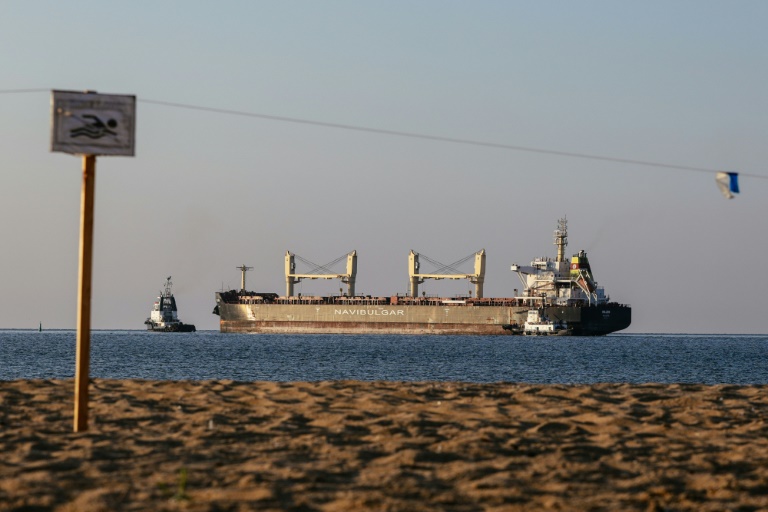
Three ships loaded with grain for the global market left Ukraine on Friday, amid a mushrooming controversy over accusations that the war-torn country is violating international law and endangering civilians in its defence against Russia’s invasion.

The vessels loaded with more than 57,000 tonnes of Ukrainian grain departed Black Sea ports under a recent agreement between Moscow and Kyiv aimed at easing a global food shortage. 

The government in Kyiv said on social media two ships carrying Ukrainian maize — the Maltese-flagged Rojen and the Turkish Polarnet — set off from Chornomorsk while the Panama-flagged Navistar departed Odessa. 

“Our main goal is to increase the trans-shipment volume in our ports. We have to process 100 carriers per month to be able to export the necessary amount of foodstuffs,” said Infrastructure Minister Oleksandr Kubrakov.

Grain shipments have resumed under a deal struck last month between Kyiv and Moscow — mediated by Turkey and under the aegis of the UN — in a bid to alleviate a crisis where food prices have soared in several countries.  

But the rare diplomatic win has been overshadowed by a report Thursday in which Amnesty International listed incidents in 19 cities and towns where Ukrainian forces appeared to have put civilians in harm’s way by establishing bases in residential areas.

– Victim blaming –

Ukrainian President Volodymyr Zelensky equated the accusations to victim blaming in an evening address in which he said the rights group had sought to offer “amnesty (to) the terrorist state and shift the responsibility from the aggressor to the victim”.  

“There is no condition, even hypothetically, under which any Russian strike on Ukraine becomes justified. Aggression against our state is unprovoked, invasive and terrorist,” he added.  

“If someone makes a report in which the victim and the aggressor are supposedly equal in some way… then this cannot be tolerated.”  

After a four-month investigation, Amnesty said it had found that the Ukrainian military had established bases in schools and hospitals, and launched attacks from populated areas, asserting that the tactics violated international humanitarian law.  

The group noted, however, that the tactics “in no way justify Russia’s indiscriminate attacks”, which have battered civilian populations.  

On Friday, the Ukrainian presidency reported Russian bombardments targeting several towns and villages, including Nikopol and Kryvyi Rig in the east, where houses and a gas station were damaged by shelling

Several missiles hit the central city of Zaporizhzhia overnight, where Moscow has been accused of storing heavy weapons at Europe’s largest nuclear power plant in occupied Ukrainian territory.

There was also heavy bombardment of Ukraine’s second city Kharkiv, in the northeast, where housing, shops, a market and an educational institution were damaged.

– Counter-offensive –

Eight people were killed and four wounded on Thursday by a Russian strike that hit a bus stop in Toretsk, near the eastern frontline, according to the regional governor.  

Ukrainian forces are conducting a counter-offensive in the country’s south, where they claim to have retaken more than 50 villages previously controlled by Moscow.

They also claimed to have liberated two villages in the eastern Donetsk region on Thursday and one near Kharkiv on Friday. 

The attacks have not affected the grain shipment deal, which provides for the establishment of secure corridors in the Black Sea to allow merchant ships to export between 20 and 25 million tonnes of Ukrainian grain held up in ports. 

A similar agreement signed at the same time allows Russia to export its agricultural products and fertiliser despite Western sanctions.   

Turkey hopes the agreements could build confidence and lead to a ceasefire between the two countries. 

Separately, the European Union on Thursday announced it was slapping sanctions on former Ukrainian president Viktor Yanukovych and his son Oleksandr for allegedly undermining Ukraine’s security. 

Yanukovych was overthrown in 2014 by a popular uprising against the pro-Russian stance his government had taken. Following his ouster, Moscow moved to annex Ukraine’s Crimean peninsula and backed separatists in the eastern Donbas region.

Pelosi says US will 'not allow' China to isolate Taiwan

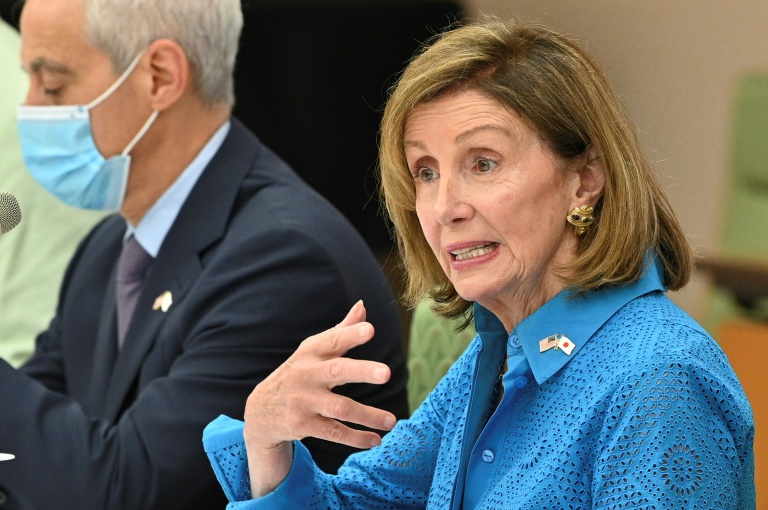
US House Speaker Nancy Pelosi said Friday that the United States will “not allow” China to isolate Taiwan, after her visit to the self-ruled island infuriated Beijing.

China, which views Taiwan as part of its territory, launched its largest-ever military exercises around the island after Pelosi defied stern threats to become the highest-profile US official to set foot on Taiwanese soil in years.

Now in Tokyo on the final leg of her Asian tour, Pelosi did not comment directly on the drills but argued that American politicians should be able to travel to Taiwan freely.

“They may try to keep Taiwan from visiting or participating in other places, but they will not isolate Taiwan by preventing us to travel there,” she told reporters.

“We will not allow them to isolate Taiwan,” she said, adding that her trip was “not about changing the status quo” in the region.

When asked if the tour had been more about her own legacy than benefiting Taiwan, Pelosi replied: “This isn’t about me — it’s about them.” 

She called the democratic island “one of the freest countries in the world”, saying she was “proud” of her work showcasing concerns related to mainland China, from alleged trade violations and arms proliferation to human rights.

The 82-year-old politician arrived on Thursday from South Korea, another key US ally, where she visited the border with the nuclear-armed North.

It is her first time in Japan since 2015, and on Friday morning she met Prime Minister Fumio Kishida, who said Japan had “called for the immediate cancellation of the military drills”.

Pelosi also held talks with Japan’s House of Representatives speaker Hiroyuki Hosoda, and was scheduled to meet members of the US forces in Japan.

– Ballistic missiles –

Tokyo said five Chinese ballistic missiles were believed to have fallen in Japan’s exclusive economic zone (EEZ), with four of those presumed to have flown over Taiwan’s main island.

The EEZ extends up to 200 nautical miles from Japan’s coastline, beyond the limits of its territorial waters.

Kishida condemned the missile launches as a “serious problem that impacts our national security and the safety of our citizens”.

Parts of Japan’s southernmost Okinawa region are close to Taiwan, as are islets at the centre of a long-running dispute between Tokyo and Beijing.

In May, US President Joe Biden also angered Beijing on a visit to Japan, when he said US forces would defend Taiwan militarily if China attempted to take control of the island by force.

But Biden and his team insisted at the time that their decades-old approach to Taiwan remained in place.

This means support for its government while diplomatically recognising Beijing over Taipei, and opposing a formal independence declaration by Taiwan or a forceful takeover by China.

On Friday, Pelosi said the United States wanted to find “common ground” with China on issues from rights to climate change.

“Again, it isn’t about our visit determining what the US-China relationship is. It’s a much bigger and longer-term challenge, and one that we have to recognize that we have to work together in certain areas,” she said.

Tetsuo Kotani, a professor at Meikai University and senior fellow at the Japan Institute of International Affairs, said the Chinese drills could give the Japanese public a “more realistic” view of Tokyo’s defence capacity compared to Beijing, which has steadily expanded its military might.

“The latest military exercise has shown that what’s happening in Ukraine can happen in Asia,” he told AFP.

South Korea's first lunar orbiter launched by SpaceX

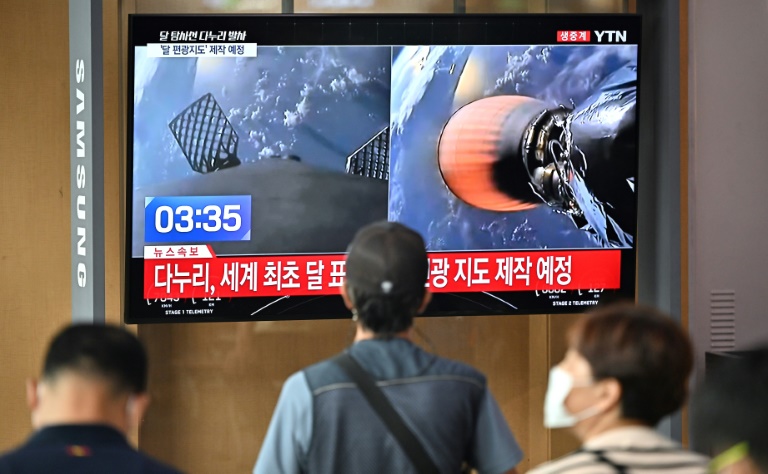
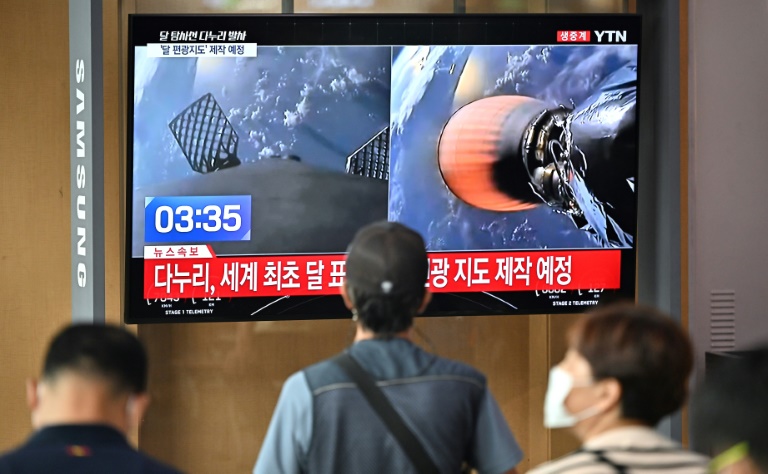
South Korea’s first lunar orbiter successfully launched on a year-long mission to observe the Moon, Seoul said Friday, with the payload including a new disruption-tolerant network for sending data from space.

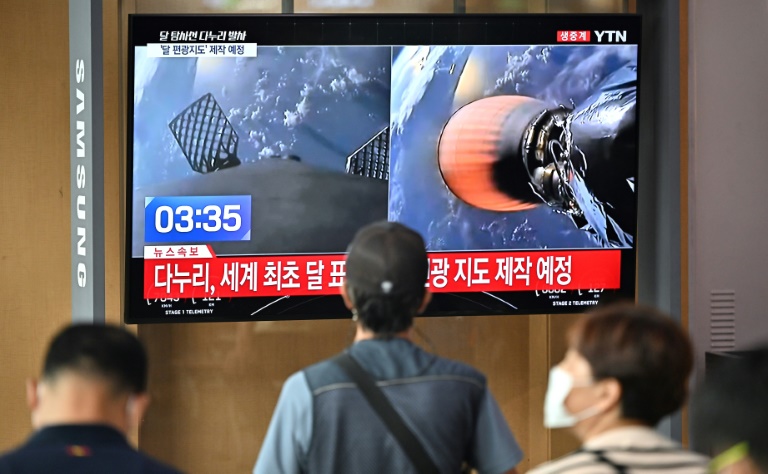
Danuri — a portmanteau of the Korean words for “Moon” and “enjoy” — was on a Falcon 9 rocket launched from Cape Canaveral in Florida by Elon Musk’s aerospace company SpaceX. It aims to reach the Moon by mid-December.

“South Korea’s first lunar orbiter ‘Danuri’ left for space at 8:08 am on August 5, 2022,” Seoul’s science ministry said in a tweet, sharing a video of the rocket blasting off trailing a huge column of smoke and flames.

Danuri “successfully entered orbit towards the moon”, Seoul’s vice science minister Oh Tae-seok told reporters later Friday, saying that researchers were already communicating with Danuri through NASA’s deep-space antenna in Canberra, Australia.

“Analysis of the received satellite information confirmed that Danuri’s solar panel was properly unfolded to start power generation,” he said, adding everything appeared to be going smoothly.

Danuri will use six different instruments, including a highly sensitive camera provided by NASA, to conduct research, including investigating the lunar surface to identify potential landing sites.

One of the instruments will evaluate disruption-tolerant, network-based space communications, which, according to South Korea’s science ministry, is a world first.

– BTS in space –

Danuri will also try to develop a wireless Internet environment to link satellites or exploration spacecraft, Seoul has said.

The lunar orbiter will stream K-pop sensation BTS’ song “Dynamite” to test this wireless network.

Scientists also hope Danuri will find hidden sources of water and ice in areas of the Moon, including the permanently dark and cold regions near the poles.

“This is a very significant milestone in the history of Korean space exploration,” said Lee Sang-ryool, head of the Korea Aerospace Research Institute, in a video shown before the launch.

“Danuri is just the beginning, and if we are more determined and committed to technology development for space travel, we will be able to reach Mars, asteroids, and so on in the near future.”

South Korean scientists say Danuri — which took seven years to build — will pave the way for the nation’s more ambitious goal of landing on the Moon in the next decade. 

“South Korea will become the seventh country in the world to have launched an unmanned probe to the Moon,” an official at the Korea Aerospace Research Institute told AFP.

“We hope to continue contributing to the global understanding of the Moon with what Danuri is set to find out.”

– Lunar ambitions –

Danuri was launched by a private company — SpaceX — but South Korea recently became one of a handful of countries to successfully launch a one-tonne payload using their own rockets.

In June, the country’s homegrown three-stage rocket nicknamed Nuri — a decade in development at a cost of 2 trillion won ($1.5 billion) — launched successfully and put a satellite into orbit, on its second attempt after a failure last October.

That launch — coupled with Danuri’s launch Friday — helps bring South Korea ever closer to achieving its space ambitions.

In Asia, China, Japan and India all have advanced space programmes — and the South’s nuclear-armed neighbour North Korea has also demonstrated satellite launch capability.

Ballistic missiles and space rockets use similar technology and Pyongyang put a 300-kilogram (660-pound) satellite into orbit in 2012 in what Washington condemned as a disguised missile test.

South Korea's first lunar orbiter launched by SpaceX

South Korea’s first lunar orbiter successfully launched on a year-long mission to observe the Moon, Seoul said Friday, with the payload including a new disruption-tolerant network for sending data from space.

Danuri — a portmanteau of the Korean words for “Moon” and “enjoy” — was on a Falcon 9 rocket launched from Cape Canaveral in Florida by Elon Musk’s aerospace company SpaceX. It aims to reach the Moon by mid-December.

“South Korea’s first lunar orbiter ‘Danuri’ left for space at 8:08 am on August 5, 2022,” Seoul’s science ministry said in a tweet, sharing a video of the rocket blasting off trailing a huge column of smoke and flames.

Danuri “successfully entered orbit towards the moon”, Seoul’s vice science minister Oh Tae-seok told reporters later Friday, saying that researchers were already communicating with Danuri through NASA’s deep-space antenna in Canberra, Australia.

“Analysis of the received satellite information confirmed that Danuri’s solar panel was properly unfolded to start power generation,” he said, adding everything appeared to be going smoothly.

Danuri will use six different instruments, including a highly sensitive camera provided by NASA, to conduct research, including investigating the lunar surface to identify potential landing sites.

One of the instruments will evaluate disruption-tolerant, network-based space communications, which, according to South Korea’s science ministry, is a world first.

– BTS in space –

Danuri will also try to develop a wireless Internet environment to link satellites or exploration spacecraft, Seoul has said.

The lunar orbiter will stream K-pop sensation BTS’ song “Dynamite” to test this wireless network.

Scientists also hope Danuri will find hidden sources of water and ice in areas of the Moon, including the permanently dark and cold regions near the poles.

“This is a very significant milestone in the history of Korean space exploration,” said Lee Sang-ryool, head of the Korea Aerospace Research Institute, in a video shown before the launch.

“Danuri is just the beginning, and if we are more determined and committed to technology development for space travel, we will be able to reach Mars, asteroids, and so on in the near future.”

South Korean scientists say Danuri — which took seven years to build — will pave the way for the nation’s more ambitious goal of landing on the Moon in the next decade. 

“South Korea will become the seventh country in the world to have launched an unmanned probe to the Moon,” an official at the Korea Aerospace Research Institute told AFP.

“We hope to continue contributing to the global understanding of the Moon with what Danuri is set to find out.”

– Lunar ambitions –

Danuri was launched by a private company — SpaceX — but South Korea recently became one of a handful of countries to successfully launch a one-tonne payload using their own rockets.

In June, the country’s homegrown three-stage rocket nicknamed Nuri — a decade in development at a cost of 2 trillion won ($1.5 billion) — launched successfully and put a satellite into orbit, on its second attempt after a failure last October.

That launch — coupled with Danuri’s launch Friday — helps bring South Korea ever closer to achieving its space ambitions.

In Asia, China, Japan and India all have advanced space programmes — and the South’s nuclear-armed neighbour North Korea has also demonstrated satellite launch capability.

Ballistic missiles and space rockets use similar technology and Pyongyang put a 300-kilogram (660-pound) satellite into orbit in 2012 in what Washington condemned as a disguised missile test.

South Korea's first lunar orbiter launched by SpaceX

South Korea’s first lunar orbiter successfully launched on a year-long mission to observe the Moon, Seoul said Friday, with the payload including a new disruption-tolerant network for sending data from space.

Danuri — a portmanteau of the Korean words for “Moon” and “enjoy” — was on a Falcon 9 rocket launched from Cape Canaveral in Florida by Elon Musk’s aerospace company SpaceX. It aims to reach the Moon by mid-December.

“South Korea’s first lunar orbiter ‘Danuri’ left for space at 8:08 am on August 5, 2022,” Seoul’s science ministry said in a tweet, sharing a video of the rocket blasting off trailing a huge column of smoke and flames.

Danuri “successfully entered orbit towards the moon”, Seoul’s vice science minister Oh Tae-seok told reporters later Friday, saying that researchers were already communicating with Danuri through NASA’s deep-space antenna in Canberra, Australia.

“Analysis of the received satellite information confirmed that Danuri’s solar panel was properly unfolded to start power generation,” he said, adding everything appeared to be going smoothly.

Danuri will use six different instruments, including a highly sensitive camera provided by NASA, to conduct research, including investigating the lunar surface to identify potential landing sites.

One of the instruments will evaluate disruption-tolerant, network-based space communications, which, according to South Korea’s science ministry, is a world first.

– BTS in space –

Danuri will also try to develop a wireless Internet environment to link satellites or exploration spacecraft, Seoul has said.

The lunar orbiter will stream K-pop sensation BTS’ song “Dynamite” to test this wireless network.

Scientists also hope Danuri will find hidden sources of water and ice in areas of the Moon, including the permanently dark and cold regions near the poles.

“This is a very significant milestone in the history of Korean space exploration,” said Lee Sang-ryool, head of the Korea Aerospace Research Institute, in a video shown before the launch.

“Danuri is just the beginning, and if we are more determined and committed to technology development for space travel, we will be able to reach Mars, asteroids, and so on in the near future.”

South Korean scientists say Danuri — which took seven years to build — will pave the way for the nation’s more ambitious goal of landing on the Moon in the next decade. 

“South Korea will become the seventh country in the world to have launched an unmanned probe to the Moon,” an official at the Korea Aerospace Research Institute told AFP.

“We hope to continue contributing to the global understanding of the Moon with what Danuri is set to find out.”

– Lunar ambitions –

Danuri was launched by a private company — SpaceX — but South Korea recently became one of a handful of countries to successfully launch a one-tonne payload using their own rockets.

In June, the country’s homegrown three-stage rocket nicknamed Nuri — a decade in development at a cost of 2 trillion won ($1.5 billion) — launched successfully and put a satellite into orbit, on its second attempt after a failure last October.

That launch — coupled with Danuri’s launch Friday — helps bring South Korea ever closer to achieving its space ambitions.

In Asia, China, Japan and India all have advanced space programmes — and the South’s nuclear-armed neighbour North Korea has also demonstrated satellite launch capability.

Ballistic missiles and space rockets use similar technology and Pyongyang put a 300-kilogram (660-pound) satellite into orbit in 2012 in what Washington condemned as a disguised missile test.

India hikes interest rates to pre-pandemic level

India’s central bank on Friday hiked interest rates for the third time in four months, as Asia’s third-largest economy contends with a widening trade deficit and weakening currency.

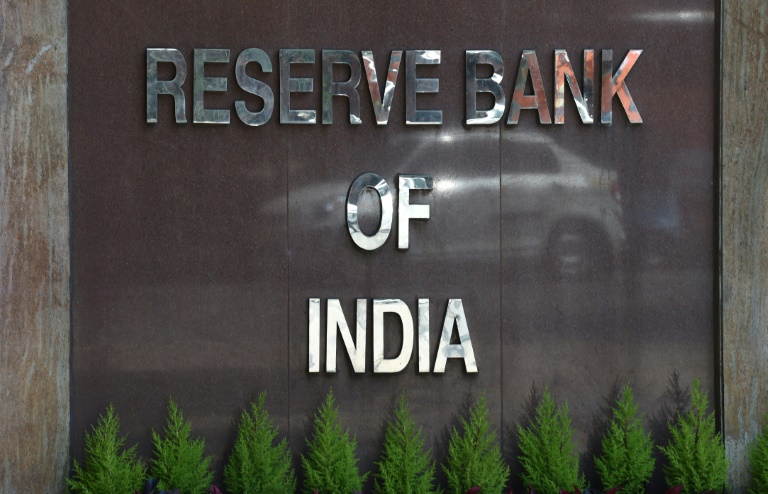
The Reserve Bank of India (RBI) raised its key lending rate by 50 basis points to 5.40 percent — a level last seen in August 2019 — three months after kicking off a monetary tightening cycle in May.

“Successive shocks to the global economy are taking their toll,” RBI governor Shaktikanta Das said in a televised address, pointing to surging inflation and lower global growth.

“Disquietingly, globalisation of inflation is coinciding with de-globalisation of trade. The pandemic and the war have ignited tendencies towards greater fragmentation.”

India bounced back strongly from the coronavirus pandemic with one of the world’s fastest growth rates but is now grappling with rising costs as commodity prices remain elevated.

The International Monetary Fund last week slashed India’s growth outlook for the ongoing financial year ending March 2023 to 7.4 percent from the 8.2 percent forecast in April.

A broad dollar rally in recent months has contributed to the Indian rupee depreciating sharply to below 80, its lowest level against the greenback on record.

Das said the rupee has fared “much better” than other emerging market currencies and “moved in a relatively orderly fashion, depreciating 4.7 percent against the US dollar” since April 1.

He added that the Indian economy was “holding steady and progressing in an ocean of turbulence and uncertainty”.

India’s merchandise trade deficit widened to a record $31 billion in July, compared to $10.6 billion in the same month last year, provisional data released Tuesday showed.

Imports were more than twice as high as exports, led by petroleum products and coal.

India imports more than 80 percent of its crude oil needs and the country’s 1.4 billion people have been hit with rising petrol costs.

Consumer inflation has consistently overshot the central bank’s two-to-six percent target range in the first six months of the year, hitting an eight-year high of 7.79 percent in April, before cooling to 7.01 percent in June.

The RBI retained its growth forecast at 7.2 percent for the 2022-23 financial year and retained its inflation forecast at 6.7 percent.

Aggressive rate hikes by the US Federal Reserve have further exacerbated outflows, with foreign investors withdrawing a net $30 billion from debt and equity in the first half of 2022.

India’s benchmark Sensex index erased early losses to trade 0.56 percent higher on Friday following the interest rate decision.

Close Bitnami banner
Bitnami