AFP

Lady Gaga dog robber sentenced to four years in US jail

A California court on Wednesday sentenced one of three men charged in the armed robbery of Lady Gaga’s dog walker, in which the singer’s French bulldogs were stolen, to four years in prison.

Jaylin Keyshawn White admitted to being part of a gang that shot Ryan Fischer as he exercised the three prize pets in Hollywood in February 2021.

At a court hearing in Los Angeles on Wednesday, White, now 20, pleaded guilty to second-degree robbery, and received a four-year prison sentence.

Surveillance footage from the scene of the attack shows a car stopping near Fischer and two people jumping out.

One demands that Fischer “give it up” before a struggle, in which a gunshot is heard, and the dog walker falls to the ground, screaming.

The attackers each grab one dog — Koji and Gustav — and leave Fischer shouting for help.

The third dog — Miss Asia — ran back to the dog walker after the robbers drove away.

The robbery led the “Poker face” singer to offer a $500,000 reward for the return of the animals, whose theft highlighted a growing trend targeting the valuable breed.

White had been charged in April 2021 along with James Howard Jackson, now 19, and Lafayette Shon Whaley, now 28.

The woman who police said handed in the dogs in response to the reward, has been charged with being an accessory after the fact and with receiving stolen goods.

The alleged gunman, Jackson, was mistakenly released from custody earlier this year after what the US Marshals Service described as a “clerical error”.

They have offered a reward of up to $5,000 for information leading to his arrest, saying that he should be considered “armed and dangerous.”

Fischer sustained chest injuries in the attack, and said on Instagram a month later he had suffered a collapsed lung.

Los Angeles police said at the time of the robbery they did not believe the dogs had been targeted because of their owner, but because of the value of the breed on the black market.

Small and friendly — and thus easy to grab — French bulldogs do not have large litters.

Their relative scarcity, and their association with stars such as Lady Gaga, Reese Witherspoon, Hugh Jackman, Chrissy Teigen, Leonardo DiCaprio, and Madonna gives them added cache, and means they can change hands for thousands of dollars.

Brazil hikes interest rate, signals may tighten further

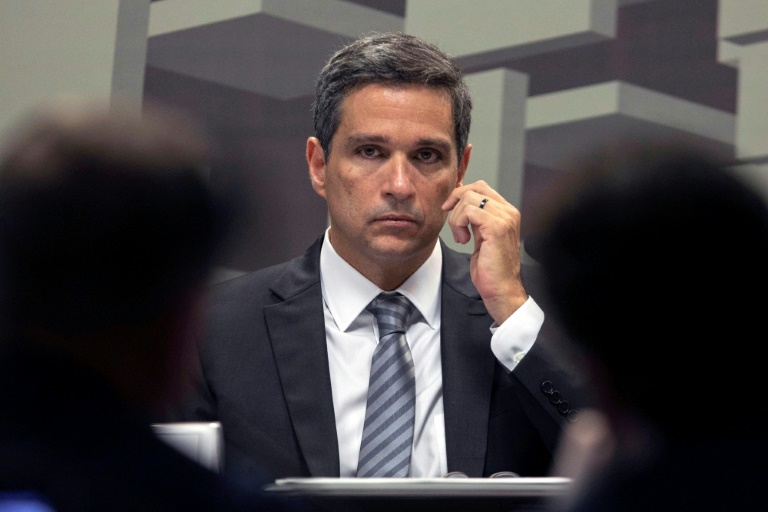
Brazil’s central bank raised its benchmark interest rate for the 12th straight time Wednesday, citing an “adverse and volatile” global economy, and indicated its tightening cycle, one of the world’s most aggressive, may not be over.

The bank’s monetary policy committee raised the benchmark Selic rate by half a percentage point, to 13.75 percent, in line with market expectations.

And though many analysts had forecast Brazil’s hawkish rate hikes would stop there, the bank said stubbornly high inflation meant more could be in store.

“The committee will evaluate the need for a residual adjustment of lesser magnitude at its next meeting” from September 20 to 21, it said in a statement.

“The external environment remains adverse and volatile, with larger downward revisions of the global economic growth outlook in an inflationary environment that is still under pressure,” it added.

“The uncertainty of the current economic situation, both domestic and global… demands extra caution.”

The decision was unanimous by the committee’s nine members, it said.

The key interest rate now stands at its highest level since January 2017.

– End near? –

Haunted by a history of hyperinflation, Brazil — Latin America’s biggest economy — reacted fast and aggressively to the global price surges unleashed by the coronavirus pandemic and then Russia’s invasion of Ukraine.

Since March 2021, the central bank has rapidly raised the Selic from an all-time low of two percent, which it had introduced to stimulate the pandemic-battered economy.

That included three whopping hikes of 1.5 percentage points from October 2021 to February 2022, followed by two one-percentage-point increases.

Now, Brazil is weighing when to bring its hawkish cycle to an end, just as policy makers in other major economies shift their monetary tightening into high gear.

The US Federal Reserve hiked its benchmark rate by 0.75 point last week, the fourth straight increase. The week before, the European Central Bank raised its key rate by 0.5 point, the first increase since 2011.

Annual inflation remains high in Brazil, at 11.89 percent in June — way above the central bank’s target of 3.5 percent.

But analysts polled by the central bank forecast the inflation rate will fall to 7.15 percent by the end of the year.

The same poll found analysts expect the central bank’s tightening cycle is nearly over: they gave an average forecast of 13.75 percent for the Selic rate at year’s end.

– Business world criticizes –

Even as the bank’s policy makers try to slow runaway prices by hiking interest rates, they are wary of tipping the economy into a recession by slamming the brakes on too hard.

The central bank is facing calls to ease up on its rate increases.

“Since December, the real interest rate has been at a level that is inhibiting economic activity,” the chief economic analyst at Brazil’s powerful National Confederation of Industry (CNI), Marcelo Azevedo, said in a recent statement.

The CNI called Wednesday’s hike “wrong.”

A 0.4-percent month-on-month fall in Brazilian industrial production in June and other “softer surveys” last month indicate the economy is losing steam, said William Jackson, chief emerging markets economist at consulting firm Capital Economics.

Analysts polled by the central bank forecast Brazil’s GDP growth will come in at 1.97 percent for the year, after an expansion of 4.6 percent last year and a contraction of 3.9 percent in pandemic-stricken 2020.

Brazil’s economy grew by one percent in the first quarter, but experts warn the second half of the year looks bleaker.

With soaring prices for food and fuel hurting Brazilian families, the weak economy has become a major liability for President Jair Bolsonaro as he campaigns for reelection this October.

The far-right incumbent trails leftist ex-president Luiz Inacio Lula da Silva by 47 percent to 29 percent, according to the latest poll from the Datafolha institute.

Jury mulls damages for US conspiracy theorist who called Sandy Hook 'hoax'

A Texas jury on Wednesday began weighing how much in damages a prominent far-right US conspiracy theorist should pay for claiming that the massacre of 20 children and six teachers at Sandy Hook Elementary School was a “hoax.”

Alex Jones, founder of the website InfoWars and host of a popular radio show, has been found liable in multiple defamation lawsuits brought by parents of the victims of the 2012 shooting in Newtown, Connecticut.

The 48-year-old Jones claimed for years on his show that the Sandy Hook shooting was “staged” by gun control activists and the parents were “crisis actors,” but has since acknowledged it was “100 percent real.”

A 12-person jury in Austin, Texas, heard closing arguments on Tuesday in the first of the multiple defamation cases against Jones to reach the damages phase.

The case was brought by Neil Heslin and Scarlett Lewis, the parents of six-year-old Jesse Lewis, who was among the children slain by a 20-year-old gunman in the worst-ever school shooting in the United States.

Heslin and Lewis delivered emotional testimony about the impact of Jones’ false claims on their lives, including harassment, online abuse and death threats.

They are seeking compensatory damages of at least $150 million from Jones, an ally and supporter of former president Donald Trump, who appeared frequently on his radio show during his 2016 presidential campaign.

“We’re here to make sure Alex Jones and his company pays for the reckless lies that they told,” Kyle Farrar, an attorney for the parents, said in his closing argument.

Jesse’s parents have been the victims of a “continuous year after year campaign of defamation and intentional infliction of emotional distress,” Farrar said.

Jones spread misinformation and was “profiting off of their pain,” the lawyer said, reaping tens of millions of dollars from online traffic and sales of InfoWars-branded products.

“He spews hate, that’s what gets people riled up,” Farrar said.

F. Andino Reynal, a lawyer for Jones, told the jury that the InfoWars founder should not be held responsible for any of the actions of his listeners.

“Alex ran with a story and he made a mistake,” Reynal said. “He trusted the wrong people. And he ran with a story that ended up being false.”

InfoWars declared bankruptcy in April and another company owned by Jones, Free Speech Systems, filed for bankruptcy last week.

McDonald's worker shot in New York over cold fries

A man in New York has been charged with attempted murder after allegedly shooting a McDonald’s worker for serving his mother cold french fries, police and reports said.

Multiple gunshot incidents occur daily in the Big Apple.

In this latest case, Michael Morgan, 20, shot the 23-year-old McDonald’s employee in Brooklyn on Monday evening, according to police and the New York Post.

The victim is in critical condition in hospital.

The incident started as an argument between a 40-year-old woman and the victim, whom she accused of having given her cold fries, the tabloid said.

The woman made a video call to her son Morgan, who burst into the fast-food chain and argued with the employee before the two of them went outside.

Morgan then shot the employee, according to a police source cited by the Post. 

The accused has been arrested several times for various crimes, the tabloid said.

Morgan was also slapped with a charge of criminal possession of a loaded firearm, a New York Police Department spokesperson told AFP.

The number of shooting victims in New York is down almost nine percent compared to last year, falling to 988 from 1,051, according to weekly statistics from the NYPD.

There are almost 120 guns for every 100 people in the United States, according to the Small Arms Survey group.

More than 45,000 people were killed in 2020 by firearms, half of them by suicide, according to the Gun Violence Archive. 

Oil prices tumble on demand worries as global stocks mostly rise

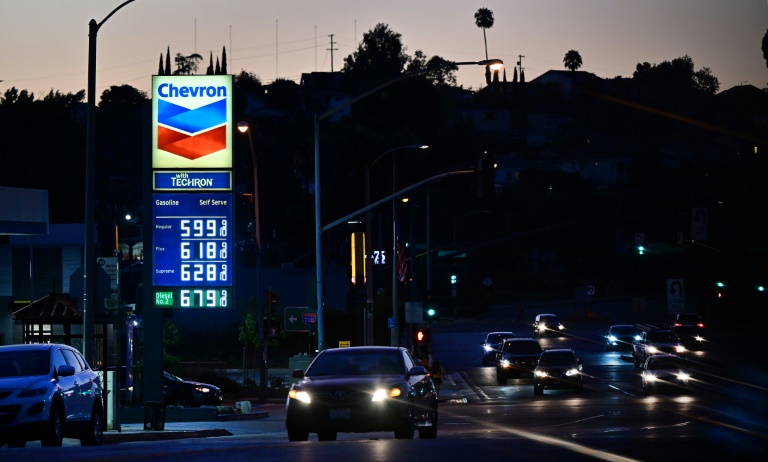
Oil prices tumbled on demand worries Wednesday while global equities mostly rose as US-China tensions receded somewhat after House Speaker Nancy Pelosi’s trip to Taiwan.

The drop in oil prices came despite a move by the OPEC+ oil cartel, led by Saudi Arabia and Russia, to undertake just a small increase in production.

The OPEC+ decision to raise production by 100,000 barrels per day for September is likely to disappoint US President Joe Biden, who travelled to Saudi Arabia last month to lobby for help to tame soaring energy prices. The increase is much smaller than other recent boosts by the exporter group.

But oil prices finished about four percent lower following US energy data that showed unexpectedly weak gasoline demand.

Gasoline demand last week was 8.5 million barrels per day, down almost 13 percent from the year-ago period, which is part of the peak summer driving season.

In equity markets, Wall Street stocks bounced after two down sessions following a report from the Institute for Supply Management that showed surprising strength in the massive US services sector, thanks to a jump in business activity and new orders even as some companies expressed recession fears.

A note from Oxford Economics described the ISM data as “encouraging,” but pointed to lingering questions about the direction of the economy.

“The recovery’s best days are clearly in the rearview mirror, but this doesn’t mean a downturn has begun,” Oxford said. “We think fundamentals are strong enough to prevent a recession this year, though the window to achieving a softish landing is narrowing.”

All three US indices won solid gains, with the S&P 500 finishing 1.6 percent higher.

Earlier, European markets closed higher, with Paris and Frankfurt both up around one percent and London’s FTSE 100 rising by 0.5 percent.

Analysts pointed to relief that there hadn’t been greater fallout from Pelosi’s provocative visit to Taiwan, which China considers a part of its territory.

“What China didn’t do has seemingly been the focal point,” said Patrick O’Hare, at Briefing.com.

“China didn’t take any action that would necessitate a military response from the US. That understanding has sparked a measure of relief for investors as Speaker Pelosi heads to South Korea,” he said.

The highest profile trip to Taiwan in 25 years by a US politician was met with condemnation from Beijing, which vowed “punishment.”

– Key figures at around 2030 GMT –

New York – Dow: UP 1.3 percent at 32,812.50 (close)

New York – S&P 500: UP 1.6 percent at 4,155.17 (close)

New York – Nasdaq: UP 2.6 percent at 12,668.16 (close)

London – FTSE 100: UP 0.5 percent at 7,445.68 (close)

Frankfurt – DAX: UP 1.0 percent at 13,587.56 (close)

Paris – CAC 40: UP 1.0 percent at 6,472.06 (close)

EURO STOXX 50: UP 1.3 percent at 3,732.54 (close)

Tokyo – Nikkei 225: UP 0.5 percent at 27,741.90 (close)

Hong Kong – Hang Seng Index: UP 0.4 percent at 19,767.09 (close)

Shanghai – Composite: DOWN 0.7 percent at 3,163.67 (close)

Dollar/yen: UP at 133.92 yen from 133.17 yen Tuesday

Euro/dollar: UP at $1.0172 from $1.0166

Pound/dollar: DOWN at $1.2149 from $1.2170

Euro/pound: UP at 83.71 pence from 83.54 pence

Brent North Sea crude: DOWN 3.7 percent at $96.78 per barrel

West Texas Intermediate: DOWN 4.0 percent at $90.66 per barrel

burs-jmb/bfm

Oil prices tumble on demand worries as global stocks mostly rise

Oil prices tumbled on demand worries Wednesday while global equities mostly rose as US-China tensions receded somewhat after House Speaker Nancy Pelosi’s trip to Taiwan.

The drop in oil prices came despite a move by the OPEC+ oil cartel, led by Saudi Arabia and Russia, to undertake just a small increase in production.

The OPEC+ decision to raise production by 100,000 barrels per day for September is likely to disappoint US President Joe Biden, who travelled to Saudi Arabia last month to lobby for help to tame soaring energy prices. The increase is much smaller than other recent boosts by the exporter group.

But oil prices finished about four percent lower following US energy data that showed unexpectedly weak gasoline demand.

Gasoline demand last week was 8.5 million barrels per day, down almost 13 percent from the year-ago period, which is part of the peak summer driving season.

In equity markets, Wall Street stocks bounced after two down sessions following a report from the Institute for Supply Management that showed surprising strength in the massive US services sector, thanks to a jump in business activity and new orders even as some companies expressed recession fears.

A note from Oxford Economics described the ISM data as “encouraging,” but pointed to lingering questions about the direction of the economy.

“The recovery’s best days are clearly in the rearview mirror, but this doesn’t mean a downturn has begun,” Oxford said. “We think fundamentals are strong enough to prevent a recession this year, though the window to achieving a softish landing is narrowing.”

All three US indices won solid gains, with the S&P 500 finishing 1.6 percent higher.

Earlier, European markets closed higher, with Paris and Frankfurt both up around one percent and London’s FTSE 100 rising by 0.5 percent.

Analysts pointed to relief that there hadn’t been greater fallout from Pelosi’s provocative visit to Taiwan, which China considers a part of its territory.

“What China didn’t do has seemingly been the focal point,” said Patrick O’Hare, at Briefing.com.

“China didn’t take any action that would necessitate a military response from the US. That understanding has sparked a measure of relief for investors as Speaker Pelosi heads to South Korea,” he said.

The highest profile trip to Taiwan in 25 years by a US politician was met with condemnation from Beijing, which vowed “punishment.”

– Key figures at around 2030 GMT –

New York – Dow: UP 1.3 percent at 32,812.50 (close)

New York – S&P 500: UP 1.6 percent at 4,155.17 (close)

New York – Nasdaq: UP 2.6 percent at 12,668.16 (close)

London – FTSE 100: UP 0.5 percent at 7,445.68 (close)

Frankfurt – DAX: UP 1.0 percent at 13,587.56 (close)

Paris – CAC 40: UP 1.0 percent at 6,472.06 (close)

EURO STOXX 50: UP 1.3 percent at 3,732.54 (close)

Tokyo – Nikkei 225: UP 0.5 percent at 27,741.90 (close)

Hong Kong – Hang Seng Index: UP 0.4 percent at 19,767.09 (close)

Shanghai – Composite: DOWN 0.7 percent at 3,163.67 (close)

Dollar/yen: UP at 133.92 yen from 133.17 yen Tuesday

Euro/dollar: UP at $1.0172 from $1.0166

Pound/dollar: DOWN at $1.2149 from $1.2170

Euro/pound: UP at 83.71 pence from 83.54 pence

Brent North Sea crude: DOWN 3.7 percent at $96.78 per barrel

West Texas Intermediate: DOWN 4.0 percent at $90.66 per barrel

burs-jmb/bfm

Driest July in memory imperils Europe's crops

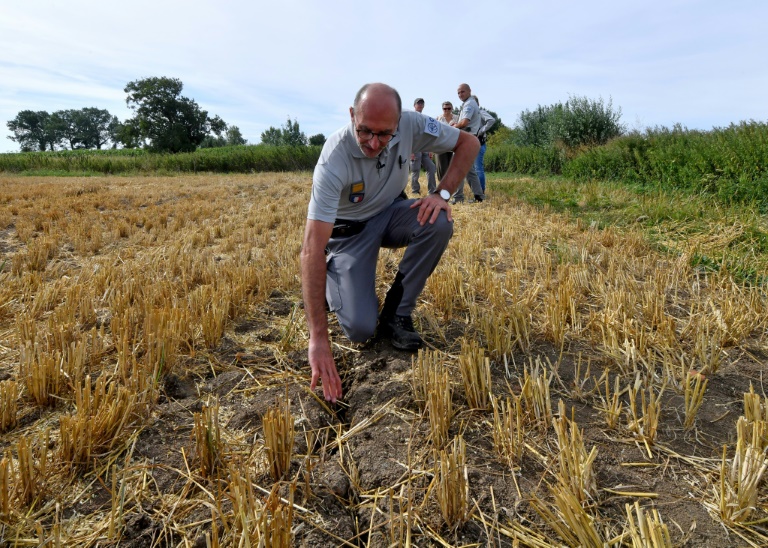
As much of Europe bakes in a third heatwave since June, fears are growing that extreme drought driven by climate change in the continent’s breadbasket nations will dent stable crop yields and deepen the cost-of-living crisis. 

The European Commission on Wednesday urged EU member states to re-use treated urban wastewater as irrigation on the continent’s parched farms, after France and parts of England saw their driest July on record.

In France, where an intense drought has hammered farmers and prompted widespread limits on freshwater use, there was just 9.7 millimetres (0.38 inches) of rain last month, Meteo-France said.

That was 84 percent down on the average levels seen for July between 1991 and 2022, making it the driest month since March 1961, the agency added.

The southwestern region of Gironde, already devastated by last month’s wildfires, saw a maximum temperature of 39.6 degrees Celsius (103 degrees Fahrenheit) on Wednesday, with Meteo-France predicting a peak on Thursday.

Animals, including lions and monkeys, evacuated two weeks ago due to the blazes there returned to their zoo on Wednesday.

Farmers nationwide are reporting difficulties in feeding livestock because of parched grasslands, while irrigation has been banned in large areas of the northwest and southeast due to freshwater shortages.

Environment Minister Christophe Bechu said July’s rainfall represented “just 12 percent of what’s needed”. 

France is the fourth-largest exporter of wheat and among the top five exporters of maize globally. Poor harvests due to drought may heap further pressure on grain supplies after Russia’s invasion of Ukraine caused global shockwaves. 

“Our food system has been under stress for a while, and with the supply issues from Ukraine, that has only gotten worse,” said Shouro Dasgupta, environmental economist at the Euro-Mediterranean Center on Climate Change.

“These heatwaves are on top of droughts and will see crops wither faster.”

Dasgupta said that extreme heat driven by climate change is also contributing to food price inflation for consumers and harsher conditions for producers. 

“Droughts and heatwaves impact people’s livelihoods. People will be less able to afford food,” he told AFP. 

“And during heatwaves outdoor workers are only able to work fewer hours, which brings cascading impacts for supply.”

– ‘Food systems not working’ –

Britain’s Met Office this week said much of southern and eastern England had their driest July on record. 

Some water providers have already announced restrictions affecting millions of people, and fruit and vegetable producers have announced several crop losses such as beans and berries.

Britain’s inflation surged to a 40-year high in June on rising fuel and food prices.

Elizabeth Robinson, director of the London School of Economics’ Grantham Research Institute on Climate Change and the Environment, said spiralling food costs — worsened by heat-induced losses in Europe and Britain — were a sign that “food systems aren’t working for people.”

“There are some long-term, difficult conversations that need to be had, particularly about food waste and the diversion of grains away from food for people to feed animals,” she told AFP.

In Spain, already parched under a prolonged hot spell, temperatures will breach 40C in several areas this week. 

The heat is worsening water shortages that have dogged Spanish agriculture since last winter, with local restrictions on water usage in the most affected regions. 

The government said this week that Spain’s reservoirs are at just 40.4 percent capacity.

Juan Carlos Hervas, from the COAG farmers’ union, told AFP that Spain’s olive harvest from unirrigated land will come in at less than 20 percent of the average of the last five years. 

Spain supplies nearly half the world’s olive oil.  

– ‘Worst drought this century’ –

Portugal, where temperatures yet again breached the 40C mark this week, is experiencing “the worst drought this century”, Environment Minister Jose Duarte Cordeiro warned last month.

Portugal along with Poland has asked its citizens to cut down on water use to ease the pressure.

“Water authorities across Europe are unprepared for what scientists have been saying for three decades,” said Dasgupta.

The European Commission in an updated assessment last month found that nearly half — 44 percent — of the EU and Britain was currently experiencing “warning” levels of drought. 

It warned that exceptionally low soil moisture levels meant several countries, including France, Romania, Spain, Portugal and Italy will experience reduced crop yield in 2022. 

“The unfavourable forecasts for the coming months may compromise the water supply and will likely keep the competition for this resource high,” it said. 

A separate EU bulletin, also last month, said that EU yields of soybean, sunflowers and maize were already 9 percent below average. 

On Wednesday Virginijus Sinkevicius, EU commissioner for the environment, fisheries and the oceans, urged EU nations to re-use more of its wastewater.

“We need to stop wasting water and use this resource more efficiently to adapt to the changing climate and ensure the security and sustainability of our agricultural supply,” he said.


Deja vu as volcano erupts again near Iceland capital

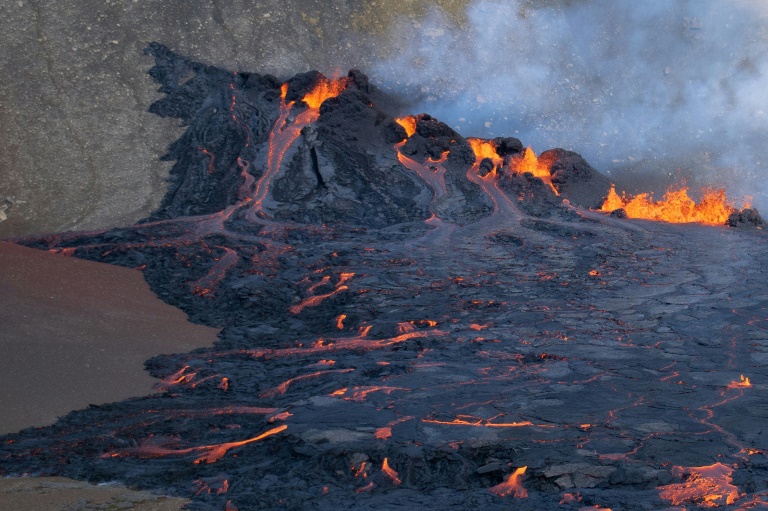
A volcano erupted in Iceland on Wednesday near the capital Reykjavik, spewing red hot lava and plumes of smoke out of a fissure in an uninhabited valley after several days of intense seismic activity.

The eruption was around 40 kilometres (25 miles) from Reykjavik, near the site of the Mount Fagradalsfjall volcano in southwestern Iceland that erupted for six months in March-September 2021, mesmerising tourists and spectators who flocked to the scene.

On Wednesday, a strip of glowing red lava could be seen gushing from the ground, spouting 20-30 metres (65-100 feet) into the air before spreading into a blanket of smouldering black rock.

As it cooled, blueish smoke rose up from the hilly landscape on the Reykjanes peninsula. 

About 100 curious onlookers quickly made their way to the scene, bewitched by the sight of the bubbling lava and the intense roar that could be heard rising up from the ground as the lava erupted, an AFP reporter at the scene said.

The Icelandic Meteorological Office (IMO), which monitors seismic activity, estimated the size of the fissure at about 300 metres. It said the eruption started in the Meradalir valley, less than one kilometre (0.6 miles) from the scene of last year’s eruption.

Wednesday’s eruption came after a period of intense seismic activity, with about 10,000 earthquakes detected since Saturday, including two with a magnitude of at least 5.0.

While there was no ash plume, the IMO said it was “possible that pollution can be detected due to the gas release”.

Gases from a volcanic eruption — especially sulphur dioxide — can be elevated in the immediate vicinity, and may pose a danger to health and even be fatal.

Gas pollution can also be carried by the wind.

“Risk to populated areas and critical infrastructure is considered very low and there have been no disruptions to flights”, the Icelandic foreign ministry said on Twitter.

More than an hour after the start of the eruption, a commercial passenger jet could be seen flying over the eruption site at low altitude heading for Reykjavik’s main airport Keflavik.

– Tourist magnet –

Last year’s eruption saw more than 140 million cubic metres of magma spilled into the area over a period of six months before it was officially declared over after nine months, in December 2021.

Relatively easy to access, the site became a major tourist attraction, drawing more than 430,000 visitors, according to the most recent figures from the Icelandic Tourist Board.

Wednesday’s eruption was believed to be five to 10 times bigger than last year’s eruption, with about 20-50 cubic metres of magma spewing out per second, Magnus Tuma Gudmundsson, professor of geophysics at the University of Iceland, told Icelandic media.

On Wednesday, rescue teams and police rushed to the scene to assess the danger and possible gas contamination, and discouraged people from visiting.

Iceland President Gudni Johannesson, who happened to be driving near the scene of Wednesday’s eruption when it occurred, echoed that appeal.

“I just want people to be careful and know more before they go there into the unknown. If this eruption will be anything like the last one, there will be enough time, so there is no need to rush,” he told the English-language media Iceland Monitor.

– Awakening –

Mount Fagradalsfjall belongs to the Krysuvik volcanic system on the Reykjanes peninsula in southwestern Iceland.

Known as the land of fire and ice, Iceland has 32 volcanic systems currently considered active, the highest number in Europe. The country has had an eruption every five years on average.

Wednesday’s eruption was the country’s seventh in 21 years.

However, until last year, the Reykjanes peninsula had not experienced an eruption since the 13th century, when a volcano erupted for 30 years from 1210-1240.

Geophysicists have said that the 2021 eruption could signal the beginning of a new period of eruptions lasting centuries.

A vast island near the Arctic Circle, Iceland straddles the Mid-Atlantic Ridge, a crack on the ocean floor separating the Eurasian and North American tectonic plates.

The shifting of these plates is in part responsible for Iceland’s intense volcanic activity.

A real treat: Canadian candy company seeks professional taster

The chance to earn an annual salary of Can$100,000 (US$78,000) by tasting more than 3,500 candies, all from the comfort of your couch, sounds like a pretty sweet deal.

Candy Funhouse, a Canadian online candy shop, is looking for a “Chief Candy Officer” to lead a team of product taste testers.

“Early last year we were looking for Candyologists, our original taste testers and we currently have three on board,” Funhouse spokeswoman Vanessa Janakijevski-Rebelo told AFP.

“Now we are on the hunt for our Chief Candy Officer who will guide our Candyologists down the sweetest path possible!”

Responsibilities range from approving new products to organizing staff meetings or acting as chief taster, as well as “all things fun.”

The offer is open to anyone aged five and up living in North America.

The main requirements include having “golden taste buds” and an “obvious sweet tooth,” according to the job listing on LinkedIn.

Candy Funhouse said it has received more than 100,000 candidates in two weeks.

On social media, the posting is a big hit with adults and children alike. One Twitter user said that his eight-year-old daughter had made a LinkedIn profile just to apply.

“It’s official @candyfunhouseca, she has applied. Thank you for helping her learn about hard work and the importance of a strong resume, even if she’s only 8,” Matthew Crooks wrote on his account.

Once chosen, the lucky new hire will undergo “extensive palate training.”

Job benefits include, naturally, “an extensive dental plan.”

A real treat: Canadian candy company seeks professional taster

The chance to earn an annual salary of Can$100,000 (US$78,000) by tasting more than 3,500 candies, all from the comfort of your couch, sounds like a pretty sweet deal.

Candy Funhouse, a Canadian online candy shop, is looking for a “Chief Candy Officer” to lead a team of product taste testers.

“Early last year we were looking for Candyologists, our original taste testers and we currently have three on board,” Funhouse spokeswoman Vanessa Janakijevski-Rebelo told AFP.

“Now we are on the hunt for our Chief Candy Officer who will guide our Candyologists down the sweetest path possible!”

Responsibilities range from approving new products to organizing staff meetings or acting as chief taster, as well as “all things fun.”

The offer is open to anyone aged five and up living in North America.

The main requirements include having “golden taste buds” and an “obvious sweet tooth,” according to the job listing on LinkedIn.

Candy Funhouse said it has received more than 100,000 candidates in two weeks.

On social media, the posting is a big hit with adults and children alike. One Twitter user said that his eight-year-old daughter had made a LinkedIn profile just to apply.

“It’s official @candyfunhouseca, she has applied. Thank you for helping her learn about hard work and the importance of a strong resume, even if she’s only 8,” Matthew Crooks wrote on his account.

Once chosen, the lucky new hire will undergo “extensive palate training.”

Job benefits include, naturally, “an extensive dental plan.”

Close Bitnami banner
Bitnami