AFP

Strong N.America sales boost Starbucks results despite China hit

Starbucks reported lower quarterly profits Tuesday despite higher sales, as strong demand and price increases in North America mitigated the hit from Chinese lockdowns.

Executives from the US coffee giant pointed to torrid growth in its home market that helped produce record quarterly revenues, even as operations in its biggest Chinese markets were halted for much of the quarter.

The contrasting performance was starkly apparent in the numbers, with North American comparable sales jumping nine percent, while China’s slumped 44 percent.

Profit for the quarter ending June 27 was $912.9 million, down 21 percent from the year-ago period.

Meanwhile, revenues jumped nine percent to $8.2 billion.

The company’s profit margins in North America declined on higher commodity and labor costs, a trend partially offset by higher prices.

“Starbucks continued to create velocity without any indication of trading down,” interim Starbucks CEO Howard Schultz said Tuesday of consumers’ willingness to absorb price increases.

That boosts confidence in the chain’s ability to weather any downturn, including one that is potentially “significant,” Schultz said.

Starbucks has previously announced plans to spend an additional $1 billion in 2022 on wage increases, training and other store investments as it confronts a unionization campaign that has surfaced at more than 200 US locations.

During a conference call with analysts, Schultz said the company plans more changes following “listening” sessions with employees. 

This includes a program that could allow customers to tip Starbucks workers through the smartphone app.

Schultz, who recently pushed back his departure date to March 2023 from fall 2022, said the company had narrowed down the list of CEO candidates to a “select few” as it moves closer to naming a replacement.

He promised to stay on “as long as necessary to ensure a soft landing” for his successor.

Shares rose 1.7 percent to $85.11 in after-hours trading.

Percent of Americans without health coverage hits new low

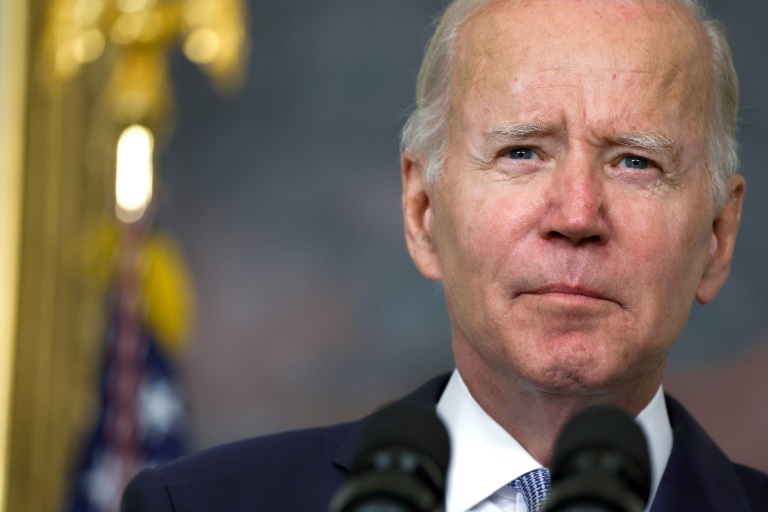
The proportion of the US population with no health insurance in the United States reached a new low in early 2022 at eight percent, President Joe Biden’s administration said Tuesday. 

The rate of uninsured people began to fall sharply after the Affordable Care Act came into effect in 2014. The ambitious reform of medical insurance, better known as “Obamacare,” was the flagship law of former president Barack Obama, with whom Biden served as vice president. 

Between 2018 and 2019, however, the number of uninsured rebounded before falling again. 

The Department of Health said that, based on a household survey it carried out, 5.2 million people have gained medical insurance since early 2021, when Biden came to office, a figure that includes a million children.

However, around 26 million people remain without health coverage in the country.

“No one should worry about whether they can pay for their doctor or choose between paying rent and filing a prescription,” Biden said in a statement.

“Today, we are closer than ever to making that principle a reality,” he added.

The president attributed the rise in the number of medically insured Americans to improvements contained in the American Rescue Plan, the emergency aid plan adopted at the start of his term that contained measures facilitating access to health insurance through grants to help families pay for medical coverage.

“Pretty cool, huh, @BarackObama?” Biden said on Twitter.

“You bet, Joe,” the former president responded.

The two men called on Congress to pass the Inflation Reduction Act, a law largely focused on clean energy and climate but also containing measures to secure subsidies for medical coverage and reduce drug prices.

Uber reports loss, but beats income expectations

Uber reported better-than-expected revenue on Tuesday, fueled by strong demand for its ride-hailing and food delivery services that have drawn a surge in drivers looking to offset inflation’s bite.

Revenue more than doubled to $8.1 billion in the three months through June, a 105 percent increase, at a time when many tech companies are struggling to navigate global economic turbulence.

Still, the firm posted a net loss of $2.6 billion, but investors shrugged it off and shares closed up about almost 19 percent on Wall Street.

Uber primarily attributed the loss to the falling value of its investments in financially strapped companies such as Singapore’s VTC Grab, US self-driving vehicle start-up Aurora and Indian food delivery service Zomato.

The ride hailing giant also reported it now has nearly five million drivers and couriers on its platform, a 31 percent increase from last year. 

Some 70 percent of drivers coming to the platform said inflation played a part in their decision, as people look for additional income to offset price increases, the firm reported.

“We saw an acceleration in both active and new driver growth in the quarter,” Uber CEO Dara Khosrowshahi said. “Against the backdrop of elevated gas prices globally, this is a resounding endorsement.”

– Bumpy earnings season –

Uber also notched gains in monthly active platform consumers, gross bookings and trips compared with a year ago, reflecting higher demand but also a higher number of drivers for its signature ride service and food delivery operations.

“We continue to benefit from an… increase in the on-demand transportation of people and things,” Khosrowshahi said. “We intend to continue capitalizing on these growth tailwinds.”

Analysts noted that the relatively robust earnings were well above expectations, a relief during an earnings season buffeted by inflation, economic uncertainty and the ongoing impact of the coronavirus pandemic.

“Consumers are still moving to the Uber platform especially as travel, shifting to the office, and other post-pandemic trends take hold globally,” wrote analyst Dan Ives.

The California-based firm posted $1.8 billion in revenue from its freight operations, and said income figures got a boost from a change in how it accounts for its rides business in Britain. 

The latest earnings season has been marked both by investors being relieved when results weren’t as bad as feared, but also backing away from companies with less clear futures.

Facebook owner Meta and messaging app Snapchat’s parent company both saw shares fall after results showed their ad-driven models were vulnerable to the current economic uncertainty.

But giants like Apple and Amazon reassured markets last week with better than expected results on strong demand and sales.

Uber reports loss, but beats income expectations

Uber reported better-than-expected revenue on Tuesday, fueled by strong demand for its ride-hailing and food delivery services that have drawn a surge in drivers looking to offset inflation’s bite.

Revenue more than doubled to $8.1 billion in the three months through June, a 105 percent increase, at a time when many tech companies are struggling to navigate global economic turbulence.

Still, the firm posted a net loss of $2.6 billion, but investors shrugged it off and shares closed up about almost 19 percent on Wall Street.

Uber primarily attributed the loss to the falling value of its investments in financially strapped companies such as Singapore’s VTC Grab, US self-driving vehicle start-up Aurora and Indian food delivery service Zomato.

The ride hailing giant also reported it now has nearly five million drivers and couriers on its platform, a 31 percent increase from last year. 

Some 70 percent of drivers coming to the platform said inflation played a part in their decision, as people look for additional income to offset price increases, the firm reported.

“We saw an acceleration in both active and new driver growth in the quarter,” Uber CEO Dara Khosrowshahi said. “Against the backdrop of elevated gas prices globally, this is a resounding endorsement.”

– Bumpy earnings season –

Uber also notched gains in monthly active platform consumers, gross bookings and trips compared with a year ago, reflecting higher demand but also a higher number of drivers for its signature ride service and food delivery operations.

“We continue to benefit from an… increase in the on-demand transportation of people and things,” Khosrowshahi said. “We intend to continue capitalizing on these growth tailwinds.”

Analysts noted that the relatively robust earnings were well above expectations, a relief during an earnings season buffeted by inflation, economic uncertainty and the ongoing impact of the coronavirus pandemic.

“Consumers are still moving to the Uber platform especially as travel, shifting to the office, and other post-pandemic trends take hold globally,” wrote analyst Dan Ives.

The California-based firm posted $1.8 billion in revenue from its freight operations, and said income figures got a boost from a change in how it accounts for its rides business in Britain. 

The latest earnings season has been marked both by investors being relieved when results weren’t as bad as feared, but also backing away from companies with less clear futures.

Facebook owner Meta and messaging app Snapchat’s parent company both saw shares fall after results showed their ad-driven models were vulnerable to the current economic uncertainty.

But giants like Apple and Amazon reassured markets last week with better than expected results on strong demand and sales.

California wildfire death toll hits four

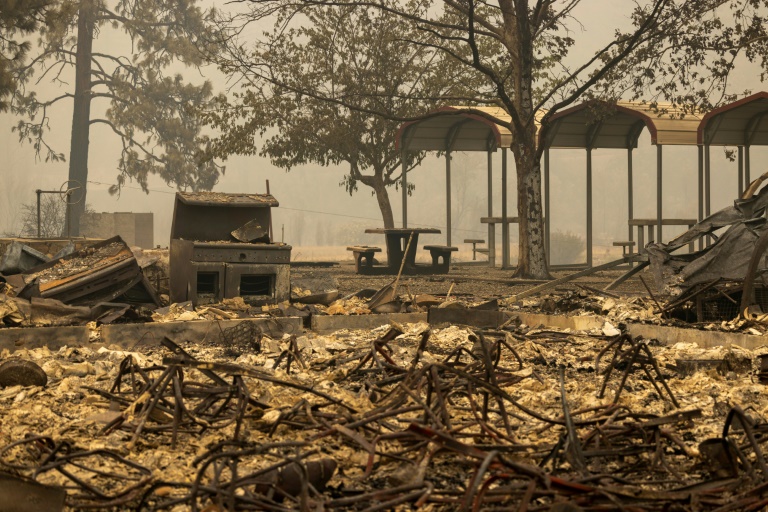
At least four people are now known to have died in a wildfire sweeping through California, authorities said Tuesday, as they warned the toll from the state’s worst blaze this year could rise further.

Rain and cooler conditions brought some relief to hundreds of firefighters battling to protect the 8,000-person town of Yreka, but the human cost of the inferno was already mounting.

“We have four fatalities confirmed, and that number could change,” Siskiyou County Sheriff’s Department spokeswoman Courtney Kreider told AFP.

Two of the dead were found in a car on Sunday, apparently caught in the flames as they tried to flee.

There were no details about the other deaths.

At least 3,000 people have been told to leave their homes in and around the town of Klamath River, with 100 structures already destroyed.

“Our goal today is to effectively communicate with people, and we’re asking them to obey the evacuation orders,” Kreider said.

“Our priority is to protect life and property.”

State fire department CalFire said better weather overnight had helped limit the spread of the so-called McKinney Fire, but vegetation remained extremely dry and vulnerable to lightning strikes.

“The continued threat of thunderstorms and the associated strong, erratic winds could result in increased fire behavior,” CalFire said.

The fire, which is burning in the Klamath National Forest near the border with Oregon, is California’s largest this year, having consumed around 56,000 acres (22,600 hectares).

Firefighters were working to contain its spread, using bulldozers to create firebreaks around Yreka.

They were also battling spot fires, which erupt as sparks shoot off from the main blaze and ignite some distance away.

Those who had fled the flames spoke of the speed with which they were spreading.

“When we left, everything was on fire,” Sherri Marchetti-Perrault told the Los Angeles Times of her home.

“It happened so fast. We left with the clothes on our back. We couldn’t breathe and we couldn’t see.”

– ‘Holding out’ – 

Some were not prepared to go until absolutely necessary.

“I’m holding out trying not to leave too soon because I’m helping out my mom,” said Rafael Franco, who lives inside the mandatory evacuation area.

“She’s not in the best physical health to get around,” Franco told AFP.

“At the last minute if I see the fire cross the ridge where we are, we are going to head out and grab what we can and get going and hope for the best.”

California, along with much of the western United States, is in the grip of its worst drought in more than 1,000 years.

The drought, exacerbated by man-made climate change, has left the countryside parched and vulnerable to naturally occurring wildfires, making the blazes hotter, faster and more destructive.

Dennis Burns, a fire behavior analyst with the California Interagency Incident Management Team, said there was a potential for thunderstorms and heavy downpours on Tuesday that could give firefighters the edge they were looking for.

“We’re not expecting any significant movement of the fire but we could still see active flaming,” he said.

“For today we have a very moist atmosphere and are expecting some severe thunderstorms.

“With the weather we have we’re pretty confident that we’re going to see some success.”

The McKinney Fire comes just days after the Oak Fire near Yosemite National Park destroyed dozens of buildings and forced thousands to evacuate.

California still has months of fire season ahead of it.

Other parts of the world have also faced intense wildfires this year, as scientists say climate change is making heatwaves more frequent and more intense, increasing the risk of fires.

Pelosi lands in Taiwan, defying China threats

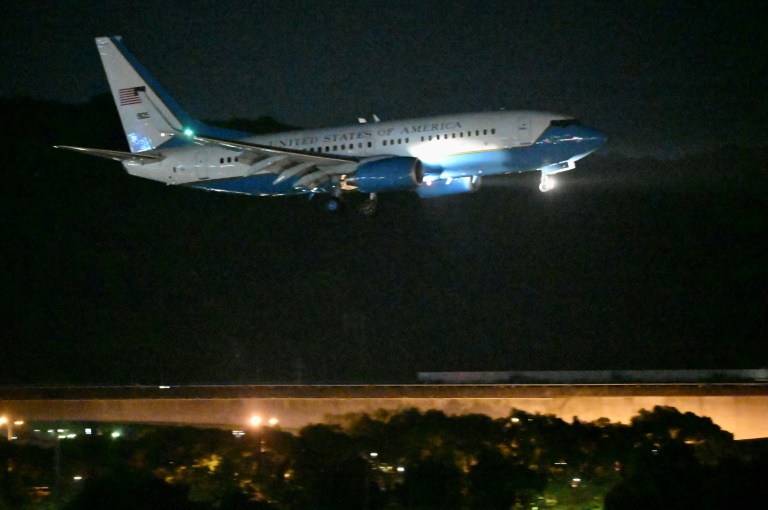
US House Speaker Nancy Pelosi landed in Taiwan late Tuesday, defying a string of increasingly stark warnings and threats from China that have sent tensions between the world’s two superpowers soaring.

Pelosi, second in line to the presidency, is the highest-profile elected US official to visit Taiwan in 25 years and Beijing has made clear that it regards her presence as a major provocation, setting the region on edge.

Live broadcasts showed the 82-year-old lawmaker, who flew on a US military aircraft, being greeted at Taipei’s Songshan Airport by foreign minister Joseph Wu.

“Our delegation’s visit to Taiwan honors America’s unwavering commitment to supporting Taiwan’s vibrant democracy,” she said in a statement upon her arrival, adding that her visit “in no way contradicts” US policy towards Taipei and Beijing. 

Taiwan said the trip displayed “rock solid” support from Washington. 

Pelosi is currently on a tour of Asia and while neither she nor her office confirmed the Taipei visit in advance, multiple US and Taiwanese media outlets reported it was on the cards — triggering days of mounting anger from Beijing. 

China’s military said it was on “high alert” and would “launch a series of targeted military actions in response” to the visit.

It promptly announced plans for a series of military exercises in waters around the island to begin on Wednesday, including “long-range live ammunition shooting” in the Taiwan Strait.

“Those who play with fire will perish by it,” Beijing’s foreign ministry added. 

Taiwan’s defence ministry said more than 21 Chinese military aircraft had flown on Tuesday into Taiwan’s air defence identification zone — an area wider than its territorial airspace that overlaps with part of China’s own air defence zone. 

– No need for ‘crisis’ –

China considers self-ruled, democratic Taiwan as its territory and has vowed to one day seize the island, by force if necessary. 

It tries to keep Taiwan isolated on the world stage and opposes countries having official exchanges with Taipei.

In a call with US President Joe Biden last week, Chinese President Xi Jinping warned Washington against “playing with fire” on Taiwan.

While the Biden administration is understood to be opposed to Pelosi’s Taiwan stop, White House National Security Council spokesman John Kirby said she was entitled to go where she pleased. 

“There is no reason for this to erupt into conflict. There’s no change to our policy,” he told CNN shortly after Pelosi’s arrival.

The last speaker of the US House of Representatives to visit Taiwan was Newt Gingrich in 1997.

Kirby reiterated that US policy was unchanged toward Taiwan.

This means support for its self-ruling government, while diplomatically recognising Beijing over Taipei and opposing a formal independence declaration by Taiwan or a forceful takeover by China.

Russia’s foreign ministry called Pelosi’s visit a “clear provocation,” and said Beijing “has the right to take necessary measures to protect its sovereignty and territorial integrity over the Taiwan issue.”

China has refused to condemn Russia’s invasion of Ukraine and has been accused of providing diplomatic cover for the Kremlin by blasting Western sanctions and arms sales to Kyiv.

– All eyes on Taiwan –

Pelosi left Kuala Lumpur Tuesday after meeting Malaysian Prime Minister Ismail Sabri and Foreign Minister Saifuddin Abdullah.

So many people were tracking the US military plane ferrying her on FlightRadar that the website said some users experienced outages.

The plane took a circuitous route that avoided the South China Sea — which Beijing claims — before heading up the east coast of the Philippines. 

Press access around Pelosi has been tightly restricted and limited to a handful or short statements confirming meetings with officials.

Her itinerary includes stops in South Korea and Japan — but the prospect of a Taiwan trip dominated attention.

Taipei’s government had stayed silent on whether she would visit but news kept leaking out.

The capital’s famous Taipei 101 skyscraper was illuminated with the words “Speaker Pelosi… Thank You” on Tuesday night an hour before Pelosi’s plane arrived. 

– ‘Seek to punish Taiwan’ –

Taiwan’s 23 million people have long lived with the possibility of an invasion, but that threat has intensified under Xi, China’s most assertive ruler in a generation.

“Beijing shouldn’t get to decide who can visit Taiwan or how the US should interact with Taiwan,” Wang Ting-yu, a lawmaker from the ruling Democratic Progressive Party, told AFP ahead of the visit. 

“I think China’s open intimidation is counter-effective.”

Bonnie Glaser, director of the Asia programme at the US-based German Marshall Fund think tank, said the probability of Beijing choosing war was “low”. 

“But the probability that… (China) will take a series of military, economic, and diplomatic actions to show strength & resolve is not insignificant,” she wrote on Twitter.

Taipei’s Council of Agriculture on Tuesday said China had suspended the import of some Taiwanese goods, including some fishery products, tea and honey. The council said China cited regulatory breaches.

Pelosi’s potential visit has been preceded by a flurry of military activity across the region that highlights how combustible the issue of Taiwan is.


Flight frenzy: Pelosi Taiwan trip swamps plane tracker

Hundreds of thousands of people tuned in to a flight tracking website Tuesday anxious to find out whether US official Nancy Pelosi was in fact going to Taiwan, in defiance of China’s angry protests.

Trouble was, there were so many of them — a site record of over 708,000 — that Flightradar24 said it had to limit non-subscribers’ access in order to keep the service online.

“Unfortunately, due to the volume of users, it was necessary to deploy our waiting room functionality, which meters access,” the company said in a statement, referring to “unprecedented” interest.

The sudden fixation on the plane carrying Pelosi, dubbed SPAR19, was driven in large part by uncertainty over whether the US House Speaker would go through with the trip she had refused to confirm.

It’s significant because Pelosi, second in line to the presidency, is the highest-profile elected US official to visit Taiwan in 25 years and Beijing has made clear that it regards her presence as a major provocation. 

Once the plane landed safely on the Taipei tarmac — speculation had grown that China might take action against the jet — the mystery was no more and the curious crowd dispersed.

“Shortly after SPAR19 landed, normal access for all users was restored quickly,” Flightradar24 said.

China considers self-ruled, democratic Taiwan as its territory and has vowed to one day seize the island, by force if necessary. 

It tries to keep Taiwan isolated on the world stage and opposes countries having official exchanges with Taipei.

Kansas votes on abortion rights in US test case

Voters headed to the polls in the Midwestern US state of Kansas Tuesday to weigh in on the first major ballot on abortion since the Supreme Court ended the national right to the procedure in June.

The vote is heavy with consequences for Kansans, who will decide whether to remove the right to terminate a pregnancy from the traditionally conservative state’s constitution.

But it is also seen as a test case for abortion rights nationwide, as Republican-dominated legislatures rush to impose strict bans on the procedure following the Supreme Court’s decision to overturn Roe v. Wade.

Turnout was high after polls opened at 7:00 am (1200 GMT), according to poll worker Marsha Barrett, who said some 250 voters had come to the station in Olathe by noon — the same number it might see all day in a presidential election. 

“This election is crazy,” Barrett told AFP. “People are determined to vote.”

Other states including California and Kentucky are set to vote on the hot-button issue in November, at the same time as Congressional midterm elections in which both Republicans and Democrats hope to use it to mobilize their supporters nationwide.

In Kansas, the ballot centers on a 2019 ruling by the state’s supreme court that guarantees access to abortion — currently up to the 22-week stage of pregnancy. 

In response, the Republican-dominated state legislature introduced an amendment known as “Value Them Both” that would scrap the constitutional right — with the stated aim of handing regulation of the procedure back to lawmakers.

In the opposing camp, activists see the campaign as a barely masked bid to clear the way for an outright ban — one state legislator has already introduced a bill that would ban abortion without exceptions for rape, incest, or the mother’s life. 

For Ashley All, spokeswoman for pro-abortion rights campaign Kansans for Constitutional Freedom, the amendment would deal a blow to “personal autonomy.”

Activists also complain that the phrasing of the ballot question is counterintuitive, and potentially confusing: voting “Yes” to the amendment means abortion rights being curbed, while people who wish to keep those rights intact must vote “No.” 

First-time voter Morgan Spoor knew she wanted to vote “no” to support “the right to choose.”

“I really want my word out there, especially as a female,” the 19-year-old told AFP. “I don’t think anyone can say what a woman can do with their body.”

– All eyes on Kansas –

Abortion rights advocates in Kansas are looking nervously to neighboring Oklahoma and Missouri, which are among at least eight states to have passed near-total bans — the latter making no exceptions for rape or incest — while Midwestern Indiana adopted its own rigid ban on Saturday.

Kara Miller Karns, a voter in Leawood, said she planned to vote for the status quo on Tuesday, saying it was “not acceptable” for her daughters to grow up with fewer rights than she did. 

But in the same Kansas neighborhood, 43-year-old Christine Vasquez said she planned to back the constitutional amendment — in hope it would clear the way for a future vote on an abortion ban.

“I believe that life starts at conception,” she told AFP ahead of the ballot.

The outcome in Kansas could mean a boost or a blow to either side of the highly charged abortion debate.

Kansas leans heavily toward the Republican Party, which favors stricter abortion regulations, but a 2021 survey from Fort Hays State University found that fewer than 20 percent of Kansas respondents agreed that abortion should be illegal even in cases of rape or incest.

US loan delinquencies creep up amid high debt loads: report

US households have continued to take on more debt, in part to deal with soaring prices, a report showed Tuesday, while cases of borrowers unable to pay loans are creeping up in a troubling sign of things to come.

Facing the biggest surge in inflation in more than four decades, which is squeezing families trying to make ends meet, the New York Federal Reserve Bank’s latest report shows credit card balances in the April-June quarter surged by the most in 20 years.

Total household debt posted a two percent increase in the latest three months, and is now $2 trillion more than the pre-pandemic level, the report showed.

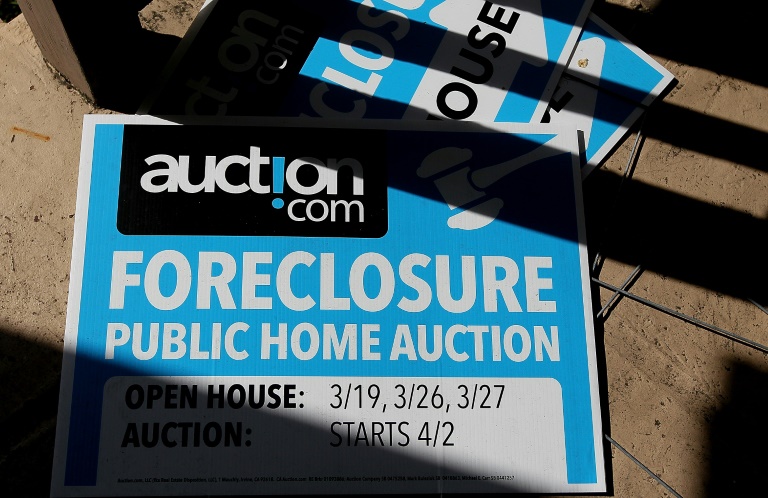
While family finances remain in good shape for now — helped by government aid and the ban on foreclosures — researchers caution that the era of historically low delinquencies is coming to an end, especially among those with lower credit scores known as “subprime borrowers.”

“The second quarter of 2022 showed robust increases in mortgage, auto loan, and credit card balances, driven in part by rising prices,” said Joelle Scally, of the New York Fed’s Center for Microeconomic Data.

“While household balance sheets overall appear to be in a strong position, we are seeing rising delinquencies among subprime and low-income borrowers with rates approaching pre-pandemic levels.”

Delinquency rates remain low and an increase is to be expected as the moratoria on foreclosures end, but the report warns that data point to potential trouble ahead for communities that “are experiencing the economy differently.” 

“We are seeing a hint of the return of the delinquency and hardship patterns we saw prior to the pandemic,” New York Fed researchers said in a blog post.

Total household debt rose $312 billion in the quarter to $16.15 trillion, and the biggest component — mortgages — jumped $207 billion to just under $11.4 trillion, the report said. However, the amount of new home loans fell, amid rising lending rates.

Credit card balances (up $46 billion) and auto loans (up $33 billion to $1.5 trillion) were impacted by rising prices, the report said.

Meanwhile, student loans, which still benefit from pandemic forbearance programs, were essentially flat at $1.6 trillion.

US loan delinquencies creep up amid high debt loads: report

US households have continued to take on more debt, in part to deal with soaring prices, a report showed Tuesday, while cases of borrowers unable to pay loans are creeping up in a troubling sign of things to come.

Facing the biggest surge in inflation in more than four decades, which is squeezing families trying to make ends meet, the New York Federal Reserve Bank’s latest report shows credit card balances in the April-June quarter surged by the most in 20 years.

Total household debt posted a two percent increase in the latest three months, and is now $2 trillion more than the pre-pandemic level, the report showed.

While family finances remain in good shape for now — helped by government aid and the ban on foreclosures — researchers caution that the era of historically low delinquencies is coming to an end, especially among those with lower credit scores known as “subprime borrowers.”

“The second quarter of 2022 showed robust increases in mortgage, auto loan, and credit card balances, driven in part by rising prices,” said Joelle Scally, of the New York Fed’s Center for Microeconomic Data.

“While household balance sheets overall appear to be in a strong position, we are seeing rising delinquencies among subprime and low-income borrowers with rates approaching pre-pandemic levels.”

Delinquency rates remain low and an increase is to be expected as the moratoria on foreclosures end, but the report warns that data point to potential trouble ahead for communities that “are experiencing the economy differently.” 

“We are seeing a hint of the return of the delinquency and hardship patterns we saw prior to the pandemic,” New York Fed researchers said in a blog post.

Total household debt rose $312 billion in the quarter to $16.15 trillion, and the biggest component — mortgages — jumped $207 billion to just under $11.4 trillion, the report said. However, the amount of new home loans fell, amid rising lending rates.

Credit card balances (up $46 billion) and auto loans (up $33 billion to $1.5 trillion) were impacted by rising prices, the report said.

Meanwhile, student loans, which still benefit from pandemic forbearance programs, were essentially flat at $1.6 trillion.

Close Bitnami banner
Bitnami