AFP

First grain shipment leaves Ukraine as southern city pounded

The first shipment of Ukrainian grain left the port of Odessa on Monday morning, Turkey announced, as Kyiv said the “brutal” shelling by Moscow of the southern city Mykolaiv had killed an agriculture tycoon.

The blockage of deliveries from warring Russia and Ukraine — two of the world’s biggest grain exporters — has contributed to soaring food prices, hitting the world’s poorest nations especially hard.

Last month both sides signed a landmark deal with Turkey and the United Nations aimed at relieving the global food crisis.

“The ship Razoni has left the port of Odessa bound for Tripoli in Lebanon,” the Turkish ministry said in a statement. 

“It is expected in Istanbul on August 2. It will then continue its journey after it has been inspected in Istanbul,” the statement added.

Other convoys would follow, respecting the maritime corridor and the agreed formalities, it said.

The Joint Coordination Centre, the organisation overseeing the grain exports, said the Razoni is carrying “over 26,000 metric tonnes” of maize. 

– Tycoon killed –

While the much needed grain exports will be welcomed, the war in Ukraine rages on. 

AFP journalists witnessed intense Russian bombardment of the eastern town of Bakhmut after Ukrainian President Volodymyr Zelensky called for civilians to leave the frontline Donetsk region bearing the brunt of the Kremlin’s offensive.

Authorities in Mykolaiv said Sunday that widespread Russian bombardments overnight killed at least two civilians.

“Today, one of the most brutal shellings of Mykolaiv and the region over the entire period of the full-scale war took place. Dozens of missiles and rockets,” Zelensky said in an address.

“I want to thank every resident of Mykolaiv for their indomitability.”

Ukrainian agricultural magnate Oleksiy Vadatursky, 74, and his wife Raisa were killed when a missile struck their house, authorities said.

Vadatursky owned major grain exporter Nibulon and was previously decorated with the prestigious “Hero of Ukraine” award.

Zelensky offered condolences and paid tribute to Vadatursky in his Sunday address.

Mykolaiv — which has been attacked frequently — is the closest Ukrainian city to the southern front where Kyiv’s forces are looking to launch a major counter-offensive to recapture territory lost after Russia’s February invasion. 

– Drone attack –

Russian authorities in the Crimean Black Sea peninsula — seized by Moscow from Ukraine in 2014 — said a small explosive device from a commercial drone, likely launched nearby, hit the navy command in Sevastopol.

The local mayor blamed “Ukrainian nationalists” for the attack that forced the cancellation of festivities marking Russia’s annual holiday celebrating the navy.

But Ukraine’s navy accused Russia of staging the attacks as a pretext to cancel the festivities.

The claim and counterclaim came as the dispute over which side struck a jail holding Ukrainian prisoners of war in Kremlin-controlled Olenivka rumbled on. 

Russia’s defence ministry said Sunday it had invited the International Committee of the Red Cross (ICRC) and the United Nations to visit the site “in the interests of an objective investigation”. 

But the ICRC said Sunday it had yet to receive approval to enter the site.

Russia’s military said 50 Ukrainian servicemen died, including troops who had surrendered after weeks of resisting the bombardment of the Azovstal steelworks in the port city of Mariupol.

Ukraine says Russia was behind the attack, with Zelensky accusing Moscow of the “deliberate mass murder of Ukrainian prisoners of war”.

– Intense bombardments –

AFP journalists on Sunday saw one wounded man collected by an ambulance after a ferocious bombardment of the town of Bakhmut in the Donetsk region.

Zelensky warned on the weekend that thousands of people, including children, were still in Donetsk’s battleground areas.

He urged people to leave the besieged region, echoing calls from the authorities in recent weeks to evacuate.

“Leave, we will help,” Zelensky said. “At this stage of the war, terror is the main weapon of Russia.”

Official Ukrainian estimates put the number of civilians still living in the unoccupied area of Donetsk at between 200,000 and 220,000.

A mandatory evacuation notice posted Saturday evening said the coming winter made it a matter of urgency, particularly for the more than 50,000 children.

Kateryna Novakivska, a deputy commander of a Ukrainian unit, said she was fighting so her comrades could be reunited with their families.

“The morale of our servicemen is at a high level now, but everyone wants to visit their homes, see their relatives and loved ones,” she said.
OPEC+ walks 'fine line' between US and Russia

The OPEC+ group of oil exporters are set to hammer out a new strategy at their meeting Wednesday, with all eyes on how they will react to soaring crude prices.

The 13 core members of OPEC, led by Saudi Arabia, and the 10 further states in OPEC+ — chief among them Russia — find themselves at a crossroads.

After the drastic output cuts they agreed to in spring 2020 in reaction to the plunge in demand caused by the coronavirus pandemic, the member states of the alliance are once again producing at pre-virus levels — at least on paper.

In normal times they would perhaps have stopped at that but faced with runaway prices and pressure from Washington, this scenario is viewed as unlikely.

– Biden’s controversial voyage –

US President Joe Biden travelled to Saudi Arabia in mid-July despite his promise to make the country a “pariah” in the wake of the 2018 killing of journalist Jamal Khashoggi.

Part of the reason for the controversial trip was to convince Riyadh to continue loosening the production taps to stabilise the market and curb rampant inflation.

Wednesday’s meeting will reveal whether his efforts were successful.

“The US administration appears to be anticipating some good news but it’s hard to know whether that’s based on assurances during Biden’s trip or not,” Craig Erlam, analyst at Oanda, told AFP.

“It wouldn’t be a surprise to see the Saudis announce something that Biden could tout as a win to voters at home,” according to Stephen Innes of SPI Asset Management.

– Sceptical market –

According to the London-based research institute Energy Aspects, OPEC+ could adjust its current agreement in order to keep raising crude production volumes.

However, analysts warn against expecting any drastic increases.

OPEC+ has to take into account the fact that the interests of Russia — a key player in the alliance — are diametrically opposed to those of Washington.

“Saudi Arabia has to walk a fine line,” says Tamas Varga, analyst at PVM Energy. 

The task will be to allow the United States to save face while also placating Moscow in order to ensure the stability of the alliance.

Any decision on Wednesday will have to be unanimous, which may lead to a longer meeting than normal.

The videoconference meeting is due to start at around 1300 GMT on Wednesday (or 3 pm at the cartel’s Vienna headquarters).

“Any new OPEC+ deal aimed at further ramping up supplies is likely to be met with market scepticism, considering the supply constraints already evident within the alliance,” says Han Tan at Exinity. 

The alliance already regularly fails to fill the production quotas already allotted and has struggled to get back to pre-pandemic volumes.

OPEC+ walks 'fine line' between US and Russia

The OPEC+ group of oil exporters are set to hammer out a new strategy at their meeting Wednesday, with all eyes on how they will react to soaring crude prices.

The 13 core members of OPEC, led by Saudi Arabia, and the 10 further states in OPEC+ — chief among them Russia — find themselves at a crossroads.

After the drastic output cuts they agreed to in spring 2020 in reaction to the plunge in demand caused by the coronavirus pandemic, the member states of the alliance are once again producing at pre-virus levels — at least on paper.

In normal times they would perhaps have stopped at that but faced with runaway prices and pressure from Washington, this scenario is viewed as unlikely.

– Biden’s controversial voyage –

US President Joe Biden travelled to Saudi Arabia in mid-July despite his promise to make the country a “pariah” in the wake of the 2018 killing of journalist Jamal Khashoggi.

Part of the reason for the controversial trip was to convince Riyadh to continue loosening the production taps to stabilise the market and curb rampant inflation.

Wednesday’s meeting will reveal whether his efforts were successful.

“The US administration appears to be anticipating some good news but it’s hard to know whether that’s based on assurances during Biden’s trip or not,” Craig Erlam, analyst at Oanda, told AFP.

“It wouldn’t be a surprise to see the Saudis announce something that Biden could tout as a win to voters at home,” according to Stephen Innes of SPI Asset Management.

– Sceptical market –

According to the London-based research institute Energy Aspects, OPEC+ could adjust its current agreement in order to keep raising crude production volumes.

However, analysts warn against expecting any drastic increases.

OPEC+ has to take into account the fact that the interests of Russia — a key player in the alliance — are diametrically opposed to those of Washington.

“Saudi Arabia has to walk a fine line,” says Tamas Varga, analyst at PVM Energy. 

The task will be to allow the United States to save face while also placating Moscow in order to ensure the stability of the alliance.

Any decision on Wednesday will have to be unanimous, which may lead to a longer meeting than normal.

The videoconference meeting is due to start at around 1300 GMT on Wednesday (or 3 pm at the cartel’s Vienna headquarters).

“Any new OPEC+ deal aimed at further ramping up supplies is likely to be met with market scepticism, considering the supply constraints already evident within the alliance,” says Han Tan at Exinity. 

The alliance already regularly fails to fill the production quotas already allotted and has struggled to get back to pre-pandemic volumes.

Pelosi's Asia tour set to kick off under Taiwan cloud

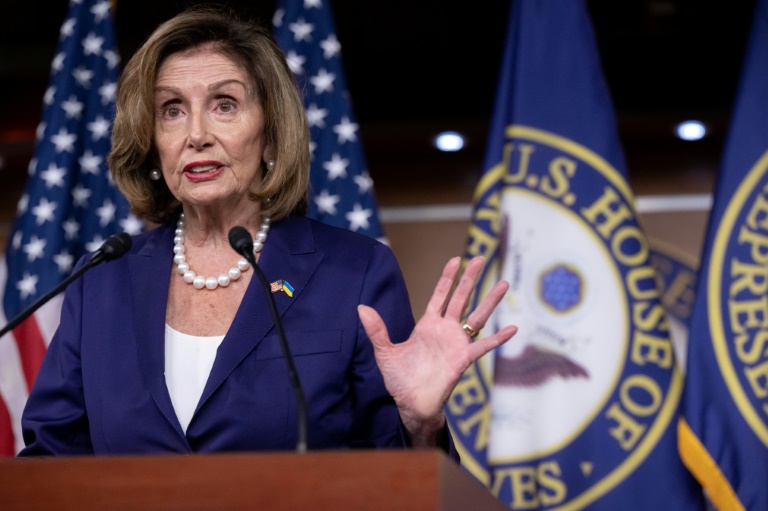
US House of Representative Speaker Nancy Pelosi was due on Monday to kick off an Asia tour that has been shrouded in secrecy following an escalation in tensions with China over Taiwan.

With no word yet if Pelosi will make a stop on the island, AFP journalists saw a motorcade believed to be carrying her in Singapore, where she is scheduled to meet the prime minister and the president.

The American Chamber of Commerce in Singapore also has Pelosi listed as attending a cocktail reception later on Monday.

Her Asia itinerary also includes Malaysia, South Korea and Japan, but a possible Taiwan visit has dominated attention in the run-up.

Reports about a plan to visit the island have enraged Beijing and caused unease even in the White House with President Joe Biden trying to lower the temperature with China.

Beijing considers self-ruled Taiwan its territory — to be seized one day, by force if necessary — and has made increasingly stark warnings that it would regard a visit by Pelosi as a major provocation.

Pelosi’s office finally confirmed her Asia trip in a statement on Sunday once her plane was in the air, following days of US media speculation and the speaker refusing to confirm her itinerary.

“The trip will focus on mutual security, economic partnership and democratic governance in the Indo-Pacific region,” it said, referring to the Asia-Pacific.

“Our delegation will hold high-level meetings to discuss how we can further advance our shared interests and values.”

The statement did not mention Taiwan.

But visits by US politicians and officials to Taiwan are usually kept secret until delegations land because of sensitivities with Beijing.

Pelosi is accompanied by Chairman of the House Foreign Affairs Committee Gregory Meeks, as well as members of the House Permanent Select Committee on Intelligence and the House Armed Services Committee.

Separately, thousands of Indonesian and American troops began a two-week joint military exercise on Monday.

Washington has said the drills are not aimed at any country, though the United States and its allies have expressed growing concern about China’s increasing assertiveness in the Pacific.

– ‘The wrong target’ –

Taiwan’s 23 million people have long lived with the possibility of an invasion but that threat has intensified under Chinese President Xi Jinping.

The United States maintains a policy of “strategic ambiguity” over whether it would intervene militarily were China to invade.

While it diplomatically recognises Beijing over Taipei, it also backs Taiwan’s democratic government and opposes any forced change to the island’s status.

American officials often make discreet visits to Taiwan to show support but a Pelosi trip would be higher-profile than any in recent history.

As the House speaker, she is third in line for the US presidency and one of the country’s most powerful politicians.

The last House speaker to visit was Newt Gingrich in 1997.

Biden and Xi had a tense phone call last week that was clouded by disagreements over Taiwan.

Xi issued an oblique warning to the United States not to “play with fire” over the island.

The feverish speculation about Pelosi’s Taiwan plans has coincided with an uptick in military activity across the region, highlighting the combustibility of the issue.

US officials have sought to play down the significance of a Pelosi visit, urging calm from Chinese leaders.

Kharis Templeman, a Taiwan expert at the Hoover Institution, said Beijing “misread US politics and screwed their signalling up” with its intense reaction.

“They picked the wrong target. Biden doesn’t control the Speaker or any other member of Congress,” he tweeted Sunday.

“They’ve drawn the line at the Speaker of the House, on a visit rich in symbolism but of limited practical value. And now it will be politically costly for either Pelosi not to go, or Xi not to respond with something dramatic.”

In Taiwan, there have been mixed views about the prospect of Pelosi visiting, but figures from both the ruling party and the main opposition have said the island should not cave to Chinese pressure.

“If Pelosi were to cancel or postpone the trip, it would be a victory for the Chinese government and for Xi as it would show that the pressure it has exerted has achieved some desired effects,” Hung Chin-fu, from Taiwan’s National’s Cheng Kung University, told AFP. 

HSBC H1 pre-tax profit falls, says to pay quarterly dividends

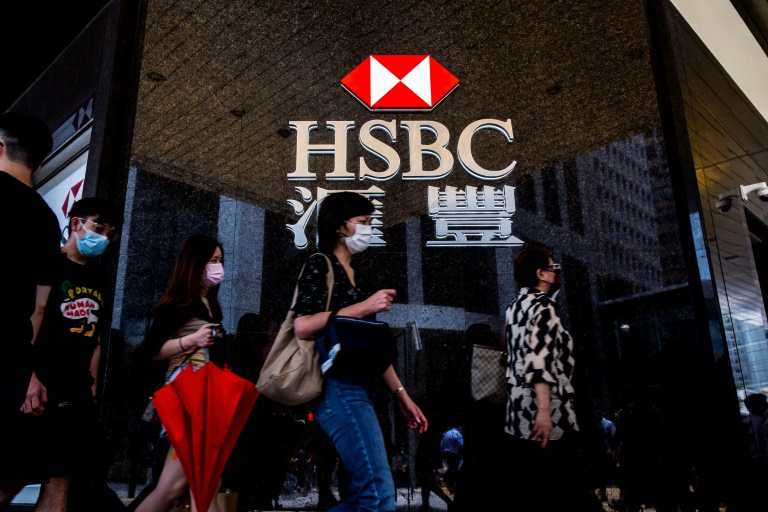
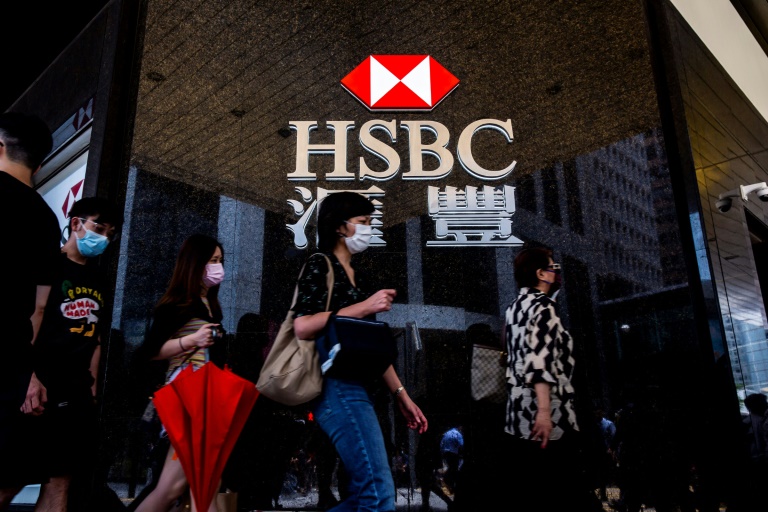
HSBC on Monday said pre-tax profit fell in the first half of 2022 but it intends to resume quarterly dividends next year as its annual outlook remained positive.

The firm said it made US$9.175 billion before tax, down more than 15 percent on-year.

Chief executive Noel Quinn said “it reflected a more normalised level of expected credit losses compared with the Covid-19 releases made last year, as well as the macroeconomic impact of the Russia-Ukraine war”.

The annual revenue outlook was positive, he said, as net interest income is expected to reach at least US$31 billion this year and US$37 billion next year as global interest rates rise.

Quinn said the group is confident of achieving its best returns in a decade in 2023.  

“We also intend to revert to quarterly dividends in 2023,” he added.

London-headquartered HSBC was among a number of major banks to cancel their dividends early in the pandemic following a de facto order from the Bank of England — a move that upset some Hong Kong shareholders.

The plan to resume payout came before HSBC executives’ first face-to-face meeting with shareholders Tuesday from the Asian financial hub in three years. 

The executives are expected to field questions about a restructuring bid from its biggest shareholder Ping An Insurance Group.

The lender is under pressure from Ping An, which has a 9.2 percent stake, to spin off its Asian operations, in a bid to unlock shareholder value amid tensions between China and the west.

Quinn and chairman Mark Tucker have not publicly commented on Ping An’s campaign, but the bank has hinted it wants to keep its current structure while continuing a pivot to Asia, Bloomberg reported. 

Hong Kong politician Christine Fong said on Sunday tht HSBC separating its Asian business and bringing back its primary listing to the city is the “best way to protect (the interests of) minority shareholders”.

Fong, who reportedly represents 500 small investors in HSBC stock, also voiced support for Ping An getting seats on HSBC’s board, citing the cancelled dividends in 2020 as a reason.

Last year, HSBC vowed to accelerate a multi-year pivot to Asia and the Middle East, with ambitions to lead Asia’s wealth management market.

The bank said it would invest $6 billion in Hong Kong, China and Singapore and hire more than 5,000 wealth advisers — while slashing 35,000 jobs and cutting its retail operations in the United States and France. 

HSBC has commissioned Goldman Sachs and advisory firm Robey Warshaw to rebuff Ping An’s campaign, according to Bloomberg.

HSBC H1 pre-tax profit falls, says to pay quarterly dividends

HSBC on Monday said pre-tax profit fell in the first half of 2022 but it intends to resume quarterly dividends next year as its annual outlook remained positive.

The firm said it made US$9.175 billion before tax, down more than 15 percent on-year.

Chief executive Noel Quinn said “it reflected a more normalised level of expected credit losses compared with the Covid-19 releases made last year, as well as the macroeconomic impact of the Russia-Ukraine war”.

The annual revenue outlook was positive, he said, as net interest income is expected to reach at least US$31 billion this year and US$37 billion next year as global interest rates rise.

Quinn said the group is confident of achieving its best returns in a decade in 2023.  

“We also intend to revert to quarterly dividends in 2023,” he added.

London-headquartered HSBC was among a number of major banks to cancel their dividends early in the pandemic following a de facto order from the Bank of England — a move that upset some Hong Kong shareholders.

The plan to resume payout came before HSBC executives’ first face-to-face meeting with shareholders Tuesday from the Asian financial hub in three years. 

The executives are expected to field questions about a restructuring bid from its biggest shareholder Ping An Insurance Group.

The lender is under pressure from Ping An, which has a 9.2 percent stake, to spin off its Asian operations, in a bid to unlock shareholder value amid tensions between China and the west.

Quinn and chairman Mark Tucker have not publicly commented on Ping An’s campaign, but the bank has hinted it wants to keep its current structure while continuing a pivot to Asia, Bloomberg reported. 

Hong Kong politician Christine Fong said on Sunday tht HSBC separating its Asian business and bringing back its primary listing to the city is the “best way to protect (the interests of) minority shareholders”.

Fong, who reportedly represents 500 small investors in HSBC stock, also voiced support for Ping An getting seats on HSBC’s board, citing the cancelled dividends in 2020 as a reason.

Last year, HSBC vowed to accelerate a multi-year pivot to Asia and the Middle East, with ambitions to lead Asia’s wealth management market.

The bank said it would invest $6 billion in Hong Kong, China and Singapore and hire more than 5,000 wealth advisers — while slashing 35,000 jobs and cutting its retail operations in the United States and France. 

HSBC has commissioned Goldman Sachs and advisory firm Robey Warshaw to rebuff Ping An’s campaign, according to Bloomberg.

BTS' J-Hope makes history on Lollapalooza festival stage

K-pop superstar J-Hope of BTS made history on Sunday as the closer at Chicago’s annual Lollapalooza weekend, becoming the first South Korean act to headline a major US music festival.

The star appeared to dramatically pop out of a box as he took the stage in Chicago’s Grant Park, and was greeted by a sea of screaming fans.

The crowd rapped and sang along to songs from J-Hope’s new solo album and to BTS classics such as “Dynamite.”

“Do you want some more?” he asked the mass of people, offering a special shout-out to the “BTS Army,” as the group’s super-fans are known.   

J-Hope, who also presented a special message to viewers in Korean, was joined at the end of his set by singer Becky G for a rendition of their collaboration “Chicken Noodle Soup.”

This year’s edition of Lollapalooza, which was streamed live on the Hulu platform, also featured the US festival debut of Tomorrow X Together, another South Korean boy band that is under the same label as BTS.

“These artists have been given great gifts in communication. Their global audience speak different languages but possess an intense passion for their music,” said Lollapalooza founder Perry Farrell in June.

“Lolla is the place where all music genres live in harmony.” 

J-Hope’s main-stage performance comes more than a month after the seven members of BTS – one of the world’s most popular acts – said they were taking a break from the group to focus on solo pursuits.

In an emotional video clip posted to the septet’s official YouTube channel, they told fans they were “exhausted” and needed time apart.

At the time, J-Hope said the move could help BTS “become a stronger group.”

The 28-year-old performer’s debut solo mixtape “Hope World” peaked at number 38 on the Billboard top albums chart in 2018.

BTS is the first all-South Korean act to reign over Billboard’s US top singles chart, a milestone they achieved with “Dynamite,” the group’s first smash hit sung completely in English.

They are also one of few acts since The Beatles to release four albums that hit number one in the United States in less than two years.

The group has twice been nominated for a Grammy but has yet to win.

BTS made headlines earlier this year for visiting the White House to deliver a message on the fight against anti-Asian racism to President Joe Biden.

Alibaba shares extend losses on US delisting fear

Chinese e-commerce giant Alibaba led technology stocks lower in Hong Kong on Monday after US authorities put it on a watchlist that could see it delisted in New York if it does not comply with disclosure orders.

The market heavyweight sank more than five percent in early trade, pushing it to its lowest level since May and dragging the Hang Seng Tech Index with it. 

The US securities watchdog on Friday said it added the Chinese firm to a list of more than 250 others that could be booted from Wall Street — where it listed in 2014 — if strict auditing requirements were not met for three consecutive years.

The announcement comes as tensions between Washington and Beijing are dragged lower by a range of issues including technology, human rights and Taiwan.

It also follows a report last week that founder Jack Ma plans to give up control of Ant Group as part of a strategy to appease Chinese regulators and revive the digital payments unit’s initial public offering.

The firm has come under intense pressure from a crackdown on the tech sector by Chinese authorities for more than a year, sending its share price plunging about 70 percent from its record high in late 2020.

It was hit with a record $2.75 billion fine in April 2021 for anti-competitive practices.

Earlier this year, Alibaba removed all executives linked to Ant from Alibaba Partnership, a group that can nominate the majority of Alibaba’s board.

Reports about Ma’s decision wiped out Alibaba’s gains from earlier in the week, when the firm announced it would seek a primary listing in Hong Kong to better access China’s vast pool of investors.

The selling — it sank more than 10 percent in New York — was made worse by concerns about Alibaba’s upcoming earnings report, which many fear will show its first ever drop in quarterly revenue.

Alibaba shares extend losses on US delisting fear

Chinese e-commerce giant Alibaba led technology stocks lower in Hong Kong on Monday after US authorities put it on a watchlist that could see it delisted in New York if it does not comply with disclosure orders.

The market heavyweight sank more than five percent in early trade, pushing it to its lowest level since May and dragging the Hang Seng Tech Index with it. 

The US securities watchdog on Friday said it added the Chinese firm to a list of more than 250 others that could be booted from Wall Street — where it listed in 2014 — if strict auditing requirements were not met for three consecutive years.

The announcement comes as tensions between Washington and Beijing are dragged lower by a range of issues including technology, human rights and Taiwan.

It also follows a report last week that founder Jack Ma plans to give up control of Ant Group as part of a strategy to appease Chinese regulators and revive the digital payments unit’s initial public offering.

The firm has come under intense pressure from a crackdown on the tech sector by Chinese authorities for more than a year, sending its share price plunging about 70 percent from its record high in late 2020.

It was hit with a record $2.75 billion fine in April 2021 for anti-competitive practices.

Earlier this year, Alibaba removed all executives linked to Ant from Alibaba Partnership, a group that can nominate the majority of Alibaba’s board.

Reports about Ma’s decision wiped out Alibaba’s gains from earlier in the week, when the firm announced it would seek a primary listing in Hong Kong to better access China’s vast pool of investors.

The selling — it sank more than 10 percent in New York — was made worse by concerns about Alibaba’s upcoming earnings report, which many fear will show its first ever drop in quarterly revenue.

Year's largest fire burns through dry terrain to destroy California homes

The largest fire in California this year is forcing thousands of people to evacuate as it destroys homes and rips through the state’s dry terrain, whipped up on Sunday by strong winds and lightning storms.

The McKinney Fire was zero percent contained as it burned in Klamath National Forest in northern California, CalFire said, spreading more than 51,000 acres near the city of Yreka.

It is the largest wildfire in California so far this year, with the state already battling several blazes this summer. 

California Governor Gavin Newsom declared a state of emergency Saturday, saying the fire had “destroyed homes” and “threatened critical infrastructure” after breaking out on Friday.

The fire was “intensified and spread by dry fuels, extreme drought conditions, high temperatures, winds and lightning storms,” Newsom said in a statement. 

More than 2,000 residents were under evacuation orders and some 200 under evacuation warnings, according to the California Office of Emergency Services (OES), mostly in Siskiyou County. 

“Surrounding areas should be ready to leave if needed. Please don’t hesitate to evacuate,” the Siskiyou County Sheriff tweeted. 

Highway 96 and McKinney Creed Road southwest of the Klamath River were closed to the public, CalFire said. 

Yreka resident Larry Castle told the Sacramento Bee newspaper that he and his wife had packed up a few possessions and their three dogs to leave the area for the night, as other fires in recent years had taught them the situation could turn “very, very serious.”

Nearly 650 people working to douse the blaze as of Sunday, the National Wildfire Coordinating Group said. 

Fire fighting forces were sent from nearby Oregon to assist in containment efforts, the Oregon State Fire Marshall said, as the Klamath National Forest also deals with the Kelsey Creek Fire. 

The record-breaking blaze sparked just days after the year’s previous largest fire raged in central California. 

The Oak Fire near Yosemite National Park broke out in mid-July and spread rapidly, destroying 41 buildings and forcing thousands to evacuate.

California, which is facing a punishing drought, still has months of fire season ahead of it.

In recent years, California and other parts of the western United States have been ravaged by huge and fast-moving wildfires, driven by a warming climate.

Close Bitnami banner
Bitnami