AFP

Spain reports second monkeypox-linked death

Spain on Saturday reported its second monkeypox-related death, bringing to three the number of fatalities linked to the current outbreak outside of Africa.

Spain and Brazil both announced what they believed to be their first deaths related to the virus on Friday.

It is however unclear if monkeypox actually caused any of the three fatalities, with Spanish authorities still carrying out autopsies and Brazilian authorities saying its deceased patient suffered from other serious conditions.

More than 18,000 cases have been detected throughout the world outside of Africa since the beginning of May, the World Health Organization (WHO) says.

Spain is one of the world’s worst-hit countries, with 4,298 people there infected with the virus, according to the Spanish health ministry.

“Among the 3,750 (monkeypox) patients… 120 have been hospitalised and two have died,” it said in a report, without specifying the date of the second death.

It said the victims were “two young men”, and that studies were under way to gather more “epidemiologic information” on both cases.

Brazil said a man with monkeypox died on Thursday in Belo Horizonte, the capital of the southeastern Minas Gerais state.

He “was receiving hospital treatment for other serious conditions”, the state health ministry said in a statement.

“It is important to underline that he had serious co-morbidities, so as not to spread panic in the population. The death rate is very low” for monkeypox, said Minas Gerais health secretary Fabio Baccheretti, who added that the patient was undergoing cancer treatment.

Brazil’s health ministry has recorded close to 1,000 monkeypox cases, mostly in Sao Paulo and Rio de Janeiro states, which are also in the country’s southeast.

The WHO’s European office said on Saturday that more monkeypox-related deaths can be expected.

“With the continued spread of monkeypox in Europe, we will expect to see more deaths,” Catherine Smallwood, Senior Emergency Officer at WHO Europe, said in a statement.

The goal needs to be “interrupting transmission quickly in Europe and stopping this outbreak”, she said.

– ‘Global health emergency’ –

Early signs of the disease include a high fever, swollen lymph glands and a chickenpox-like rash.

But Smallwood stressed that in most cases the disease heals itself without the need for treatment.

“The usual reasons patients might require hospital care include help in managing pain, secondary infections, and in a small number of cases the need to manage life-threatening complications such as encephalitis,” she explained.

The WHO last Saturday declared the monkeypox outbreak a global health emergency.

The disease has been detected in 78 countries, with 70 percent of cases found in Europe and 25 percent in the Americas, WHO chief Tedros Adhanom Ghebreyesus said on Wednesday.

As cases surge globally, the WHO on Wednesday called on the group currently most affected by the virus — men who have sex with men — to limit their sexual partners.

Ghebreyesus told reporters that the best way to protect against infection was “to reduce the risk of exposure”.

“For men who have sex with men, this includes, for the moment, reducing your number of sexual partners, reconsidering sex with new partners, and exchanging contact details with any new partners to enable follow-up if needed,” he said.

The disease usually heals by itself after two to three weeks, sometimes taking a month.

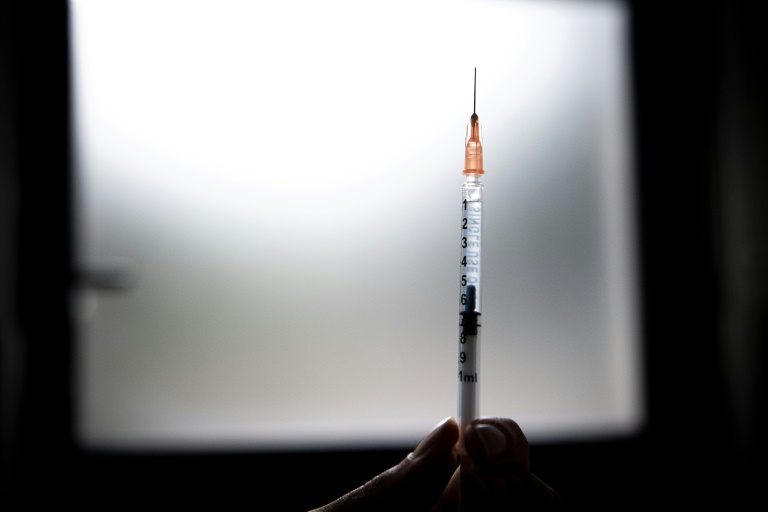
A smallpox vaccine from Danish drug maker Bavarian Nordic, marketed under the name Jynneos in the United States and Imvanex in Europe, has also been found to protect against monkeypox.

burs-ah/imm
Russia suspends gas supplies after deadly prison strike

Russian energy giant Gazprom Saturday suspended gas supplies to Latvia, a day after a jail holding Ukrainian prisoners of war was bombed leaving scores dead.

“Today, Gazprom suspended its gas supplies to Latvia… due to violations of the conditions” of purchase, the company said on Telegram.

Gazprom drastically cut gas deliveries to Europe via the Nord Stream pipeline on Wednesday to about 20 percent of its capacity. It had reduced gas flows to Europe twice in June.

The Russian state-run company had earlier announced it would choke supply to 33 million cubic metres a day — half the amount it has been delivering since service resumed last week after 10 days of maintenance work.

European Union states have accused Russia of squeezing supplies in retaliation for Western sanctions over Moscow’s intervention in Ukraine.

Gazprom cited the halted operation of one of the last two operating turbines for the pipeline due to the “technical condition of the engine”.

Kremlin spokesman Dmitry Peskov has blamed EU sanctions for the limited supply.

The EU this week agreed a plan to reduce gas consumption in solidarity with Germany, where the Nord Stream pipeline runs to, warning of Russian “blackmail”.

– ‘Egregious provocation’ –

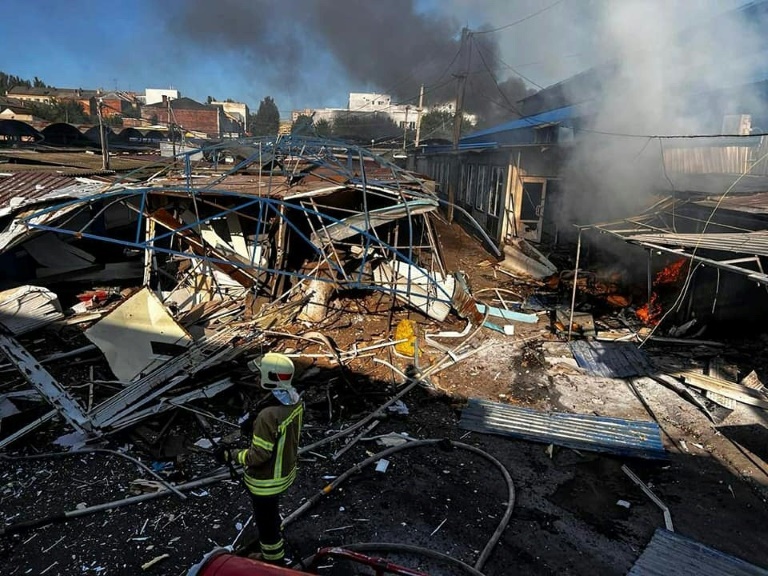
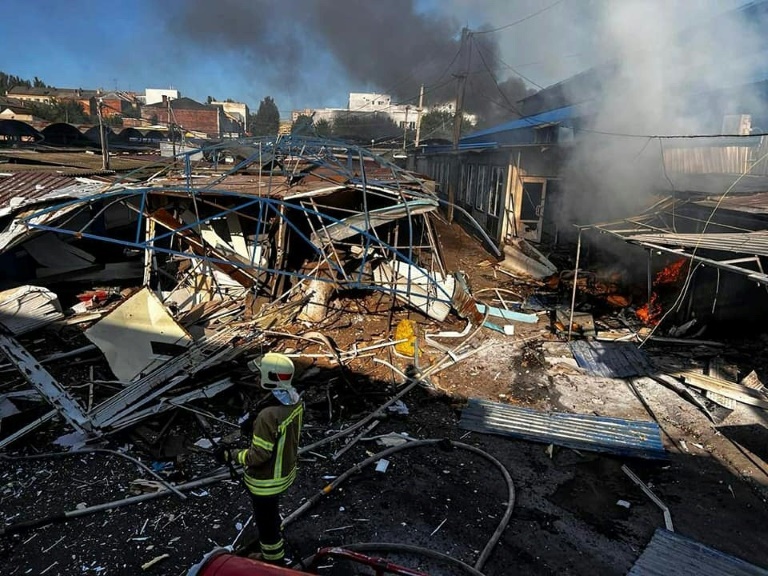
Russian strikes continued to rain down on Ukrainian towns and cities on Saturday, a day after Russia’s defence ministry accused Kyiv of striking a prison in Russian-held territory with US-supplied long-range missiles, in an “egregious provocation” designed to stop captured soldiers from surrendering. 

It said Saturday that the dead included Ukrainian forces who had surrendered after weeks of fighting off Russia’s brutal bombardment of the sprawling Azovstal steelworks in the port city of Mariupol. 

The defence ministry said 50 Ukrainian prisoners were killed and 73 were taken to hospital with serious injuries, adding: “All political, legal and moral responsibility for this bloody massacre of Ukrainians lies with (Ukrainian President Volodymyr) Zelensky personally, his criminal regime and Washington which backs them.”

Zelensky laid the blame squarely on Russia.

“This was a deliberate Russian war crime, a deliberate mass murder of Ukrainian prisoners of war,” he said. “Over 50 are dead.”

Zelensky said an agreement for the Azovstal fighters to lay down their arms, brokered by the United Nations and the International Committee of the Red Cross, included guarantees for their health and safety and called on those two organisations to intervene as guarantors.

Zelensky also urged the international community, especially the United States, to have Russia officially declared as a state sponsor of terrorism.

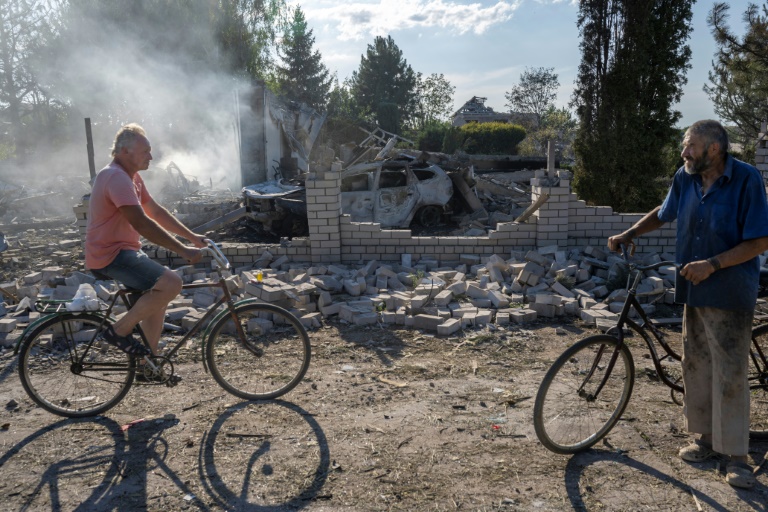
The mayor of the southern city of Mykolaiv, Oleksandr Sienkevych, said one person died and six were injured following Russian shelling in two residential districts overnight Saturday.

The death toll from a strike on a Mykolaiv bus stop on Friday climbed to seven after two men died in hospital, he added.

In the eastern city of Kharkiv, three Russian S-300 missiles struck a school, mayor Igor Terekhov said on Telegram, adding that the main building was destroyed.

A Ukrainian spokesman said resistance forces had set fire to grain fields around Mariupol.

“The Mariupol Resistance forces set fire to the fields with grain so that it would not be stolen by the occupiers. The fire can probably spread to the Russian military base… There are Russian fortifications, ammunition warehouses and minefields disposed сlose to the area of fire,” Sergiy Bratchuk, a spokesman for the Odessa Regional Military Administration said.

– Grain exports to restart –

Zelensky on Friday visited a port in southern Ukraine to oversee a ship being loaded with grain for export under a UN-backed plan aimed at getting millions of tonnes of Ukrainian grain stranded by Russia’s naval blockade to world markets.

Ukraine’s presidency said exports could start in the “coming days”.

In a separate development, S&P Global Ratings on Friday cut Ukraine’s long-term debt grade by three notches, saying a recently announced plan to defer payments means a default is “a virtual certainty”.

A group of Western countries last week gave their green light to Kyiv’s request to postpone interest payments on its debt and called on other creditors to do so as well.

Russia suspends gas supplies after deadly prison strike

Russian energy giant Gazprom Saturday suspended gas supplies to Latvia, a day after a jail holding Ukrainian prisoners of war was bombed leaving scores dead.

“Today, Gazprom suspended its gas supplies to Latvia… due to violations of the conditions” of purchase, the company said on Telegram.

Gazprom drastically cut gas deliveries to Europe via the Nord Stream pipeline on Wednesday to about 20 percent of its capacity. It had reduced gas flows to Europe twice in June.

The Russian state-run company had earlier announced it would choke supply to 33 million cubic metres a day — half the amount it has been delivering since service resumed last week after 10 days of maintenance work.

European Union states have accused Russia of squeezing supplies in retaliation for Western sanctions over Moscow’s intervention in Ukraine.

Gazprom cited the halted operation of one of the last two operating turbines for the pipeline due to the “technical condition of the engine”.

Kremlin spokesman Dmitry Peskov has blamed EU sanctions for the limited supply.

The EU this week agreed a plan to reduce gas consumption in solidarity with Germany, where the Nord Stream pipeline runs to, warning of Russian “blackmail”.

– ‘Egregious provocation’ –

Russian strikes continued to rain down on Ukrainian towns and cities on Saturday, a day after Russia’s defence ministry accused Kyiv of striking a prison in Russian-held territory with US-supplied long-range missiles, in an “egregious provocation” designed to stop captured soldiers from surrendering. 

It said Saturday that the dead included Ukrainian forces who had surrendered after weeks of fighting off Russia’s brutal bombardment of the sprawling Azovstal steelworks in the port city of Mariupol. 

The defence ministry said 50 Ukrainian prisoners were killed and 73 were taken to hospital with serious injuries, adding: “All political, legal and moral responsibility for this bloody massacre of Ukrainians lies with (Ukrainian President Volodymyr) Zelensky personally, his criminal regime and Washington which backs them.”

Zelensky laid the blame squarely on Russia.

“This was a deliberate Russian war crime, a deliberate mass murder of Ukrainian prisoners of war,” he said. “Over 50 are dead.”

Zelensky said an agreement for the Azovstal fighters to lay down their arms, brokered by the United Nations and the International Committee of the Red Cross, included guarantees for their health and safety and called on those two organisations to intervene as guarantors.

Zelensky also urged the international community, especially the United States, to have Russia officially declared as a state sponsor of terrorism.

The mayor of the southern city of Mykolaiv, Oleksandr Sienkevych, said one person died and six were injured following Russian shelling in two residential districts overnight Saturday.

The death toll from a strike on a Mykolaiv bus stop on Friday climbed to seven after two men died in hospital, he added.

In the eastern city of Kharkiv, three Russian S-300 missiles struck a school, mayor Igor Terekhov said on Telegram, adding that the main building was destroyed.

A Ukrainian spokesman said resistance forces had set fire to grain fields around Mariupol.

“The Mariupol Resistance forces set fire to the fields with grain so that it would not be stolen by the occupiers. The fire can probably spread to the Russian military base… There are Russian fortifications, ammunition warehouses and minefields disposed сlose to the area of fire,” Sergiy Bratchuk, a spokesman for the Odessa Regional Military Administration said.

– Grain exports to restart –

Zelensky on Friday visited a port in southern Ukraine to oversee a ship being loaded with grain for export under a UN-backed plan aimed at getting millions of tonnes of Ukrainian grain stranded by Russia’s naval blockade to world markets.

Ukraine’s presidency said exports could start in the “coming days”.

In a separate development, S&P Global Ratings on Friday cut Ukraine’s long-term debt grade by three notches, saying a recently announced plan to defer payments means a default is “a virtual certainty”.

A group of Western countries last week gave their green light to Kyiv’s request to postpone interest payments on its debt and called on other creditors to do so as well.

Russia suspends gas supplies to Latvia

Russian energy giant Gazprom Saturday suspended gas supplies to Latvia following tensions between Moscow and the West over the conflict in Ukraine and sweeping European and US sanctions against Russia. 

The declaration came a day after Moscow and Kyiv accused each other of bombing a jail holding Ukrainian prisoners of war in Russian-held territory, with Ukrainian President Volodymyr Zelensky saying more than 50 were killed and calling the attack a war crime.

“Today, Gazprom suspended its gas supplies to Latvia… due to violations of the conditions” of purchase, the company said on Telegram.

Gazprom drastically cut gas deliveries to Europe via the Nord Stream pipeline on Wednesday to about 20 percent of its capacity.

The Russian state-run company had earlier announced it would choke supply to 33 million cubic metres a day — half the amount it has been delivering since service resumed last week after 10 days of maintenance work.

EU states have accused Russia of squeezing supplies in retaliation for Western sanctions over Moscow’s intervention in Ukraine.

Gazprom cited the halted operation of one of the last two operating turbines for the pipeline due to the “technical condition of the engine”.

Kremlin spokesman Dmitry Peskov has blamed EU sanctions for the limited supply.

“Technical pumping capacities are down, more restricted. Why? Because the process of maintaining technical devices is made extremely difficult by the sanctions adopted by Europe,” Peskov said. 

“Gazprom was and remains a reliable guarantor of its obligations… but it can’t guarantee the pumping of gas if the imported devices cannot be maintained because of European sanctions,” he said.

– Russian ‘blackmail’ –

The European Union this week agreed a plan to reduce gas consumption in solidarity with Germany, where the Nord Stream pipeline runs to, warning of Russian “blackmail”.

Russia’s defence ministry on Friday accused Ukraine of striking a prison in Russian-held territory with US-supplied long-range missiles, in an “egregious provocation” designed to stop captured soldiers from surrendering. 

It said the dead included Ukrainian forces who had surrendered after weeks of fighting off Russia’s brutal bombardment of the sprawling Azovstal steelworks in the port city of Mariupol. 

Zelensky laid the blame squarely on Russia.

“This was a deliberate Russian war crime, a deliberate mass murder of Ukrainian prisoners of war,” Zelensky said in his daily address to the nation late Friday. “Over 50 are dead.”

Zelensky said an agreement for the Azovstal fighters to lay down their arms, brokered by the United Nations and the International Committee of the Red Cross, included guarantees for their health and safety and called on those two organisations to intervene, as guarantors.

Zelensky also urged the international community, especially the United States, to have Russia officially declared as a state sponsor of terrorism.

“A decision is needed, needed right now,” he said.

In a sign of Washington’s continued support of Kyiv, US Secretary of State Antony Blinken spoke to his Russian counterpart Sergei Lavrov for the first time since the beginning of the conflict Friday, urging Moscow against annexing any more Ukrainian territory occupied by Russian forces.

– US warning –

“It was very important that the Russians hear directly from us that that will not be accepted — and not only will it not be accepted, it will result in additional significant costs being imposed upon Russia if it follows through,” Blinken told reporters in Washington.

Zelensky on Friday visited a port in southern Ukraine to oversee a ship being loaded with grain for export under a UN-backed plan aimed at getting millions of tonnes of Ukrainian grain stranded by Russia’s naval blockade to world markets.

Ukraine’s presidency released footage of Zelensky standing in front of Turkish ship Polarnet in the port of Chornomorsk on a visit to inspect grain being loaded. Ukraine’s presidency said exports could start in the “coming days”.

In a separate development, S&P Global Ratings on Friday cut Ukraine’s long-term debt grade by three notches, saying a recently announced plan to defer payments means a default is “a virtual certainty”.

A group of Western countries last week gave their green light to Kyiv’s request to postpone interest payments on its debt and called on other creditors to do so as well.

Russia suspends gas supplies to Latvia

Russian energy giant Gazprom Saturday suspended gas supplies to Latvia following tensions between Moscow and the West over the conflict in Ukraine and sweeping European and US sanctions against Russia. 

The declaration came a day after Moscow and Kyiv accused each other of bombing a jail holding Ukrainian prisoners of war in Russian-held territory, with Ukrainian President Volodymyr Zelensky saying more than 50 were killed and calling the attack a war crime.

“Today, Gazprom suspended its gas supplies to Latvia… due to violations of the conditions” of purchase, the company said on Telegram.

Gazprom drastically cut gas deliveries to Europe via the Nord Stream pipeline on Wednesday to about 20 percent of its capacity.

The Russian state-run company had earlier announced it would choke supply to 33 million cubic metres a day — half the amount it has been delivering since service resumed last week after 10 days of maintenance work.

EU states have accused Russia of squeezing supplies in retaliation for Western sanctions over Moscow’s intervention in Ukraine.

Gazprom cited the halted operation of one of the last two operating turbines for the pipeline due to the “technical condition of the engine”.

Kremlin spokesman Dmitry Peskov has blamed EU sanctions for the limited supply.

“Technical pumping capacities are down, more restricted. Why? Because the process of maintaining technical devices is made extremely difficult by the sanctions adopted by Europe,” Peskov said. 

“Gazprom was and remains a reliable guarantor of its obligations… but it can’t guarantee the pumping of gas if the imported devices cannot be maintained because of European sanctions,” he said.

– Russian ‘blackmail’ –

The European Union this week agreed a plan to reduce gas consumption in solidarity with Germany, where the Nord Stream pipeline runs to, warning of Russian “blackmail”.

Russia’s defence ministry on Friday accused Ukraine of striking a prison in Russian-held territory with US-supplied long-range missiles, in an “egregious provocation” designed to stop captured soldiers from surrendering. 

It said the dead included Ukrainian forces who had surrendered after weeks of fighting off Russia’s brutal bombardment of the sprawling Azovstal steelworks in the port city of Mariupol. 

Zelensky laid the blame squarely on Russia.

“This was a deliberate Russian war crime, a deliberate mass murder of Ukrainian prisoners of war,” Zelensky said in his daily address to the nation late Friday. “Over 50 are dead.”

Zelensky said an agreement for the Azovstal fighters to lay down their arms, brokered by the United Nations and the International Committee of the Red Cross, included guarantees for their health and safety and called on those two organisations to intervene, as guarantors.

Zelensky also urged the international community, especially the United States, to have Russia officially declared as a state sponsor of terrorism.

“A decision is needed, needed right now,” he said.

In a sign of Washington’s continued support of Kyiv, US Secretary of State Antony Blinken spoke to his Russian counterpart Sergei Lavrov for the first time since the beginning of the conflict Friday, urging Moscow against annexing any more Ukrainian territory occupied by Russian forces.

– US warning –

“It was very important that the Russians hear directly from us that that will not be accepted — and not only will it not be accepted, it will result in additional significant costs being imposed upon Russia if it follows through,” Blinken told reporters in Washington.

Zelensky on Friday visited a port in southern Ukraine to oversee a ship being loaded with grain for export under a UN-backed plan aimed at getting millions of tonnes of Ukrainian grain stranded by Russia’s naval blockade to world markets.

Ukraine’s presidency released footage of Zelensky standing in front of Turkish ship Polarnet in the port of Chornomorsk on a visit to inspect grain being loaded. Ukraine’s presidency said exports could start in the “coming days”.

In a separate development, S&P Global Ratings on Friday cut Ukraine’s long-term debt grade by three notches, saying a recently announced plan to defer payments means a default is “a virtual certainty”.

A group of Western countries last week gave their green light to Kyiv’s request to postpone interest payments on its debt and called on other creditors to do so as well.

Yemen's ancient honey production a victim of war, climate change

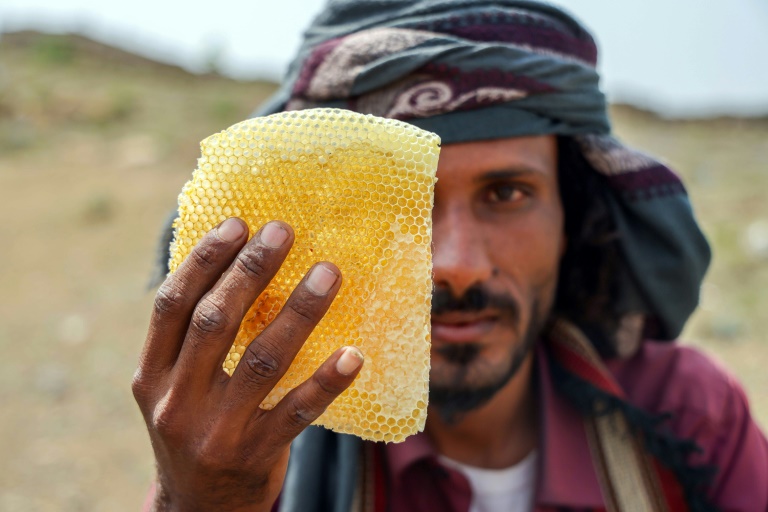
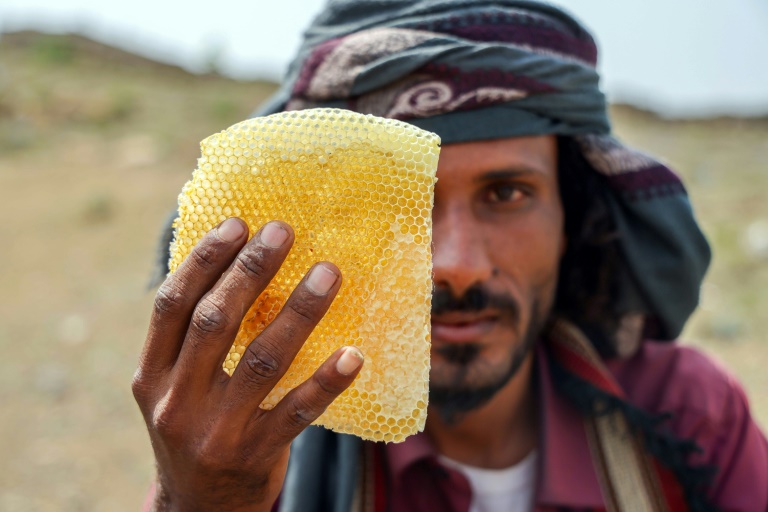
For Yemeni beekeeper Mohammed Saif, honey production used to be a lucrative business but years of war and climate change have taken the buzz out of the family hives.

The business, handed down from father to son, “is slowly disappearing”, Saif told AFP. “The bees are being hit by strange phenomenons. Is it due to climate change or the effects of war? We really don’t know.”

Yemen, one of the world’s most impoverished countries, has been gripped by a deadly conflict since 2014, pitting the Iran-backed Huthis against government forces supported by a Saudi-led military coalition.

Hundreds of thousands of people have been killed in fighting or through illness and malnutrition over the past eight years, and the country’s infrastructure has been devastated.

But a fragile UN-brokered truce has held since April, bringing some respite to the country and its war-weary population.

In the southwestern region of Taez, Saif recently took stock of his hives in a rugged valley surrounded by mountains.

Before the war, Saif said, the family managed 300 hives, now only 80 are left.

Experts consider Yemeni honey some of the best in the world, including the prized Royal Sidr known for its therapeutic properties.

The United Nations says honey plays a “vital role” in Yemen’s economy, with 100,000 households dependent on it for their livelihoods.

– Bee ecosystems battered – 

But “enormous losses have been inflicted on the industry since the outbreak of the conflict”, the International Committee of the Red Cross said in a report in June.

“Armed conflict and climate change are threatening the continuity of a 3,000-year-old practice,” the ICRC said.

“Successive waves of displacement to flee violence, the impact of weapon contamination on production areas, and the growing impact of climate change are pushing thousands of beekeepers into precarity, significantly reducing production.”

Saif knows it all too well.

“Last year in our village a missile struck a beekeeper’s hives. He lost everything,” he said.

“The war has had a very bad impact on us. The fighters have targeted many zones where bees are found,” he added.

The ICRC’s Bashir Omar said the conflict had limited the ability of beekeepers to freely roam the land whenever flowers were in bloom to collect the honey.

Landmines and active front lines are among the challenges they face.

“To make matters worse, Yemen, like many conflict-affected countries, is disproportionately affected by climate change,” the ICRC report noted.

“Temperature rises in recent years, combined with severe alterations caused to the environment, are disturbing the bees’ ecosystem which is impacting the pollination process,” it said.

“With water tables falling and increased desertification, areas previously engaged in agricultural activities and beekeeping no longer sustain these livelihoods.”

The ICRC is providing financial support and training this year to beekeepers, after a similar initiative in 2021 that helped nearly 4,000 of them.

Nabil al-Hakim, who sells Yemen’s celebrated yellow nectar in Taez shops, also recalled the golden days before the conflict ravaged his country.

“Before the war we could make a good living by selling honey… but honey has become rare and customers can no longer afford it,” he said.

“Before, I used to sell up to 25 five-litre jars a month. Now I can’t even sell one.”

Yemen's ancient honey production a victim of war, climate change

For Yemeni beekeeper Mohammed Saif, honey production used to be a lucrative business but years of war and climate change have taken the buzz out of the family hives.

The business, handed down from father to son, “is slowly disappearing”, Saif told AFP. “The bees are being hit by strange phenomenons. Is it due to climate change or the effects of war? We really don’t know.”

Yemen, one of the world’s most impoverished countries, has been gripped by a deadly conflict since 2014, pitting the Iran-backed Huthis against government forces supported by a Saudi-led military coalition.

Hundreds of thousands of people have been killed in fighting or through illness and malnutrition over the past eight years, and the country’s infrastructure has been devastated.

But a fragile UN-brokered truce has held since April, bringing some respite to the country and its war-weary population.

In the southwestern region of Taez, Saif recently took stock of his hives in a rugged valley surrounded by mountains.

Before the war, Saif said, the family managed 300 hives, now only 80 are left.

Experts consider Yemeni honey some of the best in the world, including the prized Royal Sidr known for its therapeutic properties.

The United Nations says honey plays a “vital role” in Yemen’s economy, with 100,000 households dependent on it for their livelihoods.

– Bee ecosystems battered – 

But “enormous losses have been inflicted on the industry since the outbreak of the conflict”, the International Committee of the Red Cross said in a report in June.

“Armed conflict and climate change are threatening the continuity of a 3,000-year-old practice,” the ICRC said.

“Successive waves of displacement to flee violence, the impact of weapon contamination on production areas, and the growing impact of climate change are pushing thousands of beekeepers into precarity, significantly reducing production.”

Saif knows it all too well.

“Last year in our village a missile struck a beekeeper’s hives. He lost everything,” he said.

“The war has had a very bad impact on us. The fighters have targeted many zones where bees are found,” he added.

The ICRC’s Bashir Omar said the conflict had limited the ability of beekeepers to freely roam the land whenever flowers were in bloom to collect the honey.

Landmines and active front lines are among the challenges they face.

“To make matters worse, Yemen, like many conflict-affected countries, is disproportionately affected by climate change,” the ICRC report noted.

“Temperature rises in recent years, combined with severe alterations caused to the environment, are disturbing the bees’ ecosystem which is impacting the pollination process,” it said.

“With water tables falling and increased desertification, areas previously engaged in agricultural activities and beekeeping no longer sustain these livelihoods.”

The ICRC is providing financial support and training this year to beekeepers, after a similar initiative in 2021 that helped nearly 4,000 of them.

Nabil al-Hakim, who sells Yemen’s celebrated yellow nectar in Taez shops, also recalled the golden days before the conflict ravaged his country.

“Before the war we could make a good living by selling honey… but honey has become rare and customers can no longer afford it,” he said.

“Before, I used to sell up to 25 five-litre jars a month. Now I can’t even sell one.”

Elon Musk fires back at Twitter in court battle

Elon Musk on Friday filed claims against Twitter as he fights back against the tech firm’s lawsuit demanding he be held to his $44 billion buyout deal.

Musk’s counter-suit was submitted along with a legal defense against Twitter’s claim that the billionaire is contractually bound to complete the deal he inked in April to buy Twitter, the Chancery Court in the state of Delaware said in a notice.

The 164-page filing was submitted as being “confidential,” meaning the documents were not accessible by the public, the notice indicated.

Rules of the court, however, require Musk to submit a public version of the filing with trade secrets or other sensitive information redacted.

A judge has ordered a five-day trial over Twitter’s lawsuit against Musk to begin on October 17.

The Tesla boss wooed Twitter’s board with a $54.20 per-share offer, but then in July announced he was “terminating” their agreement on accusations the firm misled him regarding its tally of fake and spam accounts.

Twitter, whose stock price closed at $41.61 on Friday, has stuck by its estimates regarding accounts run by software “bots” rather than people, and argued that Musk is contriving excuses to back out of the contract.

The social media platform has urged shareholders to endorse the deal, setting a vote on the merger for September 13.

“We are committed to closing the merger on the price and terms agreed upon with Mr. Musk,” Twitter chief executive Parag Agrawal and board chairman Bret Taylor said in a copy of a letter to investors.

Billions of dollars are at stake, but so is the future of Twitter, which Musk has said should allow any legal speech — an absolutist position that has sparked fears the network could be used to incite violence.

Elon Musk fires back at Twitter in court battle

Elon Musk on Friday filed claims against Twitter as he fights back against the tech firm’s lawsuit demanding he be held to his $44 billion buyout deal.

Musk’s counter-suit was submitted along with a legal defense against Twitter’s claim that the billionaire is contractually bound to complete the deal he inked in April to buy Twitter, the Chancery Court in the state of Delaware said in a notice.

The 164-page filing was submitted as being “confidential,” meaning the documents were not accessible by the public, the notice indicated.

Rules of the court, however, require Musk to submit a public version of the filing with trade secrets or other sensitive information redacted.

A judge has ordered a five-day trial over Twitter’s lawsuit against Musk to begin on October 17.

The Tesla boss wooed Twitter’s board with a $54.20 per-share offer, but then in July announced he was “terminating” their agreement on accusations the firm misled him regarding its tally of fake and spam accounts.

Twitter, whose stock price closed at $41.61 on Friday, has stuck by its estimates regarding accounts run by software “bots” rather than people, and argued that Musk is contriving excuses to back out of the contract.

The social media platform has urged shareholders to endorse the deal, setting a vote on the merger for September 13.

“We are committed to closing the merger on the price and terms agreed upon with Mr. Musk,” Twitter chief executive Parag Agrawal and board chairman Bret Taylor said in a copy of a letter to investors.

Billions of dollars are at stake, but so is the future of Twitter, which Musk has said should allow any legal speech — an absolutist position that has sparked fears the network could be used to incite violence.

With new 'super minister,' Argentina seeks political fix to economic woes

Argentine President Alberto Fernandez is looking for a political solution to the country’s economic crisis with his appointment of a long-term politician as a new “super minister,” analysts say.

The South American country has suffered years of economic crisis, with some 37 percent of its population now living in poverty.

Inflation for the first half of this year alone topped 36 percent, and is predicted to reach 80 percent by the year’s end.

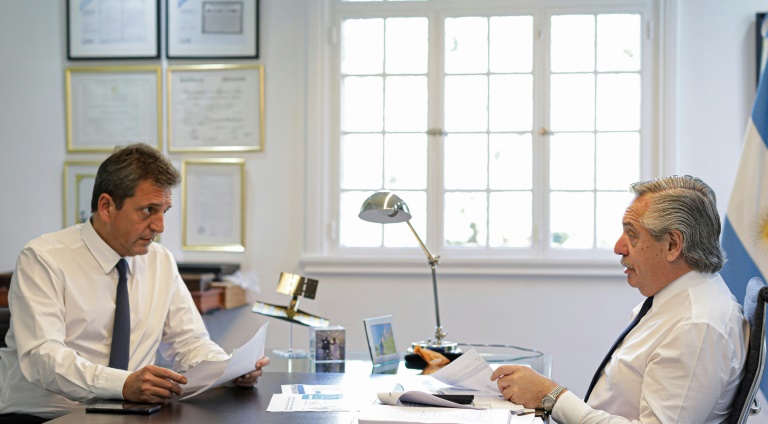
With that crisis-backdrop, Fernandez on Thursday named Sergio Massa, the current head of Congress’ lower house, as a new super minister to oversee the economy, development and agriculture ministries as well as relations with international organizations.

Massa, a lawyer by trade who has spent years in politics, replaces economist Silvina Batakis, who had been on the job less than a month.

“Massa is not an economist but a politician. But the point is that Argentina’s crisis is political, it needs a person with broad shoulders and political skill,” analyst Carlos Fara told AFP.

One of Argentina’s major problems is the ongoing power struggle inside the ruling Frente de Todos political coalition between Fernandez and Vice President Cristina Kirchner, herself a former president.

In early July, Batakis’s predecessor Martin Guzman resigned suddenly amid the political turmoil.

Guzman, who was in charge of renegotiating Argentina’s $44 billion debt to the International Monetary Fund, was a close ally of Fernandez.

However, “Massa brings sufficient consensus in the leadership of the ruling Frente de Todos coalition and may be able to make decisions that are not popular,” said Fara.

– ‘Pragmatic’ appointment –

The markets did not falter on Friday, one day after the appointment.

“The markets’ reaction was positive because they see in Massa a pragmatic figure who has good relations with business leaders and the markets,” economist Nery Persichini from the GMA Capital consultancy told AFP.

Massa will assume his new position on Tuesday after the Chamber of Deputies has appointed his successor. He will then announce his first measures the following day.

“It is very important that a politician is in charge of the economy. Putting technical people in charge did not work. This will generate peace in the markets, it’s a pragmatic move,” Pablo Tigani, director of the Hacer economic consultancy, told AFP.

Fernandez said the new super minister appointment is aimed at creating “better coordination” on economic policy.

As part of Argentina’s negotiations with the IMF, it has committed to reducing its public deficit from three percent in 2021 to 0.9 percent by 2024.

One of Massa’s toughest challenges will be to increase Argentina’s available international reserves, which analysts say are at critical levels, as well as reducing the fiscal deficit.

“I’m not a savior. Politics doesn’t need saviors, it needs servants,” said Massa on Twitter.

“Argentina’s problems cannot be solved by one person, they will be resolved by teamwork.”

– Government has ‘no direction’ –

Persichini says “doubts surround Massa’s true ability to reduce public spending and to temper the fiscal deficit.

“The markets are asking themselves whether the new super minister has the backing of Vice President Cristina Kirchner to implement an adjustment and correct relative price imbalances.” 

Fiscal discipline has so far not protected the poorest Argentines from the ravages of galloping inflation that is chipping away at their meager earnings.

On Thursday, thousands of people demonstrated in Buenos Aires demanding a “universal salary.”

Protesters want a minimum living wage worth 67,000 pesos (around $490 at the official exchange rate), which amounts to the cost of two basic food baskets, for the country’s lowest earners.

“It is as if the government has no direction, that it’s drowning. I’m very worried about the lack of work, about the incredible inflation,” Nestor, an unemployed 54-year-old, told AFP.

Close Bitnami banner
Bitnami