AFP

US airline JetBlue announces $3.8 bn acquisition of Spirit

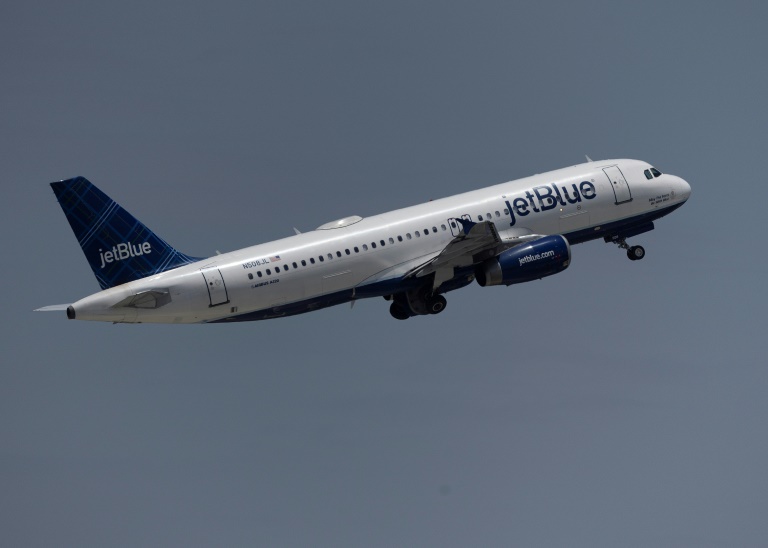
JetBlue Airways plans to acquire low-price carrier Spirit Airlines for $3.8 billion, the companies announced Thursday, in what would establish the fifth largest US airline.

The proposed takeover, which requires regulatory approval, comes a day after Spirit terminated a combination with the Frontier Group following JetBlue’s competing bid challenging the transaction.

By combining, the companies will be able to challenge giant US carriers American, Delta, United and Southwest. They expect $600-$700 million in annual savings by joining forces, said a joint press release from Spirit and JetBlue. 

The companies plan to argue the deal will help consumers.

“We believe we can uniquely be a solution to the lack of competition in the  US airline industry and the continued dominance of the Big Four,” said JetBlue Chief Executive Robin Hayes.

“By enabling JetBlue to grow faster, we can go head-to-head with the legacies in more places to lower fares and improve service for everyone. Even combined with Spirit, JetBlue will still be significantly smaller than the Big Four.”

But some aviation watchers think the transaction could draw criticism in Washington, where antitrust regulators sued to block an alliance of American Airlines and JetBlue.

The all-cash transaction adjusts the price if the deal is delayed because of regulatory challenges. The price will be $33.50 per share if the transaction is completed by December 2023.

But the price would increase to $34.15 per share if the transaction is consummated in July 2024.

JetBlue also agreed to a pay Spirit a fee of $70 million and Spirit shareholders $400 million “in the unlikely event the proposed agreement is not consummated for antitrust reasons,” according to the press release.

In the wake of JetBlue’s challenge to the Spirit-Frontier deal, Spirit leaders, including Chief Executive Ted Christie, had depicted the JetBlue transaction as a risky bet in light of antitrust concerns, as they continued to advocate for the Frontier tie-up.

But on Thursday, Christie told CNBC that at the time he was “actively soliciting” for the Frontier deal, but that there is “a lot of reason to be excited about where we landed.”

“We’ve been listening to the folks at JetBlue and they have a lot of good thoughts on their plans,” Christie told the network.

Although Spirit leaders continued to back the Frontier transaction, they ran into trouble with Spirit shareholders who wanted the richer JetBlue premium. Spirit was repeatedly forced to postpone an investor vote on the Frontier agreement before finally pulling the plug on the transaction on Thursday.

Shares of Spirit rose 4.0 percent to $25.27 in pre-market trading, while JetBlue gained 2.0 percent to $8.57.
US airline JetBlue announces $3.8 bn acquisition of Spirit

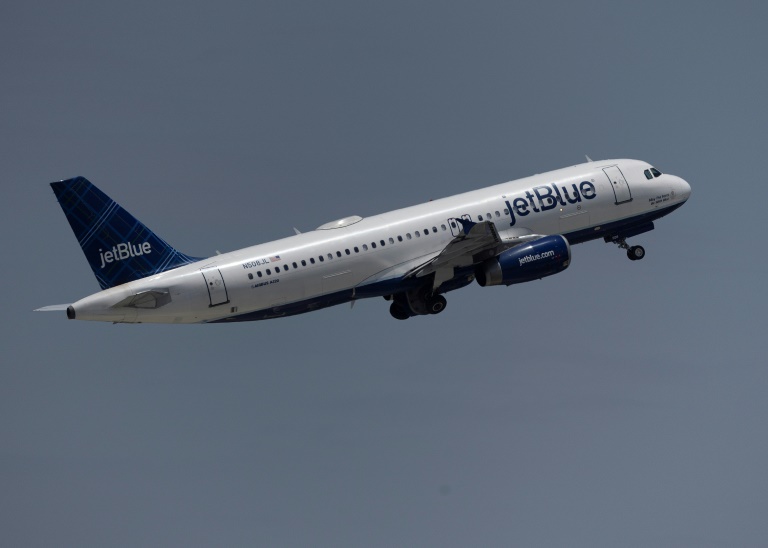
JetBlue Airways plans to acquire low-price carrier Spirit Airlines for $3.8 billion, the companies announced Thursday, in what would establish the fifth largest US airline.

The proposed takeover, which requires regulatory approval, comes a day after Spirit terminated a combination with the Frontier Group following JetBlue’s competing bid challenging the transaction.

By combining, the companies will be able to challenge giant US carriers American, Delta, United and Southwest. They expect $600-$700 million in annual savings by joining forces, said a joint press release from Spirit and JetBlue. 

The companies plan to argue the deal will help consumers.

“We believe we can uniquely be a solution to the lack of competition in the  US airline industry and the continued dominance of the Big Four,” said JetBlue Chief Executive Robin Hayes.

“By enabling JetBlue to grow faster, we can go head-to-head with the legacies in more places to lower fares and improve service for everyone. Even combined with Spirit, JetBlue will still be significantly smaller than the Big Four.”

But some aviation watchers think the transaction could draw criticism in Washington, where antitrust regulators sued to block an alliance of American Airlines and JetBlue.

The all-cash transaction adjusts the price if the deal is delayed because of regulatory challenges. The price will be $33.50 per share if the transaction is completed by December 2023.

But the price would increase to $34.15 per share if the transaction is consummated in July 2024.

JetBlue also agreed to a pay Spirit a fee of $70 million and Spirit shareholders $400 million “in the unlikely event the proposed agreement is not consummated for antitrust reasons,” according to the press release.

In the wake of JetBlue’s challenge to the Spirit-Frontier deal, Spirit leaders, including Chief Executive Ted Christie, had depicted the JetBlue transaction as a risky bet in light of antitrust concerns, as they continued to advocate for the Frontier tie-up.

But on Thursday, Christie told CNBC that at the time he was “actively soliciting” for the Frontier deal, but that there is “a lot of reason to be excited about where we landed.”

“We’ve been listening to the folks at JetBlue and they have a lot of good thoughts on their plans,” Christie told the network.

Although Spirit leaders continued to back the Frontier transaction, they ran into trouble with Spirit shareholders who wanted the richer JetBlue premium. Spirit was repeatedly forced to postpone an investor vote on the Frontier agreement before finally pulling the plug on the transaction on Thursday.

Shares of Spirit rose 4.0 percent to $25.27 in pre-market trading, while JetBlue gained 2.0 percent to $8.57.
Volkswagen 'confident' despite global headwinds

German auto giant Volkswagen said Thursday that it was able to overcome global economic headwinds and supply chain issues to put in a “robust” performance in the first six months of 2022.

A week after Volkswagen announced that it would part ways with its chief executive Herbert Diess, the carmaker said it was “confident” for the second half of the year.

“Despite unprecedented global challenges, Volkswagen has demonstrated remarkable financial robustness,” said chief financial officer Arno Antlitz. 

“Despite all the caution in the face of the volatile market environment and geopolitical risks, we are confident that we can further accelerate the transformation of the group,” Antlitz said.

VW said its net profit rose by 26 percent to 10.6 billion euros ($10.8 billion) in the first six months, even if its bottom-line in the second quarter alone was hit by an accounting effect linked to hedging against fluctuations in raw material prices.

Underlying, or operating, profit rose by 16 percent to 13.2 billion euros in the period from January to June.

“This was driven by strong performances from the premium and sport brand group,” VW said. 

First-half revenues were nearly stable at 132.3 billion euros, but unit sales were down by 14 percent at four million vehicles, not least because of the worldwide shortage of semiconductors plaguing the industry.

– Easing supply constraints –

Looking ahead, Volkswagen said it “confirms its outlook for 2022… as supply constraints ease.” 

The carmaker expected “the product mix to normalise in the second-half as the semi-conductor situation improves in combination with a strong order book,” it said.

“A noticeable recovery of the monthly sales towards the end of second quarter additionally bodes well for second-half sales,” it said.

Nevertheless, it was “still not possible to conclusively assess the specific effects of the war in Ukraine or effects of the Covid-19 pandemic on the Volkswagen group’s business, on the global economy and growth in the industry in fiscal year 2022,” VW cautioned.

In Europe, in particular, there were uncertainties regarding energy supply. 

Last week, Volkswagen unexpectedly announced the departure of CEO Diess after four years at the helm. 

He will be replaced in September by Oliver Blume, the current head of the premium Porsche sports car brand.

There would be “continuity” in the group’s strategic shift towards electric vehicles despite the change of leadership, said Antlitz, who will remain on the board under Blume, in a call with journalists.

Blume will likely be tasked with guiding Porsche through a long-planned stock market entry.

A final decision on the listing should be taken in “late summer”, Antlitz told analysts on a conference call.

UK sea levels rising quicker than century ago: study

Sea levels are increasing around Britain at a far faster rate than a century ago, while the country is warming slightly more than the global average, leading meteorologists said on Thursday.

Their latest annual State of the UK Climate study — compiled by the country’s meteorological authority, the Met Office — reiterated that recent decades have been “warmer, wetter and sunnier” than those in the 20th century. 

The report covering 2021 comes hot on the heels of a heatwave last week that saw temperatures top 40 degrees Celsius (104 degrees Fahrenheit) in England for the first time, setting a record at 40.3C.

The Environment Agency has urged people to use water “wisely” to protect supplies and the environment, after the Met Office said the first half of this year had been among the driest on record.

“The report is very clear that we are seeing a change in our climate, whether that’s temperature, precipitation, sea level rise,” said Liz Bentley, of the Royal Meteorological Society, which publishes the study in its International Journal of Climatology.

The Met Office said in a summary that its latest findings reaffirmed “climate change is not just a problem for the future and that it is already influencing the conditions we experience here at home”. 

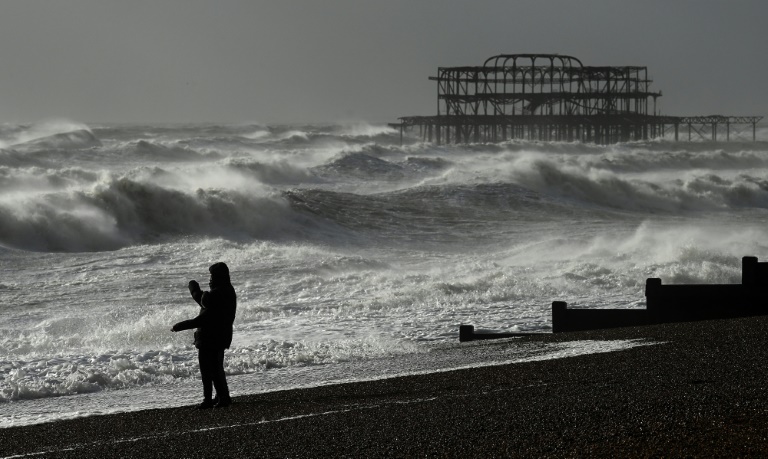
Meteorologists noted in the report that sea levels over the last three decades had increased in some places at more than double the rate recorded at the start of the 1900s.

They have risen by around 16.5 centimetres (6.5 inches) since 1990 — approximately three to 5.2 mms each year, compared to 1.5 mms annually in the early part of last century.

This is exposing more areas of coastal land to larger and more frequent storm surges and “wind-driven wave impacts”, the Met Office said.   

– Dramatic change –

Svetlana Jevrejeva of the National Oceanographic Centre said there was evidence that the rises were due to the increased rate of ice loss from the Greenland and Antarctic ice sheets.

Glacier melting around the world and the warming of the ocean were also responsible, she noted, adding that the effect on Britain’s coastline would only grow. 

“The scale, rate and impact will change and it will change dramatically quite soon,” Jevrejeva told the BBC.

The annual study also found that Britain has warmed at a broadly consistent but “slightly higher” rate than global mean temperature rises.

The Met Office’s Mike Kendon, the study’s lead author, said record temperatures, such as last week’s unprecedented heatwave, were “becoming routine rather than the exception”.

“It is telling that whereas we consider 2021 as near-average for temperature in the context of the current climate, had this occurred just over three decades ago it would have been one of the UK’s warmest years on record,” he added.

The UK hosted the UN’s COP26 summit last November, when scores of countries agreed collective measures to try to prevent catastrophic climate change.

But fears are growing that many countries could stall on delivering pledges — including on ending financing fossil fuel projects abroad — as they struggle to replace Russian energy imports.

In Britain, Foreign Secretary Liz Truss — the favourite in a leadership battle to replace outgoing Prime Minister Boris Johnson — has vowed to axe energy bill levies earmarked for the renewable sector. 

She has insisted that is needed to help people through a worsening cost-of-living crisis.

US climate envoy John Kerry last week warned Britain’s next leader that the commitment to net-zero greenhouse gas emissions by 2050 cannot be compromised.

“We do not have the luxury of jiggering with the 2050 right now,” he told BBC radio.

Europe equities subdued after post-Fed surge on Wall Street

European stock markets ran out of steam Thursday as investors digested another hefty Federal Reserve interest rate hike and awaited vital US economic growth data and key results from big-hitters Amazon and Apple.

Frankfurt, London and Paris stocks rose at the open amid a flood of company earnings, but gains petered out as the morning progressed.

Europe’s energy sector was in particular focus with Britain’s Shell and France’s TotalEnergies posting bumper second-quarter profits on elevated oil and gas prices.

Asian indices mostly climbed following a surge on Wall Street, fuelled by hopes that the US central bank could slow its pace of inflation-fighting interest rate hikes.

All eyes are now on the release of second-quarter growth data and the latest earnings in the United States.

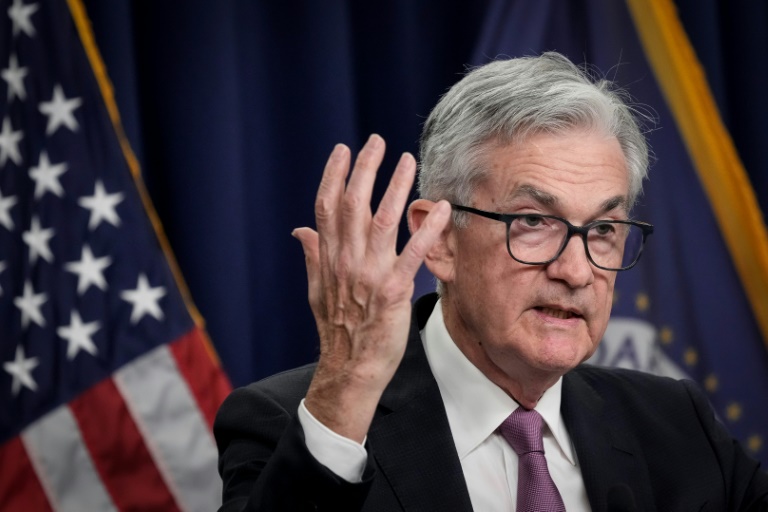
The dollar meanwhile struggled to bounce back from a sell-off — sitting at a three-week low against the yen — that came in response to comments by Fed chief Jerome Powell suggesting its next super-sized increase could be its last.

However, analysts cautioned that the initial joy, which sent New York’s three main indexes soaring, could be short-lived as the global economy continued to face several headwinds and inflation would likely not come down quickly.

As expected, the Fed lifted borrowing costs 75 basis points to a range of 2.25 to 2.5 percent, close to the neutral level it considers neither stimulating nor slowing economic growth.

Forecasts have rates going as high as 3.8 percent in 2023, as the bank tries to control runaway inflation.

There is a growing concern that the sharp rise in rates is bearing down on the world’s top economy and could send it into recession.

In his post-meeting comments, however, Powell said he did not consider that was the case, because “there are too many areas of the economy that are performing too well”. He did note that growth was slowing.

On Wall Street, the Dow and S&P rallied and the Nasdaq soared more than four percent — its best one-day rise since late 2020 — as tech firms caught a wave of optimism.

Asia followed suit, though with more muted gains, although Hong Kong dipped as the city’s de facto central bank followed the Fed in lifting rates owing to its currency peg.

Oil prices rallied as data showed a big drop in US stockpiles, while Powell’s comments on the economy eased recession concerns and the weaker dollar made the commodity cheaper for buyers holding stronger currencies.

– Key figures at around 1100 GMT –

London – FTSE 100: DOWN 0.1 percent at 7,339.10 points

Frankfurt – DAX: UP 0.1 percent at 13,173.01

Paris – CAC 40: FLAT at 6,258.89

EURO STOXX 50: UP 0.2 percent at 3,613.33

Tokyo – Nikkei 225: UP 0.4 percent at 27,815.48 (close)

Hong Kong – Hang Seng Index: DOWN 0.2 percent at 20,622.68 (close)

Shanghai – Composite: UP 0.2 percent at 3,282.58 (close)

New York – Dow: UP 1.4 percent at 32,197.59 (close)

Euro/dollar: UP at $1.0203 from $1.0200 Wednesday

Pound/dollar: UP at $1.2168 from $1.2158 

Euro/pound: DOWN at 83.84 pence from 83.89 pence

Dollar/yen: DOWN at 135.35 yen from 136.57 yen

Brent North Sea crude: UP 1.4 percent at $108.14 per barrel

West Texas Intermediate: UP 1.9 percent at $99.11 per barrel

Europe equities subdued after post-Fed surge on Wall Street

European stock markets ran out of steam Thursday as investors digested another hefty Federal Reserve interest rate hike and awaited vital US economic growth data and key results from big-hitters Amazon and Apple.

Frankfurt, London and Paris stocks rose at the open amid a flood of company earnings, but gains petered out as the morning progressed.

Europe’s energy sector was in particular focus with Britain’s Shell and France’s TotalEnergies posting bumper second-quarter profits on elevated oil and gas prices.

Asian indices mostly climbed following a surge on Wall Street, fuelled by hopes that the US central bank could slow its pace of inflation-fighting interest rate hikes.

All eyes are now on the release of second-quarter growth data and the latest earnings in the United States.

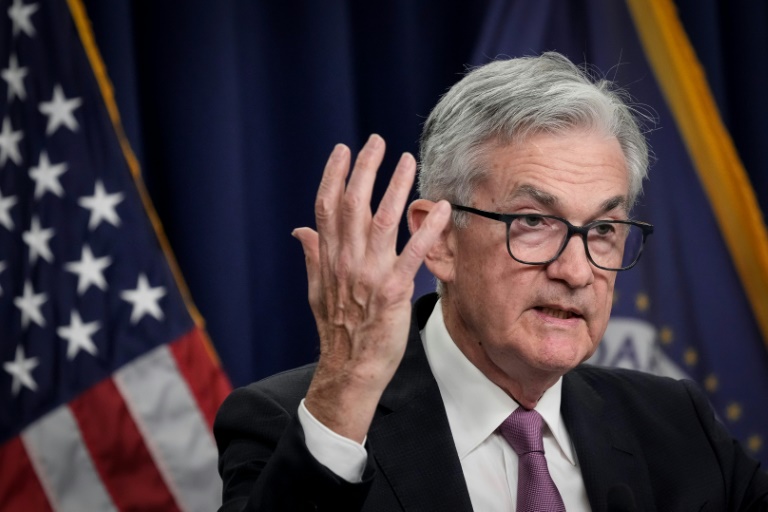
The dollar meanwhile struggled to bounce back from a sell-off — sitting at a three-week low against the yen — that came in response to comments by Fed chief Jerome Powell suggesting its next super-sized increase could be its last.

However, analysts cautioned that the initial joy, which sent New York’s three main indexes soaring, could be short-lived as the global economy continued to face several headwinds and inflation would likely not come down quickly.

As expected, the Fed lifted borrowing costs 75 basis points to a range of 2.25 to 2.5 percent, close to the neutral level it considers neither stimulating nor slowing economic growth.

Forecasts have rates going as high as 3.8 percent in 2023, as the bank tries to control runaway inflation.

There is a growing concern that the sharp rise in rates is bearing down on the world’s top economy and could send it into recession.

In his post-meeting comments, however, Powell said he did not consider that was the case, because “there are too many areas of the economy that are performing too well”. He did note that growth was slowing.

On Wall Street, the Dow and S&P rallied and the Nasdaq soared more than four percent — its best one-day rise since late 2020 — as tech firms caught a wave of optimism.

Asia followed suit, though with more muted gains, although Hong Kong dipped as the city’s de facto central bank followed the Fed in lifting rates owing to its currency peg.

Oil prices rallied as data showed a big drop in US stockpiles, while Powell’s comments on the economy eased recession concerns and the weaker dollar made the commodity cheaper for buyers holding stronger currencies.

– Key figures at around 1100 GMT –

London – FTSE 100: DOWN 0.1 percent at 7,339.10 points

Frankfurt – DAX: UP 0.1 percent at 13,173.01

Paris – CAC 40: FLAT at 6,258.89

EURO STOXX 50: UP 0.2 percent at 3,613.33

Tokyo – Nikkei 225: UP 0.4 percent at 27,815.48 (close)

Hong Kong – Hang Seng Index: DOWN 0.2 percent at 20,622.68 (close)

Shanghai – Composite: UP 0.2 percent at 3,282.58 (close)

New York – Dow: UP 1.4 percent at 32,197.59 (close)

Euro/dollar: UP at $1.0203 from $1.0200 Wednesday

Pound/dollar: UP at $1.2168 from $1.2158 

Euro/pound: DOWN at 83.84 pence from 83.89 pence

Dollar/yen: DOWN at 135.35 yen from 136.57 yen

Brent North Sea crude: UP 1.4 percent at $108.14 per barrel

West Texas Intermediate: UP 1.9 percent at $99.11 per barrel

In energy-starved South Africa, whites-only town basks in solar power

Most of South Africa is wallowing in endless power cuts, but a remote whites-only farming town in the country’s sun-drenched centre is close to producing enough electricity to be self-sufficient.

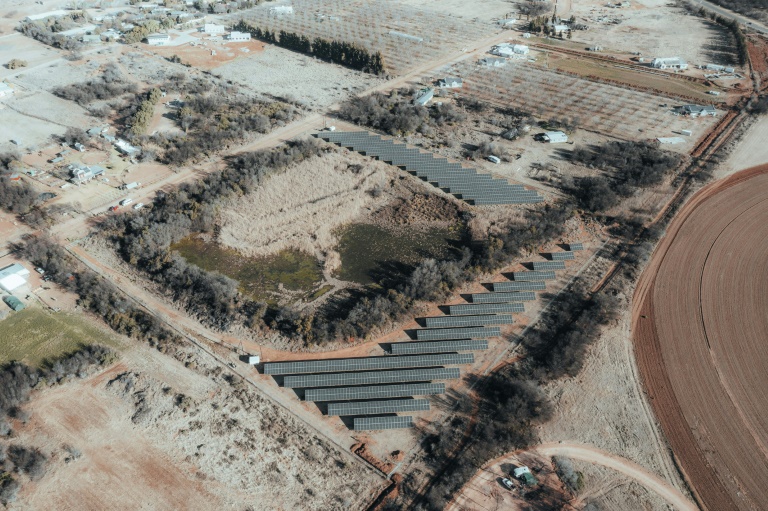
At the end of a gravel track outside the Afrikaner town of Orania, a diamond mesh gate opens onto hundreds of photovoltaic panels mounted in rows.

In energy-starved South Africa, the small settlement of 2,500 people is the only town nationwide close to reaching energy supply autonomy and freeing itself from the failing national power grid.

“The solar farm is quite a huge game changer for us. It brings energy sustainability to the town,” said Gawie Snyman, 43, who manages the municipality.

“Our big dream is to become an energy exporter”.

Africa’s most developed economy has in recent years been plagued by epileptic power supply, which many blame on the ageing coal-fired plants operated by the state-owned energy giant Eskom.

After weeks of some of the worst blackouts in recent years, President Cyril Ramaphosa on Monday announced energy reforms, urging South Africans to “join in a massive rollout of rooftop solar” and sell excess to the grid.

Orania, a town some 620 kilometres (380 miles) southwest of Johannesburg, was already well on its way to becoming totally energy independent in just several years’ time.

– Solar independence –

Built on privately acquired land along the Orange River during the dying days of apartheid, Orania manages its affairs autonomously from the central government.

It was set up to preserve the “culture” of the Afrikaners — descendants of the Dutch and French-Huguenot Protestant settlers who came to South Africa in the 17th century.

Town spokesman Joost Strydom, 28, said the town in the Karoo region now aimed to make the best of year-round sunshine in order to enjoy “total electricity independence”.

With funding from the municipality and private investors, Orania started building its 10.5-million-rand ($620,000) solar farm in June last year. 

Just 12 months later, the town was generating 841 KW of electricity per hour — almost enough to power half the town and surrounding farms growing corn, wheat and nuts, local authorities say.

“It was the basic idea of self-sufficiency that drove us towards doing this,” said Francois Joubert, the engineer who designed what has become known as the “Orasol” plant.

Standing next to a row of solar panels, the 69-year-old in a grey flat cap said Eskom had “failed dismally” to provide the town with the necessary power.

“You can’t rely on anybody to supply you with basic ingredients to live here in the Karoo,” he said. 

“We had to do that ourselves, we had to work it out… And it’s working for us.”

– Thirsty pecans –

A few kilometres from the solar plant, at the De Groot Boord farm, Joubert’s wife Annatjie watched as a mechanical tree shaker released pecan nuts onto a red net during early morning harvesting.

The 66-year-old former IT specialist turned farmer said a stable power supply was crucial for her orchard to flourish.

When Eskom rations electricity to prevent the grid from collapsing, her trees go thirsty as she can’t pump water from the river, she explained.

Yet “it’s vital to complete your irrigation cycles especially with pecans nuts because they use a lot of water,” she said.

The new solar plant would allow her to do just that, she added.

As the world grapples with a food crisis sparked by Russia’s invasion of Ukraine, her husband said countries could ill afford more challenges to domestic food production.

“We need to produce as much as possible of our own food, and therefore we need water… we need electricity,” Joubert said.

The town was proud to be playing its part through producing clean energy, said the engineer.

“We are very glad that we can assist the green idea,” he said.

US rapper JayDaYoungan shot dead: police

US rapper JayDaYoungan, known for his hit song “23 Island,” was shot dead in Louisiana on Wednesday evening, police said.

The musician, who had recently posted photos on Instagram showing him playing with his young son, died in his hometown of Bogalusa, local police said in a statement.

“Javorius Scott has died as a result of his injuries” after the shooting, which took place just before 6:00 pm (23:00 GMT), police said, also identifying Scott by his rap alias JayDaYoungan.

A “close family member” who was also shot is in stable condition in hospital, the statement added.

Media reports identified the other victim as the 24-year-old rapper’s father.

“Detectives are currently conducting interviews and working leads. Further information will follow as it becomes available,” the Bogalusa police department said.

“23 Island” was released three years ago and has 173 million views on YouTube, with another 121 million streams on Spotify.

Hundreds of aftershocks shake earthquake-hit northern Philippines

Anxious residents slept outside after hundreds of aftershocks rattled the earthquake-hit northern Philippines, locals said Thursday, as President Ferdinand Marcos Jr inspected damage in the region. 

Five people were killed and more than 150 injured when a 7.0-magnitude quake struck the lightly populated province of Abra on Wednesday morning, authorities said.

The death toll rose to six on Thursday when a 59-year-old man was hit by a landslide caused by an aftershock, a local disaster official said.

The powerful quake rippled across the mountainous area, toppling buildings, triggering landslides and shaking high-rise towers hundreds of kilometres away in the capital Manila.

“Aftershocks happen almost every 20 minutes, 15 minutes since yesterday,” said Reggi Tolentino, a restaurant owner in Abra’s provincial capital Bangued.

“Many slept outside last night, almost every family.”

Some families have been given modular tents to stay in. Marcos Jr has urged people to wait for their homes to be inspected before moving back.  

Hundreds of buildings were damaged or destroyed, roads were blocked by landslides, and power was knocked out in affected areas. 

A state of calamity was declared in Abra, which felt the full force of the quake, enabling the government to tap funds for the response effort.

Abra police chief Colonel Maly Cula told AFP the overall damage had been “very minimal”. 

“We don’t have a lot of people in evacuation sites, although many people are staying in the streets because of the aftershocks,” Cula said.

“Abra is back to normal.”

Marcos Jr, who took office last month, arrived in Bangued on Thursday to inspect the damage and discuss the response effort with government, military and disaster officials. 

More than 800 aftershocks have been recorded since the quake hit, including 24 that were strong enough to feel, the local seismological agency said.

Aftershocks were expected to continue for “several weeks”, Renato Solidum, director of the Philippine Institute of Volcanology and Seismology, told a briefing presided over by Marcos Jr.

There would be “a lot” in the first three days, then “hopefully it will decline afterwards”, he said.

– Tourism operators hit –

In Vigan City, a UNESCO World Heritage site and tourist destination in Ilocos Sur province, centuries-old structures built during the Spanish colonial period were damaged.

Governor Jeremias Singson told TV broadcaster Teleradyo that 460 buildings in the province had been affected, including the Bantay Bell Tower, which partially crumbled.

“Our tourism industry and small business owners were really affected,” Singson said.

After visiting Vigan on Thursday, Senator Imee Marcos, the president’s elder sister, said the damage to old churches in the city was “overwhelming”.  

The Philippines is regularly rocked by quakes due to its location on the Pacific “Ring of Fire”, an arc of intense seismic activity that stretches from Japan through Southeast Asia and across the Pacific basin.

Wednesday’s quake was one of the strongest recorded in the Philippines in recent years and was felt across swathes of Luzon island, the most populous in the archipelago.

In October 2013, a 7.1-magnitude earthquake struck Bohol Island in the central Philippines, killing more than 200 people and triggering landslides.

Old churches in the birthplace of Catholicism in the Philippines were badly damaged. Nearly 400,000 were displaced and tens of thousands of houses were damaged.

The powerful quake altered the island’s landscape and a “ground rupture” pushed up a stretch of earth by about three metres, creating a wall of rock above the epicentre.

In 1990, a 7.8-magnitude earthquake in the northern Philippines created a ground rupture stretching over a hundred kilometres.

Fatalities were estimated at more than 1,200, with major damage to buildings in Manila.

Shell profit rockets on high oil prices

British energy giant Shell said Thursday that its net profit soared more than five-fold to $18 billion in the second quarter, fuelled by resurgent oil and gas prices, and rewarded shareholders with another bumper buyback.

The surge in profits in the three months to June was partially attributable to a reversal of $4.3 billion in impairments after the company raised its forecasts for the gas and oil market.

“We delivered strong financial results,” said chief executive Ben van Beurden alongside the results statement.

The London-listed energy major announced a $6-billion share buyback programme, having already returned $8.5 billion to shareholders.

Van Beurden warned also that “with volatile energy markets, economic turbulence and the ongoing need for action to tackle climate change, 2022 continues to present challenges to consumers, to government, and to companies”.

Shell had rebounded into a $3.4-billion profit in second quarter of 2021 from a $18.1-billion loss in the same period of 2020 when it took a massive impairment charge on the Covid-ravaged oil market.

However, oil and gas prices have soared this year owing to the Ukraine war and after countries lifted pandemic lockdowns.

Gas prices, which sky-rocketed in March after Russia launched its invasion of Ukraine, are soaring once more this week after Moscow curbed crucial deliveries to Europe in recent days.

The world’s energy majors are reaping the benefits of this year’s surge in global oil and gas prices as a result of the war in Ukraine.

France’s TotalEnergies said Thursday that net profit more than doubled in the second quarter to 5.7 billion euros ($5.8 billion) from a year earlier.

“The energy sector continues to ride high on the supply and demand imbalance caused by the crisis in Ukraine,” said Laura Hoy, equity analyst at Hargreaves Lansdown.

The Ukraine war has meanwhile sparked an exodus of Western energy companies from Russia.

Earlier this year, Shell logged a first-quarter profit of $7.1 billion, despite taking a $3.9-billion charge on its withdrawal from Russian activities.

Close Bitnami banner
Bitnami