AFP

Indebted Evergrande looks to sell Hong Kong headquarters again

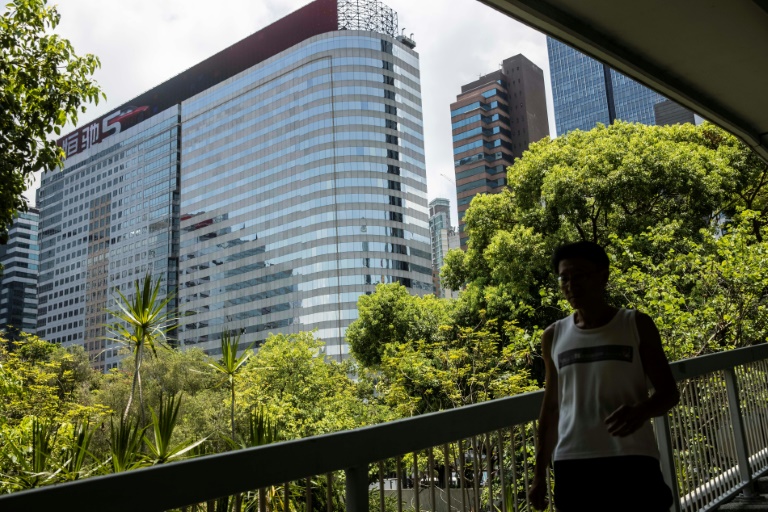
Troubled Chinese property developer Evergrande has found a potential buyer for its Hong Kong headquarters, reports said Thursday, days before an expected announcement of the firm’s long-awaited restructuring plans. 

CK Asset Holdings, founded by Hong Kong billionaire Li Ka-shing, said it had submitted a tender for the 26-storey building, which is currently valued at HK$9 billion ($1.1 billion) according to Hong Kong media. 

Evergrande has been involved in restructuring negotiations after racking up $300 billion in liabilities, as Beijing continues its wide-ranging crackdown on excessive debt and rampant consumer speculation in the real estate sector.

The group previously said it was on track to deliver a preliminary restructuring plan by the end of July.

In 2015, when it acquired the headquarters for $1.61 billion, the deal set a record for the single largest transaction for an office building in Hong Kong, as well as the price per square foot, according to the South China Morning Post.

Last October, the building was offered to Chinese state-owned developer Yuexiu for $1.7 billion, but the buyer pulled out over concerns about Evergrande’s unresolved indebtedness.

Once a leading light in China’s real estate sector, Evergrande has in recent months scrambled to offload assets, with chairman Hui Ka Yan paying off some of its debts using his personal wealth. 

In a further sign of turmoil, Evergrande last week ousted its CEO and CFO after an internal investigation into why banks seized over $2 billion from the firm’s property services arm.

Evergrande’s woes have had knock-on effects throughout China’s property sector, with some smaller companies also defaulting on loans and others struggling to find enough cash. 

China’s real estate firms, long heavily dependent on loans to finance their massive developments, have found themselves in trouble as a push by Beijing to reign in debt has cut cash flows.

Analysts have said that if the property crisis spreads to China’s financial system, the shock would be felt far beyond its borders.

But on Thursday, Hong Kong Financial Secretary Paul Chan said the difficulties of Chinese developers would have a “very limited” impact on the financial hub’s banking stability. 

“We have been monitoring this situation very carefully, and we do not find cause for alarm,” Chan said.

Evergrande did not immediately reply to AFP’s request for comment.

US GDP data due with all eyes on possible recession

The United States is set to release key data on economic growth Thursday and global investors are watching closely as the world’s largest economy flirts with recession — while President Joe Biden walks a political tightrope.

Though Biden says he is confident the US economy is not suffering a downturn, a report showing a second consecutive quarter of negative growth — meeting one of the common definitions of a recession — would increase fears of a wider downturn.

Biden’s critics would seize on such a report as proof of the veteran Democrat’s mismanagement of the economy.

With crucial midterm elections just over three months away, the stakes could not be higher, and the Biden administration has spent the past week talking up the positive signs in the US economy, including job growth and solid consumer spending.

It would be highly unusual for an economy still adding jobs at a rapid pace, and with near record-low unemployment, to fall into recession.

The consensus forecast among analysts is for an annualized 0.5 percent increase in the gross domestic product in the second quarter, after a 1.6 percent decline in the first three months of the year.

But many economists say recent figures suggest GDP may have contracted in the April-June period.

With the labor market showing some signs of cooling and supersized interest rate hikes by the Federal Reserve slowing the economy — the latest coming on Wednesday — many economists say the recession discussion is more a matter of when, not if.

And that poses a major political headache for the president, who has seen his approval ratings plummet in recent months as American families struggle to make ends meet due to surging inflation.

– Way out? –

In recent days, Biden has led his administration in a chorus of denial.

“We’re not going to be in a recession, in my view,” he insisted Monday.

Treasury Secretary Janet Yellen argued that while growth is slowing, the data does not necessarily point to an extended downturn.

“I’m not saying that we will definitely avoid a recession, but I think there is a path that keeps the labor market strong and brings inflation down,” she said.

Fed Chair Jerome Powell agreed, saying even with ongoing interest rate hikes to slow the economy, it is possible to cool price price pressures without causing a downturn or a big jump in joblessness.

The central bank announced another big interest rate hike of 75 basis points on Wednesday, the fourth increase this year, and stressed it would not hesitate to go for “another unusually large increase” if needed — or an even bigger one.

Powell said the overriding aim was to get sky-high inflation moving back down toward two percent, but the Fed wants to strike a balance.

“We’re trying to do just the right amount. We’re not trying to have a recession and we don’t think we have to,” he told reporters.

Nevertheless, the International Monetary Fund downgraded its growth forecast for the United States earlier this week — and said a recession may already have begun.

IMF chief economist Pierre-Olivier Gourinchas said the path to avoiding a downturn was “very narrow” and warned that even a “small shock” could tip the economy into the abyss.

No slowdown yet: US import deluge tests supply chain

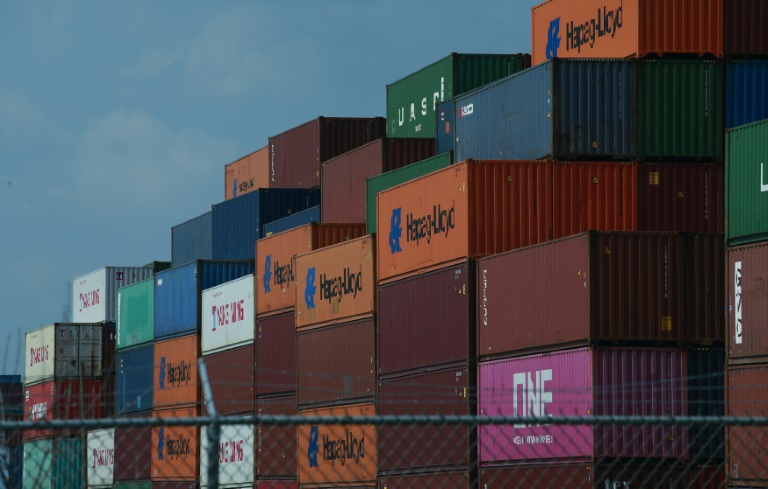
Throngs of 18-wheelers are the clearest sign of brisk activity at the Port Newark-Elizabeth marine terminals in northern New Jersey, defying talk of a US economic slowdown.

Last week, the Port of New York and New Jersey reported that its June 2022 volumes were the second-highest in history, capping a torrid semester that has overtaken the first half of the record-setting 2021 year by 11.4 percent.

“Volumes continue to be extremely strong,” said Michael Bozza, assistant director of commercial development at the Port of New York and New Jersey, who nonetheless expects a moderation in activity later in 2022, partly due to inflation.

Bozza said warehouses, freight rail and other supply chain nodes remain “stressed” and are at or near capacity. Some of the cargo is being held for later in the year as importers shift from a “just in time” strategy to “just in case,” he said.

A key report Thursday could show the US economy technically entered recession last quarter. But the nation’s ports tell a different story.

“Are we seeing an economy that’s screeching to a halt? No, we are not,” said Phil Levy, chief economist of Flexport, a freight forwarding company. “We are seeing continued imports. We are seeing continued consumption.”

That persistent deluge of imports — which is also playing out at other key US container ports such as Los Angeles and Savannah, Georgia — is one reason logistics experts remain cautious about the state of the US supply chain, even though ports no longer face the backlogs of last fall.

New problems sometimes surface quickly, as was the case last week, when protests from truckers over a newly implemented California law effectively halted deliveries at the Port of Oakland, another of the nation’s larger container ports.

Normal operation has since resumed, but the incident underscores the brittle state of play for overtaxed US infrastructure during the pandemic.

“There’s not a lot of slack in the system when something goes wrong,” said Sal Mercogliano, a maritime historian at Campbell University in North Carolina.

“While the economy is slowing and inflation is rising, people are still buying a lot.”

– Rail bottleneck –

Worries in the United States about the supply chain hit a peak last fall when dozens of stalled vessels of the Ports of Los Angeles and Long Beach sparked worries of a spartan holiday season.

Those fears proved overwrought. To secure merchandise, retailers took extraordinary measures, making greater use of air cargo and in some cases chartering their own vessels to keep store shelves full.

Most major ports no longer have big backlogs, but there are other problems in the system.

Gene Seroka, executive director of the Port of Los Angeles, recently highlighted freight rail delays as a worry. He pointed to an excess of some 20,000 rail containers stuck on the facility.

“We must take action on this immediately to avoid a nationwide logjam,” Seroka said two weeks ago.

At least part of the problem in rail transport stems from staff cutbacks at freight rail companies such as CSX and Union Pacific in the years immediately preceding the pandemic.

“The rail is a big piece of why things are still snarled up,” said Jason Miller, a supply chain management professor at Michigan State University, who notes that overall freight rail employment is about 40,000 below its level in 2016.

The unresolved state of labor talks between rail companies and rail worker unions also adds unease. The two sides have been unable to reach an accord on a contract to oversee wages, health care and working conditions.

On July 15, President Joe Biden blocked a freight railroad strike for at least 60 days, signing an executive order to establish an arbitration system to resolve the conflict.

Another outstanding labor issue is the contract for West Coast longshoremen, which expired at the end of June. Again, there has been no strike as the two sides continue negotiations.

East Coast ports such as New York and others in the Gulf Coast have picked up incremental business from shippers worried about strike risk, as well as a repeat of last fall’s travails in Los Angeles and Long Beach.

Bozza estimates that about seventy percent of the New York and New Jersey port’s new volumes in 2022 is displaced cargo from the West Coast. 

Despite these issues, Miller does not expect a repeat of last fall’s crisis, saying, “We’re in a better place than we were eight or nine months ago.”

“There’s a lot of uncertainty over just how much spending power the US consumer has this holiday season,” said Miller, who pointed to China’s zero-tolerance Covid-19 policy as another big supply chain wildcard.

But Levy of Flexport notes that port delivery times, while improving, are still running much longer than in the pre-pandemic period.

“We are still experiencing ample supply chain difficulties,” Levy said. “Lately, we’ve seen ports do better and rail do worse.”

Hundreds of aftershocks shake earthquake-hit northern Philippines

Anxious residents slept outside after hundreds of aftershocks rattled the earthquake-hit northern Philippines, locals said Thursday, as President Ferdinand Marcos Jr inspected damage in the region. 

Five people were killed and more than 150 injured when a 7.0-magnitude quake struck the lightly populated province of Abra on Wednesday morning, authorities said.

The powerful quake rippled across the mountainous area, toppling buildings, triggering landslides and shaking high-rise towers hundreds of kilometres away in the capital Manila.

“Aftershocks happen almost every 20 minutes, 15 minutes since yesterday,” said Reggi Tolentino, a restaurant owner in Abra’s provincial capital Bangued.

“Many slept outside last night, almost every family.”

Some families have been given modular tents to stay in. Marcos Jr has urged people to wait for their homes to be inspected before moving back.  

Hundreds of buildings were damaged or destroyed, roads were blocked by landslides, and power was knocked out in affected areas. 

But in Abra, which felt the full force of the quake, overall damage had been “very minimal”, police chief Colonel Maly Cula told AFP. 

“We don’t have a lot of people in evacuation sites, although many people are staying in the streets because of the aftershocks,” Cula said.

“Abra is back to normal.”

Marcos Jr, who took office last month, arrived in Bangued on Thursday to inspect the damage and discuss the response effort with government, military and disaster officials. 

More than 800 aftershocks have been recorded since the quake hit, including 24 that were strong enough to feel, the local seismological agency said.

Aftershocks were expected to continue for “several weeks”, Renato Solidum, director of the Philippine Institute of Volcanology and Seismology, told a briefing presided over by Marcos Jr.

There would be “a lot” in the first three days, then “hopefully it will decline afterwards”, he said.

– Tourism operators hit –

In Vigan City, a UNESCO World Heritage site and tourist destination in Ilocos Sur province, centuries-old structures built during the Spanish colonial period were damaged.

Governor Jeremias Singson told TV broadcaster Teleradyo that 460 buildings in the province had been affected, including the Bantay Bell Tower, which partially crumbled.

“Our tourism industry and small business owners were really affected,” Singson said.

After visiting Vigan on Thursday, Senator Imee Marcos, the president’s elder sister, said the damage to old churches in the city was “overwhelming”.  

The Philippines is regularly rocked by quakes due to its location on the Pacific “Ring of Fire”, an arc of intense seismic activity that stretches from Japan through Southeast Asia and across the Pacific basin.

Wednesday’s quake was one of the strongest recorded in the Philippines in recent years and was felt across swathes of Luzon island, the most populous in the archipelago.

In October 2013, a magnitude 7.1 earthquake struck Bohol Island in the central Philippines, killing more than 200 people and triggering landslides.

Old churches in the birthplace of Catholicism in the Philippines were badly damaged. Nearly 400,000 were displaced and tens of thousands of houses were damaged. 

The powerful quake altered the island’s landscape and a “ground rupture” pushed up a stretch of earth by about three metres, creating a wall of rock above the epicentre. 

In 1990, a 7.8-magnitude earthquake in the northern Philippines created a ground rupture stretching over a hundred kilometres.

Fatalities were estimated at more than 1,200, with major damage to buildings in Manila.

Asian markets track post-Fed surge on Wall St, but caution urged

Asian markets rose Thursday following a surge on Wall Street fuelled by hopes that the Federal Reserve could slow its pace of inflation-fighting interest rate hikes.

The dollar also struggled to bounce back from a sell-off — sitting at a three-week low against the yen — that came in response to comments by bank chief Jerome Powell suggesting its next super-sized increase could be its last.

However, analysts cautioned that the initial joy, which sent New York’s three main indexes soaring, could be short-lived as the global economy continued to face several headwinds and inflation would not likely come down quickly.

As expected, the Fed lifted borrowing costs 75 basis points to a range of 2.25-2.5 percent, close to the neutral level it considers neither stimulating nor slowing economic growth.

Forecasts have rates going as high as 3.8 percent in 2023 as the bank tries to control runaway inflation.

There is a growing concern that the sharp rise in rates is bearing down on the world’s top economy and could send it into recession.

But in his post-meeting comments, Powell said he did not consider that was the case, because “there are too many areas of the economy that are performing too well”. He did, however, note growth was slowing.

He added that officials would not give any guidance on their next move, instead taking each decision on a meeting-to-meeting basis. 

And while he said another “unusually large increase could be appropriate” in September, markets took heart from the suggestion that the bank was ready to take its foot off the gas towards the end of the year.

On Wall Street, the Dow and S&P rallied and the Nasdaq soared more than four percent — its best one-day rise since late 2020 — as tech firms caught a wave of optimism. The sector is more susceptible to higher rates.

And Asia followed suit, though with more muted gains.

Hong Kong was up after bouncing from initial losses as the city’s de facto central bank followed the Fed in lifting rates owing to its currency peg.

Shanghai, Tokyo, Sydney, Seoul, Singapore, Taipei, Manila, Jakarta and Wellington were also well in the green.

The prospect of a slower pace of rate hikes weighed on the dollar against most other currencies, and on Thursday hit its lowest level against the yen since July 6.

However, there was a warning that the positive mood likely will not last.

“This market move is the victory of hope over experience,” Jeffrey Rosenberg, at BlackRock Inc, told Bloomberg Television. “I’d be a little bit cautious here.”

And Citigroup’s Andrew Hollenhorst and Veronica Clark added that traders appeared to be misjudging Powell’s remarks.

“We read Chair Powell’s press conference as more hawkish than the market’s interpretation,” they said, adding that inflation readings excluding food and energy will “push the Fed to hike more aggressively than they or markets anticipate”.

All eyes are now on the release of second-quarter growth data later Thursday. After a 1.6 percent contraction in the previous three months, another negative reading would put the economy into a technical recession.

An expected phone call between Joe Biden and China’s Xi Jinping will also be high on the agenda for investors as the world’s superpowers try to navigate a period of rising tensions. Anything on US tariffs and Taiwan will be among the main areas of focus.

– Key figures at around 0230 GMT –

Tokyo – Nikkei 225: UP 0.3 percent at 27,804.21 (break)

Hong Kong – Hang Seng Index: UP 0.4 percent at 20,75001

Shanghai – Composite: UP 0.7 percent at 3,299.89

Euro/dollar: DOWN at $1.0198 from $1.0201 late Wednesday

Pound/dollar: UP at $1.2157 from $1.2151 

Euro/pound: DOWN at 83.39 pence from 83.85 pence

Dollar/yen: DOWN at 135.52 yen from 136.51 yen

West Texas Intermediate: UP 1.6 percent at $98.80 per barrel

Brent North Sea crude: UP 1.2 percent at $108.00 per barrel

New York – Dow: UP 1.4 percent at 32,197.59 (close)

London – FTSE 100: UP 0.6 percent at 7,348.23 (close) 

Asian markets track post-Fed surge on Wall St, but caution urged

Asian markets rose Thursday following a surge on Wall Street fuelled by hopes that the Federal Reserve could slow its pace of inflation-fighting interest rate hikes.

The dollar also struggled to bounce back from a sell-off — sitting at a three-week low against the yen — that came in response to comments by bank chief Jerome Powell suggesting its next super-sized increase could be its last.

However, analysts cautioned that the initial joy, which sent New York’s three main indexes soaring, could be short-lived as the global economy continued to face several headwinds and inflation would not likely come down quickly.

As expected, the Fed lifted borrowing costs 75 basis points to a range of 2.25-2.5 percent, close to the neutral level it considers neither stimulating nor slowing economic growth.

Forecasts have rates going as high as 3.8 percent in 2023 as the bank tries to control runaway inflation.

There is a growing concern that the sharp rise in rates is bearing down on the world’s top economy and could send it into recession.

But in his post-meeting comments, Powell said he did not consider that was the case, because “there are too many areas of the economy that are performing too well”. He did, however, note growth was slowing.

He added that officials would not give any guidance on their next move, instead taking each decision on a meeting-to-meeting basis. 

And while he said another “unusually large increase could be appropriate” in September, markets took heart from the suggestion that the bank was ready to take its foot off the gas towards the end of the year.

On Wall Street, the Dow and S&P rallied and the Nasdaq soared more than four percent — its best one-day rise since late 2020 — as tech firms caught a wave of optimism. The sector is more susceptible to higher rates.

And Asia followed suit, though with more muted gains.

Hong Kong was up after bouncing from initial losses as the city’s de facto central bank followed the Fed in lifting rates owing to its currency peg.

Shanghai, Tokyo, Sydney, Seoul, Singapore, Taipei, Manila, Jakarta and Wellington were also well in the green.

The prospect of a slower pace of rate hikes weighed on the dollar against most other currencies, and on Thursday hit its lowest level against the yen since July 6.

However, there was a warning that the positive mood likely will not last.

“This market move is the victory of hope over experience,” Jeffrey Rosenberg, at BlackRock Inc, told Bloomberg Television. “I’d be a little bit cautious here.”

And Citigroup’s Andrew Hollenhorst and Veronica Clark added that traders appeared to be misjudging Powell’s remarks.

“We read Chair Powell’s press conference as more hawkish than the market’s interpretation,” they said, adding that inflation readings excluding food and energy will “push the Fed to hike more aggressively than they or markets anticipate”.

All eyes are now on the release of second-quarter growth data later Thursday. After a 1.6 percent contraction in the previous three months, another negative reading would put the economy into a technical recession.

An expected phone call between Joe Biden and China’s Xi Jinping will also be high on the agenda for investors as the world’s superpowers try to navigate a period of rising tensions. Anything on US tariffs and Taiwan will be among the main areas of focus.

– Key figures at around 0230 GMT –

Tokyo – Nikkei 225: UP 0.3 percent at 27,804.21 (break)

Hong Kong – Hang Seng Index: UP 0.4 percent at 20,75001

Shanghai – Composite: UP 0.7 percent at 3,299.89

Euro/dollar: DOWN at $1.0198 from $1.0201 late Wednesday

Pound/dollar: UP at $1.2157 from $1.2151 

Euro/pound: DOWN at 83.39 pence from 83.85 pence

Dollar/yen: DOWN at 135.52 yen from 136.51 yen

West Texas Intermediate: UP 1.6 percent at $98.80 per barrel

Brent North Sea crude: UP 1.2 percent at $108.00 per barrel

New York – Dow: UP 1.4 percent at 32,197.59 (close)

London – FTSE 100: UP 0.6 percent at 7,348.23 (close) 

Hundreds of aftershocks shake earthquake-hit northern Philippines

Anxious residents slept outside after hundreds of aftershocks rattled the earthquake-hit northern Philippines, locals said Thursday, as President Ferdinand Marcos Jr flew to the region to inspect the damage.

Five people were killed and more than 150 injured when a 7.0-magnitude quake struck the lightly populated province of Abra on Wednesday morning, authorities said.

The powerful quake rippled across the mountainous region, toppling buildings, triggering landslides and shaking high-rise towers hundreds of kilometres away in the capital Manila.

“Aftershocks happen almost every 20 minutes, 15 minutes since yesterday,” said Reggi Tolentino, a restaurant owner in Abra’s provincial capital Bangued.

“Many slept outside last night, almost every family.”

Hundreds of buildings were damaged or destroyed, roads were blocked by landslides and power was knocked out in affected provinces. 

But in Abra, which felt the full force of the quake, overall damage had been “very minimal”, police chief Colonel Maly Cula told AFP. 

“We don’t have a lot of people in evacuation sites although many people are staying in the streets because of the aftershocks,” Cula said.

“Abra is back to normal.”

More than 800 aftershocks have been recorded since the quake hit, including 24 that were strong enough to feel, the local seismological agency said. 

In Vigan City, a UNESCO World Heritage site and tourist destination in Ilocos Sur province, centuries-old structures built during the Spanish colonial period were damaged.

Governor Jeremias Singson told Teleradyo that 460 buildings in the province had been affected, including the Bantay Bell Tower, which partially crumbled.

“Our tourism industry and small business owners were really affected,” Singson said.

The Philippines is regularly rocked by quakes due to its location on the Pacific “Ring of Fire”, an arc of intense seismic activity that stretches from Japan through Southeast Asia and across the Pacific basin.

Wednesday’s quake was one of the strongest recorded in the Philippines in recent years and was felt across swathes of Luzon island, the most populous in the archipelago.

In October 2013, a magnitude 7.1 earthquake struck Bohol Island in the central Philippines, killing more than 200 people and triggering landslides.

Old churches in the birthplace of Catholicism in the Philippines were badly damaged. Nearly 400,000 were displaced and tens of thousands of houses were damaged. 

The powerful quake altered the island’s landscape and a “ground rupture” pushed up a stretch of earth by about three metres, creating a wall of rock above the epicentre. 

In 1990, a 7.8-magnitude earthquake in the northern Philippines created a ground rupture stretching over a hundred kilometres.

Fatalities were estimated to reach over 1,200, with major damage to buildings in Manila.

Samsung Electronics says operating profits up 12.18 percent in Q2

South Korean chip powerhouse Samsung Electronics said Thursday that second-quarter operating profits were up 12.18 percent, with record profits in its system semiconductor division despite global supply chain woes.

The company’s “system semiconductor businesses… achieved a record high quarterly profit,” Samsung said in a statement, adding it had both expanded its product line-up and increased the supply of chips to global customers.

“Earnings in the Memory Business improved both year-on-year and quarter-on-quarter as the Company focused on meeting solid demand for servers,” Samsung said.

In June, the company became the first chipmaker in the world to mass-produce 3-nanometre microchips as it sought to match and eventually outpace Taiwan’s TSMC in the race to manufacture the world’s most advanced chips. 

The new chips will be smaller, more powerful and efficient, and will be used in high-performance computing applications before being put into gadgets such as mobile phones.

The vast majority of the world’s most advanced microchips are made by just two companies — Samsung and TSMC — both of which are running at full capacity to alleviate a global shortage.

Samsung is the market leader in memory chips, but it has been scrambling to catch up with TSMC in its advanced foundry division, which makes high-tech microchips for other companies.

Samsung, which is also a world leader in handset production, said demand and profits from its smartphone division were down from the first quarter.

“Overall market demand declined from the previous quarter amid geopolitical issues and concerns over inflation on top of continued weak seasonality,” it said.

“Profitability decreased from the previous quarter at some degree due to rising costs of components and logistics as well as negative effects of foreign exchange movement,” it added.

But overall, the weakness of the Korean won against the US dollar benefited the company, it said in the statement, “resulting in an approximately 1.3 trillion won ($994 million) company-wide gain in operating profit compared to the previous quarter.”

Weak chip market

Samsung’s mobile business is “expected to improve in the second half of the year from the second quarter, which was heavily affected by external elements such as the war in Ukraine,” Park Sung-soon, an analyst at Cape Investment & Securities, told AFP.

But decreased market demand for memory chips due to concerns over a possible global recession will hamper the company’s profit outlook, he said.

“What determines Samsung’s overall profit is its semiconductor business. With what’s expected to be faltering demand for memory chips down the road, sales could weaken in the second half of the year.” 

Global demand for chips is “entering a period of weakness, which will persist through 2023,” Richard Gordon, an analyst at research company Gartner, said in a report, according to Bloomberg.

“We are already seeing weakness in semiconductor end markets, especially those exposed to consumer spending.”

The supply of memory chips has become an issue of global geopolitical significance recently, with leading governments scrambling to secure advanced chip supplies.

That was demonstrated in May when US President Joe Biden kicked off a South Korea tour by visiting Samsung’s sprawling Pyeongtaek chip plant.

Russia’s invasion of Ukraine has “further spotlighted the need to secure our critical supply chains”, Biden said at the plant, underscoring the importance of bolstering technology partnerships among “close partners who do share our values”.

Samsung Electronics says operating profits up 12.18 percent in Q2

South Korean chip powerhouse Samsung Electronics said Thursday that second-quarter operating profits were up 12.18 percent, with record profits in its system semiconductor division despite global supply chain woes.

The company’s “system semiconductor businesses… achieved a record high quarterly profit,” Samsung said in a statement, adding it had both expanded its product line-up and increased the supply of chips to global customers.

“Earnings in the Memory Business improved both year-on-year and quarter-on-quarter as the Company focused on meeting solid demand for servers,” Samsung said.

In June, the company became the first chipmaker in the world to mass-produce 3-nanometre microchips as it sought to match and eventually outpace Taiwan’s TSMC in the race to manufacture the world’s most advanced chips. 

The new chips will be smaller, more powerful and efficient, and will be used in high-performance computing applications before being put into gadgets such as mobile phones.

The vast majority of the world’s most advanced microchips are made by just two companies — Samsung and TSMC — both of which are running at full capacity to alleviate a global shortage.

Samsung is the market leader in memory chips, but it has been scrambling to catch up with TSMC in its advanced foundry division, which makes high-tech microchips for other companies.

Samsung, which is also a world leader in handset production, said demand and profits from its smartphone division were down from the first quarter.

“Overall market demand declined from the previous quarter amid geopolitical issues and concerns over inflation on top of continued weak seasonality,” it said.

“Profitability decreased from the previous quarter at some degree due to rising costs of components and logistics as well as negative effects of foreign exchange movement,” it added.

But overall, the weakness of the Korean won against the US dollar benefited the company, it said in the statement, “resulting in an approximately 1.3 trillion won ($994 million) company-wide gain in operating profit compared to the previous quarter.”

Weak chip market

Samsung’s mobile business is “expected to improve in the second half of the year from the second quarter, which was heavily affected by external elements such as the war in Ukraine,” Park Sung-soon, an analyst at Cape Investment & Securities, told AFP.

But decreased market demand for memory chips due to concerns over a possible global recession will hamper the company’s profit outlook, he said.

“What determines Samsung’s overall profit is its semiconductor business. With what’s expected to be faltering demand for memory chips down the road, sales could weaken in the second half of the year.” 

Global demand for chips is “entering a period of weakness, which will persist through 2023,” Richard Gordon, an analyst at research company Gartner, said in a report, according to Bloomberg.

“We are already seeing weakness in semiconductor end markets, especially those exposed to consumer spending.”

The supply of memory chips has become an issue of global geopolitical significance recently, with leading governments scrambling to secure advanced chip supplies.

That was demonstrated in May when US President Joe Biden kicked off a South Korea tour by visiting Samsung’s sprawling Pyeongtaek chip plant.

Russia’s invasion of Ukraine has “further spotlighted the need to secure our critical supply chains”, Biden said at the plant, underscoring the importance of bolstering technology partnerships among “close partners who do share our values”.

Biden hails Democrats' breakthrough on health, climate spending bill

President Joe Biden hailed a breakthrough Wednesday in getting a major chunk of his seemingly doomed healthcare and climate crisis agenda through Congress after Senate Democrats overcame divisions.

“This is the action the American people have been waiting for. This addresses the problems of today — high health care costs and overall inflation — as well as investments in our energy security for the future,” Biden said in a statement.

The bill still has some way to go before becoming law but the multi-billion dollar package finally won crucial support from conservative Democratic Senator Joe Manchin. His previous opposition had essentially killed Biden’s ambitious plans, because in the 50-50 Senate, where Republicans rarely back Biden on anything, Democrats can’t afford to lose a single vote.

For Biden, whose approval ratings hover below 40 percent, the truce with Manchin comes as a big political boost ahead of November midterms when his Democratic Party is forecast to lose control of Congress to the Republicans.

If passed, the bill will pour some $369 billion into clean energy and climate initiatives and $64 billion into state-funded healthcare, including a popular measure meant to lower ruinously high prescription medicine prices.

It would be paid for by raising $739 billion, with a major chunk coming from a 15 percent corporate tax rate. An extra $300 billion raised under the plan would go to paying off the federal deficit.

Biden, who has had to abandon even broader scale social and environmental spending ideas, got the good news of a reprieve for this bill on the same day he finished his five days isolating after a Covid-19 infection.

It also comes as Congress moves closer to passing another of his priorities — a $52 billion fund to encourage domestic production of semiconductors, the electronic brains in modern equipment ranging from washing machines to military weapons.

In his statement, Biden said prescription drug prices would drop and healthcare for Americans using the subsidized Affordable Care Act policy would also become $800 a year cheaper.

Funding for clean energy will “create thousands of new jobs and help lower energy costs in the future,” he said.

“We will pay for all of this by requiring big corporations to pay their fair share of taxes, with no tax increases at all for families making under $400,000 a year.”

Biden thanked Manchin, an often unpredictable partner in the Senate, for his “extraordinary effort.”

“If enacted, this legislation will be historic, and I urge the Senate to move on this bill as soon as possible, and for the House to follow as well.”

Close Bitnami banner
Bitnami