AFP

France on course for driest July on record: weather office

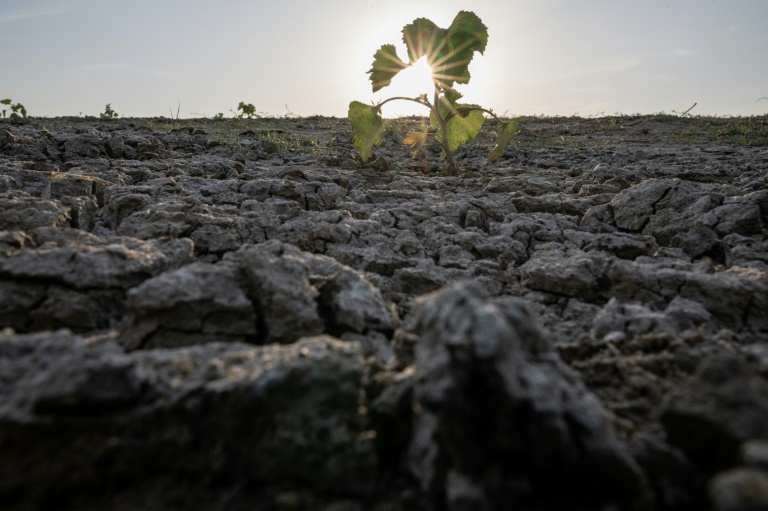
France is on track to experience its driest July on record, the national weather service said Wednesday, with drought-like conditions leading to increasingly severe water restrictions around the country.

“The month of July will very likely be the driest July ever recorded since 1959,” spokesman Christian Veil from Meteo-France told AFP.

On average, just eight mm (0.3 inches) of rain fell across the country from July 1-25, less than the previous low of 16 mm which was clocked in 2020, he said.

“We’re in a very difficult situation even though we’re only at the end of July,” he said, saying soil humidity was at record lows and many trees were losing their leaves prematurely. 

Farmers across the country are reporting difficulties in feeding livestock because of parched grasslands, while irrigation has been banned in large areas of northwest and southeast France due to water shortages.

The flow of the river Loire for example, which empties into the Atlantic in northwest France, has fallen by a quarter since the start of July.

On the eastern river Rhine, which forms the France-Germany border, commercial boats are having to run at a third of their carrying capacity in order to avoid hitting the bottom because the water level is so low.

A total of 90 out of 96 administrative regions in mainland France have water restrictions of some sort, a record number, according to the environment ministry.

Boeing profit falls as 787 deliveries still halted

Boeing reported a drop in second-quarter profits Wednesday on the continued halt to deliveries of the 787, in results that missed analyst expectations.

The aviation giant reported a 67 percent plunge in quarterly profits to $193 million, as revenues declined 1.9 percent to $16.7 billion.

But shares rose after the report, as Boeing confirmed it still expects to have positive cash flow in 2022. 

The company said it was working with US air safety officials on “final actions” to resume 787 deliveries. 

The halt on the widebody plane has been a drag on Boeing’s financial performance for more than a year. 

The company has been working with the Federal Aviation Administration to address a series of manufacturing issues uncovered in 2020 and since.

The enhanced regulatory scrutiny of the 787 and other Boeing planes comes on the heels of a pair of crashes in 2018 and 2019 on the 737 MAX, which led to a lengthy global grounding of the plane.

But the MAX has since returned to service, enabling Boeing to ramp up production of the planes, collect meaningful revenues and announce significant new orders at the Farnborough Airshow earlier this month.

“We made important progress across key programs in the second quarter and are building momentum in our turnaround,” said Chief Executive Dave Calhoun.

“As we begin to hit key milestones, we were able to generate positive operating cash flow this quarter and remain on track to achieve positive free cash flow for 2022. While we are making meaningful progress, we have more work ahead.”

Shares climbed 2.0 percent to $159.01 in pre-market trading.

Boeing profit falls as 787 deliveries still halted

Boeing reported a drop in second-quarter profits Wednesday on the continued halt to deliveries of the 787, in results that missed analyst expectations.

The aviation giant reported a 67 percent plunge in quarterly profits to $193 million, as revenues declined 1.9 percent to $16.7 billion.

But shares rose after the report, as Boeing confirmed it still expects to have positive cash flow in 2022. 

The company said it was working with US air safety officials on “final actions” to resume 787 deliveries. 

The halt on the widebody plane has been a drag on Boeing’s financial performance for more than a year. 

The company has been working with the Federal Aviation Administration to address a series of manufacturing issues uncovered in 2020 and since.

The enhanced regulatory scrutiny of the 787 and other Boeing planes comes on the heels of a pair of crashes in 2018 and 2019 on the 737 MAX, which led to a lengthy global grounding of the plane.

But the MAX has since returned to service, enabling Boeing to ramp up production of the planes, collect meaningful revenues and announce significant new orders at the Farnborough Airshow earlier this month.

“We made important progress across key programs in the second quarter and are building momentum in our turnaround,” said Chief Executive Dave Calhoun.

“As we begin to hit key milestones, we were able to generate positive operating cash flow this quarter and remain on track to achieve positive free cash flow for 2022. While we are making meaningful progress, we have more work ahead.”

Shares climbed 2.0 percent to $159.01 in pre-market trading.

Markets mixed as traders await US rate decision

Stock markets traded mixed and the dollar retreated Wednesday as attention switched to the Federal Reserve and the size of its upcoming interest rate hike.

Following Tuesday’s steep drop on Wall Street, Asia and Europe diverged as traders pored over more company earnings that pointed to fallout caused by decades-high inflation.

Central banks are seeking to combat runaway prices by hiking interest rates.

Fed officials are widely tipped to announce a 0.75-percentage-point raise later Wednesday.

“This increase in the interest rate is already very much priced in,” noted Naeem Aslam, chief market analyst at Avatrade.

He added that should the Fed indicate a plan to raise rates by another 75 basis points at its next meeting, “that would be highly bullish for the dollar”. 

Focus was also on gas prices as Russian energy giant Gazprom slashed deliveries of the fuel to Europe via the Nord Stream pipeline.

EU states have accused Russia of squeezing supplies in retaliation for Western sanctions over Moscow’s war in Ukraine.

The price of natural gas reference, Dutch TTF, surged nine percent to 218.13 euros per megawatt hour, building on similar gains Tuesday.

On the corporate front, Switzerland’s scandal-hit banking giant Credit Suisse appointed a new chief executive as higher litigation costs and financial market volatility pushed it deeper into the red.

Ulrich Koerner, head of asset management at the bank, takes the reins from Thomas Gottstein on Monday.

The bank has been hit by a series of scandals and crises including the implosions of financial services firms Greensill and Archegos last year.

After starting the day lower on the Swiss stock exchange, Credit Suisse shares rallied more than one percent.

– Key figures at around 1045 GMT –

London – FTSE 100: UP 0.6 percent at 7,347.47 points

Frankfurt – DAX: UP 0.3 percent at 13,138.51 

Paris – CAC 40: UP 0.5 percent at 6,242.18

EURO STOXX 50: UP 0.7 percent at 3,598.73

Tokyo – Nikkei 225: UP 0.2 percent at 27,715.75 (close)

Hong Kong – Hang Seng Index: DOWN 1.1 percent at 20,670.04 (close)

Shanghai – Composite: DOWN 0.1 percent at 3,275.76 (close)

New York – Dow: DOWN 0.7 percent at 31,761.54 (close)

Euro/dollar: UP at $1.0150 from $1.0126 Tuesday

Pound/dollar: UP at $1.2061 from $1.2030 

Euro/pound: UP at 84.13 pence from 84.09 pence

Dollar/yen: DOWN at 136.68 yen from 136.95 yen

Brent North Sea crude: UP 0.3 percent at $104.75 per barrel

West Texas Intermediate: UP 0.6 percent at $95.51 per barrel

Markets mixed as traders await US rate decision

Stock markets traded mixed and the dollar retreated Wednesday as attention switched to the Federal Reserve and the size of its upcoming interest rate hike.

Following Tuesday’s steep drop on Wall Street, Asia and Europe diverged as traders pored over more company earnings that pointed to fallout caused by decades-high inflation.

Central banks are seeking to combat runaway prices by hiking interest rates.

Fed officials are widely tipped to announce a 0.75-percentage-point raise later Wednesday.

“This increase in the interest rate is already very much priced in,” noted Naeem Aslam, chief market analyst at Avatrade.

He added that should the Fed indicate a plan to raise rates by another 75 basis points at its next meeting, “that would be highly bullish for the dollar”. 

Focus was also on gas prices as Russian energy giant Gazprom slashed deliveries of the fuel to Europe via the Nord Stream pipeline.

EU states have accused Russia of squeezing supplies in retaliation for Western sanctions over Moscow’s war in Ukraine.

The price of natural gas reference, Dutch TTF, surged nine percent to 218.13 euros per megawatt hour, building on similar gains Tuesday.

On the corporate front, Switzerland’s scandal-hit banking giant Credit Suisse appointed a new chief executive as higher litigation costs and financial market volatility pushed it deeper into the red.

Ulrich Koerner, head of asset management at the bank, takes the reins from Thomas Gottstein on Monday.

The bank has been hit by a series of scandals and crises including the implosions of financial services firms Greensill and Archegos last year.

After starting the day lower on the Swiss stock exchange, Credit Suisse shares rallied more than one percent.

– Key figures at around 1045 GMT –

London – FTSE 100: UP 0.6 percent at 7,347.47 points

Frankfurt – DAX: UP 0.3 percent at 13,138.51 

Paris – CAC 40: UP 0.5 percent at 6,242.18

EURO STOXX 50: UP 0.7 percent at 3,598.73

Tokyo – Nikkei 225: UP 0.2 percent at 27,715.75 (close)

Hong Kong – Hang Seng Index: DOWN 1.1 percent at 20,670.04 (close)

Shanghai – Composite: DOWN 0.1 percent at 3,275.76 (close)

New York – Dow: DOWN 0.7 percent at 31,761.54 (close)

Euro/dollar: UP at $1.0150 from $1.0126 Tuesday

Pound/dollar: UP at $1.2061 from $1.2030 

Euro/pound: UP at 84.13 pence from 84.09 pence

Dollar/yen: DOWN at 136.68 yen from 136.95 yen

Brent North Sea crude: UP 0.3 percent at $104.75 per barrel

West Texas Intermediate: UP 0.6 percent at $95.51 per barrel

Powerful earthquake hits northern Philippines

A 7.0-magnitude earthquake killed at least five people in the northern Philippines Wednesday, toppling buildings and shaking high-rise towers more than 300 kilometres (185 miles) away in the capital Manila.

The shallow and powerful quake struck the mountainous and lightly populated province of Abra on the main island of Luzon at 8:43 am (0043 GMT), the US Geological Survey said.

Shallow earthquakes tend to cause more damage than deeper ones. This one left more than a hundred people injured across the hilly region, triggered dozens of landslides, damaged buildings, and knocked out power.

“We felt really strong shaking. We started shouting and rushed outside,” said university student Mira Zapata in the San Juan municipality of Abra, which took the full force of the quake.

“Our house is OK but houses down the hill were damaged.”

As buildings shook and walls cracked in the municipality of Dolores, people ran outside, Police Major Edwin Sergio told AFP.

“The quake was very strong,” Sergio said, adding that windows of the local market were broken.

In Bangued, the provincial capital of Abra, a 23-year-old woman was killed after a wall fell on her, police said. At least 78 were injured in the province.

A video posted on Facebook and verified by AFP showed cracks in the asphalt road and ground in Bangued.

“Some of the buildings here show cracks,” police chief Major Nazareno Emia added. “Power was cut off and internet as well.”

Two construction workers in the nearby landlocked province of Benguet died in separate incidents, police said. 

Another person was killed when boulders smashed into the building site where he was working in Kalinga province, police said. Six other workers were injured.

Police said an elderly woman in Suyo municipality in Ilocos Sur province suffered fatal injuries after she was buried by a landslide while out walking.

In Vigan City, a UNESCO World Heritage site in Ilocos Sur, centuries-old structures built during the Spanish colonial period were damaged, police said.

– Ring of Fire –

The Philippines is regularly rocked by quakes due to its location on the Pacific “Ring of Fire”, an arc of intense seismic activity that stretches from Japan through Southeast Asia and across the Pacific basin.

Wednesday’s quake was one of the strongest recorded in the Philippines in years and was felt across swathes of Luzon island, the most populous in the archipelago.

It was followed by nearly 300 aftershocks, the local seismological agency said. Several of the subsequent quakes measured from magnitude 4.7 to 5.2, according to USGS.

Residents and office workers in Manila were evacuated from high-rise buildings.

“I grabbed money and our belongings and then I went out with my parents,” said Christina Gonzales, 19, after fleeing a city hotel. 

Verified video footage posted on Facebook showed the Bantay Bell Tower in the popular tourist destination of Vigan partially crumbling.

Two visitors suffered minor injuries from falling debris, an official said.

Other buildings in the city were also damaged. 

“We can’t rule out the possibility of another strong earthquake,” said Renato Solidum, director of the Philippine Institute of Volcanology and Seismology.

President Ferdinand Marcos Jr, whose family stronghold is in the north, said he would delay visiting the region to avoid causing disruption.

He urged people to remain in emergency shelters until their homes have been checked for damage.

Military personnel have been deployed to Abra to help with rescue operations.

At least 58 landslides have been reported, Interior Secretary Benjamin Abalos said.

National disaster agency spokesman Mark Timbal said road-clearing operations were under way. There had been no reports of damage to local dams. 

In October 2013, a magnitude 7.1 earthquake struck Bohol Island in the central Philippines, killing more than 200 people and triggering landslides.

Old churches in the birthplace of Catholicism in the Philippines were badly damaged. Nearly 400,000 were displaced and tens of thousands of houses were damaged. 

The powerful quake altered the island’s landscape and a “ground rupture” pushed up a stretch of ground by about three metres, creating a wall of rock above the epicentre. 

In 1990, a 7.8-magnitude earthquake in the northern Philippines created a ground rupture stretching over a hundred kilometres.

Fatalities were estimated to reach over 1,200, with major damage to buildings in Manila.

Ukraine strikes key bridge in Russian-held Kherson

Ukrainian artillery on Wednesday struck a key bridge in Moscow-controlled territory in south Ukraine, damaging an important supply route as Kyiv’s forces look to wrest back the Kherson region.

The strike on the Antonivskiy bridge over the Dnipro river came hours ahead of the opening in Istanbul of a joint observation centre to monitor Ukrainian grain exports that have been blocked by the Kremlin’s warships.

German authorities said Russian energy giant Gazprom had drastically cut gas deliveries to Europe via the Nord Stream pipeline to about 20 percent of capacity, after the European Union agreed a plan to slash its usage this winter.

Kirill Stremousov, the deputy head of the Russian-installed regional administration in Kherson, confirmed the bridge had been hit overnight and traffic had been halted.

But he sought to downplay the damage, insisting that the attack would not affect the outcome of the hostilities “in any way.”

“The special military operation is continuing,” Stremousov said in a video posted on social media, using the Kremlin’s preferred term to refer to their invasion.  

Ukrainian forces in recent weeks have been clawing back territory in the Kherson region, which fell to Russian forces easily and early after their invasion launched on February 24.

Their counter-offensive supported by Western-supplied long-range artillery has seen its forces push closer to Kherson city, which had a pre-war population of under 300,000 people.

– ‘Leave Kherson’ –

Ukrainian officials in the region have said their forces in the Black Sea region have changed tack, from defensive to offensive and that Kherson will “definitely” be liberated by the end of September.

Russian forces “should leave Kherson while it is still possible. There may not be a third warning,” Ukrainian presidential advisor Mykhaylo Podolyak said on Twitter after the attack.

Later Wednesday, the United Nations and Turkey are due to open a joint centre with Russia and Ukraine in Istanbul to coordinate the resumption of grain deliveries across the Black Sea.

The two sides agreed a mechanism last week to unblock millions of tonnes of grain trapped by a Russian blockade of Ukrainian ports — an accord called into question by Russian strikes on Ukraine’s Odessa port within 24 hours.

Kyiv insists it is still preparing for the first ships to leave and said Monday that it hopes to restart exports “this week”.

The blockage of deliveries from two of the world’s biggest grain exporters has contributed to a spike in prices that has made food imports prohibitively expensive for some of the world’s poorest countries.

Erdogan wants Turkey — on good terms with both Kyiv and Moscow — at the centre of diplomatic efforts to halt the five-month war.

Russian news agencies — citing Moscow’s embassy in Ankara — said Wednesday that a previously announced meeting between Erdogan and Russian leader Vladimir Putin would take place next Friday at the Russian Black Sea resort city of Sochi.

– ‘Thrown into the barn’ –

While Ukrainian forces have been piling pressure on Russian positions in the south, the eastern Donbas region has seen intense fighting.

AFP journalists in Bakhmut, one of the remaining towns in Donbas under Ukrainian control, heard sporadic artillery fire and saw a house on the outskirts that had been hit by a Russian shell.

“I was in the barn and was going to go out. I heard a whistle. And I don’t remember anything. It exploded and I was thrown into the barn by explosion wave, 51-year-old Roman told AFP.

The head of the Donetsk region in Donbas, said on social media that Russian artillery had hit a hotel and initial reports suggested the strikes had left people dead and injured.

Deepening an energy crisis in Europe sparked by the war, Germany’s energy regulator said gas flows via the key Nord Stream pipeline had dropped to 20 percent of capacity on Wednesday from 40 percent.

EU states have rejected Gazprom’s claims of technical problems and accuse the Kremlin of squeezing supplies in retaliation for Western sanctions over Moscow’s war in Ukraine.

The 27-nation bloc in response on Tuesday agreed a plan to reduce gas consumption by 15 percent this winter to break its dependence on Russia.

Powerful earthquake hits northern Philippines

A 7.0-magnitude earthquake killed at least four people in the northern Philippines Wednesday, toppling buildings, and shaking high-rise towers more than 300 kilometres (185 miles) away in the capital Manila.

The shallow but powerful quake struck the mountainous and lightly populated province of Abra on the main island of Luzon at 8:43 am (0043 GMT), the US Geological Survey said.

Shallow earthquakes tend to cause more damage than deeper ones. This one left more than a hundred people injured across the hilly region, triggered dozens of landslides, damaged buildings, and knocked out power.

“We felt really strong shaking. We started shouting and rushed outside,” said university student Mira Zapata in San Juan municipality of Abra, which took the full force of the quake.

“Our house is ok but houses down the hill were damaged.” 

As buildings shook and walls cracked in the municipality of Dolores in Abra, people ran outside, Police Major Edwin Sergio told AFP.

“The quake was very strong,” Sergio said, adding that windows of the local market were broken.

“Vegetables and fruits sold in the market were also disarranged after tables were toppled.”

In Bangued, the provincial capital of Abra, a 23-year-old woman was killed after a wall fell on her, police said. At least 62 people were injured in the province.

A video posted on Facebook and verified by AFP showed cracks in the asphalt road and ground in Bangued.

“Some of the buildings here show cracks,” police chief Major Nazareno Emia added. “Power was cut off and internet as well.”

Two construction workers in the nearby landlocked province of Benguet died in separate incidents, police said. 

Another person was killed when he fell off a building site in the mountains of Kalinga province, where eight people were also injured, police said. 

In Vigan City, a UNESCO World Heritage site in the province of Ilocos Sur, centuries-old structures built during the Spanish colonial period were damaged, police said.

– Ring of Fire –

The Philippines is regularly rocked by quakes due to its location on the Pacific “Ring of Fire”, an arc of intense seismic activity that stretches from Japan through Southeast Asia and across the Pacific basin.

Wednesday’s quake was one of the strongest recorded in the Philippines in years and was felt across swathes of Luzon island, the most populous in the archipelago.

It was followed by nearly 300 aftershocks, the local seismological agency said. Several of the subsequent quakes measured from magnitude 4.7 to 5.2, according to USGS.

Residents and office workers in Manila were evacuated from high-rise buildings.

“I grabbed money and our belongings and then I went out with my parents,” said Christina Gonzales, 19, after fleeing a city hotel. 

Verified video footage posted on Facebook showed the Bantay Bell Tower in the popular tourist destination of Vigan partially crumbling. 

Two visitors suffered minor injuries from falling debris, an official said.

Other buildings in the city were also damaged. 

“We can’t rule out the possibility of another strong earthquake,” said Renato Solidum, director of the Philippine Institute of Volcanology and Seismology.

President Ferdinand Marcos Jr, whose family stronghold is in the north, said he would delay visiting the region to avoid causing disruptions.

He urged people to remain in emergency shelters until their homes have been checked for damage.

Military personnel have been deployed to Abra to help with rescue operations.

At least 58 landslides have been reported, Interior Secretary Benjamin Abalos said.

National disaster agency spokesman Mark Timbal said road-clearing operations were underway. There had been no reports of damage to local dams. 

In October 2013, a magnitude 7.1 earthquake struck Bohol Island in the central Philippines, killing over 200 people and triggering landslides.

Old churches in the birthplace of Catholicism in the Philippines were badly damaged. Nearly 400,000 were displaced and tens of thousands of houses were damaged. 

The powerful quake altered the island’s landscape and a “ground rupture” pushed up a stretch of ground by about three meters, creating a wall of rock above the epicentre. 

In 1990, a magnitude 7.8 earthquake in the northern Philippines created a ground rupture stretching over a hundred kilometres. 

Fatalities were estimated to reach over 1,200 and caused major damage to buildings in Manila.

Pair of new studies point to natural Covid origin

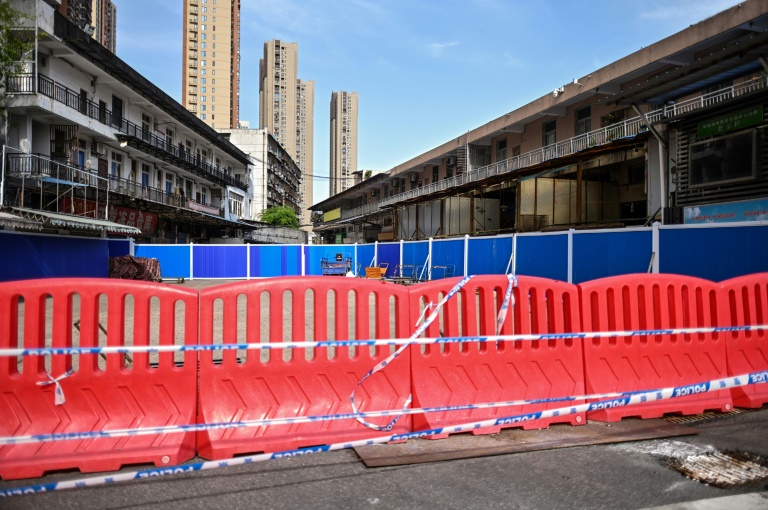
An animal market in China’s Wuhan really was the epicenter of the Covid pandemic, according to a pair of new studies in the journal Science published Tuesday that claimed to have tipped the balance in the debate about the virus’ origins.

Answering the question of whether the disease spilled over naturally from animals to humans, or was the result of a lab accident, is viewed as vital to averting the next pandemic and saving millions of lives.

The first paper analyzed the geographic pattern of Covid cases in the outbreak’s first month, December 2019, showing the first cases were tightly clustered around Wuhan’s Huanan Seafood Wholesale Market. 

The second examined genomic data from the earliest cases to study the virus’ early evolution, concluding it was unlikely the coronavirus circulated widely in humans prior to November 2019.

Both were previously posted as “preprints” but have now been vetted by scientific peer review and appear in a prestigious journal.

Michael Worobey of the University of Arizona, who co-authored both papers, had previously called on the scientific community in a letter to be more open to the idea that the virus was the result of a lab leak.

But the findings moved him “to the point where now I also think it’s just not plausible that this virus was introduced any other way than through the wildlife trade at the Wuhan market,” he told reporters on a call.

Though previous investigation had centered on the live animal market, researchers wanted more evidence to determine it was really the progenitor of the outbreak, as opposed to an amplifier.

This required neighborhood-level study within Wuhan to be more certain the virus was “zoonotic” — that it jumped from animals to people.

The first study’s team used mapping tools to determine the location of most of the first 174 cases identified by the World Health Organization, finding 155 of them were in Wuhan.

Further, these cases clustered tightly around the market — and some early patients with no recent history of visiting the market lived very close to it.

Mammals now known to be infectable with the virus — including red foxes, hog badgers and raccoon dogs — were all sold live in the market, the team showed.

– Two introductions to humans –

The study authors also tied positive samples from patients in early 2020 to the western portion of the market, which sold live or freshly butchered animals in late 2019.

The tightly confined early cases contrasted with how it radiated throughout the rest of the city by January and February, which the researchers confirmed by drilling into social media check-in data from the Weibo app.

“This tells us the virus was not circulating cryptically,” Worobey said in a statement. 

“It really originated at that market and spread out from there.”

The second study focused on resolving an apparent discrepancy in the virus’ early evolution.

Two lineages, A and B, marked the early pandemic. 

But while A was closer to the virus found in bats, suggesting the coronavirus in humans came from this source and that A gave rise to B, it was B that was found to be far more present around the market.

The researchers used a technique called “molecular clock analysis,” which relies on the rate at which genetic mutations occur over time to reconstruct a timeline of evolution — and found it unlikely that A gave rise to B.

“Otherwise, lineage A would have had to have been evolving in slow motion compared to the lineage B virus, which just doesn’t make biological sense,” said Worobey.

Instead, the probable scenario was that both jumped from animals at the market to humans on separate occasions, in November and December 2019. The researchers concluded it was unlikely that there was human circulation prior to November 2019.

Under this scenario, there were probably other animal-to-human transmissions at the market that failed to manifest as Covid cases.

“Have we disproven the lab leak theory? No, we have not. Will we ever be able to know? No,” said co-author Kristian Andersen of The Scripps Research Institute.

“But I think what’s really important here is that there are possible scenarios and they’re plausible scenarios and it’s really important to understand that possible does not mean equally likely.”

The WHO’s technical lead for Covid, Maria Van Kerkhove, welcomed the studies’ publication in a tweet on Tuesday.

“(It is) critical we continue to study the origins of the #COVID19 pandemic to ensure that we are better prepared to prevent and mitigate future outbreaks, epidemics and pandemics,” she said.

Most markets rise as traders prepare for Fed meeting

Stocks mostly rose Wednesday, rebounding from an early sell-off thanks to earnings from top US tech giants that eased concerns about consumer demand.

The reports from Wall Street titans including Microsoft and Alphabet helped soothe anxiety ahead of an expected Federal Reserve interest rate hike.

The day started slowly following a steep drop on Wall Street fuelled by concerns that four-decade high inflation and rising borrowing costs were keeping Americans from spending, and pushing the economy towards a recession.

That was backed up by a profit warning by retail titan Walmart and a closely watched consumer confidence gauge sinking for the third month in a row, while the International Monetary Fund slashed its global growth forecasts.

Still, US futures rallied — helping drag much of Asia — after earnings releases from Microsoft and Texas Instruments provided upbeat forecasts, while Google parent Alphabet recorded better-than-expected revenues.

The reports gave a much-needed boost to investors ahead of announcements by Apple, Amazon and Intel.

Dan Morgan, at Synovus Trust, said Alphabet’s results would allow for “a sigh of relief”.

“You’re looking at an environment where the overall ad spend rates are definitely slowing down, yet Google still was able to deliver above and beyond.”

Tokyo, Sydney, Seoul, Singapore, Mumbai, Taipei, Manila, Jakarta and Bangkok all rose, while London, Paris and Frankfurt advanced in the morning.

But Hong Kong and Shanghai dropped after enjoying big gains Tuesday.

While equities are enjoying a broadly positive day, there remains a lot of caution about the outlook for markets.

There had been hope that a recent rally across markets indicated the long-running sell-off may have come to an end, and that signs of an economic slowdown could allow the Fed to ease off its tightening by next year and start cutting rates in 2023.

But observers warned there was still a lot of volatility to come as the bank was still hiking, prices were soaring, Russia’s war in Ukraine showed no sign of ending and China was still battling Covid with lockdowns.

“The Fed hasn’t even gotten to neutral yet,” Jason England, of Janus Henderson Investors, told Bloomberg Television.

“For them to start easing already or for them to start seeing eases priced in is, I think, a little premature.”

– Oil on the rise –

All eyes are now on the Fed meeting later in the day, which is followed Thursday by second-quarter economic growth figures.

Officials are widely tipped to announce a second successive three-quarter point increase but the main focus will be their outlook for the economy and clues about future moves as it begins to falter.

“Markets are pricing at a slower pace of tightening before the Fed pivots to an easing stance in 2023,” said SPI Asset Management’s Stephen Innes.

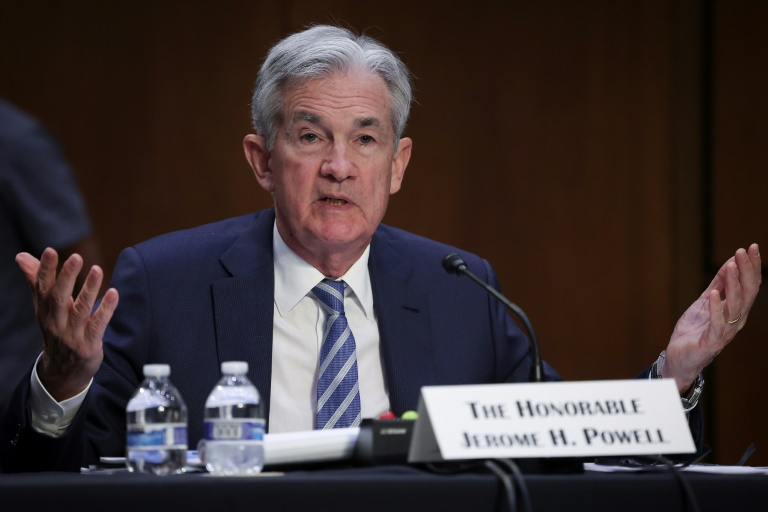
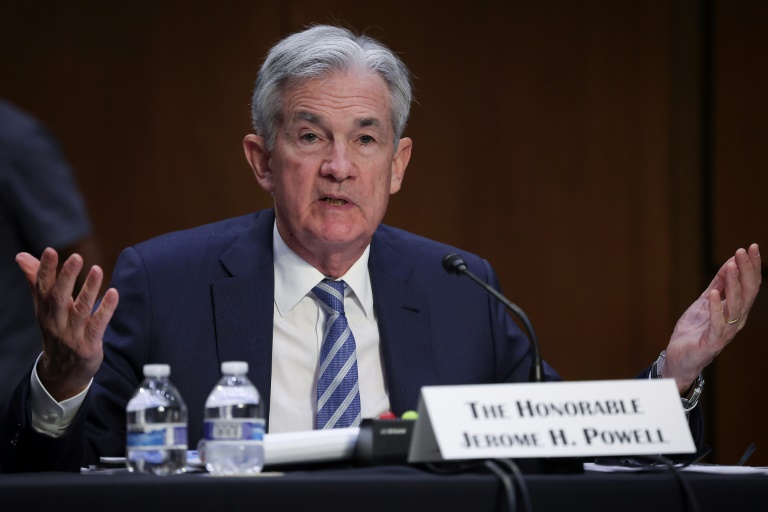
“However, Fed Chair Jerome Powell has been pushing back against a recession outcome while highlighting an outsized focus on combating inflation.”

And CMC Markets analyst Michael Hewson added: “Anyone thinking that in light of recent data that the Fed is likely to soften its tone is probably going to be disappointed.

“The last thing the Fed wants to do now is to allow the market to think it’s about to embark on a dovish pivot, despite increasing evidence that the economy is slowing.”

Oil prices edged up as recession worries were offset by data showing a big drop in US stockpiles, which pointed to strong demand at a time when supplies remain weak.

– Key figures at around 0810 GMT –

Tokyo – Nikkei 225: UP 0.2 percent at 27,715.75 (close)

Hong Kong – Hang Seng Index: DOWN 1.1 percent at 20,670.04 (close)

Shanghai – Composite: DOWN 0.1 percent at 3,275.76 (close)

London – FTSE 100: UP 0.4 percent at 7,338.70

Euro/dollar: UP at $1.0138 from $1.0126 Tuesday

Pound/dollar: UP at $1.2058 from $1.2030 

Euro/pound: DOWN at 84.08 pence from 84.09 pence

Dollar/yen: DOWN at 136.89 yen from 136.95 yen

West Texas Intermediate: UP 1.3 percent at $96.19 per barrel

Brent North Sea crude: UP 0.9 percent at $105.38 per barrel

New York – Dow: DOWN 0.7 percent at 31,761.54 (close)

— Bloomberg News contributed to this story —

Close Bitnami banner
Bitnami