AFP

Russian fire pounds Ukraine, as Putin announces 'progress' on grain exports

Russian shelling pounded eastern and southern Ukraine as President Vladimir Putin said Moscow would only ease the path for Black Sea exports of Ukrainian grain if the West lifts sanctions on Russia’s shipments.

Russian strikes hit the eastern city of Kramatorsk on Tuesday, killing one person, local authorities said.

AFP journalists said a four-story residential building had been hit in the city in the Donbas region. One man with a bloodied head lay on the ground, before being taken away by the emergency services.

“He was just walking by and was hit,” said one woman, who declined to give her name, visibly shaken after the bombardment.

Russia’s invasion of Ukraine in February has killed thousands and displaced millions, but also hampered shipments from one of the world’s biggest exporters of wheat and other grain, sparking fears of global food shortages.

Putin, in Tehran for talks with his Turkish counterpart Recep Tayyip Erdogan, on Tuesday said “progress” had been made in discussions towards exporting grain from Ukraine.

After talks with both Erdogan and Iran’s president, Putin told reporters that any deal hinged on the West’s willingness to yield some ground.

“We will facilitate the export of Ukrainian grain, but we are proceeding from the fact that all restrictions related to air deliveries for the export of Russian grain will be lifted,” he said.

NATO member Turkey has been using its good relations with both the Kremlin and Kyiv to try and broker an agreement on a safe way to deliver the grain.

– ‘Victory before winter’ –

On Wednesday, Russian and Ukrainian delegations are due to meet in Istanbul alongside Turkish and UN representatives, with hopes rising for an announced accord.

The EU’s foreign policy chief Josep Borrell warned this week that the grain impasse was “an issue of life and death for many human beings”.

And a document consulted by AFP Tuesday showed that the European Commission is proposing to unblock assets at Russian banks linked to trade in food and fertiliser.

Along the Black Sea coast, Kyiv said that a barrage of seven cruise missiles had wounded at least six people, including a child, in the southern coastal region of Odessa.

The Russian defence ministry claimed that strikes on Odessa had destroyed a stockpile of Western-supplied weapons.

Russian Defence Minister Sergei Shoigu ordered troops earlier this week to prioritise the destruction of long-range artillery supplied by the United States and Ukraine’s other Western allies.

Observers credit the weapons with altering battlefield dynamics, giving Ukraine the capacity to hit Russian arms depots and command posts deep inside territory controlled by Moscow.

Ukrainian Defence Minister Oleksiy Reznikov, during a visit to the United States, urged the West to drastically step up its supply of precision rocket systems, calling them a “game-changer”.

In Washington, National Security Council spokesman John Kirby said the United States believes that Russia is moving ahead with plans to annex more Ukrainian territory. 

“Russia is beginning to roll out a version of what you could call an annexation playbook, very similar to the one we saw in 2014,” when it invaded and annexed Crimea, Kirby said.

Zelensky’s chief of staff Andriy Yermak underlined in an interview published Tuesday that Ukraine had to win its war with Russia before winter, telling Ukrainian weekly Novoye Vremya that if Moscow has time to regroup, it will be “more difficult”.

– Suspected treason –

On the diplomatic front, Russia’s close ally Syria announced Wednesday it was severing ties with Ukraine, according to an unidentified foreign ministry official, cited by state news agency SANA.

Kyiv had already announced it was cutting ties with Syria late last month, after Damascus recognised the Russian-backed breakaway republics of Donetsk and Lugansk in eastern Ukraine.

Ukrainian lawmakers on Tuesday endorsed the president’s decision to sack the country’s top prosecutor and security chief, backing Ukraine’s largest political shake-up since Russia invaded.

Several Ukrainian deputies said lawmakers at the parliamentary session in Kyiv had overwhelmingly backed President Volodymyr Zelensky’s shock call to remove the senior officials.

“Parliament voted to dismiss Iryna Venediktova as prosecutor general,” said David Arakhamia, a lawmaker affiliated with Zelensky.

Other deputies said the plea to remove security chief Ivan Bakanov had secured the required 226 votes.

Zelensky late Sunday said he was suspending the senior law enforcement officials — and that 650 cases of suspected treason were under investigation.

He replaced Bakanov on Monday and described the shake-up in the security services as an “audit”, saying 28 security officials were facing dismissal.

The governor of Mykolaiv, a southern region under constant Russian rocket fire, meanwhile on Tuesday promised a $100 reward for anyone who could help to identify people who have been collaborating with Russia by providing it with the locations of Ukrainian troops or coordinates of potential targets. 

burs-sst-ah-sr/dva
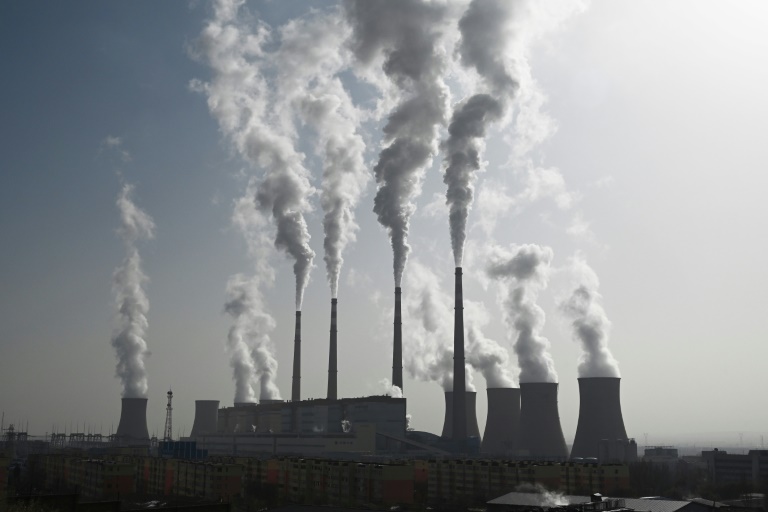
China speeding up approvals for new coal plants: Greenpeace

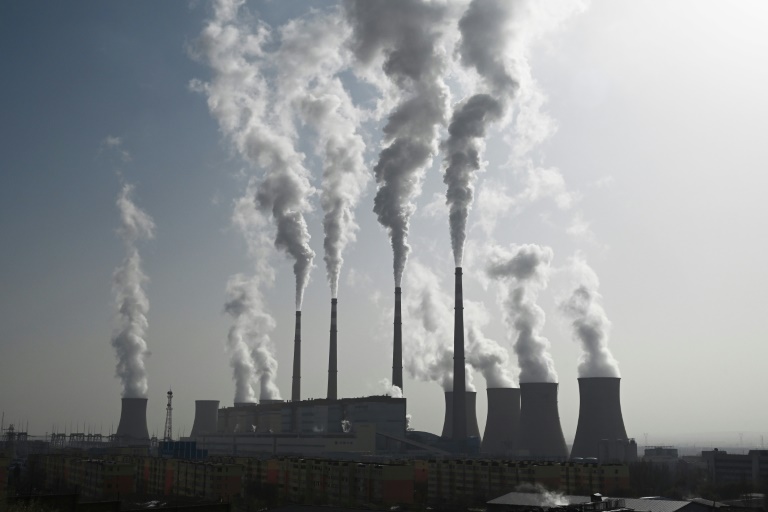
China has ramped up approvals for new coal power plants this year, Greenpeace said Wednesday, with authorities trying to lower the risk of economically painful electricity shortages.

China is the world’s biggest emitter of the greenhouse gases driving global warming, and President Xi Jinping last year vowed to phase down coal use from 2026 as part of an ambitious set of national climate commitments.

But campaigners fear those targets are under threat with the government focused on economic challenges, even as the deadly impact of climate change is felt around the world.

In the first quarter of 2022, Chinese regulators gave the green light to coal plants with a total capacity of 8.63 gigawatts, according to research conducted by Greenpeace.

That is nearly half of the entire coal-fired capacity approved last year, the environmental campaigners said.

“Building more coal-fired power capacity will not provide energy security for China,” said Wu Jinghan, climate and energy campaigner with Greenpeace in Beijing.

“China has an overcapacity of coal-fired power plants. Power inadequacies originate from poor integration of generation, grid, load and storage.”

The figure for new coal plant approvals dipped in mid-2021 but rebounded later in the year as China experienced widespread power outages due to a supply crunch.

Electricity consumption has surged this summer as China suffers through an intense heatwave, with air conditioning cranked up at homes and businesses to try and keep people cool.

China relies on coal for around 60 percent of its electricity, and has asked domestic miners to increase capacity by 300 million tons this year.

The State Council, China’s cabinet, in May announced 10 billion yuan ($1.5 billion) of investment in coal power generation, as coal producers were pressured to ramp up output before the 2025 threshold. 

“An overcapacity of this one energy source is a major hurdle for energy security, as well as China’s energy transition,” Wu warned.

Skyrocketing global commodity prices in the wake of Russia’s invasion of Ukraine have renewed China’s focus on energy security.

As the Chinese economy stalls under strict Covid policies and prolonged supply chain disruptions, authorities are looking to boost growth through a massive infrastructure construction push — which relies overwhelmingly on coal power.

China is the world’s biggest coal consumer and producer, and analysts worry that economic targets will derail its pledge to peak carbon emissions by 2030.

China speeding up approvals for new coal plants: Greenpeace

China has ramped up approvals for new coal power plants this year, Greenpeace said Wednesday, with authorities trying to lower the risk of economically painful electricity shortages.

China is the world’s biggest emitter of the greenhouse gases driving global warming, and President Xi Jinping last year vowed to phase down coal use from 2026 as part of an ambitious set of national climate commitments.

But campaigners fear those targets are under threat with the government focused on economic challenges, even as the deadly impact of climate change is felt around the world.

In the first quarter of 2022, Chinese regulators gave the green light to coal plants with a total capacity of 8.63 gigawatts, according to research conducted by Greenpeace.

That is nearly half of the entire coal-fired capacity approved last year, the environmental campaigners said.

“Building more coal-fired power capacity will not provide energy security for China,” said Wu Jinghan, climate and energy campaigner with Greenpeace in Beijing.

“China has an overcapacity of coal-fired power plants. Power inadequacies originate from poor integration of generation, grid, load and storage.”

The figure for new coal plant approvals dipped in mid-2021 but rebounded later in the year as China experienced widespread power outages due to a supply crunch.

Electricity consumption has surged this summer as China suffers through an intense heatwave, with air conditioning cranked up at homes and businesses to try and keep people cool.

China relies on coal for around 60 percent of its electricity, and has asked domestic miners to increase capacity by 300 million tons this year.

The State Council, China’s cabinet, in May announced 10 billion yuan ($1.5 billion) of investment in coal power generation, as coal producers were pressured to ramp up output before the 2025 threshold. 

“An overcapacity of this one energy source is a major hurdle for energy security, as well as China’s energy transition,” Wu warned.

Skyrocketing global commodity prices in the wake of Russia’s invasion of Ukraine have renewed China’s focus on energy security.

As the Chinese economy stalls under strict Covid policies and prolonged supply chain disruptions, authorities are looking to boost growth through a massive infrastructure construction push — which relies overwhelmingly on coal power.

China is the world’s biggest coal consumer and producer, and analysts worry that economic targets will derail its pledge to peak carbon emissions by 2030.

Rolls-Royce champions energy transition at Farnborough

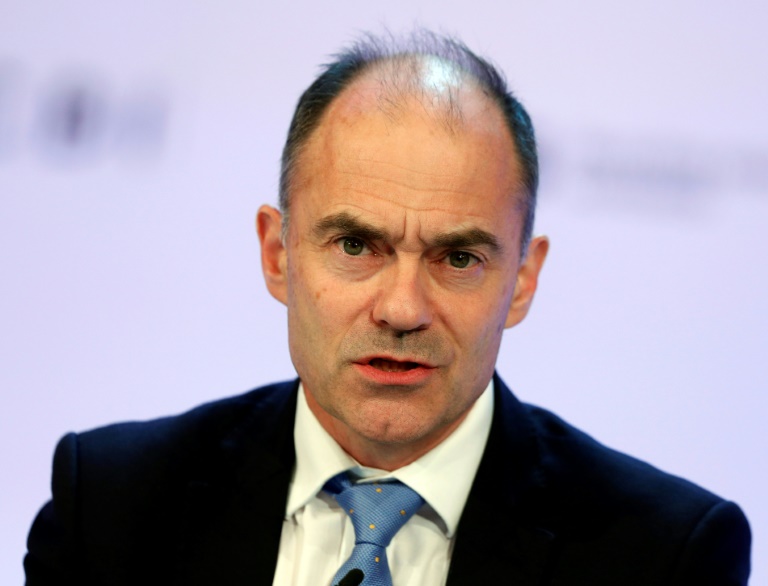
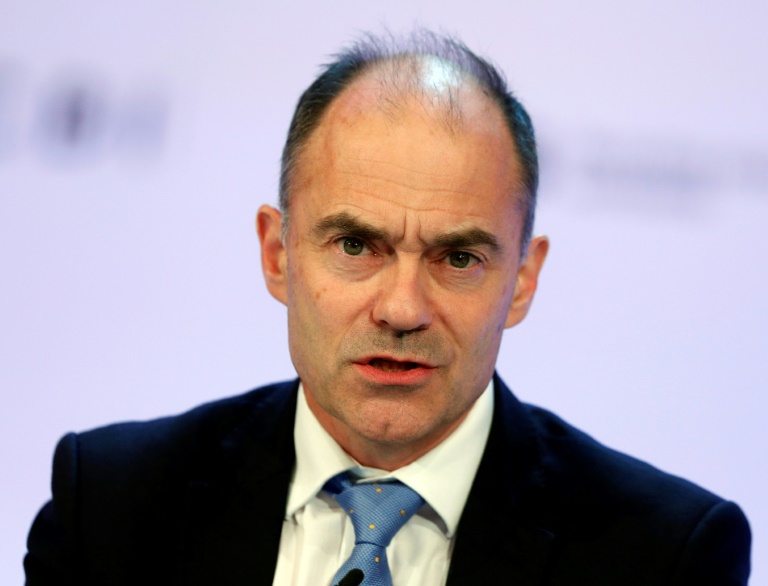
British aircraft engine maker Rolls-Royce is “championing” the energy transition and the decarbonisation of aviation, its outgoing chief executive Warren East told AFP on Tuesday at the Farnborough airshow.

This year’s Farnborough spectacle, returning from a four-year absence, is set against the backdrop of air travel’s nascent post-pandemic recovery but as economic turmoil hampers manufacturing.

Yet the airshow’s focus is on decarbonisation and sustainability in a sector often criticised for its impact on the climate, amid Europe’s blistering heatwave with record temperatures in England.

– Energy transition –

“The big theme is energy transition,” East told AFP in an interview at the company’s airshow chalet.

“This is the number one issue for the sector. We’ve been championing that for some time — and saying it’s absolutely necessary and we embrace that as an opportunity.”

East, 60, is retiring after more than seven years at the helm of the aerospace behemoth, with his tenure marked by historic corruption fines for the group, Trent engine troubles and Brexit.

Rolls, whose products power Airbus and Boeing aircraft, then axed 9,000 jobs and offloaded assets in a drastic restructuring after the Covid pandemic grounded jets and sparked a collapse air traffic.

East then guided it back to profit in 2021 from Covid-driven losses after slashing costs.

The titan, based in the city of Derby in central England, is now reaping the benefits of aviation’s post-Covid recovery, defence growth, a record power systems order book — and a long-standing focus on sustainability.

“I’m quite pleased with my time at Rolls-Royce,” added East, who took the reins in July 2015.

“We’ve really sort of modernised Rolls Royce in terms of culture.

“We’ve put in place a lot of efficiency and productivity improvements, which then crystallised during the Covid pandemic.

“And that’s created a very firm platform for the future (with) great operational and financial gearing now.”

– Cleaner fuel –

Aviation accounts for between 2-3 percent of the world’s total damaging carbon dioxide emissions, according to industry estimates.

Airlines and manufacturers alike have meanwhile committed to achieving net zero emissions — or carbon neutrality — by 2050.

Yet global air traffic is forecast to more than double by that point.

Rolls-Royce, which specialises in engines for long-haul aircraft, military jets and helicopters, is as a result ramping up its research into a wide range of technologies including electric and hydrogen power.

At the first Farnborough airshow since Covid, Rolls-Royce has announced a partnership, named H2ZERO, with British low-cost carrier Easyjet to test cleaner hydrogen engine combustion technology. 

Rolls also signed a deal with South Korea’s Hyundai to explore all-electric propulsion and hydrogen fuel cell technology for flying taxis of the future.

The company in addition unveiled a new research programme on hydrogen propulsion technology that emits no carbon dioxide.

Rolls is meanwhile working to develop a fuel-efficient future engine named UltraFan, which emits less damaging pollutants.

UltraFan aims for 25 percent fuel savings  compared with traditional long-haul engine.

“We are a group that is very focused on power and we do power across multiple sectors and one of the sectors in which we obviously have decades of experience in is aviation and aerospace,” said East.

– Cost –

The CEO cautioned however that it would take “decades” before hydrogen was deployed in aircraft engines.

The global aerospace industry would meanwhile need to harness technology such as sustainable aviation fuels derived from biomass, in order to curb its reliance on high-polluting kerosene.

SAF is however between three and four times more expensive than normal jet fuel. 

“I think as we go forward — maybe we’ll get to hydrogen in a gas turbine — but we’re not going to get there for at least a couple of decades,” East told AFP.

“There is a huge amount of work to do to make that practical, safe and economic and we need to have some transition technologies in the meantime and that’s why we talk about sustainable aviation fuel.”

He added: “Essentially, we’re just saying instead of kerosene we’ve got batteries, hydrogen, and synthetic kerosene.”

Rolls-Royce champions energy transition at Farnborough

British aircraft engine maker Rolls-Royce is “championing” the energy transition and the decarbonisation of aviation, its outgoing chief executive Warren East told AFP on Tuesday at the Farnborough airshow.

This year’s Farnborough spectacle, returning from a four-year absence, is set against the backdrop of air travel’s nascent post-pandemic recovery but as economic turmoil hampers manufacturing.

Yet the airshow’s focus is on decarbonisation and sustainability in a sector often criticised for its impact on the climate, amid Europe’s blistering heatwave with record temperatures in England.

– Energy transition –

“The big theme is energy transition,” East told AFP in an interview at the company’s airshow chalet.

“This is the number one issue for the sector. We’ve been championing that for some time — and saying it’s absolutely necessary and we embrace that as an opportunity.”

East, 60, is retiring after more than seven years at the helm of the aerospace behemoth, with his tenure marked by historic corruption fines for the group, Trent engine troubles and Brexit.

Rolls, whose products power Airbus and Boeing aircraft, then axed 9,000 jobs and offloaded assets in a drastic restructuring after the Covid pandemic grounded jets and sparked a collapse air traffic.

East then guided it back to profit in 2021 from Covid-driven losses after slashing costs.

The titan, based in the city of Derby in central England, is now reaping the benefits of aviation’s post-Covid recovery, defence growth, a record power systems order book — and a long-standing focus on sustainability.

“I’m quite pleased with my time at Rolls-Royce,” added East, who took the reins in July 2015.

“We’ve really sort of modernised Rolls Royce in terms of culture.

“We’ve put in place a lot of efficiency and productivity improvements, which then crystallised during the Covid pandemic.

“And that’s created a very firm platform for the future (with) great operational and financial gearing now.”

– Cleaner fuel –

Aviation accounts for between 2-3 percent of the world’s total damaging carbon dioxide emissions, according to industry estimates.

Airlines and manufacturers alike have meanwhile committed to achieving net zero emissions — or carbon neutrality — by 2050.

Yet global air traffic is forecast to more than double by that point.

Rolls-Royce, which specialises in engines for long-haul aircraft, military jets and helicopters, is as a result ramping up its research into a wide range of technologies including electric and hydrogen power.

At the first Farnborough airshow since Covid, Rolls-Royce has announced a partnership, named H2ZERO, with British low-cost carrier Easyjet to test cleaner hydrogen engine combustion technology. 

Rolls also signed a deal with South Korea’s Hyundai to explore all-electric propulsion and hydrogen fuel cell technology for flying taxis of the future.

The company in addition unveiled a new research programme on hydrogen propulsion technology that emits no carbon dioxide.

Rolls is meanwhile working to develop a fuel-efficient future engine named UltraFan, which emits less damaging pollutants.

UltraFan aims for 25 percent fuel savings  compared with traditional long-haul engine.

“We are a group that is very focused on power and we do power across multiple sectors and one of the sectors in which we obviously have decades of experience in is aviation and aerospace,” said East.

– Cost –

The CEO cautioned however that it would take “decades” before hydrogen was deployed in aircraft engines.

The global aerospace industry would meanwhile need to harness technology such as sustainable aviation fuels derived from biomass, in order to curb its reliance on high-polluting kerosene.

SAF is however between three and four times more expensive than normal jet fuel. 

“I think as we go forward — maybe we’ll get to hydrogen in a gas turbine — but we’re not going to get there for at least a couple of decades,” East told AFP.

“There is a huge amount of work to do to make that practical, safe and economic and we need to have some transition technologies in the meantime and that’s why we talk about sustainable aviation fuel.”

He added: “Essentially, we’re just saying instead of kerosene we’ve got batteries, hydrogen, and synthetic kerosene.”

Rolls-Royce champions energy transition at Farnborough

British aircraft engine maker Rolls-Royce is “championing” the energy transition and the decarbonisation of aviation, its outgoing chief executive Warren East told AFP on Tuesday at the Farnborough airshow.

This year’s Farnborough spectacle, returning from a four-year absence, is set against the backdrop of air travel’s nascent post-pandemic recovery but as economic turmoil hampers manufacturing.

Yet the airshow’s focus is on decarbonisation and sustainability in a sector often criticised for its impact on the climate, amid Europe’s blistering heatwave with record temperatures in England.

– Energy transition –

“The big theme is energy transition,” East told AFP in an interview at the company’s airshow chalet.

“This is the number one issue for the sector. We’ve been championing that for some time — and saying it’s absolutely necessary and we embrace that as an opportunity.”

East, 60, is retiring after more than seven years at the helm of the aerospace behemoth, with his tenure marked by historic corruption fines for the group, Trent engine troubles and Brexit.

Rolls, whose products power Airbus and Boeing aircraft, then axed 9,000 jobs and offloaded assets in a drastic restructuring after the Covid pandemic grounded jets and sparked a collapse air traffic.

East then guided it back to profit in 2021 from Covid-driven losses after slashing costs.

The titan, based in the city of Derby in central England, is now reaping the benefits of aviation’s post-Covid recovery, defence growth, a record power systems order book — and a long-standing focus on sustainability.

“I’m quite pleased with my time at Rolls-Royce,” added East, who took the reins in July 2015.

“We’ve really sort of modernised Rolls Royce in terms of culture.

“We’ve put in place a lot of efficiency and productivity improvements, which then crystallised during the Covid pandemic.

“And that’s created a very firm platform for the future (with) great operational and financial gearing now.”

– Cleaner fuel –

Aviation accounts for between 2-3 percent of the world’s total damaging carbon dioxide emissions, according to industry estimates.

Airlines and manufacturers alike have meanwhile committed to achieving net zero emissions — or carbon neutrality — by 2050.

Yet global air traffic is forecast to more than double by that point.

Rolls-Royce, which specialises in engines for long-haul aircraft, military jets and helicopters, is as a result ramping up its research into a wide range of technologies including electric and hydrogen power.

At the first Farnborough airshow since Covid, Rolls-Royce has announced a partnership, named H2ZERO, with British low-cost carrier Easyjet to test cleaner hydrogen engine combustion technology. 

Rolls also signed a deal with South Korea’s Hyundai to explore all-electric propulsion and hydrogen fuel cell technology for flying taxis of the future.

The company in addition unveiled a new research programme on hydrogen propulsion technology that emits no carbon dioxide.

Rolls is meanwhile working to develop a fuel-efficient future engine named UltraFan, which emits less damaging pollutants.

UltraFan aims for 25 percent fuel savings  compared with traditional long-haul engine.

“We are a group that is very focused on power and we do power across multiple sectors and one of the sectors in which we obviously have decades of experience in is aviation and aerospace,” said East.

– Cost –

The CEO cautioned however that it would take “decades” before hydrogen was deployed in aircraft engines.

The global aerospace industry would meanwhile need to harness technology such as sustainable aviation fuels derived from biomass, in order to curb its reliance on high-polluting kerosene.

SAF is however between three and four times more expensive than normal jet fuel. 

“I think as we go forward — maybe we’ll get to hydrogen in a gas turbine — but we’re not going to get there for at least a couple of decades,” East told AFP.

“There is a huge amount of work to do to make that practical, safe and economic and we need to have some transition technologies in the meantime and that’s why we talk about sustainable aviation fuel.”

He added: “Essentially, we’re just saying instead of kerosene we’ve got batteries, hydrogen, and synthetic kerosene.”

Rolls-Royce champions energy transition at Farnborough

British aircraft engine maker Rolls-Royce is “championing” the energy transition and the decarbonisation of aviation, its outgoing chief executive Warren East told AFP on Tuesday at the Farnborough airshow.

This year’s Farnborough spectacle, returning from a four-year absence, is set against the backdrop of air travel’s nascent post-pandemic recovery but as economic turmoil hampers manufacturing.

Yet the airshow’s focus is on decarbonisation and sustainability in a sector often criticised for its impact on the climate, amid Europe’s blistering heatwave with record temperatures in England.

– Energy transition –

“The big theme is energy transition,” East told AFP in an interview at the company’s airshow chalet.

“This is the number one issue for the sector. We’ve been championing that for some time — and saying it’s absolutely necessary and we embrace that as an opportunity.”

East, 60, is retiring after more than seven years at the helm of the aerospace behemoth, with his tenure marked by historic corruption fines for the group, Trent engine troubles and Brexit.

Rolls, whose products power Airbus and Boeing aircraft, then axed 9,000 jobs and offloaded assets in a drastic restructuring after the Covid pandemic grounded jets and sparked a collapse air traffic.

East then guided it back to profit in 2021 from Covid-driven losses after slashing costs.

The titan, based in the city of Derby in central England, is now reaping the benefits of aviation’s post-Covid recovery, defence growth, a record power systems order book — and a long-standing focus on sustainability.

“I’m quite pleased with my time at Rolls-Royce,” added East, who took the reins in July 2015.

“We’ve really sort of modernised Rolls Royce in terms of culture.

“We’ve put in place a lot of efficiency and productivity improvements, which then crystallised during the Covid pandemic.

“And that’s created a very firm platform for the future (with) great operational and financial gearing now.”

– Cleaner fuel –

Aviation accounts for between 2-3 percent of the world’s total damaging carbon dioxide emissions, according to industry estimates.

Airlines and manufacturers alike have meanwhile committed to achieving net zero emissions — or carbon neutrality — by 2050.

Yet global air traffic is forecast to more than double by that point.

Rolls-Royce, which specialises in engines for long-haul aircraft, military jets and helicopters, is as a result ramping up its research into a wide range of technologies including electric and hydrogen power.

At the first Farnborough airshow since Covid, Rolls-Royce has announced a partnership, named H2ZERO, with British low-cost carrier Easyjet to test cleaner hydrogen engine combustion technology. 

Rolls also signed a deal with South Korea’s Hyundai to explore all-electric propulsion and hydrogen fuel cell technology for flying taxis of the future.

The company in addition unveiled a new research programme on hydrogen propulsion technology that emits no carbon dioxide.

Rolls is meanwhile working to develop a fuel-efficient future engine named UltraFan, which emits less damaging pollutants.

UltraFan aims for 25 percent fuel savings  compared with traditional long-haul engine.

“We are a group that is very focused on power and we do power across multiple sectors and one of the sectors in which we obviously have decades of experience in is aviation and aerospace,” said East.

– Cost –

The CEO cautioned however that it would take “decades” before hydrogen was deployed in aircraft engines.

The global aerospace industry would meanwhile need to harness technology such as sustainable aviation fuels derived from biomass, in order to curb its reliance on high-polluting kerosene.

SAF is however between three and four times more expensive than normal jet fuel. 

“I think as we go forward — maybe we’ll get to hydrogen in a gas turbine — but we’re not going to get there for at least a couple of decades,” East told AFP.

“There is a huge amount of work to do to make that practical, safe and economic and we need to have some transition technologies in the meantime and that’s why we talk about sustainable aviation fuel.”

He added: “Essentially, we’re just saying instead of kerosene we’ve got batteries, hydrogen, and synthetic kerosene.”

China to fine ride-hailing giant Didi more than $1 bn: reports

China is preparing to hit ride-hailing giant Didi with a fine of more than $1 billion to wrap up a long-running probe, media reports said, boosting investor hopes that the country’s tech crackdown is winding down.

Didi, once known as China’s answer to Uber, has been one of the highest-profile targets of the widespread clampdown on the sector, which saw years of runaway growth and supersized monopolies before regulators stepped in.

The fine — imposed over Didi’s cybersecurity practices — would amount to more than four percent of its $27.3 billion total revenue last year and pave the way for its new share listing in Hong Kong, The Wall Street Journal reported Tuesday.

Citing unnamed sources familiar with the matter, the Journal said that once the fine is announced, the government will ease its restrictions on Didi’s operations.

The firm was prevented from adding new users and its apps were removed from online stores in China by regulators.

The WSJ report triggered a rally in Chinese tech shares in Hong Kong on Wednesday, with investors hopeful that the two-year regulatory storm that swept the sector was nearing its end.

E-commerce giant Alibaba soared four percent, while gaming titan Tencent gained 2.5 percent in early trade.

Didi got into hot water in June last year after it pressed ahead with an IPO in the United States, reportedly against Beijing’s wishes.

Days after it raised $4.4 billion in New York, Chinese authorities launched a cybersecurity probe into the company, sending its shares plunging.

If confirmed, Didi’s fine would be the biggest imposed on a Chinese tech company since Alibaba was told to pay $2.75 billion in April 2021 as punishment for anti-competitive practices.

Didi did not respond immediately to an emailed request for comment.

Its shareholders voted to delist the firm from New York in May.

That move is expected to pave the way for a Hong Kong listing that was reportedly put on hold after China’s top internet watchdog told executives their proposals to prevent security and data leaks were insufficient.

China’s regulatory crackdown has eased this year as it grapples with the economic fallout from its zero-Covid strategy, with the country struggling to reach its 5.5 percent growth target.

However, there is still a strict regulatory environment for tech firms: President Xi Jinping last month called for stronger oversight and better security in the financial tech arena.

Raising temperatures: Pakistan climate catastrophist Sherry Rehman

When Sherry Rehman speaks it seems as though the world is ending. 

Perhaps that’s because Pakistan — where she serves as climate change minister — has a front-row seat for the cascading catastrophe of global warming.

To the north, rapid glacier melt is unleashing flash floods; in the south, savage heat is surpassing 50 degrees Celsius (122 degrees Fahrenheit); the west is speckled with wildfires, and the eastern city of Lahore is draped in suffocating perma-smog.

“It is apocalyptic,” the 61-year-old former diplomat told AFP. 

She was appointed minister after a tumultuous government change in April, which coincided with the onslaught of a nationwide heatwave.

“When you have an apocalypse in front of you… have you not watched Hollywood movies? You have to face it head on.”

– ‘Perfect storm’ – 

Pakistan is responsible for less than one percent of global greenhouse gas emissions, but ranks eighth on an index compiled by NGO Germanwatch of nations most exposed to extreme weather events.

That leaves the country of 220 million people bailing out its own climate disasters whilst lobbying bigger polluters to turn the tide.

Rehman has launched a rhetorical offensive, hectoring the great and the good at global forums with unabashed descriptions of a doomsday-in-motion.

She framed the argument in the long arc of history: Pakistan, once part of the British empire, freed itself only to be gripped by “climate colonialism”.

“There has been so much climate denialism internationally, with the big polluters not wanting to give up their bad habits or to pay the price for going green,” she said.

“We’re being told ‘it’s a perfect storm in your neck of the woods, and you just have to do this by yourself’, which is absolutely not possible.”

“I don’t even sense empathy very often,” added Rehman, who served as Pakistan’s ambassador to the United States from 2011 to 2013.

Making matters worse, Pakistan is in an economic tailspin with runaway inflation, a debt crisis and dwindling foreign currency reserves.

Even Rehman’s home in the cloistered capital of Islamabad hums with the sound of a petrol generator. Heatwaves have exacerbated an energy deficit, and blackouts are on the rise.

Pakistanis could be forgiven for having more quotidian concerns than the end of all days.

“Communicating a science-based crisis in our lives, created probably very far away from our neck of the woods, is very hard to explain,” she said.

“We still have to speak in easily digestible terms.

“I’m going have to say, ‘This is why you’re able to breathe better. This is why you’re able to have an environment that is not overheating. This is why your water is drinkable’.”

– Fighting climate change and sexism –

Rehman’s role as a soothsayer of inconvenient truths is complicated in deeply patriarchal Pakistan.

The number of female parliamentarians has plateaued at around 20 percent for the past two decades, according to World Bank data.

Benazir Bhutto, the nation’s only female prime minister — and from Rehman’s Pakistan Peoples Party (PPP) — was slain in 2007, an assassination that deeply scarred the national psyche and which remains unsolved.

A pastel portrait of Bhutto has pride of place in Rehman’s library, more prominent, even, than a pop-art print of Pakistan’s founder Muhammad Ali Jinnah. 

Outside the door, a nude female bust is prominently placed — in a country where the bodies of women are rigorously policed by harsh modesty codes.

“There’s always a reaction to women taking their power and also speaking out,” said Rehman.

“It’s been two steps forward, one step backward.”

In public appearances, Rehman exudes unapologetic energy. Male co-panellists hogging the microphone are notified of their transgressions; those who cut short her answers are similarly chastised.

“I tell myself, ‘When men are competing with you, you’re in a good place’,” she said. “I don’t mince my words, and I don’t see any reason to.” 

“We pay the price daily in dealing with constant backlash, and with constant fiddling and quibbling over the gender issue.”

That is not her “daily challenge”, she said, but there is a stark intersection in the interests of countering sexism and global warming.

“As climate change unleashes its furies, women are at the forefront,” she said, picking up the fire and brimstone theme again.

“It’s women who are the nurturers of the soil, of the crops, of the water.”

Police arrest 17 US lawmakers at abortion rights protest outside Supreme Court

At least 17 Democratic lawmakers, including prominent progressives Alexandria Ocasio-Cortez and Ilhan Omar, were arrested at an abortion rights protest outside the Supreme Court in Washington on Tuesday, police said.

The US Capitol police said on Twitter that the demonstrators had blocked traffic on a nearby road and were been given three warnings before officers made the arrests.

“We made a total of 35 arrests for Crowding, Obstructing or Incommoding,” the police said. “That arrest number includes 17 Members of Congress.”

The small demonstration came three weeks after a controversial ruling by the Supreme Court that overturned the 1973 landmark decision of Roe v. Wade, which had guaranteed women’s access to abortion.

“Today I was arrested while participating in a civil disobedience action with my fellow Members of Congress outside the Supreme Court,” Omar, representative from Minnesota, said on Twitter. 

“I will continue to do everything in my power to raise the alarm about the assault on our reproductive rights!” she tweeted.

Representative Carolyn Maloney of New York was also arrested, and issued a statement saying, “There is no democracy if women do not have control over their own bodies and decisions about their own health, including reproductive care.” 

“The Republican Party and the right-wing extremists behind this decision are not pro-life, but pro-controlling the bodies of women, girls, and any person who can become pregnant.”

Footage from the protest showed Ocasio-Cortez, Omar and others being led away, not in handcuffs, and waving to supporters.

Close Bitnami banner
Bitnami