AFP

US, Canada condemn Russia's war on Ukraine at Indonesia G20 talks

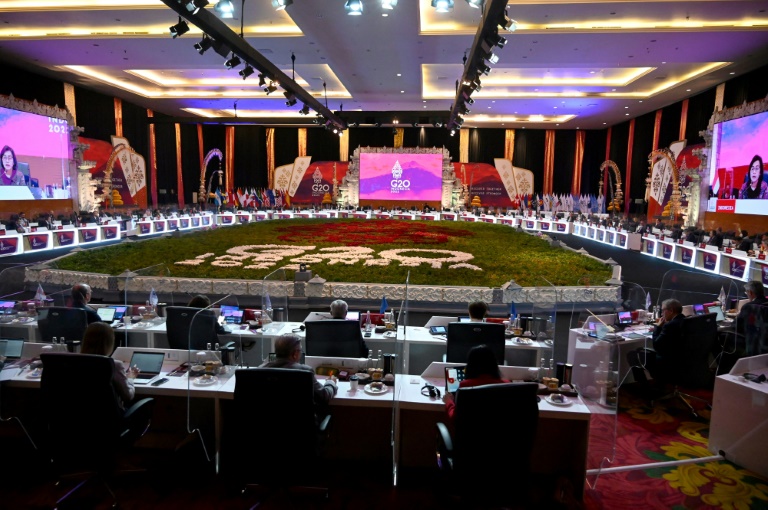
Western finance ministers condemned Moscow’s invasion of Ukraine at G20 talks in Indonesia Friday, accusing Russian officials of complicity in atrocities committed during the war.

The two-day meeting on the island of Bali began under the shadow of a Russian military assault that has roiled markets, spiked food prices and stoked breakneck inflation, a week after Moscow’s top diplomat walked out of talks with the forum’s foreign ministers.

“Russia is solely responsible for negative spillovers to the global economy,” US Treasury Secretary Janet Yellen told the Russian delegation in the opening session, according to a Treasury official.

“Russia’s officials should recognise that they are adding to the horrific consequences of this war through their continued support of the Putin regime. You share responsibility for the innocent lives lost.”

She was joined by Canadian Finance Minister Chrystia Freeland, who told Russia’s delegation they were responsible for “war crimes” in Ukraine because of their support for the invasion, a Canadian official said. 

“It is not only generals who commit war crimes, it is the economic technocrats who allow the war to happen and to continue,” said Freeland, according to the official.

Both Russian Finance Minister Anton Siluanov and Ukrainian Finance Minister Serhiy Marchenko are participating virtually in the meeting. 

Moscow instead sent Russian Deputy Finance Minister Timur Maksimov to attend the talks in person. He was present for both Yellen and Freeland’s condemnation, according to a source present at the talks.

Host and G20 chair Indonesia warned ministers that failure to tackle energy and food crises would be catastrophic.

In her opening remarks, Indonesian Finance Minister Sri Mulyani Indrawati called on ministers to work together with a spirit of “cooperation” because “the world is watching” for solutions.

“The cost of our failure is more than we can afford,” she told delegates. “The humanitarian consequences for the world and for many low-income countries would be catastrophic.”

– No walkout –

The meeting has largely focused on the food and energy crises that are weighing on an already brittle global recovery from the Covid-19 pandemic.

“(Russian President Vladimir) Putin’s actions including the destruction of agricultural facilities, theft of grain and farm equipment, and effective blockade of Black Sea ports amounts to using food as a weapon of war,” Yellen said in an afternoon seminar.

Indrawati said members had “identified the urgent need for the G20 to take concrete steps” to address food insecurity and to help countries in need.

Yellen is also pressing G20 allies for a price cap on Russian oil to choke off Putin’s war chest and pressure Moscow to end its invasion while bringing down energy costs.

Yellen in April led a multinational walkout of finance officials as Russian delegates spoke at a G20 meeting in Washington, but there was no such action on Friday.

There is unlikely to be a final communique issued when talks end on Saturday because of disagreements with Russia.

– ‘Act together’ – 

G20 chair Indonesia -– which pursues a neutral foreign policy –- has refrained from uninviting Russia despite Western pressure.

“We need to act together to demonstrate why G20 deserves its reputation as the premier forum for international cooperation,” Indrawati said. 

Alongside Moscow and Kyiv’s ministers, Chinese Finance Minister Liu Kun and Britain’s new Finance Minister Nadhim Zahawi were only attending virtually.

International Monetary Fund chief Kristalina Georgieva will appear in person after saying Wednesday the global economic outlook had “darkened significantly” because of Moscow’s invasion.

European Central Bank president Christine Lagarde is participating virtually, but World Bank chief executive David Malpass will not attend.

The meeting is a prelude to the leaders’ summit on the Indonesian island in November that was meant to focus on the global recovery from the Covid-19 pandemic.

Other issues being tackled by the ministers included digital financial inclusion –- with more than a billion of the world’s population still without access to a bank account -– and the deadline for an international tax rules overhaul.
US, Canada condemn Russia's war on Ukraine at Indonesia G20 talks

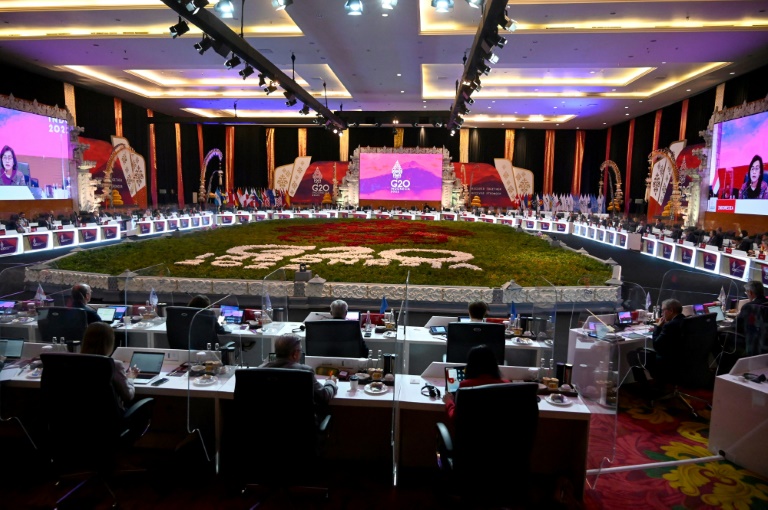
Western finance ministers condemned Moscow’s invasion of Ukraine at G20 talks in Indonesia Friday, accusing Russian officials of complicity in atrocities committed during the war.

The two-day meeting on the island of Bali began under the shadow of a Russian military assault that has roiled markets, spiked food prices and stoked breakneck inflation, a week after Moscow’s top diplomat walked out of talks with the forum’s foreign ministers.

“Russia is solely responsible for negative spillovers to the global economy,” US Treasury Secretary Janet Yellen told the Russian delegation in the opening session, according to a Treasury official.

“Russia’s officials should recognise that they are adding to the horrific consequences of this war through their continued support of the Putin regime. You share responsibility for the innocent lives lost.”

She was joined by Canadian Finance Minister Chrystia Freeland, who told Russia’s delegation they were responsible for “war crimes” in Ukraine because of their support for the invasion, a Canadian official said. 

“It is not only generals who commit war crimes, it is the economic technocrats who allow the war to happen and to continue,” said Freeland, according to the official.

Both Russian Finance Minister Anton Siluanov and Ukrainian Finance Minister Serhiy Marchenko are participating virtually in the meeting. 

Moscow instead sent Russian Deputy Finance Minister Timur Maksimov to attend the talks in person. He was present for both Yellen and Freeland’s condemnation, according to a source present at the talks.

Host and G20 chair Indonesia warned ministers that failure to tackle energy and food crises would be catastrophic.

In her opening remarks, Indonesian Finance Minister Sri Mulyani Indrawati called on ministers to work together with a spirit of “cooperation” because “the world is watching” for solutions.

“The cost of our failure is more than we can afford,” she told delegates. “The humanitarian consequences for the world and for many low-income countries would be catastrophic.”

– No walkout –

The meeting has largely focused on the food and energy crises that are weighing on an already brittle global recovery from the Covid-19 pandemic.

“(Russian President Vladimir) Putin’s actions including the destruction of agricultural facilities, theft of grain and farm equipment, and effective blockade of Black Sea ports amounts to using food as a weapon of war,” Yellen said in an afternoon seminar.

Indrawati said members had “identified the urgent need for the G20 to take concrete steps” to address food insecurity and to help countries in need.

Yellen is also pressing G20 allies for a price cap on Russian oil to choke off Putin’s war chest and pressure Moscow to end its invasion while bringing down energy costs.

Yellen in April led a multinational walkout of finance officials as Russian delegates spoke at a G20 meeting in Washington, but there was no such action on Friday.

There is unlikely to be a final communique issued when talks end on Saturday because of disagreements with Russia.

– ‘Act together’ – 

G20 chair Indonesia -– which pursues a neutral foreign policy –- has refrained from uninviting Russia despite Western pressure.

“We need to act together to demonstrate why G20 deserves its reputation as the premier forum for international cooperation,” Indrawati said. 

Alongside Moscow and Kyiv’s ministers, Chinese Finance Minister Liu Kun and Britain’s new Finance Minister Nadhim Zahawi were only attending virtually.

International Monetary Fund chief Kristalina Georgieva will appear in person after saying Wednesday the global economic outlook had “darkened significantly” because of Moscow’s invasion.

European Central Bank president Christine Lagarde is participating virtually, but World Bank chief executive David Malpass will not attend.

The meeting is a prelude to the leaders’ summit on the Indonesian island in November that was meant to focus on the global recovery from the Covid-19 pandemic.

Other issues being tackled by the ministers included digital financial inclusion –- with more than a billion of the world’s population still without access to a bank account -– and the deadline for an international tax rules overhaul.
China growth falls to two-year low on Covid, property woes

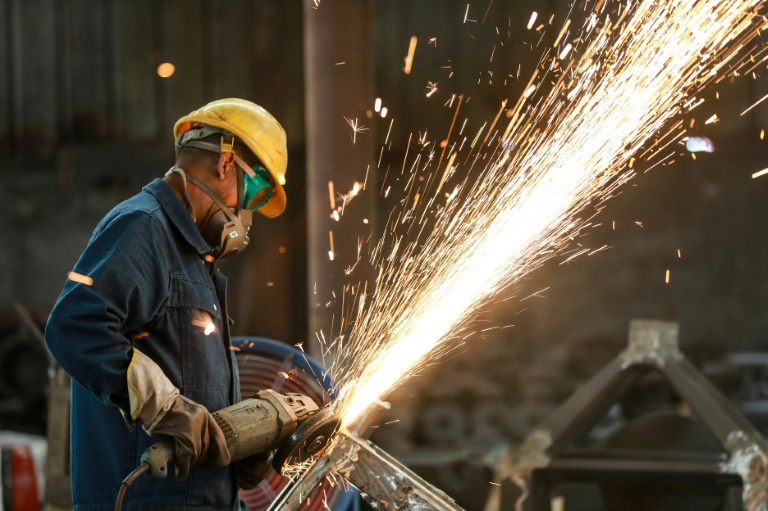
China logged its slowest economic growth since the initial Covid outbreak Friday, expanding just 0.4 percent in the second quarter with lockdowns and property market weakness pushing the government’s target further out of reach.

Beijing has dug its heels in on a zero-Covid policy of stamping out virus clusters with snap lockdowns and long quarantines, but this has battered businesses and kept consumers jittery.

The slowdown comes after China’s biggest city Shanghai was sealed off for two months as it battled a virus resurgence, tangling supply chains and forcing factories to halt operations.

“Domestically, the impact of the epidemic is lingering,” National Bureau of Statistics spokesman Fu Linghui said Friday, noting shrinking demand and disrupted supplies.

“The risk of stagflation in the world economy is rising” also, he told reporters, adding that external uncertainties were growing.

Economic expansion for the April-June period in the world’s second-largest economy was also down 2.6 percent from the previous quarter, the NBS said.

China has only logged a GDP contraction once in recent decades, and analysts expect the latest reading will drag further on full-year growth.

Still, industrial production rose 3.9 percent on-year in June, up from 0.7 percent in May as Covid controls eased, while retail sales picked up 3.1 percent after plummeting 6.7 percent the month before, in what analysts called an encouraging sign.

The economy is “on track for a slow recovery”, said Zhiwei Zhang of Pinpoint Asset Management.

“Nonetheless, economic growth is still much lower than its potential, as the fear of Covid outbreaks continues to hurt consumer and corporate sentiment,” he added in a note.

The urban unemployment rate ticked down to 5.5 percent in June, NBS data showed.

But the figure for those aged 16 to 24 was significantly higher at 19.3 percent, adding to challenges in a year with a record number of college graduates.

In Shanghai, where GDP plunged 13.7 percent in the second quarter, the jobless rate stood at 12.5 percent.

The weak figures could give room for authorities to roll out stimulus.

“Fiscal stimulus will continue to do the heavy lifting before consumption demand fully recovers,” said Chaoping Zhu of J.P. Morgan Asset Management.

Zhu added that the central bank is expected to maintain low rates to support government spending and the property market.

– ‘Hard to square’ –

Economists have long questioned the accuracy of official Chinese data, suspecting that figures are massaged for political purposes.

China’s second quarter growth is “hard to square with the large hit to activity from lockdowns”, said Julian Evans-Pritchard, senior China economist at Capital Economics.

“Even accounting for June’s strength, the data are consistent with negative year-on-year growth last quarter,” he added.

The data comes at a time of mounting challenges in China’s key real estate sector — which by some estimates accounts for a quarter of gross domestic product — with weak home sales in recent months. 

A growing number of homebuyers are also refusing to pay their mortgages over worries their properties will not be built on time.

“We remain cautious on growth outlook in the second half, as spread of the much more infectious Omicron variant across the country could trigger another round of widespread lockdowns,” Nomura chief China economist Ting Lu told AFP.

Homebuyers halting mortgage repayments could also “result in a vicious cycle in the property sector, and a likely synchronised global slowdown will eventually hit the export sector”, he added.

The news piles pressure on the Communist Party’s leadership as it gears up for its 20th Congress, at which President Xi Jinping is expected to be handed a third term.

Analysts say it is unlikely the official target of around 5.5 percent growth this year can be attained, given that it will require a huge acceleration in the second half.

G20 finance chiefs meet as Indonesia warns of energy, food catastrophe

Group of 20 finance ministers and central bank chiefs met in Indonesia Friday for talks on the fallout from Russia’s invasion of Ukraine, with the host warning them failure to tackle energy and food crises would be catastrophic.

The two-day meeting on the resort island of Bali started under the shadow of a war that has roiled markets, spiked food prices and stoked breakneck inflation, a week after Moscow’s top diplomat walked out of talks with the forum’s foreign ministers.

In her opening remarks, Indonesian Finance Minister Sri Mulyani Indrawati called on ministers to work together with a spirit of “cooperation” because “the world is watching” for solutions.

“The cost of our failure is more than we can afford,” she told delegates. “The humanitarian consequences for the world and for many low-income countries would be catastrophic.”

Top global finance figures, including US Treasury Secretary Janet Yellen, were to discuss the rebound from the coronavirus pandemic, but the Ukraine war and its impact on an already brittle global recovery have dominated the agenda.

Canada’s Finance Minister Chrystia Freeland, who has Ukrainian heritage, told Russia’s delegation they were responsible for “war crimes” in Ukraine because of their support for the invasion, a Canadian official said. 

“It is not only generals who commit war crimes, it is the economic technocrats who allow the war to happen and to continue,” Freeland said in the opening session, according to the official. 

Both Russian Finance Minister Anton Siluanov and Ukrainian Finance Minister Serhiy Marchenko are participating virtually in the meeting. 

Moscow instead sent Russian Deputy Finance Minister Timur Maksimov and Bank of Russia official Elizaveta Danilova to attend the talks in person.

Freeland went on to say the war was currently “the single biggest threat” to the global economy, according to the official, echoing comments from Yellen a day earlier. 

Yellen called Russia’s war in Ukraine the “greatest challenge” to the global economy and said members of Putin’s government “have no place” at the talks.

After Russia’s delegation addressed the meeting, a Western official told AFP Moscow did not send their finance minister or central bank governor in person “after the very direct criticism” that Foreign Minister Sergei Lavrov faced last week at talks in Bali. 

– No walkout –

The meeting has largely focused on the food and energy crises that are hitting economies across the world as a result of the war.

Italian Minister for Economy Daniele Franco addressed the ministers with the message that they “have a key role in avoiding that food insecurity turns into a humanitarian crisis”, according to an Italian official.

Yellen is pressing G20 allies for a price cap on Russian oil to choke off President Vladimir Putin’s war chest and pressure Moscow to end its invasion while bringing down energy costs.

Yellen in April led a multinational walkout of finance officials as Russian delegates spoke at a G20 meeting in Washington.

But there was no walkout on Friday after Yellen would not be drawn on a possible repeat of that joint action a day earlier.

There is also unlikely to be a final communique issued when talks end on Saturday because of disagreements with Russia.

– ‘Act together’ – 

G20 chair Indonesia -– which pursues a neutral foreign policy –- has refrained from uninviting Russia despite Western pressure

“This is not an easy time given our diverse membership… and also the differences in our position and views,” said Indrawati.

“We need to act together to demonstrate why G20 deserves its reputation as the premier forum for international cooperation.” 

But it has been difficult to get all parties around the table in person. 

Alongisde Moscow and Kyiv’s ministers, Chinese Finance Minister Liu Kun and Britain’s new Finance Minister Nadhim Zahawi were only attending virtually.

International Monetary Fund chief Kristalina Georgieva will appear in person after saying Wednesday the global economic outlook had “darkened significantly” because of Moscow’s invasion.

European Central Bank president Christine Lagarde is participating virtually, but World Bank chief executive David Malpass will not attend.

The meeting is a prelude to the leaders’ summit on the Indonesian island in November that was meant to focus on the global recovery from the Covid-19 pandemic.

Other issues being tackled by the ministers included digital financial inclusion –- with more than a billion of the world’s population still without access to a bank account -– and the deadline for an international tax rules overhaul.

G20 finance chiefs meet as Indonesia warns of energy, food catastrophe

Group of 20 finance ministers and central bank chiefs met in Indonesia Friday for talks on the fallout from Russia’s invasion of Ukraine, with the host warning them failure to tackle energy and food crises would be catastrophic.

The two-day meeting on the resort island of Bali started under the shadow of a war that has roiled markets, spiked food prices and stoked breakneck inflation, a week after Moscow’s top diplomat walked out of talks with the forum’s foreign ministers.

In her opening remarks, Indonesian Finance Minister Sri Mulyani Indrawati called on ministers to work together with a spirit of “cooperation” because “the world is watching” for solutions.

“The cost of our failure is more than we can afford,” she told delegates. “The humanitarian consequences for the world and for many low-income countries would be catastrophic.”

Top global finance figures, including US Treasury Secretary Janet Yellen, were to discuss the rebound from the coronavirus pandemic, but the Ukraine war and its impact on an already brittle global recovery have dominated the agenda.

Canada’s Finance Minister Chrystia Freeland, who has Ukrainian heritage, told Russia’s delegation they were responsible for “war crimes” in Ukraine because of their support for the invasion, a Canadian official said. 

“It is not only generals who commit war crimes, it is the economic technocrats who allow the war to happen and to continue,” Freeland said in the opening session, according to the official. 

Both Russian Finance Minister Anton Siluanov and Ukrainian Finance Minister Serhiy Marchenko are participating virtually in the meeting. 

Moscow instead sent Russian Deputy Finance Minister Timur Maksimov and Bank of Russia official Elizaveta Danilova to attend the talks in person.

Freeland went on to say the war was currently “the single biggest threat” to the global economy, according to the official, echoing comments from Yellen a day earlier. 

Yellen called Russia’s war in Ukraine the “greatest challenge” to the global economy and said members of Putin’s government “have no place” at the talks.

After Russia’s delegation addressed the meeting, a Western official told AFP Moscow did not send their finance minister or central bank governor in person “after the very direct criticism” that Foreign Minister Sergei Lavrov faced last week at talks in Bali. 

– No walkout –

The meeting has largely focused on the food and energy crises that are hitting economies across the world as a result of the war.

Italian Minister for Economy Daniele Franco addressed the ministers with the message that they “have a key role in avoiding that food insecurity turns into a humanitarian crisis”, according to an Italian official.

Yellen is pressing G20 allies for a price cap on Russian oil to choke off President Vladimir Putin’s war chest and pressure Moscow to end its invasion while bringing down energy costs.

Yellen in April led a multinational walkout of finance officials as Russian delegates spoke at a G20 meeting in Washington.

But there was no walkout on Friday after Yellen would not be drawn on a possible repeat of that joint action a day earlier.

There is also unlikely to be a final communique issued when talks end on Saturday because of disagreements with Russia.

– ‘Act together’ – 

G20 chair Indonesia -– which pursues a neutral foreign policy –- has refrained from uninviting Russia despite Western pressure

“This is not an easy time given our diverse membership… and also the differences in our position and views,” said Indrawati.

“We need to act together to demonstrate why G20 deserves its reputation as the premier forum for international cooperation.” 

But it has been difficult to get all parties around the table in person. 

Alongisde Moscow and Kyiv’s ministers, Chinese Finance Minister Liu Kun and Britain’s new Finance Minister Nadhim Zahawi were only attending virtually.

International Monetary Fund chief Kristalina Georgieva will appear in person after saying Wednesday the global economic outlook had “darkened significantly” because of Moscow’s invasion.

European Central Bank president Christine Lagarde is participating virtually, but World Bank chief executive David Malpass will not attend.

The meeting is a prelude to the leaders’ summit on the Indonesian island in November that was meant to focus on the global recovery from the Covid-19 pandemic.

Other issues being tackled by the ministers included digital financial inclusion –- with more than a billion of the world’s population still without access to a bank account -– and the deadline for an international tax rules overhaul.
Morocco firefighters battle infernos as villagers flee

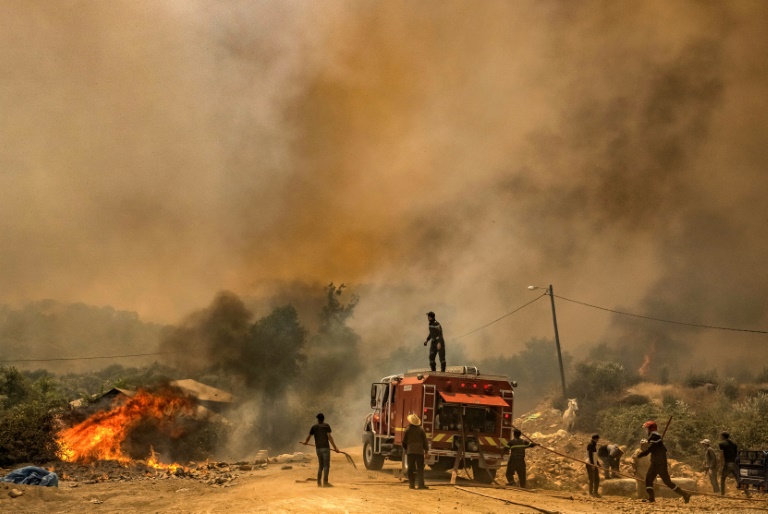
Hundreds of Moroccan firefighters and soldiers battled late Thursday to put out at least four infernos ripping through forests in the north of the kingdom, officials said.

The fires, fanned by strong winds in the four areas, have not resulted in any casualties so far, but nearly 500 families were evacuated “as a precaution” in the provinces of Larache and Taza, according to official statements.

Several villages that were evacuated also saw military planes dropping loads of water to extinguish fires tearing across the dry terrain, an AFP journalist said. 

Shocked by how fast the flames were spreading, residents fled their homes, with some families herding their cattle and horses — upon which their livelihoods depend — ahead of them.

“I was with my family, and at one point, we heard people shouting, ‘Fire! Fire!'” said Samir Boundad, from Larache. 

“We ran out to flee and fortunately, thanks to God, the fire moved up the mountain.”

A village in the Ksar El Kebir region was destroyed by the flames.

Hundreds of civil defence workers, as well as soldiers and police officers, are trying to stop the fires from causing more destruction.

In four provinces — Larache, Ouezzane, Tetouan and Taza — the fires ripped through forestland that is difficult to access, said Fouad Assali, head of the National Center for Forest Climate Risk Management.

“Efforts are continuing in the hope of bringing these fires under control,” Assali was quoted as saying by the official MAP news agency.

Since Wednesday night, at least 1,000 hectares (2,500 acres) of forest have burned in Larache and Ouezzane, according to initial reports, leaving burnt trees smouldering under a sky blanketed by plumes of smoke. 

– Intense droughts, soaring temperatures –

The North African nation, which is struggling under intense droughts, has in recent days been hit by soaring temperatures approaching 45 degrees Celsius (113 degrees Fahrenheit).

“It is the heat that causes this kind of fire. It was yesterday at dawn that the fire reached our village,” Ahmed Mezouar, 58, a resident of Larache, told AFP, adding that he was hopeful that firefighters would be able to contain it.

Still, he worried, as a neighbouring village had been completely surrounded by the flames. 

“We are afraid for our houses,” he said. “For the moment, we are safe.”

Across the Strait of Gibraltar, wildfires are also raging in southern Europe, from Portugal and Spain through to France and Greece.

Scientists say extreme weather events such as heatwaves and droughts, which make wildfires more likely, are linked to climate change.

They are expected to become even more frequent, more prolonged and more intense in the future.

China officials haul in Alibaba execs over massive data heist: report

Alibaba shares sank on Friday after a report said the tech giant’s executives had been called in for meetings with Chinese officials over the theft of a vast police database.

A hacker last month put on sale what they claimed was the personal information of hundreds of millions of Chinese citizens — which, if true, would make it one of the biggest data heists in history.

Cybersecurity analysts subsequently confirmed that the data — partly verified by AFP — was stored on Alibaba’s cloud servers, apparently by the Shanghai police.

The company’s shares slumped 5.7 percent at the open in Hong Kong on Friday, hours after The Wall Street Journal reported that Shanghai authorities had called in its executives for talks in connection with the heist.

The Journal cited unnamed people familiar with the matter as saying the executives included Alibaba Cloud vice president Chen Xuesong, who heads the unit’s digital public security work.

The report added that senior managers from Alibaba and its cloud unit held a virtual meeting on July 1 after a seller advertised the stolen database in a cybercrime forum.

As part of an internal investigation, company engineers have cut access to the breached database and have started reviewing related code, the Journal said, citing employees familiar with Alibaba’s response to the hack.

The database is believed to have been stored on Alibaba’s servers using outdated and insecure technology.

Alibaba did not immediately respond to an AFP request to confirm the information in the report.

China maintains a sprawling nationwide surveillance network that collects huge amounts of data from its citizens, ostensibly for security purposes.

Beijing has passed stronger data protection laws in recent years as public awareness of data security and privacy issues has grown.

There are few ways, however, for ordinary citizens to stop the government from gathering information on them.

The sample of 750,000 entries posted online by the hacker showed citizens’ names, mobile phone numbers, national ID numbers, addresses, dates of birth and the police reports they had filed.

The hacker wanted 10 bitcoin — around $200,000 at the time — for the entire database.

Some of the information appeared to have been drawn from express delivery services, while other data included summaries of police incident reports in Shanghai over more than a decade until 2019.

At least four people out of more than a dozen contacted by AFP last week confirmed their details were listed in the database.

China growth at two-year low over Covid, property woes

China logged its slowest economic growth since the initial Covid outbreak, official data showed Friday, expanding just 0.4 percent in the second quarter with lockdowns and property market weakness nudging a government target further out of reach.

Beijing has dug its heels in on a zero-Covid policy of stamping out virus clusters as they emerge with snap lockdowns and long quarantines, but this has battered businesses and kept consumers jittery.

The slowdown comes after China’s biggest city Shanghai was sealed off for two months as it battled a Covid-19 resurgence, tangling supply chains and forcing factories to halt operations.

“Domestically, the impact of the epidemic is lingering,” NBS spokesman Fu Linghui said Friday, noting shrinking demand and disrupted supplies.

“The risk of stagflation in the world economy is rising” as well, he told reporters, saying that external uncertainties were growing.

GDP for the April to June period in the world’s second-biggest economy was also down 2.6 percent compared with the first three months of this year, the National Bureau of Statistics (NBS) said.

China has only logged a GDP contraction once in recent decades, and analysts expect the latest reading will drag further on full-year growth.

Industrial production rose 3.9 percent on-year in June, up from 0.7 percent in May as Covid controls eased.

But retail sales picked up 3.1 percent after plummeting 6.7 percent in May, in what analysts called an encouraging sign.

And the urban unemployment rate was down four points from 5.9 percent that month, the NBS said.

The economy is “on track for a slow recovery,” said Zhiwei Zhang of Pinpoint Asset Management.

“Nonetheless, economic growth is still much lower than its potential, as the fear of Covid outbreaks continues to hurt consumer and corporate sentiment,” he added in a note.

– ‘Hard to square’ –

Economists have long questioned the accuracy of official Chinese data, suspecting that figures are massaged for political purposes.

China’s second quarter growth is “hard to square with the large hit to activity from lockdowns,” said Julian Evans-Pritchard, senior China economist at Capital Economics.

“Even accounting for June’s strength, the data are consistent with negative year-on-year growth last quarter,” he added.

The data comes in the wake of mounting challenges in China’s key real estate sector — which by some estimates accounts for a quarter of gross domestic product — with weak home sales in recent months. 

A growing number of homebuyers are also refusing to pay their mortgages over worries their properties will not be built on time.

“We remain cautious on growth outlook in the second half, as spread of the much more infectious Omicron variant across the country could trigger another round of widespread lockdowns,” Nomura chief China economist Ting Lu told AFP.

With homebuyers halting mortgage repayments, this “could result in a vicious cycle in the property sector, and a likely synchronised global slowdown will eventually hit the export sector,” he said.

The news piles pressure on the Communist Party’s leadership, which is gearing up for its 20th Congress, at which President Xi Jinping is expected to be handed another five-year term.

Analysts expect that it is unlikely the government’s target of around 5.5 percent growth this year can be attained, given that it will require a huge pick-up in growth in the second half.

Asian stocks mixed as recession fears grow, China data falls well short

Stocks were mixed in Asia on Friday as soaring inflation and a series of interest rate hikes around the world continued to fan recession fears, while a big miss on Chinese growth added to anxiety about the world’s biggest economies.

Below-par earnings from Wall Street titans JP Morgan and Morgan Stanley compounded worries that companies’ bottom lines would be hit by the economic fallout from a series of issues including rising prices, monetary policy tightening and the war in Ukraine.

After rate hikes by a number of countries this week, investors expect the Federal Reserve to lift rates this month by 75 basis points as officials battle to rein in decades-high inflation, though some observers suggest a one-percentage-point move could be on the cards.

The latest outsized US inflation print this week — caused by a spike in energy prices — followed last Friday’s news that jobs creation remained strong in June, giving the Fed room to press ahead with its campaign to suck cash out of the financial system.

However, while experts warn that raising rates too much risks hammering the economy, the bank has made it clear its number-one priority is bringing down prices.

This has sent the dollar racing higher across the board, and Steve Englander at Standard Chartered Bank warned there was no end in sight to the unit’s advance.

The currency’s strength is “largely a flight to safety”, he told Bloomberg TV.

“The problem is until we get to see some light at the end of the tunnel with respect to either inflation coming off or oil prices coming off because of supply creation rather than demand destruction, it’s hard to call a top to it.”

With investors increasingly pricing in a recession next year, equities are struggling to see any upward momentum.

Wall Street’s three main indexes mostly fell, with sentiment weighed by the disappointing reports from JPMorgan Chase & Co. and Morgan Stanley. They will be followed over the next few days by Citigroup, Goldman Sachs and Bank of America.

In early Asian trade, Hong Kong dropped and mainland Chinese markets fluctuated after data showed China’s economy grew just 0.4 percent in the second quarter as it was battered by Covid lockdowns in major cities including Shanghai and Beijing.

The reading was well off the 1.6 percent predicted by analysts in an AFP survey, though there is a hope that it will provide fresh impetus to authorities to unveil new stimulus measures.

Elsewhere, Tokyo, Singapore, Seoul and Taipei rose but Sydney, Wellington, Manila and Jakarta fell.

On currency markets the euro continues to hover around parity with the greenback as the European Central Bank grapples with a range of issues including an energy crisis amid fears Russia will cut off its gas supplies in retaliation for Ukraine war sanctions.

Meanwhile, policymakers have yet to lift interest rates — leaving the bank well behind the Fed — on concerns about the vast differences, or “fragmentation”, between the eurozone’s individual sovereign bond rates.

Added to that is new political upheaval in Italy as the government there teeters on the brink.

“With a weak currency, sky-high inflation, recession risk due to the energy crisis and political turmoil in Italy, the ECB is facing an impossible mission to solve all its problems simultaneously with monetary policy,” said SPI Asset Management’s Stephen Innes. 

“Front-loading a 50 basis point hike and revealing a solid anti-fragmentation tool seems the optimal solution for the central bank… but that is likely not enough to support a sustainable euro rebound.”

Traders are keeping tabs on the Middle East as Biden tours the region, with his visit to Riyadh later in the day the main focus as he tries to persuade the kingdom to help bring down crude prices by pumping more.

While both main contracts have fallen in recent weeks to below $100 owing to demand fears caused by a possible recession, there are disagreements over the outlook for the market, with some predicting it will surge to new highs and others warning it could fall to $65.

– Key figures at around 0230 GMT –

Tokyo – Nikkei 225: UP 0.6 percent at 26,797.47 (break)

Hong Kong – Hang Seng Index: DOWN 0.5 percent at 20638.71

Shanghai – Composite: UP 0.2 percent at 3,287.59

Euro/dollar: UP at $1.0033 from $1.0022 Thursday

Pound/dollar: UP at $1.1839 from $1.1826 

Euro/pound: UP at 84.75 pence from 84.72 pence

Dollar/yen: DOWN at 138.91 yen from 138.93 yen

West Texas Intermediate: UP 0.3 percent at $96.08 per barrel

Brent North Sea crude: UP 0.4 percent at $99.50 per barrel

New York – Dow: DOWN 0.5 percent at 30,630.17 (close)

London – FTSE 100: DOWN 1.6 percent at 7,039.81 (close) 

Bot battle: The tech that could decide Twitter's Musk lawsuit

If Twitter’s lawsuit over Elon Musk’s $44 billion buyout bid ever reaches trial, the case will likely center on a ubiquitous and often unloved technology: bots.

The information Twitter has or has not provided on its tally of fake or spam accounts is Musk’s stated reason for backing away from the deal — a move that prompted the firm to sue him this week.

Here’s a closer look at the complications around bot accounts, and how they would be key in deciding the case.

– Good bot, bad bot –

At a basic level, “bots” are software programs that do automated tasks online, often with the aim of emulating how people behave.

Twitter tolerates some automated uses, like an account that tweets every time the Hubble space telescope crosses the sky over a given city.

But Twitter has rules about automated actions by accounts, including barring software from posting about hot topics, firing off spam, attempting to influence online conversations, and operating across multiple accounts.

The company says it wages a daily campaign against spam or fake accounts that keeps their number to less than five percent of users. 

Musk’s lawyers, in notifying Twitter on July 8 he was “terminating” the agreement to buy the company, alleged the platform made “false and misleading representations” about bots and had not provided details he needed to check its assertions. 

– Thorny question –

Determining the number of bots on the site is a bit of an art because the tally is determined in part by Twitter’s internal definitions and the workers who apply the rules.

While some cases are clear cut violations, some can require the judgement of people who have to weigh various facts.

“People can disagree on what should be considered a bot or a spam account,” said Edwin Chen, a former Twitter employee, who is now CEO of content moderation firm Surge AI. 

The figure would also be tricky for an outsider like Musk to confirm because the bot weeding process can include checking IP or email address or other sensitive user data.

“I think a lot of people, not even just my former colleagues but people just generally within the tech industry, know that this is a thorny, thorny question,” Chen added.

Twitter’s lawsuit, which urges a court to force Musk to honor his buyout offer, could result in a trial or settlement talks that would need to plunge into the finer points of things like the firm’s bot definitions and policies.

Musk’s lawyers said he has already asked for but had not received “Twitter’s methodology and performance data” about finding and suspending spam and fake accounts.

“In short, Twitter has not provided information that Mr. Musk has requested for nearly two months,” the lawyers wrote in laying out the argument for aiming to abandon the deal.

– The deal with Twitter –

Speculation has mounted that the bot issue — with its tricky, detailed and case-by-case aspects — is just a convenient route for Musk to abandon or renegotiate his proposal.

Yet, bots are a problem online.

“Bad actors have nearly infinite resources and incentives to use bots for nefarious purposes,” said Tamer Hassan, co-founder and chief of cybersecurity firm HUMAN.

Bots are used in more than three quarters of security and fraud incidents that happen online, from spreading socially divisive posts to snapping up hot concert tickets and hacking, Hassan told AFP. 

Also, Twitter makes its money from ads, and marketers pay for reaching people, not software.

Thus “advertising to bots isn’t going to have a good close rate because bots don’t buy products,” analyst Rob Enderle told AFP previously.

If advertisers are paying Twitter fees based on how many people see ads, and those numbers are inflated due to bots in the online audience, they are being overcharged, Enderle added.

If Twitter has way more bots than it is letting on, its revenue could plunge when those accounts are exposed and closed.

Or as Musk’s lawyers put it, Twitter’s true daily users who can be shown advertising are “a key component of the company’s business, given that approximately 90 percent of its revenues come from advertisements.” 

Close Bitnami banner
Bitnami