Africa Business

DR Congo and Rwanda agree ceasefire at talks: Angola

An agreement has been struck which could mean the adoption of a ceasefire in the violence-torn east of DR Congo as soon as late Friday, Angola’s Foreign Minister Tete Antonio has said.

The Democratic Republic of Congo’s President Felix Tshisekedi had been meeting Rwandan Foreign Minister Vincent Biruta in Luanda on Wednesday as tensions soared between the neighbours amid bloody militia violence on their border.  

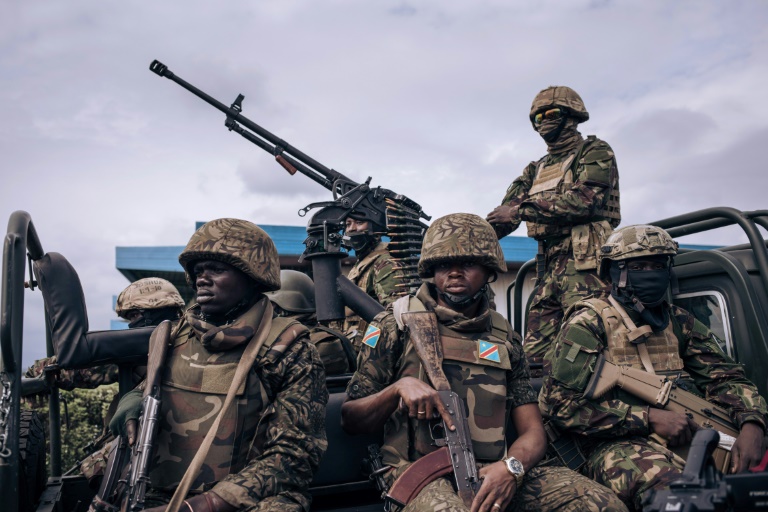
Eastern DRC has witnessed fierce fighting in recent months between Congolese troops and the M23 rebel group.

An agreement was reached for an “immediate ceasefire” in the DRC at 6:00 pm (1600 GMT) Friday, Tete said after the talks. 

The parties also agreed to demand “the immediate withdrawal of M23 rebels from the occupied areas”, he added.  

The clashes have triggered a diplomatic row, with the DRC accusing Rwanda of aiding the rebels, something that its far smaller neighbour denies.

The East African Community (EAC), of which Rwanda is a member, has also vowed to deploy a joint force to quell the violence.

Kenyan soldiers arrived in the DRC earlier this month and Uganda says it will shortly deploy around 1,000 troops. 

The EAC’s chair, Burundian President Evariste Ndayishimiye, and former Kenyan president Uhuru Kenyatta — the EAC’s “facilitator” in efforts to restore peace and security in the mineral-rich region — were also in Luanda.

Rwandan President Paul Kagame was not in attendance at the talks for reasons that were not immediately clear. 

Ahead of the talks, the UN Security Council members called for a halt to fighting, for the M23 to withdraw from occupied areas and for the end to “all external support to non-state armed actors, including the M23.”

The M23, a largely Congolese Tutsi militia, has seized swathes of territory across North Kivu province, edging towards the region’s main city of Goma.

The DRC and Rwanda agreed to a de-escalation plan in July, but clashes resumed the very next day.

On Tuesday, Kinshasa said it would not sit down for talks with M23 rebels until the group withdrew from the areas it controlled.  

The M23 first leapt to prominence 10 years ago when it captured Goma, before being driven out and going to ground. 

It re-emerged late last year, claiming the DRC had failed to honour a pledge to integrate its fighters into the army, among other grievances.

Rwanda, denying the DRC’s charges against it, accuses Kinshasa of colluding with the Democratic Forces for the Liberation of Rwanda (FDLR) — a former Rwandan Hutu rebel group that was established in the DRC after the 1994 genocide.
DR Congo and Rwanda in fresh talks in Angola, Kagame absent

DR Congo President Felix Tshisekedi and Rwandan Foreign Minister Vincent Biruta met in Angola on Wednesday amid a surge in tensions triggered by militia violence in eastern Congo.

Tshisekedi and Biruta were received at a hotel in the capital Luanda by Angolan President Joao Lourenco, acting as a mediator between the two neighbours, an AFP correspondent saw.

But Rwandan President Paul Kagame was not in attendance, for reasons that were not immediately clear. 

Eastern Democratic Republic of Congo has witnessed fierce fighting in recent months between Congolese troops and the M23 rebel group.

The clashes have triggered a diplomatic row, with the DRC accusing Rwanda of abetting the rebels, something that its far smaller neighbour denies.

The East African Community (EAC), of which Rwanda is a member, has also vowed to deploy a joint force to quell the violence.

Kenyan soldiers arrived in the DRC earlier this month and Uganda says it will shortly deploy around 1,000 troops. 

The EAC’s chair, Burundian President Evariste Ndayishimiye, and former Kenyan president Uhuru Kenyatta — the EAC’s “facilitator” in efforts to restore peace and security in the mineral-rich region — were also in Luanda.

Ahead of the talks, the UN Security Council members called for a halt to fighting, for the M23 to withdraw from occupied areas and for the end to “all external support to non-state armed actors, including the M23.”

The M23, a largely Congolese Tutsi militia, has seized swathes of territory across North Kivu province, edging towards the region’s main city of Goma.

The DRC and Rwanda agreed to a de-escalation plan in July, but clashes resumed the very next day.

On Tuesday, Kinshasa said it would not sit down for talks with M23 rebels until the group withdrew from the areas it controlled.  

The M23 first leapt to prominence 10 years ago when it captured Goma, before being driven out and going to ground. 

It re-emerged late last year, claiming the DRC had failed to honour a pledge to integrate its fighters into the army, among other grievances.

Rwanda, denying the DRC’s charges against it, accuses Kinshasa of colluding with the Democratic Forces for the Liberation of Rwanda (FDLR) — a former Rwandan Hutu rebel group that was established in the DRC after the 1994 genocide.

Namibia pulls down statue of German coloniser

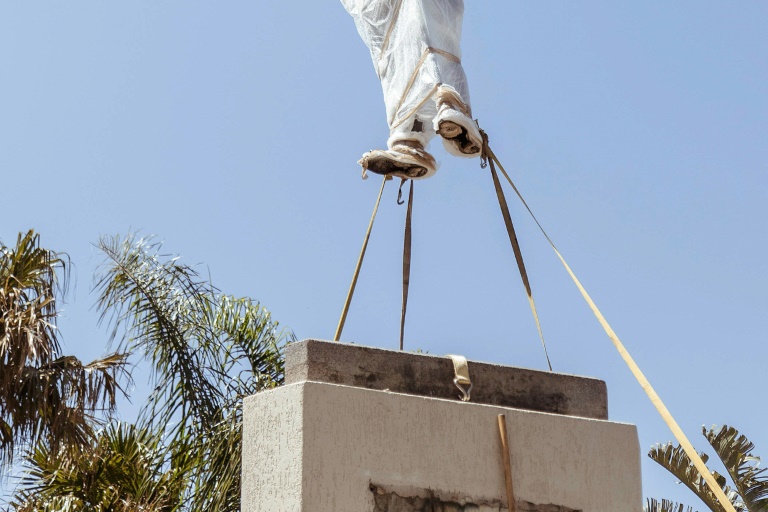
Authorities in Namibia’s capital Windhoek on Wednesday took down and relocated a statue of a controversial German colonial officer following pressure from local activists. 

The monument commemorated Curt von Francois, a German army commissioner who has been credited with founding Windhoek — something local campaigners and historians dispute.

The statue, which stood on a high pedestal outside municipal buildings, depicted von Francois in a military uniform with a moustache, a large hat, and holding a sword. 

“This moment is a recollection of dignity, our city has been white-washed,” Hildegard Titus, an activist with the A Curt Farewell movement that pushed for the statue’s removal, told AFP.

“There is an emotional tie to the statue being taken down but it also has to do with historical accuracy”.

The city council said the statue, which A Curt Farewell described as “a reminder of genocide”, will now be kept at the Windhoek City Museum.

There it will be displayed with an explanation of the historical context, said Aaron Nambadi, a curator at the museum.

“We as historians and curators were involved in this project to correct the false narrative that von Francois was the founder of the city,” Nambadi told AFP.

Germany colonised Namibia from 1884 to 1915.

Between 1904 and 1908, German settlers killed tens of thousands of indigenous Herero and Nama people between in massacres historians have called the 20th century’s first genocide.

Germany acknowledged the genocide last year after lengthy, bitter negotiations. 

It promised more than one billion euros ($1 billion) in financial support to descendants of the victims, whom many Namibians argue were not sufficiently involved in the negotiations.

Last month Namibia asked to renegotiate the terms of the agreement.

The removal of von Francois’ statue comes two years after the statue of Cecil Rhodes, a British colonialist, was beheaded by activists at the University of Cape Town in neighbouring South Africa during protests sparked by the death of George Floyd.  

Gang violence grips French Indian Ocean territory Mayotte

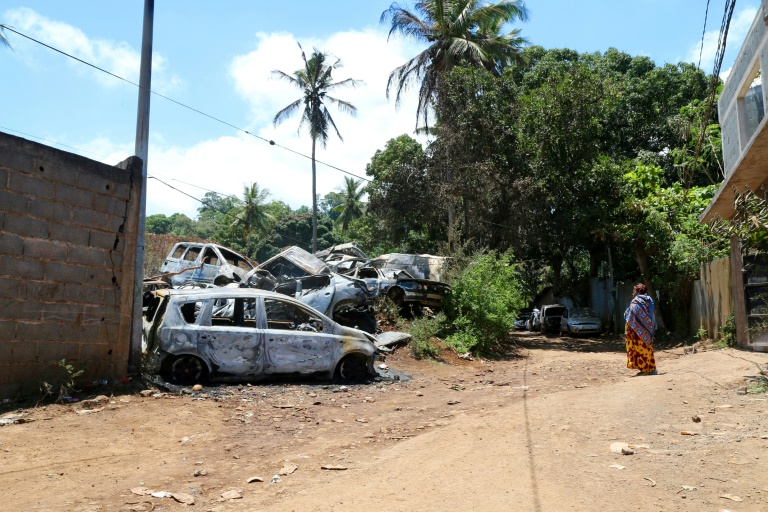
On the French Indian Ocean territory of Mayotte, clashes between machete-wielding gangs have left at least one dead, highlighting chronic crime problems that have rung alarm bells in Paris.

In the densely populated main city of Mamoudzou, street battles have struck fear into residents and led the mainland government to send a contingent of elite anti-terror police on Tuesday to help restore order. 

A 20-year-old was stabbed to death on November 12 in the northern slum-fringed suburb of Kaweni, and a school bus was attacked in the same area last week.

In the southern district of Mtsapere, lines of burned-out cars point to reprisals, with gangs of several hundred men and boys, some as young as 12, responsible for the daily unrest that includes roadblocks and attacks on motorists.

“What additional act of barbarism do we need so that the republic reacts?” local MP Estelle Youssouffa asked in the national assembly on Tuesday, imploring the government to tackle the unrest.

The outbreak of violence underscores declining living standards in Mayotte and has brought to the fore longstanding accusations of neglect by the Paris government, which are often heard in other overseas French territories in the Caribbean and Pacific.

Mayotte was paralysed for six weeks by strikes and blockades in 2018, and the French Caribbean islands of Martinique and Guadeloupe both erupted in violent protests last year.

“Now it’s on the front pages but our paradise has been a hell for some years now,” Youssouffa, a former journalist and community organiser, told France 24 television on Wednesday.

Administered as a fully fledged French “departement”, Mayotte has an unemployment level of 30 percent and by far the country’s lowest per capita annual income — around 3,000 euros ($3,100) compared with a national average of nearly 22,000 euros.

– Unusual history – 

The territory is composed of two islands that voted to stay part of France in 1973, while the others in the surrounding Muslim-majority archipelago sought independence, becoming the Comoros Islands.

After decades of coups and corruption, the Comoros Islands is one of the poorest countries in the world, leading to mass emigration to the French territory just 70 kilometres (44 mile) away by boat. 

Like many in Mayotte, where public services such as schools and hospitals are under severe pressure, Youssouffa considers illegal immigration to be “the root” of the current gang violence.

According to official statistics, Mayotte’s population was 256,000 in 2017 — an increase of 60 percent in 15 years — but Youssouffa estimates it could be as high as 500,000 when uncounted Comorians are taken into account.

Across the political spectrum in France, the influx is blamed for the unrest.

“It takes two hours in a boat to reach Mayotte and it’s true that many Comorians travel to Mayotte, and that creates dreadful tensions with these unjustified clashes,” Communist Party leader Fabien Roussel told the BFM news channel on Wednesday.

He called on the government to reach an agreement to stem the flow of people from the Comoros Islands, which claims Mayotte as part of its territory and has several UN resolutions condemning France in its favour.

Relations between Paris and the Comoros Islands have often been tense, most recently in 2018 when the Comoros began refusing to take back its people.

On the streets of Mamoudzou on Wednesday, young people said they expected the tit-for-tat attacks and unrest between gangs from the north and south of the city to continue.

“With them, it’s a world war,” a young person who gave his name as “De Baco” told AFP in the northern Kaweni area, referring to rivals in the south. 

Musicians in French-speaking Africa eye global market through streaming

The wildfire popularity of streaming platforms has hoisted Nigerian and other artists from English-speaking Africa to unprecedented popularity around the world.

Musicians from the continent’s francophone countries are now looking to cash in on the boom. 

Africa’s streaming leader is Boomplay, whose library of 80 million tracks is almost in the same ballpark as those of Deezer and Spotify.  

But Boomplay’s big difference with the global giants is a catalogue that focuses intensively on African music rather than a broader range of genres.

The app was created in Nigeria in 2015 and is now present in six African countries, said Paola Audrey, manager of Boomplay’s Ivory Coast branch.

“We offer a very large library which helps you to discover many local artists,” she said.

Funded by advertising and free for the user, Boomplay has blazed a trail internationally for Nigerian Afro-pop and now hopes to do the same for francophone African stars.

“At the moment it’s much easier to highlight Nigerian artists in the French-speaking world, but we’re doing some experiments in the reverse direction, such as the Ivorian rapper Didi B,” said Audrey.

“There are small niche markets, and our role is to promote artists so that they can find an audience on a bigger scale.” 

For industry experts who met last week in Abidjan at the African Music Industry Fair, the digital revolution promises glittering opportunities for West African artists.  

Revenue from African music streaming is expected to more than triple in five years, from $92.9 million in 2021 to $314.6 million in 2026, according to research firm Dataxis.

– Digital dawn –

“Everything began with digital platforms,” said Akotchaye Okio, in charge of international development for Africa at Sacem, a rights group representing artists.

“Look at the success of the South African song ‘Jerusalema’ or ‘Calm Down’ by Rema,” a Nigerian singer whose hit has notched up 50 million streams in France alone, he said.

Magali Palmira Wora, a francophone Africa specialist at US distributor The Orchard, pointed however to a learning curve.

“Artists in French-speaking Africa have to learn to put themselves forward on platforms,” she said.

“Spotify for example has got an Afro-pop playlist — you have to explain to artists why it’s important to be on it.”

Good exposure on the platforms smashes down the barriers to bigger markets, and opens the way to a career that is far more international than would have been previously possible.  

“Wherever you are, you can listen to my songs in one click. With digital technology, access to information is much more extensive. It allows local music industries to develop and as an artist it gives us exposure,” said Ivorian rapper Suspect 95.  

“We no longer need to go through networks which made it hard to get my CD to this or that country.”  

– Copyright issue –

Five countries — South Africa, Egypt, Nigeria, Algeria and Morocco — account for 86 percent of African streaming revenues today, according to Dataxis. 

But the 400 million potential listeners in French-speaking sub-Saharan Africa, two-thirds of whom are under the age of 25, are a promising untapped market. 

Ensuring that up-and-coming independent artists can make money from the dominant platforms will be a key challenge.  

“Obviously, if you’re signed up with a major (music company), it’s easier — you are using an established network” for getting copyright payments, said Suspect 95, who is signed to Universal.

“For independent artists, it’s harder, for now.”

“The big platforms which use massively use our songs aren’t yet paying the rights they should in Ivory Coast,” said Karim Ouattara, director general of the Ivorian Copyright Office.

“But we are in negotiations and should see progress by the end of the year.” 

Bissau police launch hunt for ex-PM

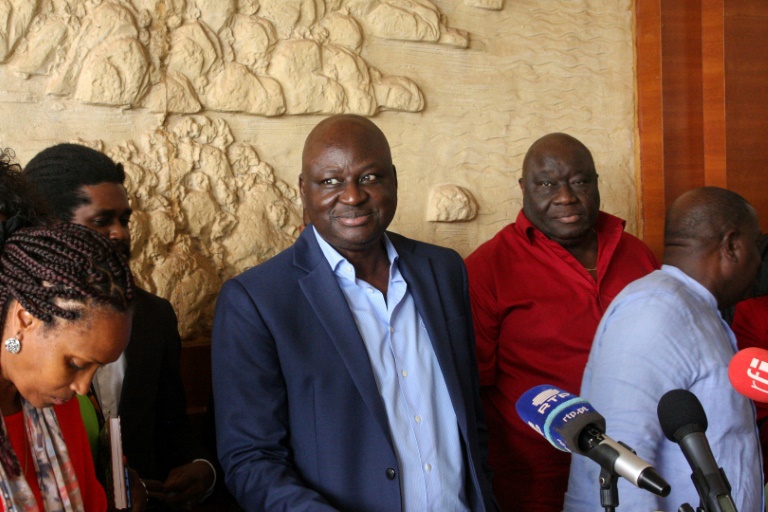
Guinea-Bissau’s police are “actively” searching for former prime minister Aristide Gomes, who went into hiding after returning last week from exile abroad, a police official said Wednesday.

“We know he is in hiding, but if he comes out, he will be arrested,” an official from the interior ministry’s search unit told AFP.

Gomes, 68, who was head of government between 2018 and 2020, disputed President Umaro Sissoco Embalo’s electoral victory in 2019 and was dismissed from his role.

He had been living under diplomatic protection or in exile abroad until his return home.

Embalo currently holds the presidency of the 15-nation Economic Community of West African States (ECOWAS). 

After months of confusion, the international community finally accepted the fait accompli of his presidential victory in 2020.

Gomes is a prominent figure in the African Party for the Independence of Guinea and Cape Verde (PAIGC), a party that has dominated political life since 1974 but was defeated in the presidential vote.

He had in March 2020 taken refuge at the United Nations office in Guinea-Bissau, where he remained for 11 months until February 2021.

Saying he feared for his safety, he was given permission to leave the country on international intercession and had been living in France. 

He returned at the end of last week to attend the 10th PAIGC Congress. 

Police officers burst into the hall on Friday to arrest him. He managed to escape, protected by dozens of his party’s militants, and has been in hiding since then. 

He sent a message on Monday saying he feared for his life.

The judiciary has issued a warrant for his arrest. 

Gomes is wanted for alleged financial malpractice dating back to 2019 when he was still prime minister, according to a prosecutor’s magistrate speaking on condition of anonymity. 

“He is in good health, but we have not yet seen him,” said one of his lawyers, Carlos Pinto Pereira. 

“We are ready to take him before an investigating judge if all procedures are respected,” he added. 

A correspondent for AFP noted that plainclothes agents were discreetly stationed on the main exit roads of the capital. 

A coast watch has also been set up, a coast guard told AFP.

Since its independence in 1974, Guinea-Bissau, a former Portuguese colony, has seen a string of putsches and attempted coups, the latest of which took place on February 1 this year. 

The president dissolved parliament this year and announced early elections for December 18. But it is doubtful they will take place on that date.

French aid groups in disarray after latest Mali bustup

French-backed NGOs in Mali fear their future is in limbo after relations between the military-run hosts and France hit the wall.

On Monday, Mali declared that all NGOs financed or supported by France would be banned — a move that strikes at vital aid work in the deeply troubled country.

The announcement marked a further twist in the downward spiral between the Sahel nation and its former colonial power and erstwhile ally.

Relations started to go downhill after a coup in 2020 that led to Mali weaving closer ties with Russia, and France pulling its anti-jihadist forces out of the country.

“We are dismayed and angry to see French public aid exploited and NGOs entangled against their will in these games of diplomatic relations,” said Olivier Bruyeron, head of Coordination SUD, a coalition of groups that includes around 40 French organisations in Mali.

Aid groups are struggling to understand the impact but are already in an “unacceptable” situation, he told AFP.

Foreign organisations play a key part in helping Mali, one of the poorest and most deeply troubled nations in the world.

The landlocked state is on the back foot against a decade-old jihadist insurgency that has claimed thousands of lives and forced hundreds of thousands from their homes.

Out of a population of some 20 million, more than a third — 7.5 million — survive through emergency aid, according to UN figures.

According to World Bank data, official development aid — support that comes from governments — accounted for 9.4 percent of Mali’s gross national income in 2020, the year of the coup.

– ‘$100 mn’ aid –

Organisations backed by France are in the forefront, especially in the provision of healthcare, clean water, electricity and education.

They include the French Red Cross, Premiere Urgence Internationale (PUI), Humanity and Inclusion (HI) and Solidarites International.

The junta has given no details as to which NGOs are concerned or the type of support which could lead to their banning.

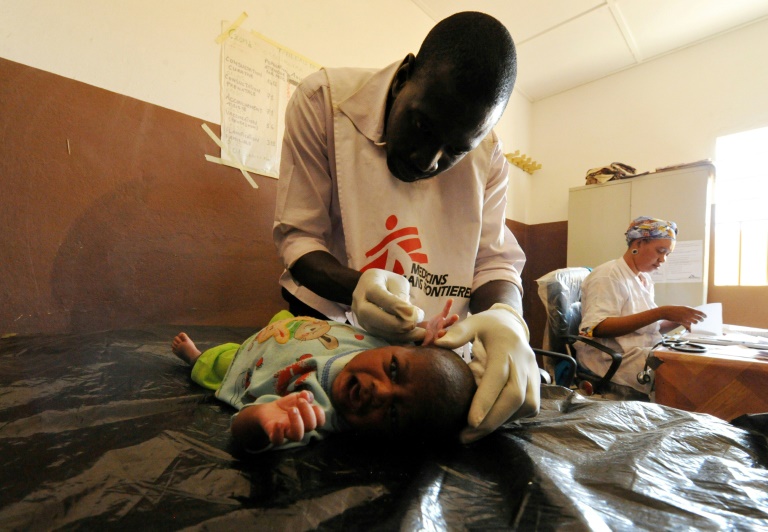
France’s best-known NGO, Medecins Sans Frontieres (MSF – Doctors Without Borders) is also present in Mali, but its French branch does not operate on government funds and thus appears not to be affected by the move.

The French government on Monday urged French NGOs to “conform to the regrettable decision of the Malian transitional authorities”.

“Since 2013, Mali and its people have benefitted from more than 100 million euros (dollars) annually in public aid for development and French humanitarian aid,” it said.

Mali’s interim prime minister, Colonel Abdoulaye Maiga, blamed the ban on a move by France to suspend its development aid for Mali.

France had said the suspension was triggered by Mali’s use of mercenaries from Russia’s Wagner group — personnel that the junta says are military trainers.

“Humanitarian aid” and certain support for “Malian civil society” are not included in the suspension.

– NGO crackdown? –

Yvan Guichaoua, a researcher at the Brussels School of International Studies run by Britain’s University of Kent, said the latest announcement marked “the consolidation of an anti-NGO policy that began some months ago”.

The political path taken by the junta, he said, meant it now needed to find “sacrificial victims.”

Several NGOs have been accused on social media in recent months of having “treated terrorists” — something that, for most aid groups, is incorporated in their charter of neutrality.

As tensions between Mali and France worsened, anti-French invective intensified and the junta pounded out a nationalist message that the country did not need western support.

Julien Antouly, a specialist at Paris-Nanterre University, said he had seen a trend in recent months towards tighter controls over NGOs in Mali.

In April, three German aid workers were arrested before being swiftly released.

“What’s new here is that the government is not only focussing on (the NGOs’) activities but also on their sources of funding,” he said.

No end in sight for S.Africa crime wave

An onslaught of violent crime afflicting South Africa shows no sign of abating, according to police statistics released Wednesday that detailed a further surge in murders and kidnappings.

Rapes, in a country notorious for sex attacks against women and children, also recorded a huge jump. 

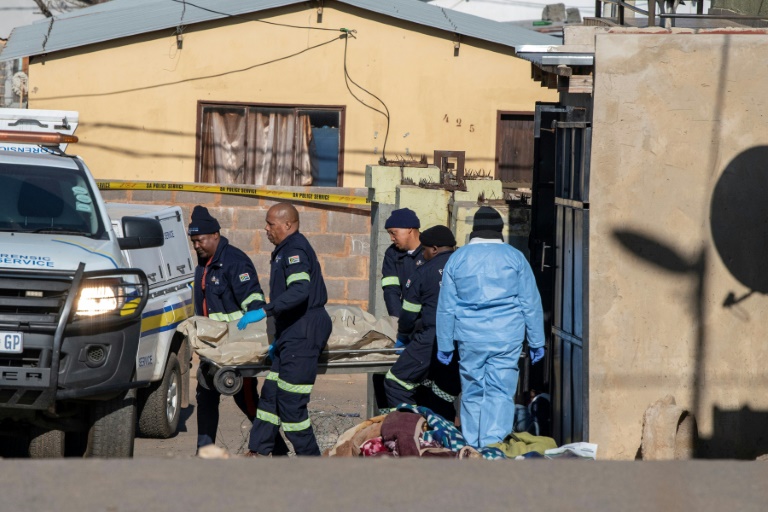
Kidnappings doubled to more than 4,000 in the three months between July and September, compared to the same time last year. 

Quarterly figures said that more than 7,000 people, including almost 1,000 women, were murdered over the period, up 14 percent on the same timeframe in 2021. 

Rapes were up 11 percent, with 10,000 cases opened across the country. 

Carjackings rose 24 percent to more than 6,000. 

More than 550 children were killed between April and September.

“The crime statistics again show that we as communities continue to fail to protect some of the most vulnerable in society: our children,” Police Minister Bheki Cele told a press conference.

He promised that 10,000 new recruits would be ready to join the police force ahead of the Christmas and New Year period, when crime typically rises.

Their deployment “will intensify police visibility during the festive season and beyond,” he said. “Nothing will replace fighting crime (better) than warm bodies.”

The country’s largest labour confederation COSATU last month said the force’s headcount has declined by nearly 30,000 over the past decade from over 200,000 to 172,000.

Cele, who is under fire over the crime wave, noted that from July to September last year, South Africa was under various levels of coronavirus lockdown, with restrictions on many activities. 

But that will be of little consolation for many South Africans who have grown accustomed to bleak police bulletins. 

“The bloodbath of violent crime remains out of control across the country with millions of people living in fear,” said Andrew Whitfield, a lawmaker with the largest opposition party, the Democratic Alliance, calling on President Cyril Ramaphosa to fire Cele.

Burkina Faso pounds patriotic drum in anti-jihadist fight

With flags, appeals to patriotism and reminders of its revered revolutionary leader, Burkina Faso has been calling for volunteers to join a battered civilian force fighting ruthless jihadis.

The authorities have been seeking 50,000 members for the Volunteers for the Defence of the Fatherland (VDP) — an auxiliary force that supports the country’s poorly equipped army in its seven-year-old struggle against the insurgents.

At a gathering in the regional governor’s office in the capital Ouagadougou, the fervent tone was set by Alouna Traore — a close aide to Burkina Faso’s firebrand former leader, Thomas Sankara, who 35 years after his assassination remains idolised today.

Traore, the only survivor of the attack that gunned down Sankara and his inner circle, made a dramatic entrance on a small motorbike with a Burkinabe flag perched on its petrol tank.

At the age of 65, he was offering his services to the VDP.

“The fatherland is in danger,” he declared, a black scarf around his neck. 

“It calls on all its sons to join its defence and the patriotic and popular mobilisation. Now is not the time to hesitate.”

“Like president Sankara, who loved the country so much that he gave it everything, including his life, the love of one’s country is an order for the sons of this country to sign up,” he said. “It’s an appointment with history.”

One of the poorest and most volatile countries in the world, the landlocked Sahel state is struggling with a jihadist offensive launched from neighbouring Mali in 2015.

Thousands of soldiers, police officers and civilians have been killed, around two million people in a population of some 21 million have fled their homes and more than a third of the country is outside government control.

The crisis has unleashed two military coups this year, driven by army officers angered at failures to roll back the threat.

– ‘Survival’ at stake –

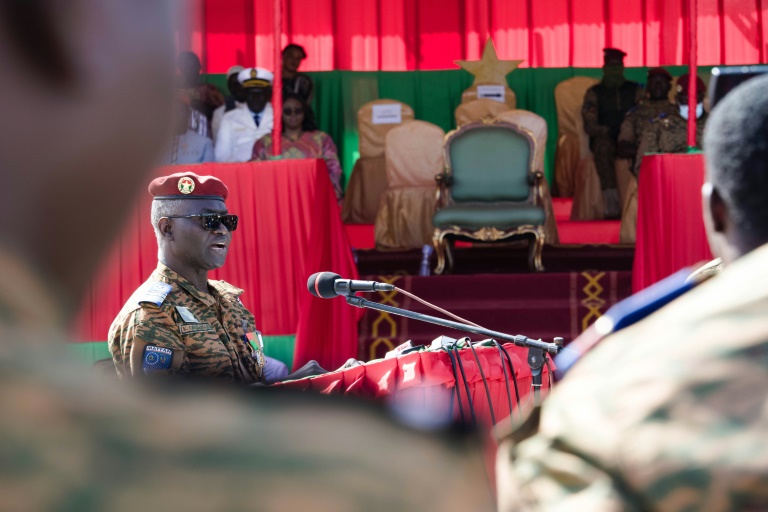
On November 1, at ceremonies to mark the 62nd anniversary of the armed forces, Defence Minister Kassoum Coulibaly said it was time to ditch the perception that fighting “terrorism” was restricted only to the armed forces.

“Every citizen should be aware that this is essentially a war in which our common destiny is at stake, meaning the survival of our nation,” he said.

The three-week drive has brought in more than 30,000 VDP recruits, aged from 18 to 77 and of varying backgrounds, from students and the unemployed to traditional chiefs and even ministers.

“We’ve lost our land, lost too many friends,” said Ablasse Kabore, a butcher who came with his son to sign up at the meeting in Ouagadougou.

“I want to cry when I talk about it. I am ready to die for my country.”

The minister of sport, youth and employment, Issouf Sirima, signed up in the southwestern town of Banfora.

“If you are in charge of a ministry that helps young people, and young people are being called on to enrol, you have to show the way,” he said.

Idrissa Yameogo, a 24-year-old student who had come with two friends to join the VDP, said that “instead of asking foreign forces to come and help us, we should count on ourselves first and foremost”.

“We want to get good training and receive the means to fight the terrorists.”

– Burkina’s ‘very existence’ –

The VDP, set up in December 2019, comprises civilian volunteers who are given two weeks’ military training and then work alongside the army, typically carrying out surveillance, information-gathering or escort duties. 

But hundreds of these poorly-trained volunteers have died, especially in ambushes or explosions caused by improvised explosive devices (IEDs) planted along roadsides. 

Out of the 50,000 hoped-for recruits, 35,000 will be assigned to their local area, and 15,000 in other parts of the country.

Zakaria Sore, a researcher at the Joseph Ki-Zerbo University in Ouagadougou, said the recruitment drive would help to deploy “fighting men around the country”.

But he also raised concerns about their lack of training and combat experience.

Abraham Badolo, head of a civilian NGO called the Alliance to Defend the Fatherland, said tens of thousands more guns would now be circulating in this deeply troubled country as a result of the recruitment drive.

But political analyst Drissa Traore said the emergency was now so great, the country had to focus on the present — not on what might happen in the future.

Blaming the end of military service in the 1990s for the army’s decline, he said “there won’t be anything left of the country if it falls into the hands of our enemies… It’s the country’s very existence which is at stake”.

A greener ride: West Africans switch on to electric motorbikes

Beninese hairdresser Edwige Govi makes a point these days of using electric motorbike taxis to get around Cotonou, saying she enjoys a ride that is quiet and clean.

Motorcycle taxis are a popular and cheap form of transportation in West Africa. 

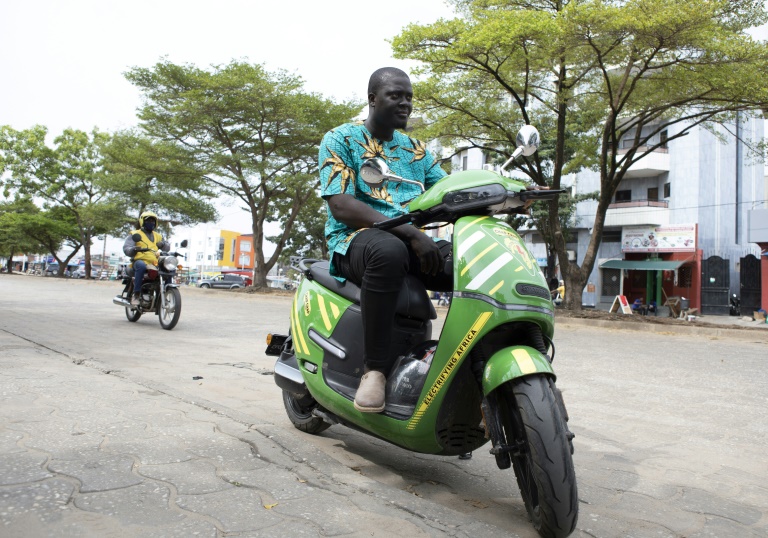
But in Benin and Togo, electric models are gaining the ascendancy over petrol-powered rivals.

Customers are plumping for environmentally-friendlier travel and taxi drivers are switching to machines that, above all, are less expensive to buy and operate. 

“They are very quiet and do not give off smoke,” says Govi, 26, who had just completed a half-hour run across Benin’s economic hub.

In African cities, road pollution is becoming a major health and environment issue, although for taxi drivers, the big attraction of electric motorcycles is the cost.

“I manage to get by,” said Govi’s driver, Octave, wearing the green and yellow vest used by Benin’s zemidjan taxis — a word meaning “take me quickly” in the local Fon language. 

“I make more money than with my fuel motorcycle.”

Local environmentalist Murielle Hozanhekpon said the electric motorbikes do have some disadvantages “but not on an environmental level”.

Alain Tossounon, a journalist specialising in environmental issues, said electric bikes were prized by taxi drivers as they were less expensive to maintain or run.

The cost factor has become more and more important in the face of an explosion of fuel prices this year triggered by Russia’s invasion of Ukraine.

– Credit carrot –

In Benin, an electric motorcycle costs 480,000 CFA ($737 / euros) against 490,050 CFA ($752 / euros) for a petrol-driven equivalent.

But this significant price difference is only one factor which explains the trend towards “silent motorcycles,” said Tossounon. 

Many taxi drivers are also lured by flexible credit deals — instead of making a hefty one-off purchase, many are able to get loans that they pay off monthly, weekly or even daily. 

Two companies in Cotonou have been offering electric models and say they are overwhelmed by demand. 

“The queue here is from morning to evening. Every hour, at least two roll out of the shop,” said vendor Anicet Takalodjou. 

Oloufounmi Koucoi, 38, director of another company delivering the models to Cotonou, said they had put thousands of e-motorcycles in circulation.

“The number is growing every day.” 

By assembling the motorcycles locally in Benin, his electric models are cheaper than if they had been imported. 

To attract customers, his company, Zed-Motors, offers solar panels to facilitate recharging for those who do not have electricity at home. 

For decades, Benin and its economy have struggled with power cuts. The situation has improved, but outages remain common.

In rural areas, especially, electricity remains largely inaccessible.

 – Battery change – 

In Lome, capital of neighbouring Togo, Octave de Souza parades proudly through the streets on his brand-new green electric motorcycle. 

One point in particular makes him and his wallet happy: no more fuelling up.

“All you need to do is change the battery,” he smiled. “There are sales outlets, you go there and it’s exchanged for you.” 

A recharge costs 1,000 CFA ($1.50 / euros) and can provide three days’ mobility. For the same price, Octave said, he would only be able to ride for one day using petrol, which is subsidised by the government.

Local authorities also are encouraging the switch to electric in a bid to replace old, highly polluting motorcycles. 

But some drivers remain wary of electric models, citing range anxiety — the worry of coming to a halt with a flat battery.

Taxi driver Koffi Abotsi said he struggled with the “stress” of having to quickly find a charging station so as not to break down. 

“This sometimes leads us to swap (the battery) even with 10 percent or 15 percent charge remaining so as not to have any unpleasant surprises along the way.”

Close Bitnami banner
Bitnami