Africa Business

Ten troops killed in jihadist attack in Chad

Around 10 soldiers were killed and others wounded early Tuesday when jihadists attacked an army position in western Chad, the presidential office said.

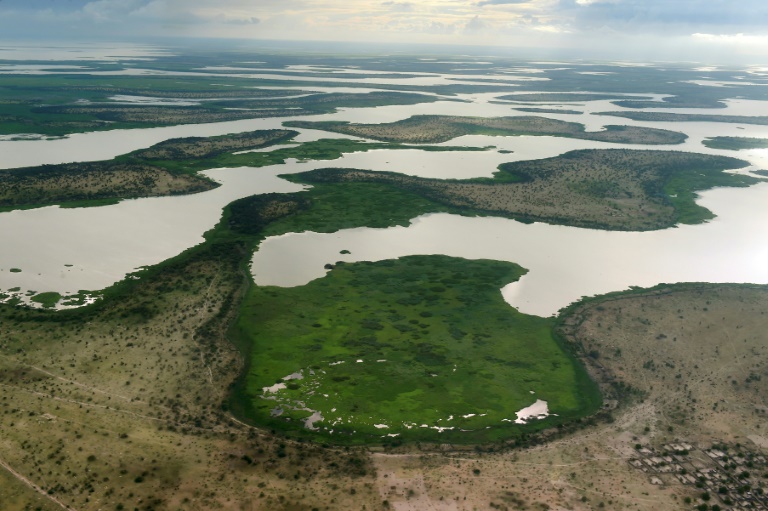
The attack took place near Ngouboua in the Lake Chad area, a vast marshy region shared by Chad, Niger, Cameroon and Nigeria that has been battered by Boko Haram and the Islamic State West Africa Province (ISWP).

The unit had been sent to help set up an advance position on Bouka-Toullorom island when it was “attacked by elements from the Boko Haram sect,” presidential spokesman Brah Mahamat said.

The Chadian authorities routinely refer to jihadists as Boko Haram regardless of their affiliation.

“The 10 or so dead, and the wounded, are members of the defence forces,” he said.

The problems in Lake Chad stem from an insurgency launched by Boko Haram in northeastern Nigeria 13 years ago that has killed more than 40,000 people there and displaced around two million.

In 2014, Boko Haram seized islands in the marshland and began using them as boltholes. In 2020, most of these islands were taken over by ISWAP, which had split from Boko Haram.

The vast semi-desert African country has been ruled since April 2021 by General Mahamat Idriss Deby Itno, 38.

He took over after his father, president Idriss Deby Itno, who ruled with an iron fist for 30 years, died during an operation against rebels in the north of the country.

In a visit to the Lake Chad region earlier this month, General Deby said the jihadists “no longer have the strength to hit bases” and as a result were concentrating their attacks on the civilian population.

Springboks make wholesale changes for England

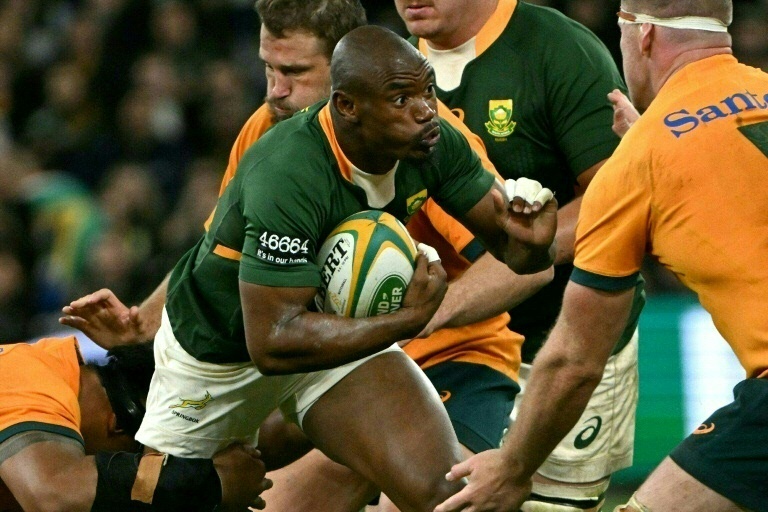
South Africa coach Jacques Nienaber has made a raft of changes for the Springboks’ concluding Autumn Nations Series international against England at Twickenham on Saturday.

With the game taking place outside World Rugby’s official window for Test matches, the world champions will be without Cheslin Kolbe (wing), Andre Esterhuizen (centre), Cobus Reinach (scrum-half), Jasper Wiese (No 8) and Vincent Koch (prop), who have all returned to their respective English and French clubs.

Nienaber had made six changes to the starting XV that thrashed Italy 63-21 in Genoa last weekend, with Makazole Mapimpi (wing), one of the try-scoring heroes of their 2019 World Cup final win over England in Japan, recalled.

Jesse Kriel is in at centre, while Evan Roos (No 8) and Eben Etzebeth are back in the pack.

The Springboks have also made two positional switches, with Kurt-Lee Arendse on the right wing after playing on the left in Genoa and Damian de Allende moving from outside centre to inside centre to partner Kriel.

There are also four changes on a replacements bench featuring a split of five forwards and three backs, with SA ‘A’ captain Thomas du Toit (prop), Marco van Staden (flanker), Jaden Hendrikse (scrum-half) and Canan Moodie being drafted in.

England, who came from 19 points down to snatch a dramatic 25-25 draw with New Zealand at Twickenham last weekend, are due to name their team on Thursday.

Team (15-1)

Willie le Roux; Kurt-Lee Arendse, Jesse Kriel, Damian de Allende, Makazole Mapimpi; Damian Willemse, Faf de Klerk; Evan Roos, Franco Mostert, Siya Kolisi (capt); Marvin Orie, Eben Etzebeth; Frans Malherbe, Bongi Mbonambi, Ox Nche

Replacements: Malcolm Marx, Steven Kitshoff, Thomas du Toit, Marco van Staden, Kwagga Smith, Jaden Hendrikse, Manie Libbok, Canan Moodie

Coach: Jacques Nienaber (RSA)

Ethiopia's other war: The shadowy Oromia conflict

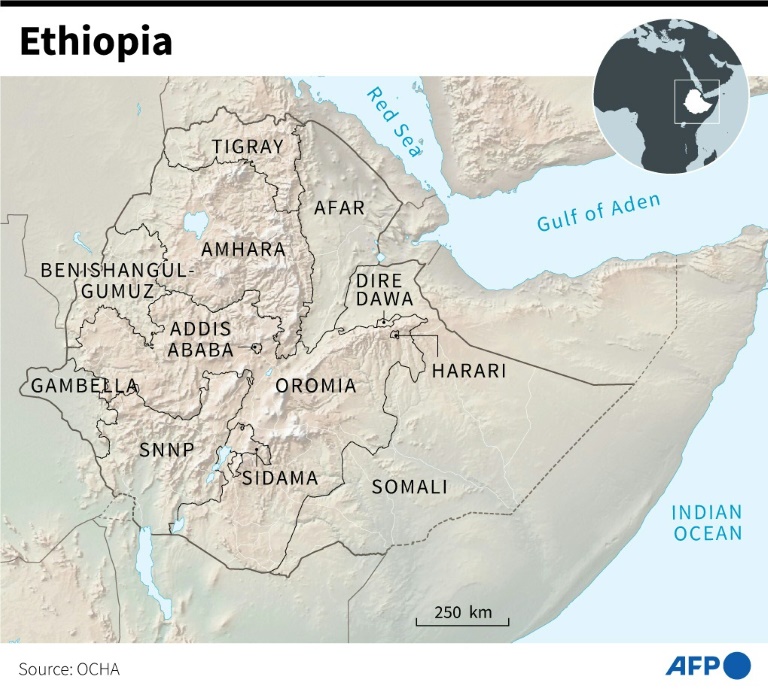
Even as the rivals in Ethiopia’s Tigray conflict have agreed to a ceasefire, reports of air strikes and massacres are emerging in Oromia, a region haunted by a long-running insurgency.

Following are the key issues surrounding the violence in Oromia, home to around a third of Ethiopia’s 110 million people.

– What is happening in Oromia? –

The Oromo, Ethiopia’s largest ethnic group, have long complained of marginalisation. 

The rebel Oromo Liberation Army (OLA) has exploited this growing resentment to swell its ranks in its years-long battle with federal and regional forces.

But the region is beset with other ethnic fissures too, particularly between the Oromo and the Amhara, the country’s second-largest group.

A mosaic of more than 80 ethno-linguistic communities, Ethiopia has struggled to manage rival claims to territorial and political power.

Oromia neighbours nine of the country’s 10 other regions, and many shared borders are prone to clashes.

“The Oromia conflict is both an ethnic conflict between the Oromo and the Amhara, and a struggle within Oromia between supporters of (Prime Minister) Abiy Ahmed’s government and its enemies,” said Ben Hunter, Africa analyst at risk intelligence firm Verisk Maplecroft.

“These complex dividing lines, combined with widespread misinformation, have made the Oromia conflict exceptionally opaque.”

Unemployment and inequality are other drivers of conflict, said anthropologist Thomas Osmond.

– Is the OLA gaining momentum? –

Deemed a terrorist organisation by the government, the OLA was the armed wing of the Oromo Liberation Front (OLF), an opposition party that spent years in exile but was allowed to return to Ethiopia after Abiy took office in 2018.

The OLA, which is referred to as OLF-Shane by the federal government, then broke off from the OLF and has extended its reach in recent years.

“The OLA is not a pyramid-like organisation, but a rather loose set of armed groups that claim to be part of it,” Rene Lefort, a historian specialising in Ethiopia, told AFP.

Estimated at a few thousand men in 2018, OLA membership has “likely… increased substantially since 2020”, according to ACLED, an NGO which collects data in conflict zones.

With Abiy’s popularity among the Oromo already low, the use of “excessive force… (by) federal forces has seriously exacerbated population discontent”, ACLED said.

The June 2020 murder of Hachalu Hundessa, a pop star who gave voice to the frustrations felt by many in Oromia, led to street protests, with more than 160 people killed in the ensuing violence.

Oromo political leaders and opposition activists were also rounded up and detained in a sweeping government crackdown. 

“Oromo nationalism… has intensified since 2018 because Abiy Ahmed was brought to power by an Oromo protest movement but has not yet delivered any substantial benefits for Oromia,” said analyst Hunter.

Furthermore, “the war in Tigray pushed the federal government to arm hardline Amhara militias, who have since conducted attacks on Oromia civilians and thus driven (up)… support for the OLA.”

– Who is responsible for the massacres? –

Human Rights Watch says it has documented summary executions and arbitrary detentions by pro-Abiy forces, as well as abductions and killings of local leaders and government officials by armed groups.

Western Oromia has also witnessed ethnic massacres, particularly in the Qellem Wollega and West Wollega areas, with the OLA and the government blaming each other for the violence.

The insurgents have accused pro-government militias of a hand in the violence — a version supported by an Oromo MP from Abiy’s own Prosperity Party, Hangasa Ibrahim, who said militias created by the regional authorities were responsible for killing Amhara civilians.

In June, OLA carried out an attack on the capital of the neighbouring Gambella region.

The state-affiliated Ethiopian Human Rights Commission in September accused security forces of killing dozens of civilians in Gambella on suspicion of collaborating with the insurgents following the June 14 attack.

– What lies ahead? –

Compared to the Tigray war, the conflict in Oromia has drawn scant international attention but still poses a threat to Africa’s second most-populous nation.

“(The) OLA remains relatively weak in terms of armament and especially structuring and command capacity,” said Lefort.

But, he said he could not see how federal or regional forces allied to Abiy could overcome it. 

Osmond said the insurgency could “weaken the government and risks fueling a spiral of inter-ethnic hatred” in Ethiopia.

A drawn-out conflict in its wealthiest region risks “accelerating the disintegration already under way in the country,” Osmond told AFP.

S.Africa's Ramaphosa leads in two-horse race for ANC president

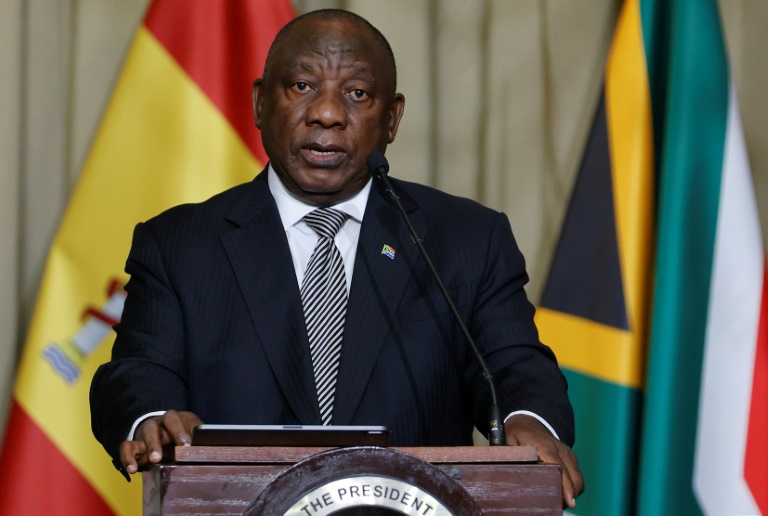
South African President Cyril Ramaphosa is firmly ahead in the race for head of the ruling African National Congress (ANC), garnering more than twice as many party nominations as his challenger, according to a tally issued Tuesday.

Ramaphosa, 70, has polled 2,037 nominations from party branches against 916 for his rival Zweli Mkhize, 66, an ex-health minister who resigned amid graft allegations, the party said.

“These are the two names nominated for position of (party) president,” Kgalema Motlanthe, former president of South Africa and head of the ANC’s electoral panel, told a news conference in Johannesburg.

The ANC, the party of Nelson Mandela, spearheaded the fight against apartheid and has governed South Africa since the advent of democracy in 1994.

It is due to hold a conference between December 16 and 20 to elect the party’s top leadership.

Whoever wins is likely to be the head of state after the 2024 national elections, if the ANC wins that vote.

Party branch nominations are indicative of the outcome, as the votes will be cast in person by branch representatives on the first day of the conference.

Ramaphosa is seeking a second term at the helm after succeeding his scandal-tainted boss, former president Jacob Zuma, in 2018.

His bid comes despite the risk of possible impeachment for allegedly covering up a 2020 crime.

Parliament will debate on December 6 as to whether he should answer allegations that he concealed a multi-million-dollar cash theft at his farm.

Analysts have said Ramaphosa stands a reasonable chance of staying on as ANC leader despite the controversy.

W.Africa, European partners strengthen ties against Sahel jihadists

West African nations met with European leaders on Tuesday for talks on preventing jihadist conflict in the Sahel from spilling over into countries on the Gulf of Guinea.

Coastal states Ghana, Benin, Togo and Ivory Coast face increasing threats and attacks from Islamist militants across their northern borders in Burkina Faso and Niger.

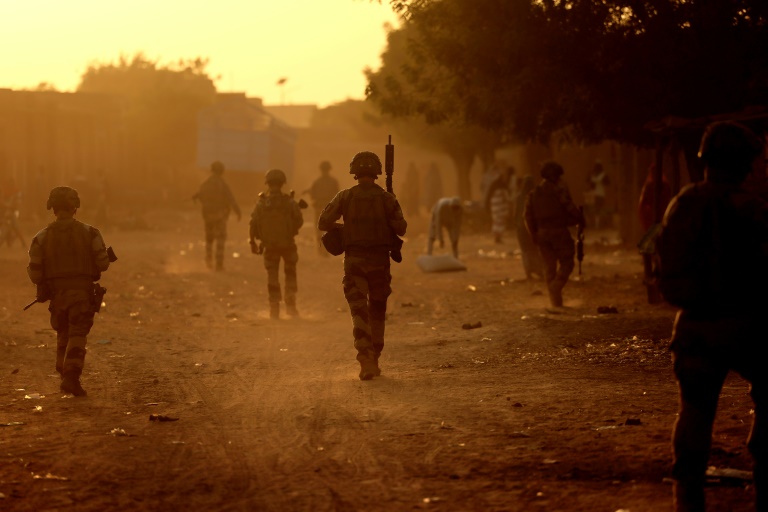
The summit in Ghana’s capital Accra comes as more Western nations have withdrawn peacekeepers from Mali after its military junta strengthened cooperation with Russia.

Under the so-called Accra Initiative, heads of state from the Gulf of Guinea, Niger and Burkina Faso are meeting with representatives from the West African bloc ECOWAS, the EU, Britain and France.

“This is basically strengthening our efforts to be able to fight against terrorism and terror-related activities,” Palgrave Boakye-Danquah, Ghana’s government spokesman on governance and security, told AFP.

The Sahel conflict began in northern Mali in 2012, spread to Burkina Faso and Niger in 2015 and now states on the Gulf of Guinea are suffering sporadic attacks.

Ghana has beefed up security along its northern frontier and has so far escaped any cross-border attacks.

But Benin and Togo in particular have faced threats from across northern borders with Burkina Faso.

Benin has recorded 20 incursions since 2021 while Togo has suffered at least five attacks, including two deadly assaults, since November 2021.

French and other peacekeeping missions had been operating in Mali for almost a decade as a bulwark against the spread of violence.

But after two coups in Mali, the military junta increased cooperation with Moscow and allowed what Western countries call Russian mercenaries into the country.

That prompted France to pull out its troops under its Barkhane anti-jihadist mission. Britain and Germany last week said they would also end peace-keeping missions.

British Armed Forces Minister James Heappey last week said the UK would be “rebalancing” its deployment though he did not give details about what form that would take.

He said Accra Initiative countries would likely need different capabilities than the British long-range reconnaissance forces currently in Mali.

But partners are aiming to increase the capacity of Gulf of Guinea nations to “guard against further contagion”.

Across the three Sahel nations, thousands of people have been killed, more than two million displaced and devastating damage has been inflicted to three of the poorest economies in the world.

Tanzania frees Maasai after police murder charges dropped

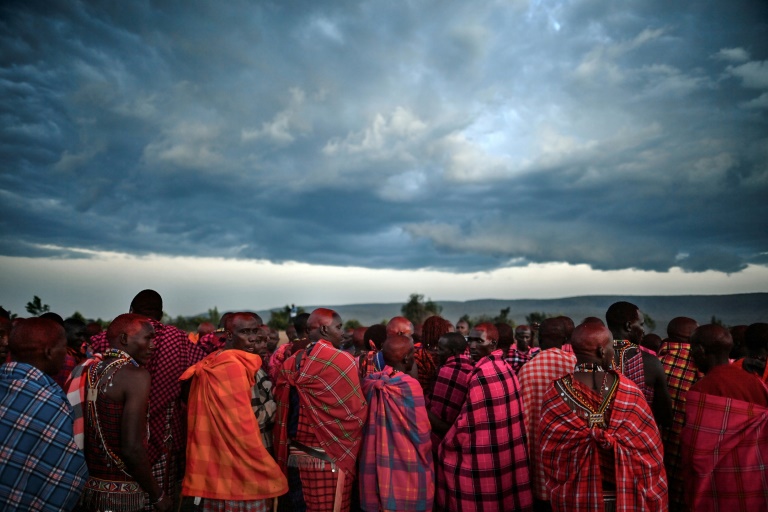
A Tanzanian court on Tuesday ordered the release of two dozen Maasai protesters after the prosecution dropped murder charges over the death of a policeman at a demonstration against a planned conservation area, their lawyer said.

The pastoralists in Loliondo in the northern district of Ngorongoro have accused the government of trying to force them off their ancestral land in order to organise safaris and hunting expeditions.

But the government has rejected the accusations, claiming it wants to “protect” 1,500 square kilometres (580 square miles) of the area from human activity to help wildlife thrive.

As tensions have soared, protests have sometimes turned violent, with clashes erupting in June in Loliondo between police and Maasai demonstrators.

Twenty-five Maasai protesters were charged with murder after a policeman died in the clashes. One was released earlier but the others have remained in jail since June.

On Tuesday, prosecutors at the court in Arusha dropped the charges entirely, said Yonas Masiaya, a lawyer representing the community.

“They have been set free,” he told AFP in a message, adding that “the prosecution said (they) have no intention to continue with the case.”

“There was no tangible evidence to warrant their prosecution,” he said.

Another defence lawyer Jebra Kambole told AFP, “we are glad that they are finally free.” 

“These people were detained even before investigations and stayed in custody this long for no clear reasons,” he said.

The nomadic community in September filed a court case against Tanzania’s government, challenging its decision to cordon off the land for wildlife protection.

Tanzania has historically allowed indigenous communities such as the Maasai to live within some national parks, including the Ngorongoro conservation area, a UNESCO World Heritage site. 

But the authorities say their growing population is encroaching on wildlife habitat and began moving the pastoralists out of Ngorongoro in June, calling it a voluntary relocation.

The move has sparked concern, with a team of UN-appointed independent rights experts warning in June that “it could jeopardise the Maasai’s physical and cultural survival.”

Since 1959, the number of humans living in Ngorongoro has shot up from 8,000 to more than 100,000.

As climate change leads to prolonged droughts and low crop yields, pressure on the pastoralists has increased, forcing them into conflict with wildlife over access to food and water.

In 2009, thousands of Maasai families were moved out of Loliondo to allow an Emirati safari company, Otterlo Business Corporation, to organise hunting expeditions there.

The government cancelled that deal in 2017, following allegations of corruption.

Civilians caught between rebels and army in east DR Congo

Furaha Twizere recounted from her  hospital bed in east DR Congo’s city of Goma how artillery rounds killed her husband instantly.

They came under fire several dozen kilometres north of the city and he died on the spot after his legs were blown off. 

Twizere, 35, was severely wounded in the same attack last month.

“My legs were torn up, but the Red Cross was able to rescue me,” she told AFP. “Everyone was running away from the bombing”. 

After the attack, a motorcycle-taxi driver loaded the pregnant Twizere onto his vehicle, and they both crossed the frontline separating the army from M23 rebels, on the main highway leading towards Goma. 

An ambulance from the International Committee of the Red Cross (ICRC) then picked her up about 30 kilometres (18 miles) from the city, an important commercial hub of one million people on the border with Rwanda. 

Twizere, who has been receiving treatment for weeks, left five children behind. 

Over 120 armed groups operate in eastern Democratic of Congo, many of which are legacy of regional wars which flared at the turn of the last century. 

But the M23, a largely Congolese Tutsi militia, has staged a major comeback in recent months after laying dormant for years. 

Its combatants have captured swaths of territory in the DRC’s North Kivu province and are edging close to Goma. 

The fighting has sent relations between the DRC and Rwanda into a nosedive, with Kinshasa accusing its smaller neighbour of backing the M23, something UN experts and US officials have also said in recent months.

In the murk of war, it is unclear how many people have been killed in the recent clashes. 

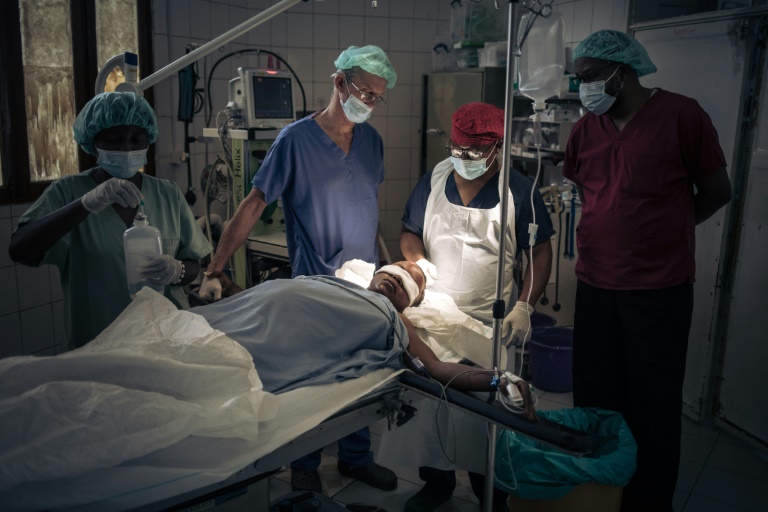
At Twizere’s hospital in Goma, only ten people have been admitted since the resurgence of combat, according to Annekathrin Muller, a German nurse in charge of ICRC operations at the facility.

“They can’t cross the frontlines,” she explained. 

“If a humanitarian corridor is opened, there’s a risk that many wounded will arrive here,” Muller added, noting that she was concerned about the number of amputations medics may have to perform.

– Waiting for war to end –

Rebecca, also pregnant, was stretched out in the hospital’s operating theatre receiving stitches to her head. 

The 22-year-old, pregnant with her second child, fled the fighting to a makeshift shelter in a muddy displacement camp north of Goma. 

It was there that a “bandit” attacked her with a machete, Rebecca explained, before she burst into tears while recounting how her aunt died during her family’s escape from the fighting.

After her operation, Rebecca will recover on the same ward as Twizere, who has given birth to healthy twins since arriving at the hospital.

A neighbour of Twizere’s is currently taking care of four of her other children. Another is receiving medical treatment himself after being shot in the shoulder. 

Now a widow, Twizere will have to care for seven children alone. 

“We no longer know where to live,” she said, explaining that her house had been destroyed in the fighting. 

“I’ll wait until the war is over, only then can we go home.”

Veteran ruler Obiang looks set for sixth term in Equatorial Guinea

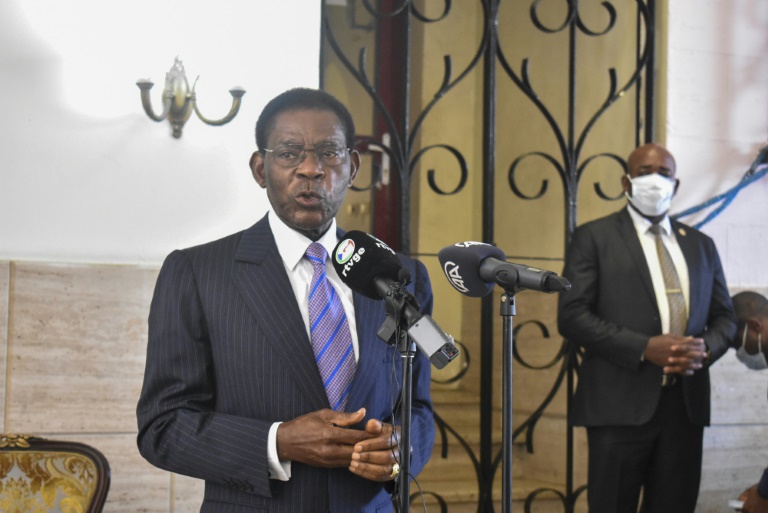
Equatorial Guinea’s iron-fisted veteran ruler Teodoro Obiang Nguema Mbasogo has taken the lead in the west African country’s presidential race, according to provisional results released by the interior ministry on Monday.

Obiang is all-but-certain of winning a record sixth term in a country with next to no opposition.

The 80-year-old leader has been in power for more than 43 years — the longest of any head of state alive today, excluding monarchs.

Voters took to the polls on Sunday and Obiang has so far won 44.2 percent of votes cast in nearly half the country’s polling stations, the ministry’s figures showed.

Andres Esono Ondo — from the only tolerated opposition party, the Convergence for Social Democracy — was trailing far behind with a 1.34 percent share.

Buenaventura Monsuy Asumu of the Social Democratic Coalition Party (PCSD), a historic ally of the president’s party, was even further back with 0.35 percent.

The final results are set to be announced Saturday.

Obiang appears set for victory with the backing of a coalition of 15 parties, including his all-powerful ruling Democratic Party of Equatorial Guinea (PDGE).

The PDGE, which was the country’s only legal political movement until 1991, holds 99 of the 100 seats in the outgoing National Assembly and all 70 Senate seats.

At the last presidential election in 2016, Obiang was re-elected with 93.7 percent of the vote.

Obiang seized power in August 1979, toppling his uncle, Francisco Macias Nguema, who was then executed by firing squad.

Firmly suppressing dissent and surviving a string of attempted coups, he has remained at the helm of the oil-rich central African state ever since.

His lengthy spell in power means Obiang is just the second president in Equatorial Guinea’s history since it gained independence in 1968 from Spain, its colonial power for nearly two centuries.

The discovery of off-shore oil in the mid-nineties turned Equatorial Guinea into Africa’s third-richest country in terms of per-capita income.

But the wealth is concentrated in the hands of just a few and four-fifths of the population of 1.4 million live below the poverty line, according to the latest available World Bank figures.

The country also has a reputation for graft, ranking 172 out of 180 nations on Transparency International’s 2021 Corruption Perceptions Index.

I. Coast, Ghana ease tug-of-war with buyers over cocoa prices

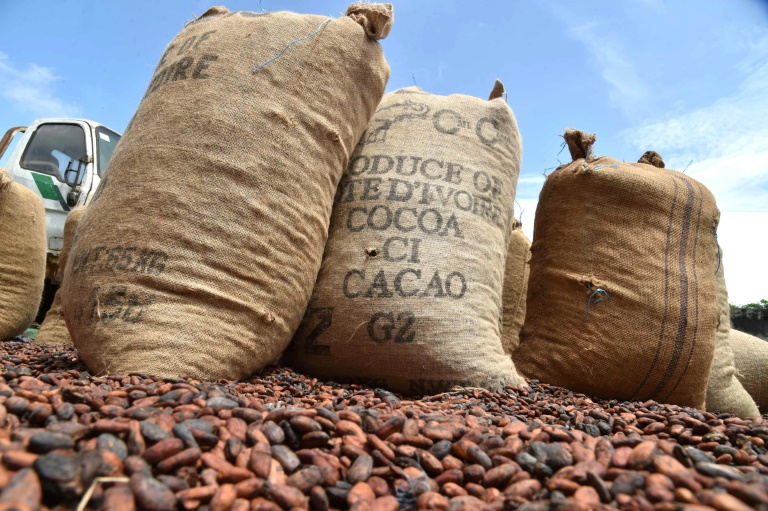
Ivory Coast and Ghana, the world’s two biggest cocoa producers, said Monday there had been progress towards resolving a tug-of-war with chocolate giants on prices.

The two countries had set a deadline of Sunday for manufacturers to pay higher prices to their growers.

But in a joint statement, industry bodies said the talks had yielded agreement to set up a working group to explore the problems, and report back early next year.

The producer countries also praised “the efforts made by certain companies” to find a solution for sustainable farming, the statement said.

The quarrel focuses on the Living Income Differential (LID) — a policy Ivory Coast and Ghana introduced in 2019 to fight poverty among cocoa farmers in the global $130-billion chocolate market.

Under it, Ivory Coast and Ghana vowed to charge a premium of $400 per tonne on all sales of cocoa beans, starting with the 2020/21 harvest.

But their trade boards say the scheme is being undercut by buyers who depress the price of another premium based on bean quality.

They have accused purchasers of clawing back the cost of the LID by exerting pressure on the “origin differential” premium, which has plunged below zero in recent years.

They set November 20 as a deadline for bringing buyers into line.

They threatened to punish corporations by barring them from visiting plantations to estimate harvests — a key factor in cocoa price forecasting.

And they also threatened to suspend sustainability programmes that chocolate giants use to enhance their image given the increasing ethical concerns of consumers.

– Progress –

Monday’s joint statement was signed by the Ivorian Coffee-Cocoa Council (CCC), the Ghana Cocoa Board (Cocobod) and the Ivory Coast-Ghana Cocoa Initiative (CIGCI).

The communique said producers had been in talks with chocolate manufacturers and other players in the industry.

The producers “noted the efforts made by certain companies and their desire to jointly find solutions for sustainable cocoa production that places farmers at the heart of this strategy”, the statement said.

“Under the auspices of the CIGCI, a working group of experts composed of representatives of member countries and cocoa sector stakeholders has been set up to study solutions to better resolve certain problems and to guarantee a sustainable price mechanism in the long term,” it added.

The panel is expected to report back in the first quarter 2023.

The two countries together account for 60 percent of the world’s cocoa but their farmers earn less than six percent of the industry’s global revenue.

– Value-added call –

Ivorian Prime Minister Patrick Achi told a press conference on Monday “the solution (to the row) is to process 100 percent of our cacao” in Ivory Coast.

His remarks touched on long-standing demands by producer countries, who say they lose out on jobs if they fail to get into the value-added parts of the chocolate business.

At present, only about a quarter of Ivorian production is processed into cocoa in the country itself.

Ivory Coast by itself accounts for 45 percent of world cocoa production.

The sector accounts for 14 percent of the national economy, but is also notorious for child labour, including cross-border trafficking of youngsters who toil in the plantations.

S.Africa court orders parole for anti-apartheid hero's killer

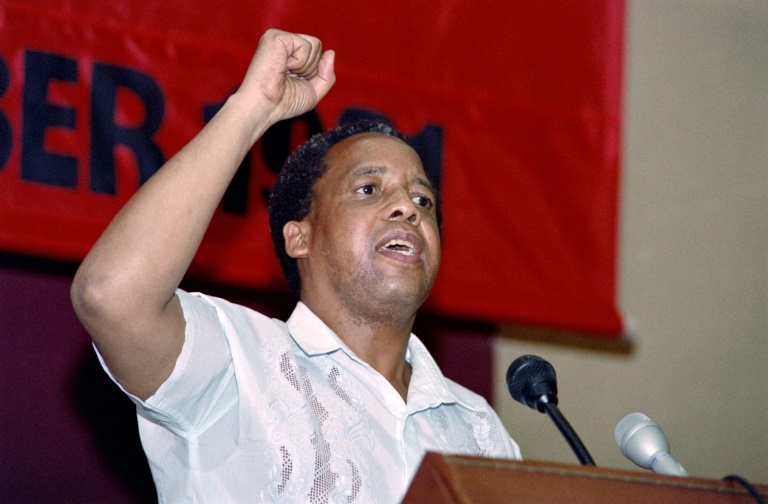
South Africa’s top court on Monday ordered the release on parole of a Polish immigrant who shot dead Chris Hani, a prominent anti-apartheid hero in 1993, a death that nearly sparked a civil war.

Janusz Walus, 69, has served nearly three decades of a life sentence for the murder, which took South Africa to the brink of a race war as negotiations to end apartheid entered their final phase.

The right-wing gunman  killed Hani, a hugely popular leader of the Communist Party and fierce opponent of the apartheid regime, one year before South Africa’s first multi-racial elections.

Constitutional Court judge Chief Justice Raymond Zondo ordered justice minister Ronald Lamola to place Walus “on parole on such terms and conditions as he may deem appropriate”.

He said Walus must be released on parole within 10 calendar days from Monday.

Walus “was convicted of very serious crime… cold blooded murder”, said Zondo, adding “his conduct nearly plunged this country into civil unrest”, but he was entitled under law to parole. 

In assassinating Chris Hani, Walus “seemed to have been intent on derailing the attainment of democracy by this country”, said Zondo.

Hani was the general secretary of the South African Communist Party (SACP) and chief of staff of Umkhonto we Sizwe, the armed wing of the ruling African National Congress (ANC).

Every April 10, South Africans remember the communist stalwart at commemorative events and lay flowers at his grave in the east of Johannesburg.

– ‘Injustice through justice’ –

He was shot dead in the driveway of his house on April 10, 1993, in Boksburg, a suburb east of Johannesburg. The incident led to protests and rioting in black townships.

Still in negotiations with the apartheid government over an election date, then-ANC president Nelson Mandela appeared on national television to appeal for calm.

Hani’s family, which has opposed repeated attempts from Walus for parole, decried the ruling.

“This judgment is diabolical, totally diabolical,” Hani’s widow Limpho told a local TV channel shortly after the announcement. “This court has not even addressed the victims.” 

Solly Mapaila, leader of the SACP, a political ally of the ruling ANC, said it was unjust.

“An injustice has occurred today through justice,” Mapaila told reporters outside the Constitutional Court in Johannesburg.

In a statement, the communist party said Hani’s murder “left a gaping wound in his family, the SACP and the ranks of the working class. The judgment has rubbed salt granules to the wound.”

Justice services ministry spokesman Chrispin Phiri said “a decision has been made by the court, we will have to consider it and apply it”. 

Walus immigrated to South Africa from then-communist Poland in 1981.

His accomplice, Clive Derby-Lewis, who supplied the gun that shot Hani, was released in 2015 on medical parole after 22 years in jail. He died of lung cancer in 2016, aged 80.

One of South Africa’s most notorious apartheid murderers, Eugene de Kock, was granted parole in January 2015 after 20 years in jail. 

Close Bitnami banner
Bitnami