Africa Business

I. Coast, Ghana ease tug-of-war with buyers over cocoa prices

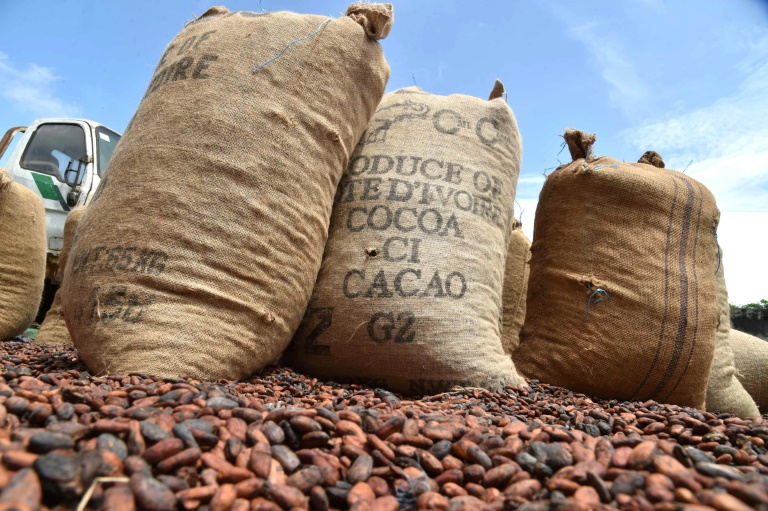
Ivory Coast and Ghana, the world’s two biggest cocoa producers, said Monday there had been progress towards resolving a tug-of-war with chocolate giants on prices.

The two countries had set down a deadline of Sunday for manufacturers to pay higher prices to their growers.

But in a joint statement, industry bodies said the talks had yielded agreement to set up a working group to explore the problems, and report back early next year.

The producer countries also praised “the efforts made by certain companies” to find a solution for sustainable farming, the statement said.

The quarrel focuses on the Living Income Differential (LID) — a policy that Ivory Coast and Ghana introduced in 2019 to fight poverty among cocoa farmers in the global $130-billion chocolate market.

Under it, Ivory Coast and Ghana vowed to charge a premium of $400 per tonne on all sales of cocoa beans, starting with the 2020/21 harvest.

But their trade boards say the scheme is being undercut by buyers who depress the price of another premium based on bean quality.

They have accused purchasers of clawing back the cost of the LID by exerting pressure on the “origin differential” premium, which has plunged below zero in recent years.

They set November 20 as a deadline for bringing buyers into line.

They threatened to punish corporations by barring them from visiting plantations to estimate harvests — a key factor in cocoa price forecasting.

They also threatened to suspend sustainability programmes that chocolate giants use to enhance their image given the increasing ethical concerns of consumers.

Monday’s joint statement was signed by the Ivorian Coffee-Cocoa Council (CCC), the Ghana Cocoa Board (Cocobod) and the Ivory Coast-Ghana Cocoa Initiative (CIGCI).

The communique said producers had been In talks with chocolate manufacturers and other players in the industry.

The producers “noted the efforts made by certain companies and their desire to jointly find solutions for sustainable cocoa production that places farmers at the heart of this strategy,” the statement said.

“Under the auspices of the CIGCI, a working group of experts composed of representatives of member countries and cocoa sector stakeholders has been set up to study solutions to better resolve certain problems and to guarantee a sustainable price mechanism in the long term,” it added.

The panel is expected to report back in the first quarter 2023.

The two countries together account for 60 percent of the world’s cocoa but their farmers earn less than six percent of the industry’s global revenue.
E.Africa troops to 'enforce peace' in east DR Congo

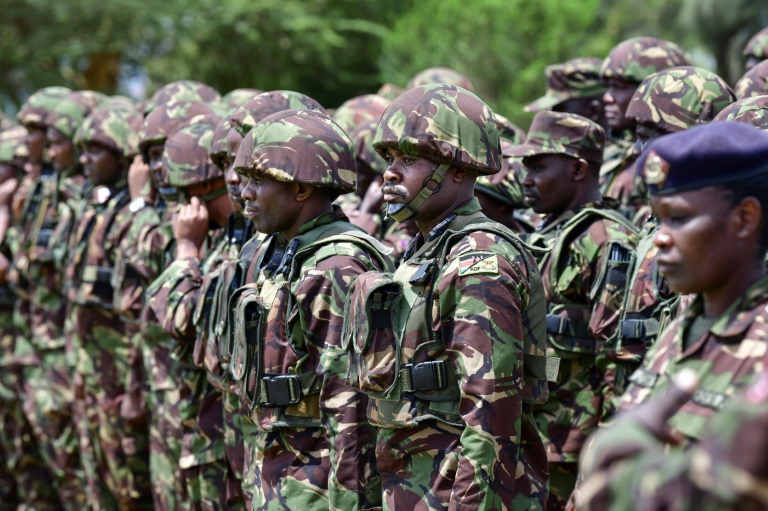
Kenyan President William Ruto said Monday that East African troops would “enforce peace” in embattled eastern DR Congo, where the M23 armed group have launched an offensive. 

Kenyan troops, deployed as part of an East African Community (EAC) force, arrived in the volatile region on November 12.

The regional force will “enforce peace on those who are hellbent on creating instability,” Ruto said in a news conference in the Democratic Republic of Congo’s capital, Kinshasa.

The M23, a largely Congolese Tutsi militia, has seized swathes of territory across North Kivu province, edging towards the region’s main city of Goma. 

The fighting has reignited regional tensions, with the DRC accusing its smaller neighbour Rwanda of backing the M23, something that UN experts and US officials have also said in recent months.

Kigali denies supporting the M23 and accuses Kinshasa of colluding with the FDLR — a former Rwandan Hutu rebel group established in the DRC after the 1994 genocide of mainly Tutsis in Rwanda.

The M23 first leapt to prominence 10 years ago when it captured Goma in 2012, before being driven out and going to ground. 

But it re-emerged late last year, claiming the DRC had failed to honour a pledge to integrate its fighters into the army, among other grievances.

Kenya is sending about 900 troops to the DRC as part of a joint EAC force created to help restore security.

Ruto said he was aware that there are already peacekeeping forces present in eastern DRC —  alluding to the thousands-strong United Nations force — but suggested that East African troops would be more forceful.

“From what see in the region, we do not think there is much peace to keep,” he said. 

– Political dialogue –

Kenyan General Jeff Nyagah, the commander of the EAC force, also said when he arrived in Goma on November 16 that the East African operation would be “an intervention force.” 

But, he stressed, the priority was to find a political solution to instability in eastern DRC, as well as to disarm militias.

Peace talks under the aegis of the seven-nation EAC were scheduled to be launched in the Kenyan capital Nairobi on Monday, but their start date remains unclear.

Ruto told reporters on Monday that EAC heads of state, in their joint mandate to the regional force, agreed that the mission was to ensure peace as well as enforce it.

The mandate has been communicated to the African Union and the UN Security Council, he said.

The force is expected to include soldiers from Burundi, Uganda and South Sudan, as well as from Kenya. But its intended total size remains unclear. 

The UN’s peacekeeping force in eastern DRC, known as MONUSCO, has a current strength of about 16,000 uniformed personnel. 

But many in the DRC see the peacekeepers as ineffective. 

At least 262,000 people have been displaced by the fighting, the UN estimated last week.

The M23 is just one of around 120 armed groups which are active in eastern Congo.

Many of them are a legacy of regional wars that flared before the turn of the century.  

South African appeal court orders Zuma back to jail

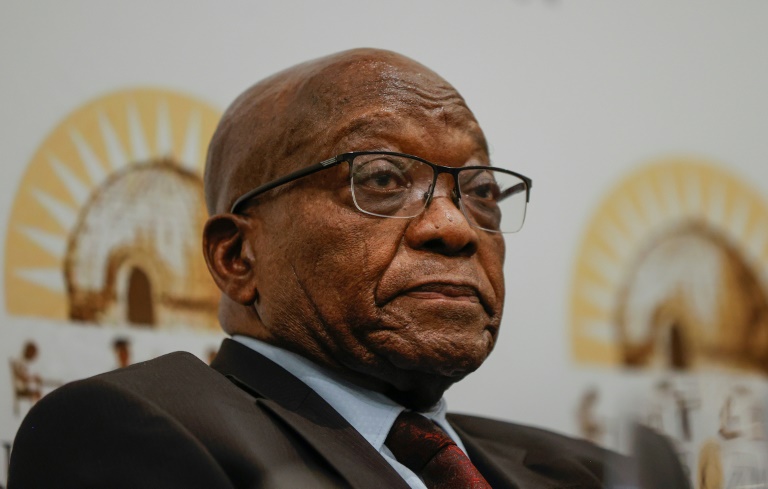
An appeal court in South Africa said on Monday that former president Jacob Zuma was unlawfully given medical parole from a jail term last year and should return to prison to complete his sentence.

Zuma, 80, had been handed a 15-month term in June 2021 for contempt of court, a move that triggered deadly unrest.

But he served only two months before being given parole for medical reasons that remain unclear.

Parole was granted by the head of South Africa’s prison service, despite an opinion by the service’s medical committee that Zuma did not meet the required conditions.

“This court has now determined that Mr Zuma’s release on medical parole was unlawful,” the supreme court of appeal said.

“Mr Zuma in law has not finished serving this sentence. He must return to the Estcourt Correctional Center to do so,” it said, referring to a jail northwest of the city of Durban.

According to medical assessments cited in the appeal court’s decision, Zuma has problems linked to high blood pressure, elevated levels of blood sugar and lesions of the colon.

Zuma, a prominent figure in the fight against apartheid, became president in 2009 and was forced to step down in disgrace by the ANC in 2018 following mounting corruption allegations.

But he remains a revered figure among grassroots members of the ruling African National Congress (ANC), who perceive him as a defender of the poor and oppressed.

When his jail term was announced, violent protests broke out that spiralled into looting, leaving 350 people dead.

The order by the supreme court of appeal is unlikely to be the final word in the long-running saga, as Zuma still has recourse to the Constitutional Court, the highest judicial instance in the land.

The prison authorities last month announced that Zuma’s 15-month term was now formally over.

He has since made several public appearances, singing and dancing before his supporters, and launched a verbal attack on his successor, Cyril Ramaphosa, accusing him of graft and treason.

Ramaphosa faces a crucial ANC conference next month, seeking re-election at a time when he is under pressure over allegations that he concealed a multi-million-dollar cash heist at his luxury farmhouse.

Zuma was jailed for refusing to testify to a high-level inquiry into massive state corruption that unfolded under his presidency.

He also faces separate corruption charges over an arms deal dating back more than two decades. 

Jihadist-hit Mali has 150,000 children in legal limbo

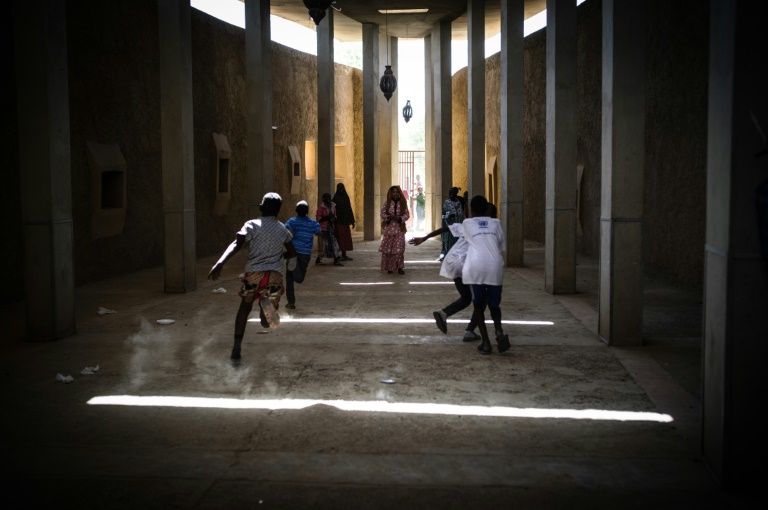
Nearly 150,000 children displaced by violence in jihadist-torn Mali have no birth certificates and could be denied education as a result, the Norwegian Refugee Council (NRC) said on Monday.

The children either lost their birth certificates as their families fled their homes, or simply never had one because of civil service dysfunction in the deeply troubled country, it said in a press release.

“Without them, children are barred from officially enrolling in formal schools, taking exams and obtaining educational certificates,” the charity said.

“The lack of school and birth certificates combined will also deny children a fair chance at formal employment in the future.”  

A total of 422,620 people were registered as displaced in Mali in August, according to a figures compiled by the UN and Malian authorities.

Of these, more than half of displaced children — 148,600 — “do not have state-issued birth certificates proving their legal identity,” the NRC said, describing the tally as “staggering.”

“Unless this issue is addressed before these children reach adulthood, they risk being denied freedom of movement. They will not have the right to vote, nor will they be able to own or rent a property.”

The impoverished landlocked state has been struggling with a jihadist insurgency now in its 11th year.

Around 7.5 million people out of a population of some 20 million need emergency aid, according to UN figures.

In many parts of the worst-hit areas, the state often has only a negligible presence.

S.African president arrives in UK for king's first state visit

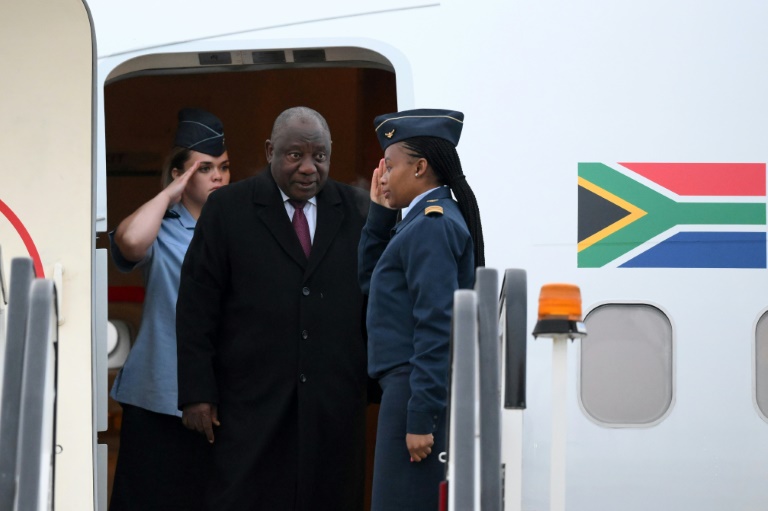
South African President Cyril Ramaphosa on Monday landed in Britain ahead of the first state visit hosted by King Charles III as monarch.

Ramaphosa arrived at London Stansted airport on a South African Air Force jet, and was met by a British military guard of honour.

The official programme starts on Tuesday and will include a state banquet at Buckingham Palace.

The last state visit to the UK came in June 2019, when queen Elizabeth II hosted US president Donald Trump and his wife Melania.

The pomp of the major diplomatic event, however, will be clouded by events in South Africa, where Ramaphosa risks impeachment for allegedly covering up a crime.

Climate change, trade and Charles’s vision for the Commonwealth are expected to be on the agenda.

Ramaphosa was last in London for the state funeral of the queen at Westminster Abbey in September.

His state visit comes more than a decade after the last by a South African leader, when Jacob Zuma came to the UK in 2010.

Charles and Queen Consort Camilla will be in charge of welcoming Ramaphosa and First Lady Tshepo Motsepe but will also see the visiting couple meet other senior royals.

Heir to the throne Prince William and his wife Kate, Princess of Wales, will take him to join Charles and Camilla for a ceremonial military welcome.

Charles’s youngest brother Prince Edward has also been recruited to accompany Ramaphosa to London’s Kew Gardens and a biomedical research centre.

Also on the agenda is an address to lawmakers from both houses of parliament and a meeting with Prime Minister Rishi Sunak in Downing Street.

Ramaphosa was Zuma’s deputy in 2014 and gained the presidency in 2018.

But he is currently fighting for his political life and facing calls to resign as the deeply divided ruling party African National Congress (ANC) is to hold a vote on its leadership in December.

A scandal in which Ramaphosa is accused of concealing a multi-million dollar cash theft has piled pressure on him.

He faces an accusation that he failed to report a heist at his luxury cattle farmhouse in which robbers took $4 million in cash and instead organised for the robbers to be kidnapped and bribed into silence.

The president has acknowledged a burglary but denies kidnapping and bribery, saying he reported the break-in to the police. 

A panel appointed by South Africa’s parliament is set to determine whether to impeach him.

S.Africa's Precious Moloi-Motsepe, champion of African fashion

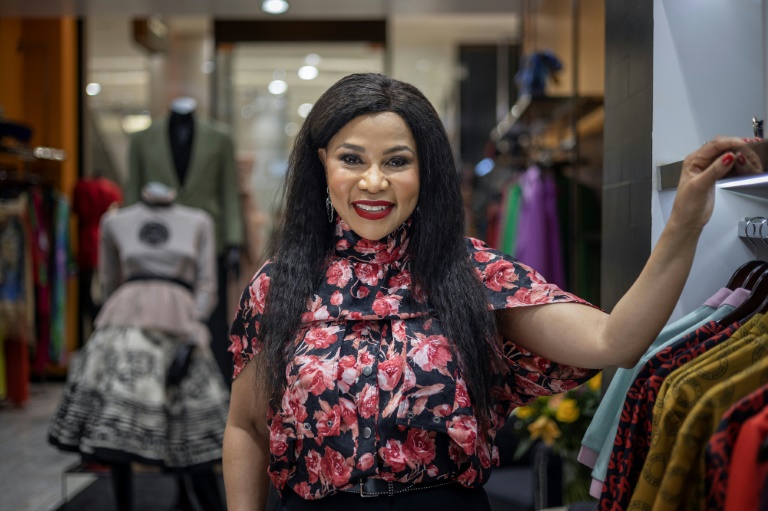
South African Precious Moloi-Motsepe, one of the richest women in Africa, is a staunch promoter of fashion designers from the young, vibrant and culturally diverse continent.

Style has coursed through her veins since she was a young girl growing up in Soweto township, and for her the time is ripe for “African designers to shine” on the international platform. 

A decade-and-half ago, she founded the Johannesburg and Cape Town fashion weeks that bring together designers from across the continent with the aim of setting them up for the global stage. 

Her goal is now starting to bear fruit, she told AFP with a confident smile, at a brand new luxury boutique in an affluent district of Johannesburg, South Africa’s economic capital.

“Now more than ever, African designers are getting recognition here at home,” said the 58-year-old, elegantly wearing her make-up and a flowing black trousers with a silk blouse.

“At big events on the continent, musical awards, football events, you will find celebrities wearing local designers,” said the wife of Confederation of African Football president Patrice Motsepe. “They definitely have become household names”.

With her husband, Africa’s the 9th richest man according to Forbes, they are South Africa’s most prominent “power couple”.

Elsewhere, “celebrities, Michelle Obama or Beyonce,… now wear African brands,” she said, adding that the Wakanda phenomenon, linked to the Black Panther movie has “spread our culture, our heritage, to the world. That has an impact on driving fashion as well”.

Moloi-Motsepe grew up in Soweto, a poor township that was a hotbed of resistance to apartheid regime. It was there where she acquired a sense of style.

“My grandmother made her own clothes,… and she wore that so elegantly,” she said. Soweto “people loved to dress up”, albeit closely shaped by and following American trends and brands. 

Later on she had an opportunity to travel and attended a Paris fashion show by the talented designer John Galliano. 

It was a shocking eye-opener, realising that designers “get their inspiration from history, heritage, culture, which I thought Africa had plenty of”.

Africa seemed to be a source of inspiration for Western designers, “but I didn’t see many African designers on runways,” she said.

 – ‘Changed mindset’ –

That was the trigger to create a space to “propel the best of African creators to global acclaim” a project that the medical doctor-turned philanthropist and creative art financier, set about with vigour.

“First I had to make sure that they were well-recognised here at home, that we changed mindsets, make people appreciate and value African fashion designers,” not just as tailors but as respected designers.

That was an ambitious challenge, not yet realised but well underway.

“African consumers are now recognising their own designers are as valuable any of the brands they buy globally,” she said.

One of those showcasing at the fashion week in Johannesburg last week was Cameroonian fashion designer, Anna Ngann Yonn whose label Kreyann is making a name for itself in Afrialsoca and beyond.

The fashion weeks she launched in South Africa, featuring super models such as South Sudanese Alek Wek and prestigious guests from New York, Milan and Paris, have enabled designers to “showcase their work, network with other designers, get attention from media”.

The next leg of the mission is to take them to “international platforms” to ensure the presence of Africa in the global fashion dialogue. Africans in the diaspora are serving key role as ambassadors.

The entrepreneur remembers taking some African designers to exhibit in Paris on the sidelines of fashion shows a few years back.

Some the feedback, was “positive, some not so positive,” she said, laughing softly. But “we took that as step in the right direction”.

“What was important for the young designers and what we thought were established designers back then, and still now, is the voice,” said Moloi-Motsepe. 

Africans remain under-represented among the major global brands. And in many parts of Africa, sporting foreign brands is still a symbol of social success, she agreed.

“We have a lot of work to do,” she said, but the African fashion advocate is not discouraged.

Equatorial Guinea votes with veteran ruler set for sixth term

Equatorial Guinea voted on Sunday, with President Teodoro Obiang Nguema Mbasogo all-but certain of winning a record sixth term in a country with next to no opposition.

Obiang, 80, has been in power for more than 43 years — the longest of any head of state alive today, monarchs excepted.

Voting is obligatory in the small West African country. 

“Voting is going well. Everything is normal,” fridge repair man Norberto Ondo, 53, told AFP at a polling station in the Semu district of the capital, Malabo. 

“I expect this election to bring us prosperity,” he said before polls closed early evening and counting began of the votes cast by a 427.661-strong electorate. 

First results are not expected until Monday at the earliest.

“We have peace,” Jose Serafin Obiang Sima, a nurse in his 30s, told AFP. He said Equatorial Guinea was the only country in the region “where young people prosper”.

The re-election of Obiang, who seized power in a coup in 1979, seems virtually assured in one of the most authoritarian and closed states in the world.

Running against him was Andres Esono Ondo — from the only tolerated opposition party, the Convergence for Social Democracy — and Buenaventura Monsuy Asumu of the Social Democratic Coalition Party, a historic ally of Obiang’s ruling party. 

Asumu, an ex-minister is seen by the opposition as a “dummy candidate” without a chance.

– ‘Solely for the benefit of the Obiangs’ –

Ondo has called the regime a “dictatorship” and predicted “massive fraud” during Sunday’s elections for the presidency, the parliament and local councils.

“The government governs solely for the benefit of the Obiang family,” he said recently.

The discovery of off-shore oil in the mid-nineties turned Equatorial Guinea into Africa’s third richest country in terms of per-capita income.

But the wealth is concentrated in just a few hands and four-fifths of the population of 1.4 million live below the poverty line according to the latest available World Bank figures.

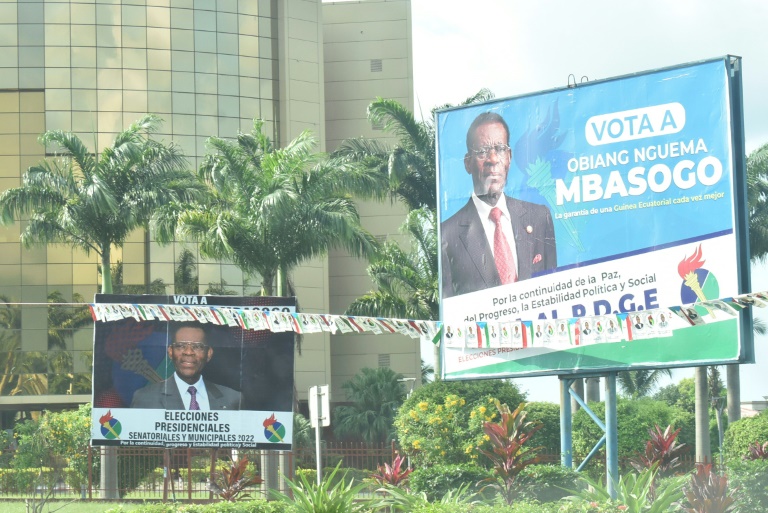
In the run-up to the vote, Malabo was plastered with posters of Obiang and the PDGE, the only legal political movement until 1991. State media all but ignored the other candidates.

The capital was under tight security all day Sunday and streets were deserted except for near polling stations. The authorities banned sales of alcohol and the movement of all but officially accredited vehicles. 

Obiang voted in central Malabo around midday. His vehicle was surrounded by heavily armed soldiers, Israeli bodyguards and a personal guard composed of suited members of his own clan.


– Crackdown on opposition –

As in every election year, security forces stepped up arrests. State media justified the crackdown as a bid to counter a “foiled plot” by the opposition to carry out attacks in Malabo and the economic capital, Bata. 

In September, security forces stormed the home of one of Obiang’s main opponents, Gabriel Nse Obiang Obono.

Four activists and a policeman died, according to the government. Dozens were injured and more than 150 were arrested, including Obono. 

Leading rights activist Joaquin Elo Ayeto told AFP the incident “discredited” the electoral process.

“The ruling party needs an ‘opposition’ to hold sham elections,” he said.

Fraud allegations have plagued past polls.

Obiang is regularly re-elected with more than 93 percent of the vote. In 2016, the PDGE won 99 of the 100 seats in the lower house of parliament and all 70 seats in the senate.

Members of the opposition, most of whom are in exile, had urged citizens to spurn the ballot box.

Equatorial Guinea has a reputation for graft, ranking 172 out of 180 nations on Transparency International’s 2021 Corruption Perceptions Index.

Obiang’s son, the feared and powerful vice-president Teodoro Nguema Obiang Mangue, has been embroiled in scandals abroad over ill-gotten assets.

Van der Flier, Demant named World Rugby Players of the Year

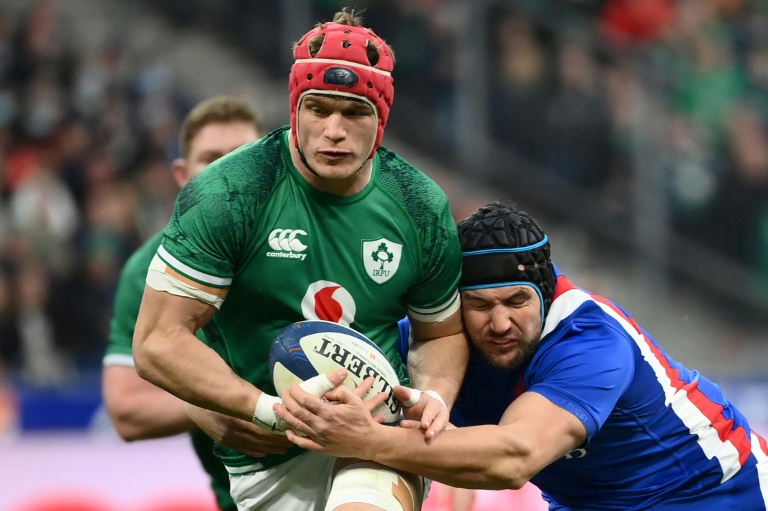
Ireland flanker Josh van der Flier was named men’s World Rugby Player of the Year on Sunday after helping his country to a first series away win in New Zealand and to the top of the global rankings.

The 29-year-old won the award ahead of Leinster and Ireland team-mate Johnny Sexton, victorious in 2018, South Africa centre Lukhanyo Am and last year’s winner, France scrum-half Antoine Dupont.

New Zealand co-captain Ruahei Demant took the women’s Player of the Year award after the Black Ferns won the Rugby World Cup win on home soil earlier this month.

Van der Flier, who has Dutch grandparents, scored five tries in 11 Test appearances throughout the 12 months, which included starting all three games in the victorious July tour over the All Blacks.

At domestic level, he crossed six times as Leinster reached the final of the European Champions Cup before losing to French club La Rochelle.

Elsewhere, Italy’s Ange Capuozzo, who can play across the back-three, claimed the Breakthrough Player of the Year prize.

Capuozzo started 2022 with French second-tier side Grenoble before ending it with a try in Saturday’s loss to South Africa a week after touching down during a win over Australia and creating a try in a win over Wales in the Six Nations.

New Zealand fly-half Demant, who succeeds English lock Zoe Aldcroft, was key to New Zealand’s World Cup victory, turning in a Player of the Match performance in the final as  the Black Ferns came from behind in the second half to beat England 34-31. 

The 27-year-old won the award ahead of New Zealand teammate and 2017 winner Portia Woodman, England flanker Alex Matthews, Canadian back row Sophie de Goede and France scrum-half Laure Sansus.

Demant’s fellow Black Fern Ruby Tui took the women’s Breakthrough Player of the Year award and Wayne Smith claimed the Coach of the Year prize after guiding the Kiwis to the title.

“It’s amazing to be here, it’s been a whirlwind,” former sevens specialists Tui said.

“It’s such an honour to win the award at 27 and a half years old. I think I’ve set the record as the oldest rookie in 15s! I’ll take it.”

French-speaking bloc examines unrest in Africa

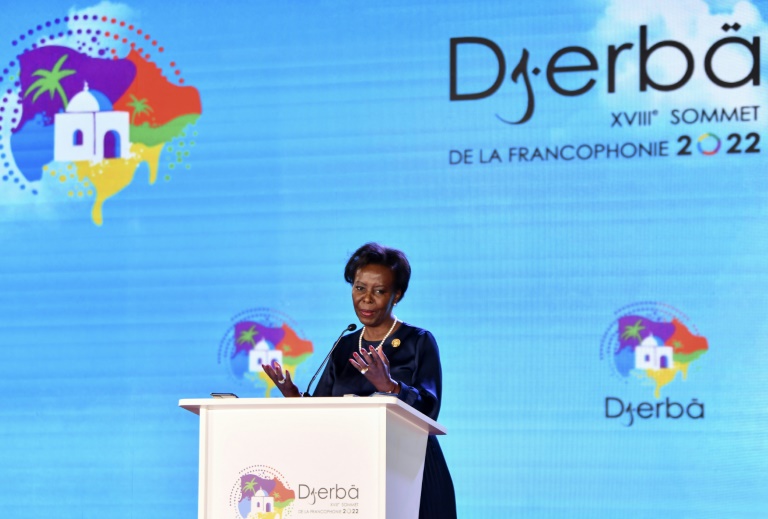
Facing calls to do more to resolve global crises, the world’s French-speaking leaders met in Tunisia Sunday to discuss growing instability and popular discontent in francophone Africa.

But tensions crept into the International Organisation of La Francophonie (IOF) conference itself when the Prime Minister of the Democratic Republic of Congo, Jean-Michel Sama Lukonde, refused to pose for a photo next to Paul Kagame, President of Rwanda.

The DRC accuses Rwanda of supporting M23 rebels who have seized swathes of territory in its eastern region, displacing tens of thousands of people and igniting regional tensions.

The head of the 88-member IOF bloc, Louise Mushikiwabo, said Sunday that “all the conflict zones were the subject of long debates”.

“The IOF is an organisation that can support and catalyse (efforts) to mediate between parties in conflict,” she said.

The organisation, whose annual budget is under 100 million euros, has been accused of being “powerless” in the face of fraudulent elections, power grabs and coups in many of its member states.

Ahead of the summit on the Tunisian island of Djerba, Mushikiwabo told AFP that “the defiance that we’re seeing among young people in francophone Africa comes from political disillusionment” and frustrations over daily life. 

The IOF, founded in 1970, aims to promote the French language, develop economic cooperation and help mediate international conflicts.

Many African leaders have expressed dismay at the West’s rapid response to the war in Ukraine, in contrast to conflicts in their own countries.

Still, French President Emmanuel Macron said “a declaration of all the members” had stated “a very clear position on the war launched by Russia in Ukraine”.

Macron also said Saturday that the IOF should reclaim its diplomatic role, and Paris later announced that it would seek to take on the organisation’s rotating presidency from 2024.

Senegal’s President Macky Sall and Canadian Prime Minister Justin Trudeau were also among the leaders attending the two-day gathering that ends on Sunday.

This year’s conference is a diplomatic boon for Tunisian President Kais Saied, whose government has faced international criticism since a sweeping power grab last year in the only democracy to have emerged from the Arab Spring uprisings.

Trudeau told journalists that Canada was “preoccupied by the current situation” in Tunisia, and said he hoped elections in December, for a largely powerless parliament, would lead to “a democracy in good health”.

COP27 agrees to fund climate damages, no progress on emission cuts

A fraught UN summit wrapped up Sunday with a landmark deal on funding to help vulnerable countries cope with devastating climate impacts — but also anger over a failure to be more ambitious on cutting emissions.

The two-week talks in Egypt’s Red Sea resort of Sharm el-Sheikh, which at times appeared to teeter on the brink of collapse, delivered a major breakthrough on a fund for climate “loss and damage”.

Pakistani climate minister Sherry Rehman said COP27 “responded to the voices of the vulnerable”.

“We have struggled for 30 years on this path, and today in Sharm el-Sheikh this journey has achieved its first positive milestone,” she told the summit.

Tired delegates applauded when the fund was adopted as the sun came up Sunday following almost two extra days of round-the-clock negotiations.

But jubilation over that achievement was countered by stern warnings.

UN chief Antonio Guterres said the talks had “taken an important step towards justice” with the loss and damage fund, but fell short in pushing for the urgent carbon-cutting needed to tackle global warming.

“Our planet is still in the emergency room,” Guterres said. “We need to drastically reduce emissions now and this is an issue this COP did not address.”

British Prime Minister Rishi Sunak also warned that “more must be done”, while French President Emmanuel Macron proposed another summit in Paris ahead of COP28 in Dubai to agree “a new financial pact” for vulnerable nations. 

– ‘Stonewalled by emitters’ –

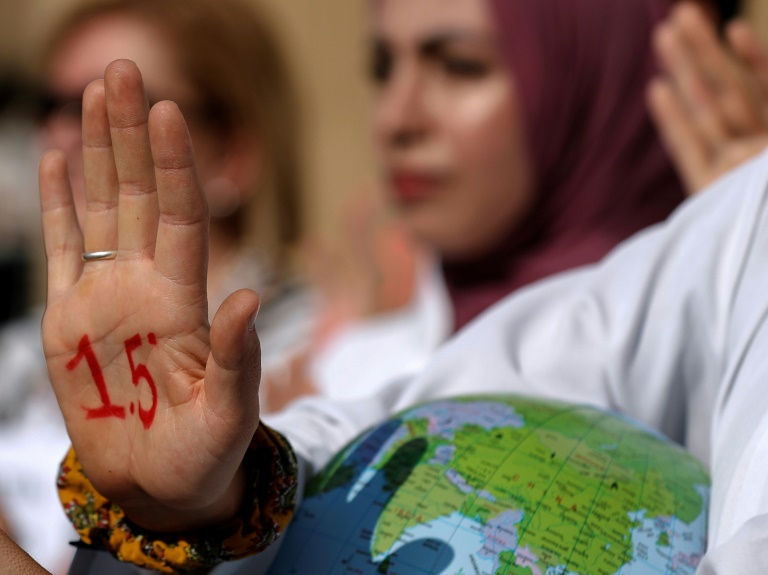
A final COP27 statement covering the broad efforts to grapple with a warming planet held the line on the aspirational goal of limiting global warming to 1.5 degrees Celsius from pre-industrial levels.

It also included language on renewable energy for the first time, while reiterating previous calls to accelerate “efforts towards the phasedown of unabated coal power and phase-out of inefficient fossil fuel subsidies”.

But that failed to go much further than a similar decision from last year’s COP26 meeting in Glasgow on key issues around cutting planet-heating pollution.

European Commission Vice President Frans Timmermans said the EU was “disappointed”, adding that more than 80 nations had backed a stronger emissions pledge.

“What we have in front of us… doesn’t bring enough added efforts from major emitters to increase and accelerate their emission cuts,” said Timmermans, who 24 hours earlier threatened to walk out of the talks.

Britain’s Alok Sharma, who chaired COP26 in Glasgow, said a passage on energy had been “weakened, in the final minutes”.

German Foreign Minister Annalena Baerbock said she was frustrated that the emissions cuts and fossil fuel phase-out were “stonewalled by a number of large emitters and oil producers”.

Criticised by some delegations for a lack of transparency during negotiations, Egyptian Foreign Minister Sameh Shoukry, the COP27 chair, said any missteps were “certainly not intentional”, and that he worked to avoid any “backslide” by parties.

– ‘Loss and damage’ –

The deal on loss and damage gathered critical momentum during the talks.

Developing nations relentlessly pushed for the fund, finally succeeding in getting the backing of wealthy polluters long fearful of open-ended liability.

A statement from the Alliance of Small Island States, comprised of islands whose very existence is threatened by sea levels rising, said the loss and damage deal was “historic”.

“The agreements made at COP27 are a win for our entire world,” said Molwyn Joseph, of Antigua and Barbuda and chair of AOSIS.

“We have shown those who have felt neglected that we hear you, we see you, and we are giving you the respect and care you deserve.”

With around 1.2C of warming so far, the world has seen a cascade of climate-driven extremes, shining a spotlight on the plight of developing countries faced with escalating disasters, as well as an energy and food price crisis and ballooning debt.

The fund will be geared towards developing nations “that are particularly vulnerable to the adverse effects of climate change” — language that had been requested by the EU.

– ‘On the brink’ –

The Europeans had also wanted to broaden the funder base to cough up cash — code for China and other better-off emerging countries. 

The final loss and damage text left many of the thornier questions to be dealt with by a transitional committee, which will report to next year’s climate meeting in Dubai to get the funding operational.

The fund will focus on what can be done now to support loss and damage resources but the agreement does not provide for liability or compensation, said a US State Department spokesperson.

Scientists say limiting warming to 1.5C is a far safer guardrail against catastrophic climate impacts, with the world currently way off track and heading for around 2.5C under current commitments and plans.

“The historic outcome on loss and damage at COP27 shows international cooperation is possible,” said Mary Robinson, former president of Ireland and Chair of The Elders.

“Equally, the renewed commitment on the 1.5C global warming limit was a source of relief. However, none of this changes the fact that the world remains on the brink of climate catastrophe.”  

Close Bitnami banner
Bitnami