Africa Business

US envoy urges Chinese cooperation on emissions cuts

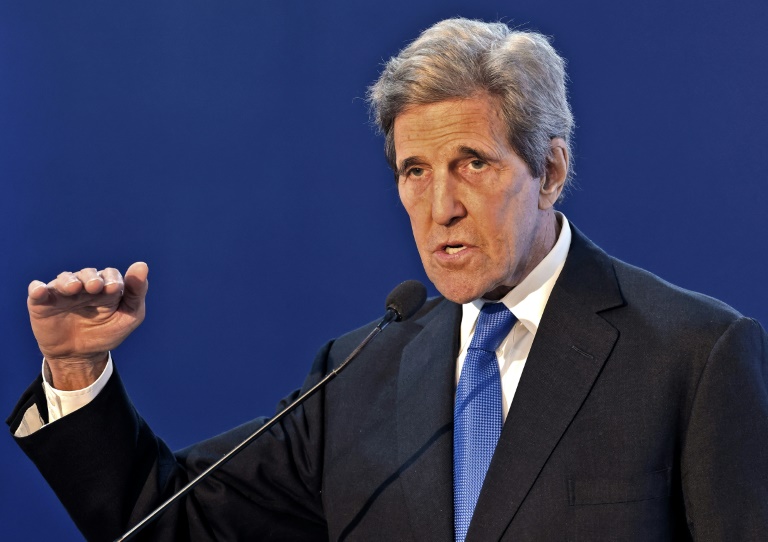
US climate envoy John Kerry called on Beijing Sunday to “accelerate progress together” on reducing greenhouse gas emissions, following a meeting with his Chinese counterpart at COP27 in Egypt.

Kerry and Xie Zhenhua met during the UN summit in the Red Sea resort of Sharm el-Sheikh after US President Joe Biden and Chinese leader Xi Jinping agreed at a G20 summit in Indonesia last week to resume collaboration on fighting climate change.

Beijing suspended the talks in August in anger at US House Speaker Nancy Pelosi’s visit to Taiwan.

Cooperation between the superpowers is key in the fight against global warming and has led to breakthroughs at past UN climate conferences, notably the landmark 2015 Paris Agreement.

“The climate crisis is fundamentally a global, not a bilateral, issue,” Kerry said in a statement.

“The United States and China should be able to accelerate progress together, not only for our sake, but for future generations,” Kerry added.

“All nations have a stake in the choices China makes in this critical decade… We are all hopeful that China will live up to its global responsibility.”

Xie described his talks with Kerry as “candid, friendly, positive” and “overall very constructive”.

“We have agreed that after this COP we will continue formal conversations, including face-to-face meetings,” he told reporters on Saturday.

But he also highlighted lingering differences with Western nations, rejecting the idea that China should no longer be considered a developing country, though it is now the world’s second-biggest economy.

That distinction in status is key: Under the terms of a bedrock 1992 UN climate treaty, developed countries are supposed to financially help developing nations in their energy transitions and efforts to build resilience against climate impacts.

– ‘Major outcome’ –

The issue was at the heart of a contentious debate at COP27 on establishing a “loss and damage” fund to compensate poorer countries already devastated by the fallout from global warming.

Kerry called the landmark deal on funding to help vulnerable countries cope with devastating impacts of global warming “one of the major outcomes” of the conference.

The US envoy had tested positive for Covid-19 during the summit and was self-isolating when negotiations wrapped up on Sunday.

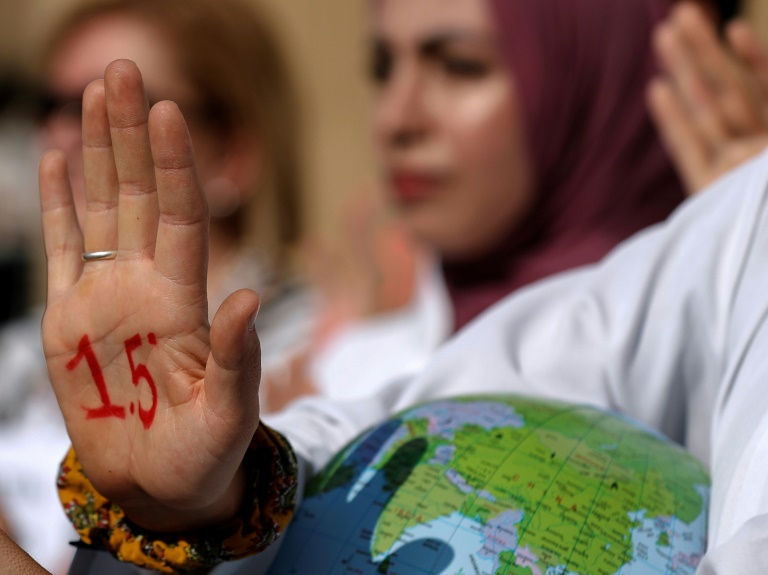
A final COP27 statement covering the broad array of efforts to grapple with a warming planet held the line on the aspirational goal of limiting global warming to 1.5 degrees Celsius from pre-industrial levels.

According to Kerry, this goal can be achieved by “implementing real projects and deploying real dollars to accelerate the energy transition”.

“Investment in clean energy and infrastructure will help countries deliver stronger climate ambition anywhere by driving down the cost of clean technologies.”

He said Washington and other governments were “stepping up” funding to support the green transition, noting several initiatives launched ahead of and during COP27.

Mexican Foreign Minister Marcelo Ebrard announced last week in Sharm el-Sheikh a $48 billion renewable energy investment scheme with the United States to strengthen emissions-cutting efforts.

Also during the summit, Kerry launched a partnership with private funds aimed at supporting the transition to renewable energy in developing nations, based on a carbon credit system.

No way to run a COP: climate summit host Egypt gets bad marks

Almost from the start, Egypt came under fire over its handling of the UN COP27 climate talks tasked with responding to the growing threat of global warming. 

As the negotiations drew to a close nearly two days late with a historic win for vulnerable countries on funding for climate “loss and damage”, exhausted delegates lined up to voice hope — and frustration at the lack of progress on tackling emissions.

Historically, nations hosting the annual gathering of up to 35,000 leaders, diplomats, observers, campaigners and journalists are expected to rise above national interests enough to work hand-in-glove with the UN’s climate bureaucracy to shepherd the consensus-based process to a more or less happy ending.

The two-week marathon in the Red Sea resort of Sharm el-Sheikh, however, kicked off with duelling press conferences, suggesting diverging agendas and posing something of a quandary for journalists.

In his final address to the plenary, the COP27 president and Egyptian foreign minister Sameh Shoukry began his address on the back foot. 

“We are fair, balanced and transparent in our approach,” he told delegates, many of whom had complained of a lack of clarity in the difficult negotiating process.

“Any missteps that might have occurred were certainly not intentional, and were done with the best interests of the process in mind.”

– Fossil fuel lobbyists –

Far more serious, some observers alledged that Egypt failed to act as a neutral broker in the complicated, multi-tiered talks.

“The influence of the fossil fuel industry was found across the board,” said Laurence Tubiana, CEO of the European Climate Foundation and — as France’s top negotiator — a main architect of the 2015 Paris Agreement.

“The Egyptian presidency has produced a text that clearly protects oil and gas petro-states and the fossil fuel industry,” with no mention of phasing out fossil fuels so that the issue might be more widely debated.

Concerns over the role of oil and gas interests have long dogged the talks. 

But this year more than 600 fossil fuel lobbyists attended COP27 as “observers”, up 25 percent from last year’s climate summit and more than the number of delegates from all Pacific island nations combined, according to one research NGO.

Alden Meyer, a policy expert at think tank E3G who has been to all but one COP over the last 27 years, said there were concerns that the presidency had been reluctant to include ambitious language on emissions and fossil fuels. 

“Clearly, they’re acting in their own national interests, rather than serving as an honest broker in the presidency,” he told AFP, adding that they had been hosting a “gas industry trade fair” in Sharm el-Sheikh. 

In a scathing speech as the talks wrapped up Sunday, European Commission Vice President Frans Timmermans said the EU was disappointed that the meeting had not pushed for stronger commitments to achieve the aspirational goal of limiting global warming to 1.5 degrees Celsius from pre-industrial levels.

He also expressed frustration that despites the support of “more than 80 countries” calling for emissions to peak by 2025, “we don’t see this reflected here”.  

Meanwhile, Alok Sharma, who held the presidency at COP26 in Glasgow last year, listed an array of ambitious proposals on phasing out fossil fuels and slashing emissions that never even got an airing in draft texts, much less the final version.

– Transparency –

During Week One, Egypt came in for a drubbing in the international media for a array of logistical snafus ranging from scarce drinking water and price gouging to poor access for the disabled and overbearing security surveillance.

Organisers quickly rectified all but the last of these issues, not uncommon among the 27 climate conferences convened since 1995.

More troubling, however, was the way in which the Egyptian presidency guided the high-stakes talks at times, taking them to the wire, delegates said.

“I’ve never experienced anything like this — untransparent, unpredictable, and chaotic,” said one delegate with deep COP experience.

When Egypt finally pieced together the first draft text on the lynchpin issue of how to compensate developing nations already devastated by climate impacts — “loss and damage” in UN speak — they didn’t distribute it for all to see, which is the usual practice.

For the European Union, they called Timmermans alone in the middle of the night, showing but not giving him the text so that he could convey report back to the bloc’s 27 nations, EU sources said.

At least one voice at the conference, however, praised Egypt’s stewardship of COP27. 

“(Shoukry) is working under the principles of transparent, open and party-driven consensus,” China’s veteran climate envoy Xie Zhenhua said. 

COP27 agrees to fund climate damages, no progress on emission cuts

A fraught UN climate summit wrapped up Sunday with a landmark deal on funding to help vulnerable countries cope with devastating impacts of global warming — but also anger over a failure to push further ambition on cutting emissions.

The two-week talks in Egypt’s Red Sea resort of Sharm el-Sheikh, which at times appeared to teeter on the brink of collapse, delivered a major breakthrough on a fund for climate “loss and damage”.

Pakistani climate minister Sherry Rehman said COP27 “responded to the voices of the vulnerable, the damaged and the lost of the whole world”.

“We have struggled for 30 years on this path, and today in Sharm el-Sheikh this journey has achieved its first positive milestone,” she told the summit.

Tired delegates applauded when the loss and damage fund was adopted as the sun came up Sunday following almost two extra days of negotiations that went round-the-clock.

But jubilation over that achievement was countered by stern warnings.

UN chief Antonio Guterres said the UN climate talks had “taken an important step towards justice” with the loss and damage fund, but fell short in pushing for the urgent carbon-cutting needed to tackle global warming.

“Our planet is still in the emergency room,” Guterres said. “We need to drastically reduce emissions now and this is an issue this COP did not address.”

British Prime Minister Rishi Sunak also warned that “more must be done” while France regretted the “lack of ambition” and said there was no progress on efforts to reduce greenhouse gas emissions and abandon fossil fuels.

– ‘Stonewalled by emitters’ –

A final COP27 statement covering the broad array of efforts to grapple with a warming planet held the line on the aspirational goal of limiting global warming to 1.5 degrees Celsius from pre-industrial levels.

It also included language on renewable energy for the first time, while reiterating previous calls to accelerate “efforts towards the phasedown of unabated coal power and phase-out of inefficient fossil fuel subsidies”.

But that failed to go much further than a similar decision from last year’s COP26 meeting in Glasgow on key issues around cutting planet-heating pollution.

European Commission Vice President Frans Timmermans said the EU was “disappointed”, adding that more than 80 nations had backed a stronger emissions pledge.

“What we have in front of us is not enough of a step forward for people and planet,” he said.

“It doesn’t bring enough added efforts from major emitters to increase and accelerate their emission cuts,” said Timmermans, who 24 hours earlier had threatened to walk out of the talks rather than getting a “bad result”.

Britain’s Alok Sharma, who chaired COP26 in Glasgow, said a passage on energy had been “weakened, in the final minutes”.

German Foreign Minister Annalena Baerbock said she was frustrated that the emissions cut and fossil fuel phase-out were “stonewalled by a number of large emitters and oil producers”.

Criticised by some delegations for a lack of transparency during negotiations, Egyptian Foreign Minister Sameh Shoukry, the COP27 chair, said any missteps were “certainly not intentional”.

“I believe I succeeded in avoiding that any of the parties were to backslide,” he said.

– ‘Loss and damage’ –

The deal on loss and damage — which had only barely made it onto the negotiation agenda — gathered critical momentum during the talks.

Developing nations relentlessly pushed for the fund, finally succeeding in getting the backing of wealthy polluters long fearful of open-ended liability.

A statement from the Alliance of Small Island States, comprised of islands whose very existence is threatened by sea level rise, said the loss and damage deal was “historic”.

“The agreements made at COP27 are a win for our entire world,” said Molwyn Joseph, of Antigua and Barbuda and chair of AOSIS.

“We have shown those who have felt neglected that we hear you, we see you, and we are giving you the respect and care you deserve.”

With around 1.2C of warming so far, the world has seen a cascade of climate-driven extremes, shining a spotlight on the plight of developing countries faced with escalating disasters, as well as an energy and food price crisis and ballooning debt.

The fund will be geared towards developing nations “that are particularly vulnerable to the adverse effects of climate change” — language that had been requested by the EU.

– ‘On the brink’ –

The Europeans had also wanted to broaden the funder base to cough up cash — code for China and other better-off emerging countries. 

The final loss and damage text left many of the thornier questions to be dealt with by a transitional committee, which will report to next year’s climate meeting in Dubai to get the funding operational.

The fund will focus on what can be done now to support loss and damage resources but the agreement does not provide for liability or compensation, said a US State Department spokesperson.

Scientists say limiting warming to 1.5C is a far safer guardrail against catastrophic climate impacts, with the world currently way off track and heading for around 2.5C under current commitments and plans.

“The historic outcome on loss and damage at COP27 shows international cooperation is possible,” said Mary Robinson, former president of Ireland and Chair of The Elders.

“Equally, the renewed commitment on the 1.5C global warming limit was a source of relief. However, none of this changes the fact that the world remains on the brink of climate catastrophe.”  

Equatorial Guinea votes with veteran ruler set for sixth term

Equatorial Guinea went to the polls on Sunday, with President Teodoro Obiang Nguema Mbasogo all-but certain of winning a record sixth term in a country with next to no opposition.

Obiang, 80, has been in power for more than 43 years — the longest of any head of state alive today, monarchs excepted.

Voting is obligatory in the small West African country. 

“Voting is going well. Everything is normal,” fridge repair man Norberto Ondo, 53, told AFP at a polling station in the Semu district of the capital, Malabo. 

“I expect this election to bring us prosperity.”

“We have peace,” Jose Serafin Obiang Sima, a nurse in his 30s, told AFP. He said Equatorial Guinea was the only country in the region “where young people prosper”.

The re-election of Obiang, who seized power in a coup in 1979, seems virtually assured in one of the most authoritarian and closed states in the world.

Running against him is Andres Esono Ondo — from the only tolerated opposition party, the Convergence for Social Democracy — and Buenaventura Monsuy Asumu of the Social Democratic Coalition Party, a historic ally of Obiang’s ruling party. 

Asumu, an ex-minister is seen by the opposition as a “dummy candidate” without a chance.

– ‘Solely for the benefit of the Obiangs’ –

Ond has called the regime a “dictatorship” and predicted “massive fraud” during Sunday’s elections for the presidency, the parliament and local councils.

“The government governs solely for the benefit of the Obiang family,” he said recently.

The discovery of off-shore oil in the mid-nineties turned Equatorial Guinea into Africa’s third richest country in terms of per-capita income.

But wealth is concentrated in just a few hands and four-fifths of the population of 1.4 million live below the poverty line according to the latest available World Bank figures.

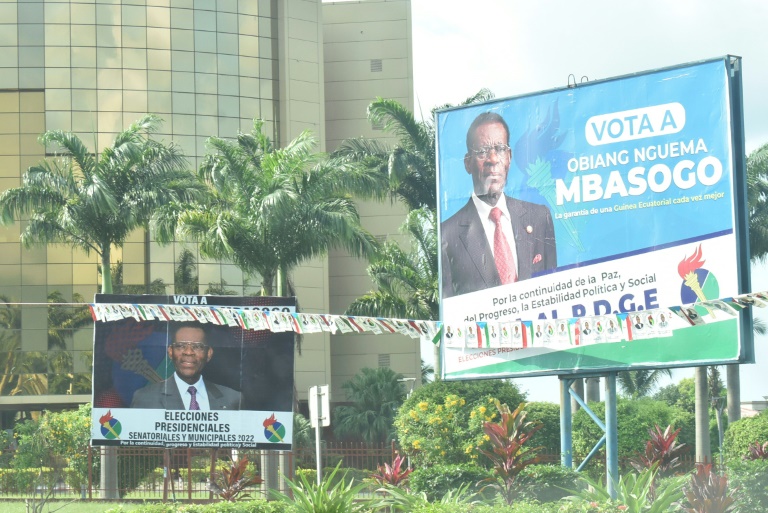
In the run-up to the vote, Malabo was plastered with posters of Obiang and the PDGE, the only legal political movement until 1991. State media all but ignored the other candidates.

The capital was under tight security on Sunday and streets were deserted except for near polling stations. The authorities banned sales of alcohol and the movement of all but officially accredited vehicles. 

Obiang voted in central Malabo around midday. His vehicle was surrounded by heavily armed soldiers, Israeli bodyguards and a personal guard composed of suited members of his own clan.


– Crackdown on opposition –

As in every election year, security forces have stepped up arrests. State media justified the crackdown as a bid to counter a “foiled plot” by the opposition to carry out attacks in Malabo and the economic capital, Bata. 

In September, security forces stormed the home of one of Obiang’s main opponents, Gabriel Nse Obiang Obono.

Four activists and a policeman died, according to the government. Dozens were injured and more than 150 were arrested, including Obono. 

Leading rights activist Joaquin Elo Ayeto told AFP the incident “discredited” the electoral process.

“The ruling party needs an ‘opposition’ to hold sham elections,” he said.

Results are not expected until Monday at the earliest.

Fraud allegations have plagued past polls.

Obiang is regularly re-elected with more than 93 percent of the vote. In 2016, the PDGE won 99 of the 100 seats in the lower house of parliament and all 70 seats in the senate.

Members of the opposition, most of whom are in exile, have urged citizens to spurn the ballot box.

Equatorial Guinea has a reputation for graft, ranking 172 out of 180 nations on Transparency International’s 2021 Corruption Perceptions Index.

Obiang’s son, the feared and powerful vice-president Teodoro Nguema Obiang Mangue, has been embroiled in scandals abroad over ill-gotten assets.

Senegal young guns ready to 'step up' at World Cup, says Cisse

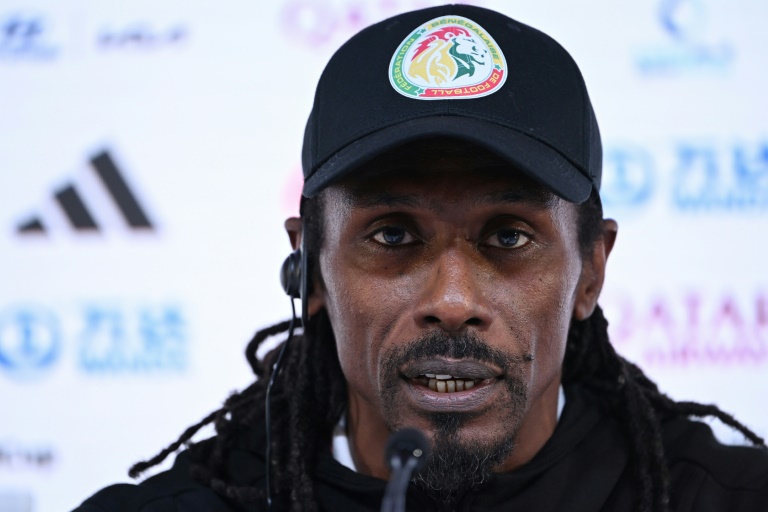
Senegal coach Aliou Cisse told his younger players on Sunday that it was their time to shine after talisman Sadio Mane was ruled out of the World Cup.

Team chiefs confirmed on Thursday that the Bayern Munich forward, who has scored 33 goals in 92 internationals, had lost his race to recover from a shin injury.

But Cisse is refusing to be downcast ahead of their World Cup opener on Monday against the Netherlands.

“First of all, I’m sad for the boy, for Sadio Mane, and then for the national team, but of course it’s his health that counts,” he said.

“Of course we won’t hide the importance of Sadio Mane for the Senegalese team — he’s very important, a coach builds his team around his best players.

“But there’s also a group here with experienced players, with young players ready to step up. We’ve had to play matches before without Sadio Mane.”

Cisse said the African champions, who also face Ecuador and hosts Qatar in Group A, have “excellent young players”.

“I have a lot of depth on the bench so I will be able to make good subs if someone is getting tired,” he said.

Senegal have called up Moussa Ndiaye, the 20-year-old Anderlecht defender.

Krepin Diatta, 23, is one of those who could fill the void left by Mane.

“When you talk about the spirit and morale, of course it affects you. He is our best player and a leader,” said the Monaco forward.

“But we are determined to do what we can without him. We are going to have to work harder individually and harder as a team.

“We still have a very strong mentality, we are comfortable being together and we are strong together.”

French-speaking bloc examines unrest in Africa

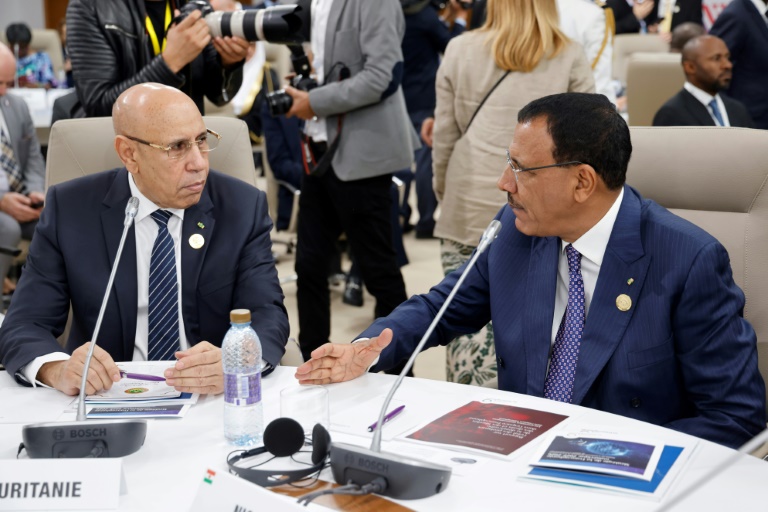
Facing calls to do more to resolve global crises, the world’s French-speaking leaders met in Tunisia Sunday to discuss growing instability and popular discontent in Francophone Africa.

But tensions crept into the International Organisation of Francophonie (IOF) conference itself when the Prime Minister of the Democratic Republic of Congo, Jean-Michel Sama Lukonde, refused to pose for a photo next to Paul Kagame, President of Rwanda.

The DRC accuses Rwanda of supporting M23 rebels who have seized swathes of territory in its eastern region, displacing tens of thousands of people and igniting regional tensions.

The head of the 88-member IOF bloc, Louise Mushikiwabo, said Saturday it should strive to be a “link that can be used to prevent tensions from degenerating into conflicts”.

But Senegalese civil society figure Alioune Tine said the IOF has shown itself to be “totally powerless in the face of fraudulent elections, third mandates (of African leaders) and military coups” in Mali, Guinea, Chad and Burkina Faso.

On Sunday, delegates at the conference on the island of Djerba were to also attend workshops on the youth and women’s entrepreneurship before an economic forum starts.

Ahead of the summit, Mushikiwabo told AFP that “the defiance that we’re seeing among young people in francophone Africa comes from political disillusionment” and frustrations over daily life. 

The IOF, founded in 1970, aims to promote the French language, develop economic cooperation and help mediate international conflicts.

Many African leaders have expressed dismay at the West’s rapid response to the war in Ukraine, in contrast to wars in their own countries.

Still, Macron said “a declaration of all the members” had stated “a very clear position on the war launched by Russia in Ukraine.”

Macron also said Saturday that the IOF should reclaim its diplomatic role, and Paris later announced that it would seek to take on the organisation’s rotating presidency from 2024.

Senegal’s President Macky Sall and Canadian Prime Minister Justin Trudeau have also been among leaders attending the two-day gathering which ends on Sunday.

This year’s conference is a diplomatic boon for Tunisian President Kais Saied, whose government has faced international criticism since a sweeping power grab last year in the only democracy to have emerged from the Arab Spring uprisings.

Macron on Saturday alluded to concerns over the country’s political future, saying that “fundamental freedoms were intrinsic” to Tunisia’s “democratic achievements”.

COP27 summit strikes historic deal to fund climate damages

A fraught UN climate summit wrapped up Sunday with a landmark deal on funding to help vulnerable countries cope with devastating impacts of global warming — but also anger over a failure to push further ambition on cutting emissions.

The two-week talks in Egypt’s Red Sea resort of Sharm el-Sheikh, which at times appeared to teeter on the brink of collapse, delivered a major breakthrough on a fund for climate “loss and damage”.

Pakistani climate minister Sherry Rehman said COP27 “responded to the voices of the vulnerable, the damaged and the lost of the whole world”.

“We have struggled for 30 years on this path, and today in Sharm el-Sheikh this journey has achieved its first positive milestone,” she told the summit.

Tired delegates applauded when the loss and damage fund was adopted as the sun came up Sunday following almost two extra days of negotiations that went round-the-clock.

But jubilation over that achievement was countered by stern warnings.

UN chief Antonio Guterres said the UN climate talks had “taken an important step towards justice” with the loss and damage fund, but fell short in pushing for the urgent carbon-cutting needed to tackle global warming.

“Our planet is still in the emergency room,” Guterres said. “We need to drastically reduce emissions now and this is an issue this COP did not address.”

– ‘Stonewalled by emitters’ –

A final COP27 statement covering the broad array of the world’s efforts to grapple with a warming planet held the line on the aspirational goal of limiting global warming to 1.5 degrees Celsius from pre-industrial levels.

It also included language on renewable energy for the first time, while reiterating previous calls to accelerate “efforts towards the phasedown of unabated coal power and phase-out of inefficient fossil fuel subsidies”.

But that failed to go much further than a similar decision from last year’s COP26 meeting in Glasgow on key issues around cutting planet-heating pollution.

European Commission Vice President Frans Timmermans said the EU was “disappointed”, adding that more than 80 nations had backed a stronger emissions pledge.

“What we have in front of us is not enough of a step forward for people and planet,” he said.

“It doesn’t bring enough added efforts from major emitters to increase and accelerate their emission cuts,” said Timmermans, who 24 hours earlier had threatened to walk out of the talks rather than getting a “bad result”.

Britain’s Alok Sharma, who chaired COP26 in Glasgow, said a passage on energy had been “weakened, in the final minutes”.

Germany Foreign Minister Annalena Baerbock said she was frustrated that the emissions cut and fossil fuel phase-out were “stonewalled by a number of large emitters and oil producers”.

Criticised by some delegations for a lack of transparency during negotiations, Egyptian Foreign Minister Sameh Shoukry, the COP27 chair, said any missteps were “certainly not intentional”.

“I believe I succeeded in avoiding that any of the parties were to backslide,” he said.

– ‘Loss and damage’ –

The deal on loss and damage — which had only barely made it onto the negotiation agenda — gathered critical momentum during the talks.

Developing nations relentlessly pushed for the fund, finally succeeding in getting the backing of wealthy polluters long fearful of open-ended liability.

A statement from the Alliance of Small Island States, comprised of islands whose very existence is threatened by sea level rise, said the loss and damage deal was “historic”.

“The agreements made at COP27 are a win for our entire world,” said Molwyn Joseph, of Antigua and Barbuda and chair of AOSIS.

“We have shown those who have felt neglected that we hear you, we see you, and we are giving you the respect and care you deserve.”

With around 1.2C of warming so far, the world has seen a cascade of climate-driven extremes, shining a spotlight on the plight of developing countries faced with escalating disasters, as well as an energy and food price crisis and ballooning debt.

The World Bank estimated that devastating floods in Pakistan this year caused $30 billion in damage and economic loss.

The fund will be geared towards developing nations “that are particularly vulnerable to the adverse effects of climate change” — language that had been requested by the EU.

– ‘On the brink’ –

The Europeans had also wanted to broaden the funder base to cough up cash — code for China and other better-off emerging countries. 

The final loss and damage text left many of the thornier questions to be dealt with by a transitional committee, which will report to next year’s climate meeting in Dubai to get the funding operational.

Scientists say limiting warming to 1.5C is a far safer guardrail against catastrophic climate impacts, with the world currently way off track and heading for around 2.5C under current commitments and plans.

“The historic outcome on loss and damage at COP27 shows international cooperation is possible,” said Mary Robinson, former president of Ireland and Chair of The Elders.

“Equally, the renewed commitment on the 1.5C global warming limit was a source of relief. However, none of this changes the fact that the world remains on the brink of climate catastrophe.”  

Equatorial Guinea votes with veteran ruler set for sixth term

Equatorial Guinea went to the polls on Sunday, with President Teodoro Obiang Nguema Mbasogo all-but certain of winning a record sixth term in a the West African country with next to no opposition.

Obiang, aged 80, has been in power for more than 43 years — the longest tenure of any living head of state today except for monarchs.

A few dozen voters had already queued up when the doors swung open at a polling station set up in a school in Malabo’s Semu district early in the morning.

“Voting is going well. Everything is normal. All citizens have to vote,” fridge repair man Norberto Ondo told AFP.

“I expect this election to bring us prosperity,” the 53-year-old added after dropping his ballot in a box at the Nuestra Senora de Bisila school.

Obiang’s re-election seems virtually assured in one of the most authoritarian and enclosed states in the world.

Running against him is Andres Esono Ondo, 61, from the nation’s only tolerated opposition party.

The secretary general of the Convergence for Social Democracy (CPDS) is a candidate for the first time and the sole representative of the muzzled opposition.

Ondo has said he fears “fraud” during voting to elect the president, senators and members of parliament.

The government has levelled its own accusations against the politician, in 2019 accusing him of planning “a coup in Equatorial Guinea with foreign funding”.

The third candidate is Buenaventura Monsuy Asumu of the Social Democratic Coalition Party (PCSD), a historic ally of Obiang’s ruling party.

The ex-minister is running for the fourth time but has never done well in previous elections. The opposition have called  him a “dummy candidate” without a chance.

– ‘Foiled plot’ –

As in every election year, security forces have stepped up arrests. State media has justified the crackdown as a bid to counter a “foiled plot” by the opposition to carry out attacks on embassies, petrol stations and the homes of ministers. 

In September, after a week-long siege, security forces stormed the home of one of Obiang’s main opponents, Gabriel Nse Obiang Obono.

His house had also served as an office for his banned Citizens for Innovation (CI) party. 

The assault left five dead — four activists and a policeman, according to the government. 

Dozens were injured and more than 150 people were arrested, including Obono. 

Leading rights activist Joaquin Elo Ayeto told AFP the incident had “discredited” the electoral process.

“The ruling party needs an ‘opposition’ to hold sham elections,” he said.

Allegations of fraud have plagued past polls.

In 2016, Obiang was re-elected with 93.7 percent of the vote.

His PDGE won 99 of the 100 seats in the lower house and all 70 seats in the senate.

In 2009, the president scored more than 95 percent of the vote.

Campaigning this year saw pictures of Obiang and his Democratic Party of Equatorial Guinea (PDGE), the country’s only legal political movement until 1991, splashed all over Malabo.

Members of the opposition, most of whom are in exile, hold no hope for a breakthrough at the ballot box.

“Obiang’s elections have never been free or democratic but marked by widespread and systematic… fraud,” they said in a joint statement.

Despite all being obliged to vote, they urged “all citizens of Equatorial Guinea not to take part in any phase of the electoral process”.

The discovery of off-shore oil turned Equatorial Guinea into Africa’s third richest country, in terms of per-capita income, but the wealth is very unequally distributed.

Four-fifths of the population of 1.4 million live below the poverty threshold according to World Bank figures for 2006, the latest available.

The country has a long-established reputation internationally for graft, ranking 172 out of 180 nations on Transparency International’s 2021 Corruption Perceptions Index.

COP27 summit strikes historic deal to fund climate damages

A fraught UN climate summit wrapped up Sunday with a landmark deal on funding to help vulnerable countries cope with devastating impacts of global warming — but also anger over a failure to push further ambition on cutting emissions.

The two-week talks in Egypt’s Red Sea resort of Sharm el-Sheikh, which at times appeared to teeter on the brink of collapse, delivered a major breakthrough on a fund for climate “loss and damage”.

Pakistani climate minister Sherry Rehman said COP27 “responded to the voices of the vulnerable, the damaged and the lost of the whole world”.

“We have struggled for 30 years on this path, and today in Sharm el-Sheikh this journey has achieved its first positive milestone,” she told the summit.

Tired delegates applauded when the loss and damage fund was adopted as the sun came up Sunday following almost two extra days of negotiations that went round-the-clock.

But jubilation over that achievement was countered by stern warnings.

UN chief Antonio Guterres said the UN climate talks had “taken an important step towards justice” with the loss and damage fund, but fell short in pushing for the urgent carbon-cutting needed to tackle global warming.

“Our planet is still in the emergency room,” Guterres said. “We need to drastically reduce emissions now and this is an issue this COP did not address.”

– ‘Stonewalled by emitters’ –

A final COP27 statement covering the broad array of the world’s efforts to grapple with a warming planet held the line on the aspirational goal of limiting global warming to 1.5 degrees Celsius from pre-industrial levels.

It also included language on renewable energy for the first time, while reiterating previous calls to accelerate “efforts towards the phasedown of unabated coal power and phase-out of inefficient fossil fuel subsidies”.

But that failed to go much further than a similar decision from last year’s COP26 meeting in Glasgow on key issues around cutting planet-heating pollution.

European Commission Vice President Frans Timmermans said the EU was “disappointed”, adding that more than 80 nations had backed a stronger emissions pledge.

“What we have in front of us is not enough of a step forward for people and planet,” he said.

“It doesn’t bring enough added efforts from major emitters to increase and accelerate their emission cuts,” said Timmermans, who 24 hours earlier had threatened to walk out of the talks rather than getting a “bad result”.

Britain’s Alok Sharma, who chaired COP26 in Glasgow, said a passage on energy had been “weakened, in the final minutes”.

Germany Foreign Minister Annalena Baerbock said she was frustrated that the emissions cut and fossil fuel phase-out were “stonewalled by a number of large emitters and oil producers”.

Criticised by some delegations for a lack of transparency during negotiations, Egyptian Foreign Minister Sameh Shoukry, the COP27 chair, said any missteps were “certainly not intentional”.

“I believe I succeeded in avoiding that any of the parties were to backslide,” he said.

– ‘Loss and damage’ –

The deal on loss and damage — which had only barely made it onto the negotiation agenda — gathered critical momentum during the talks.

Developing nations relentlessly pushed for the fund, finally succeeding in getting the backing of wealthy polluters long fearful of open-ended liability.

A statement from the Alliance of Small Island States, comprised of islands whose very existence is threatened by sea level rise, said the loss and damage deal was “historic”.

“The agreements made at COP27 are a win for our entire world,” said Molwyn Joseph, of Antigua and Barbuda and chair of AOSIS.

“We have shown those who have felt neglected that we hear you, we see you, and we are giving you the respect and care you deserve.”

With around 1.2C of warming so far, the world has seen a cascade of climate-driven extremes, shining a spotlight on the plight of developing countries faced with escalating disasters, as well as an energy and food price crisis and ballooning debt.

The World Bank estimated that devastating floods in Pakistan this year caused $30 billion in damage and economic loss.

The fund will be geared towards developing nations “that are particularly vulnerable to the adverse effects of climate change” — language that had been requested by the EU.

– ‘On the brink’ –

The Europeans had also wanted to broaden the funder base to cough up cash — code for China and other better-off emerging countries. 

The final loss and damage text left many of the thornier questions to be dealt with by a transitional committee, which will report to next year’s climate meeting in Dubai to get the funding operational.

Scientists say limiting warming to 1.5C is a far safer guardrail against catastrophic climate impacts, with the world currently way off track and heading for around 2.5C under current commitments and plans.

“The historic outcome on loss and damage at COP27 shows international cooperation is possible,” said Mary Robinson, former president of Ireland and Chair of The Elders.

“Equally, the renewed commitment on the 1.5C global warming limit was a source of relief. However, none of this changes the fact that the world remains on the brink of climate catastrophe.”  

Joy, relief at 'historic' climate damages deal

Vulnerable nations least responsible for planet-heating emissions have been battling for three decades to get wealthy polluters to pay for climate damages.

Their final push took barely two weeks.

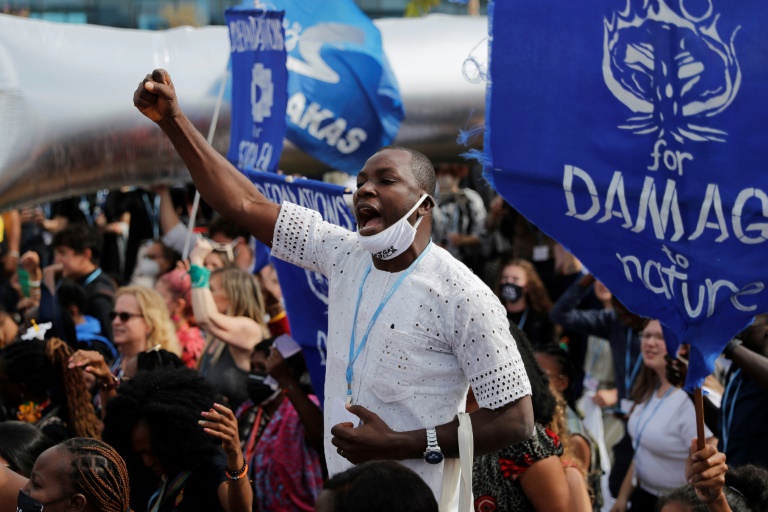
The “loss and damage” inflicted by climate-induced disasters was not even officially up for discussion when UN talks in Egypt began.

But a concerted effort among developing countries to make it the defining issue of the conference melted the resistance of wealthy polluters long fearful of open-ended liability, and gathered unstoppable momentum as the talks progressed.

In the end a decision to create a loss and damage fund was the first item confirmed on Sunday morning after fraught negotiations went overnight with nations clashing over a range of issues around curbing planet-heating emissions.

“At the beginning of these talks loss and damage was not even on the agenda and now we are making history,” said Mohamed Adow, executive director of Power Shift Africa.  

“It just shows that this UN process can achieve results, and that the world can recognise the plight of the vulnerable must not be treated as a political football.”

Loss and damage covers a broad sweep of climate impacts, from bridges and homes washed away in flash flooding, to the threatened disappearance of cultures and whole island nations to the creeping rise of sea levels.

Observers say that the failure of rich polluters both to curb emissions and to meet their promise of funding to help countries boost climate resilience means that losses and damages are inevitably growing as the planet warms.

Event attribution science now makes it possible to measure how much global warming increases the likelihood or intensity of an individual cyclone, heat wave, drought or heavy rain event.

This year, an onslaught of climate-induced disasters — from catastrophic floods in Pakistan to severe drought threatening famine in Somalia — battered countries already struggling with the economic effects of the Covid-19 pandemic and soaring food and energy costs. 

“The establishment of a fund is not about dispensing charity,” said Pakistani climate minister Sherry Rehman.

“It is clearly a down payment on the longer investment in our joint futures, in the down payment and an investment in climate justice.” 

– Who pays? –

The agreement was a balancing act, over seemingly unbridgeable differences. 

On the one hand the G77 and China bloc of 134 developing countries called for the immediate creation of a fund at COP27, with operational details to be agreed later.

Richer nations like the United States and European Union accepted that countries in the crosshairs of climate-driven disasters need money, but favoured a “mosaic” of funding arrangements.

They also wanted money to be focused on the most climate-vulnerable countries and for there to be a broader set of donors.

That is code for countries including China and Saudi Arabia that have become wealthier since they were listed as developing nations in 1992.

After last-minute tussles over wording, the final loss and damage document decided to create a fund, as part of a broad array of funding arrangements for developing countries “that are particularly vulnerable to the adverse effects of climate change”.

Other key points of contention were left ambiguous, or put into the remit of a new transitional committee that will be tasked with coming up with a plan for making the decisions a reality for the 2023 UN climate summit in Dubai. 

A reference to expanding sources of funding, “is vague enough to pass”, said Ines Benomar, researcher at think tank E3G.

But she said debates about whether China — the world’s biggest emitter — among others should maintain its status as “developing” was likely to reemerge next year. 

“The discussion is postponed, but now there is more attention to it,” she said. 

For his part, China’s envoy Xie Zhenhua told reporters on Saturday that the fund should be for all developing countries. 

However, he added: “I hope that it could be provided to the fragile countries first.”

– ‘Empty bucket’ –

Harjeet Singh, head of global political strategy at Climate Action Network International, said other innovative sources of finance — like levies on fossil fuel extraction or air passengers — could raise “hundreds of billions of dollars”. 

Pledges for loss and damage so far are miniscule in comparison to the scale of the damages. 

They include $50 million from Austria, $13 million from Denmark and $8 million from Scotland. 

About $200 million has also been pledged — mainly from Germany — to the “Global Shield” project launched by the G7 group of developed economies and climate vulnerable nations.   

The World Bank has estimated the Pakistan floods alone caused $30 billion in damages and economic loss.

Depending on how deeply the world slashes carbon pollution, loss and damage from climate change could cost developing countries $290 billion to $580 billion a year by 2030, reaching $1 trillion to $1.8 trillion in 2050, according to 2018 research.

Adow said that a loss and damage fund was just the first step.  

“What we have is an empty bucket,” he said. 

“Now we need to fill it so that support can flow to the most impacted people who are suffering right now at the hands of the climate crisis.”

Close Bitnami banner
Bitnami