Africa Business

COP27 summit strikes historic deal to fund climate damages

A fraught UN COP27 summit wrapped up Sunday with a landmark deal on funding to help vulnerable countries cope with devastating climate impacts — and deep disappointment over a failure to push further ambition on cutting emissions.

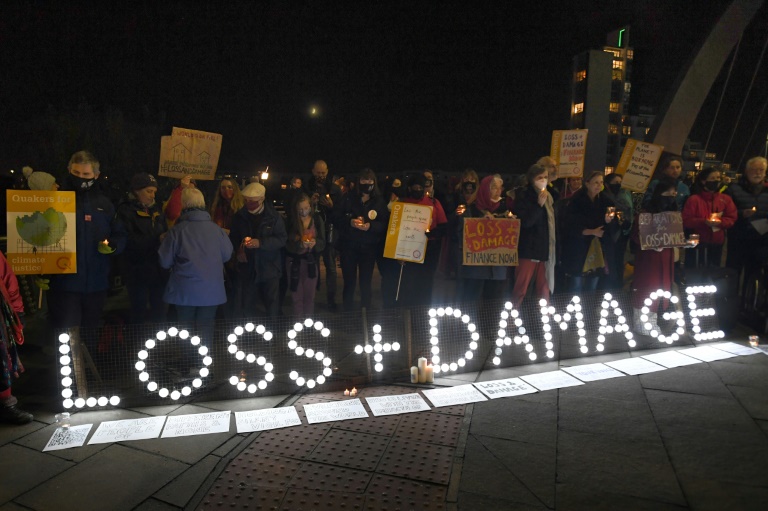
The two-week talks, which at times appeared to teeter on the brink of collapse, delivered a major breakthrough on a fund for climate “loss and damage”.

Pakistani climate minister Sherry Rehman said COP27 “responded to the voices of the vulnerable, the damaged and the lost of the whole world”.

“We have struggled for 30 years on this path, and today in Sharm el-Sheikh this journey has achieved its first positive milestone,” she said.

Tired delegates applauded when the loss and damage fund was adopted as the sun came up Sunday following days of marathon negotiations over the proposal.

But jubilation over that achievement was countered by stern warnings.

UN chief Antonio Guterres said the UN climate talks had “taken an important step towards justice” with the loss and damage fund, but fallen short in pushing for the urgent carbon-cutting needed to tackle global warming.

“Our planet is still in the emergency room. We need to drastically reduce emissions now and this is an issue this COP did not address,” Guterres said.

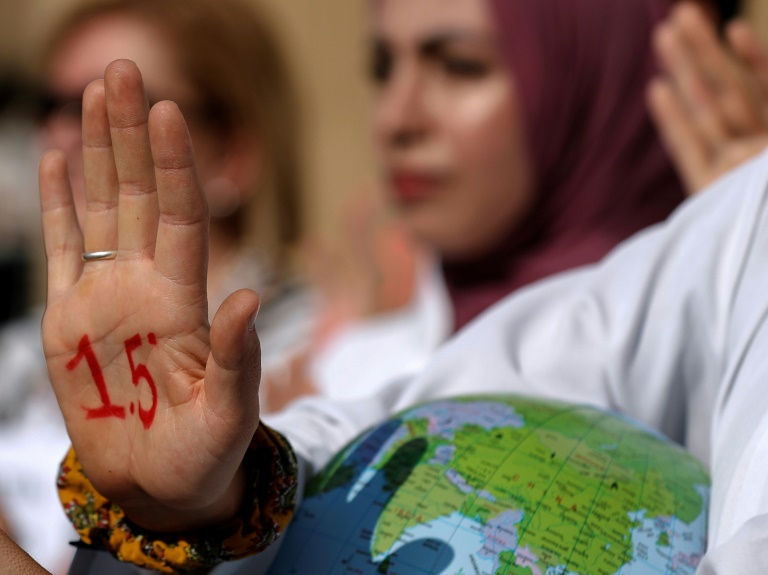
A final COP27 statement covering the broad array of the world’s efforts to grapple with a warming planet held the line on the aspirational goal of limiting global warming to 1.5 degrees Celsius from pre-industrial levels.

It also included language on renewable energy for the first time, while reiterating previous calls to accelerate “efforts towards the phasedown of unabated coal power and phase-out of inefficient fossil fuel subsidies”.

But that failed to go much further than a similar decision from last year’s meeting in Glasgow on key issues around cutting planet-heating pollution.

In a scolding intervention as the talks went into Sunday morning, European Commission Vice President Frans Timmermans said the EU was “disappointed” with a lack of ambition on reducing emissions.

“What we have in front of us is not enough of a step forward for people and planet,” he said. 

“It doesn’t bring enough added efforts from major emitters to increase and accelerate their emission cuts.”

– ‘Historic’ deal –

The deal on loss and damage — which barely made it onto the negotiation agenda — gathered critical momentum during the talks.

Developing nations relentlessly pushed for the fund during the summit, finally succeeding in getting the backing of wealthy polluters long fearful of open-ended liability.

A statement from the Alliance of Small Island States, comprised of islands whose very existence is threatened by sea level rise, said loss and damage deal was a “historic” deal 30 years in the making.

“The agreements made at COP27 are a win for our entire world,” said Molwyn Joseph, of Antigua and Barbuda and chair of AOSIS.

“We have shown those who have felt neglected that we hear you, we see you, and we are giving you the respect and care you deserve.”

With around 1.2C of warming so far, the world has seen a cascade of climate-driven extremes in recent months, shining a spotlight on the plight of developing countries faced with escalating disasters, as well as an energy and food price crisis and ballooning debt.

The World Bank estimated that devastating floods in Pakistan this year caused $30 billion in damage and economic loss.

The fund will be geared towards developing nations “that are particularly vulnerable to the adverse effects of climate change” — language that had been requested by the EU.

– ‘On the brink’ –

The Europeans had also wanted to broaden the funder base to cough up cash — code for China and other better-off emerging countries. 

The final loss and damage text left many of the thornier questions to be dealt with by a transitional committee, which will report to next year’s climate meeting in Dubai to get the funding operational.

On Saturday morning, with the talks already in overtime, the European Union said it was prepared to have “no result” rather than a bad one over concerns around ambition on emissions cuts.

Scientists say limiting warming to 1.5C is a far safer guardrail against catastrophic climate impacts, with the world currently far off track and heading for around 2.5C under current commitments and plans.

“The historic outcome on loss and damage at COP27 shows international cooperation is possible,” said Mary Robinson, former president of Ireland and Chair of The Elders.

“Equally, the renewed commitment on the 1.5C global warming limit was a source of relief. However, none of this changes the fact that the world remains on the brink of climate catastrophe.”  
Charles III welcomes S.Africa president as hosts first state visit of reign

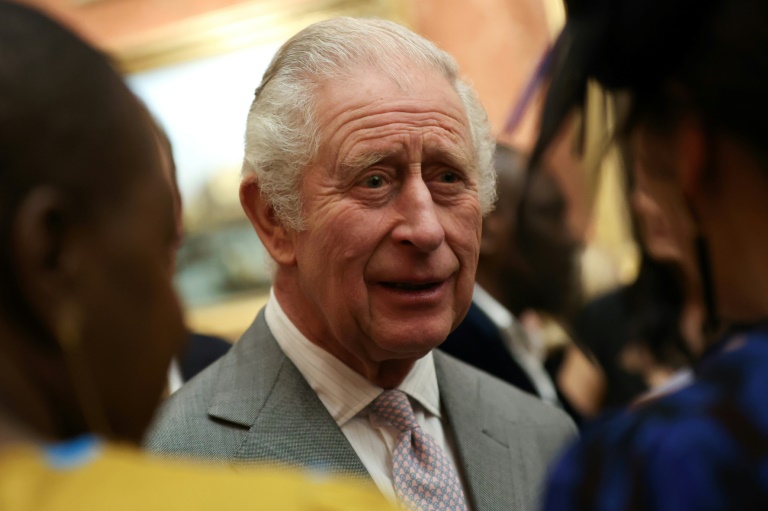
King Charles III next week hosts his first state visit as monarch, welcoming South African President Cyril Ramaphosa and his wife to Buckingham Palace.

The last state visit to the UK came in June 2019, when queen Elizabeth II hosted US president Donald Trump and his wife Melania.

Charles has yet to announce where he will go on his first overseas visit as king, and this was the first invitation he extended since succeeding his late mother in September.

The pomp of the major diplomatic event will be clouded by events in South Africa, where Ramaphosa risks impeachment for allegedly covering up a crime.

Christopher Vandome, a senior research fellow at the Chatham House international affairs institute in London, said “setting the right tone will be crucial”.

He said London — a former colonial power in South Africa — needed to avoid lecturing about Pretoria’s UN voting record on Ukraine while South Africans are still sore about lack of Western support during the Covid crisis.

Climate change, trade and Charles’s vision for the Commonwealth will also likely be high on the agenda, Vandome said.

Ramaphosa was last in London for the state funeral of the queen at Westminster Abbey in September.

His state visit comes more than a decade after the last by a South African leader, when Jacob Zuma came to the UK in 2010.

Ramaphosa arrives on Monday before an official programme starts on Tuesday, including a state banquet at Buckingham Palace.

Charles and Queen Consort Camilla will be in charge of welcoming Ramaphosa and First Lady Tshepo Motsepe but will also see the visiting couple meet other senior royals.

Heir to the throne Prince William and his wife Kate, Princess of Wales, will take him to join Charles and Camilla for a ceremonial military welcome.

Charles’s youngest brother Prince Edward has also been recruited to accompany Ramaphosa to London’s Kew Gardens and a biomedical research centre.

Also on the agenda is an address to lawmakers from both houses of parliament and a meeting with Prime Minister Rishi Sunak in Downing Street.

– Impeachment cloud –

A protege of Nelson Mandela — who was on first name terms with Charles’s mother — Ramaphosa stood alongside the anti-apartheid icon when he walked out of jail in 1990.

In a symbolic moment, the South African leader on Tuesday will view a memorial stone for Mandela, installed in Westminster Abbey in 2018 on the centenary of his birth.

After leaving politics to become one of Africa’s wealthiest businessmen, Ramaphosa returned to become Zuma’s deputy in 2014 and gained the presidency in 2018.

He is now fighting for his political life and facing calls to resign as the deeply divided ruling party African National Congress (ANC) is to hold a vote on its leadership in December.

A scandal in which Ramaphosa is accused of concealing a multi-million dollar cash theft has piled pressure on him.

He denies any wrongdoing.

He faces an accusation that he failed to report a heist at his luxury cattle farmhouse in which robbers took $4 million in cash and instead organised for the robbers to be kidnapped and bribed into silence.

The president has acknowledged a burglary but denies kidnapping and bribery, saying he reported the break-in to the police. 

A panel appointed by South Africa’s parliament is set to determine whether to impeach him.

South Africans are also deeply frustrated by the economic situation, with an official unemployment rate of 33 percent and constant power outages.

Given the problems at home, some South Africans have berated Ramaphosa for jetting off to the UK.

Charles has visited South Africa on a number of occasions and attended Mandela’s funeral in 2013.

It was from South Africa that his mother pledged her life to the service of the Commonwealth in a speech as a 21-year-old princess.

Since becoming king, Charles has met several African leaders, including Nigeria’s President Muhammadu Buhari and Nana Akufo-Addo of Ghana.

UN climate summit adopts 'loss and damage' fund

The UN’s COP27 climate summit approved on Sunday the creation of a special fund to cover the damages suffered by vulnerable nations battered by the impacts of global warming.

The two-week talks have whiplashed between fears the process could collapse, to hopes of a major breakthrough on a fund for climate “loss and damage”.

Delegates applauded after the fund was adopted in the middle of the night following days of marathon negotiations over the proposal.

Collins Nzovu, Zambia’s minister of green economy and environment, said he was “excited. Very, very excited.”

“This is a very positive result from 1.3 billion Africans,” he told AFP.

“Very exciting because for us, success in Egypt was going to be based on what we get from loss and damage.”

The plenary, however, still has to approve a range of decisions and the final COP27 statement covering a host of other contentious issues, including a call for a “rapid” reduction in emissions in order to meet the aspirational goal of limiting global warming to 1.5 degrees Celsius from pre-industrial levels.

The session took a break as Switzerland requested more time to review the text.

An informal coalition of “high ambition” countries called for strong language on cutting emissions, moving away from planet-heating fossil fuels and to reaffirm the 1.5C goal.

The European Union even threatened Saturday to walk out rather than having a “bad” decision.

An adviser to Papua New Guinea, Kevin Conrad, said late Saturday that the “usual suspects” were attempting to remove all reference to fossil fuels. In the past, Saudi Arabia in particular has sought to block such language.

The latest draft calls for “accelerating efforts towards the phasedown of unabated coal power and phase-out of inefficient fossil fuel subsidies”.

– ‘Historic’ deal –

Conversely the deal on loss and damage — which barely made it onto the negotiation agenda — gathered critical momentum during the talks.

Developing nations relentlessly pushed for the fund during the summit, finally succeeding in getting the backing of wealthy polluters long fearful of open-ended liability.

With around 1.2C of warming so far, the world has seen a cascade of climate-driven extremes in recent months, shining a spotlight on the plight of developing countries faced with escalating disasters, as well as an energy and food price crisis and ballooning debt. 

The World Bank estimated that devastating floods in Pakistan this year caused $30 billion in damage and economic loss. 

Pakistan’s Climate Minister Sherry Rehman said prior to the fund’s approval that its creation would be “a historic reminder to vulnerable people all over the world that they have a voice and that if they unite… we can actually start breaking down barriers that we thought were impossible”.

The fund will be geared towards developing nations “that are particularly vulnerable to the adverse effects of climate change” — language that had been requested by the EU.

The EU demanded the wording with the aim of ensuring that wealthier developing countries such as China, which has grown into the world’s second biggest economy, are not beneficiaries of the fund.

The Europeans had also wanted a broad funder base to cough up cash — code for China and other better-off emerging countries. 

The final decision text left many of the thornier questions to be dealt with by a transitional committee, which will report to next year’s climate meeting in Dubai to get the funding operational.

– ‘Keep 1.5C alive’ –

Now attention turns on whether the summit will agree on the final statement.

Scientists say limiting warming to 1.5C is a far safer guardrail against catastrophic climate impacts, with the world currently far off track and heading for around 2.5C under current commitments and plans.

Earlier, Colombian Environment Minister Susana Muhamad said to be “viable” the climate talks would need both a loss and damage fund and a commitment to 1.5C.  

European Commission Vice President Frans Timmermans warned that if not enough was done to slash emissions and keep 1.5C alive, “there is no amount of money on this planet that will be able to address the misery that will occur through natural disasters, etc. that we’re already seeing”.

Joy at 'historic' climate damages deal

Vulnerable nations least responsible for planet-heating emissions have been battling for three decades for wealthy polluters to cough up the cash for climate damages.

Their final push took barely two weeks.

The “loss and damage” inflicted by climate-induced disasters was not even officially up for discussion when UN talks in Egypt began.

But a concerted effort among developing countries to make it the defining issue of the conference melted the resistance of wealthy polluters long fearful of open-ended liability, and gathered unstoppable momentum as the talks progressed.

In the end a decision to create a loss and damage fund was the first item confirmed on Sunday morning after fraught negotiations went overnight with nations clashing over a range of issues around curbing planet-heating emissions.

“At the beginning of these talks loss and damage was not even on the agenda and now we are making history,” said Mohamed Adow, executive director of Power Shift Africa.  

“It just shows that this UN process can achieve results, and that the world can recognise the plight of the vulnerable must not be treated as a political football.”

Loss and damage covers a broad sweep of climate impacts, from bridges and homes washed away in flash flooding, to the threatened disappearance of cultures and whole island nations to the creeping rise of sea levels.

Observers say that the failure of rich polluters both to curb emissions and to meet their promise of funding to help countries boost climate resilience means that losses and damages are inevitably growing as the planet warms.

Event attribution science now makes it possible to measure how much global warming increases the likelihood or intensity of an individual cyclone, heat wave, drought or heavy rain event.

This year, an onslaught of climate-induced disasters — from catastrophic floods in Pakistan to severe drought threatening famine in Somalia — battered countries already struggling with the economic effects of the Covid-19 pandemic and soaring food and energy costs. 

“Everyone also now realises that things have gone way beyond our control,” said Harjeet Singh, head of global political strategy at Climate Action Network International.

– Who pays? –

The agreement was a high-wire balancing act, over seemingly unbridgeable differences. 

On the one hand the G77 and China bloc of 134 developing countries called for the immediate creation of a fund at COP27, with operational details to be agreed later.

Richer nations like the United States and European Union accepted that countries in the crosshairs of climate-driven disasters need money, but favoured a “mosaic” of funding arrangements.

They also wanted money to be focused on the most climate-vulnerable countries and for there to be a broader set of donors.

That is code for countries including China and Saudi Arabia that have become wealthier since they were listed as developing nations in 1992.

After last minute tussles over wording, the final loss and damage document decided to create a fund, as part of a broad array of funding arrangements for developing countries “that are particularly vulnerable to the adverse effects of climate change”.

Other key points of contention were left ambiguous, or put into the remit of a new transitional committee that will be tasked with coming up with a plan for making the decisions a reality for the 2023 UN climate summit in Dubai. 

A reference to expanding sources of funding, “is vague enough to pass”, said Ines Benomar, researcher at think tank E3G.

But she said debates about whether China — the world’s biggest emitter — among others should maintain its status as “developing” was likely to reemerge next year. 

“The discussion is postponed, but now there is more attention to it,” she said. 

For his part, China’s envoy Xie Zhenhua told reporters Saturday that the fund should be for all developing countries. 

However, he added: “I hope that it could be provided to the fragile countries first.”

– ‘Empty bucket’ –

Singh said other innovative sources of finance — like levies on fossil fuel extraction or air passengers — could raise “hundreds of billions of dollars”. 

Pledges for loss and damage so far are miniscule in comparison to the scale of the damages. 

They include $50 million from Austria, $13 million from Denmark and $8 million from Scotland. 

Some $200 million has also been pledged — mainly from Germany — to the “Global Shield” project, launched by G7 economies and climate vulnerable nations.   

The World Bank has estimated the Pakistan floods alone caused $30 billion in damages and economic loss.

Depending on how deeply the world slashes carbon pollution, loss and damage from climate change could cost developing countries $290 to 580 billion a year by 2030, reaching $1 trillion to 1.8 trillion in 2050, according to 2018 research.

Adow said that a loss and damage fund was just the first step.  

“What we have is an empty bucket,” he said. 

“Now we need to fill it so that support can flow to the most impacted people who are suffering right now at the hands of the climate crisis.”

International calls mount for Congo rebels to cease fire

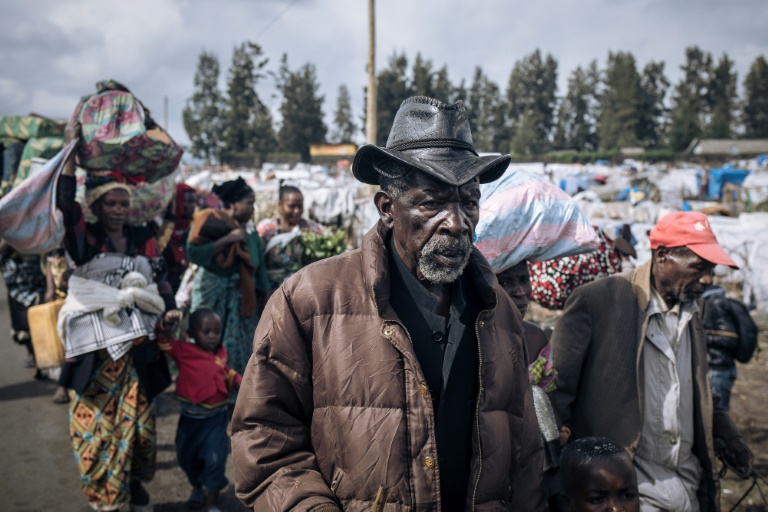
International calls mounted for rebels to lay down their arms in the eastern Democratic Republic of Congo, where a lull was reported on the frontlines Saturday after several days of intense fighting.

Kenya’s former leader Uhuru Kenyatta, who is mediating in the crisis, said Rwandan President Paul Kagame was ready to help in pushing the resurgent M23 militia to cease fire and pull back from captured territory.

Kenyatta is the East African Community’s “facilitator” in efforts to restore peace and security in the mineral-rich east of the impoverished country where many armed groups are active.

The largely Congolese Tutsi M23 militia has seized swathes of territory across North Kivu and edged towards the region’s main city of Goma in combat that has displaced tens of thousands of people.

The fighting has also reignited regional tensions, with the DRC accusing its much smaller neighbour Rwanda of backing the M23, something that UN experts and US officials have also pointed to in recent months.

“Kenyatta, in discussion with President Kagame, agreed on the need for an immediate ceasefire,” Kenyatta’s office said late Friday after a phone call between the two men.

“President Kagame also agreed to assist the EAC facilitator to urge the M23 to ceasefire and withdrawal from captured territories,” it said in a statement in English.

Kigali denies supporting the M23, while accusing Kinshasa of colluding with the FDLR, a former Rwandan Hutu rebel group established in the DRC after the 1994 genocide of mainly Tutsis in Rwanda.

– ‘No to Rwandan aggression’ –

For some Congolese, Kenyatta’s statement about Kagame was a form of acknowledgement that Rwanda could indeed influence the M23.

“At last, Paul Kagame admits that his country is attacking the DRC!” lawmaker Solange Masumbuko said on Twitter.

Demonstrations against Rwanda and in support of the Congolese armed forces (FARDC) were staged on Saturday in several cities including Kinshasa and Bukavu in the east, with marchers chanting: “No to Rwandan aggression.”

The United States, along with the Belgian, British and French envoys for the Great Lakes region also called Friday for the M23 to pull back immediately and cease hostilities.

They said in a statement that the resumption of violence since October 20 “undermines peace efforts and has caused further insecurity and significant human suffering”.

They called on all parties to participate in a new round of peace talks scheduled for next week in Nairobi under EAC auspices, adding: “”All support to non-state armed actors must stop, including external support to M23.”

Over 120 armed groups are active across eastern Congo, many of them a legacy of regional wars that flared at the turn of the century. 

– ‘Humanitarian catastrophe’ –

The M23 first leapt to prominence 10 years ago when it captured Goma in 2012, before being driven out and going to ground. 

But it re-emerged late last year, claiming Kinshasa had failed to honour a pledge to integrate its fighters into the army, among other grievances.

Kenyatta visited eastern Congo earlier this week, saying there was a “humanitarian catastrophe” unfolding. “There is nothing that can be gained through the barrel of a gun,” he told reporters. 

On Friday, he also spoke by phone with UN Secretary General Antonio Guterres and appealed for the United Nations to enhance humanitarian assistance to those displaced by the fighting, his office said.

Kenya is sending about 900 troops to the DRC as part of a joint EAC force set up to help restore security, with a first batch of soldiers arriving a week ago.

Several civilian and military sources reported a relative calm on the various frontlines Saturday, although one civil society representative in Kibumba, about 20 kilometres (12 miles) north of Goma said there had been looting there and blamed Rwandans.

In an incident on the tense border early Saturday, the Rwandan military said an “unidentified soldier believed to be from the FARDC” crossed the frontier “and started shooting at Rwanda Defence Force guard towers”.

“He was shot dead by RDF patrol before causing any casualties,” it added.

Congolese officials said the identity of the dead man was not known, but that no Congolese soldier on duty in the area had been reported missing.

Climate fund breakthrough offers 'hope' at UN COP27 talks

COP27 host Egypt scrambled to salvage UN climate talks Saturday with the European Union and Pakistan signalling a breakthrough over the contentious issue of “loss and damage” funding for climate vulnerable nations.  

Nearly 200 countries’ representatives have gathered at the COP27 in Egypt for two weeks with the aim of driving forward action to fight climate change as the world faces a worsening onslaught of weather extremes.

But the talks stalled over the terms under which wealthy polluters provide “loss and damage” funding for countries wracked by climate disasters, as well as over ratcheting up ambition in tackling global warming.

After the European Union roundly rejected a document shown by Egypt overnight because of concerns it was weak on curbing emissions, a source from the bloc said at least the loss and damage issue was “agreed” as far as it was concerned. 

A European source confirmed “a deal has been reached on loss and damage which targets the fund to vulnerable countries”.

The agreement was still subject to confirmation at a closing meeting. 

Pakistan’s Climate Minister Sherry Rehman said she was “hopeful of a positive outcome” on loss and damage, with last details still being worked out to get the final agreement over the line.

She said a deal would be the culmination of a 30-year campaign by developing countries. 

“If that happens today, that will be a historic reminder to vulnerable people all over the world that they have a voice and that if they unite… we can actually start breaking down barriers that we thought were impossible,” she told AFP. 

Pakistan — struck by devastating heat waves and floods this year — chairs the G77 and China bloc of 134 developing nations, which has campaigned strongly for a fund for loss and damage to be agreed at COP27.

With around 1.2C of warming so far, the world has seen a cascade of climate-driven extremes in recent months, shining a spotlight on the plight of developing countries faced with escalating disasters, as well as an energy and food price crisis and ballooning debt. 

The World Bank has estimated the Pakistan floods alone caused $30 billion in damage and economic loss. 

– Temperature check –

But with countries continuing to raise concerns over ambitions on cutting emissions and tackling global warming, the outcome of the climate talks remained uncertain. 

An informal coalition of “high ambition” countries has called for strong language on cutting emissions, moving away from planet-heating fossil fuels and to reaffirm the aspirational goal of limiting global warming to 1.5 degrees Celsius from pre-industrial levels.

Scientists say this is a far safer guardrail against catastrophic climate impacts, with the world currently far off track and heading for around 2.5C of warming under current commitments and plans.

Colombian Environment Minister Susana Muhamad said to be “viable” the climate talks would need both a loss and damage fund and a commitment to 1.5C with clear signals that the world was not “going back”.  

Tom Evans of the think tank E3G said a draft document covering ambitions for curbing planet-heating emissions is “a copy-paste” of the agreement made at Glasgow, without building on the agreement made a year ago. 

Earlier, the EU indicated it was willing to walk out of the negotiations altogether over the issue.

European Commission Vice President Frans Timmermans warned that if not enough is done to slash emissions and keep 1.5C alive, “there is no amount of money on this planet that will be able to address the misery that will occur through natural disasters, etc. that we’re already seeing”.

– ‘Fragile’ first –

A draft decision document on creating a specific loss and damage fund was published by the Egyptian presidency on Saturday. 

It takes some language from three earlier proposals — from the EU, Britain and G77 — and appears to kick some of the thornier issues, particularly over the sources of funding, into next year. 

“The draft decision on loss and damage finance offers hope to the vulnerable people that they will get help to recover from climate disasters and rebuild their lives,” said Harjeet Singh, head of global political strategy at Climate Action Network International.

An agreement on loss and damage would mark a major shift for wealthier nations, which have long resisted the idea of loss and damage over fears of open-ended liability. 

The EU has called for the fund to prioritise the most climate-vulnerable countries as recipients.

They also said the money should come from a “broad funder base” — code for countries including China and Saudi Arabia that have become wealthier since they were listed as developing nations in 1992.

China’s envoy Xie Zhenhua told reporters Saturday that the fund should be for all developing countries. 

However, he added: “I hope that it could be provided to the fragile countries first.” 

Rwanda forces kill 'soldier' on DR Congo border

A man wearing a Congolese military uniform was killed by Rwandan troops early Saturday after he crossed the volatile border and started firing at local forces, the Rwandan military said.

The incident occurred at about 1 am (2300 GMT Friday), the Rwanda Defence Force said, amid heightened tensions between Kigali and Kinshasa over the conflict in the east of the Democratic Republic of Congo.

The RDF said on Twitter that “an unidentified soldier believed to be from the FARDC (DR Congo armed forces)” crossed the border “and started shooting at Rwanda Defence Force guard towers”.

“He was shot dead by RDF patrol before causing any casualties,” it added.

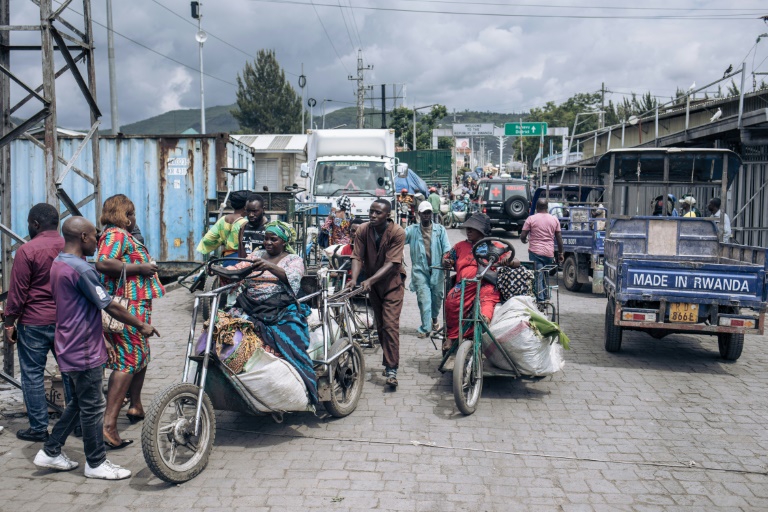
The shooting took place on the Rwandan side of the so-called “Petite Barriere” border post, one of two linking the main eastern DRC city of Goma and Gisenyi in Rwanda.

Relations between the two neighbours are strained over Kinshasa’s charges that Kigali backs the M23 rebel group, which has been capturing swathes of territory in the eastern DRC in fighting that has sent thousands of people fleeing.

The border area was calm on Saturday after the shooting incident and people were continuing to go about their daily lives.

AFP journalists saw a team from the Expanded Joint Verification Mechanism, a body which monitors the Great Lakes area and investigates security incidents, in no-man’s land between Rwanda and DRC.

Congolese officials said the identity of the dead man was not known, but that no Congolese soldier on duty in the area had been reported missing.

“There was a lot of gunfire during the night,” said one local resident, Grace Mbala. “We were scared, we thought it was the M23 coming back.”

On Friday, Kenya’s former president Uhuru Kenyatta — who is mediating in the conflict — said Rwandan President Paul Kagame had agreed to help push for the M23 to cease fire and withdraw from captured territory.

The main frontline lies about 20 kilometres (12 miles) from Goma, while fighting is also under way near the Ugandan border and in Masisi to the west of the city.

burs-txw/cdw

Climate fund breakthrough offers 'hope' at UN COP27 talks

COP27 host Egypt scrambled to salvage UN climate talks Saturday with the European Union signalling a breakthrough over the contentious issue of “loss and damage” funding for climate vulnerable nations.  

Nearly 200 countries’ representatives have gathered at the COP27 in Egypt for two weeks with the aim of driving forward action to fight climate change as the world faces a worsening onslaught of weather extremes.

But the talks stalled over the terms under which wealthy polluters provide “loss and damage” funding for countries wracked by climate disasters, as well as over ratcheting up ambition in tackling global warming.

After the European Union roundly rejected a document shown by Egypt overnight, a source from the bloc said at least the loss and damage issue was “agreed” as far as it was concerned. 

A European source confirmed “a deal has been reached on loss and damage which targets the fund to vulnerable countries”. 

A draft document on creating a specific loss and damage fund was published by the Egyptian presidency on Saturday. 

It takes some language from three earlier proposals — from the EU, Britain and the G77 and China bloc of 134 developing nations — and appears to kick some of the thornier issues, particularly over the sources of funding, into next year. 

“The draft decision on loss and damage finance offers hope to the vulnerable people that they will get help to recover from climate disasters and rebuild their lives,” said Harjeet Singh, head of global political strategy at Climate Action Network International.

– Temperature check –

Earlier, European Commission Vice President Frans Timmermans said the EU would “rather have no result than a bad result” and was willing to walk out of the negotiations altogether.

The EU wants COP27 to have strong language on cutting emissions and to reaffirm the aspirational goal of limiting global warming to 1.5 degrees Celsius from pre-industrial levels.

Scientists say this is a far safer guardrail against catastrophic climate impacts, with the world currently far off track and heading for around 2.5C of warming under current commitments and plans.

“We are not here to produce papers, but to keep the 1.5C target alive,” said German Foreign Minister Annalena Baerbock. 

The Egyptian COP27 presidency also released a new draft final statement that states the need to accelerate “efforts towards the phasedown of unabated coal power and phase-out of inefficient fossil fuel subsidies”.

And another document was released specifically covering ambitions for curbing planet-heating emissions. 

On the need to be more ambitious in slowing the rise in global temperatures, Tom Evans of the think tank E3G said it is “a copy-paste” of the agreement made at Glasgow without building on the agreement made a year ago. 

– Make or break –

Many developing countries see the creation of a loss and damage fund at this meeting as a defining issue of the talks.  

The G77 and China bloc called for the immediate creation of such a fund at COP27, with operational details to be agreed later.

A counter proposal from the EU called to prioritise the most climate-vulnerable countries as recipients.

They also said the money should come from a “broad funder base” — code for countries including China and Saudi Arabia that have become wealthier since they were listed as developing nations in 1992.

Earlier, Timmermans warned that if not enough is done to slash emissions and keep 1.5C alive, “there is no amount of money on this planet that will be able to address the misery that will occur through natural disasters, etc, that we’re already seeing,” he said.

Under the 2015 Paris Agreement, countries agreed to limit global warming to “well below” 2C and preferably 1.5C. 

This more ambitious 1.5C target was embraced last year in Glasgow, with countries agreeing to annually review their carbon reduction goals.

With around 1.2C of warming so far, the world has seen a cascade of climate-driven extremes in recent months — from floods in Pakistan and Nigeria to heatwaves and droughts across the world.

That has shone a spotlight on the plight of developing countries faced with escalating disasters, as well as an energy and food price crisis and ballooning debt. 

The World Bank has estimated the Pakistan floods alone caused $30 billion in damages and economic loss. Millions of people were displaced and two million homes destroyed.

COP27 participants have criticised Egypt’s handling of the talks, which have gone far into overtime. 

Crunch climate talks teeter on the edge

UN climate talks were thrown into disarray Saturday as the EU rejected a proposal by host country Egypt for lacking ambition on emissions cuts and warned it would rather leave with no deal than a bad one. 

Nearly 200 countries’ representatives have gathered at the COP27 in Egypt for two weeks with the aim of driving forward action on climate change as the world faces a worsening onslaught of weather extremes.

But the talks have deadlocked over calls that wealthy polluters provide “loss and damage” funding for countries wracked by climate disasters, as well as over ambition in tackling global warming.

After negotiations stretched through the night following the last official day Friday, the European Union roundly rejected a draft document from Egypt.

European Commission Vice President Frans Timmermans said the EU would “rather have no result than a bad result” and was willing to walk out of the negotiations altogether.

But he added that the 27-nation bloc was still hoping for a good outcome.

The EU wants COP27 to have strong language on cutting emissions and to reaffirm the aspirational goal of limiting global warming to 1.5 degrees Celsius from pre-industrial levels.

“We are not here to produce papers, but to keep the 1.5C target alive,” said German Foreign Minister Annalena Baerbock.

Egyptian Foreign Minister Sameh Shoukry, however, said he was still hopeful of a “breakthrough” and defended his proposal. 

“The vast majority of the parties indicated to me they considered the text as balanced and that they constitute a potential breakthrough that can lead to consensus,” he said.

– ‘Unacceptable’ for EU –

Many developing countries see the creation of a loss and damage fund at this meeting as a defining issue of the talks.  

The EU has put forward a proposal to create such a fund — but has called for a broader set of donors and prioritising the most climate-vulnerable countries as recipients. 

Timmermans said he was “worried” about the direction the negotiations took overnight.

He warned that if not enough is done to slash emissions and keep 1.5C alive, “there is no amount of money on this planet that will be able to address the misery that will occur through natural disasters, etc, that we’re already seeing,” he said.

With around 1.2C of warming so far, the world has seen a cascade of climate-driven extremes in recent months — from floods in Pakistan and Nigeria to heatwaves and droughts across the world.

An official from the French energy transition ministry told AFP that the proposal from the Egyptian presidency, which has not been published officially, sought to undermine gains in emission reductions made last year at the Glasgow climate talks.

“This is unacceptable for France and for European Union countries,” she said, adding that the proposed decision text would remove an obligation of countries to regularly strengthen their national targets in order to meet the 1.5C goal.

– Egypt criticised –

Under the 2015 Paris Agreement, countries agreed to limit global warming to “well below” two degrees Celsius compared to the late 19th century. 

They also signed on to an aspirational goal of capping the rise in temperature to 1.5C, which scientists subsequently confirmed was a far safer guardrail against catastrophic climate impacts.

This more ambitious 1.5C target was embraced last year in Glasgow, with countries agreeing to annually review their carbon reduction goals.

COP27 participants have criticised Egypt’s handling of the talks, which have gone far into overtime with little sign of consensus on a daunting list of areas under contention. 

The G77 and China bloc of 134 developing countries launched an opening gambit on loss and damage this week, with a proposal to create a fund at COP27, with operational details to be agreed later.

A compromise response from the EU, proposed late Thursday, suggested a fund specifically for the most vulnerable nations, saying the money should come from a “broad funder base” — code for countries including China and Saudi Arabia that have become wealthier since they were listed as developing nations in 1992.

Britain and several other countries have circulated a new draft proposal document, seen by AFP and confirmed by a source close to the negotiations, which suggested the fund could be part of a range of “funding arrangements”.

Rich countries are also under pressure to finally fulfil promises to provide $100 billion a year to help developing countries green their economies and adapt to future impacts.

French-speaking bloc starts Tunisia summit focused on economy

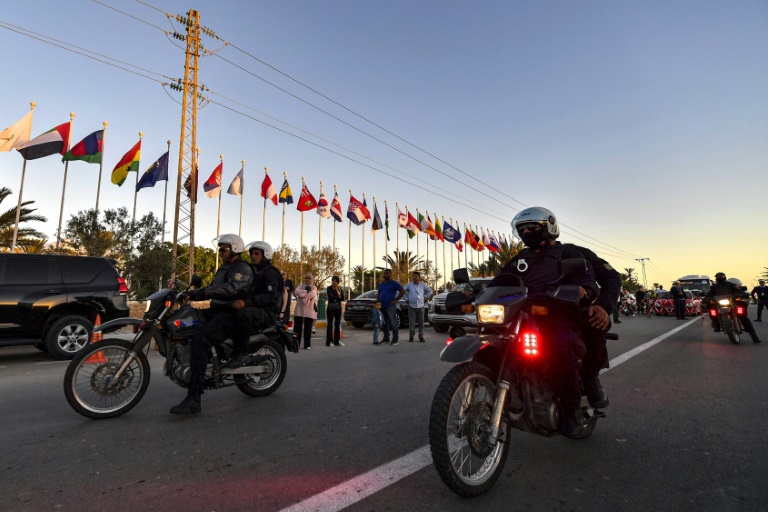
The world’s French-speaking countries gathered in Tunisia on Saturday for talks focused on economic cooperation, more than a year after President Kais Saied began an internationally criticised power grab.

While the two-day meeting and an associated economic forum will officially focus on technology and development, it is also an opportunity for Western and African leaders to discuss issues like Russia’s invasion of Ukraine.

French President Emmanuel Macron said the International Organisation of Francophonie (IOF) should be “a space of resistance and reconquest” and called for it to reclaim its role.

The bloc has been criticised for failing to use its clout to resolve crises.

Macron noted that in North Africa the use of French has declined over the past few decades.

“English is a new common language that people have accepted,” he said. But, he added, “(French) is the universal language of the African continent.”

Around 30 heads of state and government, also including Senegalese President Macky Sall and Canadian Prime Minister Justin Trudeau, are at the summit on the southern Tunisian resort island of Djerba.

Many African countries have decried what they see as a lack of international solidarity in the face of crises on their continent, in sharp contrast with European nations’ swift support for Kyiv.

The summit coincides with the final stage of UN climate talks in Egypt.

It also comes just days after leaders of the G20, which groups major developed and emerging economies, met in Indonesia for talks dominated by the war in Ukraine, which is an OIF observer state. 

Normally held every two years, the meeting was postponed in 2020 due to the Covid-19 pandemic. It was delayed again last year after Saied sacked the government and suspended parliament, later dissolving the legislature entirely.

French political researcher Vincent Geisser said hosting the summit is a success for Saied, who welcomed a string of leaders on a red carpet Saturday morning.

Geisser said the meeting would help Saied “leave his isolation — at least temporarily” after Canada, France and other developed nations last year called on Saied to restore “constitutional order”.

– Economic cooperation –

The summit will belatedly celebrate the 50th anniversary of the now 88-strong group whose members, such as Armenia and Serbia, are not all French-speaking.

The world’s French-speaking community is around 321 million-strong, and is expected to reach 750 million in 2050.

Secretary General Louise Mushikiwabo, of Rwanda, said the bloc is “more pertinent than ever” and able to bring added value to “most of the world’s problems”.

She told AFP she would ask member states to “redouble their efforts” in the face of a decline in the use of French in international organisations.

Mushikiwabo recalled that promoting “peace, democracy and human rights” is also part of the OIF’s mission.

Senegalese civil society figure Alioune Tine, however, said the group has shown itself to be “totally powerless in the face of fraudulent elections, third mandates (of African leaders) and military coups” in Mali, Guinea, Chad and Burkina Faso.

Summit coordinator Mohamed Trabelsi told AFP the meeting was “a recognition of the role of Tunisia in the Francophone space, and of its regional and international diplomacy”.

It is also an opportunity to “strengthen economic cooperation”, Trabelsi said.

But an official from OIF heavyweight Canada said Ottawa wanted to echo “concern” over “democratic participation” following Saied’s power grab in the only democracy to have emerged from the Arab Spring uprisings more than a decade ago.

Tunisia is confronted by a deep economic crisis which has pushed a growing number of its people to try to reach Europe.

Seeking to draw delegates’ attention to the issue, hundreds of protesters tried Friday to highlight the disappearance of 18 Tunisians aboard a boat that set out in September. 

Police prevented them from reaching Djerba.

Close Bitnami banner
Bitnami