Africa Business

From Obiang to Putin: longest-serving heads of state

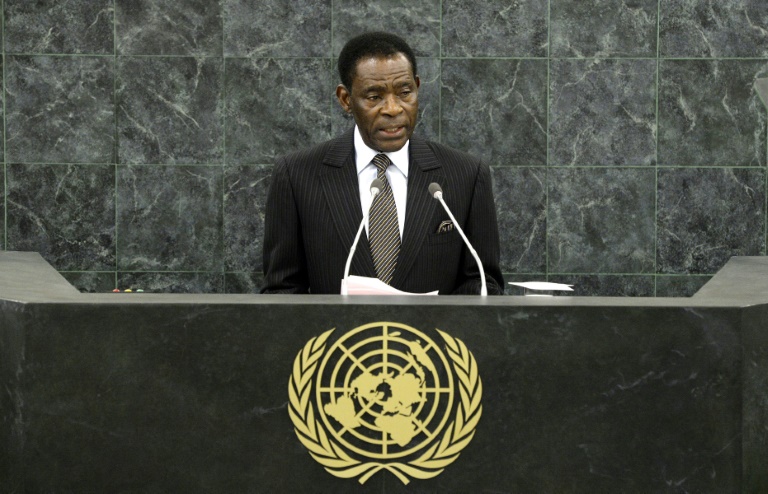
Equatorial Guinea’s President Teodoro Obiang Nguema Mbasogo, who is seeking a sixth term in elections on Sunday, is the world’s longest-serving president, having spent 43 years in power.

Here are the other longest-serving non-royal heads of state.

– 40 years – 

Cameroon has lived through 40 years of the largely unchallenged hardline rule of President Paul Biya, the world’s oldest head of state at 89.

Openly talking about succession is taboo even for his closest supporters, and Biya has overseen a ruthless crackdown on dissent since his highly contested re-election in 2018.

– 30 years and over –

In Congo-Brazzaville, Denis Sassou Nguesso has been in power for 38 years, albeit not uninterruptedly. He was president from 1979 to 1992, then returned to office in 1997 after a civil war and remained in charge ever since, changing the constitution to allow him to seek a fourth term in March.

In Cambodia, strongman ruler Hun Sen has ruled the kingdom for 37 years, making him Asia’s longest-serving leader.

Uganda’s Yoweri Museveni has led the central African country for 36 years, and was re-elected to a contested sixth term in 2021.

Iran’s Ayatollah Ali Khamenei has been supreme leader of the Islamic republic since the death of Ayatollah Khomeini 33 years ago.

And Tajikistan’s Emomali Rakhmon, a former collective farm boss who came to power shortly after the collapse of the Soviet Union, has had a firm grip on his poor, mountainous country for 30 years.

– 20 years and over – 

Former rebel leader Isaias Afwerki has been president of the Horn of Africa nation of Eritrea for 29 years, since independence in May 1993. 

Belarus President Alexander Lukashenko, another former collective farm boss, has used Soviet-style repression to remain in power in Ukraine’s neighbour for 28 years.

Djibouti’s President Ismail Omar Guelleh, who was re-elected to a fifth term last year, has been leader of the small maritime hub, which styles itself the “Dubai of Africa”, for 23 years.

Also totalling 23 years to date is Russian President Vladimir Putin.

Putin became prime minister in August 1999, then president the following year and served two terms before swapping jobs with prime minister Dmitry Medvedev in 2008, only to reclaim the role of Kremlin leader in 2012. He was re-elected in 2018.

Rwandan President Paul Kagame, leader of the rebel force that ended the country’s 1994 genocide, has been in power for 22 years. In 2015 he changed the constitution to allow him potentially to rule until 2034.
Teodoro Obiang, Equatorial Guinea's iron-fisted ruler

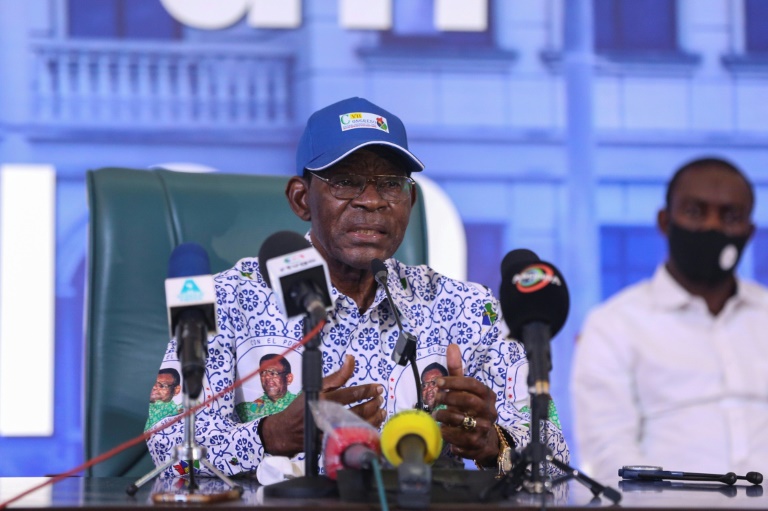
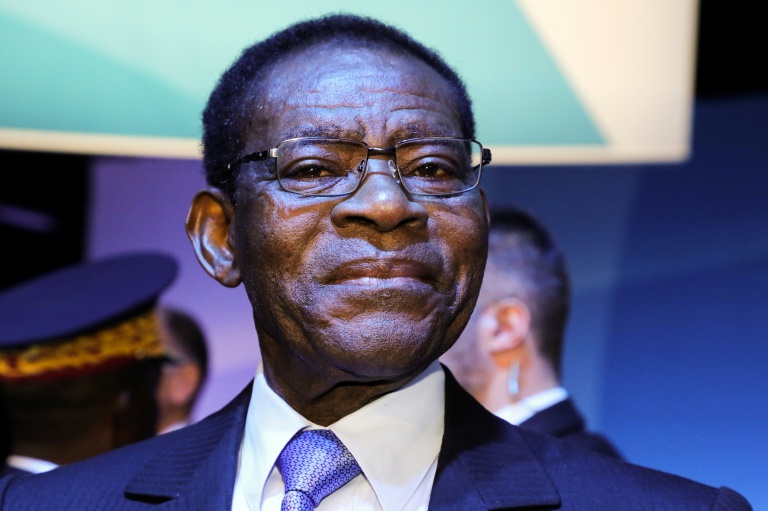
Poised to win a sixth term in presidential elections on Sunday, Teodoro Obiang Nguema Mbasogo has ruled oil-rich Equatorial Guinea since August 1979, overseeing a regime notorious for crushing dissent and fearing coups.

The 80-year-old’s 43 years in power are the longest of any leader alive in the world today, with the exception of monarchs.

He seized power from Francisco Macias Nguema, who in 1968 had become Equatorial Guinea’s first president upon independence from Spain and later declared himself president for life. Macias — Obiang’s uncle — was executed by firing squad two months after the coup.

Obiang’s opponents say that under his iron-fisted, hermetic tenure, the country has become the “North Korea of Africa”.

The regime’s ruthlessness is regularly condemned by rights watchdogs, who have documented mass and arbitrary arrests, dissidents held in nightmarish prison conditions and frequent sweeps against suspected plotters.

In a country where there is just a single authorised opposition party, Obiang exercises near-total political control. 

In 2016, he was re-elected with 93.7 percent of the vote. In the legislature, which on Sunday will also be re-elected, his Democratic Party of Equatorial Guinea (PDGE) held 99 of the 100 seats in the outgoing lower house, and all 70 seats in the senate.

– Son in the wings –

Obiang’s son, Teodoro Nguema Obiang Mangue, known as Teodorin, is widely seen as his successor, and has ascended the ranks to the position of vice president today.

In an interview ahead of the 2016 vote, the elder Obiang told the French-language Jeune Afrique magazine that this would be the last time he would run.

“I have been in power for too long, but the people want me to be their president,” he said.

Asked whether Teodorin was being groomed for power, he said: “Equatorial Guinea isn’t a monarchy… but if he’s got talent, there’s nothing I can do.”

Speculation that he would hand over the reins in the upcoming vote gained pace as his public appearances became rarer.

But those expectations were quashed after Teodorin was enveloped in scandals abroad over assets suspected to have been acquired illegally.

France, Britain and the United States have ordered him to forfeit millions of dollars in assets, from mansions to luxury cars, while France also handed him a three-year suspended sentence and a fine of 30 million euros (dollars).

The storm, coinciding with a downturn in oil revenue and the economic blow inflicted by Covid, may have prompted the elder Obiang’s inner circle to advise against leadership change.

The PDGE unanimously chose Obiang as its candidate “because of his charisma, his leadership and his political experience”, Teodorin wrote on Twitter. The party’s election slogan, seen universally on posters and state TV, is “continuity”.

– Fear of coups –

Obiang graduated from military school while the country, as Spanish Guinea, was still under the rule of Spain’s fascist leader, General Francisco Franco.

He then held a string of important jobs, including as head of the notorious Black Beach prison — a place of “living hell,” in the words of Amnesty International.

His violent path to power has bequeathed a deep fear of coups.

His bodyguard comprises soldiers who are members of his clan, but — for additional security — he has a close-protection unit who are reputedly Israelis. Zimbabweans and Ugandans have been brought in to help guard the presidential palace.

Obiang says he has foiled at least 10 attempted coups and assassinations during his long spell in power, often blaming dissidents living in exile or “foreign powers”. 

The authorities have closed the borders ahead of the elections to thwart suspected plotters.

Obiang has been buttressed by the discovery of oil in territorial waters in the mid-1996.

The bonanza has turned Equatorial Guinea into Africa’s third richest country, in terms of per-capita income.

But the wealth is very unequally distributed — four fifths of the population of 1.4 million live below the poverty threshold according to World Bank figures for 2006, the latest available.

The country has a long-established reputation internationally for graft, ranking 172 out of 180 nations on Transparency International’s 2021 Corruption Perceptions Index.

UN climate talks go into overtime

UN climate talks that were supposed to end Friday were extended by a day in an effort to break a deadlock over creating a fund for developing countries devastated by the fallout from global warming.

Representatives from nearly 200 countries have gathered at the COP27 in Egypt for two weeks with the aim of driving forward action on climate change as the world faces a worsening onslaught of extreme floods, heat waves and droughts.

But wealthy and developing nations were still struggling to find common ground on creating the fund and on a host of other crucial issues with only hours before the summit in the Red Sea resort of Sharm el-Sheikh was due to end.

“Today we need to shift gears again, time is not on our side,” Egyptian Foreign Minister Sameh Shoukry, who chairs the COP27 talks, told delegates.

“I remain committed to bringing this conference to a close tomorrow in an orderly manner.”

The daunting list of urgent tasks includes finding agreement — and funds — for the emissions cuts needed to limit average warming to 1.5 degrees Celsius from pre-industrial levels, which scientists say is a safer guardrail to avoid the most dangerous impacts.

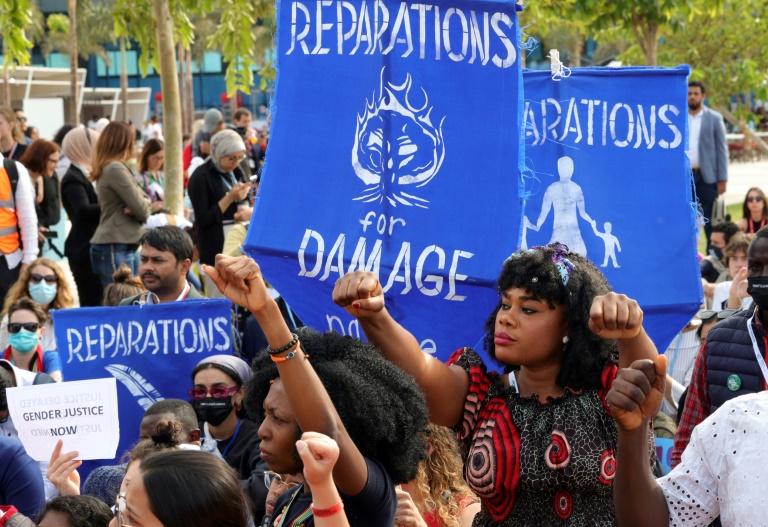
For many developing countries — and small island states threatened by sea level rise — the defining issues at the conference is money for the “loss and damage” caused by climate change.

A cascade of climate-driven extremes in recent months — from floods in Pakistan and Nigeria to heatwaves and droughts across the world — have shone a spotlight on the ferocious impacts of a warming world for developing nations that are also struggling with debts and surging inflation.

In a bid to find a compromise, the European Union proposed late Thursday the creation of a fund for the most vulnerable nations but warned it was its final offer.

The EU proposal indicated that the bloc, previously fearful of open-ended climate damages liability, has “shifted significantly”, said Rachel Cleetus, lead economist at the Union of Concerned Scientists’ climate programme. 

But she said all eyes were now on the United States and China, the world’s top two polluters, fresh from a thaw in their climate relations after a meeting between Presidents Joe Biden and Xi Jinping earlier this week in Bali. 

“It’s crunch time,” Cleetus told AFP. “There’s no time anymore for the US to sit on the sidelines. They have to come out with what their position is to show that they’re being constructive.” 

Cleetus added that China should also make its position clear, particularly on the issue of whether it would contribute to such a fund and pledge not to draw from it. 

“We think China and the US can really unlock this in these last 24 hours,” Cleetus said. 


– ‘This is our final offer’ –

Earlier in the week, the G77 and China bloc of 134 developing countries proposed creating the loss and damage fund at the COP27 meeting, with other details to be agreed later.

European Commission Vice President Frans Timmermans told reporters on Friday that the EU offer had two “very important” conditions that differ from the G77 proposal.  

He said the fund should be for “the most vulnerable” nations and the money should come from a “broad funder base” — code for countries including China that have become wealthier since they were listed as developing countries in 1992.

“I have to say this is our final offer,” Timmermans said. “This is where the (EU) member states can find an agreement and I have to thank all of them for for the courage to go this far. But this is it.”

Timmermans said he had explained the EU proposal to US delegates who were “very interested in seeing” that reaffirming the need to step up efforts to cut emissions to reach the 1.5C target be reflected in the conclusions.

Pakistan’s climate minister Sherry Rehman, whose country chairs G77+China, expressed a willingness to “working with each other to find common ground”.

“It is up to all of us to steer a path that sends a powerful message from this COP that the implementation COP actually turned into a historic actionable COP,” she said.

She said the G77 had zeroed in on one of the options put forward in a draft loss and damage text “with a few changes that have been submitted and we are working on with each other”.

Developing nations have been relatively united in calling for the loss and damage fund at this COP. Some small island states said they had discussed walking out if they do not see progress. 

But the AOSIS coalition of small island states has also indicated it wants to see China, India and other major polluters contribute.

Italy take on world champions South Africa hoping for another big scalp

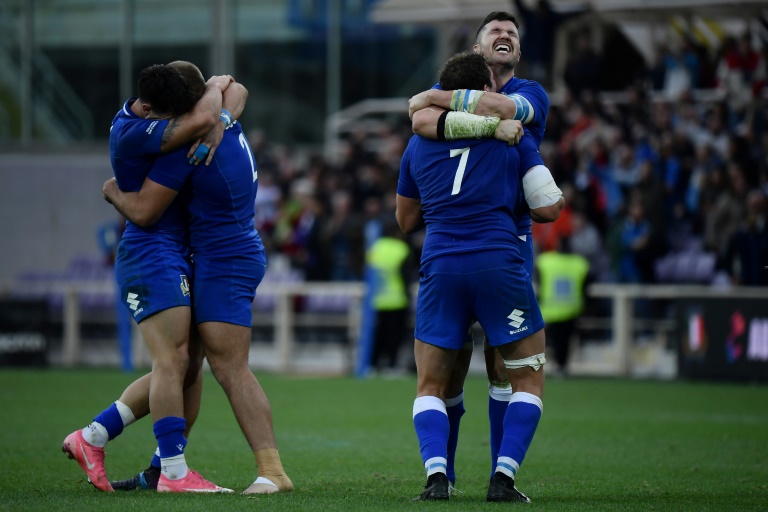
Resurgent Italy host sliding South Africa in Genoa on Saturday as the nation in form and with coach Kieran Crowley insisting the Azzurri have a chance against the World Champions.

After Italy beat Australia last weekend Crowley said his team wants “to get credibility and respect”.

They have South African attention.

“They are a good team and they’ve had good wins this year, so we have to make sure we pitch up with the right mindset,” said veteran loose forward Kwagga Smith who will be on the South African bench.

After a record 32 consecutive internationals losses, Italy have won five out of their last six. That run might include wins over Romania and Portugal and a loss to Georgia but it started with a first victory over Wales in Cardiff and includes another statement result,  a first victory over Australia anywhere, by a point in Florence last Saturday.

“We achieved a historic result against Australia, but we are not satisfied,” said Crowley, as he named his team. “The following day the focus was immediately shifted to South Africa.”

The Springboks are in one their habitual mini-crises. They have narrowly lost the first two matches on their autumn European visit, to two top-ranked teams Ireland and France, while director of rugby Rassie Erasmus has been banned, once more, for blaming referees. 

Crowley, a 1987 World Cup winner with the All Blacks, can dream against the world champions.

“It will be a very intense match from a physical point of view,” he said. “We continue on this path proving to be competitive in every game.”

He was echoing a theme from his post-match press conference after beating Australia.

“Our biggest focus has been that we had to create an identity, we had to get credibility and respect and you only get that by the way you play,” Crowley said in Florence.

– ‘Right track’ –

Crowley has made two changes in the front row bringing in prop Pietro Ceccarelli and hooker Giacomo Nicotera.

Italy have beaten South Africa before, in November 2016, although only Tommaso Allan, who started on the bench that day, and Edoardo Padovani, on the bench this time, survive. 

“They defeated Wales away in the Six Nations and tested Scotland as well, so we are under no illusions as to the challenge that lies ahead,” said South Africa coach Jacques Nienaber. 

“Italy have shown before what a force they can be at home by defeating the Boks 20-18 in Florence, and they will draw confidence from that as well.” 

South Africa will field five survivors of that defeat, although they have lost two others this week. Lock Lood de Jager has returned home injured and the 2019 world player of the year Pieter-Steph du Toit is banned for three games after his red card against France

“Their forwards are physical, they have a skillful backline and a good defensive system, and they play with a lot of confidence,” said Nienaber.

Jasper Wiese returns from concussion to start at number 8. Locks Salmaan Moerat and Marin Orie come in as Franco Moster moves to flanker in place of du Toit. Andre Esterhuizen starts at inside centre.

“We believe we are on the right track after coming close against Ireland and France, and if we can produce a strong showing up front and be a little more accurate in our execution, we know we can turn things around on tour,” said Nienaber.

Nigeria's largest pool of voters divided before election

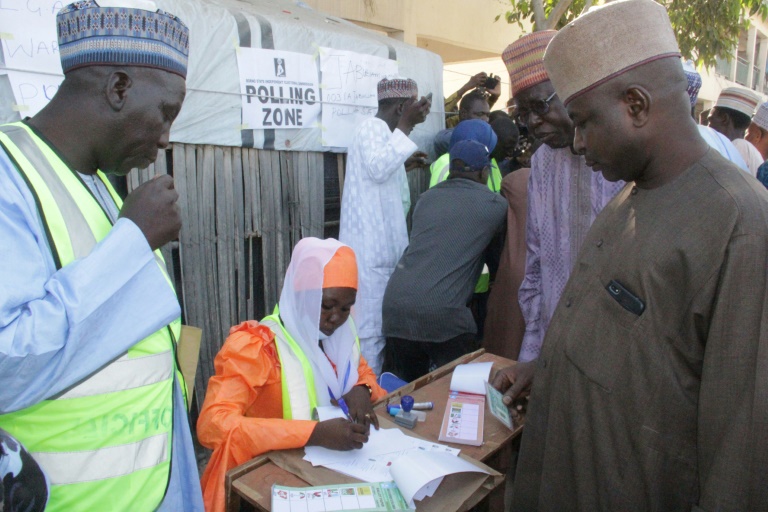
Abacha Muyam and Babakura Alhaji Isa, friends from Bama in the northern Nigerian state of Borno, both voted for President Muhammadu Buhari in their country’s elections in 2019. 

Now the 41-year-old and 27-year-old are at odds over who should succeed their champion in next February’s ballot.

Their disagreement symbolises much of the fragmented opinion in Nigeria’s northern states — a crucial electoral battleground.

Megacity Lagos in the predominantly Christian south of the country has the most registered voters, but it is the mainly Muslim northern states that historically record higher levels of turnout.

Their support delivered the presidency to Buhari in the last two elections, but now voters and analysts say the region appears more splintered.

Sitting next to each other on a mat under a tree in Borno’s capital Maiduguri, Muyam said he would vote for Bola Tinubu of the ruling All Progressives Congress (APC) party, and Isa for Atiku Abubakar of the opposition Peoples Democratic Party (PDP).

Sixteen other candidates are running for the top job, including Peter Obi of the Labour Party (LP) and Rabiu Kwankwaso of the New Nigeria Peoples Party (NNPP).

“The north tends to vote along the same line,” Hakeem Baba-Ahmed, spokesman of an influential socio-political organisation, the Northern Elders Forum, told AFP.

But “it’s not substantially committed” yet, he said. “We still have a long way to go.”

That means, he said, the region was open to candidates “who want to convince as many of us as possible that they are serious about our problems.”

– ‘Numbers game’ –

Elections in Africa’s most populous nation are often tainted by ethnic and religious rhetoric, reflecting numerous faultlines.

But the choice of candidates today is more complex than ever before, and predicting the outcome of next February is a bold gamble.

Tinubu, for instance, is Muslim like most northerners, but he is from the south, while Abubakar is from the north but his party is more popular in the south.

Kwankwaso could win Kano state which has had the largest pool of voters in the past, while Obi is popular in the south and generally with young people. Both are expected to get votes that would otherwise go to Abubakar’s PDP.

“Some people are saying (his party) NNPP doesn’t have the needed national spread to win… Whatever these people say, Kwankwaso is my choice and I’ll give him my vote,” said Kano-based truck driver Hassan Muhammad.

“For the eight years he was governor, Kwankwaso brought so much development,” he added.

While politicians “can’t win without the north” Baba-Ahmed cautioned, “it’s also not enough.”

Candidates need to win both 50 percent of total votes and 25 percent of ballots in two-thirds of the country’s 36 states.

“Nigerian presidential elections are a numbers game,” analysts Okechukwu Ibeanu and Idayat Hassan from the Center For Democracy and Development (CDD) wrote in an August report.

“Presidential tickets are developed with these national and regional calculations in mind,” the analysts said.

“Alliances, even between some of the four leading parties, remain possible as the campaign period unfolds.”

– ‘Too old’ –

In the northeast, some voters will support Tinubu because they back the APC and because of his running mate, Kashim Shettima, a former governor of Borno state.

Gambo Saleh, a 48-year-old who sells tyres on a busy street of Maiduguri, is among those backing Tinubu.

“His running mate is from Maiduguri so we will get a better government from them,” said Saleh.

“He (Tinubu) built Lagos to be a better city, and I think he will do it also in Nigeria, even if he is a southerner.”

At the University of Maiduguri, opinions are more mixed. 

“Tinubu is old! We don’t think he will do much,” said Zahra Abba, a 22-year-old biology student. “I would like to vote Atiku (Abubakar).”

At 75, Abubakar is five years older than his rival but many Nigerians worry about the rumours of Tinubu’s poor health.

Out of six students interviewed by AFP, three said they wouldn’t vote at all next year.

“The obstacle we are facing is that the leaders we have, they won’t give us our choice, even if we vote for our choice, there will be malpractice,” said computer science student Abdulrahman Ibrahim.

Past elections in Africa’s most populous country have been marred by violence and fraud.

Increased voter apathy and insecurity could also lower turnout in northern states.

In particular in the northwest, heavily armed criminal gangs could prevent people from voting and complicate the deployment of election officials and materials.

The Abuja-based think tank CDD has warned that “a widely disrupted election in the northwest raises challenges about acceptability of electoral outcomes.”

Fraught UN climate talks enter endgame with EU 'final offer'

UN climate talks entered their last day Friday with rich and developing nations deadlocked over creating a fund for countries devastated by the impacts of global warming — and the EU warning its offer was final. 

Representatives from nearly 200 countries have gathered at the COP27 in Egypt for two weeks with the aim of driving forward action on climate change as the world faces a worsening onslaught of extreme floods, heat waves and droughts.

The daunting list of urgent tasks includes finding agreement — and funds — for the emissions cuts needed to limit average warming to 1.5 degrees Celsius from pre-industrial levels, which scientists say is a safer guardrail to avoid the most dangerous impacts.

For many developing countries — and small island states most threatened by sea level rise — the defining issues at the conference is money for the “loss and damage” caused by climate change impacts.

A cascade of climate-driven extremes in recent months — from floods in Pakistan and Nigeria to heatwaves and droughts across the world — have shone a spotlight on the ferocious impacts of a warming world for developing nations that are also struggling with debts and surging inflation.

Disagreement over creating a specific loss and damage fund has threatened to derail the entire summit in the Red Sea resort of Sharm el-Sheikh, though negotiations could go into overtime through the weekend.

UN chief Antonio Guterres said late Thursday there was “clearly a breakdown in trust” between developed and emerging economies as he called for deal on loss and damage, warning that “the blame game is a recipe for mutually assured destruction”. 

– ‘This is our final offer’ –

Developing countries have pushed for COP27 to agree on creating the funding facility — an idea that has faced reluctance from richer polluters wary of liability.

The European Union, however, made an offer late Thursday to create a fund to help the most vulnerable countries that would be part of a “mosaic” of options for providing money from a range of sources.

That would potentially include China and other nations that have become wealthier since they were listed as developing countries in 1992.

“I have to say this is our final offer,” European Commission Vice President Frans Timmermans told reporters on Friday.

“This is where the (EU) member states can find an agreement and I have to thank all of them for for the courage to go this far. But this is it,” he said.

Earlier in the week, the 130-nation group known as G77+China issued a proposal to create the fund at the COP27 and agree on the nitty-gritty details at the next UN climate talks in Dubai in 2023.

But their offer stated that the fund would assist “developing nations” in broader terms than the EU’s proposal and be funded by developed nations.

Timmermans said the EU offer had two “very important” conditions: that the funds should be for “the most vulnerable” nations and the money should come from a “broad funder base” — code for countries including China.

– US silence –

A draft outline of positions on loss and damage published on the COP27 website late Thursday included some key elements of the main proposals on the issue, providing a starting point for negotiations to begin in earnest.

But a separate 10-page draft of the COP27 final statement released Friday morning only had a placeholder for a “funding arrangement responding to loss and damage” — signalling that nations had yet to agree on the final text.

It includes, however, a line reaffirming the aspirational goal of limiting warming to 1.5C, a key demand from the United States and European Union.

The United States, which had opposed a loss and damage mechanism in the past over concerns about liability, has said it was willing to discuss the issue, but it has yet to publicly comment on the EU proposal.

Timmermans said he explained the EU proposal to US delegates who were “very interested in seeing” that reaffirming the need to step up efforts to cut emissions to reach the 1.5C target be reflected in the conclusions.

“We’ve always fought together with the Americans to get strong language on mitigation because we all know if we don’t reduce our emissions, all the other efforts will come to nought,” he said.

E. Guinea's Obiang eyes sixth term after 43 years in power

Equatorial Guinea’s iron-fisted president, Teodoro Obiang Nguema Mbasogo, is eyeing a sixth term in office in elections on Sunday, extending a world-record 43 years in power.

Obiang, 80, seized power in August 1979, toppling his uncle, Francisco Macias Ngueme, who was then executed by firing squad.

Firmly suppressing dissent and surviving a string of attempted coups, he has remained at the helm of the oil-rich central African state ever since — a record for any leader alive today, excluding monarchs.

His extraordinary spell means that he is just the second president in Equatorial Guinea’s history since it gained independence in 1968 from Spain, its colonial power for nearly two centuries.

The upcoming vote will see Obiang in a race with two rivals, although few doubt the outcome. In 2016, he was re-elected with 93.7 percent of the vote.

Sunday’s presidential ballot was originally scheduled for April next year, but was brought forward to November 20, officially for cost reasons, so that it could be held at the same time with legislative, senatorial and local elections.

Pictures of Obiang and his Democratic Party of Equatorial Guinea (PDGE), the country’s single legal political movement until 1991, are splashed along every main street in the capital Malabo.

Opposition posters are frequently torn down or pasted over with a portrait of the president.

The PDGE’s slogan — “continuity” — dominates the state television TVGE, which gives live coverage to the president’s rallies and then replays them constantly.

– ‘Dictatorship’ –

The two other competitors are Andres Esono Ondo of the Convergence for Social Democracy (CPDS), the sole authorised opposition party, and Buenaventura Monsuy Asumu of the Social Democratic Coalition Party (PCSD), a historic ally of the PDGE.

Esono Ondo, who is running for the first time, has branded the regime a “dictatorship” and contended that if the elections were “free and transparent, I could win.”

“We need political, democratic change here,” he said. 

“There is much injustice here, the regime discriminates and the government governs only for the Obiang family.”

The CPDS suggested holding an election debate with Obiang but the idea was swept aside by the president’s son and campaign manager, Vice President Teodoro Obiang Nguema Mangue, widely known as Teodorin.

Obiang said he would not accept “debating with a party which isn’t even sure of being able to get one percent of the vote,” Teodorin said.

“Let him enjoy himself and debate with the goats,” he quipped.

Many people believe Teodorin is being groomed to succeed his father, and some had wondered whether the upcoming elections would be that moment.

But his image has been dented by a reputation for a jet-set lifestyle and scandals in western countries.

France, Britain and the United States have ordered him to forfeit millions of dollars in assets, from mansions to luxury cars, suspected to have been acquired illegally. In France, he was also handed a three-year suspended sentence and a fine of 30 million euros (dollars).

– Pre-election crackdown –

The runup to the elections has coincided with the closure of borders “to prevent the infiltration of groups who may try to destabilise the campaign,” and roundups of dissidents, accused of plotting attacks against western embassies and the homes of government ministers. 

In the outgoing legislature, the PDGE controlled 99 out of the 100 seats in the National Assembly, and all the seats in the Senate.

Oil wealth is very unequally distributed — four fifths of the population of 1.4 million live below the poverty threshold according to World Bank figures for 2006, the latest available.

The country has an entrenched reputation internationally for graft, ranking 172 out of 180 nations on Transparency International’s 2021 Corruption Perceptions Index.

DR Congo town set to 'disappear' as mines expand

“We’re screwed,” said Alphonse Fwamba Mutombo, standing on a plot of rubble overlooking an open-cast cobalt mine in Kolwezi, southeastern DR Congo. 

His had once been a thriving neighbourhood of neat houses and tree-shaded avenues.

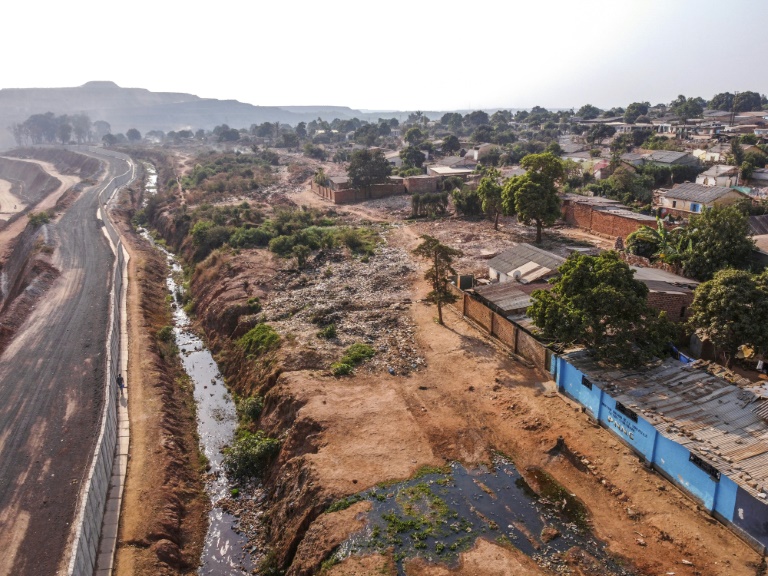
Today his cherished home is surrounded by the wreckage of demolished houses, separated from the sprawling pit by a concrete barrier.

The Chinese-owned mine wants to expand, and many of Mutombo’s fellow residents have taken buy-outs. 

Mutombo doesn’t want to leave. The 70-year-old is clinging on, hoping to secure a better deal.

“We live on top of minerals,” Mutombo said.

But he had no delusions about what ultimately awaited his neighbourhood: “It will disappear,” he told AFP. 

Kolwezi, home to more than half a million people, sits atop some of the world’s richest mineral reserves — a treasure trove of copper, cobalt and gold that provides the motor for DR Congo’s economy.

The city is already ringed by a moat of industrial mines, a sandy moonscape of enormous open pits, access roads and pylons.

But mining activity is increasingly edging inside the city itself, uprooting thousands of people who often complain of unfair treatment. 

Mining permits cover most of Kolwezi’s surface area, according to the Democratic Republic of Congo’s mining cadastre. 

– ‘Everyone’s gone’ –

Kolwezi was founded in 1937 by the then Belgian Congo’s mining monopoly.

Seven years after independence in 1960, the monopoly was nationalised, eventually becoming a giant called the Generale des Carrieres et des Mines, or Gecamines.

As mining in Kolwezi flourished in the subsequent years, the parastatal built neighbourhoods such as Mutombo’s Quartier Gecamines Kolwezi for its workers.

Gecamines’ production collapsed in the 1990s after decades of mismanagement, but many of the neighbourhood’s remaining residents still have ties to the firm.

“Everyone’s gone, we’re the ones who are left,” said Martin Tino Kolpy Kapenda, a retired Gecamines employee, standing on the plot of what was once his neighbour’s house.

Kapenda, 60, also wants more money from Compagnie Minière de Musonoi (COMMUS), the Chinese firm that owns the adjacent copper-cobalt mine.

Some of the remaining residents fear the money on offer won’t allow them to find similar-quality housing elsewhere.

Their district has reliable electricity and running water, a rarity in the DRC. 

About 2,000 people out of 38,000 have left the neighbourhood within the last six months, according to city figures seen by AFP. 

An official in the city administration, who spoke on condition of anonymity, said the entire district may disappear within three years. 

COMMUS is offering residents $7,500 to leave, the official said, although many of the remaining residents are asking for at least three times that amount. 

– Waiting for death –

A semi-abandoned housing estate several kilometres (miles) outside of Kolwezi has served as a warning to some about enticements offered to leave neighbourhoods opened up for mining. 

Luzanga Muteba, 78, accepted an offer in 2017 from Chinese firm Congo Dongfang International Mining (CDM) to leave his native Kasulo district. 

A portion of that neighbourhood was razed to make way for a cobalt mine. In surrounding houses, many residents have taken to digging in their gardens for minerals themselves.

CDM built 21 houses for displaced Kasulo residents, but they say the firm never finished the work. 

Muteba, wearing an oversized pinstriped shirt, said he once had a thriving bakery in Kasulo, but cannot replicate the business in his new location, which is relatively isolated.

There is also no running water or electricity, although pylons carrying power to nearby mines stretch over the housing estate. Only a few of the houses are now inhabited. 

“They have to come and finish the work,” said Muteba, pointing to fetid green puddles in a ravine, where he and other residents draw their water.

“They take our minerals and develop their country,” he added, noting that he was losing hope after petitioning the government several times, without success. 

“I wait only for death,” Muteba said. 

Shanghai-based Zhejiang Huayou Cobalt, which owns majority stakes in both COMMUS and CDM, did not respond to questions from AFP.

A senior figure in the local government, who asked for anonymity, told AFP he thought it was “inevitable” that Kolwezi would one day disappear under expanding mines.

“This is the mess we live in,” said the besuited official, with a sad smile. 

UN climate talks enter final day in deadlock

Talks at a UN climate conference enter their final day Friday, gridlocked by a make-or-break tussle between rich and developing nations over money for countries in the crosshairs of increasingly intense and costly impacts of global warming.

Representatives from nearly 200 countries have gathered at the COP27 in Egypt for two weeks with the aim of driving forward action on climate change as the world faces a worsening onslaught of extreme floods, heat waves and droughts.

The daunting list of urgent tasks includes finding agreement — and funds — for the emissions cuts needed to limit average warming to 1.5 degrees Celsius from pre-industrial levels, which scientists say is a safer guardrail to avoid the most dangerous impacts.

For many developing countries — and small island states most threatened by sea level rise — the defining issues at the conference is money for the “loss and damage” caused by climate change impacts.

A cascade of climate-driven extremes in recent months — from floods in Pakistan and Nigeria to heatwaves and droughts across the world — have shone a spotlight on the ferocious impacts of a warming world for developing nations that are also struggling with debts and surging inflation.

– ‘Not where we need to be’ –

But negotiations have been gridlocked by the issue, with developing countries unifying behind a call for COP27 to create a specific loss and damage fund — an idea that has faced reluctance from richer polluters wary of liability.

“We are not where we need to be in order to close this conference with tangible and robust outcomes,” said Sameh Shoukry, the COP27 president, late Thursday night as he urged delegates to act with “urgency”. 

In a proposal to delegates late Thursday, European Commission Vice President Frans Timmermans said the European Union was open to the creation of a fund to help the most vulnerable countries, favouring a “mosaic” of options for providing money from a range of sources.

That would potentially include China and other nations that have become wealthier since they were listed as developing countries in 1992.

Earlier at the meeting, the 130-nation group known as G77+China issued a proposal to create the fund at the COP27 and agree on the nitty-gritty details at the next UN climate talks in Dubai in 2023.

A draft outline of positions on loss and damage published later Thursday included some key elements of the main proposals on the issue, providing a starting point for negotiations to begin in earnest.

– ‘Blame game’ –

With the two-week conference officially due to wrap up on Friday but little progress made on loss and damage by late Thursday, negotiators in Egypt said the talks would likely go into overtime. 

UN chief Antonio Guterres said there was “clearly a breakdown in trust” between developed and emerging economies, after returning to the Red Sea resort of Sharm el-Sheik late Thursday from a meeting of G20 leaders in Indonesia.

Guterres called for an “ambitious and credible agreement” on loss and damage and financial support for vulnerable countries, including progress on an unmet pledge of $100 billion a year by 2020 from wealthy countries. 

“This is no time for finger pointing,” he said. “The blame game is a recipe for mutually assured destruction.” 

Film 'flips the angle' on iconic Thelonious Monk interview

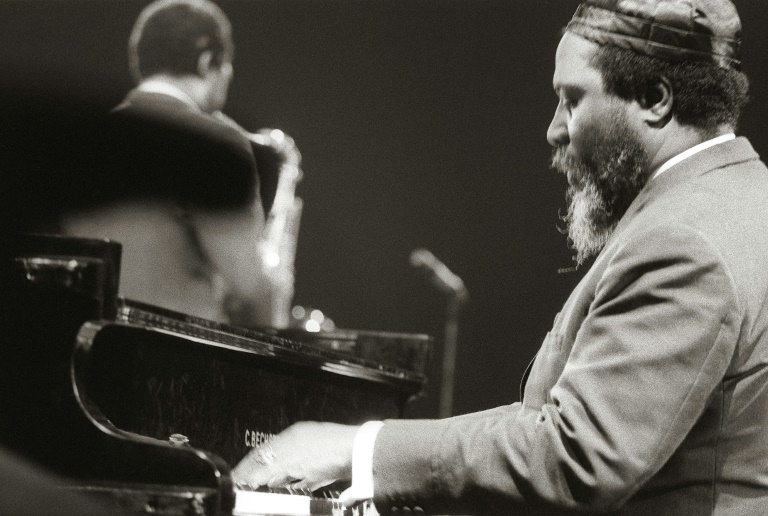
Half a century after jazz great Thelonious Monk appeared on a French television program, a new documentary revisits outtakes from the 1969 interview to cast light on the racism and exploitation of black musicians.

When Monk met fellow musician and French TV producer Henri Renaud at a studio in Paris, it was a chance for the renowned pianist and composer to promote his music in Europe. 

Previously unused footage from their interview features in “Rewind and Play”, a new documentary that French-Senegalese director Alain Gomis says “flips the angle” on the power dynamics between the men.

“I wanted to show the machine that manufactures points of view, which are anything but neutral — and how TV portrayed black musicians at that time,” he told AFP in an interview following his film’s screening at the Marrakech International Film Festival.

In his day, Monk was one of the United States’ most celebrated black musicians.

The film’s most revealing footage comes as he tells Renaud he believes he is being economically exploited.

“I was the star, people were coming to see it, but I wasn’t getting the money,” Monk says.

Visibly upset, Renaud tells his producer to delete the scene and asks the question again.

“I had no idea I’d made my popularity in France until I got over here,” Monk says, while seated at a piano.

He explains he only understood his fame when seeing his photo on the cover of a jazz magazine.

Despite that, he continues, he struggled to find musicians to play with.

“I was getting less money than anybody,” Monk says, chuckling. “That’s what happened.”

After translating the comments for the camera, Renaud says: “I think it’s better to erase this bit… it’s disparaging what he’s saying, best not to talk about it.”

When Monk begins to tell the story for a third time, Renaud asks him to talk about something else.

“It’s no secret, is it?” Monk asks.

“No, but it’s not nice,” Renaud responds.

As a pianist, Monk was a talented improviser and was credited with helping to develop the bebop style. He produced a string of hits in the jazz standards library, including “Round Midnight” — famously interpreted by Miles Davis and John Coltrane. 

But the interactions with Renaud are little short of cringeworthy.

– ‘Spitting in the soup’ –

Gomis, whose previous work “Felicite” won the Grand Jury Prize at the 2017 Berlin International Film Festival, offers a critique of how Renaud selected which footage to use.

“He builds an embarrassing, subjective representation of (Monk) and doesn’t let him break out of that framework,” Gomis said.

The film opens with Renaud leaning on a piano and introducing Monk, who sits at the keys sweating profusely and looking awkward.

“It’s like he’s saying, ‘Why are you spitting in the soup?’ (biting the hand that feeds). Throughout the interview, you can feel that condescension.” 

Gomis says Renaud reveals his privileged background when he asks incredulously why Monk put his piano in the kitchen.

Monk responds that it was the only place in the home that it would fit.

For a musician of his background, “putting a piano in a kitchen was not a fantasy,” Gomis said.

Monk was born in North Carolina in 1917 but grew up in New York’s San Juan Hill — a poor district that was later demolished and became Manhattan’s exclusive Upper West Side.

Gomis plans to make a full-length biopic on Monk and hopes “Rewind and Play”, due to hit French screens in 2023, will help “deconstruct” the exchange.

“We often think of the archive as objective testimony,” he said. “But it puts across the point of view of the one who makes it.”

Close Bitnami banner
Bitnami