Africa Business

W.Africa coastal states eye more cooperation over Sahel jihadism

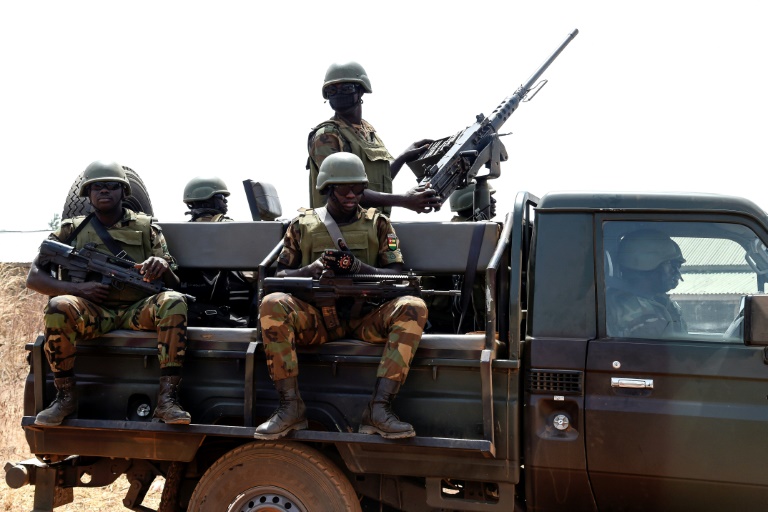
West African coastal states on Thursday held their first major talks on boosting cooperation against jihadist violence spilling over from the Sahel after more countries announced they would pull their peacekeepers out of Mali.

Gulf of Guinea neighbours Benin, Ghana, Ivory Coast and Togo are confronting increased risks from Islamic State-allied and Al Qaeda militants waging war over their northern borders in the Sahel.

As part of the so-called Accra Initiative, representatives of coastal states, the European Union and others met in the Ghanaian capital for talks on security and intelligence cooperation.

Ghana’s National Security Minister Albert Kan-Dapaah said collaboration was needed as the threat from extremism is “more widespread than previously thought and transcending borders.”

“The threat landscape has consistently changed,” he said.

In the first quarter of 2022, Africa recorded 346 attacks, almost half of which were in the west of the continent, he said.

Launched in 2017, the Accra Initiative includes Benin, Togo, Ghana, Ivory Coast as well as Burkina Faso. Mali and Niger have also since joined.

The Accra meeting, expected to extend to next week, will also involve representatives from the EU and British government and the 15-member West African bloc ECOWAS. 

– Spreading insurgency –

The Sahel’s jihadist conflict began in northern Mali in 2012, spread to Burkina Faso and Niger in 2015 and now states on the Gulf of Guinea are suffering sporadic attacks. 

Across the three Sahel nations, thousands of people have been killed, more than two million displaced and devastating damage has been inflicted to three of the poorest economies in the world.

French and other peacekeeping missions had been operating in Mali for almost a decade as a bulwark against the spread of Islamist violence.

But after two coups in Mali, the military junta has moved closer to Moscow, buying Russian weapons and allowing what Western countries call Russian mercenaries to operate.

That has eroded ties with Western partners. France earlier this year pulled out its troops under its Barkhane anti-jihadist mission.

This week, Ivory Coast, which is embroiled in a separate row with Mali over detained Ivorian soldiers, said it would withdraw its contingent from the UN peacekeeping mission MINUSMA by August 2023.

Britain also announced a pullout from MINUSMA within six months, and Germany warned its soldiers would quit the force by the end of next year “at the latest.”

British Defence Minister James Heappey said on Monday he would be joining the Accra meeting next week as the UK, France and others look at options for “rebalancing our deployment”.

“I will join colleagues from across Europe and West Africa in Accra to co-ordinate our renewed response to instability in the Sahel,” he said.

Benin and Togo in particular have faced an increased threat from across their northern borders with Burkina Faso.

Benin, which has recorded 20 incursions since 2021, is also in talks with Rwanda over logistical aid and military expertise.

Togo has suffered at least five attacks, including two deadly assaults, since November 2021. More than 4,000 people in northern Togo have been displaced this year alone, the government in Lome has said.
UN chief says stop 'blame game' at deadlocked climate talks

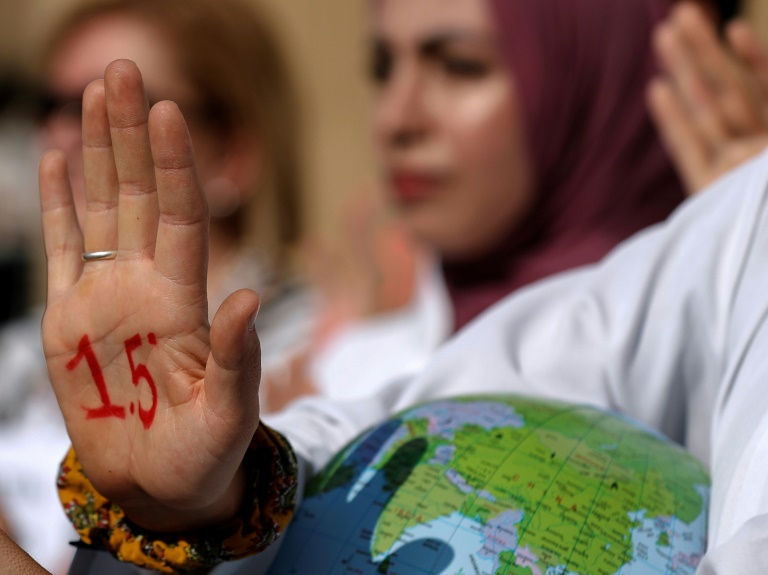
UN chief Antonio Guterres urged rich and developing nations to stop the “finger pointing” at crunch climate talks on Thursday and reach a deal on covering the losses suffered by vulnerable nations battered by weather disasters.

With the two-week COP27 conference officially due to wrap up on Friday, negotiators in Egypt said the talks would likely go on overnight as they scramble to find a compromise over the contentious “loss and damage” issue.

Guterres said there was “clearly a breakdown in trust” between developed and emerging economies, adding that the most effective way to build confidence would be to find an “ambitious and credible agreement” on loss and damage and financial support for vulnerable countries.

“This is no time for finger pointing. The blame game is a recipe for mutually assured destruction,” he said.

“The time for talking on loss and damage finance is over — we need action,” he said, after flying back to Egypt from Bali where he had attended a G20 leaders meeting. 

The intervention from the UN chief comes as the climate talks teeter on the edge of failure as poorer countries least responsible for global emissions lock horns with rich polluters over the creation of a “loss and damage” fund.

Ralph Regenvanu, minister of climate change for the Pacific island of Vanuatu, said walking out of the talks “was discussed as an option” if developing nations come away empty handed.

“We are out of time and we are out of money and we are out of patience,” he said at a news conference.

“We must establish at this COP27 a loss and damage finance facility.”

A 130-nation group known as G77+China issued a proposal to create the fund at the COP27 and agree on the nitty-gritty details at the next UN talks in Dubai in 2023.

After dragging their feet over loss and damage, the United States and European Union somewhat softened their position by agreeing to discuss the issue at COP27.

European Commission Vice President Frans Timmermans said the EU was open to the creation of a funding facility but that it should be among a “mosaic” of options that include existing financial instruments.

“We will do everything to find consensus,” he said, adding however that he expects “quite a long and difficult journey to the end of this process”.

“If this COP fails we all lose and we have absolutely no time to lose,” he told journalists.

Protests held within the conference compound have sought to keep up the pressure on delegates, with small but vocal crowds of demonstrators chanting: “What do we want? Climate justice!” 

– China’s role –

Timmermans took issue with the G77+China proposal as it limits the donor base for a fund to a list of two-dozen rich nations drawn up in 1992.

The top EU official has pointed out that some countries, notably China, would be left “off the hook” from contributing to the fund even though they have grown wealthier since 1992.

“I’m still hopeful that we can reach an agreement on this, but then I do ask of our partners to make sure that it’s fair so that everybody who is in a position to contribute contributes,” Timmermans said.

Pakistan’s climate minister Sherry Rehman, whose country chairs the G77+China, said the group was still “seeking to find common ground even at this late hour”.

Rehman suggested that concerns from rich countries about liability could be addressed.

“For countries worried or anxious about liabilities and judicial proceedings, I think we can work around all those anxieties,” she said.

Rehman recalled that Pakistan was devastated by floods this year that cost the country $30 billion.

“Vulnerability should not become a death sentence,” she said. 

“We are the ground zero of climate change,” she added. “We must convey a message of hope to all those people that have pinned their ambitions on this particular COP.”

– Make-or-break –

Guterres called for progress across the board on the goal of limiting warming to 1.5 degrees Celsius compared to preindustrial levels.

Rich nations should also finally deliver on their unmet pledge to provide $100 billion a year since 2020 to help the developing world green their economies and adapt to future impacts, and make progress on future financing.

Observers at the talks said loss and damage could be make-or-break for COP27.

“This is the issue around which the entire (COP)27 package hinges,” said Tom Evans, an expert on climate diplomacy at think tank E3G.

Laurence Tubiana, a main architect of the 2015 Paris Agreement as France’s top negotiator, told AFP a “possible landing zone for a compromise is not yet in view.”

“Things could really go off the rails at the end.”

Jailed Egypt dissident's health 'deteriorated severely': family

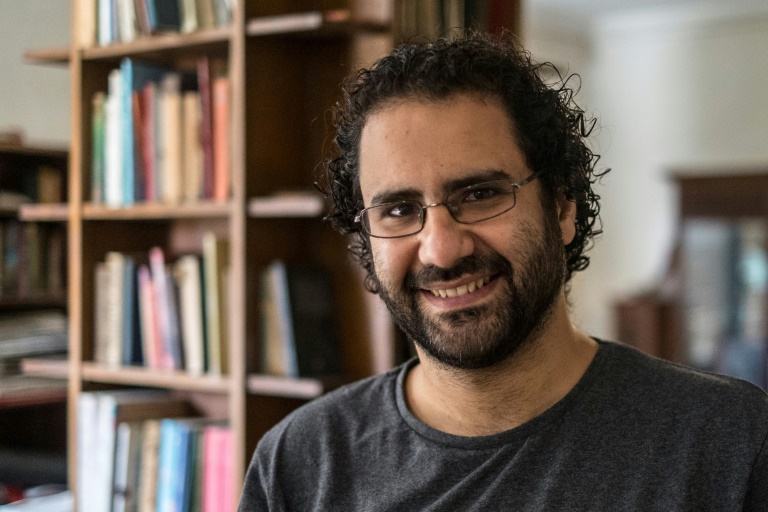
Jailed British-Egyptian activist Alaa Abdel Fattah’s health has “deteriorated severely”, his sister said Thursday after the first family visit since he ended a seven-month long hunger strike.

In a message on Twitter, Mona Seif said news from the visit was “unsettling”.

“Alaa deteriorated severely in the past two weeks, but at least they got to see him, and he needed to see the family so much”, she wrote.

His other sister Sanaa Seif said her brother appeared “frail, vulnerable and emotional” at the visit, which was conducted “behind a glass shield with a phone speaker with little space to understand or communicate”.

After seven months consuming what his family said was “100 calories a day”, Abdel Fattah escalated his strike to all food, and then water on November 6 to coincide with the start of the UN COP27 climate summit in Egypt. 

In a letter handed to his family on Tuesday, but dated Monday, he said he had ended the strike.

Thursday was the first time the activist’s mother Laila Soueif was allowed to visit him in nearly a month, after prison authorities repeatedly denied her access last week.

The family has not disclosed more information about the visit or Abdel Fattah’s status, but “will share the full details later,” Seif added.

The pro-democracy blogger is currently serving a five-year sentence for “spreading false news” by sharing another user’s Facebook post about police brutality.

– ‘Free them all!’ –

In his short letter on Monday, he did not detail the reasons behind his decision to end the strike, but asked his mother to “bring a cake” to Thursday’s visit.

“I want to celebrate my birthday with you,” wrote the activist, who turns 41 on Friday.

His family — who were concerned authorities might be “force-feeding” him and had feared he would die behind bars — raised questions over how the decision came about.

The dissident’s aunt, novelist Ahdaf Soueif, wrote on Twitter on Tuesday: “So what happened inside? What was negotiated?”

“Alaa had no idea the size of the support surrounding him,” she continued.

Egypt’s turn hosting the UN climate summit in the resort town of Sharm el-Sheikh is coming to an end this week, with Abdel Fattah continuing to make global headlines as an example of what rights groups call Egypt’s “abysmal” human rights record.

World leaders have raised his case in bilateral meetings with President Abdel Fattah al-Sisi.

Several speakers at the summit ended with the words “You have not yet been defeated” — the title of Abdel Fattah’s book. It has become a rallying cry for activists, both at the climate talks and posting online, demanding climate justice and human rights.

On Thursday, summit attendees chanted “Free Alaa! Free them all!” at the closing of the COP27 People’s Plenary, a meeting of civil society representatives in the official negotiations hall.

Rights groups estimate Cairo is holding about 60,000 political prisoners, many of them in brutal conditions and overcrowded cells.

Charlize Theron under fire over Afrikaans 'a dying language' comments

Oscar-winning actor Charlize Theron has sparked a firestorm in her native South Africa for suggesting that Afrikaans, a language descended from Dutch settlers, was heading for oblivion. 

“There’s about 44 people still speaking it — it’s definitely a dying language, it’s not a very helpful language,” the 47-year-old actor said Monday on a US podcast, “Smartless.”

By Thursday South Africans took to Twitter to voice outrage or support.

“Wow what a disrespectful comment to the millions of South Africans of all ages, races…that speak Afrikaans as their first language,” said @Juleanor. 

“Thank you Charlize Theron – that…racist language is dying and shouldn’t even be recognized,” said @SaboSizwe, in contrast.

One of 11 official languages in South Africa, Afrikaans is commonly used by around 12 percent of the population of nearly 60 million.

Laws imposing Afrikaans played a role in the oppression of black citizens during the apartheid era, and the language remains controversial in some sectors of society today.

A lawmaker from the opposition radical leftist Economic Freedom Fighters (EFF) party tweeted in support of Theron’s remarks, but the Freedom Front Plus (FF Plus), a small rightwing and predominantly white Afrikaner party, said she was misguided.

“She is not up to date with what is going on in her country of birth,” it said in a statement.

The Hollywood star was born in Benoni, a suburb 40 kilometres (25 miles) east of Johannesburg, and moved to the United States almost 30 years ago.

She said she didn’t speak English until she was 19 because “nobody” in her predominantly Afrikaans neighbourhood spoke it.

Afrikaans is descended from Dutch spoken by settlers who began to arrive in South Africa in the mid-17th century.

Its centuries-long history in South Africa has sparked debate as to whether it should be considered an indigenous or imported language.

It is the country’s the third most spoken language after Zulu, which is used by around 25 percent of the population, and Xhosa, spoken by nearly 15 percent, according to official statistics.

In 2020, a court overturned a decision by one of South Africa’s largest universities, the University of South Africa (UNISA), to abolish classes taught in Afrikaans.

Greek FM snubs Libya counterpart in spat over Turkey deal

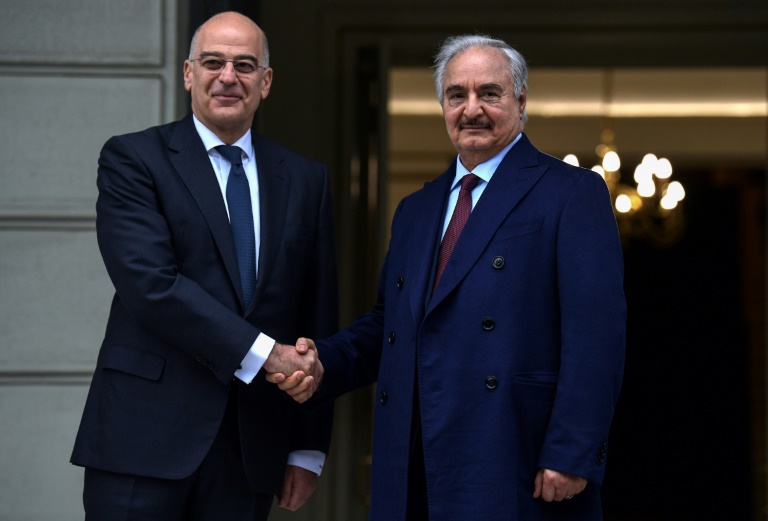
Greek Foreign Minister Nikos Dendias snubbed his Libyan counterpart on Thursday, abandoning a planned visit to Tripoli to avoid being welcomed by the top diplomat of a government allied with arch rival Turkey.

Libyan Foreign Minister Najla al-Mangoush was left waiting on the tarmac at Tripoli airport when Dendias refused to disembark from his plane and instead flew on to second city Benghazi, where a rival administration holds sway.

Athens blamed the incident on Tripoli, where Dendias had been scheduled to meet the head of Libya’s Presidential Council, Mohamed el-Manfi, without meeting members of the executive, according to the Greek foreign ministry.

Dendias’s visit to the politically divided North African nation comes after Libya’s Tripoli-based government signed a memorandum of understanding with Ankara over exploration for Mediterranean oil and gas that is bitterly contested by Athens.

Mangoush had been waiting on the tarmac to welcome Dendias “in keeping with diplomatic norms”, a statement from her ministry said.

But “in a surprising and insulting move, the Greek minister refused to disembark from his plane and left without any clarifications,” it added.

Mangoush’s ministry said it would take “appropriate diplomatic measures” in response.

Shortly afterwards, it recalled its ambassador from Athens and summoned his Greek counterpart in Tripoli, government spokesman Mohamad Hamouda told Al-Ahrar, a satellite news channel. 

Built on a 2019 border deal between Tripoli and Ankara, the energy exploration agreement signed last month angered Greece, Egypt and Cyprus which argue that neither side has a right to drill in those areas. 

The rival administration which holds sway in Benghazi also condemned the deal, insisting the Tripoli-based government of Abdulhamid Dbeibah no longer has a mandate to rule or sign international agreements.

The Libyan ministry said Dendias had been invited in response to a request from Athens, “despite (him) taking offensive positions… and making unbalanced statements about Libya’s sovereignty and its right to establish relations that meet the hopes of its people”.

After the signing of the hydrocarbons memorandum in October, Dendias had said it “threatens stability and security” in the region.

“Ms Mangoush tried to impose on me by her presence at the airport to meet with her. As a result I interrupted the visit in Tripoli and we flew to Benghazi, where the schedule was followed,” the Greek minister said in the eastern city of Benghazi.

There, he delivered three small boxes of coronavirus vaccines and a 550,000-euro ($568,000)donation towards a World Food Programme reconstruction of the port.

He also met members of the eastern-based parliament, tweeting that he had thanked them for “their clear stance on condemning the Turkish-Libyan ‘memorandum’ in 2019 and the one signed in October”.

Later, Dendias met military strongman Khalifa Haftar, for talks he said focused “on the need for #Libya stabilisation & promoting peace and stability in the wider region”, according to his Twitter account.

Libya has been plagued by violence since the overthrow of Moamer Kadhafi’s regime in a 2011 NATO-backed uprising.

Dbeibah was appointed as part of a United Nations-guided peace process following the last major battle in Libya in 2020. Tripoli’s troops, backed by Turkey, pushed back Haftar’s forces — backed by Egypt and others — after their year-long attempt to capture the city.

The parliament and Haftar say Dbeibah’s mandate has expired, further complicating the country’s foreign relations as well as its domestic landscape.

Thousands protest Sudan coup, call for justice

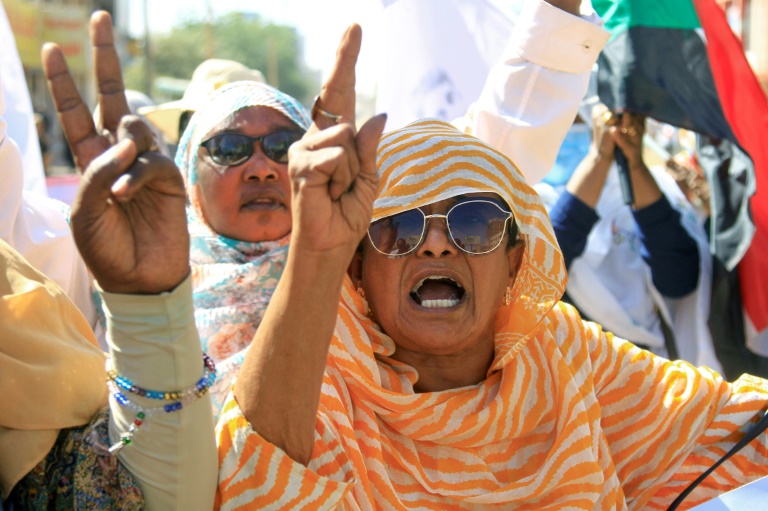
Thousands of Sudanese demonstrated on Thursday calling for justice for scores of people killed since last year’s military coup which deepened the country’s political crisis, AFP correspondents said. 

Unrest has gripped Sudan since October 2021, when army chief Abdel Fattah al-Burhan led a military takeover that derailed the country’s transition to civilian rule, established following the 2019 ouster of dictator Omar al-Bashir.

Near-weekly anti-coup protests have been met with a violent crackdown that has so far left at least 119 people dead, according to pro-democracy medics — feeding into Sudan’s deepening unrest.

Thursday’s protests, which drew the largest crowds in northern Khartoum, marks one year since November 17, 2021. That day saw 15 people killed, the deadliest single-day crackdown on anti-coup demonstrations. 

“The martyr’s blood did not go in vain,” demonstrators chanted, while others called for the military to “go back to the barracks.” 

Some protestors criticised a possible deal between the military and Sudan’s main civilian bloc, the Forces for Freedom and Change (FFC), which was ousted in the coup.

Ongoing talks between the FFC and the military, which have lasted for weeks, are the latest bid to break the political stalemate. 

The two sides recently welcomed a transitional constitution developed by the Sudanese Bar Association as a basis for a lasting agreement. 

On Wednesday, the FFC said it had approved a two-phase political process based on the Bar Association’s initiative. 

The initial component would cover a constitutional framework establishing civilian government, while the second comprises a final deal tackling issues including transitional justice and reforms to the military. 

On Sunday, Burhan said the military was presented with a “document” on the political process.

“We noted down observations to preserve the army’s dignity, unity and independence,” said Burhan, during a visit to a military base west of Khartoum.

He also warned political factions against “interference” in the armed forces’ activities, saying “we consider anyone who tries to interfere in the army an enemy.”

Jailed Egypt dissident's health 'deteriorated severely': family

Jailed British-Egyptian activist Alaa Abdel Fattah’s health has “deteriorated severely”, his sister said Thursday after the first family visit since he ended a seven-month long hunger strike.

In a message on Twitter, Mona Seif said news from the visit was “unsettling”.

“Alaa deteriorated severely in the past two weeks, but at least they got to see him, and he needed to see the family so much”, she wrote.

After seven months consuming what his family said was “100 calories a day,” Abdel Fattah escalated his strike to all food, and then water on November 6 to coincide with the start of the UN COP27 climate summit in Egypt. 

In a letter handed to his family on Tuesday, but dated Monday, he said he had ended the strike.

Thursday was the first time the activist’s mother Laila Soueif was allowed to visit him in nearly a month, after prison authorities repeatedly denied her access last week.

The family has not disclosed more information about the visit or Abdel Fattah’s status, but “will share the full details later,” Seif added.

The pro-democracy blogger is currently serving a five-year sentence for “spreading false news” by sharing another user’s Facebook post about police brutality.

In his short letter on Monday, he did not detail the reasons behind his decision to end the strike, but asked his mother to “bring a cake” to Thursday’s visit.

“I want to celebrate my birthday with you,” wrote the activist, who turns 41 on Friday.

His family — who were concerned authorities might be “force-feeding” him and had feared he would die behind bars — raised questions over how the decision came about.

The dissident’s aunt, novelist Ahdaf Soueif, wrote on Twitter on Tuesday: “So what happened inside? What was negotiated?”

“Alaa had no idea the size of the support surrounding him,” she continued.

Egypt’s turn hosting the UN climate summit in the resort town of Sharm el-Sheikh is coming to an end this week, with Abdel Fattah continuing to make global headlines as an example of what rights groups call Egypt’s “abysmal” human rights record.

World leaders have raised his case in bilateral meetings with President Abdel Fattah al-Sisi.

Several speakers at the summit ended with the words “You have not yet been defeated” — the title of Abdel Fattah’s book. It has become a rallying cry for activists, both at the climate talks and posting online, demanding climate justice and human rights.

Rights groups estimate Cairo is holding about 60,000 political prisoners, many of them in brutal conditions and overcrowded cells.

Russian mines in Ukraine 'greatest challenge' to landmark ban treaty

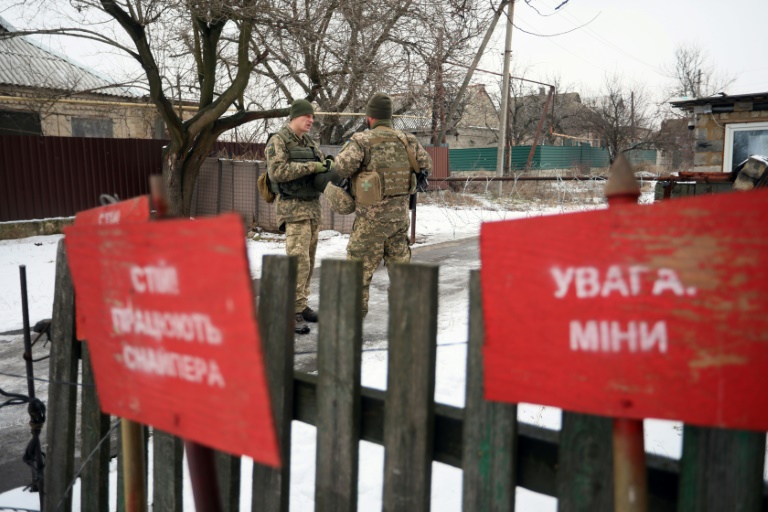
Russia’s use of newly-produced landmines in Ukraine poses the greatest challenge to the landmark Mine Ban Treaty struck 25 years ago, a monitor said Thursday.   

Moscow has developed new anti-personnel mines and used ones made as recently as 2021 in Ukraine, the Landmine Monitor said.

The monitor’s annual report identified 277 civilian casualties of mines and explosives in Ukraine in the first nine months of 2022 — a near fivefold rise on the 58 in 2021.

“At least seven types of anti-personnel mines have been used by Russian forces in Ukraine since Russia invaded the country on February 24,” it said.

The monitor said it had confirmed evidence that Russian troops had planted “victim-activated booby-traps and improvised explosive devices in Ukraine… prior to retreating and abandoning their positions”.

“Scatterable mines” appear to have been used in several regions, it said.

The report said the use of landmines by Russia — and by Myanmar — marred the 25th anniversary of the Mine Ban Treaty, the pioneering accord struck in 1997 in Ottawa.

– ‘Big setback’ –

A total of 164 countries are bound by the ban treaty and have jointly destroyed more than 55 million stockpiled anti-personnel mines.

Russia is not a signatory to the Mine Ban Treaty, while Ukraine is.

“This is the first time that a country that has signed up to the Mine Ban Treaty has faced the use of mines on its territory by another country. That’s a big setback for the landmine treaty,” said one of the report’s editors Mary Wareham, the arms advocacy director at Human Rights Watch.

“Anti-personnel landmines are unacceptable weapons that should not be used under any circumstances,” she told a press conference.

Ukraine has been asked to respond to allegations that it has used some of its 3.3 million stockpile of landmines — which should have been destroyed — since the Russian invasion.

The report said the “greatest challenge” to the emerging norm against landmines “can be seen in new use”.

“Landmines continue to kill and injure civilians, destroy livelihoods, deny land use, and disrupt access to essential services in more than 60 countries and territories,” it added.

Globally in 2021, at least 5,544 casualties were reported across 50 territories, of which 2,182 were fatal, it said.

The all-time low of 3,456 was registered in 2013.

– Syria, Afghanistan worst-hit –

Syria witnessed the highest number of casualties in 2021 for the second straight year, at 1,227. 

It was closely followed at 1,074 by Afghanistan, which has had more than 1,000 annual casualties for over a decade.

Colombia, Iraq, Mali, Nigeria and Yemen also recorded more than 100 casualties last year.

Where the age, combat status and gender of victims were known, 76 percent of casualties were civilians — of whom half were children. Males made up 81 percent of the victims.

Besides their use by the armed forces of Russia and Myanmar, landmines were deployed in 2021 by non-state armed groups in the Central African Republic, Colombia, the Democratic Republic of Congo, India and Myanmar.

There are approximately 45 million anti-personnel mines stockpiled worldwide.

Russia has the largest stockpile at 26.5 million, followed by fellow treaty non-signatories Pakistan with an estimated six million, India, China, and the United States, which has three million.

– 60 territories still mined –

Nearly 133 square kilometres (51 square miles) of land were cleared of landmines last year — more than half of which were in Cambodia and Croatia. 

Over 117,000 anti-personnel mines were destroyed, the report said.

But at least 60 territories are still riddled with anti-personnel mines, with only Sri Lanka and Zimbabwe currently seeming on target to meet clearance deadlines.

Assistance for victims was also inadequate, the report said.

“In 2021, healthcare and rehabilitation activities remained under-funded and faced increasing and numerous challenges,” it said, adding that global support for demining decreased by seven percent to $598.9 million in 2021.

The 24th annual report was produced by the Landmine and Cluster Munition Monitor, the research and monitoring arm of the International Campaign to Ban Landmines and the Cluster Munition Coalition NGOs.

UN climate summit hangs on money for 'loss and damage'

UN climate talks were deadlocked Thursday over calls to create a special fund to cover the losses suffered by vulnerable nations hit by natural disasters, raising the risk that negotiations could collapse.

With the two-week COP27 conference officially due to finish on Friday, negotiators in Egypt said the talks would likely go on overnight as they scramble to find a compromise over the contentious issue.

“We are out of time and we are out of money and we are out of patience,” Ralph Regenvanu, minister of climate change for the Pacific island of Vanuatu, said at a news conference.

“We must establish at this COP27 a loss and damage finance facility.”

Regenvanu said walking out of the talks “was discussed as an option” if developing nations come away empty handed.

Poorer countries least responsible for global emissions have pressed rich polluters to agree at COP27 on the creation of a “loss and damage” fund for nations devastated by climate impacts.

“I think it’s going be quite a long and difficult journey to the end of this process. I’m not sure yet where these talks will land,” said European Commission Vice President Frans Timmermans.

“If this COP fails we all lose and we have absolutely no time to lose,” he told journalists.

A 130-nation group known as G77+China issued a proposal to create the fund at the COP27 and agree on the nitty-gritty details at the next UN talks in Dubai in 2023.

After dragging their feet over loss and damage, the United States and European Union somewhat softened their position by agreeing to discuss the issue at COP27.

Timmermans said the EU was open to the creation of a funding facility but that it should be among a “mosaic” of options that include existing financial instruments.

“We will do everything to find consensus,” he said.

– China’s role –

Timmermans took issue with the G77+China proposal as it limits the donor base for a fund to a list of two-dozen rich nations drawn up in 1992.

The top EU official has pointed out that some developing countries, notably China, would be left “off the hook” from contributing to the fund even though they have grown wealthier since 1992.

“I’m still hopeful that we can reach an agreement on this, but then I do ask of our partners to make sure that it’s fair so that everybody who is in a position to contribute contributes,” Timmermans said.

Pakistan’s climate minister Sherry Rehman, whose country chairs the G77+China, said the group was still “seeking to find common ground even at this late hour”.

Rehman suggested that concerns from rich countries about liability could be addressed.

“For countries worried or anxious about liabilities and judicial proceedings, I think we can work around all those anxieties,” she said.

Rehman recalled that Pakistan was devastated by floods this year that cost the country $30 billion.

“Vulnerability should not become a death sentence,” she said. 

“We are the ground zero of climate change,” she added. “We must convey a message of hope to all those people that have pinned their ambitions on this particular COP.”

– No ‘landing zone’ –

The disagreement over loss and damage has overshadowed other priorities at COP27, including calls for rich nations to finally fulfil their pledge to provide $100 billion a year starting in 2020 to help the developing world green their economies and adapt to future impacts.

There have been calls for the final statement to include phrases on reducing all fossil fuels and recalling the aspirational goal of limiting warming to 1.5 degrees Celsius compared to preindustrial levels.

Observers at the talks said loss and damage could be make-or-break for COP27.

“This is the issue around which the entire (COP)27 package hinges,” said Tom Evans, an expert on climate diplomacy at think tank E3G.

Laurence Tubiana, a main architect of the 2015 Paris Agreement as France’s top negotiator, told AFP a “possible landing zone for a compromise is not yet in view.”

“Things could really go off the rails at the end.”

Greek FM snubs Libya counterpart in spat over Turkey deal

Greek Foreign Minister Nikos Dendias snubbed his Libyan counterpart Thursday, abandoning a planned visit to Tripoli to avoid being welcomed by the top diplomat of a government allied with arch rival Turkey.

Libyan Foreign Minister Najla al-Mangoush was left waiting on the tarmac at Tripoli airport when Dendias refused to disembark from his plane and instead flew on to second city Benghazi, where a rival administration holds sway.

Dendias’s visit to the divided North African nation comes after Libya’s Tripoli-based government signed a deal with Ankara over exploration for Mediterranean oil and gas that is bitterly contested by Athens.

Mangoush had been waiting on the tarmac to welcome Dendias “in keeping with diplomatic norms”, a statement from her ministry said.

But “in a surprising and insulting move, the Greek minister refused to disembark from his plane and left without any clarifications,” it added.

Mangoush’s ministry said it would take “appropriate diplomatic measures” in response.

Shortly afterwards, it recalled its ambassador from Athens and summoned his Greek counterpart in Tripoli, government spokesman Mohamad Hamouda told Al-Ahrar, a satellite news channel. 

Built on a 2019 border deal between Tripoli and Ankara, the energy exploration agreement signed last month angered Greece, Egypt and Cyprus which argue that neither side has a right to drill in those areas. 

The rival administration which holds sway in Benghazi also condemned the deal, insisting the Tripoli-based government of Abdulhamid Dbeibah no longer has a mandate to rule or sign international agreements.

Athens blamed the incident on Tripoli, where Dendias had been scheduled to meet the head of Libya’s Presidential Council, Mohamed el-Manfi, without meeting members of the executive, according to the Greek foreign ministry.

But their meeting was “cancelled as the Libyan foreign ministry reneged on an agreement” that he would not meet Mangoush, according to a statement by the Greek foreign ministry.

The Libyan ministry said Dendias had been invited in response to a request from Athens, “despite (him) taking offensive positions… and making unbalanced statements about Libya’s sovereignty and its right to establish relations that meet the hopes of its people”.

After the signing of the hydrocarbons deal in October, Dendias had said it “threatens stability and security” in the region, speaking from Cairo which also opposes Dbeibah.

His office said Thursday the remainder of his trip, in the eastern city of Benghazi, would continue as planned.

Dendias later tweeted a picture of himself being received at Benghazi airport, saying his visit there would “be carried out normally”.

Libya has been plagued by violence since the overthrow of Moamer Kadhafi’s regime in 2011.

Dbeibah was appointed as part of a United Nations-guided peace process following the last major battle in Libya in 2020, but the eastern-based parliament and military strongman Khalifa Haftar say his mandate has expired, further complicating the country’s foreign relations.

Close Bitnami banner
Bitnami