Africa Business

Brazil's Lula, world leaders bolster UN climate talks

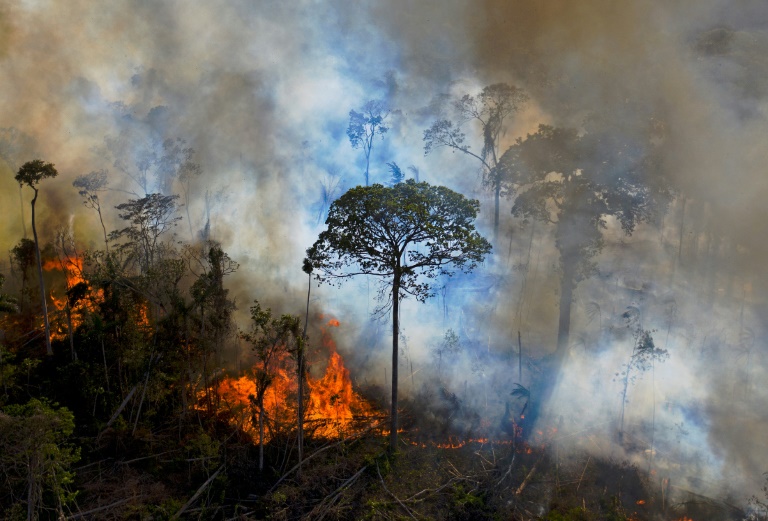
UN climate talks got a boost Wednesday as Brazilian president-elect Luiz Inacio Lula da Silva vowed to fight Amazon deforestation and global leaders reaffirmed key pledges.

While G20 leaders meeting in Indonesia issued a final communique committing to pursue the more ambitious limits on global heating, action on the sidelines of fraught COP27 negotiations in Egypt generated momentum at the UN climate conference.

Lula kicked off COP27 events Wednesday with a call to host the 2025 climate talks in the Amazon region, in his first international trip since defeating outgoing far-right President Jair Bolsonaro, who presided over years of rampant Amazon deforestation.

“I am here to say to all of you that Brazil is back in the world,” said Lula as he received a jubilant welcome from hundreds of people at an Amazon region pavilion in the Red Sea resort of Sharm el-Sheikh.

“We will put up a very strong fight against illegal deforestation,” he said, announcing the creation of an Indigenous people’s ministry to protect the vast region’s vulnerable communities.

“There is no climate security for the world without a protected Amazon,” Lula said later in a speech.

Lula arrived in Egypt on Tuesday and went straight into climate diplomacy, with meetings with US envoy John Kerry and China’s Xie Zhenhua.

– Kerry ‘pleased’ –

Kerry told a COP27 biodiversity panel on Wednesday that he was “really encouraged” by Lula’s pledge to protect the Amazon, and that the United States would work with other nations to help protect the rainforest.

Under Bolsonaro, a staunch ally of agribusiness, average annual deforestation increased 75 percent compared with the previous decade.

“We don’t need to cause deforestation of even one metre of the Amazon to continue being one of the biggest food producers in the world,” Lula said.

In another boost to the UN climate process, the final communique from world leaders meeting at the Group of 20 talks in Bali, Indonesia, reaffirmed a promise to “pursue efforts” to curb global warming to 1.5 degrees Celsius above pre-industrial levels.

The G20 document also addresses the most contentious issue at COP27, as leaders urged “progress” on “loss and damage” — the costs of climate impacts already being felt — though without saying which approach they favoured.

Developing nations are demanding the creation of a loss and damage fund, through which rich polluters would compensate them for the destruction caused by climate-linked natural disasters.

But the United States and the European Union have suggested using existing channels for climate finance instead of creating a new one.

The G20 meeting was also the stage of a crucial meeting between US President Joe Biden and China’s Xi Jinping, where the two leaders agreed to resume their climate cooperation.

Ani Dasgupta, head of the World Resources Institute, said positive signals from leaders at the G20 “should put wind in the sails” of negotiators in Egypt.

In another COP27 announcement, the EU said it would dedicate more than $1 billion in climate funding to help countries in Africa boost their resilience in the face of the accelerating impact of global warming.

– Climate leadership –

In his speech, however, Lula took a dig at developed countries for failing to fulfil a pledge to provide $100 billion in aid annually from 2020 for developing nations to green their economies and adapt to future impacts.

“I’m also back to demand what was promised” at past climate talks, he said. 

The president-elect, who previously served from 2003 to 2010, threw his weight behind the idea of a climate impacts compensation fund.

“We very urgently need financial mechanisms to remedy losses and damages caused by climate change,” said Lula, who made a spectacular political comeback after serving jail time for corruption.

Latin America’s most populous country grew more isolated under Bolsonaro, analysts say, in part due to his permissive policies towards deforestation and exploitation of the Amazon, the preservation of which is seen as critical to fighting global warming.

Brazil is home to 60 percent of the Amazon, which spans eight countries and acts as a massive sink for carbon emissions.

The incoming Lula administration wants the United States to contribute to the Amazon Fund, considered one of the main tools to reduce deforestation in the planet’s biggest tropical forest.

Following Lula’s victory, the fund’s main contributors, Norway and Germany, announced they would participate again, after freezing aid in 2019 in the wake of Bolsonaro’s election.
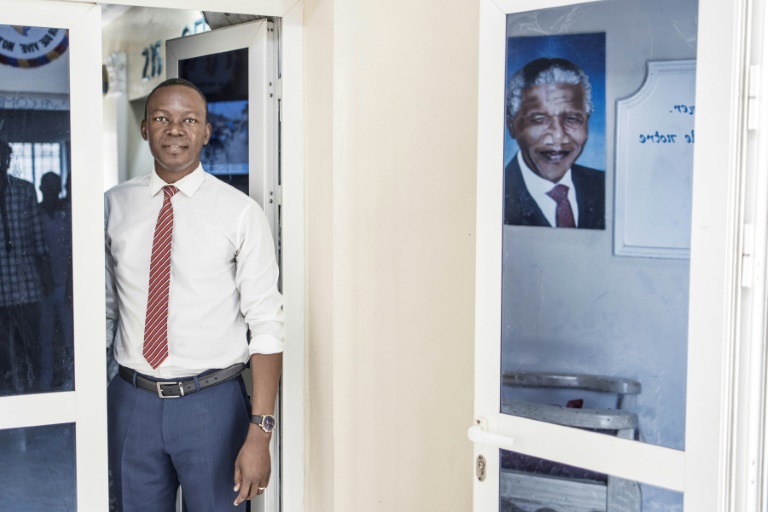

Chad opposition in shock after crackdown

Some have fled or gone into hiding while for others, just to walk in front of their party’s now abandoned headquarters stirs dread.

More than a month after a crackdown on anti-junta protestors that left scores dead and spurred an international outcry, dissidents in Chad remain in shock and disarray.

“People are traumatised,” said Gabin, a 30-year-old member of the Transformers party that co-staged the demonstration that was bloodily suppressed on October 20.

“They are still being hunted. They’re afraid of even walking in front of the Transformers (building), afraid of being arrested.”

The head of the Transformers, Succes Masra, told AFP on November 10 that he had fled to an unnamed country, saying he was being sought by the presidential guard — the elite force of Chadian leader General Mahamat Idriss Deby Itno.

The same day, Max Loalngar of the Wakit Tamma opposition group said that he was hiding “somewhere” in Chad to avoid arrest.

Opposition groups had encouraged demonstrations on October 20 to mark the date when the ruling military had initially promised to cede power — a timeline that Deby has now extended by two years. 

The 38-year-old succeeded his iron-fisted father, Idriss Deby Itno, who ruled for 30 years before dying in an operation against rebels in April 2021.

– Bloody toll –

According to the official version of events, around 50 people died, including a dozen members of the security forces, after the opposition mounted an “insurrection” in the capital N’Djamena and several other cities. 

But Transformers and Wakit Tamma say dozens more people were killed and at least 300 wounded when security forces opened fire on protestors.

Between 1,500 and 2,000 people have been arrested, according to those parties, who say there have also been extra-judicial killings — an allegation unsupported by any evidence, according to the authorities.

On November 4, a report drawn up by UN-mandated experts estimated that between 50 and 150 people had died, 150 to 184 had “disappeared”, 1,369 had been arrested, and between 600 and 1,100 had been “deported” to Koro Toro, a high security prison in the desert some 600 kilometres (370 miles) from the capital.

Last Friday, N’Djamena prosecutor Moussa Wade Djibrine said 621 people, including dozens of minors, had been sent to Koro Toro.

The African Union, European Union and Amnesty International have condemned the crackdown.

– Reminders –

Traces of the October 2 violence are still visible in the capital’s Abena district, where the Transformers’ headquarters is located.

There are remains of burned tyres and some buildings have been ransacked or torched.

The party offices themselves are empty — their doors have been padlocked by neighbours to prevent intruders — although the windows have been smashed.

Stores, bars and hairdressers in the neighbourhood have reopened but seem to be less well-frequented, and people hurry to get home before a nighttime curfew, announced on the day of the clashes, takes effect.

“Since October 20, the security forces have been going from house to house, picking up everybody,” Loalngar said by phone.

“Every morning, bodies are fished out” of the Chari river in N’Djamena, “and others are buried in the desert,” he said, echoing allegations, which are impossible to confirm, circulating on social media.

An activist who asked not to be identified said police had seized a list of phone numbers at the Transformers building.

“They have been calling us, passing themselves off as a travel agency, and trying to trap us,” he said.

Nouba Nadjilem said her family had been without news of her 15-year-old brother, who had gone out on October 20 “just to buy sugar”.

A woman who gave her name as Marie-Therese, a 50-year-old cleaner, said her nephew had been picked up “in front of (his) home with some of his friends” and that his family too had no idea what had become of him.

yas-dwi-gir-lad/ri/ah

Absent Nigerians confront World Cup 'bad dream'

Nigerians are facing up to the reality of not qualifying for the World Cup, which kicks off Sunday in Qatar, as the African football giants have to watch from the sidelines the countdown to the quadrennial global showpiece.

Fans of the Super Eagles — the Nigeria football team’s nickname — have brought colour, celebration and drama with their drums, trumpets and costumes at six previous World Cups where their team featured.

In March, perennial rivals Ghana eliminated Nigeria in a World Cup play-off on the away goals’ rule after the first leg finished 0-0 in Ghana before a 1-1 draw in Abuja.

“It’s now a reality, a bad dream, that we will not be at the World Cup,” said Segun Olayinka, a fan based in Nigeria’s commercial capital of Lagos.

“Our best players like Victor Osimhen and Wilfred Ndidi have been doing great at their clubs in Europe, but now they can only watch the World Cup on television, just like me.”

Nigeria’s German coach Gernot Rohr was sacked midway through the World Cup qualifiers and the coach said his firing was partly to blame for the team’s failure.

He said the then-president of Nigeria Football Federation, Amaju Pinnick, had claimed his dismissal was to avert disaster.

“But in the end he created the disaster that cost Nigeria the ticket to the World Cup,” Rohr said.

“I regret that I did not take my team to win the World Cup, I regret my players will not be at the World Cup even though they deserve to be there.”

– Club allegiance –

The closest the Super Eagles will come to be associated with the World Cup will be Thursday in Lisbon, where they take on Portugal in a final warm-up game for the home team before they fly out to Qatar.

“We’re a big football nation and the players are all disappointed they will not be going to the World Cup,” said team spokesman Baba Femi Raji.

“We now have to look ahead and this high-profile match is one of the ways we are already doing so.”

Terem Moffi, who plays for French club Lorient, told AFP every player dreams of playing on the biggest stage.

“It would have been great being at the World Cup because many of us are doing well at our clubs,” he said.

“But since we didn’t qualify, that does not count for much now.”

Will Nigerian fans now switch their support to “Old Enemy” Ghana, a neighbouring West African country, one of five teams from the continent who qualified.

Ghana are drawn in a tough-looking group that has Portugal, Korea and Uruguay, the team who stopped them in 2010 from becoming the first African team to reach the semi-finals of the World Cup.

Since qualification at the expense of Nigeria, they have strengthened their squad with the likes of Mohammed Salisu and Tariq Lamptey from the Premier League as well as Spain-based forward Inaki Williams. 

Some Nigerian fans said they will most likely be cheering other teams to victory because of the long-standing rivalry between the two west African states.

Many Nigerians are devoted followers of the English Premier League as well as Spain’s La Liga.

Brazil’s squad has as many as 11 players from the Premier League.

Club allegiance could see Nigerian fans rooting for Gabriel Martinelli and Gabriel Jesus because they also support Arsenal or Vinicius Junior because of Real Madrid.

England could benefit from support as well and they also have Bukayo Saka, who has Nigerian roots.

The parents of the Arsenal forward are Nigerian, but there are still many Nigerian fans who have not forgiven him for opting to play for England instead of the Super Eagles.

Ebola trial vaccines heading to Uganda: WHO

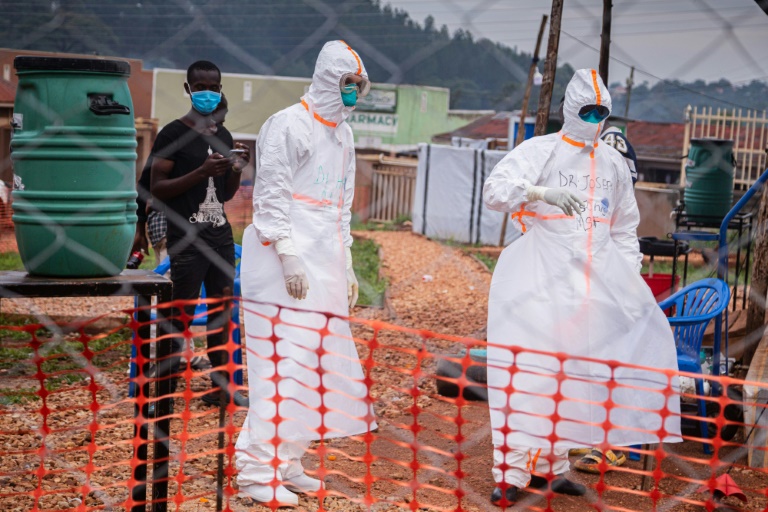
Three candidate vaccines against the strain of Ebola wreaking havoc in Uganda will be shipped to the East African country next week for trials, the World Health Organization said Wednesday.

Since Uganda declared an Ebola outbreak on September 20, cases have spread across the country, including to the capital Kampala, and have claimed 55 lives, with 22 more believed to have died.

Uganda has been struggling to rein in the outbreak caused by the Sudan strain of the virus, for which there is currently no vaccine.

But UN health agency chief Tedros Adhanom Ghebreyesus told reporters that vaccine trials would soon begin.

Speaking from the G20 summit in Indonesia, he said a WHO committee of external experts had evaluated candidate vaccines and determined “all three should be included in the planned trial in Uganda”.

The WHO and the Ugandan health ministry accepted the committee’s recommendation, he said, adding: “We expect the first doses of vaccine to be shipped to Uganda next week.” 

The WHO hailed the “incredibly fast collaboration” to reach this point.

“Since the outbreak began, the government of Uganda, together with researchers, funders, companies, regulatory authorities and other experts has been working under a global effort coordinated by WHO to accelerate the development and deployment of vaccines for use in trials,” Tedros pointed out.

– ‘Uncertainty’ –

The candidates include a vaccine developed by Oxford University and the Jenner Institute in Britain, and another from the Sabin Vaccine Institute in the United States.

The third candidate came through the International AIDS Vaccine Initiative (IAVI), WHO said.

They will be used in a so-called ring vaccination trial, where all contacts of confirmed Ebola patients, and contacts of contacts are jabbed along with frontline and health workers.

“We have received written confirmation from the developers that sufficient vaccines and sufficient number of doses will be available for the clinical trial, and beyond if necessary,” Ana Maria Henao Restrepo, one of WHO’s heads of research and development, told reporters.

There is meanwhile concern that progress being made to slow the spread of Ebola even without the jabs could complicate the planned trials.

Such trials can only be run when there is fairly rapid transmission under way of Ebola, a haemorrhagic fever that spreads through close contact with bodily fluids and that is often deadly. 

“We have uncertainty… about the evolution of the outbreak,” Henao Restrepo said, acknowledging that it remained unclear “how many rings can be formed as part of the trial.”

But she stressed that all those involved were committed to pushing ahead with randomised trials in a bid to “generate robust evidence that will allow us to know if one or more of them has the efficacy we hope they have.”

– ‘Controllable without vaccines’ –

WHO emergencies director Michael Ryan insisted it was important to get started, even if lower transmission levels might make it impossible to complete the trials immediately.

“If we have to do this in one or two steps, we will,” he told reporters.

At the same time, Ryan emphasised that “this epidemic is controllable without vaccines.”

Experience from the far more frequent outbreaks of the Ebola Zaire strain — for which a vaccine was developed after the massive West Africa outbreak that started in 2013 — shows that “you can get control much quicker using effective vaccines,” he told reporters.

“But just to reassure people in Uganda, we can stop this outbreak based on the current efforts.”

Tedros agreed, insisting that Kampala’s efforts had already “slowed transmission in most districts.”

He pointed out that two districts had not reported any cases for 42 days, “indicating the virus is no longer present in those districts”.

But he warned that Jinja had also reported its first case in the past week, “becoming the ninth district to be affected”.

In addition to the candidate vaccines, the WHO said a separate group of experts had selected two investigational therapeutics for a trial, which still requires a green light from WHO and Ugandan authorities.

WFP says its first aid convoy since Ethiopia peace deal enters Tigray

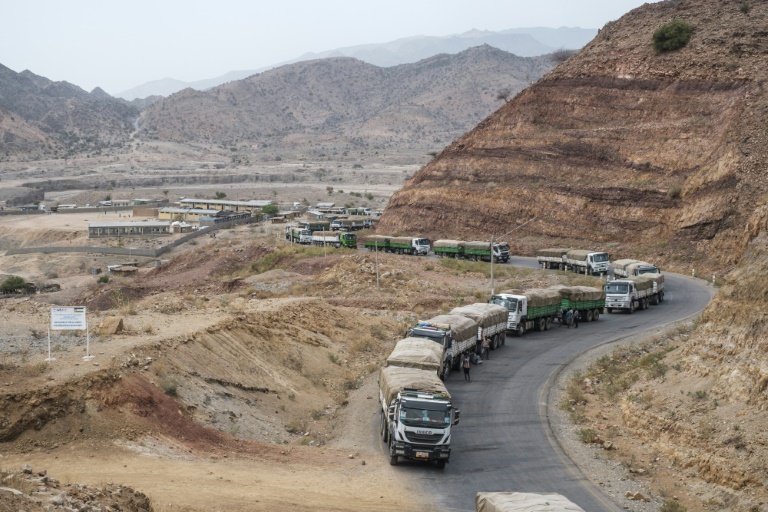
The World Food Programme (WFP) said its first aid convoy since the signing of a landmark peace deal between Ethiopia’s government and Tigrayan rebels had arrived in the war-torn Tigray region on Wednesday.

Restoring aid deliveries to Tigray was a key part of the agreement signed in South Africa on November 2 to silence the guns in a two-year conflict that has killed untold numbers of people and unleashed a humanitarian crisis in northern Ethiopia.

“@WFP trucks are now rolling into #Tigray with critical food assistance—this is the first movement since the peace agreement was signed,” the UN agency’s chief David Beasley said on Twitter.

The region of six million people has been suffering from a severe lack of food and medicine, as well as limited access to basic services including electricity, banking and communications, with the UN warning that many people were on the brink of starvation.

“Progress must continue. All sides must uphold the agreement. Basic services must resume immediately,” Beasley said.

The WFP announcement followed the arrival on Tuesday of a medical aid convoy from the International Committee of the Red Cross, the first ICRC trucks to arrive in Tigray since the deal between the Ethiopian government and the Tigray People’s Liberation Front (TPLF).

A WFP spokeswoman told AFP that 15 trucks had entered the region on Wednesday, with “more (expected) in the coming days”.

The UN agency said the convoy had travelled along a route through neighbouring Amhara for the first time since June 2021, when TPLF fighters recaptured Tigray from federal forces and expanded into the bordering regions of Amhara and Afar.

The November 2 deal was followed by an implementation accord reached in the Kenyan capital Nairobi on Saturday, with the two sides committing to facilitate unfettered humanitarian access to “all in need” in Tigray and neighbouring regions with immediate effect.

Aid deliveries were forced to a halt in late August when fighting resumed in northern Ethiopia, shattering a five-month truce and leading to the capture of key towns in Tigray by pro-government forces.

Even before those clashes, Tigray was in the grip of a hunger crisis, with the WFP warning in early August that nearly half of the region’s population was “severely food insecure”, with some 90 percent of its people requiring food aid.

– Sanctions threat –

Ethiopian Prime Minister Abiy Ahmed has vowed to fulfil the commitments made in the peace deal, saying that his government secured 100 percent of what it had sought in the negotiations with the TPLF.

As well as the restoration of aid and a cessation of hostilities, the deal reached in the South African capital Pretoria calls for the disarming of TPLF fighters and the re-establishment of federal authority over Tigray.

But it makes no mention of the presence on Ethiopian soil or any possible withdrawal of Eritrean troops, who have backed Abiy’s forces and been accused of atrocities.

A senior State Department official on Tuesday told reporters that the United States would not hesitate to use sanctions “if that should become necessary in terms of holding actors accountable for human rights violations or for the purposes of trying to ensure that this agreement is respected”.

The conflict between the TPLF and pro-Abiy forces — which include regional militias in addition to the Eritrean army — has forced more than two million people from their homes and driven hundreds of thousands to the brink of famine.

The war erupted in November 2020 when Abiy, a Nobel Peace laureate, sent troops into Tigray, accusing the TPLF of attacking federal army camps.

The TPLF had dominated national politics for nearly three decades until Abiy took office in 2018.

Niger's threatened giraffes find new home

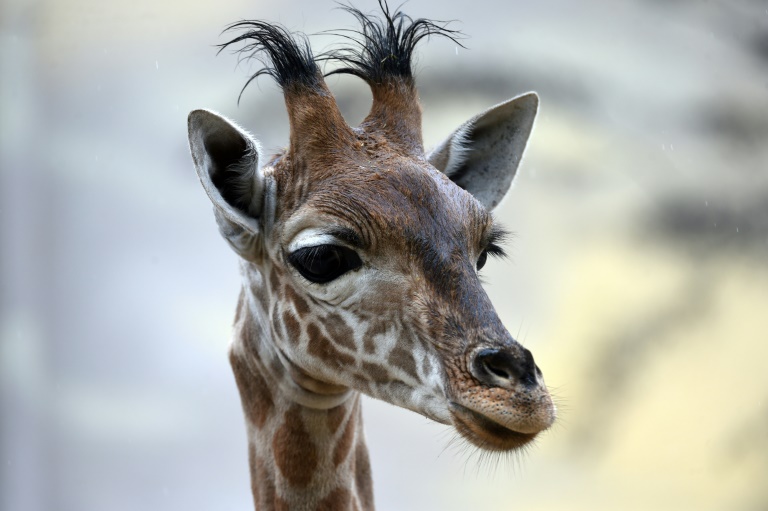
Conservationists in Niger said on Wednesday they had transferred threatened West African giraffes to a new home 600 kilometres (375 miles) away.

One of nine giraffe sub-species, the West African giraffe is native to the semi-arid Sahel, distinguishable from its cousins by its light-coloured spots.

Giraffes in the Koure region in the southwest of the vast country are at threat from desertification and farming, which are destroying their habitat.

On Friday, “four female giraffes were captured” in Koure “and have already arrived in Gabedji,” a huge nature reserve in central southern Niger, the forestry and water service said.

The giraffes were transported in specially adapted trucks and “everything went well,” said a senior official, Commander Lamine Saidou.

The operation was carried out with the help of an NGO called the Sahara Conservation Fund (SCF).

The transfer is the second since November 2018, when seven female and three male giraffes in Koure made the trek to Gabedji, in the Maradi region.

Three baby giraffes were born in Gabedji this year alone, the environment ministry says.

Pain-staking efforts to save the West African giraffe seem to be bearing fruit.

The sub-species once ranged from Senegal to Lake Chad, but in 1996 there were just 49 individuals left.

This rose to 697 in 2017, according to the International Union for Conservation of Nature (IUCN), which in 2018 downgraded the giraffes’ status from “endangered” to “vulnerable.”

Climate change set to 'increase hunger' in Africa: UN

As COP27 delegates in Egypt debate planet-heating emissions, the climate crisis is exacerbating devastating hunger across several African nations and will worsen further without urgent action, the UN said Wednesday.

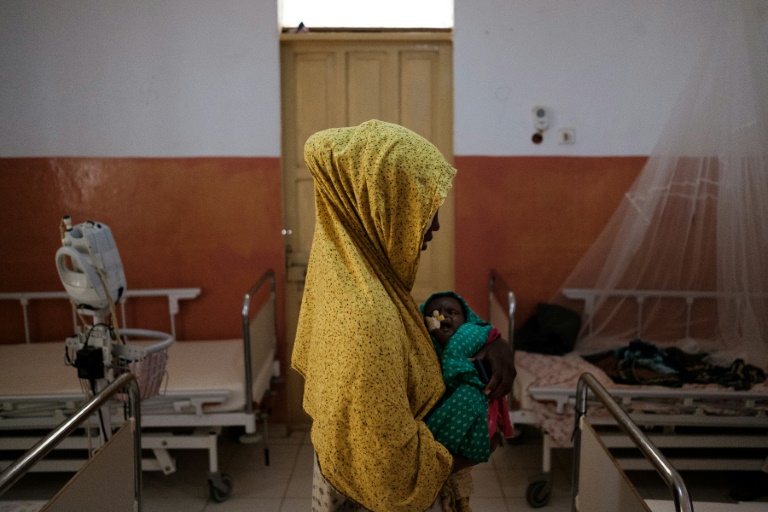
“If drastic measures are not taken urgently, hunger will increase as climate change is felt everywhere, most intensely in vulnerable areas, such as Sudan,” said Zitouni Ould-Dada, from the United Nations Food and Agriculture Organisation (FAO).

Sudan is among the East African nations facing “acute food insecurity”, the Famine Early Warnings Systems Network warned earlier this month, highlighting the dire situation, especially in Ethiopia, Kenya and Somalia.

As the COP27 summit opened, a joint statement from over a dozen UN agencies and major charities warned the Horn of Africa was gripped by the “longest and most severe drought in recent history”, warning that parts of Somalia are “projected to face famine”.

Africa is home to some of the countries least responsible for carbon emissions but hardest hit by an onslaught of weather extremes.

Sudan, like many other countries on the continent, has been hit hard in recent years by erratic weather patterns — harsh droughts and searing temperatures followed by torrential rains.

Around a third of the population, over 15 million people, will need aid next year, the highest level for over a decade, according to the World Food Program (WFP).

– ‘Takes political will’ –

The climate summit in Egypt, billed as the “African COP”, must be where the continent’s food security is addressed, said Ould-Dada, deputy director of the FAO’s Climate and Environment Division.

But despite the vast resources of the continent, many nations are reliant on importing food, Ould-Dada added.

“It does not make sense for Africa to import 40 percent of its wheat from Russia and Ukraine when it itself is so rich in resources,” he said, on the sidelines of the climate talks in Egypt’s Red Sea resort of Sharm el-Sheikh.

“It takes political will to fight poverty and hunger globally.”

The FAO recently agreed a $10 million project with Sudan’s forestry authority to help support farmers, including by protecting crucial gum arabic trees — which provide a key ingredient for fizzy drinks — to combat rapid desertification.

Sudan is already struggling with what experts and activists say is the result of shifting weather patterns: worsening conflicts over scarce land and water resources.

Though linking the heating planet to conflict is complex, the International Crisis Group calls climate change “a threat multiplier” that increases “food insecurity, water scarcity and resource competition, while disrupting livelihoods and spurring migration.”

Sudan is the world’s fifth most vulnerable country to the impacts of climate change, according to a 2020 ranking in the Global Adaptation Index, compiled by Notre Dame University in the United States.

Increasing demands on dwindling natural resources have fuelled inter-ethnic conflict in Sudan, including the 2003 war that erupted in the arid western region of Darfur.

While a peace deal for Darfur was struck in 2020 with key rebel groups, violence continues.

With agriculture and livestock accounting for 43 percent of employment and 30 percent of GDP, conflicts over livestock and access to water and land continue.

According to the UN, 800 people have been killed this year and more than 260,000 displaced in conflict across Sudan.

Rich, developing nations head toward climate compensation clash

Wealthy and developing countries set the stage Tuesday for a showdown at UN climate talks over demands for rich polluters to compensate vulnerable nations for damages caused by natural disasters.

The COP27 conference in Egypt has been dominated by calls for wealthy nations to provide financing to developing nations least responsible for global warming for deadly and costly climate impacts.

Ministers from some of the world’s worst-hit countries admonished developed ones for not doing enough, not only on this issue but also on unfulfilled promises to provide $100 billion in annual aid for their green transitions.

At “how many COPs have we been arguing for urgent climate action? And how many more do we need, how many lives do we need to sacrifice?” Belize’s Climate Change Minister Orlando Habet told COP27 delegates.

After dragging their feet on the issue of “loss and damage” for years over concerns it would create a reparations mechanism, the United States and European Union agreed to have it on the formal agenda at COP27.

But Western powers and a major group of developing nations allied with China presented widely different views of how to achieve this.

The G77+China bloc of more than 130 developing nations presented a document saying the need for a special “loss and damage” fund was “urgent and immediate”.

How much money would be put into the fund, and where it would come from it left unsaid, but the G77+China said it should be operational in time to be approved at next year’s COP28 in Dubai.

The United States and the European Union have suggested that expanding current channels for climate finance might be a more efficient approach than creating a new one.

In its own “talking points” on Tuesday, the EU recognised “the need and urgency” for loss and damage funding, and that “current financing mechanisms are not able to cover all necessary actions.”

But rather than creating a new facility in Sharm el-Sheikh, they favour calling in the two-week meeting’s final declaration for the launch of a time-bound process to explore a “mosaic of solutions”.

The first draft of COP27’s final declaration — which must be approved by all parties — echoes language previously deployed by the US and Europeans proposing “funding arrangements” for loss and damage.

European Commission Vice President Frans Timmermans told reporters that the EU has “demonstrated openness to discuss moving forward on loss and damage”, but he said “he was not quite sure we would be able this week to find consensus on the new financial mechanism”.

– Major emitter ‘hypocrisy’ –

With COP27 scheduled to end on Friday and several items left unresolved, Egyptian Foreign Minister Sameh Shoukry, the COP27 president, said it was “clear that some issues require further technical work”.

“Progress has been made, but certainly more remains to be done if we are to achieve the robust outcomes that will drive ambitious, and inclusive climate action,” he told delegates.

Conrod Hunte of Antigua and Barbuda, lead negotiator for the Alliance of Small Island States, said it would be a “devastating blow” if talks stalled.

“Antigua and Barbuda will not leave here without a loss and damage fund,” he said.

Shawn Edward, sustainable development minister of Saint Lucia, said the people of his Caribbean islands suffer the consequences of the “hypocrisy” of major emitters that continue to invest in fossil fuels.

COP27 comes as global CO2 emissions are poised to reach an all-time high this year, making the aspirational goal of limiting warming to 1.5 degrees Celsius compared to preindustrial levels ever more elusive.

– EU raises emissions target –

Timmermans told delegates that the EU would outperform its original plan to reduce its greenhouse gas emissions by 55 percent by 2030.

The 27-nation bloc will now be able to cut those emissions by 57 percent from 1990 levels, he said, pointing to agreements on phasing out fossil fuel-powered cars and protecting forests that serve as “carbon sinks”.

“The European Union is here to move forwards, not backwards,” Timmermans told COP27 delegates.

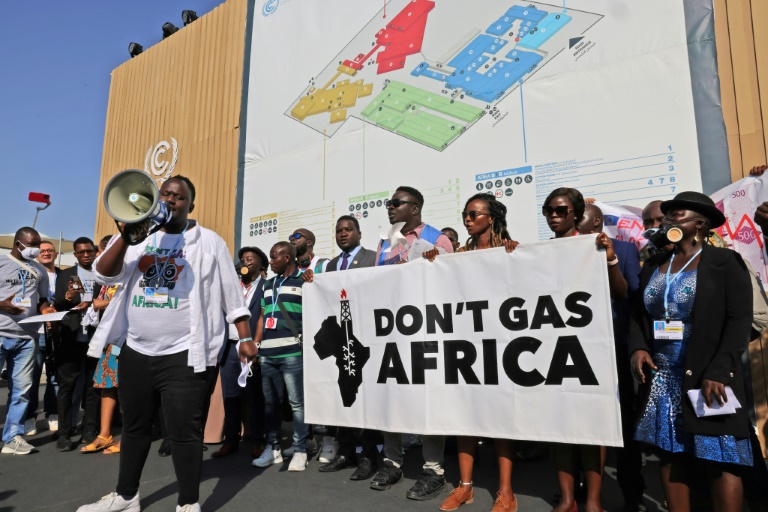
The invasion of Ukraine by energy exporter Russia has cast a shadow over the talks in Egypt, with activists accusing Europeans of seeking to tap Africa for natural gas following Russian supply cuts.

But Timmermans denied the bloc was in a “dash for gas” amid the Ukraine conflict.

“Don’t let anybody tell you, here or outside, that the EU is backtracking,” he said.

Watchdog groups were unimpressed.

“This small increase announced today at COP27 doesn’t do justice to the calls from the most vulnerable countries at the front lines,” said Chiara Martinelli, of Climate Action Network Europe.

Ex-Kenyan leader visits key DR Congo city amid rebel crisis

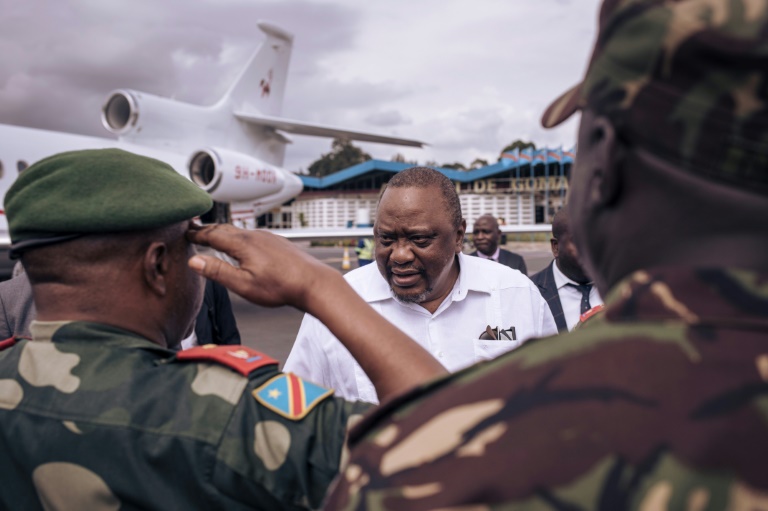
Kenya’s former president Uhuru Kenyatta arrived Tuesday in eastern DR Congo’s main city of Goma, as fresh clashes with M23 rebels occurred just to the north, sending thousands fleeing.

Troops in the Democratic Republic of Congo (DRC) were battling M23 fighters in Kibumba, 20 kilometres (12 miles) north of Goma, security officials and local residents said. 

The M23 has recently seized swathes of territory in North Kivu province, displacing tens of thousands of people in their advance. 

Kibumba is considered one of the last obstacles to the rebels before Goma, a commercial hub of one million people on the Rwandan border. 

On Tuesday afternoon, rumours that the M23 was approaching sent a fresh wave of people fleeing to the Kanyaruchinya displacement camp, south of Kibumba. 

About 40,000 people are currently in the camp, according to its head. 

A security official who asked for anonymity said that people began to flee after seeing soldiers themselves retreating towards Goma after clashes with M23 rebels. 

North Kivu’s military governor, General Constant Ndima, urged people to remain calm late Tuesday. “I want to reassure you… Loyalist forces are containing the enemy on the heights of Kibumba,” he told reporters.

The crisis has cratered relations between the DRC and its smaller central African neighbour Rwanda, which Kinshasa accuses of backing the militia.

Uhuru Kenyatta, a mediator for the seven-nation East African Community (EAC), arrived in Goma on Tuesday and visited Kanyaruchinya. 

He told reporters late Tuesday that the stories he had heard were “heart-breaking”. 

“I cannot ignore what I have seen,” Kenyatta said. “I must say to all parties: You cannot negotiate in the face of human catastrophe”.

– ‘De-escalation’ –

Kenyatta’s visit to the DRC is the latest in a round of diplomatic bids to defuse the crisis in the impoverished country’s volatile east. 

The former president landed in the Congolese capital Kinshasa on Sunday for talks, following on the heels of a visit from Angolan President Joao Lourenco.

The EAC has also called for a “peace dialogue” in Kenya’s capital Nairobi on November 21. 

In addition, the bloc has agreed to send a peacekeeping mission to eastern DRC. Kenyan troops arrived in Goma over the weekend, as part of that operation.

On Monday, Kenyatta urged armed groups to put down their arms and return to the negotiating table. 

“There is nothing that can be gained through the barrel of a gun,” he had told reporters.  

On Tuesday, United States Secretary of State Antony Blinken said he had discussed the situation with Rwanda’s Foreign Minister Vincent Biruta, on the margins of the G20 meeting in Indonesia.

“I underscored the United States’ deep concern about the continuing violence in eastern DRC, and called on Rwanda to take active steps to facilitate de-escalation,” he said in a tweet.

– Rebel return –

Biruta, for his part, tweeted that Rwanda is committed to regional diplomatic mechanisms to bring peace to eastern DRC, as well as to finding a political solution to the crisis.

Over 120 armed groups roam the region, many of which are a legacy of regional wars which flared at the turn of the century. 

The M23 — a mostly Congolese Tutsi group — first leapt to prominence in 2012 when it briefly captured Goma before being driven out. 

But the rebel group returned in late 2021 after years of dormancy, claiming the DRC had failed to honour a promise to integrate its fighters into the army, among other grievances.

It captured the strategic town of Bunagana on the Ugandan border in June. In recent weeks, the rebels have also won a string of victories against the Congolese army, edging closer towards Goma.

The DRC expelled Rwanda’s ambassador in late October amid the renewed M23 offensive. 

Despite official denials from Kigali, an unpublished report for the UN seen by AFP in August pointed to Rwandan involvement with the M23.

Rwanda accuses the Congolese government of colluding with Hutu militants who fled across the border after the 1994 Rwandan genocide.

Sierra Leone to introduce gender quotas

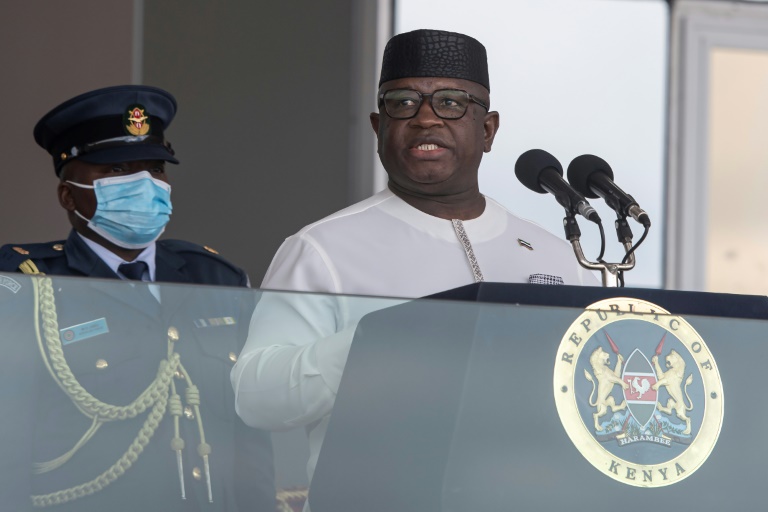
Sierra Leonean lawmakers on Tuesday passed legislation to introduce a gender quota in parliament, a major campaign promise by the president, following years of delays and false starts.

After several hours of debate Tuesday, members of parliament voted unanimously to pass the Gender Empowerment Act, ensuring that one in three members of parliament, as well as local councillors, is a woman. An earlier draft stipulated a slightly lower 30-percent quota but was amended.

“I’m so overwhelmed,” Minister of Gender and Children’s Affairs Manty Tarawalli said in parliament after the bill’s passing.

She said that in spite of repeated setbacks in drafting and introducing the law — which she presented to parliament on November 9 — “the end justifies the means”.

It will now go to President Julius Bio to be signed into law.

Despite it being a key promise in Bio’s 2018 election campaign, it took three years for cabinet to approve the law’s drafting. Then there were delays in getting parliament to debate the bill.

An earlier draft was expected to be approved in 2021 but was withdrawn over a technicality.

“We want men and women to work together in making society better,” said Rugiatu Rosy Kanu, an opposition MP and deputy chair of a parliamentary committee on gender and children’s affairs.

Ibrahim Tawa Conteh, another MP and member of the ruling Sierra Leone People’s Party (SLPP), said that 52 percent of Sierra Leone’s population is female, “but only 19 women out of 146 lawmakers are in this parliament”.

He also called for a law “supportive of all women, not just for the educated” — namely one enabling better female participation in chieftaincy elections, which is still banned in some parts of the country.

“The government wants to correct the mistakes made in the past for not recognising (women); we want to apologise to all women who suffered discrimination in society,” said Matthew Sahr Nyuma, leader of the house and chair of the Information Committee.

But not all believe the legislation goes far enough.

“It’s unfair for women to be given 30 percent whilst they represent 52 percent of the population,” said Lahai Marah, an MP for the opposition The All People’s Congress (APC) party.

Lawmakers in neighbouring Liberia in September passed an Affirmative Action Bill, while Senegal has since 2012 had a 50-percent gender parity law for parliamentarians, though the real percentage of female lawmakers has never surpassed 44 percent.

“We are happy the gender agenda is gaining momentum,” said Marcella Samba, head of the NGO Campaign for Good Governance.

Close Bitnami banner
Bitnami