Africa Business

I.Coast to quit UN peacekeeping mission in Mali

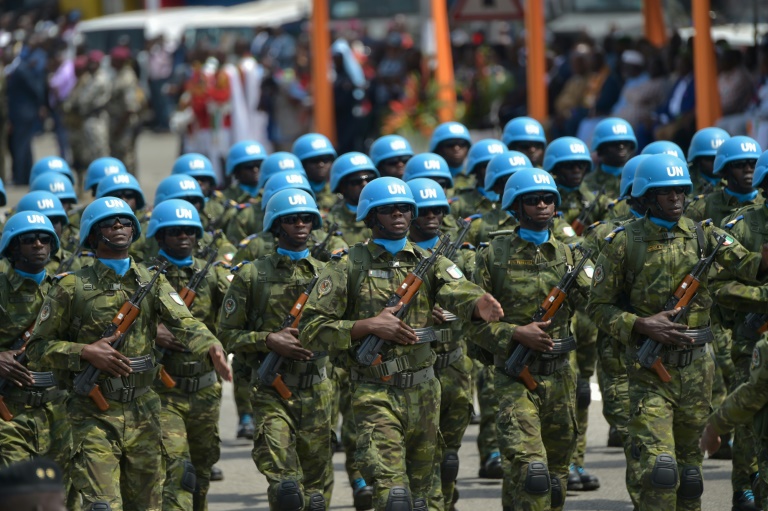
Ivory Coast says it will withdraw from the UN’s peacekeeping operations in troubled Mali, a move coinciding with Britain’s announcement that it will quit the mission.

A letter to the MINUSMA mission seen by AFP Tuesday said that Ivorian troops would withdraw by August 2023.

It gave no explanation for the pullout, but Ivory Coast and Mali’s junta are locked in a months-long dispute over the detention of Ivorian troops at Bamako airport.

“By order of the government of Ivory Coast, the permanent mission confirms the progressive withdrawal of Ivorian military personnel and police deployed with MINUSMA,” says the letter sent to the UN Multidimensional Integrated Stabilization Mission in Mali.

Rotations of Ivorian forces scheduled in October and November this year will no longer take place, the letter adds.

The rotations were to apply to a protection unit based in Mopti, to police and to military officers assigned to headquarters duties.

Troops and other personnel deployed in MINUSMA will not be relieved next August as scheduled, it added.

In response the United Nations said it was in contact with Ivory Coast “regarding their participation in MINUSMA”.

“We remain grateful to Cote d’Ivoire for the service and contributions of all Ivorian personnel in Mali and for their continued support to UN peace operations,” the UN secretariat said in a statement.

– Troops row –

No official reason for the decision was given but tensions between Abidjan and Bamako have soared since 49 Ivorian solders were arrested upon arrival at Mali’s airport on July 10 and branded mercenaries.

Three have since been released but the rest have been kept in custody on charges of attempting to harm state security. Abidjan insists the soldiers were sent as backup for MINUSMA. 

Several mediation efforts are underway to resolve the crisis, and in early October Ivorian President Alassane Ouattara had said the situation was developing “well.”

On Monday, Britain announced Monday it would cut short the deployment of 300 troops with MINUSMA after relations with the junta soured.

Mali’s elected president, Ibrahim Boubacar Keita, was toppled in August 2020 by officers angered at the failures to roll back a jihadist insurgency that has claimed thousands of lives and driven hundreds of thousands from their homes.

The following year, the military forced out an interim civilian government and started to weave closer ties with the Kremlin, acquiring Russian warplanes and helicopters and bringing in personnel described by the West as Wagner mercenaries.

Relations with France, Mali’s former colonial power and traditional ally, swiftly went downhill.

France pulled out the last of its forces out of the country in August, ending a more-than nine-year commitment in the fight against the jihadists.

“Two coups in three years have undermined international efforts to advance peace,” British Defence Minister James Heappey told parliament.

“This government cannot deploy our nation’s military to provide security when the host country’s government is not willing to work with us to deliver lasting stability and security.”

He added: “The Malian government’s partnership with Wagner group is counterproductive to lasting stability and security in their region.” 

– Major UN mission –

MINUSMA was launched in 2013 to help one of the world’s poorest countries cope with a bloody jihadist campaign.

The UN Security Council renewed its mandate for one year on June 29, although the junta opposed requests to allow freedom of movement for rights investigators with the mission.

MINUSMA is one of the UN’s biggest peacekeeping operations, with 17,557 troops, police, civilians and volunteers deployed as of June, according to the mission’s website.

Ivory Coast has 857 military personnel and 30 police, according to the website. 

MINUSMA is also one of the deadliest missions in UN peacekeeping missions, recording 281 deaths, most of them through hostile acts, especially improvised explosive devices.

In July, Egypt announced it was suspending participation by its 1,035 troops in MINUSMA, a move that came after two of its peacekeepers were killed and five wounded near the northern flashpoint town of Gao.
Ex-Kenyan leader visits key DR Congo city amid rebel crisis

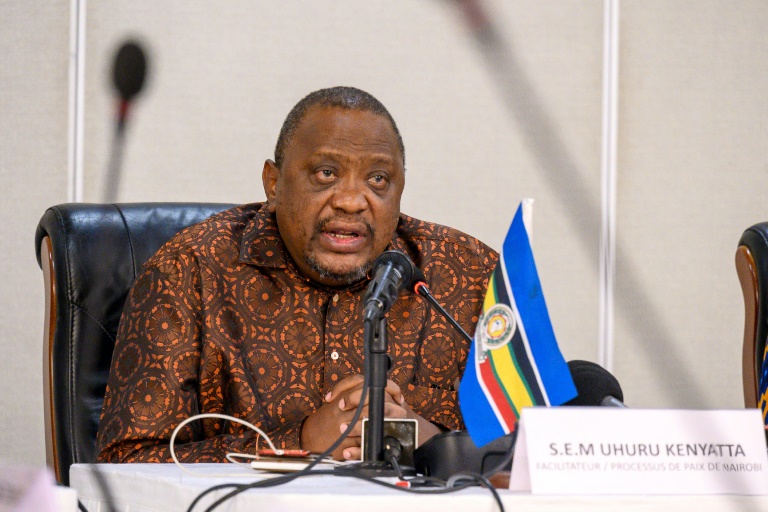
Kenya’s former president Uhuru Kenyatta arrived Tuesday in eastern DR Congo’s main city of Goma, as fresh clashes with M23 rebels occurred just to the north, sending thousands fleeing.

Troops in the Democratic Republic of Congo (DRC) were battling M23 fighters in Kibumba, 20 kilometres (12 miles) north of Goma, security officials and local residents said. 

The M23 has recently seized swathes of territory in North Kivu province, displacing tens of thousands of people in their advance. 

Kibumba is considered one of the last obstacles to the rebels before Goma, a commercial hub of one million people on the Rwandan border. 

On Tuesday afternoon, rumours that the M23 was approaching sent a fresh wave of people fleeing to the Kanyaruchinya displacement camp, south of Kibumba. 

About 40,000 people are currently in the camp, according to its head. 

A security official who asked for anonymity said that people began to flee after seeing soldiers themselves retreating towards Goma after clashes with M23 rebels. 

North Kivu’s military governor, General Constant Ndima, urged people to remain calm late Tuesday. “I want to reassure you… Loyalist forces are containing the enemy on the heights of Kibumba,” he told reporters.

The crisis has cratered relations between the DRC and its smaller central African neighbour Rwanda, which Kinshasa accuses of backing the militia.

Uhuru Kenyatta, a mediator for the seven-nation East African Community (EAC), arrived in Goma on Tuesday and visited Kanyaruchinya. 

He told reporters late Tuesday that the stories he had heard were “heart-breaking”. 

“I cannot ignore what I have seen,” Kenyatta said. “I must say to all parties: You cannot negotiate in the face of human catastrophe”.

– ‘De-escalation’ –

Kenyatta’s visit to the DRC is the latest in a round of diplomatic bids to defuse the crisis in the impoverished country’s volatile east. 

The former president landed in the Congolese capital Kinshasa on Sunday for talks, following on the heels of a visit from Angolan President Joao Lourenco.

The EAC has also called for a “peace dialogue” in Kenya’s capital Nairobi on November 21. 

In addition, the bloc has agreed to send a peacekeeping mission to eastern DRC. Kenyan troops arrived in Goma over the weekend, as part of that operation.

On Monday, Kenyatta urged armed groups to put down their arms and return to the negotiating table. 

“There is nothing that can be gained through the barrel of a gun,” he had told reporters.  

On Tuesday, United States Secretary of State Antony Blinken said he had discussed the situation with Rwanda’s Foreign Minister Vincent Biruta, on the margins of the G20 meeting in Indonesia.

“I underscored the United States’ deep concern about the continuing violence in eastern DRC, and called on Rwanda to take active steps to facilitate de-escalation,” he said in a tweet.

– Rebel return –

Biruta, for his part, tweeted that Rwanda is committed to regional diplomatic mechanisms to bring peace to eastern DRC, as well as to finding a political solution to the crisis.

Over 120 armed groups roam the region, many of which are a legacy of regional wars which flared at the turn of the century. 

The M23 — a mostly Congolese Tutsi group — first leapt to prominence in 2012 when it briefly captured Goma before being driven out. 

But the rebel group returned in late 2021 after years of dormancy, claiming the DRC had failed to honour a promise to integrate its fighters into the army, among other grievances.

It captured the strategic town of Bunagana on the Ugandan border in June. In recent weeks, the rebels have also won a string of victories against the Congolese army, edging closer towards Goma.

The DRC expelled Rwanda’s ambassador in late October amid the renewed M23 offensive. 

Despite official denials from Kigali, an unpublished report for the UN seen by AFP in August pointed to Rwandan involvement with the M23.

Rwanda accuses the Congolese government of colluding with Hutu militants who fled across the border after the 1994 Rwandan genocide.

Red Cross says first aid convoy arrives in Tigray capital

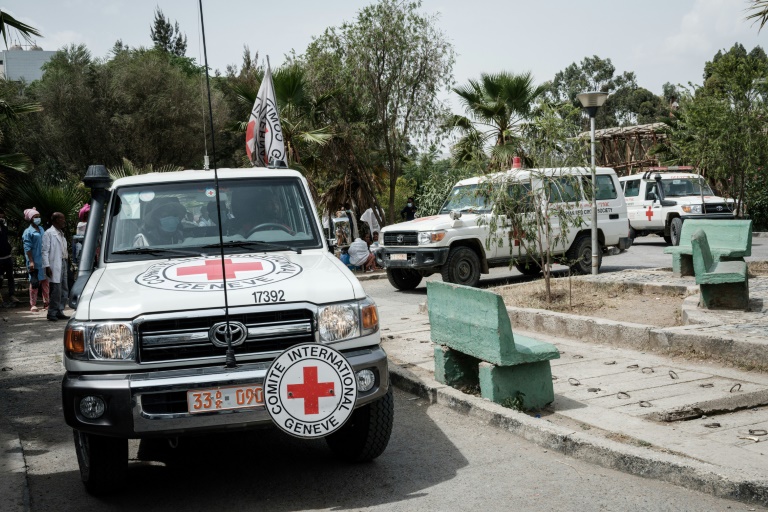
The International Committee of the Red Cross (ICRC) said a medical aid convoy had arrived in the capital of Ethiopia’s war-ravaged Tigray region Tuesday, its first since a peace deal between the federal government and Tigrayan rebels almost two weeks ago.

The restoration of aid deliveries to Tigray was a key part of the breakthrough agreement signed on November 2 to silence the guns in the two-year conflict that has killed untold numbers of people and unleashed a humanitarian crisis in northern Ethiopia.

“ICRC’s first medical supplies have just arrived in Mekele,” the ICRC’s spokesperson in Ethiopia, Jude Fuhnwi, told AFP.

The agency said on Twitter that two trucks had delivered medicines, emergency and first-aid kits to support health facilities in Tigray to treat patients with conditions that need urgent care.

“It is an enormous relief for us to deliver this cargo. The healthcare system in the region is under extreme pressure and these deliveries are a lifeline for people who need medical help,” said Nicolas Von Arx, the head of ICRC’s delegation in Ethiopia. 

“This aid delivery is the first since the resumption of fighting last August and the signing of the Pretoria and Nairobi agreements,” the ICRC added in a statement.

It was referring to the “Cessation of Hostilities” agreement signed by the Ethiopian government and the Tigray People’s Liberation Front (TPLF) in South Africa on November 2 and a follow-up accord reached in the Kenyan capital on Saturday.

The warring sides had agreed in Nairobi to facilitate immediate humanitarian access to “all in need” in Tigray and neighbouring regions with immediate effect.

Tigray, a region of six million people, has been suffering from a severe lack of food and medicine, as well as limited access to basic services including electricity, banking and communications, with the UN warning that many people were on the brink of starvation.

A humanitarian source told AFP late Monday that the UN’s World Food Programme (WFP) was preparing a convoy headed for the town of Shire, which has been under the control of federal forces and their allies since mid-October.

– ‘Make our promise a reality’ –

Earier Tuesday, Ethiopian Prime Minister Abiy Ahmed vowed to fulfil the commitments made in the peace deal and make “our promise a reality”.

As well as the restoration of aid and a cessation of hostilities, the agreement calls for the disarming of TPLF fighters and the re-establishment of federal authority over Tigray.

International pressure for a ceasefire had been mounting since intense fighting reignited in northern Ethiopia in late August after a five-month truce, with pro-government forces capturing a number of key towns in Tigray.

Responding to questions from lawmakers, Abiy said: “We have discussed and signed (the agreement), what is expected from us next is executing the promise we made dutifully.”

A Twitter post by his office later quoted him saying: “We must keep our word by making our promise a reality. We must work hard to avoid problems during the process.”

Abiy has previously said that the Ethiopian government secured 100 percent of what it had sought in the negotiations with the TPLF.

Observers have pointed to many challenges ahead, including the aid issue and the thorny question of Western Tigray, a contested region which has been occupied by pro-Abiy Amhara militias since the war erupted.

The peace deal does not mention the region, raising fears of further conflict down the road.

But Abiy said the issue could be resolved through constitutional means, including a possible referendum.

“We did not go to Pretoria to debate whether Wolkait (in Western Tigray) belongs to Amhara or Tigray as it is neither the place nor the time,” he told lawmakers.

The region is claimed by Tigrayans and Amharas.

The conflict between the TPLF and pro-Abiy forces — which include regional militias and the Eritrean army — has caused an untold number of deaths, forced more than two million people from their homes and driven hundreds of thousands to the brink of famine.

But Abiy did not make any reference to the presence on Ethiopian soil or any possible withdrawal of Eritrean troops, who have played a major role in the conflict but have been accused of atrocities.

Neither the Pretoria nor Nairobi agreements make any mention of Eritrean forces.

The war in Africa’s second most populous country began in November 2020 when Abiy, a Nobel Peace laureate, sent troops into Tigray, accusing the TPLF of attacking federal army camps.

The TPLF had dominated national politics for nearly three decades until Abiy took office in 2018.

str-ayv-txw-amu/ri

Anti-mafia reporter on trial for 'defaming' Italy's far-right PM

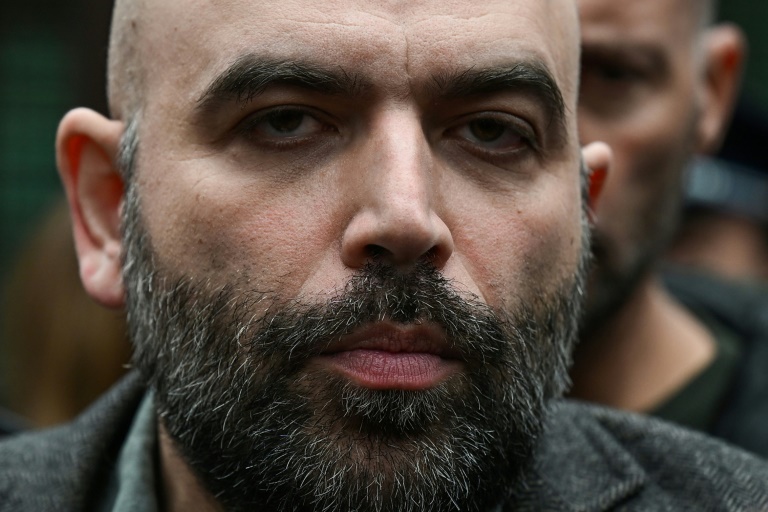
A trial pitting Italy’s far-right Prime Minister Giorgia Meloni against investigative journalist Roberto Saviano opened Tuesday, with the anti-mafia author accused of defamation for an outburst over her stance on migrants.

Meloni’s Brothers of Italy party was in opposition at the time, but took office last month after triumphing at the polls on a nationalist campaign that promised to stop migrants crossing the Mediterranean from North Africa.

Saviano, best known for his international mafia bestseller “Gomorrah”, faces up to three years in prison, if convicted.

In a short speech outside the Rome court, he said Meloni’s attack on those who save lives at sea was “inhuman”. 

The case dates back to December 2020 when he was asked on a political TV chat show for a comment on the death of a six-month-old baby from Guinea in a shipwreck.

The baby, Joseph, had been one of 111 migrants rescued by the Open Arms charity ship, but died before he could receive medical attention.

In footage shot by rescuers and shown to Saviano on the chat show, the baby’s mother — who has just been pulled from the sea without Joseph — can be heard weeping “Where’s my baby? Help, I lose my baby!”

– ‘Infamy, inhuman’ –

A visibly emotional Saviano then blasted Meloni and Matteo Salvini — the leader of the anti-immigrant League party, which is now part of her coalition government —  who have both long used anti-migrant rhetoric.

“I just want to say to Meloni, and Salvini, you bastards! How could you?” Saviano said on the show.

Meloni said in 2019 that charity vessels which rescue migrants “should be sunk”, while Salvini, as interior minister that same year, blocked such vessels from docking.

Salvini joined the criminal proceedings on Tuesday as a civil party seeking damages.

In a speech read out to journalists outside the court after the hearing, Saviano said that he had used the term bastards to highlight the damage done by Meloni and Salvini’s “lies” about charity rescuers.

“How could you be so thoughtless as to isolate, to smear, to transform sea ambulances into pirate ships?” he said.

“Letting people drown isn’t a political opinion. It’s not a political opinion to discredit rescue ambulances, it is infamy, and above all it’s inhuman.”

The judge set the next hearing for December 12.

PEN International, an organisation that defends free speech, sent an open letter to Meloni last week urging her to drop the case.

– ‘Just an insulted woman’ –

Ahead of the trial Saviano, 43, told AFP it was an “unequal confrontation, decidedly grotesque”, while press freedom groups warned it sent a “chilling message” to journalists.

The author, who has been under police protection since publishing “Gomorrah” due to threats from the Naples “Camorra” mafia, said the tactic was to “intimidate one in order to intimidate 100”.

Watchdogs say such trials are symbolic of a culture in Italy in which public figures — often politicians — intimidate reporters with repeated lawsuits.

Meloni’s lawyer Luca Libra said Tuesday there was no intention of “intimidating” anyone.

His client was “just a woman who was insulted… on television in front of millions of people”, he said. 

Meloni would consider whether or not to withdraw the complaint, Libra added.

Italy ranked 58th in the 2022 world press freedom index published by Reporters Without Borders, the lowest level in western Europe.

Tuesday’s trial is not the only one Saviano faces for defamation. He was sued in 2018 by Salvini after calling him “Il Ministro della Malavita”, or minister of the criminal underworld.

That trial is set to open in February.

Red Cross says first aid convoy arrives in Tigray capital

The International Committee of the Red Cross (ICRC) said a medical aid convoy had arrived in the capital of Ethiopia’s war-ravaged Tigray region Tuesday, its first since a peace deal between the federal government and Tigrayan rebels almost two weeks ago.

The restoration of aid deliveries to Tigray was a key part of the breakthrough agreement signed on November 2 to silence the guns in the two-year conflict that has killed untold numbers of people and unleashed a humanitarian crisis in northern Ethiopia.

“ICRC’s first medical supplies have just arrived in Mekele,” the ICRC’s spokesperson in Ethiopia, Jude Fuhnwi, told AFP.

The agency said on Twitter that two trucks had delivered medicines, emergency and first aid kits to support health facilities in Tigray to treat patients with conditions that need urgent care.

“This aid delivery is the first since the resumption of fighting last August and the signing of the Pretoria and Nairobi agreements,” the ICRC added in a statement.

It was referring to the “Cessation of Hostilities” agreement signed by the Ethiopian government and the Tigray People’s Liberation Front (TPLF) in South Africa on November 2 and a follow-up accord reached in the Kenyan capital on Saturday.

The warring sides had agreed in Nairobi to facilitate immediate humanitarian access to “all in need” in Tigray and neighbouring regions with immediate effect.

Tigray, a region of six million people, has been suffering from a severe lack of food and medicine, as well as limited access to basic services including electricity, banking and communications, with the UN warning that many people were on the brink of starvation.

– ‘Make our promise a reality’ –

Earier Tuesday, Ethiopian Prime Minister Abiy Ahmed vowed to fulfil the commitments made in the peace deal and make “our promise a reality”.

As well as the restoration of aid and a cessation of hostilities, the agreement calls for the disarming of TPLF fighters and the re-establishment of federal authority over Tigray.

International pressure for a ceasefire had been mounting since intense fighting reignited in northern Ethiopia in late August after a five-month truce, with pro-government forces capturing a number of key towns in Tigray.

Responding to questions from lawmakers, Abiy said: “We have discussed and signed (the agreement), what is expected from us next is executing the promise we made dutifully.”

A Twitter post by his office later quoted him saying: “We must keep our word by making our promise a reality. We must work hard to avoid problems during the process.”

Abiy has previously said that the Ethiopian government secured 100 percent of what it had sought in the negotiations with the TPLF.

Observers have pointed to many challenges ahead, including the aid issue and the thorny question of Western Tigray, a contested region which has been occupied by pro-Abiy Amhara militias since the war erupted.

The peace deal does not mention the region, raising fears of further conflict down the road.

But Abiy said the issue could be resolved through constitutional means, including a possible referendum.

“We did not go to Pretoria to debate whether Wolkait (in Western Tigray) belongs to Amhara or Tigray as it is neither the place nor the time,” he told lawmakers.

The region is claimed by Tigrayans and Amharas.

The conflict between the TPLF and pro-Abiy forces — which include regional militias and the Eritrean army — has caused an untold number of deaths, forced more than two million people from their homes and driven hundreds of thousands to the brink of famine.

But Abiy did not make any reference to the presence on Ethiopian soil or any possible withdrawal of Eritrean troops, who have played a decisive role in the conflict but have been accused of committing atrocities.

Neither the Pretoria nor Nairobi agreements make any mention of the Eritrean army.

The war in Africa’s second most populous country began in November 2020 when Abiy, a Nobel Peace laureate, sent troops into Tigray, accusing the TPLF of attacking federal army camps.

The TPLF had dominated national politics for nearly three decades until Abiy took office in 2018.

I.Coast to quit UN peacekeeping mission in Mali

Ivory Coast says it will withdraw from the UN’s peacekeeping operations in troubled Mali, a move coinciding with Britain’s announcement that it will quit the mission.

A letter to the MINUSMA mission seen by AFP Tuesday said that Ivorian troops would withdraw by August 2023.

It gave no explanation for the pullout, but Ivory Coast and Mali’s junta are locked in a months-long dispute over the detention of Ivorian troops at Bamako airport.

“By order of the government of Ivory Coast, the permanent mission confirms the progressive withdrawal of Ivorian military personnel and police deployed with MINUSMA,” says the letter sent to the UN Multidimensional Integrated Stabilization Mission in Mali.

Rotations of Ivorian forces scheduled in October and November this year will no longer take place, the letter adds.

The rotations were to apply to a protection unit based in Mopti, to police and to military officers assigned to headquarters duties.

Troops and other personnel deployed in MINUSMA will not be relieved next August as scheduled, it added.

– Troops row –

No official reason for the decision was given but tensions between Abidjan and Bamako have soared since 49 Ivorian solders were arrested upon arrival at Mali’s airport on July 10 and branded mercenaries.

Three have since been released but the rest have been kept in custody on charges of attempting to harm state security. Abidjan insists the soldiers were sent as backup for MINUSMA. 

Several mediation efforts are underway to resolve the crisis, and in early October Ivorian President Alassane Ouattara had said the situation was developing “well.”

On Monday, Britain announced Monday it would cut short the deployment of 300 troops with MINUSMA after relations with the junta soured.

Mali’s elected president, Ibrahim Boubacar Keita, was toppled in August 2020 by officers angered at the failures to roll back a jihadist insurgency that has claimed thousands of lives and driven hundreds of thousands from their homes.

The following year, the military forced out an interim civilian government and started to weave closer ties with the Kremlin, acquiring Russian warplanes and helicopters and bringing in personnel described by the West as Wagner mercenaries.

Relations with France, Mali’s former colonial power and traditional ally, swiftly went downhill.

France pulled out the last of its forces out of the country in August, ending a more-than nine-year commitment in the fight against the jihadists.

“Two coups in three years have undermined international efforts to advance peace,” British Defence Minister James Heappey told parliament.

“This government cannot deploy our nation’s military to provide security when the host country’s government is not willing to work with us to deliver lasting stability and security.”

He added: “The Malian government’s partnership with Wagner group is counterproductive to lasting stability and security in their region.” 

– Major UN mission –

MINUSMA was launched in 2013 to help one of the world’s poorest countries cope with a bloody jihadist campaign.

The UN Security Council renewed its mandate for one year on June 29, although the junta opposed requests to allow freedom of movement for rights investigators with the mission.

MINUSMA is one of the UN’s biggest peacekeeping operations, with 17,557 troops, police, civilians and volunteers deployed as of June, according to the mission’s website.

Ivory Coast has 857 military personnel and 30 police, according to the website. 

MINUSMA is also one of the deadliest missions in UN peacekeeping missions, recording 281 deaths, most of them through hostile acts, especially improvised explosive devices.

In July, Egypt announced it was suspending participation by its 1,035 troops in MINUSMA, a move that came after two of its peacekeepers were killed and five wounded near the northern flashpoint town of Gao.
Campaigners rally COP27 to fight climate disinformation

Campaigners on Tuesday urged the COP27 summit to fight disinformation that undermines efforts to limit deadly global warming, as a survey showed millions of people believe climate change falsehoods.

In an open letter, the campaigners called on UN climate talks delegates and social media giants to adopt a common definition of climate disinformation and misinformation, and work to prevent it.

They also urged the bosses of seven digital giants, including Facebook, Google and Twitter, to implement tough polices preventing false climate information spreading on their platforms, similar to measures taken on the Covid-19 pandemic.

“We cannot beat climate change without tackling climate misinformation and disinformation,” the letter said.

“While emissions continue to rise, humanity faces climate catastrophe, yet vested economic and political interests continue to organise and finance climate misinformation and disinformation to hold back action,” it added.

The letter was signed by 550 groups and individuals, including former leading UN climate official Christiana Figueres and diplomat Laurence Tubiana, one of the architects of the 2015 Paris Agreement, which is the current basis for global targets to curb climate change.

Misinformation is false information that may be shared in good faith. Disinformation is spread with the intent to deceive.

The signatories demanded “swift and robust global action from COP decision-makers and tech platforms to mitigate these threats”.

– ‘Perception gap’ –

The letter accompanied a survey showing the extent that false climate information is believed in six of the world’s major economies.

It found large sections of the populations of Australia, Brazil, Britain, Germany, India and the United States believe false claims about human-caused climate change.

At least 20 percent of those surveyed in each country believe current global warming is a natural phenomenon and not caused by humans.

This is despite global warming’s human causes being exhaustively documented by the UN Intergovernmental Panel on Climate Change, which says human-made climate change is “unequivocal”.

The survey was published by two climate content watchdogs, Climate Action Against Disinformation and the Conscious Advertising Network, and was compiled by polling respondents to YouGov panels weeks ahead of COP27.

“There is a big gap in public perception and the science on issues as basic as whether climate change exists or whether it is mainly caused by humans,” the survey’s authors said.

“This perception gap weakens the public mandate for climate action and undermines the negotiations to achieve the goals of the Paris climate agreement.”

Climate disinformation monitors say the fossil fuel industry has been deliberately sowing doubt about the role of carbon emissions in global warming for decades.

– Belief in ‘hoax’ –

The survey found that 44 percent of people in Australia and 46 percent in the United States believe climate change is not caused mainly by human activity.

In the United States, 23 percent of people think climate change is a hoax made up by “elite” organisations, the survey showed.

In India, 85 percent of the population believed at least one piece of climate misinformation. Among the six countries, that measure was lowest in Britain at 55 percent.

Respondents who consumed news at least five days per week were more likely to believe certain misinformation.

“This suggests that news outlets’ reporting regularly includes misinformation narratives,” the report said.

Facebook, Google and other tech giants have said they are acting to make false climate claims less visible, including in paid advertisements.

But in a detailed study released earlier this year, the Institute for Strategic Dialogue said messages aiming to “deny, deceive and delay” climate action were prevalent across social media.

The ClimateScam hashtag is currently the top term that pops up on Twitter’s search tool when a user types “climate”.

UN Secretary General Antonio Guterres last week used the COP27 stage to strike out at greenwashing — a form of corporate disinformation.

He called for an end to the “toxic cover-up” by companies he said were “using bogus ‘net-zero’ pledges to cover up massive fossil fuel expansion”.

Ex-Kenyan leader visits key DR Congo city amid rebel crisis

Kenya’s former president Uhuru Kenyatta arrived Tuesday in eastern DR Congo’s main city of Goma, AFP correspondents saw, as fresh clashes with M23 rebels occurred just to the north.

Troops in the Democratic Republic of Congo (DRC) were battling M23 fighters in Kibumba, 20 kilometres (12 miles) north of Goma, security officials and local residents said. 

Hundreds of displaced people also began to pour into Goma the same day, the sources said, after seeing troops retreat.

The M23 has recently seized swathes of territory in North Kivu province and is edging towards Goma, an important commercial hub of one million people on the Rwandan border. 

The crisis has cratered relations between the DRC and its smaller central African neighbour Rwanda, which Kinshasa accuses of backing the militia.

Uhuru Kenyatta, a mediator for the seven-nation East African Community (EAC), arrived in Goma on Tuesday after visiting Kinshasa for talks with senior government and United Nations figures.

“There is nothing that can be gained through the barrel of a gun,” the ex-president told reporters on Monday.  

The previous day, the EAC announced it would hold a round of peace talks aimed at defusing the eastern DRC crisis in Kenya’s capital Nairobi on November 21.

Over 120 armed groups roam eastern Congo, many of which are a legacy of regional wars which flared at the turn of the century. 

The M23 — a mostly Congolese Tutsi group — first leapt to prominence in 2012 when it briefly captured Goma before being driven out. 

But the group returned in late 2021 after years of dormancy, claiming the DRC had failed to honour a promise to integrate its fighters into the army, among other grievances.

The DRC expelled Rwanda’s ambassador in late October after a string of M23 battlefield victories. 

Despite official denials from Kigali, an unpublished report for the UN seen by AFP in August pointed to Rwandan involvement with the M23.

Rwanda accuses the Congolese government of colluding with Hutu militants who fled across the border after the 1994 Rwandan genocide.

Algeria jails ex-Sonatrach head for 15 years for graft

An Algerian court on Tuesday handed a 15-year prison sentence to the former head of state energy giant Sonatrach in a corruption case involving an Italian refinery, his lawyer said.

Abdelmoumen Ould Kaddour had been on trial over the 2018 purchase of the Sicilian Augusta oil refinery, the latest ex-official in late president Abdelaziz Bouteflika’s administration to be jailed for alleged corruption.

According to Algerian media, the state oil and gas firm had paid ExxonMobil subsidiary Esso Italiana $720 million for the site and associated infrastructure, seen as overpriced for a refinery in operation since the 1950s.

Prosecutors said the deal had cost Sonatrach over $2 billion, including some $916 million for the fuel stocked at the site, as well as renovation costs.

Ould Kaddour, accused of squandering public funds, abuse of office and conflict of interest, was “sentenced to 15 years in prison without parole”, his lawyer Miloud Brahimi said.

Sonatrach’s former deputy chief Ahmed Mazighi, who oversaw the purchase, was jailed for seven years, Brahimi said.

Another former Sonatrach official indicted in the case was jailed for three years and a fourth was released, the lawyer added.

Ould Kaddour, who was close to Bouteflika, had been extradited from the United Arab Emirates in August last year after being detained on an international arrest warrant.

Appointed as Sonatrach head in March 2017, he was sacked just three weeks after Bouteflika’s April 2019 resignation amid vast protests against his 20-year rule.

EU vows to raise its climate target at COP27

The EU vowed Tuesday at UN climate talks to raise its emissions reduction target, as developing nations admonished rich polluters for falling short on efforts to help them cope with global warming.

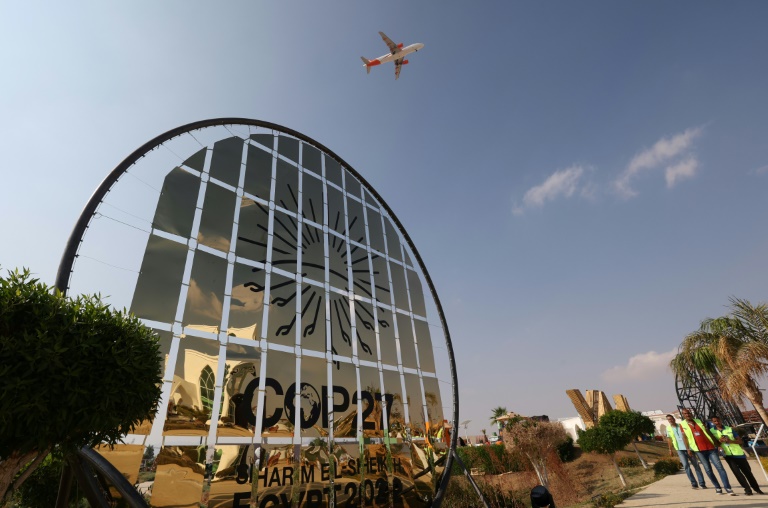
The COP27 conference in Egypt has been dominated by calls for wealthy nations to fulfil pledges to fund the green transitions of poorer countries least responsible for global emissions, help build their resilience, and compensate them for climate-linked losses.

The meeting comes as global CO2 emissions are slated to reach an all-time high this year, making the aspirational goal of limiting warming to 1.5 degrees Celsius compared to preindustrial levels ever more elusive.

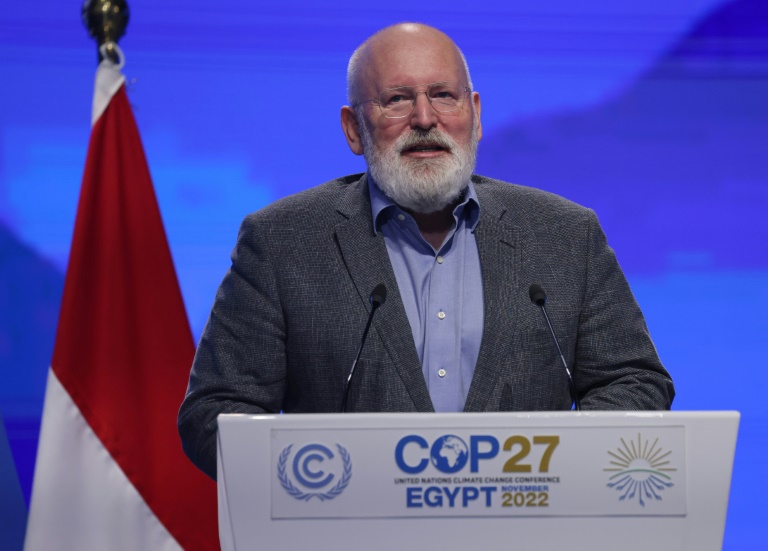
European Commission Vice President Frans Timmermans told delegates that the European Union would exceed its original plan to reduce its greenhouse gas emissions by 55 percent by 2030.

The 27-nation bloc will now be able to cut those emissions by 57 percent from 1990 levels, he said, pointing to agreements on phasing out fossil fuel-powered cars and protecting forests that serve as “carbon sinks”.

“The European Union is here to move forwards, not backwards,” Timmermans told COP27 delegates.

The invasion of Ukraine by energy exporter Russia has cast a shadow over the talks in Egypt, with activists accusing Europeans of seeking to tap Africa for natural gas following Russian supply cuts.

But Timmermans denied the bloc was in a “dash for gas” in the wake of the Ukraine conflict.

“So don’t let anybody tell you, here or outside, that the EU is backtracking,” he said.

Watchdog groups were not impressed.

“This small increase announced today at COP27 doesn’t do justice to the calls from the most vulnerable countries at the front lines,” said Chiara Martinelli, of Climate Action Network Europe.

“If the EU, with a heavy history of emitting greenhouse gases, doesn’t lead on mitigating climate change, who will?” 

– Major emitters’ ‘hypocrisy’ –

Addressing a high-level session, ministers from developing nations took turns criticising wealthy nations.

Belize Climate Change Minister Orlando Habet called for more action from the G20 group of the world’s wealthiest nations, which are responsible for 80 percent of global emissions and are meeting at a summit in Indonesia. 

“In how many COPs have we been arguing for urgent climate action? And how many more do we need, how many lives do we need to sacrifice?” Habet said.

Shawn Edward, the sustainable development minister from the Caribbean island of Saint Lucia, said major emitters were “backpedalling” by making “small gains” in clean energy initiatives while raising fossil fuel investments and profits at the same time.

“We the people of Saint Lucia suffer the consequences of this hypocrisy,” he said, describing millions of dollars in damages caused by a recent tropical storm that wracked his island nation.

UN climate negotiations often go into overtime and COP27, scheduled to end on Friday, could be no different.

The first draft of the final declaration — which must be approved by all parties — only has bullet points so far, including a line on the “urgency of action to keep 1.5C in reach”, something top emitter China has opposed in the past.

– Compensation fight –

Wealthy and developing nations are sharply divided over money.

Developing countries say this year’s floods in Pakistan, which have cost the country up to $40 billion, have highlighted the pressing need to create a “loss and damage” compensation fund.

In a small breakthrough, the United States and the European Union agreed to have the issue discussed at COP27, though they favour using existing financial channels.

The draft declaration mentions the “need for funding arrangements to address” loss and damage — language previously used by the United States and Europeans. 

Timmermans told reporters that the EU has “demonstrated openness to discuss moving forward on loss and damage” but that he was “not quite sure we would be able this week to find consensus on the new financial mechanism”.

Conrod Hunte of Antigua and Barbuda, lead negotiator for the Alliance of Small Island States, said stalling talks would be a “devastating blow”. 

“Antigua and Barbuda will not leave here without a loss and damage fund,” he said.

Close Bitnami banner
Bitnami