Africa Business

'Toxic cover-up': UN draws red line around net zero greenwashing

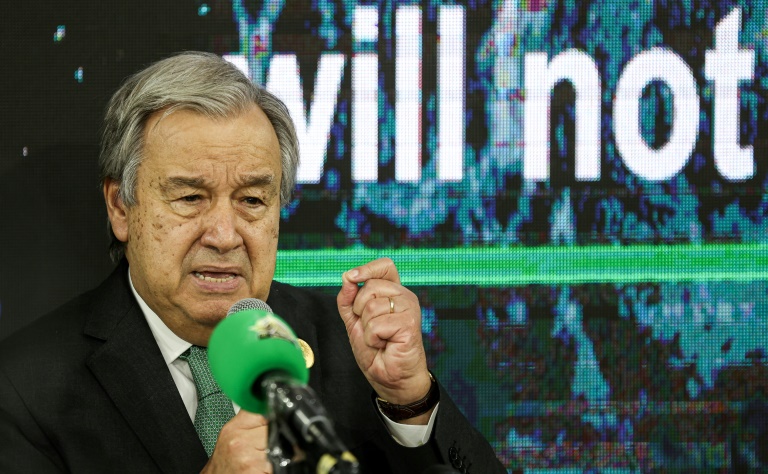
The UN’s chief called Tuesday for an end to a “toxic cover-up” by companies as a sweeping report said they cannot claim to be net zero if they invest in new fossil fuels, cause deforestation or offset emissions instead of reducing them.

Antonio Guterres said businesses as well as cities and regions should update their voluntary net zero pledges within a year to comply with the recommendations by UN experts, as he trained his sights on fossil fuel firms and “their financial enablers”.

“Using bogus ‘net-zero’ pledges to cover up massive fossil fuel expansion is reprehensible. It is rank deception,” he said at the launch of the report at the COP27 conference in Egypt.  

“This toxic cover-up could push our world over the climate cliff. The sham must end.”

The UN expert panel, convened by Guterres after UN climate talks in Glasgow last year, set its sights on drawing a “red line” around greenwashing in net zero targets from companies, cities and regions.

A huge surge in decarbonisation pledges in recent months means that around 90 percent of the global economy is now covered by some sort of promise of carbon neutrality, according to Net Zero Tracker.      

“It’s very easy to make an announcement that you are going to be net zero by 2050. But you have to walk the talk and what we’ve seen is that there is not enough action,” said Catherine McKenna, Canada’s former environment and climate change minister, who led the panel.

“We have to do two things to reach net zero — we need to drastically reduce emissions, and we need to invest in clean (energy),” she told AFP.

She added it was currently “extremely hard” to properly evaluate whether firms were cutting emissions and called for greater transparency. 

The report lists a slew of recommendations, including calling on governments to begin putting in place binding regulations.  

– ‘Do the work’ –

A central recommendation from the panel is that net zero plans must be in line with the Paris Agreement’s most ambitious aim of limiting global warming to 1.5 degrees Celsius above pre-industrial temperatures. 

But to do that UN scientists say that global emissions must be slashed virtually in half by 2030, and after that they should be reduced to net zero by 2050. 

There have been growing concerns that some firms have not aligned their efforts with the latest climate science — by failing to account for emissions from key activities, or by saying they can make up for increasing pollution today with “carbon credits” from activities like tree planting.    

The report recommends that credits should not be used to “offset” emissions, until after a firm has done everything possible to cut emissions in line with the 1.5C target and that if they are used at all they should be from a reliable and verified source. 

“The reality is you can’t offset your way to net zero,” McKenna told AFP. 

“You don’t get an A for showing up in class. You get an A for doing the work and you can’t pay someone else to do it, you have got to do it yourself.”

The report added that net zero pledges should include short term targets every five years, beginning in 2025.

It stressed that these should cover all greenhouse gas emissions from all activities — including supply chains for businesses and investments for financial institutions. 

– ‘Watershed moment’ –

Net zero is “entirely incompatible” with any new fossil fuel investment, the report said, although McKenna said oil and gas companies could still have these pledges if they swiftly transition to renewables.

Firms would also not be able to continue activities that result in deforestation and still claim they are decarbonising.

“We find that too often too many businesses continue to rely on business models that result in the destruction of natural ecosystems,” said panel member Arunabha Ghosh, of the Council on Energy Environment and Water, a think tank.

“We want to show that any company doing this is working against net zero.”

The report also said businesses with net zero plans should not lobby against climate action.

“Today’s announcement is a watershed moment when it comes to corporate lobbying on climate policy, which has long stymied action from governments,” said Will Aitchison of the think tank InfluenceMap.

In September, an analysis by CDP, a non-profit that runs a global disclosure system for companies to manage their environmental impacts, found that the decarbonisation plans of major corporations from G7 nations put Earth on course to heat a potentially catastrophic 2.7C.
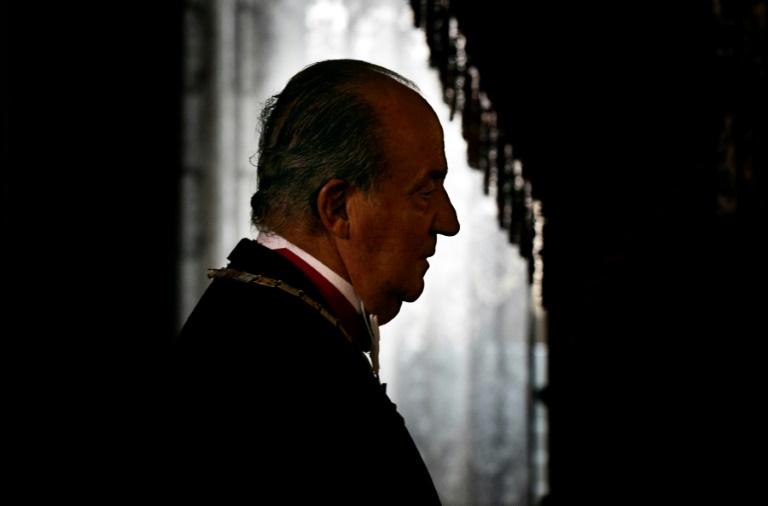
Spain's former king appeals for immunity over UK harassment case

Spain’s former king, Juan Carlos I, on Tuesday resumed a UK court battle to win immunity over harassment claims by his former lover, just as a new podcast featuring her claims is released.

Corinna zu Sayn-Wittgenstein-Sayn, 58, is seeking personal injury damages from the 84-year-old former monarch, who ruled Spain from 1975 until his abdication in 2014.

The British resident has accused Juan Carlos, who now lives in the United Arab Emirates, of spying on and harassing her after their relationship soured in 2012.

She filed a harassment suit in London in 2020, alleging he pressured her to return gifts worth 65 million euros ($65 million), including works of art and jewellery.

Juan Carlos, listed in court under his full name Juan Carlos Alfonso Victor Maria De Borbon y Borbon, has not appeared at any hearings so far and strenuously denies any wrongdoing.

In March, the High Court in London rejected his claim that a 1978 UK law meant English courts had no jurisdiction to hear the case because he has state immunity as a royal.

Judge Matthew Nicklin said that “whatever special status the defendant retained under the law and constitution of Spain, he was no longer a ‘sovereign’ or ‘head of state’ so as to entitle him to personal immunity”.

– ‘Agents’ –

The former king’s lawyers appealed and won permission for a legal challenge concerning the period when Juan Carlos was on the throne.

Three judges at the Court of Appeal began hearing legal arguments on Tuesday. A ruling is expected in a few weeks, after which the harassment lawsuit could continue.

Setting out his position, Juan Carlos’s lawyer, Tim Otty, argued that immunity is “a procedural bar” and says “nothing about the lawfulness or the morality of the conduct alleged”. 

However, zu Sayn-Wittgenstein-Sayn’s lawyer, James Lewis, argued the appeal should be dismissed, claiming the alleged harassment had involved “intelligence and surveillance” personnel acting as the former king’s “agents”.

The hearing comes as zu Sayn-Wittgenstein-Sayn, who was also not present in court on Tuesday, has been discussing the relationship in a new podcast series called “Corinna and the King”.

Its release has stirred fresh controversy in Spain. Its creators — two London-based journalists — defend its timing and independence from zu Sayn-Wittgenstein-Sayn.

“Imagine that someone who says they love your children — and that you’re the love of their life — would frame you in a criminal investigation,” she alleges in the first episode, which was made available on Monday.

– Shots fired –

Court submissions claim Juan Carlos, who is married, was in an “intimate romantic relationship” with the divorcee of a German prince from 2004 to 2009 and showered her with gifts.

Zu Sayn-Wittgenstein-Sayn alleged that Juan Carlos began harassing her after their relationship broke down, using threats, break-ins at her properties and surveillance.

Juan Carlos “demanded the return of gifts”, she claimed, and she suffered “trespass and criminal damage” at her home in rural central England.

Gunshots were fired at and damaged security cameras at the front gate of the property, she alleged, accusing the former king of being angry at her refusals.

The couple’s relationship became public knowledge in 2012, when the monarch broke a hip while on an elephant hunting holiday in Botswana with zu Sayn-Wittgenstein-Sayn and had to be flown home. 

The revelation of the luxury trip, which came at the height of a recession in Spain, sparking public anger there.

Two years later, dogged by scandals and health problems, Juan Carlos abdicated at the age of 76 in favour of his son, Felipe VI, who has since distanced himself from his father.

Juan Carlos went into self-imposed exile in the United Arab Emirates in 2020. 

He and his son attended the state funeral of Queen Elizabeth II in September and were seated together.

Juan Carlos was protected for decades by his huge popularity as a key figure in Spain’s transition to democracy following the death of dictator Francisco Franco in 1975.

The excesses of the monarch only came to light in the last years of his reign, triggering a string of investigations over corruption scandals.

S.Africa slams 'out of reach' climate aid for poorer nations

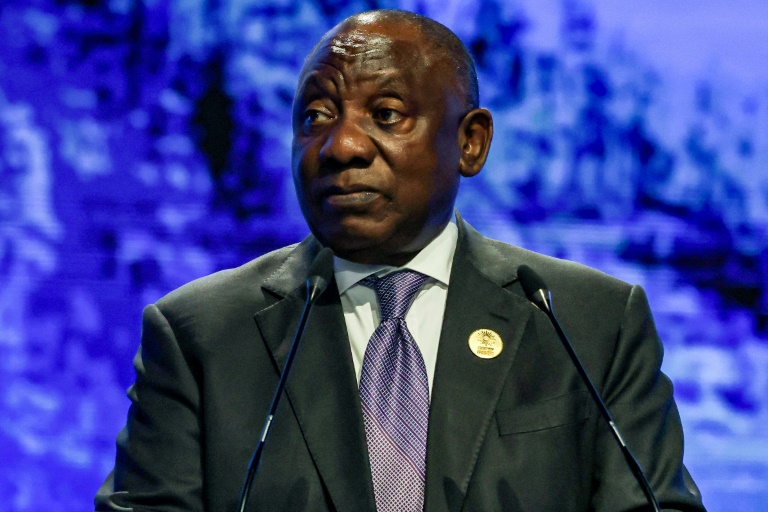
South Africa’s president, whose coal-dependent country is among the world’s biggest polluters, Tuesday criticised international funders for making it difficult for poorer nations to access aid to fight climate change.

Support from multilateral organisations “is out of reach of the majority of the world’s population due to lending policies that are risk-averse and carry onerous costs as well as conditionalities,” Cyril Ramaphosa told the UN COP27 climate summit.

Addressing the meeting in Egypt’s Sharm el-Sheikh, he said “funding institutions need to transform … the way in which they fund projects that will enable us to develop with regard to climate change”.

According to a UN-backed report released Tuesday, developing countries and emerging economies need investments well beyond $2 trillion annually by 2030 if the world is to stop the global warming juggernaut.

South Africa, one of the world’s top 12 polluters, last week revealed that it will require about $98 billion over the next five years to transition to net zero.

Last year, at the COP26 in Glasgow, Pretoria secured $8.5 billion in loans and grants from a group of rich countries towards its green transition.

“We need a clear roadmap to deliver on the Glasgow decision to double adaptation financing by 2025” Ramaphosa said in his address.

He called on rich nations to honour their commitments “because failing to honour these commitments breaks trust and confidence in the process”.

The head of state also assured the summit that South Africa, which generates about 80 percent of its electricity through coal, was on course to retire several of its ageing coal-fired power plants in the next eight years.

The World Bank last week granted South Africa $497 million to decommission one of its largest coal-fired power plants and promote renewable energy.

South Africa will require at least $500 billion dollars to achieve carbon neutrality by 2050, according to the bank.

burs-zam/sn/fz

Le Roux returns for Springboks to counter France's 'unique' kicking game

South Africa head coach Jacques Nienaber said on Tuesday he had named Willie le Roux at full-back for this weekend’s Autumn Nations Series Test with France in Marseille to deal with the hosts’ “unique” kicking game.

Le Roux, 33, is one of five changes from last weekend’s loss to Ireland as winger Makazole Mapimpi drops to the world champions’ bench for Saturday’s game in Marseille.

Les Bleus are on a record unbeaten run of 11 Tests against all opposition and last played the Springboks in 2018. 

“The back-three we’ve selected, we think it’s the best combination to suit that,” Nienaber told reporters.

“It’s a very unique kicking game.

“For me, from a coaching perspective, it’s exciting to see that,” he added from their base up the Mediterranean coast in Toulon.

Scrum-half Faf de Klerk, lock Franco Mostert in for the injured Lood de Jager, hooker Bongi Mbonambi and loose-head prop Ox Nche are the other new faces for the game at the Stade Velodrome.

De Jager has a shoulder injury while Jaden Hendrikse, who started last weekend’s defeat in Dublin instead of de Klerk, misses out on the matchday squad.

Nienaber has kept faith with Damian Willemse at fly-half despite the 24-year-old missing a simple shot at goal against the Irish and then handing the kicking duties over to Cheslin Kolbe.

Willemse had been behind Handre Pollard and Elton Jantjies in the pecking order before the tour but both are missing.

Pollard is injured and Jantjies is dealing with personal issues.

“I don’t want to call guys our third choice, even though he’s playing now only his fourth Test at 10, we all know the quality of the player,” Nienaber said.

“It’s different to go into a Test match with a Springbok on your chest and you have to kick in front of 85,000 people and you know it’s for your country.

“It’s a different type of pressure. 

“The only way players get better in that situation is to play in that situation,” he added.

Uncapped fly-half Manie Libbok, who was the United Rugby Championship’s leading scorer last season, is named on the bench alongside Montpellier’s Cobus Reinach.

“Manie, meanwhile, has showed his big match temperament in the United Rugby Championship and he has been training well since joining the team, so if he gets a run, it will be a great occasion to make his Test debut,” Nienaber said.

“A guy like Cobus will also bring a different dimension to our attack, and it is a bonus that he knows the conditions in France and has also played with some of their players,” he added.

Team (15-1)

Willie le Roux; Cheslin Kolbe; Jesse Kriel, Damian de Allende, Kurt-Lee Arendse; Damian Willemse, Faf de Klerk; Jasper Wiese, Pieter-Steph du Toit, Siya Kolisi (capt); Franco Mostert, Eben Etzebeth; Frans Malherbe, Bongi Mbonambi, Ox Nche

Replacements: Malcolm Marx, Steve Kitshoff, Vincent Koch, Marvin Orie, Kwagga Smith, Cobus Reinach, Manie Libbok, Makazole Mapimpi

Coach: Jacques Nienaber (RSA)

'We will have nothing': Niger kidnap victims fear border bandits

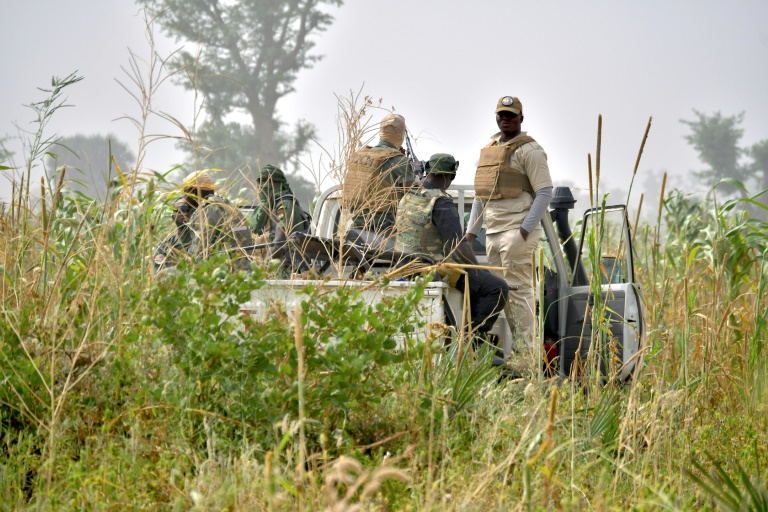
Kidnapped, held captive and raped by four guards, Messaouda is now free, but too afraid to return to her village, near the southern Niger border with Nigeria.

She was held hostage last year in the forest between the two African countries for 19 days by bandits who repeatedly attacked her and fellow captives, until a ransom was paid for their release.

Messaouda, in her 20’s, was forced from her home in the Maradi region by armed bandits along with her two co-wives, a six-month-old baby and a one-year old child, she told AFP.

“They came to steal cattle in our village fourteen days before our kidnapping,” she told AFP.

But when the bandits returned, it wasn’t for livestock. 

“On the night we had been kidnapped, it was raining like a tornado,” she recalls.

“Our husband was at the mosque for the evening prayer… (when) a dozen people arrived in our home (and) told us to come.”

The group were released only after the payment of two million CFA francs (3,000 euros) in ransom.

They have since settled in another village and Messaouda came to the town of Madarounfa to meet AFP.

Her story is similar to that of thousands of other victims in neighbouring Nigeria where armed bandits reign by terror and demand ransoms for their victims.

Hostages are usually released after ransom payment to the gangs, who reputedly hole up in the vast Rugu forest straddling Zamfara, Katsina, Kaduna and Niger states.

But the practice is increasingly common in southern Niger — the world’s poorest country by the benchmark of the UN’s Human Development Index.

The rise in kidnappings is becoming “really worrying”, said regional governor Chaibou Aboubacar. 

Niger has been hit hard by the jihadist insurgency that began in northern Mali in 2012.

The country faces an explosive mixture of a climate and food crises, as well as a young, poor population in need of jobs — some of whom seek to arm themselves in response to the bandit attacks alongt the porous border.

– ‘Operation Hedgehog’ –

In his small office, Souffle de Maradi newspaper editor in chief Maham Kaouge writes down every attack, every kidnapping and every ransom in their region.

In 2021, he counted 91 people kidnapped — one every four days.

Some 51 million CFA francs (80,000 euros) have been paid in ransoms in total, according to the journalist.

One of the kidnap victims was Hamissou, who asked not to be fully identified. The 50-year-old was taken by six armed men in March this year and held for 17 days in the Nigerian forest.

His family, two wives and eleven children managed to collect the ransom by selling their land.

But the terrifying experience left him determined to try and do what he could against the bandits.

Otherwise “soon we will have nothing”, he says.

“It is important for us who are from Maradi to have our own statistics, which are verifiable.”

He also plans to join a local vigilance committee in the village, which uses homemade weapons to try and defend the community.

Some suggest that these groups are secretly supported by the state.

Governor Chaibou has denied it, but says he is open to “any proposal from all or part of the population” that could help tackle the problem.

But the main pillar of government policy remains military action, he told AFP.

Soldiers, trained by the Belgians, have been deployed along the border with Nigeria in a military operation called “Hedgehog Hunt”.

“Maintaining social cohesion is the main challenge,” says Hassan Baka, from the Association for the Revitalization of Livestock in Niger, one of the main groups for breeders in the region.

Together with local officials, Baka helps organise debates in the nearby villages so that “all the communities understand we are linked by the same destiny”.

A cooperation framework launched in 2017 between Maradi and Nigeria’s Katsina region will soon be extended to all parts of southern Niger and more Nigerian states.

Baka and local university teacher Nouhou Salifou Jangorzo say they share the real fear that the simmering tensions and violence will morph into the establishment of jihadist groups in the fertile border region.

It will be a “great catastrophe” on the day “when this banditry becomes terrorism,” the teacher says.

At COP27, US says election won't disrupt climate plan

The United States sought to reassure the UN climate summit in Egypt on Tuesday that it will stick to its energy transition even if Republicans triumph in midterm elections.

The COP27 talks have been dominated by calls for wealthier nations to step up their commitments to cut greenhouse gas emissions and fulfil pledges to financially help poorer nations green their economies.

Developing countries devastated by natural disasters have argued for a windfall tax on the profits of oil companies and demanded that rich polluters compensate them for the damage caused by their emissions.

But the US midterm elections have also loomed large over the summit as President Joe Biden’s Democrats face a tough battle to hang on to their majority in Congress against Republicans, who are less favourable to international climate action.

A Republican victory could be a boon to the ambitions of former president Donald Trump, who is expected to make another bid for the White House.

Trump had pulled the United States out of the 2015 Paris Agreement on climate change. Biden returned the United States to the pact on his first day in office in 2020.

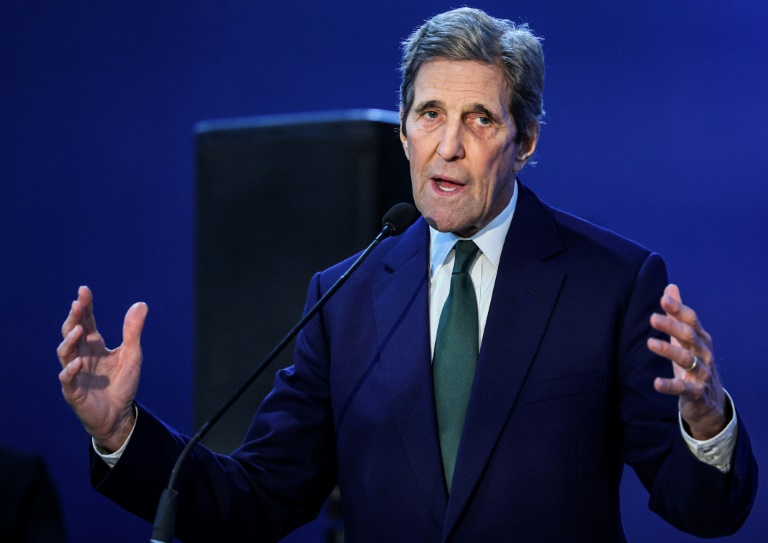
The “climate crisis doesn’t just threaten our infrastructure, economy and security — it threatens every single aspect of our lives on a daily basis,” Kerry said on the sidelines of the summit in the Red Sea resort of Sharm el-Sheikh.

He said that even if Democrats lose the election, “President Biden is more determined than ever to continue what we are doing.” 

“And most of what we are doing cannot be changed by anybody else who comes along,” Kerry said. “The marketplace has made its decision to do what we need to do to respond to the climate crisis.”

Biden won a major victory earlier this year when Congress passed the “Inflation Reduction Act”, which will see vast spending on green energy initiatives.

Some 100 world leaders were attending the summit on Monday and Tuesday but Biden will only come on Friday after the midterms. He then heads to Cambodia for the annual US-ASEAN summit and then on to Indonesia for a G20 summit.

– Oil profit tax –

The first day of the summit was marked by dire warnings from UN chief Antonio Guterres, who told the COP27 that humanity faces a stark choice: “cooperate or perish”.

Nations worldwide are coping with increasingly intense natural disasters that have taken thousands of lives this year and cost billions of dollars.

They range from devastating floods in Nigeria and Pakistan to droughts in the United States and several African nations, as well as unprecedented heatwaves across three continents.

Countries are under pressure to step up efforts to reduce emissions in order to meet the ambitious goal of preventing temperatures from rising by more than 1.5 degrees Celsius above the pre-industrial era.

A UN-backed report said Tuesday that developing countries and emerging economies, excluding China, need investments well beyond $2 trillion per year by 2030 if the world is to stop the global warming juggernaut and cope with its impacts.

One after the other, leaders of developing nations called for the establishment of a “loss and damage” fund that would compensate them for the destruction caused by natural disasters, arguing that rich nations are responsible for the biggest share of emissions harming the planet.

Antigua and Barbuda Prime Minister Gaston Browne — speaking on behalf of a group of small island nations endangered by rising sea levels and tropical storms — said it was time to tax the windfall profits of oil companies to pay for loss and damage.

“While they are profiting, the planet is burning,” Browne told fellow leaders.

Barbados Prime Minister Mia Mottley called Monday for a 10 percent tax on oil companies to fund loss and damage.

UAE, Egypt ink major wind energy deal on COP27 sidelines

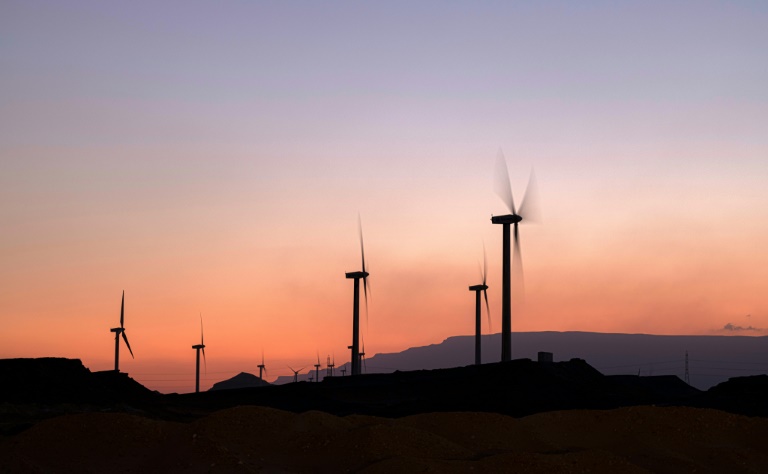
The United Arab Emirates and Egypt agreed Tuesday to develop one of the world’s largest wind farms in a deal struck on the sidelines of the UN’s COP27 climate summit in Sharm el-Sheikh. 

The 10-gigawatt (GW) onshore wind project in Egypt will produce 47,790 GWh of clean energy annually once it is completed, the UAE’s state news agency WAM said in a statement, without specifying an exact timeframe. 

It will offset 23.8 million tonnes of carbon dioxide emissions – equivalent to around nine percent of Egypt’s current CO2 output, according to WAM.

The wind farm will also save Egypt an estimated $5 billion in annual natural gas costs and help create as many as 100,000 jobs, it said. 

Emirati President Sheikh Mohamed bin Zayed Al-Nahyan joined his Egyptian counterpart Abdel Fattah al-Sisi at the signing of the agreement between the UAE’s Masdar renewable energy firm and Egypt’s Infinity Power and Hassan Allam Utilities.

In a statement on Twitter, Sheikh Mohamed said the deal was “consistent with our commitment to advance renewable energy solutions that support sustainable development”.

The UN’s COP27 climate summit kicked off Sunday in Egypt with warnings against backsliding on efforts to cut emissions and calls for rich nations to compensate poor countries after a year of extreme weather disasters.  

“We will endeavour to take forward the gains made here at COP27, as the UAE prepares to host COP28 next year,” WAM quoted Emirati industry minister Sultan Ahmed Al Jaber as saying. 

COP28 will be held in the UAE from November 6-17, 2023. 

DR Congo deploys fighter jets against M23 rebels

DR Congo’s military has deployed two war planes against M23 rebels in the conflict-torn east, provoking a rebuke Monday from neighbouring Rwanda after one jet entered the country’s airspace.

Rwanda’s government stated that a Sukhoi-25 aircraft from the Democratic Republic of Congo had violated its airspace on Monday morning, allegedly briefly touching down in the small central African nation. 

“No military action was taken by Rwanda in response, and the jet returned to DRC,” the statement added, explaining that the government had formally protested the move. 

The DRC’s government admitted one of its jets had “unfortunately” entered Rwandan airspace. It added that just as it is committed to its own territorial integrity, Congo has “never harboured the intention of violating that of its neighbour’s”. 

The incident comes as tensions between the DRC and Rwanda are at their highest in years, with Kinshasa accusing Kigali of backing the resurgent M23 rebels. 

A mostly Congolese Tutsi group, the M23 first leapt to prominence in 2012 when it briefly captured the main city in eastern DRC, Goma, before being driven out, and then lying dormant for years.

But the group resumed fighting in late 2021, claiming the DRC had failed to honour a pledge to integrate them into the army, among other grievances. 

The rebels have won a string of victories against the Congolese army in North Kivu province in recent weeks, dramatically increasing the territory under their control. 

The DRC expelled the Rwandan ambassador in response to escalating violence. 

But details about the Congolese government’s deployments of jets — a new twist in the conflict — remain unclear.

AFP journalists saw two fighter jets take off from Goma airport on Monday morning. 

A resident of the settlement of Kiwanja in North Kivu, which recently fell into M23 hands, also told AFP a jet had flown overhead that morning. 

The current frontlines are thought to be situated near the town of Rugari, 30 kilometres (18 miles) from Goma, and an important commercial hub of about one million people.

– Vigilance groups –

A Congolese military spokesman in Goma, Colonel Guillaume Ndjike Kaiko, the DRC will continue to fight so long as rebels occupy a “single centimetre” of its territory. 

“We are being attacked and the DRC has the right to put all means at its disposal,” Kaiko said. 

In a national address on Thursday, DRC President Felix Tshisekedi accused Rwanda of seeking to destabilise eastern Congo to appropriate the region’s mineral wealth.

He also urged youngsters to enlist in the army as well as form “vigilance groups” against the M23.

Kaiko said 3,000 people had already responded to the call in Goma.

-‘Beat the rebels’-

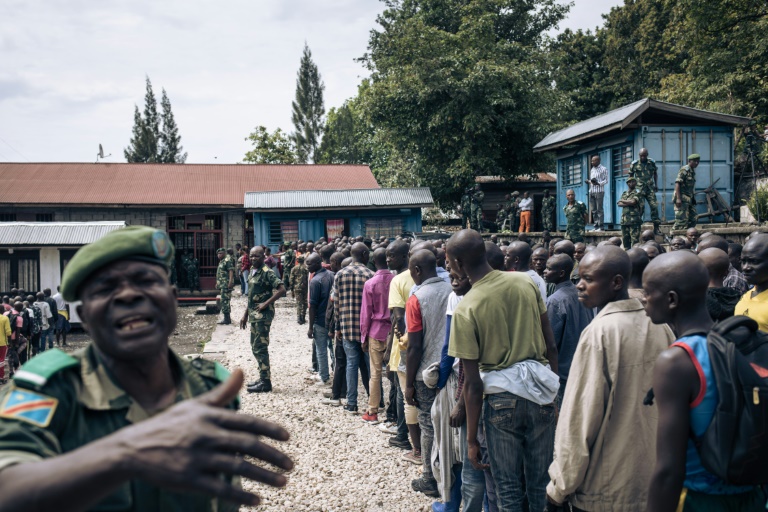
Near a military base in the city on Monday morning, hundreds of recruits lined up in formation, with some holding dummy wooden guns. 

A general told them they would undergo training before the army decides their role.

“Real Congolese must join the army, to beat the rebels,” said Daniel, a 28-year-old recruit, before singing songs advocating national unity with his comrades.

A 25-year-old woman named Solange echoed a similar martial spirit. 

“I want to fight against Rwanda,” she said. “I give my life to the nation”. 

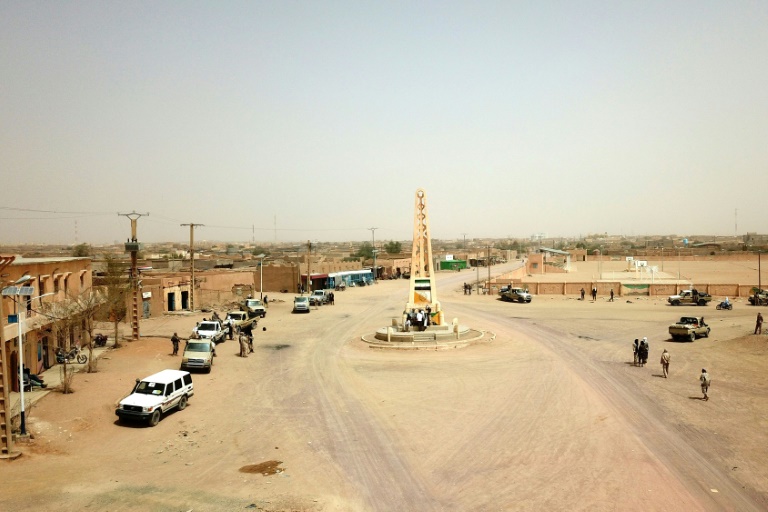
Top Mali commander calls on all Tuaregs to fight Islamic State group

A leading commander in Mali’s army has called on ethnic Tuaregs to fight jihadists in the north of the country in a WhatsApp audio message authenticated Monday by AFP.

General El Hadj Ag Gamou, himself a Tuareg and a major figure in the Malian army’s fight against the Islamic State in the Great Sahara (ISGS) — which is affiliated with the Islamic State organisation — called on the military help of all Tuaregs inside and outside the country.

The Tuareg community is made up of dozens of nomadic sub-communities settled in the Sahara across several countries, mainly Mali, Algeria, Niger and Libya.

In the Tamashek-language message, he said he would “give 10 days to all young Tuaregs from Algeria, Libya and elsewhere to reach Gao”, the largest city in northern Mali, which has been plagued by jihadist violence.

Ag Gamou is one of the leaders of a pro-government armed group, the Self-Defence Group of Imghad Tuaregs and Their Allies (GATIA), as well as a general in the national army.

ISGS has since March increased its offensives in the expansive regions of Gao and Menaka.

The UN has repeatedly expressed its concern about the deteriorating situation, and labour unions in the Gao region have called for a 48-hour strike this week to protest against the situation and “government inaction”.

As of Monday, the ruling junta had not yet reacted to Ag Gamou’s remarks.

The state has a very weak presence around Gao, and residents, mainly nomads living in camps scattered across the desert, are frequently caught in the crossfire.

Civilians are often subjected to reprisals by jihadists who accuse them of collaborating with the enemy. Others have been deprived of their means of subsistence.

In 2012, armed separatist groups made up mostly of Tuareg fighters declared a territory in northern Mali independent. 

They signed a peace agreement with Bamako in 2015. 

Other Tuaregs have joined the Al-Qaeda-linked group Jama’at Nasr al‑Islam wal Muslimin, or JNIM — now led by Iyad Ag Ghali, who is himself a Tuareg.

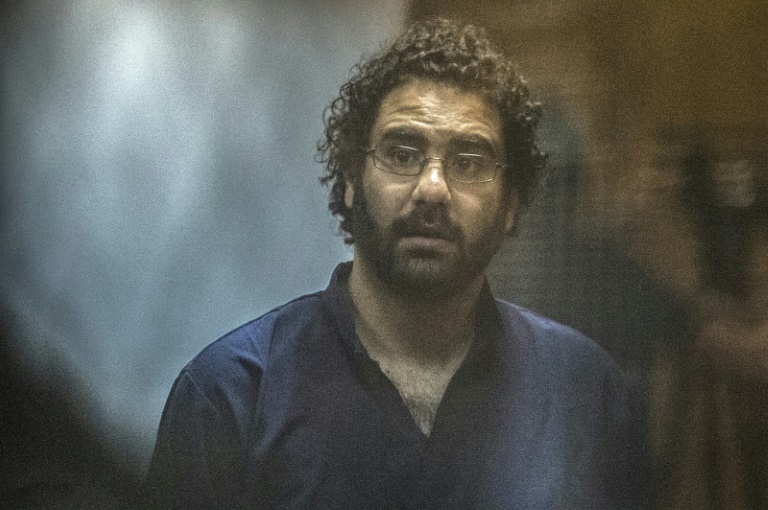
Jailed Egypt dissident's death in 'no one's interest', sister says

The possible death of jailed British-Egyptian dissident Alaa Abdel Fattah in prison is “in no one’s interest”, his sister Sanaa Seif said, nearly two days after he started refusing water.

Following a seven-month hunger strike during which he only had 100 calories per day, Abdel Fattah stopped drinking water on Sunday to coincide with the opening of the United Nations COP27 climate summit in Egypt.

Widely considered Egypt’s best-known dissident, he has been sentenced to five years in prison for “spreading false news”, having already spent the better part of the past decade behind bars.

“We are talking about an innocent man who has unjustly spent nine years in prison,” Seif said from the climate summit in the Red Sea resort of Sharm el-Sheikh, where she travelled to appeal to world leaders to press for his release.

Seif, her sister Mona, her mother Laila Soueif and her aunt, celebrated novelist Adhaf Soueif, have campaigned worldwide for the release of the activist, who gained British citizenship through his UK-born mother in April.

“We need sensible people to intervene,” Seif said in an interview with AFP. “I put my hopes in the British delegation because as his sister, I can’t give up or tell myself that my brother will die.”

She acknowledged the risk of travelling to Sharm el-Sheikh, with its heavy security restrictions, saying: “I admit, I was afraid to come.”

“But it’s our last resort,” she said.

“I came so that Alaa wouldn’t be forgotten. I want to remind both Egyptian and British officials that my presence means that someone is dying and that it’s possible to save him.”

British Prime Minister Rishi Sunak raised Abdel Fattah’s case in a meeting with his Egyptian counterpart Abdel Fattah al-Sisi on Monday, “stressing the UK Government’s deep concern on this issue”, a Downing Street spokesperson said.

Sunak said he “hoped to see this resolved as soon as possible and would continue to press for progress”, the spokesperson said.

– ‘Continue the fight’ –

Amnesty International chief Agnes Callamard on Sunday warned that “there is not a lot of time — 72 hours at best,” referring to Abdel Fattah’s possible remaining lifespan.

But Egyptian Foreign Minister Sameh Shoukry assured that the dissident “benefits from all necessary care in prison”, in an interview with CNBC Monday.

Seif nonetheless warned that “the way his case is handled only accelerates the destabilisation of the regime”.

She accused Egypt of using the COP27 summit to “erase its bad reputation in terms of human rights”.

But despite clampdowns, Abdel Fattah’s cause has been championed by activists, artists, rights defenders and politicians — including the French president — during the summit.

France’s Emmanuel Macron on Monday said he received an assurance from Sisi that the Egyptian president was “committed to ensuring that (the) health of Alaa Abdel Fattah is preserved”.

It came as concern continued to grow over his condition.

On Monday morning, “my mother went to wait outside the prison to check on him after 24 hours without water,” Seif said.

By evening, she still had not received word from her son, nor had she been able to deliver the clothes and books she drops off to him every week.

“The ball is in the politicians’ court, it is up to them to do their job,” Seif continued.

“We continue the fight and we must not lose hope.”

Close Bitnami banner
Bitnami