Africa Business

World leaders gather for climate talks under cloud of crises

World leaders meeting Monday for climate talks in Egypt are under pressure to deepen cuts in emissions and financially back developing countries already devastated by the effects of rising temperatures.

The UN’s COP27 climate summit in the Red Sea resort of Sharm el-Sheikh comes as nations worldwide are facing increasingly intense natural disasters that have taken thousands of lives this year alone and cost billions of dollars.

At the opening ceremony on Sunday, COP27 officials urged governments to keep up efforts to combat climate change despite the economic crises linked to Russia’s war on Ukraine, an energy crunch, soaring inflation and the persistent Covid-19 pandemic.

“The fear is other priorities take precedence,” top United Nations climate change official Simon Stiell told a news conference.

The “fear is that we lose another day, another week, another month, another year — because we can’t”, he said.

The world must slash greenhouse emissions 45 percent by 2030 to cap global warming at 1.5 degrees Celsius above late-19th-century levels.

But current trends would see carbon pollution increase 10 percent by the end of the decade and Earth’s surface heat up 2.8C, according to findings unveiled in recent days.

Only 29 of 194 countries have presented improved climate plans, as called for at the UN talks in Glasgow last year, Stiell noted.

Some 110 heads of state and government are expected to participate in two days of talks, with the notable absence of Chinese leader Xi Jinping, whose country is the world’s top emitter of greenhouse gases.

US President Joe Biden, whose country ranks second on the top-polluters list, will join COP27 later this week after midterm elections on Tuesday that could put Republicans hostile to international action on climate change in charge of Congress.

– ‘Loss and damage’ –

Fresh from his own election victory, Brazil’s Luiz Inacio Lula da Silva is expected to attend the summit, with hopes high that he will protect the Amazon from deforestation after defeating climate-sceptic President Jair Bolsonaro.

Another new leader, British Prime Minister Rishi Sunak, reversed a decision not to attend the talks and is due to urge countries to move “further and faster” in transitioning away from fossil fuels.

He will also hold discussions with French President Emmanuel Macron.

On Sunday, the heads of developing nations won a small victory when delegates agreed to put the controversial issue of money for “loss and damage” on the summit agenda.

Pakistan, which chairs the powerful G77+China negotiating bloc of more than 130 developing nations, has made the issue a priority.

“We definitely regard this as a success for the parties,” said Egypt’s Sameh Shoukry, who chairs the COP27.

The United States and the European Union have dragged their feet on the issue for years, fearing it would create an open-ended reparations framework.

But European Commission Vice President Frans Timmermans welcomed the inclusion of loss and damage, tweeting that the “climate crisis has impacts beyond what vulnerable countries can shoulder alone”.

Rich nations will also be expected to set a timetable for the delivery of $100 billion per year to help developing countries green their economies and build resilience against future climate change. 

The promise is already two years past due and remains $17 billion short, according to the OECD.

COP27 is scheduled to continue until November 18 with ministerial meetings.

'Why are we here?': Climate activists shunted to COP27 sidelines

Ugandan youth activist Nyombi Morris arrived in Egypt for the UN’s COP27 climate summit with high hopes of being part of the campaign for environmental justice.

But it didn’t take long for Egypt’s stiff security measures to shatter his dreams, as rights groups warn the North African country has stifled protests with “dozens” of arrests. 

“I was so happy when they announced that COP would be in Africa,” said Morris, who founded the Earth Volunteers youth organisation campaigning for “climate justice”.

“I thought maybe I would get a chance to be at the room where the negotiations are taking place.”

Instead, “with the questions we received at the airport, it will not be easy for us to continue with our plan”, the 24-year-old said.

In 2008, when Morris was 10, devastating flash floods hit Uganda’s eastern Butaleja district — an area where the illegal extraction of riverbank sand for construction was common. Some 400 people, including Morris’s family, lost their homes.

Morris, who has said the digging “exacerbated flooding already made worse by climate change”, said they had to move to the capital Kampala.

“I am here to represent my mother who lost a farm, who lost a home,” he said. “I am here to ask for compensation for my community.”

– ‘Abusive security measures’ –

Activists wanting to demonstrate at COP27, held in the Egyptian resort town of Sharm el-Sheikh, must request accreditation 36 hours in advance, providing information such as the names of the protest organisers and details of the proposed march.

Approved demonstrations are only allowed during working hours, and in a specific purpose-built area. 

That accreditation process is risky, Morris fears.

“When they started asking about our locations, where we will be staying, our passports, our names, we were worried,” he said.

“What if they follow one of us and (we) get arrested?”

He cited the case of Indian climate activist Ajit Rajagopal, who was arrested after setting off to march from Cairo to Sharm el-Sheikh. He was later released after an international outcry.

Human Rights Watch on Sunday warned that “dozens of people” calling for protests had been detained.

“Egypt’s government has no intention of easing its abusive security measures and allowing for free speech and assembly,” the watchdog said.

Rights groups say at least 138 people have been arrested ahead of a rally slated for November 11 — planned nationwide but not in Sharm el-Sheikh — against what they decry as repression and sharp increases in the cost of living.

– ‘Watching online’ –

Africa is home to some of the countries least responsible for planet-heating emissions but hardest hit by an onslaught of weather extremes.

On top of security restrictions, Morris lamented that activists like him were excluded from the talks.

“I am watching online because our ‘observers’ badges don’t allow us to enter,” he said.

“I’m like ‘so, why are we here?'”

He said his hopes have faded that having the summit in Africa might make a difference — including in demanding wealthy nations responsible for emissions pay their dues.

“It is not an African COP, it is a polluters’ COP — because it is polluters dominating,” he said. 

“Haven’t you seen Coca-Cola here?” he added, referring to one of this year’s official sponsors.

Campaign group Greenpeace has called Egypt’s choice of the soft drink giant “appalling”, blaming the company for much of the “plastic pollution in the world”.

Last year, at the COP26 in Glasgow, tens of thousands of demonstrators from all over the world marched to demand “climate justice”.

Swedish climate activist Greta Thunberg is skipping COP27, slamming it as a forum for “greenwashing” and saying the “space for civil society this year is extremely limited”.

On Sunday, ignoring the restrictions, a handful of activists waved banners at the entrance to the summit hall.

“We are trying to promote the veganism to help save the planet from the greenhouse gases”, said Tom Modgmah, a follower of Vietnamese “Supreme Master Ching Hai”, alongside colleagues waving banners.

“Be vegan, make peace,” they read.

Africa's mega-cities look to mass transit to ease growing pains

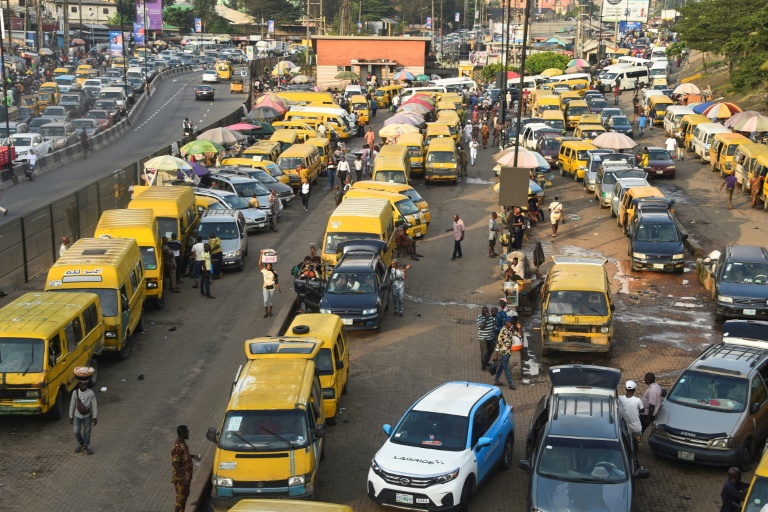
Tade Balogun times his commute like a military operation. 

Each day, the Lagos consultant leaves home before dawn, arrives for work early and takes a nap before before starting his day. 

He then stays until 9 pm — that way, he escapes the chaos and gridlock that can transform his 29-kilometre (18-mile) drive into a three-hour nightmare.

By the time he gets home, Balogun says, his daughters are fast asleep. But, he adds wryly, his blood pressure has remained in the safety zone: “Lagos traffic can cause a health hazard.” 

Balogun’s trek highlights the plight of Nigeria’s economic hub and other fast-growing African cities as the world’s population reaches the eight billion mark in the coming days.

In a metropolitan area sprawling across nearly 1,200 square kilometres (450 square miles), much of which has been informally settled, Lagos’s 20 million people struggle each day with notoriously poor infrastructure, except for a few wealthy enclaves.

Arguably the worst problem is transport, for the city is dependent on roads — and they are a choke of cars, trucks, motorbikes and packed yellow Danfo minibuses, along with hawkers who weave in between the unruly lanes of traffic. 

Seeking to change this, the Lagos State government has drawn up ambitious plans, including a new airport and a mass transit network of trains, buses and ferries. 

“For the economy of any city to thrive, your transport system must be adequate, efficient,” Lagos metropolitan transport authority chief Abimbola Akinajo told AFP. 

“It is a big part of what we need to get right in order for the city to function right.”

– Delayed train network –

But experts say the funding and logistical challenges of this blueprint are mountainous, and some wonder whether some basic questions have been asked.

“We have to understand, what is Lagos? Whether Lagos as a state, Lagos as a metropolis, or as a megacity,” said Muyiwa Agunbiade, a University of Lagos urban development professor.  

“If you don’t know the population, it’s difficult for us to plan for the people.” 

Delivering big transport projects on time and on budget is a headache almost anywhere in the world.

But in Lagos’s case, a much-trumpeted city rail network has been delayed by more than a decade.

Akinajo acknowledged funding and implementation problems had snarled the scheme but insisted a part of one rail line would be finished this year and start taking passengers by early 2023.

Engineers are running test trains along half of the Blue line route — one of six in a planned network to eventually link rail to more regulated buses and ferries.

With one line running, Akinajo said, Lagos hopes investors will come. British advisers and the French development agency are helping.

Agunbiade agreed getting things moving was crucial.

“If you have all this working, it will be a major game changer.”

– Urbanising Africa –

The challenges facing Lagos are mirrored elsewhere in quickly urbanising Africa, where population growth typically outstrips basic infrastructure and planning. 

DR Congo’s Kinshasa and Tanzania’s Dar Es Salaam are on track to join Lagos as the world’s three most populated cities by 2100, according to researchers at the University of Toronto Global Cities Institute.

Dar Es Salaam already has had some success with its dedicated Bus Rapid Transit routes, which with widened roads reduced dense congestion.

Kinshasa is more complex — a civil war in the early 2000s and regional violence in 2016 added displaced people to the city’s swiftly growing population.

The roads are so clogged with traffic that many people prefer to walk. Public transport is by taxis and minibuses dubbed “spirits of death”.

“When you see the size of the traffic jams and the mass of people, you realise road transport cannot solve the problem,” said Martin Lukusa, Kinshasa’s director of public transport.

The “Metrokin” project is still under construction to rehabilitate old rail lines.

– Water a ‘quicker win’ –

Lagos State is also eyeing another resource — using the lagoon that lies between the city and a narrow strip of coast on the Atlantic as a means of transport.

Lagos State waterways agency chief Oluwadamilola Emmanuel said the plans are to increase the number of operators and expand jetty and safety infrastructure. 

Around 300 private boat operators will be brought into a more regulated system along with larger state ferries able to move more people.

Small boat owners recently formed a union, making a transition easier, he said.

“Water is a quicker win because we have a natural asset,” he said, acknowledging the need to overcome Lagosian worries about marine safety to encourage more use.

Travelling from mainland Ikorodu to the Victoria Island business area can take two hours by car, but small boats can skip across the lagoon in 25 minutes. 

The trip, though, is pricey — at 1,000 naira ($2.30), it is double a Danfo bus ride.

“The vision is there,” said one development partner. “Financing is a problem. Cost is also a problem. There will still be a lot of people who will pay less to sit in a bus.” 

Lindsay Sawyer, an urban studies researcher at Sheffield University in northern England, agreed that to tame the traffic, the city had to keep costs low and absorb existing informal structures.

“It’s about affordability and capacity. The Danfo are still everywhere because they are still the most affordable option,” he said.

Most harried Lagos commuters can only wait for solutions.

“It’s a madhouse,” said Lagos stock manager Ochuko Oghuvwu, who commutes 20 hours a week. “By now Lagos should have a metro line.”

Pope prays for 'suffering peoples' on final day in Gulf

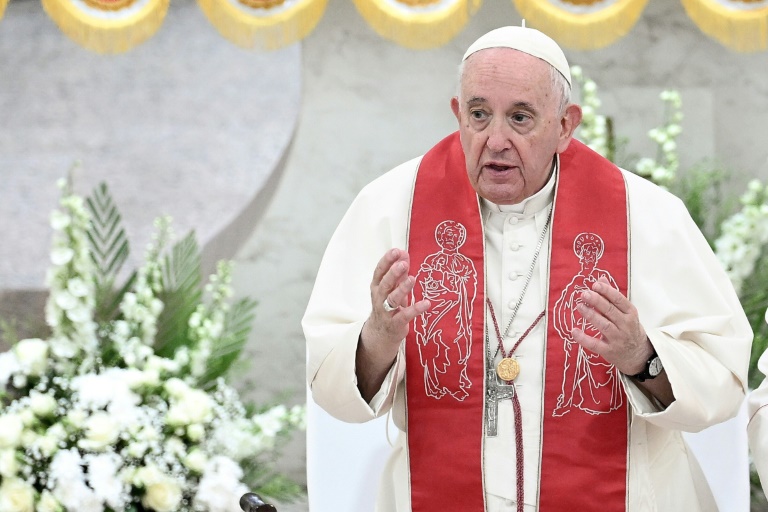
Pope Francis said Sunday he was praying for “suffering peoples of the Middle East”, at the end of a Bahrain visit promoting dialogue with Islam but marked by accusations of rights abuses in the Gulf state.

In a final address, he told Lebanese congregants he was praying for “your beloved country, so weary and sorely tried, as well as (for) all peoples suffering in the Middle East”.

And on the return flight to Rome, Francis used an in-air press conference to call on Lebanese politicians to “put aside… personal interests” and come to an agreement on filling a power vacuum in the crisis-hit country, which currently has no president.

“Look at the country and come to an agreement… Let Lebanon regain its greatness,” he urged them.

The 85-year-old Argentinian used his four-day visit to Muslim-majority Bahrain to meet both senior Muslim officials and Catholic residents of the Gulf.

On Saturday he held an open-air mass for about 30,000 people, many of them moved to tears by the occasion.

Bahrain, which established formal ties with the Holy See in 2000, has around 80,000 Catholic residents. Most are workers from the Philippines and other Asian countries.

In his final address, the pope also urged congregants to pray “for Ukraine, which is suffering so much”, and for an end to the war.

On Sunday, the final morning of the first ever papal visit to the island nation, Francis visited Sacred Heart church in Manama and urged Catholics to be “tireless promoters of dialogue” with other faiths.

— Call for unity —

“Let us seek to be guardians and builders of unity… in the multi-religious and multi-cultural societies in which we find ourselves,” he said, at the Gulf’s oldest church which opened in 1939.

His words came a day after police briefly detained relatives of Bahraini prisoners on death row who had protested and asked to meet with the pontiff, according to a London-based rights group — although authorities denied there had been “apprehensions”.

Rights groups have long cited discrimination, repression and harassment by Bahrain’s Sunni Muslim rulers against Shiite opposition figures and activists.

Human Rights Watch has accused Bahraini courts of issuing death sentences based on “manifestly unfair trials”.

In his first speech, on Thursday, the pontiff had spoken of the “right to life” and the “need to guarantee that right always, including for those being punished, whose lives should not be taken”.

Finance Minister Sheikh Salman bin Khalifa Al-Khalifa told AFP that Bahrain had “robust and wide-ranging human rights and criminal justice protections”, and that the pope’s comment on the death penalty had not singled out Bahrain.

This was the pontiff’s second trip to the Gulf following a 2019 visit to the United Arab Emirates. He met in Bahrain with Sheikh Ahmed al-Tayeb, the grand imam of Cairo’s prestigious Al-Azhar mosque.

He also used the trip to warn that the world was on a “delicate precipice”, decrying the “opposing blocs” of East and West — a veiled reference to the standoff over Russia’s invasion of Ukraine.

“A few potentates are caught up in a resolute struggle for partisan interests, reviving obsolete rhetoric, redesigning spheres of influence and opposing blocs,” he said. 

Thousands rally to fete 40 years of Cameroon under Biya

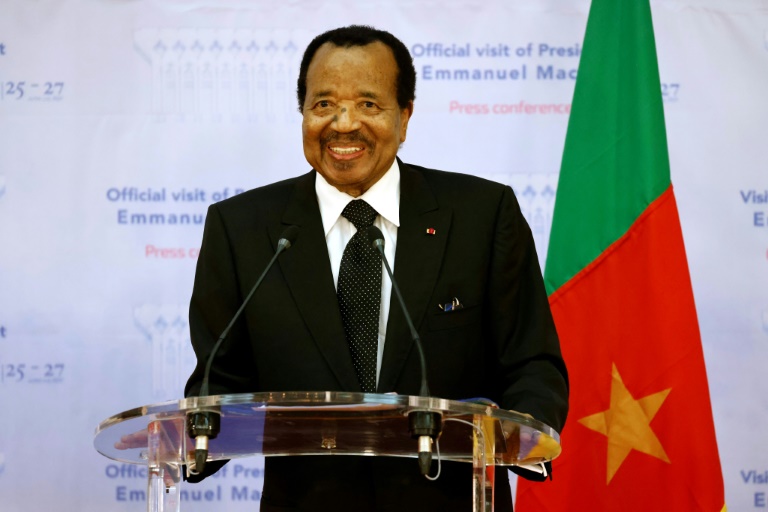
Thousands rallied in Cameroon’s capital on Sunday to fete 40 years in power of President Paul Biya, who is accused of trampling on human rights and stifling democracy.

The 89-year-old is the world’s second longest-serving leader, except monarchs, after Equatorial Guinea’s Teodoro Obiang Nguema Mbasogo, who has been in the saddle for over 43 years.

Biya did not attend the event in Yaounde dubbed a “regional mega-rally”.

His public outings, except for a few choreographed TV appearances, have become rarer and rarer in recent years, stoking speculation about his health.

Since a highly contested re-election for a seventh term in 2018, Biya has maintained tighter control over Cameroon, where even his supporters don’t dare mention succession.

His security forces have become even more repressive against any form of dissent.

In recent years he has cracked down on all opposition, political and armed, earning him rare criticism from the United Nations and Western capitals.

On Saturday, Biya’s main rival, Maurice Kamto said there was “an arrogant trampling over the fundamental rights of citizens and public freedoms” in a country where “systematic and widespread corruption” reigns.

In the restive English-speaking west of this francophone-majority country, Biya for years rejected demands for federalism. 

The anglophone campaign radicalised, leading to the declaration of an independent state in October 2017 — a move that triggered a crackdown by Biya. 

The fighting has claimed around 6,000 lives and forced more than a million to flee their homes, according to estimates.

In front of Yaounde’s city hall, thousands on Sunday danced to songs played in honour of Biya at the event organised by the all-powerful Cameroon People’s Democratic Movement (RDPC). 

Many wore clothes in the party colours and bearing Biya’s portrait.

The building was adorned with a giant portrait of Biya bearing the slogan: “An exceptional president” in both English and French.

Emmanuel Watat, a 36-year-old trader and RDPC activist for 17 years, said Biya “has always managed the country well despite difficult times. As in a family, there are highs and lows”.

And Florentine Ahanda, a 57-year-old housewife added: “We are proud of him. We wake up in the morning and we are at ease in our country, we live in peace and we realise how lucky we are when we see the situation in neighbouring countries.”  

Biya rose to the top job on November 6 1982 after seven years as prime minister.

He is only the second president in Cameroon’s history since the central African nation gained independence from France.

Commentators ascribe Biya’s extraordinary political longevity to a mixture of astuteness and ruthlessness — he has a constellation of loyalists in key positions and crushes or sidelines opponents and rivals.

19 killed after plane plunges into Lake Victoria in Tanzania

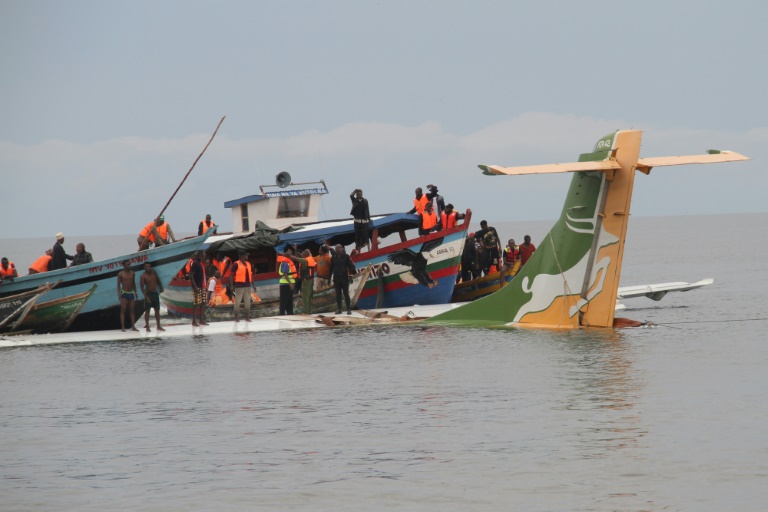
The death toll from Sunday’s plane crash in Tanzania has jumped to 19, Prime Minister Kassim Majaliwa said, after the Precision Air flight with dozens of passengers aboard plunged into Lake Victoria while approaching the northwestern city of Bukoba.

“All Tanzanians are with you in mourning the 19 people who lost lives during this accident,” Majaliwa told a crowd after arriving at Bukoba airport, where the flight had been scheduled to land from financial capital Dar es Salaam.

Regional authorities earlier said that 26 survivors out of the 43 people on board flight PW 494 had been pulled to safety and taken to hospital in the lakeside city.

But Precision Air, a publicly-listed company which is Tanzania’s largest private carrier, said in a statement that 24 people had survived the accident, with an airline official telling AFP that the other two hospitalised patients were not aboard the plane to begin with.

“There are two people who were injured during rescue efforts who have been counted as survivors but they were not passengers,” he said on condition of anonymity.

The airline said it had dispatched rescuers and investigators to the scene and expressed its “deepest sympathies” over the accident, which occurred at around 08:53 am (0553 GMT) on Sunday.

The company said the aircraft was an ATR 42-500, manufactured by Toulouse-based Franco-Italian firm ATR, and had 39 passengers — including an infant — and four crew members on board.

Video footage broadcast on local media showed the plane largely submerged as rescuers, including fishermen, waded through water to bring people to safety.

Emergency workers attempted to lift the aircraft out of the water using ropes, assisted by cranes as residents also sought to help.

President Samia Suluhu Hassan expressed her condolences to those affected by the accident, saying: “We pray to god to help us.”

The disaster ranks among the deadliest plane crashes in the East African nation’s history.

– ‘Heroic efforts’ –

The US embassy in Dar es Salaam released a statement, paying tribute to “the heroic efforts of first responders, especially ordinary citizens who helped rescue victims.”

The African Union Commission chair Moussa Faki Mahamat also shared his condolences, as did the secretary general of the regional East African Community bloc, Peter Mathuki.

“Our hearts and prayers go to the families of passengers on-board a plane that crashed into Lake Victoria, with our full solidarity to the Government & people of #Tanzania,” Faki wrote on Twitter.

“The East African Community joins and sends our condolences to Mama Samia Suluhu Hassan, families and friends of all those who were affected by the Precision Air plane accident,” Mathuki said, also on Twitter.

Precision Air, which is partly owned by Kenya Airways, was founded in 1993 and operates domestic and regional flights as well as private charters to popular tourist destinations such as Serengeti National Park and the Zanzibar archipelago.

The accident comes five years after 11 people died when a plane belonging to safari company Coastal Aviation crashed in northern Tanzania.

In March 2019, an Ethiopian Airlines flight from Addis Ababa to Nairobi plunged six minutes after take-off into a field southeast of the Ethiopian capital, killing all 157 people on board.

The disaster, five months after a similar crash in Indonesia, triggered the global grounding of the Boeing 737 MAX model of jet for 20 months, before it returned to service in late 2020.

In 2007, a Kenya Airways flight from the Ivory Coast city of Abidjan to Kenya’s capital Nairobi crashed into a swamp after take-off, killing all 114 passengers.

In 2000, another Kenya Airways flight from Abidjan to Nairobi crashed into the Atlantic Ocean minutes after take-off, killing 169 people while 10 survived.

A year earlier, a dozen people, including 10 US tourists, died in a plane crash in northern Tanzania while flying between Serengeti National Park and the Kilimanjaro airport.

COP27: Financing for climate damages gets a foot in the door

UN climate negotiations on Sunday offered a sliver of hope and “solidarity” for developing countries battered by increasingly costly impacts of global warming, in agreeing to discuss the thorny issue of money for “loss and damage”.

Countries least responsible for planet-heating emissions — but hardest hit by an onslaught of weather extremes — have been ramping up the pressure on wealthy polluting nations to provide financial help for accelerating damages.

But in a sign of how contentious the issue is among richer nations fearful of open-ended climate liability, the issue was only added to the formal agenda to the UN’s COP27 climate summit in the Egyptian resort town of Sharm el-Sheikh after two days of last-ditch negotiations.

This “reflects a sense of solidarity and empathy for the suffering of the victims of climate induced disasters,” Egypt’s Sameh Shoukry, the COP27 president, said to applause.

At last year’s UN summit in Glasgow, the European Union and the United States rejected calls for a separate financial mechanism.

Instead, negotiators agreed to start a “dialogue” extending through 2024 on financial compensation.

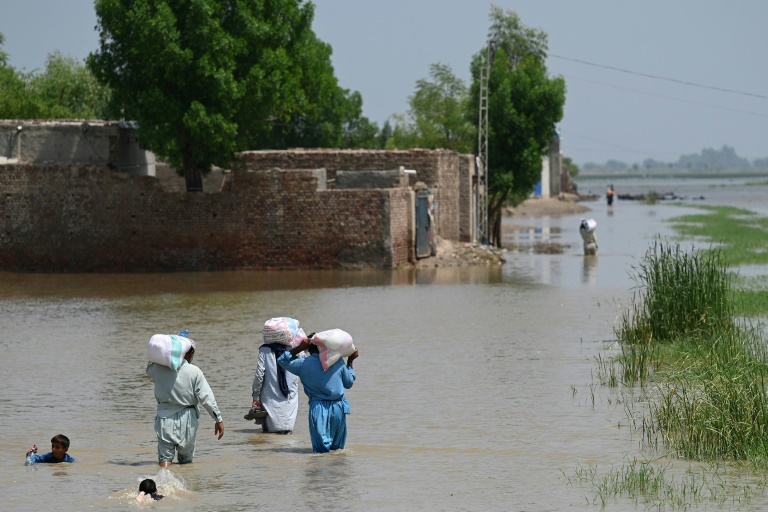
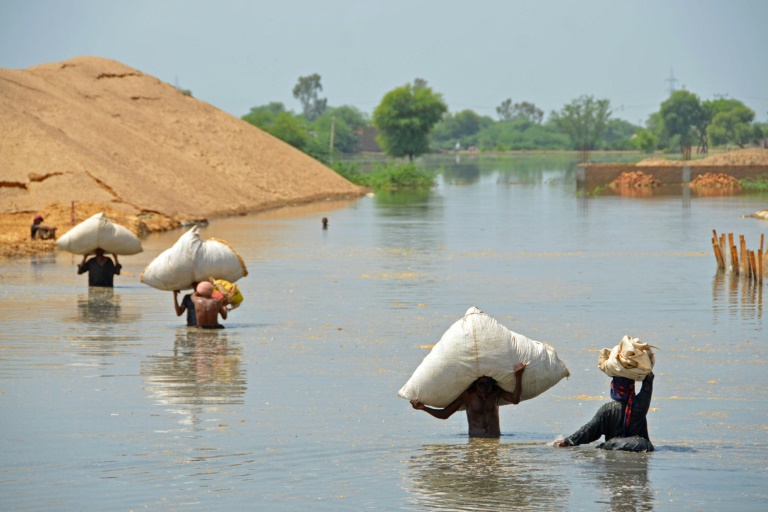
The issue has grown ever more urgent in recent months as nations were slammed by a crescendo of disasters, such as the massive flooding that put a third of Pakistan under water in August.

– ‘Lives are being lost’ –

Senegal’s Madeleine Diouf Sarr, who represents the Least Developed Countries negotiating bloc, said climate action across the board had been far too slow.

“Lives are being lost. Climate change is causing irreversible loss and damage, and our people carry the greatest cost,” she said, adding that an agreement on funding arrangements must be reached in Egypt. 

Appeals for more money are bolstered by a field known as event attribution science, which now makes it possible to measure how much global warming increases the likelihood or intensity of an individual cyclone, heat wave, drought or heavy rain event.

“Today, countries cleared an historic first hurdle toward acknowledging and answering the call for financing to address increasingly severe losses and damages,” said Ani Dasgupta, head of the World Resources Institute, a climate policy think tank.

But he said that getting negotiators to agree to discuss the issue was only an initial step.  

“We still have a marathon ahead of us before countries iron out a formal decision on this central issue for CO27,” he said.

Wrangling over loss and damage has unfolded against the backdrop of an unmet promise by rich nations to provide $100 billion a year starting in 2020 to help the developing world green their economies and anticipate future impacts, called “adaptation” in UN climate lingo.  

That funding goal is still $17 billion dollars short. Rich nations have vowed to hit the target by the end of 2023, but observers say the issue has severely undermined trust.

The UN Environment Programme has said the goal — first set in 2009 — has not kept up with reality, and estimates that funding to build resilience to future climate threats should be up to 10 times higher.

– ‘Words to actions’ –

Meanwhile, countries are far off track to reach the Paris deal goal of limiting global warming to 1.5 degrees Celsius.

The UN says the world is currently heading to 2.8C of warming, or a still-catastrophic 2.4C even if all national pledges under the Paris treaty are fulfilled. 

Depending on how deeply the world slashes carbon pollution, loss and damage from climate change could cost developing countries $290 to 580 billion a year by 2030, reaching $1 trillion to 1.8 trillion in 2050, according to the Grantham Research Institute on Climate Change and the Environment in London.

The World Bank has estimated the Pakistan floods alone caused $30 billion in damages and economic loss. Millions of people were displaced and two million homes destroyed.

Simon Stiell, the UN’s climate change executive secretary, said vulnerable countries are “tired” and “frustrated”. 

“Here in Sharm el-Sheikh we have a duty to speed up our international efforts and turn words into action to catch up with their lived experience,” he said.

Up to now, poor countries have had scant leverage in the UN wrangle over money. But as climate damages multiply, patience is wearing thin. 

The AOSIS negotiating block of small island nations told AFP that they would like to see the details for a dedicated loss-and-damage fund worked out within a year.

“There’s not enough support for us to even to begin to prepare for the loss and damage that we are expected to face,” said AOSIS lead negotiator on climate finance Michai Robertson.

mh/klm/pjm

Kenya govt threatens striking pilots with disciplinary action

Pilots on strike at Kenya Airways will face disciplinary action if they don’t return to work immediately, the government said Sunday, with thousands of passengers stranded for a second day after dozens of fresh flight cancellations.

 The Kenya Airline Pilots Association (KALPA) launched the strike at Nairobi’s Jomo Kenyatta International Airport at 06:00 am (0300 GMT) on Saturday — defying a court order against industrial action and deepening the woes of the troubled national carrier.

“Considering the defiance of KALPA and their total disregard for the existing court order –- which is at the heart of the rule of law — the Ministry of Labour now has to activate the procedures governing industrial relations,” Kenya’s Transport Minister Kipchumba Murkomen said in a statement.

“I urge the pilots to be mindful of the consequences of defying a court order and to urgently return to work because impunity cannot be an option,” the newly-appointed minister added.

The airline, part owned by the government and Air France-KLM, is one of the biggest in Africa, connecting multiple countries to Europe and Asia. 

But it has been facing turbulent times, including years of losses.

Murkomen said the government, which has pumped millions of dollars into the airline, had made “relentless efforts” to resolve the dispute but to no avail.

“The sour and chronic industrial action is an impediment to ongoing efforts to raise capital for Kenya Airways,” he said.

There was no immediate response to the minister’s statement from KALPA, which earlier on Sunday said that its members would remain on strike “until their voice is heard.” 

“The public should expect major flight disruptions to continue,” it said on Twitter, blaming the airline’s management for failing to resolve the stalemate.

The airline’s managing director and CEO, Allan Kilavuka, in turn accused the protesting pilots — who make up 10 percent of the workforce — of “holding passengers, other employees, management and the economy at ransom.”

He said Sunday that 56 flights had been cancelled due to the strike, which has thrown around 12,000 passengers’ plans into disarray.

– ‘Inconveniencing’ –

Many travellers turned up to the Nairobi airport on Sunday, only to find out that their flights would not take off.

“I came here at around 5:25 in the morning… but I have been informed that the flight has been cancelled,” passenger Erick Muhanda, who was due to travel to South Africa’s port city of Cape Town, told broadcaster Citizen TV.

“It’s quite inconveniencing,” he said.

The pilots are pressing for the reinstatement of contributions to a provident fund and payment of all salaries stopped during the Covid-19 pandemic.

On Monday, the airline won a court injunction stopping the strike, but an official at KALPA, which has 400 members, told AFP the pilots “were acting within the provisions of the law” and that they were yet to be served with a court order.

The carrier has warned that the strike would jeopardise its recovery, estimating losses at $2.5 million per day if the pilots went ahead with their plans.

The airline was founded in 1977 following the demise of East African Airways, and flies more than four million passengers to 42 destinations annually.

It has been operating in large part thanks to state bailouts following years of losses.

The carrier saw its revenue nosedive after the pandemic grounded planes worldwide because of stringent travel restrictions, devastating the aerospace and tourism industries.

In August, the airline reported a $81.5 million half-year loss citing high fuel costs, despite the government injecting some $520 million to keep it afloat.

On Wednesday, the airline’s management said it was on the path to recovery, flying at least 250,000 passengers each month, and aiming to cut its overall operating costs by 10 percent before the end of next year.

19 killed after plane plunges into Lake Victoria in Tanzania

The death toll from Sunday’s plane crash in Lake Victoria in Tanzania has jumped to 19, Prime Minister Kassim Majaliwa said, after the Precision Air flight with dozens of passengers aboard plunged into water while approaching the northwestern city of Bukoba.

“All Tanzanians are with you in mourning the 19 people who lost lives during this accident,” Majaliwa told a crowd after arriving at Bukoba airport, where the flight had been scheduled to land from financial capital Dar es Salaam.

Regional authorities and the airline earlier said that 26 survivors out of the 43 people on board flight PW 494 had been pulled to safety and taken to hospital in the lakeside city in Kagera region.

It was not immediately clear if the 19 victims included rescuers who drowned or whether the 48-seater aircraft had more people on board than previously disclosed, a regional official said.

“We are continuing to investigate, there is a possibility that two people were not onboard but died during the rescue effort,” said Kagera regional commissioner Albert Chalamila.

Precision Air, a publicly-listed company which is Tanzania’s largest private airline, said it had dispatched rescuers to the scene.

“An investigation team consisting of Precision Air technical staff and TAA (Tanzania Airports Authority) has also departed to join the rescue team on the ground,” the airline said in a statement.

“Precision Air sincerely understands the anxiety for confirmed information and will therefore do its best to issue more details,” the company said. 

It said the aircraft was an ATR 42-500, manufactured by Toulouse-based Franco-Italian firm ATR.

Video footage broadcast on local media showed the plane largely submerged as rescuers, including fishermen, waded through water to bring people to safety.

Emergency workers attempted to lift the aircraft out of the water using ropes, assisted by cranes as residents also sought to help.

President Samia Suluhu Hassan expressed her condolences to those affected by the accident.

“Let’s continue to be calm while the rescue operation continues as we pray to God to help us,” she said on Twitter.

– ‘Hearts and prayers’ –

The African Union Commission chair Moussa Faki Mahamat also shared his condolences, as did the secretary general of the regional East African Community bloc, Peter Mathuki.

“Our hearts and prayers go to the families of passengers on-board a plane that crashed into Lake Victoria, with our full solidarity to the Government & people of #Tanzania,” Faki wrote on Twitter.

“The East African Community joins and sends our condolences to Mama Samia Suluhu Hassan, families and friends of all those who were affected by the Precision Air plane accident,” Mathuki said, also on Twitter.

Precision Air, which is partly owned by Kenya Airways, was founded in 1993 and operates domestic and regional flights as well as private charters to popular tourist destinations such as the Serengeti National Park and the Zanzibar archipelago.

The accident comes five years after 11 people died when a plane belonging to safari company Coastal Aviation crashed in northern Tanzania.

In March 2019, an Ethiopian Airlines flight from Addis Ababa to Nairobi plunged six minutes after take-off into a field southeast of the Ethiopian capital, killing all 157 people on board.

In 2007, a Kenya Airways flight from the Ivory Coast city of Abidjan to Kenya’s capital Nairobi crashed into a swamp after take-off, killing all 114 passengers.

In 2000, another Kenya Airways flight from Abidjan to Nairobi crashed into the Atlantic Ocean minutes after take-off, killing 169 people while 10 survived.

UN summit warns against climate backsliding, hopeful on financing

The UN’s COP27 climate summit kicked off Sunday in Egypt with warnings against backsliding on efforts to cut emissions and calls for rich nations to compensate poor countries after a year of extreme weather disasters.  

An alarming UN report said the past eight years are on track to be the eight warmest on record, with an acceleration in sea level rise, glacier melt, heatwaves and other climate indicators.

“As COP27 gets underway, our planet is sending a distress signal,” UN chief Antonio Guterres said in a statement, calling the report a “chronicle of climate chaos”.

Just in the past few months, floods devastated Pakistan and Nigeria, droughts worsened in Africa and the United States, cyclones whipped the Caribbean, and unprecedented heatwaves seared three continents.

The conference in the Red Sea resort of Sharm el-Sheikh also comes against the backdrop of Russia’s war on Ukraine, an energy crunch, soaring inflation and the lingering effects from the Covid-19 pandemic.

But Simon Stiell, the UN’s climate change executive secretary, said he would not be a “custodian of backsliding” on the goal of slashing greenhouse emissions 45 percent by 2030 to cap global warming at 1.5 degrees Celsius above late 19th-century levels.

“We will be holding people to account, be they presidents, prime ministers, CEOs,” Stiell said as the 13-day summit opened.

“The heart of implementation is everybody everywhere in the world every single day doing everything they possibly can to address the climate crisis,” he said, noting that only 29 of 194 nations have presented improved plans as called for at COP26 in Glasgow last year.

Current trends would see carbon pollution increase 10 percent by the end of the decade and the Earth’s surface heat up 2.8C, according to findings unveiled last week.

Promises made under the 2015 Paris Agreement would, if kept, only shave off a few tenths of a degree.

Britain’s Alok Sharma, who handed the COP presidency to Egypt, said that while world leaders have faced “competing priorities” this year, “inaction is myopic and can only defer climate catastrophe.” 

“How many more wake-up calls does the world — and world leaders — actually need?” he said.

– ‘Loss and damage’ –

The COP27 summit will focus like never before on money — a major sticking point that has soured relations between countries that got rich burning fossil fuels and the poorer ones suffering from the worst consequences of climate change.

The United States and the European Union — fearful of creating an open-ended reparations framework — have dragged their feet and challenged the need for a separate funding stream.

After two days of intense pre-summit negotiations, delegates agreed on Sunday to put the “loss and damage” issue on the COP27 agenda, a first step towards what are sure to be difficult discussions.

Stiell said inclusion of loss and damage on the agenda after three decades of debate on the issue showed progress.

“The fact that it is there as a substantive agenda item I believe bodes well,” he told reporters. 

COP27 president Sameh Shoukry of Egypt said it would be unproductive to speculate on what outcome the negotiations will lead to, “but certainly everybody is hopeful.”

“Anything that we do effectively has to be on the basis of our common efforts and that we leave no one behind,” he said.

Shoukry also noted that rich nations have not fulfilled a separate pledge to deliver $100 billion per year to help developing countries green their economies and build resilience against future climate change.

He lamented that most climate financing is based on loans.

“We do not have the luxury to continue this way. We have to change our approaches to this existential threat,” he said.

– US-China tensions –

After the first day of talks, some 110 world leaders will join the summit on Monday and Tuesday.

The most conspicuous no-show will be China’s Xi Jinping, whose leadership was renewed last month at a Communist Party Congress.

US President Joe Biden has said he will come, but only after legislative elections on Tuesday that could see either or both houses of Congress fall into the hands of Republicans hostile to international action on climate change.

Cooperation between the United States and China — the world’s two largest economies and carbon polluters — has been crucial to rare breakthroughs in the nearly 30-year saga of UN climate talks, including the 2015 Paris Agreement.

But Sino-US relations have sunk to a 40-year low after a visit to Taiwan by House leader Nancy Pelosi and a US ban on the sale of high-level chip technology to China, leaving the outcome of COP27 in doubt.

A meeting between Xi and Biden at the G20 summit in Bali days before the UN climate meeting ends, if it happens, could be decisive.

One bright spot at COP27 will be the arrival of Brazilian president-elect Luiz Inacio Lula da Silva, whose campaign vowed to protect the Amazon and reverse the extractive policies of outgoing President Jair Bolsonaro.

Close Bitnami banner
Bitnami