Africa Business

Uganda's Museveni vows no national lockdown as Ebola cases rise

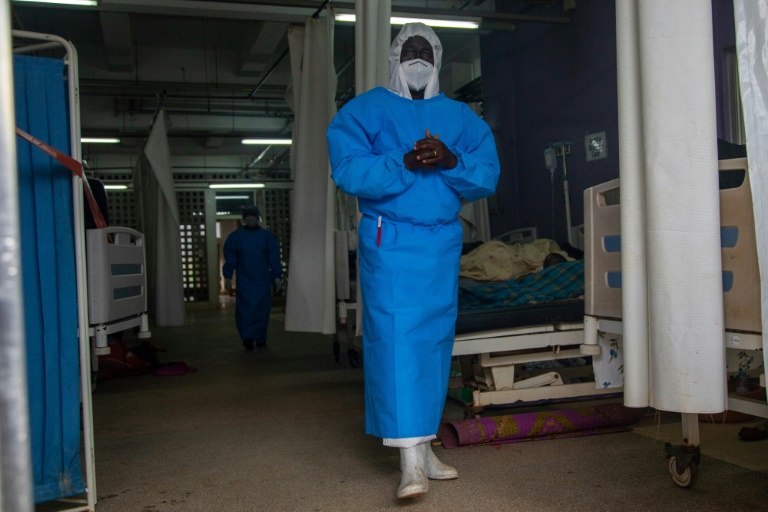
Ugandan President Yoweri Museveni on Friday reiterated his refusal to impose a nationwide Covid-like lockdown to contain the spread of Ebola despite a worrying increase in cases.

Since the health ministry first declared an Ebola outbreak in the central district of Mubende, the disease has spread across the East African nation, including to the capital Kampala.

But Museveni ruled out any plans for a nationwide lockdown, instead urging citizens to “be more vigilant” and observe measures put in place to control the spread of Ebola.

“There will be NO LOCKDOWN. Therefore, people should go ahead and concentrate on their work without any worry,” he said on Twitter.

The death toll from the highly contagious disease currently stands at 49, according to the Ugandan government. 

The World Health Organization (WHO) on Wednesday said the country had registered over 150 confirmed and probable cases, including 64 fatalities.

Ebola is spread through bodily fluids, with common symptoms being fever, vomiting, bleeding and diarrhoea. 

Outbreaks are difficult to contain, especially in urban environments.

People who are infected do not become contagious until symptoms appear, which is after an incubation period of between two and 21 days.

The outbreak was declared on September 20, and eight days later Museveni declared any nationwide lockdown was “not necessary.”

In October, however, he imposed a lockdown on two districts, Mubende and Kassanda, setting a dusk-to-dawn curfew, banning travel and closing markets, bars and churches for 21 days.

He also ordered the police to arrest anyone infected with Ebola who refused to isolate.

WHO on Wednesday warned that there was a high risk of Ebola spreading further and called on neighbouring countries to boost their preparedness.

Uganda’s last recorded fatality from a previous Ebola outbreak was in 2019.

The particular strain now circulating in Uganda is known as the Sudan Ebola virus, for which there is currently no vaccine, although there are several candidate vaccines heading towards clinical trials.

The worst Ebola epidemic in West Africa between 2013 and 2016 killed more than 11,300 people.

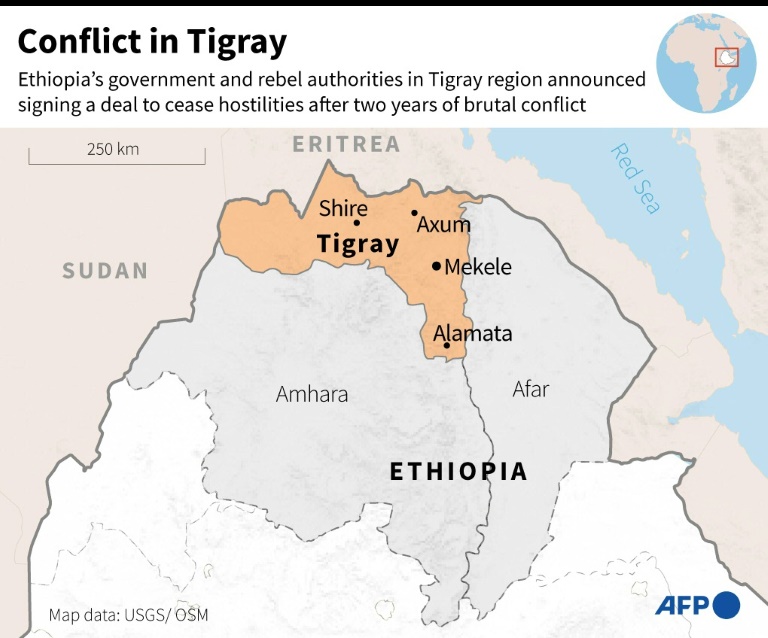
Tigray rebels accuse Ethiopia of attacks after peace deal

Tigrayan authorities on Friday accused Ethiopia’s government of carrying out a drone strike on civilians, less than 48 hours after the warring parties signed a deal to end their bloody conflict.

The breakthrough agreement sealed in South Africa has been hailed internationally as a key step towards stopping a war that began exactly two years ago on Friday.

A spokesman for the rebel Tigray People’s Liberation Front (TPLF) alleged that Prime Minister Abiy Ahmed’s government had carried out attacks against civilians in the Tigrayan city of Maychew on Thursday.

“According to sources at Lemlem-Karl Hospital, drone of #Ethiopia has attacked civilians,” Kindeya Gebrehiwot said on Twitter.

He said there was artillery shelling “in the same city that killed & wounded civilians. This happens after signing the peace agreement at #Pretoria”.

AFP was not able to independently verify the claims.

Access to northern Ethiopia is severely restricted and Tigray has been under a communications blackout for more than a year.

There was no immediate response from Ethiopian government officials or the African Union (AU) to requests from AFP.

But Abiy’s national security adviser Redwan Hussein, who headed the government’s negotiating team, said the prime minister had presided over a briefing for ministers, regional leaders and party officials on Friday to discuss the deal and “focus on dividends of peace”.

Ethiopia’s government “remains committed to the peace agreement,” he said on Twitter.

The deal signed on Wednesday says both sides agreed “to permanently silence the guns” and to a “programme of disarmament, demobilisation, and reintegration for the TPLF combatants”.

But observers say that key details and a clear roadmap that would help sustain momentum are absent, and distrust runs deep.

– ‘Very difficult’ –

Even as the AU-led negotiations began in Pretoria last week, fierce fighting was under way in Tigray between TPLF fighters and federal forces backed by soldiers from neighbouring Eritrea.

Ethiopia’s northernmost region has been in the throes of a severe humanitarian crisis due to lack of food and medicine, as well as limited access to basic services. 

Observers and diplomats have warned of the difficult road ahead, with the EU’s foreign policy chief Josep Borrell on Friday saying that arriving at a permanent ceasefire was “going to be very difficult”.

Speaking to reporters on the sidelines of the G7 foreign ministers’ meeting in the German city of Muenster, Borrell acknowledged that the agreement was “good news”, but cautioned: “Making peace is much more difficult than making war.”

“The world is looking at Ukraine and blaming Russia. But Ethiopia is for sure the worst humanitarian crisis… and war in the last two years,” Borrell said.

Abiy, a Nobel Peace Prize laureate, sent troops into Tigray on November 4, 2020 to topple the TPLF, the region’s ruling party, in response to what he said were attacks on federal army camps.

At 'African COP', continent's climate needs may go unmet

It is being billed as the “African COP” but scientists and campaigners on the continent least responsible for climate change fear the UN summit that begins on Sunday in Egypt will once again leave them sidelined.

As the toll of climate-linked disasters mounts in debt-ridden countries across Africa, governments are demanding that rich polluters pay for the harm their emissions have already caused, known as “loss and damage”.

“Historically, Africa is responsible for less than four percent of global emissions, but Africans are suffering some of the most brutal impacts of the climate crisis,” said Ugandan campaigner Vanessa Nakate.

“We need financial support to cope with the loss and the damage we’re experiencing across the continent. We need polluters to compensate for the destruction they’ve caused.” 

Richer governments rejected a call for a financial mechanism to address losses and damage at last year’s climate talks in Glasgow and instead negotiators agreed to start a “dialogue” on financial compensation.  

But as floods, heatwaves and droughts sweep across the planet, hitting the most vulnerable hardest, activists are hoping the issue will take centre stage at COP27 in Egypt.

– ‘From words to deeds’ –

In an opinion piece in The Guardian on Friday, the leaders of France, the Netherlands and Senegal urged greater — and more concrete — support for Africa, especially for adaptation. 

“For Africa, climate change is an irreversible reality. It’s too late to turn back the clock,” wrote France’s Emmanuel Macron, Mark Rutte of the Netherlands and Macky Sall, Senegal’s leader and chair of the African Union.

“COP27 is a vital opportunity for the world to support Africa in facing the impact of climate change… the conference must generate a breakthrough on finance for climate adaptation and move from words to deeds.”

In Africa alone, extreme weather events have killed at least 4,000 people and displaced 19 million so far this year, a study by the Carbon Brief news service said last week.

The ongoing drought in East Africa is impacting the livelihoods of more than nine million people, and 1.4 million people have been displaced in recent weeks in the worst floods on record in Nigeria.

The UN’s Intergovernmental Panel on Climate Change in February warned that tens of millions of Africans face a future marked by drought, disease and displacement due to global heating.

“Multiple African countries are projected to face compounding risks from: reduced food production across crops, livestock and fisheries; increasing heat-related mortality; heat-related loss of labour productivity; and flooding from sea level rise,” scientists wrote in a dedicated chapter on the continent.

Chukwumerije Okereke, a professor in environment and development at Britain’s University of Reading, said that African nations would demand greater action from the polluting countries that are driving climate change.

“African countries believe they have been significantly shortchanged because they are the most vulnerable to the impact of climate change,” he told AFP. 

“The best way to stave off a more devastating impact of climate change on the continent is through rapid decarbonisation.”

Countries agreed at last year’s UN climate talks in Glasgow to raise the ambition of their emissions-cutting plans. However, the UN says those additional measures would result in a pollution cut of less than one percent by 2030. 

The Glasgow summit also produced a new strategy for financing the energy transition, with a group of rich nations committing to providing $8.5 billion to coal-dependent South Africa over three to five years — in grants and loans — to help its climate plan and catalyse private investment.

This week the World Bank said that South Africa, one of the world’s largest greenhouse gas emitters, will require at least $500 billion to achieve carbon neutrality by 2050. 

Susan Chomba, director of the African NGO Vital Landscapes, said governments should use COP27 to push green development investment on the continent.  

“We do need development for our people and we need to use the resources that are within our reach on the continent,” she said.

“The war in Ukraine has exposed the naked risk of overdependence on fossil fuels, even for the richest economies, but also the ripple effect that it is having on energy fertiliser and food prices on the continent.” 

– ‘Fake promises’ –

Progress at recent COPs has been stymied by a failed promise by rich nations to provide at least $100 billion annually to developing ones to help decarbonise while adapting to climate impacts.

“COP27 is going to be a COP where we’re going to be able to build up trust,” said Ineza Grace from the Loss and Damage Youth Coalition. 

“All of those fake promises have never been accomplished and we are the generation that is kind of living in the hotspot. But we are also a generation that does not want to sit down and just continue to be victims.”

Okereke said to expect “constructive ambiguity” around loss and damage finance.

“If they do set up such a facility then it might still be four or five years before the structure or the functionalities of such a facility is agreed,” said Okereke. 

“So poor countries should be aware that while having a facility is a victory, it may not necessarily translate to more dollars coming to them.”

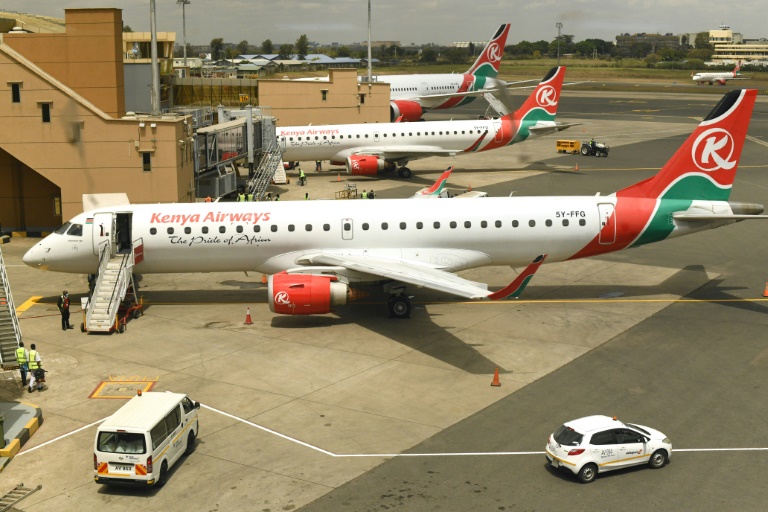
Pilot strike adds to Kenya Airways woes

Pilots at Kenya Airways plan to go on strike from Saturday to seek better working conditions in defiance of a court order, adding to woes facing the troubled national carrier.

The airline, part owned by the government and Air France-KLM, is one of the biggest in Africa, connecting multiple countries to Europe and Asia, but it is facing turbulent times, including years of losses.

The Kenya Airlines Pilots Association (KALPA) said a series of meetings with airline management had failed to resolve grievances.

No Kenya Airways flight flown by KALPA pilots will depart Nairobi’s Jomo Kenyatta International Airport from 6:00 am (0300 GMT) on Saturday, said union secretary general Murithi Nyaga, without specifying how long the strike would last.

“Kenya Airways management’s actions have left us with no other option,” Nyaga said, adding that a 14-day notice on the industrial action had ended without a solution.

“We had hoped that the management of the airline would soften its stance and engage in negotiation on the issues raised.”

The pilots, who have had a particularly fraught relationship with management, are pressing for the reinstatement of contributions to a provident fund.

They also want back payment of all salaries stopped during the Covid-19 pandemic.

Kenya Airways on Wednesday warned the strike would jeopardise its recovery and said the pilots’ grievances did not warrant such action.

– ‘Delay and disrupt’ –

“Industrial action is unnecessary,” board chairman Michael Joseph said. “It will delay and disrupt the financial and operational recovery and cause reputational damage to Kenya Airways.”

The Kenya Association of Air Operators also opposed the planned strike, calling it an “extreme course of action”.

“We consider this action poorly considered in that KALPA is holding both the airline management and the government to ransom,” it said on Friday, urging both sides to resolve the impasse urgently.

On Monday, the airline won a court injunction stopping the strike, but the pilots’ union has nevertheless vowed to down tools.

An official at KALPA, which has 400 members, told AFP the pilots “were acting within the provisions of the law” and that they were yet to be served with a court injunction. 

Earlier this week, Kenya Airways estimated losses at $2.5 million per day if the strike goes ahead.

The airline was founded in 1977 following the demise of East African Airways and flies over four million passengers to 42 destinations annually.

But its slogan “The Pride of Africa” rings hollow as it operates thanks to state bailouts following years of losses.

Like other carriers around the world, Kenya Airways saw its revenue nosedive after the pandemic grounded planes worldwide because of stringent travel restrictions, devastating the aerospace and tourism industries.

– ‘Joke of the continent’ –

Despite the gloom, its cargo operations grew slightly in 2020 as it switched to delivering Covid vaccines and maximised its expertise in flying fresh roses to Europe.

In August, the airline reported a $81.5 million half-year loss citing high fuel costs, albeit a marked improvement on the $94.6 million loss in the same period last year.

This is despite the Kenyan government injecting some $520 million to keep the airline afloat.

On Wednesday, the airline’s management said it was on a path to recovery, flying at least 250,000 passengers each month, and aiming to cut its overall operating costs by 10 percent before the end of next year.

Kenya’s tourism arrivals, a major foreign exchange earner, have jumped more than 90 percent to 924,000, the government said in September, projecting that the number could hit 1.4 million by December.

Analysts say a misguided expansion strategy launched in 2011 is the root of the firm’s problems, a move that called for the purchase of new Boeing planes with the objective of doubling the size of its network.

A plan to nationalise the carrier, which would see it exempt from paying taxes on engines, maintenance and fuel, remains unimplemented.

On Tuesday, Kenya’s leading newspaper the Daily Nation called for a forensic audit of the state bailouts, saying the carrier had become “the joke of the continent.”

“It’s like pouring public funds down the drain,” the paper wrote in an editorial.

Tigray rebels accuse Ethiopia of attacks after peace deal

Tigrayan authorities on Friday accused Ethiopia’s government of carrying out a drone strike on civilians, less than 48 hours after the warring parties signed a deal to end their bloody conflict.

The breakthrough agreement sealed in South Africa has been hailed internationally as a key step towards stopping a war that began exactly two years ago on Friday.

A spokesman for the rebel Tigray People’s Liberation Front (TPLF) alleged that Prime Minister Abiy Ahmed’s government had carried out attacks against civilians in the Tigrayan city of Maychew on Thursday.

“According to sources at Lemlem-Karl Hospital, drone of #Ethiopia has attacked civilians,” Kindeya Gebrehiwot said on Twitter.

“There was also shelling of artillaries in the same city that killed & wounded civilians. This happens after signing the peace agreement at #Pretoria,” he said.

AFP was not able to independently verify the claims.

Access to northern Ethiopia is severely restricted and Tigray has been under a communications blackout for more than a year.

There was no immediate response from Ethiopian government officials or the African Union (AU) to requests from AFP.

The agreement signed on Wednesday says both sides agreed “to permanently silence the guns” and to a “programme of disarmament, demobilisation, and reintegration for the TPLF combatants.”

But observers say that key details and a clear roadmap that would help sustain momentum are absent, and distrust runs deep.

Even as the AU-led negotiations began in Pretoria last week, fierce fighting was under way in Tigray between TPLF fighters and federal forces backed by soldiers from neighbouring Eritrea.

Ethiopia’s northernmost region has been in the throes of a severe humanitarian crisis due to lack of food and medicine, as well as limited access to basic services. 

Observers and diplomats have warned of the difficult road ahead, with the EU’s foreign policy chief Josep Borrell on Friday saying that arriving at a permanent ceasefire was “going to be very difficult.”

Speaking to reporters on the sidelines of the G7 foreign ministers’ meeting in the German city of Muenster, Borrell acknowledged that the agreement was “good news,” but cautioned: “Making peace is much more difficult than making war.”

“The world is looking at Ukraine and blaming Russia. But Ethiopia is for sure the worst humanitarian crisis… and war in the last two years,” Borrell said.

Abiy, a Nobel Peace Prize laureate, sent troops into Tigray on November 4, 2020 to topple the TPLF, the region’s ruling party, in response to what he said were attacks on federal army camps.

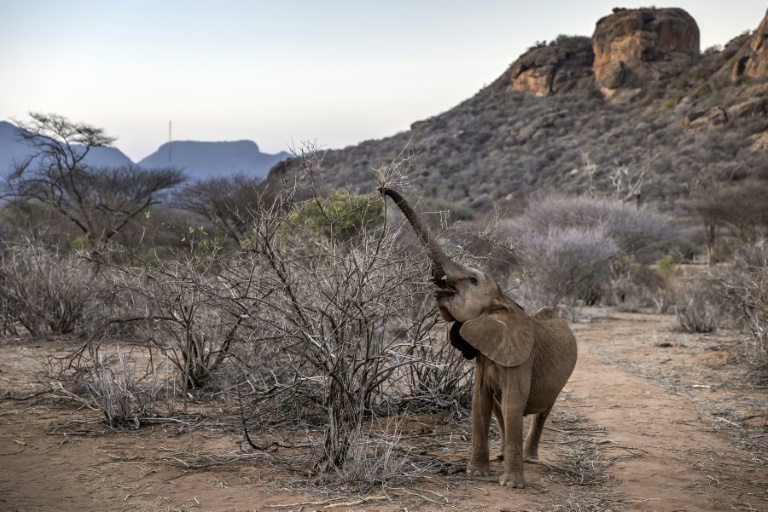
Kenya drought kills more than 200 elephants

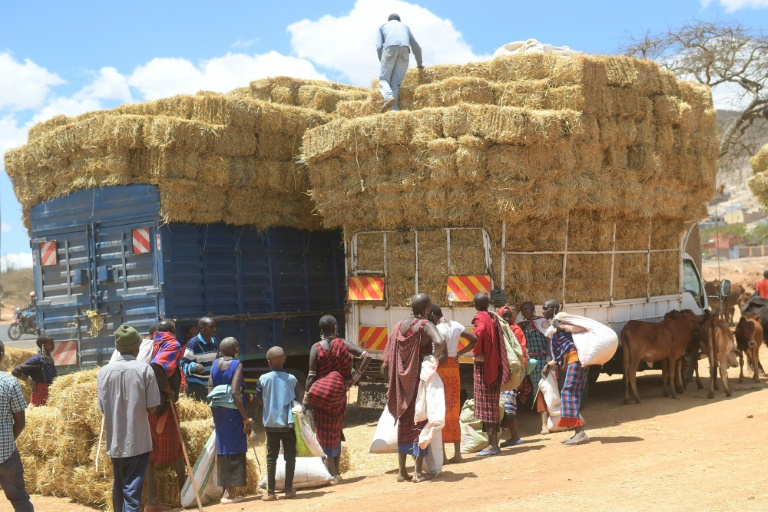
More than 200 elephants and hundreds of zebras and gnus have died in Kenya’s worst drought in four decades, the country’s tourism minister said on Friday.

The crisis has affected nearly half of Kenya’s regions and at least four million out of its 50 million people.

“The drought has caused mortality of wildlife, mostly herbivore species,” Tourism Minister Peninah Malonza told a press conference in Nairobi on Friday, adding that 14 species had been identified as badly hit.

“The mortalities have arisen because of depletion of food resources as well as water shortages.”

Between February and October, officials recorded the death of 205 elephants, 512 gnus, 381 zebras, 12 giraffes and 51 buffalo, she said. 

“Elephants in (the) Amboseli and Laikipia-Samburu regions are worst affected by the drought, as the ecosystems (there) have recorded more than 70 elephant deaths,” Malonza said.

The authorities are dropping off hay for the animals, she said.

Last year the country had 36,000 elephants, according to tourism ministry estimates.

Four consecutive rainy seasons have failed in Kenya, Somalia and Ethiopia and millions across the Horn of Africa have been driven into extreme hunger. More than 1.5 million cattle have died in Kenya alone.

Succession is taboo as Cameroon's Biya set for 40 years at helm

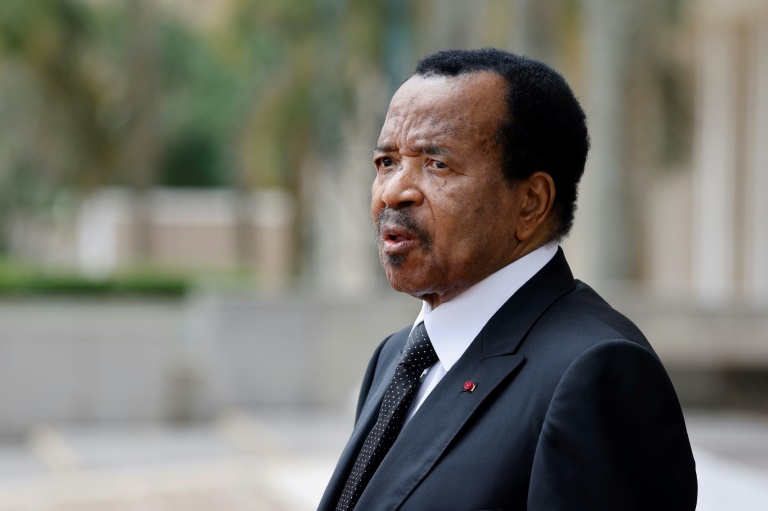
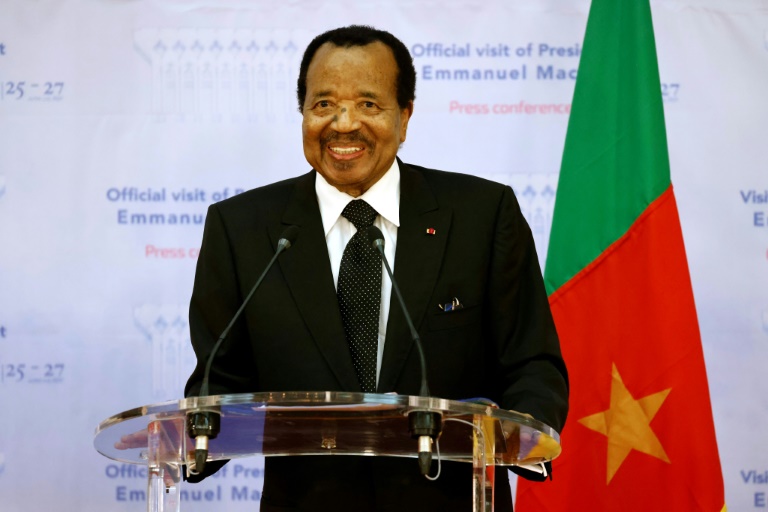
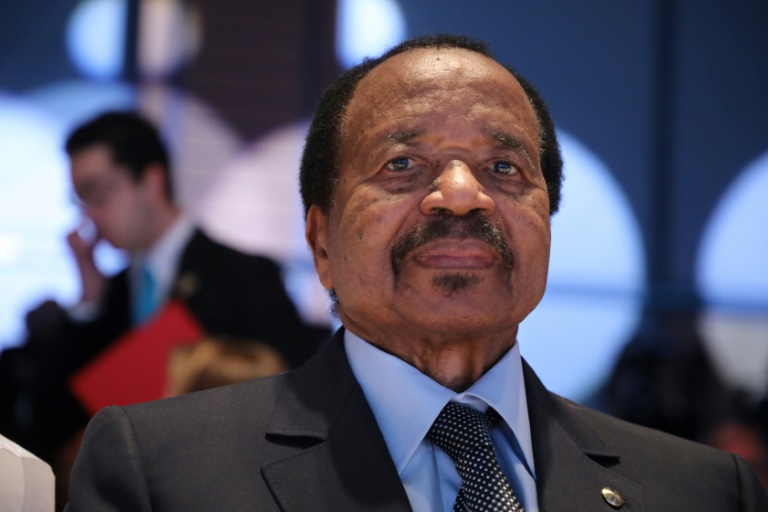
Cameroon’s 89-year-old president, Paul Biya, on Sunday marks the 40th anniversary of his rise to power amid splashy ceremonies where the word on everyone’s mind — succession — will almost certainly be absent.

The Cameroon People’s Democratic Movement (RDPC), which Biya founded in 1985, says it will hold “a big party” up and down the country to mark the anniversary.

The festivities will celebrate “political stability and peace — the biggest successes of these last four decades in Cameroon,” said Herve Emmanuel Nkom, a member of the party’s central committee.

At the RDPC’s headquarters in Messa district, a couple of dozen party members were busy selling caps, scarves, shirts and multi-coloured garments emblazoned with Biya’s face.

“Lots of people come by and look — we get a lot of orders,” said Sylvie Beyala, 42, a party member for 20 years, next to a photo of a beaming Biya and the slogan “Unity, Progress, Democracy.”

The crowning event on Sunday will be a “regional mega-rally” in front of city hall in Yaounde, the capital, but no word has emerged as to whether Biya himself will attend.

The anniversary bash aims to divert attention away from “the crucial question,” said Stephane Akoa, a professor and researcher in political science.

“It’s not whether Cameroon is doing well or could be doing better, but how the president is,” he said.

Biya rose to the top job on November 6 1982 after seven years as prime minister.

He is only the second president in Cameroon’s history since the central African nation gained independence from France. He is also the continent’s longest-serving leader after Equatorial Guinea’s Teodoro Obiang Nguema Mbasogo, who seized power in 1979.

– Wily leader –

Commentators ascribe Biya’s extraordinary political longevity to a mixture of astuteness and ruthlessness — he has a constellation of loyalists in key positions and crushes or sidelines opponents and rivals.

But his public outings, except for a few choreographed TV appearances, have become rarer and rarer in recent years, stoking speculation about his health.

Any official talk of succession is taboo, and none of the most visible figures around Biya has publicly uttered a word about entertaining any wish to succeed him.

“Ministers have fallen into disgrace just for thinking about a theoretical departure of the president,” said Aimee Raoul Sumo Tayo, a defence and security specialist on Cameroon.

“Mr. Biya has put the saying ‘divide and rule’ into practice… forces which could have challenged him for power have been unable to get organised and, even less so, unify,” said Akoa.

Even so, conversations about a successor are rife.

Those most commonly named are Biya’s son, Franck Biya, and Finance Minister Louis-Paul Motaze. The younger Biya already has a discreet following among supporters called “Franckists.”

Another name in the mix is that of Biya’s right-hand man, the presidency’s chief of staff, Ferdinand Ngoh Ngoh.

Reputed to have the backing of Biya’s influential wife, Chantal Biya, Ngoh Ngoh has been the longest-serving chief of staff in the presidency’s tenure.

He wields extensive de-facto authority through executive powers that have been delegated by Biya and, like his boss, also has his supporters in senior jobs, said Akoa.

– All-eclipsing debate –

“No (potential) candidate enjoys unanimity,” said Akoa, adding that the succession debate “eclipses all other concerns, such as strategies for health, education and infrastructure.”

The jockeying for power has been intensified by Cameroon’s weak mechanisms for handing on presidential power in an emergency, said Sumo Tayo.

If the president becomes unable to continue in office, presidential authority is handed down in the interim to the speaker of the Senate — currently 88-year-old Marcel Nial Njifenji, whose health is at least as much a concern as that of Biya.

The scenario stokes “the probability that certain parts of the army may intervene,” said Sumo Tayo. 

Military leaders appointed by Biya may fear their privileges will be at threat once he exits the scene, which increases the risk of turbulence, he suggested.

Paul Biya, Cameroon's wily veteran leader

When Paul Biya first took the helm of Cameroon, Ronald Reagan was in his second year of presidency, Madonna had not yet made the charts and the Soviet Union was still nearly a decade away from break-up.

Biya, who at 89 will notch up 40 years in power on Sunday, became one of the world’s longest-serving leaders thanks to iron-fisted rule and support from loyalists in key positions.

After seven years as the central African country’s prime minister, he entered the presidential palace on November 6, 1982, becoming only the second head of state since independence from France in 1960.

His four-decade-long grip is a tribute to tightrope-walker skills in a country facing social, political and security problems and struggling with economic disparity.

His nicknames among the public are “Popol”, an avuncular form of Paul, and “The Sphinx” — a testament to his canniness.

“All you have to do is lose your head for a second, and you’re done with,” Biya told a journalist in 1986.

In October 2018, he won a seventh consecutive term after elections marred by allegations of fraud, low turnout and separatist violence in Cameroon’s anglophone regions. He was declared victor with 71.28 percent of the vote.

After the fall of Zimbabwe’s Robert Mugabe in 2017, Biya became Africa’s oldest president and its longest-serving after Equatorial Guinea’s Teodoro Obiang Nguema Mbasogo, who seized power in 1979.

In recent years he has cracked down on all opposition, political and armed, earning him rare criticism from the United Nations and Western capitals.

His public appearances are limited to pre-recorded, painstakingly delivered televised speeches.

– The Biya ‘system’ –

Biya’s appointment of loyalists to key posts — speaker of the National Assembly, head of the army and the head of the state-run oil and gas company among them — has helped underpin his long rule.

“We are all the creatures or the creations of President Paul Biya,” his minister for higher education, Jacques Fame Ndongo, said in 2011. “We are just his servants, or even better, his slaves.”

Titus Edzoa, a former confidant of the president who was secretary general of Biya’s presidency between 1994 and 1996 and held ministerial posts on several occasions, has said: “If you try to go against Biya, you’ll be crushed.”

He said Biya used “violence and terror, according to his mood and rumours, to subjugate his associates and subdue the whole of the population”.

Edzoa resigned as a health minister in 1997 to stand in elections. After that, he was arrested, accused of theft and spent 17 years behind bars.

Maurice Kamto, who lost to Biya in the 2018 elections, was arrested the following year after he said he had been a victim of an “electoral hold-up.” He was held for nine months and only freed after international pressure.

In the restive English-speaking west of this francophone-majority country, Biya for years rejected demands for federalism. 

The anglophone campaign radicalised, leading to the declaration of an independent state in October 2017 — a move that triggered a crackdown by Biya. Fighting has claimed around 6,000 lives and forced more than a million to flee their homes, according to estimates.

– Isolated from public –

Born in 1933, the third in a family of nine children, Biya once undertook training to become a Catholic priest before enrolling at the elite Sciences Po university in Paris. France is an ally and major foreign investor.

“He’s a fervent Catholic. He has good relations with the Vatican. But he also consults spiritualists quite often,” said an informed source in Yaounde.

Two years after the death of his first wife, Jeanne-Irene, Biya in 1994 married Chantal, a former waitress and model almost 40 years younger than him, and who is famous for her exuberant hairstyles and high heels.

He survived a coup attempt in 1984 that left a psychological mark, a security official in Yaounde said.

“Before, he would step out in Yaounde, he was close to people. But think — he was stuck for hours in a bunker and there were bullet marks all around when he emerged,” the source said.

Thereafter, unscripted public appearances became a rarity and when Biya’s motorcade passed through the streets of the capital, crowds were kept at a distance.

His repeated long absences from Cameroon, mostly in Switzerland or in his home village in his country’s south, became bitterly criticised.

The Organized Crime and Corruption Reporting Project (OCCRP), a consortium of investigative journalists, in 2018 found that Biya spent “at least four-and-a-half years of his (first) 35 years in power on private visits” abroad, at an estimated cost of $65 million.

Longest-serving African heads of state

Cameroon President Paul Biya, who on Sunday marks 40 years in power, is Africa’s second longest-serving leader after Equatorial Guinea’s Teodoro Obiang Nguema Mbasogo.

But they are far from alone among leaders on the continent who have clocked up decades in office.

Here’s a snapshot of Africa’s ageing rulers:

– Biya: Four decades –

Cameroon has lived through 40 years of largely unchallenged and hardline rule under Biya. 

The 89-year-old runs the country through a very small circle of aides, whom he appoints and banishes as he sees fit. 

Openly talking about succession is taboo even for his closest supporters, and Biya has overseen a ruthless crackdown on dissent since his highly contested re-election in 2018.

– Obiang: Longest-serving –

Obiang, who came to power in an August 3, 1979 coup, is Africa’s longest-serving leader, with 43 years at the helm. Next month, at the age of 80, he will run for a sixth term lasting seven years.

– Nguesso: 38 years –

In Congo-Brazzaville, Denis Sassou Nguesso, 78, has been in power for 38 years, albeit not uninterruptedly.

He was president from 1979 to 1992, then returned to office in 1997 after a civil war. He was re-elected in 2016 after the passing of a new constitution, then won a fourth mandate on March 21 this year.

– Museveni: A sixth term –

In Uganda, Yoweri Museveni, 78, has led his country for 36 years, since January 1986. He was re-elected in January 2021 for a sixth term after a contested campaign. 

A Supreme Court ruling to abolish an age ceiling of 75 allowed him to stand once again and continue serving.

– King Mswati III: In power at 18 –

Eswatini (formerly Swaziland), Africa’s last remaining absolute monarchy, has been ruled by King Mswati III for 36 years. 

He ascended to the throne in April 1986 aged just 18.

– Eritrea: 30th anniversary looms –

Isaias Afwerki, 76, has ruled the Horn of Africa nation with an iron fist since independence in May 1993.

– African longevity –

Other African leaders in recent history also notched up huge spells in office.

The record-breaker is Emperor Haile Selassie of Ethiopia, who ruled for 44 years before being overthrown in 1974.

Libyan strongman Moamer Kadhafi held sway for almost 42 years. He was killed in 2011 as protests against his rule mushroomed into armed conflict.

Gabon’s Omar Bongo Ondimba had been at the helm for 41 years when he died in June 2009.

Angolan leader Jose Eduardo dos Santos stepped down in September 2017 after 38 years in charge. Never democratically elected, the former Marxist rebel died in July 2022 aged 79.

Former Zimbabwean president Robert Mugabe, who died in September 2019 almost two years after being forced to step down, held office for more than 37 years.

In Sudan, Omar al-Bashir, who came to power in a coup in June 1989, remained in charge for 30 years until the military overthrew him in 2019.

In Chad, Idriss Deby Itno ruled for 30 years from December 1990 until his death in April 2021. He was succeeded by his son, General Mahamat Idriss Deby Itno.

Pilot strike adds to Kenya Airways woes

Pilots at Kenya Airways plan to go on strike from Saturday to seek better working conditions in defiance of a court order, adding to the woes of the troubled national carrier.

The airline, part owned by the government and Air France-KLM, is one of the biggest in Africa, connecting multiple countries to Europe and Asia, but it is facing turbulent times, including years of losses.

The Kenya Airlines Pilots Association (KALPA) said a series of meetings with airline management had failed to resolve grievances.

No Kenya Airways flight flown by KALPA pilots will depart Nairobi’s Jomo Kenyatta International Airport from 6:00 am (0300 GMT) on Saturday, said union secretary general Murithi Nyaga, without specifying how long the strike would last.

“Kenya Airways management’s actions have left us with no other option,” Nyaga said, adding that a 14-day notice on the industrial action had ended without a solution.

“We had hoped that the management of the airline would soften its stance and engage in negotiation on the issues raised.”

The pilots, who have had a particularly fraught relationship with management, are pressing for the reinstatement of contributions to a provident fund.

They also want back payment of all salaries stopped during the Covid-19 pandemic.

– ‘Delay and disrupt’ –

Kenya Airways on Wednesday warned the strike would jeopardise its recovery and said the pilots’ grievances did not warrant such action.

“Industrial action is unnecessary,” board chairman Michael Joseph said. “It will delay and disrupt the financial and operational recovery and cause reputational damage to Kenya Airways.”

On Monday, the airline won a court injunction stopping the strike, but the pilots’ union has nevertheless vowed to down tools.

An official at KALPA, which has 400 members, told AFP the pilots “were acting within the provisions of the law” and that they were yet to be served with a court injunction. 

Earlier this week, Kenya Airways estimated losses at $2.5 million per day if the strike goes ahead.

The airline was founded in 1977 following the demise of East African Airways and flies over four million passengers to 42 destinations annually.

But its slogan “The Pride of Africa” rings hollow as it operates thanks to state bailouts following years of losses.

Like other carriers around the world, Kenya Airways saw its revenue nosedive after the pandemic grounded planes worldwide because of stringent travel restrictions, devastating the aerospace and tourism industries.

Despite the gloom, its cargo operations grew slightly in 2020 as it switched to delivering Covid vaccines and maximised its expertise in flying fresh roses to Europe.

– ‘Joke of the continent’ –

In August, the airline reported a $81.5 million half-year loss citing high fuel costs, albeit a marked improvement on the $94.6 million loss in the same period last year.

This is despite the Kenyan government injecting some $520 million to keep the airline afloat.

On Wednesday, the airline’s management said it was on a path to recovery, flying at least 250,000 passengers each month, and aiming to cut its overall operating costs by 10 percent before the end of next year.

Kenya’s tourism arrivals, a major foreign exchange earner, have jumped more than 90 percent to 924,000, the government said in September, projecting that the number could hit 1.4 million by December.

Analysts say a misguided expansion strategy launched in 2011 is the root of the firm’s problems, a move that called for the purchase of new Boeing planes with the objective of doubling the size of its network.

A plan to nationalise the carrier, which would see it exempt from paying taxes on engines, maintenance and fuel, remains unimplemented.

On Tuesday, Kenya’s leading newspaper the Daily Nation called for a forensic audit of the state bailouts, saying the carrier had become “the joke of the continent.”

“It’s like pouring public funds down the drain,” the paper wrote in an editorial.

Close Bitnami banner
Bitnami