Africa Business

What next for S.Africa's Ramaphosa as party conference looms?

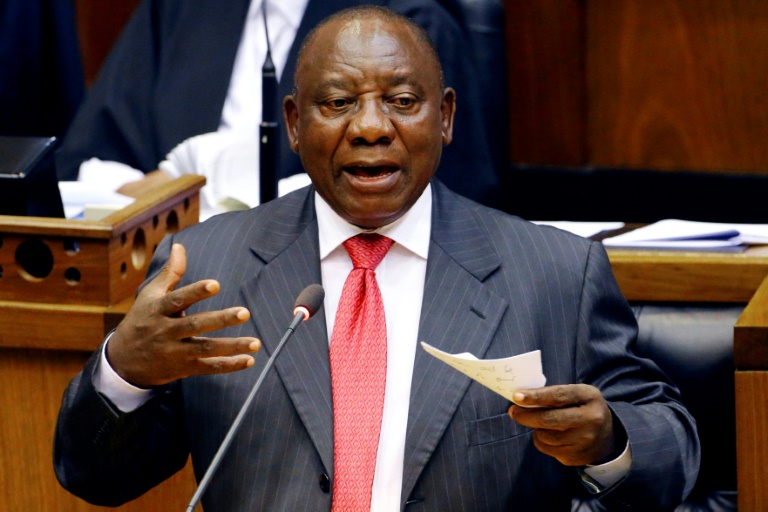
With less than two months to go until the African National Congress gathers to elect a leader, President Cyril Ramaphosa appears weakened as he seeks to retain the helm of South Africa’s fractured ruling party.

A scandal over millions of dollars allegedly found stashed at his luxury farmhouse has stained the image of Ramaphosa, who in 2018 had been trumpeted as a clean pair of hands after the graft-tainted era of Jacob Zuma.

With the ANC conference looming, analysts examine the prospects for the embattled 69-year-old former union leader and business tycoon.

– Can he stay in power? –

Commentators agree Ramaphosa stands a reasonable chance of staying on as leader of the ANC, the spearhead of the struggle against apartheid and South Africa’s ruling party since the advent of democracy in 1994.

He is “not in the strongest position, but still likely to win the race due to the lack of a stronger (rival),” said Pearl Mncube, an analyst at Frontline Africa Advisory, a Pretoria-based political risk advisory firm.

Ramaphosa’s opponents within the ANC have found fodder in the cash scandal that emerged in June.

The president is accused of hiding from police and tax authorities a 2020 break-in and cash heist from his farmhouse in the northern province of Limpopo.

“Groups opposing Ramaphosa have heavily weaponised the scandal (and) the economic woes facing the country,” Mncube said.

But “despite criticisms… he still enjoys significant support within the party”.

Susan Booysen, a professor at the University of the Witwatersrand, agreed that “there is still a pretty good chance that Ramaphosa will make it”.

Political analyst Eusebius McKaiser said Ramaphosa would “probably be okay”.

“But the degree of certainty has dropped and the reason for that is — although he is clearly still the frontrunner — his credibility (has been) dented.”

– Who are his key rivals? –

A few candidates have thrown their names in the ring to be the leader of the ANC.

Chief among them is Ramaphosa’s former health minister Zweli Mkhize, 66, who quit government last year amid allegations he diverted Covid funds. He has denied the accusations.

Senior cabinet minister Nkosazana Dlamini-Zuma, 73, the former chairwoman of the African Union Commission and Zuma’s ex-wife, who narrowly lost to Ramaphosa in the last vote more than four years ago, is another name being touted.

But analysts say Ramaphosa, a one-time favourite of anti-apartheid hero Nelson Mandela, remains the most attractive candidate.

“All the candidates are flawed and therefore there is no real threat,” said McKaiser.

“The reality is that for all the president’s weaknesses… relative to other candidates, he remains their best chance.”

– What about Zuma? –

Zuma, who faces corruption charges arising from a 1990s arms deal and has just ended a 15-month jail term for snubbing an anti-graft probe, has gone on the offensive.

He launched an unprecedented broadside against Ramaphosa at the weekend, accusing him of corruption and treason — an attack whose timing was seen as a deliberate move to smear his successor.

McKaiser dismissed the diatribe as “the rant of someone desperate to be an influencer” and said it was unlikely to shape the outcome of the election.

“Zuma’s influence is less than what he thinks it is,” he said.

Despite this, Zuma’s retains a hold over many ANC radicals, enabling him to stir resentment over deep-rooted poverty and inequality.

Ramaphosa “is still the strongest candidate but it’s going to be such a weak few years that follows for government and the ANC,” said Booysen.

That weakness may sap any political drive to reform South Africa’s economy, analysts say. The country is mired in low growth, catastrophically high unemployment and a failing energy system that has led to rolling blackouts.
South Africa fear bad luck 'following us' at World Cup

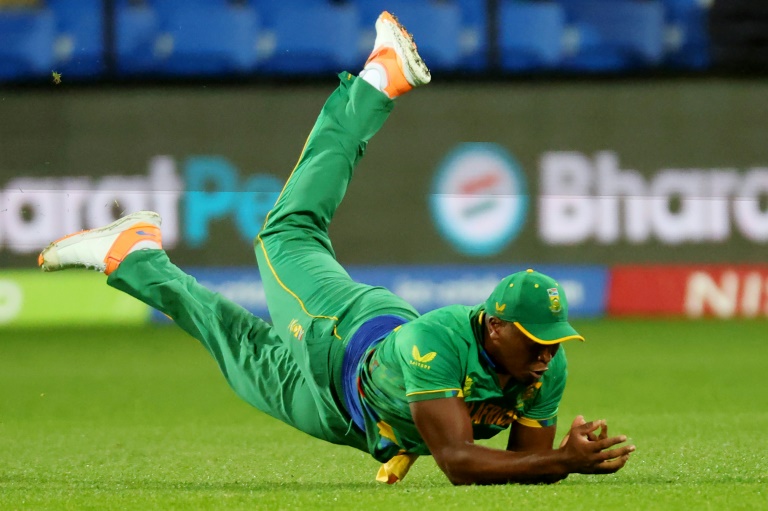
South African fast bowler Lungi Ngidi fears “bad luck is following us” at the Twenty20 World Cup with more rain forecast for their clash against Bangladesh on Thursday in Sydney.

South Africa have been touted as outsiders for the title but their opening match on Monday against Zimbabwe in Hobart was washed out. 

The Proteas had been on course for victory but were forced to settle for one point.

They are eager to get their tournament up and running against Bangladesh, but bad weather is forecast for Sydney.

The 26-year-old Ngidi, part of a fearsome South African pace attack, said of the abandoned opener against Zimbabwe: “It does put us under a bit of pressure, it would have been nice to get a win.

“Tomorrow another forecast of rain — I think we’ve just got a bit of bad luck following us.

“But we’ve got no say in how the weather plays out, the only thing we can do is be prepared to play.”

South Africa, Bangladesh and Zimbabwe are in Group 2 along with the Netherlands, India and Pakistan.

The top two will make the semi-finals.

Ngidi said they were able to take some positives from the disappointing Zimbabwe outcome.

“The energy that we had, the guys were really up for it,” he said.

“The guys are here to compete and here to win, that’s the mindset we’re going in with throughout the tournament.

“We got a bit of momentum there (against Zimbabwe) and whatever mistakes we made there we’re going to fix in the next game.”

Bangladesh opened their campaign with a nine-wicket win over the Netherlands.

11 pupils die in blaze at Ugandan school for blind

Eleven pupils at a school for the blind in Uganda have burnt to death after a fire tore through a dormitory as they were sleeping in the early hours of Tuesday.

The youngsters were trapped inside and unable to escape because the windows of the building had been made burglar-proof, a government minister told AFP.

The disaster occurred at about 1 am (2200 GMT Monday) at the Salama School for the Blind in the district of Mukono, east of the capital Kampala.

“The pupils were burnt beyond recognition and we are going to do a DNA test to establish their identities,” Mukono district security head and presidential representative, Fatuma Ndibasa, told AFP.

She said the dormitory that caught fire was housing 21 girls. “But three managed to escape, 11 died and six are admitted with serious injuries, one other girl had minor injuries.”

Earlier, one grieving father had told AFP he had lost his son in the blaze.

School headmaster Francis Kirube, who is also blind, said some disadvantaged boys at the school had been sleeping in a room next to the dorm, so the authorities were still trying to determine the identity of those who had died.

“Unfortunately we have discovered the windows of the dormitory where they were sleeping, the windows were burglar-proofed against a government directive. So the pupils could not escape the fire and got burnt,” the minister for people with disabilities, Hellen Grace Asamo told AFP.

– ‘Crime scene’ –

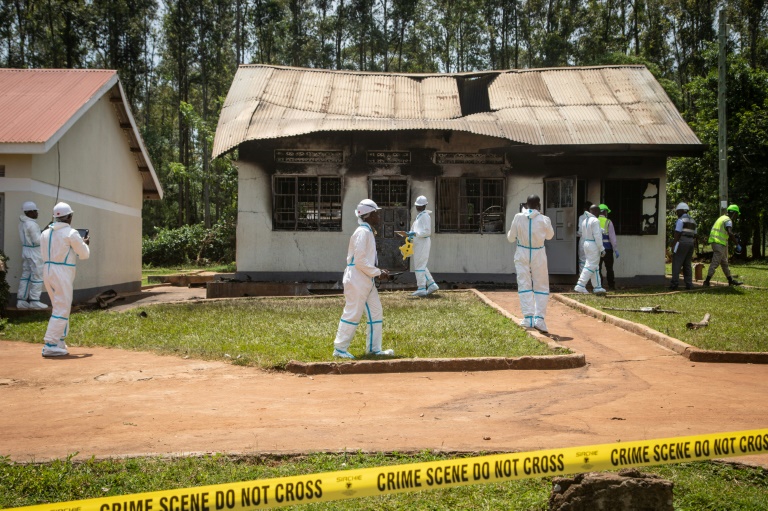
AFP images showed a charred but still largely intact building where the fire had broken out, its window frames and door blackened and the corrugated roof damaged.  

Forensic teams were seen in white protective gear at the school, while grieving parents gathered nearby, comforting each other.

Internal Affairs Minister General Kahinda Otafiire told AFP that the school had been cordoned off as a “crime scene” and vowed that there would be a full investigation.

“As government we shall go to the root cause of the fire and if there are any culprits they will be apprehended and the law will take its course,” he added.

Princess Anne, the sister of King Charles III, had been due to visit the school during her trip this week to Uganda, which marked its 60th anniversary of independence from Britain earlier this month.

A trader in Mukono, Richard Muhimba, told AFP earlier that he had lost his son in the blaze, saying: “No words can explain the pain I am going through. 

“I visited my child on Saturday, he was in good health and in less than three days he is gone… Please give me time to go through this pain,” said Muhimba, before hanging up.

A friend told AFP that the child was aged 15 and that Muhimba was a father of five. 

The headmaster said that although Salama largely catered to blind girls between the ages of six to about 14, the school had taken on some disadvantaged boys from the local community and that some were sleeping in a next door room.

The East African nation has suffered a string of deadly school fires in recent years.

In November 2018, 11 boys perished and another 20 suffered severe burns in a suspected arson attack at a boarding school in southern Uganda.

In April 2008, 18 schoolgirls burned to death along with one adult when a fire engulfed their dormitory at a junior school near the Ugandan capital. 

In March 2006, at least 13 children were killed and several hurt when fire razed an Islamic school in western Uganda. In July the same year, six children died in a similar fire in the east.

Sudan protester killed in coup anniversary crackdown

A protester was killed in Sudan Tuesday, medics said, as pro-democracy demonstrators marked the first anniversary of a coup that derailed a transition to civilian rule.

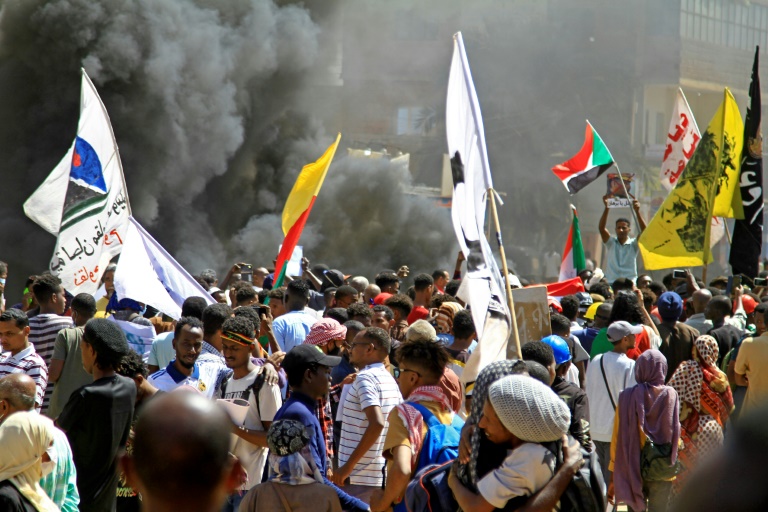
Waving Sudanese flags, thousands of protesters in Khartoum and its suburbs defied security forces who have carried out deadly crackdowns on past rallies, demanding that “soldiers go back to the barracks”.

Security forces responded with tear gas in some areas.

“No partnership, no negotiation with the putschists,” protesters chanted, in what has become a pro-democracy rallying cry.

In Omdurman, across the Nile from Khartoum, a demonstrator was “run over by a (security) forces vehicle”, said the Central Committee of Sudan Doctors in a statement, raising the death toll in the crackdown since the coup to 119.

A year ago to the day, army chief Abdel Fattah al-Burhan seized power and arrested the civilian leaders with whom he had agreed to share power in 2019, when mass protests compelled the army to depose one of its own, long-time autocrat Omar al-Bashir.

Protesters, calling out that the “revolution continues”, have demanded “a civil democratic Sudan”.

Eyewitnesses said thousands also protested in the cities of Wad Madani and El Obeid south of Khartoum, Gedaref and Port Sudan in the east, Atbara in the north and Nyala in the southwestern Darfur region.

In an attempt to stem protests, authorities restricted internet access nationwide, online monitor NetBlocks said. Access was restored later Tuesday.

– Security forces deployed –

The authorities in Khartoum ordered all public institutions, schools, and businesses shut Tuesday, as security forces blocked roads and bridges.

Police accused some protesters of “being armed and trained in violence”.

“We’ve been protesting for a year now, and that has enabled us to contain the coup” that gained no “international or regional recognition”, one protester in Khartoum told AFP.

Another, the Sudan flag draped across his shoulders, said: “It’s the first time in history we’re seeing a coup failing to move forward even an inch in a whole year.”

For 12 months, near weekly protests have been met with force. On Sunday, security forces shot dead a protester, pro-democracy medics said.

Western governments say Sudan must return to civilian rule before crucial aid halted in response to the coup can resume.

Already one of the world’s poorest countries, Sudan has plunged into a worsening economic crisis.

Between three-digit inflation and chronic food shortages, a third of its 45 million inhabitants suffer from hunger, a 50 percent increase compared with 2021, according to the World Food Programme.

The cost of food staples has jumped 137 percent in one year, which the WFP says has forced Sudanese to spend “more than two-thirds of their income on food alone, leaving little money to cover other needs”.

Many worry that three years after the 2019 uprising that toppled Bashir, signs point to a reversal of their revolution.

Since the coup, several Bashir-era loyalists have been appointed to official positions, including in the judiciary, which is currently trying the former dictator.

Burhan’s pledge of elections next year is seen as far-fetched, no civilian leaders have taken up the mantle of the army chief’s promised civilian government, and international mediation efforts are stalled.

“All political actors need to put aside differences and focus on the best interest of the Sudanese people,” UN envoy to Sudan Volker Perthes said Saturday.

– Deadly clashes –

On Friday, 31 protesters were injured, including three who were hit in the eye by tear gas canisters, according to pro-democracy medics.

Western embassies on Monday urged security forces “to refrain from using violence against protesters and to fulfil their obligation to protect freedoms of expression and peaceful assembly”.

A broader security breakdown nationwide has also left nearly 600 dead and more than 210,000 displaced as a result of ethnic violence this year, according to the United Nations.

Sudan is the world’s fifth most vulnerable country to the impacts of climate change, according to a 2020 ranking in the Global Adaptation Index, compiled by the Notre Dame University in the United States.

More than two-fifths of people depend on farming for a living, and conflicts regularly erupt over access to land, water and livestock grazing.

In the southern Blue Nile state, awash with automatic weapons after decades of civil war, some 250 people were killed in clashes over land last week, the UN said.

Ethiopia peace talks open in South Africa

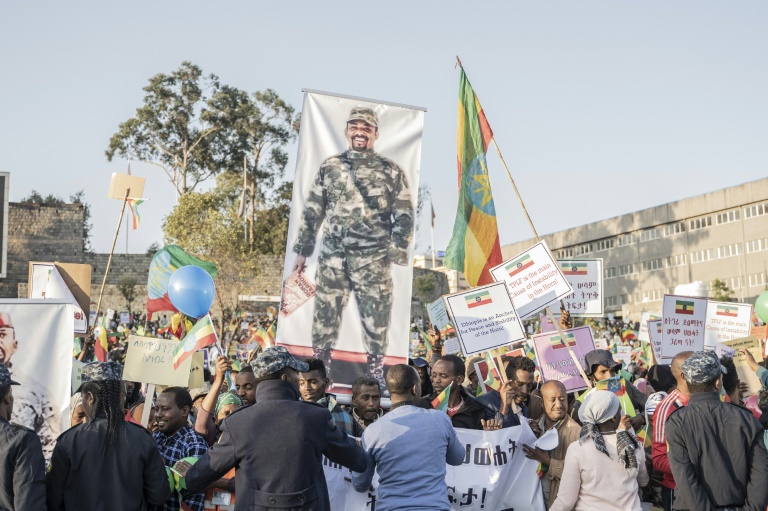
The first formal peace talks between the warring sides in the brutal two-year conflict in Ethiopia’s Tigray region opened in South Africa on Tuesday.

Led by the African Union (AU), the negotiations in Pretoria follow a fierce surge in fighting in recent weeks that has alarmed the international community and triggered fears for civilians caught in the crossfire.

They “have been convened to find a peaceful and sustainable solution to the devastating conflict,” South African President Cyril Ramaphosa’s spokesman Vincent Magwenya told reporters, adding that they would run until October 30.

South Africa hopes “the talks will proceed constructively and result in a successful outcome that leads to peace for all the people of our dear sister country,” he said.

The dialogue between negotiators from the Ethiopian government of Prime Minister Abiy Ahmed and the regional authorities in war-stricken Tigray was launched almost two months to the day since fighting resumed, shattering a five-month truce.

The international community has been calling for an immediate ceasefire, humanitarian access to Tigray where many face hunger, and a withdrawal of Eritrean forces, whose return to the conflict has raised fears of renewed atrocities against civilians. 

“There is no military solution to this conflict, and these talks represent the most promising way to achieve lasting peace and prosperity for all Ethiopians,”  US Secretary of State Antony Blinken said in a statement welcoming the negotiations.

The dialogue is being facilitated by AU Horn of Africa envoy and former Nigerian president Olusegun Obasanjo, along with Kenya’s former leader Uhuru Kenyatta and South Africa’s ex-vice president Phumzile Mlambo-Ngcuka, with a US envoy, Mike Hammer, participating.

AU Commission chair Moussa Faki Mahamat welcomed the launch of the eagerly-awaited process.

He said he was “encouraged by the early demonstration of commitment to peace by the parties” and reiterated the AU’s continued support for a process “to silence the guns towards a united, stable, peaceful and resilient Ethiopia.”

UN High Commissioner for Refugees, Filippo Grandi, implored the rivals to seize the opportunity for peace in the face of the “very worrying” humanitarian situation.

“Please government, please TPLF, for the sake of your own people, come to a positive conclusion or at least open up a channel for peace,” he told reporters in Nairobi.

The Ethiopian government and the rebel Tigray People’s Liberation Front (TPLF) have yet to comment.

– Communications blackout –

Diplomatic pressure has ratcheted up in recent weeks to end a war which has left millions in need of humanitarian aid and, according to a US estimate, as many as half a million dead.

The talks come as federal forces and their allies in the Eritrean army appear to be gaining the upper hand, seizing a string of towns in Tigray including the strategic city of Shire in offensives that have sent civilians fleeing.

It is impossible to verify developments on the battleground as Tigray — a region of six million people — is largely cut off by a communications blackout and access to northern Ethiopia is severely restricted.

An initial AU effort to bring the two sides to the negotiating table earlier this month failed, with diplomats suggesting logistical issues and a lack of preparedness were to blame.

The Pretoria dialogue represents the first publicly announced talks between the rivals, although a Western official has confirmed that secret contacts had taken place organised by the United States in the Seychelles and twice in Djibouti.

Abiy first sent troops into Tigray in November 2020, promising a quick victory over the northern region’s dissident leaders, the TPLF, after what he said were attacks by the group on federal army camps.

The move followed long-running tensions with the TPLF, which had dominated Ethiopia’s ruling coalition before Abiy came to power in 2018 and sidelined the party.

– Amnesty appeal –

In a rare comment on the conflict last week, Abiy — who won the 2019 Nobel Peace Prize for his rapprochement with Eritrea — said the war “would end and peace will prevail”.

But on Monday, Tigray’s leader Debretsion Gebremichael issued a defiant statement saying: “The Tigray army has the capacity to defeat our enemies totally.”

Amnesty International on Monday urged rival forces to protect civilians in the face of intensifying hostilities.

In a statement, the watchdog charged that air strikes on Tigray’s capital Mekele and the town of Adi Daero in August and September had “killed hundreds of civilians including children.”

Dream debut for head coach Mokwena as Mamelodi Sundowns hit five

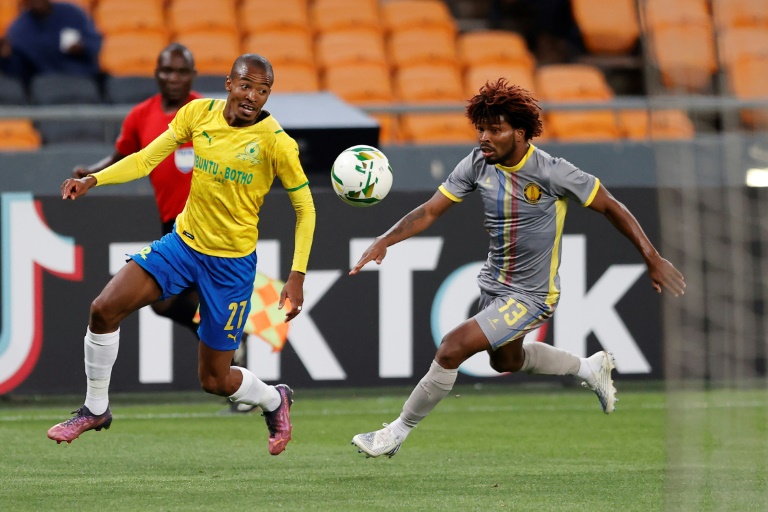
Rulani Mokwena made a perfect start as Mamelodi Sundowns head coach on Tuesday with a 5-0 triumph at Maritzburg United in the South African Premiership.

Haashim Domingo and Cassius Mailula scored twice each and man-of-the-match Thapelo Morena once for the defending champions, who led 3-0 at half-time.

Leaders Sundowns moved three points clear of Richards Bay while Maritzburg dropped one place to 14th, just one point above the relegation zone, after matchday 12.

“We were aggressive and hungry and took our chances,” said Mokwena, formerly the co-head coach with Manqoba Mngqithi, who has been demoted to a lesser role with the Pretoria outfit.

“It was a great result after what happened at the weekend,” said the new boss, referring to a 3-0 hammering by Orlando Pirates in a knockout competition semi-final.

“But we must stay humble and not get carried away. We go to Royal AM in Durban on Saturday and that will be a big challenge.

“What impressed me most about our performance tonight was the speed of the players, both with and without the ball.”

Maritzburg coach and former Malawi star John Maduka said: “It was a bad, sad night for us. Many of the goals stemmed from our failure to block crosses.”  

The coaching reshuffle at Sundowns was triggered by “poor performances and unconvincing victories”, according to a club statement.  

Three days before being embarrassed by Pirates, Sundowns had battled to overcome bottom club Marumo Gallants 1-0 in the Premiership.

Elsewhere, a four-match winning run by traditional strugglers Chippa United ended when they lost 2-1 away to Cape Town City, who won for the first time in four league games.

Ronaldo Maarman put Gqeberha-based Chippa ahead in the first half only for Khanyiso Mayo to level with his fourth Premiership goal of the season, and Thamsanqa Mkhize netted the winner.

Royal got back on the winning trail after three losses by defeating Golden Arrows 3-1 in a Durban derby.

The outcome was in the balance until one minute from time when Lesotho international Motebang Sera scored Arrows’ third goal with a close-range shot.

Ethiopia peace talks open in South Africa

The first formal peace talks between the warring sides in the brutal two-year conflict in Ethiopia’s Tigray region opened in South Africa on Tuesday.

Led by the African Union (AU), the negotiations in Pretoria follow a fierce surge in fighting in recent weeks that has alarmed the international community and triggered fears for civilians caught in the crossfire.

They “have been convened to find a peaceful and sustainable solution to the devastating conflict,” South African President Cyril Ramaphosa’s spokesman Vincent Magwenya told reporters, adding that they would run until October 30.

South Africa hopes “the talks will proceed constructively and result in a successful outcome that leads to peace for all the people of our dear sister country,” he said.

The dialogue between negotiators from the Ethiopian government of Prime Minister Abiy Ahmed and the regional authorities in war-stricken Tigray was launched almost two months to the day since fighting resumed, shattering a five-month truce.

The international community has been calling for an immediate ceasefire, humanitarian access to Tigray where many face hunger, and a withdrawal of Eritrean forces, whose return to the conflict has raised fears of renewed atrocities against civilians. 

The dialogue is being facilitated by AU Horn of Africa envoy and former Nigerian president Olusegun Obasanjo, along with Kenya’s former leader Uhuru Kenyatta and South Africa’s ex-vice president Phumzile Mlambo-Ngcuka.

AU Commission chair Moussa Faki Mahamat welcomed the launch of the eagerly-awaited process.

He said he was “encouraged by the early demonstration of commitment to peace by the parties” and reiterated the AU’s continued support for a process “to silence the guns towards a united, stable, peaceful and resilient Ethiopia.”

UN High Commissioner for Refugees, Filippo Grandi, implored the rivals to seize the opportunity for peace in the face of the “very worrying” humanitarian situation.

“Please government, please TPLF, for the sake of your own people, come to a positive conclusion or at least open up a channel for peace,” he told reporters in Nairobi.

The Ethiopian government and the rebel Tigray People’s Liberation Front (TPLF) have yet to comment.

– Communications blackout –

Diplomatic pressure has ratcheted up in recent weeks to end a war which has left millions in need of humanitarian aid and, according to a US estimate, as many as half a million dead.

The talks come as federal forces and their allies in the Eritrean army appear to be gaining the upper hand, seizing a string of towns in Tigray including the strategic city of Shire in offensives that have sent civilians fleeing.

It is impossible to verify developments on the battleground as Tigray — a region of six million people — is largely cut off by a communications blackout and access to northern Ethiopia is severely restricted.

An initial AU effort to bring the two sides to the negotiating table earlier this month failed, with diplomats suggesting logistical issues and a lack of preparedness were to blame.

The Pretoria dialogue represents the first publicly announced talks between the rivals, although a Western official has confirmed that secret contacts had taken place organised by the United States in the Seychelles and twice in Djibouti.

Abiy first sent troops into Tigray in November 2020, promising a quick victory over the northern region’s dissident leaders, the TPLF, after what he said were attacks by the group on federal army camps.

The move followed long-running tensions with the TPLF, which had dominated Ethiopia’s ruling coalition before Abiy came to power in 2018 and sidelined the party.

– Amnesty appeal –

In a rare comment on the conflict last week, Abiy — who won the 2019 Nobel Peace Prize for his rapprochement with Eritrea — said the war “would end and peace will prevail”.

But on Monday, Tigray’s leader Debretsion Gebremichael issued a defiant statement saying: “The Tigray army has the capacity to defeat our enemies totally.”

Amnesty International on Monday urged rival forces to protect civilians in the face of intensifying hostilities.

In a statement, the watchdog charged that air strikes on Tigray’s capital Mekele and the town of Adi Daero in August and September had “killed hundreds of civilians including children.” 

It also claimed — without giving sources — that the Eritrean army had in September “extrajudicially executed” at least 40 people, including Eritrean refugees, in the northwestern Tigrayan town of Sheraro.

Fire on Mount Kilimanjaro reignites

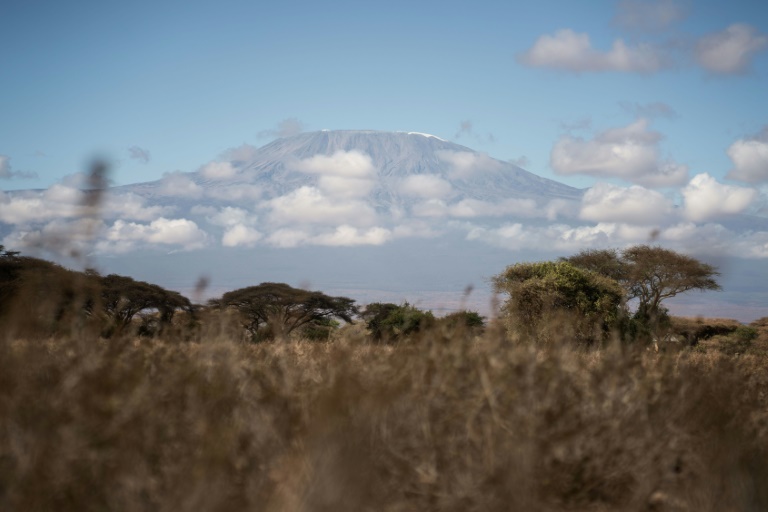
A wildfire that officials thought was under control on Africa’s highest peak, Mount Kilimanjaro, has reignited, Tanzanian officials said on Tuesday. 

The blaze began on Friday evening near the Karanga site used by climbers ascending the famous peak, at about 4,000 metres (13,000 feet) altitude on its south side.

Hard winds helped fan the fire but a team of some 400 people, including students and volunteers, battled to contain it on Sunday before it lit up in other pockets. 

“Fires erupted again last night in three places that were previously under control,” Eliamani Sedoyeka, permanent secretary at the natural resources and tourism ministry, told reporters.

“By this afternoon, one area was controlled and efforts are ongoing to contain others.”

So far, no injuries or deaths have been reported. 

Sedoyeka said the blaze wasn’t posing a threat to tourists on the mountain, a major draw for both trekkers and climbers. 

“We see good progress in fighting the fires and if the weather does not change, we will control the situation soon,” he said. 

Tanzanian authorities are yet to comment on the extent of damage. 

The risk of catastrophic wildfires is growing around the world as climate change fuels tinder-dry conditions.

Scientists have warned human-induced climate change is making the extreme weather events, including heatwaves and droughts, more frequent and intense. 

Mount Kilimanjaro, with its snow-capped peak, is known around the world.

The forests surrounding it form part of a national park, and Kilimanjaro National Park is listed as a UNESCO World Heritage site, in part because many endangered species live there.

The latest blaze at the mountain comes two years after another fire raged for a week in October 2020 across 95 square kilometres (37 square miles).

South Sudan VP rejects ouster from ruling party

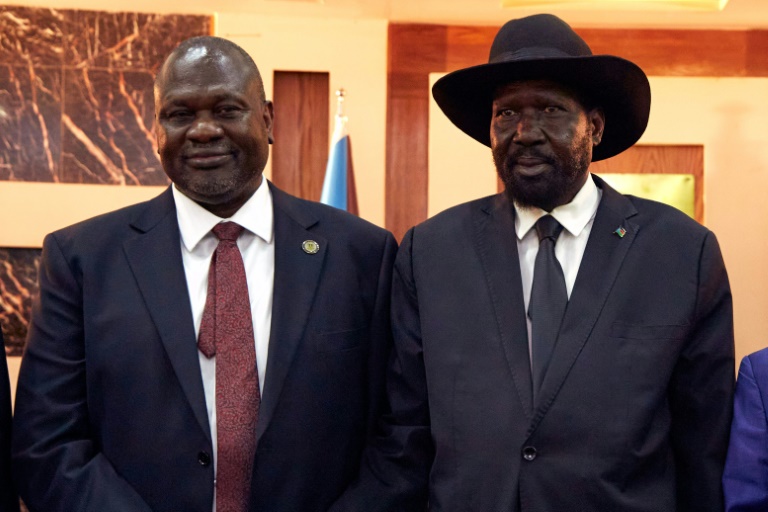
South Sudan’s vice president, Riek Machar, has rejected a move to kick him out of the ruling party, a sign of renewed political tensions that could put pressure on the country’s rocky peace process.

The world’s youngest nation has lurched from crisis to crisis since it proclaimed independence from Sudan in July 2011, and is held together by a fragile unity government between historic foes President Salva Kiir and Machar. 

Highlighting the continued friction between the two men, a meeting chaired by Kiir last week ousted Machar from the governing Sudan People’s Liberation Movement (SPLM).

But Machar on Monday rejected the decision to strip both him and SPLM secretary general Pagan Amum of party membership, as well as leadership roles.

“No faction can dismiss any member of the other factions from SPLM,” Machar’s wing of the party, the Sudan People’s Liberation Movement in Opposition (SPLM/A-IO), said in a statement. 

Kiir and Machar were on the same side in the push for independence from Khartoum but ethnic and political rivalries drove them apart.

The SPLM was founded as the political wing of the Sudan People’s Liberation Army (SPLA), which led the fight for South Sudan’s independence.

But it splintered into different factions after civil war erupted in December 2013.

Tension between Kiir and Machar has often descended into deadly violence despite numerous pledges to silence their guns.

In April, they agreed on the creation of a unified armed forces command, one of several deadlocked issues holding up implementation of the 2018 pact to end the country’s five-year conflict. 

Former rebels from the rival camps were integrated into the country’s army in August, ending years of deadlock between the two men and renewing hope of lasting peace.

The ceremony came weeks after the country’s leaders — appointed to run a transitional government — announced that they would remain in power two years beyond an agreed deadline, sparking international concern.

The transition period was meant to conclude with elections in December this year, but the government has so far failed to meet core provisions of the 2018 deal, including drafting a constitution.

One of the poorest nations on the planet despite large oil reserves, South Sudan has spent almost half of its life as a nation at war. 

Almost 400,000 people died in the civil war before Kiir and Machar signed a peace deal in 2018 and formed a unity government.

Since then, the country has battled flooding, hunger, violence and political bickering as the promises of the peace agreement have failed to materialise.

The United Nations has repeatedly criticised South Sudan’s leadership for its role in stoking violence, cracking down on political freedoms and plundering public coffers.

Sudan protester killed in coup anniversary crackdown

A protester was killed in Sudan Tuesday, medics said, as pro-democracy demonstrators marked the first anniversary of a coup that derailed a transition to civilian rule.

Waving Sudanese flags, thousands of protesters in Khartoum and its suburbs defied security forces who have carried out deadly crackdowns on past rallies, demanding that “soldiers go back to the barracks”.

Security forces responded with tear gas in some areas.

“No partnership, no negotiation with the putschists,” protesters chanted, in what has become a pro-democracy rallying cry.

In Omdurman, across the Nile from Khartoum, a demonstrator was “run over by a (security) forces vehicle”, said the Central Committee of Sudan Doctors in a statement, raising the death toll in the crackdown since the coup to 119.

A year ago to the day, army chief Abdel Fattah al-Burhan seized power and arrested the civilian leaders with whom he had agreed to share power in 2019, when mass protests compelled the army to depose one of its own, long-time autocrat Omar al-Bashir.

Protesters, calling out that the “revolution continues”, have demanded “a civil democratic Sudan”.

Eyewitnesses said thousands also protested in the cities of Wad Madani and El Obeid south of Khartoum, Gedaref and Port Sudan in the east, Atbara in the north and Nyala in the southwestern Darfur region.

In an attempt to stem protests, authorities restricted internet access nationwide, online monitor NetBlocks said. Access was restored later Tuesday.

– Security forces deployed –

The authorities in Khartoum ordered all public institutions, schools, and businesses shut Tuesday, as security forces blocked roads and bridges.

Police accused some protesters of “being armed and trained in violence”.

“We’ve been protesting for a year now, and that has enabled us to contain the coup” that gained no “international or regional recognition”, one protester in Khartoum told AFP.

Another, the Sudan flag draped across his shoulders, said: “It’s the first time in history we’re seeing a coup failing to move forward even an inch in a whole year.”

For 12 months, near weekly protests have been met with force. On Sunday, security forces shot dead a protester, pro-democracy medics said.

Western governments say Sudan must return to civilian rule before crucial aid halted in response to the coup can resume.

Already one of the world’s poorest countries, Sudan has plunged into a worsening economic crisis.

Between three-digit inflation and chronic food shortages, a third of its 45 million inhabitants suffer from hunger, a 50 percent increase compared with 2021, according to the World Food Programme.

The cost of food staples has jumped 137 percent in one year, which the WFP says has forced Sudanese to spend “more than two-thirds of their income on food alone, leaving little money to cover other needs”.

Many worry that three years after the 2019 uprising that toppled Bashir, signs point to a reversal of their revolution.

Since the coup, several Bashir-era loyalists have been appointed to official positions, including in the judiciary, which is currently trying the former dictator.

Burhan’s pledge of elections next year is seen as far-fetched, no civilian leaders have taken up the mantle of the army chief’s promised civilian government, and international mediation efforts are stalled.

“All political actors need to put aside differences and focus on the best interest of the Sudanese people,” UN envoy to Sudan Volker Perthes said Saturday.

– Deadly clashes –

On Friday, 31 protesters were injured, including three who were hit in the eye by tear gas canisters, according to pro-democracy medics.

Western embassies on Monday urged security forces “to refrain from using violence against protesters and to fulfil their obligation to protect freedoms of expression and peaceful assembly”.

A broader security breakdown nationwide has also left nearly 600 dead and more than 210,000 displaced as a result of ethnic violence this year, according to the United Nations.

Sudan is the world’s fifth most vulnerable country to the impacts of climate change, according to a 2020 ranking in the Global Adaptation Index, compiled by the Notre Dame University in the United States.

More than two-fifths of people depend on farming for a living, and conflicts regularly erupt over access to land, water and livestock grazing.

In the southern Blue Nile state, awash with automatic weapons after decades of civil war, some 250 people were killed in clashes over land last week, the UN said.

Close Bitnami banner
Bitnami