Africa Business

DR Congo's Tshisekedi named 'facilitator' in Chad crisis

An 11-nation summit of Central African countries on Tuesday appointed DR Congo President Felix Tshisekedi as intermediary in troubled Chad, where dozens were killed last week during protests at the military’s grip on power.

Leaders of the Economic Community of Central African States (ECCAS) agreed to name Tshisekedi “facilitator in the transition process” — the official term for Chad’s planned return to civilian rule.

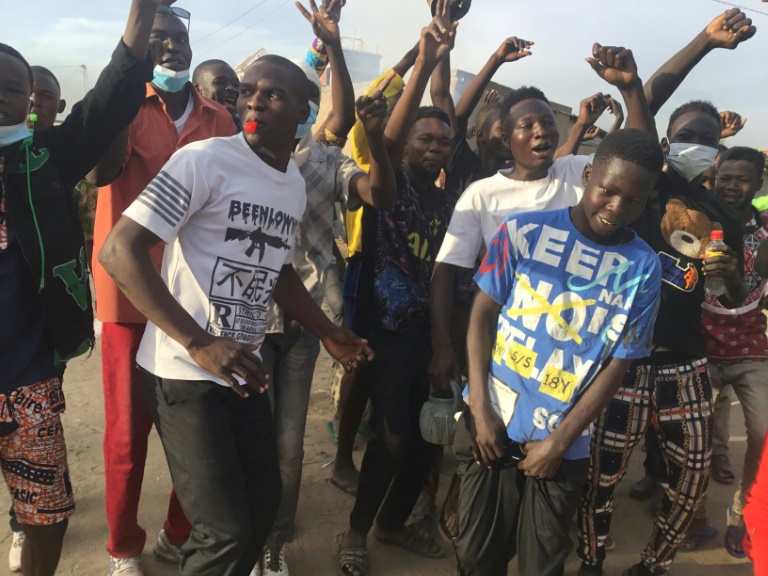
The summit came five days after clashes between Chadian police and protestors in which 50 people died, including a dozen members of the security forces, according to a government toll.

Chad, an ECCAS member, was represented by Mahamat Idriss Deby, who was appointed “transitional president” by a national forum earlier this month.

The 38-year-old five-star general has been in power since his iron-fisted father, Idriss Deby Itno, was killed in an operation against rebels in April 2021.

His junta initially vowed to hold elections within 18 months — a deadline that has now been extended by two years.

Deby also once pledged not to be a candidate in the future ballot, but the national forum declared he was entitled to take part.

Tshisekedi, in an opening speech to the summit, called last week’s bloodshed a “dramatic mistake.”

Hopes for national consensus, which had been the purported goal of the Chadian forum, “seem to have shattered,” he said.

“The political crisis… has unfortunately revived,” Tshisekedi said. 

“The task now is to get the transition back on track,” he said, before initiating talks behind closed doors.

After his appointment by the summit, Tshisekedi promised he would “spare no effort” to carry out his mission. 

The summit’s final communique issued an “appeal for peace to the Chadian government and people” and condemned what it called violence for political ends.

It also urged Chad’s partners, particularly the United Nations and African Union (AU), “to maintain and step up their diplomatic, financial, material and technical support, (which is) needed for the transition process.”

– ‘Insurrection’ –

Thursday’s protests had been called by opposition campaigners to mark the date when the junta had initially promised to hand over power.

But in a televised address late Monday, Deby said a “meticulously prepared insurrection” had taken place with the “support of foreign powers,” which he did not name.

A Geneva-based NGO, the World Organization against Torture (OMCT), has given a provisional death toll of at least 80, in the capital N’Djamena and the southern towns of Moundou, Doba, Koumra and Bebedjia. 

“Young people were reportedly summarily executed there this morning,” the OMCT said on Monday, adding that hundreds had been arrested, and some tortured.

The AU and European Union (EU) last week issued statements strongly condemning the crackdown and attacking violation of freedom of speech and assembly.
11 pupils die in blaze at Ugandan school for blind

Eleven pupils at a school for the blind in Uganda have burnt to death after a fire tore through a dormitory as they were sleeping in the early hours of Tuesday.

The youngsters were trapped inside and unable to escape because the windows of the building had been made burglar-proof, a government minister told AFP.

The disaster occurred at about 1 am (2200 GMT Monday) at the Salama School for the Blind in the district of Mukono, east of the capital Kampala.

“The pupils were burnt beyond recognition and we are going to do a DNA test to establish their identities,” Mukono district security head and presidential representative, Fatuma Ndibasa, told AFP.

She said the dormitory that caught fire was housing 21 girls. “But three managed to escape, 11 died and six are admitted with serious injuries, one other girl had minor injuries.”

Earlier, one grieving father had told AFP he had lost his son in the blaze.

School headmaster Francis Kirube, who is also blind, said some disadvantaged boys at the school had been sleeping in a room next to the dorm, so the authorities were still trying to determine the identity of those who had died.

“Unfortunately we have discovered the windows of the dormitory where they were sleeping, the windows were burglar-proofed against a government directive. So the pupils could not escape the fire and got burnt,” the minister for people with disabilities, Hellen Grace Asamo told AFP.

– ‘Crime scene’ –

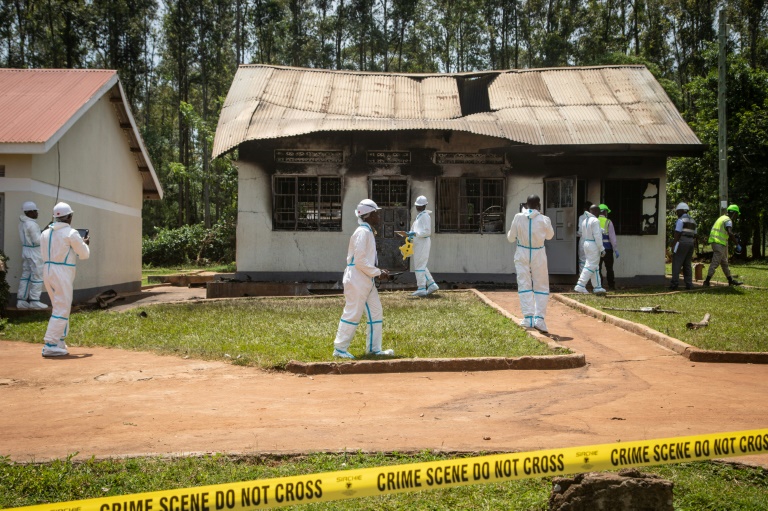
AFP images showed a charred but still largely intact building where the fire had broken out, its window frames and door blackened and the corrugated roof damaged.  

Forensic teams were seen in white protective gear at the school, while grieving parents gathered nearby, comforting each other.

Internal Affairs Minister General Kahinda Otafiire told AFP that the school had been cordoned off as a “crime scene” and vowed that there would be a full investigation.

“As government we shall go to the root cause of the fire and if there are any culprits they will be apprehended and the law will take its course,” he added.

Princess Anne, the sister of King Charles III, had been due to visit the school during her trip this week to Uganda, which marked its 60th anniversary of independence from Britain earlier this month.

A trader in Mukono, Richard Muhimba, told AFP earlier that he had lost his son in the blaze, saying: “No words can explain the pain I am going through. 

“I visited my child on Saturday, he was in good health and in less than three days he is gone… Please give me time to go through this pain,” said Muhimba, before hanging up.

A friend told AFP that the child was aged 15 and that Muhimba was a father of five. 

The headmaster said that although Salama largely catered to blind girls between the ages of six to about 14, the school had taken on some disadvantaged boys from the local community and that some were sleeping in a next door room.

The East African nation has suffered a string of deadly school fires in recent years.

In November 2018, 11 boys perished and another 20 suffered severe burns in a suspected arson attack at a boarding school in southern Uganda.

In April 2008, 18 schoolgirls burned to death along with one adult when a fire engulfed their dormitory at a junior school near the Ugandan capital. 

In March 2006, at least 13 children were killed and several hurt when fire razed an Islamic school in western Uganda. In July the same year, six children died in a similar fire in the east.

C.African president in storm after top judge sacked

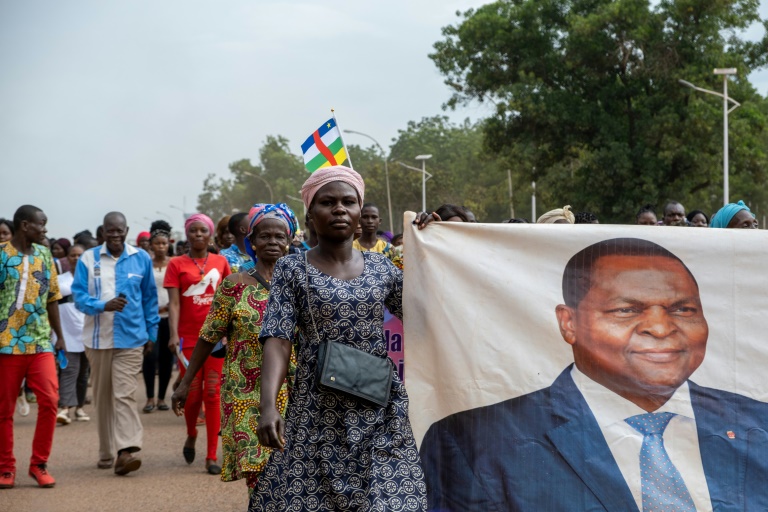
The president of the troubled Central African Republic, Faustin Archange Touadera, on Tuesday fired the country’s top judge, a move the opposition lashed as a “constitutional coup” aimed at extending his time in power.

Touadera issued a technical decree, read on national television and radio, that amounted to a sidelining of the head of the Constitutional Court, Daniele Darlan.

It touched on regulations passed in 2017 covering the election of judges to the court, and said specifically that Darlan was now subject to “definitive preclusion” from office.

A coalition of opposition parties and civil society groups, the Republican Bloc for Defending the Constitution (BRDC), accused Touadera of mounting “a constitutional coup d’etat.”

It “violates sacrosanct constitutional rules that (Constitutional Court) judges cannot be removed from office,” the BRDC said, adding that it would file a lawsuit against the decree on Wednesday morning.

Darlan has been a long-standing thorn in Touadera’s side and is frequently attacked or threatened on social media and in pro-government rallies.

On September 23, her court annulled presidential decrees setting up a committee to rewrite the constitution — a move that had sparked fears Touadera was seeking to breach the country’s two-term presidential limits.

Approached by AFP, Darlan said she would refrain from commenting until the opposition’s judicial complaint had been concluded.

The CAR is one of the poorest and most unstable countries in the world, experiencing only rare moments of peace since it became independent from France in 1960.

It plunged into bloody civil conflict in 2012 that was eased by an intervention by France, the former colonial power, and the deployment of a UN peacekeeping mission.

As relative stability returned, Touadera was elected in 2016 and was returned for a second term in 2020, despite widespread accusations of electoral flaws.

As rebel groups advanced on the capital during the election period, Touadera brought in Russian paramilitaries to help shore up his government, strengthening security ties with the Kremlin.

US authorizes diplomats to leave Nigerian capital after threat

The United States on Tuesday authorized the departure of diplomats from the Nigerian capital Abuja, stepping up precautions over what it said was the threat of attacks.

The State Department said in a statement it was permitting but not requiring non-emergency US personnel and their families to leave Abuja “due to the heightened risk of terrorist attacks.”

It did not order an evacuation and overall travel advice to Americans was unchanged, with the State Department advising citizens to reconsider non-essential travel to Nigeria due to concerns over crime and unrest.

The latest US security move comes after the embassy on Sunday urged Americans to limit their movements due to an “elevated risk of terror attacks in Nigeria, specifically in Abuja,” a warning repeated by Britain, Canada and Australia.

The United States did not specify the threat. Abuja, a pre-planned capital of six million people built in the 1980s, has historically been seen as safe but insurgents linked to the Islamic State group have claimed several attacks in surrounding areas over the past six months.

Nigeria’s domestic security agency has urged residents to stay calm and to take “necessary precautions,” with police ordering a counter-terrorism exercise in Abuja.

Ethiopia peace talks open in South Africa

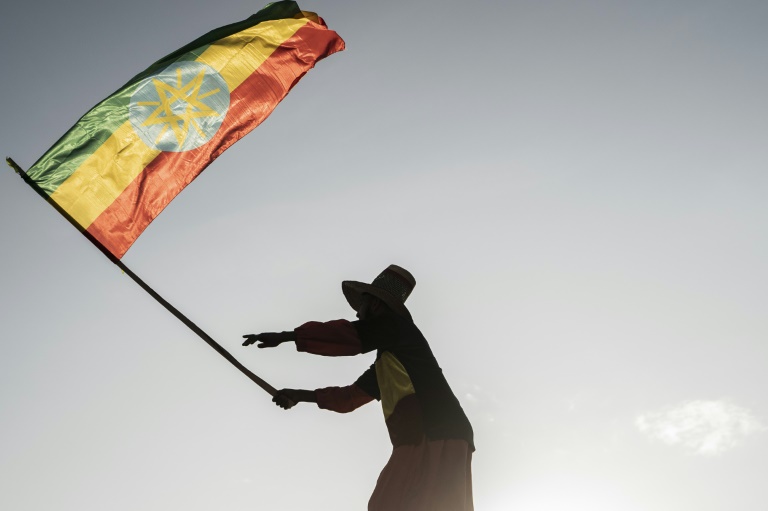
Peace talks between the warring sides in the brutal two-year-old conflict in Ethiopia’s Tigray region opened in Pretoria on Tuesday, the South African presidency announced.

Led by the African Union (AU), the talks follow a fierce surge in fighting in recent weeks that has alarmed the international community and triggered fears for civilians caught in the crossfire.

They “have been convened to find a peaceful and sustainable solution to the devastating conflict,” Vincent Magwenya, spokesman for South African President Cyril Ramaphosa, told reporters, adding that they would run until October 30.

South Africa hopes “the talks will proceed constructively and result in a successful outcome that leads to peace for all the people of our dear sister country,” he said.

The dialogue between negotiators from the Ethiopian government of Prime Minister Abiy Ahmed and the regional authorities in war-stricken Tigray was launched almost two months to the day since fighting resumed in August, shattering a five-month truce.

They are being facilitated by AU Horn of Africa envoy and Nigeria’s former president Olusegun Obasanjo, supported by Kenya’s former leader Uhuru Kenyatta and South Africa’s ex-vice president Phumzile Mlambo-Ngcuka, said Magwenya.

There was no immediate comment from the AU, the Ethiopian government or the rebel Tigray People’s Liberation Front (TPLF) about the launch of the eagerly-expected process. 

– ‘Peace will prevail’ –

Diplomatic pressure has ratcheted up in recent weeks to silence the guns in a war which has left millions in need of humanitarian aid and, according to a US estimate, as many as half a million dead.

The talks come as federal forces and their allies in the Eritrean army appear to be gaining the upper hand on the ground, seizing a string of towns in Tigray including the strategic city of Tigray in offensives that have sent civilians fleeing.

It is impossible to verify developments on the battleground as Tigray — a region of six million people — is largely cut off by a communications blackout and access to northern Ethiopia is severely restricted.

An initial AU effort to bring the two sides to the negotiating table earlier this month failed, with diplomats suggesting logistical issues and a lack of preparedness were to blame.

The Pretoria dialogue represents the first publicly announced talks between the rivals, although a Western official has confirmed that previous secret contacts took place organised by the United States in the Seychelles and twice in Djibouti.

Abiy first sent troops into Tigray in November 2020, promising a quick victory over the northern region’s dissident leaders, the TPLF, after what he said were attacks by the group on federal army camps.

The move followed long-running tensions with the TPLF, which had dominated Ethiopia’s ruling coalition before Abiy came to power in 2018 and sidelined the party.

In a rare comment on the conflict last week, Abiy — who won the 2019 Nobel Peace Prize for his rapprochement with Eritrea — said the war “would end and peace will prevail.”

But on Monday, Tigray’s leader Debretsion Gebremichael issued a defiant statement saying: “The Tigray army has the capacity to defeat our enemies totally.”

– ‘Civilians are afraid’ –

The international community has been calling for an immediate ceasefire, humanitarian access to Tigray and a withdrawal of Eritrean forces, whose return to the conflict has raised fears of renewed atrocities against civilians. 

Amnesty International on Monday urged the rivals to protect civilians in the face of intensifying hostilities as government forces capture towns in Tigray.

“Tigrayan civilians are afraid that the widespread abuses, such as unlawful killings, sexual violence and systematic attacks, that were rampant when the Ethiopian National Defence Forces (ENDF) and its allied forces were in control of these areas from November 2020 to June 2021, might happen again,” said Muleya Mwananyanda, Amnesty’s director for East and Southern Africa.

The Amnesty statement charged that air strikes on Tigray’s capital Mekele and the town of Adi Daero in August and September had “killed hundreds of civilians including children.” 

It also claimed — without giving sources — that the Eritrean army had in September “extrajudicially executed” at least 40 people, including Eritrean refugees, in the northwestern Tigrayan town of Sheraro.

Sudan security forces tear-gas protesters on coup anniversary

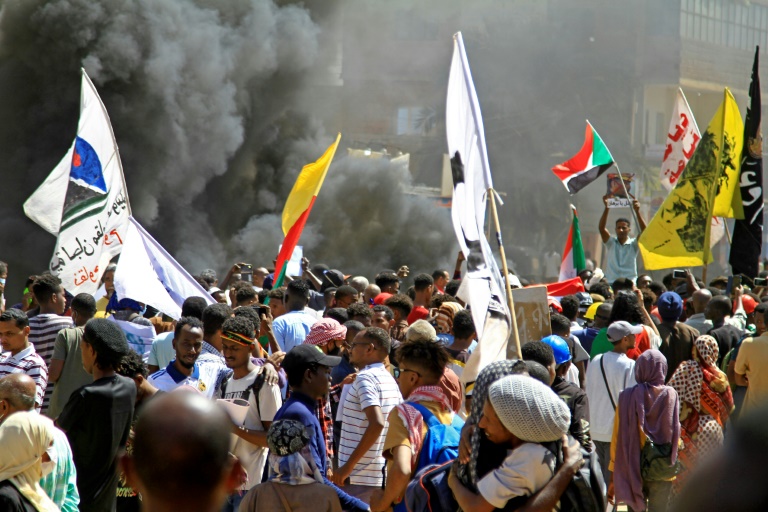
Sudanese security forces shot tear gas Tuesday as thousands of pro-democracy protesters marked the first anniversary of a coup that derailed a transition to civilian rule and sent hunger and inflation soaring.

Waving Sudanese flags, thousands of demonstrators in Khartoum and its suburbs defied security forces who have carried out deadly crackdowns on past rallies, demanding that “soldiers go back to the barracks”.

“No partnership, no negotiation with the putschists,” protesters chanted, calling out what has become a pro-democracy rallying cry.

A year ago to the day, army chief Abdel Fattah al-Burhan seized power and arrested the civilian leaders with whom he had agreed to share power in 2019, when mass protests compelled the army to depose one of its own, long-time autocrat Omar al-Bashir.

Protesters, calling out that the “revolution continues”, have demanded the creation of “a civil democratic Sudan”.

Eyewitnesses said thousands also took to the streets in the cities of Wad Madani and El Obeid south of the capital, Gedaref and Port Sudan in the east, Atbara in the north and Nyala in the southwestern Darfur region.

In an attempt to stem protests, authorities restricted internet access across the country, online monitor NetBlocks said.

– Security forces deployed –

The authorities in Khartoum ordered all public institutions, schools, and businesses shut Tuesday, as security forces blocked roads and bridges.

For a year, near weekly anti-coup protests have been met with force, most recently on Sunday when a protester was killed by a bullet fired by security forces, according to pro-democracy medics.

At least 118 people have been killed while demanding a return to civilian rule, a condition for Western governments to resume crucial aid they had halted in response to the coup.

Cut off from such aid, Sudan -– already one of the world’s poorest countries –- has plunged into a worsening economic crisis.

Between three-digit inflation and chronic food shortages, a third of the country’s 45 million inhabitants suffer from hunger, a 50 percent increase compared to 2021, according to the World Food Programme (WFP).

The cost of food staples has jumped 137 percent in one year, which the WFP says has forced Sudanese to spend “more than two-thirds of their income on food alone, leaving little money to cover other needs”.

Many worry that three years after the 2019 uprising that toppled Bashir, signs point to a reversal of their revolution.

Since the coup, several Bashir-era loyalists have been appointed to official positions, including in the judiciary, which is currently trying the former dictator.

Burhan’s pledge of elections next year is seen as far-fetched, no civilian leaders have taken up the mantle of the army chief’s promised civilian government, and international mediation efforts are stalled.

“Sudan doesn’t have the luxury of zero-sum games and political manoeuvres,” UN envoy to Sudan Volker Perthes said Saturday. “All political actors need to put aside differences and focus on the best interest of the Sudanese people.”

– Deadly clashes –

On Friday, 31 protesters were injured, including three who were hit in the eye by tear gas canisters, according to pro-democracy medics.

Western embassies on Monday urged security forces “to refrain from using violence against protesters and to fulfil their obligation to protect freedoms of expression and peaceful assembly”.

A broader security breakdown nationwide has also left nearly 600 dead and more than 210,000 displaced as a result of ethnic violence this year, according to the United Nations.

Sudan is the world’s fifth most vulnerable country to the impacts of climate change, according to a 2020 ranking in the Global Adaptation Index, compiled by the Notre Dame University in the United States.

More than two-fifths of people depend on farming for a living in Sudan, and conflicts regularly erupt as pressure mounts around access to land, water and livestock grazing.

In the southern Blue Nile state, an area awash with automatic weapons after decades of civil war, some 250 people were killed in intense clashes between rival groups over land last week, the UN said.

EU lifts sanctions against Burundi's new PM

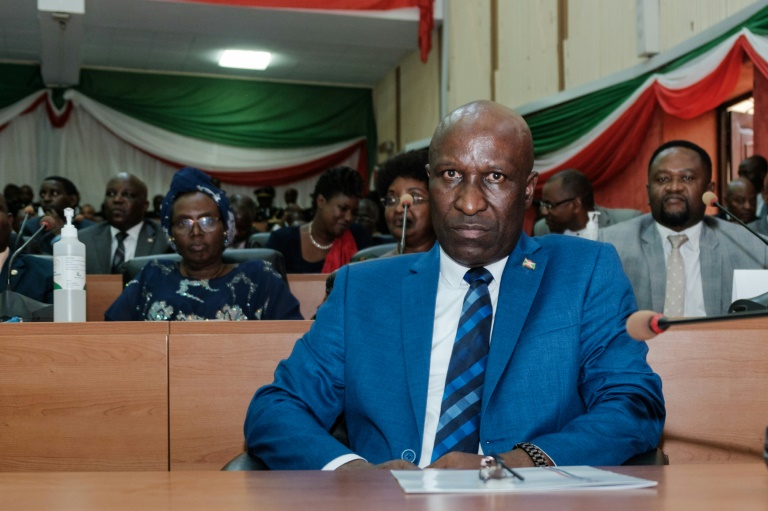
The European Union announced Tuesday it was lifting sanctions against three Burundians, including the new prime minister, that had been imposed over their role in the country’s bloody 2015 political crisis.

The move is the latest sign of warming relations between Burundi and the West under President Evariste Ndayishimiye despite continued concerns about rights abuses.

“Today, the EU is lifting individual sanctions against three people, including the prime minister (Gervais Ndirakobuca),” the EU mission in Burundi announced on Twitter.

“The EU will continue to support development efforts and reforms being undertaken by Burundi.”

Ndirakobuca, a former rebel commander who has also served as head of the feared intelligence service and as security minister, was appointed prime minister by Ndayishimiye in early September.

The 2015 crisis erupted when former president Pierre Nkurunziza made a controversial bid for a third term, sparking protests.

Ndirakobuca at the time was among officials accused by Brussels and Washington of stoking violence against regime opponents.

He was sanctioned by both the EU and the United States as well as several other European countries, with Brussels accusing him of “acts of violence, acts of repression and violations of international human rights law against protesters.”

The unrest led to the deaths of 1,200 people and sent 400,000 others fleeing the country, with reports of arbitrary arrests, torture, killings and enforced disappearances — and turned Burundi into an international pariah.

Ndayishimiye took power in June 2020 after his predecessor Pierre Nkurunziza died of what the Burundian authorities said was heart failure although there was widespread speculation he had succumbed to Covid.

In February, both Brussels and Washington resumed aid flows to the landlocked nation after easing the 2015 sanctions, citing political progress under Ndayishimiye.

Troubled Chad under microscope at Central African summit

Eleven leaders from Central Africa gathered in Kinshasa on Tuesday to discuss the troubles in Chad, where dozens were killed last week during protests at the military’s grip on power.

The summit of the Economic Community of Central African States is focussing on Chad’s “political transition process,” ECCAS said in a statement, referring to plans to return the country to civilian rule.

Congolese President Felix Tshisekedi’s office, quoting what it described as a “source close to the (ECCAS) organisation,” said the talks were likely to appoint a mediator in the process.

The meeting comes days after clashes between Chadian police and protestors in which 50 people died, including a dozen members of the security forces, according to a government toll.

Chad, an ECCAS member, is being represented by Mahamat Idriss Deby, who was appointed “transitional president” by a national forum earlier this month.

The 38-year-old five-star general has been in power since his iron-fisted father, Idriss Deby Itno, was killed in an operation against rebels in April 2021.

His junta initially vowed to hold elections within 18 months — a deadline that has now been extended by two years.

Deby also once pledged not to be a candidate in the future ballot, but the national forum declared he was entitled to take part.

Tshisekedi, in an opening speech to the summit, called last week’s bloodshed a “dramatic mistake.”

Hopes for national consensus, which had been the purported goal of the Chadian forum, “seem to have shattered,” he said.

“The political crisis… has unfortunately revived,” Tshisekedi said. 

“The task now is to get the transition back on track,” he said, before initiating talks behind closed doors.

Thursday’s protests had been called by opposition campaigners to mark the date when Chad’s junta had promised to hand over power.

But in a televised address late Monday, Deby said a “meticulously prepared insurrection” had taken place with the “support of foreign powers,” which he did not name.

A Geneva-based NGO, the World Organization against Torture (OMCT), earlier reported at least 80 deaths in a provisional casualty toll in N’Djamena and four southern towns — Moundou, Doba, Koumra and Bebedjia. 

“Young people were reportedly summarily executed there this morning (Monday),” the OMCT said, adding that hundreds had been arrested, and some tortured.

The African Union (AU) and European Union (EU) last week issued statements strongly condemning the crackdown and attacking violation of freedom of speech and assembly.
Pakistan orders inquiry into killing of journalist in Kenya

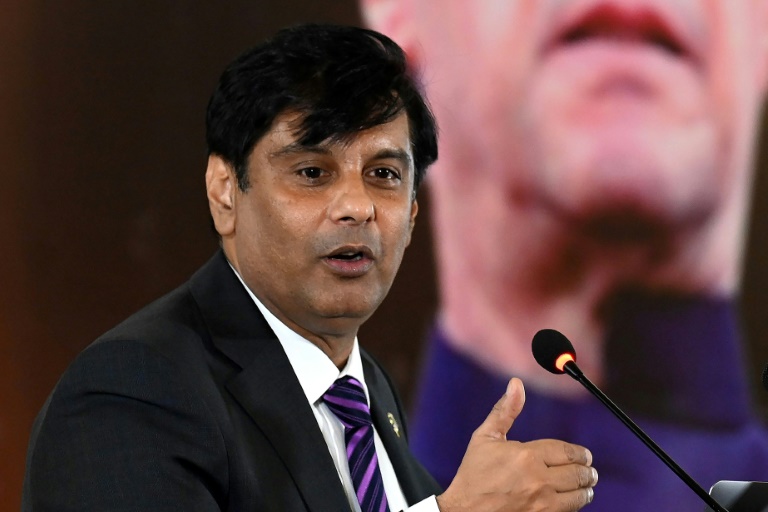
Pakistan will hold a formal inquiry into the killing in Kenya of a top TV news anchor who fled the country to avoid sedition charges, the prime minister said Tuesday.

Arshad Sharif, a strident critic of Pakistan’s powerful military establishment and supporter of former premier Imran Khan, died when Kenyan police opened fire on his car at a roadblock outside the capital at the weekend.

Kenyan officials say it was a case of mistaken identity, as officers thought they were firing on a stolen vehicle involved in an abduction.

“I have decided to form a Judicial Commission to hold an inquiry into the killing of journalist Arshad Sharif in order to determine the facts of the tragic incident in a transparent & conclusive manner,” Prime Minister Shehbaz Sharif tweeted on Tuesday.

Mainstream and social media in Pakistan were rife with speculation that Sharif, who had spoken publicly about death threats against him, had been deliberately targeted.

“It was a planned assassination,” tweeted Shireen Mazari, a Khan loyalist and cabinet minister in his previous government, calling the official version of events a “lie”.

“We know, you know so don’t in our time of grief add to our anger also.”

Sharif fled the country in August, days after interviewing senior opposition politician Shahbaz Gill, who said junior officers in Pakistan’s military should disobey orders that went against “the will of the majority”.

The comment led to the news channel being briefly taken off air and an arrest warrant issued for Sharif.

Gill was detained following the interview, and Khan’s criticism of the judiciary over the detention led to his own appearance in court. 

Pakistan has been ruled by the military for several decades of its 75-year history and criticism of the security establishment has long been seen as a red line.

It is ranked 157 out of 180 countries in a press freedom index compiled by Reporters without Borders, with journalists facing censorship and intimidation.

The Human Rights Commission of Pakistan said the establishment had “a long, grim record of violent tactics to silence journalists”.

Journalist Hamid Mir, who has survived at least two assassination attempts, cautiously welcomed the inquiry.

“Please remember that a judicial commission comprising three Supreme Court judges was announced in 2014 to investigate assassination attempt on my life in Karachi,” he tweeted.

“I got six bullets. 8 years have been passed and I am still waiting for the commission report.”

The killing has also sparked outrage and suspicion in Kenya, where earlier this month, President William Ruto disbanded a police unit accused of extrajudicial killings, and vowed to overhaul the country’s security forces.

Sharif’s body was due to be returned to Pakistan on Wednesday, his wife tweeted.

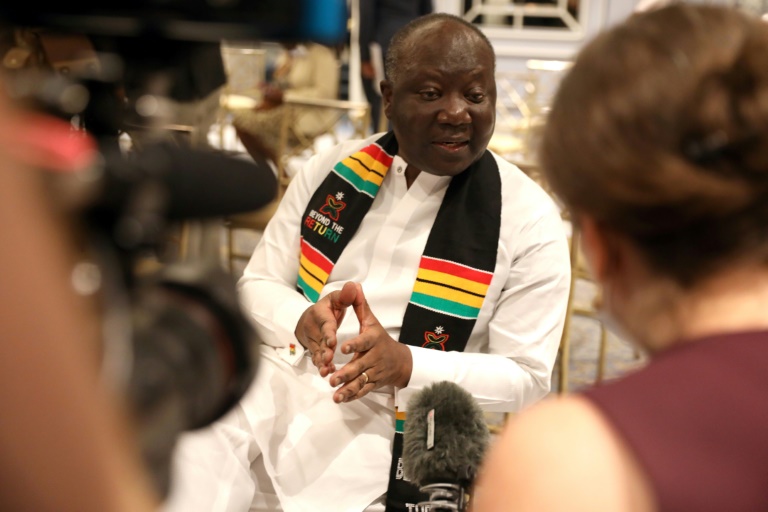
Ghana ruling party lawmakers demand finance minister's dismissal

Ghanaian ruling party lawmakers on Tuesday demanded President Nana Akufo-Addo fire the finance ministers, piling pressure his government over the country’s economic struggles.

Akufo-Addo has come under fire as Ghanaians cope with more than 35 percent inflation and a sharp fall in the cedi currency partly due to regional fallout from the pandemic and the Ukraine conflict.

Finance Minister Kenneth Ofori-Atta recently returned from Washington where he held talks with the International Monetary Fund over a $3 billion credit to help shore up Ghana’s finances.

A majority of Akufo-Addo’s New Patriotic Party or NPP parliamentary caucus on Tuesday warned they will stop cooperating with his government until he fires Ofori-Atta as well as another top finance ministry official.

Caucus spokesman Andy Appiah Kubi told reporters the president should immediately fire the two officials “to restore hope into the financial sector, and reverse the downward trend in the growth of our economy”.

“Until such persons as aforementioned are made to resign or removed from office we members of the majority caucus here in Parliament will not participate in any business of government by or for the president by any other minister,” he said.

“If our request is not responded to positively, we’ll not be present for the budget hearing neither would we participate in the debate.”

The call was backed by 80 of the 137 lawmakers in the ruling party’s majority caucus in the parliament.

Ghana’s parliament is evenly split between the NPP and the opposition National Democratic Congress (NDC) along with one independent seat. Lawmakers are due to start debate on the 2023 budget proposal in November.

The parliamentary demands are the latest pressure on Akufo-Addo, who reversed his position earlier this year to enter into negotiations with IMF over a loan deal.

Traders in the capital Accra last week closed their stores and businesses in a three-day protest over soaring living costs.

The Ghana Union of Traders Association (GUTA) union said it was a signal to the government that they were frustrated over poor economic management.

A week ago, Akufo-Addo was also booed by scores of traders in the Ashanti Region, the stronghold of his governing NPP, on his way to inspect some government projects.

The IMF has started talks with Ghana over a deal and IMF officials said they expected to reach an agreement before the end of the year. 

Close Bitnami banner
Bitnami