Africa Business

Pakistan journalist dies in alleged Kenya police shooting: investigators

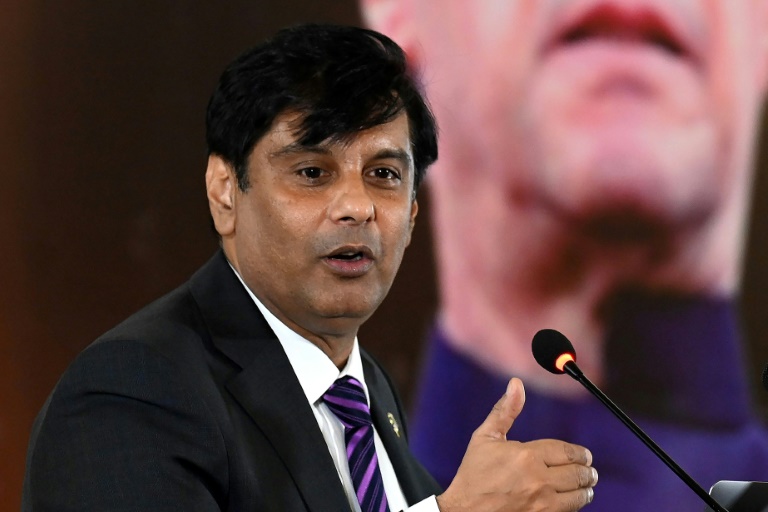
A top Pakistani news anchor was shot dead in Kenya — allegedly by police — just months after he fled his home country to avoid sedition charges, investigators said Monday.

Arshad Sharif was a frequent critic of Pakistan’s powerful military establishment and supporter of former prime minister Imran Khan, who was ousted in a parliamentary no-confidence vote in April.

“There is an alleged police killing of a Pakistani national,” Ann Makori, head of the Independent Police Oversight Authority in Nairobi, told reporters on Monday.

“Our rapid response team has already been dispatched to investigate the killing of the journalist.”

According to a police report seen by AFP, a car carrying Sharif and another man was struck by around nine rounds Sunday night as it crossed a makeshift roadblock in a remote area some 40 kilometres (25 miles) from the Kenyan capital Nairobi.

The report did not say who fired at the car, but said the pair carried on to the home of another Pakistani national. 

There, Sharif was found to be dead “with a gunshot wound on the head which had penetrated from the back”.

The report said police at the time had been on the lookout for a stolen car and an abducted person. It did not say how this may have been connected to Sharif’s death.

In August, Sharif interviewed senior opposition politician Shahbaz Gill, who said that junior officers in Pakistan’s armed forces should not follow orders that went against “the will of the majority”.

The comment led to the news channel being briefly taken off air and an arrest warrant issued for Sharif, who fled the country. 

The channel ARY later said it had “cut ties” with him.

Gill was detained following the interview, and Khan’s criticism of the judiciary for the detention led to his own appearance in court. 

Pakistan has been ruled by the military for several decades of its 75-year history and criticism of the security establishment has long been seen as a red line.

“I lost friend, husband and my favourite journalist today, as per police he was shot in Kenya,” Sharif’s wife Javeria Siddique tweeted Monday.

Pakistan’s foreign ministry confirmed the death.

Pakistan is ranked 157 out of 180 countries in a press freedom index compiled by Reporters without Borders, with journalists facing censorship and intimidation. 
Ethiopia rivals gear up for South Africa peace talks

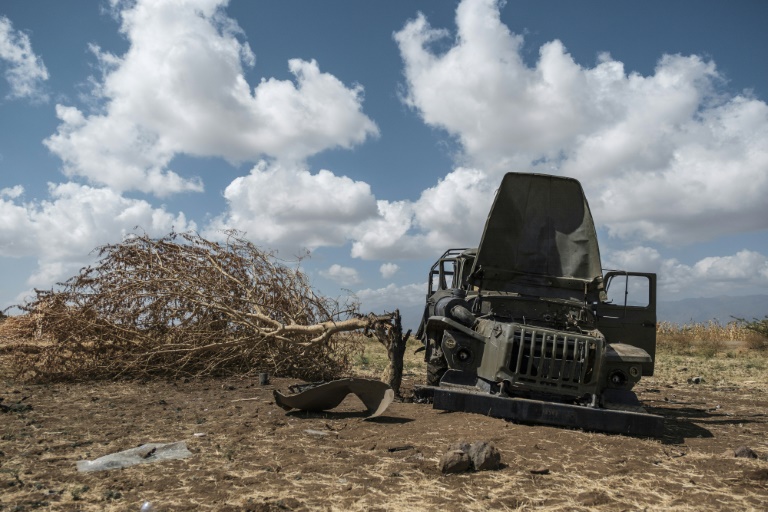
Negotiators from the Ethiopian government and Tigrayan rebel authorities were readying Monday for peace talks in South Africa aimed at finding a peaceful solution to the brutal two-year war.

The African Union-led negotiations have been flagged to start Monday, after a surge in fighting that has triggered alarm in the international community.

Kindeya Gebrehiwot, a spokesman for the rebel authorities in Tigray, announced their delegation’s arrival in South Africa in a tweet late Sunday.  

“Pressing: immediate cessation of hostilities, unfettered humanitarian access & withdrawal of Eritrean forces. There can’t be a military solution!” he added.

Addis Ababa said in a statement its delegation had left for South Africa on Monday morning, adding: “The government of Ethiopia views the talks as an opportunity to peacefully resolve the conflict and consolidate the improvement of the situation on the ground.”

But it also said its forces “have continued taking control of major urban centres in the past few days”, without identifying them.

Last week, the government vowed to take control of airports and other federal sites in Tigray from the rebels as Ethiopian and Eritrean troops seized towns in the region including the strategic city of Shire, sending civilians fleeing.

Fighting resumed in August, shattering a five-month truce, and has seen the return of the Eritrean army in support of Ethiopian forces and their regional allies.

In two years, the conflict in Africa’s second most populous country has left millions in need of humanitarian aid, and according to the United States, as many as half a million dead.

The South African government itself has not confirmed the talks or disclosed a venue.  

– ‘Peace will prevail’ –

Abiy, who sent troops into Tigray in November 2020 promising a quick victory over the northern region’s dissident leaders in the Tigray People’s Liberation Front (TPLF), had said Thursday the war “would end and peace will prevail”.

“Ethiopia will be peaceful, we will not continue fighting indefinitely,” said Abiy, who won the 2019 Nobel Peace Prize for his rapprochment with Eritrea.

International calls for a ceasefire and a withdrawal of Eritrean troops have grown since the AU failed earlier this month to bring the warring sides to the negotiating table.

The return to the battlefield in August halted desperately-needed aid for Tigray’s six million people who lack food, medicine and basic services.

Tigray has been under a communications blackout for over a year, and independent reporting from the region has been heavily curtailed.

– Deadly conflict – 

The UN Security Council held a closed-doors meeting Friday to discuss the spiralling conflict and fears for civilians caught in the crossfire.

The US envoy to the United Nations, Linda Thomas-Greenfield, said after the talks that thousands of Ethiopian, Eritrean and Tigrayan forces were engaged in active combat. 

“The scale of the fighting and deaths rival what we’re seeing in Ukraine, and innocent civilians are being caught in the crossfire,” she said. 

“Over two years of conflict, as many as half a million — half a million -– people have died, and the United States is deeply concerned about the potential for further mass atrocities.” 

The International Crisis Group (ICG) think tank said while reliable data was scarce, it believed the fighting since August alone may have involved more than half a million combatants and killed tens of thousands of people.

“According to most estimates, it is among the world’s deadliest conflicts,” it said in a report Friday.

The IGC’s Ethiopia senior analyst William Davison said the planned talks were a “positive development” but warned “major obstacles to peace remain” including the government’s attempted takeover of federal facilities in Tigray.

“The first objective for mediators is therefore to try and get the federal and Tigray delegations to agree to a truce despite the momentum towards continued military confrontation,” he said.

The AU’s Peace and Security Council also met Friday, saying it welcomed “the mutual commitments to genuinely participate in the peace process” and hoped for a “fruitful outcome”.

The AU’s mediation team for the talks was to include Horn of Africa envoy Olusegun Obasanjo, South Africa’s former deputy president Phumzile Mlambo-Ngcuka and former Kenyan president Uhuru Kenyatta.

The conflict began two years ago when Abiy sent troops into Tigray, accusing the TPLF, the region’s ruling party which resisted central authority, of attacking army camps.

Aid slowly reaches Nigerian flood victims

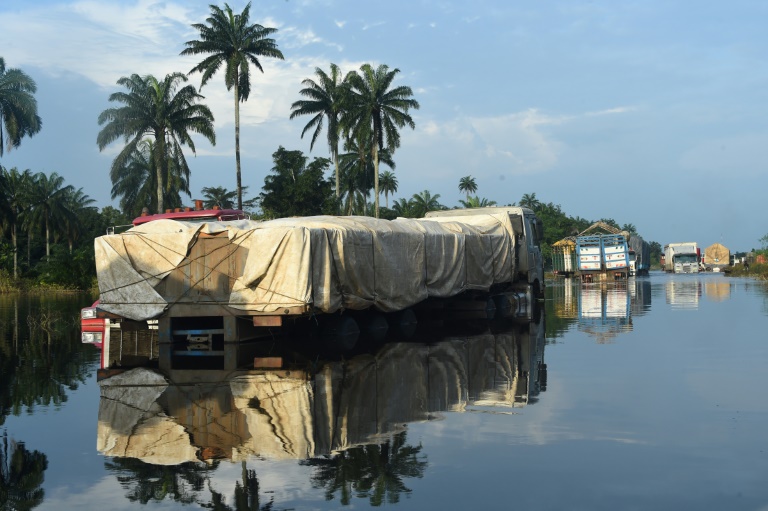
Along a highway engulfed by dark waters, Nigeria residents load dozens of boats full of food to bring assistance to the victims of the country’s worst floods in a decade. 

Waiting by the waterside, past the many half-submerged trucks, Bolaji Phillips looks on next to his vehicle, which is filled with cassava flour, rice and noodles.

“My wife and I consulted and decided to withdraw our savings, the little we have, to do something for the people,” the 40-year-old said.

Aid is slowly coming to southern Nigeria after the biggest floods since 2012 killed more than 600 people and affected nearly three million others, according to official figures.

Many have fled their homes, including to overcrowded displacement camps. The others, completely cut off from the world, remain in communities swallowed by the waters.

Efforts now focus on passing the damaged and partly impassable highway linking Rivers and Bayelsa states — among the two most devastated regions.

Near the town of Ahoada, volunteers and NGOs are doing vital work until official aid slowly reaches the most destitute.

“The damage is enormous. The government has not done much so far. We are totally alone,” said Winner Written, a 32-year-old entrepreneur among those helping out. 

“We are just individuals trying to help one another.”

– “Suffering” –

Over the weekend, volunteers loaded precious fuel in yellow jerrycans onto the boats heading to flooded villages.

Rivers State authorities have allocated one billion naira ($2.3 million) to help victims, especially around Ahouda, one of the worst hit.

The United States said it has donated $1 million in humanitarian aid.

Rescue officials said they have started delivering 12,000 tonnes of food across the country after the aid was approved by President Muhammadu Buhari. 

But on the ground, few have seen the results of these efforts so far. 

Supplying food is almost impossible, hampered by strong currents or waters that are strewn with obstacles or choked with vegetation, and aid coordination is hindered by lack of mobile coverage in remote areas.

In a black tank top, Jeremy Ogboka, 35, lends a hand on a section of the half-flooded highway. 

“Right here, one of the speedboats capsized. Luckily, we saved them all,” he said. 

“We help as we can but nobody pays us. So many people are suffering. It’s been two weeks the road is blocked.”  

Using two speedboats the Nigerian navy in the area has provided security and transport for facilitating humanitarian aid.

A rescue mission headed this weekend to the remote areas ferrying members of National Emergency Management Agency (NEMA) and sailors to bring aid and evacuate those they could. 

– “Humanitarian crisis” –

Guided by young people who know the route to the ravaged communities, the motorboats sink into the heavy vegetation, struggling against the currents. 

After half an hour of laborious progress, the remains of a village appeared. No sign of life. 

Seated at the front of the vessel, the second lieutenant in charge kept his hand on his assault rifle. 

“This is a volatile region. Two months ago, we arrested many kidnappers, criminals and acquired many rifles,” he said. 

All around, almost everything is submerged. The roofs and the panel of a school protrude, the only signs of a semblance of life now submerged.

Boat engines bog in the leaves as the current tugs at the vessel, making it impossible to advance to a flooded village where some victims requiring medical care managed to call NEMA.

Eventually, the rescue mission is aborted.

In addition to aggravating food insecurity — farmland and crops were devastated — the deadly floods have caused an outbreak of cholera, according to the NGO International Rescue Committee (IRC). 

In 2012, particularly deadly floods ravaged Nigeria, but residents said this year’s disaster was becoming much worse. 

“Nothing has been done after to minimise the impact of the floods,” said Opuwill Ayitu, a 40-year-old volunteer. “A humanitarian crisis is looming.” 

Ethiopia rivals gear up for South Africa peace talks

Negotiators from the Ethiopian government and Tigrayan rebel authorities were readying Monday for peace talks in South Africa aimed at finding a peaceful solution to the country’s brutal two-year war.

The African Union-led negotiations have been flagged to start on Monday, after a surge in fighting in the north of Ethiopia in recent weeks that has triggered alarm in the international community.

Kindeya Gebrehiwot, a spokesman for the rebel authorities in Tigray, announced their delegation’s arrival in South Africa in a statement on Twitter late Sunday.  

“Pressing: immediate cessation of hostilities, unfettered humanitarian access & withdrawal of Eritrean forces. There can’t be a military solution!” he added.

Addis Ababa said in a statement its delegation had left for South Africa on Monday morning, adding: “The government of Ethiopia views the talks as an opportunity to peacefully resolve the conflict.”

But it also announced that its forces “have continued taking control of major urban centres in the past few days”, without identifying them.

Fighting resumed in August, shattering a five-month truce, and has seen the return of the Eritrean army to the battlefield in support of Ethiopian forces and their regional allies.

Last week, the government vowed to take control of airports and other federal sites in Tigray from the rebels as Ethiopian and Eritrean troops seized towns in the war-torn region, sending civilians fleeing.

Diplomatic pressure has been mounting for an end to the conflict in Africa’s second most populous country that has left millions in need of humanitarian aid, and according to the United States, as many as half a million dead.

– ‘Peace will prevail’ –

Abiy, who sent troops into Tigray in November 2020 promising a quick victory over the northern region’s dissident leaders, had said last week the war “would end and peace will prevail”.

“Ethiopia will be peaceful, we will not continue fighting indefinitely,” the Nobel Peace Prize winner said Thursday.

“I hope the day when we will stand with our Tigrayan brothers to work together for development is near.”

International calls for a ceasefire and a withdrawal of Eritrean troops have grown since the AU failed earlier this month to bring the warring sides to the negotiating table.

The return to the battlefield in August halted desperately-needed aid into Tigray, a region of six million that lacks food, medicine and other life-saving essentials as well as basic services.

Tigray has been under a communications blackout for over a year, and independent reporting from the region has been heavily curtailed.

– Risk of ‘further mass atrocities’ – 

The UN Security Council held a closed-door meeting on Friday to discuss the spiralling conflict and growing fears for civilians caught in the crossfire.

The US envoy to the United Nations, Linda Thomas-Greenfield, said after the talks that thousands of Ethiopian, Eritrean and Tigrayan forces were engaged in active combat. 

“The scale of the fighting and deaths rival what we’re seeing in Ukraine, and innocent civilians are being caught in the crossfire,” she said. 

“Over two years of conflict, as many as half a million — half a million -– people have died, and the United States is deeply concerned about the potential for further mass atrocities.” 

The AU’s Peace and Security Council, its foremost conflict resolution body, also met for the first time Friday since the fighting resumed in August.

In a statement, the 15-member council welcomed “the mutual commitments to genuinely participate in the peace process” and hoped for a “fruitful outcome”.

The AU’s mediation team for the talks was to include Horn of Africa envoy Olusegun Obasanjo, South Africa’s former deputy president Phumzile Mlambo-Ngcuka and former Kenyan president Uhuru Kenyatta.

The conflict began two years ago when Abiy sent troops into Tigray, accusing the Tigray People’s Liberation Front (TPLF), the region’s ruling party which resisted central authority, of attacking army camps.

The TPLF dominated Ethiopia’s ruling political alliance for decades before Abiy took power in 2018 and sidelined the party.

Slow-journeying in mountainous kingdom of Lesotho

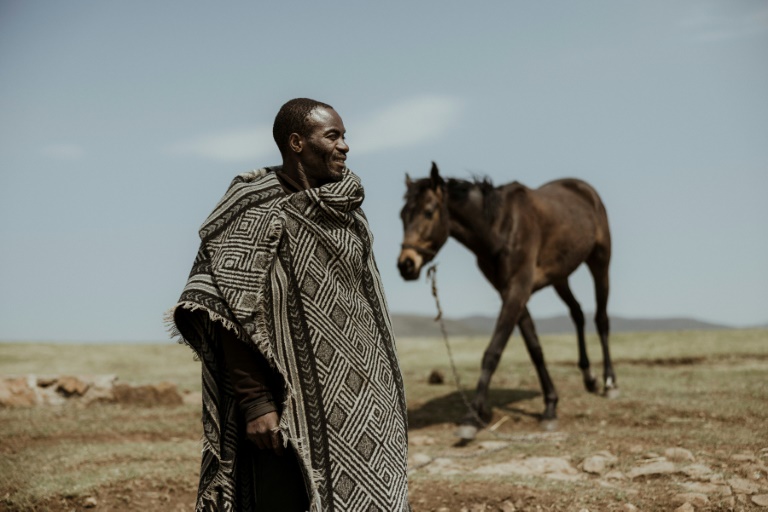
In the remote countryside of Lesotho, a kingdom in southern Africa, time stretches wide between long treks on horse or donkey back and hours of herding cattle along mountain ranges.

Mounted on his donkey, Matekoa Libe rides along the steep, rocky paths. His long legs slapping against his donkey’s flanks as it lopes forwards.

“I’m going to the village (to get) gas,” said the smiling 18-year-old as he stops to speak to AFP, holding a grey cooking gas cylinder placed next to him on the donkey’s back.

He pulls a woollen hat over his head and hurriedly ties his shoelaces, and he sets off again, waving a coloured pompom at the end of a stick. 

Then he descends from the heights of Thaba Bosigo, about 25 kilometres (15 miles) from the capital Maseru.

This is the cradle of the Sothos, the main ethnic group in the constitutional monarchy of 2.2 million people. 

The sandstone plateau, which rises slightly over 1,800 metres, served as a refuge for Sotho pastoralists from the onslaught of European settlers and Zulu warriors from neighbouring South Africa in the early 19th century. 

Completely surrounded by South Africa, Lesotho is the largest of only three enclaved states in the world, far bigger than San Marino and the Vatican City, both of which are within Italy. 

– Straw hats and cannabis –

Lesotho is also one of the highest countries in the world, with more than 80 percent of the country sitting 1,800 metres (5,900 feet) above sea level.

But in the Belgium-sized country, the most convenient and commonly used off-road transport are horses and donkeys.

Road infrastructure is still limited in Lesotho, one of the poorest countries in the world, with just three main roads linking Maseru to the rest of the country.

In the central highlands, nature remains untouched. Scattered in dotted lines, men draped in traditional blankets herd sheep and horned cows. 

Motifs on the warm and bright woollen blankets are loaded with meaning, from celebrating life and nationality, to fertility and royalty, or peace, love and courage.

Sitting atop large rocks, shepherds sporting straw hats chew pieces of grass or smoke cannabis.

Lesotho pioneered the growing of cannabis for medical use on the continent more than two decades ago.

– Kingdom of the sky –

On weekends, men gather around litres of sorghum beer and accordions. 

Famo, a kind of local hip-hop born almost a century ago from the poems of labourers working the South African mines, still rings out from the informal bars, known as shebeens and built from roofing sheets. 

In the small kingdom, cacti and aloes grow to spectacular sizes.

But temperatures plummet below zero and snow falls during the southern winter. Lesotho hosts one of just two ski resorts in sub-Saharan Africa.

On the plains, women in dresses and wide-brimmed hats wheelbarrows across the fields carrying farm produce. 

People here live on a shoestring, growing what they eat: spinach, maize, sorghum and potatoes.

Unemployment is high in the former British protectorate, nicknamed the “kingdom of the sky”, which became independent since 1966.

Under a thatched roof of her rondavel stone house, wife and mother Masikilo Hlehlisi, 35, lives in a single room. 

In the centre is a pot on a wood fire. There is no running water or electricity. Life in the villages stops at sunset.

“We are still underdeveloped. I graduated five years ago but I’ve not been employed ever since,” she said.

DR Congo troops clash with M23 rebels, 4 civilians killed

Fresh clashes between the army and M23 rebels have erupted in eastern DR Congo, officials said Sunday, with at least four civilians killed and dozens more wounded in the fighting.

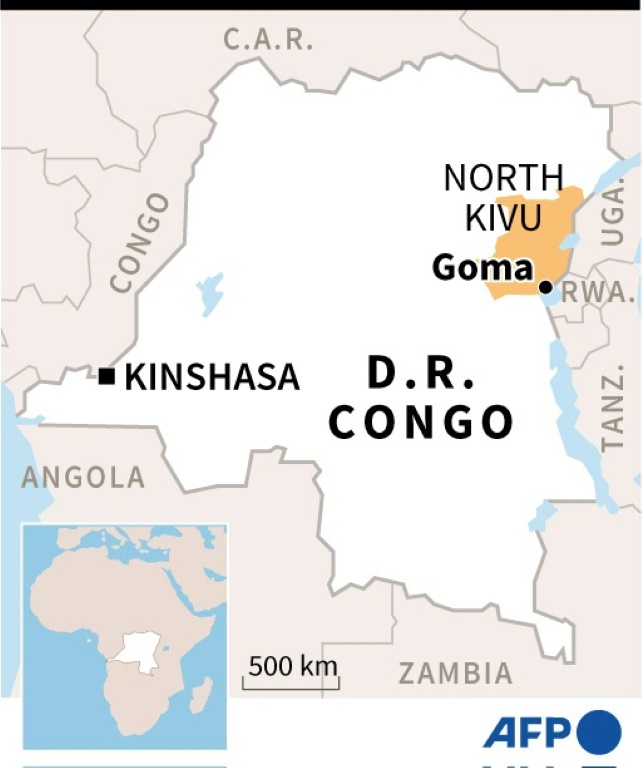
A mostly Congolese Tutsi group, the M23 resumed fighting in late 2021 after lying dormant for years. It has since captured swathes of territory in the Central African country’s North Kivu province, including the strategic town of Bunagana on the Ugandan border in June.

Army officials and residents on Sunday said that M23 fighters had captured the village of Ntamugenga in North Kivu’s Rutshuru area, a strategic target that lies close to the highway leading north out of the provincial capital Goma.

The resurgence of the group has destabilised regional relations in central Africa, with the Democratic Republic of Congo accusing its smaller neighbour Rwanda of backing the militia.

The frontline between Congolese troops and M23 rebels had been calm in recent weeks. But clashes erupted again on Thursday, violence monitor Kivu Security Tracker said late Saturday. 

Three civilians were killed and 35 wounded in fighting on the road around Ntamugenga, Congo’s army said, while on another front to the north, one person was killed and another five were wounded.

Congo’s army said Sunday that the situation was under control “on all fronts”.

Congolese Colonel Serge Mavinga had earlier told AFP that troops were “next door” after the village had been captured.

Another officer, Lieutenant Colonel Ndjike Kaiko, said the army was “containing” the rebels. 

– Village bombed  –

The rebels had erected a barrier at the entrance to Ntamugenga, said village chief Celestin Nyamugira.

“The situation is gloomy here,” Nyamugira said. “They came from the forest and infiltrated the city.”

Doctors Without Borders (MSF) tweeted that 500 people had taken refuge in a convent in the settlement, including some who were wounded, and urged the creation of a humanitarian corridor to evacuate civilians.

Benedicte Lecoq, MSF’s emergency coordinator for the Rutshuru area, told AFP she was “very worried” about the humanitarian situation in Ntamugenga, explaining that bombs had been striking the village from morning to the afternoon.

The official death toll from clashes earlier this week remains unclear. Kivu Security Tracker on Saturday said at least two civilians had been killed and a dozen wounded.

Medical officials from Rutshuru Hospital also said that four civilians had been killed on Friday and Saturday, with eight wounded.

On Sunday, John Sebatware, head of Ntamugenga hospital, said that five soldiers and one civilian had been killed, with 33 people wounded. 

At least 23,000 people have fled the fighting since Thursday, according to the United Nations emergency response agency OCHA.

The M23 first leapt to prominence in 2012 when it briefly captured Goma before a joint Congolese-UN offensive drove it out.

The militia is one of scores of armed groups that roam eastern DRC, many of them a legacy of two regional wars that flared late last century.

Despite official denials from Kigali, an unpublished report for the United Nations seen by AFP in August pointed to Rwandan involvement with the M23.

Mount Kilimanjaro fire under control: Tanzania authorities

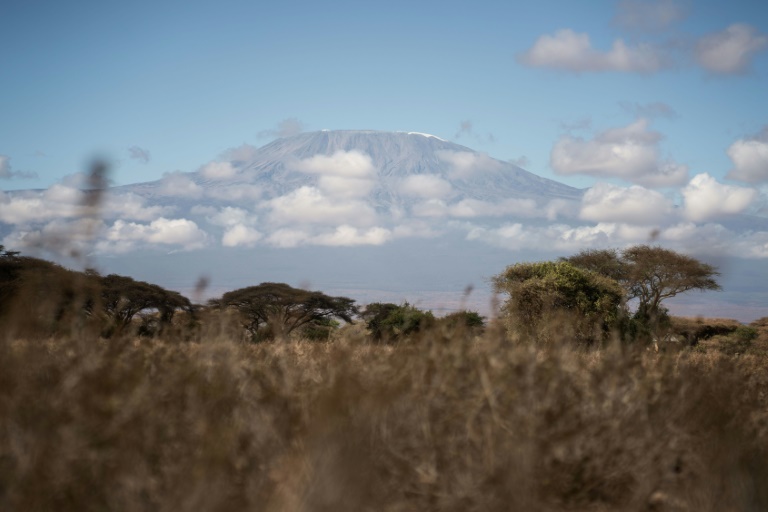
Tanzanian authorities said Sunday a fire on Mount Kilimanjaro was under control after flames burned Africa’s tallest mountain for more than 24 hours.

The blaze began on Friday evening near the Karanga site used by climbers ascending the famous peak, at about 4,000 metres (13,000 feet) altitude on its south side.

“The situation is generally under control and we believe it will completely tackled as time goes,” said a statement from the Natural Resources and Tourism Minister, Pindi Chana.

Earlier Sunday evening, a ministry statement had said that the situation had “to a large extent” been extinguished.

Local official Nurdin Babu told reporters “everything is under control… we have managed to control the fire to a great extent”.

The blaze left no victims in the tourist hotspot and UNESCO World Heritage site in northeastern Tanzania, where tens of thousands of climbers flock each year to conquer its snow-capped peak.

Hundreds of people including firefighters, national park staff and civilians were mobilised to fight the flames that were fanned by a strong wind.

Social media footage on Saturday showed huge flames consuming vegetation and bushes and giving off grey smoke.

The cause remains unknown but Sedoyeka on Saturday said a climber or honey hunters may have started it “carelessly”.

Herman Batiho, an official at Tanzania’s national parks authority, said he was “sure” human activity was to blame through illegal poaching or locals extracting honey.

The latest blaze comes two years after another fire raged for a week in October 2020 across 95 square kilometres (37 square miles).

Nine dead and 47 wounded in attack on south Somalia hotel

Nine people were killed and 47 wounded Sunday in an attack on a hotel in Kismayo, southern Somalia, claimed by the Al-Shabaab Islamist group, the region’s security minister said.

The port city is the latest to be hit following a recent resurgence of attacks by the Al-Qaeda-linked group, which has mainly targeted the capital Mogadishu and central Somalia.

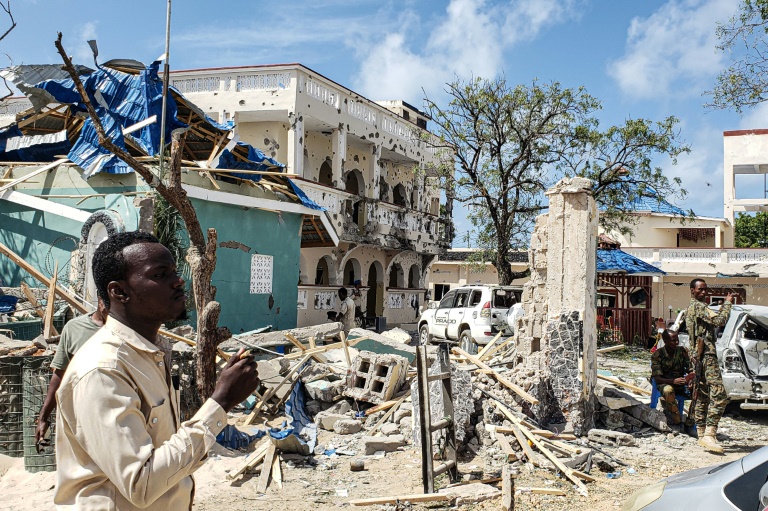
Sunday’s assault began at 12:45 pm (0945 GMT) when a booby-trapped car rammed the entrance of Hotel Tawakal. It ended around 7:00 pm after the attackers were killed by security forces.

Among the casualties were students leaving a nearby school, Jubaland security minister Yusuf Hussein Osman told reporters. All four attackers, including the suicide bomber, were killed, he added.

“The first one detonated himself and the (remaining) three were killed by the security forces”, he said, confirming an early police statement.

“This is not a government target,” police officer Abdullahi Ismail said. “It is just an ordinary, civilian-frequented hotel.”

Farhan Hassan was outside the hotel when the attack happened. “A suicide bomber drove a vehicle into the entrance of the hotel before the gunmen entered the building,” he said.

Al-Shabaab claimed responsibility for the six-hour attack, saying members of the federal government of Jubaland, where Kismayo is located, were meeting in the hotel at the time.

– ‘All-out war’ –

Al-Shabaab has been trying to overthrow the government for more than 15 years and regularly attacks civilian and military targets.

Kismayo was once an Al-Shabaab stronghold before it was taken over in 2012 by local militias backed by Kenyan forces.

In August, the group launched a 30-hour gun and bomb attack on the popular Hayat hotel in Mogadishu, killing 21 people and wounding 117.

In 2019, the group conducted a similar attack on a hotel in Kismayo, killing 26 and injuring 56.

Somali President Hassan Sheikh Mohamud, who was elected in May, vowed after the August siege to wage “all-out war” on the Islamists.

In September he urged citizens to stay away from areas controlled by jihadists, saying the armed forces and tribal militia were ratcheting up offensives against them.

A joint US-Somali drone strike killed one of the militants’ most senior commanders on October 1.

Just hours after his death was announced, a triple bombing in the southern city of Beledweyne killed at least 30 people. 

In addition to violence, Somalia — like its neighbours in the Horn of Africa — is in the grip of the worst drought in more than 40 years. Four failed rainy seasons have wiped out livestock and crops.

Some 7.8 million Somalis — nearly half the population — are affected by the drought and 213,000 are on the brink of famine as a result, according to the United Nations

Moroccan rapper ElGrande Toto says sorry for cannabis comments

Star Moroccan rapper ElGrande Toto on Sunday apologised for causing offence through recent public statements in which he acknowledged using cannabis.

His original comments had sparked an outcry in the country.

“I offer my apologies to anyone offended by my words, starting with the authorities and my public,” ElGrande Toto, whose real name is Taha Fahssi, told a packed press conference.

“We are not bad people. We rap, and rap isn’t bad.

“Rap is a particular language — perhaps I did not make good use of it at the right time,” the 26-year-old Casablancan rap star said.

In late September, ElGrande Toto had told reporters who gathered after one of his concerts “I smoke hash — so what?

“It does not mean I set a bad example,” he added at the time.

Those comments, circulated widely on social media, provoked an outcry in the North African country.

On Sunday, he said: “This controversy was not planned — it just got too big, and it’s a good lesson for me.”

Morocco is ranked the biggest producer of cannabis in the world by the UN. Use of the plant is banned at home, but the country is seeking to enter the global medicinal market.

The controversy “became too big and it is a valuable lesson for me,” added the rapper, who was on Thursday forbidden from leaving Moroccan territory by the authorities and was also summoned by the police in Casablanca.

“We do not know the purpose of this summons,” his lawyer, Abdelfattah Zahrach, said on Sunday.

A Belgium-based journalist has lodged a complaint against Fahssi, accusing him of “incitement to consume drugs” in the wake of his September comments, according to the journalist’s lawyer, Mohamed Karrout.

ElGrande Toto was the most in demand Arab artist in the Maghreb in 2021 on Spotify, with more than 50 million downloads. His YouTube channel meanwhile maintains 2.7 million subscribers.

“We make music and art, and I will continue to do so,” he told reporters.

“I will keep going on stage for concerts and represent Moroccan art and rap.”

At least four dead in attack on south Somalia hotel

At least four people have been killed during a six-hour attack on a hotel in Kismayo, southern Somalia, claimed by Al-Shabaab Islamists, police and a witness said on Sunday.

The port city is the latest to be hit following a resurgence of bloody attacks in recent months by the Al-Qaeda-linked group, which has mainly targeted the capital Mogadishu and central Somalia.

Sunday’s assault began at 12:45 pm (0945 GMT) when a booby-trapped car rammed the entrance of Hotel Tawakal. It ended around 7:00 pm after the three attackers were killed by security forces.

“The situation has returned to normal, all three attackers are dead now. The security forces are in control of the situation,” Mohamed Hassan, a police officer, said.

Earlier on Sunday, officials said that as security forces sought to bring the siege to an end, they had killed two assailants.

Police put the provisional death toll for civilians at four on Sunday afternoon. 

“This is not a government target,” police officer Abdullahi Ismail said. “It is just an ordinary, civilian-frequented hotel.”

Witness Abdirashid Adan, who lives close to the hotel, said “the building is secured now, there is no gunfire.

“I can see movement is returning gradually in the area but there are still members of the security forces restricting traffic movement,” Adan added.

Another witness, Farhan Hassan, was outside the hotel when the attack happened and said “a suicide bomber drove a vehicle into the entrance of the hotel before the gunmen entered the building”.

Al-Shabaab claimed responsibility for the attack, saying members of the federal government of Jubaland, where Kismayo is located, were meeting in the hotel at the time.

– ‘Total war’ –

Al-Shabaab has been trying to overthrow the government for more than 15 years and regularly attacks civilian and military targets. 

Kismayo was once an Al-Shabaab stronghold before it was taken over in 2012 by local militias backed by Kenyan forces.

In August the group launched a 30-hour gun and bomb attack on the popular Hayat hotel in Mogadishu, killing 21 people and wounding 117.

In 2019, the group conducted a similar attack on a hotel in Kismayo, killing 26 and injuring 56.

Somali President Hassan Sheikh Mohamud, who was elected in May, vowed after the siege in August to wage “all-out war” on the Islamists.

In September he urged citizens to stay away from areas controlled by jihadists, saying the armed forces and tribal militia were ratcheting up offensives against them.

A joint US-Somali drone strike killed one of the militants’ most senior commanders on October 1.

Just hours after his death was announced, a triple bombing in the southern city of Beledweyne killed at least 30 people. 

In addition to violence, Somalia — like its neighbours in the Horn of Africa — is in the grip of the worst drought in more than 40 years. Four failed rainy seasons have wiped out livestock and crops.

Some 7.8 million Somalis — nearly half the population — are affected by the drought and 213,000 are on the brink of famine as a result, according to the United Nations

Close Bitnami banner
Bitnami