Africa Business

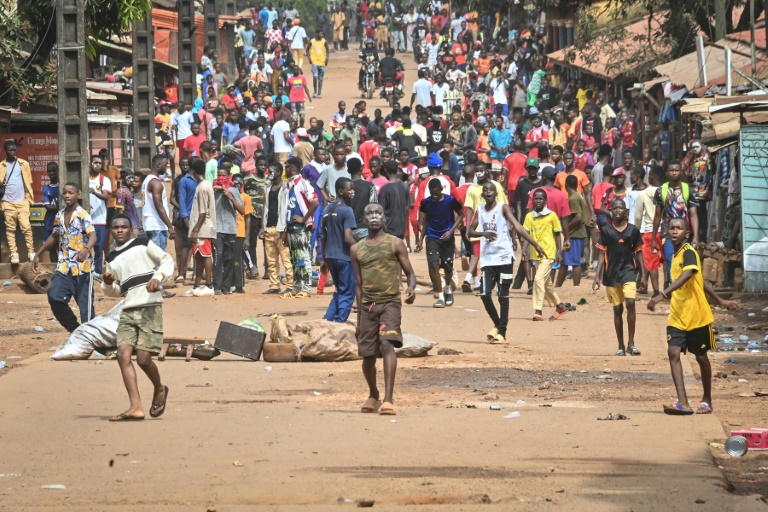
Three died in Guinea anti-junta protests: opposition

Guinea’s top prosecutor called Friday for a crackdown on the organisers and participants of a giant anti-government protest in which he said six security personnel were wounded while the opposition said three civilians were killed.

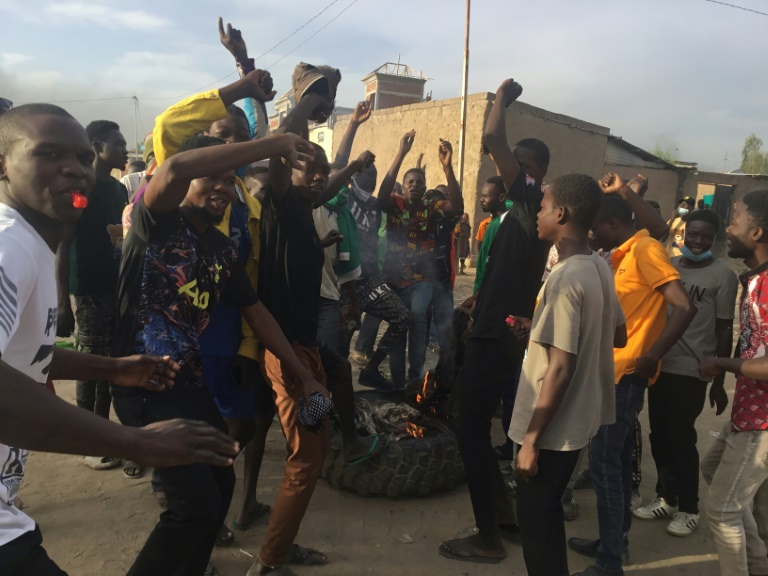
Young protesters clashed on Thursday with security forces in the capital Conakry in demonstrations called by an outlawed group against the country’s ruling junta.

Conakry’s Prosecutor General Yamoussa Conte said six security forces personnel were wounded, five of whom were in serious condition, adding that two civilians were injured.

He called for action “against the organisers and all the participants of the said banned demonstration,” according to a statement read on state television.

He named seven opposition leaders who allegedly called for the demonstration or supported it.

The National Front for the Defence of the Constitution (FNDC) had called for the protest to demand a quick return to a civilian led government and the release of all prisoners detained for political reasons.

In a statement released overnight Thursday to Friday, the FNDC called the ruling junta “dictatorial.”

The group identified the three people killed as Thierno Bella Diallo, Boubacar Diallo and Thierno Moussa Barry. It said 20 people suffered gunshot wounds while many others were arrested.

The casualty toll in such clashes varies in this restive country with the authorities tending to minimise them or failing to confirm opposition claims.

The poor but mineral-rich West African state has been under military government since a September 2021 coup that ousted president Alpha Conde after more than 10 years in power.

An alliance of political parties, trade unions and civil groups, the FNDC spearheaded protests against Conde before his ouster.

It was officially dissolved in August by the junta-appointed government.

The coalition had called for peaceful demonstrations to take place in Conakry on Thursday, followed by nationwide protests on October 26.

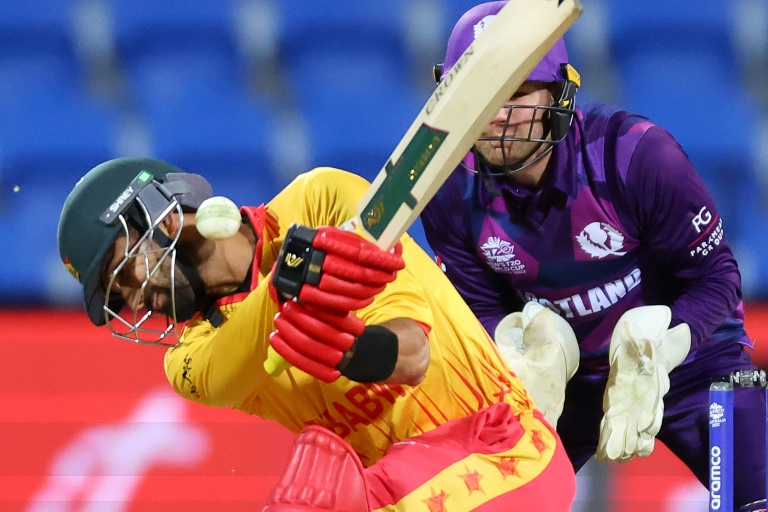
Zimbabwe beat Scotland to make Twenty20 World Cup Super 12

Zimbabwe stormed into the Super 12 stage of the Twenty20 World Cup for the first time Friday at the expense of Scotland, beating them by five wickets with skipper Craig Ervine hitting a half-century.

The African nation limited the Scots to 132-6 with tidy bowling led by Tendai Chatara (2-14) and Richard Ngarava (2-28) before rattling through the run chase with nine balls to spare.

Zimbabwe had been part of five previous World Cups but never gone beyond the first round before.

But they have been improving since coach Dave Houghton, Zimbabwe’s first Test captain back in 1992, came into the fold for his second stint in July.

They beat Ireland to open their latest World Cup campaign then lost to the West Indies before booking their spot against the Scots.

Scotland skipper Richie Berrington won the toss and opted to bat, but they were on the back foot immediately, losing Michael Jones, who struck a masterly 86 against Ireland, in the first over.

Sikandar Raza took a superb over-the-shoulder catch off Chatara’s bowling to dismiss him.

Another spectacular diving catch was held by Wessly Madhevere at midwicket to remove Matthew Cross for one four overs later, leaving Scotland at 24-2 in the fifth over.

Opener George Munsey remained calm at the other end and built a 40-run partnership with Berrington before the skipper holed out to Milton Shumba in the deep off Raza for 13.

The run rate slowed in the face of some economical bowling as Munsey reached a ninth T20 half-century with a single, only to fall five balls later for 54, caught by Shumba off Ngarava, before Calum MacLeod (25) and Michael Leask (12) added crucial late runs.

Zimbabwe started the chase with a four but then lost two wickets in eight balls.

After smacking the boundary, Regis Chakabva was trapped lbw by Brad Wheal and then Madhevere departed without scoring, dragging a Josh Davey delivery onto his stumps.

Sean Williams put on 35 in a partnership with Ervine, who missed their last match with a “mild asthmatic attack”, but the stand was broken when Michael Leask came into the attack and he was caught by Wheal for seven.

It left Zimbabwe on 55-3 after 10 overs.

But Ervine kept his focus to notch a ninth T20 half-century, happy to play second fiddle to the dangerous Raza (40 off 23) who swung the bat before he was caught behind by Cross off Davey.

When Ervine was out, chipping down the ground, they needed 14 off the last three overs, with Chris Greaves and Davey accomplishing the feat.

Facing threat, Togo forces simulate 'jihadist' attack

Togo’s security forces on Thursday carried out a simulated jihadist attack in the capital Lome, training to counter a hostage-taking as the country faces increasing threats.

Togo and neighbouring West African coastal states like Ghana, Benin and Ivory Coast are preparing for growing spillover from Islamist militant conflicts across their northern borders in Niger and Burkina Faso.

On Thursday, a restaurant called “Noudoudou-a-gnon” in Lome’s Adidogome district was attacked by a “commando” of police disguised as six heavily armed militants, who opened fire and took hostages. 

Two instructors from the French National Gendarmerie Intervention Group (GIGN) oversaw the exercise.

It was the first simulation exercise since Togo recorded the first in a series of attacks from November 2021, and at least four more since then in its far northern border region.

Togo’s Security Minister General Damehame Yark said the exercise was part of “measures so that we can face this threat” in the region.

The exercise is part of a training course in “specialised intervention techniques”. It also used a gendarme drone unit to help “neutralise” the militants and free the hostages.

The country was hit in mid-July by a bloody attack carried out by “unidentified armed individuals”, according to the army, which reported “several dead and a few wounded”.

The government last month extended a state of emergency for six months in its northern Savanes region, allowing more flexibility to conduct military operations there.

Togo’s first deadly jihadist attack was in May 2022. 

In neighbouring Benin, the first known fatal attack was last December, when two soldiers were killed near the border with Burkina Faso. 

In Ivory Coast, four members of the security forces died in 2021, after 14 in 2020.

Tigray peace talks in South Africa on October 24: Ethiopia govt

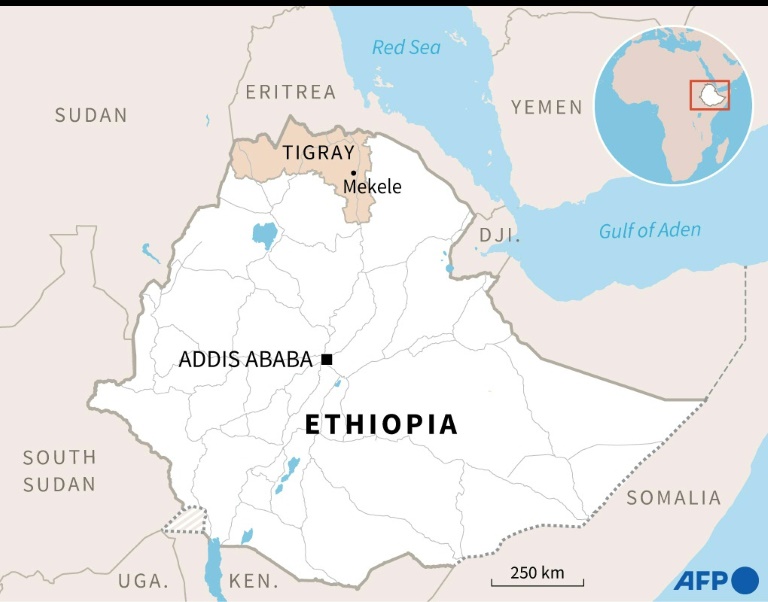
The Ethiopian government said Thursday that it would participate in peace talks next week led by the African Union to try to resolve the nearly two-year war in Tigray. 

International calls for a halt to violence in northern Ethiopia have mounted since an AU bid failed earlier this month to bring the warring sides to the negotiating table.

“AUC (African Union Commission) has informed us that the Peace Talks is set for 24 Oct, 2022 to be held in South Africa. We have reconfirmed our commitment to participate,” Prime Minister Abiy Ahmed’s national security adviser Redwan Hussein posted on Twitter.

When asked by AFP if they would attend the talks, Tigray People’s Liberation Front (TPLF) spokesman Getachew Reda said in a message: “We have already announced that we will take part in an AU-led process.”

Earlier this month the government and TPLF leaders agreed to join talks to be mediated by AU envoy Olusegun Obasanjo, South Africa’s former deputy president Phumzile Mlambo-Ngcuka and former Kenyan president Uhuru Kenyatta.

But the meeting in South Africa never took place, with logistical problems blamed.

Fighting has since spiralled.

The government this week vowed to seize airports and other federal sites from rebel control as part of “defensive measures”.

Ethiopian forces and their Eritrean allies say they have captured a string of towns in the embattled region, which has been largely under rebel control since mid-2021.

Their advance has stoked fears for civilians, aid workers and displaced people caught in the crossfire.

– ‘Staggering’ toll –

Witnesses had reported heavy shelling of civilian centres like Shire, a town where an International Rescue Committee aid worker was among three people killed last week before its capture by pro-government forces.

A humanitarian source said a World Food Programme (WFP) warehouse storing non-food items and fuel had been looted in Shire, where there were also reports of civilians being abused.

“We hear about a lot of women having been raped,” said the source, who spoke on condition of anonymity.

A spokesperson for WFP said they were trying to verify reports that the warehouse had been looted.

In a telephone call with UN Secretary-General Antonio Guterres, US Secretary of State Antony Blinken called for “good-faith engagement” by the two sides in the talks next week and for an end to hostilities.

Blinken voiced his “his grave concern about the intensification of fighting in northern Ethiopia and the risk of mass atrocities,” a statement said.

The UN warned this week that the situation in Tigray was spiralling out of control and inflicting an “utterly staggering” toll on civilians.

Tigray and its six million people are virtually cut off from the outside world, facing dire shortages of fuel, food and medicines and lacking basic services, including communications and electricity.

An estimated two million people have been driven from their homes in northern Ethiopia and millions more are in need of aid, according to UN figures. Reports of widespread atrocities include massacres and rape. 

The death toll remains unknown. 

The conflict began on November 4, 2020 when Nobel Peace laureate Abiy sent troops into Tigray after accusing the TPLF of attacking federal army camps. 

The TPLF dominated Ethiopia’s ruling political alliance for decades before Abiy took power in 2018 and sidelined the party.

Chad says some 50 dead in clashes, announces curfew

Chad’s government announced an overnight curfew on Thursday and said deadly clashes between police and demonstrators protesting the military’s grip on power claimed around 50 lives.

Hundreds of demonstrators turned out in the capital N’Djamena and elsewhere on Thursday to mark the date when the military had initially promised to hand over power — a spell that has been extended for another two years.

Chadian Prime Minister Saleh Kebzabo updated the official death toll to around 50 on Thursday night, saying most fatalities occurred in N’Djamena and the cities of Moundou and Koumra, while more than 300 people were injured.

A curfew between 6:00 pm and 6:00 am (1700 GMT and 0500 GMT) would remain in place until the “total restoration of order” in the hotspots of unrest, he added in a press conference.

Kebzabo also announced the suspension of “all public activity” of major opposition groups, including the Transformers party and civil society coalition Wakit Tamma.

The government had previously put the death toll at 30, including 10 members of the security forces.

“A banned demonstration became an insurrection,” government spokesman Aziz Mahamat Saleh told AFP.

He accused demonstrators in N’Djamena of attacking “public buildings”, including the offices of the governor, the headquarters of the prime minister’s party and that of the speaker of parliament.

An AFP reporter saw five bodies on the floor of the city’s Union Chagoua Hospital, two of which were covered with the Chadian national flag and three with bloodied white sheets.

The head doctor, Joseph Ampil, later confirmed to AFP that five individuals had “died from gunshots”.

Palls of black smoke could be seen in some parts of the city and the sound of teargas grenades could be heard.

Barricades were set up in several districts and tyres were set alight in the main avenues to block traffic.

The headquarters of Kebzabo’s UNDR party was also attacked by demonstrators “and partially burned down”, UNDR Vice President Celestin Topona told AFP.

France, Chad’s former colonial power, condemned the violence, noting it featured “the use of lethal weapons against demonstrators”.

Moussa Faki Mahamat, head of the African Union Commission, posted a tweet to “firmly condemn the repression” of the protests and call for peaceful ways to overcome the country’s “crisis”.

The United Nations said it “deplored the lethal use of force” and called for an investigation into reported human rights violations.

Later the EU condemned the Chad authorities’ action.

“The repression of demonstrations and the excessive use of force constitute serious violations of the freedoms of expression and demonstration, which undermine the ongoing transition process,” the bloc’s foreign policy chief, Josep Borrell, said in a statement, calling for those responsible to be brought to justice.

Lewis Mudge, Human Rights Watch’s Central Africa director, demanded an impartial investigation to assign responsibility and guarantee that force was only used as a last resort.

– Key date –

The violence comes on the heels of a national forum organised by military strongman Mahamat Idriss Deby Itno that extended his stay in power.

The 38-year-old five-star general took over in April 2021 after his iron-fisted father, Idriss Deby Itno, in power for three decades, was killed during an operation against rebels.

The younger Deby has since angered many at home and embarrassed backers abroad by staying in power beyond his initially promised deadline, which would have expired on Thursday.

“They’re firing on us. They are killing our people,” Succes Masra, whose Transformers party was among groups that had called the protest, said on Twitter.

Deby’s junta had originally declared it would restore civilian rule after 18 months in power and he initially promised not to take part in elections that would follow.

But as this deadline neared, a nationwide forum staged by Deby reset the clock.

On October 1, the conference approved a new “maximum” 24-month timeframe for holding elections.

It also named Deby “transitional president” and declared he could be a candidate in the poll.

Deby was sworn in on October 10, and later appointed a so-called government of national union headed by Kebzabo, a 75-year-old former journalist and one-time opposition figure.

One protester, Abass Mahamat, 35, said he had chosen to voice his anger at “this facade of a dialogue which entrenches the system”.

“In 31 years, we haven’t seen any positive change in our country.”

The vast, arid Sahel state has had a long history of coups and political turmoil since it gained independence from France in 1960.

At least 150 killed in two days of fighting in Sudan's south

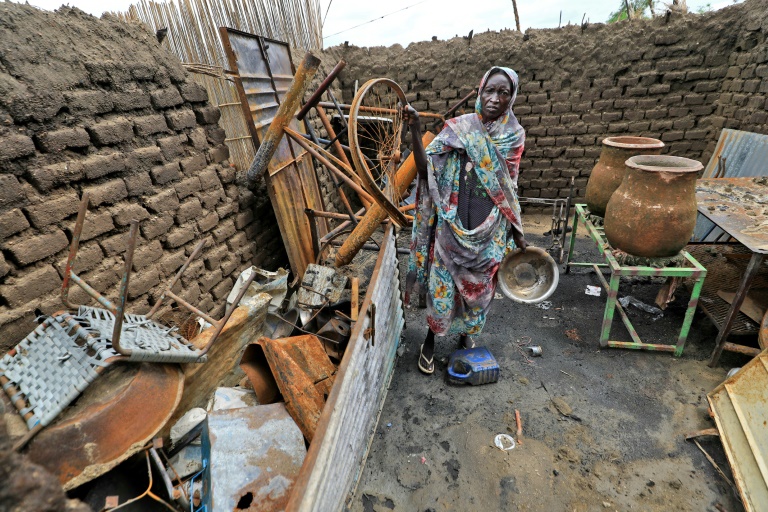
At least 150 people including children have been killed in two days of fighting in the latest ethnic clashes over land disputes in Sudan’s southern Blue Nile state, a medic said Thursday.

The fighting is some of the worst in recent months, and crowds took to the streets of the Blue Nile state capital Damazin in protest, chanting slogans condemning a conflict that has left hundreds dead this year.

Clashes in Blue Nile broke out last week after reported arguments over land between members of the Hausa people and rival groups, with residents reporting hundreds fleeing intense gunfire and homes set ablaze.

The fighting has centred around the Wad al-Mahi area near Roseires, some 500 kilometres (310 miles) south of the capital Khartoum.

“A total 150 people including women, children and elderly were killed between Wednesday and Thursday,” said Abbas Moussa, head of Wad al-Mahi hospital. “Around 86 people were also wounded in the violence.”

On Thursday, hundreds marched through Damazin, some calling for the state governor to be sacked, witnesses said.

“No, no to violence,” the demonstrators chanted.

Eddie Rowe, the United Nations aid chief for Sudan, said he was “deeply concerned” at ongoing fighting, reporting that “an unconfirmed 170 people have been killed and 327 have been injured” since the latest unrest began on October 13. 

– ‘Alarmed’ –

The UN mission in Sudan said it was “alarmed” by the “resurgence of conflict” in Blue Nile, a region awash with guns bordering South Sudan and Ethiopia, that is still struggling to rebuild after decades of civil war.

Last week, clashes in the same area of Blue Nile sparked by “a dispute over land issues” left at least 13 people dead and 24 injured, according to the UN Office for the Coordination of Humanitarian Affairs.

Authorities imposed an overnight curfew in a bid to contain the violence.

Sudan is grappling with deepening political unrest and a spiralling economic crisis since last year’s military coup, led by army chief Abdel Fattah al-Burhan.

The military power grab upended a transition to civilian rule launched after the 2019 ouster of strongman Omar al-Bashir, who ruled for three decades.

“Sustainable peace won’t be possible without a fully functional credible government that prioritises local communities’ needs including security, and addresses the root causes of conflict”, the UN added.

A surge in ethnic violence in recent months has highlighted the security breakdown in Sudan since the coup.

More than 546 people were killed and more than 211,000 forced to flee their homes in inter-communal conflicts across the country from January to September, according to the UN.

– Thousands forced to flee –

Fighting between the Hausa people and other groups first broke out in July, with some 149 people recorded as dead and 124 wounded up until early October, according to a toll reported by OCHA.

The July clashes erupted after Hausa members requested the creation of a “civil authority”, that rival groups saw as a means of gaining access to land.

The clashes also triggered angry protests across Sudan, with the Hausa people demanding justice for those killed.

By late July, senior leaders agreed to cease hostilities. Clashes broke out again in September.

In a separate conflict, violence broke out earlier this week around Lagawa in West Kordofan between the Nuba and Arab Misseriya groups, also in the south of Sudan, some 580 kilometres (360 miles) southwest of Khartoum.

The government’s Humanitarian Aid Commission reported 19 dead and 34 injured in that conflict, according to the UN, with 36,500 people fleeing the violence.

The army accused a holdout rebel group of shelling Lagawa on Tuesday, wounding two members of the paramilitary Rapid Support Forces. 

Chad says some 50 dead in clashes, announces curfew

Chad’s government announced an overnight curfew on Thursday and said deadly clashes between police and demonstrators protesting the military’s grip on power claimed around 50 lives.

Hundreds of demonstrators turned out in the capital N’Djamena and elsewhere on Thursday to mark the date when the military had initially promised to hand over power — a spell that has been extended for another two years.

Chadian Prime Minister Saleh Kebzabo updated the official death toll to around 50 on Thursday night, saying most fatalities occurred in N’Djamena and the cities of Moundou and Koumra, while more than 300 people were injured.

A curfew between 6:00 pm and 6:00 am (1700 GMT and 0500 GMT) would remain in place until the “total restoration of order” in the hotspots of unrest, he added.

Kebzabo also announced the “suspension of all activity” of some opposition groups, vowing the return of order across the country.

The government had previously put the death toll at 30, including 10 members of the security forces.

“A banned demonstration became an insurrection,” government spokesman Aziz Mahamat Saleh told AFP.

He accused demonstrators of attacking “public buildings”, including the offices of the governor, the headquarters of the prime minister’s party and that of the speaker of parliament.

An AFP reporter saw five bodies on the floor of the city’s Union Chagoua Hospital, two of which were covered with the Chadian national flag and three with bloodied white sheets.

The head doctor, Joseph Ampil, later confirmed to AFP that five individuals had “died from gunshots”.

Palls of black smoke could be seen in some parts of the city and the sound of teargas grenades could be heard.

Barricades were set up in several districts and tyres were set alight in the main avenues to block traffic.

In an opposition stronghold, streets were deserted and littered with tree branches and piles of bricks. Schools and university establishments were closed, and many traders in the city centre shuttered their stores.

The headquarters of Kebzabo’s UNDR party was also attacked by demonstrators “and partially burned down”, UNDR Vice President Celestin Topona told AFP.

France, Chad’s former colonial power, condemned the violence, noting it featured “the use of lethal weapons against demonstrators”.

“France is not playing any part in these events, which lie strictly in Chad’s domestic political domain,” the foreign ministry said.

Moussa Faki Mahamat, head of the African Union Commission, posted a tweet to “firmly condemn the repression” of the protests and call for peaceful ways to overcome the country’s “crisis”.

The United Nations said it “deplored the lethal use of force” and called for an investigation into reported human rights violations.

– Key date –

The violence comes on the heels of a national forum organised by military strongman Mahamat Idriss Deby Itno that extended his stay in power.

The 38-year-old five-star general took over in April 2021 after his iron-fisted father, Idriss Deby Itno, in power for three decades, was killed during an operation against rebels.

The younger Deby has since angered many at home and embarrassed backers abroad by staying in power beyond his initially promised deadline, which would have expired on Thursday.

“They’re firing on us. They are killing our people,” Succes Masra, whose Transformers party was among groups that had called the protest, said on Twitter.

“The Soldiers of the one-and-only General who refused to honour his word and on the day when the 18 months are up — this is how he intends to install the (Deby) dynasty.”

Deby’s junta had originally declared it would restore civilian rule after 18 months in power and he initially promised not to take part in elections that would follow.

But as this deadline neared, a nationwide forum staged by Deby reset the clock.

On October 1, the conference approved a new “maximum” 24-month timeframe for holding elections.

It also named Deby “transitional president” and declared he could be a candidate in the poll.

Deby was sworn in on October 10, and later appointed a so-called government of national union headed by Kebzabo, a 75-year-old former journalist and one-time opposition figure.

One protester, Abass Mahamat, 35, said he had chosen to voice his anger at “this facade of a dialogue which entrenches the system”.

“In 31 years, we haven’t seen any positive change in our country.”

The vast, arid Sahel state has had a long history of coups and political turmoil since it gained independence from France in 1960.
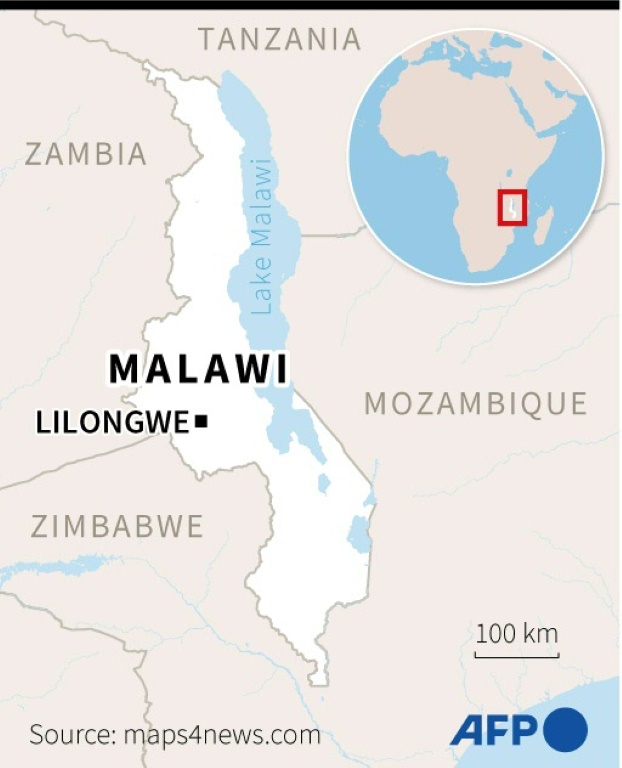
Malawi finds more bodies after mass grave discovery

Malawi on Thursday unearthed four more bodies following the grim discovery of a grave containing the remains of 25 men suspected to be Ethiopian migrants, police said.

The latest finds were made at four separate locations some two kilometres (1.2 miles) from the mass grave, bringing the toll so far to 29.

The dead are suspected to be migrants heading for South Africa — the continent’s most industrialised economy and a magnet for poor workers from elsewhere on the continent.

“Malawi is a country of transit for migrants from the Horn of Africa travelling along what is known as the Southern Route from as far north as Ethiopia in a bid to reach South Africa in search of employment,” said the International Organization for Migration (IOM).

It said in a statement that the latest tragedy highlighted the “urgent need” to tackle the complexities of irregular migration.

“Irregular migration along the Southern Route facilitated by an intricate network of smugglers and traffickers is fraught with danger,” the IOM wrote.

Investigators found the four bodies while combing the area, police spokesman Peter Kalaya told AFP.

Villagers in the northern area of Mzimba, about 250 kilometres north of the capital Lilongwe, stumbled on the mass grave while collecting wild honey in a forest earlier this week.

Police said evidence gathered from the site on Wednesday indicated the 25 victims were Ethiopian males aged between 25 and 40.

Kalaya said that between January and September this year, authorities had intercepted 221 illegal immigrants, 186 of whom were Ethiopians.

Facing threat, Togo forces simulate 'jihadist' attack

Togo’s security forces on Thursday carried out a simulated jihadist attack in the capital Lome, training to counter a hostage-taking as the country faces increasing threats.

Togo and neighbouring West African coastal states like Ghana, Benin and Ivory Coast are preparing for growing spillover from Islamist militant conflicts across their northern borders in Niger and Burkina Faso.

On Thursday, a restaurant called “Noudoudou-a-gnon” in Lome’s Adidogome district was attacked by a “commando” of police disguised as six heavily armed militants, who opened fire and took hostages. 

Two instructors from the French National Gendarmerie Intervention Group (GIGN) oversaw the exercise.

It was the first simulation exercise since Togo recorded the first in a series of attacks from November 2021, and at least four more since then in its far northern border region.

Togo’s Security Minister General Damehame Yark said the exercise was part of “measures so that we can face this threat” in the region.

The exercise is part of a training course in “specialised intervention techniques”. It also used a gendarme drone unit to help “neutralise” the militants and free the hostages.

The country was hit in mid-July by a bloody attack carried out by “unidentified armed individuals”, according to the army, which reported “several dead and a few wounded”.

The government last month extended a state of emergency for six months in its northern Savanes region, allowing more flexibility to conduct military operations there.

Togo’s first deadly jihadist attack was in May 2022. 

In neighbouring Benin, the first known fatal attack was last December, when two soldiers were killed near the border with Burkina Faso. 

In Ivory Coast, four members of the security forces died in 2021, after 14 in 2020.

Violent clashes in Guinea anti-junta protest

Young protesters clashed on Thursday with security forces in the Guinean capital Conakry after a banned group called for demonstrations against the country’s ruling junta, an AFP reporter saw.

The National Front for the Defence of the Constitution (FNDC), which had called the protest, said some 20 people had been injured, some of whom suffered gunshot wounds.

It said one of the injured was in a critical condition and numerous arrests had been made.

No official confirmation of this information has been made. 

The poor but mineral-rich West African state has been under military government since a September 2021 coup that ousted president Alpha Conde after more than 10 years in power.

An alliance of political parties, trade unions and civil groups, the FNDC spearheaded protests against Conde before his ouster.

It was officially dissolved in August by the junta-appointed government.

The coalition had called for peaceful demonstrations to take place in Conakry on Thursday, followed by nationwide protests on October 26.

“Despite an unprecedented mobilisation of the (junta’s) repressive apparatus, Guineans have massively responded this Thursday to the call” to protest, the FNDC said in a statement.

It is pushing for a rapid return to civilian rule and the release of prisoners that it says have been detained for political reasons.

Military leader Colonel Mamady Doumbouya has appointed himself president and undertaken to restore civilian rule within three years.

The unrest coincides with a visit to the country by the West African bloc ECOWAS, which on September 24 gave Guinea a month to propose a new timeframe, or else face a tightening of sanctions that it has imposed.

Close Bitnami banner
Bitnami