Africa Business

Jihadist raid halts operations at Mozambique ruby mine

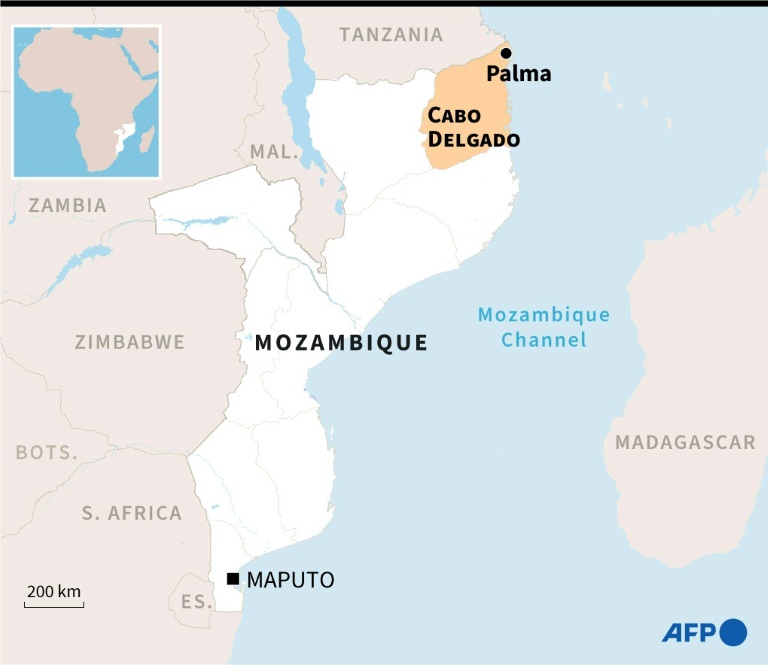
London-listed ruby mining giant Gemfields said Thursday it has ceased operations at a mine in northern Mozambique’s restive Cabo Delgado province following a jihadist attack at a neighbouring site.

The Thursday morning assault occurred at a facility belonging to India-headquartered Gemrock which neighbours Gemfields’ Montepuez Ruby Mine (MRM).

Following the attack, Gemfields “has initiated the process of evacuating operational employees and contractors, and therefore mining operations at the site have ceased”, it said in a statement. 

No fatalities have been reported at the mine and “details of the attack are being verified”, Gemfields added.

According to the precious gem miner, the military was being deployed to shore up police and mine security on the ground.

A deadly insurgency erupted in gas-rich northern Mozambique, near the Tanzanian border, five years ago — concentrated mainly in and around coastal areas.

A regional military mission deployed last year had restored a sense of security, pushing militants from some of their traditional turf.

But the insurgent attacks are spilling inland.

Montepuez, which is situated inland, had largely been spared until recently.

A deadly March 2021 attack on the coastal city of Palma by fighters affiliated to the Islamic State group also put the brakes on a $20-billion gas project by French energy giant TotalEnergies.

The insurgency has claimed more than 4,300 lives and displaced some 820,000 people since the unrest erupted in October 2017.

Rebels kill seven, target health clinics in eastern DR Congo

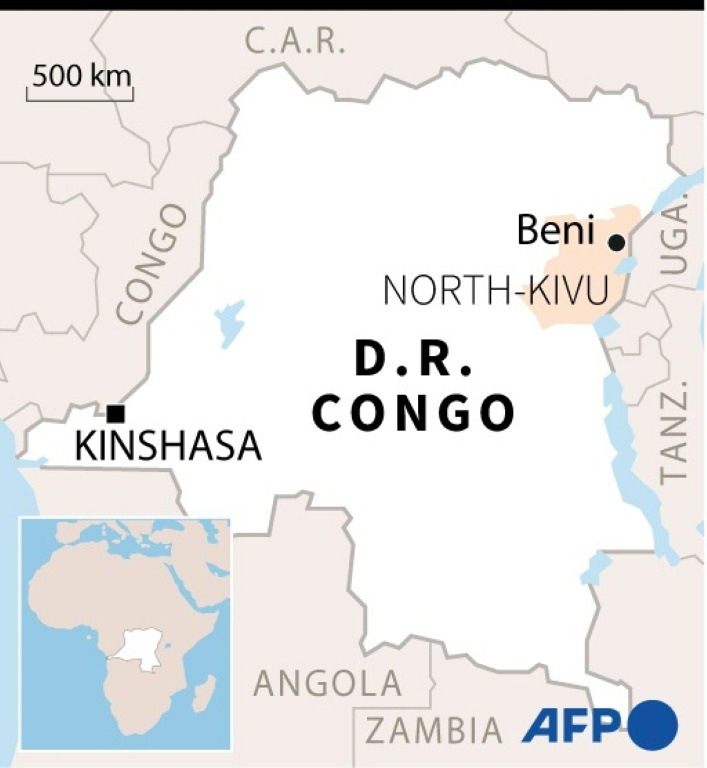
Rebels killed seven people and kidnapped a nurse during an attack overnight in eastern Democratic Republic of Congo, targeting two health centres, local sources said Thursday.

“They even killed sick people,” Norbert Muhindo, a nurse at the referral clinic in the town of Maboya, in the Beni territory of North Kivu province, told AFP.

The rebels belonged to the Allied Democratic Forces (ADF), a movement presented by the jihadist organisation Islamic State as its affiliate in Central Africa, Muhindo said.

The raiders arrived in Maboya “around midnight”, he declared, adding: “There were many of them. They said ‘We want war’.”

The attackers first set fire to the health centre, where they killed three people, before heading into the centre of the town, where three more killings were reported.

Muhindo said they moved on to “the Tinge hospital owned by the Protestant community”, about 1.5 kilometres (almost a mile) from the Maboya health centre.

At Tinge, “they killed a sentry and took a nurse with them,” he said.

Roger Wangeve, president of the civil society of the Bashu chiefdom (an administrative body), confirmed the incursion, blaming “ADF rebels” who “burned the Tinge hospital and the Maboya referral health centre”.

According to Wangeve, the rebel force later “burned and looted villages”.

The provisional toll of seven dead was confirmed by a police source who asked not to be named.

After a few weeks of calm, attacks have apparently resumed in the Beni territory, where the Congolese and Ugandan armies have been engaged in joint operations against the ADF for almost a year.

The ADF, which originated in western Uganda, is accused of massacres of civilians in the east of the DRC and jihadist attacks at the end of 2021 in Uganda.

Eastern DRC has been destabilised for nearly three decades by the presence of more than a hundred local and foreign armed groups, including the ADF.

The DRC’s provinces of North Kivu and Ituri have been under a state of siege since May 2021, but the exceptional measure has so far failed to stop the violence.

The joint DRC-Ugandan operation said that the ADF was being “pursued in depth, is… rootless and very often attacks urban centres.”

It called on the public to be vigilant and tip off the authorities about any suspicious movement.

The statement added that six ADF rebels had been killed in Beni’s Rwenzori sector had been killed and nine others, including a woman, “neutralised” farther north in Ituri.

Items that were captured during these operations, whose dates were not given, included an AK-47 assault rifle, eight ammunition clips and four “rockets”, as well as two mobile phones and five solar panels.

Food crisis looms in Nigeria as floods destroy crops

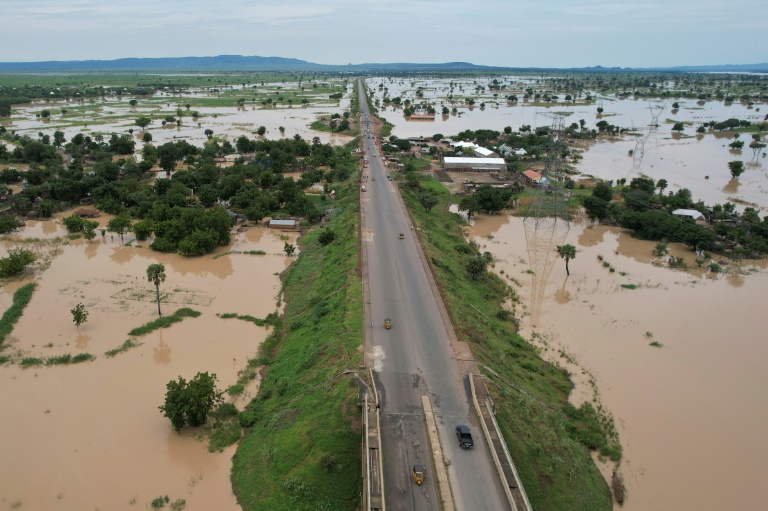
Usman Musa had spent more than $1,300 on his 10-hectare rice farm in Nigeria’s Kogi state, now submerged by the country’s worst floods in a decade.

In a wooden canoe, the 38-year-old father of four paddled his way through the murky waters, passing by his and relatives’ houses, the local hospital and school. 

Only the roofs were visible.

Across Africa’s most populous country, communities and crops of sorghum, maize, rice and vegetables are under water, with farmers and aid workers warning of a possible food crisis.

The country, home to more than 200 million people, was already grappling with high inflation and worrying levels of food insecurity.

Now the situation will worsen, with nearly 110,000 hectares (272,000 acres) of farmland completely destroyed by flooding since August according to the latest government figures.

“Flooding is still ongoing but we can safely say that between 60 to 75 percent of the yield we expected is going to be lost,” Kabir Ibrahim, president of All Farmers Association of Nigeria, told AFP this week.

“It’s monumental. So many people are crying.”

More than 600 people have died and 1.3 million others were forced to leave their homes according to the latest figures given by the Minister of Humanitarian Affairs Sadiya Umar Farouq.

– Risk of hunger –

Floods are not uncommon in Nigeria during the rainy season from May to November but they have been extreme this year.

Officials and residents blame climate change but also poor planning and the release of excessive water from dams, a process that is meant to ease pressure.

“If you don’t open the water through the spillways, then dams will break,” said Ibrahim, and then “it would be like Pakistan. All of Nigeria would be under water like Pakistan.”

Farmers were warned ahead of time but it wasn’t enough. 

“We used the predictions and avoided planting along flood-prone areas,” said Ibrahim, “but now you can see that the devastation is all over.”

As a result, Ibrahim, whose organisation represents 20 million farmers, believes “there will be more hardship towards the end of the year and beginning of next year.”

Food inflation year-on-year was already at 23.3 percent last month, in part because of ripple effects on the import-dependent country from the coronavirus pandemic and the Russia-Ukraine war.

Rampant insecurity with gunmen repeatedly attacking rural communities also forced many farmers to abandon their fields.

The World Food Programme and the UN’s Food and Agriculture Organization (FAO) said last month that Nigeria was among six countries facing a high risk of catastrophic levels of hunger, even before the floods. 

Now, “the impact of the floods on food production is a real threat to the country and could lead to a major food crisis,” said Hussaini Abdu, Nigeria director of the CARE charity.

The FAO representative in Nigeria, Fred Kafeero, said he was “deeply concerned” as food supplies were expected to be low “due to anticipated reduction in household production”.

The aid official said the floods were also affecting livestock and had increased the risk of vector-borne disease outbreaks such as cholera.

– Preventive measures –

The floods have not just destroyed farmlands, they have also prevented the transport of trucks and damaged roads and bridges, further pressuring the food supply.

“We were hoping inflation would get a break with the (upcoming) harvest but now with the floods, it puts a big question mark on our forecast on inflation,” said Ari Aisen, the IMF’s Resident Representative for Nigeria.

“It looks very serious but it’s difficult to judge at this point,” he told AFP, adding that while it was early to assess, “there is an upside risk for inflation, for food price increases.”

The last massive floods in Nigeria in 2012 cost nearly $17 billion, according to the World Bank.

While immediate assistance is now needed, the International Monetary Fund said it would be less costly to invest in preventive measures and policies.

Countries should invest to “help populations adapt to these types (of) events rather than using resources after the fact,” said Aisen. 

But in the meantime, the government said it was ramping up support to affected communities.

President Muhammadu Buhari approved the release of 12,000 metric tons of assorted grains from a national strategic reserve stock.

But farmers are not sure it will be enough.

Buhari restricted the import of rice in 2015, to increase local production and self-sufficiency.

For Ibrahim, resuming those imports “should not be ruled out, if the situation becomes dire”.

Weather forecast agencies have warned there could be more floods until the end of November.

Alleged Gambian death squad member denies German charges

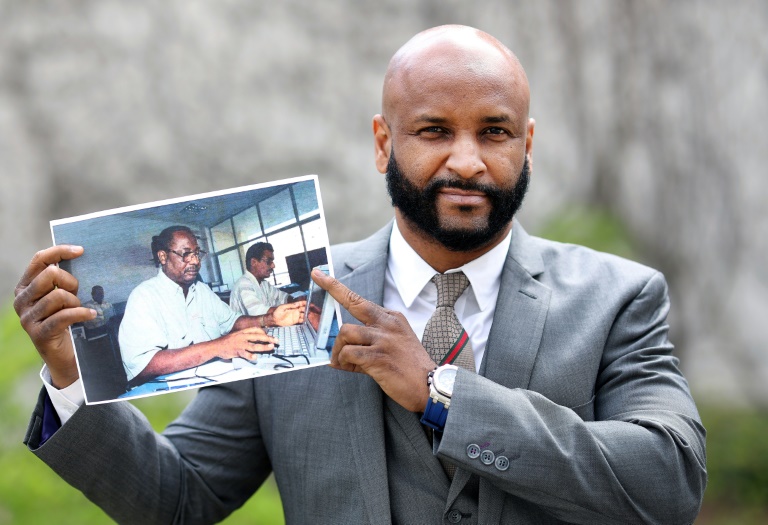
A Gambian man on trial in Germany accused of belonging to a death squad that assassinated opponents of former dictator Yahya Jammeh, including an AFP journalist, on Thursday denied the charges. 

“I did not participate in these acts,” the defendant Bai Lowe’s lawyer told the court in the northern town of Celle, reading a statement by the accused. 

Lowe, 47, is charged with crimes against humanity, murder and attempted murder, including the 2004 killing of AFP correspondent Deyda Hydara.

He entered the courtroom wearing a black cap, which he later removed to reveal a shaved head, and listened intently to the English translation of the declaration read out in German. 

In it, Lowe said he had merely repeated in the past what other people had told him about the facts of the case.

Explaining previous statements in media interviews that appeared to incriminate him, Lowe told the court that he had intended to demonstrate to his fellow Gambians how cruel Jammeh’s regime was.

Lowe, who went on trial in April, is accused of involvement in two murders and one attempted murder while working as a driver for the hit squad known as the Junglers between December 2003 and December 2006.

It is one of the first cases worldwide hearing accusations of serious human rights violations during the Jammeh era in Gambia, a former British colony.  

– ‘King for life’ –

The proceedings are being held in Germany on the basis of universal jurisdiction, which allows a foreign country to prosecute crimes against humanity, war crimes and genocide, regardless of where they were committed.

Hydara was an editor and co-founder of the independent daily The Point and a correspondent for AFP for more than 30 years.

The father-of-four also worked as a Gambia correspondent for the Reporters Without Borders (RSF) campaign group.

He was gunned down in his car on the outskirts of Banjul on December 16, 2004.

Lowe is accused of having helped stop Hydara’s car before driving one of the killers in his own vehicle.

He told the court he had accepted an interview with a US-based Gambian radio station because the reporter had told him Jammeh intended to name himself “king for life” after the 2016 election, ushering in a dictatorship.

In the more than hour-long interview, which is still online, Lowe details his involvement in the crimes for which he is standing trial. 

But on Thursday, he declared that the remarks were solely intended to inform the Gambian people about crimes committed in Jammeh’s name so they would not vote for him.  

In a statement sent to AFP, Hydara’s son Baba said he rejected Lowe’s account to the judges.

“As a victim and a plaintiff in this case I feel disappointed, insulted and cheated by (this) statement that betrays common sense,” he said.

– ‘Not credible’ –

Hydara’s lawyer, Patrick Kroker, added that “the statement of the accused seems made up and incomplete. Moreover, it has already been contradicted on several occasions by the evidence collected so far”.

“It’s a step backwards in the search for the truth for the victims of Yahya Jammeh,” Kroker told AFP. 

“We assume that the court will not give any credence to this statement.”

Attorney Ida Jagne, who was in Hydara’s car when he was killed, also dismissed Lowe’s testimony.

“The statement is extremely not credible… because the accounts he gave in interviews were very detailed: who participated, what happened,” Jagne’s own lawyer Peer Stolle told reporters outside the courtroom.

Lowe arrived in Europe via Senegal in December 2012, saying he was seeking asylum as a political refugee who feared for his life under Jammeh. 

He was detained on the charges in Germany in March 2021.

Jammeh ruled Gambia with an iron fist for 22 years but fled the country in January 2017 after losing a presidential election to relative unknown Adama Barrow. 

He refused to acknowledge the results but was forced out by a popular uprising and fled to Equatorial Guinea.

Five former members of the intelligence service were sentenced to death by a Gambian court only in July this year for the murder of a political activist during Jammeh’s rule.

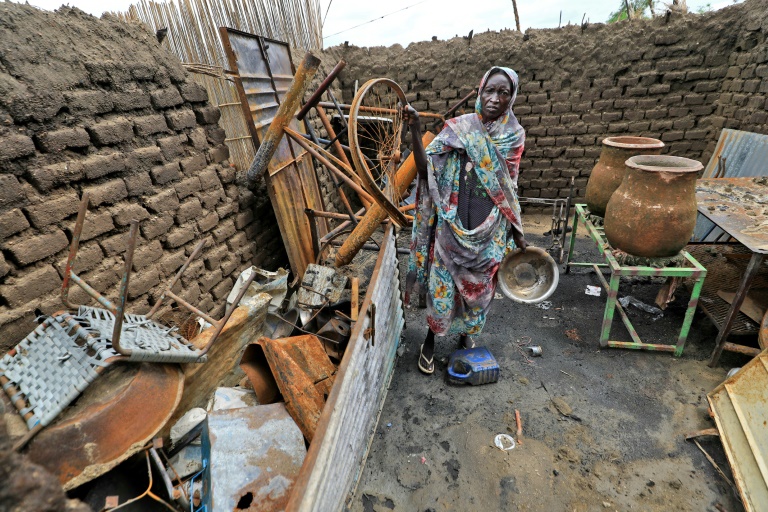
At least 150 killed in two days of fighting in Sudan's south

At least 150 people have been killed in two days of fighting in the latest ethnic clashes triggered by land disputes in Sudan’s southern Blue Nile state, a medic said Thursday.

The fighting is some of the worst in recent months, and crowds took to the streets of the Blue Nile state capital Damazin in protest, chanting slogans condemning a conflict that has left hundreds dead this year.

Clashes in Sudan’s troubled Blue Nile broke out last week after reported arguments over land between members of the Hausa people and rival groups.

The fighting has centred around the Wad al-Mahi area near Roseires, some 500 kilometres (310 miles) south of the capital Khartoum. Residents on Wednesday reported intense gunfire and houses set on fire.

“A total 150 people including women, children, and elderly were killed between Wednesday and Thursday,” said Abbas Moussa, head of Wad al-Mahi hospital. “Around 86 people were also wounded in the violence.”

On Thursday, hundreds marched through Damazin, some calling for the state governor to be sacked, witnesses said.

“No, no to violence,” the demonstrators chanted.

– ‘Alarmed’ –

The UN mission in Sudan said it was “alarmed” by the “resurgence of conflict” in Blue Nile, a region awash with guns bordering South Sudan and Ethiopia, that is still struggling to rebuild after decades of civil war.

Sudan is grappling with deepening political unrest and a spiralling economic crisis since last year’s military coup, led by army chief Abdel Fattah al-Burhan.

The military power grab upended a transition to civilian rule launched after the 2019 ouster of strongman Omar al-Bashir, who ruled for three decades.

“Sustainable peace won’t be possible without a fully functional credible government that prioritises local communities’ needs including security, and addresses the root causes of conflict”, the UN added.

A surge in ethnic violence in recent months has highlighted the security breakdown in Sudan since the coup.

Over 546 people have been killed and more than 211,000 forced to flee their homes in inter-communal conflicts across the country from January to September, according to the UN.

Last week, clashes in the same area of Blue Nile sparked by “a dispute over land issues” left at least 13 people dead and 24 injured, according to the UN Office for the Coordination of Humanitarian Affairs.

Authorities imposed an overnight curfew in a bid to contain the violence.

– Thousands forced to flee –

Fighting between the Hausa people and other groups first broke out in July, with some 149 dead and 124 wounded recorded up until early October, according to a toll reported by OCHA.

The July clashes erupted after Hausa members requested the creation of a “civil authority”, that rival groups saw as a means of gaining access to land.

The clashes also triggered angry protests across Sudan, with the Hausa people demanding justice for those killed.

By late July, senior leaders agreed to cease hostilities. Clashes broke out again in September.

In a separate conflict, violence broke out earlier this week around Lagawa in West Kordofan between the Nuba and Arab Misseriya groups, also in the south of Sudan, some 580 kilometres (360 miles) southwest of Khartoum.

The government’s Humanitarian Aid Commission reported 19 dead and 34 injured in that conflict, according to the UN, with 36,500 people fleeing the violence.

The army accused a holdout rebel group of shelling Lagawa on Tuesday, wounding two members of the paramilitary Rapid Support Forces. 

Chad protest clashes leave 'about 30' dead, including security forces

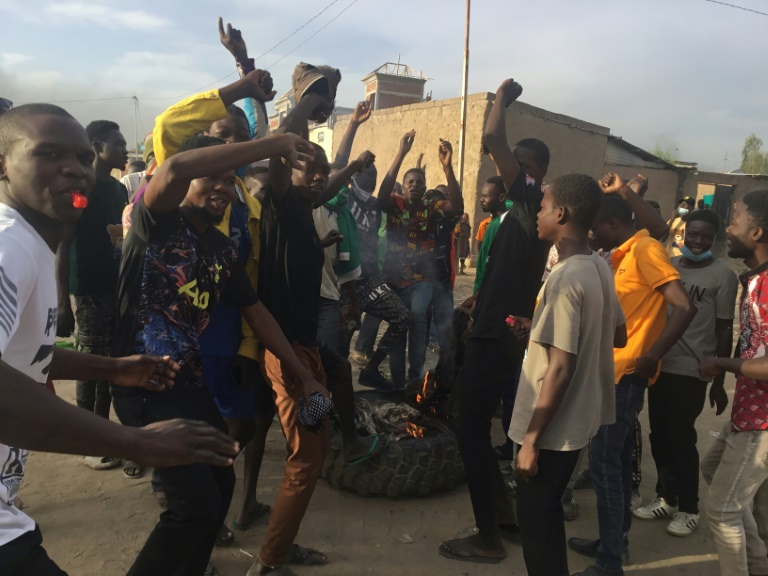
Deadly clashes between police and demonstrators protesting at the military’s grip on power erupted in Chad on Thursday, claiming “about 30” lives, including around 10 members of the security forces, according to an official toll.

Hundreds of demonstrators turned out in the capital N’Djamena to mark the date when the military had initially promised to hand over power — a spell that has been extended for another two years.

“There were about 30 deaths, including about 10 among the security forces, and several injured,” government spokesman Aziz Mahamat Saleh told AFP.

“A banned demonstration became an insurrection,” he said.

He accused demonstrators of attacking “public buildings”, including the offices of the governor, the headquarters of the prime minister’s party and that of the speaker of parliament.

An AFP reporter saw five bodies on the floor of the city’s Union Chagoua Hospital, two of which were covered with the Chadian national flag and three with bloodied white sheets.

The head doctor, Joseph Ampil, later confirmed to AFP that five individuals had “died from gunshots”.

Palls of black smoke could be seen in some parts of the city and the crack of teargas grenades could be heard.

Barricades were set up in several districts and tyres were set alight in the main avenues to block traffic.

In an opposition stronghold, streets were deserted and littered with tree branches and piles of bricks. Schools and university establishments were closed, and many traders in the city centre lowered their shutters.

The headquarters of Prime Minister Saleh Kebzabo’s UNDR party was also attacked by demonstrators “and partially burned down”, UNDR Vice President Celestin Topona told AFP.

France, Chad’s former colonial power, condemned the violence, noting it featured “the use of lethal weapons against demonstrators”.

“France is not playing any part in these events, which lie strictly in Chad’s domestic political domain,” the foreign ministry said.

“False information about France’s purported involvement is baseless.”

Moussa Faki Mahamat, head of the African Union Commission, posted a tweet to “firmly condemn the repression” of the protests and call for peaceful ways to overcome the country’s “crisis”.

– Key date –

The violence comes on the heels of a national forum organised by military strongman Mahamat Idriss Deby Itno that extended his stay in power.

The 38-year-old five-star general took over in April 2021 after his iron-fisted father, Idriss Deby Itno, in power for three decades, was killed during an operation against rebels.

The younger Deby has since angered many at home and embarrassed backers abroad by staying in power beyond his initially promised deadline, which would have expired on Thursday.

“They’re firing on us. They are killing our people,” Succes Masra, whose Transformers party was among groups that had called the protest, said on Twitter.

“The Soldiers of the one-and-only General who refused to honour his word and on the day when the 18 months are up — this is how he intends to install the (Deby) dynasty.”

Deby’s junta had originally declared it would restore civilian rule after 18 months in power and he initially promised not to take part in elections that would follow.

But as this deadline neared, a nationwide forum staged by Deby reset the clock.

On October 1, the conference approved a new “maximum” 24-month timeframe for holding elections.

It also named Deby “transitional president” and declared he could be a candidate in the poll.

Deby was sworn in on October 10, and later appointed a so-called government of national union headed by Kebzabo, a 75-year-old former journalist and one-time opposition figure.

One protester, Abass Mahamat, 35, said he had chosen to voice his anger at “this facade of a dialogue which entrenches the system”.

“In 31 years, we haven’t seen any positive change in our country.”

The vast, arid Sahel state has had a long history of coups and political turmoil since it gained independence from France in 1960.

During his long stay in power, the elder Deby fought off several attempts to unseat him by rebels crossing from Libya and Sudan.

He was supported by France, which deemed him a strong ally in its campaign against jihadism in the Sahel.

S.Africa paves way for cryptocurrency regulation

South Africa’s financial watchdog on Thursday declared cryptocurrency a financial product, paving way for the regulation of the assets in the continent’s most advanced economy.

The announcement comes in the wake of financial institutions and watchdogs around the world grappling on how to regulate digital currencies.

The decision by the Financial Sector Conduct Authority (FSCA) means financial firms dealing in cryptos will have to apply for licensing next year between June 1 and November 20.

“You cannot have a situation where you have entities operating outside the regulatory framework, it is not ideal, and certainly not in the public interest,” FSCA Commissioner Unathi Kamlana told a news briefing.

The crypto asset, which will not be issued by the central bank, will be tradeable, transferred or stored electronically “for the purpose of payment, investment”.

Rebels kill seven and target health centres in east DR Congo

Rebels killed at least seven people and kidnapped a nurse during an attack overnight Wednesday in eastern Democratic Republic of Congo, targeting two health centres, local sources said.

“They even killed sick people,” Norbert Muhindo, a nurse at the referral clinic in the town of Maboya, in the Beni territory of North Kivu province, told AFP.

The rebels belonged to the Allied Democratic Forces (ADF), a movement presented by the jihadist organisation Islamic State as its branch in Central Africa, Muhindo said.

The raiders arrived in Maboya “around midnight”, he declared, adding: “There were many of them. They said ‘We want war’.”

The attackers first set fire to the health centre, where they killed three people, before spreading terror in the centre of the town, where three more killings were reported.

Muhindo said they moved on to “the Tinge hospital owned by the Protestant community”, about 1.5 kilometres (almost a mile) from the Maboya health centre.

At Tinge, “they killed a sentry and took a nurse with them,” he said.

Roger Wangeve, president of the civil society of the Bashu chiefdom (an administrative body), confirmed the incursion, blaming “ADF rebels” who “burned the Tinge hospital and the Maboya referral health centre”.

According to Wangeve, the rebel force later “burned and looted villages”.

The provisional toll of seven dead was confirmed by a police source who asked not to be named.

After a few weeks of calm, attacks have apparently resumed in the Beni territory, where the Congolese and Ugandan armies have been engaged in joint operations against the ADF for almost a year.

The ADF, which originated in western Uganda, is accused of massacres of civilians in the east of the DRC and jihadist attacks at the end of 2021 in Uganda.

Eastern DRC has been destabilised for nearly three decades by the presence of more than a hundred local and foreign armed groups, including the ADF.

The DRC’s provinces of North Kivu and Ituri have been under a state of siege since May 2021, but the exceptional measure has so far failed to stop the violence.

Five killed in Chad protest clashes

Five people were killed Thursday when police clashed with demonstrators in the Chadian capital during a banned protest against the ruling military, an AFP journalist saw.

Hundreds of demonstrators turned out to mark the date when the military had initially promised to hand over power — a spell that has been extended for another two years.

An AFP reporter saw five bodies on the floor of the city’s Union Chagoua Hospital, two of which were covered with the Chadian national flag and three with bloodied white sheets.

The head doctor, Joseph Ampil, later confirmed to AFP that five individuals had “died from gunshots.”

Palls of black smoke could be seen in some parts of the city and the crack of teargas grenades could be heard.

Barricades were set up in several districts and tyres were set alight in the main avenues to block traffic.

In an opposition stronghold, streets were deserted and littered with tree branches and piles of bricks. Schools and university establishments were closed, and many traders in the city centre lowered their shutters.

The headquarters of Prime Minister Saleh Kebzabo’s UNDR party was also attacked by demonstrators “and partially burned down,” UNDR Vice President Celestin Topona told AFP.

France, Chad’s former colonial power, condemned the violence, noting it featured “the use of lethal weapons against demonstrators.”

“France is not playing any part in these events, which lie strictly in Chad’s domestic political domain,” the foreign ministry said.

“False information about France’s purported involvement is baseless.”

The Chadian Red Cross said it had deployed 10 teams to provide first aid and taken “dozens” of injured people to hospital.

There was no immediate official word on casualties.

– October 20 date –

The violence comes on the heels of a national forum organised by military strongman Mahamat Idriss Deby Itno that extended his stay in power.

The 38-year-old five-star general took over in April 2021 after his iron-fisted father, Idriss Deby Itno, in power for three decades, was killed during an operation against rebels.

The younger Deby has since angered many at home and embarrassed backers abroad by staying in power beyond his initially promised deadline, which would have expired on Thursday.

“They’re firing on us. They are killing our people,” Succes Masra, whose Transformers party was among groups that had called the protest, said on Twitter.

“The Soldiers of the one-and-only General who refused to honour his word and on the day when the 18 months are up — this is how he intends to install the (Deby) dynasty.”

Deby’s junta had originally declared it would restore civilian rule after 18 months in power and he initially promised not to take part in elections that would follow.

But as the 18-month deadline neared, a nationwide forum staged by Deby reset the clock.

On October 1, it approved a new “maximum” 24-month timeframe for holding elections.

It also named Deby “transitional president” and declared he could be a candidate in the poll.

Deby was sworn in October 10, and later appointed a so-called government of national union headed by Kebzabo, a 75-year-old former journalist and one-time opposition figure.

One protestor, Abass Mahamat, 35, told he had chosen to voice his anger at “this facade of a dialogue which entrenches the system.”

“In 31 years, we haven’t see any positive change in our country.”

– Troubled state –

The vast, arid Sahel state has had a long history of coups and political turmoil since it gained independence from France in 1960.

During his long stay in power, the elder Deby fought off several attempts to unseat him by rebels crossing from Libya and Sudan.

He was supported by France, which deemed him a strong ally in its campaign against jihadism in the Sahel.

France swiftly endorsed his son as his successor.

But its apparent displeasure at his push to cement power was visible at the October 10 inauguration ceremonies, where France, like the EU, was represented only by an ambassador.

The statement from Paris that denied any French involvement in Thursday’s violence comes after anti-French protests during a coup in Burkina Faso earlier this month.

Protestors attacked the French embassy and cultural centre in the capital Ouagadougou after coup leaders accused France of harbouring junta chief Lieutenant-Colonel Paul-Henri Sandaogo Damiba at a base in Burkina, an allegation France denied. 

Damiba fled to neighbouring Togo.

Alleged Gambian death squad member denies German charges

A Gambian man on trial in Germany accused of belonging to a death squad that assassinated opponents of former dictator Yahya Jammeh, including an AFP journalist, on Thursday denied the charges. 

“I did not participate in these acts,” the defendant Bai Lowe’s lawyer told the court in the northern town of Celle, reading a statement by the accused. 

Lowe, 47, who is charged with crimes against humanity, murder and attempted murder, including the 2004 killing of AFP correspondent Deyda Hydara, listened intently to the English translation of the declaration read out in German. 

In it, Lowe said he had merely repeated in the past what other people had told him about the facts of the case.

Explaining previous statements in media interviews that appeared to incriminate him, Lowe told the court that he had intended to demonstrate to his fellow Gambians how cruel Jammeh’s regime was.

Lowe, who went on trial in April, is accused of involvement in two murders and one attempted murder while working as a driver for the hit squad known as the Junglers between December 2003 and December 2006.

Human Rights Watch has called the proceedings “the first to prosecute human rights violations committed in Gambia during the Jammeh era on the basis of universal jurisdiction”.

Universal jurisdiction allows a foreign country to prosecute crimes against humanity, war crimes and genocide, regardless of where they were committed.

– ‘Betrays common sense’ –

Hydara was an editor and co-founder of the independent daily The Point and a correspondent for AFP for more than 30 years.

The father-of-four also worked as a Gambia correspondent for the Reporters Without Borders (RSF) campaign group.

He was gunned down in his car on the outskirts of Banjul on December 16, 2004.

Lowe is accused of having helped stop Hydara’s car before driving one of the killers in his own vehicle.

In a statement sent to AFP, Hydara’s son Baba said he rejected Lowe’s account to the judges.

“As a victim and a plaintiff in this case I feel disappointed, insulted and cheated by (this) statement that betrays common sense,” he said.

Hydara’s lawyer, Patrick Kroker, added that “the statement of the accused seems made up and incomplete. Moreover, it has already been contradicted on several occasions by the evidence collected so far”.

“It’s a step backwards in the search for the truth for the victims of Yahya Jammeh,” Kroker told AFP. 

“We assume that the court will not give any credence to this statement.”

Attorney Ida Jagne, who was in Hydara’s car when he was killed, also dismissed Lowe’s testimony.

“The statement is extremely not credible… because the accounts he gave in interviews were very detailed: who participated, what happened,” Jagne’s own lawyer Peer Stolle told reporters outside the courtroom.

Lowe arrived in Europe via Senegal in December 2012, saying he was seeking asylum as a political refugee who feared for his life under Jammeh. 

He was detained on the charges in Germany in March 2021.

Jammeh ruled Gambia with an iron fist for 22 years but fled the country in January 2017 after losing a presidential election to relative unknown Adama Barrow. 

He refused to acknowledge the results but was forced out by a popular uprising and fled to Equatorial Guinea.

Five former members of the intelligence service were sentenced to death by a Gambian court only in July this year for the murder of a political activist during Jammeh’s rule.

Close Bitnami banner
Bitnami