Africa Business

15 killed in Sudan's Blue Nile ethnic clashes: medics

At least 15 people have been killed in the latest outbreak of ethnic clashes after land disputes in Sudan’s southern Blue Nile state, local leaders and medical sources said Wednesday.

Fighting broke out last week after reported arguments over land between members of the Hausa people and rival groups in Wad al-Mahi, near Roseires in Sudan’s troubled southern region, some 500 kilometres (310 miles) south of the capital Khartoum.

On Wednesday, fresh fighting erupted, with residents reporting intense gunfire and homes torched.

“There was heavy shooting, and houses were burnt down,” one local resident said, asking not to be named.

A medic at the Wad al-Mahi clinic, who asked not to be named, said they had “received 10 bodies”, while another worker at the hospital in the city of Roseires said the facility received “five bodies and 10 wounded.”

Clashes took place despite a heavy deployment of security forces in the area, as well as an overnight curfew, a Hausa leader said.

Last week, clashes in the same area sparked by “a dispute over land issues” left at least 13 people dead and 24 injured, according to the UN Office for the Coordination of Humanitarian Affairs.

Fighting between the Hausa people and other groups first broke out in July, with some 149 dead and 124 wounded up until early October, according to a toll reported by OCHA.

Some 65,000 people have been forced to flee their homes, the UN said.

The July clashes erupted after Hausa members requested the creation of a “civil authority”, that rival groups saw as a means of gaining access to land.

The clashes also triggered angry protests across Sudan, with the Hausa people demanding justice for those killed.

By late July, senior leaders agreed to cease hostilities. Despite the deal, clashes broke out again in September.

Sudan is grappling with deepening political unrest and a spiralling economic crisis since last year’s military coup, led by army chief Abdel Fattah al-Burhan. 

The military power grab upended a transition to civilian rule launched after the 2019 ouster of strongman Omar al-Bashir, who ruled for three decades.

Malawi finds mass grave of suspected Ethiopian migrants

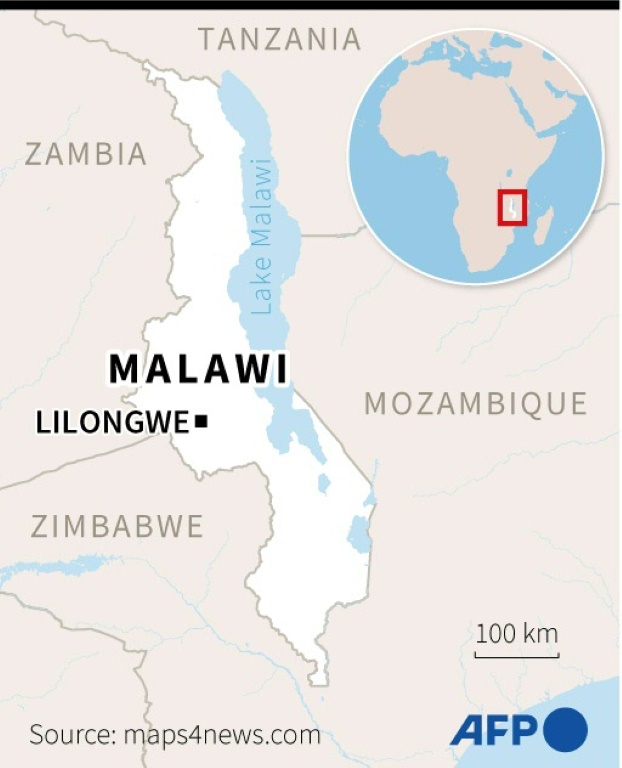
Malawi has discovered a mass grave in the north of the country containing the remains of 25 people suspected to be migrants from Ethiopia, police said on Wednesday.

“The grave was discovered late on Tuesday but we cordoned it off and started exhuming today. So far, we have discovered 25 bodies,” police spokesman Peter Kalaya told AFP.

Police were alerted by villagers in the Mzimba area, about 250 kilometres (155 miles) north of the capital Lilongwe, who stumbled on the grave while collecting wild honey in a forest.

“We suspect that they were illegal migrants who were being transported to South Africa via Malawi,” he said. 

He added that evidence gathered from the site indicated the victims were Ethiopian males aged between 25 and 40 years. 

The decomposing bodies were exhumed and taken to a morgue for autopsy.

The bodies appear to have been buried “probably not more than a month” ago, he said.

Malawi is a popular route for illegal immigrants from East Africa being smuggled to South Africa — the continent’s most industrialised country and a magnet for poor migrants from elsewhere on the continent.

Police often catch trucks transporting migrants passing through the country en route to South Africa, via Mozambique.

Kalaya said that between January and September this year, authorities had intercepted 221 illegal immigrants, 186 of whom were Ethiopians.

Two years ago immigration authorities in neighbouring Mozambique made a grim discovery, finding 64 migrants from Ethiopia dead inside a freight container loaded on a truck. 

They were presumed to have died from suffocation. A few survivors were among the group.

The International Organization for Migration (IOM) chief in Malawi Nomagugu Ncube said they were still gathering information about the latest incident.

“IOM notes with concern the continued loss of migrants’ lives along the migration journey and calls upon state and non-state actors to work together to promote legal pathways for migration,” she told AFP.

Uganda Ebola epidemic death toll climbs to 44: WHO

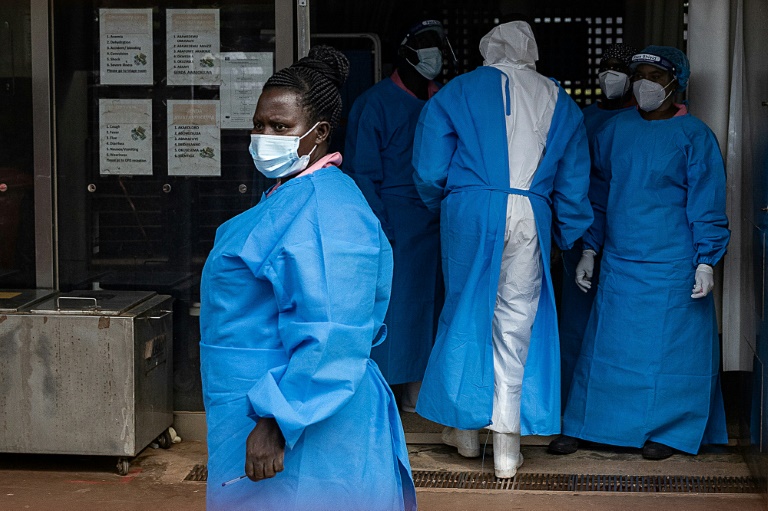
The death toll from an Ebola epidemic declared last month in Uganda has climbed to 44, the World Health Organization said on Wednesday.

WHO chief Tedros Adhanom Ghebreyesus told a press briefing in Geneva that there had been 60 confirmed and 20 probable cases, with 44 deaths and 25 recoveries. 

“We remain concerned that there may be more chains of transmission and more contacts than we know about in the affected communities,” he added.

The previous death toll provided by the WHO on October 5 reported 29 fatalities.

President Yoweri Museveni last week ordered two districts at the heart of the epidemic in central Uganda to be put under lockdown, imposing a travel ban, a curfew and the closure of public places.

Museveni had already ordered traditional healers to stop treating the sick, in a bid to stop the spread of the virus.

He also ordered the police to arrest anyone infected with Ebola who refused to isolate.

The authorities say the outbreak remains concentrated in the central districts of Mubende and Kassanda has not reached Kampala, despite a couple testing positive for the virus in the capital.

Tedros on Wednesday said two cases from Mubende sought care in Kampala, “increasing the risks of transmission in the city” of 1.5 million people.

Ebola is spread through bodily fluids, with common symptoms being fever, vomiting, bleeding and diarrhoea. 

Outbreaks are difficult to contain, especially in urban environments.

Uganda’s last recorded fatality from a previous Ebola outbreak was in 2019.

The particular strain now circulating in Uganda is known as the Sudan Ebola virus, for which there is currently no vaccine.

The World Health Organization says clinical trials could start within weeks on drugs to combat that strain.

Clock ticking to avert 'genocide' in Tigray: WHO chief

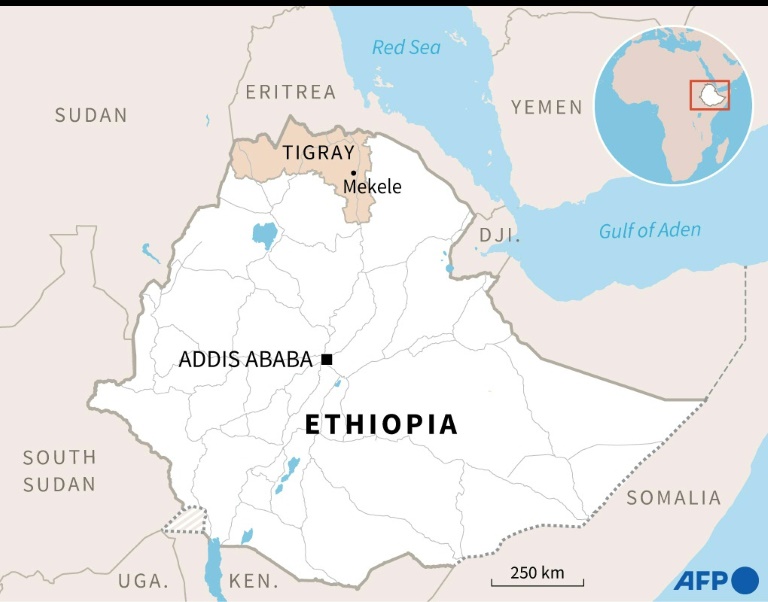
The World Health Organization chief said Wednesday time was running out to avoid “genocide” in Ethiopia’s war-torn Tigray, as Human Rights Watch called for sanctions against Addis Ababa to avert civilian deaths.

“The world is not paying enough attention,” Tedros Adhanom Ghebreyesus told reporters from WHO headquarters in Geneva. “There is a very narrow window now to prevent genocide in Tigray.”

With the conflict nearing its second anniversary, Addis Ababa on Tuesday said it had captured three towns in Tigray, including Shire, which had a pre-war population of 100,000.

The conflict began on November 4, 2020, when Ethiopian Prime Minister Abiy Ahmed sent troops into Tigray after accusing the region’s ruling Tigray People’s Liberation Front (TPLF) of attacking federal army camps. 

His campaign has received the support of Eritrea, with which Ethiopia was at odds until a rapprochement that earned Abiy the 2019 Nobel Peace Prize.

A truce between pro-government forces and rebels this year lasted five months before it collapsed in August.

International concern is now swelling for those caught in the crossfire. The UN this week warned the situation was spiralling out of control and inflicting an “utterly staggering” toll on civilians.

– Sanctions call –

Tedros, who himself is from the northern region and has repeatedly condemned the situation there, said he was “running out of diplomatic language for the deliberate targeting” of civilians in Tigray.

“The social fabric is being ripped apart and civilians are paying a horrific price,” he said.

“Hostilities in Tigray must end now, including the immediate withdrawal and disengagement of Eritrean armed forces from Ethiopia.”

“Indiscriminate attacks or attacks that deliberately target civilians or civilian objects amount to war crimes,” he said.

Separately, Human Rights Watch (HRW) called for the United States, European Union and UN to apply “targeted sanctions and an arms embargo” against Ethiopia to help protect civilian lives.

“The suffering of civilians in Ethiopia should no longer be tolerated in the name of political expediency,” HRW’s director for the Horn of Africa, Laetitia Bader, said.

“The attacks have resulted in untold civilian casualties, including aid workers delivering food, property destruction, and large-scale displacement,” she said.

Over two years, many civilians have been killed, an estimated two million people driven from their homes while millions more are in need of aid, according to UN figures.

The advance of Ethiopian and Eritrean forces through Tigray in late 2020 and early 2021 was followed by mass murder, rape and other crimes documented by UN investigators and rights groups.

– ‘Weapons of war’ –

Tedros said the six million people of Tigray had been “kept under siege for almost two years”.

“Banking, food, electricity and healthcare are being used as weapons of war,” he said.

“Even people who have money are starving because they can’t access their bank for two years,” he said. “Children are dying every day from malnutrition.”

Tedros acknowledged that he was personally affected by the situation in Tigray.

“Most of my relatives are in the most affected areas,” he said, but insisted that “my job is to draw the world’s attention to crises that threaten the health of people wherever they are.”

Madagascar fires FM amid Russia UN vote controversy

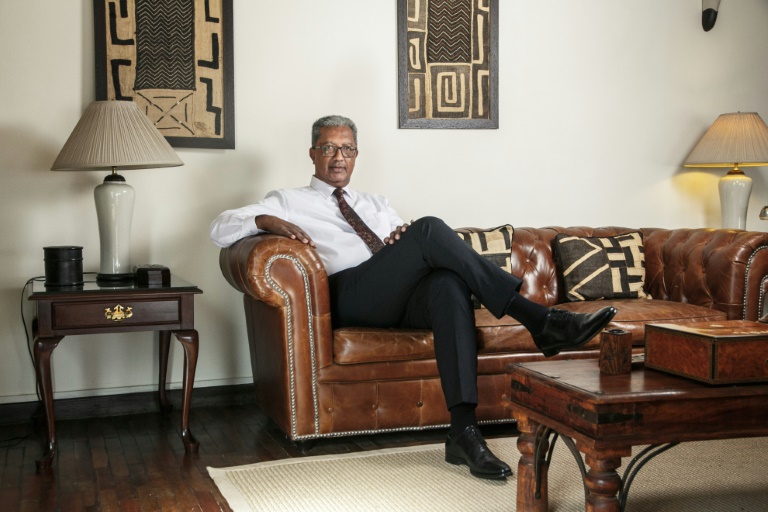
Madagascar’s President Andry Rajoelina has fired his foreign minister amid reports that his exit was sparked by the country’s vote at the UN to condemn Russia’s annexation of Ukrainian territory.

A decree signed by Rajoelina was issued on Tuesday announcing Richard Randriamandranto’s departure and his replacement “in the interim” by the defence minister. It gave no explanation for the change.

The move came after state TV channel TVM at the weekend reported that Randriamandranto, without consulting his bosses, had joined 142 other countries in the October 12 UN General Assembly vote that condemned Russia’s “illegal annexation” of four Ukrainian regions.

Madagascar had until that point followed a non-aligned position on the Ukraine war, rejecting pressure from the United States and Europe to criticise Russia for invading its neighbour.

Randriamandranto had taken the decision on the vote without consulting Rajoelina or Prime Minister Christian Ntsay, TVM said.

The controversy escalated on Monday, with some press outlets accusing Randriamandranto of insubordination.

Randriamandranto declined to answer press questions on the issue at the National Assembly on Tuesday, cautioning against “mischief-making”.

Rivo Rakotovao, in charge of coordination at the HVM opposition party, said Randriamandranto was “the fall guy, (who had been fired) to fix a diplomatic error”.

The General Assembly resolution was sparked by President Vladimir Putin’s announcement that Russia was formally annexing four partly occupied regions — Donetsk, Lugansk, Zaporizhzhia and Kherson — following hastily organised referendums denounced by Ukraine and the West as a sham.

The annexation was overwhelmingly condemned, by 143 votes to five. Thirty-five nations abstained, including China, India, South Africa and Pakistan.

Four-wicket Joseph helps West Indies topple Zimbabwe at T20 World Cup

A fiery four-wicket spell from pace bowler Alzarri Joseph helped the two-time champion West Indies storm past Zimbabwe by 31 runs to keep their Twenty20 World Cup dreams alive on Wednesday.

After being shocked by Scotland in their opening match on Monday, they had no margin for error if they wanted to stay in the hunt for a place in the Super 12 stage.

They accomplished the feat with 10 balls to spare, dismissing Zimbabwe for 122 after setting them 154 to win.

The dangerous Joseph was instrumental, taking 4-16 while Jason Holder chipped in with 3-12.

The victory means they meet Ireland on Friday with the winner going through to the next round when the big guns join the tournament, while Zimbabwe face Scotland in a winner-takes-all tie.

Skipper Nicholas Pooran won the toss and opted to bat against a Zimbabwe side without captain Craig Ervine, who suffered a “mild asthmatic attack” before the game.

They were aggressive early on, but paid the price with Kyle Mayers (13) top-edging Blessing Muzarabani to wicketkeeper Regis Chakabva, who was deputising as skipper.

Johnson Charles found his groove and unleashed in the ninth over, hitting 6-4-4 off Ryan Burl to get the scoreboard moving before Evin Lewis mistimed a heave down the ground off Sikandar Raza and was caught.

Pooran fell for seven and when Charles was comically run out for 45 in a mix-up with Rovman Powell, the West Indies were reeling.

Zimbabwe kept the pressure on. Raza trapped Shamarah Brooks lbw, and then caught and bowled Holder with the West Indies losing four wickets for 11 runs in 12 balls to leave them on 101-6. 

Powell (28) and Akeal Hosein (23 not out) steadied the ship and threw the bat in a late flourish to ensure they set a competitive target.

In reply, Zimbabwe slammed 18 in a nightmare first over from Mayers.

Undeterred, the Caribbean side made a breakthrough in the third over when Regis Chakabva dragged the ball onto his stumps off Joseph.

Joseph took his second with a lightning delivery to remove Tony Munyonga and Sean Williams fell two balls later as the pressure began building for Zimbabwe.

Allrounder Raza slammed 82 off 48 balls in Zimbabwe’s first match on Monday, but he was out for 14 and when Joseph came back in the attack he shattered the stumps of Richard Ngarava and Luke Jongwe to end any hope they had.

HRW calls for sanctions on Ethiopia to protect civilians

Human Rights Watch called Wednesday for targeted sanctions and an arms embargo against Ethiopia to help protect civilians as the country’s brutal war in Tigray intensifies.

Addis Ababa on Tuesday said it had captured three towns in the northern region, where fighting between pro-government forces and rebels has raged since August after a truce collapsed.

International concern is growing for those caught in the crossfire, with the UN describing the situation as spiralling out of control and inflicting an “utterly staggering” toll on civilians.

HRW said the stories emerging from the conflict zones were “terrifying.”

“The attacks have resulted in untold civilian casualties, including aid workers delivering food, property destruction, and large-scale displacement,” its regional director, Laetitia Bader, said in a briefing note.

Ethiopia, not just its ally Eritrea, should be subject to global sanctions over its conduct in the conflict, Bader said.

“The US and EU, as well as the Security Council, should use the appropriate tools, including targeted sanctions and an arms embargo, to protect civilians at risk,” she said.

“The suffering of civilians in Ethiopia should no longer be tolerated in the name of political expediency.”

The International Rescue Committee (IC) said a staff member was among three civilians killed in an attack last Friday in Shire, a city of 100,000 that was captured by Ethiopian and Eritrean forces after a sustained bombardment.

Witnesses described civilian casualties during days of aerial assaults over the city.

The government said it had avoided fighting in urban areas in its latest offensive, and would investigate any loss of civilian life.

But there are growing fears that civilians in cities and towns retaken by pro-government forces could be at risk of atrocities as occurred during the earlier stages of the nearly two-year war.

The advance of Ethiopian and Eritrean forces through Tigray in late 2020 and early 2021 was followed by mass murder, rape and other crimes documented by UN investigators and rights groups.

Amnesty International said that Eritrean forces at the start of the conflict in November 2020 massacred hundreds of civilians in the ancient city of Axum, where their forces are currently on the march.

US aid chief Samantha Power on Sunday said “the potential for further widespread atrocities” was alarming and “the staggering human cost of this conflict should shock the world’s conscience”.

In March, the Commission of Human Rights Experts on Ethiopia, a UN-created body, said it had found widespread violations against civilians by all sides to the conflict.

They listed a long line of horrific violations, from extrajudicial killings to intentional starvation and rape and sexual violence perpetrated on a “staggering scale”.

Untold numbers of civilians have been killed since the war began, an estimated two million people driven from their homes, while millions more are in need of aid, according to UN figures.

Chad floods leave victims in despair

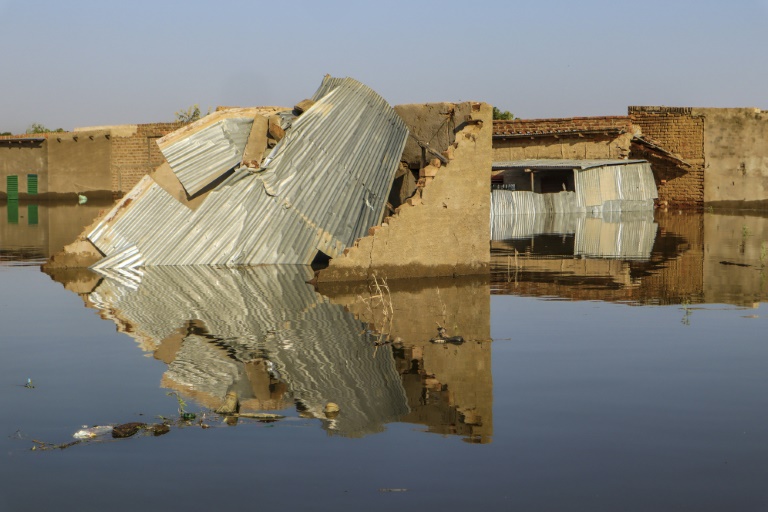
One of the poorest and most arid states in the world, the landlocked nation of Chad has been hit by exceptional floods that have affected hundreds of thousands of lives.

In the beleaguered capital of N’Djamena, a field of tents has sprung up to provide emergency shelter and victims are striving to salvage what they can from the ruins of their homes.

In Walia, a poor neighbourhood to the south of the city, dozens of homes were ravaged last week after the Chari River burst its banks following torrential rains, an AFP journalist saw.

Water levels rose by up to five metres (16.4 feet), which local officials said was unprecedented, and swept aside makeshift defences erected by desperate inhabitants.

“The flood defences gave way on Thursday at 8 am and my house was completely engulfed,” said Antoinette Nermercie, a woman in her 30s standing up to her ankles in water.

She scrabbled around to pick up pieces of corrugated sheeting, tied them together and placed them in a canoe, which would take her family and their belongings to a safer place.

“People are going around the streets in boats, stealing property from wrecked homes,” she said, explaining that looters had already taken jewellery, money and a canister of cooking gas from her house.

– ‘Under water’ –

On Monday, the side of the road leading from Walia to the capital was a desolate sight of mattresses, saucepans and crockery that people had retrieved from their homes.

“We don’t have a place to stay, our belongings are in the street,” said Marie Noelle Aziza. “I lost my money and gold. I have nothing left”.

Since the end of June, more than 340,000 people in Chad have been hit by floods, according to a provisional UN report.

In the area around Walia, more than 60,000 people have affected, according to the authorities.

“Much of the district is under water,” Mayor Mahamat Saleh Kerima said.

An elderly woman died in her home last week, but there were no other known casualties, he said.

He said 100 members of the police force had been tasked with evacuating residents.

Some people have found shelter with their families in the city centre, he said, while tents have been set up to accommodate almost 2,000 people. 

The mayor said the local authorities had distributed bags and sand to inhabitants to provide makeshift floodwalls, and the government and NGOs had also pitched in.

But this was not enough — “the water levels this year were higher than in previous years,” he said.

Ngartoim Ndojinga, a man in his sixties, said he had lived in the neighbourhood since he was a child and had never seen the river so high.

– Climate link –

Singambaye Djekounda of the National Meteorological Agency told AFP his organisation had predicted abnormal rainfall and warned of flooding in some areas.

“We asked the authorities to reinforce the dykes in N’Djamena but unfortunately, the appropriate measures weren’t taken,” Djekounda said.

The rainy season in the Sahel typically runs from June to September and routinely claims lives.

But this year, the devastation, and the rainfall, have been exceptional, say experts.

In neighbouring Niger, the poorest country in the world by the UN’s development benchmark, 192 people died, more than a quarter of a million people were affected and 30,000 homes destroyed, according to figures released on October 6.

“All our studies say that these rains can be linked with climate change,” Katiellou Gaptia Lawan, head of Niger’s national meteorological agency, told AFP.

Surfers, miners fight over South Africa's white beaches

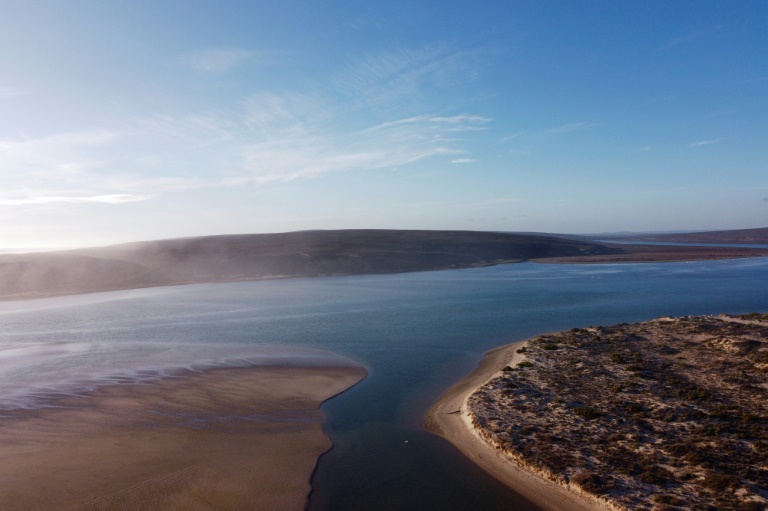
To those who live here, it’s like a little piece of heaven, boasting pink flamingos, white beaches and blue ocean waters.

Yet this stretch of South Africa’s west coast has also become a battleground, pitching mining firms against environmentalists fearful that one of nature’s last wild treasures is being bulldozed away.

Diamonds, zircon and other minerals have long been extracted in the sandy coastline near the Olifants river, which flows into the Atlantic about 300 kilometres (180 miles) north of Cape Town. 

But plans to expand the mining have angered surfers, animal lovers and residents in this remote, sparsely populated region — and they are pushing back with lawsuits and petitions. 

“It’s one of the last frontiers of the South African coastline where you can go and sort of lose yourself,” said surfer Mike Schlebach, 45, co-founder of a green campaign group, Protect the West Coast.

Mining companies say they bring much-needed jobs to the area and insist they abide by environmental rules. 

But locals contend the excavation, in which sand is extracted from beaches and the seabed and sifted for valuable minerals, is scaring off fish and tourists alike — and shrinking rather than broadening employment opportunities.

“If we are going to have sea mining, beach mining, land mining… where is the public going to have access to the coast?” questioned Suzanne Du Plessis, 61, a local resident and campaigner. 

– Dolphins, seals and excavators – 

From off-shore diamond prospecting to the construction of a new harbour, several projects threaten to scar the area, a biodiversity hotspot home to dolphins, seals and succulent plants, according to Protect the West Coast. 

Campaigners secured a small victory in June, when the operator of a mineral sand mine that had gained government approval to expand its activities to 10 more beaches, committed to additional environmental checks. 

This came on the back of a lawsuit brought by the Centre of Environment Rights (CER), another environmental group, that was settled out of court by the mine operator, Australian-owned Minerals Commodities. 

But activists remain wary. 

“CER is entitled to go back to court should the mine not comply with the provisions of the agreement,” said CER’s lawyer Zahra Omar.

The mine has already asked for more time to put together its biodiversity management plan, she said.

Minerals Commodities legal counsel Fletcher Hancock said the company was committed to conducting its operations “in an environmentally sustainable and responsible way.”

Activists and locals feel the government has left them to fend for themselves. 

Two government ministries in charge of mineral resources and environmental affairs did not respond to requests for comment. 

– Smaller catch –

In Doringbaai, a small town a few kilometres south of the Olifants estuary, a once-pristine beach where people used to walk their dogs and enjoy the sunset to the sound of crashing waves is now being torn up by heavy machinery.

Resident Peter Owies, 54, said locals were blindsided when mining started earlier this year.

“It was quite a surprise and shock to us,” he said. 

A meeting requested by the community to discuss the mining plans was never held, with the required consultation happening only online, said Du Plessis, the campaigner. 

Preston Goliath, a 46-year-old fisherman, said his catch had dwindled after the mining work began and the same is true for dozens of others. 

“Because they were pumping for diamonds… the fish moved away and our richest (fisheries) bank is now empty,” said Goliath.

Some residents want the beach mining to stop.

But mine owner Trans Hex said all its environmental papers are in order, adding it has held mining rights for the area since 1991.

With dozens more mining permits waiting for approval, Schlebach of Protect the West Coast said he hoped the government would rethink its strategy for the region.

“There’s a whole array of new industries that could have a profoundly positive effect on the people that live on that coastline like algae farming,” Schlebach said. 

“We’ve got to show them that there’s a much better way.

Activists here are optimistic, emboldened by victories scored elsewhere by environmentalists.

On September 1, activists claimed victory in a court case against energy giant Shell — despite the government’s support of the company — resulting in the ban of seismic exploration off the touristic Indian Ocean coast.

Gold mining threatens 'forest giraffe' in DR Congo

Gold mining in a Democratic Republic of Congo national park is threatening the okapi, a stripy-legged relative of the giraffe, civil society groups warned on Tuesday.

They called for a halt to the “rapidly expanding” mining operation in the Okapi Wildlife Reserve, a UNESCO World Heritage Site in the northeast of the country.

The endangered okapi, also called the forest giraffe, is only found in this region of the DRC.

NGOs, lawyers and scientists urged the government to revoke a mining concession and protect the “unique forest ecosystem and the local communities that depend on it”.

“If the DRC government acts now, this unique World Heritage Site can still be saved”, they said in a statement from the Congolese Alert Network for the Environment and Human Rights (ACEDH) organisation.

“These miners are literally eating the reserve out of its wildlife by hunting these animals for food,” said Gabriel Nenungo, a coordinator of geologists in Ituri province.

“There is almost no wildlife left around the mine itself, and wildlife numbers are massively reduced around mining towns. There have even been cases of armed actors trafficking okapi skins and elephant ivory in and around the mines.”

The wildlife reserve is spread over nearly 14,000 square kilometres (5,400 square miles) and houses several endangered species.

Close Bitnami banner
Bitnami