Africa Business

Japan-based Springboks available for England Test

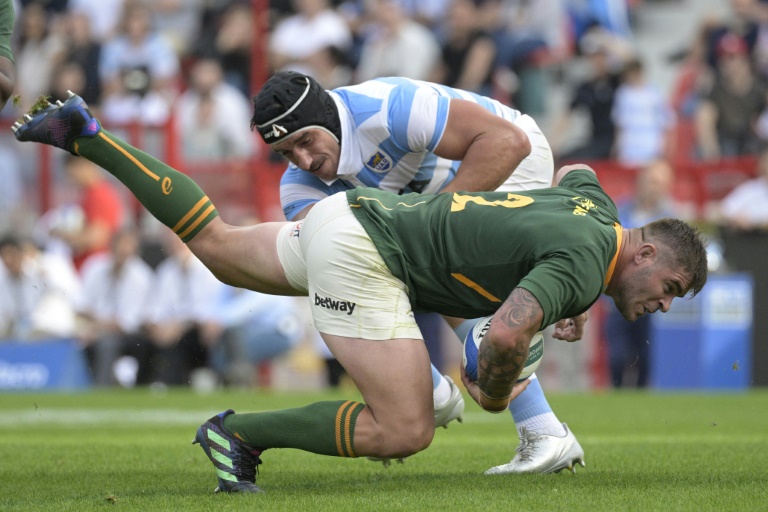
Rugby World Cup title-holders South Africa will be able to use their Japan-based Springboks against England at Twickenham on November 26, coach Jacques Nienaber said on Tuesday.

The rematch of the 2019 World Cup final in Yokohama falls outside the Test window, but Japanese clubs have agreed to extend the release period for nine Springboks. 

Those based in Japan and likely to tour Europe include hooker Malcolm Marx, lock Lood de Jager and loose forwards Franco Mostert, Kwagga Smith and Pieter-Steph du Toit.

Scrum-half Faf de Klerk, centres Jesse Kriel and Damian de Allende and full-back Willie le Roux are the other current Springboks who play in Japan. 

“I would like to extend a sincere thank you to the Japanese clubs for their co-operation in granting us permission to select the players for the England Test,” said Nienaber.

“We are building momentum toward the World Cup and the match against England plays a vital role in that process as they are among the leading title contenders.”

Nienaber added that Springboks based in Britain, Ireland or France would be released after South Africa meet Italy in Genoa on November 19.

This decision would rule out Jasper Wiese from Leicester Tigers and Duane Vermeulen from Ulster, who have been vying for the No. 8 shirt in the green and gold starting line-up.

Vermeulen, who will be 37 when South Africa defend the Rugby World Cup in France next year, has been hit by injuries, enabling Wiese, 26, to be a regular Test starter this year. 

South Africa face a daunting European tour, confronting Ireland in Dublin on November 5 and France in Marseille on November 12 before tackling Italy and England.

Ireland, France and England are ranked first, second and fifth respectively with South Africa third and New Zealand fourth.

South Africa are also sending a Springboks reserve side to Europe for matches against Munster in Cork on November 10 and Bristol Bears in the west England city on November 17.

Nienaber said a 54-man squad for the four Tests and two tour matches will be announced on October 28.

The coach has called up 26 players — 17 local and nine based in Japan — for a three-day training camp from Sunday in the university town of Stellenbosch, east of Cape Town.

South Africa are in Pool B at the World Cup with Ireland, Scotland, Tonga and Romania and the section winners and runners-up advance to the quarter-finals.

Tunisians protest over missing migrants

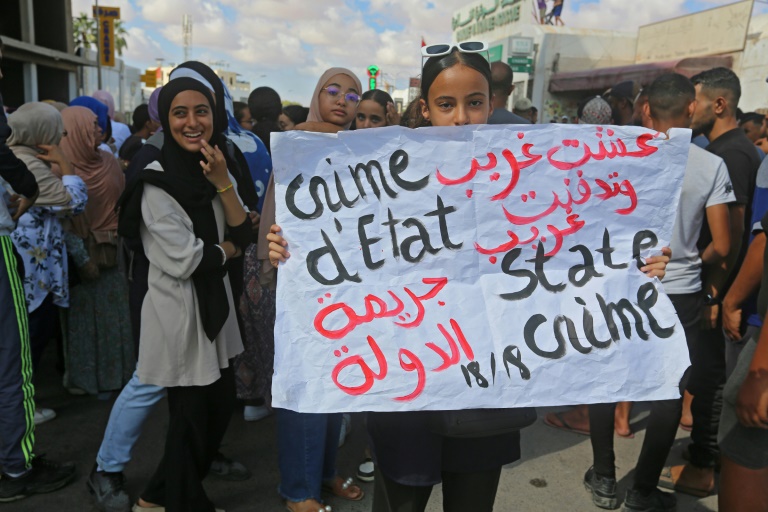
Thousands of Tunisians demonstrated and a general strike shut down the coastal city of Zarzis Tuesday, to demand a renewed search for relatives who went missing during a September migration attempt.

The city has been rocked by days of protests also fuelled by anger over the burial of four people, suspected of being missing Tunisians, in a nearby cemetery for foreign migrants — allegedly without efforts to identify them.

“We want to know the truth,” local activist Ezzedine Msalem told AFP, denouncing “a state crime perpetrated against the inhabitants of Zarzis”.

Tuesday’s protests come four weeks after 18 Tunisians boarded a boat headed for Italy, joining tens of thousands of clandestine migrants who have attempted to reach Europe in recent years — many of them Tunisians exhausted by a chronic economic crisis.

Zarzis residents have been angered by reports that authorities buried four bodies found at sea — believed to be passengers from the boat — in a nearby cemetery for foreign migrants, mostly from sub-Saharan Africa, whose bodies regularly wash up along the coast after similar tragedies.

Those bodies have since been exhumed for identification, while another two bodies believed to be Tunisians have been found.

That would leave 12 passengers from the boat still missing.

Media reports said as many as 4,000 protesters, including relatives of the missing, marched along the city’s main street.

Many held up pictures of relatives or signs saying “we want the truth”.

– Government inquiry –

The powerful UGTT trade union federation voiced support for the strike and demanded an inquiry into the rescue effort and how the bodies were buried.

Shops and government offices were closed, along with health services, except for emergency cases.

On Tuesday, President Kais Saied asked Justice Minister Leila Jaffel to open an investigation “so that Tunisians can know the full truth and who was behind these tragedies”.

The Tunisian Human Rights League said authorities had “not devoted the necessary resources to search and rescue operations in a timely way” and called for an inquiry into the burials.

The North African country has a long Mediterranean coast, in places just 130 kilometres (80 miles) from the Italian island of Lampedusa.

Despite generally favourable weather from spring to autumn, the voyages on barely seaworthy boats often end in tragedy.

Earlier this month, AFP journalists saw the coastguard intercepting migrants aboard overcrowded boats.

Tunisian authorities intercepted nearly 200 migrants attempting to reach Europe over the weekend, the defence ministry said Tuesday.

According to official figures, more than 22,500 migrants have been intercepted since the start of the year, around half of them from sub-Saharan Africa.

Ethiopia says govt forces seize three towns in Tigray

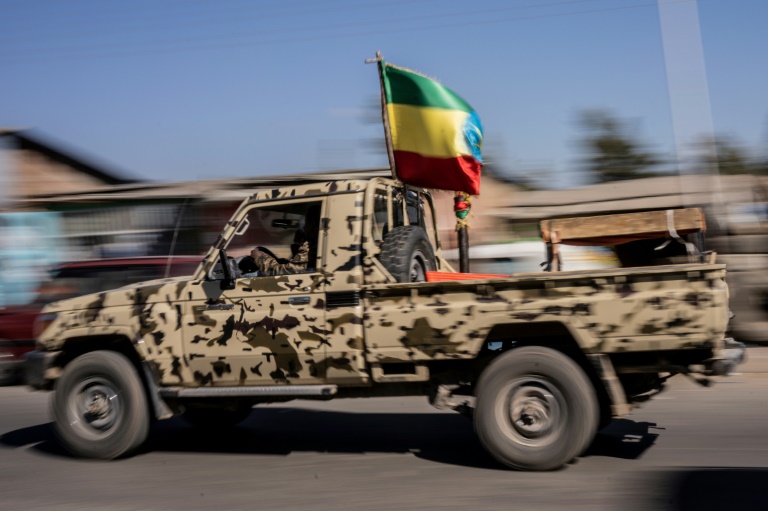
Ethiopia said Tuesday its forces had seized three towns in Tigray, the latest major battleground shift in the brutal war, as the UN warned the situation was spiralling out of control with an “utterly staggering” toll on civilians.

International calls for a halt to escalating violence in Tigray have been mounting since a failed attempt by the African Union earlier this month to bring the warring sides to the negotiating table.

“The ENDF (Ethiopian National Defence Force) has taken control of the towns of Shire, Alamata and Korem without fighting in urban areas,” the government said in a statement.

It was the latest twist in the two-year conflict pitting federal forces and their allies against the Tigray People’s Liberation Front (TPLF) that has been marked by several dramatic about-turns.

Tuesday’s announcement by Prime Minister Abiy Ahmed’s government was issued after the Tigray Central Command said the strategic city of Shire and other areas had fallen to “invading forces”.

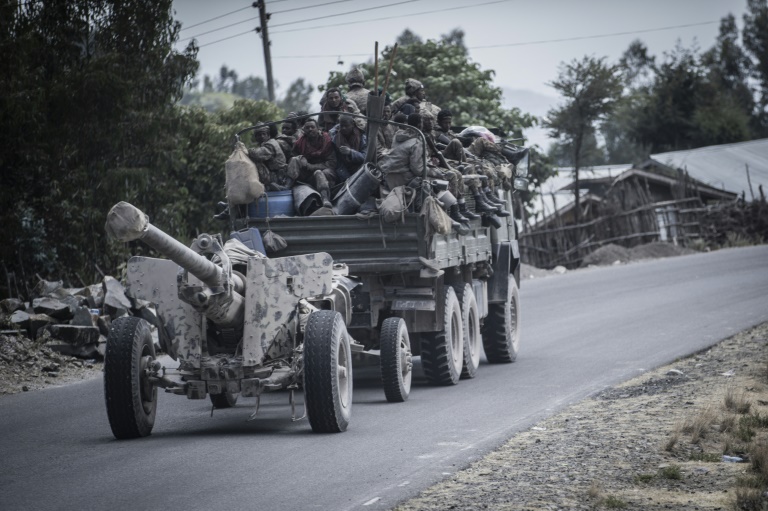
Troops from Ethiopia and neighbouring Eritrea had been waging an offensive near Shire for several days, triggering international alarm over the human cost of the renewed combat in Tigray.

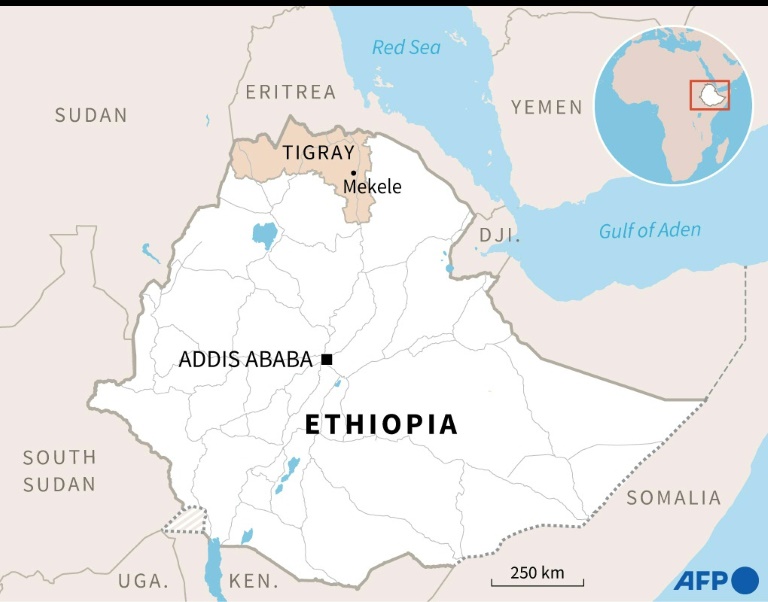
Shire, home to about 100,000 people before the conflict began, is around 300 kilometres (180 miles) by road northwest of Tigray’s capital Mekele. Korem and Alamata lie about 180 kilometres south of Mekele.

The Tigrayan statement said artillery strikes by their rivals had killed or injured many civilians, and sent hundreds of thousands fleeing.

It is not possible to verify such claims as Tigray is under a communications blackout and access to northern Ethiopia is restricted.

– ‘Alarming levels’ of violence –

Fighting resumed between pro-government forces and the TPLF in late August, with both blaming the other for shattering a five-month truce that had allowed limited amounts of aid into Tigray and raised a glimmer of hope for peace.

On Monday, UN Secretary General Antonio Guterres warned that the situation was “spiralling out of control”.

“Violence and destruction have reached alarming levels,” he said, calling for the “immediate withdrawal and disengagement” of Eritrean forces.

The European Union, the United States and the AU have also issued urgent appeals for a halt to the fighting, which is threatening the stability of the continent’s second most populous nation and the wider Horn of Africa region.

Washington and Brussels have voiced particular concern about the presence of troops from Eritrea, whose forces were accused of brutal atrocities during the early phase of the war that first erupted in November 2020.

Over two years, untold numbers of civilians have been killed, an estimated two million people driven from their homes while millions more are in need of aid, according to UN figures.

Tigray and its six million people are virtually cut off from the outside world, facing dire shortages of fuel, food and medicines and lacking basic services, including communications and electricity.

– ‘Risk of escalation’ –

Abiy’s government had said in a statement Monday it was committed to AU-led peace talks, without addressing a call by the bloc for a ceasefire.

But it accused the TPLF of colluding with unnamed “hostile foreign powers” and said it would pursue “defensive measures” including taking control of all airports and other federal sites in the region.

On Tuesday, Abiy’s national security adviser Redwan Hussein insisted on Twitter that the conflict was not “spiralling… Now it’s just being extinguished and degenerating”.

But the UN’s new high commissioner for human rights, Volker Turk, warned of a “significant risk of escalation” as more troops and soldiers were mobilised. 

Air and artillery strikes in Tigray since August have inflicted an “utterly staggering” toll on civilians, he said in a statement issued in Geneva. 

UN human rights office spokesperson Ravina Shamdasani said since August 31 the agency had documented at least 31 civilians killed, including children, and 73 wounded in 14 air strikes by the Ethiopian air force in Tigray.

Among those killed in a recent attack was a staff member of the International Rescue Committee aid group, who was part of a team delivering humanitarian assistance to pregnant women and malnourished children.   

“Under international law, indiscriminate attacks or attacks deliberately targeting civilians or civilian objects amount to war crimes,” Turk said.

Almost 40,000 inhabitants of the Afar region have been displaced recently by fighting on the border with Tigray, according to the latest situation report by the UN’s humanitarian agency OCHA.

Fallen African giants Mazembe to face South African rookies Royal

Former Club World Cup runners-up TP Mazembe will take a first step toward becoming African club giants again when they face South African side Royal AM during November.

The teams, who have vastly different international experience, were paired when the CAF Confederation Cup play-offs draw was made in Cairo on Tuesday.

Based in the southern Congolese city of Lubumbashi, Mazembe have been competing in Africa since 1967, winning 11 titles, including the marquee CAF Champions League five times.

Royal were promoted to the South African top flight only last year and are making their first appearance in a continental competition.

Without a CAF title since 2016, Mazembe started this season in the Champions League, but were relegated to the Confederation Cup after a shock loss to Ugandan side Vipers last weekend.

The Congolese reacted by firing French coach Franck Dumas and putting former Mazembe star Pamphile Mihayo in charge a third time.

Mihayo aims to win the Confederation Cup a third time after successes in 2016 and 2017 before Moroccan clubs became dominant, winning four finals and finishing runners-up in the other. 

Rookies Royal upset Zesco United of Zambia in the second Confederation Cup qualifying round after a routine victory over Mbabane Highlanders of Eswatini.

All three Royal goals in Africa came from veterans with Ruzaigh Gamildien, 33, scoring twice and Mozambican Elias ‘Domingues’ Pelembe, 38, once.

– Nigerians to face Libyans –

To score against Mazembe, who lost to Inter Milan in the 2010 Club World Cup final, they must pierce a defence likely to include DR Congo international Issama Mpeko, 33.

The other South African hopefuls were paired with north African clubs — Marumo Gallants meet Al Ahly Tripoli of Libya while Cape Town City face USM Alger of Algeria.

Nigerian contenders Rivers United and Plateau United, both Champions League losers in the final qualifying round, drew Libyan opponents.  

Rivers play Al Nasr and Plateau come up against Al Akhdar in the first legs on November 2, with the return matches seven days later.

Title-holders Renaissance Berkane of Morocco continue a quest for a record-equalling third Confederation Cup title against US Monastir of Tunisia.

Draw

Rail Kadiogo (BUR) or V Club (COD) v St Eloi Lupopo (COD)

Royal Leopard (ESW) v Real Bamako (MLI)

TP Mazembe (COD) v Royal AM (RSA)

Primeiro Agosto (ANG) v Future (EGY)

ASEC Mimosas (CIV) v SC Gagnoa (CIV)

Djoliba (MLI) v FAR Rabat (MAR)

Al Ahly Tripoli (LBA) v Marumo Gallants (RSA)

ASKO Kara (TOG) v CS Sfaxien (TUN)

Young Africans (TAN) v Club Africain (TUN)

Flambeau Centre (BDI) v DC Motema Pembe (COD)

Rivers Utd (NGR) v Al Nasr (LBA)

US Monastir (TUN) v Renaissance Berkane (MAR, holders)

Cape Town City (RSA) v USM Alger (ALG)

Nigelec (NIG) v Pyramids (EGY)

La Passe (SEY) v Diables Noirs (CGO)

Plateau Utd (NGR) v Al Akhdar (LBA)

First legs: Nov 2, second legs: Nov 9

Note: The 16 winners qualify for group stage from Feb 12

Ethiopia says govt forces seize three towns in Tigray

Ethiopia said on Tuesday its forces had seized three towns in war-stricken Tigray in an advance that coincides with UN warnings of a spiralling conflict and an “utterly staggering” toll on civilians.

International calls for a halt to the escalating violence in Tigray have been mounting since a failed attempt by the African Union earlier this month to bring the warring sides to the negotiating table and find a peaceful solution to the near two-year conflict.

“The ENDF (Ethiopian National Defence Force) has taken control of the towns of Shire, Alamata and Korem without fighting in urban areas,” the government said in a statement, adding that it would work with humanitarian agencies to provide aid to the areas now under army control.

The announcement was issued by Prime Minister Abiy Ahmed’s government after the rebel Tigray People’s Liberation Front (TPLF) said the strategic city of Shire and other areas had fallen to “invading forces”.

Troops from Ethiopia and neighbouring Eritrea had been waging an offensive near Shire for several days, with international alarm over the human cost of the renewed combat in Tigray.

Shire, home to about 100,000 people before the conflict, lies around 300 kilometres (180 miles) by road northwest of Tigray’s capital Mekele and about 50 kilometres from the border with Eritrea.

The Tigrayan statement said artillery strikes by the rival forces in areas they reached had killed or injured many civilians, and sent hundreds of thousands fleeing.

It is not possible to verify battlefield claims as Tigray is under a communications blackout and access to northern Ethiopia is restricted for journalists.

– ‘Alarming levels’ of violence –

Fighting resumed between pro-government forces and the TPLF in late August, with both sides blaming the other for shattering a five-month truce that had allowed limited amounts of aid into Tigray and raised a glimmer of hope for peace.

On Monday, UN Secretary General Antonio Guterres warned that the situation was “spiralling out of control”.

“Violence and destruction have reached alarming levels,” he said, calling for the “immediate withdrawal and disengagement” of Eritrean forces.

The European Union, the United States and the AU have also issued urgent appeals for a halt to the fighting, which is threatening the stability of the continent’s second most populous nation and the wider Horn of Africa region.

Washington and Brussels have also voiced particular concern about the presence of troops from Eritrea, whose forces were accused of brutal atrocities during the early phase of the war that first erupted in November 2020.

In two years of war, untold numbers of civilians have been killed, an estimated two million people driven from their homes while millions more are in need of aid, according to UN figures.

Tigray and its six million people are virtually cut off from the outside world, facing dire shortages of fuel, food and medicines and lacking basic services, including communications and electricity.

– ‘Risk of escalation’ –

Abiy’s government had said in a statement Monday it was “committed to the peaceful resolution of the conflict through the AU-led peace talks,” without addressing a call by the bloc for a ceasefire.

But it also accused the TPLF of colluding with unnamed “hostile foreign powers” and said it would pursue “defensive measures” to protect Ethiopia’s sovereignty and territorial integrity.

“It is thus imperative that the Government of Ethiopia assumes immediate control of all airports, other federal facilities, and installations in the region.”

On Tuesday, Abiy’s national security adviser Redwan Hussein insisted on Twitter that the conflict was not “spiralling… Now it’s just being extinguished and degenerating”.

But the UN’s new high commissioner for human rights, Volker Turk, warned of a “significant risk of escalation” as more troops and soldiers were mobilised. 

Air and artillery strikes in Tigray since August have inflicted an “utterly staggering” toll on civilians, he said in a statement issued in Geneva. 

Among those killed in recent incidents was a staff member of the International Rescue Committee aid group, who was part of a team delivering humanitarian assistance to pregnant women and malnourished children.   

“Under international law, indiscriminate attacks or attacks deliberately targeting civilians or civilian objects amount to war crimes,” Turk warned.

UN says Somalia famine risk worst in half a century

Somalia faces famine on a scale last seen half a century ago, the United Nations Children’s Fund (Unicef) said Tuesday as it set a new target of more than $2 billion in funding needs.

“Things are bad and every sign indicates that they are going to get worse,” Unicef spokesman James Elder told reporters via video link from the drought-stricken Horn of Africa nation.

“Without greater action and investment, we are facing the death of children on a scale not seen in a half a century.”

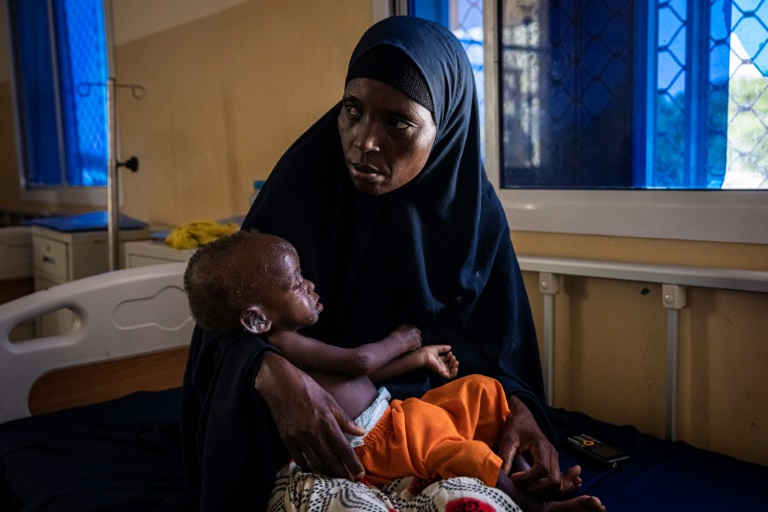
In August, 44,000 children were admitted to health establishments with severe acute malnutrition, a condition that means a child is up to 11 times likelier to die from diarrhoea and measles than a well-fed counterpart, Elder said.

“That is a child per minute,” said Elder. “A child whose mother has walked days to get her child to help. A child whose body is fighting to survive. A child whose life hangs in the balance.”

Somalia has suffered four successive failures in its rainy seasons since the end of 2020, and there are fears that a fifth failure is now underway.

An estimated 7.8 million people — roughly half of the population — are now affected by drought, of whom 213,000 are at high risk of famine, according to the UN.

“When people speak of the crisis facing Somalia today, it has become common for frightful comparisons to be made with the famine of 2011, when 260,000 people died,” said Elder.

“However, everything I am hearing on the ground -– from nutritionists to pastoralists -– is that things today actually look worse. In 2011, after three failed rains, the affected population was half of what it is now, and the overall conditions -– rain and harvest — were on the mend. 

“Today, it’s been four failed rains, the forecast for the fifth rains is looking pretty grim, and the affected population is twice the size of 2011.”

A spokesman for the UN’s Office for the Coordination of Humanitarian Affairs (OCHA) in Geneva said estimates of the needs for fighting hunger in Somalia had soared since the start of the year, from $1.46 billion to $2.26 billion, of which 80 percent was required to fight the impact of drought.

The revised plan would reach 7.6 million people, compared with the earlier target of 5.5 million, said spokesman Jens Laerke.

“Famine is projected in Baidoa and Burhakaba districts in Bay Region between this month and December if humanitarian assistance does not reach people most in need,” he warned.

Before the revision, contributions accounted for 72 percent of financial needs, a funding figure that is relatively high for humanitarian crises.

But the new estimate means that needs are only 45 percent met, Laerke said.

Ethiopian and Eritrean forces seize key Tigrayan city, say rebels

Tigrayan rebels said Tuesday that Ethiopian and Eritrean forces had seized a key Tigrayan city, a move coinciding with UN warnings of a spiralling conflict and an “utterly staggering” toll on civilians.

“These invading forces have taken control for the moment of some areas including Shire,” the Tigray Central Command said in a statement, adding that the rebels were in a “life or death” struggle.

It said the joint forces had entered Shire, a strategic city of about 100,000 people which lies about 300 kilometres (180 miles) by road northwest of the Tigrayan capital Mekele, on Monday.

“The enemies are massacring our people with heavy weaponry/armaments in the areas it invades,” the statement said.

It is not possible to verify battlefield claims as Tigray is under a communications blackout and access to northern Ethiopia is restricted for journalists.

The conflict began in November 2020, when Ethiopian Prime Minister Abiy Ahmed sent troops into Tigray after accusing the region’s ruling Tigray People’s Liberation Front (TPLF) of attacking federal army camps. 

The TPLF had dominated Ethiopia’s ruling political alliance for decades before Abiy took power in 2018 and sidelined the party.

Abiy’s military campaign has received the support of Eritrea, with which Ethiopia was at odds until a rapprochement that earned Abiy the 2019 Nobel Peace Prize.

Tigray and its six million people are virtually cut off from the outside world, facing dire shortages of fuel, food and medicines and lacking basic services, including communications and electricity.

An estimated two million people have been driven from their homes in northern Ethiopia and millions more are in need of aid, according to UN figures, with reports of widespread atrocities including massacres and rape. 

The death toll remains unknown. 

Fighting resumed between the warring sides in August, shattering a five-month truce that had allowed limited amounts of aid into the battered region.

Both sides blamed the other for firing first.

– UN warnings –

On Monday, UN Secretary General Antonio Guterres warned that the situation was “spiralling out of control”.

“Violence and destruction have reached alarming levels,” he said, calling for the “immediate withdrawal and disengagement” of Eritrean forces.

The European Union (EU), the United States and African Union (AU) have also issued urgent appeals for a halt to the fighting.

Abiy’s government said in a statement Monday it was “committed to the peaceful resolution of the conflict through the AU-led peace talks,” without addressing the bloc’s call for a ceasefire the day before.

But the government also accused the TPLF of colluding with unnamed “hostile foreign powers.”

It said it would also pursue “defensive measures” to protect Ethiopia’s sovereignty and territorial integrity from internal and external threats.

“It is thus imperative that the Government of Ethiopia assumes immediate control of all airports, other federal facilities, and installations in the region,” the government said.

The UN’s new high commissioner for human rights, Volker Tuerk, warned Tuesday of a “significant risk of escalation” as more troops and soldiers were mobilised in the conflict. 

Air and artillery strikes in Tigray since August have inflicted an “utterly staggering” toll on civilians, he said in a statement issued in Geneva. 

Among those killed in recent incidents was a staff member of the NGO International Rescue Committee, who was part of a team delivering humanitarian assistance to women and children.   

“Under international law, indiscriminate attacks or attacks deliberately targeting civilians or civilian objects amount to war crimes,” Tuerk warned.

Mountainous Lesotho finds gold in trout fish farming

It’s harvest time in Lejone, a small village nestling in mountains in southern Africa more than two thousand metres above sea level.

The yield is not grain or fruit, but rainbow trout — the bounty from an undulating river at the foot of the peaks of Lesotho.

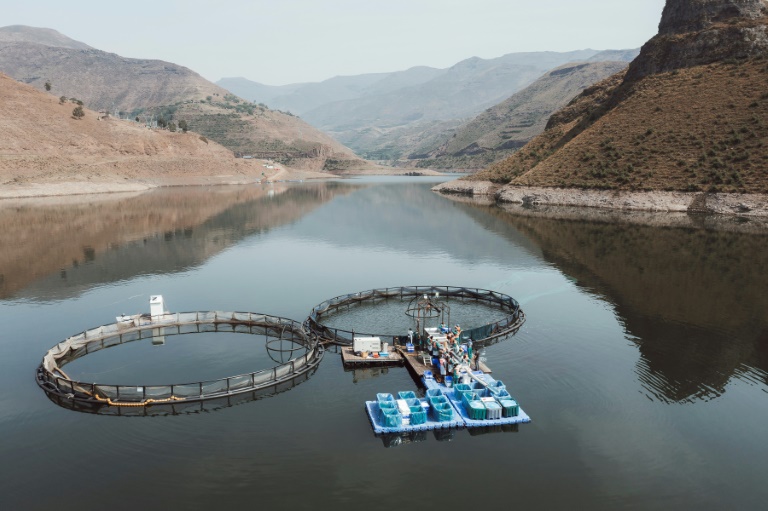
Fishermen haul nets bulging with trout onto a floating platform.

The fish are killed and put on ice, the first step on their journey to dinner tables in neighbouring South Africa.

The settlement is home to one of Lesotho’s two professional fish farms — pioneering ventures in the poor landlocked kingdom.

Stephen Phakisi, 59, launched Katse Fish Farms with two partners in 2005.

Today, he chuckles at how the trio leapt into the business with meagre knowledge about some of its unknowns, including the best feed for fattening fish quickly.

“For five years, it was totally uneconomical,” Phakisi says.

He recalls how he once found a shoal of fish dead and belly-up in the water, while another time a full cargo of imported fingerlings died on a 16-hour drive from Cape Town. 

Today, the company is profitable, with a yearly output of 800 tonnes of fish, which is sold at about $4 a kilogram. 

It supplies a few local restaurants, where the trout is usually pan-fried in butter for a few minutes and served with a side dish of kale and potato chips or rice.

But the bulk of its production lands on the shelves of high-end supermarkets in neighbouring South Africa, where a vacuum-packed one-kilo bag can cost up to $50. 

– ‘Heads and bones’ –

Trout farming in Lesotho has grown on the back of another of the mountain country’s most famous exports: water. 

South Africa gets much of its water from its neighbour, which has dammed several of its waterways over the past three decades. 

The dams have widened riverbeds, creating inlets and basins that are ideal for trout farming. 

Katse Fish Farms lies more than 2,000 metres (6,500 feet) above sea level on the Malibamatso River, upstream from the giant Katse Dam reservoir that supplies South Africa’s capital Pretoria and the largest city, Johannesburg.

Fish farming currently accounts for less than 0.1 percent of Lesotho’s $2 billion GDP.

Locals say they have always eaten salted, sun-dried freshwater fish. And young boys sell fresh catch to passing motorists.

But as dam construction continues the country has the potential “to become the regional leader in aquaculture,” according to the Lesotho National Development Corporation.

In this country of just over two million people, who rank among the poorest in the world, few seem to be benefiting so far from the water boom. 

“We are selling water to South Africa but we have no water to our homes,” says Joshua Sefali, a village leader in Lejone.

Many of the village’s stone houses with thatched roofs have no mains water or electricity.  

Large swathes of land were flooded after dams went up. 

Some people lost their homes and access to farmland, receiving only small compensation in return. 

Machaka Khalala, 31, said she received about $165 when the field where she used to grow corn and spinach was submerged. 

Now she makes a living selling “fat cakes,” a local doughnut.

But that’s often not enough to make ends meet.

A cap on her head, Khalala was among dozens of people queueing up in the cold, a bucket in hand, on a mountain roadside.

Here, Lesotho’s other fish farm hands out leftovers every week — “the heads and backbones,” Khalala said. 

UN chief warns Ethiopia war 'spiralling out of control'

UN chief Antonio Guterres warned Monday that the situation in Ethiopia was “spiralling out of control” as fighting raged in the north of the country and the government vowed to seize control of airports and other sites in Tigray.

International alarm has been mounting over the upsurge in combat in Tigray, where Ethiopian forces and troops from neighbouring Eritrea have stepped up an offensive near the city of Shire.

“The situation in Ethiopia is spiralling out of control. Violence and destruction have reached alarming levels,” Guterres told reporters at the United Nations.

“Hostilities in the Tigray region of Ethiopia must end now,” he said, also calling for the “immediate withdrawal and disengagement” of Eritrean forces.

The EU and US also issued urgent appeals for a halt to the fighting, following on the heels of a call from the African Union for an immediate and unconditional truce.

Since the war began almost two years ago between federal forces and the Tigray People’s Liberation Front (TPLF), untold numbers of civilians have been killed, two million people have been driven from their homes and millions more are in need of aid.

AU Commission chair Moussa Faki Mahamat on Sunday urged the rivals to “recommit to dialogue” after both sides accepted an invitation to peace talks in South Africa that later failed to take place.

– ‘Defensive measures’ –

Fighting resumed between the warring sides in August, shattering a five-month truce that had allowed limited amounts of aid into Tigray, with both sides blaming the other for firing first.

Prime Minister Abiy Ahmed’s government said in a statement Monday it was “committed to the peaceful resolution of the conflict through the AU-led peace talks,” without addressing the ceasefire call.

But it said it would also pursue “defensive measures” to protect Ethiopia’s sovereignty and territorial integrity from internal and external threats, accusing the TPLF of colluding with unnamed “hostile foreign powers”.

“It is thus imperative that the Government of Ethiopia assumes immediate control of all airports, other federal facilities, and installations in the region.”

The authorities in Tigray had said Sunday they were “ready to abide by an immediate cessation of hostilities” and called on the international community to press the government to come to the table.

Reacting to the GCS statement, TPLF spokesman Getachew Reda told AFP in a message: “It’s a clear indication that the government and its ally will do everything to carry through their genocidal intent against the people of Tigray.”

Tigray and its six million people are virtually cut off from the outside world, facing dire shortages of fuel, food and medicines and lacking basic services such as communications, electricity and banking. 

– ‘Indiscriminate targeting of civilians’ – 

Civilian casualties have been reported in heavy shelling as Ethiopian and Eritrean troops wage an offensive near Shire, a city of about 100,000 people that lies about 140 kilometres (90 miles) from Tigray’s capital Mekele.

The International Rescue Committee said one of its aid workers was among three civilians killed in an attack in Shire on Friday while delivering humanitarian aid to women and children.

The US State Department urged Ethiopia and Eritrea to immediately halt their offensive, also calling for Eritrea to withdraw and for Tigrayan rebels to “cease any additional provocations”.

“We continue to be deeply concerned over the reports of increasing violence, the loss of life, the indiscriminate targeting of civilians,” spokesman Vedant Patel told reporters.

EU foreign policy chief Josep Borrell issued a similar plea, saying in a statement he “deplores the dramatic escalation of violence and the irreparable cost to human life”.

US aid chief Samantha Power on Sunday warned “the risk of additional atrocities and loss of life is intensifying” around Shire, and accused Ethiopian and Eritrean forces of indiscriminate attacks.

Britain’s minister for Africa, Gillian Keegan, said on Twitter she was “appalled” by Friday’s attack, lamenting that it was the 24th aid worker killed in Tigray since the start of the conflict. 

Addis Ababa said it “deeply regrets any harm that might have been inflicted on civilians, including humanitarian personnel”, adding it would investigate such incidents.

UN investigators have accused all parties to the conflict of atrocities that could amount to war crimes or crimes against humanity.

Access to northern Ethiopia is restricted for journalists, making it often impossible to verify the situation on the ground.

Abiy, who won the Nobel Peace Prize in 2019 for his rapprochement with Eritrea, sent troops into Tigray in November 2020 after accusing the TPLF of attacking federal army camps.

The TPLF had dominated Ethiopia’s ruling political alliance for decades before Abiy took power in 2018 and sidelined the party.
UN chief warns Ethiopia war 'spiralling out of control'

UN chief Antonio Guterres warned Monday that the situation in Ethiopia was “spiralling out of control” as fighting raged in the north of the country and the government vowed to seize control of airports and other sites in Tigray.

International alarm has been mounting over the upsurge in combat in Tigray, where Ethiopian forces and troops from neighbouring Eritrea have stepped up an offensive near the city of Shire.

“The situation in Ethiopia is spiralling out of control. Violence and destruction have reached alarming levels,” Guterres told reporters at the United Nations.

“Hostilities in the Tigray region of Ethiopia must end now,” he said, also calling for the “immediate withdrawal and disengagement” of Eritrean forces.

The EU and US also issued urgent appeals for a halt to the fighting, following on the heels of a call from the African Union for an immediate and unconditional truce.

Since the war began almost two years ago between federal forces and the Tigray People’s Liberation Front (TPLF), untold numbers of civilians have been killed, two million people have been driven from their homes and millions more are in need of aid.

AU Commission chair Moussa Faki Mahamat on Sunday urged the rivals to “recommit to dialogue” after both sides accepted an invitation to peace talks in South Africa that later failed to take place.

– ‘Defensive measures’ –

Fighting resumed between the warring sides in August, shattering a five-month truce that had allowed limited amounts of aid into Tigray, with both sides blaming the other for firing first.

Prime Minister Abiy Ahmed’s government said in a statement Monday it was “committed to the peaceful resolution of the conflict through the AU-led peace talks,” without addressing the ceasefire call.

But it said it would also pursue “defensive measures” to protect Ethiopia’s sovereignty and territorial integrity from internal and external threats, accusing the TPLF of colluding with unnamed “hostile foreign powers”.

“It is thus imperative that the Government of Ethiopia assumes immediate control of all airports, other federal facilities, and installations in the region.”

The authorities in Tigray had said Sunday they were “ready to abide by an immediate cessation of hostilities” and called on the international community to press the government to come to the table.

Reacting to the GCS statement, TPLF spokesman Getachew Reda told AFP in a message: “It’s a clear indication that the government and its ally will do everything to carry through their genocidal intent against the people of Tigray.”

Tigray and its six million people are virtually cut off from the outside world, facing dire shortages of fuel, food and medicines and lacking basic services such as communications, electricity and banking. 

– ‘Indiscriminate targeting of civilians’ – 

Civilian casualties have been reported in heavy shelling as Ethiopian and Eritrean troops wage an offensive near Shire, a city of about 100,000 people that lies about 140 kilometres (90 miles) from Tigray’s capital Mekele.

The International Rescue Committee said one of its aid workers was among three civilians killed in an attack in Shire on Friday while delivering humanitarian aid to women and children.

The US State Department urged Ethiopia and Eritrea to immediately halt their offensive, also calling for Eritrea to withdraw and for Tigrayan rebels to “cease any additional provocations”.

“We continue to be deeply concerned over the reports of increasing violence, the loss of life, the indiscriminate targeting of civilians,” spokesman Vedant Patel told reporters.

EU foreign policy chief Josep Borrell issued a similar plea, saying in a statement he “deplores the dramatic escalation of violence and the irreparable cost to human life”.

US aid chief Samantha Power on Sunday warned “the risk of additional atrocities and loss of life is intensifying” around Shire, and accused Ethiopian and Eritrean forces of indiscriminate attacks.

Britain’s minister for Africa, Gillian Keegan, said on Twitter she was “appalled” by Friday’s attack, lamenting that it was the 24th aid worker killed in Tigray since the start of the conflict. 

Addis Ababa said it “deeply regrets any harm that might have been inflicted on civilians, including humanitarian personnel”, adding it would investigate such incidents.

UN investigators have accused all parties to the conflict of atrocities that could amount to war crimes or crimes against humanity.

Access to northern Ethiopia is restricted for journalists, making it often impossible to verify the situation on the ground.

Abiy, who won the Nobel Peace Prize in 2019 for his rapprochement with Eritrea, sent troops into Tigray in November 2020 after accusing the TPLF of attacking federal army camps.

The TPLF had dominated Ethiopia’s ruling political alliance for decades before Abiy took power in 2018 and sidelined the party.
Close Bitnami banner
Bitnami