Africa Business

Sierra Leone buries riot dead amid outcry

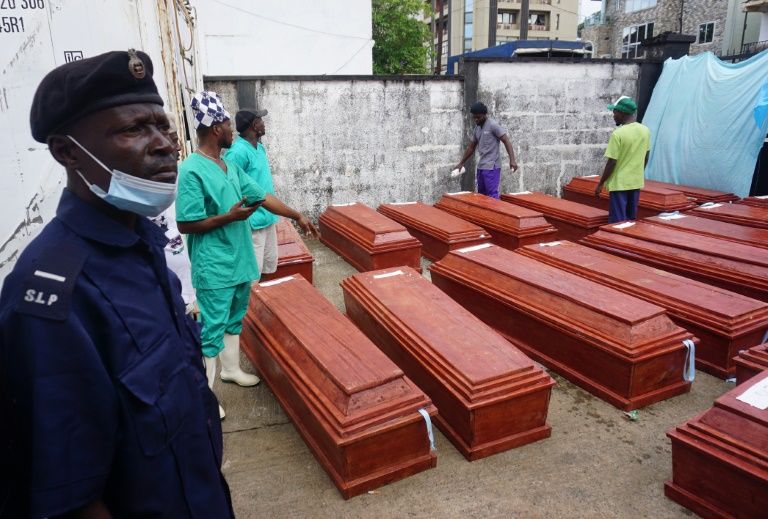
Twenty-seven civilians killed in August riots in Sierra Leone were buried Monday in the capital Freetown following a state-led ceremony, as families disputed police accounts of their deaths.

Coffins were lowered into individual graves at the Bolima Cemetery in the Waterloo district of Freetown, following a ceremony at the Connaught Hospital Mortuary.

“We are sad and devasted for what happened to my brother,” said Alusine Koroma, who contests the official account of the death of Hassan Dumbuya, a social media influencer and prominent member of the opposition All People’s Congress (APC) party.

On August 10, a protest about the cost of living spiralled into deadly clashes between security forces and young men calling for President Julius Bio to resign.

Violence erupted in several parts of the West African nation, with the authorities imposing an internet blackout in response.

In the days following, police said they conducted raids on “hideouts for perpetrators”.

During one of those raids in the city of Makeni, Dumbuya — alias Evangelist Samson — was killed in crossfire, a police statement said. His family disputes that, and the APC has called for an independent probe.

“He was shot from the back in Makeni, according to the autopsy report we received from the coroner”, Koroma said through tears on Monday.

The family has refused the 20,000 Leones ($1,200) the government offered to each family to help with funeral rites.

Koroma said they had requested and were denied a family burial.

– ‘Dignified ceremony’ –

Mohamed Rahman Swaray, the Minister of Information and Communications, said the state had “struck a deal” with families in which it would lead the ceremony for national security reasons.

Security is “the only reason” the state was involved, he told AFP, attributing the long delay to the need to reach a consensus with the families.

He also cited the need for relatives to identify bodies and be present for “examinations”.

“Some of (the violence) happened in various parts of the country; we had to put out public announcements and family members — some of them were initially scared”, he said. “We had to extend one deadline after another.”

Civilians were killed in the cities of Makeni, in the Northern Province, and Kamakwie, in the North West Province, as well as in eastern Freetown.

Swaray said nine bodies had still not been identified.

He said families had initially feared the dead would be buried in mass graves.

But the government said in a statement Sunday that each body would be buried in its own grave “following a dignified ceremony”, at the instruction of the president.

“This is a sad day and a loss to our nation,” Internal Affairs Minister David Maurice Panda-Noah told mourners following Muslim and Christian prayers at the mortuary.

On August 24, six police officers killed in the riots were buried in a state funeral attended by Bio. 

Sierra Leone, a country of about eight million people, has had a reputation for relative stability since the end of its 1991-2002 civil war, which left around 120,000 people dead.

But the economy, heavily dependent on minerals, has struggled to rebound.
Bomb kills three peacekeepers in Mali, UN says

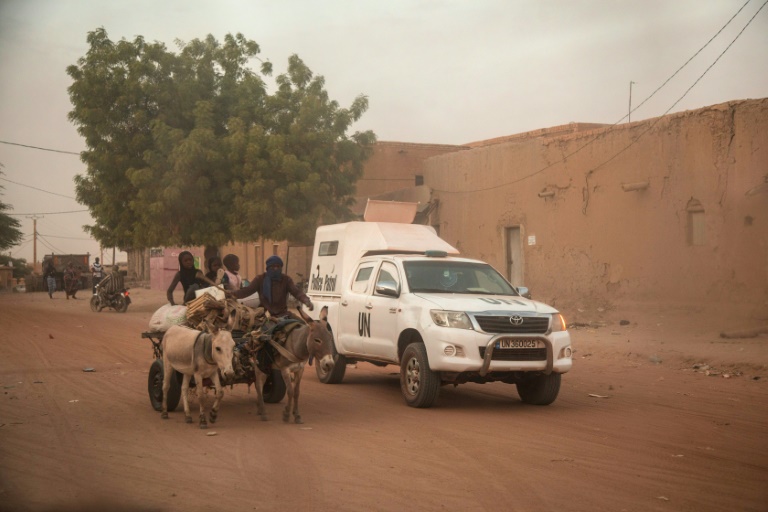
Three United Nations troops were killed and three others wounded by a roadside bomb in northern Mali on Monday, the UN peacekeeping mission said.

They had been taking part in a search for mines in the Kidal region, the mission wrote on Twitter.

They died after “their vehicle hit an Improvised Explosive Device during a mine search and detection patrol in Tessalit, Kidal region”, MINUSMA said.

The mission updated its earlier toll of two killed after one of those wounded died from their injuries.

“Improvised explosive devices are one of the most serious threats facing our colleagues”, MINUSMA head El-Ghassim Wane wrote on Twitter, praising the victims’ “courage and sense of duty”.

The peacekeepers were part of MINUSMA’s Chadian contingent, an official at the mission’s camp in Kidal said on condition of anonymity.

MINUSMA — the United Nations Multidimensional Integrated Stabilisation Mission in Mali — was launched in 2013 to help one of the world’s poorest countries cope with a bloody jihadist campaign.

It is one of the UN’s biggest peacekeeping operations, with 17,612 troops, police, civilians and volunteers deployed as of May, according to the mission’s website.

In total, 180 of its members have been killed in hostile acts, one of the highest tolls in the history of “blue helmet” operations.

Improvised explosive devices (IEDs) have caused the deaths of 75 peacekeepers, the mission said. 

Mali has struggled with a jihadist insurgency that began in the north of the country in 2012 and then spread to the centre of the country and neighbouring Niger and Burkina.

Across the three countries, thousands of civilians, police and troops have died, and some two million people have fled their homes.

Mines and IEDs are among the jihadists’ weapons of choice. They can explode on impact or be detonated remotely. 

A report by MINUSMA found that mines and IEDs caused 72 deaths in 2022 as of August 31. Most of the victims were soldiers, but more than a quarter were civilians, it said.

Last year, 103 people were killed and 297 injured by IEDs and mines. 

At least 11 people were killed and 53 injured when a bus hit an explosive device in the Mopti area of central Mali last week, a hospital source said.

Mali’s military seized power in August 2020. Ruler Colonel Assimi Goita says he plans to stay in power until 2024 and then hand over to civilian rule.

UN chief warns Ethiopia 'spiralling out of control'

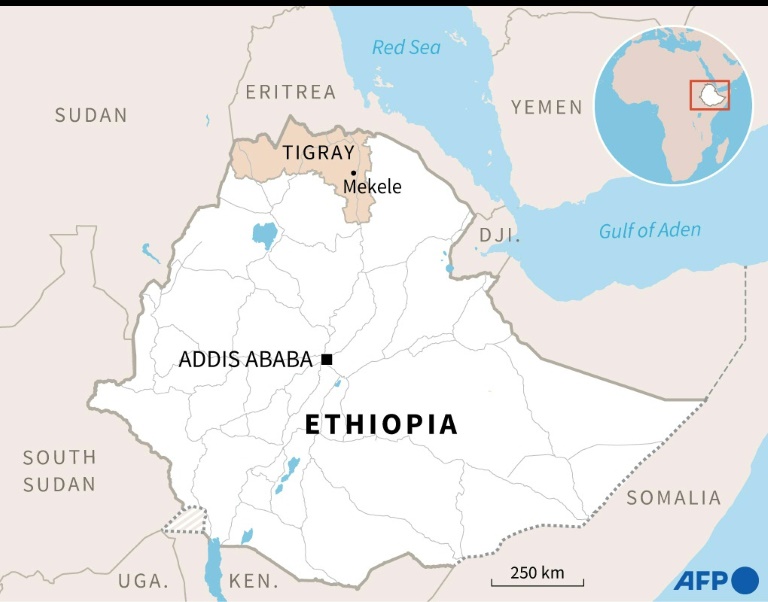
UN chief Antonio Guterres warned Monday that the situation in Ethiopia was “spiralling out of control” as fighting raged in the north of the country and the government vowed to seize control of airports and other sites in Tigray.

International alarm has been mounting over the upsurge in fighting in Tigray, where Ethiopian forces along with troops from neighbouring Eritrea have stepped up an offensive near the city of Shire.

“The situation in Ethiopia is spiralling out of control. Violence and destruction have reached alarming levels,” Guterres told reporters at the United Nations.

“Hostilities in the Tigray region of Ethiopia must end now,” he said, also calling for the “immediate withdrawal and disengagement” of Eritrean forces.

The African Union had called on Sunday for an immediate and unconditional truce as combat intensified between pro-government forces and rebels from the Tigray region who have been at war for nearly two years.

AU Commission chair Moussa Faki Mahamat also urged the rivals to “recommit to dialogue” after both sides accepted an invitation to peace talks that failed to materialise as violence spiralled.

The conflict has killed an unknown number of civilians and unleashed a massive humanitarian crisis in Tigray and other parts of the north, with at least two million people driven from their homes and millions more in need of aid.

– ‘Defensive measures’ –

Prime Minister Abiy Ahmed’s government said in a statement Monday it was “committed to the peaceful resolution of the conflict through the AU-led peace talks,” without addressing the ceasefire call.

But it said it would also pursue “defensive measures” to protect Ethiopia’s sovereignty and territorial integrity from internal and external threats.

“These measures are necessitated not only by the repeated attacks of the TPLF (Tigray People’s Liberation Front) but also by its active collusion with these hostile foreign powers,” it said, without identifying them.

“It is thus imperative that the Government of Ethiopia assumes immediate control of all airports, other federal facilities, and installations in the region,” the statement from the Government Communication Service (GCS) said.

The authorities in Tigray said Sunday they were “ready to abide by an immediate cessation of hostilities” and called on the international community to press the government to come to the table.

Reacting to the GCS statement, TPLF spokesman Getachew Reda told AFP in a message: “It’s a clear indication that the government and its ally will do everything to carry through their genocidal intent against the people of Tigray.”

Tigray and its six million people are largely cut off from the outside world, facing dire shortages of fuel, food and medicines and lacking basic services such as communications, electricity and banking. 

Abiy’s government and the Tigrayan authorities were to attend AU-led negotiations in South Africa earlier this month but they did not go ahead, with logistical problems cited as one obstacle. 

– ‘Deep regret’ –

Meanwhile, civilian casualties have been reported in heavy shelling as Ethiopian and Eritrean troops wage an offensive near Shire, a city of 100,000 people in northwestern Tigray.

US aid chief Samantha Power on Sunday warned “the risk of additional atrocities and loss of life is intensifying” around Shire, and accused Ethiopian and Eritrean forces of indiscriminate attacks.

On Friday, an aid worker from the International Rescue Committee (IRC) was among three civilians killed in an attack in Shire that also injured others.

The IRC staffer was distributing food to vulnerable civilians including women and children, said the World Food Programme (WFP).

Britain’s minister for Africa, Gillian Keegan, said she was “appalled” by the attack.

“This is the 24th aid worker killed in Tigray since the start of the conflict. Civilians and aid workers must be protected and #NotATarget,” Keegan wrote on Twitter.

Addis Ababa said its army strove to “avoid combat operations within urban areas to prevent civilian casualties” but urged aid workers to “distance themselves from TPLF military assets”.

“The Government of Ethiopia deeply regrets any harm that might have been inflicted on civilians, including humanitarian personnel,” the GCS said, adding it would investigate such incidents.

Abiy, who won the Nobel Peace Prize in 2019 for his rapprochement with Eritrea, sent troops into Tigray in November 2020 after accusing the TPLF of attacking federal army camps.

The TPLF had dominated Ethiopia’s ruling political alliance for decades before Abiy took power in 2018 and sidelined the party.

Morocco arrests 25 more migrants after June border tragedy

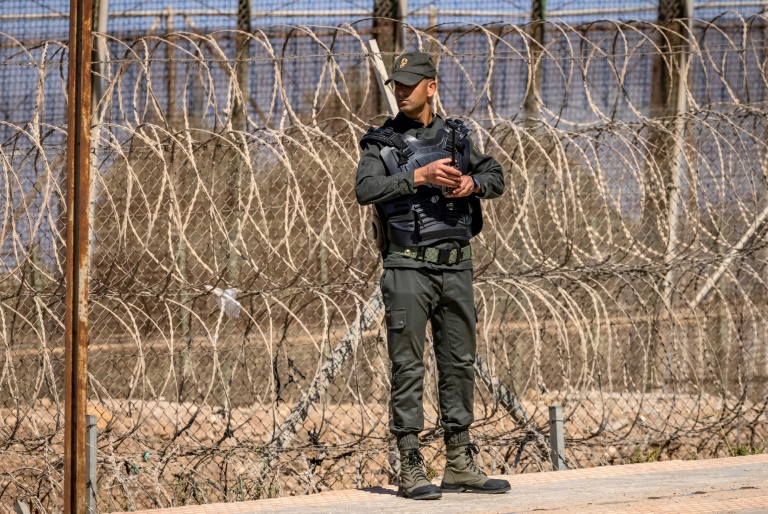
Moroccan police have arrested 25 more African migrants near the border with a Spanish enclave where at least 23 people died in a June crossing attempt, an official said Monday.

The arrests are the latest after courts handed heavy prison sentences to several dozen people, many from Sudan, on charges including entering Morocco illegally and violence against security personnel.

A judicial source told AFP that 25 migrants from Sudan and Chad were detained on Sunday in the Gourougou forest near the frontier with the Spanish territory of Melilla, a rare African land border with the European Union.

The official accused the migrants of using “violence” as they were arrested.

They are to appear before prosecutors in the border town of Nador on Monday.

“Morocco is acting as a policeman for European immigration policy,” said Omar Naji, Nador chief of the AMDH rights group.

Authorities “should have protected these asylum seekers instead of arresting them,” he said.

Gourougou is home to grim makeshift camps where migrants from across central and southern Africa sleep rough as they prepare for attempts to breach the fortified Melilla barrier.

On June 24, some 2,000 mostly Sudanese migrants attempted to enter the enclave by force.

At least 23 people died in the attempt, the worst toll in years of such attempted crossings, and rights groups accused both Spanish and Moroccan authorities of using excessive force.

Since the tragedy, Morocco has sentenced dozens of migrants to prison terms on charges including illegal entry and belonging to criminal gangs, and Nador’s top court has issued even heavier penalties on appeal.

The AMDH says the high death toll was the result of renewed cooperation between Madrid and Rabat after they ended a year-long diplomatic stand-off in April.

Spain’s ombudsman said last week that Madrid had failed to respect the legal rights of the migrants, calling the fatal tragedy “foreseeable”.

Under international law, migrants have a right to claim asylum, and it is forbidden to send potential asylum seekers back to where their lives or well-being might be in danger.

The Spanish enclaves of Melilla and Ceuta have long been a magnet for people fleeing violence and poverty across Africa to seek refuge in Europe.

Death toll in Sudan's ethnic clashes rises to 13: UN

The death toll from ethnic clashes sparked by “land issues” in the latest unrest in Sudan’s south has climbed to 13, the United Nations said Monday, warning the situation remained “tense”.

Fighting broke out Thursday between members of the Hausa people and rival groups, most notably the al-Hamaj, in the Wad al-Mahi village east of the city of Roseires in the southern Blue Nile state.

Clashes were sparked by “a dispute over land issues”, the UN Office for the Coordination of Humanitarian Affairs (OCHA) said Monday.

The violence has left “at least 13 people and more than 24 injured,” it said in a report.

Hausa leader Mohamed Noureddine said Monday that “fighting is still ongoing.”

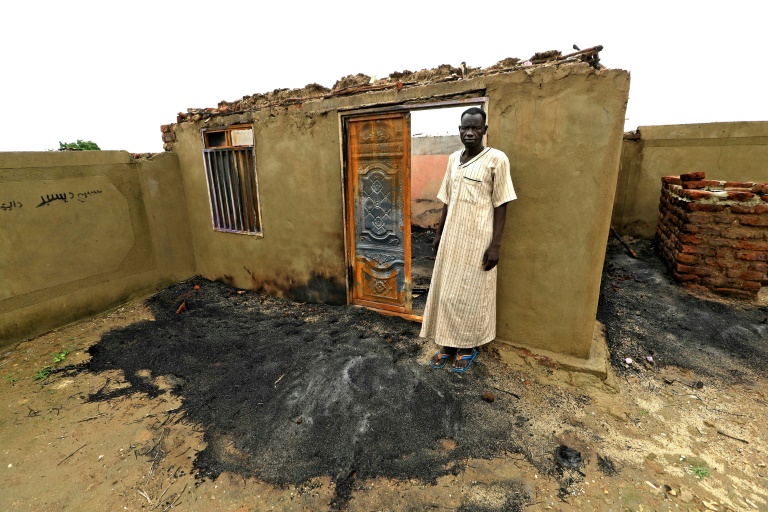
“The Hausa village of Om Derf was attacked… leaving multiple deaths and houses burnt down,” he said, without elaborating.

On Monday, Sudanese authorities imposed an overnight curfew in Wad al-Mahi area, banning gatherings or carrying weapons in the area.

“Security forces have been deployed to the area to defuse the situation, which remains tense and unpredictable with the possibility of revenge attacks at any time,” the UN added.

Fighting between the Hausa people and other groups first broke out in July, with some 149 dead and 124 wounded up until early October, according to a toll reported by OCHA.

Since July, the fighting has forced nearly 65,000 people from their homes, the UN said.

The July clashes erupted after Hausa members requested the creation of a “civil authority”, that rival groups saw as a means of gaining access to land.

The clashes also triggered angry protests across Sudan, with the Hausa people demanding justice for those killed.

By late July, senior leaders agreed to cease hostilities. Despite the deal, clashes broke out again in September.

Sudan is grappling with deepening political unrest and a spiralling economic crisis since last year’s military coup, led by army chief Abdel Fattah al-Burhan. 

The military power grab upended a transition to civilian rule launched after the 2019 ouster of strongman Omar al-Bashir, who ruled for three decades.

Over 370 people were killed and more than 177,000 displaced in inter-communal conflicts in Sudan between January and August, according to the UN.

Bomb kills two peacekeepers in Mali, UN says

Two United Nations troops were killed and four were badly injured by a roadside bomb in northern Mali on Monday, the UN peacekeeping mission said.

They had been taking part in a search for mines in the Kidal region, the mission wrote on Twitter.

“Two MINUSMA #peacekeepers were killed today, 17 October, when their vehicle hit an Improvised Explosive Device during a #mine search and detection patrol in #Tessalit, Kidal region”, MINUSMA said.

Four others were seriously injured, it said.

“Improvised explosive devices are one of the most serious threats facing our colleagues”, MINUSMA head El-Ghassim Wane wrote on Twitter, praising the victims’ “courage and sense of duty”.

The peacekeepers were part of MINUSMA’s Chadian contingent, an official at the mission’s camp in Kidal said on condition of anonymity.

MINUSMA — the United Nations Multidimensional Integrated Stabilisation Mission in Mali — was launched in 2013 to help one of the world’s poorest countries cope with a bloody jihadist campaign.

It is one of the UN’s biggest peacekeeping operations, with 17,612 troops, police, civilians and volunteers deployed as of May, according to the mission’s website.

In total, 179 of its members have been killed in hostile acts, one of the highest tolls in the history of “blue helmet” operations.

Improvised explosive devices (IEDs) have caused the deaths of 74 peacekeepers, the mission said. 

Mali has struggled with a jihadist insurgency that began in the north of the country in 2012 and then spread to the centre of the country and neighbouring Niger and Burkina.

Across the three countries, thousands of civilians, police and troops have died, and some two million people have fled their homes.

Mines and IEDs are among the jihadists’ weapons of choice. They can explode on impact or be detonated remotely. 

A report by MINUSMA found that mines and IEDs caused 72 deaths in 2022 as of August 31. Most of the victims were soldiers, but more than a quarter were civilians, it said.

Last year, 103 people were killed and 297 injured by IEDs and mines. 

At least 11 people were killed and 53 injured when a bus hit an explosive device in the Mopti area of central Mali last week, a hospital source said.

Mali’s military seized power in August 2020. Ruler Colonel Assimi Goita says he plans to stay in power until 2024 and then hand over to civilian rule.

Kenya disbands 'killer' police unit

Kenya’s new president, William Ruto, said he had dissolved a police unit accused of extrajudicial killings, in a move hailed by human rights groups. 

The Special Service Unit (SSU), which was created more than two decades ago, has been in the spotlight as cases of disappearances and murders in the East African country soared in recent years.

“We have disbanded the unit that was killing Kenyans arbitrarily,” Ruto said on Sunday.

“Security deteriorated and the police changed to killing Kenyans instead of protecting them,” he added, referring to the tenure of the previous administration in which he was deputy president.

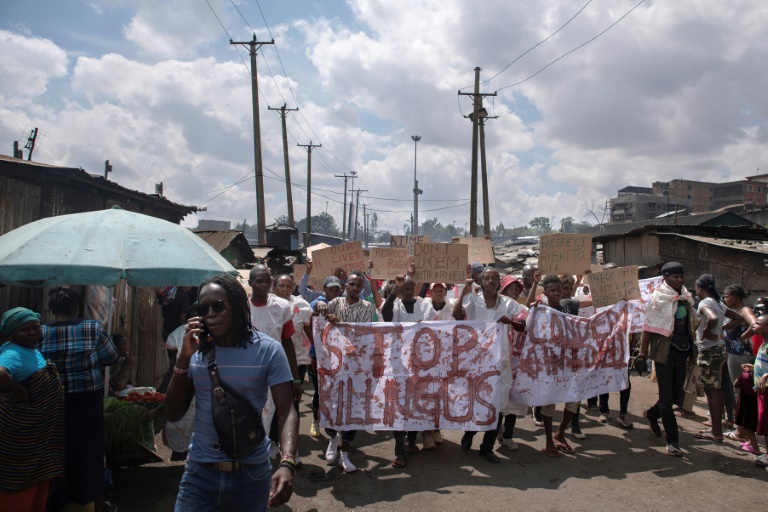
In January, police began an investigation after badly decomposed bodies, some of which bore signs of torture, were found in a river in western Kenya. 

At least 39 unidentified bodies — all men — have been retrieved from the River Yala, according to Missing Voices, a campaign group focused on extrajudicial killings. 

Bodies have turned up in other Kenyan rivers under similarly mysterious circumstances.

The discoveries came amid public anger over police brutality and what is seen as the government’s failure to hold officers to account. 

The police are yet to make public their findings into the dumped bodies.

Ruto blamed the murders on the SSU and vowed to overhaul the security sector. 

“We have a plan to secure this country so that we avoid the shame of Kenyans killed through extra-judicial killings and put in Yala river and other rivers,” he said. 

Activists welcomed the decision and called for a probe into the elite squad.

“The police must also audit SSU activities and publicly respond to allegations of responsibility for enforced disappearances and extrajudicial killings of many suspects,” Amnesty Kenya said on Twitter.

Police in Kenya have been accused in the past of running hit squads targeting those — including activists and lawyers — investigating alleged rights abuses by the security services.

According to Missing Voices, there have been 1,264 deaths at the hands of police since it began collecting data in 2007, and 237 enforced disappearances as of September. 

The Directorate of Criminal Investigations (DCI), to which the special unit belonged, said all its officers had been recalled “for further instructions”.

Ethiopia vows to seize airports in Tigray despite peace pledge

Ethiopia’s government on Monday vowed to seize control of airports and other sites in Tigray, while at the same time reiterating a commitment to peace talks, as international alarm mounted over fighting in the war-torn region.

The African Union on Sunday called for an immediate and unconditional truce as combat intensified in northern Ethiopia, where pro-government forces and rebels from the Tigray region have been at war for nearly two years.

AU Commission chair Moussa Faki Mahamat also urged the rivals to “recommit to dialogue” after both sides accepted an invitation to peace talks that failed to materialise as violence spiralled.

The authorities in Tigray said Sunday they were “ready to abide by an immediate cessation of hostilities” and called on the international community to press the government to come to the table.

Prime Minister Abiy Ahmed’s government said in a statement Monday it was “committed to the peaceful resolution of the conflict through the AU-led peace talks,” without addressing the ceasefire call.

But it said it would also pursue “defensive measures” to protect Ethiopia’s sovereignty and territorial integrity from internal and external threats.

“These measures are necessitated not only by the repeated attacks of the TPLF (Tigray People’s Liberation Front) but also by its active collusion with these hostile foreign powers,” it said, without identifying them.

“It is thus imperative that the Government of Ethiopia assumes immediate control of all airports, other federal facilities, and installations in the region,” the statement from the Government Communication Service (GCS) said.

– ‘Catastrophic conflict’ –

The conflict has killed an unknown number of civilians and unleashed a massive humanitarian crisis in Tigray and other parts of northern Ethiopia, with at least two million people driven from their homes and millions more in need of aid.

Tigray and its six million people are largely cut off from the outside world, facing dire shortages of fuel, food and medicines and lacking basic services such as communications, electricity and and banking. 

TPLF spokesman Getachew Reda reacted to the GCS statement, telling AFP in a message: “It’s a clear indication that the government and its ally will do everything to carry through their genocidal intent against the people of Tigray.”

UN chief Antonio Guterres has joined the United States and other Western powers in voicing concern over the worsening violence in Tigray and called for a peaceful settlement to “this catastrophic conflict.”

Abiy’s government and the Tigrayan authorities were to attend AU-led negotiations in South Africa earlier this month but they did not go ahead, with logistical problems cited as one obstacle. 

– ‘Deep regret’ –

Ethiopian forces along with troops from neighbouring Eritrea have meanwhile stepped up an offensive near Shire, a city of 100,000 people in northwestern Tigray, where civilian casualties have been reported in heavy shelling.

It is not possible to verify battlefield claims as access to northern Ethiopia is restricted for journalists.

US aid chief Samantha Power on Sunday warned “the risk of additional atrocities and loss of life is intensifying” around Shire, and accused Ethiopian and Eritrean forces of indiscriminate attacks.

On Friday, an aid worker from the International Rescue Committee (IRC)  was among three civilians killed in an attack in Shire that also injured others.

The IRC staffer was distributing food to vulnerable civilians including women and children, said the World Food Programme (WFP).

Britain’s minister for Africa, Gillian Keegan, said she was “appalled” by the attack.

“This is the 24th aid worker killed in Tigray since the start of the conflict. Civilians and aid workers must be protected and #NotATarget,” Keegan wrote on Twitter.

Addis Ababa said its army strove to “avoid combat operations within urban areas to prevent civilian casualties” but urged aid workers to “distance themselves from TPLF military assets”.

“The Government of Ethiopia deeply regrets any harm that might have been inflicted on civilians, including humanitarian personnel,” the GCS said, adding it would investigate such incidents.

Abiy, who won the Nobel Peace Prize in 2019 for his rapprochement with Eritrea, sent troops into Tigray in November 2020 after accusing the TPLF of attacking federal army camps.

The TPLF had dominated Ethiopia’s ruling political alliance for decades before Abiy took power in 2018 and sidelined the party.

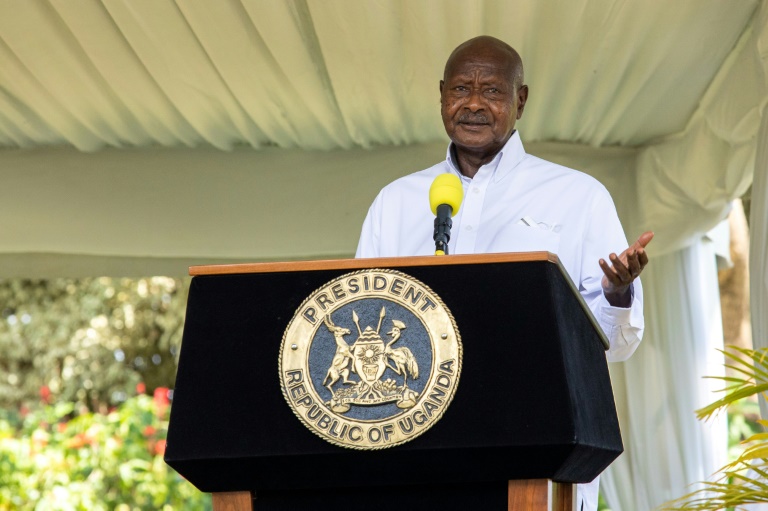
Court challenge to Uganda's 'draconian' internet law

Ugandan media groups and rights activists on Monday filed a court challenge to a controversial new internet law that they protest is aimed at curtailing free speech and quashing dissent.

A total of 13 petitioners, including an online TV station, lodged the complaint with the Constitutional Court over the legislation, which was signed into law by veteran President Yoweri Museveni last week.

The Computer Misuse (Amendment) Act “threatens freedom of expression and targets those with divergent views”, one of the petitioners, Norman Tumuhimbise, told AFP.

Tumuhimbise works for Digital TV, which in March this year was raided by security agents. Nine of its staff including Tumuhimbise were arrested and charged with computer misuse and spreading false information.

According to the petition, the government has been given seven days to file a defence but it is not known when any hearings in the case would begin.

Amnesty International has called for the “draconian” law to be scrapped, warning that it was designed to “deliberately target critics of government and it will be used to silence dissent and prevent people from speaking out”.

“This piece of legislation threatens the right to freedom of expression online, including the right to receive and impart information, on the pretext of outlawing unsolicited, false, malicious, hateful, and unwarranted information,” said Amnesty’s director for East and Southern Africa, Muleya Mwananyanda.

Uganda has seen a series of crackdowns on those opposed to Museveni’s rule, particularly around the 2021 election, with journalists attacked, lawyers jailed, vote monitors prosecuted and opposition leaders violently muzzled.

– ‘Rise up and defend rights’ –

Opposition leader Bobi Wine, who unsuccessfully challenged the president in 2021 and has often been targeted by security forces, said the adoption of the law was not surprising.

“Museveni is aware he is unpopular and he is putting such laws to muzzle the population,” he told AFP.

“This time people should rise up and defend their rights because the civil space is being restricted time and again.”

Amnesty noted that the new legislation contained some useful provisions such as right to privacy and responsible coverage of children but “it introduces punitive penalties for anyone accused of so-called hate speech”.

People convicted under the law are barred from holding public office for 10 years, which Amnesty warned was a way of reinforcing state control over online freedom of expression, including by political opposition groups.

Offenders also face fines of up to 15 million Ugandan shillings (about $3,900) and prison terms of up to seven years.

“Ugandans must be able to exercise their right to freedom of expression without fear of being targeted by the criminal justice system,” Mwananyanda said in the Amnesty statement issued on Friday.

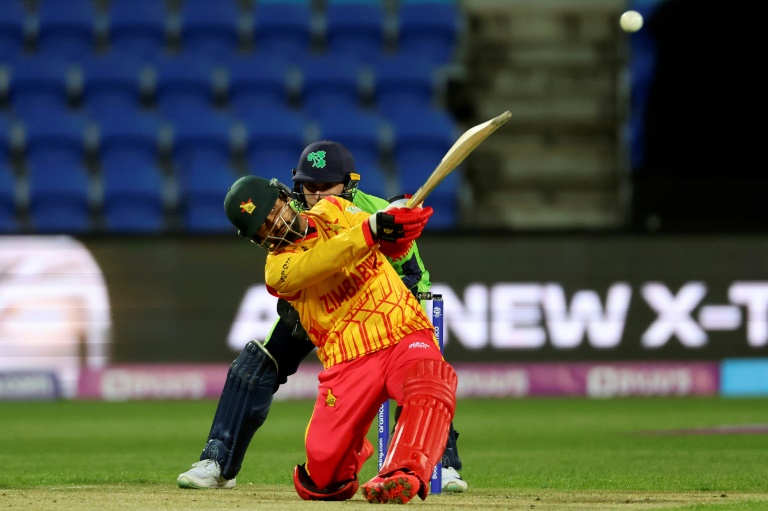
Raza leads Zimbabwe to win over Ireland at T20 World Cup

Sikandar Raza smashed 82 off 48 balls to set up a convincing 31-run victory for Zimbabwe in their opening match of the Twenty20 World Cup against Ireland on Monday.

Zimbabwe lost three early wickets after being invited to bat first in Hobart, but Raza put on key partnerships to guide the team to 174-7 in Hobart.

Returning paceman Blessing Muzarabani took three wickets as Zimbabwe restricted Ireland to 143-9.

“We are ecstatic. To put up a performance like that first game, it shows that we do belong here,” said skipper Craig Ervine, whose side missed the last edition in the UAE.

“It’s a pity that it has been a long way since we have played a World Cup.”

Zimbabwe are on track to make the Super 12 after winning the first of their three matches in round one.

Raza set the tone for the team’s domination after he put on attacking stands with Sean Williams and then Milton Shumba.

Ireland pace spearhead Josh Little got Regis Chakabva for nought with the second ball of the match and then dismissed Wesley Madhevere for 22.

Raza took nine balls to get going as he smashed Curtis Campher for two sixes in the ninth over and kept up the attack despite losing partners along the way.

He fell on the last ball of the innings off Mark Adair after hitting five fours and five sixes.

Ireland were never in the chase after losing their top four for just 22 runs inside four overs with pace bowler Richard Ngarava and Muzarabani sharing the spoils.

Campher, who made 27, and George Dockrell attempted to revive the chase in their stand of 42.

But Raza broke through with his off spin, dismissing Dockrell for 24.

Campher departed soon after and the Irish batting fizzled, despite cameos by Gareth Delany (24) and Barry McCarthy (22 not out).

Tendai Chatara finished with two wickets, missing out on a hat-trick.

Close Bitnami banner
Bitnami