Africa Business

Raza leads Zimbabwe to win over Ireland in T20 World Cup opener

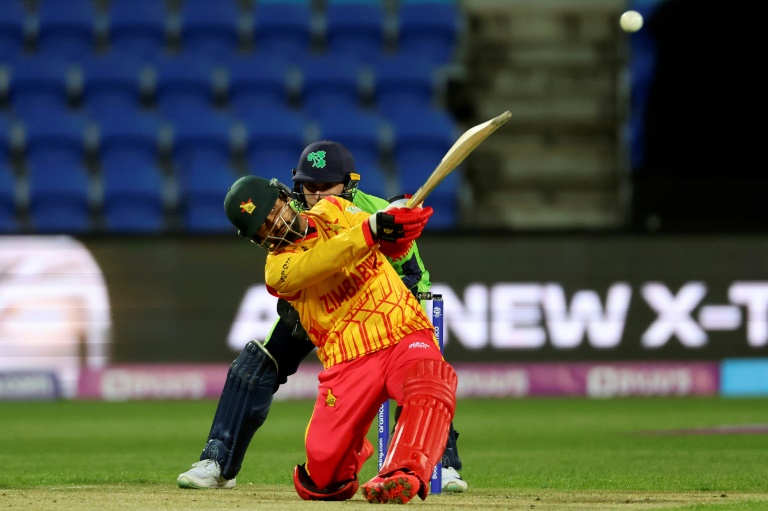
Sikandar Raza smashed 82 off 48 balls to set up a convincing 31-run victory for Zimbabwe in their opening match of the Twenty20 World Cup against Ireland on Monday.

Zimbabwe lost three early wickets after being invited to bat first in Hobart, but Raza put on key partnerships to guide the team to 174-7 in Hobart.

Returning paceman Blessing Muzarabani took three wickets as Zimbabwe restricted Ireland to 143-9.

Zimbabwe are on track to make the Super 12 after winning the first of their three matches in round one.

Raza set the tone for the team’s domination after he put on attacking stands with Sean Williams and then Milton Shumba.

Ireland pace spearhead Josh Little got Regis Chakabva for nought with the second ball of the match and then dismissed Wesley Madhevere for 22.

Raza took nine balls to get going as he smashed Curtis Campher for two sixes in the ninth over and kept up the attack despite losing partners along the way.

He fell on the last ball of the innings off Mark Adair after hitting five fours and five sixes.

Ireland were never in the chase after losing their top four for just 22 runs inside four overs with pace bowler Richard Ngarava and Muzarabani sharing the spoils.

Campher, who made 27, and George Dockrell attempted to revive the chase in their stand of 42.

But Raza broke through with his off spin, dismissing Dockrell for 24.

Campher departed soon after and the Irish batting fizzled, despite cameos by Gareth Delany (24) and Barry McCarthy (22 not out).

Tendai Chatara finished with two wickets, missing out on a hat-trick.

Jihadist fears cast shadow on Niger-Benin border

Observers of troubled West Africa have long fretted that jihadists who have rampaged across the Sahel are eyeing a southward push to the Gulf of Guinea.

But for people living on the border between Niger and Benin, that concern is already a daily reality.

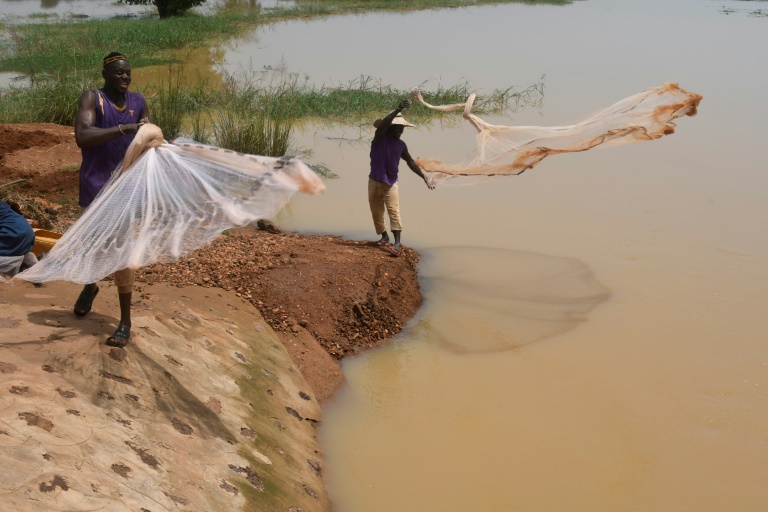
“We live in fear,” said Sani Harouna, a fisherman who earns a living on the Niger River, which marks the border between the two countries.

To the north of the great river lies the vast, semi-desert state of Niger, the poorest country in the world by the UN’s development index.

The country is battling two insurgencies that have swept in from its neighbours.

One is a longstanding Boko Haram campaign on the southeastern border with Nigeria, while the other is a dynamic seven-year offensive in the southwest.

It swept in from Mali, where al-Qaeda and Islamic State group jihadists are active, and has also pushed into neighbouring Burkina Faso.

To the river’s south lies Benin, one of a trio of coastal states along with Togo and Ivory Coast which analysts fear are next in line.

Last month, armed men attacked a customs post in Malanville, Benin’s closest town to Niger, killing two men.

“The terrorists are on the border, and if they are pursued in Benin, they will fall back to Niger,” said another fisherman, Mamane Sani Harouna.

“It’s these waters that must be watched — they can make it easier for the terrorists to infiltrate, and around here there are too many wooded areas” that can serve as boltholes, he said.

– ‘Corridor’ –

Gaya district is part of the Dosso region which borders Benin and Nigeria.

So far Dosso has escaped violent attacks, and its relative safety means that truckers prefer to use it as a corridor to reach Benin’s port of Cotonou rather than cross Burkina.

“There is a security challenge, the threat is real,” Assimou Abarchi, the prefect — the state’s most senior official — for Gaya told AFP. 

“But up till now, thanks be to God, we sleep soundly and we wake up in good shape.”

“Right now it’s calm. There are just petty thieves who steal our animals and sell them to butchers,” said a Nigerien trader who was crossing the bridge to sell milk in Benin.

But the corridor and the river are also a potential flashpoint.

Officials say they are used to provide fuel and supplies for terrorists based in Mali.

“Motorcyclists sneak across from Nigeria to northern Mali and canoes involved in smuggling are equipped with powerful motors,” an official in Gaya said.

– Pipeline –

The corridor is also being used as the outlet for a planned pipeline for Niger’s oil, which is scheduled to reach the world market via Benin next year.

In a visit to military forces in Dosso last week, Nigerien President Mohamed Bazoum promised to create a “fully-equipped battalion” for the Gaya area to help strengthen surveillance of the 266-kilometre (165-mile) border with Benin.

He called for the military to “find the right response” to “cutting off” the jihadists’ supply lines.

“Benin is a strategic partner for Niger,” he said. 

“Given that we know how these forces (the jihadists) behave, and their intentions for opening up fronts on the other side of the border, we are obliged to act preventatively,” he said.

Benin and Niger in July signed an agreement to fight “terrorism” through joint military operations and exchanges of information.

Dosso already has a rapid-response battalion of more than 500 troops, which has been trained and equipped by France with pickup trucks and heavy weapons.

Ethiopia vows to seize airports, other sites in Tigray

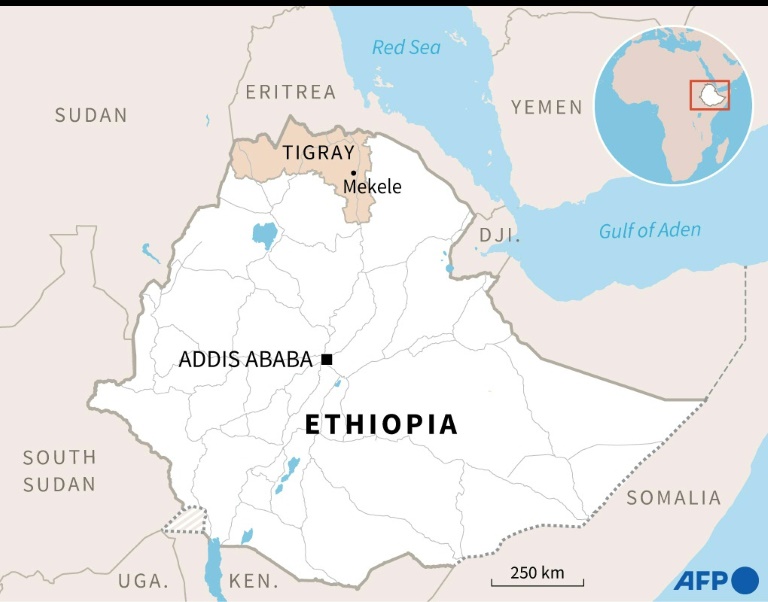
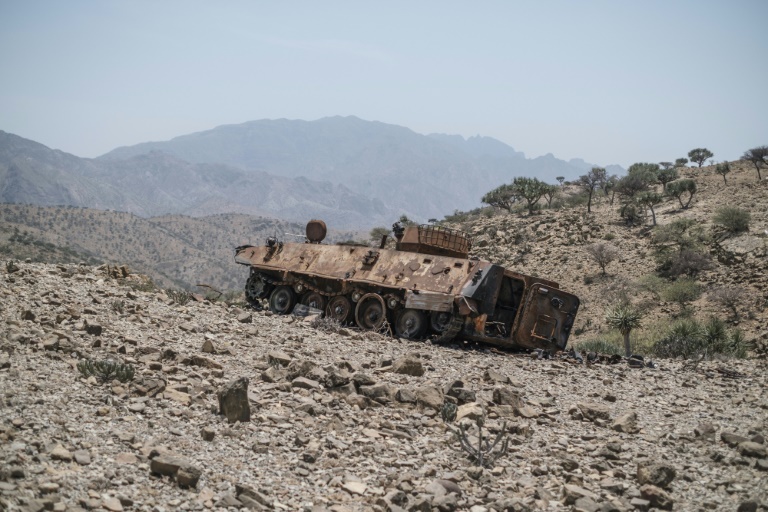
Ethiopia’s government on Monday vowed to seize control of airports and other federal facilities in war-torn Tigray, a day after the African Union appealed for a ceasefire to the conflict.

AU Commission chair Moussa Faki Mahamat called for an immediate and unconditional truce as combat intensified in northern Ethiopia, where pro-government forces and rebels from the Tigray region have been fighting for nearly two years.

Faki also urged the rivals to “recommit to dialogue” after both sides accepted an AU invitation to peace talks that failed to materialise as violence spiralled.

The authorities in Tigray said Sunday they were “ready to abide by an immediate cessation of hostilities” and called on the international community to press the government to come to the table.

Addis Ababa said in a statement Monday it was “committed to the peaceful resolution of the conflict through the AU-led peace talks”.

But it said it would pursue this along with “defensive measures” to protect Ethiopia’s sovereignty and territorial integrity from internal and external threats.

“It is thus imperative that the Government of Ethiopia assumes immediate control of all airports, other federal facilities, and installations in the region,” the statement from the Government Communication Service said.

UN chief Antonio Guterres, the United States and other Western powers have voiced alarm over the worsening violence in Tigray and called for a peaceful settlement to “this catastrophic conflict”.

Prime Minister Abiy Ahmed’s government and the Tigrayan authorities were to attend AU-led negotiations in South Africa earlier this month but they did not go ahead, with logistical problems cited as one obstacle. 

– ‘Deep regret’ –

Ethiopian forces along with troops from neighbouring Eritrea have meanwhile stepped up an offensive near Shire, a city of 100,000 people in northwestern Tigray, where civilian casualties have been reported in heavy shelling.

US aid chief Samantha Power on Sunday warned “the risk of additional atrocities and loss of life is intensifying” around Shire, and accused Ethiopian and Eritrean forces of indiscriminate attacks.

On Friday, an aid worker from the International Rescue Committee was among three civilians killed in an attack in Shire left others injured.

The IRC staffer was distributing food to “vulnerable” civilians including women and children, said the World Food Programme (WFP), which condemned the targeting of aid personnel.

Britain’s minister for Africa, Gillian Keegan, said she was “appalled” by the attack.

“This is the 24th aid worker killed in Tigray since the start of the conflict. Civilians and aid workers must be protected and #NotATarget,” Keegan wrote on Twitter.

The Ethiopian government said its army strove to “avoid combat operations within urban areas to prevent civilian casualties” but urged aid workers to “distance themselves from TPLF military assets”.

“The Government of Ethiopia deeply regrets any harm that might have been inflicted on civilians, including humanitarian personnel,” the GCS said, adding it would investigate such incidents.

Abiy, who won the Nobel Peace Prize in 2019, sent troops into Tigray in November 2020 after accusing the Tigray People’s Liberation Front (TPLF) of attacking army camps.

The TPLF had dominated Ethiopia’s ruling political alliance for decades before Abiy took power in 2018.

The ensuing conflict has killed an unknown number of civilians and unleashed a massive humanitarian crisis in Tigray and other parts of northern Ethiopia.   

African players in Europe: Superstars Salah, Mane among goals

Mohamed Salah and Sadio Mane, both two-time winners of the African Footballer of the Year award, were among the goals in Europe at the weekend.

Egyptian Salah atoned for several misses by finding the net to lift Liverpool to eighth with a 1-0 Premier League victory over previously unbeaten Manchester City.

Senegalese Mane notched the fourth goal for second-placed Bayern in a 5-0 Bundesliga drubbing of Freiburg.

Here, AFP Sport highlights African headline-makers in the major European leagues:

ENGLAND

MOHAMED SALAH (Liverpool)

Salah struck his first league goal since August to kickstart Liverpool’s season. He said he is not giving up on the title despite the Reds being 14 points behind leaders Arsenal. Salah kept his cool with a third opportunity to slot past Ederson after outmuscling Joao Cancelo.

SAID BENRAHMA (West Ham)

Benrahma came off the bench to tee up Declan Rice for West Ham’s equaliser in a 1-1 draw at Southampton. The Algerian has not started any of the Hammers last five league games, but after scoring in the Europa Conference League in midweek, made his case for more game time with a clever one-two with the England international, who fired into the far corner.

SPAIN

REINILDO MANDAVA (Atletico Madrid)

Were it not for Mozambican left-back Reinildo, Atletico Madrid would have left the San Mames with fewer than the three points they eventually took from their 1-0 triumph over Athletic Bilbao. He made a brilliant block in the last minute to deny Raul Garcia when he was poised to equalise, and although the officials penalised him in the area for handball, VAR confirmed he had blocked another effort with his face and cancelled the penalty.

YASSINE ‘BONO’ BOUNOU (Sevilla)

The Morocco international was key in his team’s 1-0 win at Real Mallorca, making a few excellent saves to keep a clean sheet and earn Jorge Sampaoli his first win as coach.

EL BILAL TOURE (Almeria)

Mali international Toure netted for a second consecutive game, having scored against Rayo Vallecano last week in a 3-1 win. This time his team were beaten at Real Betis by the same scoreline. He took his strike well, slotting home early in the second half.

ITALY

VICTOR OSIMHEN (Napoli)

Out since early September with a thigh injury, Nigerian Osimhen has burst back into the Napoli team with two goals in two substitute appearances, his latest the winner in a 3-2 over Bologna which kept his team top of Serie A.

ADEMOLA LOOKMAN (Atalanta)

Another Nigeria attacker made sure Atalanta kept pace with Napoli, Lookman scoring his third goal in as many games which gave his new team a 2-1 win over Sassuolo and continued their best start to a Serie A season.

GERMANY

SADIO MANE (Bayern Munich)

Mane scored his second goal in two games as Bayern thrashed Freiburg 5-0 to rise to second. Mane scored the fourth with an elegant chip over goalkeeper Mark Flekken in the second half, just three days after finding the net in the Champions League against Viktoria Plzen.

FRANCE

NOAH FADIGA (Brest)

The right-back put Brest in front against Nantes only to finish up on the end of a 4-1 defeat. Brest are bottom of Ligue 1 and sacked their coach last week. Fadiga is the son of former Senegal star Khalilou Fadiga.

MOHAMED CAMARA (Monaco)

The all-action Malian midfielder was sent off just 17 minutes into a game against Clermont and without him Monaco managed only a 1-1 draw as their five-game winning run ended. Already due to serve a suspension in Monaco’s next game, Camara now faces an extended spell on the sidelines.

Hungry elephants, Cameroon farmers struggle to coexist

Banana growers on the edge of a giant national park on Cameroon’s Atlantic coast say they can take no more crop destruction from hungry elephants as the conflict between man and animal escalates.

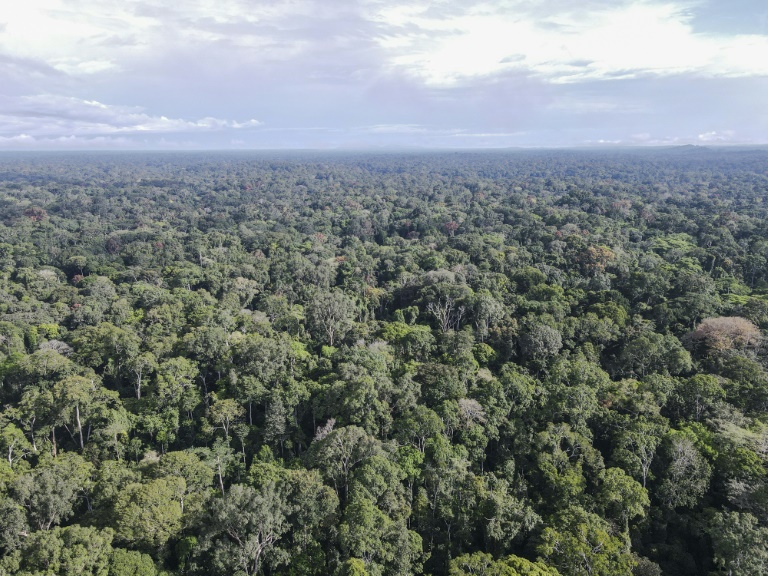
Near the southern border with Equatorial Guinea, eight villages have registered complaints with the Campo Ma’an national park, a vast area of virgin forest from where the animals emerge.

An estimated 500 gorillas and more than 200 elephants — both endangered species — roam the reserve’s 264,000 hectares (652,000 acres).

A week after elephants flattened his banana plantation close by the park, Simplice Yomen, 47, is struggling to cope.

“We are at the end of our tether,” he sighs.

The elephants eat the new growth inside the banana tree trunks after splitting them open.

Manioc, maize, sweet potato and peanuts are also favourite snacks, says park administrator Michel Nko’o.

In Cameroon, co-existence between humans and animals on the edge of dense forests is proving increasingly challenging. 

Most of the crop destruction is recorded near protected wildlife reserves.

For Nko’o, the elephant raids have become noticeably more frequent since agro-industrialists began setting up by the park.

More 2,000 hectares of forest has been chopped down to grow palm oil trees for Cameroun Vert, an industrial plantation project for which the government first approved a clearing of 60,000 hectares before reducing it to 39,000 hectares after protests.

“The elephants who lived here no longer have any place to go and end up in people’s fields,” regrets park conservationist Charles Memvi.

– ‘Discouraging’ –

Affected villages near the town of Campo have seen “three to four hectares of plantations destroyed, which is a major financial loss for the local people”, says Nko’o.

Elephants are blamed for 80-90 percent of the attacks. 

The rest is accounted for by gorillas, chimpanzees, hedgehogs, pangolins and porcupines.

Nearly all these species are endangered due to habitat loss and/or poaching.

Daniel Mengata’s two hectares of banana trees were “devastated” in 2020.

“The animals really are discouraging us,” the 37-year-old admitted.

“I started crying after seeing the damage because in one night a year’s work was wiped out. That really hurts.” 

“I can no longer feed my family,” adds Emini Ngono, 57. Hungry elephants have ruined her smallholding, which once produced gourds, manioc and potato.

Ngono says she could make more than 1,000 euros ($970) from selling seeds for gourds, a traditional stable food across the region.


– Reconciliation –

Not far off, logs of wood extracted from the forest are piling up.

The high-pitched noise from a saw masks the birdsong as a group of trackers set off looking for rare gorillas.

The World Wide Fund for Nature (WWF) launched a “primate habituation” project a decade ago focused on gorillas in a bid to develop ecotourism in the area.

Part of the income was to go to local communities to encourage them to help protect the animals and reduce the conflict with humans.

Chimene Mando’o is out tracking primates.

“There! That’s Akiba”, the 25-year-old cries after the gorilla calls out.

Shortly after, Akiba — meaning “thank you” in the local Mvae language — briefly appears at the foot of a tree just a dozen metres (yards) away, before scampering off into the jungle.

“We have to find a way to generate some development … in such a way that everyone benefits from this natural resource,” explains WWF biodiversity economist Yann Laurans.

The ministry for forests and wildlife says Cameroon has no legal framework to compensate people after attacks by animals from national parks.

The WWF is testing and studying an insurance system to cover people who lose their livelihoods to animal attacks.

Smallholder Simplice Yomen is hoping for a more secure future after setting up beehives to dissuade elephants from encroaching on his plantation.

Others are trying lemon trees and other spiky bushes to keep the elephants out.

Senegal not giving up on oil and gas

The new offshore gas terminal appears through the morning mist cloaking the Atlantic Ocean near Saint Louis, where Senegal meets Mauritania.

It has been hailed as a new economic beginning in developing Africa, and condemned as a new source of pollution in a world suffocating from global warming.

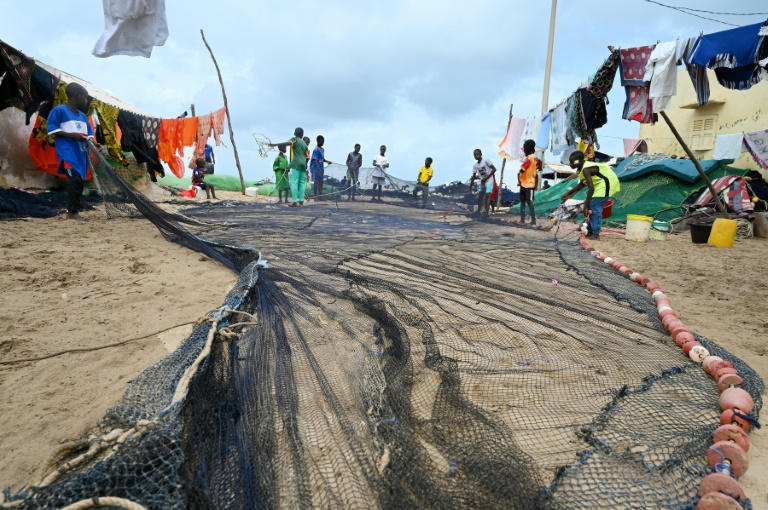
On the beach, a dugout canoe is hauled up the wet sand after a night’s fishing.

“Not a lot of fish,” scowls El Hadji Gaye, his eye catching the giant structure nearly 10 kilometres (six miles) out at sea.

Senegal, like the Democratic Republic of Congo, has discovered oil and gas reserves, raising hopes of future riches and industrialisation.

They have no intention of yielding to appeals to leave lucrative oil and gas in the ground in the name of fighting climate change.

Senegalese President Macky Sall says it would be “an injustice” and he has launched a diplomatic counter-offensive to justify extracting the resources, starting next year.

“Not being the greatest polluters since we are not industrialised, it would be unfair in the search for a solution (to global warming) to ban Africa from using the natural resources which are underground,” Sall told visiting German Chancellor Olaf Scholz in May.

And the message seems even more likely to be heard now that Europeans, facing a major energy crisis following Russia’s invasion of Ukraine, are looking to diversify their oil and gas supplies.

– ‘Exacerbate’ global warming –

Niger, the world’s poorest country according to the UN’s Human Development Index, is also building Africa’s longest oil pipeline — a nearly 2,000-kilometre (1,250-mile) link to Benin that will enable it to export crude from as early as next year.

Greenpeace Africa’s ocean campaign manager Aliou Ba stressed that exploiting fossil fuel deposits will further “exacerbate” the climate crisis, with efforts to limit the temperature rise to 1.5 degrees Celsius looking increasingly forlorn.

Francois Gemenne, an expert with the Intergovernmental Panel on Climate Change, said: “When you are poor it is very difficult to give up on treasure, so something more interesting has to be on offer.

“What’s at stake is that these countries can and do choose a decarbonised economy.

“And that requires the transfer of technology and investment in renewables, which is still generally lacking.”

The pre-COP27 talks held in Kinshasa at the start of October heard calls for alternative technologies and major financing to sustain a green transition.

But the government of the vast, rainforest-covered DRC is standing by its right to exploit petrol and gas, despite criticism from environmental groups warning against the release of huge quantities of carbon.

At the pre-COP gathering, Congolese Prime Minister Jean-Michel Sama Lukonde pointed out that some European nations have returned to burning highly polluting coal due to gas shortages triggered by the Russian invasion.

He warned against “discrimination”, “with certain states free to carry on or even increase their emissions, and others prevented from exploiting their natural resources”.

DRC senior climate negotiator Tosi Mpanu Mpanu sees a positive outcome. “Paradoxically, it’s the oil money that is seen as dirty which will allow us to have sufficient means to take back our environmental sovereignty and reduce emissions caused by deforestation,” he said.

– ‘Radical change’ –

Senegal’s oil and gas discoveries account for only 0.07 percent and 0.5 respectively of world reserves.

But Energy and Oil Minister Sophie Gladima said “they are important enough to radically change the economy and industrial fabric of our country and thereby its future prospects.”

“Just exploiting our hydrocarbons will enable us to accelerate public access to electricity and above all to lower the cost of production and encourage industrialisation.”

She underlined the legal framework needed to bring thousands of Senegalese jobs into the sector, and the setting up of the National Institute of Oil and Gas to turn out a highly qualified workforce.

But fishermen say they are being excluded from the future planned out by the state.

As the launch of gas production draws closer, the authorities are stepping up their control over the offshore platform.

A security perimeter has been set up and a boat patrols the coastline to block any seafarer tempted to cross an invisible barrier.

“This place was where we found most fish,” says El Hadji.

“Now we are caught in a trap because we can no longer go there or further north into Mauritanian waters,” the 39-year-old fisherman adds.

Behind him more than a dozen of his comrades chant rhythmically as they push their multicoloured canoe over the sand, following centuries-old traditions on a narrow strip of land separating the Senegal river from the Atlantic Ocean.

“I only know how to fish. My parents fished, my grandparents also. What will I become? What will my children do?” El Hadji asks.

He turns and looks at his friends, the waves crashing. In the distance, the gas platform looms above the ocean.

Green future is cause for worry in S.Africa's coal belt

Miner Thokozani Mtshweni, 37, looks spent as he readies for a 12-hour shift huddled under a carport shelter to avoid the scorching sun. He fixes his belt weighed down by an oxygen tank and gas detecting tools. 

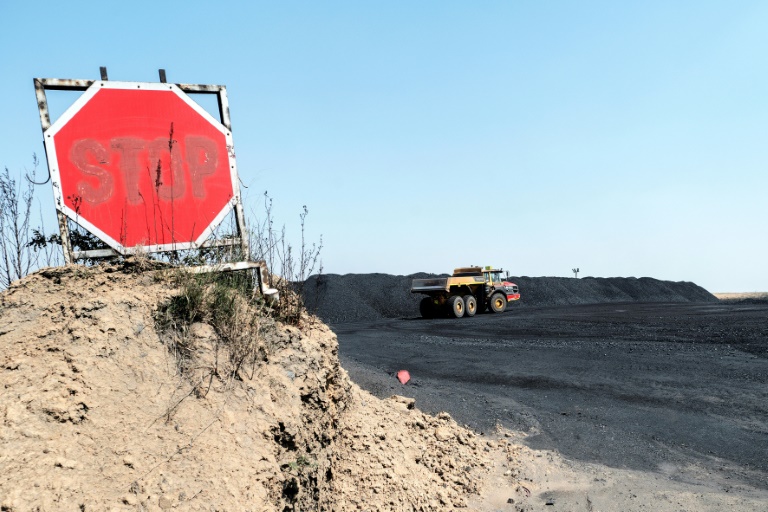
An hour’s drive from Johannesburg, Khutala Colliery is among more than 100 coal mines and a dozen coal-fired plants that dot the industrial landscape of the northeastern province of Mpumalanga, an area known as South Africa’s coal belt.

Workers kitted in soiled yellow overalls breathe in the hazy air as they wait to board trucks that will drive them to an underground shaft. 

“Closing these mines would affect our lives a lot,” Mtshweni tells AFP. “It would be chaos”.

Coal is a bedrock of South Africa’s economy, employing almost 100,000 people and accounting for 80 percent of electricity production. 

But the sector’s future is uncertain, as Africa’s most industrialised economy looks to wean itself off the carbon-emitting fuel in line with global efforts to tackle climate change. 

Last year, the government secured $8.5 billion in loans and grants from a group of rich nations to finance the transition to greener alternatives.

Fraught negotiations around how the money should be spent are expected to end before the COP27 climate summit in Egypt in November.

Supporters hope the money could act as a catalyst to transform the energy landscape in what is one of the world’s top 12 largest polluters. 

But questions remain over the country’s ability to make swift inroads towards its goal of reaching net-zero carbon emissions by 2050.

– Money and jobs –

“Significantly more funding” will be needed, said Daniel Mminele, who heads the finance task team of a climate commission set up by President Cyril Ramaphosa. 

A study by South Africa’s Stellenbosch University put the figure at $250 billion over the next 30 years. 

Recent studies suggest more jobs will be created than lost by going green, but analysts say the swap will not be painless. 

The coal industry is concentrated in Mpumalanga, which accounts for about 80 percent of all coal production.

“We need coal,” says Isaac Mahumapelo, a Khutala Colliery section manager, as piles of the black stuff are crushed behind him. 

“The cities, the towns in and around Mpumalanga have been established through the coal mines.”

Trade unions worry job losses will not be reabsorbed by the renewable sector. Unemployment is above 30 percent nationwide. 

“Wind and solar is not engineered in South Africa, it is fabricated elsewhere,” says energy analyst Tshepo Kgadima.

After a decade spent in the pits, Mtshweni, the miner, is among those fearing for their future.

“Everyone is dependent on this coal to provide for their loved ones,” he says. 

International pressure on South Africa to clean up its act is seen with antipathy by some. 

Europe’s renewed appetite for coal in the wake of the gas crisis sparked by Russia’s invasion of Ukraine is often cited as evidence of double standards.

“Coal will still be around for some time and whilst we wish to collaborate … Let’s have our own agenda that realistically recognises the socio-economic imperatives of South Africa,” says Mike Teke, CEO of Khutala Colliery’s operator, Seriti.

– No turning back –

Yet, things are starting to move.

Khutala Colliery lies near Kendal, an industrial town surrounded by coal silos and plumes of thick smoke.

The mine feeds a nearby power station — one of the world’s largest — operated by state energy firm Eskom. 

The plant and neighbouring mines are surrounded by maize and livestock farms.

Cattle graze under the grey polluted skies. Lumps of coal sit on the side of the road as trucks come and go. 

Still, Seriti recently set up a green energy branch to invest in wind and solar. 

“We need to diversify in line with what might be coming,” says Teke.  

Climate activists have tried to force the government to push the throttle forward by taking it to court. 

In a first victory this year, judges ordered authorities to reduce pollution in Mpumalanga — which Greenpeace says has some of the dirtiest air in the world. 

As Eskom’s ageing plants struggle to produce enough energy to keep the lights on, the government has laid out plans to ramp up renewables. 

Acting is a must, says Gaylor Montmasson-Clair, an economist at the Trade & Industrial Policy Strategies, a think tank, warning the cost of sticking to coal will be much higher in the long term.

The European Union is set to introduce a carbon tax on imports — a move that could be followed by other countries, and hit economies like South Africa hard, he warns. 

“If we do not decarbonise, job losses will be significant. We’ll lose our access to markets and finance,” he says. 

“Not transitioning is not an option. The consequences will be dire”.

Nigeria floods toll has passed 600: government

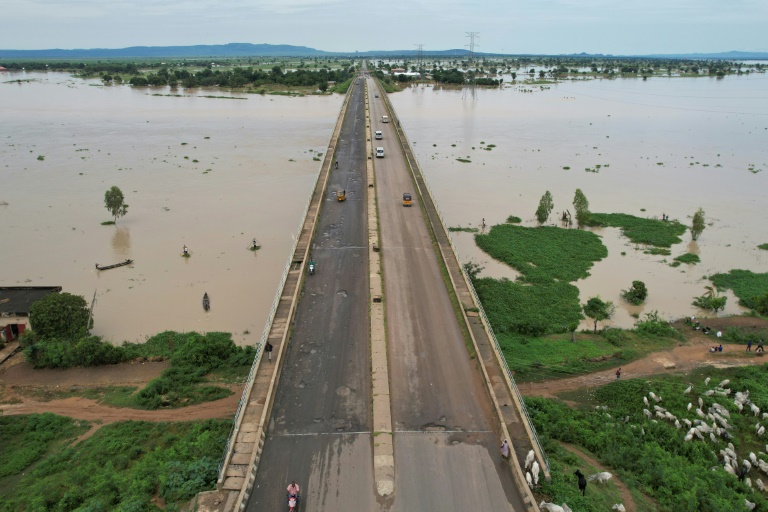
More than 600 people are now known to have perished in the worst floods in a decade in Nigeria, according to a new toll released Sunday.

The disaster had also forced more than 1.3 million from their homes, said a statement by Nigeria’s ministry of humanitarian affairs, released on Twitter.

“Unfortunately, over 603 lives have been lost as of today October 16, 2022,” said Humanitarian Affairs Minister Sadiya Umar Farouq.

The previous toll from last week stood at 500, but the numbers had risen in part because some state governments had not prepared for the floods, said the minister.

The flooding also completely destroyed more than 82,000 houses and nearly 110,000 hectares (272,000 acres) of farmland, said Umar Farouq.

While the rainy season usually begins around June, the rainfall had been particuarly heavy since August, said the National Emergency Management Agency (NEMA).

In 2012, 363 people died and more than 2.1 million were displaced by flooding. 

Sub-Saharan Africa is disproportionately affected by climate change and many of its economies are already struggling from ripple effects of the Russia-Ukraine war.

Rice producers have warned that the devastating floods could impact prices in the country of some 200 million people where rice imports are banned to stimulate local production.

The World Food Programme and the UN’s Food and Agriculture Organization said last month that Nigeria was among six countries facing a high risk of catastrophic levels of hunger.

Club Africain of Tunisia score seven in CAF Cup rout

Ahmed Khalil scored twice as former African champions Club Africain of Tunisia trounced Kipanga of Zanzibar 7-0 on Sunday to reach the CAF Confederation Cup play-offs.

After a goalless first leg of the last 32 tie in the Indian Ocean island last weekend, the north Africans wasted little time establishing their superiority in Rades near Tunis.

Zouhaier Dhaouadi floated a free-kick over the defensive wall and into the net less than two minutes in.

Mohamed Ali Omri also scored to give the 1991 African champions a two-goal advantage by half-time at the 60,000-seat national stadium.

Kipanga collapsed in the second half, conceding goals at regular intervals until Khalil completed the rout with his second goal six minutes from time.

The seven-goal aggregate victory was not the biggest of the weekend, though, in the African equivalent of the UEFA Europa League.

On Saturday, Pyramids of Egypt also scored seven in their second leg against Al Hilal Alsahil of Sudan in Cairo to complete a 9-0 overall triumph.

Hearts of Oak from Ghana, winners of the 2000 CAF Champions League, bowed out despite beating Real Bamako of Mali 1-0 in Accra through a late Caleb Amankwah goal.

Real won the first leg 3-0 and their overall victory means Ghana will not have any representative in the group phase of the CAF competitions this season.

Daring Club Motema Pembe from the Democratic Republic of Congo, the 1994 winners of the now defunct African Cup Winners Cup, scraped into the play-offs.  

After a shock away defeat by Saint Michel United of the Seychelles, the Kinshasa outfit won the return match 2-0 to secure a place in the play-offs draw on Tuesday.

Forced to play behind closed doors after crowd trouble in a CAF match last season, Pembe took an early lead through Jonathan Ikangalombo.

But the hosts had to wait until 13 minutes from time to score the crucial second goal, which Mpiana Mundindi netted.

Al Akhdar and Al Nasr of Libya, Diables Noirs of Congo Brazzaville, Future of Egypt and USM Alger of Algeria won other ties.

African debutants Future are a side to watch as they hammered Kallon of Sierra Leone 4-0 in Cairo, with Ayman Sfaxi scoring twice, to complete a 6-0 aggregate victory.

In the play-offs, Confederation Cup last 32 winners will play CAF Champions League last 32 losers in two-leg ties on November 2 and 9 with group places up for grabs. 

Authorities in Ethiopia's rebel-held Tigray say would respect ceasefire

Authorities in Ethiopia’s rebel-held Tigray region announced Sunday they would respect a ceasefire as fighting intensified in the country’s war-torn north, and the African Union called for an immediate truce.

International concern is growing around the fate of Shire, a city of 100,000 people in northwest Tigray, where Ethiopian and Eritrean troops have launched a joint offensive and civilian casualties have been reported.

UN chief Antonio Guterres has joined the United States and other Western powers in voicing alarm over the worsening violence and called for a peaceful settlement to “this catastrophic conflict”.

Ethiopian Prime Minister Abiy Ahmed’s government and the Tigrayan authorities have accepted an AU invitation to talk, but negotiations set for last weekend in South Africa failed to materialise and no new date has been announced.

On Sunday, AU Commission chair Moussa Faki Mahamat urged the warring sides to “recommit to dialogue as per their agreement to direct talks to be convened in South Africa”.

“The Chairperson strongly calls for an immediate, unconditional ceasefire and the resumption of humanitarian services” to areas cut off by the fighting, Faki said in a statement released on Sunday, but dated Saturday.

Authorities in Tigray, which has been under rebel control since government forces were ousted in June 2021, welcomed the statement and said they would respect an internationally backed ceasefire.

“We are ready to abide by an immediate cessation of hostilities,” their statement read. 

“We also call on the international community to compel the Eritrean army to withdraw from Tigray, take practical steps towards an immediate cessation of hostilities, and press the Ethiopian Government to come to the negotiating table.”

A spokesman for Ethiopia’s government did not respond to a request for comment when contacted by AFP.

– Aid worker killed –

International alarm over the latest fighting came as US special envoy Mike Hammer arrived in Addis Ababa to push for a peaceful resolution to nearly two years of war. 

Fighting resumed in August after a five-month lull, dimming hopes of settling a conflict that has killed untold numbers of civilians, and been marked by atrocities on all sides.

“Intensively working with the African Union and other partners to launch an AU-led peace process in the coming days,” the US State Department’s Africa Bureau posted on Twitter on Sunday. 

Talks were to be mediated by the AU’s Horn of Africa envoy Olusegun Obasanjo, South Africa’s former deputy president Phumzile Mlambo-Ngcuka and former Kenyan president Uhuru Kenyatta. 

Diplomats suggested logistical issues were partly to blame for last weekend’s much-anticipated meeting in South Africa not going ahead.

Fresh offensives on multiple fronts have halted desperately needed aid into Tigray, where the UN says millions have fled their homes, and hundreds of thousands are close to famine.

The International Rescue Committee (IRC), an aid organisation delivering relief to Tigray, announced on Saturday that one of its staff was among three civilians killed in an attack in Shire, while another was injured.

The World Food Programme (WFP) on Sunday said it received reports of Friday’s attack near where the IRC was distributing food “to WFP beneficiaries, including vulnerable mothers and children”.

“WFP condemns any deliberate targeting of humanitarian activities” and calls on all sides to respect international law, a WFP spokesperson in Ethiopia told AFP in a statement.

Shire had been “subjected to continuous heavy artillery and air strikes all this week” and civilians have been fleeing, a humanitarian worker in the city told AFP on condition of anonymity.

– ‘Indiscriminate attacks’ –

US aid chief Samantha Power said of the escalating conflict in northern Ethiopia that “the risk of additional atrocities and loss of life is intensifying, particularly around Shire”.

“Recent indiscriminate attacks by the Ethiopian National Defense Forces and Eritrean Defense Forces in Shire, and reports that Eritrean forces may soon take control of civilian population centers, are gravely concerning,” Power wrote on Twitter on Sunday.

Eritrea sided with Ethiopia when war began in November 2020 after Abiy accused Tigray’s dissident ruling party, the Tigray People’s Liberation Front (TPLF), of attacks on army camps.

Eritrea is a historic enemy of the TPLF, which dominated Ethiopia’s ruling coalition until Abiy took power in 2018, and its forces have been accused of mass rape and murder in Tigray.

The re-entry of Eritrea into the conflict has “made matters significantly worse” and they must leave Ethiopia, said Hammer.

Eritrea says it is being “scapegoated” and has accused the US and others of turning a blind eye to TPLF atrocities.

Close Bitnami banner
Bitnami