Africa Business

Adidas, Morocco resolve row over Algeria football jerseys

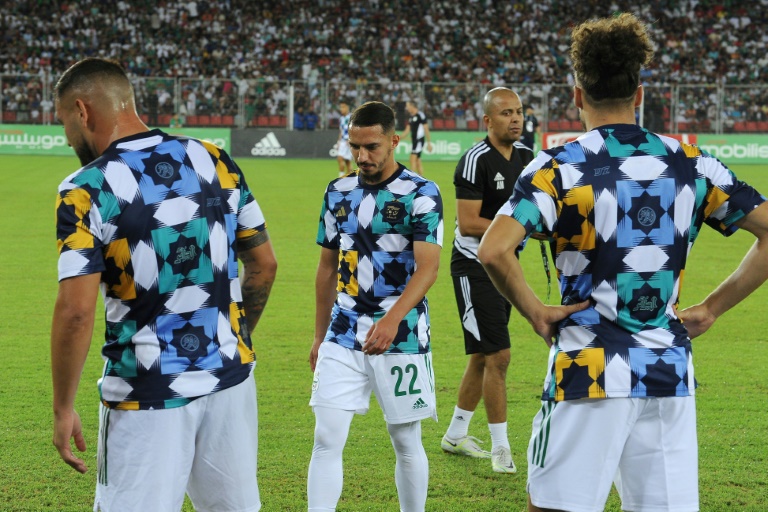
German sportswear giant Adidas said Friday a row with Morocco over a design on a football top for arch-rivals Algeria had been resolved, and that it regretted the controversy.

Last month, Rabat asked Adidas to axe the new tops, accusing it of appropriating “Moroccan cultural heritage” due to the use of a pattern known as “zellige”, common in Moroccan ceramic mosaics.

A lawyer acting for the culture ministry demanded the withdrawal within two weeks of the jerseys which he claimed was “inspired” by the colourful Moroccan designs. 

Adidas reported Friday a “positive resolution” to the dispute following talks with the ministry, and the tops, worn by the Algerian team for pre-match warm-ups, will not be withdrawn.

“The design was inspired indeed by the zellige mosaics pattern, and was at no time intended to offend anyone,” said the company in a statement.

“We would like to express our deep respect to the people and craftsmen of Morocco and regret the controversy surrounding this case.”

Mourad Elajouti, the lawyer acting for the culture ministry, welcomed the news, saying the case highlighted “the importance of defending our cultural heritage and the ancestral know-how of Moroccan craftmanship”.

But there were signs of fresh problems for Adidas — local media in Algeria reported the country’s football federation is not satisfied with the sports giant, and is thinking of terminating its contract with them.

An Adidas spokesman said he would not comment on press speculation.

On September 23, Adidas released on Twitter a photo of the new 2022-2023 season kit for the Algerian national team it said was “inspired by culture and history”.

The design, according to Adidas, drew its inspiration from the Mechouar Palace in Tlemcen, in northwestern Algeria.

Ties between Morocco, which has qualified for the World Cup finals that kick off in Qatar next month, and Algeria, which has not, have long been shaky. 

The neighbours are at odds over the disputed territory of Western Sahara, where the Algiers-backed Polisario Front is seeking independence from Rabat’s rule.

Algeria severed ties in August 2021, accusing Rabat of “hostile acts”, a move which Morocco said was “completely unjustified”.   
Court challenge in Kenya over GM crops

A Kenyan lawyer said Friday he has filed a court challenge to a decision by the new government to lift a decade-old ban on genetically modified crops.

Paul Mwangi wants the High Court to set aside last week’s cabinet order allowing the open cultivation and importation of GM crops to Kenya, which is currently in the grip of its worst drought in four decades. 

“The hasty removal of all regulatory protocols… is neither rational nor reasonable,” Mwangi said in court documents dated October 13.

The government of newly elected President William Ruto last week “effectively” lifted the 2012 ban saying it was in response to dwindling food security. 

In his lawsuit, Mwangi argues that the move was unconstitutional as there were concerns over the safety of GM crops and that it also risked driving small-scale farmers out of business.  

“It derogates the rights of peasants and people working in rural areas of access to adequate food that is produced through ecologically sound and sustainable methods,” he said. 

The government has defended its decision, saying it would enable Kenya to have disease-resistant crops and improve yields.

Mwangi — a counsel for defeated presidential candidate Raila Odinga — told AFP on Friday he was waiting to hear from the court when the case will be heard.

Kenya, like many other African nations, banned GM crops over health and safety concerns and to protect smallholder farms, which account for the vast majority of rural agricultural producers in the country.

However, Kenya had faced criticism over the ban including from the United States which is a major producer of GM crops.

Activists and agriculture lobby groups last week protested over the lifting of the ban, saying it opened the market to US farmers using sophisticated technologies and highly subsidised farming and threatened the livelihoods of small-scale farmers. 

Agriculture is the backbone of Kenya’s economy, contributing over 20 percent to gross domestic product.

Ruto, a former chicken seller turned millionaire businessman, was elected  in August on a promise to turn around Kenya’s stuttering economy and tackle a cost of living crisis.

Within weeks of taking office in September, he halved the price of fertilisers to improve crop yields in the midst of the drought that has affected 23 of 47 counties. 

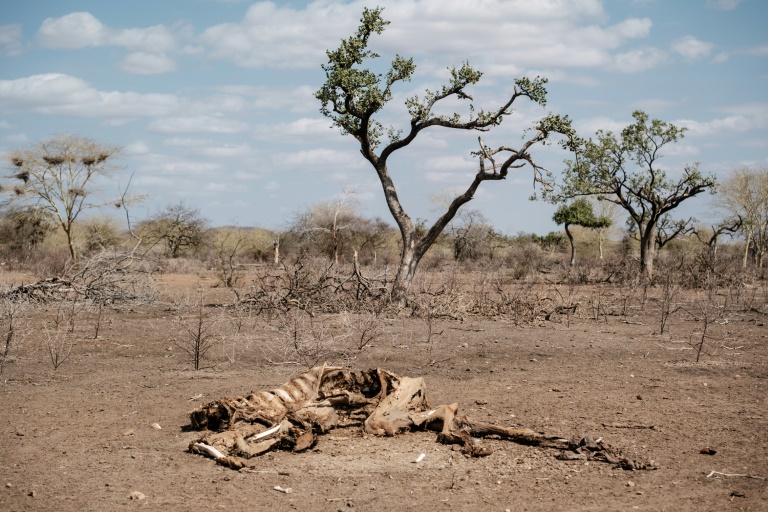
Four consecutive rainy seasons have failed in Kenya, Somalia and Ethiopia, an unprecedented climatic event that has pushed millions across the Horn of Africa into extreme hunger.

Nigerian university lecturers end eight-month strike over pay

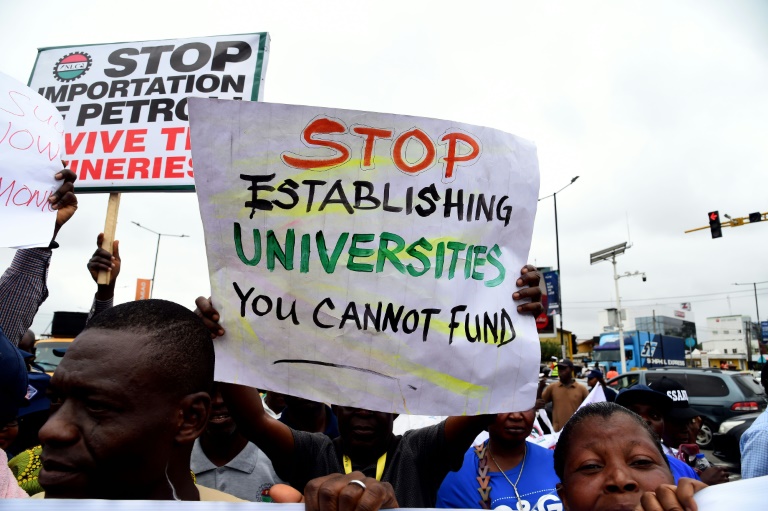
Nigerian university lecturers on Friday suspended an eight-month strike over pay, welfare and crumbling facilities, the latest industrial dispute to hit Africa’s most populous nation.

The strike by the Academic Staff Union of Universities (ASUU) shut down federal government-owned universities since February 14 despite talks with government for a truce.

ASUU announced on Twitter it “has suspended the strike”, without giving details.

The union’s lawyer, Femi Falana told AFP the decision to end the protracted strike was taken late Thursday.

“The decision was taken last night. ASUU will hold a press conference in Abuja this morning to officially announce the decision.”

Private universities and those owned by local state governments were not affected by the strike as membership of ASUU is voluntary.

Nigeria, a federal entity, comprises 36 states and Abuja, the administrative capital.

The latest strike was the second longest by ASUU, known for its work stoppages. In 2020, in the wake of the Covid-19 pandemic, Nigerian university teachers went on strike for nine months.

The demands of the lecturers, as in previous strikes, are the same — higher pay, improved welfare, increased funding and upgraded facilities.

Last month, a court ordered the striking teachers to resume work after several rounds of talks with the government had failed to resolve the dispute. 

But early this week, ASUU leaders met with the speaker of the House of Representatives and agreed to call off the strike.

Public sector strikes are common in Nigeria which faces a myriad of challenges, including growing insecurity and falling oil revenue as well as high debt payments, weak national currency, inflation and high unemployment.

Those issues will be in focus as Nigerians go to the polls in February to elect a successor for President Muhammadu Buhari who will step down after two terms in office.

Street art animates Johannesburg's gritty streets

Next to a wall surrounding an empty lot in central Johannesburg, a cherry picker carries a man above the street.

He is not repairing power lines, but instead spray painting a canvas larger than a billboard with portraits of four contemporary South African musicians.

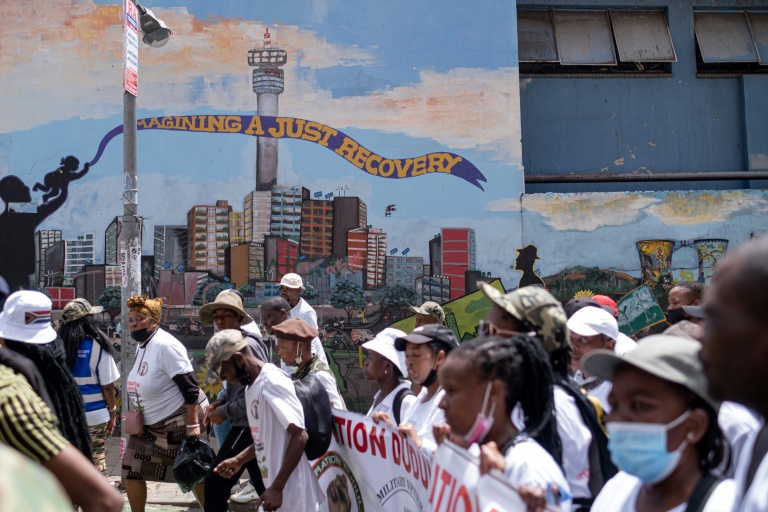
Known as Dbongz, the artist is at the vanguard of a growing movement that has embraced Johannesburg’s grit to create paintings that have helped the once neglected city centre spring back to life.

“(The city) used to be dull, mundane and at the same time dodgy,” said the 32-year-old. 

“But because of colour, because of these lively murals that we paint, people start seeing it as a place they can go into.”  

What was an artists’ pastime has increasingly become a business, with real estate firms to commissioning artworks to give their buildings a facelift. 

In some neighbourhoods, walls around every corner have been given a splash of colour. 

In the 1990s, Johannesburg’s city centre notoriously descended into a period of blight and abandonment. 

Already hollowed by sanctions in the 1980s, the advent of democracy in 1994 was met with the flight of white-owned businesses to high-walled suburbs.

Entire blocks were left empty. Hotels simply bricked over their doors, without even bothering to auction off the contents.

In the early 2000s, property entrepreneurs returned and started experimenting. 

City Property, a real estate firm, bought up several abandoned office towers to convert them into affordable housing. 

Stuck with an old, tiled wall facing the street, the company commissioned South African artist Hannelie Coetzee to revitalise it.

“Cities are cold, concrete, very gridded-up places. Art brings a bit of a soft edge, or a thought-provoking moment that you might not expect,” she said. 

“That for me is the magic thing about public art. It creates meaning through the artists’ voice, for a specific city.”

She created a 166-square-metre portrait of a woman, crafted from more than 2,000 plates, saucers and bowls. 

The woman’s sweep of hair was inspired by how South African women today are adapting traditional hairstyles into trendy new looks.

Developer Adam Levy handed a 10-storey building to American artist Shepard Fairey, best known for his iconic “Hope” portrait of Barack Obama.

An exposed wall became a portrait of Nelson Mandela towering over the city.

– ‘Bigger light’ –

Artistic improvements serve as subliminal cues to visitors that someone is caring for the neighbourhood, said Levy.

“Now it’s so patently evident that there is a system behind the scenes that cares about what’s going on here. And I think people can open up in that space,” Levy said.

“They feel comfortable and safe. They feel well looked after and appreciated.”

Over the past decade, brands have waded into the sector, commissioning murals for advertising purposes, said Marcel Swain, a head of marketing at Heineken South Africa, which recently held a street art competition.

Graffiti artists can be paid thousands of rand for a piece, he said. 

Dbongz has become one of Johannesburg’s most recognisable street artists. 

His works have become a visual trademark for the city and have inspired a wave of others. 

Dbongz’s latest mural was commissioned by Apple Music to showcase vocalist Simphiwe Dana, folk guitarist Bongeziwe Mabandla, jazz musician Mandisi Dyantyis and amapiano sensation Nobuhle.

The musicians’ faces are painted in black and white but their clothing and jewellery jumps out in vivid colours, against a bright green backdrop in patterns inspired by traditional textiles.

The artwork speaks to another set of portraits of deceased musicians he painted on massive concrete pillars supporting a double-decker highway cutting through the Newtown cultural district.

Born in a township on the western outskirts of the city, the artist is also known for his work in impoverished areas, where he sometimes paints neighbourhood children on large walls. 

“It gets people to believe in themselves and see themselves in a bigger light, bigger than what it is that’s happening in their lives,” he said.

Burkina Faso poised for political change after coup turmoil

Political parties, social and religious groups and representatives of the security forces gather Friday to chart the next phase in Burkina Faso’s future after the country’s latest coup.

The forum in the capital Ouagadougou will take place two weeks after the jihadist-torn Sahel state was rocked by its second military takeover in less than nine months.

A 34-year-old captain, Ibrahim Traore, leading a faction of disgruntled junior officers, forced out Lieutenant-Colonel Paul-Henri Sandaogo Damiba.

Damiba had seized power only in January, toppling the country’s last elected president, Roch Marc Christian Kabore.

The talks opening on Friday are scheduled to appoint a successor to Damiba as transitional president — a head of state who will rule in the interim before power is eventually returned to civilians.

Supporters of Traore are clamouring for him to be that man, although he has outwardly said he does not want the job.

The head of the forum’s organising committee, Colonel Celestin Compaore, said the conference “will examine and adopt (a) charter of transition, appoint a transitional president in line with the charter and receive any proposals for the proper execution of the charter.”

– Troubled country –

One of the world’s poorest nations, Burkina Faso has a long history of coups since independence from France in 1960.

The latest takeovers are rooted in unrest within army ranks over a jihadist insurgency that swept in from neighbouring Mali in 2015.

Thousands of people have been killed and nearly two million have been displaced.

Barely a week goes by without the announcement of a bloody attack on the poorly-equipped security forces. More than a third of the country lies outside government control.

Traore said Burkina would uphold a pledge that Damiba made to the West African bloc ECOWAS involving new elections and a return to civilian government by July 2024 at the latest.

But like Damiba before him, Traore defended the coup on the grounds that the authorities were failing to do enough against the jihadists.

The coup announcement on September 30 said it was time to “refocus the transition (interim military rule) on the security emergency”.

Damiba fled to neighbouring Benin on October 2, after a weekend of violent protests that also targeted the French embassy and cultural centre and saw demonstrators raise Russian flags.

– Vocal support –

Traore said he would only stay at the helm to carry out “current business” but at meetings in Ouagadougou and Burkina’s second city, Bobo-Dioulasso, supporters have been clamouring for him to be appointed to the top job.

“Captain Ibrahim Traore must fully implement the reason for which he came,” said Oscar Seraphin Ky, one of his backers.

France, a close ally in Burkina’s fight against the jihadists, has watched the new turmoil with deep concern, especially the anti-French sentiment.

A coup in Mali in 2020 sparked friction with France and led to the country’s military entwinement with Russia. French troops that had been fighting jihadists in Mali for nine years pulled out this year after the row escalated.

The French ambassador to Burkina Faso, Luc Hallade, has advised French citizens to limit their movements on Friday to “what is strictly necessary… out of concern for new protest movements”.

According to local pollster Apidon, 53 percent of those questioned would prefer to have Traore in charge.

Among his most ardent supporters, the scale of Burkina’s security crisis makes it crucial to have a military man in charge, it found.

Mali bus blast kills at least 11 people: hospital source

At least 11 people were killed and 53 injured when a bus hit an explosive device in central Mali on Thursday, according to a hospital source.

The explosion occurred on the road between Bandiagara and Goundaka in the Mopti area in the early afternoon, a security source said. The region is known as a hotbed for jihadist violence.

Earlier, police and local sources gave a provisional toll of 10 dead and many seriously injured.

“We have just transferred nine bodies to the clinic. And it’s not over yet,” said Moussa Housseyni of the local Bandiagara Youth Association, adding that they were all civilians.

Mali has long struggled with a jihadist insurgency that has claimed thousands of lives and forced hundreds of thousands from their homes.

Mines and improvised explosive devices (IEDs) are among the jihadists’ weapons of choice. They can explode on impact or be detonated remotely. 

A report by MINUSMA, the UN mission in Mali, found that mines and IEDs had caused 72 deaths in 2022 as of August 31. Most of the victims were soldiers — but more than a quarter were civilians, it said.

Last year, 103 people were killed and 297 injured by IEDs and mines.  

1.4 million children malnourished in South Sudan: charity

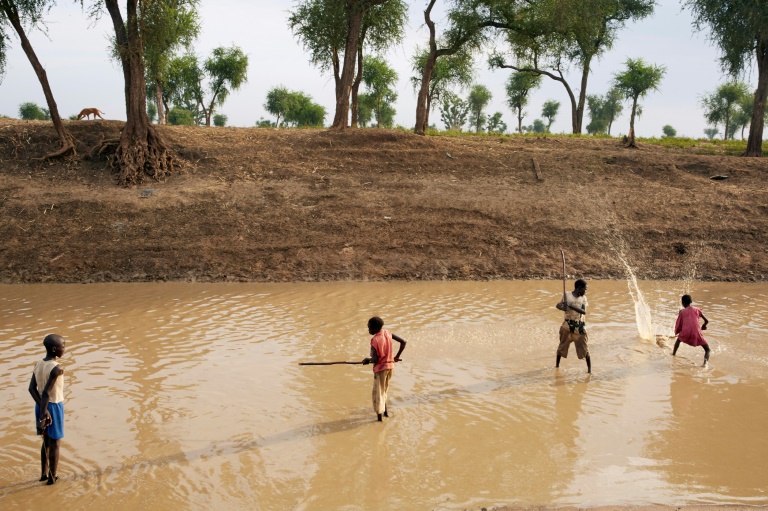
About 1.4 million children under the age of five are suffering from malnutrition in South Sudan, caught in the grip of widespread flooding and intercommunal conflict, the British charity Save the Children said Friday.  

It said the world’s youngest country, which has a largely rural population, is reeling from “its worst hunger crisis” since independence from Sudan in 2011.

“The situation has deteriorated in recent months with more than 615,000 people impacted by an unprecedented fourth consecutive year of large-scale flooding, destroying homes, crops,” Save the Children said in a statement. 

Cases of malaria and snakebites are also soaring, it said, with children and women particularly hard hit.

The flooding coupled with a vicious cycle of often deadly interethnic conflict has uprooted thousands of people from their homes, the charity said, urging the international community to not “overlook South Sudan or to divert funding to other crises”.

Around 909,000 people have been affected by flooding across nine out of 10 states, the UN’s Office for the Coordination of Humanitarian Affairs (OCHA) said Tuesday. 

South Sudan, like many countries in sub-Saharan Africa, has suffered from the fallout of the war in Ukraine which has sent global prices of food and fuel soaring.

The value of the local currency has also slumped by nearly 40 percent this year, Save the Children said.

The UN’s World Food Programme warned in March that more than 70 percent of South Sudan’s 11 million people would face extreme hunger this year because of natural disasters and violence.

Save the Children called on leaders planning to attend November’s COP27 climate summit in Egypt to increase funding to help vulnerable communities and children build resilience against climate disasters and shocks.

“The first generation of South Sudan children are growing up now and we must not fail them by allowing South Sudan to become a forgotten crisis,” said country director Jib Rabiltossaporn.

One of the poorest nations on the planet despite large oil reserves, South Sudan has lurched from crisis to crisis since independence, spending almost half of its life as a nation at war. 

Kenya denies defaulting on China railway debt

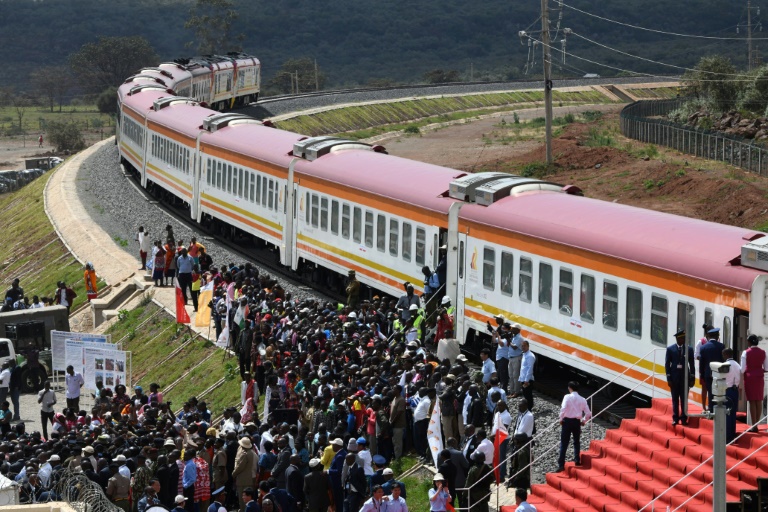
Kenya on Thursday denied it had defaulted on interest repayments on a loan advanced by China for the construction of a railway line from the port city of Mombasa that opened in 2017.

The $5 billion project, financed 90 percent by China, replaced the so-called “Lunatic Express” — a line built more than a century ago by colonial power Britain which was notorious for lengthy delays and breakdowns.

Kenya’s Business Daily reported that the government failed to repay interest on the loan in the financial year ended June, attracting a fine of 1.312 billion Kenyan shillings ($10.8 million). 

But Treasury Cabinet Secretary Ukur Yatani rejected the report as “misinformation”, saying the financial position of the East African economic powerhouse was “sound and robust”.

“We wish to state categorically that Kenya has never defaulted on its settlement of its debt service obligations to any of its creditors,” Yatani said in a statement. 

The Standard Gauge Railway (SGR) is Kenya’s biggest infrastructure project since independence from Britain in 1963 and was launched as a master plan by East African leaders to connect their nations by rail. 

Currently snaking from Mombasa via the capital Nairobi to the Rift Valley town of Naivasha, it is planned to eventually link Uganda, Rwanda, South Sudan, Burundi and Ethiopia.

The railway was to be managed by the Chinese contractor for five years before being handed over to the Kenyan government.

But it has posted losses, with analysts worrying the trend could continue after newly elected President William Ruto last month reversed a policy that made it mandatory for cargo to use the railway. 

China is Kenya’s second-largest lender after the World Bank and has funded a number of costly infrastructure projects that have raised concerns about Nairobi taking on more debt than it can afford.

The country’s public debt load in June stood at 8.6 trillion shillings ($71.1 billion), an 11.5 percent rise from a year earlier, according to government figures.

Loan interest repayments have however shot up in recent months as the value of the shilling rapidly loses ground against international currencies, trading at 121 to the dollar on Thursday.

Yatani said there was no cause for alarm as the country frequently undergoes independent sovereign rating reviews which are published widely. 

“At no time has Kenya been flagged as a country defaulting on its external debt obligations,” he added.

'Great sadness' for artists after French venue ransacked in Burkina coup

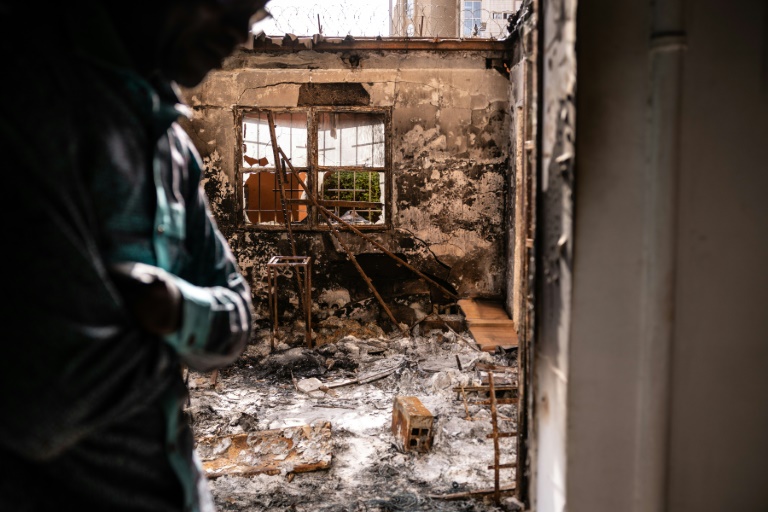
The day after Burkina Faso’s latest coup, protesters attacked the French Institute, wrecking not just a symbol of the country’s former colonial power but also a valued showcase for artists and free expression.

Demonstrators left charred walls, smashed windows and books strewn across the floor of the cultural centre in Ouagadougou, Burkina’s capital.

Standing in front of a pile of paintings, artist Ali Ouedraogo said it was “a great sadness” to see the Institute in such a state.

“We’ve been coming to this place for years — it’s become a second home for us,” he said. It is “a loss for Burkinabe, especially artists.”

“This is the work of real monsters,” said William Somda, who organises cultural events. 

“Nothing today justify the destruction of a venue that is so important to the cultural, academic, professional and artistic world.”

The Institute was just one of the French buildings targeted during the turmoil, which began on the evening of September 30.

Demonstrators also attacked the French embassy in the capital the Institute in Burkina’s second largest city, Bobo-Dioulasso.

They accused Paris — which has a military presence in the West African country — of protecting former junta leader Lieutenant-Colonel Paul-Henri Sandaogo Damiba, who seized power in January before being ousted by junior officers led a 34-year-old captain, Ibrahim Traore.

In a statement read out on national television, the officers said Damiba was suspected to have taken refuge at a French military base “to plan a counteroffensive to stir up trouble in our defence and security forces.”

Damiba denied he was at the base but provided no further details about his whereabouts at the time. It later emerged he had fled to neighbouring Togo after a prolonged standoff.

France bluntly denied that it had been harbouring him.

Anti-French sentiment was palpable on the streets at the height of the turbulence.

Demonstratorschanted: “France out.” Some waved Russian flags.

The road leading to the Institute is still littered with broken glass, smashed computers and burnt air conditioning units.

In the entrance hall, there are burnt gates and baggage scanners.

Police have cordoned off the building, AFP saw on Wednesday.

“The damage is enormous,” said the centre’s manager, Thierry Bambara. “We’ll have to wait for a complete assessment before we can put a figure on it.”

“All the buildings were ransacked,” from the centre’s language unit to its performance areas, he said. 

In the Institute’s library, the floor is a clutter of keyboards, CDs, toppled shelves and books covered in soot.

Burkina Faso is one of the world’s poorest countries, ranked 182nd out of 189 nations under the UN’s Human Development Index. High-quality concert venues and libraries are rare.

“The ransacking… is a tough blow for us,” said Burkinabe musician Kantala. “Our plans are taking a hit — we’re not sure we can find a replacement for what this place offered us.” 

The Institutes in Ouagadougou and Bobo-Dioulasso are closed until further notice, according to the French embassy, which has also suspended its services.

Africa's longest oil pipeline takes shape in Niger

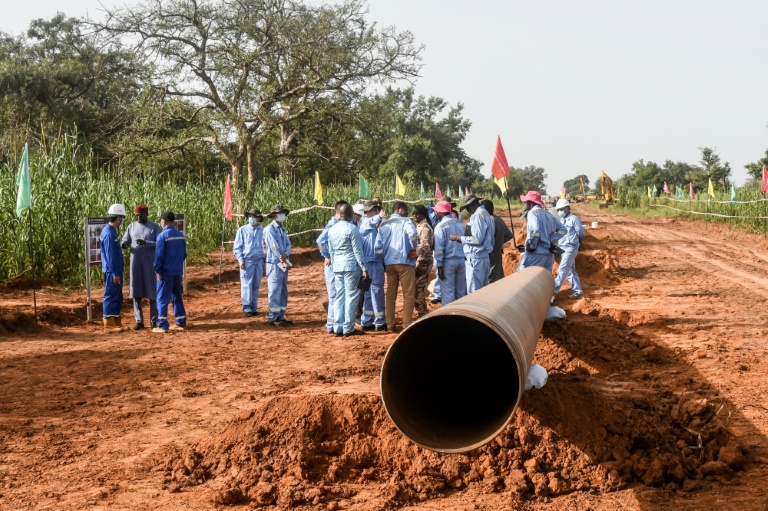
Chinese and Nigerien workers haul giant steel pipes over mounds of earth as heavily armed soldiers keep guard.

At Gaya in southwest Niger, near the border with Benin, the longest oil pipeline in Africa is being built. 

With a projected length of nearly 2,000 kilometres (1,240 miles) — including 1,250 km in Niger itself — the pipeline will connect oil wells in the eastern region of Agadem, a zone troubled by deadly jihadist incursions, with the Beninese port of Seme.

Climate campaigners are clamouring for an end to investment in carbon-spewing fossil fuels.

But in Niger — the poorest country in the world according to the benchmark of the UN’s Human Development Index — this project is seen as an economic lifeline.

The landlocked West African state became an oil producer in 2011. The China National Petroleum Corporation (CNPC), exploiting the reserves, has been sending oil by pipeline to refineries in Zinder in south-central Niger.

For exports, Niger initially planned to ship crude through the Cameroonian port of Kribi via neighbouring Chad.

It eventually opted for the “Beninese corridor” terminating on the northern rim of the Gulf of Guinea.

Launched in 2019, the project was supposed to be completed in 2022, but the Covid-19 pandemic slowed it down, said Nafiou Issaka, deputy general manager of the West African Oil Pipeline Company (WAPCO).

More than 600 km of pipeline has already been laid, and Niger is on track to sell crude on the international market from next July, according to the ministry of petroleum and energy.

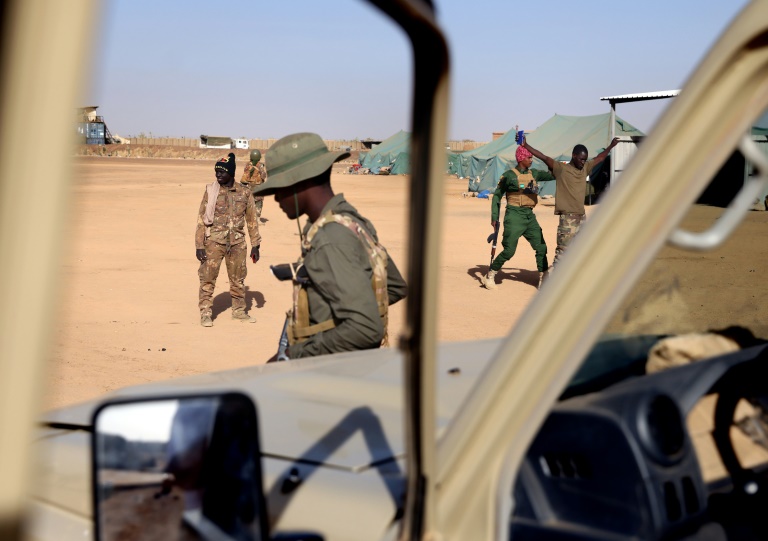
More than 700 soldiers have been deployed to ensure security for the project, though a large part of the territory it crosses has so far been spared from jihadist violence, according to a security source who asked not to be named.

– ‘Niger’s biggest investment’ –

Niger has long been a major producer of uranium, ranked in global 7th place in 2021 with a total output of 2,248 tonnes, after a year-over-year decline in the past decade, according to the World Nuclear Association.

But uranium revenues continue to fall and the country’s leaders are banking on oil to boost the national budget, much of which is devoted to the fight against jihadists in the southeast and the west.

Six billion dollars will be invested in the pipeline.

“It is Niger’s biggest investment since independence” from France in 1960, said Kabirou Zakari, who heads the ministry’s oil refining division.

From 2023, oil production should be increased to 110,000 barrels per day, of which 90,000 barrels will be exported, Zakari told AFP.

Oil could then “generate a quarter of the country’s GDP” — more than 13.6 billion dollars in 2020 according to the World Bank — and “about 50 percent of Niger’s tax revenue”, compared to four percent and 19 percent respectively today, added Zakari.

He estimated Niger’s oil reserves at around two billion barrels. According to official projections, Niger will produce 200,000 barrels per day in 2026.

– Fuel smuggling –

The Algerian oil company Sonatrach has announced an “encouraging” discovery of oil in Kafra, a vast area of 23,737 square kilometres (9,165 square miles) on the border with Algeria.

The British company Savannah Energy, a major player in the gas industry in neighbouring Nigeria, says it too has found deposits in the Agadem region, where the Chinese are already operating.

A black market for oil products is flourishing in the capital Niamey and in other big cities. A litre of petrol (gasoline) exchanges hands for 300 FCFA (40 US cents), just under half of the price at the pump.

On Tuesday, Niger’s President Mohamed Bazoum said fuel smuggling organised from neighbouring Nigeria had become a source of “supply for terrorists” and called for a crackdown.

Close Bitnami banner
Bitnami