Africa Business

Senegalese former PM has patriarchy — and presidency — in her sights

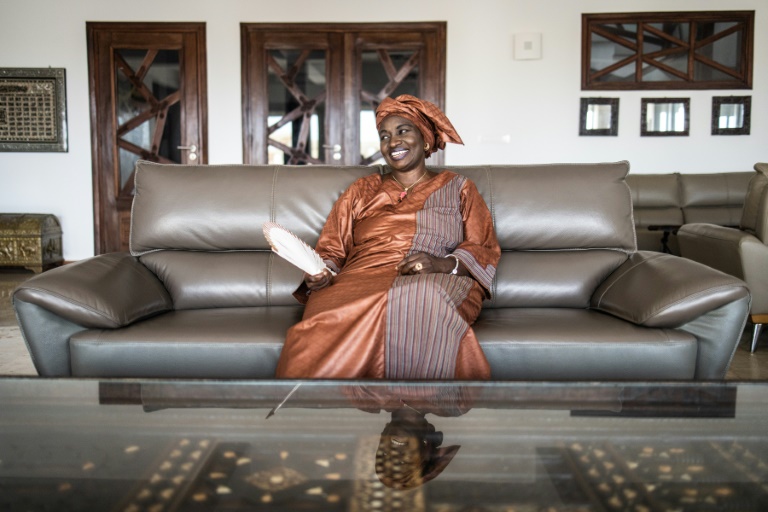
“I think the whole thing is about a woman challenging a big shot,” says Aminata Toure.

“This man needs to be challenged.”

Toure makes no secrets about her plans to confront Senegalese President Macky Sall, whose government she once led, and of her goal to succeed him one day.

The 60-year-old former prime minister has surged to prominence in Senegal, staking a claim on becoming the West African country’s first female president.

Toure’s decision to sit as an independent MP has put an end to the presidential coalition’s single-seat majority, throwing Senegalese politics into flux.

She fell out with Sall last month after he passed her over for the role of parliamentary speaker, even though she led his party list in legislative elections in July.

In an interview with AFP at her seafront villa in Dakar, Toure accused Sall of snubbing her, alleging he planned to run for a third term in 2024 and knew she would oppose the bid.

Sall has for months remained vague on whether he will seek to extend his tenure beyond the constitutional limit of two terms — an issue that in Guinea and Ivory Coast has led to explosive violence.

A bid by Sall for a third term “may bring chaos to the country,” Toure warned.

In 2012, when former president Abdoulaye Wade sought an unconstitutional third term, as many as 15 people are thought to have died in protests.

– ‘Bold’ –

After education in France, Toure took up work with Senegal’s branch of Planned Parenthood.

“That’s when I was closest to the people,” the daughter of a doctor and a midwife said.

Leyla Sharafi, a senior gender advisor at the United Nations Population Fund (UNFPA) who worked for Toure, described her as an eager mentor to young professional women.

“Aminata was a visionary and transformational leader”, Sharafi said. “She was very bold and fearless in standing up for what she believed in”.

Toure first met Sall when they were teenagers attending communist meetings.

They began working together closely in 2012 when Toure left a senior role with the UNFPA in New York to run Sall’s first presidential campaign.

He appointed her justice minister — a job where in 2013 she introduced a landmark law allowing Senegalese women married to foreigners to pass their nationality onto their children, as men could. 

She also oversaw a campaign investigating former Wade cabinet ministers for corruption. 

One of them was Wade’s son, Karim, who could be a 2024 presidential contender. Another was Toure’s ex-husband, Oumar Sarr, the father of her first child. (She has two others with another husband and is the legal guardian of a 12-year-old orphan.)

Mamadou Bamba Ndiaye, a founder of Senegal’s Workers’ Communist League and a former leader of the Movement for Socialism and Unity, described Toure as “an intellectual” and “very serious about what she does… very courageous and even a pain in the neck”.

Toure became prime minister in September 2013, losing her job the following July after losing in municipal elections in Dakar. She became a legislator in last month’s elections.

– ‘Old men’ –

Female presidents in Africa, a continent where politics are conservative and society is patriarchal, are extremely rare.

West Africa’s only elected female head of state has been Ellen Johnson Sirleaf, president of Liberia from 2006-2018 and 2011 Nobel Peace laureate. 

Others around the continent have been appointed as stand-ins, often after the death of the male president.

In Toure’s favour is Senegal’s rising prosperity and democratic stability — and her cosmopolitanism.

She is fluent in French and English and as comfortable chatting about Brazilian politics or the Taliban takeover in Afghanistan as she is about her strategy for winning local electoral districts.

But can she appeal to the average Senegalese voter?

“I am Senegalese — I think I’m perceived as Senegalese — but I’m a modern Senegalese”, Toure said. 

“Seventy percent of the population of Senegal is below 35 — they’re young people… including young women.”

Her opponents write her off as simply disgruntled and ungrateful for the appointments Sall has given her. They say she has never won a significant political mandate. 

Toure said the country was ripe for change.

She described other African leaders who have overstayed their welcome as “old men.”

Sall, born in 1961, is “a modern guy — he is a smart guy,” she said. 

“Why would he act like somebody who’s 80 and ruin his reputation?” 
Sudan schools crisis threatens grim future for children

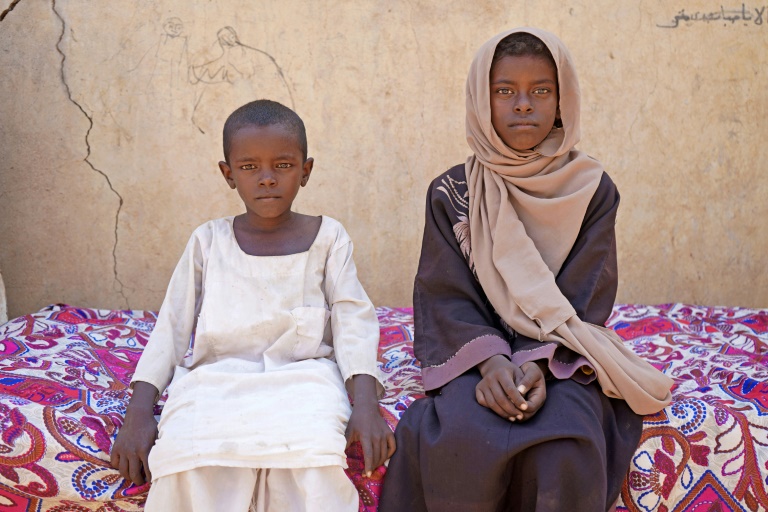
It’s the start of a new school term in Sudan, yet nine-year-old Zahra Hussein stays home helping with household chores, forced to drop out as her family’s money grows ever tighter.

Zahra quit primary school a year ago after she had just started third grade in a rundown school building with old classrooms, cracked walls, broken desks and toilets with little running water.

Until then, she had attended school regularly, aced her exams and most recently, came top of her class.

“I had come third in my class in first grade,” the young girl told AFP at her home in the village of Ed Moussa in Sudan’s eastern state of Kassala. “My father doesn’t have money anymore … so he pulled me out of school.”

Zahra is one of nearly seven million children in Sudan who no longer go to school, a victim of what aid agencies have warned is a “generational catastrophe”. 

Sudan is already one of the world’s poorest countries, plagued by political instability, droughts, hunger and conflict, with an adult literacy rate of only around 60 percent according to the World Bank.

Sudan’s children have for years faced mounting difficulties gaining access to proper education, especially in rural areas.

Families struggling with severe economic hardship were already pulling their children out of school under the three-decade rule of president Omar al-Bashir, who was ousted in April 2019. 

More turmoil followed and Sudan has been reeling from the crippling aftermath of last year’s military coup led by army chief Abdel Fattah al-Burhan that derailed a transition installed after Bashir’s ouster.

Deepening political and economic crises, recurrent ethnic conflicts and prolonged school closures during the Covid-19 pandemic have compounded the education crisis.

Hundreds of teachers have repeatedly gone on strike against worsening living conditions.

On top of the political and economic instability, devastating floods this year damaged more than 600 schools, delaying the start of the academic year from July until October.

– No school, no meals –

Sudan was listed as the second worst — after Afghanistan — in a 2022 Risk Education Index, which ranked 100 countries on the vulnerability of their school systems.

“The education system in Sudan is very fragile and crippled with many underlying factors”, from poor infrastructure to the quality of education, according to Arshad Malik, Save the Children’s country director in Sudan.

“Out of 12.4 million in-school children, seven out of ten 10-year-olds are unable to read and understand a simple sentence,” he said.

For children such as Zahra, Sudan’s rundown school system still offers a way of getting ahead in life.

“I would go back to school right away if we found the money to buy meals or copybooks,” she said. 

Schools in Sudan had offered free lunches for pupils in some rural areas, providing an incentive for struggling families to send their children.

For many, the school meals — including lentils, vegetables and biscuits — were often the only food they would get during the day.

Sudan is already struggling with food shortages that have left a record 15 million people — around one-third of the population — facing “acute food insecurity”.

In the nearby village of Wad Sharifai, schools stopped providing meals two years ago, severely impacting attendance, said a teacher there, Mohamed Taha. 

Othman Abubakr, a day labourer who has nine children, says he could no longer afford to pay for the food, commute and school supplies for all his children. 

“If meals were still available in school … it could have helped,” said Abubakr, who has kept only two of his children in school.

“Now, the children can help bring money home.”  

– ‘Dire need’  –

Abdalla Ibrahim, who owns a coffee shop in Golsa, has several of his seven children either working with him or at a bakery.

Ohaj Soliman, a 43-year-old day labourer, says “putting the children to work is not good … but we have been forced to”.

Girls are especially vulnerable, warned a report last month by the United Nations children’s agency UNICEF and Save the Children. 

Sudanese girls are more likely to be married off early or taken out of school to do household chores, said Save the Children’s Malik.

He estimates around four out of 10 girls have dropped out of school in Sudan, in comparison to three out of 10 boys. 

Malik warned that, if no action is taken, the likely result is “more poverty and inequality”.

Parents who pulled their children out of school are bracing for an uncertain future.

“I know it’s the biggest disaster to leave children uneducated,” said Abubakr. “But we are in dire need.”

Wildlife populations plunge 69% since 1970: WWF

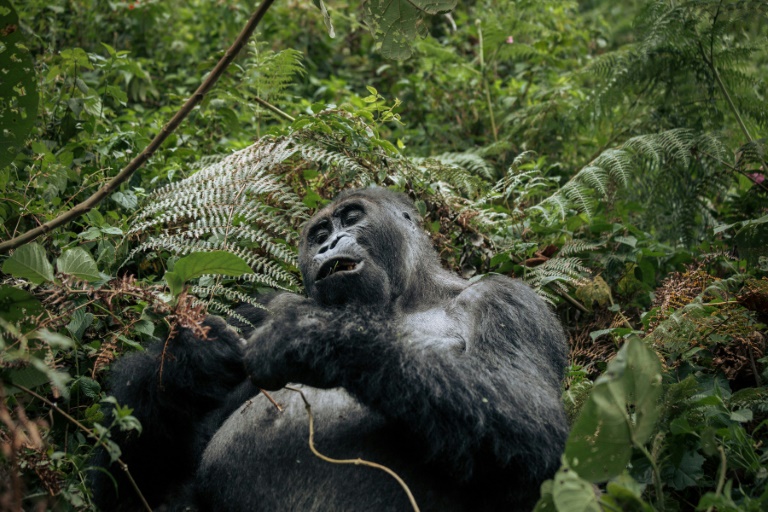
Wild populations of monitored animal species have plummeted nearly 70 percent in the last 50 years, according to a landmark assessment released Thursday that highlights “devastating” losses to nature due to human activity.

Featuring data from 32,000 populations of more than 5,000 species of mammals, birds, amphibians, reptiles and fish, the WWF Living Planet Index shows accelerating falls across the globe.

In biodiversity-rich regions such as Latin America and the Caribbean, the figure for animal population loss is as high as 94 percent.

Globally, the report found that monitored animal populations had fallen 69 percent since 1970.

Marco Lambertini, director general of WWF International, said his organisation was “extremely worried” by the new data. 

“(It shows) a devastating fall in wildlife populations, in particular in tropical regions that are home to some of the most biodiverse landscapes in the world,” he said.

Mark Wright, director of science at WWF, said the figures were “truly frightening”, particularly for Latin America.

“Latin America is renowned for his biodiversity of course, it’s really important for lots of other things as well,” he said. 

“It’s super important for regulating the climate. We estimate currently there’s something like 150 to 200 billion tonnes of carbon wrapped up in the forests of the Amazon.”

That is equivalent to 550 to 740 billion tonnes of CO2, or 10 to 15 times more than annual greenhouse gas emissions at current rates.

The index found that freshwater species had declined more than those found in any other habitat, with an 83-percent population fall since 1970.

The report found that the main drivers of wildlife loss are habitat degradation due to development and farming, exploitation, the introduction of invasive species, pollution, climate change and disease. 

Lambertini said the world needed to rethink its harmful and wasteful agricultural practices before the global food chain collapsed.

“Food systems today are responsible for over 80 percent of deforestation on land, and if you look at the ocean and freshwater they are also driving a collapse of fishery stocks and populations in those habitats,” he said.

With world leaders due to convene in Montreal for the COP15 biodiversity summit in December, the report authors called for an international, binding commitment to protect nature, similar to the 2015 Paris Agreement on climate change.

– ‘Need to act now’ –

The Living Planet Report argues that increasing conservation and restoration efforts, producing and consuming food more sustainably, and rapidly and deeply decarbonising all sectors can alleviate the twin crises of climate change and biodiversity loss. 

It also calls for governments to properly factor into policymaking the value of services rendered by nature, such as food, medicine and water supply. 

“We need to stress the fact that nature loss is not just a moral issue of our duty to protect the rest of the world. It is actually an issue of material value, an issue of security for humanity as well,” said Lambertini.

Some areas experienced more population loss than others — Europe, for example, saw a wildlife population decline of 18 percent.

“But that also masks historic, very extreme losses of biodiversity,” said Andrew Terry, director of conservation at the Zoological Society of London, which helped compile the data. 

“We know that we’re coming out of (a) low point in the state of biodiversity in the northern hemisphere.”

In Africa, where 70 percent of livelihoods rely on nature in some form, the report showed a two-thirds fall in wildlife populations since 1970.

Alice Ruhweza, Africa regional director at WWF, said the assessment showed how there was a “huge human cost” when nature is lost.

She said young people in particular were concerned about wildlife preservation, and would push governments to implement greater protective measures. 

“We have a young, entrepreneurial and increasingly educated population that is showing more awareness around issues of nature,” said Ruhweza. 

“So the potential for transformative change is really significant. But the time is running short, and we need to act now.”

Uganda leader cracks down on traditional healers to stem Ebola

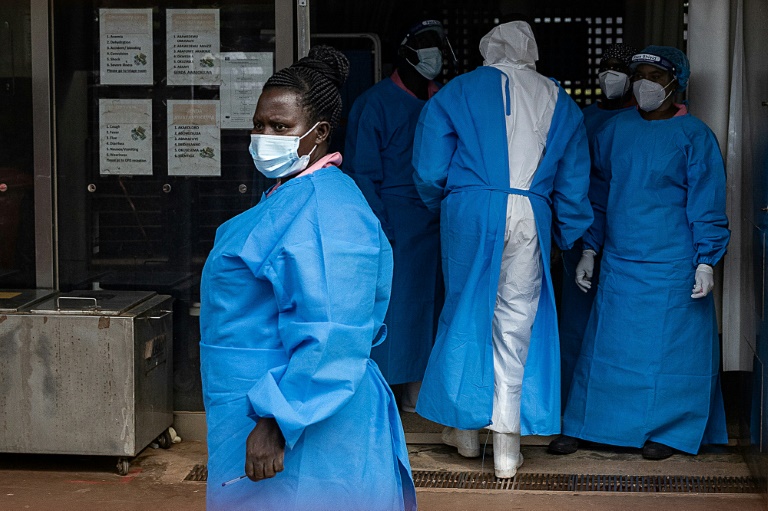
Ugandan President Yoweri Museveni on Wednesday ordered traditional healers to stop treating sick people in a bid to halt the spread of Ebola, which has already claimed the lives of 19 individuals in the impoverished East African country.

In a televised speech to the nation, the veteran leader also directed security officials to arrest all people suspected of having contracted the often-fatal viral haemorrhagic fever if they refused to go into isolation.

His instructions followed a regional ministerial meeting in Kampala to discuss the emergency response to the outbreak after Uganda last month announced its first fatality from the highly contagious disease since 2019.

World Health Organization chief Tedros Adhanom Ghebreyesus had told the meeting from Geneva that clinical trials could start within weeks on drugs to combat the particular strain circulating in Uganda known as the Sudan ebola virus, for which there is currently no vaccine.

A statement issued by WHO said there were 54 confirmed cases and 19 deaths since the outbreak was first reported in the central district of Mubende on September 20.

Museveni said only one fatal case had been recorded in Kampala, a 45-year-old man of Congolese origin who had fled isolation in Mubende after a relative died, and had sought out the help of a witchdoctor.

He later succumbed to the disease in a hospital in the capital, Museveni said, adding that about two dozen people who had been in contact with the man were now in quarantine.

“Witchdoctors, traditionalists and herbalists should not accept sick people now. Suspend what you are doing,” Museveni said.

“There is no witchcraft here. Ebola is a disease. The communities in the affected areas should know Ebola is deadly and spread through contacts with the affected person.”

Since the initial outbreak in the largely rural landlocked country, infections have been found in five areas including Mubende, according to WHO.

– ‘High’ risk of spreading –

“Unfortunately, the Ebola vaccines that have been so effective in controlling recent outbreaks in DRC (Democratic Republic of Congo) are not effective against the type of ebola virus which is responsible for the current outbreak in Uganda,” Tedros told Wednesday’s meeting.

“Several vaccines are in various stages of development against this virus, two of which could begin clinical trials in Uganda in the coming weeks, pending regulatory and ethics approvals from the Ugandan government.”

A WHO assessment has found the risk of the Sudan ebola virus spreading to neighbouring countries was “high due to cross border movements between Uganda and other countries”.

“Our primary focus now is to support the government of Uganda to rapidly control and contain this outbreak, to stop it spreading to neighbouring districts, and neighbouring countries,” Tedros told reporters.

Ebola is named after a river in DR Congo where it was discovered in 1976. Human transmission is through bodily fluids, with common symptoms being fever, vomiting, bleeding and diarrhoea. Outbreaks are difficult to contain, especially in urban environments.

People who are infected do not become contagious until symptoms appear, which is after an incubation period of between two and 21 days.

The worst epidemic in West Africa between 2013 and 2016 killed more than 11,300 people. 

Uganda has experienced several Ebola outbreaks, most recently in 2019 when at least five people died. 

The neighbouring DRC has had more than a dozen epidemics, the deadliest killing 2,280 people in 2020. Late last month it declared an end to an Ebola outbreak that had emerged in the eastern province of North Kivu six weeks previously.

Last week the United States announced tighter screening for people who had travelled to Uganda.

Nigeria floods kill 500, displace 1.4 million people

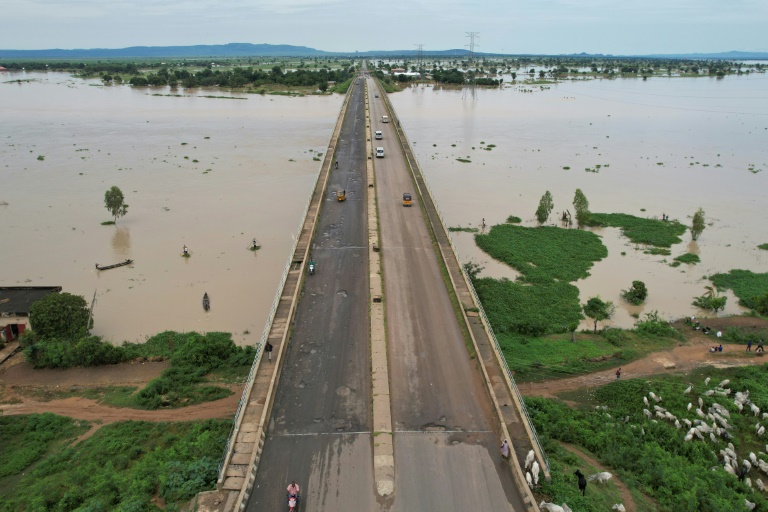
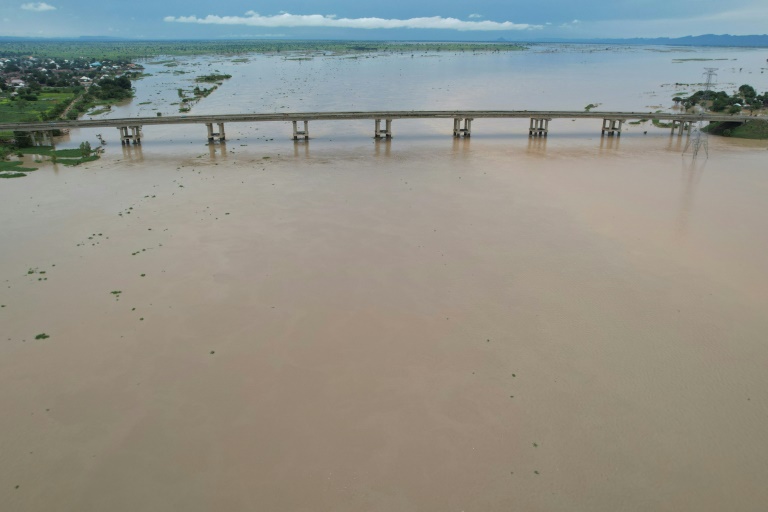
About 500 people have died in Nigeria’s worst floods in a decade and 1.4 million others been displaced from their homes since the start of the rainy season, the government said.

Floods caused by abundant rains and poor infrastructure have affected vast swathes of Africa’s most populous country sparking fears they could worsen food insecurity and inflation. 

Nigeria’s Ministry of Humanitarian Affairs said Tuesday that “over 1.4 million persons were displaced, about 500 persons have been reported dead… and 1,546 persons were injured”.

“Similarly, 45,249 houses were totally damaged… while 70,566 hectares of farmlands were completely destroyed,” added the statement from the ministry’s Deputy Director Information, Rhoda Ishaku Iliya.

National Emergency Management Agency spokesman Manzo Ezekiel told AFP on Wednesday the latest figures were from last weekend.

While the rainy season usually begins around June, most deaths and displacements started “around August and September” Ezekiel added.

“We are taking all the necessary actions to bring relief to the people affected by the flood,” humanitarian affairs ministry official Nasir Sani-Gwarzo said.

Fuel scarcity caused long queues at petrol stations in the capital Abuja this week after tankers were blocked by floods in neighbouring states.

In southern Anambra state, 76 people died when a boat capsized  last Friday during flooding of the Niger River.

More abundant rains are expected in the coming weeks and months — the rainy season typically ends in November in northern states and in  December in the south. 

Until Thursday, “heavy rainfall is anticipated over parts of Taraba, Ebonyi, Benue and Cross Rivers State,” the  Meteorological Agency said on Facebook, adding that “flash flooding is likely”.

Floods were also caused by the release of water from several damns, a process that was meant to prevent excessive flooding.

The high level of damage caused is also because “people violate regional planning (rules), constructing (houses and buildings) near waterways,” said Ezekiel.

In 2012, 363 people died and more than 2.1 million were displaced from flooding. 

Sub-Saharan Africa is disproportionately affected by climate change and many of its economies are already struggling from ripple effects of the Russia-Ukraine war.

Rice producers have warned that the devastating floods could impact prices in the country of some 200 million people where rice imports are banned to stimulate local production.

The World Food Programme and the UN’s Food and Agriculture Organization said last month that Nigeria was among six countries facing a high risk of catastrophic levels of hunger.

WHO says clinical trials soon for Ebola virus in Uganda

World Health Organization chief Tedros Adhanom Ghebreyesus said Wednesday that clinical trials could start within weeks on vaccines to combat the strain of Ebola behind a deadly outbreak in Uganda.

Kampala last month announced Uganda’s first fatality from the highly contagious disease since 2019, with a statement issued by the WHO saying there were 54 confirmed cases and 19 deaths. 

Ugandan Health Minister Jane Ruth Aceng told AFP that one fatal case had been recorded in Kampala after the victim fled the central district of Mubende where the outbreak was first reported, and later died in a capital hospital.

There is currently no vaccine for the Sudan ebola virus circulating in the East African country.

“Unfortunately, the Ebola vaccines that have been so effective in controlling recent outbreaks in DRC (Democratic Republic of Congo) are not effective against the type of ebola virus which is responsible for the current outbreak in Uganda,” Tedros told a regional ministerial meeting to discuss the emergency response to the crisis.

“Several vaccines are in various stages of development against this virus, two of which could begin clinical trials in Uganda in the coming weeks, pending regulatory and ethics approvals from the Ugandan government.”

The initial outbreak, which was first reported on September 20, and infections have been found in five areas including Mubende, according to WHO.

“Our primary focus now is to support the government of Uganda to rapidly control and contain this outbreak, to stop it spreading to neighbouring districts, and neighbouring countries,” Tedros told reporters.

A WHO assessment has found the risk of the Sudan ebola virus spreading to neighbouring countries was “high due to cross border movements between Uganda and other countries”.

Ebola is an often-fatal viral haemorrhagic fever named after a river in DR Congo where it was discovered in 1976.

Human transmission is through bodily fluids, with common symptoms  fever, vomiting, bleeding and diarrhoea. Outbreaks are difficult to contain, especially in urban environments.

People who are infected do not become contagious until symptoms appear, which is after an incubation period of between two and 21 days.

The worst epidemic in West Africa between 2013 and 2016 killed more than 11,300 people. 

Uganda has experienced several Ebola outbreaks, most recently in 2019 when at least five people died. 

The neighbouring DRC has had more than a dozen epidemics, the deadliest killing 2,280 people in 2020. Late last month it declared an end to an Ebola outbreak that had emerged in the eastern province of North Kivu six weeks previously.

Last week the United States announced tighter screening for people who had travelled to Uganda.

Western powers urge Ethiopia, rebels to enter peace talks

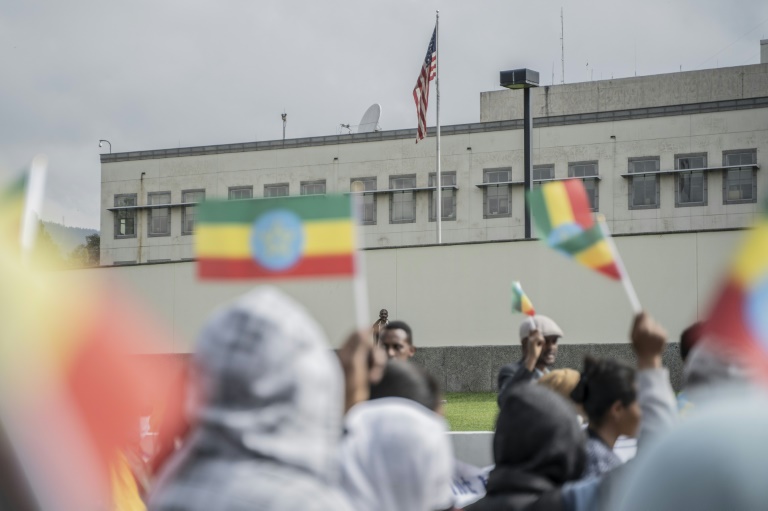
The United States and other Western powers on Wednesday urged Ethiopia’s government and Tigrayan rebels to start African Union-led peace talks, and called on neighboring Eritrea to withdraw its troops from the battlefield.

In a joint statement, the United States, Britain, Australia, Denmark, Germany and The Netherlands said they were “profoundly concerned” by the shattering of the five-month truce in late August and said the warring sides should halt their offensives.

“We call on the parties to recognize there is no military solution to the conflict, and we call on the government of Ethiopia and the Tigray regional authorities to participate in African Union-led talks aimed at helping Ethiopia achieve a lasting peace,” the statement said.

The Western nations warned of abuses by all sides including Ethiopia, the Tigray People’s Liberation Front (TPLF) and Eritrea, which has returned to the conflict to back Ethiopian Prime Minister Abiy Ahmed.

 ”The resumption of fighting in northern Ethiopia raises a high risk of further human rights violations and abuses,” the statement said, adding that “any durable solution must include accountability for human rights abuses and violations.”

The rebels agreed, after prolonged hesitation, to accept mediation by the Addis Ababa headquartered African Union, after previously voicing concerns it was too close to Abiy.

– ‘Cease actions fuelling conflict’ –

The AU had invited the two sides to sit down at the negotiating table in South Africa last weekend, but the talks did not take place partly because of what diplomats said were logistical issues.

“The African Union hadn’t prepared all elements and caught even some of those that are named to be part of this process by surprise,” a senior Western official told reporters at the weekend.

Former Kenyan president Uhuru Kenyatta, one of the mediators, said Friday he would not attend and was seeking “clarity on the structure and modalities of the talks,” also calling for the cessation of hostilities to be high on the agenda.

The African Union has not responded to requests for comments about the status of the peace process.

In Wednesday’s statement, the Western nations called for a withdrawal of troops from Eritrea, one of the world’s most closed and authoritarian nations, condemning its “escalating involvement.”

“All foreign actors should cease actions that fuel this conflict.” 

US Horn of Africa envoy Mike Hammer, who began a trip to the region earlier this month to try to help the push for peace, said “Eritrea’s re-entry into Ethiopia has made matters significantly worse.”

“It is urgent that talks happen to stop the fighting, alleviate the suffering, and find a way forward for resolving outstanding issues through dialogue,” he said at a briefing Saturday during a stop in Nairobi.

Nigeria floods kill 500, displace 1.4 million people

About 500 people have died in Nigeria’s worst floods in a decade and 1.4 million others been displaced from their homes since the start of the rainy season, the government said.

Floods caused by abundant rains and poor infrastructure have affected vast swathes of Africa’s most populous country sparking fears they could worsen food insecurity and inflation. 

Nigeria’s Ministry of Humanitarian Affairs said Tuesday that “over 1.4 million persons were displaced, about 500 persons have been reported dead… and 1,546 persons were injured”.

“Similarly, 45,249 houses were totally damaged… while 70,566 hectares of farmlands were completely destroyed,” added the statement from the ministry’s Deputy Director Information, Rhoda Ishaku Iliya.

National Emergency Management Agency spokesman Manzo Ezekiel told AFP on Wednesday the latest figures were from last weekend.

While the rainy season usually begins around June, most deaths and displacements started “around August and September” Ezekiel added.

“We are taking all the necessary actions to bring relief to the people affected by the flood,” humanitarian affairs ministry official Nasir Sani-Gwarzo said.

Fuel scarcity caused long queues at petrol stations in the capital Abuja this week after tankers were blocked by floods in neighbouring states.

In southern Anambra state, 76 people died when a boat capsized  last Friday during flooding of the Niger River.

More abundant rains are expected in the coming weeks and months — the rainy season typically ends in November in northern states and in  December in the south. 

Until Thursday, “heavy rainfall is anticipated over parts of Taraba, Ebonyi, Benue and Cross Rivers State,” the  Meteorological Agency said on Facebook, adding that “flash flooding is likely”.

Floods were also caused by the release of water from several damns, a process that was meant to prevent excessive flooding.

The high level of damage caused is also because “people violate regional planning (rules), constructing (houses and buildings) near waterways,” said Ezekiel.

In 2012, 363 people died and more than 2.1 million were displaced from flooding. 

Sub-Saharan Africa is disproportionately affected by climate change and many of its economies are already struggling from ripple effects of the Russia-Ukraine war.

Rice producers have warned that the devastating floods could impact prices in the country of some 200 million people where rice imports are banned to stimulate local production.

The World Food Programme and the UN’s Food and Agriculture Organization said last month that Nigeria was among six countries facing a high risk of catastrophic levels of hunger.

Chad ex-opposition figure Saleh Kebzabo named prime minister

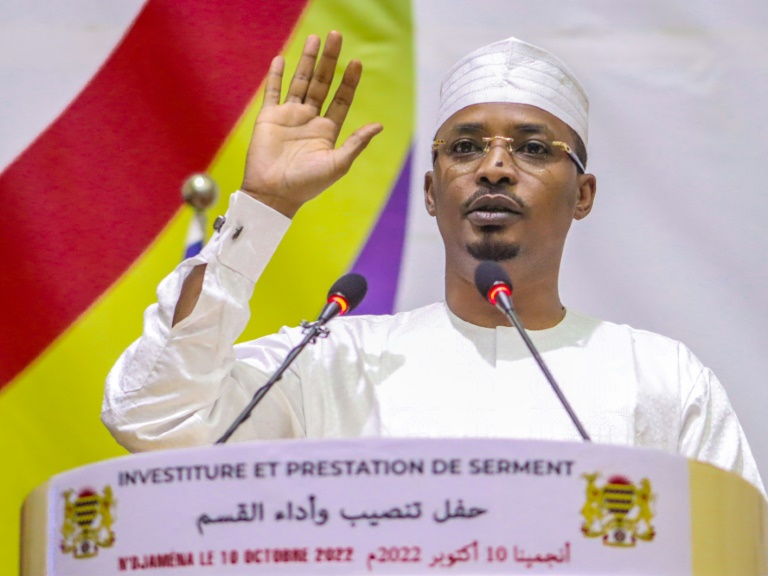
Chadian ruler Mahamat Idriss Deby pushed ahead Wednesday with declared plans to steer the country back to civilian government, appointing a former opposition figure as prime minister to head an interim administration of “national union.”

Deby named Saleh Kebzabo, 75, a former journalist who ran four times for the presidency against his iron-fisted father, Idriss Deby Itno.

The 38-year-old five-star general took over after the elder Deby, in power for three decades, was killed during an operation against rebels in April 2021.

But he has since angered many at home and embarrassed backers abroad by pushing to stay in power beyond an initially-promised deadline and contest promised elections.

Speaking to journalists on Wednesday, Kebzabo promised to “accompany” the young Itno “in a great endeavour… the next two years of political transition.”

Kebzabo, a fierce opponent in the last years of the elder Deby’s rule, had been swift to recognise his son as leader after his death. Two leaders from his UNDR party took part in the first transition government named by the junta.

Deby’s junta had originally declared it would restore civilian rule after 18 months in power, and he had at first promised not to take part in the elections that would follow.

But as the 18-month deadline neared, a nationwide forum staged by Deby reset the clock.

Last weekend it approved a new 24-month timeframe for holding elections, named Deby “transitional president” for the interim and declared he could be a candidate in the poll.

Deby was sworn in on Monday, vowing to name a “government of national union” within days.

The outgoing premier was 55-year-old political veteran Albert Pahimi Padacke, who had served for 18 months and had also been prime minister under Deby’s father.

He formally resigned on Tuesday along with his government.

– Foreign snub –

A semi-desert country located in the heart of central western Africa, Chad has been chronically unstable since it gained independence from France in 1960. 

Under the elder Deby, Chad became a valued ally to western countries fearing the spread of jihadism in the Sahel.

But foreign displeasure at his son’s push for power, in defiance of appeals for an earlier handback to civilian rule, was visible at Monday’s inauguration ceremony.

The African Union snubbed the event, while France and the European Union were represented only by their ambassadors. 

Just three weeks earlier, the AU had urged the junta not to extend its stay in power beyond 18 months and “unequivocally” warned against any of its members taking part in the future elections.

With the exception of Nigerian President Muhammadu Buhari, no other African countries sent their heads of state. A handful of important neighbours — Niger, the Central African Republic and Democratic Republic of Congo — were represented by their ministers.

The AU and the West African bloc ECOWAS have been fierce critics of the string of coups that have swept the region in the past two years, with takeovers in Guinea, Burkina Faso and Mali as well as Chad.

– Government choice –

Enrica Picco of the International Crisis Group (ICG) think tank said the junta had been formally dissolved as a result of the forum, which meant Deby’s powers would be “widened and extended” as transitional president.

Picco said the choice of the incoming government presented an opportunity for Deby, giving him the chance of building bridges in his divided country.

On the other hand, if the government is “totally closed off to the parties, armed groups and civil society who did not take part in the dialogue, everything is possible — protests, or armed groups taking up their weapons again resuming attacks,” she said.

Nigeria floods kill 500, displace 1.4 million people

About 500 people have died in Nigeria’s worst floods in a decade and 1.4 million others been displaced from their homes since the start of the rainy season, the government said.

Floods caused by abundant rains and poor infrastructure have affected vast swathes of Africa’s most populous country sparkin fears they could worsen food insecurity and inflation. 

Nigeria’s Ministry of Humanitarian Affairs said Tuesday that “over 1.4 million persons were displaced, about 500 persons have been reported dead… and 1,546 persons were injured”.

“Similarly, 45,249 houses were totally damaged… while 70,566 hectares of farmlands were completely destroyed,” added the statement from the ministry’s Deputy Director Information, Rhoda Ishaku Iliya.

National Emergency Management Agency spokesman Manzo Ezekiel told AFP on Wednesday the latest figures were from last weekend.

While the rainy season usually begins around June, most deaths and displacements started “around August and September” Ezekiel added.

“We are taking all the necessary actions to bring relief to the people affected by the flood,” humanitarian affairs ministry official Nasir Sani-Gwarzo said.

Fuel scarcity caused long queues at petrol stations in the capital Abuja this week after tankers were blocked by floods in neighbouring states.

In southern Anambra state, 76 people died when a boat capsized  last Friday during flooding of the Niger River.

More abundant rains are expected in the coming weeks and months — the rainy season typically ends in November in northern states and in  December in the south. 

Until Thursday, “heavy rainfall is anticipated over parts of Taraba, Ebonyi, Benue and Cross Rivers State,” the  Meteorological Agency said on Facebook, adding that “flash flooding is likely”.

Floods were also caused by the release of water from several damns, a process that was meant to prevent excessive flooding.

The high level of damage caused is also because “people violate regional planning (rules), constructing (houses and buildings) near waterways,” said Ezekiel.

In 2012, 363 people died and more than 2.1 million were displaced from flooding. 

Sub-Saharan Africa is disproportionately affected by climate change and many of its economies are already struggling from ripple effects of the Russia-Ukraine war.

Rice producers have warned that the devastating floods could impact prices in the country of some 200 million people where rice imports are banned to stimulate local production.

The World Food Programme and the UN’s Food and Agriculture Organization said last month that Nigeria was among six countries facing a high risk of catastrophic levels of hunger.

Close Bitnami banner
Bitnami