Africa Business

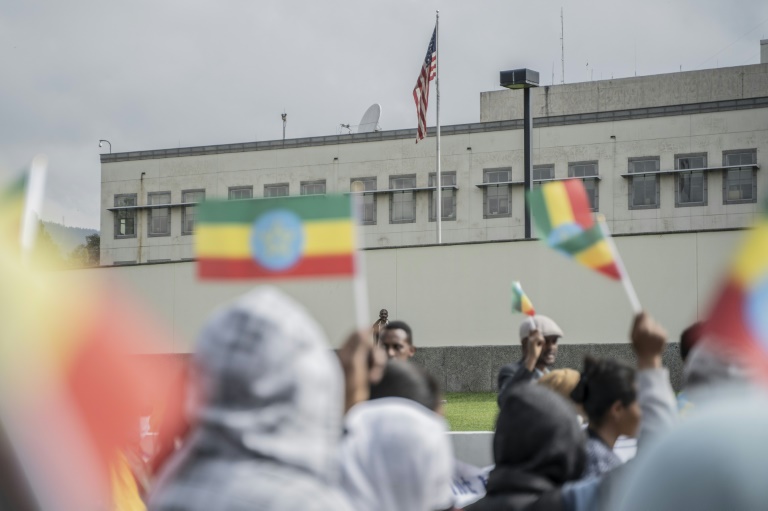
Western powers urge Ethiopia, rebels to enter peace talks

The United States and other Western powers on Wednesday urged Ethiopia’s government and Tigrayan rebels to start African Union-led peace talks, warning of humanitarian risks if the renewed conflict persists.

In a joint statement, the United States, Britain, Australia, Denmark, Germany and The Netherlands said they were “profoundly concerned” by the shattering of the five-month truce in late August.

“We call on the parties to recognize there is no military solution to the conflict, and we call on the government of Ethiopia and the Tigray regional authorities to participate in African Union-led talks aimed at helping Ethiopia achieve a lasting peace,” the statement said.

The Western nations warned of abuses by all sides including Ethiopia, the Tigray People’s Liberation Front and Eritrea, which has returned to the conflict to back Ethiopian Prime Minister Abiy Ahmed.

 ”The resumption of fighting in northern Ethiopia raises a high risk of further human rights violations and abuses,” it said, adding that “any durable solution must include accountability for human rights abuses and violations.”

The rebels agreed, after prolonged hesitation, to accept mediation by the African Union, which is based in Addis Ababa.

But after the bloc called talks for last weekend in South Africa, former Kenyan president Uhuru Kenyatta, who was to be playing a key role in negotiations, said he could not attend.

The Western nations called for a withdrawal of troops from Eritrea, one of the world’s most closed and authoritarian nations.

“All foreign actors should cease actions that fuel this conflict.” 

Chad ruler raises hackles with drawn-out 'transition'

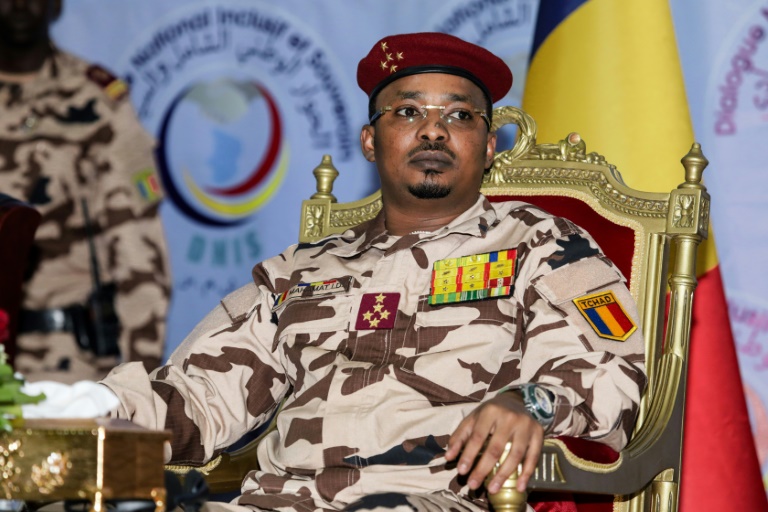
Chadian leader Mahamat Idriss Deby Itno’s plans to stay in power beyond his initially-promised deadline have stirred anger at home and embarrassment for his backers abroad.

The 38-year-old five-star general took the helm in April 2021 after his father, Idriss Deby Itno, Chad’s iron-fisted ruler for three decades, was killed during an operation against rebels.

The junta had originally declared it would restore civilian rule after 18 months in power, and Deby had at first promised he would not take part in the future elections.

It was partly on the strength of these commitments — but also on Chad’s status as an ally fighting jihadism — that Deby was endorsed by the African Union (AU), European Union (EU) and former colonial power France.

But as the 18-month deadline neared, a nationwide forum staged by Deby chose to reset the clock.

Last weekend it approved a new 24-month timeframe for holding elections, named Deby “transitional president” for the interim and declared he could be a candidate in the poll.

The forum was “tailor-made… to legitimise the monarchical handover of power from father to son,” an umbrella group of political figures and groups, including the opposition coalition Wakit Tamma, said in a statement.

It called for “civil disobedience” and “peaceful demonstrations” on October 20.

Among the armed rebels who are a persistent thorn in the government’s side, a statement signed by 18 groups warned the regime would be held responsible “for all the consequences arising from its deception.”

One of the signatories is the powerful Front for Change and Concord in Chad (FACT), which triggered the offensive in the northeast last year that ended in the elder Deby’s death.

– Vexation abroad –

A semi-desert country located in the heart of central western Africa, Chad has been chronically unstable since it gained independence from France in 1960.

Foreign displeasure at Deby’s push for power was visible at the ceremonies on Monday when he was sworn in as interim president.

The AU snubbed the event, while France and the EU were notably represented only by their ambassadors. 

Just three weeks earlier, the AU had appealed to the junta not to extend its stay in power beyond 18 months and “unequivocally” warned against any of its members taking part in the future elections.

With the exception of Nigerian President Muhammadu Buhari, no other African countries sent their heads of state. A handful of important neighbours — Niger, the Central African Republic and Democratic Republic of Congo — were represented by their ministers.

The AU and the West African bloc ECOWAS have been fierce critics of the string of coups that have swept the region in the past two years, with takeovers in Guinea, Burkina Faso and Mali as well as Chad.

– ‘Pragmatism’ –

Enrica Picco of the International Crisis Group (ICG) think tank said the junta had been formally dissolved as a result of the forum, which meant Deby’s powers would be “widened and extended” as transitional president.

He is expected to name a new prime minister and “government of national union” in the next few days. His old premier, political veteran Albert Pahimi Padacke, who had served for 18 months, formally resigned on Tuesday along with his government.

Picco said the choice of the incoming government presented an opportunity for Deby, giving him the chance of building bridges in his divided country.

On the other hand, if the government is “totally closed off to the parties, armed groups and civil society who did not take part in the dialogue, everything is possible — protests, or armed groups taking up their weapons again resuming attacks,” she said.

Roland Marchal, an Africa specialist at the Sciences Po school in Paris, said the international community had been embarrassed by Deby, but — in contrast with other coups in the region — would probably not support sanctions against him.

“Pragmatism will prevail and we’ll see a return to support for the regime along the lines that have existed since 1990,” when the elder Deby took the reins, he predicted.

Chad ruler raises hackles with drawn-out 'transition'

Chadian leader Mahamat Idriss Deby Itno’s plans to stay in power beyond his initially-promised deadline have stirred anger at home and embarrassment for his backers abroad.

The 38-year-old five-star general took the helm in April 2021 after his father, Idriss Deby Itno, Chad’s iron-fisted ruler for three decades, was killed during an operation against rebels.

The junta had originally declared it would restore civilian rule after 18 months in power, and Deby had at first promised he would not take part in the future elections.

It was partly on the strength of these commitments — but also on Chad’s status as an ally fighting jihadism — that Deby was endorsed by the African Union (AU), European Union (EU) and former colonial power France.

But as the 18-month deadline neared, a nationwide forum staged by Deby chose to reset the clock.

Last weekend it approved a new 24-month timeframe for holding elections, named Deby “transitional president” for the interim and declared he could be a candidate in the poll.

The forum was “tailor-made… to legitimise the monarchical handover of power from father to son,” an umbrella group of political figures and groups, including the opposition coalition Wakit Tamma, said in a statement.

It called for “civil disobedience” and “peaceful demonstrations” on October 20.

Among the armed rebels who are a persistent thorn in the government’s side, a statement signed by 18 groups warned the regime would be held responsible “for all the consequences arising from its deception.”

One of the signatories is the powerful Front for Change and Concord in Chad (FACT), which triggered the offensive in the northeast last year that ended in the elder Deby’s death.

– Vexation abroad –

A semi-desert country located in the heart of central western Africa, Chad has been chronically unstable since it gained independence from France in 1960.

Foreign displeasure at Deby’s push for power was visible at the ceremonies on Monday when he was sworn in as interim president.

The AU snubbed the event, while France and the EU were notably represented only by their ambassadors. 

Just three weeks earlier, the AU had appealed to the junta not to extend its stay in power beyond 18 months and “unequivocally” warned against any of its members taking part in the future elections.

With the exception of Nigerian President Muhammadu Buhari, no other African countries sent their heads of state. A handful of important neighbours — Niger, the Central African Republic and Democratic Republic of Congo — were represented by their ministers.

The AU and the West African bloc ECOWAS have been fierce critics of the string of coups that have swept the region in the past two years, with takeovers in Guinea, Burkina Faso and Mali as well as Chad.

– ‘Pragmatism’ –

Enrica Picco of the International Crisis Group (ICG) think tank said the junta had been formally dissolved as a result of the forum, which meant Deby’s powers would be “widened and extended” as transitional president.

He is expected to name a new prime minister and “government of national union” in the next few days. His old premier, political veteran Albert Pahimi Padacke, who had served for 18 months, formally resigned on Tuesday along with his government.

Picco said the choice of the incoming government presented an opportunity for Deby, giving him the chance of building bridges in his divided country.

On the other hand, if the government is “totally closed off to the parties, armed groups and civil society who did not take part in the dialogue, everything is possible — protests, or armed groups taking up their weapons again resuming attacks,” she said.

Roland Marchal, an Africa specialist at the Sciences Po school in Paris, said the international community had been embarrassed by Deby, but — in contrast with other coups in the region — would probably not support sanctions against him.

“Pragmatism will prevail and we’ll see a return to support for the regime along the lines that have existed since 1990,” when the elder Deby took the reins, he predicted.

The coups, the Judge and 'The Trial': Burkinabe bar pokes fun at chaos

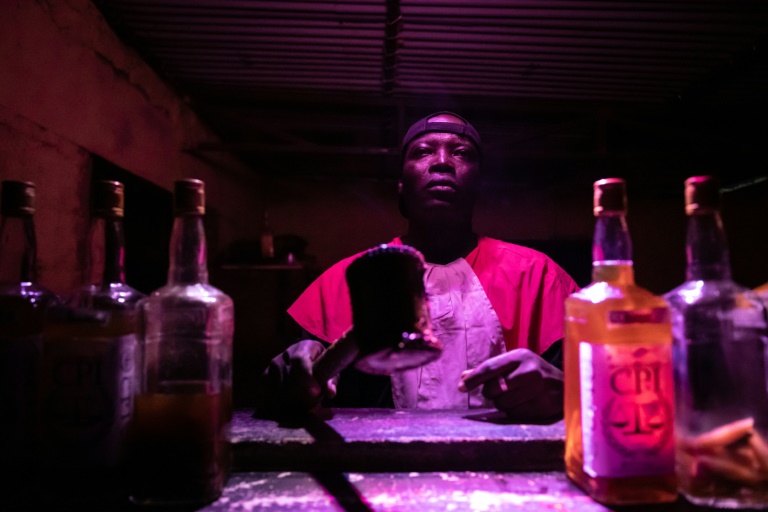
In Le Proces, or “The Trial”, a bar in Ouagadougou, artist and co-founder Patrick Kabre works the crowd, raising belly laughs with his observations about Burkina Faso today.

“We’re debating the state of the nation. We need a judge to issue the ruling — and we have one right here!”, he says.

Microphone in hand, Kabre has no shortage of absurd or dark material in a country where the frontier of chaos seems to come ever closer.

In less than nine months, the impoverished landlocked Sahel state has been through two military coups, each prompted by the failure of the ousted regime to tackle deadly jihadist attacks.

In front of the master of ceremonies, a colossal character wearing black-and-red judge’s robes sways gently to music, surrounded by a score of smiling onlookers.

This is bartender Dao Moumine, who has abandoned his counter for a few moments.

“You are at ‘The Trial’, I am The Judge,” the gown-wearing giant tells AFP. 

“I serve up justice,” he said, referring to beer, “and the International Criminal Court,” the house’s rum special.

This unusual venue for free debate, music and slam poetry first opened in 2019.

After a rainy-season break, it reopened on Saturday just a week after the country’s latest coup.

The clinking of bottles and shots of rum give the setting an air of normality during one of the first music nights since the military takeover. Everyone shares the latest gossip and military rumours.

– Unity through culture –

For some Europeans present, it is their first night out. There has been an upsurge of slogans against former colonial power France, and a number of companies have urged their expatriate staff to stay at home.

The idea for the bar, open every weekend in the Goughin district, began among friends who wanted to “discuss the issues that have caused chaos in this country: justice, impunity,” Kabre said.

The scene of a popular insurrection to end the long reign of Blaise Compaore in 2014, Burkina Faso was hit hard the following year by attacks from jihadist groups which spread from neighbouring Mali.

Violence and political instability gave rise to the two coups of 2022. The latest placed a 34-year-old captain, Ibrahim Traore, in power.

“The solution to all this is neither military nor political,” said Ali Kiswinsida Ouedraogo, alias Doueslik, a 36-year-old slam poet, told AFP. “The solution is social… and it comes via culture.”

Service is bar-counter only, enabling Judge Moumine, a specialist in po-faced comedy, to deliver edicts before serving the order.

There is a serious side to the clowning, he says: The Trial is both a safety valve and a forum, hopefully making people aware of the wider picture in Burkina Faso and its problems.

“Artists have to perform. Venues like this are important,” said Ouedraogo.

Kabre wants The Trial to be a “rainbow” venue where all nationalities can gather and “talk to each other, listen to each other.”

Everyone is welcome, says Kabre, who plays that evening with a German DJ. 

He lists prestigious clients who have come to his establishment: army officers, ambassadors, even government ministers — and, of course, judges.

Living in darkness: Poverty and pollution in oil-rich Congo

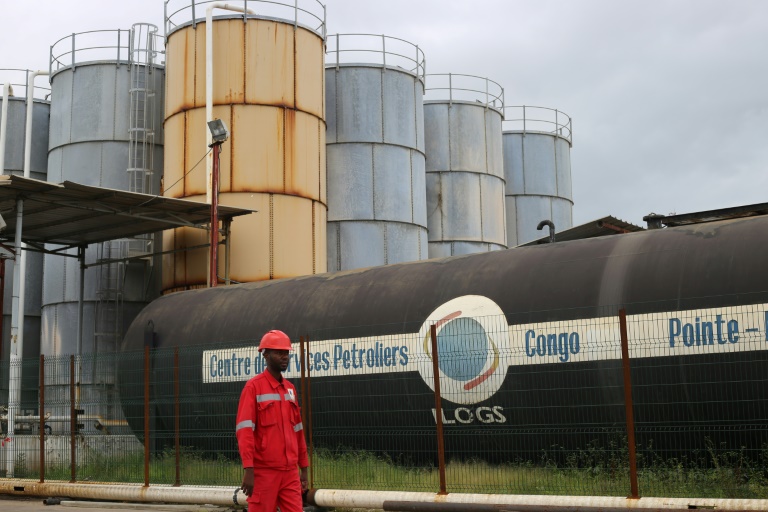
Behind their homes is an oil pipeline and above them are high-voltage cables suspended between pylons. A little further off is a flare tower, burning off excess gas 24 hours a day.

Yet these potent symbols of Congo’s oil and gas bonanza mean little to the villagers who live in their shadow.

When darkness falls, they have to fire up a generator or light lamps. None of their homes has mains electricity.

“I’m 68 years old and I live in darkness,” said Florent Makosso, seated beneath a giant banana tree.

“My parents and grandparents had a better quality of life when it (Congo) was French Equatorial Africa.”

Makosso lives in Tchicanou, a small village 40 kilometres (25 miles) from Pointe-Noire — the energy hub of the Republic of Congo, also called Congo-Brazzaville.

The former French colony gained independence in 1958 and became a major oil producer some two decades later.

It notched up sales last year averaging 344,000 barrels a day, making it the third biggest exporter south of the Sahara after Angola and Nigeria. 

The country is sitting on 100 billion cubic metres (3,500 billion cubic feet) of natural gas — more than the entire annual consumption of Germany, the world’s fourth-largest economy.

– Marginalised –

But little of this wealth has translated into prosperity for the country’s 5.5 million people — around half live in extreme poverty, according to World Bank figures.

Tchicanou is emblematic of a community that suffers the downsides of fossil fuels but gets few of its benefits.

Surrounded by fruit trees, the village of 700 souls straddles Highway 1, the lifeline between the Atlantic port of Pointe-Noire and the capital Brazzaville.

Tchicanou and the neighbouring village Bondi host pipelines and pylons for carrying oil products and electricity.

But they find themselves in the same situation as communities in the remotest parts of the country — they are still not hooked up to the national grid.

The village has no streetlights, and the biggest source of illumination comes from the flare tower at a nearby 487-megawatt gas-fired power plant, the country’s largest.

“It’s an ordeal living here,” said Makosso.

“We have to buy generators, which are expensive, and running them is a challenge in itself.”

Without power, “television and the other electrical appliances are just decoration,” he said, pointing to the simple challenge of keeping food refrigerated.

A fellow resident, Flodem Tchicaya, said Tchicanou “is in a good location. But the only use of the gas that they burn here is to cause pollution and make us sick.”

– Inequality –

Roger Dimina, 57, said that access to electricity in Congo was “unfair.”

“Instead of it starting at the bottom and heading to the top, it starts at the top and the bottom has nothing,” he said.

Across Congo, electrification in urban areas reaches less than 40 percent of homes, while in rural zones, it is less than one home in 10.

In a recent interview in the Depeches de Brazzaville, the capital’s sole daily newspaper, Energy Minister Emile Ouosso said the goal was to reach 50 percent by 2030.

A group close to the Catholic church, the Justice and Peace Commission, has been running an “electricity for all” campaign, focussing especially on villages in the orbit of Pointe-Noire.

The group’s deputy coordinator, Brice Makosso, said the government has declared a budget surplus of 700 billion CFA francs (more than a billion dollars) for 2022.

Just a small amount of this could hook villages up to the grid, he said, pointing to duties that oil companies in the area paid to the government.

'Our home': Lesotho's last cave dwellers

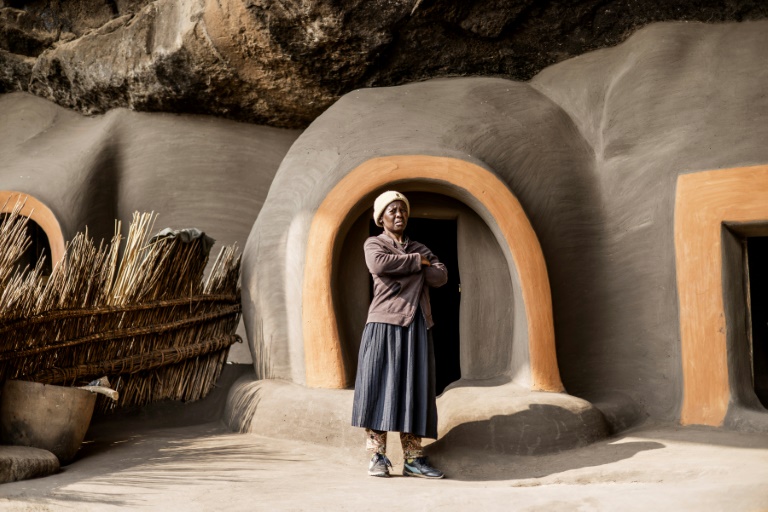
Inside a dimly-lit mud dwelling nestled within a rocky mountain in the southern African kingdom of Lesotho, Mamotonosi Ntefane, 67, dusts off an animal skin. 

Her household is among a handful of families who still inhabit the Kome Caves, a heritage site in the north of the country, first occupied about 200 years ago by local tribes seeking shelter from conflict and cannibalism. 

“Life is good, we grow our own vegetables, I can pray anytime I want,” Ntefane, a rosary around her neck, tells AFP. 

More than 1,800 metres above sea level, some 50 kilometres (30 miles) from the capital Maseru, the settlement is surrounded by barren pastures, where shepherds draped in long woollen blankets graze cattle in the morning mist.

Thin white smoke billows from outside the caves as “papa”, a traditional corn porridge, boils in a black cast iron pot over a wood fire.  

The cave is divided into several round houses propped against the basalt rock.

Open passages just high enough for a person to walk through serve as doorways. Walls and floors are made of a mix of mud and manure that require regular upkeep. 

Inside are basic items including pots, plastic buckets to store water and a cowhide for a bed.   

“There’s no electricity and no fridge but this is our home, it’s our history,” says 44-year-old Kabelo Kome who is descended from the first people to settle the caves, after whom the place is named. 

– Hideout –

The caves became a hideout for members of the Basia and Bataung tribes in the 19th century, when conflict and a severe drought ravaged the region. 

Christian missionaries travelling the area at the time reported some groups resorted to cannibalism to survive, as livestock and grain reserves dwindled. 

It was in this period that Lesotho emerged as a single entity, as the Sotho, the region’s largest ethnic group, united to fight Zulu raiders and European settlers.

Today, most of the country’s two million people live off subsistence farming. 

Inhabitants of the Kome Caves grow corn, sorghum and beans and raise chickens and cattle. 

The elderly receive a state allowance, while others make money showing their homes to tourists. 

Some like Mamatsaseng Khutsoane, a 66-year-old former teacher, have moved to a nearby village with greater creature comforts.  

“I come here to eat, or with my grandchildren,” she says. 

There is mobile phone coverage, but no fixed internet or running water.  

“None of that here,” scoffs Ntefane, as she stands outside her home, gazing at the mountains, while cow bells ring in the distance. 

cld/ub/gw/smw

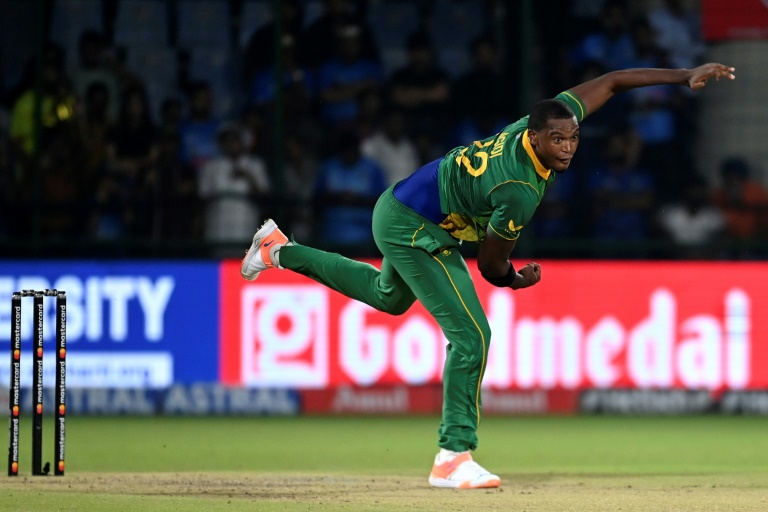
Need more 'aggression' from Proteas bowlers in Australia: Boucher

South Africa head coach Mark Boucher on Tuesday said his bowlers need to be more aggressive in the Twenty20 World Cup in Australia on pitches that will suit their seamers.

The touring South Africans suffered a crushing seven-wicket loss to India in the third one-day international in New Delhi as they went down 2-1.

India skittled out South Africa for 99 in the series decider but it was the bowlers’ performance in the second match that bothered Boucher after they failed to defend 278 and let go of a 1-0 advantage in the three-match series.

“Australia will suit our fast bowlers a lot better,” Boucher, who will step down as the national coach after T20’s showpiece event, told reporters.

“We have got some good pace, some good bounce in our attack, so we need to keep the aggression there. I think the last one-day game we played there wasn’t enough aggression.”

The fast bowlers including Kagiso Rabada, Anrich Nortje, Lungi Ngidi and Wayne Parnell shared seven wickets between them in the three-match T20 series, which South Africa lost 2-1.

Rabada, who was rested for the final ODI, and Ngidi took seven between them in the 50-overs matches while Nortje returned figures of 0-15 in his five overs in New Delhi.

But it was India pace bowler Mohammed Siraj who stood out with his four wickets in the last two matches and was named man of the series.

“Surprisingly India’s bowling attack in the ODIs bowled with far more aggression than what we did,” said Boucher.

“We did chat about it and the way Anrich Nortje bowled tonight was a positive sign for me, especially going into conditions where that will be quite effective.”

Boucher, a former wicketkeeper-batsman who played 147 Tests and 295 ODIs in a glittering career that ended in 2012, said the team will take lessons from the loss into the big tournament in Australia.

“I think we have taken some lessons and we have had good chats behind closed doors to speak about things that we can get better at,” said the 45-year-old Boucher.

“That will stand us in good stead going forward to Australia where the conditions are completely different. It’s disappointing to lose but we have a massive competition in front of us and that is what we are gearing up for.

“Keeping the guys mentally and physically fresh is going to be vital for the management and myself to monitor.”

South Africa, led by Temba Bavuma who missed the final two ODIs after falling sick, will open their World Cup campaign against a qualifying team on October 24, two days after the Super 12 stage begins.

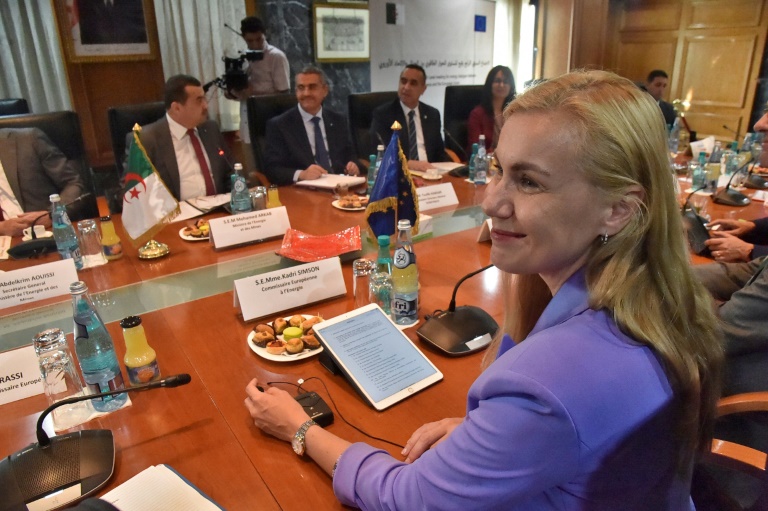
EU energy chief praises Algeria 'partnership'

The European Union’s energy commissioner hailed a “long-term strategic partnership” with Algeria Tuesday as the bloc turns to Africa’s biggest gas exporter to fill a gap left by Russian supplies.

“As the relationship with Russia, so far EU’s biggest gas supplier, is irreversibly broken, we are turning to the EU’s reliable suppliers to fill in the gap,” said Kadri Simson.

“In this respect we are offering Algeria a long-term strategic partnership.”

Simson is the latest in a string of top European officials to visit Algeria in search of more natural gas, since Russia cut gas supplies to Europe in suspected retaliation against Western sanctions after Moscow’s invasion of Ukraine.

Algeria has helped Europe diversify its energy supplies by pumping more gas to Italy, which in July signed a deal to import billions more cubic metres via an undersea pipeline from the North African coast.

Europe’s hunt for gas has become ever more urgent as winter approaches, but experts have cast doubt over Algeria’s ability to boost output in the short term.

Algerian Prime Minister Aimene Benabderrahmane however said state hydrocarbons firm Sonatrach had put in place an “accelerated programme” to bump up output.

Energy Minister Mohamed Arkab, speaking at an energy summit in the capital Algiers attended by Simson, said his country was “a trusted supplier” that always honours its contractual obligations.

He added that Algeria was examining the possibility of laying high-voltage cables under the Mediterranean to export electricity to Europe, and that the country hopes to produce as much as 50 percent of its electricity from renewable sources by 2035.

Simson said she wanted the EU to help Algeria reduce its methane emissions and boost its electricity output from renewables.

“Algeria has one of the highest solar based energy potential in the world,” she said in a tweet. “The EU is ready to help Algeria unlock this potential.”

Grief and outrage in Gambia over cough syrup deaths

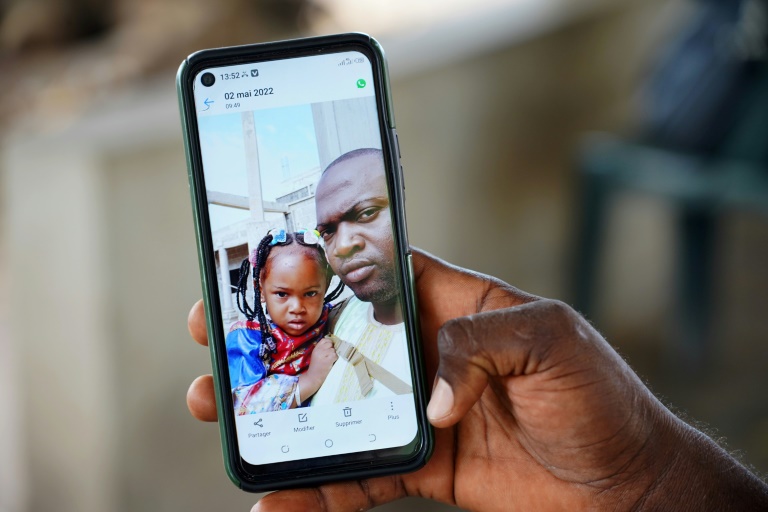
When Wuri Bailo Keita’s two-year-old daughter Fatoumatta developed a fever, he took her to hospital where she was diagnosed with malaria and sent home with a prescription for a paracetamol syrup.

Less than a week later she was dead.

The infant is just one of 69 Gambian children to die of acute kidney failure since July in a series of cases linked to four Indian-made cough syrups. 

The widening scandal has highlighted flaws in the tiny West African nation’s healthcare system, in turn raising questions about potential loopholes in world pharmaceutical trade.

“She could not eat anything and she was oozing blood from her mouth and nose”, Keita, a 33-year-old carwash attendant, told AFP, recounting his daughter’s suffering. 

“At some point, I was praying for God to take her life.”

President Adama Barrow made a nationwide address on Saturday after the police launched an inquiry and health authorities were told to suspend the import licence of a suspected company.

Barrow also promised to update drugs-related laws and praised the work of the health ministry in preventing further deaths.

But fear and anger are mounting, and the death toll is still rising. 

“President Barrow should sack the health minister, but instead of sacking him, he was praising the minister,” said Keita, the grieving father.

“We want justice for these children.”

Social media has been swamped by criticism of the healthcare system and by photos of the children who have died, most of whom were aged under five.

“It’s time for the government to step up and stop these products,” Mariama Kuyateh, a 30-year-old mother who lost her son Musa in September, told AFP. 

“If they don’t, and other syrups enter the country, it will be terrible.”  

– No test lab –

The deaths were catapulted to global prominence last Wednesday when the UN’s World Health Organization (WHO) issued an alert over four syrups made by Maiden Pharmaceuticals of India.

Lab tests found “unacceptable amounts” of diethylene glycol and ethylene glycol, the WHO said.

The toxic impact from these substances includes “acute kidney injury which may lead to death,” the agency said.

The Gambian health authorities, after launching their own investigation in July, on September 23 ordered a recall of all medicines containing paracetamol or promethazine syrup.

They have cited E.coli bacteria as a possible cause of the deaths.

India’s health ministry said late Thursday it had been informed of the WHO’s findings last month and was awaiting the results of its own lab tests on the four drugs.

Maiden Pharmaceuticals was not licensed to distribute the four products in India and had only manufactured and exported them to The Gambia, it said.

“It is a usual practice that the importing country tests these imported products on quality parameters, and satisfies itself as to the quality of the products,” the ministry said.

But The Gambia has no national laboratory to test for drug quality and food safety — a lack that Barrow on Saturday vowed to redress.

Maiden Pharmaceuticals did not respond to AFP requests for comment after the WHO alert.

– ‘Failed miserably’ –

Domestic critics accuse Barrow of having failed to protect the public and standing by watchdogs who should have been sacked.

The opposition United Democratic Party (UDP) criticised Barrow’s “five-minute address” to a “traumatised nation left to wonder what other pharmaceuticals are on the market that may be fake or unsafe for use.”

Nancy Jallow, of an NGO called Global Bridges, said she was appalled that top officials such as Health Minister Ahmadou Lamin Samateh and the head of the Medicines Control Agency, Markieu Janneh Kaira, were still in their jobs.

“We signed a social contract with Adama Barrow and his number one role is to protect the most vulnerable, and he has failed miserably,” she told AFP.

She also called for a total halt to pharmaceutical imports “until Gambia’s government can build a facility that can test medications.”

Others voices, including the Gambia Bar Association, have insisted that the inquiry be conducted by independent experts.

– Weak healthcare –

Behind the political row is the reality of a country deep in poverty lacking many of the safeguards that elsewhere are taken for granted.

The Gambia is the smallest country in continental Africa, and nearly half of its population lives below the poverty line, according to the World Bank.

The country ranks a mere 174th out of 191 countries on the UN Human Development Index. 

Its already weak health institutions were hit hard by Covid, with a 2020 UN assessment saying the pandemic had “exposed the shortcomings in the nation’s healthcare system”. 

The UN flagged limited expertise, a shortage of basic equipment and a chronic lack of health professionals.

According to World Bank data, The Gambia in 2019 had just 0.1 physicians per 1,000 people — less than a twentieth of the numbers in Canada.

The Gambia’s under-five mortality rate is 49.4 deaths per 1,000 live births, according to UNICEF, compared to 3.7 deaths in Germany and 4.4 in France.

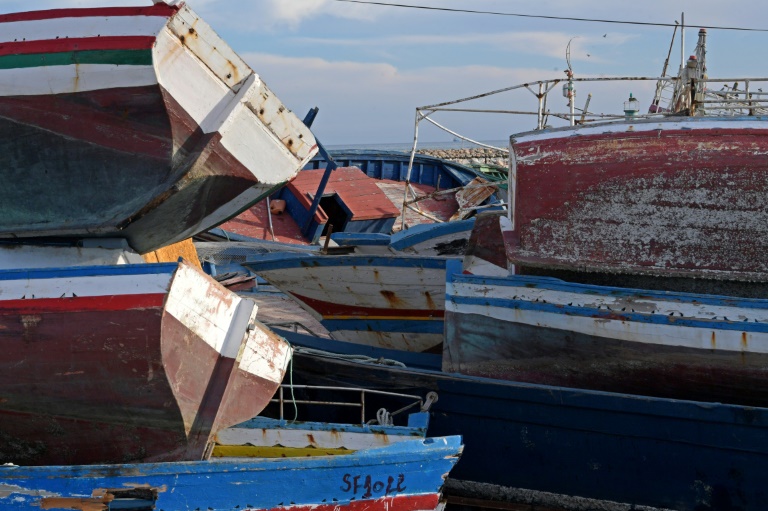
Tunisia 'rescues' 194 migrants: coastguard

Tunisian authorities intercepted nearly 200 migrants attempting to reach Europe northwards across the Mediterranean Sea over the weekend, the defence ministry said Tuesday.

“Coast guard patrols rescued 194 illegal migrants (118 Tunisians and 76 of other African nationalities) over the weekend,” it said in a statement.

The “rescues” took place in nine separate operations off the southern and north-eastern coast.

The North African country has a long Mediterranean coast, in places just 130 kilometres (80 miles) from the Italian island of Lampedusa, making it a magnet for people from across Africa seeking refuge in Europe.

According to official figures, more than 22,500 migrants have been intercepted off the Tunisian coast since the start of the year, around half of them from sub-Saharan Africa.

Tunisians themselves, exhausted by a long-running economic crisis that has left a third of the 12 million-strong population in poverty, are among many of those attempting the risky journey.

Generally favourable weather from spring to early autumn sees a rise in illegal attempts to reach Italy, but many of the attempts are in boats that are barely seaworthy, often leading to tragedy.

Early this month, AFP journalists saw the coast guard intercepting migrants aboard overcrowded, homemade boats.

According to EU border agency Frontex, between January and July more than 42,500 migrants used the central Mediterranean route — the world’s most deadly.

That is an increase of 44 percent compared with the first seven months of 2021.

Close Bitnami banner
Bitnami