Africa Business

UN warns famine 'at the door' in Somalia

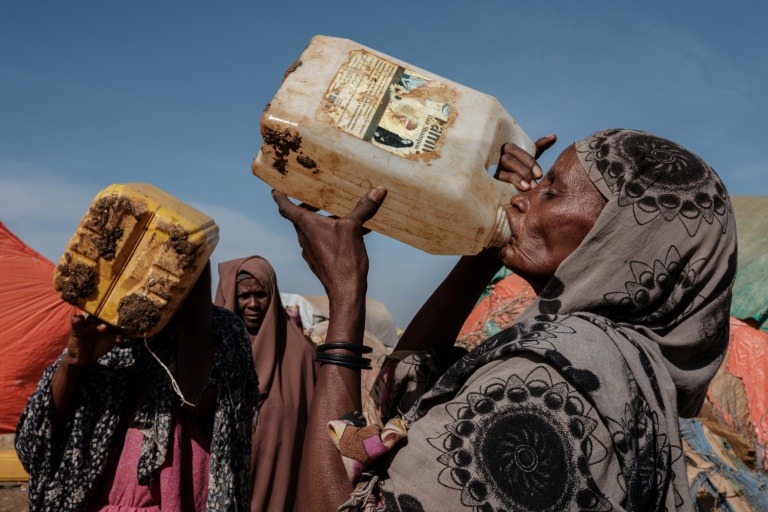
The United Nations warned Monday that Somalia was on the brink of famine for the second time in just over a decade, and that time was running out to save lives in the drought-ravaged country. 

“Famine is at the door and we are receiving a final warning,” UN humanitarian chief Martin Griffiths told a press conference in the Somali capital Mogadishu. 

“The unprecedented failure of four consecutive rainy seasons, decades of conflict, mass displacement, severe economic issues are pushing many people to… the brink of famine.”

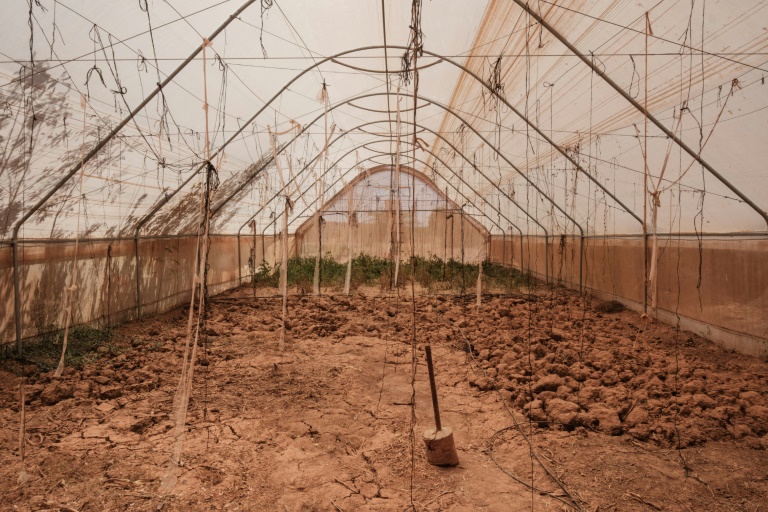
Millions of people are at risk of starvation in Somalia and its neighbours in the Horn of Africa including Ethiopia and Kenya which are in the grip of the worst drought in four decades after four failed rainy seasons wiped out livestock and crops.

A food and nutrition report has “concrete indications” that famine will strike Baidoa and Burhakaba in the Bay region of south-central Somalia between October and December, said the head of the UN Office for the Coordination of Humanitarian Affairs (OCHA), who began a visit to the country on Thursday.

“I’ve been shocked to my core these past few days by the level of pain and suffering we see so many Somalis enduring,” he added. 

“We are in the last moment of the 11th hour to save lives.”

Humanitarian agencies have been ringing alarm bells for months and say the situation in the Horn of Africa is likely to deteriorate with a likely fifth failed rainy season in the offing.

– ‘Worst fears now a reality’ –

Griffiths said the situation was worse than during Somalia’s last famine in 2011 when 260,000 people died, more than half of them children under the age of six. 

The UN’s World Food Programme (WFP) last month said the number of people at risk of starvation across the Horn had increased to 22 million.

“Our worst fears for Somalia are now a reality: Famine is imminent if funds do not arrive immediately,” WFP executive director David Beasley said on Twitter.

“The world MUST act now – this is a global call to action.”

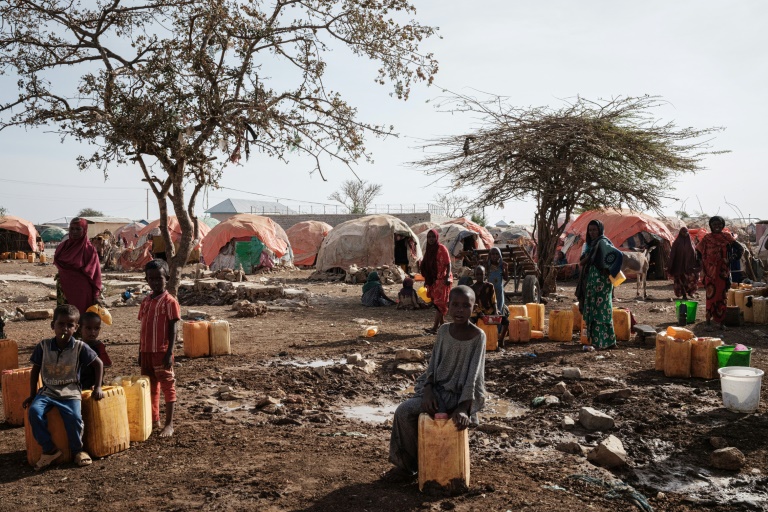
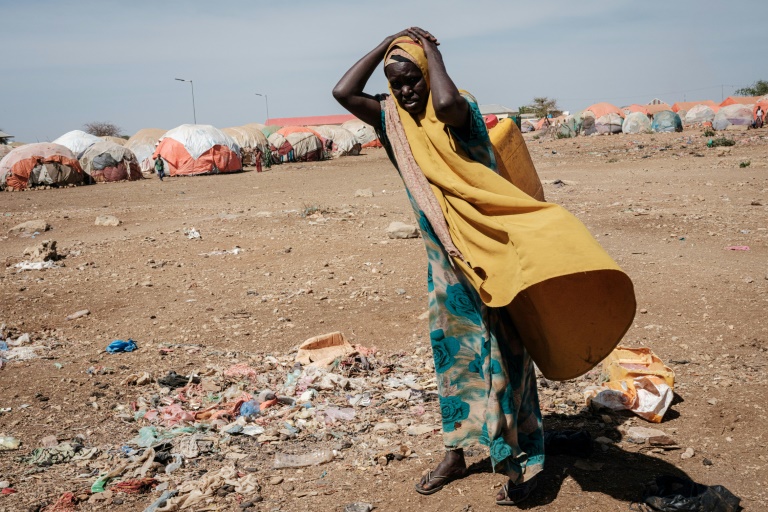
In Somalia alone, the number of people facing crisis hunger levels is 7.8 million, or about half the population, while around a million have fled their homes on a desperate quest for food and water, UN agencies say. 

Griffiths described scenes of heart-rending suffering during a visit to Baidoa, describing it as the epicentre of the crisis where he saw “children so malnourished they could barely speak” or cry.

He said 1.5 million children across the country were at risk of acute malnutrition by October if nothing changed. 

Conflict-wracked Somalia is considered one of the most vulnerable to climate change but is particularly ill-equipped to cope with the crisis.

A deadly insurgency by the radical Islamist Al-Shabaab group for more than a decade and a half against the fragile federal government is limiting humanitarian access to many areas.

A long-running political crisis also diverted attention away from the drought, but new President Hassan Sheikh Mohamud used his inauguration speech in June to appeal for international help to stave off disaster.

In recent years, increasingly extreme droughts and floods have added to the devastation caused by a locust invasion and the Covid-19 pandemic.

The UN’s World Meteorological Organization (WMO) has said the Horn was likely facing a fifth straight failed rainy season over the months of October to December.

– ‘Sleepwalking’ to catastrophe – 


At the start of this year, the WFP had put the number of people facing hunger across the Horn at 13 million, and appealed for donors to open their wallets.

Funds were initially slow in coming, with Russia’s invasion of Ukraine among other crises drawing attention from the disaster in the Horn, humanitarian workers said.

The war in Ukraine has also sent global food and fuel prices soaring, making aid delivery more expensive.

In June, British charity Save the Children had issued an alert that the international community was “sleepwalking towards another catastrophic famine” in Somalia.

OCHA has said the March-May 2022 rainy season was the driest on record in the last 70 years, and 2020-2022 had surpassed “the horrific droughts in both 2010-2011 and 2016-2017 in duration and severity”.

“An estimated 2.3 million girls and boys are at imminent risk of violence, exploitation, abuse, neglect, and death from severe acute malnutrition as result of food and nutrition crisis across Somalia,” it said in August.

In 2017, more than six million people in Somalia, more than half of them children, needed aid because of a prolonged drought across East Africa.

But early humanitarian action averted famine that year.
African leaders slam Western absence from climate summit

African leaders criticised on Monday the lack of Western counterparts at a meeting in Rotterdam where they pleaded for funds to help their countries adapt to global warming.

Senegalese President and African Union chief Macky Sall, and Congolese President Felix Tshisekedi said wealthy countries responsible for most CO2 emissions should have been there.

They were speaking at the Africa Adaptation Summit in the Dutch port city, which comes two months before the crucial COP27 climate conference in Egypt in November.

“I cannot fail to note with a touch of bitterness the absence of the leaders of the industrialised world,” Sall said at the opening of the event.

“Because these are the main polluters of our planet and it is they who should finance adaptation.”

The Senegalese leader added that it was “not just the fate of Africa that is at stake but the fate of humanity and the future of the planet.”

Tshisekedi of the Democratic Republic of Congo also had harsh words for Western leaders, with Dutch Prime Minister Mark Rutte being the only one who showed up to the summit in person.

“I deplore the absence of the leaders of the industrialised nations and the private sector who are, as we know, the greatest polluters,” Tshisekedi said.

“The African continent has the smallest impact on climate change, but paradoxically suffers the majority of its consequences,” he said.

The continent of Africa emits just some three percent of global CO2 emissions, former UN chief Ban Ki-moon added.

“We have a moral duty” to help African countries adapt, he said.

The summit, the first to focus on helping Africa adapt to the fallout from climate change, brings together the African Union, the International Monetary Fund (IMF) and the Netherlands-based Global Center on Adaptation.

African nations agreed at a summit in Gabon last week on a common push to limit global warming to 1.5 degrees Celsius — a goal that scientists fear is increasingly elusive — at upcoming UN climate talks.

That and the Rotterdam meeting are part of a series of regional meetings ahead of the COP27 in Sharm el-Sheikh from November 6 to 18.

Kenya Supreme Court upholds Ruto's presidential win

Kenya’s Supreme Court on Monday upheld William Ruto’s victory in the August 9 presidential election, capping weeks of uncertainty as weary citizens voiced relief over a peaceful conclusion to the prolonged political process.

“This is a unanimous decision. The petitions are hereby dismissed, as a consequence we declare the first respondent (Ruto) as president-elect,” Chief Justice Martha Koome said.

The verdict dealt a blow to challenger Raila Odinga who had alleged fraud and filed a petition against the poll outcome, which saw Deputy President Ruto scrape to victory by a margin of less than two percentage points in a tightly-fought race.

Although voting day passed off peacefully, observers feared that the disputed outcome could fuel violence in a country with a history of post-poll unrest.

Ruto struck a conciliatory note, promising to extend “a hand of brotherhood” to his rivals, including Odinga, a veteran opposition leader now backed by the ruling party.

“I extend a hand of brotherhood to all my competitors and to all their supporters. We are not enemies, we are Kenyans,” Ruto, 55, said in a speech following the verdict.

“Our election and judicial institutions have won.”

Ruto will be sworn in on September 13, becoming Kenya’s fifth president since independence from Britain in 1963 and taking the reins of a country beset by inflation, high unemployment and a crippling drought.

As Ruto supporters celebrated, Odinga, 77, said he respected the ruling but disagreed with its substance.

“We have always stood for the rule of law and the constitution. In this regard, we respect the opinion of the court although we vehemently disagree with their decision today,” he said in a statement.

– ‘We don’t want trouble’ –

The results’ announcement last month had sparked angry protests in Odinga strongholds, but there was no sign of violence Monday.

In his lakeside bastion of Kisumu, messages calling for peace were plastered on walls and pinned to poles as police patrolled the streets.

“We don’t want trouble because we have realised we are the ones who suffer,” said Nelima Atieno, a seller of second-hand clothes. 

Minibus driver Kevin Omolo echoed her views, telling AFP: “We don’t want people to demonstrate.”

“We can’t change the verdict even though it is painful.”

Judges spent the last two weeks sifting through boxes of evidence to establish if any irregularities were substantial enough to nullify the election, as was the case with the August 2017 presidential poll, which Odinga also challenged.

Koome said the technology used by the Independent and Electoral Boundaries Commission (IEBC) met the standards of “integrity, verifiability, security and transparency”.

Any “irregularities were not of such magnitude as to affect the final results of the presidential election”, she said, dismissing all the claims made by the petitioners.

Odinga’s 72-page petition alleged hackers broke into IEBC servers and uploaded doctored result forms, but the claim was dismissed by the court. 

– ‘We just want jobs’ –

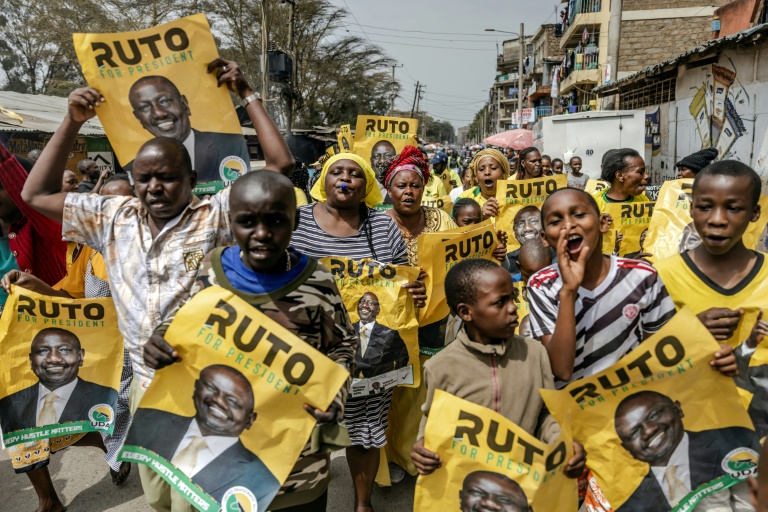
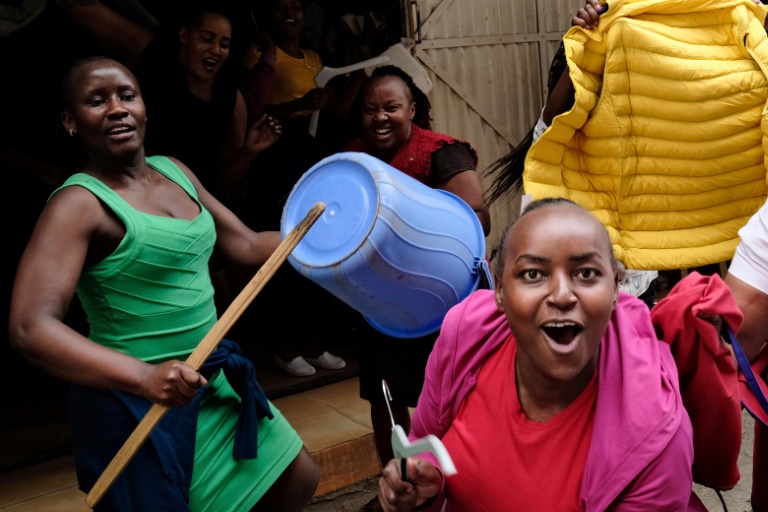
In several towns, the verdict sparked celebrations among Ruto supporters, who cheered and banged plastic buckets.

“I am filled with joy,” said Hassan Barre, a Ruto voter in the northeastern town of Garissa.

“We know the lives of Kenyans will be better… all those who are at the bottom will be uplifted. Businesses will flourish and food prices will go down.”

In Nairobi, stony-faced Odinga supporters expressed their disappointment, with a group of women telling AFP: “Not all of us are happy.”

But with the economy in the doldrums, many Kenyans said they were relieved to see an end to the political drama so business could pick up again.

“This announcement enables us to move on (with our lives)”, said Caroline, a 30-year-old flower seller in the capital.

“We just want jobs,” she told AFP.

Ben Hunter, Africa analyst at risk intelligence group Verisk Maplecroft, said in a note that any protests were unlikely to lead to prolonged unrest.

“The unanimity of the legal ruling and the ongoing economic crisis will dampen the appetite for conflict,” he said.

Despite losing the presidential vote, Odinga’s Azimio La Umoja-One Kenya coalition boasts a narrow majority in the lower house of parliament, with Ruto embarking on a charm offensive to secure the support of a dozen independent MPs.

Since 2002, no presidential poll outcome in Kenya has gone uncontested, with Odinga previously claiming to have been cheated of victory in the 2007, 2013 and 2017 polls.

The 2017 poll saw dozens of protesters killed at the hands of police. 

Kenya’s worst electoral violence occurred after the 2007 vote, when more than 1,100 people died in politically motivated clashes involving rival tribes.

Kenya Supreme Court upholds Ruto's presidential vote win

Kenya’s Supreme Court on Monday upheld William Ruto’s victory in the August 9 presidential election, ending weeks of political uncertainty and delivering a blow to challenger Raila Odinga who had alleged fraud in the poll.

“This is a unanimous decision. The petitions are hereby dismissed, as a consequence we declare the first respondent (Ruto) as president-elect,” Chief Justice Martha Koome said.

Deputy President Ruto, 55, scraped to victory by a margin of less than two percentage points in a tightly-fought race against Odinga, a veteran opposition politician now backed by the ruling party.

As Ruto supporters celebrated, Odinga — who had filed a petition to Kenya’s top court last month — said he respected the ruling but disagreed with its substance.

“We have always stood for the rule of law and the constitution. In this regard, we respect the opinion of the court although we vehemently disagree with their decision today,” he said in a statement.

Although voting day passed off peacefully, the results had sparked angry protests in Odinga strongholds, prompting fears that the disputed outcome could fuel violence in a country with a history of post-poll unrest.

Judges spent the last two weeks sifting through boxes of evidence to establish if any irregularities were substantial enough to nullify the election, as was the case with the August 2017 presidential poll, which Odinga also challenged.

Koome methodically listed the court’s response to the nine issues at the heart of the case.

She said the technology used by the Independent and Electoral Boundaries Commission (IEBC) met the standards of “integrity, verifiability, security and transparency”.

Any “irregularities were not of such magnitude as to affect the final results of the presidential election”, she said, dismissing all the claims made by the petitioners.

Odinga’s 72-page petition alleged hackers broke into IEBC servers and uploaded doctored result forms, but the claim was dismissed by the court. 

– ‘We just want jobs’ – 

In several towns in Kenya, the verdict sparked celebrations among Ruto supporters, who cheered and banged plastic buckets in jubilation.

Elsewhere in Nairobi, stony-faced Odinga supporters expressed their disappointment, with a group of women telling AFP: “Not all of us are happy.”

But with the economy in the doldrums, many Kenyans said they were relieved to see an end to the political drama so business could pick up again.

“This announcement enables us to move on (with our lives)”, said Caroline, a 30-year-old flower seller in the capital.

“We just want jobs,” she told AFP.

Ben Hunter, Africa analyst at risk intelligence group Verisk Maplecroft, said in a note that “any protests by Odinga’s followers… will not translate into prolonged unrest, despite international concerns of widespread violence”.

“The unanimity of the legal ruling and the ongoing economic crisis will dampen the appetite for conflict,” he added.

In Odinga’s stronghold of Kisumu, where protests broke out last month following the results’ announcement, messages calling for peace were plastered on walls and pinned to poles as police patrolled the streets.

“We don’t want trouble because we have realised we are the ones who suffer,” said Nelima Atieno, a seller of second-hand clothes. 

Minibus driver Kevin Omolo echoed her views, telling AFP: “We don’t want people to demonstrate.”

“We can’t change the verdict even though it is painful.”

– Voter disillusionment –

After 2017’s annulment, the IEBC was under heavy pressure to deliver a clean poll.

But this year’s outcome sparked a rift within the IEBC itself, with four of its seven commissioners accusing chairman Wafula Chebukati of running an “opaque” process.

Chebukati denied the allegations, insisting he carried out his duties according to the law of the land despite facing “intimidation and harassment”.

Since 2002, no presidential poll outcome in Kenya has gone uncontested.

At around 65 percent, turnout was sharply lower than in the August 2017 election, with observers saying it reflected growing disillusionment among citizens.

Odinga, who previously said he was cheated of victory in the 2007, 2013 and 2017 polls, had framed the legal battle as a fight “for democracy and good governance”.

Ruto in turn had urged the court to toss out the petition, accusing Odinga of trying “to have another bite at the cherry through a judicially-forced re-run”.

The 2017 poll saw dozens of protesters killed at the hands of police. 

Kenya’s worst electoral violence occurred after the 2007 vote, when more than 1,100 people died in politically motivated clashes involving rival tribes.

Ruto will be sworn in on September 13, becoming Kenya’s fifth president since independence from Britain in 1963 and taking the reins of a country beset by inflation, high unemployment and a crippling drought.

African players in Europe: Nigerians among the goals

Nigerians Kelechi Iheanacho and Umar Sadiq were among the Africans who scored in the major European leagues at the weekend. 

Iheanacho celebrated a return to the starting line-up with a goal 53 seconds after the kick-off for Leicester, but Brighton stormed back for a 5-2 Premier League victory.

Sadiq netted on his debut for Real Sociedad with a close-range header to earn a 1-1 La Liga draw against Atletico Madrid.

Here, AFP Sport highlights African headline-makers in Europe:

ENGLAND

KELECHI IHEANACHO (Leicester)

Iheanacho had a dream start against Brighton, opening the scoring in the first minute after turning in a cross from Patson Daka. But bottom of the table Leicester still succumbed to a heavy defeat.

PATSON DAKA (Leicester)

After being the provider for the Foxes’ opener, the Zambian equalised before half-time to make it 2-2 in the 33rd minute when he ran onto a lofted pass from Youri Tielemans and beat goalkeeper Robert Sanchez.

CHEIKHHOU KOUYATE (Nottingham Forest)

All looked good for Forest against fellow newly promoted strugglers Bournemouth when Senegal star Kouyate gave them an early lead with a powerful header from six yards. But even though Forest doubled their advantage from the penalty spot, the Cherries — without a full-time manager having sacked Scott Parker following a 9-0 thrashing by Liverpool — produced a superb second-half display to win 3-2.

YOANE WISSA (Brentford)

The Democratic Republic of Congo forward celebrated his 26th birthday in style by rounding off the scoring in a thrilling 5-2 win over Leeds when, on as a substitute, he dispossessed Diego Llorente and rolled the ball into the net.

SPAIN

UMAR SADIQ (Real Sociedad)

The Nigeria striker scored after joining Sociedad from Almeria on transfer deadline day. The 25-year-old headed a second-half equaliser in a 1-1 draw at home to Atletico Madrid. Sadiq was signed as a replacement for Sweden forward Alexander Isak after he moved to Newcastle for a reported £58 million ($68 million).

ITALY

CHRISTIAN KOUAME (Fiorentina)

The Ivorian equalised during the opening half in a 1-1 draw at home against 36-time Serie A champions Juventus. A Fiorentina counter-attack after a Juve corner set up Kouame to beat goalkeeper Mattia Perin with a low shot.

GERMANY

SADIO MANE (Bayern Munich)

Senegal striker Mane was repeatedly frustrated by Union Berlin goalkeeper Frederik Ronnow as his side were held to a 1-1 draw in the capital. Ronnow thwarted the Bayern attack with a string of superb saves, including a brilliant reflex stop to keep out a Mane header in injury time.

Raila Odinga: Fifth time unlucky for Kenyan presidential hopeful

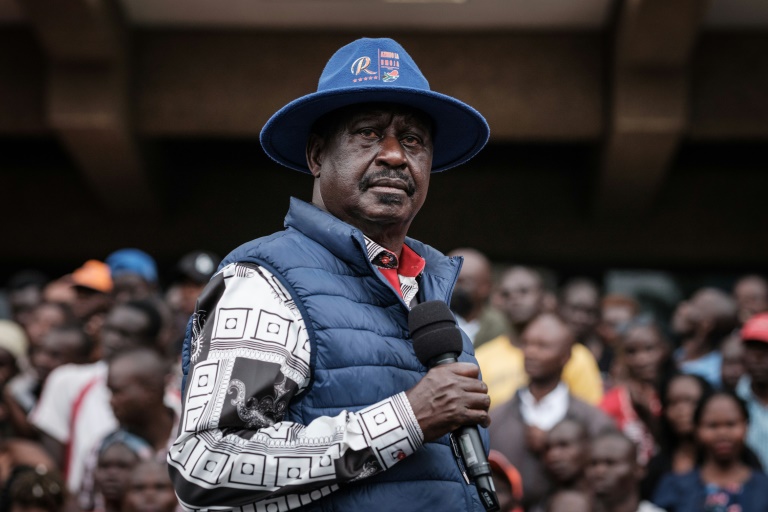
Raila Amolo Odinga has spent most of his adult life in politics, including eight years in prison as a pro-democracy campaigner, but despite five attempts has never achieved his goal of becoming Kenya’s president.

The 77-year-old on Monday lost his fifth bid for the top job as the Supreme Court dismissed his objections to the outcome of the August 9 poll, which awarded a narrow victory to Deputy President William Ruto.

Odinga has long cast himself as an anti-establishment firebrand, despite belonging to one of Kenya’s top political dynasties.

But his decision to strike an alliance with his arch-rival, President Uhuru Kenyatta, took the shine off his brand, enabling Ruto to paint himself as the champion for ordinary Kenyans struggling to survive in a country dominated by elites.

The Kenyatta and Odinga families have cast a long shadow over Kenyan politics since the country won independence from colonial ruler Britain in 1963.

Uhuru Kenyatta’s father Jomo was the East African nation’s first president, while his rival Jaramogi Oginga Odinga — Raila’s father — served as vice president.

Born on January 7, 1945, Odinga spent his early years in politics either in jail or in exile, fighting for democracy during the autocratic rule of president Daniel arap Moi.

A member of the Luo tribe, he entered parliament in 1992 and ran unsuccessfully for the presidency in 1997, 2007, 2013, 2017 and 2022, claiming to have been cheated of victory in the last four elections.

The 2007 polls in particular — which many independent observers also considered deeply flawed — shocked Kenyan politics, unleashing ethnic violence that pitted the Luo and Kalenjin tribes against the Kikuyu community, costing more than 1,100 lives.

Few therefore expected Odinga and Kenyatta — a Kikuyu — to shake hands and draw a line under decades of vitriol in March 2018, effectively leaving Kenya without an opposition.

– Polarising politician –

Kenyatta’s endorsement of Odinga came at the expense of Ruto, who found himself frozen out as the erstwhile foes drew closer.

But the rapprochement also came laden with risks for Odinga. Ruto, 55, was able to position himself as a spokesman for the “hustlers” trying to make ends meet in a country ruled by “dynasties”.

Even as Odinga attempted to pull off a complex balancing act, keeping his base happy while trying to attract Kikuyu voters, he remained a polarising candidate.

While his supporters consider Odinga a much-needed social reformer, detractors see him as a rabble-rouser unafraid to play the tribal card.

A charismatic speaker, he has a reputation for being stubborn and sometimes short-tempered.

In the eyes of some observers, his crowd-pleasing skills have diminished in recent years, attributed to advancing age and ill health.

With his speech notes in hand, he often stumbles and labours over his words — especially in English. Speaking off-the-cuff in his native Swahili, however, he retains the ability to inspire.

– ‘Win some, lose some’ –

Passionate about reggae, he had adopted South African star Lucky Dube’s song “Nobody Can Stop Reggae” as an unofficial motto for his campaign in recent years.

Many observers believe the one-time prime minister will not run for the presidency a sixth time, but he has kept his cards close to his chest.

An Arsenal fan, he credits his love of football for helping him develop a philosophical attitude towards the rough-and-tumble world of politics.

“You lose some, you win some. It is painful but that is the way to perfection,” he said in an interview with AFP last year.

Raised an Anglican, he later converted to evangelicalism and was baptised in a Nairobi swimming pool by a self-proclaimed prophet in 2009. 

The Bible even crept into Odinga’s 2017 campaign with his repeated promise to lead his followers to Canaan, the mythical “promised land”.

He studied engineering in communist former East Germany and named his eldest son Fidel, who died in 2015, after the Cuban revolutionary.

Although not as wealthy as Kenyatta or Ruto, Odinga sits at the head of a business empire with stakes in energy companies.

Married to his wife Ida for almost half a century, Odinga has three surviving children and five grandchildren.

William Ruto: From chicken hawker to Kenya's president-elect

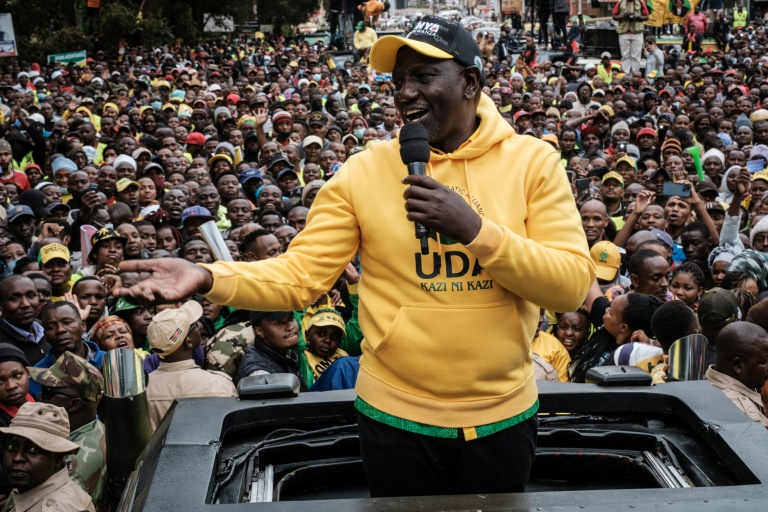
Kenya’s president-elect William Ruto is one of the country’s wealthiest men but has long portrayed himself as “hustler-in-chief” — the champion of the poor and downtrodden.

Defying corruption allegations going back years, the ambitious 55-year-old clawed his way to the centre of power by playing on his religious faith and humble beginnings selling chickens by the roadside.

Ruto’s narrow victory in the August 9 election was upheld by the Supreme Court in a unanimous ruling on Monday.

He had painted his election duel against former prime minister Raila Odinga as a battle between ordinary “hustlers” struggling to put food on the table and the elite Kenyatta and Odinga “dynasties” that had dominated Kenyan politics for decades.

“We want everyone to feel the wealth of this country. Not just a few at the top,” Ruto had said as he criss-crossed the country promoting his “bottom-up” economic plan.

The shadowy rags-to-riches businessman had effectively run as a challenger after a very public and acrimonious falling out with outgoing president Uhuru Kenyatta, who backed Odinga for the top job.

After he was declared winner by the election commission last month, Ruto had struck a conciliatory tone after his win, vowing to work with “all leaders”.

“There is no room for vengeance,” Ruto said, adding: “I am acutely aware that our country is at a stage where we need all hands on deck.”

– ‘Effective strategist’ –

Ruto had served as deputy president under Kenyatta since 2013, supporting him in two elections with a promise that he would have the backing of his boss in this year’s vote.

It was a political marriage of convenience forged in the aftermath of deadly post-poll violence in 2007-2008 that largely pitted the Kikuyu — Kenyatta’s tribe — against the Kalenjin, Ruto’s ethnic group.

Both men were hauled before the International Criminal Court (ICC), accused of stoking the ethnic unrest.

The cases were eventually dropped, with the prosecution complaining of a relentless campaign of witness intimidation.

But Ruto was left out in the cold after Kenyatta shook hands with longtime foe Odinga in a dramatic switch of political allegiance in 2018.

He bounced back with a campaign that was directed as much at Kenyatta as his rival at the ballot box, blaming the government for Kenya’s economic woes and even accusing the president of threatening him and his family.

“Ruto is seen by many people to be one of the most effective strategists in Kenyan politics,”  Nic Cheeseman, a political scientist at the University of Birmingham in Britain, said before the poll.

– ‘Perfect storm’ –

Clad in the bright yellow of his United Democratic Alliance, whose symbol is the humble wheelbarrow, Ruto sought to reach out to those suffering most from the Covid-induced cost of living crisis that has been aggravated by the war in Ukraine.

Observers attribute Ruto’s aggressiveness to the fact he has had to struggle to get everything he has achieved in life from his lowly start in Kenya’s Rift Valley, the Kalenjin heartland.

“I sold chicken at a railway crossing near my home as a child… I paid (school) fees for my siblings,” he once said. 

“God has been kind to me and through hard work and determination, I have something.”

His fortune is now said to run into many millions of dollars, with interests spanning hotels, real estate and insurance as well as a vast chicken farm. 

A teetotal father of six who describes himself as a born-again Christian, Ruto seldom lets a speech go by without thanking or praising God or reciting from the Bible.

He first got a foot on the political ladder — and detractors claim, access to funds — in 1992. After completing studies in botany, he headed the YK’92 youth movement tasked with drumming up support for the autocratic then-president Daniel arap Moi, also a Kalenjin.

In 1997, when he tried to launch his parliamentary career by contesting a seat on his home turf of Eldoret North, Moi told him he was a disrespectful son of a pauper.

Undeterred, Ruto went on to clinch the seat, which he retained in subsequent elections.

His detractors say he siphoned money from the YK’92 project and used it to go into business, and allegations of corruption and land grabs still hang over him.

But he has long dismissed such claims, once telling local media: “I can account for every coin that I have.”

UN warns famine 'at the door' in Somalia

The UN’s humanitarian chief warned Monday that drought-ravaged Somalia was on the brink of famine for the second time in just over a decade, and time was running out to save lives.

“Famine is at the door and we are receiving a final warning,” Martin Griffiths told a press conference in the Somali capital Mogadishu. 

A food and nutrition report due for release on Monday has “concrete indications” that famine will strike the regions of Baidoa and Burhakaba in south-central Somalia between October and December, Griffiths said. 

“I’ve been shocked to my core these past few days by the level of pain and suffering we see so many Somalis enduring,” said the head of the UN Office for the Coordination of Humanitarian Affairs (OCHA), who began a visit to the country on Thursday.

“The unprecedented failure of four consecutive rainy seasons, decades of conflict, mass displacement, severe economic issues are pushing many people to… the  brink of famine,” he said.   

“We are in the last moment of the 11th hour to save lives.”

Somalia and its neighbours in the Horn of Africa including Ethiopia and Kenya are in the grip of the worst drought in more than 40 years after four failed rainy seasons wiped out livestock and crops.

Humanitarian agencies have been ringing alarm bells for months and say the situtuation is likely to deteriorate with a likely fifth failed rainy season in the offing.

Griffiths said the situation was worse in Somalia than during the last famine in 2011 when 260,000 people, more than half of them children under the age of six. 

The UN’s World Food Programme (WFP) last month said the number of people at risk of starvation across the Horn had increased to 22 million.

In Somalia alone, the number of people facing crisis hunger levels is 7.8 million, or about half the population, while around a million have fled their homes on a desperate quest for food and water, UN agencies say. 

Griffiths described scenes of heart-rending suffering during a visit to Baidoa, describing it as the epicentre of the crisis where he saw “children so malnourished they could barely speak” or cry.

– ‘Beyond breaking point’ –

Conflict-wracked Somalia is considered one of the most vulnerable to climate change but is particularly ill-equipped to cope with the crisis.

A deadly insurgency by the radical Islamist Al-Shabaab group for more than a decade and a half against the fragile federal government is limiting humanitarian access to many areas.

A long-running political crisis also diverted attention away from the drought, but new President Hassan Sheikh Mohamud used his inauguration speech in June to appeal for international help to stave off disaster.

In recent years, increasingly extreme droughts and floods have added to the devastation caused by a locust invasion and the Covid-19 pandemic.

“Somalia is facing unprecedented levels of drought which have particularly hit rural communities, alongside other impacts like conflict, Covid-19, macroeconomic challenges, and a recent desert locust upsurge,” the UN’s Food and Agriculture Organization (FAO) said in a statement on Friday. 

It said people’s means to produce food and earn income were “stretched beyond breaking point”.

The UN’s World Meteorological Organization (WMO) has said the Horn was likely facing a fifth straight failed rainy season over the months of October to December.

– ‘Sleepwalking’ to catastrophe – 


At the start of this year, the WFP had put the number of people facing hunger across the Horn at 13 million, and appealed for donors to open their wallets.

Funds were initially slow in coming, with Russia’s invasion of Ukraine among other crises drawing attention from the disaster in the Horn, humanitarian workers said.

The war in Ukraine has also sent global food and fuel prices soaring, making aid delivery more expensive.

In June, British charity Save the Children had issued an alert that the international community was “sleepwalking towards another catastrophic famine” in Somalia.

OCHA has said the March-May 2022 rainy season was the driest on record in the last 70 years, and 2020-2022 had surpassed “the horrific droughts in both 2010-2011 and 2016-2017 in duration and severity”.

“An estimated 2.3 million girls and boys are at imminent risk of violence, exploitation, abuse, neglect, and death from severe acute malnutrition as result of food and nutrition crisis across Somalia,” it said in August.

In 2017, more than six million people in Somalia, more than half of them children, needed aid because of a prolonged drought across East Africa.

But early humanitarian action averted famine that year.
Dying of hunger: What is a famine?

On Monday, the UN’s humanitarian chief Martin Griffiths warned that Somalia was on the brink of famine for the second time in just over a decade.

Here is an exploration of a term that evokes the very worst of human suffering.

– What is a famine? –

“Famine” is a word freighted with dread of hunger and privation, dating back to the dawn of humanity.

More recently, though, it has been codified scientifically to help policymakers and focus humanitarian aid.

Since 2004, global agencies are supposed to only use the term according to the Integrated Food Security Phase Classification (IPC) scale.

Famine is the fifth and highest phase of the scale, with the IPC defining it as “an extreme deprivation of food”.

“Starvation, death, destitution and extremely critical levels of acute malnutrition are or will likely be evident.”   

According to the IPC scale, famine exists when at least 20 percent of households in a specific area have extremely limited access to basic food; at least 30 percent of children suffer from acute malnutrition; and two people out of every 10,000 die each day “due to outright starvation or to the interaction of malnutrition and disease”.

– Where have famines occurred? –

Over the last century, famines hit China, the Soviet Union, Iran and Cambodia, often the result of human actions.

Europe suffered several famines in the Middle Ages, but its most recent were during World War I and II, where parts of Germany, Poland and the Netherlands were left starving under military blockades.

In Africa there have been several famines in recent decades, from Biafra in Nigeria in the late 1960s to the 1983-1985 Ethiopian famine, which ushered in a new form of celebrity fundraising and unprecedented media attention on the suffering.

The last time famine was declared was in South Sudan in 2017 in Leer and Mayendit counties, areas that have often been a flashpoint for violence.

In Somalia, famine in 2011 in southcentral areas of the country killed an estimated 260,000 people, half of them children under the age of six. 

Griffiths, the head of the UN Office for the Coordination of Humanitarian Affairs (OCHA), said Monday that famine was likely in two areas of south-central Somalia, Baidoa and Burhakaba, between October and December.

– What are the causes? –

Throughout history, famines have generally been caused by human action, usually wars which ravage crops and livestock, ruin trade, displace people and complicate the distribution of aid. 

Famine “represents a failure on the part of many parties,” said Daniel Maxwell, professor of food security at Tufts University in the United States, told AFP.

“Currently in famine-risk areas (Somalia, Ethiopia, South Sudan, Yemen, northeastern Nigeria), violent conflict is the common denominator, but climate factors are playing an increasing role,” Maxwell said. 

“Even in the context of violent conflict, drought has been a factor in all recent famines in Somalia.”

An arid country whose impoverished population depends on livestock and agriculture, Somalia is considered one of the regions most vulnerable to climate change. 

In recent years, increasingly extreme droughts and floods have added to devastation caused by a locust invasion and the Covid-19 pandemic, as well as instability fuelled by a jihadist insurgency.

– How does famine kill? –

When lack of food has led to an 18 percent loss of weight, the body starts undergoing physiological disturbances, according to a 1997 study of hunger strikes published in the British Medical Journal (BMJ).

When people have insufficient food over several weeks, it leads to organ failure and eventually death.

“In most contemporary famines, most people don’t literally starve to death,” said Maxwell.

“In crowded conditions, killer diseases like cholera or measles are more frequently the actual cause of death, especially of young children. Unfortunately, we have already seen outbreaks of both cholera and measles in Somalia this year.”

Lack of food weakens the immune system, making the body more vulnerable to disease, while those displaced by drought often live in makeshift camps, with poor hygiene and limited access to drinking water.

“Between starvation and death, there is nearly always disease,” the World Health Organization (WHO) has said.

Hunger leads to stunted growth and impacts cognitive development, and can lead to poor health throughout a person’s life.

Even without reaching famine, parts of Africa go through regular cycles of hunger that have long-term social consequences.

Famine 'at the door' in Somalia: UN humanitarian chief

The UN’s humanitarian chief warned on Monday that drought-ravaged Somalia was on the brink of famine and time was running out to save lives.

“Famine is at the door and we are receiving a final warning,” Martin Griffiths, head of the UN’s Office for the Coordination of Humanitarian Affairs (OCHA), told a press conference in Mogadishu.

“We are in the last moment of the 11th hour to save lives,” he declared.

An upcoming food and nutrition report on Somalia has concrete evidence that famine will strike two regions between October and December, Griffiths said. 

“I’ve been shocked to my core these past few days at the level of pain and suffering we see so many Somalis enduring,” said Griffiths, who began a visit to the country on Thursday.

Somalia and its neighbours in the Horn of Africa including Ethiopia and Kenya are in the grip of the worst drought in more than 40 years following four failed rainy seasons that have wiped out livestock and crops.

Humanitarian agencies have been ringing alarm bells for months.

The UN’s World Food Programme (WFP) last month said the number of people at risk of starvation across the region had increased to 22 million.

In Somalia alone, the number of people facing crisis hunger levels is 7.8 million, or about half the population, while around a million have fled their homes on a desperate quest for food and water, UN agencies say. 

In 2011, famine in parts of Somalia, one of the poorest countries on the planet, cost the lives of 260,000 people, more than half of them children under the age of six. 

Griffiths described scenes of heart-rending suffering during his visit to Baidoa, one of the two areas at risk of famine, saying he saw “children so malnourished they could barely speak” or cry.

– ‘Unprecedented drought’ –

The conflict-wracked country is considered one of the most vulnerable to climate change but is particularly ill-equipped to cope with the crisis.

A deadly insurgency by the radical Islamist Al-Shabaab group against the fragile federal government is limiting humanitarian access to many areas.

A long-running political crisis also diverted attention away from the drought, but new President Hassan Sheikh Mohamud used his inauguration speech in June to appeal for international help to stave off looming disaster.

In recent years, increasingly extreme droughts and floods have added to the devastation caused by a locust invasion and the Covid-19 pandemic.

“Somalia is facing unprecedented levels of drought which have particularly hit rural communities, alongside other impacts like conflict, Covid-19, macroeconomic challenges, and a recent desert locust upsurge,” the UN’s Food and Agriculture Organization (FAO) said in a statement on Friday. 

It said people’s means to produce food and earn income were “stretched beyond breaking point”.

The UN’s World Meteorological Organization (WMO) has said the Horn was likely facing a fifth straight failed rainy season over the months of October to December.

– ‘Sleepwalking’ to catastrophe – 


At the start of this year, the WFP had put the number at 13 million, and appealed for donors to open their wallets at a time of great need.

Funds were initially slow in coming, with Russia’s invasion of Ukraine among other crises drawing attention from the disaster in the Horn, humanitarian workers said.

The war in Ukraine has also sent global food and fuel prices soaring, making aid delivery more expensive.

In June, British charity Save the Children had issued an alert that the international community was “sleepwalking towards another catastrophic famine” in Somalia.

OCHA has said the March-May 2022 rainy season was the driest on record in the last 70 years “making the 2020-2022 surpass the horrific droughts in both 2010-2011 and 2016-2017 in duration and severity”.

“An estimated 2.3 million girls and boys are at imminent risk of violence, exploitation, abuse, neglect, and death from severe acute malnutrition as result of food and nutrition crisis across Somalia,” it said in August.

In 2017, more than six million people in Somalia, more than half of them children, needed aid because of a prolonged drought across East Africa.

But early humanitarian action averted famine that year.
The Inter-Agency Standing Committee chaired by Griffiths brings together the heads of 18 organisations inside and outside the UN.

Close Bitnami banner
Bitnami