Africa Business

3 women among Ivorian troops held in Mali released: diplomats

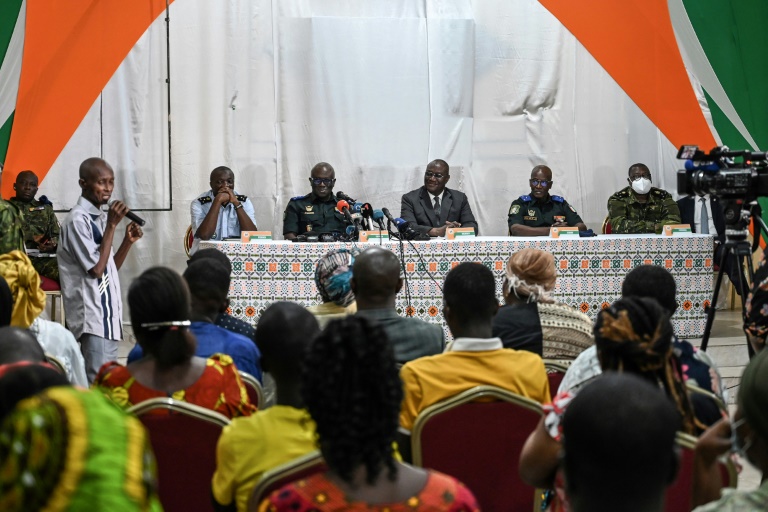
Three women among the 49 Ivorian soldiers held since July in Mali accused of being mercenaries in an ongoing dispute between the two countries have been released, two diplomats told AFP Saturday.

“I give you the good news: As a humanitarian gesture, Mali has released the three women from the contingent of 49 Ivorian soldiers”, a Malian diplomat said on condition of anonymity.

A Togolese diplomat also confirmed the news of the three soldiers’ release.

Togolese President Faure Gnassingbe has been acting as a mediator in the dispute, which has sparked a diplomatic crisis between military-ruled Mali and its West African neighbour.

The soldiers were arrested after their arrival at Bamako airport on July 10. 

Ivory Coast says they were unfairly detained after being sent to provide backup for the UN peacekeeping mission in Mali, MINUSMA. They say their role within the mission was “well-known to the Malian authorities”.

Mali’s government however says they were detained after landing on a special flight without supporting documents and has described them as mercenaries.

A day after the detention of the troops, MINUSMA spokesman Olivier Salgado backed Ivory Coast’s position, but the peacekeeping mission subsequently acknowledged there had been “dysfunctions” in deploying the Ivorian troops.

The authorities in Mali subsequently expelled Salgado from the country for having published “unacceptable information” on the affair.

It also suspended rotations of UN peacekeeping troops, although they have since resumed.

– Long list of charges –

In mid-August, Malian prosecutors filed charges against all 49 soldiers, the charges including conspiracy and harm to state security.

Public prosecutor Samba Sissoko on August 15 said the charges comprised “criminal association, attacking and plotting against the government, harming state external security, holding, carrying and transporting combat weapons and complicity in these crimes”.

But negotiations continued, according to diplomatic sources close to the talks, who said Mali was demanding that Ivory Coast acknowledge its responsibility in the affair and express its regrets for the deployment of the soldiers.

Bamako also wanted Abidjan to hand over people who have been on its territory since 2013 who are wanted in Mali, said the sources in mid-August.

The junta has accused Ivory Coast of encouraging regional partners to impose harsh sanctions on Mali that were lifted in July.

Mali has been dominated by the military since an August 2020 coup ousted elected leader Ibrahim Boubacar Keita following mass protests over the handling of a long-running and bloody jihadist insurgency.

MINSUMA is one of the forces in the Sahel state to help it fight rebels linked with Al-Qaeda and the Islamic State group, which began their operations in 2012 and have spread their influence across northern and central Mali.
Al-Shabaab kill at least 19 Somali civilians

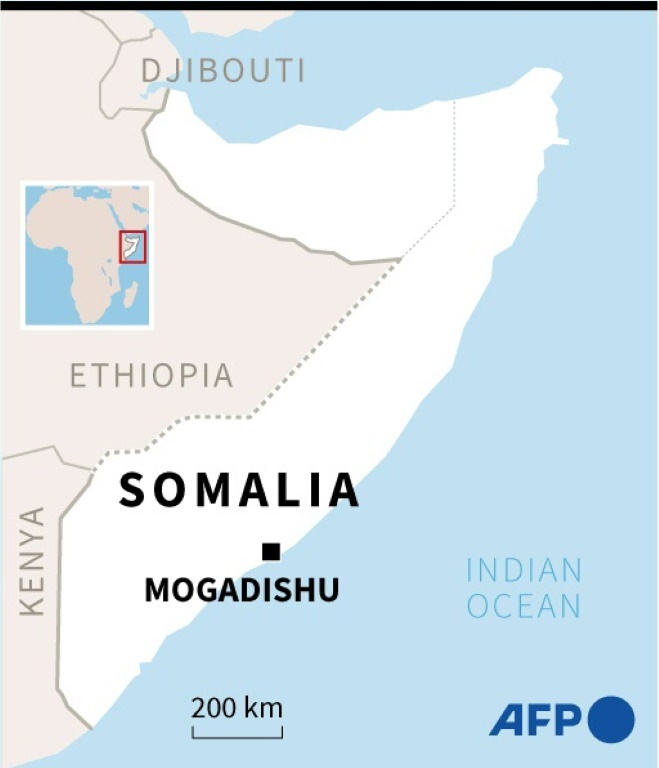
Fighters from the Islamist insurgent group Al-Shabaab have killed at least 19 civilians in a night-time attack in central Somalia, clan chiefs and local officials said on Saturday.

The attack comes two weeks after Al-Shabaab, which has waged a long insurgency against the Somali state, besieged a hotel in the capital Mogadishu for 30 hours, leaving 21 people dead and 117 injured.

The sources said at least eight vehicles were travelling on a road between the towns of Beledweyne and Maxaas when the insurgents intercepted and burned them and killed the passengers overnight Friday to Saturday by Afar-Irdood village.

“The terrorists massacred innocent civilians who were travelling… last night. We don’t have the exact number of victims, but 19 dead bodies have been collected,” local clan elder Abdulahi Hared told AFP.

“The dead bodies are still being collected, including women and children. They could be more than 20,” said Ali Jeyte, the governor of the Hiiraan region where the attack happened.

“This was a horrible attack that has never happened in our region. These were innocent civilians who did nothing to deserve this,” added another local clan leader, Mohamed Abdirahman.

Al-Shabaab in a statement said they targeted fighters from a local sub-clan that recently helped government forces and that they killed 20 “militiamen and those who were transporting material for them”, destroying nine of their vehicles.

Local fighters and the security forces recaptured several villages from Al-Shabaab in the region in late August.

Ali Gudlawe, president of Hirshabelle state where the attack took place, released a statement offering condolences to the victims’ loved ones and promising to continue “operations to cleanse” the region of Al-Shabaab.

“The only way we have is to be united to fight and liberate our country from them. I call upon the society not to be discouraged,” said his counterpart in Jubaland state, Ahmed Madobe.

– ‘All-out war’ –

The Al-Qaeda-linked group has been fighting Somalia’s internationally backed federal government since 2007.

It has been driven out of the country’s main cities, including Mogadishu in 2011, but remains a serious security threat in large areas of the countryside.

Somali President Hassan Sheikh Mohamud, elected in May after a protracted political crisis, promised to wage “an all-out war” to eliminate Al-Shabaab following the Mogadishu hotel attack.

The bloody siege drew international condemnation from partners including the United States, Britain, Turkey and the United Nations.

After Mohamud’s election, President Joe Biden said he would restore a US military presence in Somalia to fight Al-Shabaab.

The Pentagon had recommended the move, considering the rotation system of Biden’s predecessor Donald Trump as too risky and ineffective.

Zimbabwe stun Australia in historic third ODI win

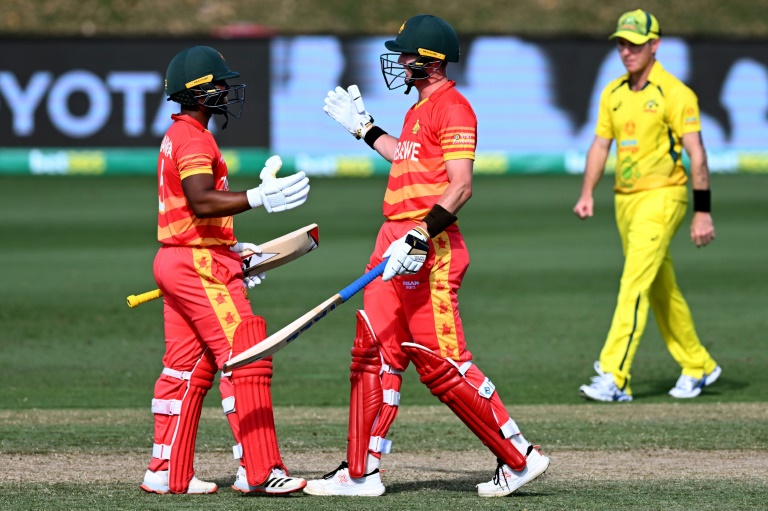
Zimbabwe stunned a nearly full-strength Australia by three wickets on Saturday to claim a historic victory in the third one-day international in Townsville.   

After leg-spinner Ryan Burl (5-10) played a starring role in dismissing the hosts for a lowly 141, Zimbabwe overcame a wobbly chase to beat the cricket powerhouse for the first time in Australia when they hauled in the target in the 39th over, triggering scenes of celebration.  

It was a consolation victory for Zimbabwe to conclude the three-match series. 

“We showed a whole lot of fight… it was a testament to the work the boys put in,” said Zimbabwe skipper Regis Chakabva, who top-scored with a composed 37 not out.  

The tourists started the chase impressively, with Takudzwanashe Kaitano and Tadiwanashe Marumani posting a 38-run opening stand.  

But Australia quick Josh Hazlewood turned the game on its head with the wicket of Kaitano (19) in the ninth over, and soon after dismissed Wessly Madhevere and Sean Williams on consecutive deliveries. 

A nervous Zimbabwe, seeking just their third victory against Australia from 32 ODIs, batted defensively and slumped to 77-5 after Murumani (35) fell to towering all-rounder Cameron Green.  

Chakabva calmed the nerves and was joined by an inspired Burl, who hit a six off player-of-the-series Adam Zampa to get Zimbabwe within sight of a famous victory.  

He fell with five runs needed but there was no late twist. 

– ‘Relentless with the ball’ –

“You turn up to international sport and you can get beaten on any day, and we saw that today,” said Australia captain Aaron Finch.

“They were relentless with the ball early on.”    

In their first series in Australia since 2004, Zimbabwe struggled to be competitive in the opening two matches at the same venue and were routed for just 96 on Wednesday. 

In a confidence boost, Chakabva won the toss for the first time in the series and his accurate attack claimed regular wickets against Australia’s misfiring batting order.

Only two batters reached double figures, with star opener David Warner (94) playing a lone hand in Australia’s innings lasting just 31 overs.  

After Zimbabwe’s probing seamers tore through Australia’s top-order, an inspired Burl claimed five wickets in a whirlwind 18 balls starting with the key scalp of Glenn Maxwell, who helped rebuild the innings with a half-century partnership alongside Warner.  

The dangerous Maxwell holed out for 19 in the 27th over and Burl got on a roll in his career best performance, including dismissing Warner, who fell just short of his 19th ODI century.

Zimbabwe bowled out Australia for the first time in ODIs and the eventual triumph fuelled their bid to climb the ODI Super League ladder, which goes towards qualification for next year’s 50-over World Cup in India. 

US says sending envoy to Ethiopia, condemns Eritrea return to war

The United States on Friday dispatched an envoy to Ethiopia to seek an end to renewed fighting, and condemned neighboring Eritrea for re-entering the conflict in the northern region of Tigray.

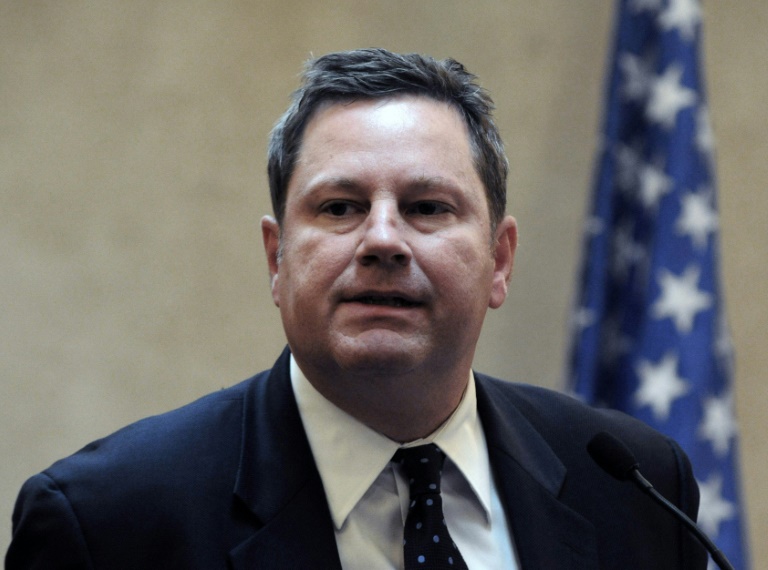
Mike Hammer, the US special envoy for the Horn of Africa, will head this weekend to Ethiopia and “convey that all parties should halt military operations and engage in peace talks,” White House Press Secretary Karine Jean-Pierre said.

“We condemn Eritrea’s re-entry into the conflict, the continuing TPLF offensive outside of Tigray and the Ethiopian government’s air strikes,” she told reporters, referring to the rebel Tigray People’s Liberation Front.

Fighting resumed last week in the northern region after a five-month lull, dashing hopes of peacefully resolving the nearly two-year war and of ending a humanitarian crisis in which Tigray has suffered widespread hunger.

“There is no military solution to the conflict,” Jean-Pierre said.

“All parties should exercise restraint and we urge de-escalation by all actors, particularly so that there can be a resumption of humanitarian relief and basic services to all parties in need.”

The State Department said Hammer, a veteran diplomat whose assignment also covers troubled Sudan and Somalia, would travel from Sunday through September 15 in the Horn of Africa.

He will meet both Ethiopian and African Union officials as well as political players from elsewhere in the country, it said.

Hammer took on the role in June and the following month visited Ethiopia in a bid to help launch peace talks, which never began due to disputes between the government and TPLF even while the ceasefire was holding.

The two sides have traded blame for starting the latest round of hostilities.

The TPLF, once Ethiopia’s dominant force, has said that historic rival Eritrea again sent in forces as part of a major offensive with Ethiopian troops.

Eritrea, one of the world’s most closed nations with one of its most authoritarian governments, has been accused of heinous violence in the conflict.

Amnesty International said that Eritrean forces at the start of the conflict in November 2020 massacred hundreds of civilians in the ancient city of Axum.

After months of denial that Eritrean troops had crossed the border, Ethiopian Prime Minister Abiy Ahmed in March 2021 admitted to their presence and promptly announced their departure.

– US distance from Ethiopia –

Abiy won the Nobel Peace Prize for his reconciliation with Eritrea but has fallen out of favor with the United States, a longtime Ethiopian ally which voiced revulsion over the violence in Tigray, where US Secretary of State Antony Blinken has spoken of “ethnic cleansing.”

President Joe Biden’s administration as of January 1 booted Ethiopia out of a key trade agreement that allowed duty-free access, outraging segments of the growing Ethiopian-American community which said the United States was ceding influence to rival powers such as China.

Ethiopia’s ambassador in Washington, Seleshi Bekele, met Thursday with senior officials including Deputy Secretary of State Wendy Sherman and called on the United States to condemn the TPLF, which he said was to blame for breaking the ceasefire.

Access to northern Ethiopia is severely restricted and Tigray has been under a communications blackout for over a year.

TPLF spokesman Kindeya Gebrehiwot earlier told AFP that a major offensive was coming from Eritrea.

Combat had been concentrated around the southeastern border of Tigray, with the rebels pushing into the neighboring Amhara and Afar regions, sending residents fleeing.

The fighting so far has not terminated relief efforts, with UN spokesman Stephane Dujarric saying that 17 trucks distributed fertilizer in Tigray this week for farmers in their planting season.

Abiy sent troops into Tigray to topple the TPLF in November 2020 in response to what he said were rebel attacks on federal army camps.

US says sending envoy to Ethiopia, condemns Eritrea return to war

The United States on Friday dispatched an envoy to Ethiopia to seek an end to renewed fighting and condemned neighboring Eritrea for re-entering the conflict in the northern region of Tigray.

US special envoy Mike Hammer will head this weekend to Ethiopia and “convey that all parties should halt military operations and engage in peace talks,” White House Press Secretary Karine Jean-Pierre said.

“We condemn Eritrea’s re-entry into the conflict, the continuing TPLF offensive outside of Tigray and the Ethiopian government’s air strikes,” she told reporters.

Fighting resumed last week in the northern region after a five-month lull, dashing hopes of peacefully resolving the nearly two-year war and of ending a humanitarian crisis in which Tigray has suffered widespread hunger.

“There is no military solution to the conflict,” Jean-Pierre said.

“All parties should exercise restraint and we urge de-escalation by all actors, particularly so that there can be a resumption of humanitarian relief and basic services to all parties in need.”

The Ethiopian government and the rebel Tigray People’s Liberation Front (TPLF) have traded blame for starting the latest round of hostilities.

The TPLF, once Ethiopia’s dominant force, on Thursday accused historic rival Eritrea of again sending in forces as part of a major offensive with Ethiopian troops.

African countries to stand by 1.5C target at climate talks talks

African countries on Friday agreed on a common push to limit global warming to 1.5 degrees Celsius — a goal that scientists fear is increasingly elusive — at upcoming UN climate talks.

The five-day Africa Climate Week, held in the Gabonese capital of Libreville, is one of a series of regional confabs ahead of the COP27 in Sharm el-Sheik, Egypt, from November 6 to 18.

The talks “reiterated the need to further accelerate climate action on all fronts, namely in adaptation, loss and damage, climate finance, and adopting more ambitious mitigation measures to keep the 1.5-degree target within reach,” Egyptian Foreign Minister Sameh Shoukry, who will chair the COP27, said in a statement.

African countries are among the nations that are least to blame for the fossil-fuel gases that stoke global warming, accounting for less than four percent of global emissions of carbon dioxide.

But they are also among the countries that are most exposed to climate impacts, such as worsening drought, floods and cyclones.

Funding to help poorer countries curb their emissions and strengthen their resilience is traditionally one of the thorniest issues at COPs — Conferences of the Parties — under the UN Framework Convention on Climate Change.

According to the African Development Bank, Africa will need as much as $1.6 trillion between 2020-2030.

In many rich countries, catastrophic heatwaves and wildfires this year have strengthened demands for action on climate.

But Russia’s invasion of Ukraine and the threat to growth posed by the Covid-19 pandemic have also cast a shadow on prospects for meeting funding needs.

“The geopolitical realities and energy crisis confronting the world have opened the door for backtracking on climate commitments and we must do everything to ensure this does not happen,” warned Shoukry. 

In 2015, 196 UN members meeting in Paris set the goal of keeping warming to well below two degrees Celsius (3.6 degrees Fahrenheit) compared to pre-industrial levels, and preferably to 1.5C.

But experts say that surging carbon emissions have endangered the lower goal.

“Science tells us if we continue business as usual, global average temperature will rise… more than 3C by the end of the century,” said the UN’s deputy climate chief, Ovais Sarmad.

In May this year, the UN’s World Meteorological Organization said there was an even chance that the 1.5C target would be breached within the next five years.

The Libreville meeting brought together around 2,300 delegates from government, NGOs and the private sector from around 50 African countries.

Rugby Championship: Five things to know

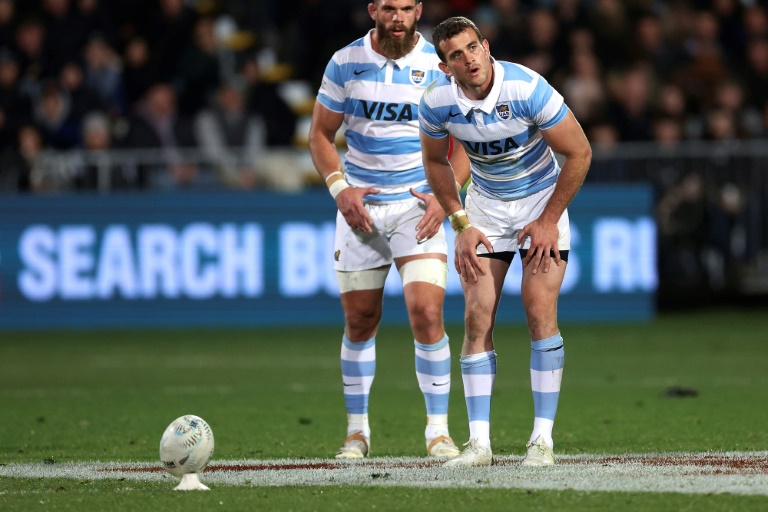
The second half of the six-round 2022 Rugby Championship begins on Saturday with perennial strugglers Argentina topping the table and world champions South Africa last. 

A shock-riddled tournament has seen the Pumas concede 41 points to Australia one week and score 48 against them seven days later.

The Springboks are not the only team on the back foot with third-placed New Zealand losing at home to Argentina for the first time.

Here, AFP Sport lists five things to know before New Zealand and Australia have home advantage for the second week in a row against Argentina and South Africa respectively.

Brilliant Boffelli

Argentina wing Emiliano Boffelli is the leading points scorer with 54 from a try, and eight conversions and 11 penalties from 22 shots at goals.

But the 27-year-old, who plays for Edinburgh, would not have taken most of those kicks had fly-half Nicolas Sanchez not missed the 2022 edition due to injury.

When both are in the team, Sanchez takes the short and medium-range shots at goal and Boffelli only the long-range attempts.

Hamilton boost

Struggling New Zealand, who have lost six of their last eight matches, hope to continue a perfect record against Argentina in the north island city of Hamilton.

The All Blacks have hosted the Pumas four times there and won by margins ranging from a high of 52 points in 1997 to 15 in 2013.

A stunning seven-point triumph for Argentina in Christchurch last weekend ended a run of 15 consecutive losses to the All Blacks in New Zealand.

Try-scoring forwards

Forwards are leading the way when it comes to tries this season with two flankers, Argentine Juan Martin Gonzalez and Australian Fraser McReight, topping the charts with three each.

Among the foursome who have scored two are South Africa flanker Kwagga Smith, New Zealand hooker Samisoni Taukei’aho and Argentina prop Thomas Gallo.

The lone back to have claimed two tries during the first three rounds is Australia centre Len Ikitua.  

Sydney struggles

South Africa, extremely flattered to lose by only eight points to Australia in Adelaide last Saturday, face the Wallabies in Sydney, a city where they have a disastrous recent record.

The Springboks won six of the first seven matches in the eastern city against Australia, but from 1993 have suffered seven straight defeats, including defeats by 20 and 19 points.

South Africa have not won anywhere in Australia since 2013, leading 2007 Springbok World Cup-winning fly-half Butch James to say “the Wallabies are very street wise when they host us”.

Realist Nienaber

South Africa coach Jacques Nienaber is under fire after successive losses, at home to New Zealand and away to Australia, leaving him with an overall record of 11 wins and eight defeats.

“All national coaches are potentially two poor games away from being fired. That is the reality and one lives with that,” admits the 49-year-old former specialist in defence tactics.

But it is All Blacks coach Ian Foster who is under the most severe pressure with the three-time world champions winning just two of their last eight Tests.

Four things to know about Kenya's vote dispute

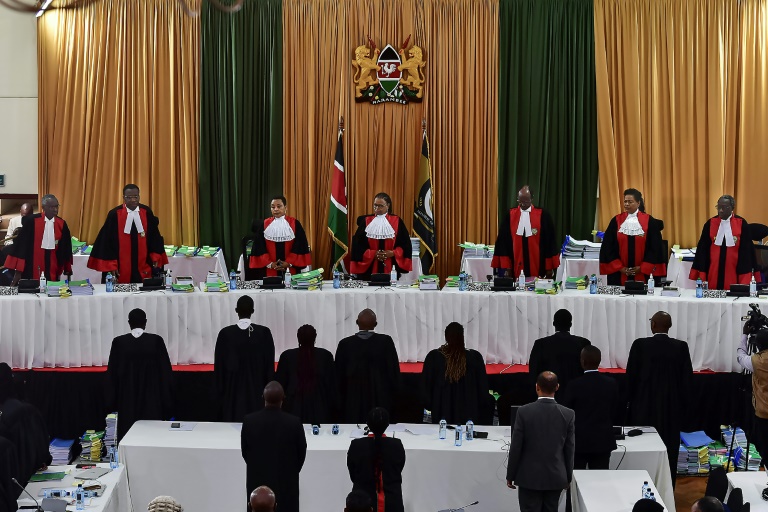
Kenya’s Supreme Court on Friday wrapped up hearing three days of oral arguments in the case challenging the validity of the August 9 presidential election won by Deputy President William Ruto.

His 77-year-old opponent Raila Odinga, who lost his fifth stab at the presidency, insists the election results were manipulated and claims to have “enough evidence” to prove his case.

With the seven-judge bench set to hand down its decision on Monday — the constitutional deadline — here are some key questions about the case and its potential implications for the country.

– How did we get here? –

The Independent Election and Boundaries Commission (IEBC) proclaimed 55-year-old Ruto president-elect on August 15 after a nail-biting wait for results. 

Odinga lost by a wafer-thin margin of around 230,000 votes despite the support of his old foe and outgoing President Uhuru Kenyatta, and the weight of the ruling party machinery behind him.

The former prime minister cried foul over the outcome, which also triggered turmoil within the IEBC.

No presidential poll outcome has gone uncontested in Kenya since 2002, and Odinga himself has been down this road before, petitioning the court in 2013 and 2017. 

In August 2017, the Supreme Court annulled the election after Odinga rejected Kenyatta’s victory.

The IEBC was under intense pressure to produce a transparent vote after facing stinging criticism over its handling of the 2017 election.

– What are the complaints? –

Seven petitioners — whose cases have been collapsed into one — have alleged that there were massive irregularities that compromised the integrity of the vote.

Odinga’s 72-page petition claims that hackers broke into the IEBC servers and “converted, manipulated and unlawfully” dumped forms used to tabulate results from polling stations. 

He alleges that the IEBC released contradictory figures on voter turnout and failed to tally results from at least 27 of the 290 constituencies, arguing that Ruto did not therefore meet the constitutional threshold of 50 percent plus 1 of the valid votes cast. 

The court, led by Chief Justice Martha Koome, said it had identified nine issues to consider before arriving at a verdict.

Judges will attempt to figure out whether the IEBC website was hacked and if there was any interference with the transmission of result forms. 

They will also scrutinise the IEBC’s servers to ascertain if the election technology — a hot-button issue that led to the nullification of the August 2017 vote — met the “standards of integrity, verifiability, security and transparency”.

IEBC chairman Wafula Chebukati has denied the allegations, insisting he carried out his duties according to the law of the land despite facing “intimidation and harassment”.

– What next? –

There are three possible outcomes.

If the court finds substantial irregularities that could have seriously affected the results announced by the IEBC, it can nullify the election and order a new vote within 60 days.

Alternatively, it can criticise the electoral process but conclude that the irregularities do not merit an annulment.

If it nonetheless finds that the president-elect did not secure 50 percent plus 1 of valid votes, it will order a runoff, which must be held within 30 days, marking a first for Kenya.

Finally, it can uphold Ruto’s victory, allowing him to be sworn in on September 13. 

The court’s ruling will be decided by a majority vote. 

The Supreme Court is the highest in the land, created under Kenya’s 2010 constitution “as the final arbiter and interpreter of the constitution”. 

Its rulings are final and binding.

– What’s at stake for Kenya? –

Plenty. 

The aftermath of the poll and court decision is being keenly watched as a test of democratic maturity in the East African powerhouse.

While Kenya is considered a pillar of stability in a volatile region, there are fears a drawn-out dispute may trigger violence in a country with a history of post-poll unrest.

Kenya’s worst electoral violence occurred after the 2007 vote, when more than 1,100 people died in politically motivated bloodletting between rival tribes.

A prolonged electioneering period will also exacerbate already difficult economic conditions, with business likely to slow down in the midst of political uncertainty. 

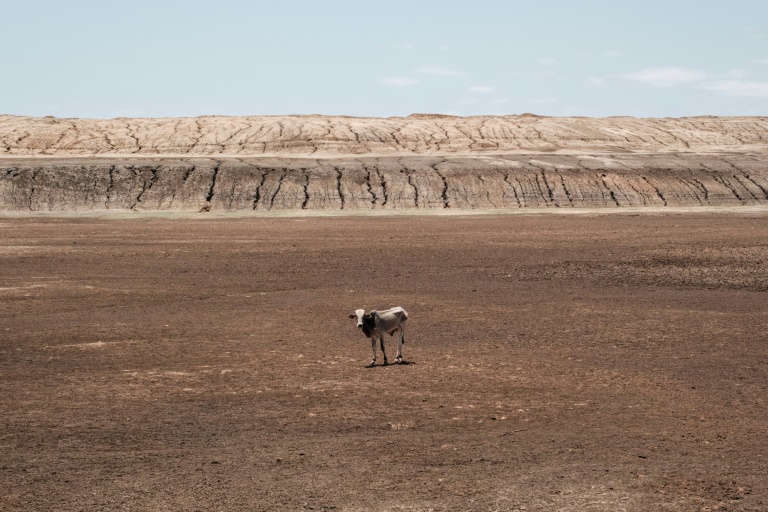
The country is struggling with soaring prices, a crippling drought that has left millions hungry, endemic corruption and disenchantment with the political elite.

Africa's oldest dinosaur found in Zimbabwe

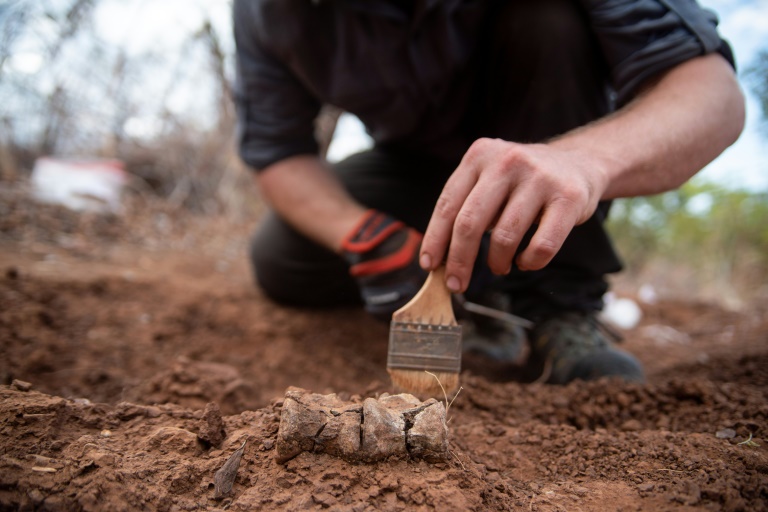
Scientists in Zimbabwe have discovered the remains of Africa’s oldest dinosaur, which roamed the earth around 230 million years ago. 

The dinosaur, named Mbiresaurus raathi, was only about one metre (3.2 feet) tall, with a long tail, and weighed up to 30 kilograms (66 pounds), according to the international team of palaeontologists that made the discovery. 

“It ran around on two legs and had a fairly small head,” Christopher Griffin, the scientist who unearthed the first bone, told AFP on Thursday.

Probably an omnivore that ate plants, small animals and insects, the dinosaur belongs to the sauropodomorph species, the same linage that would later include giant long-necked dinosaurs, said Griffin, a 31-year-old researcher at Yale University.

The skeleton was found during two expeditions in 2017 and 2019 by a team of researchers from Zimbabwe, Zambia, and the United States. 

“I dug out the entire femur and I knew in that moment, that it was a dinosaur and I was holding Africa’s oldest known dinosaur fossil,” said Griffin, who at the time was a PhD candidate at Virginia Tech University.

His team’s findings were first published in journal Nature on Wednesday.

Dinosaurs’ remains from the same era had previously been found only in South America and India. 

The palaeontologists selected the Zimbabwe site for digging after calculating that when all continents were connected in a single land mass known as Pangea, it laid roughly at the same latitude of earlier findings in modern day South America. 

“Mbiresaurus raathi is remarkably similar to some dinosaurs of the same age found in Brazil and Argentina, reinforcing that South America and Africa were part of continuous landmass during the Late Triassic,” said Max Langer of the University of Sao Paulo in Brazil. 

The dinosaur is named after the Mbire district, northeast of Zimbabwe, where the skeleton was found, and palaeontologist Michael Raath, who first reported fossils in this region.

“What this (discovery) does is it broadens the range that we knew the very first dinosaurs lived in,” Griffin said.

Other specimens were discovered in the area, and all are reposited in the Natural History Museum of Zimbabwe, in the second largest city, Bulawayo. 

“The discovery of the Mbiresaurus is an exciting and special find for Zimbabwe and the entire palaeontological field,” said museum curator Michel Zondo.

“The fact that the Mbiresaurus skeleton is almost complete, makes it a perfect reference material for further finds.”

Guinea junta stands by timetable for 2025 Africa Cup

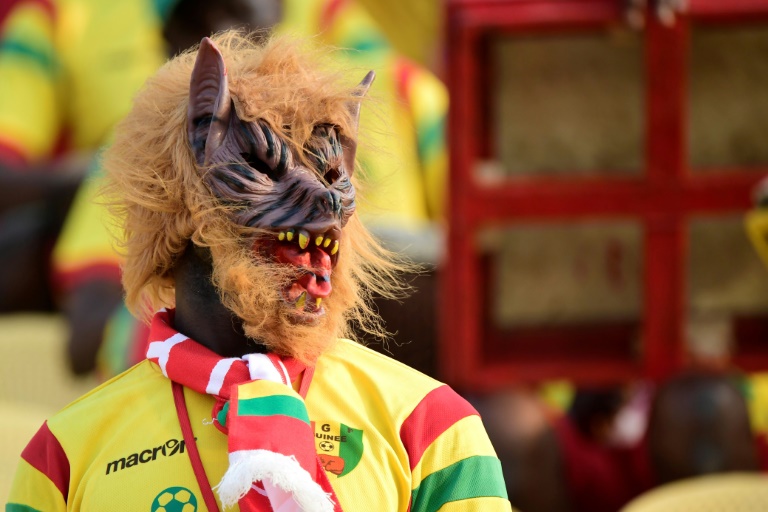
Guinea’s ruling junta has told a Confederation of African Football mission that it will meet the timetable for staging the 2025 Africa Cup of Nations (CAN).

CAF has sent a team to the poor and volatile West African state to assess its progress for hosting the tournament.

Colonel Mamady Doumbouya, who appointed himself president after taking power in a coup in September 2021, met with the visiting experts on Wednesday.

“They came with a message, and this message was, ‘Is 2025 feasible for us (Guineans) or not?’,” Sports Minister Lansana Bea Diallo said.

The CAF team held out the possibility of postponing CAN 2025 until 2026 or 2027, he said.

“The president was straightforward — ‘We made this a national priority, and the national priority is for 2025, we won’t go for 2026 or 2027, we will organise it in 2025’,” the minister was quoted on state TV late Wednesday as saying.

“And that’s the word of the head of state which has been given today,” he said.

Hosting Africa’s biggest sporting event is a major challenge for Guinea, which lacks sporting and transport infrastructure.

The country also has a long history of political turbulence. 

Last year’s coup saw the ouster of octogenarian president Alpha Conde after bloody protests over his bid for a third term in office.

The takeover has stirred frictions with the influential West African bloc ECOWAS, which has been pushing for an early return to civilian rule.

– ‘Matter of urgency’ –

On the eve of the CAF visit, Doumbouya issued a decree declaring the 2025 competition an issue of “national and priority interest.”

All spending for organisational needs “will be processed as a matter of urgency,” and procedures will be fast-tracked to allocate land needed for the tournament.

In March, Doumbouya named a fresh organising committee after one of its members publicly questioned whether it was feasible to host the tournament in 2025.

The CAF mission appears to have been encouraged by the visit.

“Today we are really reassured by Guinea’s preparedness,” said one of its members, Benin’s Mathurin de Chacus.

Doumbouya “spoke like a soldier — he’s determined to organise CAN for the Guinean public,” he said in remarks broadcast on television.

The delegation will brief CAF on the outcome of its mission, he said.

Guinea was originally scheduled to stage CAN in 2023, but this was pushed back by two years when the list of organising nations was reshuffled in 2018.

The 2023 event will be hosted by Ivory Coast.

Guinea has rejected rumours that it could be stripped of the tournament. 

“The organising committee notes with regret the publication of reports that the tournament will be taken from our country by CAF,” the Guinean organising committee said in a statement. 

“The (Guinean) authorities have not been informed of such a decision by CAF,” the committee said. 

The statement rejected the reports as “rumours spread on social networks” while discussions were underway on how to accelerate preparations for the tournament.

Close Bitnami banner
Bitnami