Africa Business

50 civilians killed in sweep by Malian and 'foreign' troops: UN

At least 50 civilians were killed and hundreds arrested in central Mali in April during an operation by the army and “foreign” personnel, the UN’s peacekeeping mission said Wednesday.

There was no immediate response from Mali’s authorities to the allegations, just the latest against Malian soldiers now backed by Russia in their battle against jihadists.

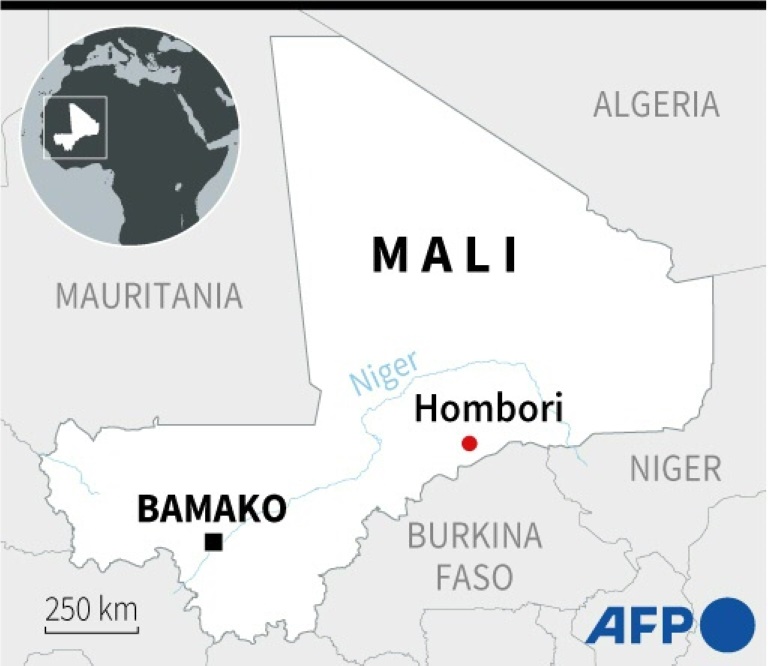
The incident happened on April 19 when Malian troops “accompanied by foreign military personnel” carried out a sweep in Hombori after one of their convoys was attacked by a roadside bomb, MINUSMA said.

“At least 50 civilians (including a woman and a child) were killed and more than 500 others arrested,” it said in a quarterly report on violence and rights abuses.

The report did not specify who the foreign fighters were.

But several sources at the time said a “Russian advisor” deployed with the Malian forces had been killed in the roadside blast.

Mali’s ruling junta, which has been in power since 2020, has brought in Russian operatives it describes as military trainers.

Western countries describe them as mercenaries from the pro-Kremlin Wagner group. 

Their presence was a key factor in France’s decision to withdraw its troops from Mali — a former colony it has supported in a decade-long fight against a jihadist insurgency that has claimed thousands of lives and displaced hundreds of thousands.

The last French soldier in Mali under the long-running Barkhane anti-jihadist mission left the country on August 15.

The Malian army on April 22 said it had conducted a major security sweep in the Hombori area after the attack three days earlier. It said it had killed 18 “attackers” and detained 611 people.

Most were freed, but among a few dozen kept in detention, two died from torture, MINUSMA said.

On April 24, a soldier appeared to have “summarily killed” 20 other detainees at the Malian army camp in Hombori, the peacekeeping force said.

– Drone footage –

The allegations come after France on April 19 left the Gossi military base, which lies northeast of Hombori, and handed it back to the Malian authorities.

Two days later, drone footage began circulating on social media, showing what appeared to be Caucasian soldiers covering bodies with sand near the Gossi base.

The French army said it had filmed Russian mercenaries burying bodies near the base to falsely accuse France’s departing forces of leaving behind mass graves.

MINUSMA said it had opened an inquiry.

It said the bodies buried in Gossi had been brought there on April 20, the day after the French withdrew, and had come from Hombori.

The MINUSMA report said 96 civilians lost their lives during operations by Malian security forces in the three months between April 1 and June 30, while seven disappeared and 19 were injured.

A report by experts for the United Nations, seen by AFP in early August, said “white-skinned soldiers” accompanied Malian troops at the scene of killings in March in the Segou region near the Mauritanian border, in which 33 civilians died.

In April, Human Rights Watch (HRW) said about 300 people, most of them ethnic Fulanis, were killed in Moura in central Mali in March by Malian forces “or associated foreign fighters” — a veiled reference to suspected Russian operatives.

Mali’s army says that it killed 203 militants at Moura.
Protester killed in Sudan anti-coup rally

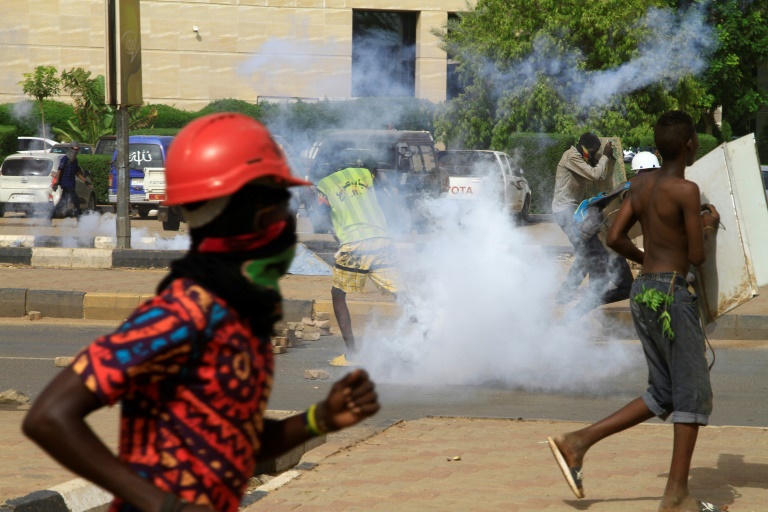
Sudanese security forces killed a protester on Wednesday when thousands of people rallied in the capital Khartoum against military rule, medics said.

The unidentified demonstrator was killed after suffering “a head injury by a tear gas canister… and then was run over” by security forces during protests, the Central Committee of Sudan Doctors said.

The latest death brings to 117 the toll from a crackdown on anti-coup rallies which have taken place near-weekly since the October 25 coup led by army chief Abdel Fattah al-Burhan, the committee said. 

The coup upended a transition to civilian rule that was launched after the 2019 ouster of strongman Omar al-Bashir, who ruled for three decades. 

In July, Burhan pledged in a televised address to step aside and make way for Sudanese factions to agree on a civilian government.

Civilian leaders dismissed his move as a “ruse”, and pro-democracy protesters have held fast to their rallying cry of “no negotiation, no partnership” with the military.

Earlier this month, Burhan’s deputy and paramilitary commander Mohamed Hamdan Dagalo said that last October’s coup had failed to bring about change in Sudan. 

Last month, Sufi religious leader Al-Tayeb Al-Jed launched an initiative aimed at ending Sudan’s political crisis.

The move was welcomed by Burhan, as well as by Islamist groups that were part of Bashir’s regime.

Fighting spreads in Ethiopia as Tigray hit by air strike

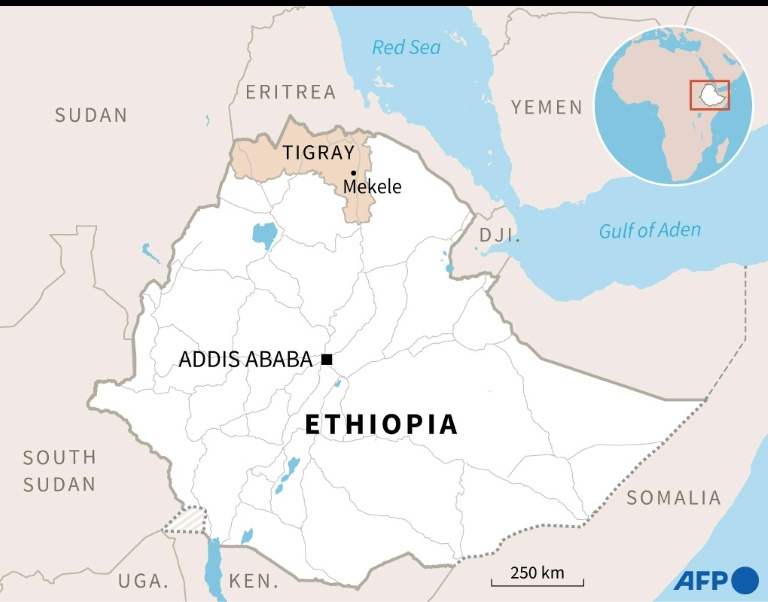
Fighting in northern Ethiopia between government forces and Tigrayan rebels erupted along a new front on Wednesday, the warring sides said, as the Tigray region was hit by another air strike. 

The conflict resumed last week after a five-month lull, with clashes on the ground and air raids over Tigray dashing hopes of peacefully resolving the nearly two-year war.

Fighting had been concentrated around the southeastern border of Tigray, with the rebels pushing into the neighbouring Amhara and Afar regions, sending residents fleeing.

But Prime Minister Abiy Ahmed’s government on Wednesday accused the Tigray People’s Liberation Front (TPLF) of launching “an invasion in the direction of Wag, Wolqait and our border areas with Sudan (Amhara region)”, west of the site of the most recent clashes.

“Our heroic national defense forces are defending this invasion with full preparedness and resolve,” the government communications service said in a statement.

TPLF spokesman Getachew Reda in turn alleged that the government and its neighbour Eritrea — which backed federal forces during the war’s early phase — were responsible for opening a new front.

“The Abiy regime, along with the Asmara regime, did launch (an) offensive in these fronts. We are defending our positions,” he said in a message to AFP.

Wolqait, also spelt Wolkait, lies in western Tigray, a disputed region claimed by Tigrayans and Amharas and currently occupied by Amhara forces. 

The TPLF has repeatedly said the region is a “non-negotiable” part of Tigray.

Access to northern Ethiopia is severely restricted and it is not possible to independently verify the situation on the ground or the claims by the warring sides.

– Air strike –

Reports of a fresh offensive came as Tigray’s capital Mekele was hit by a second air strike since Friday.

The bombing occurred “close to midnight” on Tuesday near Mekele general hospital, said Kibrom Gebreselassie, chief clinical director at the city’s Ayder Referral Hospital.

“Casualties are arriving to Ayder Hospital,” he said on Twitter, without giving details.

“Night time drone attack in Mekele. No conceivable military targets!” Getachew said on Twitter. “Mekele Hospital among the targets and at least three bombs dropped.”

The TPLF later said the strike caused civilian injuries and property damage.

A humanitarian source confirmed the strike but did not elaborate further.

Government officials did not comment on the bombing.

The resumption of fighting has sparked international concern, with calls for restraint and the protection of civilians.

The UN children’s agency UNICEF condemned a separate air strike on Mekele on Friday — the first in many months — that “hit a kindergarten” and killed at least four people, including children.

TPLF-linked channel Tigrai TV had put the death toll at seven, including three children.

But Addis Ababa said it was only targeting military sites and accused the TPLF of “dumping fake body bags in civilian areas” to manufacture outrage.

Residents, diplomatic and humanitarian sources have said that in recent days TPLF fighters have pushed about 50 kilometres (30 miles) south from Tigray into Amhara and to the southeast into Afar.

On Tuesday, Getachew told a press conference “we have defended our positions and we are now launching a counter-offensive”.

“Abiy keeps making miscalculation after miscalculation, he keeps sending reinforcements and we’ll continue to neutralise (them) and that will take us probably deeper and deeper into Amhara region.”

Abiy’s government announced on Saturday that federal forces had pulled back from the Amhara town of Kobo, lying about 15 kilometres south of Tigray, to avoid “mass casualties”.

A local NGO in Afar, the APDA, said on Twitter about 18,000 people had been displaced and roads in one area were “clogged with fleeing people”. 

– Huge toll –

Abiy, a Nobel Peace laureate, sent troops into Tigray to topple the TPLF in November 2020 in response to what he said were rebel attacks on federal army camps.

The TPLF mounted a comeback, recapturing most of Tigray in June 2021 and expanding into Afar and Amhara, before the fighting reached a stalemate.

Unknown numbers of civilians have died and millions need humanitarian aid.

Since the latest fighting flared, the international community has issued appeals for restraint, including from UN chief Antonio Guterres and the African Union (AU).

The two sides have been at odds over who should lead negotiations — Abiy’s government says the AU should broker dialogue while the TPLF has favoured Kenya’s outgoing president Uhuru Kenyatta.

The March truce allowed the resumption of international aid convoys to Tigray after a three-month break, but the stricken region still faces severe food shortages.

50 civilians die in sweep by Malian and 'foreign' troops: UN 

At least 50 civilians were killed and hundreds arrested in central Mali in April during an operation by the army and “foreign” personnel, the UN’s peacekeeping mission said Wednesday.

The incident happened on April 19 when Malian troops “accompanied by foreign military personnel” carried out a sweep in Hombori after one of their convoys was attacked by a roadside bomb, MINUSMA said.

“At least 50 civilians (including a woman and a child) were killed and more than 500 others arrested,” it said in a quarterly report on violence and rights abuses.

The report did not specify who the foreign fighters were. 

Mali’s ruling junta, which has been in power since 2020, has brought in Russian operatives it describes as military trainers.

Western countries describe them as mercenaries from the pro-Kremlin Wagner group. 

Their presence has been a key factor in France’s decision to withdraw its troops from Mali — a former colony that it has supported in a decade-long fight against a jihadist insurgency that has claimed thousands of lives and forced hundreds of thousands from their homes.

The last French soldier in Mali under the long-running Barkhane anti-jihadist mission left the country on August 15.

The MINUSMA report said 96 civilians were killed during operations by Malian security forces between April 1 and June 30, while seven disappeared and 19 were injured.

A report by experts to the UN, seen by AFP in early August, said “white-skinned soldiers” accompanied Malian soldiers at the scene of killings in March in the Segou region near the Mauritanian border, in which 33 civilians died.

In April, Human Rights Watch (HRW) said about 300 people, most of them ethnic Fulanis, were killed in Moura in central Mali in March by Malian forces “or associated foreign fighters” — a veiled reference to suspected Russian operatives.

Mali’s army says that it killed 203 militants at Moura.
Ethiopian Airlines bucks regional trend with profit surge

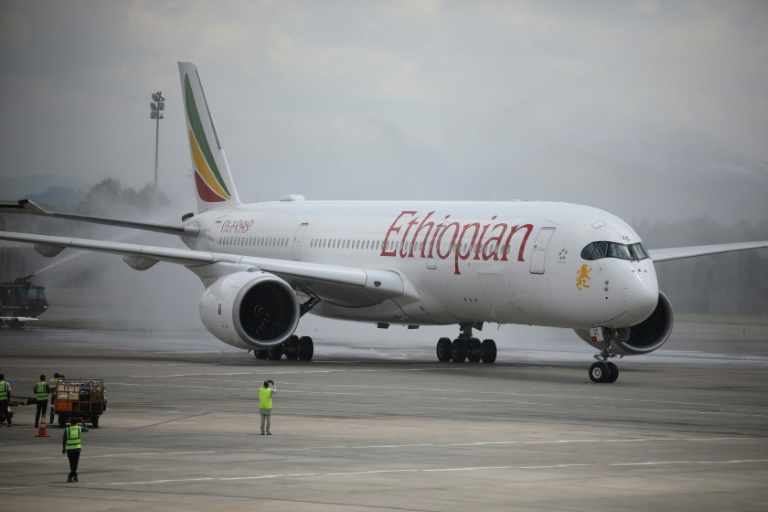
Ethiopian Airlines, the leading African flag carrier, on Wednesday reported a surge in profit for the last financial year, in sharp contrast to the ailing fortunes of other airlines in the region.

The state-owned airline saw a 79 percent jump in revenue to $5 billion for 12 months to July while profit skyrocketed 90 percent to $937 million, according to the country’s sovereign wealth fund Ethiopian Investment Holdings (EIH).

The results were “despite the headwinds of worsening global economic outlook, rising fuel cost, global pandemic”, EIH chief executive Mamo Mihretu said on Twitter.

He gave no further details, although state media said the airline had transported 6.9 million international travellers last year alone.

Other carriers in East Africa have been buffeted by the Covid-19 pandemic and its devastating impact on air travel, and are now grappling with the fallout from the war in Ukraine which has sent global fuel prices soaring.

Kenya Airways, for example, last week reported a 9.8 billion shilling ($82 million) loss in the six months to June, although it was an improvement on the 11.48 billion shilling ($95 million) deficit in the first half of last year.

The airline, which has been stuck in the red for years and is relying on state bailouts, reported a 76 percent increase in revenue to 48.1 billion shillings (about $400 million) over the same period as passenger numbers almost doubled to 1.6 million.

S.Africa's Paralympian Pistorius goes to court to push for parole

South African Paralympic champion Oscar Pistorius, who was jailed for 13 years for murdering his girlfriend, has asked the courts to force prison authorities to consider him for parole, a lawyer said Wednesday.

Pistorius, 35, shot dead Reeva Steenkamp, a model, while she was in the bathroom in the early hours of Valentine’s Day in 2013.

He said he thought a burglar was hiding in his en-suite bathroom when he fired four times through the door.

He was found guilty of murder and started serving his sentence in 2014.

His lawyer Julian Knight told AFP that the athlete was seeking an order to force authorities to hold a parole hearing.

“It’s an application to compel the parole board to convene a hearing for his consideration for parole,” said Knight. 

“It doesn’t mean he must be placed on parole, but that he must be considered,” he said.

No hearing date has been set yet, he said, refusing to give further details.

To be considered for parole in South Africa, an offender must first serve half their term.

In July, the Correctional Services department confirmed that a meeting had taken place the previous month between Pistorius and Steenkamp’s parents.

The encounter was part of Pistorius’ rehabilitation, something that is also a requirement to be able to apply for parole.

Known worldwide as the “Blade Runner” because of his carbon-fibre prosthetics, Pistorius became the first double-amputee to race at the Olympics when he competed at the London 2012 games, a year before he shot Steenkamp.

'I never corrupted anyone,' diamond magnate tells Swiss court

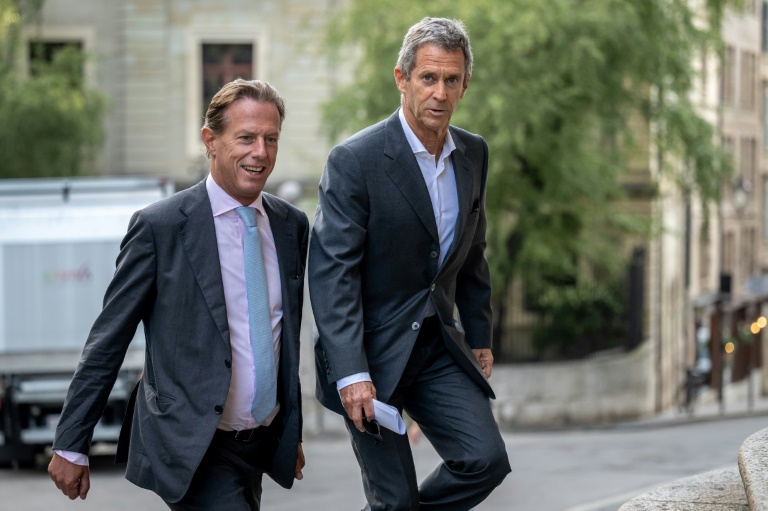
A French-Israeli businessman and diamond magnate insisted Wednesday he had never bribed anyone, as he sought to overturn his conviction in a vast corruption case involving mining rights in West Africa.

Beny Steinmetz, 66, told the Geneva appeals court he was innocent and “had done nothing wrong”.

“I never corrupted anyone.”

Steinmetz was found guilty in January 2021 of setting up a complex financial web to pay bribes to ensure his company could obtain permits in Guinea’s southeastern Simandou region, which is estimated to contain the world’s biggest untapped iron ore deposits.

He was sentenced by a Geneva court in 2021 to five years in prison and ordered to pay 50 million Swiss francs ($52 million) in compensation.

Wearing a grey suit and white shirt with his collar unbuttoned, Steinmetz told court president Catherine Gavin he was proud of the massive mining project Beny Steinmetz Group Resources, BSGR, had set up in Guinea, claiming it would have been hugely beneficial for the country.

“I am fully convinced that BSGR never crossed the red line,” and the company had become victim to a local power struggle and corruption, he said.

Steinmetz, who maintained his innocence throughout the original trial, changed his lawyers and beefed up his communications team for the appeal.

– ‘Pact of corruption’ –

During the first trial, prosecutors convinced the court Steinmetz and two associates had bribed a wife of then Guinean president Lansana Conte and others in order to win lucrative mining rights in Simandou.

The prosecutors said Steinmetz obtained the rights shortly before Conte died in 2008 after about $10 million was paid in bribes over a number of years.

Conte’s military dictatorship ordered global mining giant Rio Tinto to relinquish two concessions that were subsequently obtained by BSGR against an investment of $160 million.

Just 18 months later, BSGR sold 51 percent of its stake in the concession to Brazilian mining giant Vale for $2.5 billion.

But in 2013, Guinea’s first democratically-elected president Alpha Conde launched a review of permits allotted under Conte and stripped the VBG consortium formed by BSGR and Vale of its permit.

To secure the initial deal, prosecutors claimed Steinmetz and representatives in Guinea entered a “pact of corruption” with Conte and his fourth wife Mamadie Toure.

– ‘Local tragedy’ –

Toure, who has admitted to having received payments, has protected status in the United States as a state witness.

A request from Steinmetz’s lawyer Daniel Kinzer for her written testimony to be deemed inadmissible due to lacking insight into the “opaque” US deal, was rejected by the court.

The defence meanwhile maintains there was nothing inappropriate about how BSGR obtained the permits, and that Rio Tinto lost half the concessions for failing to develop them.

Steinmetz rejected suggestions his company was seeking to cash in and make “a quick exit”, saying the BSGR and Vale consortium had planned to stay for the long term.

“This was not a 20-year deal, but a 50-year deal,” he told the court, calling it “Africa’s largest mining project” that would have included  building a railway system.

It would have tripled Guinea’s gross domestic product, he said.

The abandonment of the project was “a local tragedy, created by local corruption,” according to Steinmetz, indicating Conde’s decision to strip VBG of the rights was linked to promises made to secure his election.

New air strike hits capital of Ethiopia's Tigray

The capital of northern Ethiopia’s Tigray region was hit by an air strike around midnight Tuesday, Tigray rebels and hospital officials said, the latest such attack reported in just a few days.

The bombing came after fighting on the ground resumed between government forces and the Tigray People’s Liberation Front (TPLF) last week.

The clashes have shattered a five-month-old truce and dimmed efforts to end the nearly two-year conflict in Africa’s second most populous country.

“Night time drone attack in Mekele. No conceivable military targets!” TPLF spokesman Getachew Reda said on Twitter. “Mekele Hospital among the targets and at least three bombs dropped.”

Kibrom Gebreselassie, chief clinical director at Mekele’s Ayder Referral Hospital, also said on Twitter there had been a drone attack “close to midnight” near Mekele general hospital.

“Casualties are arriving to Ayder Hospital,” he said, without giving details.

A humanitarian source confirmed the strike but did not elaborate further.

Government officials did not comment on the latest strike, but on Wednesday accused the rebels of opening a front towards Ethiopia’s western border with Sudan, a week after fighting erupted near southeastern Tigray.

Prime Minister Abiy Ahmed’s government and the TPLF have each blamed the other for the clashes, which have sparked international concern.

At least four people including children were killed on Friday in the first air strike on Mekele in many months. The attack was condemned by the UN children’s agency UNICEF, which said the raid “hit a kindergarten”.

Local channel Tigrai TV had put the death toll at seven, including three children.

But Addis Ababa said it was only targeting military sites and accused the TPLF of “dumping fake body bags in civilian areas” to manufacture outrage.

Access to northern Ethiopia is severely restricted and it is not possible to independently verify the situation on the ground or the claims by the warring sides.

On Wednesday, the government communications service said that the TPLF “has launched an invasion in the direction of Wag, Wolqait and our border areas with Sudan (Amhara region).”

“Our heroic national defense forces are defending this invasion with full preparedness and resolve,” it said in a statement.

Wolqait, also spelt Wolkait, lies in western Tigray, a disputed region claimed by Tigrayans and Amharas and currently occupied by Amhara forces. The TPLF has repeatedly said the region is a “non-negotiable” part of Tigray.

Getachew dismissed suggestions of a new offensive. 

“True to form, the Regime is making up stories so that it’d get away scot-free in the eyes of the international community,” he posted on Twitter.

– Roads ‘clogged’ –

Residents, diplomatic and humanitarian sources have said that in recent days TPLF fighters have pushed about 50 kilometres (30 miles) south from Tigray into Amhara and to the southeast into Afar, two bordering regions.

On Tuesday, Getachew told a press conference “we have defended our positions and we are now launching a counter-offensive.”

“Abiy keeps making miscalculation after miscalculation, he keeps sending reinforcements and we’ll continue to neutralise (them) and that will take us probably deeper and deeper into Amhara region.”

Abiy’s government announced Saturday that federal forces had pulled back from the Amhara town of Kobo, lying about 15 kms south of Tigray, to avoid “mass casualties”.

A local NGO in Afar, the APDA, said on Twitter about 18,000 people had been displaced and roads in one area were “clogged with fleeing people”. 

– Huge toll –

Abiy, a Nobel Peace laureate, sent troops into Tigray to topple the TPLF in November 2020 in response to what he said were rebel attacks on federal army camps.

The TPLF mounted a comeback, recapturing most of Tigray in June 2021 and expanding into Afar and Amhara, before the fighting reached a stalemate.

Unknown numbers of civilians have died and millions need of humanitarian aid.

Since the latest fighting flared, the international community has issued appeals for restraint, including from UN chief Antonio Guterres and the African Union (AU).

The two sides have been at odds over who should lead negotiations — Abiy’s government says the AU should broker dialogue while the TPLF has favoured Kenya’s outgoing president Uhuru Kenyatta.

The March truce allowed the resumption of international aid convoys to Tigray after a three-month break, but the stricken region still faces severe food shortages.

England name unchanged squad for South Africa decider

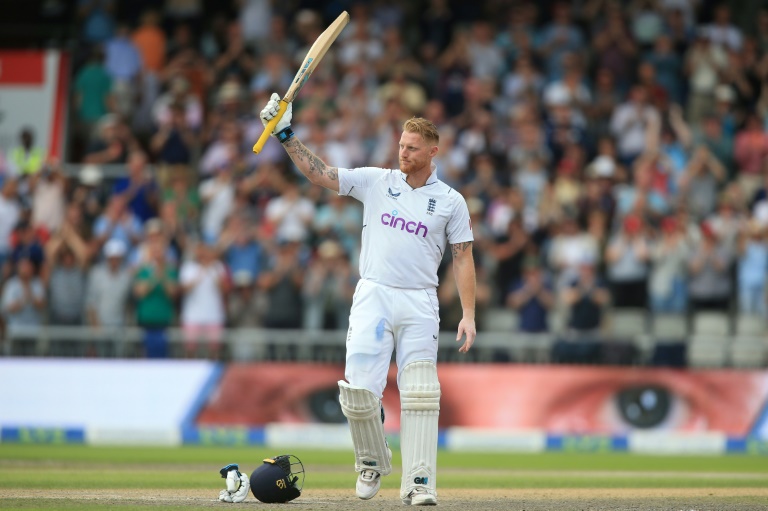
Ben Stokes will lead an unchanged 14-man England squad into next week’s third and deciding Test against South Africa at the Oval after it was released on Wednesday.

England levelled the three-match series at 1-1 with a dominant innings and 85-run win inside three days in the second Test at Old Trafford.

Stokes scored 103 — his first Test century as skipper — and wicketkeeper Ben Foakes 113 not out.

England’s victory followed South Africa’s almost as crushing innings and 12-run win in the first Test at Lord’s.

That is the only defeat England have suffered while winning all the other five of their six matches since Stokes replaced Joe Root as permanent red-ball captain at the start of the season.

Barring late injuries, it now looks likely England will deploy the same XI that won in Manchester when the third Test at the Oval in south London starts on Thursday, September 8.

That would leave uncapped batsman Harry Brook still waiting for his Test debut.

Pacemen Craig Overton and Matthew Potts will struggle to force their way into a seam attack where Ollie Robinson and James Anderson struck with the new ball to take South Africa’s last five wickets for just seven runs in 30 balls.

South Africa could revert to playing four fast bowlers after their policy of fielding two spinners at Old Trafford backfired, with England having just the one innings.

Rassie van der Dussen has already been ruled out of the third Test with a broken finger and the struggling Aiden Markram may be dropped given his highest Test score in his past 13 Test innings is 42.

But if Markram is omitted, South Africa — without the experienced Temba Bavuma this series because of an elbow injury — could have to select two inexperienced players in Ryan Rickelton and Khaya Zondo, neither of whom has played any meaningful cricket for weeks.

The Proteas have managed just one individual fifty in the first two Tests — opener Sarel Erwee’s 73 at Lord’s.

England squad:

Zak Crawley (Kent), Alex Lees (Durham), Ollie Pope (Surrey), Joe Root (Yorkshire), Jonny Bairstow (Yorkshire), Ben Stokes (Durham, capt), Ben Foakes (Surrey, wkt), Stuart Broad (Nottinghamshire), Jack Leach (Somerset), Ollie Robinson (Sussex), James Anderson (Lancashire), Harry Brook (Yorkshire), Craig Overton (Somerset), Matthew Potts (Durham)

Madagascar police confirm killing 19 civilians after albino kidnap

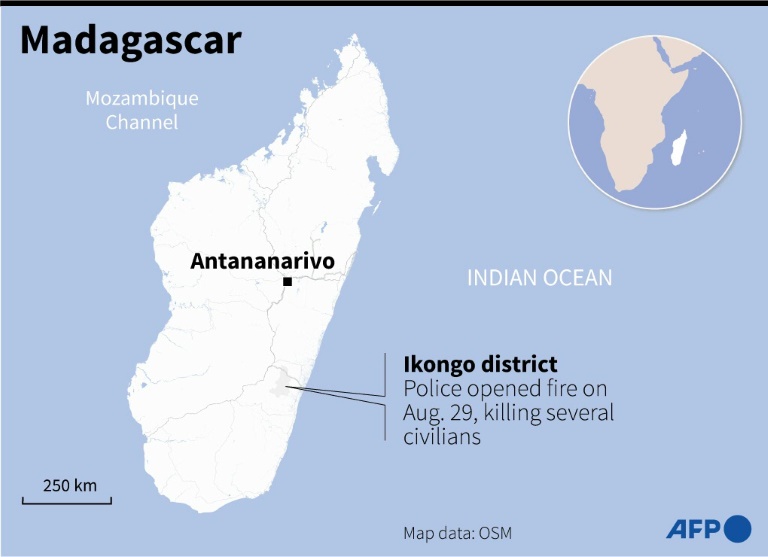
Madagascar police confirmed Tuesday that officers killed 19 people and injured 21 others after opening fire on what was described as a lynch mob angered over the kidnapping of an albino child. 

“Nineteen people lost their lives and 21 are injured and are still being treated” at Ikongo hospital in the country’s southeast, the national police said in a statement. 

The hospital’s chief physician, Tango Oscar Toky, confirmed the death toll speaking to AFP by phone on Tuesday.

A previous report from police on Monday said 11 people had died.

Around 500 protesters armed with blades and machetes attempted to force their way into a police station, a police officer involved in the shooting told AFP, speaking on condition of anonymity. 

Police said calm returned to Ikongo, a town about 350 kilometres (220 miles) south of the capital Antananarivo, on Tuesday, with additional officers deployed “to keep the peace”. 

An investigation into the incident was ongoing, police said, offering condolences to the families of the dead.

The kidnapping took place last week, according to Jean-Brunelle Razafintsiandraofa, a member of parliament for Ikongo district. 

No further details have been released about the child. Officials said the child’s mother was killed by “bandits”. 

Four suspects were arrested and taken into custody, but some members of the community allegedly decided to take matters into their own hands.

National police chief Andry Rakotondrazaka defended officers at a press conference Monday, saying they had done everything they could to avoid confrontation and were left with no choice but to resort to self-defence. 

He said police moved from firing tear gas to live rounds when the crowd breached a security perimeter.

– Prison break –

Madagascar’s Defence Minister Richard Rakotonirina, who visited Ikongo on Tuesday, said the incident needed a more thorough investigation. 

“Was it a blunder? Was it misconduct? We need to see who was responsible for what. In any case, we will take the necessary sanctions,” he told AFP by phone.

A source at the defence ministry said some inmates at the nearby prison took advantage of the commotion to escape.

Revenge attacks are common in Madagascar.

Ikongo saw 800 people barge into a prison in February 2017, in search of a murder suspect they intended to kill. They overpowered guards, allowing 120 prisoners to break out of jail.

In 2013, a Frenchman, a Franco-Italian and a local man accused of killing a child on the tourist island of Nosy Be were burnt alive by a crowd. 

Some sub-Saharan African countries have suffered a wave of assaults against people with albinism, whose body parts are sought for witchcraft practices in the mistaken belief that they bring luck and wealth. 

Albinism is caused by a lack of melanin, the pigment that colours skin, hair and eyes. The genetic condition affects hundreds of thousands of people across the globe, particularly in Africa.

Madagascar, a large Indian Ocean island country, is ranked among the poorest in the world.

Close Bitnami banner
Bitnami