Africa Business

South Sudan's former rebels join unified army

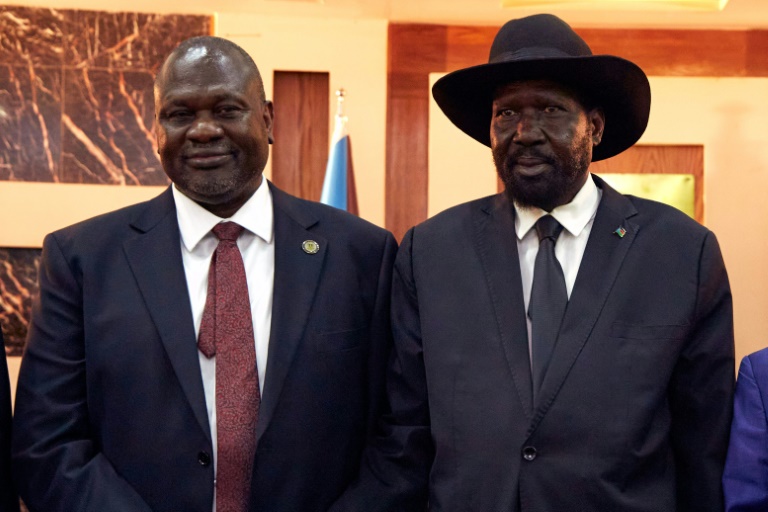
Thousands of fighters including former rebels from rival camps in South Sudan’s civil war were integrated into the country’s army in a long-overdue graduation ceremony on Tuesday.

The unification of forces loyal to President Salva Kiir and his rival, Vice President Riek Machar, was a key condition of the 2018 peace deal that ended the brutal five-year conflict in which nearly 400,000 people died.

Since achieving independence in 2011 from Sudan, the world’s youngest nation has lurched from crisis to crisis, battling flooding, hunger, ethnic violence and political turmoil.

Earlier this month, South Sudan’s leaders — appointed to run a transitional government — announced that they would remain in power two years beyond an agreed deadline, sparking international concern.

The transition period was meant to conclude with elections in December this year, but the government has so far failed to meet core provisions of the agreement, including drafting a constitution.

Nearly 22,000 men and women — drawn from Kiir and Machar’s parties as well as the South Sudan Opposition Alliance — participated in Tuesday’s proceedings, which were originally scheduled to take place in 2019 according to the peace deal.

The delays have fuelled frustration in the international community as explosions of violence threaten to undo even fragile gains.

As thousands of former rebels stood to attention at Juba’s John Garang Mausoleum — built in honour of South Sudan’s independence hero who died in 2005 — Chief Justice Chan Reech Madut administered the oath of loyalty.

Another 30,000 forces were also due to graduate in the coming days in training camps around the country.

In addition to joining the army and the police, the new graduates have also been integrated into the VIP protection force, the wildlife service, the civil defence and other organisations responsible for national security.

“These forces will be deployed all over South Sudan… After their graduation, the second batch will go for training,” Information Minister Michael Makuei told AFP.

The ceremony was held under tight security, in the presence of representatives from the United Nations and neighbouring countries including Ugandan President Yoweri Museveni and Sudanese coup leader General Abdel Fattah al-Burhan.

It followed years of deadlock between Machar and Kiir over the division of senior posts in the unified armed forces command, with the two men only inking an agreement in April this year.

– Sticks not guns –

The addition of tens of thousands of former rebels to the government’s payroll will add to already crushing economic challenges — civil servants have been unpaid for months.

But the move was nevertheless met with optimism in some quarters, with one former rebel telling AFP he was excited to join the police force.

“I am looking forward to serving my people. I just want to tell our people that finally peace has come after a long struggle,” said the former rebel who only identified himself as John, citing government restrictions.

Many of the new graduates carried sticks instead of guns at the ceremony, because of a years-long arms embargo imposed by the UN Security Council.

The government has repeatedly urged the UN to lift the embargo, even as deadly violence continues to roil the country.

“It is now high time for them to approve the purchase of the arms… because these security forces can not be security forces if they are not properly armed,” said minister Makuei.

The UN has repeatedly criticised South Sudan’s leadership for its role in stoking violence, cracking down on political freedoms and plundering public coffers.

It has also accused the government of rights violations amounting to war crimes over deadly attacks in the southwest last year.

The UN’s World Food Programme warned in March that over 70 percent of South Sudan’s 11 million people would face extreme hunger this year because of natural disasters and violence.

The United States last month pulled out of two peace process monitoring organisations in South Sudan due to the government’s failure to meet reform milestones, citing a “lack of sustained progress”.
Tigray rebels vow to pursue military advance in northern Ethiopia

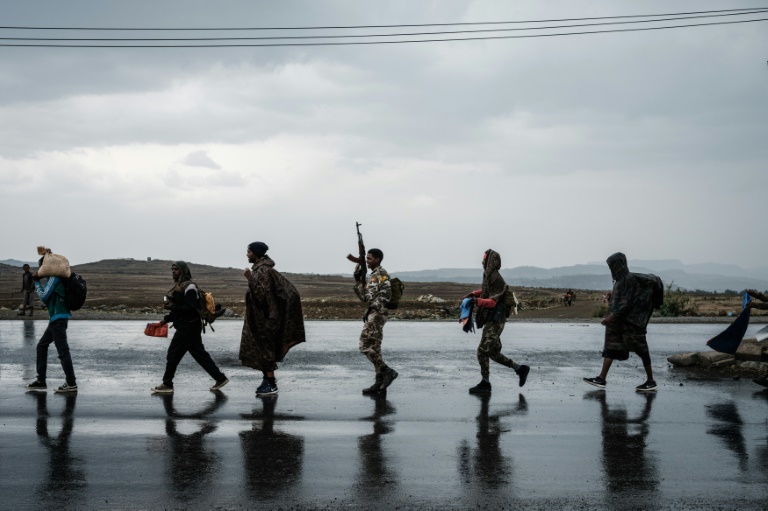
Tigrayan rebels said Tuesday they intended to advance further into neighbouring regions of northern Ethiopia but were still open to peace talks after fighting erupted last week and put paid to a five-month-long truce.

The government of Prime Minister Abiy Ahmed and the Tigray People’s Liberation Front (TPLF) have each blamed the other for unleashing the renewed hostilities in an area of the Amhara region just to the south of rebel-held Tigray.

“We are fighting a defensive war,” TPLF spokesman Getachew Reda said at a press conference broadcast online by the local Tigrai TV channel, adding: “We will remain open for any negotiations.”

Local residents as well as diplomatic and humanitarian sources have said that in recent days TPLF fighters have pushed about 50 kilometres (30 miles) south of Tigray into Amhara as well as to the southeast into Afar.

Access to northern Ethiopia is severely restricted and it is not possible to independently verify the situation on the ground or the claims by the warring sides.

“We have defended our positions and we are now launching a counter-offensive,” Getachew said. 

“Abiy keeps making miscalculation after miscalculation, he keeps sending reinforcements and we’ll continue to neutralise (them) and that will take us probably deeper and deeper into Amhara region.”

Abiy’s government announced Saturday that federal forces had pulled back from the town of Kobo, while Getachew said a “significant” part of the North Wollo zone in Amhara was in rebel hands.

In response to Getachew’s comments, the Government Communication Service said: “The federal government is still committed to the peaceful resolution to the conflict that was once again initiated by the TPLF terrorist group.”

The renewed fighting shattered a truce announced in late March and has cast a shadow over international efforts to try to end the near 22-month conflict.

The war has killed untold numbers of civilians and left millions in need of humanitarian aid, with Tigray itself without access to basic services and struggling with food and fuel shortages.

Abiy, a Nobel Peace laureate, sent troops into Tigray to topple the TPLF in response to what he said were rebel attacks on federal army camps.

The TPLF mounted a comeback, recapturing most of Tigray in June 2021 and expanding into Afar and Amhara, before the fighting reached a stalemate.

Kenya's top court lays out nine issues in vote dispute

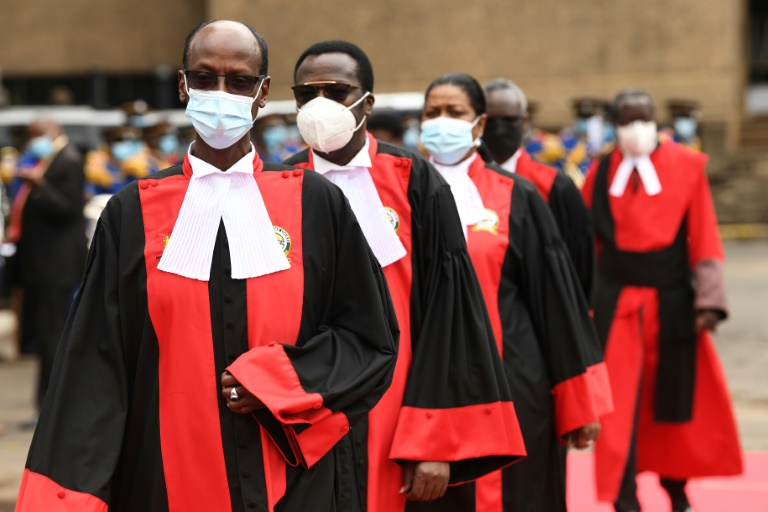
Kenya’s Supreme Court on Tuesday said it had identified nine issues to determine the outcome of petitions challenging the result of the August 9 presidential election, including whether any irregularities were substantial enough to nullify the poll. 

Deputy President William Ruto was declared the winner of the closely-contested race, scraping to victory by less than two percentage points against Raila Odinga, a 77-year-old veteran opposition figure now backed by the ruling party.

Odinga — who lost his fifth bid for the presidency — rejected the outcome and filed a petition at the top court alleging fraud in the vote tallying process.

On Tuesday, the court said it will attempt to answer nine questions during the case, including whether the election commission website was hacked and if there was any interference with the transmission of result forms. 

The seven judges will also ascertain if the election technology — a hot-button issue that led to the nullification of the August 2017 presidential vote following a challenge by Odinga — met the “standards of integrity, verifiability, security and transparency”.

After assessing the transparency of the poll, the court will finally rule on whether Ruto met the constitutional threshold of 50 percent plus 1 of the valid votes cast. 

– ‘Final arbiter’ –

Since 2002, no presidential election in Kenya has gone uncontested, with this year’s outcome also causing a rift within the Independent Electoral and Boundaries Commission (IEBC) which oversaw the poll.

Nine petitions were filed to challenge the outcome, but two were rejected on Monday.

Chief Justice Martha Koome said Tuesday the seven other cases will be collapsed into a single case because they cover the same issues.

Both Odinga and Ruto — who has been named as a defendant in the case filed by the former prime minister — have assembled huge legal teams.

Hearings will begin on Wednesday with a decision expected on September 5.

The Supreme Court is the highest in the land, created under Kenya’s 2010 constitution “as the final arbiter and interpreter of the constitution”. 

Its rulings are final and binding. If judges order an annulment, a new vote must be held within 60 days.

But if the court upholds the results, Ruto will become Kenya’s fifth president since independence from Britain in 1963, taking the reins of a country battling inflation, high unemployment and a crippling drought.

The IEBC was under heavy pressure to deliver a clean vote after facing sharp criticism over its handling of the August 2017 election.

The court annulled that election in a first for Africa and ordered a re-run which was boycotted by Odinga. Dozens of people died during a police crackdown on protests.

Kenya’s worst electoral violence occurred after the 2007 vote, when more than 1,100 people died in politically motivated clashes involving rival tribes.

The court’s announcement of the issues that it will examine is a common procedure in Kenya, known as a “pre-trial conference.”

Angolan opposition to contest tightly fought vote

Angola’s biggest opposition party has vowed to contest last week’s election results, which saw the long-ruling MPLA win by a significantly reduced majority.

The August 24 elections were the most hotly contested in the oil-rich country since its first multi-party vote in 1992. 

Results declared Monday placed the Movement for the Liberation of Angola (MPLA) as the winner with 51.17 percent of the vote, securing a second term for President Joao Lourenco. 

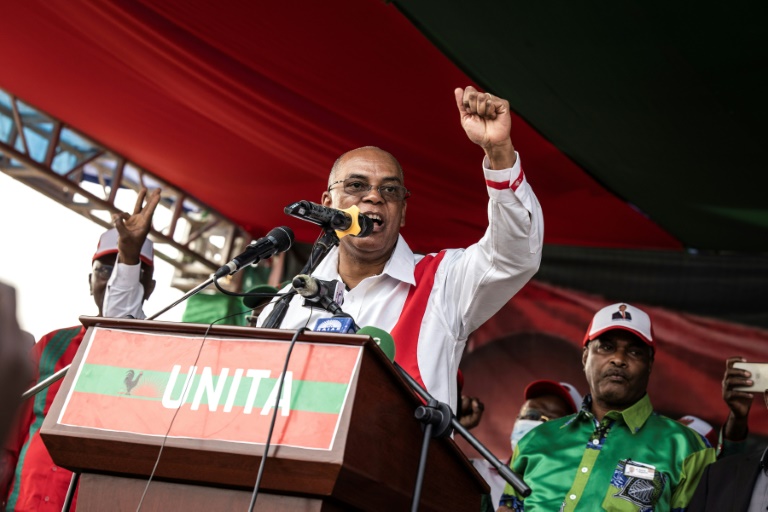
But the opposition National Union for the Total Independence of Angola (UNITA) said it “does not recognise the results” from the national electoral commission.

It vowed to file a legal claim “which will have the effect of suspending the declaration of the final results”, the party’s secretary general, Alvaro Chikwamanga Daniel, said in a video recorded overnight. 

During the final phase of counting, the former rebel movement-turned-opposition-party claims “not to have been informed of the decision” by the electoral commission to ratify the results and not to have received a “copy of the tables of the final results”.

Candidates have 72 hours after the announcement of results to file a claim to the Constitutional Court contesting the ballot.

Four of the 16 electoral commissioners did not sign off on the final results, casting doubts about the process. 

– Opposition gains –

The MPLA has been the only party to govern the country since it gained independence from Portugal in 1975, but saw its poorest showing in this year’s ballot, down from its victory with 61 percent in 2017.

But this year turnout dipped to less than half of the approximately 14.4 million registered voters.

“Low voter turnout in this election indicated that citizens don’t feel that change can be affected through the ballot box,” said Marisa Lourenco, a Johannesburg-based independent analyst specialising in Angola.

“Voters also likely don’t trust the (electoral commission) or the courts, because of their partiality towards the MPLA, which makes them doubt the impact their participation will have,” she said.

UNITA made significant gains from the 2017 elections, earning 43.95 percent this round, compared with 26.67 percent in the previous vote.

It did particularly well in the capital district of Luanda, where it won a majority, taking it from the grip of the MPLA for the first time. 

UNITA leader Adalberto Costa Junior, 60, last week pointed to discrepancies between the tallies of his party and the commission, and called for an international panel to review the count.

The charismatic leader saw a rise in popularity among young voters who want change for the country’s struggling economy.

Young Angolans tend not to feel the same allegiance as the older generation towards the MPLA, billed as the party which freed the nation from colonial rulers and ended a bitter, nearly three-decade civil war. 

The MPLA’s Lourenco, 68, brought forward economic reforms in his first term in office, but critics say the move has not improved living conditions for most Angolans. 

Lourenco came into power in 2017, after strongman Jose Eduardo dos Santos handpicked him as his successor following 38 years in office. Dos Santos died last month in Spain and received a state funeral in Luanda on Sunday.

Under dos Santos, Angola became one of Africa’s top crude producers, and while his family reaped the benefits of the wealth, most of country’s 33 million people were left in poverty. 

Lourenco swiftly turned on his predecessor upon taking office with an anti-corruption mandate, but the effort has been viewed by critics as a political stunt, going after the children of dos Santos rather than ushering in wide reforms.

In their preliminary reports, foreign observers from Africa praised the peaceful conduct of the polls but raised concerns ranging from press freedom to the accuracy of the voter roll.

The European Union has urged Angolan election authorities to respond to complaints “in a fair and transparent manner”.

In a statement on Monday UNITA said “it is in the interest of all Angolans that the (electoral commission) does not avoid comparing” its tally with those conducted by political parties — “which represents the electoral truth”.

UNITA previously contested the 2017 vote, which did not result in the overruling of the winner.

str-giv/sn/lcm

S.Sudan's ex-rebels set to join unified army

More than 50,000 fighters including former rebels from rival camps in South Sudan’s civil war were set to be integrated into the country’s army in a long-overdue graduation ceremony on Tuesday.

The unification of forces loyal to President Salva Kiir and his rival, Vice President Riek Machar, was a key condition of the 2018 peace deal that ended the brutal five-year conflict in which nearly 400,000 people died.

Since achieving independence in 2011 from Sudan, the world’s youngest nation has lurched from crisis to crisis, battling flooding, hunger, ethnic violence and political turmoil.

The ceremony in the capital Juba, held under tight security, comes against a backdrop of growing frustration in the international community over delays in implementing the peace deal, as explosions of violence threaten to undo even fragile gains.

Earlier this month, South Sudan’s leaders — appointed to run a transitional government — announced that they would remain in power two years beyond an agreed deadline, sparking international concern.

The transition period was meant to conclude with elections in December this year, but the government has so far failed to meet core provisions of the agreement, including drafting a constitution.

According to the peace deal, the troops’ graduation ceremony was supposed to take place in 2019. 

But the two leaders remained deadlocked over the division of senior posts in the unified armed forces command, only inking an agreement in April this year.

Over 52,000 men and women — drawn from Kiir and Machar’s parties as well as the South Sudan Opposition Alliance — will take part in Tuesday’s proceedings to officially join the army, police and other bodies responsible for national security.

The government has invited representatives from neighbouring nations including Ugandan President Yoweri Museveni and Sudanese coup leader General Abdel Fattah al-Burhan to attend the ceremony.

– Unpaid salaries –

The addition of tens of thousands of former rebels to the government’s payroll will add to already crushing economic challenges — civil servants have been unpaid for months.

But the move was nevertheless met with optimism in some quarters, with one former rebel telling AFP he was excited to join the police force.

“I am looking forward to serving my people. I just want to tell our people that finally peace has come after a long struggle,” said the former rebel who only identified himself as John, citing government restrictions.

Many of the new graduates will carry sticks instead of guns at the ceremony, because of a years-long arms embargo imposed by the UN Security Council.

The UN has repeatedly criticised South Sudan’s leadership for its role in stoking violence, cracking down on political freedoms and plundering public coffers.

The United States last month pulled out of two peace process monitoring organisations in South Sudan due to the government’s failure to meet reform milestones, citing a “lack of sustained progress”.
UN ship with Ukraine wheat docks in drought-hit Horn of Africa

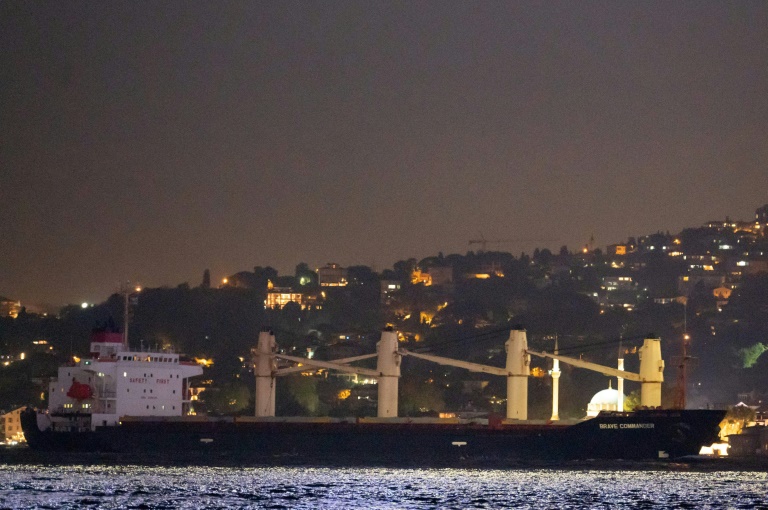
A UN-chartered ship loaded with Ukrainian wheat destined for millions at risk of starvation in Ethiopia arrived in Djibouti on Tuesday.

The bulk carrier MV Brave Commander, which is carrying 23,000 tonnes of grain, docked in the Horn of Africa port city, the UN’s World Food Programme said, two weeks after leaving a Black Sea port in Ukraine.

“We have officially docked! The first WFP ship to carry Ukrainian grain since February has just arrived in Djibouti,” WFP executive director David Beasley said on Twitter. 

“Now, let’s get this wheat offloaded and on to Ethiopia.”

The UN agency said food insecurity and malnutrition are a major concern across Ethiopia, with an estimated 20.4 million people in need of food support.

Ukraine, one of the world’s largest grain exporters, was forced to halt almost all deliveries after Russia’s invasion of the country in February, raising fears of a global food crisis.

Exports of grains and other foodstuffs and fertilisers from three Black Sea ports resumed at the start of this month under a deal between Kyiv and Moscow that was brokered by the UN and Turkey in July.

The agreement lifted a Russian blockade of Ukraine’s ports and set terms for millions of tonnes of wheat and other grain to start flowing from silos and ports.

According to figures late last week from the Joint Coordination Centre which manages the sea corridor, more than 720,000 tonnes of grain have already left Ukraine.

– ‘No end in sight’ –

The WFP said earlier this month that the number of people at risk of starvation in the drought-ravaged Horn of Africa region has increased to 22 million.

“There is still no end in sight to this drought crisis, so we must get the resources needed to save lives and stop people plunging into catastrophic levels of hunger and starvation,” Beasley said at the time.

Ethiopia, Kenya and Somalia are experiencing their worst drought in 40 years and the UN’s World Meteorological Organization warned last week that the situation is set to get even worse with a fifth consecutive failed rainy season.

An unprecedented four failed rainy seasons have killed millions of livestock, destroyed crops, and forced 1.1 million people from their homes in search of food and water.

“Needs will remain high into 2023 and famine is now a serious risk, particularly in Somalia” where nearly half the population of 15 million is seriously hungry, the WFP said in a statement earlier this month.

Northern Ethiopia has also been wracked by conflict since November 2020 when Prime Minister Abiy Ahmed sent troops into Tigray to topple the Tigray People’s Liberation Front (TPLF) after what he said were attacks by the rebels on federal army camps.

S.Sudan's ex-rebels set to join unified army

More than 50,000 fighters including former rebels from rival camps in South Sudan’s civil war were set to be integrated into the country’s army in a long-overdue graduation ceremony on Tuesday.

The unification of forces loyal to President Salva Kiir and his rival, Vice President Riek Machar, was a key condition of the 2018 peace deal that ended the brutal five-year conflict in which nearly 40,000 people died.

Since achieving independence in 2011 from Sudan, the world’s youngest nation has lurched from crisis to crisis, battling flooding, hunger, ethnic violence and political turmoil.

The ceremony in the capital Juba, held under tight security, comes against a backdrop of growing frustration in the international community over delays in implementing the peace deal, as explosions of violence threaten to undo even fragile gains.

Earlier this month, South Sudan’s leaders — appointed to run a transitional government — announced that they would remain in power two years beyond an agreed deadline, sparking international concern.

The transition period was meant to conclude with elections in December this year, but the government has so far failed to meet core provisions of the agreement, including drafting a constitution.

According to the peace deal, the troops’ graduation ceremony was supposed to take place in 2019. 

But the two leaders remained deadlocked over the division of senior posts in the unified armed forces command, only inking an agreement in April this year.

Over 52,000 men and women — drawn from Kiir and Machar’s parties as well as the South Sudan Opposition Alliance — will take part in Tuesday’s proceedings to officially join the army, police and other bodies responsible for national security.

The government has invited representatives from neighbouring nations including Ugandan President Yoweri Museveni and Sudanese coup leader General Abdel Fattah al-Burhan to attend the ceremony.

– Unpaid salaries –

The addition of tens of thousands of former rebels to the government’s payroll will add to already crushing economic challenges — civil servants have been unpaid for months.

But the move was nevertheless met with optimism in some quarters, with one former rebel telling AFP he was excited to join the police force.

“I am looking forward to serving my people. I just want to tell our people that finally peace has come after a long struggle,” said the former rebel who only identified himself as John, citing government restrictions.

Many of the new graduates will carry sticks instead of guns at the ceremony, because of a years-long arms embargo imposed by the UN Security Council.

The UN has repeatedly criticised South Sudan’s leadership for its role in stoking violence, cracking down on political freedoms and plundering public coffers.

The United States last month pulled out of two peace process monitoring organisations in South Sudan due to the government’s failure to meet reform milestones, citing a “lack of sustained progress”.
Liberia's Weah under pressure over 'corrupt' allies

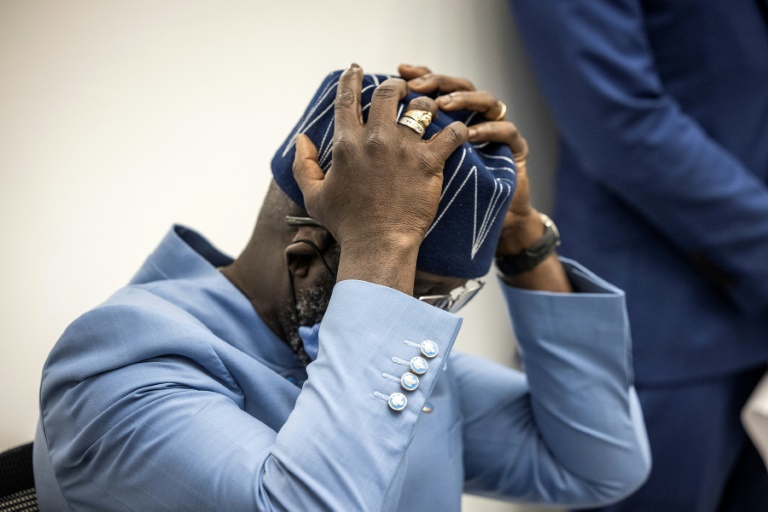
Liberian President George Weah is facing a backlash over his handling of corruption accusations made by the United States against three of his close allies.

Washington imposed sanctions on top officials including Liberia’s chief prosecutor and Weah’s chief of staff earlier this month over corruption allegations tied to multi-million-dollar contracts and at least $1.5 million in diverted public funds.

Weah — a former football star — suspended the officials, but the affair has continued to dominate headlines in the West African nation, threatening his support ahead of next year’s election. 

Opposition leaders and human rights groups are demanding the officials’ dismissal — and a wider corruption probe into other members of the government.

Alexander Cummings, the leader of the opposition ANC party, said the “mere suspension” of the officials was “not good enough… nor is it enough to exonerate the president from growing public impression of his participation” in the “high crimes”.

“This is not the time for bogus suspensions, coverups, and fake investigations,” he said.

The Liberian NGO Regional Watch for Human Rights also urged Weah to sack the officials. 

“This should not be business as usual. Enough is enough,” the group said.

The former AC Milan, Chelsea and Manchester City star, who has been criticised for lacking political experience and formal education, has not directly commented on the allegations. 

“President Weah views the allegations against the officials contained in the report as grave,” his office said.

– ‘Pervasive’ corruption –

Fighting corruption was one of Weah’s major commitments before taking office in 2018. 

In his inaugural speech as president, he promised to prosecute corrupt officials “to the full extent of the law”.

But he has struggled to fulfil his election promise.

Corruption remains endemic, with the watchdog Transparency International ranking Liberia 136th of 180 countries in its 2021 corruption perceptions index.

In a 2022 report, the US State Department cited widespread and “pervasive government corruption” in Liberia as a constraint to investment and development.

On August 15, the US Treasury’s Office of Foreign Assets Control slapped sanctions on Nathaniel McGill, the Minister for Presidential Affairs who serves as chief of staff to the president, and two other senior officials.

It accused McGill of having “bribed business owners, received bribes from potential investors (and government office seekers), and accepted kickbacks for steering contracts to companies in which he has an interest”.

It said he misappropriated government assets “for his personal gain” and “organized warlords to threaten political rivals”.

Sayma Syrenius Cephus, Liberia’s solicitor general and chief prosecutor, is accused of having “developed close relationships with suspects of criminal investigations” and “received bribes from individuals in exchange for having their cases dropped”, including money laundering cases. 

The head of the National Port Authority (NPA), Bill Twehway, “orchestrated the diversion” of $1.5 million in vessel storage funds into a private account, according to the US.

It said he “secretly formed a private company” to which he “unilaterally awarded” a contract.

McGill and Cephus have responded with letters to President Weah, with McGill denying some accusations and decrying others as “vague”. 

Cephus said he rejected and denied all accusations.

With long historical links and a significant diaspora in the US, American authorities have played an important role in holding Liberians accountable both for corruption and crimes tied to the country’s two civil wars.

Given the strong relationship, the US actions are likely to have a real impact in Liberia.

– Upcoming election –

The corruption accusations come just over a year ahead of Liberia’s presidential election, slated for October 10, 2023.

Facing criticism over his inaction on key election promises, Weah blames the lack of progress on the difficult situation he inherited from predecessors.

But Victor Bright, a political analyst, told AFP that until the sanctions were announced, the president had been “in good posture” compared to other potential candidates.

“Though the economy has been bad since his ascendancy to power, he has been doing some infrastructural developments that have not passed unnoticed,” Bright said. 

He said Weah should dismiss the officials in order to put the issue to bed.

“President Weah needs to listen to the voice of the masses if he does not want to lose some of his potential voters,” he said.

18 die as Madagascar police shoot at albino kidnap protesters: medic

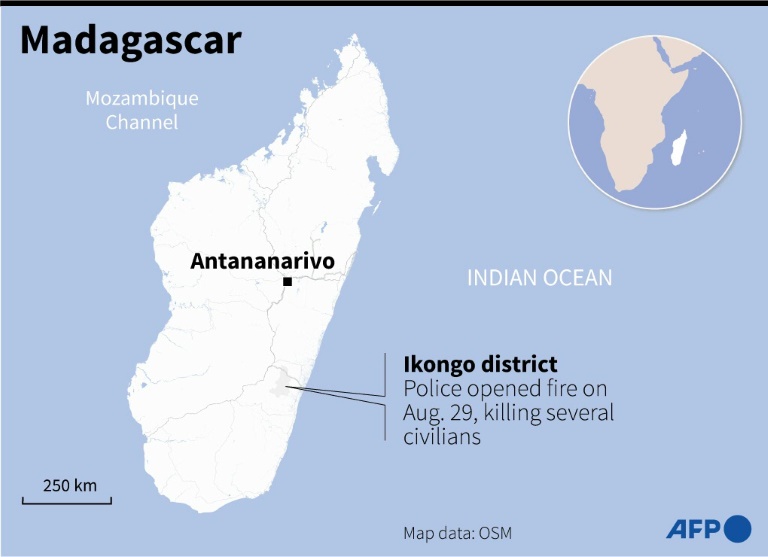
Eighteen people died Monday after police in Madagascar opened fire on what they called a lynch mob angered at the kidnapping of an albino child, a senior doctor told AFP.

Dozens were wounded, some of them seriously.

“At the moment, 18 people have died in all, nine on the spot and nine in hospital,” said doctor Tango Oscar Toky, chief physician at a hospital in southeastern Madagascar.

“Of the 34 injured, nine are between life and death,” said the doctor giving graphic details of the injuries. “We are waiting for a government helicopter to evacuate them to the capital”.

Around 500 protesters armed with blades and machetes “tried to force their way” into the station, a police officer involved in the shooting said, speaking on condition of anonymity. 

“There were negotiations, (but) the villagers insisted,” the officer told AFP over the phone from the town of Ikongo, 350 kilometres (about 220 miles) from the capital Antananarivo.

Police first fired teargas and then rounds in the air to try to disperse the crowd, he said. 

“They continued to force their way through. We had no choice but to defend ourselves,” the officer added.

The national police in the capital confirmed the “very sad event”, but only gave a toll of 11, with 18 injured. 

Andry Rakotondrazaka, the national police chief, told a news conference that what happened was a “very sad event. It could have been avoided but it happened”.

He said the police “did everything to avoid confrontation”, including negotiating with the crowd,

“But there were provocations”… (and) there were people with “long-bladed knives and sticks”, he said, adding others hurled stones towards the police. 

“The gendarmes used tear gas. But that was not enough to stop the crowd from advancing. There was shooting in the air.” 

But in the end the gendarmes had “no choice but to resort to self-defence… and limit the damage by shooting”.

The kidnapping took place last week, according to Jean-Brunelle Razafintsiandraofa, a member of parliament for Ikongo district.

– Revenge attacks –

Revenge attacks are common in Madagascar.

In February 2017, a mob of 800 people barged into Ikongo prison in search of a murder suspect they intended to kill.

They overpowered guards and 120 prisoners broke out of jail.

In 2013, a Frenchman, a Franco-Italian and a local man accused of killing a child on the tourist island of Nosy Be were burned alive by a crowd. 

Some sub-Saharan African countries have suffered a wave of assaults against people with albinism, whose body parts are sought for witchcraft practices in the mistaken belief that they bring luck and wealth. 

Albinism, caused by a lack of melanin, the pigment that colours skin, hair and eyes, is a genetic condition that affects hundreds of thousands of people across the globe, particularly in Africa.

Under The Same Sun, a Canada-based charity working to combat discrimination, has been logging cases of similar violence across Africa.

It ranks Burundi, Democratic Republic of Congo, Malawi, Mozambique and Tanzania as the countries where such attacks are most prevalent.

Madagascar, a large Indian Ocean island country, is ranked among the poorest in the world. 

strs-ub-sn/ach

Lithuania completes Belarus border fence

Lithuania on Monday said it had finished building a fence along its border with Belarus to fight illegal immigration which the West accuses Minsk of orchestrating.

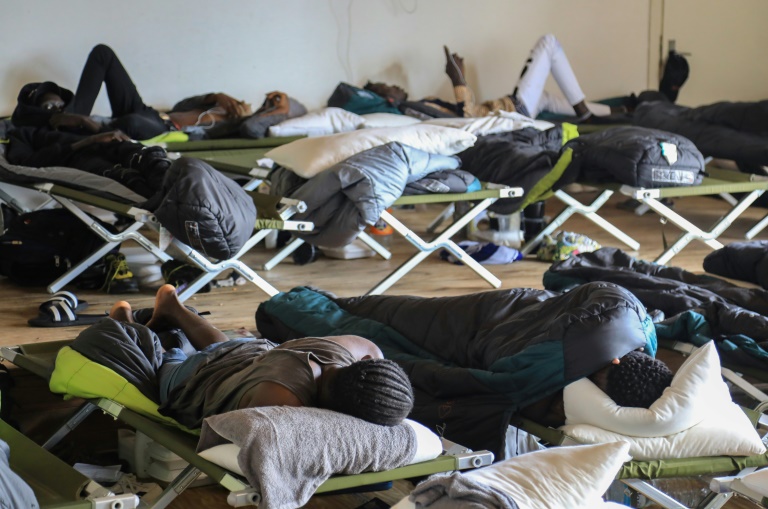
Illegal immigration has soared in EU member Lithuania this year, with around 4,200 migrants mainly from the Middle East and Africa crossing the border from neighbouring Belarus.

The West has accused Belarusian President Alexander Lukashenko’s regime of manipulating the migrant flows with its ally Russia as part of “hybrid” warfare, which Minsk denies.

A barrier four metres (13 feet) high and made up of barbed wire stretches across around 550 kilometres (342 miles) of the two countries’ shared border.

Lithuanian Prime Minister Ingrida Simonyte announced the project’s completion and said it was “technically impossible” to erect physical barriers along the entire frontier, which crosses lakes, rivers and swamps.

Lithuania’s harsh migrant policy has led to accusations that it is carrying out illegal pushbacks.

Simonyte said her government would continue its policy and examine the possibility of legally maintaining it without imposing a state of emergency.

But she acknowledged it would be a challenge with regards to international law, saying her country has “lots of work to do”.

On Saturday, Lithuanian border guards refused entry to 125 migrants, the highest number since the start of the year.

The guards have accused their Belarusian counterparts of helping migrants enter Lithuania illegally and damaging the new fence.

A large build-up of mostly Middle Eastern migrants last winter sparked a tense stand-off between eastern EU member Poland and Belarus.

Poland later constructed a steel wall along its border with Belarus to deter migrants, saying Lukashenko’s regime was “destabilising” the region.

Close Bitnami banner
Bitnami