Africa Business

Hundreds of anti-coup protesters in Sudan defy security forces

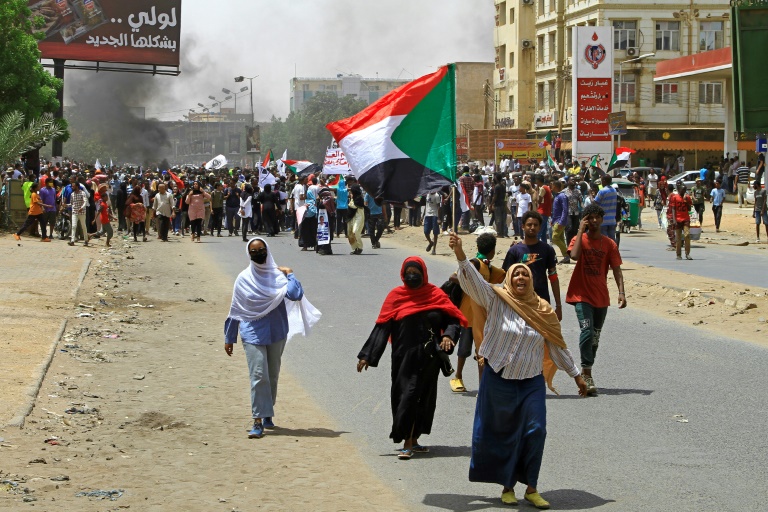
Hundreds of Sudanese protesters demanding an end to military rule took to the streets of the capital Khartoum and its suburbs for a fourth straight day Sunday, witnesses said.

A violent crackdown by security forces during mass rallies on Thursday killed nine people, according to medics, the deadliest day for several months in the long running protests against a military takeover last October led by army chief Abdel Fattah al-Burhan.

Recent protests have seen crowds burn tyres and barricade roads with bricks, with security forces using live bullets, firing barrages of tear gas canisters and using powerful water cannons, according to medics and the United Nations.

Demonstrators demand a restoration of the transition to civilian rule that was launched after the 2019 ouster of longtime autocrat Omar al-Bashir, which the coup derailed.

“We will continue this sit-in until the coup is overturned, and we have a fully civilian government,” demonstrator Muayyad Mohamed told AFP in central Khartoum.

The death toll from protest-related violence has reached 114 since last year’s coup, with the latest fatality recorded Saturday when a demonstrator died from wounds sustained at a June 16 rally, according to pro-democracy medics.

– ‘We will not compromise’ –

“We will not compromise until the goals of our revolution are realised,” said Soha, 25, another protester, who only gave her first name.

“We are here in the street demanding freedom, peace, justice, a civil state and the return of the military to the barracks.”

The coup plunged Sudan further into political and economic turmoil that has sent consumer prices spiralling and resulted in life-threatening food shortages.

On Sunday, witnesses reported a heavy deployment of security forces on the streets of Khartoum, including both army vehicles as well as those of the Rapid Support Forces (RSF), a feared paramilitary unit commanded by Burhan’s deputy, Mohamed Hamdan Daglo.

The RSF incorporated members of the Janjaweed militia, which was accused by rights groups of atrocities during the conflict that erupted in 2003 in the western region of Darfur.

More recently, the RSF has been accused of taking part in crackdowns on protesters marching against the army.

The international community has condemned the recent bloodshed, with the UN rights chief urging an independent probe into Thursday’s violence.

– ‘Dialogue’ –

The UN, African Union and regional bloc IGAD have tried to facilitate dialogue between the generals and civilians, which the main civilian factions have boycotted.

On Friday, the three bodies jointly condemned the violence and “the use of excessive force by security forces and lack of accountability for such actions, despite repeated commitments by authorities”.

In the restive Darfur region, which has seen a recent surge in violence, General Daglo — known as Hemeti — on Sunday called “on all political forces, especially the youth, to come to the dialogue table”.

“Dialogue is the only way to guarantee stability in our country,” he said at a ceremony where 2,000 ex-rebels completed their training to join Sudanese security forces.

The integration of former rebel fighters into the Sudanese army and police was part of a 2020 peace deal with rebel groups involved in decades of civil conflict, including in Darfur.

The first of its kind, the cohort “will confront the chaos in Darfur”, Daglo said.

Hundreds have been killed in recent months in Darfur, in a renewed spike of violence triggered by disputes mainly over land, livestock and access to water and grazing.
West African bloc studies sanctions for coup-hit states

West African leaders met on Sunday in Ghana’s capital Accra to review sanctions they have imposed on three military-ruled countries in their volatile region.

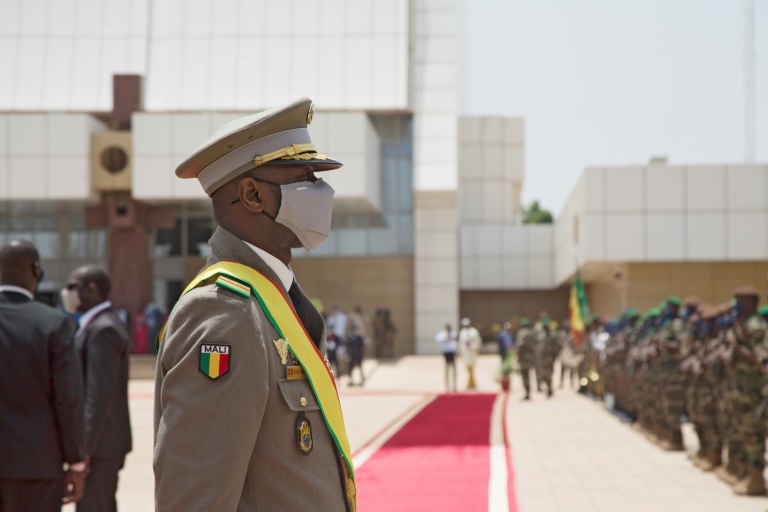
Heads of the Economic Community of West African States (ECOWAS) were gathering to assess efforts to secure timetables and other guarantees for restoring civilian rule in Mali, Guinea and Burkina Faso.

Mali underwent coups in August 2020 and May 2021, followed by Guinea in September 2021 and Burkina Faso this January.

Fearing contagion in a region notorious for military takeovers, ECOWAS has imposed tough trade and economic sanctions against Mali, but lesser punishments against Guinea and Burkina.

Dominating the summit will be the review of a month-long bid to push the juntas to set an early timetable for returning to barracks.

ECOWAS in January imposed a trade and financial embargo on Mali after its military government unveiled a scheme to rule for five years.

At a June 4 summit, no decision was made for the three countries. 

Opening Sunday’s summit, Ghanaian President Nana Akufo-Addo said the 15-member bloc was committed to supporting the three countries’ return to democratic order and would take appropriate decisions after hearing reports on their progress.

The sanctions have badly hit poor and landlocked Mali, whose economy is already under severe strain from a decade-long jihadist insurgency.

After months of bitter talks, the Malian authorities on Wednesday approved a plan to hold presidential elections in February 2024.

The vote will be preceded by a referendum on a revised constitution in March 2023 and legislative elections in late 2023.

The ECOWAS mediator in Mali, former Nigerian leader Goodluck Jonathan, visited the country last week. A member of his entourage told AFP Mali had made “enormous progress”.

Mali’s top diplomat Abdoulaye Diop on Friday said the recent political developments were moving the country towards a lifting of the sanctions.

But a new electoral law, adopted on June 17, could be a stumbling block in the talks as it allows a military figure to contest the presidential elections.

– Guinea transition ‘unthinkable’ –

Burkina Faso — another Sahel country caught up in jihadist turmoil — and Guinea have so far only been suspended from the bodies of the 15-nation bloc but could face harsher sanctions.

Burkina’s junta has proposed a constitutional referendum in December 2024 and legislative and presidential elections in February 2025.

Visiting Ouagadougou for the second time in a month on Saturday, ECOWAS mediator Mahamadou Issoufou praised junta leader Lieutenant Colonel Paul-Henri Sandaogo Damiba and his government for their “openness to dialogue”. 

The timetable to enable a return to civilian rule and the situation of deposed leader Roch Marc Christian Kabore were also discussed, said the former president of Niger.

Political parties allied to Kabore denounced the junta’s plans on Friday, saying they were not consulted in advance.

The situation appears more complex in Guinea, whose junta has refused an ECOWAS mediator and announced a 36-month transition — a period that African Union chairman and Senegalese President Macky Sall has described as “unthinkable”.

ECOWAS avoided ruling on sanctions at a June 4 meeting and instead gave itself another month to negotiate.

Guinea this week has led a diplomatic offensive to assuage the concerns of regional leaders.

The country’s post-coup prime minister Mohamed Beavogui on Saturday met the United Nations’ special representative for West Africa and the Sahel, Mahamat Saleh Annadif.

The government said it wanted to reassure its ECOWAS “brothers” of its commitment to undertaking a peaceful and inclusive democratic transition.

Guinea’s military regime met the main political parties on Monday, but they have made their participation in the dialogue conditional on the nomination of an ECOWAS mediator.

Head of new Tunisia constitution panel withdraws support

The Tunisian jurist who oversaw the drafting of a new constitution submitted to President Kais Saied said Sunday it has been changed into a charter that could lead to a dictatorship.

Some articles of the draft constitution published last Thursday in the official journal could “pave the way for a dictatorial regime”, warned Sadeq Belaid, who headed the committee, quoted by Assabah newspaper.

“It has nothing to do with the text we drafted and submitted to the president,” the top jurist said, withdrawing his support.

Belaid, contacted by AFP, confirmed he was distancing himself from Saied.

In July last year, Saied made a dramatic power grab, which many have denounced as a coup, sacking the government and freezing parliament.

Since then, Saied has moved to rule by decree and extended his powers over the judiciary and the electoral board.

Some Tunisians welcomed his moves against the sclerotic system that emerged from the country’s revolt which had toppled dictator Zein El Abidine Ben Ali in 2011.

But others have warned that he is targeting political rivals and dragging the country back towards autocracy.

The constitution for a “new republic” is at the centre of Saied’s programme for rebuilding Tunisia’s political system.

The president plans to hold a referendum on the constitution on July 25, to mark one year since his power grab.

The draft constitution published last week grants the president wide powers to rule.

It allows him to carry out “executive functions with the help of the government”, whose chief would be appointed by the president.

The president would also head the armed forces, name judges, and the draft constitution waters down the role of parliament.

Belaid warned that the published document “contains risks and considerable shortcomings”.

He specifically points to one article, which he said carries an “imminent danger” because it would give the president “very wide powers… that could lead to a dictatorial regime”.

“That is why, as head of the national constitution committee… I declare, regretfully and in true conscience… that the committee has nothing to do with the document that the president” will submit for approval in a referendum, Belaid added.

Hundreds of anti-coup protesters in Sudan defy security forces

Hundreds of Sudanese protesters demanding an end to military rule took to the streets of the capital Khartoum and its suburbs for a fourth straight day Sunday, witnesses said.

A violent crackdown by the security forces during mass rallies on Thursday killed nine people, the deadliest day for several months in the long running protests against a military takeover last October led by army chief Abdel Fattah al-Burhan.

Recent protests have seen crowds burn tyres and barricade roads with bricks, with security forces using live bullets, firing barrages of tear gas canisters and using powerful water cannons, according to medics and the United Nations.

Demonstrators demand a restoration of the transition to civilian rule that was launched after the 2019 ouster of longtime autocrat Omar al-Bashir, which the coup derailed.

“We will continue this sit-in until the coup is overturned, and we have a fully civilian government,” demonstrator Muayyad Mohamed told AFP in central Khartoum.

The death toll from protest-related violence has reached 114 since last year’s coup, with the latest fatality recorded Saturday when a demonstrator died from wounds sustained at a June 16 rally, according to pro-democracy medics.

– ‘We will not compromise’ –

“We will not compromise until the goals of our revolution are realised,” said Soha, 25, another protester, who gave only her first name.

“We are here in the street demanding freedom, peace, justice, a civil state and the return of the military to the barracks.”

The coup plunged Sudan further into political and economic turmoil which has seen rising consumer prices and life-threatening food shortages.

On Sunday, witnesses reported a heavy deployment of security forces on the streets of Khartoum, including both army vehicles as well as those of the Rapid Support Forces (RSF), a feared paramilitary unit commanded by Burhan’s deputy Mohamed Hamdan Daglo.

The RSF incorporated members of the Janjaweed militia, which was accused by rights groups of atrocities during the conflict that erupted in 2003 in the western region of Darfur.

More recently, the RSF has been accused of taking part in crack downs on protesters marching against the army.

The international community has condemned the recent bloodshed, with the United Nations’ rights chief urging an independent probe into Thursday’s violence.

The UN, African Union and regional bloc IGAD have tried to facilitate talks between the generals and civilians, which the main civilian factions have boycotted.

On Friday, the three bodies jointly condemned the violence and “the use of excessive force by security forces and lack of accountability for such actions, despite repeated commitments by authorities”.

Hundreds of anti-coup protesters in Sudan defy security forces

Hundreds of Sudanese protesters demanding an end to military rule took to the streets of the capital Khartoum and its suburbs for a fourth straight day Sunday, witnesses said.

A violent crack down by the security forces during mass rallies on Thursday killed nine people, the deadliest day for several months in the long running protests against a military takeover last October led by army chief Abdel Fattah al-Burhan.

Recent protests have seen crowds burn tyres and barricade roads with bricks, with security forces firing barrages of tear gas canisters and using powerful water cannons.

Demonstrators demand a restoration of the transition to civilian rule that was launched after the 2019 ouster of longtime autocrat Omar al-Bashir, which the coup derailed.

The death toll from protest-related violence has reached 114 since last year’s coup, with the latest fatality recorded Sunday when a demonstrator died from wounds sustained at a June 16 rally, according to pro-democracy medics.

The coup plunged Sudan further into an political and economic turmoil which has seen rising consumer prices and life-threatening food shortages.

On Sunday, witnesses reported a heavy deployment of security forces on the streets of Khartoum, including both army vehicles as well as those of the Rapid Support Forces (RSF), a feared paramilitary unit commanded by Burhan’s deputy Mohamed Hamdan Daglo.

The RSF incorporated members of the Janjaweed militia, which was accused by rights groups of atrocities during the conflict that erupted in 2003 in the western region of Darfur.

More recently, the RSF has been accused of taking part in crack downs on protesters marching against the army.

The international community has condemned the recent bloodshed, with the United Nations’ rights chief urging an independent probe into Thursday’s violence.

The UN, African Union and regional bloc IGAD have tried to facilitate talks between the generals and civilians, which the main civilian factions have boycotted.

On Friday, the three bodies jointly condemned the violence and “the use of excessive force by security forces and lack of accountability for such actions, despite repeated commitments by authorities”.

S.African entrepreneur seeks to turn caterpillars into tasty snacks

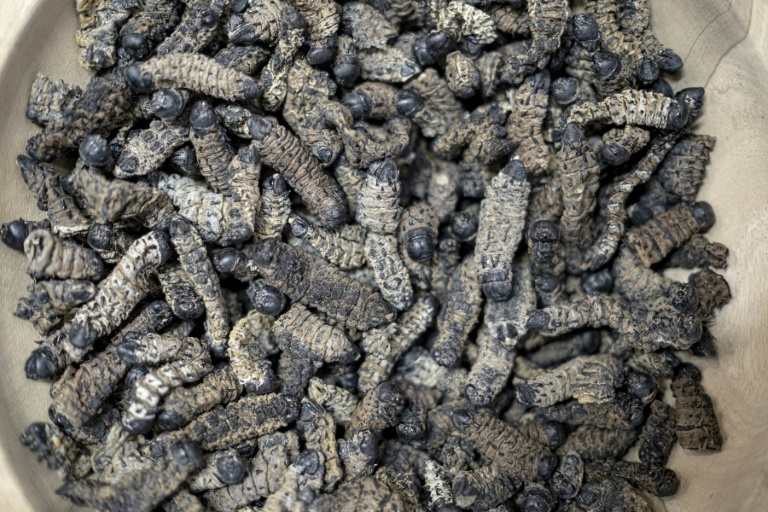
A start-up entrepreneur from South Africa wants to change the way edible caterpillars popularly known as “mopane worms” are viewed and eaten.

For many people, particularly from western European backgrounds, the idea of eating insects is still riddled with fear and inhibition.

But they can be a valuable source of nutrition and farming them is not detrimental to the environment.

South African chemical engineer Wendy Vesela has found ways of turning the spiky green and black caterpillars — which are packed with protein and iron — into a flour that can be used in savoury biscuits, sweet chocolate protein bars, cereals or smoothies. 

When steamed and sliced, mopane pieces can also be used as pizza toppings. 

Vesela says she has found domestic and international customers for her organic products. 

Edible insects and worms may indeed be gaining popularity in Western cultures.

But food anthropologist Anna Trapido insists that the trend should not be seen as just another dietary fad, a “kind of adventure tourism, where you get a badge” for eating them.

“Mopane need to be treated with respect because they are part of people’s emotional, spiritual, culinary genres,” she said.

In Vesela’s home province of Limpopo, where she grew up in a town not far from the world-famous Kruger National Park, mopane is a staple food, cooked in a sauce of onions and tomatoes. 

– ‘More protein than steak’- 

The caterpillars are “a healthier option of protein”, she said. And it’s “not a worm. So people have just to get over that fear.”

Vesela tried to woo reluctant customers with biscuits and protein bars at a recent food fair in Johannesburg’s upmarket Sandton district.

“I won’t eat a worm. I’m sorry, it’s disgusting. But if you give it to me in the form of a chocolate… it’s really delicious,” said Gail Odendaal, 38, walking away with a bag of protein bars.

Mopanes are environmentally friendly, too, requiring no extra water or land, as they breed and feed on mopane trees, which grow in hot and dry regions of southern Africa. 

They are a better source of protein than many other foods on the market, said dietitian, Mpho Tshukudu.

“It’s high in protein, in essential fats and minerals, especially iron. It has more iron than the most expensive piece of steak,” she said. 

With demand rising since she started her venture seven months ago, Vesela plans to expand the business and have multiple harvests a year.

She now hires rural women to gather mopanes when they are in season in December and April. The mopanes are gutted, boiled and dried to then be used whole or milled.

West African bloc assesses sanctions for coup-hit states

West African leaders meet on Sunday in Ghana’s capital Accra to review sanctions they have imposed on three military-ruled countries in their volatile region.

Heads of the Economic Community of West African States (ECOWAS) are gathering to assess efforts to nail down timetables and other guarantees for restoring civilian rule in Mali, Guinea and Burkina Faso.

Mali underwent coups in August 2020 and May 2021, followed by Guinea in September 2021 and Burkina Faso this January.

Fearing contagion in a region notorious for military takeovers, ECOWAS has imposed tough trade and economic sanctions against Mali, but lesser punishments against Guinea and Burkina.

Dominating the summit will be the review of a month-long bid to push the juntas to set an early timetable for returning to barracks.

ECOWAS in January imposed a trade and financial embargo on Mali after its military government unveiled a scheme to rule for five years.

The measures have badly hit the poor landlocked country, whose economy is already under severe strain from a decade-long jihadist insurgency.

After months of bitter talks, the Malian authorities on Wednesday approved a plan to hold presidential elections in February 2024.

The vote will be preceded by a referendum on a revised constitution in March 2023 and legislative elections in late 2023.

The ECOWAS mediator in Mali, former Nigerian leader Goodluck Jonathan, visited the country last week. A member of his entourage told AFP Mali had made “enormous progress”.

Mali’s top diplomat Abdoulaye Diop on Friday said the recent political developments were moving the country towards a lifting of the sanctions.

But a new electoral law, adopted on June 17, could be a stumbling block in the talks as it allows a military figure to contest the presidential elections.

– Guinea transition ‘unthinkable’ –

Burkina Faso — another Sahel country caught up in jihadist turmoil — and Guinea have so far only been suspended from the bodies of the 15-nation bloc but could face harsher sanctions.

Burkina’s junta has proposed a constitutional referendum in December 2024 and legislative and presidential elections in February 2025.

Visiting Ouagadougou for the second time in a month on Saturday, ECOWAS mediator Mahamadou Issoufou praised junta leader Lieutenant Colonel Paul-Henri Sandaogo Damiba and his government for their “openness to dialogue”. 

The timetable to enable a return to civilian rule and the situation of deposed leader Roch Marc Christian Kabore were also discussed, said the former president of Niger.

Political parties allied to Kabore denounced the junta’s plans on Friday, saying they were not consulted in advance.

The situation appears more complex in Guinea, whose junta has refused an ECOWAS mediator and announced a 36-month transition — a period that African Union chairman and Senegalese President Macky Sall has described as “unthinkable”.

ECOWAS avoided ruling on sanctions at a June 4 meeting and instead gave itself another month to negotiate.

Guinea this week has led a diplomatic offensive to assuage the concerns of regional leaders.

The country’s post-coup prime minister Mohamed Beavogui on Saturday met the United Nations’ special representative for West Africa and the Sahel, Mahamat Saleh Annadif.

The government said it wanted to reassure its ECOWAS “brothers” of its commitment to undertaking a peaceful and inclusive democratic transition.

Guinea’s military regime met the main political parties on Monday, but they have made their participation in the dialogue conditional on the nomination of an ECOWAS mediator.

DR Congo drug manufacturing plan sparks safety concerns

Sitting at his desk overlooking a pharmaceutical factory floor on the outskirts of the Congolese capital Kinshasa, Joss Ilunga Dijimba, 52, cracked a jovial smile.

“It’s not easy doing business in Congo,” he said.

His family was forced to relocate the factory in the 1990s to survive bouts of mass looting. And nowadays, there are onerous taxes, customs duties, and problems retaining talented staff. 

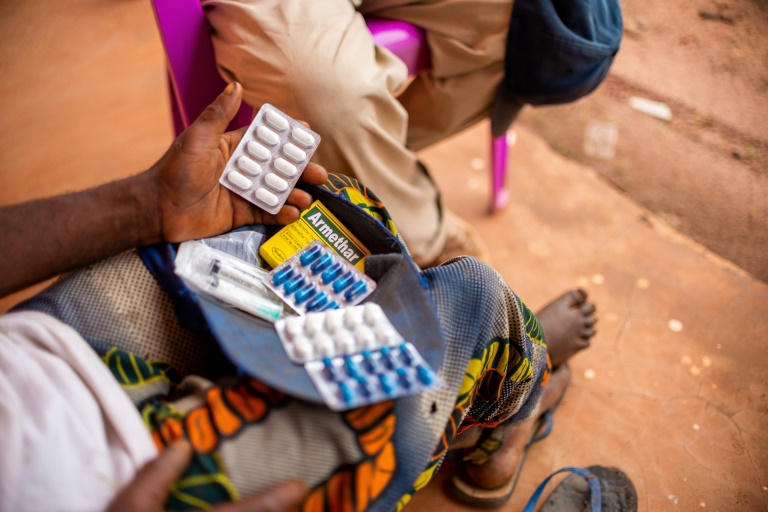
His company, which employs about 40 people and produces generics such as paracetamol, is one of a tiny number of drug manufacturers in the Democratic Republic of Congo, an impoverished nation roughly the size of Western Europe. 

But a government plan to require hospitals and NGOs to buy more locally produced drugs could soon boost the fledgling pharmaceutical industry — despite fears in some quarters that safety standards are far below international norms.

Several NGOs, some of which provide medical care in the DRC’s conflict-torn east, have requested opt-outs.

At the small Pharmagros plant, behind barbed-wire walls near the Congo river, men in hairnets and white coats formulate medicines with imported precursor using lab equipment in airconditioned rooms. 

“Promoting local industry’s a good thing,” said Dijimba, a University of Texas graduate, insisting that several Congolese firms, including his, maintained high standards. 

“It could grow the middle class.”

About 73 percent of the DRC’s population of 90 million lives on under $1.9 a day, according to the World Bank. Most products in the African country are imported.

– ‘At your own peril’ –

The Congolese government has designated 35 drug molecules, including paracetamol, that medical facilities will be required to purchase in locally made form.

The government wants to stimulate business without banning imports, said Donatien Kabamb Kabey, the pharmaceuticals director at the DRC’s health ministry.

He explained that all the molecules can be replaced with imported equivalents, suggesting that ibuprofen could replace paracetamol, for example.

Although not yet implemented, the policy already appears to be working.

Fifteen new pharma businesses are setting up in the DRC ahead of the new rules, Kabey said, which will add to the existing 24.

The policy was partly designed to encourage factories to return after fleeing the country in the 1990s, he added, when unpaid soldiers went on the rampage towards the end of ex-dictator Mobutu Sese Seko’s reign. 

But experts warn that Congolese-made medicines face a major challenge: reassuring doctors and patients that they meet regulatory standards.

“When you go to the private sector in Congo, you do it at your own peril,” said Ed Vreeke, who runs the Belgium-based independent pharmaceutical auditing firm Quamed.

“They know darn well that the quality they produce is not good.”

Vreeke said Congolese regulators had improved, but the country lacked the massive resources needed to properly perform audits, check labels, and inspect the chemical composition of drugs for safety.

Kabey, whose department at the health ministry oversees inspections, said standards had improved “enormously” in recent years, but did not provide further details.

He said the government was establishing a national quality-control lab.

– ‘A huge thing’ –

Shoddy or falsified medicines kill hundreds of thousands of people every year, according to the World Health Organization, mostly in poor countries. 

The DRC’s hot and humid climate also poses storage problems.

A 2021 study of both imported and locally produced eye drops sold in Kinshasa, for example, showed that three out of the seven products tested were substandard. The one sample manufactured in the DRC was contaminated.

Outside a pharmacy in Kinshasa’s upmarket Gombe district, clutching a bag of medicines, 29-year-old corporate lawyer Joelle Mamputu said she didn’t pay attention to where drugs were made but said she had “no prejudice”. 

However, a 52-year-old public servant named Olivier said there was “quite a difference” between Congolese and foreign drugs. 

He added he would buy Congolese drugs were the quality the same.

Despite official assurances, major international NGOs such as Doctors Without Borders (MSF) and Medecins du Monde (MDM) have requested opt-outs from the purchasing  requirements, several humanitarian workers said.

MSF declined to comment.

MDM confirmed it had asked for an exemption due to concerns over quality and capacity to meet demand.

“It’s a huge thing,” said one humanitarian who asked for anonymity, explaining that the new rules will affect all non-governmental organisations, hospitals and pharmacies. 

Many aid workers understand the need to promote enterprise, he said, but there are internal disagreements about whether to compromise on quality.

“We need to have high quality standards for everyone, but the reality of the country is that sometimes it’s impossible”.

'Fragile situation' as Libya anger boils over living conditions

Libya’s rival leaders were under growing street pressure Saturday after protesters stormed parliament as anger exploded over deteriorating living conditions and political deadlock.

Libyans, many impoverished after a decade of turmoil and sweltering in the soaring summer heat, have been enduring fuel shortages and power cuts of up to 18 hours a day, even as their country sits atop Africa’s largest proven oil reserves.

The country has been mired in chaos and repeated rounds of conflict since a NATO-backed uprising toppled and killed dictator Moamer Kadhafi in 2011.

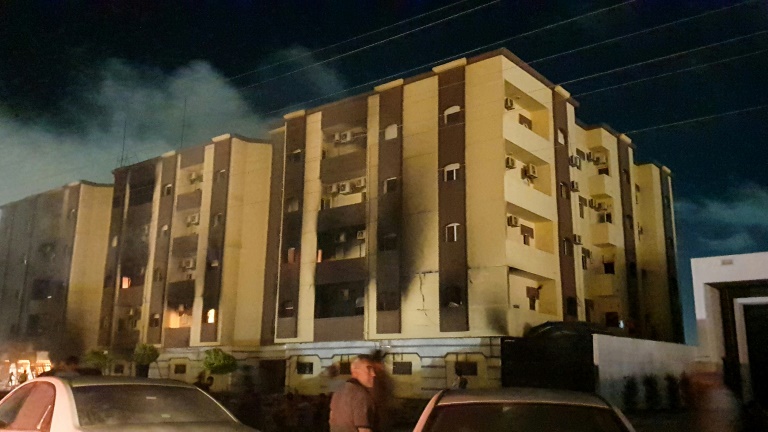
Protesters stormed the seat of the House of Representatives in the eastern city of Tobruk on Friday night, ransacking its offices and torching part of the building.

In both the main eastern city of Benghazi — the cradle of the 2011 uprising — and the capital Tripoli, thousands took to the streets to chants of “We want the lights to work”.

Some brandished the green flags of the former Kadhafi regime.

Calm appeared to have returned to Tobruk on Saturday, though there were calls on social media for more protests in the evening.

UN Secretary-General Antonio Guterres called on “all actors to refrain from any actions that could undermine stability” and urged them “to come together to overcome the continued political deadlock”, spokesman Stephane Dujarric said in a statement.

UN-mediated talks in Geneva this week aimed at breaking the stalemate between rival Libyan institutions failed to resolve key differences.

– ‘Extremely painful’ year –

Presidential and parliamentary elections, originally set for December last year, were meant to cap a UN-led peace process following the end of the last major round of violence in 2020. 

But voting never took place due to several contentious candidacies and deep disagreements over the polls’ legal basis between the rival power centres in east and west.

In Tripoli on Friday, hundreds came out to demand elections, fresh political leadership and an end to the chronic power cuts.

The sudden eruption of unrest appeared to be spreading to other areas of the country, with Libyan media showing images of protesters in the oasis city of Sebha, deep in the Sahara desert, torching an official building.

A local journalist said protesters in Libya’s third city Misrata were blocking roads after setting fire to a municipal building on Friday night.

After dark, protesters also gathered at several points in Tripoli, shutting down some roads and burning tyres, according to images broadcast by local media.

Interim prime minister Abdulhamid Dbeibah leads a Tripoli-based administration while former interior minister Fathi Bashagha draws support from the Tobruk-based House of Representatives and eastern military strongman Khalifa Haftar.

Haftar’s forces said Saturday that they “support the citizens’ demands” but called for protesters to “preserve public property”.

Libya expert Jalel Harchaoui told AFP that “for more than a year, the overwhelming majority of diplomatic and mediation efforts around Libya have been monopolised by the idea of elections, which won’t happen for at least two years, given the failure of the Geneva negotiations.”

This year “has been extremely painful for Libyans” because the country “imports almost all its food and the Ukraine war has hit consumer prices”, Harchaoui said.

– ‘Fragile situation’ –

Libya’s energy sector, which during the Kadhafi era financed a generous welfare state, has also fallen victim to political divisions, with a wave of forced closures of oil facilities since April.

Supporters of the eastern-based administration have shut off the oil taps as leverage in their efforts to secure a transfer of power to Bashagha, whose attempt to take up office in Tripoli in May ended in a swift withdrawal.

“There is kleptocracy and systematic corruption in the east as in the west, as the fancy cars and villas of the elite constantly remind the public,” Harchaoui said, accusing militias from both camps of carrying out “massive” fuel trafficking.

The European Union’s envoy to Libya, Jose Sabadell, said Friday’s events “confirm people want change through elections”.

But he urged peaceful protests, adding that “special restraint is necessary given the fragile situation”.

US ambassador to Libya Richard Norland said that “no single political entity enjoys legitimate control across the entire country and any effort to impose a unilateral solution will result in violence”.

He urged Libya’s “political leaders across the spectrum and their foreign backers to seize the moment to restore the confidence of their citizens in the country’s future”.

Spain, Mali FMs speak after row over NATO remarks

Mali’s Foreign Minister Abdoulaye Diop said Saturday he had spoken with his Spanish counterpart after a row over comments the Spaniard made about the possibility of a NATO operation in the African country.

Diop wrote in a tweet that he had spoken by phone with his Spanish counterpart Jose Manuel Albares about the comments, which were made in a radio interview.

“He denied the remarks and expressed his attachment to friendly relations and cooperation with Mali,” wrote Diop.

Spain moved to calm the row Saturday, a day after a day the military regime in Bamako had summoned their ambassador for an explanation.

“Spain did not ask during the NATO summit or at any other time for an intervention, mission or any action by the Alliance in Mali,” said a statement from Spain’s embassy.

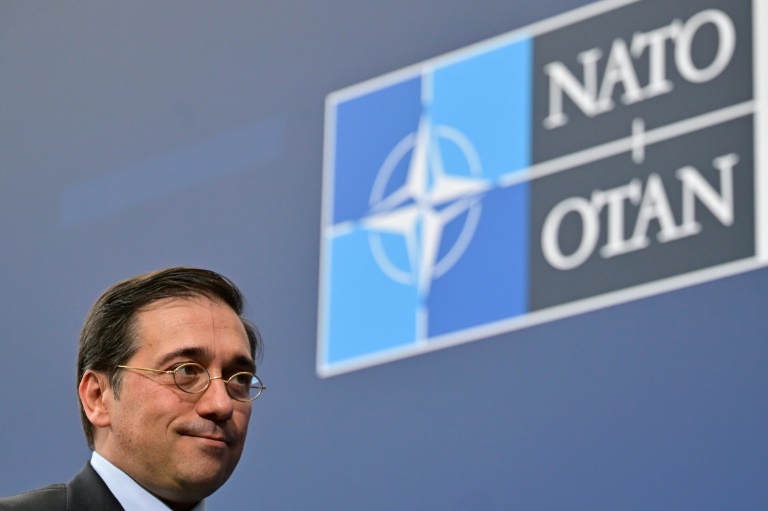
The row blew up over remarks by Albares in an interview Thursday with Spain’s RNE radio.

Asked if a NATO mission in Mali could be ruled out, Albares said: “No, we can’t rule it out.

“It hasn’t been on the table at the talks in Madrid because this is a summit that is laying out, so to speak, the framework for NATO action.

“If it were necessary and if there was to be a threat to our security, of course it would be done,” he added.

Albares was speaking on the sidelines of the NATO summit as it drew to a close in Madrid.

Diop had told state broadcaster ORTM on Friday that Bamako had summoned the Spanish ambassador to lodge a strong protest over the remarks.

“These remarks are unacceptable, unfriendly, serious,” said Diop, because “they tend to encourage an aggression against an independent and sovereign country”.

“We have asked for explanations, a clarification of this position from the Spanish government,” he added.

At the Madrid summit, Spain pushed hard to prioritise the topic of the threat to NATO’s southern flank caused by the unrest in the Sahel — the vast territory stretching across the south of Africa’s Sahara Desert, incorporating countries such as Burkina Faso, Chad, Mali, Mauritania and Niger.

Jihadist attacks there are pushing increasing numbers of people to flee north towards Europe, with Spain one of the main points of entry there.

At the summit, NATO acknowledged the alliance’s strategic interest in the Middle East, north Africa and the Sahel.

Mali has since 2012 been rocked by jihadist insurgencies. Violence began in the north and then spread to the centre and to neighbouring Burkina Faso and Niger.

Close Bitnami banner
Bitnami